वोकैबुलरीज

इंग्लिश वोकैबुलरी डिस्कवर, लर्न और मास्टर करें

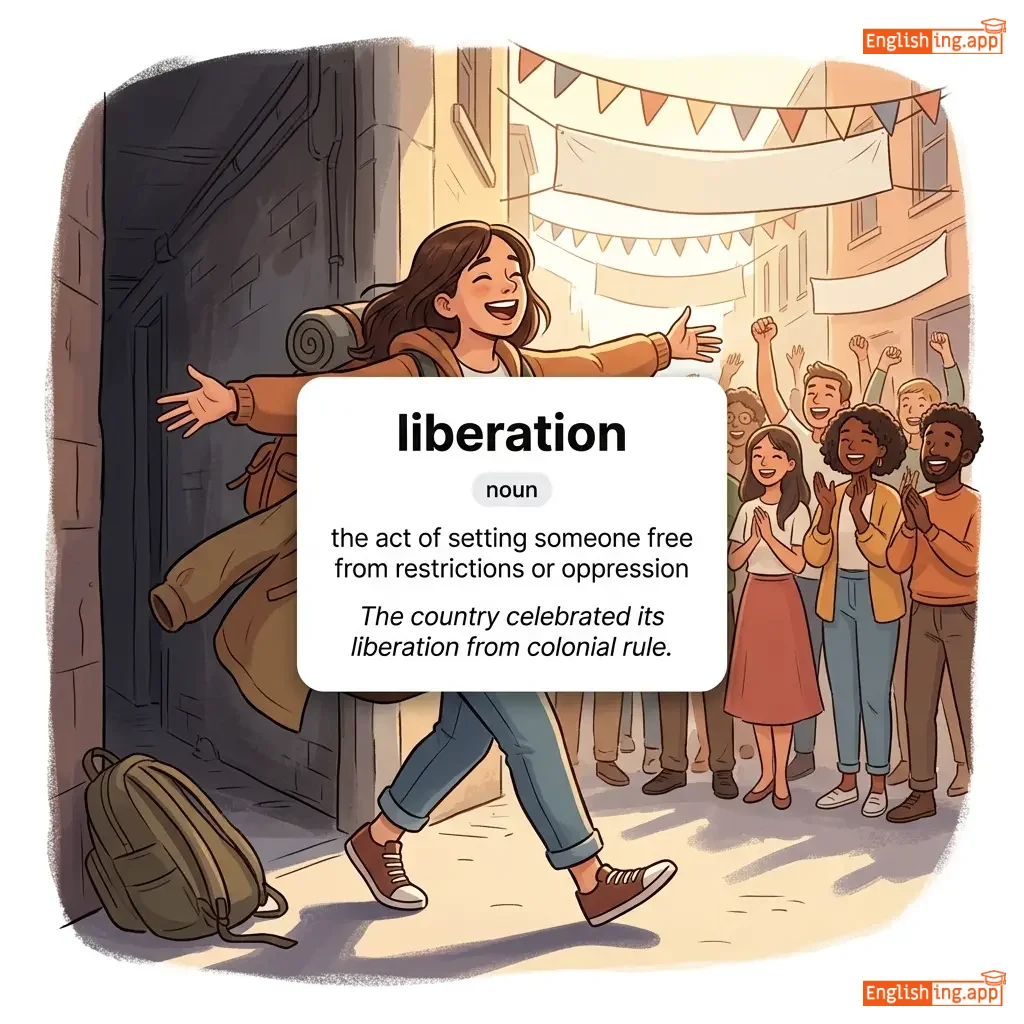
liberation definition card — visual illustration of the meaning
noun
/ˌlɪbəˈreɪʃən/
मुक्ति (mukti)

the act of setting someone free from restrictions or oppression

"The country celebrated its liberation from colonial rule."

"देश ने उपनिवेशी शासन से अपनी मुक्ति का उत्सव मनाया।" (Desh ne upniveshi shasan se apni mukti ka utsav manaya.)
noun
/ˌlɪbəˈreɪʃən wɔːr/
स्वतंत्रता संग्राम (swatantrata sangram)

a war fought to gain freedom from foreign rule, occupation, or oppression; an armed struggle for national independence

"The liberation war reshaped the nation’s history and identity."

"स्वतंत्रता संग्राम ने देश के इतिहास को नई दिशा दी।" (swatantrata sangram ne desh ke itihas ko nai disha di)
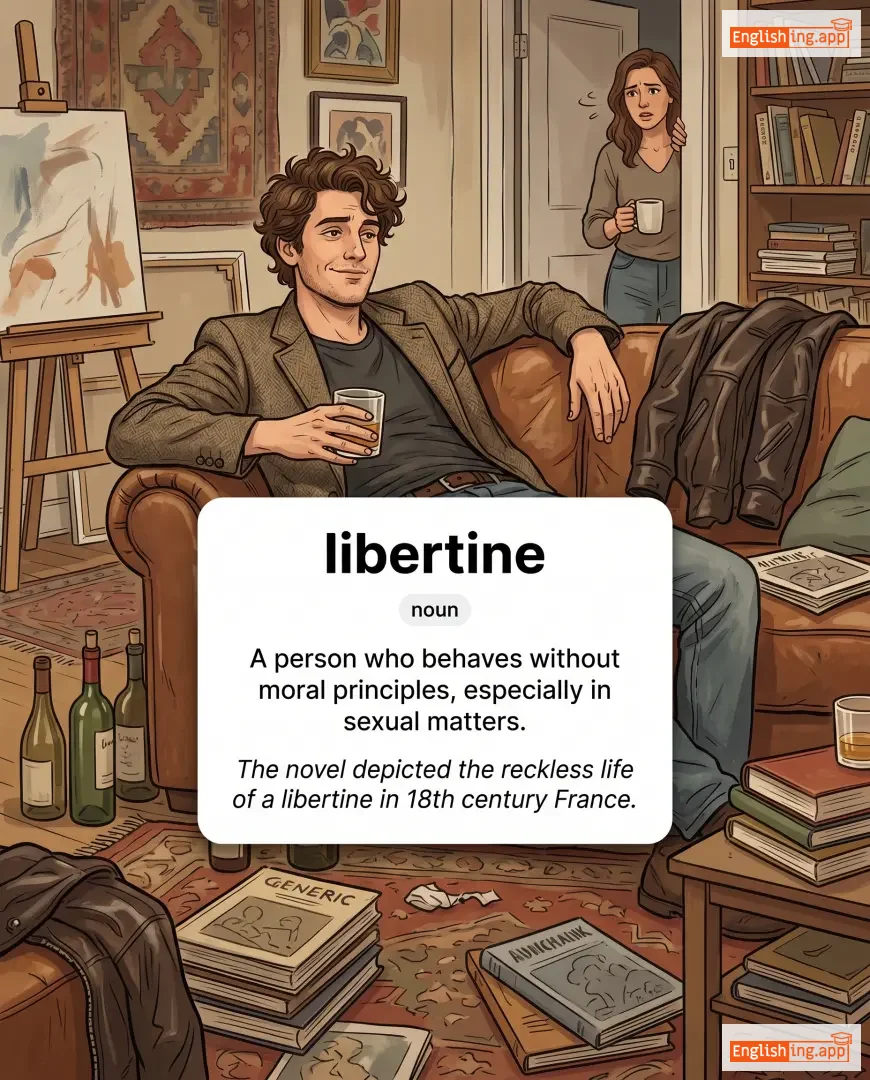
libertine definition card — visual illustration of the meaning
noun
/ˈlɪbərˌtiːn/
नैतिकता से परे व्यक्ति (naitikata se pare vyakti)

A person who behaves without moral principles, especially in sexual matters.

"The novel depicted the reckless life of a libertine in 18th century France."

"उपन्यास में 18वीं सदी के फ्रांस में एक लिबर्टिन के निरंकुश जीवन को दर्शाया गया।" (Upanyas mein 18vi sadi ke France mein ek libertin ke nirankush jeevan ko darshaya gaya.)
noun
/ˈlɪbərti/
स्वतंत्रता (svatantrata)

the state of being free within society from oppressive restrictions

"Freedom of speech is a basic liberty."

"स्वतंत्रता का अधिकार बुनियादी स्वतंत्रता है।" (Svatantrata ka adhikar buniyadi svatantrata hai.)
adjective
/lɪˈbɪdənəs/
कामुक (kamuk)

Showing excessive sexual drive; lustful.

"The play was criticized for its libidinous characters."

"नाटक को इसके कामुक पात्रों के लिए आलोचना की गई थी।" (Natak ko iske kamuk patrong ke liye alochna ki gayi thi.)
libido definition card — visual illustration of the meaning
noun
/lɪˈbiːdoʊ/
यौन इच्छा (yaun ichchha)

Sexual desire or drive.

"Stress can sometimes lower a person's libido."

"तनाव कभी-कभी एक व्यक्ति की यौन इच्छा को कम कर सकता है।" (Tanaav kabhi-kabhi ek vyakti ki yaun ichchha ko kam kar sakta hai.)
noun
/laɪˈbrɛəriən/
पुस्तकालयाध्यक्ष (pustakalayadhyaksh)

a person who manages, organizes, and assists users in a library

"The librarian helped me find a rare history book."

"पुस्तकालयाध्यक्ष ने मुझे एक दुर्लभ इतिहास की किताब ढूंढने में मदद की।" (pustakalayadhyaksh ne mujhe ek durlabh itihas ki kitab dhundhne mein madad ki)
noun
/ˈlaɪ.brɛr.i/
पुस्तकालय (pustakalay)

A building or room containing collections of books, periodicals, and sometimes other materials for people to read or borrow.

"She spent the afternoon studying in the library."

"वह पुस्तकालय में अध्ययन करने के लिए दोपहर बिताती है।" (Vah pustakalay mein adhyayan karne ke liye dopahar bitaati hai.)
noun
/lɪˈbrɛtoʊ/
ऑपेरा की पुस्तक (opera ki pustak)

The text of an opera or other long vocal work.

"She studied the libretto before attending the opera performance."

"उसने ऑपेरा प्रदर्शन से पहले लिब्रेटो का अध्ययन किया।" (Usne opera pradarshan se pehle libretto ka adhyayan kiya.)
noun
/ˈlaɪsəns/
अनुमति पत्र (anumati patra)

An official document giving permission to do, use, or own something.

"She applied for a driving licence last week."

"उसने पिछले हफ्ते ड्राइविंग लाइसेंस के लिए आवेदन किया था।" (Usne pichhle hafte driving license ke liye aavedan kiya tha.)
noun, verb
/ˈlaɪsəns/
लाइसेंस / अनुमति (license / anumati)

A legal permission to do something (noun); to grant such permission (verb).

"You must have a driving license to operate a car legally."

"आपको कार चलाने के लिए ड्राइविंग लाइसेंस होना चाहिए।" (Aapko car chalane ke liye driving license hona chahiye.)
noun
/ˌlaɪ.sənˈsiː/
लाइसेंसधारी (licensedhari)

a person or organization that holds a license to do something

"The licensee is responsible for following all regulations."

"लाइसेंसधारी सभी नियमों का पालन करने के लिए जिम्मेदार है।" (licensedhari sabhi niyamon ka palan karne ke liye zimmedar hai.)
adjective
/laɪˈsɛnʃəs/
वासनापूरित (vasanapurit)

Lacking moral restraint; disregarding accepted rules of conduct.

"The novel was criticized for its licentious themes."

"उपन्यास को इसके वासनापूरित विषयों के लिए आलोचना की गई।" (Upanyas ko iske vasanapurit vishayon ke liye alochna ki gayi.)
adjective
/ˈlɪsɪt/
वैध (vaidha)

Permitted by law or by rules; legal.

"The trade of certain goods is licit under international law."

"कुछ वस्तुओं का व्यापार अंतरराष्ट्रीय कानून के तहत वैध है।" (Kuch vastuon ka vyapar antarraashtreey kanoon ke tahat vaidha hai.)
lick definition card — visual illustration of the meaning
verb
/lɪk/
चाटना (chatna)

to pass the tongue over something; to defeat decisively

"The cat licked its paws clean."

"बिल्ली ने अपनी पंजे को साफ किया।" (Billi ne apni panje ko saaf kiya.)
noun
/lɪd/
ढक्कन (dhakkan)

a cover for the top of a container

"She closed the lid tightly on the jar."

"उसने जार के ढक्कन को कसकर बंद कर दिया।" (Usne jar ke dhakkan ko kas kar band kar diya.)
lie definition card — visual illustration of the meaning
verb
/laɪ/
झूठ बोलना (jhuth bolna)

To make a false statement with the intention to deceive.

"He lied about his age to get the job."

"उसने नौकरी पाने के लिए अपनी उम्र के बारे में झूठ बोला।" (Usne naukri paane ke liye apni umra ke baare mein jhooth bola.)
noun
/liːdʒ/
स्वामीप्रभु (swamipravu)

A feudal lord entitled to allegiance and service; a loyal subject.

"The knight pledged loyalty to his liege."

"योद्धा ने अपने स्वामीप्रभु के प्रति वफादारी की शपथ ली।" (yoddha ne apne swamipravu ke prati vafadari ki shapath li.)
noun
/liːən/
शिकायत (shikayat)

A legal right to keep possession of property until a debt is paid.

"The bank placed a lien on the house until the mortgage was cleared."

"बैंक ने घर पर लियन रखा जब तक मॉर्टगेज चुकता नहीं हुआ।" (Bank ne ghar par lien rakha jab tak mortgage chukta nahi hua.)
noun
/ˈlaɪər/
झूठा व्यक्ति (jhootha vyakti)

a person who tells lies; an alternative spelling of liar

"No one trusted him because he was known as a habitual lier."

"वह एक आदतन झूठा था, इसलिए कोई उस पर भरोसा नहीं करता था।" (vah ek aadatan jhootha tha isliye koi us par bharosa nahin karta tha)
noun
/luː/
बदला (badla)

Instead of; in place of.

"He gave money in lieu of flowers."

"उसने फूलों के बदले पैसे दिए।" (Usne phoolon ke badle paise diye.)
noun
/laɪf/
जीवन (jeevan)

The existence of an individual human being or animal.

"Life is full of challenges and opportunities."

"जीवन चुनौतियों और अवसरों से भरा हुआ है।" (Jeevan chunautiyon aur avsaron se bhara hua hai.)
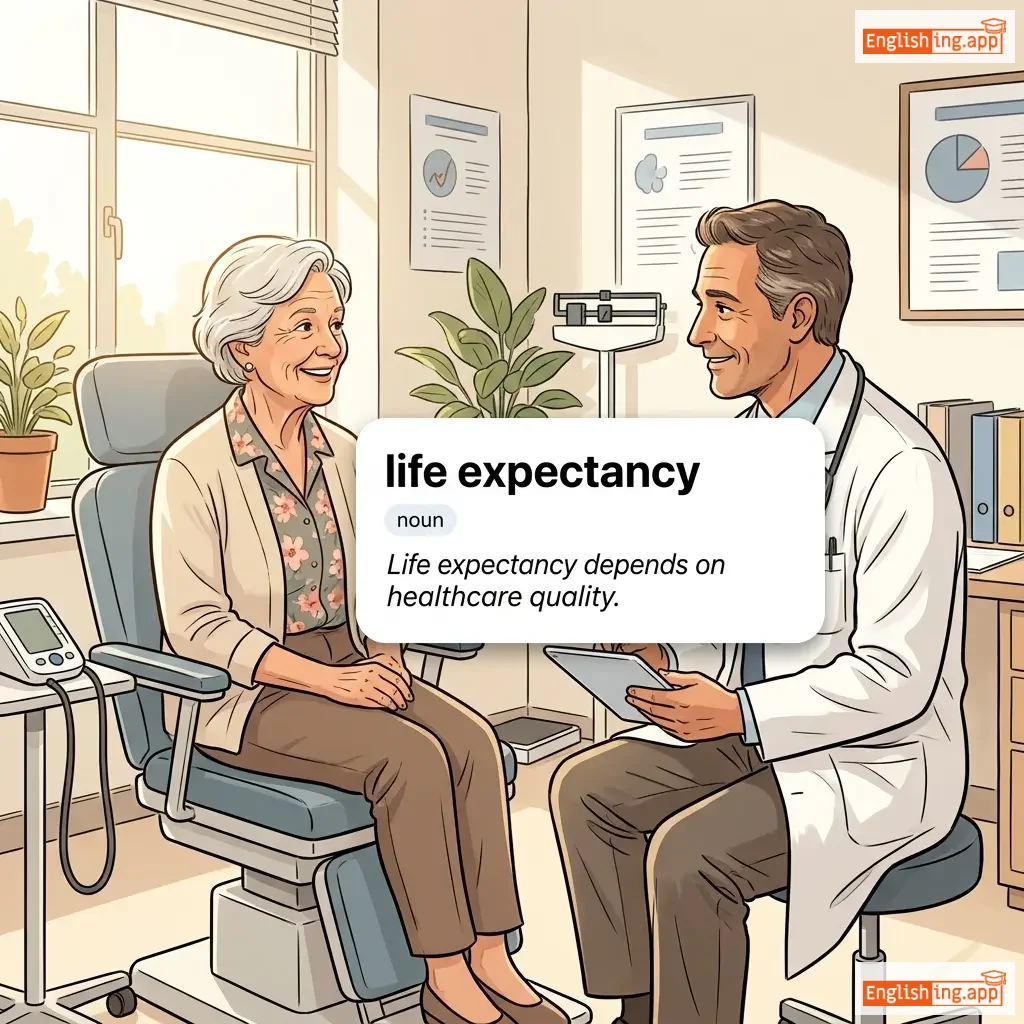
life expectancy definition card — visual illustration of the meaning
noun
ˈlaɪf ɪkˌspek.tən.si
आयु प्रत्याशा (ayu pratyasha)

The average period that a person may expect to live; the length of time for which something is expected to last or to continue being effective.

"Life expectancy depends on healthcare quality."

"आयु प्रत्याशा स्वास्थ्य देखभाल गुणवत्ता पर निर्भर करती है।" (Ayu pratyasha swasthya dekbhalk gunwatta par nirbhar karti hai.)
adjective
/ˈlaɪf.laɪk/
वास्तविक जैसा (vastavik jaisa)

Very similar to a real person, object, or scene; realistic.

"The wax figure was so lifelike that people thought it was a real person."

"मोम की मूर्ति इतनी वास्तविक जैसी थी कि लोग सोचने लगे कि यह असली व्यक्ति था।" (Mom ki moorti itni vastavik jaisi thi ki log sochne lage ki yeh asli vyakti tha.)
adjective
/ˈlaɪf.lɒŋ/
आजीवन (aajeevan)

Lasting or existing for the whole of a person's life.

"They remained lifelong friends."

"वे आजीवन दोस्त बने रहे।" (Ve aajeevan dost bane rahe.)
noun
/ˈlaɪf.staɪl/
जीवनशैली (jeevanshaili)

The way in which a person or group lives, including habits, attitudes, and possessions.

"A healthy lifestyle includes regular exercise and a balanced diet."

"एक स्वस्थ जीवनशैली में नियमित व्यायाम और संतुलित आहार शामिल है।" (Ek svasth jeevanshaili mein niyamit vyaayam aur santulit aahaar shamil hai.)
noun
/ˈlaɪf.taɪm/
जीवनकाल / आजीवन (jeevankaal / aajeevan)

The duration of a person's life or the existence of something.

"She achieved more in her lifetime than most people dream of."

"वह अपनी जीवनकाल में उन लोगों से ज्यादा हासिल करने में सफल हुई जो कभी सपने में भी नहीं सोचते।" (Vah apni jeevankaal mein un logon se zyada haasil karne mein safal hui jo kabhi sapne mein bhi nahi sochte.)
verb
/lɪft/
उठाना (uthaana)

To raise something to a higher position or level.

"He lifted the heavy box with ease."

"उसने आसानी से भारी बॉक्स उठाया।" (Usne aasanī se bhārī boks uthāyā.)
noun
/ˈlɪɡ.əmənt/
लिगामेंट ऊतक (ligament utk)

A tough band of tissue that connects bones at a joint.

"He tore a ligament in his knee while playing football."

"फुटबॉल खेलते समय उसने अपने घुटने में एक लिगामेंट फाड़ दिया था।" (Football khelte samay usne apne ghoomne mein ek ligament faad diya tha.)
noun
/ˈlɪɡ.ə.tʃər/
बंधक / बंधन (bandhak / bandhan)

A thing used for tying or binding tightly; in music/printing, two or more notes or letters joined together.

"The doctor used a ligature to stop the bleeding."

"डॉक्टर ने खून बहने को रोकने के लिए एक लिगेचर का इस्तेमाल किया।" (Doktor ne khoon bahne ko rokne ke liye ek ligature ka istemal kiya.)
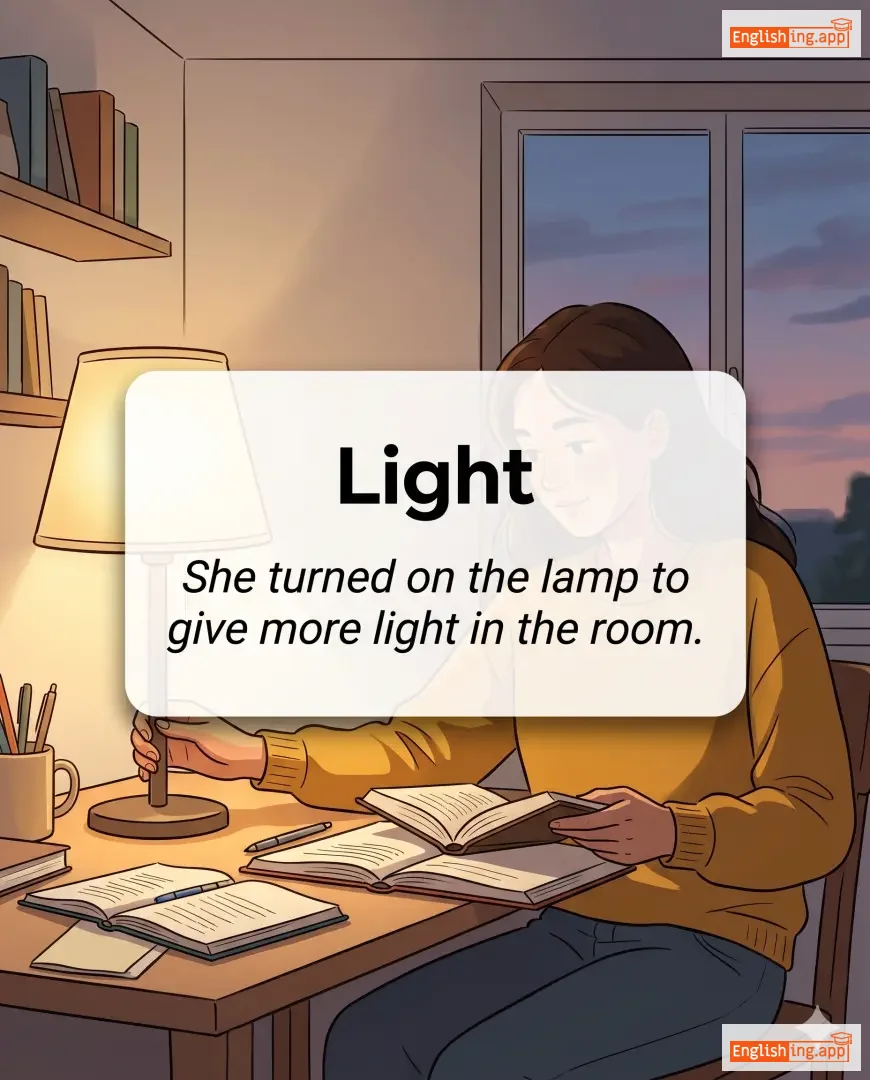
Light definition card — visual illustration of the meaning
noun, verb, adjective
/laɪt/
रोशनी (roshni)

The natural agent that makes things visible; to illuminate or make something start burning.

"She turned on the lamp to give more light in the room."

"वह कमरे में अधिक रोशनी देने के लिए लैंप चालू करती है।" (Vah kamre mein adhik roshni dene ke liye lamp chalu karti hai.)
noun
/laɪt bʌlb/
बत्ती (batti)

a glass or plastic container that produces light when electricity passes through it

"The light bulb in the kitchen needs to be replaced."

"रसोई में बत्ती को बदलने की जरूरत है।" (rasoi mein batti ko badalne ki zaroorat hai)
noun
/laɪt ˈkʌlər/
हल्का रंग (halka rang)

a pale or bright shade of any color

"The walls were painted in light colours to make the room look bigger."

"कमरे को बड़ा दिखाने के लिए दीवारों को हल्के रंगों में रंगा गया था।" (kamre ko bada dikhane ke liye deewaron ko halke rangon mein ranga gaya tha.)
adjective
/laɪt ɡriːn/
हल्का हरा (halka hara)

a pale shade of green color; not dark green

"She wore a light green dress to the garden party."

"वह बग़ीचे की पार्टी में हल्का हरा रंग की ड्रेस पहने हुए थी।" (vah bagiche ki party mein halka hara rang ki dress pehne hue thi.)
adjective
/laɪt red/
हल्का लाल (halka lal)

a pale or diluted shade of red color

"She wore a light red dress to the party."

"उसने पार्टी में हल्का लाल रंग का कपड़ा पहना।" (Usne party mein halka lal rang ka kapda pehna.)
adjective
/ˌlaɪtˈhɑːrtɪd/
हल्का-फुल्का (halka-phulka)

cheerful, carefree, and not serious

"She gave a light-hearted speech at the party."

"वह पार्टी में एक हल्के-फुल्के भाषण के साथ आई।" (Vah party mein ek halka-phulka bhashan ke saath aayi.)
verb
/ˈlaɪtən/
हल्का करना; उज्ज्वल करना (halka karna; ujjval karna)

to make something brighter or less dark; to make something less heavy or serious

"A joke can lighten the mood during a tense meeting."

"एक मज़ाक तनावपूर्ण बैठक का माहौल हल्का कर सकता है।" (ek mazaak tanavpurn baithak ka mahaul halka kar sakta hai)
noun
/ˈlaɪtɪŋ/
प्रकाश व्यवस्था (prakash vyavastha)

the arrangement or use of light in a place; the act of providing light

"The lighting in the restaurant created a warm and cozy atmosphere."

"रेस्तरां में लाइटिंग ने एक गर्म और आरामदायक माहौल तैयार किया।" (Restaran mein lighting ne ek garm aur aaramdayak maahol tayar kiya.)
adverb
/ˈlaɪtli/
हल्के से (halke se)

gently or with little force or weight

"She touched the baby’s hand lightly."

"उसने बच्चे के हाथ को हल्के से छुआ।" (Usne bachche ke haath ko halke se chhua.)
noun
/ˈlaɪtnɪŋ/
आग की चमक (aag ki chamak)

a flash of light in the sky caused by electricity during a storm

"The lightning struck a tree near our house."

"आकाश में बिजली गिरने से एक पेड़ हमारे घर के पास गिरा था।" (Aakaash mein bijli girne se ek ped hamare ghar ke paas gira tha.)
adjective
/ˈlɪɡ.ni.əs/
लकड़ी जैसा (lakdi jaisa)

having the texture or appearance of wood; woody

"The ligneous stem supported the heavy flowers."

"लकड़ी जैसा तना भारी फूलों का समर्थन कर रहा था।" (Lakdi jaisa tana bhari phoolon ka samarthan kar raha tha.)
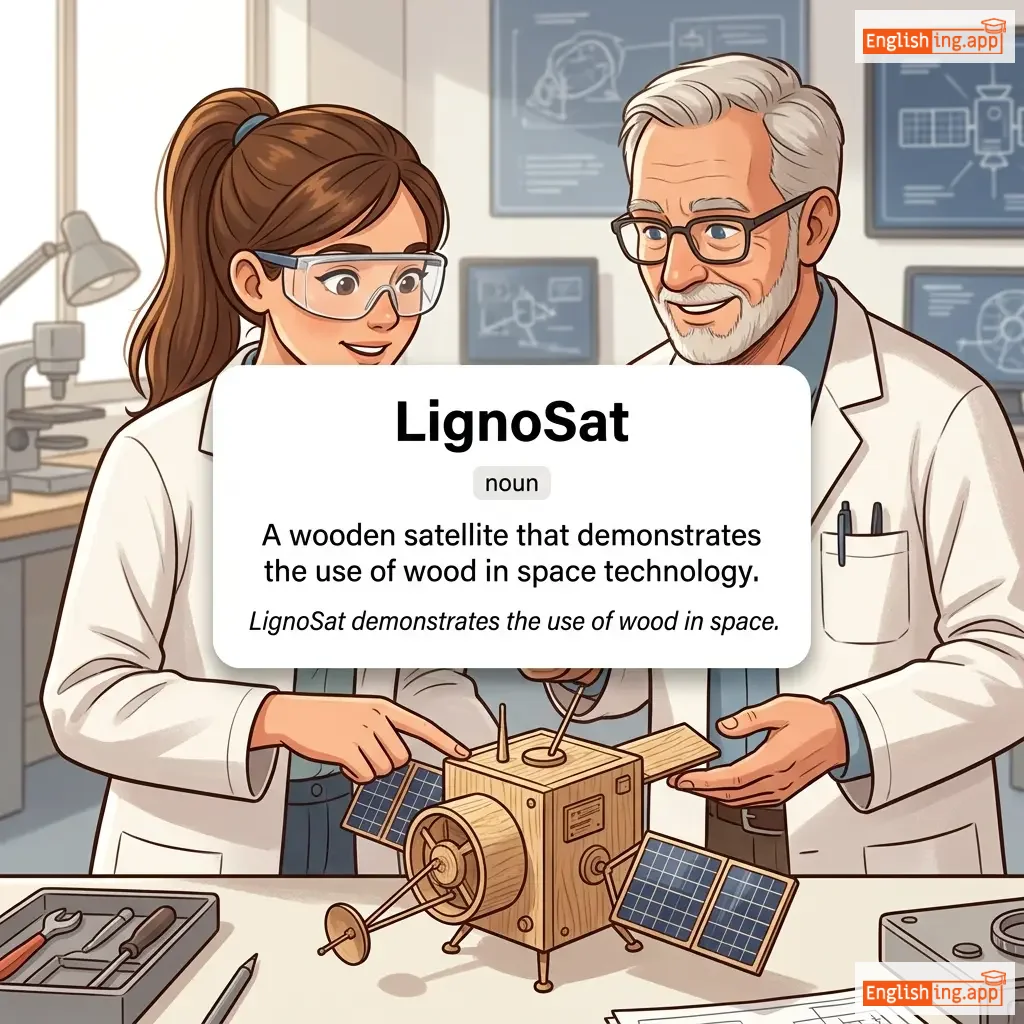
LignoSat definition card — visual illustration of the meaning
noun
ˈlɪɡ.nəʊˌsæt
लकड़ी उपग्रह (lakdi upgrah)

A wooden satellite that demonstrates the use of wood in space technology.

"LignoSat demonstrates the use of wood in space."

"लिग्नोसैट अंतरिक्ष में लकड़ी के उपयोग को प्रदर्शित करता है।" (LignoSat antariksh mein lakdi ke upyog ko pradarshit karta hai.)
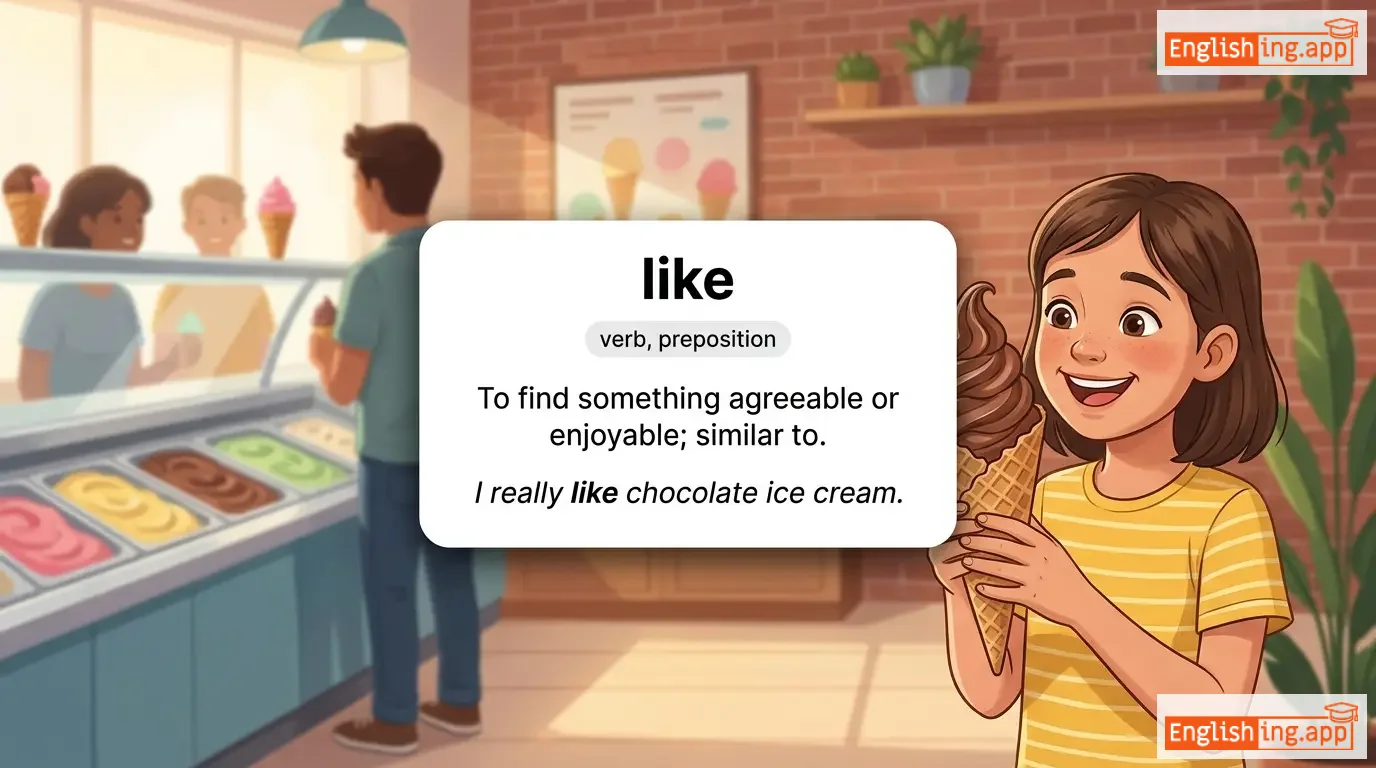
like definition card — visual illustration of the meaning
verb, preposition
/laɪk/
पसंद करना (pasand karna)

To find something agreeable or enjoyable; similar to.

"I really like chocolate ice cream."

"मैं सच में चॉकलेट आइस क्रीम पसंद करता हूँ।" (Main sach mein chocolate ice cream pasand karta hoon.)
noun
/ˈlaɪ.kli.hʊd/
संभावना (sambhavna)

the chance or probability of something happening

"There is a strong likelihood of rain tomorrow."

"कल बारिश होने की उच्च संभावना है।" (Kal barish hone ki uchch sambhavna hai.)
adjective
/ˈlaɪk.li/
संभावित (sambhavit)

probable or expected to happen

"It is likely to rain this evening."

"इस शाम बारिश होने की संभावना है।" (Is shaam barish hone ki sambhavana hai.)
verb
/ˈlaɪ.kən/
तुलना करना (tulna karna)

to compare one thing to another, often in a figurative way

"He likened her voice to sweet music."

"उसने उसकी आवाज़ को मीठी संगीत से तुलना किया।" (Usne uski aawaaz ko meethi sangeet se tulna kiya.)
noun
/ˈlaɪk.nəs/
समानता; समानता (likeness)

the fact or quality of being alike; resemblance; a portrait or representation

"The portrait shows a strong likeness to her grandmother."

"चित्र उसकी दादी के साथ एक मजबूत समानता दिखाता है।" (chitra uski daadi ke saath ek majboot samaanta dikhata hai)
adverb
/ˈlaɪkˌwaɪz/
इसी तरह; भी; समान रूप से (isi tarah; bhi; samaan roop se)

In the same way; also; similarly.

"She smiled, and he likewise returned the gesture."

"वह मुस्काई, और उसने भी वही इशारा वापस किया।" (Vah muskaai, aur usne bhi wahi ishara wapas kiya.)
noun
/ˈlaɪkɪŋ/
पसंद, प्रेम (pasand, prem)

A feeling of fondness or preference for something or someone.

"She has a strong liking for classical music."

"उसकी क्लासिकल संगीत के लिए एक मजबूत पसंद है।" (Uski classical sangeet ke liye ek majboot pasand hai.)
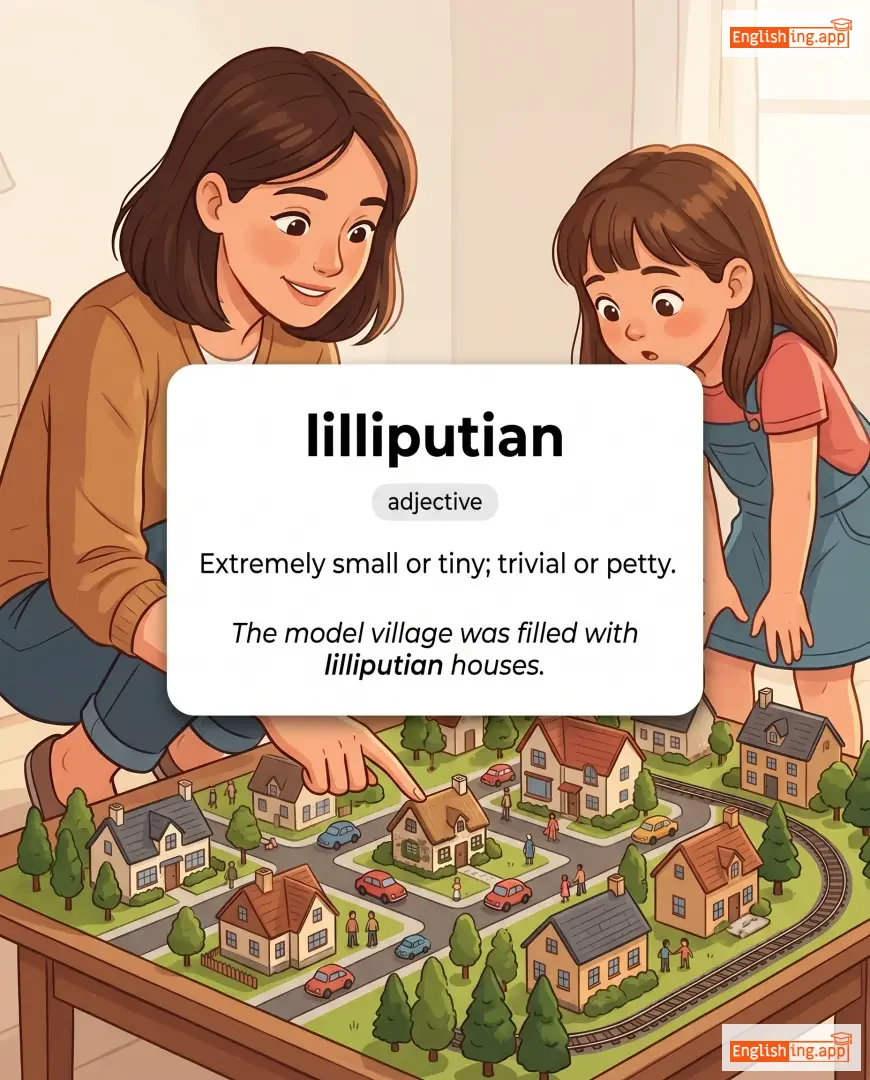
lilliputian definition card — visual illustration of the meaning
adjective
/ˌlɪlɪˈpjuːʃən/
अत्यंत छोटा (atyant chhota)

Extremely small or tiny; trivial or petty.

"The model village was filled with lilliputian houses."

"मॉडल गांव छोटे छोटे घरों से भरा था।" (Model gaon chhote chhote gharo se bhara tha.)