वोकैबुलरीज

इंग्लिश वोकैबुलरी डिस्कवर, लर्न और मास्टर करें

adjective
/ˈkɪŋ.ki/
असामान्य यौन प्रथाएँ; घुंघराले या मुड़े हुए बाल (kinki)

having or involving unconventional sexual practices; having tight curls or bends

"His kinky hair made him look unique."

"उसके किक्की बालों ने उसे अद्वितीय बना दिया।" (uske kikki baalon ne use adwitiya bana diya.)
noun
कुटुम्ब, रिश्तेदार (kutumb, rishte daar)
noun
/ˈkiːɒsk/
छोटा स्टॉल (chhota stall)

A small, open-fronted hut or cubicle from which newspapers, refreshments, tickets, etc., are sold.

"She bought a bottle of water from the kiosk near the station."

"उसने स्टेशन के पास के कियोस्क से पानी की एक बोतल खरीदी।" (Usne station ke paas ke kiosk se paani ki ek botal kharidi.)
noun
/ˈkɪzmɛt/
भाग्य (bhagya)

Destiny or fate.

"Meeting her on that day felt like pure kismet."

"उस दिन उससे मिलना जैसे पूरी किस्मत थी।" (Us din usse milna jaise poori kismet thi.)
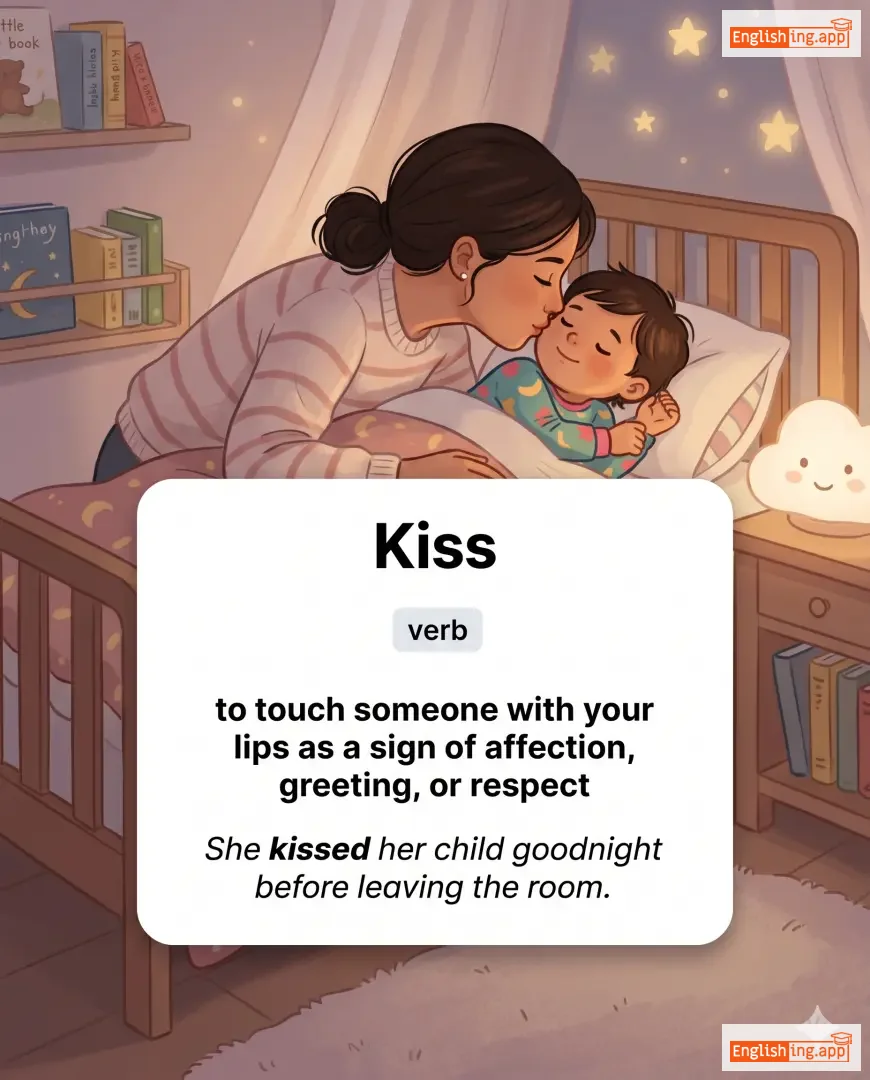
Kiss definition card — visual illustration of the meaning
verb
/kɪs/
खुशी (khushi)

to touch someone with your lips as a sign of affection, greeting, or respect

"She kissed her child goodnight before leaving the room."

"उसने पुरस्कार प्राप्त करने के बाद अपनी खुशी को छुपाया नहीं।" (Usne puraskaar prapt karne ke baad apni khushi ko chhupaya nahi.)
noun
/kɪt/
सामान का सेट (samaan ka set)

a set of tools, equipment, or materials used for a particular purpose

"He bought a first aid kit for emergencies."

"उसने आपातकाल के लिए एक प्राथमिक चिकित्सा किट खरीदी।" (Usne aapaatkaal ke liye ek prathamik chikitsa kit khareedi.)
noun
/ˈkɪtʃən/
रसोईघर (rasoighar)

a room or area where food is prepared and cooked

"The kitchen was filled with the smell of fresh bread."

"रसोईघर ताज़ा रोटियों की खुशबू से भर गया था।" (Rasoighar taza rotiyon ki khushboo se bhar gaya tha.)
noun
घर का बगीचा; रसोई के पास बगीचा (ghar ka bagicha; rasoi ke paas bagicha)
noun
/kaɪt/
गिद्ध (giddh)

a bird of prey with long wings and a forked tail; also a toy flown in the air

"The kite soared high above the fields looking for prey."

"काइट खेतों के ऊपर शिकार की तलाश में ऊँचा उड़ रहा था।" (Kait kheton ke upar shikar ki talash mein ooncha ud raha tha.)
noun
/kɪθ/
मित्र (mitra)

Friends, acquaintances, and relations.

"He invited all his kith and kin to the wedding."

"उसने शादी में अपने सभी मित्रों और रिश्तेदारों को आमंत्रित किया।" (Usne shaadi mein apne sabhi mitron aur rishtedaron ko amantrit kiya.)
noun
/ˈkɪt.ən/
बिल्ली का बच्चा (billi ka bachcha)

a young cat

"The little kitten loves to play with yarn balls."

"नन्हा बिल्ली का बच्चा ऊन की गेंद से खेलना पसंद करता है।" (nanha billi ka bachcha un ki gend se khelna pasand karta hai.)
noun
/ˈkiː.wi/
कीवी (kiwi)

a small brown fruit with green flesh and black seeds; a flightless bird from New Zealand

"I love eating fresh kiwi for breakfast."

"मैं नाश्ते में ताजे कीवी खाना पसंद करता हूँ।" (main nashtay mein tazay kiwi khana pasand karta hoon.)
noun
/ˌklɛptəˈmeɪniæk/
चोरी करने की लत वाला व्यक्ति (chori karne ki lat wala vyakti)

A person with an irresistible urge to steal, typically without need or profit.

"The kleptomaniac was caught shoplifting again."

"क्लेप्टोमेनियाक को फिर से दुकान से चोरी करते हुए पकड़ा गया।" (Kleptomaniac ko phir se dukaan se chori karte hue pakda gaya.)
noun
/næk/
कला (kala)

a natural skill or ability; a special talent for doing something easily

"She has a knack for making people feel comfortable."

"उसके पास लोगों को आरामदायक महसूस कराने की कला है।" (Uske paas logon ko aaramdayak mahsus karane ki kala hai.)
adjective (informal, British)
/ˈnæk.ərd/
बहुत थका हुआ (bahut thaka hua)

Extremely tired or exhausted.

"After the long hike, I was completely knackered."

"लंबी सैर के बाद, मैं पूरी तरह से थका हुआ था।" (Lambi sair ke baad, main poori tarah se thaka hua tha.)
noun
/neɪv/
दुष्ट व्यक्ति (dusht vyakti)

an unprincipled, deceitful, or dishonest man; an old term for a servant or male of low status

"The cunning knave tricked the villagers out of their money."

"चालाक दुष्ट व्यक्ति ने गांववालों से उनका पैसा छीन लिया।" (Chalak dusht vyakti ne gaonwalon se unka paisa chheen liya.)
noun
/ˈneɪvəri/
धोखाधड़ी (dhokhadri)

dishonest or deceitful behavior; trickery

"The politician’s knavery was exposed by the media."

"राजनेता की धोखाधड़ी को मीडिया ने उजागर किया।" (Raajneeta ki dhokhadri ko media ne ujagar kiya.)
verb
/niːd/
गूथना (goothna)

to work dough or clay into a uniform mixture by pressing, folding, and stretching

"She kneads the dough until it becomes smooth."

"वह आटे को तब तक गूंथती है जब तक वह चिकना नहीं हो जाता।" (Woh aate ko tab tak goonthti hai jab tak woh chikna nahi ho jata.)
noun
/niː/
सुख (sukh)

the joint between the thigh and the lower leg

"He hurt his knee while playing football."

"उन्हें पुरस्कार मिलने पर अपनी खुशी छिपाना मुश्किल था।" (Unhein puraskar milne par apni khushi chhupana mushkil tha.)
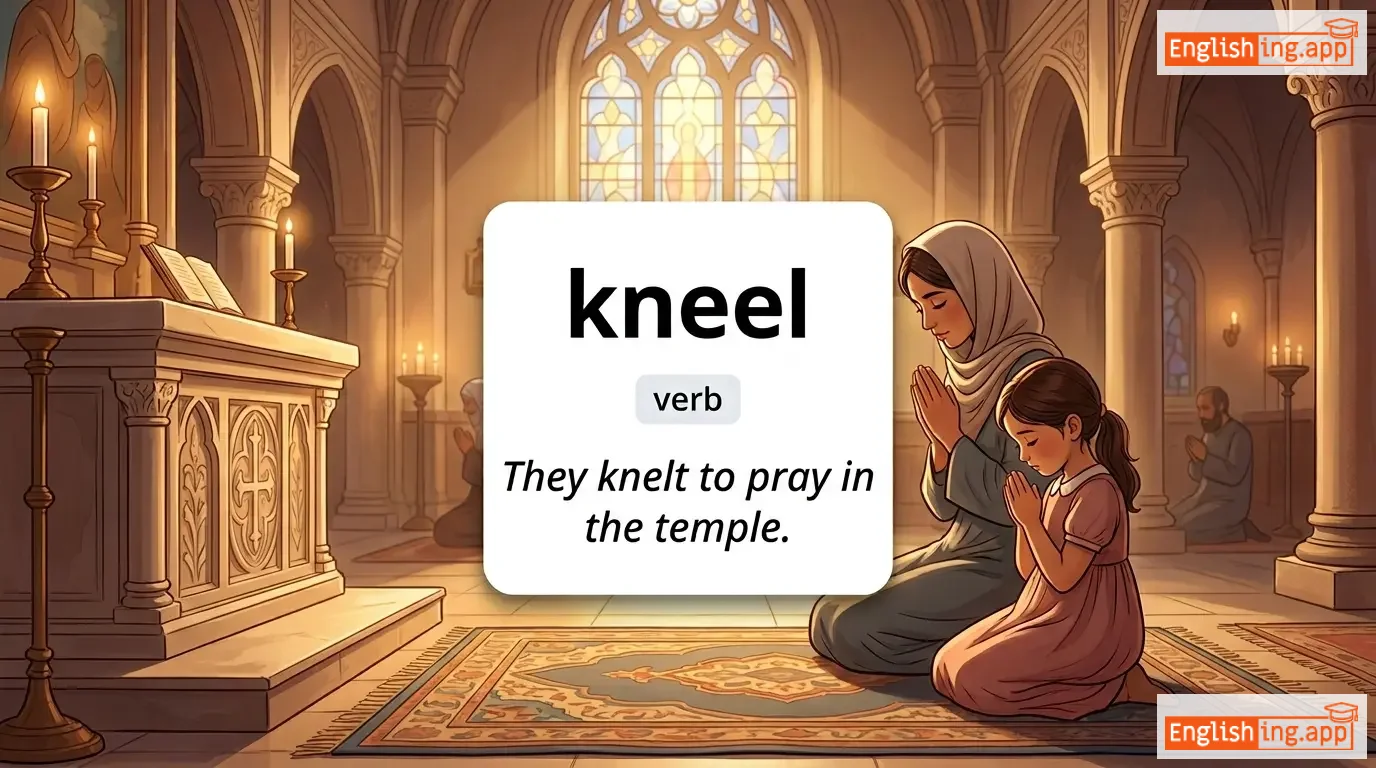
kneel definition card — visual illustration of the meaning
verb
/niːl/
घुटने टेकना (ghutne tekna)

to position the body by resting on the knees, usually as a sign of respect, prayer, or submission

"They knelt to pray in the temple."

"वे मंदिर में प्रार्थना करने के लिए घुटनों के बल झुके।" (Ve mandir mein prarthna karne ke liye ghutno ke bal jhuke.)
noun
/nɛl/
घंटा (ghanta)

The sound of a bell, especially when rung solemnly for a death or funeral; a signal of the end or failure of something.

"The knell of the church bell echoed through the valley at dusk."

"चर्च की घंटी का नेल शाम को घाटी में गूंज उठा।" (Church ki ghanti ka nel shaam ko ghaati mein goonj utha.)
noun
/ˈnɪk.næk/
सुख (sukh)

A small decorative object, especially in a house.

"The shelf was full of little knickknacks collected from their travels."

"जब उसे पुरस्कार मिला तो वह अपनी खुशी छुपा नहीं सकी।" (Jab use puraskar mila to vah apni khushi chhupa nahin sakee.)
noun
/naɪf/
सुख (sukh)

a tool or weapon with a blade and a handle, used for cutting

"He used a sharp knife to cut the vegetables."

"जब उसे पुरस्कार मिला, तो वह अपनी खुशी को छिपा नहीं सकी।" (Jab use puraskar mila, to wah apni khushi ko chhupa nahi sakee.)
noun
/naɪt/
खुशी (khushi)

A man awarded a non-hereditary title by a monarch for service, especially in the past as a mounted soldier in armor.

"The brave knight rode into battle to protect his kingdom."

"जब उसे पुरस्कार मिला, तो वह अपनी खुशी छुपा नहीं सकी।" (Jab use puraskar mila, to vah apni khushi chhupa nahi saki.)
noun
/ˈnaɪt.hʊd/
नाइटहुड (knighthood)

The rank or dignity of a knight, or the ceremony of conferring knighthood.

"He was honored with knighthood for his contributions to science."

"उन्हें विज्ञान में योगदान के लिए नाइटहुड से सम्मानित किया गया।" (Unhein vigyan mein yogdan ke liye knighthood se sammanit kiya gaya.)
adjective
/ˈnaɪt.li/
नाइट जैसा; शूरवीर; अभिजात और साहसी (nait li jaisa; shurveer; abhijat aur sahasi)

having the characteristics of a knight; chivalrous; noble and brave

"He showed knightly courage in defending the innocent."

"उसने निर्दोष का बचाव करते हुए नाइटली साहस दिखाया।" (Usne nirdosh ka bachav karte hue naitli sahas dikhaya.)
verb
/nɪt/
बुनाई (bunaai)

To make clothes or fabric by interlocking loops of yarn with needles.

"She loves to knit scarves for her friends during the winter."

"वह सर्दी में अपने दोस्तों के लिए स्कार्फ बुनना पसंद करती है।" (vah sardi mein apne doston ke liye scarf bunna pasand karti hai.)
noun; gerund
/ˈnɪtɪŋ/
बुनाई (bunai)

the craft or activity of making fabric by interlocking loops of yarn with needles; the act of forming something closely or firmly together

"She spends her evenings knitting scarves for her family."

"वह अपने परिवार के लिए स्कार्फ बुनाई करती है।" (vah apne parivaar ke liye scarf bunai karti hai)
noun
/nɒb/
दरवाजे या दराज पर गोल आकार का हैंडल; एक छोटी गोल स्विच मशीन पर (darwaje ya daraz par gol aakaar ka handle; ek chhoti gol switch machine par)

a rounded handle on a door or drawer; a small rounded switch on a machine

"He turned the brass knob to open the old wooden door."

"उसने पुरानी लकड़ी के दरवाजे को खोलने के लिए पीतल की नॉब घुमाई।" (Usne purani lakdi ke darwaze ko kholne ke liye peetal ki knob ghumai.)
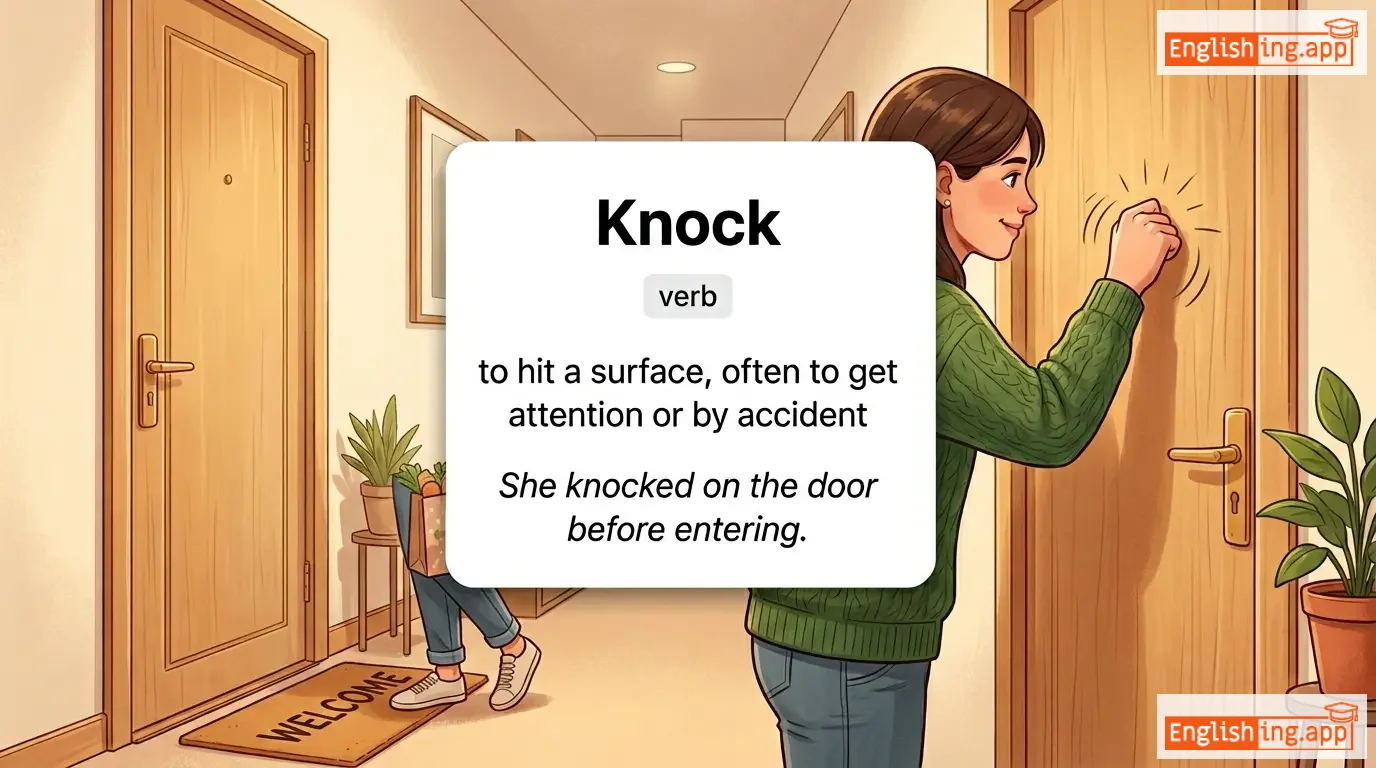
Knock definition card — visual illustration of the meaning
verb
/nɒk/
दरवाजे पर दस्तक देना (darwaje par dastak dena)

to hit a surface, often to get attention or by accident

"She knocked on the door before entering."

"उसने दरवाजे पर दस्तक दी और फिर अंदर घुसी।" (Usne darwaje par dastak di aur phir andar ghusi.)
noun
/noʊl koʊl/
कुल्फ़ी (kulfī)

round bulbous vegetable from cabbage family with pale green color and mild taste

"Knol khol can be eaten raw in salads or cooked in curries."

"कुल्फ़ी को सलाद में कच्चा खा सकते हैं या करी में पकाया जा सकता है।" (kulfī ko salād mein kacchā khā sakte hain yā karī mein pakāyā jā sakta hai)
noun
/noʊl/
टीला (teela)

A small, rounded hill or mound.

"They had a picnic on the grassy knoll."

"उन्होंने घास से ढकी टीले पर पिकनिक की।" (unhone ghas se dhaki teele par picnic ki.)
noun
/nɒt/
गांठ (ganth)

A fastening made by tying a piece of string, rope, or something similar.

"She tied the ribbon into a neat knot."

"उसने रिबन को एक सुंदर गांठ में बांध दिया।" (Usne ribbon ko ek sundar ganth mein baandh diya.)
adjective
/ˈnɒti/
कठिन (kathin)

Complicated, difficult to solve or full of knots.

"He faced a knotty legal issue."

"उसे एक कठिन कानूनी मुद्दे का सामना करना पड़ा।" (use ek kathin kanuni mudde ka samna karna pada.)
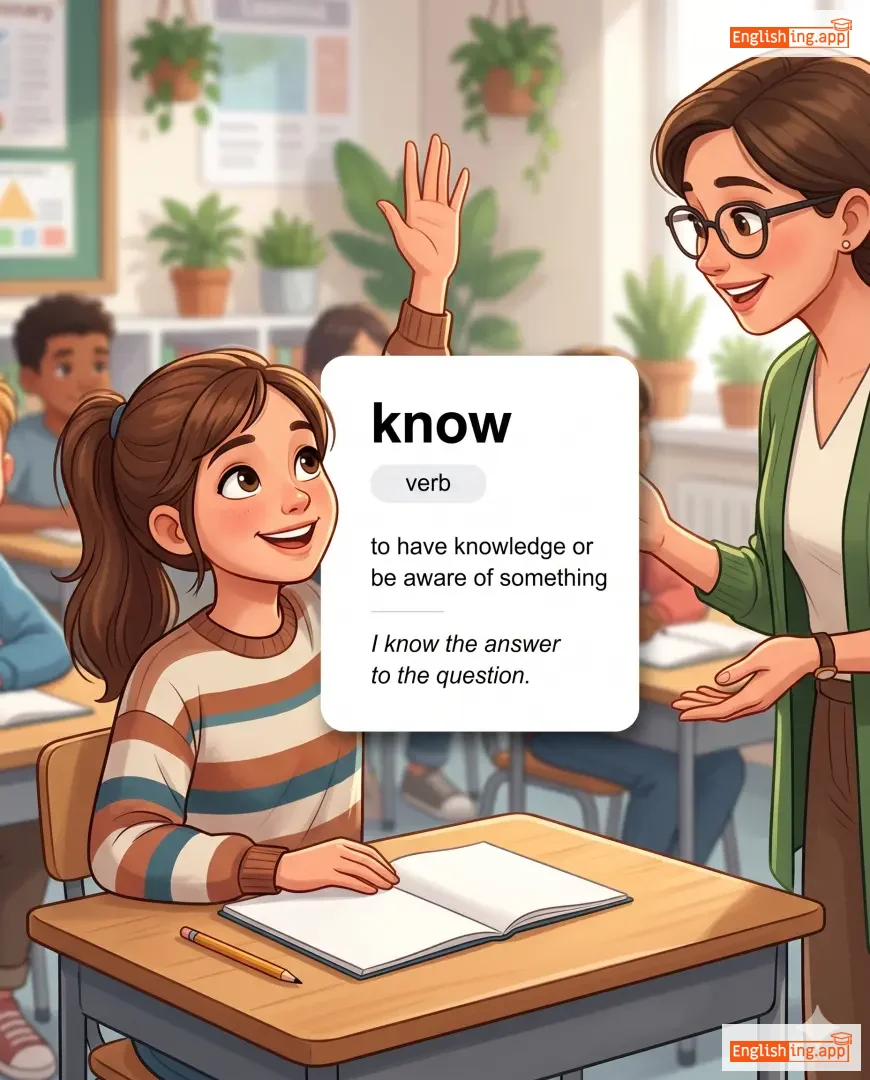
know definition card — visual illustration of the meaning
verb
/noʊ/
जानना (jana)

to have knowledge or be aware of something

"I know the answer to the question."

"मैं सवाल का जवाब जानता हूँ।" (Main sawal ka jawab jaanta hoon.)
adjective
/ˈnoʊ.ɪŋ/
जानकारी; समझ; चतुर; (noing)

showing awareness or understanding; perceptive; shrewd

"She gave him a knowing smile when he mentioned the secret."

"वह उसे गुप्त बात का जिक्र करने पर एक जानकार मुस्कान दी।" (vah use gupt baat ka jikr karne par ek jankaar muskaan di)
adverb
/ˈnoʊɪŋli/
जानबूझकर (janboojhkar)

in a way that shows you are aware of something; intentionally

"She knowingly kept the secret from her friends."

"उसने जानबूझकर अपने दोस्तों से राज़ छुपाया।" (Usne janboojhkar apne doston se raaz chhupaya.)
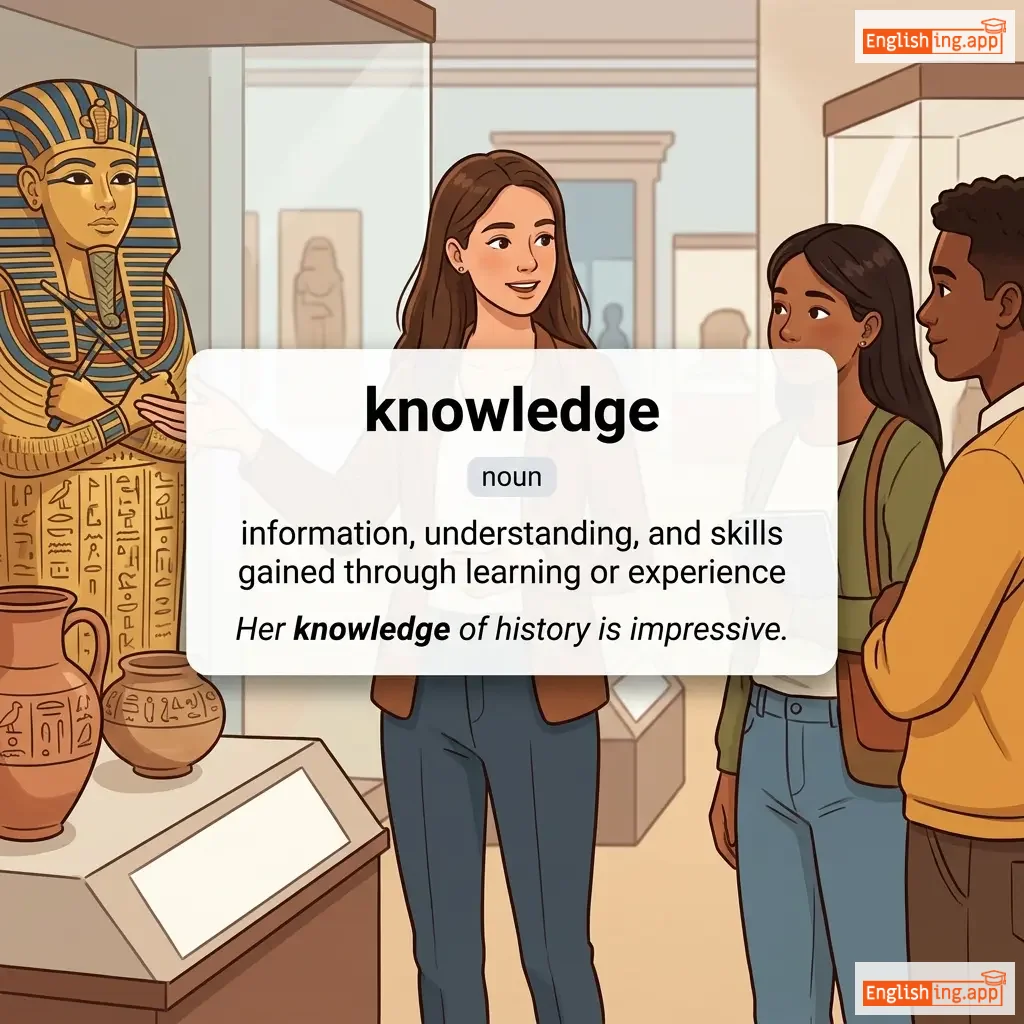
knowledge definition card — visual illustration of the meaning
noun
/ˈnɒlɪdʒ/
ज्ञान (gyaan)

information, understanding, and skills gained through learning or experience

"Her knowledge of history is impressive."

"इतिहास का उनका ज्ञान प्रभावशाली है।" (Itihas ka unka gyaan prabhavshali hai.)
adjective
/ˈnɑː.lɪ.dʒə.bəl/
ज्ञानशील; जानकार; शिक्षित (gnansheel; jaankar; shikshit)

having extensive knowledge; well-informed; educated

"She is very knowledgeable about ancient history."

"वह प्राचीन इतिहास के बारे में बहुत जानकार है।" (vah pracheen itihas ke baare mein bahut jaankar hai.)
adjective
/noʊn/
जाना हुआ (jana hua)

recognized or familiar; something that is identified or acknowledged

"He is a well-known actor in the country."

"वह देश में एक प्रसिद्ध अभिनेता है।" (Vah desh mein ek prasiddh abhineta hai.)
adjective
/kəˈriːən/
कोरियाई (Koriyaai)

relating to Korea, its people, language, or culture

"We went to a Korean restaurant for dinner."

"हम रात के खाने के लिए एक कोरियाई रेस्टोरेंट गए थे।" (Hum raat ke khane ke liye ek Koriyaai restaurant gaye the.)
verb
/ˌkaʊˈtaʊ/
अत्यधिक विनम्रता से पेश आना (atyadhik vinamrata se pesh aana)

To act in an excessively subservient or obedient manner.

"He refused to kowtow to the unreasonable demands."

"उसने असंगत मांगों के सामने झुकने से इनकार कर दिया।" (usne asangat maangon ke samne jhukne se inkaar kar diya.)
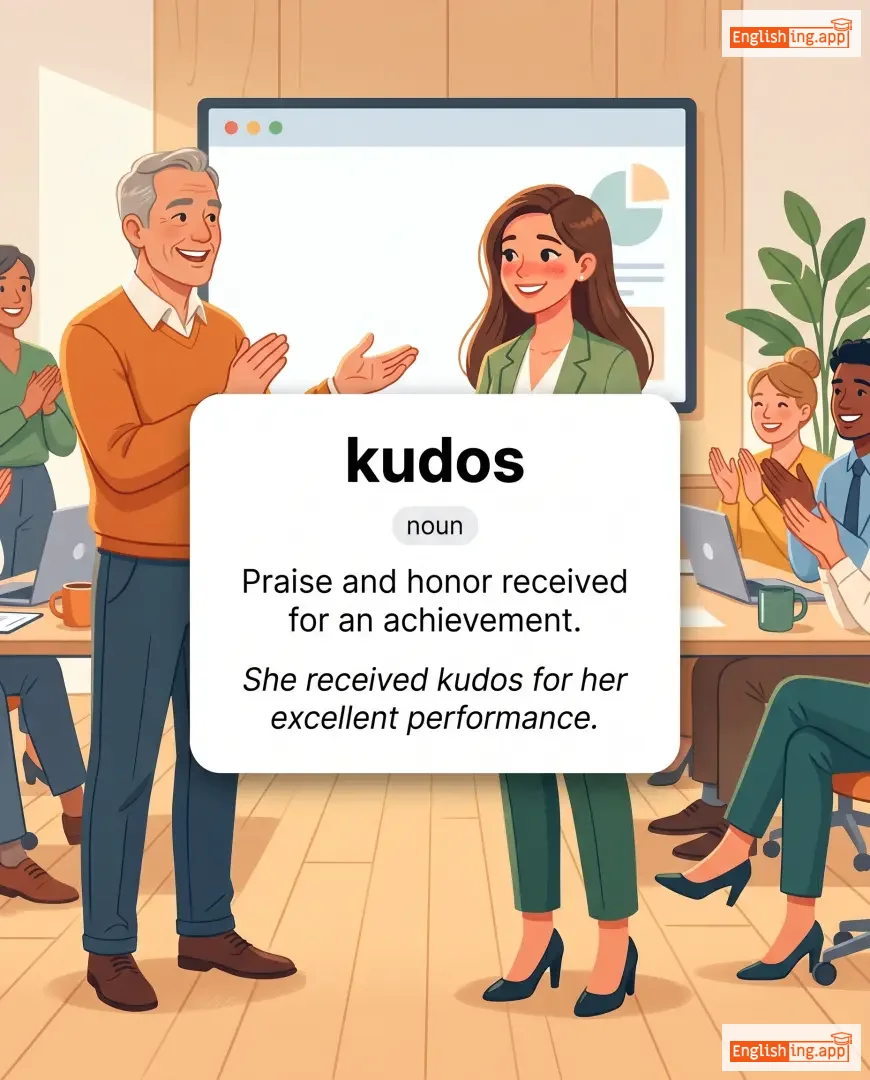
kudos definition card — visual illustration of the meaning
noun
/ˈkuːdɒs/
प्रशंसा (prashansa)

Praise and honor received for an achievement.

"She received kudos for her excellent performance."

"उसने अपनी शानदार प्रदर्शन के लिए प्रशंसा प्राप्त की।" (Usne apni shandaar pradarshan ke liye prashansa prapt ki.)