वोकैबुलरीज

इंग्लिश वोकैबुलरी डिस्कवर, लर्न और मास्टर करें

jibe definition card — visual illustration of the meaning
verb
/dʒaɪb/
अपमानजनक टिप्पणी करना / मेल खाना (apmaanjanak tippani karna / mel khana)

to make an insulting remark; to be in agreement or harmony with

"His actions did not jibe with his words."

"उसके कार्य उसके शब्दों के साथ मेल नहीं खा रहे थे।" (Uske kaarya uske shabdon ke saath mel nahi khaa rahe the.)
adjective
/ˈdʒɪg.ərd/
हैरान; चौंकाने वाला; (jigard)

surprised or astonished; confused or puzzled

"I'll be jiggered if I know what happened here."

"मुझे हैरानी होगी अगर मुझे यहाँ क्या हुआ, पता चले।" (mujhe hairani hogi agar mujhe yahaan kya hua, pata chale.)
noun
/ˈdʒɪŋ.ɡəl/
झंकार या खनखनाहट की आवाज़; एक छोटा आकर्षक गीत (jhingal)

a light ringing sound such as that made by metal objects being shaken together; a short catchy song

"The jingle of keys could be heard as she walked down the hallway."

"चाबी की झंकार को सुना जा सकता था जब वह गलियारे में चल रही थी।" (chaabi ki jhankar ko suna ja sakta tha jab vah galiyaare mein chal rahi thi।)
noun
/ˈdʒɪŋɡoʊ/
उग्र राष्ट्रवादी (ugra rashtrawadi)

a person who strongly supports warlike or aggressive foreign policy; an extreme nationalist

"The leader was criticized as a reckless jingo."

"नेता को एक अविचारपूर्ण जिंगो के रूप में आलोचना की गई थी।" (Neta ko ek avicharpurn jingo ke roop mein alochna ki gayi thi.)
noun
/ˈdʒɪŋɡoʊˌɪzəm/
उग्र देशभक्ति (ugra deshbhakti)

extreme patriotism expressed in aggressive foreign policy

"The politician's speech was filled with jingoism."

"राजनीतिक नेता का भाषण उग्र देशभक्ति से भरा हुआ था।" (Rajnaitik neta ka bhashan ugra deshbhakti se bhara hua tha.)
noun
/ˈdʒɪŋɡoʊɪst/
अतिवादी राष्ट्रवादी व्यक्ति (ativadi rashtrawadi vyakti)

a person who supports jingoism; an extreme nationalist with aggressive foreign policies

"He was labeled a jingoist for his extreme views."

"उसे अपने अतिवादी दृष्टिकोणों के लिए जिंगोइस्ट कहा गया था।" (Use apne ativadi drishtikon ke liye jingoist kaha gaya tha.)
verb
/ˈdʒɪtər/
काँपना (kaampna)

to shake or tremble slightly, often from fear, nervousness, or excitement

"He began to jitter nervously before giving his speech."

"वह अपनी स्पीच देने से पहले घबराकर काँपने लगा।" (vah apni speech dene se pehle ghabarakaar kaampne laga.)
Job definition card — visual illustration of the meaning
noun
/dʒɒb/
नौकरी (naukri)

a paid position of regular employment

"She got a new job at a software company."

"वह एक सॉफ़्टवेयर कंपनी में नया जॉब पाई।" (Vah ek software company mein naya job paayi.)
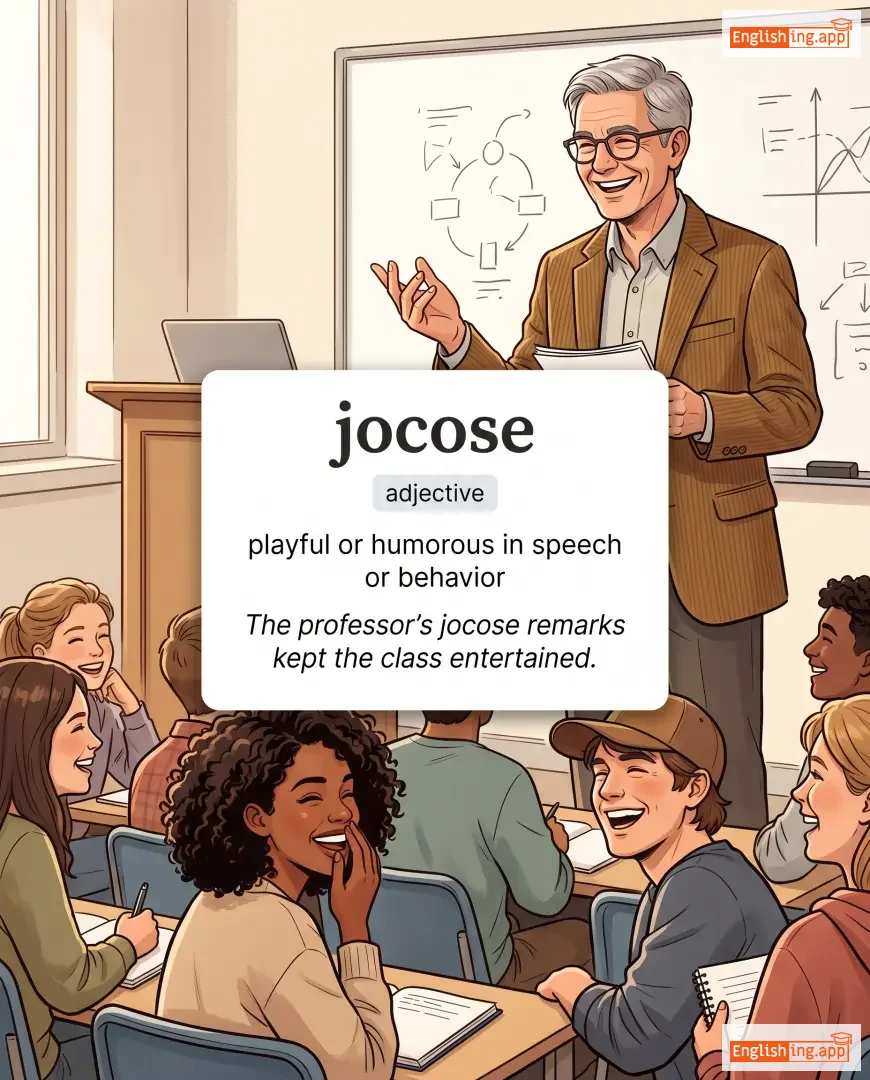
jocose definition card — visual illustration of the meaning
adjective
/dʒoʊˈkoʊs/
हास्यपूर्ण (haasyapurn)

playful or humorous in speech or behavior

"The professor’s jocose remarks kept the class entertained."

"प्रोफेसर की हास्यपूर्ण टिप्पणियाँ कक्षा को मनोरंजन करती थीं।" (professor ki haasyapurn tippaniyan kaksha ko manoranjan karti thin.)
adjective
/ˈdʒɒkjələr/
हंसी मजाक करने वाला (hansi mazaak karne wala)

fond of or characterized by joking; humorous

"His jocular nature made him popular among colleagues."

"उसका हंसी मजाक करने वाला स्वभाव उसे सहकर्मियों में लोकप्रिय बना देता था।" (uska hansi mazaak karne wala swabhav use sahkarmiyon mein lokpriya bana deta tha.)
adjective
/ˈdʒɒkənd/
आनंदित (anandit)

cheerful and lighthearted

"They walked together in a jocund mood after the celebration."

"वे जश्न के बाद आनंदित मूड में साथ में चल रहे थे।" (ve jashn ke baad anandit mood mein saath mein chal rahe the.)
verb
/dʒɑːɡ/
धीरे दौड़ना (dhire daudna)

to run at a slow, steady pace for exercise

"She jogs every morning in the park."

"वह हर सुबह पार्क में दौड़ती है।" (vah har subah park mein daudti hai)
verb
/ˈdʒɒɡəl/
हल्का झटका (halka jhatka)

to shake slightly; to move or cause to move with quick, small jerks

"He joggled the table and the vase nearly fell."

"उसने टेबल को हल्का हिलाया और फूलदान लगभग गिर पड़ा।" (Usne table ko halka hilaya aur phooldan lagbhag gir pada.)
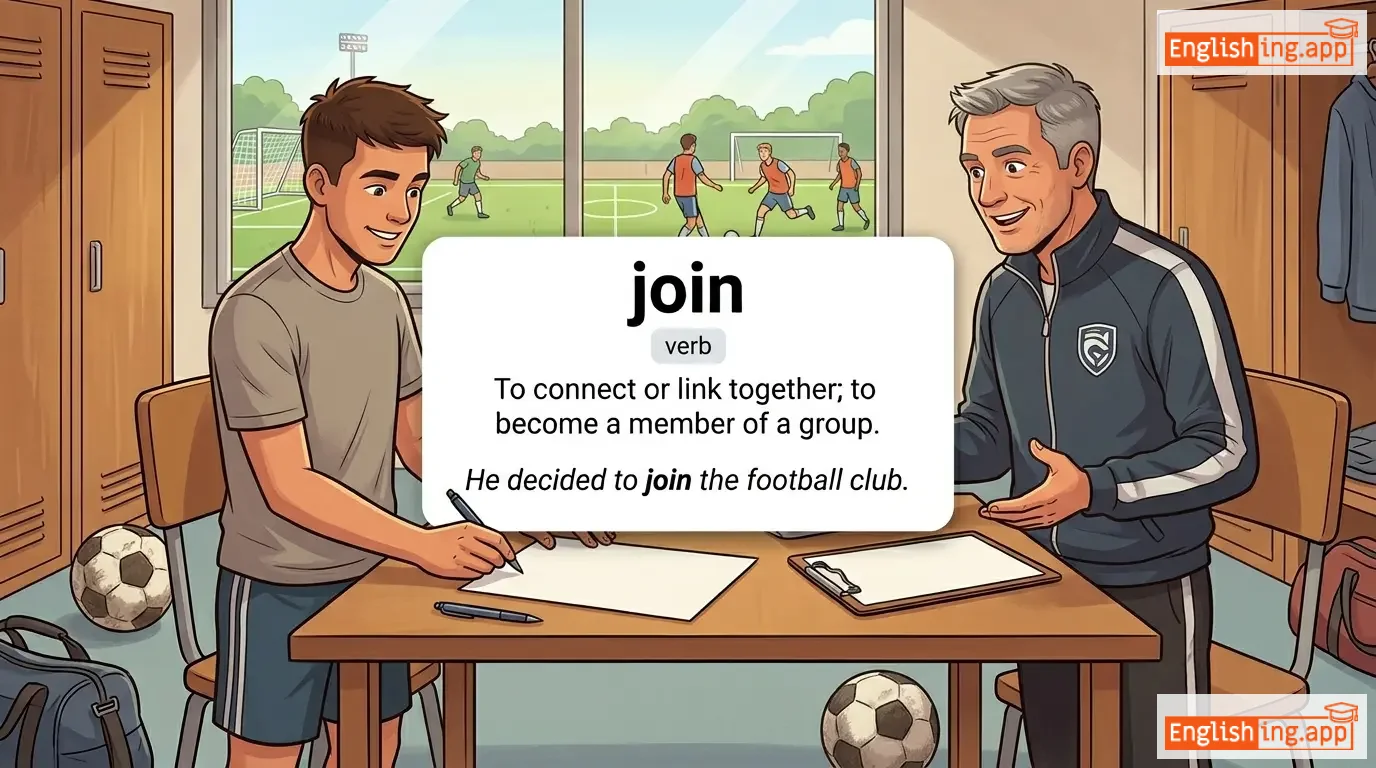
join definition card — visual illustration of the meaning
verb
/dʒɔɪn/
जोड़ना (jodna)

To connect or link together; to become a member of a group.

"He decided to join the football club."

"उसने फुटबॉल क्लब से जुड़ने का फैसला किया।" (Usne football club se judne ka faisla kiya.)
noun
/dʒɔɪnt/
संयोग (sanyog)

a place where two parts of something are joined; also a term for a business establishment or a cannabis cigarette

"The knee is a joint that connects the thigh and the leg."

"घुटना एक संयोग है जो जांघ और पैर को जोड़ता है।" (ghutna ek sanyog hai jo jangh aur pair ko jodta hai.)
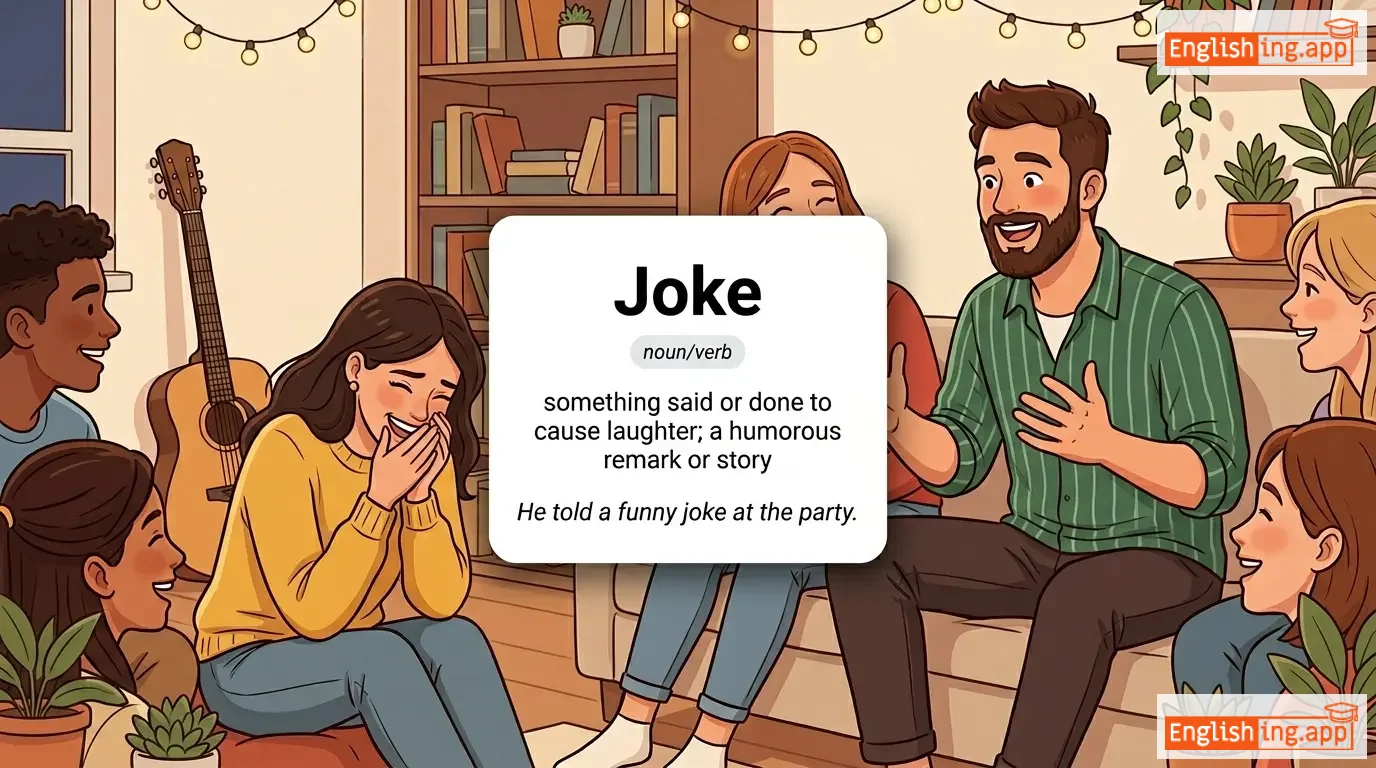
Joke definition card — visual illustration of the meaning
noun/verb
/dʒoʊk/
चुटकुला (chutkula)

something said or done to cause laughter; a humorous remark or story

"He told a funny joke at the party."

"उसने पार्टी में एक मजेदार चुटकुला सुनाया।" (Usne party mein ek mazedar chutkula sunaya.)
noun
/ˈdʒoʊ.kər/
ताश का एक कार्ड जिसमें जोकर की तस्वीर होती है, जिसे वाइल्ड कार्ड के रूप में उपयोग किया जाता है; एक ऐसा व्यक्ति जो मजाक करने का शौक रखता है (taash ka ek card jisme joker ki tasveer hoti hai, jise wild card ke roop mein upyog kiya jaata hai; ek aisa vyakti jo mazaak karne ka shauk rakhta hai)

a playing card with a picture of a jester, used as a wild card; a person who is fond of joking

"He used the joker card to complete his winning hand in the poker game."

"उसने पोकर खेल में अपनी जीतने वाली हाथ को पूरा करने के लिए जोकर कार्ड का इस्तेमाल किया।" (Usne poker khel mein apni jeetne wali haath ko poora karne ke liye joker card ka istemaal kiya.)
noun
/ˈdʒɒlɪti/
खुशी (khushi)

lively and cheerful activity or celebration

"The wedding was full of jollity and laughter."

"विवाह खुशी और हंसी से भरा हुआ था।" (Vivaah khushi aur hansi se bhara hua tha.)
adjective
/ˈdʒɒli/
खुशमिजाज (khushmijaaz)

Full of good humor and cheerfulness.

"The children were in a jolly mood at the party."

"बच्चे पार्टी में खुशमिजाज थे।" (Bachche party mein khushmijaaz the.)
verb
/dʒəʊlt/
झटका (jhatka)

to push or shake someone or something abruptly and roughly

"The sudden stop jolted all the passengers forward."

"अचानक रुकने से सभी यात्री आगे झूल गए।" (Achanak rukne se sabhi yatri aage jhool gaye.)
noun
/ˈdʒɒs.stɪk/
अगरबत्ती (agarbatti)

a thin stick of incense that is burned for its pleasant smell, especially in religious ceremonies

"She lit a joss-stick in the temple during her prayers."

"उसने मंदिर में अपनी प्रार्थना के दौरान एक जोस-स्टिक जलाया।" (Usne mandir mein apni prarthna ke dauran ek joss-stick jalaaya.)
verb
/ˈdʒɒsl/
धक्का देना (dhakka dena)

to push, elbow, or bump against someone roughly, typically in a crowd

"The fans jostled each other to get closer to the stage."

"प्रशंसक एक दूसरे को स्टेज के पास पहुंचने के लिए धक्का दे रहे थे।" (prashansak ek doosre ko stage ke paas pahuchne ke liye dhakka de rahe the.)
verb
/dʒɒt/
जल्दी और संक्षेप में लिखना (jaldi aur sankshep mein likhna)

to write something quickly and briefly

"She jotted down his phone number on a napkin."

"वह एक नैपकिन पर उसका फोन नंबर जल्दी से जॉट कर रही थी।" (Woh ek napkin par uska phone number jaldi se jot kar rahi thi.)
noun
/ˈdʒɒt.ər/
नोटबुक (notebook)

a small notebook for writing quick notes or reminders

"The student carried a jotter to write down important points during lectures."

"छात्र ने लेक्चर के दौरान महत्वपूर्ण बिंदुओं को लिखने के लिए एक नोटबुक ले कर आया।" (chhatra ne lecture ke dauran mahatvapurn binduon ko likhne ke liye ek notebook le kar aaya.)
noun
/ˈdʒɜːrnəl/
जर्नल (jurnal)

a daily record of news, events, or personal thoughts

"She writes in her journal every night."

"वह हर रात अपनी जर्नल में लिखती है।" (vah har raat apni jurnal mein likhti hai.)
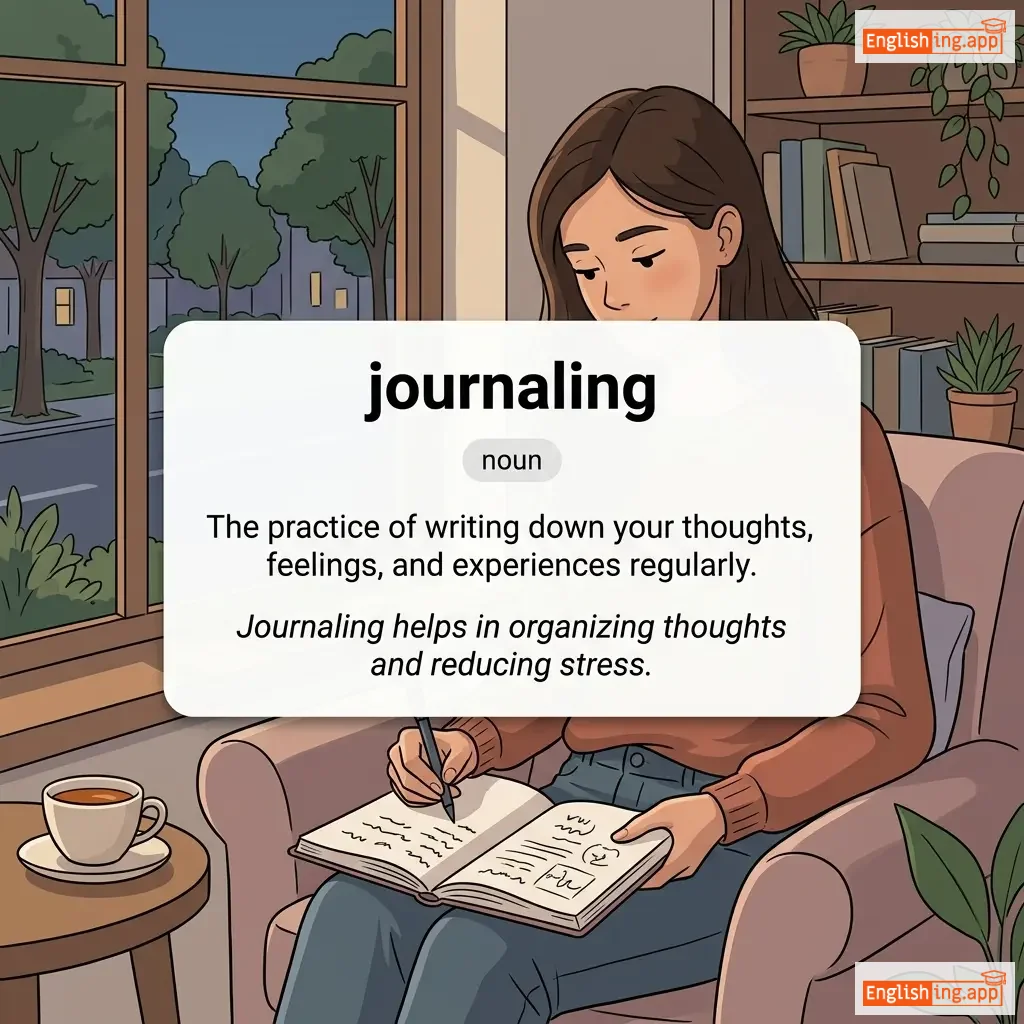
journaling definition card — visual illustration of the meaning
noun
/ˈdʒɝː.nə.lɪŋ/
जर्नलिंग (jarnaling)

The practice of writing down your thoughts, feelings, and experiences regularly.

"Journaling helps in organizing thoughts and reducing stress."

"जर्नलिंग विचारों को व्यवस्थित करने और तनाव कम करने में मदद करता है।" (Jarnaling vicharon ko vyavasthit karne aur tanav kam karne mein madad karta hai.)
noun
/ˈdʒɜːrnəlɪzəm/
पत्रकारिता (patrakarita)

the activity or profession of collecting, writing, and publishing news and articles for newspapers, magazines, or broadcast media

"He studied journalism to become a news reporter."

"उसने समाचार रिपोर्टर बनने के लिए पत्रकारिता अध्ययन की।" (Usne samachar reporter banne ke liye patrakarita adhyayan ki.)
noun
/ˈdʒɜːrnəlɪst/
पत्रकार (patrakar)

a person who writes news articles or reports for newspapers, magazines, or media

"The journalist covered the political event."

"पत्रकार ने राजनीतिक घटना को कवर किया।" (Patrakar ne rajneetik ghatna ko cover kiya.)
verb
/ˈdʒɜːrnəlaɪz/
जर्नल में लेन-देन या घटनाओं को दर्ज करना (jarnal mein len-den ya ghatnaon ko darj karna)

to record daily transactions or events in a journal, especially in accounting

"The accountant will journalize all financial transactions at the end of the day."

"लेखाकार दिन के अंत में सभी वित्तीय लेन-देन जर्नल में दर्ज करेगा।" (Lekhakaar din ke ant mein sabhi vittiya len-den jarnal mein darj karega.)
noun
/ˈdʒɜːrni/
यात्रा (yatra)

the act of traveling from one place to another

"Their journey across the desert was difficult."

"उनकी यात्रा रेगिस्तान से बहुत कठिन थी।" (Unki yatra registan se bahut kathin thi.)
verb
/dʒaʊst/
घुड़सवार युद्ध (ghudhsawar yudh)

to engage in a medieval contest on horseback with lances; to compete or argue

"The knights prepared to joust in front of the cheering crowd."

"योद्धाओं ने शोर मचाती भीड़ के सामने घोड़े पर लांस से मुकाबला करने के लिए तैयारी की।" (Yoddhao ne shor machati bheed ke samne ghode par lance se mukabala karne ke liye taiyari ki.)
adjective
/ˈdʒoʊ.vi.əl/
मुदित (mudit)

cheerful and friendly in manner

"He was in a jovial mood during the family gathering."

"वह परिवारिक सभा में मुदित मनोदशा में था।" (Vah parivarik sabha mein mudit manodasha mein tha.)
noun
/dʒɔɪ/
आनंद (anand)

A feeling of great happiness and delight.

"The children shouted with joy when they saw the gifts."

"जब बच्चों ने उपहार देखे, तो वे खुशी से चिल्लाए।" (Jab bachon ne uphaar dekhe, to ve khushi se chillaye.)
adjective
/ˈdʒɔɪfəl/
आनंदित (anandit)

full of joy and happiness; causing joy or delight

"She felt joyful when she heard the good news."

"अच्छी खबर सुनकर वह आनंदित हुई।" (achchi khabar sunkar vah anandit hui)
adjective
/ˈdʒuː.bɪ.lənt/
उत्साहित (utsahit)

feeling or expressing great happiness and joy

"The team was jubilant after winning the championship."

"टीम चैंपियनशिप जीतने के बाद उत्साहित थी।" (Team championship jeetne ke baad utsahit thi.)
noun
/ˌdʒuː.bɪˈleɪ.ʃən/
उत्सव (utsav)

a feeling or expression of great happiness and triumph

"There was jubilation in the streets after the victory."

"विजय के बाद सड़कों पर उत्सव था।" (Vijay ke baad sadkon par utsav tha.)
noun
/ˈdʒuː.bɪ.liː/
जयंती; पुनःप्राप्ति; (jubilee)

a special anniversary celebration, especially the 25th, 50th, or 60th anniversary of an important event

"The school celebrated its golden jubilee with a grand ceremony."

"विद्यालय ने अपनी सुनहरी जयंती को एक भव्य समारोह के साथ मनाया।" (vidyalay ne apni sunahari jayantī ko ek bhavya samaroh ke saath manaya.)
noun
/ˈdʒʌŋk.tʃər/
महत्वपूर्ण मोड़ (mahatvapurn mod)

a particular point in time, especially one of great importance or crisis

"At this critical jucture, the company must decide whether to expand or downsize."

"इस महत्वपूर्ण मोड़ पर, कंपनी को यह तय करना होगा कि विस्तार करना है या संकुचित करना है।" (Is mahatvapurn mod par, company ko yah tay karna hoga ki vistar karna hai ya sankuchit karna hai.)
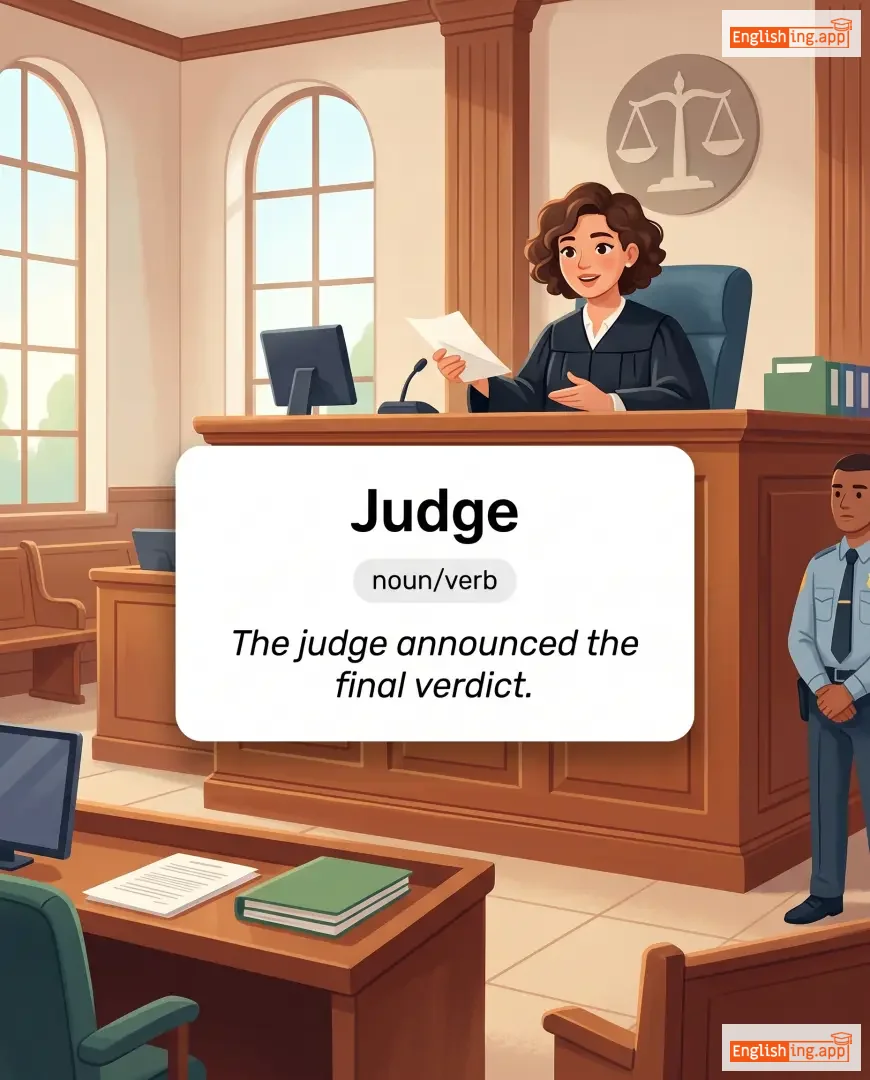
Judge definition card — visual illustration of the meaning
noun/verb
/dʒʌdʒ/
न्यायधीश / निर्णय करना (nyayadhish / nirnay karna)

a person who makes decisions in a court of law; or to form an opinion about something

"The judge announced the final verdict."

"न्यायधीश ने अंतिम निर्णय की घोषणा की।" (Nyayadhish ne antim nirnay ki ghoshna ki.)
noun
/ˈdʒʌdʒ.mənt/
निर्णय; न्याय (nirnay, nyay)

the ability to make considered decisions or form sensible opinions; an official decision made by a judge or court

"The jury's judgement was based on careful consideration of all the facts."

"जूरी का निर्णय सभी तथ्यों पर सावधानीपूर्वक विचार पर आधारित था।" (juri ka nirnay sabhi tathyon par savdhani-purvak vichar par aadharit tha.)
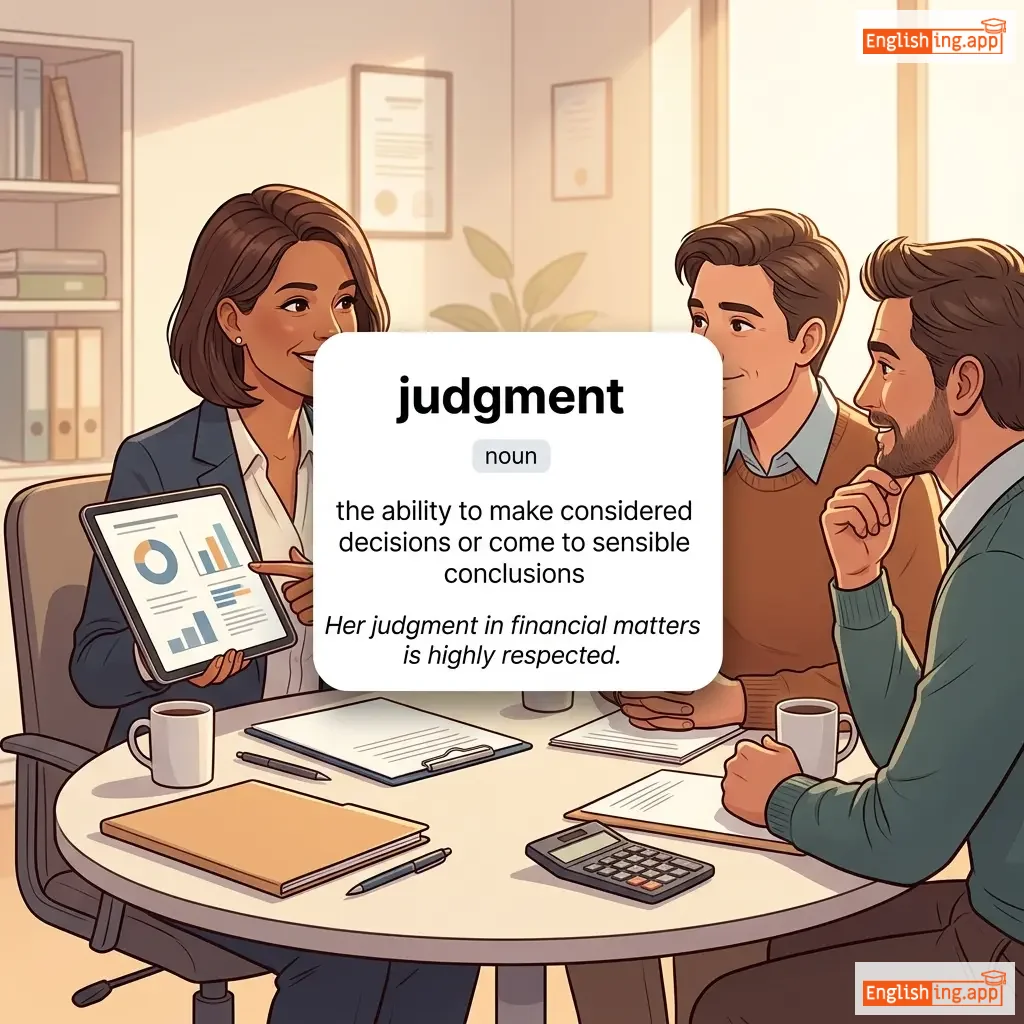
judgment definition card — visual illustration of the meaning
noun
/ˈdʒʌdʒ.mənt/
निर्णय (nirnay)

the ability to make considered decisions or come to sensible conclusions

"Her judgment in financial matters is highly respected."

"वित्तीय मामलों में उसका निर्णय अत्यधिक सम्मानित है।" (Vittiya mamlon mein uska nirnay atyadhik sammanit hai.)
noun
/ˈdʒuː.dɪˌkeɪ.tʃər/
न्याय व्यवस्था (nyay vyavastha)

the administration of justice or the system of courts

"The judicature ensures that laws are fairly applied."

"न्याय व्यवस्था यह सुनिश्चित करती है कि कानून सही ढंग से लागू हो रहे हैं।" (Nyay vyavastha yah sunishchit karti hai ki kanoon sahi dhang se lagu ho rahe hain.)
adjective
/dʒuːˈdɪʃ.əl/
न्यायिक (nyayik)

relating to judges, courts, or the administration of justice

"The new law faced strong judicial review before implementation."

"नए कानून को लागू करने से पहले उसे कठोर न्यायिक समीक्षा का सामना करना पड़ा।" (Naye kanoon ko lagu karne se pehle use kathor nyayik samiksha ka samna karna pada.)
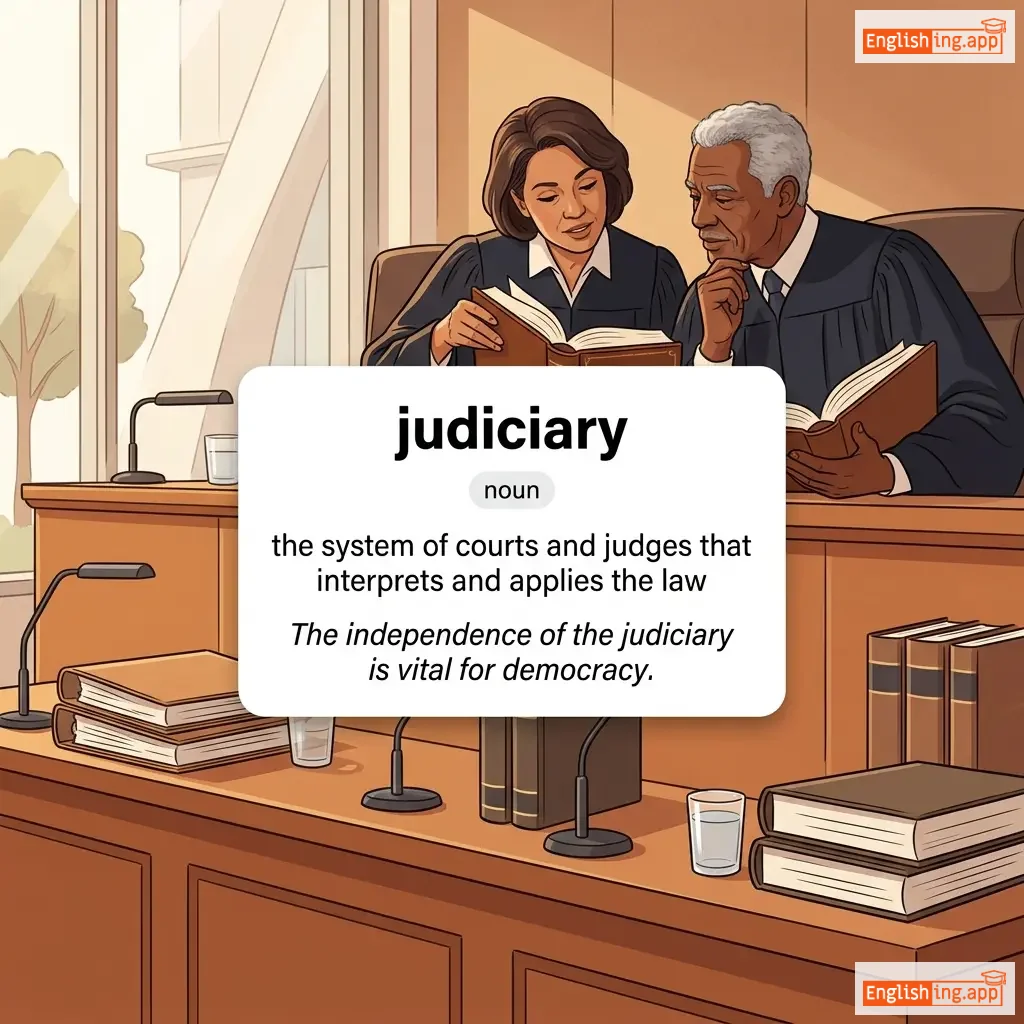
judiciary definition card — visual illustration of the meaning
noun
/dʒuːˈdɪʃ.i.er.i/
न्यायपालिका (nyaypalika)

the system of courts and judges that interprets and applies the law

"The independence of the judiciary is vital for democracy."

"न्यायपालिका की स्वतंत्रता लोकतंत्र के लिए महत्वपूर्ण है।" (nyaypalika ki svatantrata loktantra ke liye mahatvapurn hai)
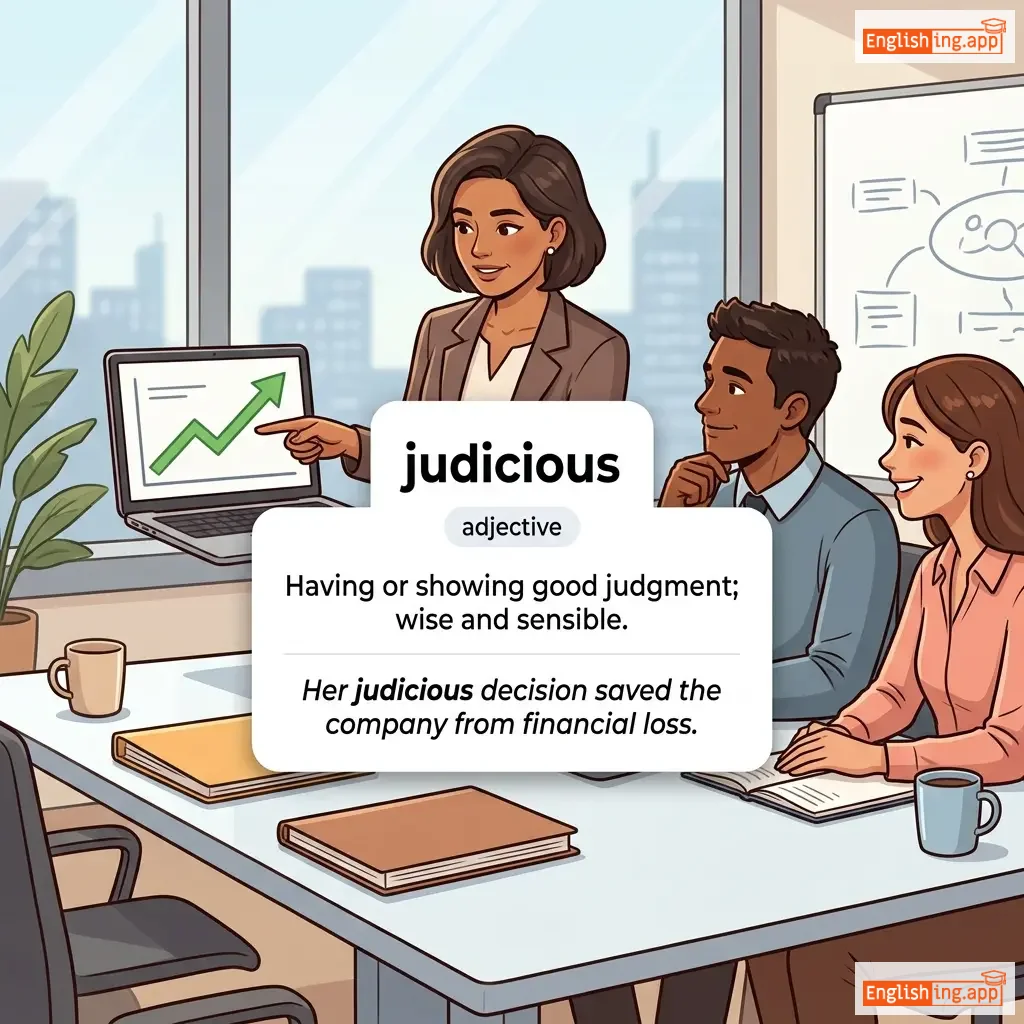
judicious definition card — visual illustration of the meaning
adjective
/dʒuːˈdɪʃəs/
विवेकपूर्ण (vivekpoorn)

Having or showing good judgment; wise and sensible.

"Her judicious decision saved the company from financial loss."

"उसका विवेकपूर्ण निर्णय कंपनी को वित्तीय नुकसान से बचा लिया।" (uska vivekpoorn nirnay company ko vittiya nuksan se bacha liya.)
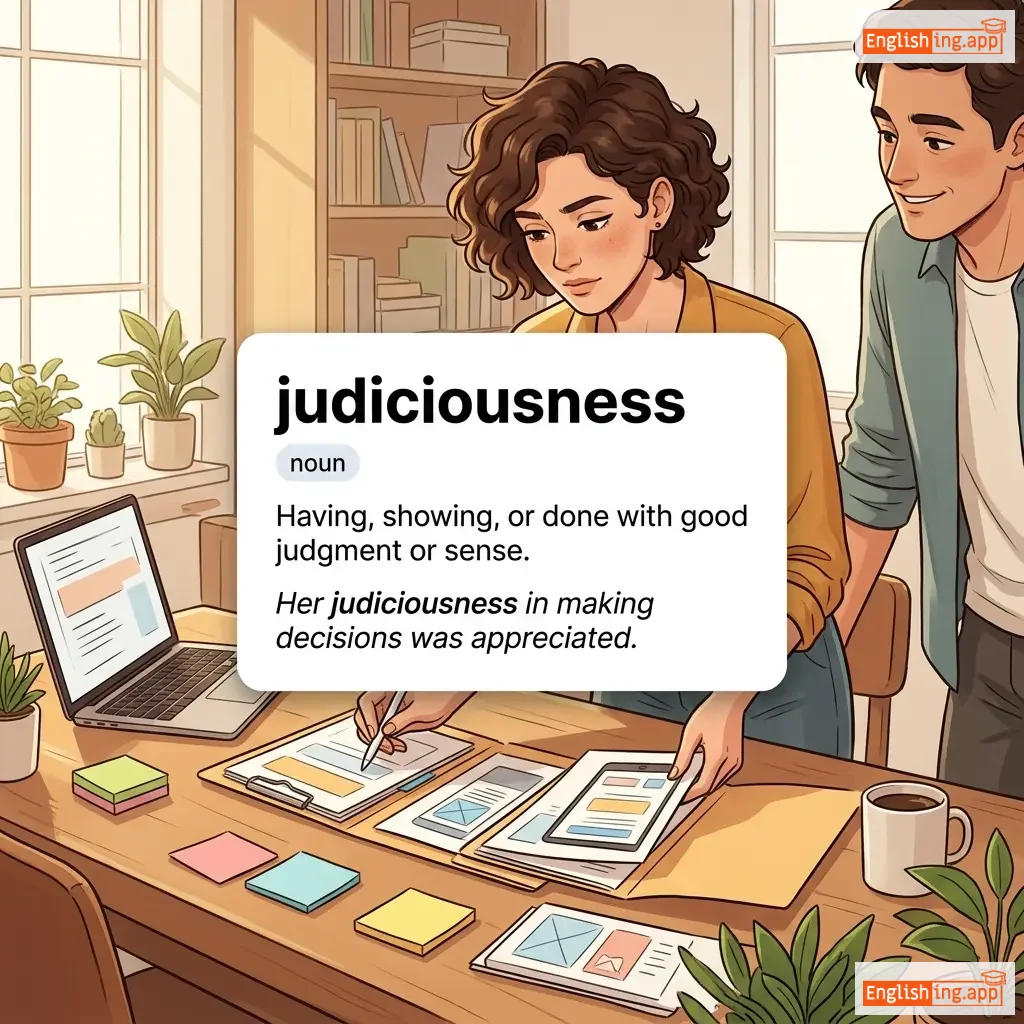
judiciousness definition card — visual illustration of the meaning
noun
dʒʊˈdɪʃəsnɪs
विवेकपूर्णता, अच्छे निर्णय क्षमता (vivekpurnata, achhe nirnay kshamata)

Having, showing, or done with good judgment or sense.

"Her judiciousness in making decisions was appreciated."

"निर्णय लेने में उसकी विवेकपूर्णता की सराहना की गई थी।" (Nirnay lene mein uski vivekpurnata ki sarahna ki gayi thi.)
noun
/dʒʌɡ/
ख़ुशी (khushi)

A large container used for holding and pouring liquids.

"She filled a jug with fresh water from the well."

"जब उसने पुरस्कार प्राप्त किया तो वह अपनी खुशी को छिपा नहीं पाई।" (Jab usne puraskar prapt kiya to vah apni khushi ko chhupa nahin pai.)
juggernaut definition card — visual illustration of the meaning
noun
/ˈdʒʌɡərˌnɔːt/
अजेय शक्ति (ajey shakti)

A huge, powerful, and unstoppable force or institution.

"The new tech company has become a juggernaut in the industry."

"नई तकनीकी कंपनी उद्योग में एक अजेय शक्ति बन गई है।" (nai takneeki company udyog mein ek ajey shakti ban gayi hai.)
verb
/ˈdʒʌɡəl/
जगल करना (jagal karna)

To continuously toss and catch objects in the air; to manage many tasks at the same time.

"He tried to juggle work, studies, and family responsibilities."

"उसने काम, पढ़ाई और पारिवारिक जिम्मेदारियाँ एक साथ संभालने की कोशिश की।" (usne kaam, padhai aur parivarik jimmedariyan ek saath sambhalne ki koshish ki.)
noun
/ˈdʒʌɡ.lər/
जुग्गलर (jugglar)

a person who skillfully throws and catches objects as entertainment

"The juggler entertained the crowd with his amazing ball tricks."

"जुग्ग्लर ने अपनी शानदार गेंदों के करतबों से लोगों का मनोरंजन किया।" (jugglar ne apni shandaar gendon ke karatabon se logon ka manoranjan kiya.)