वोकैबुलरीज

इंग्लिश वोकैबुलरी डिस्कवर, लर्न और मास्टर करें

noun
/ˌɪnkænˈdɛsəns/
दीप्तिमानता (deeptimanta)

the emission of light from a hot object; brilliance

"The incandescence of the candle filled the dark room."

"मोमबत्ती की दीप्तिमानता ने अंधेरे कमरे को भर दिया।" (Mombatti ki deeptimanta ne andhere kamre ko bhar diya.)
adjective
/ˌɪnkænˈdɛsənt/
दीप्तिमान (deeptimaan)

emitting light as a result of being heated; extremely bright or passionate

"The incandescent lamp lit up the entire hall."

"इन्कैन्डेन्सेन्ट बल्ब ने पूरे हॉल को रोशन कर दिया।" (Incandescent bulb ne poore hall ko roshan kar diya.)
noun
/ˌɪnkænˈteɪʃən/
मंत्रणा (mantrana)

a series of words used as a magic spell or charm

"The wizard chanted an incantation to summon the spirits."

"जादूगर ने आत्माओं को बुलाने के लिए एक मंत्रणा का उच्चारण किया।" (Jadugar ne atmaon ko bulaane ke liye ek mantrana ka uchcharan kiya.)
noun
/ˌɪnˌkeɪpəˈbɪləti/
असमर्थता (asamarthata)

lack of ability or power to do something; inability or incompetence

"His incapability to manage the team led to serious problems."

"टीम को संभालने में उसकी असमर्थता ने गंभीर समस्याएँ पैदा कीं।" (team ko sambhalne mein uski asamarthata ne gambhir samasyaen paida ki)
adjective
/ɪnˈkeɪpəbəl/
असमर्थ (asamarth)

lacking the ability, skill, or capacity to do something

"He is incapable of understanding complex instructions."

"वह जटिल निर्देश समझने में असमर्थ है।" (vah jatil nirdesh samajhne mein asamarth hai)
verb
/ˌɪnkəˈpæsɪteɪt/
अक्षमता उत्पन्न करना (akshamata utpann karna)

to deprive someone or something of the ability or strength to function

"The severe injury incapacitated the player for the rest of the season."

"गंभीर चोट ने खिलाड़ी को सीजन के बाकी समय के लिए अक्षम बना दिया।" (Gambhir chot ne khiladi ko season ke baaki samay ke liye aksham bana diya.)
noun
/ˌɪnkəˈpæsəti/
अक्षमता (akshamata)

the lack of ability, power, or fitness to do something

"His mental incapacity prevented him from making important decisions."

"उसकी मानसिक अक्षमता ने उसे महत्वपूर्ण निर्णय लेने से रोक दिया।" (Uski maansik akshamata ne use mahatvapurn nirnay lene se rok diya.)
verb
/ɪnˈkɑːrsəreɪt/
कैद करना (kaid karna)

to imprison or confine someone

"The authorities incarcerated the criminal after the trial."

"प्राधिकरण ने परीक्षण के बाद अपराधी को कैद कर लिया।" (Pradhikaran ne parikshan ke baad apradhi ko kaid kar liya.)
noun
/ɪnˌkɑːsəˈreɪʃən/
कारावास (kaaravaas)

the state of being imprisoned or confined

"The criminal faced years of incarceration for his crimes."

"अपराधी को उसकी अपराधों के लिए वर्षों तक कारावास का सामना करना पड़ा।" (Aparaadhi ko uski apraadhon ke liye varsho tak kaaravaas ka samna karna pada.)
adjective/noun
/ɪnˈkɑːrnədiːn/
गहरा लाल (gahara lal)

a bright crimson or pinkish-red color

"The sky turned incarnadine at sunset."

"सूर्यास्त के समय आकाश गहरे लाल रंग में बदल गया।" (Suryast ke samay aakash gahre lal rang mein badal gaya.)
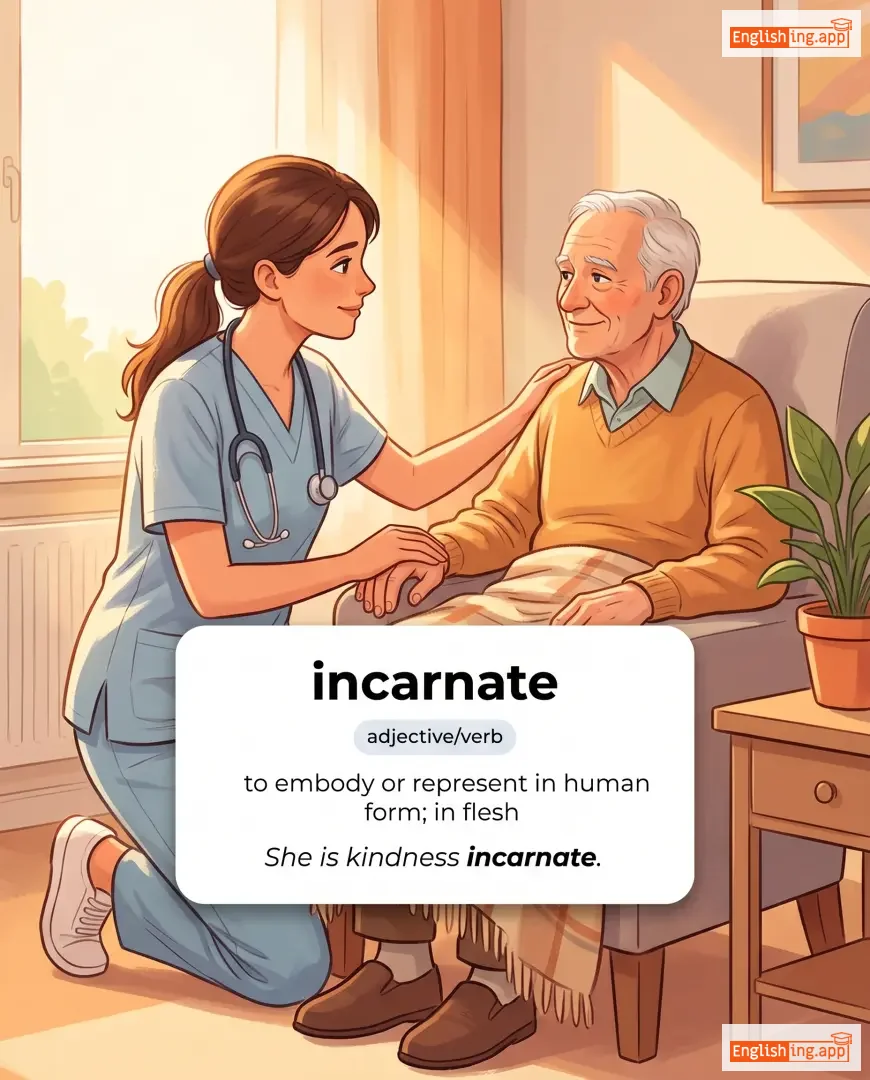
incarnate definition card — visual illustration of the meaning
adjective/verb
/ɪnˈkɑːrneɪt/
अवतार (avatar)

to embody or represent in human form; in flesh

"She is kindness incarnate."

"वह दया का अवतार है।" (Vah daya ka avatar hai.)
noun
/ˌɪnkɑːrˈneɪʃən/
अवतार (avataar)

the embodiment of a deity, spirit, or quality in a physical form

"The monk was considered the incarnation of compassion."

"भिक्षु को करुणा का अवतार माना गया था।" (Bhikshu ko karuna ka avataar maana gaya tha.)
adjective
/ɪnˈsɛndiˌɛri/
आग लगाने वाला / उकसाने वाला (aag lagane wala / uksane wala)

designed to cause fires or stir up conflict

"The politician’s incendiary remarks angered the crowd."

"राजनीतिक नेता की उकसाने वाली टिप्पणियों ने भीड़ को नाराज कर दिया।" (Rajnaitik neta ki uksane wali tippaniyon ne bheed ko naaraaz kar diya.)
noun/verb
/ˈɪnsɛns/
अगरबत्ती / गुस्से में करना (agarbatti / gusse mein karna)

a substance burned for its sweet smell (noun); to make very angry (verb)

"The smell of incense filled the temple, but his rude words incensed her."

"अगरबत्ती की खुशबू मंदिर में फैल गई, लेकिन उसके अपमानजनक शब्दों ने उसे गुस्से में भर दिया।" (Agarbatti ki khushboo mandir mein phail gayi, lekin uske apmanjanak shabdon ne use gusse mein bhar diya.)
noun
/ɪnˈsɛntɪv/
प्रेरणा (prerana)

a thing that motivates or encourages someone to do something

"The company offers bonuses as an incentive to increase productivity."

"कंपनी उत्पादकता बढ़ाने के लिए बोनस को प्रेरणा के रूप में देती है।" (Kampani utpadakta badhane ke liye bonus ko prerna ke roop mein deti hai.)
incentives definition card — visual illustration of the meaning
noun
ɪnˈsɛntɪvz
प्रेरणा, प्रोत्साहन (prerna, protsahan)

Things that motivate or encourage one to do something.

"Tax incentives are used to encourage investment in renewable energy."

"कर प्रोत्साहन का उपयोग नवीकरणीय ऊर्जा में निवेश को प्रोत्साहित करने के लिए किया जाता है।" (Kar protsahan ka upyog navikaranīya urja mein niyojan ko protsahit karne ke liye kiya jata hai.)
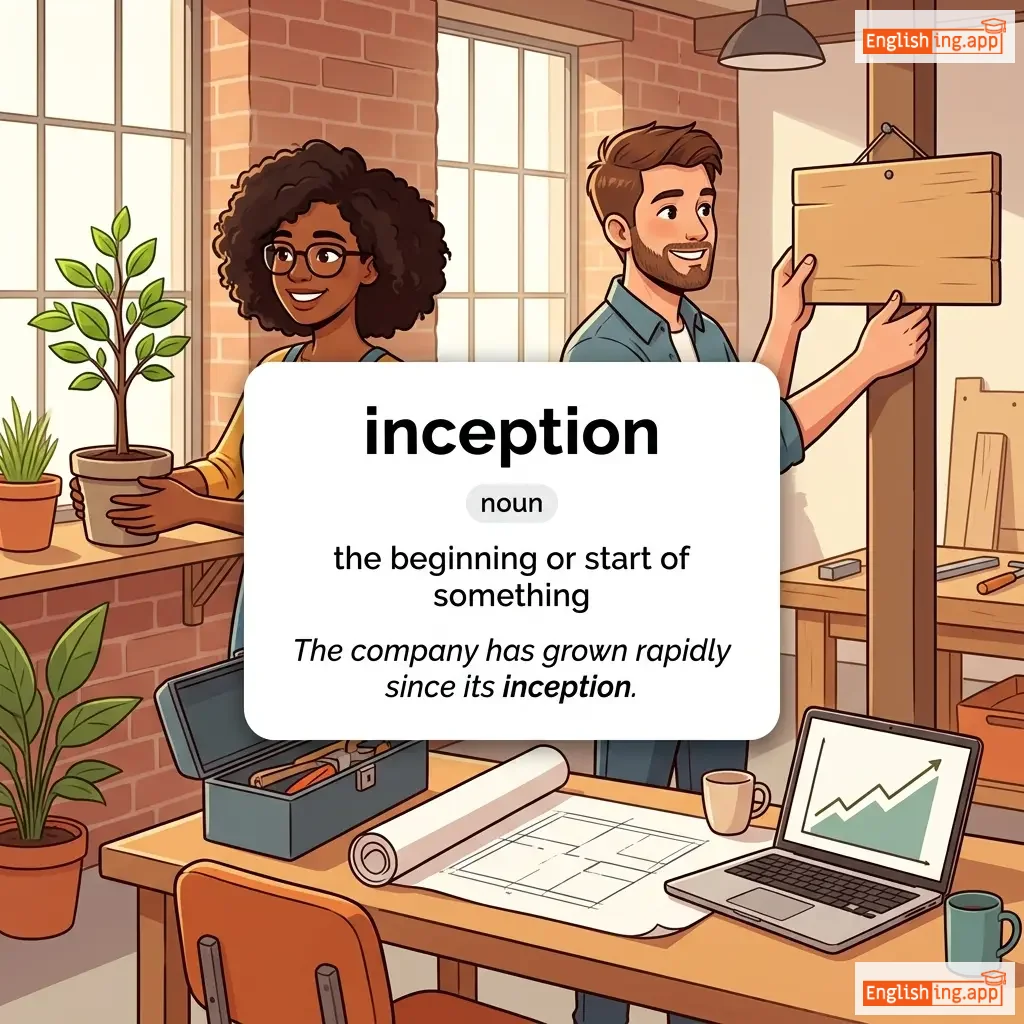
inception definition card — visual illustration of the meaning
noun
/ɪnˈsɛpʃən/
प्रारंभ (prarambh)

the beginning or start of something

"The company has grown rapidly since its inception."

"कंपनी ने अपनी शुरुआत के बाद तेजी से विकास किया।" (Company ne apni shuruaat ke baad tezi se vikas kiya.)
adjective
/ɪnˈsɛptɪv/
प्रारंभिक (prarambhik)

Relating to or marking the beginning or initial stage of something.

"The inceptive phase of the project was marked by enthusiastic planning."

"प्रोजेक्ट के प्रारंभिक चरण को उत्साही योजना से चिह्नित किया गया था।" (Project ke prarambhik charan ko utsaahi yojana se chihnit kiya gaya tha.)
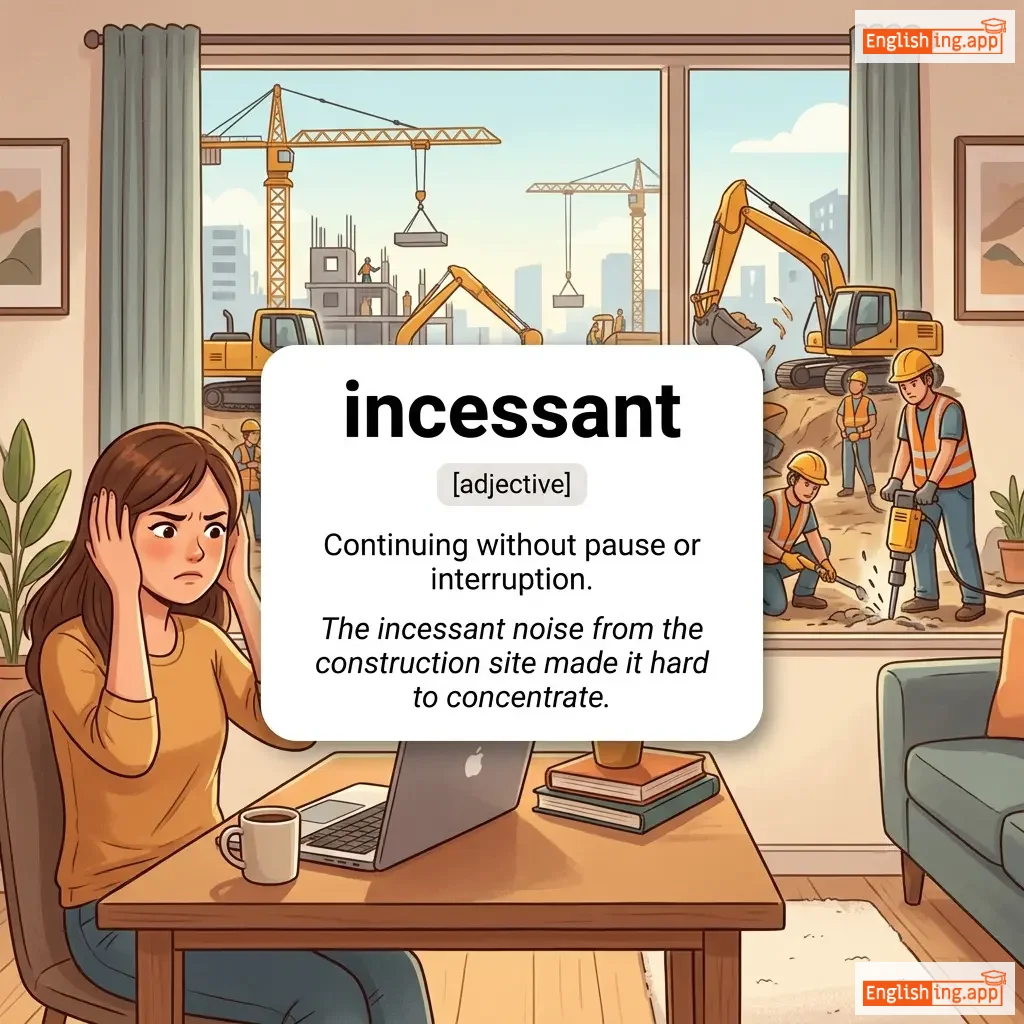
incessant definition card — visual illustration of the meaning
adjective
/ɪnˈsɛsənt/
निरंतर (nirantar)

Continuing without pause or interruption.

"The incessant noise from the construction site made it hard to concentrate."

"कंस्ट्रक्शन साइट से निरंतर शोर ने ध्यान केंद्रित करना मुश्किल बना दिया।" (Construction site se nirantar shor ne dhyan kendrit karna mushkil bana diya.)
noun, verb
/ɪntʃ/
इंच / धीरे-धीरे बढ़ना (inch / dheere dheere badhna)

A unit of length equal to 2.54 centimeters; or to move slowly and carefully in small amounts.

"She inched closer to the edge of the stage."

"वह स्टेज के किनारे के पास धीरे-धीरे बढ़ी।" (Wah stage ke kinare ke paas dheere dheere badhi.)
adverb
/ˈɪntʃmiːl/
धीरे धीरे (dheere dheere)

Gradually, little by little.

"The old castle fell inchmeal into ruin."

"पुराना किला धीरे धीरे नष्ट हो गया था।" (Purana kila dheere dheere nasht ho gaya tha.)
inchoate definition card — visual illustration of the meaning
adjective
/ɪnˈkoʊ.ɪt/ or /ɪnˈkoʊ.eɪt/
अपूर्ण (apurn)

Just begun and not fully formed; rudimentary.

"His inchoate ideas needed more research to be developed."

"उसके अपूर्ण विचारों को विकसित करने के लिए और अधिक शोध की आवश्यकता थी।" (Uske apurn vicharon ko viksit karne ke liye aur adhik shodh ki avashyakta thi.)
adjective
/ɪnˈkoʊətɪv/
प्रारंभिक (prarambhik)

relating to the beginning of something; in an initial stage

"The poet used inchoative expressions to depict the dawn of creation."

"कवि ने सृजन की शुरुआत को चित्रित करने के लिए प्रारंभिक अभिव्यक्तियाँ का उपयोग किया।" (Kavi ne srijan ki shuruat ko chitrait karne ke liye prarambhik abhipraya ka upyog kiya.)
noun
/ˈɪnsɪdəns/
घटनाक्रम (ghatanakram)

the occurrence, rate, or frequency of something

"The incidence of road accidents has decreased this year."

"इस साल सड़क दुर्घटनाओं की घटना में कमी आई है।" (Is saal sadak durghatanayon ki ghatna mein kami aayi hai.)
noun
/ˈɪnsɪdənt/
घटना (ghatna)

an event or occurrence, often unpleasant or unusual

"The police quickly responded to the incident in the park."

"पुलिस ने पार्क में घटना पर जल्दी प्रतिक्रिया दी।" (Police ne park mein ghatna par jaldi pratikriya di.)
adjective
/ˌɪnsɪˈdɛntəl/
संयोगिक (sanyogik)

happening as a minor part or in connection with something else

"Incidental expenses like snacks and tips were included in the bill."

"चिप्स और टिप्स जैसी संयोगिक खर्चे बिल में शामिल थे।" (Chips aur tips jaise sanyogik kharchay bil mein shamil the.)
adverb
/ˌɪnsɪˈdɛntəli/
वैसे (vaise)

by the way; used to introduce a remark not directly related to the main subject

"Incidentally, did you know that she studied in Paris?"

"वैसे, क्या तुम जानते हो कि उसने पेरिस में पढ़ाई की थी?" (Vaise, kya tum jante ho ki usne Paris mein padhai ki thi?)
verb
/ɪnˈsɪnəˌreɪt/
जला देना (jala dena)

to burn something completely until it is reduced to ashes

"The city decided to incinerate the medical waste for safety."

"शहर ने सुरक्षा के लिए चिकित्सा कचरे को जला देने का निर्णय लिया।" (Shehar ne suraksha ke liye chikitsa kachre ko jala dene ka nirnay liya.)
noun
/ɪnˈsɪpiəns/
प्रारंभ (prarambh)

the beginning or initial stage of something

"The project was still in its incipience when funding was approved."

"परियोजना तब भी अपनी प्रारंभिक अवस्था में थी जब वित्त पोषण को स्वीकृति मिली।" (Pariyojna tab bhi apni prarambhik avastha mein thi jab vitt poshan ko sveekriti mili.)
adjective
/ɪnˈsɪpiənt/
प्रारंभिक (prarambhik)

in an initial stage; beginning to develop

"The incipient storm made the sky turn dark and heavy."

"प्रारंभिक तूफान ने आकाश को अंधेरा और भारी बना दिया।" (prarambhik toofan ne aakash ko andhera aur bhaari bana diya.)
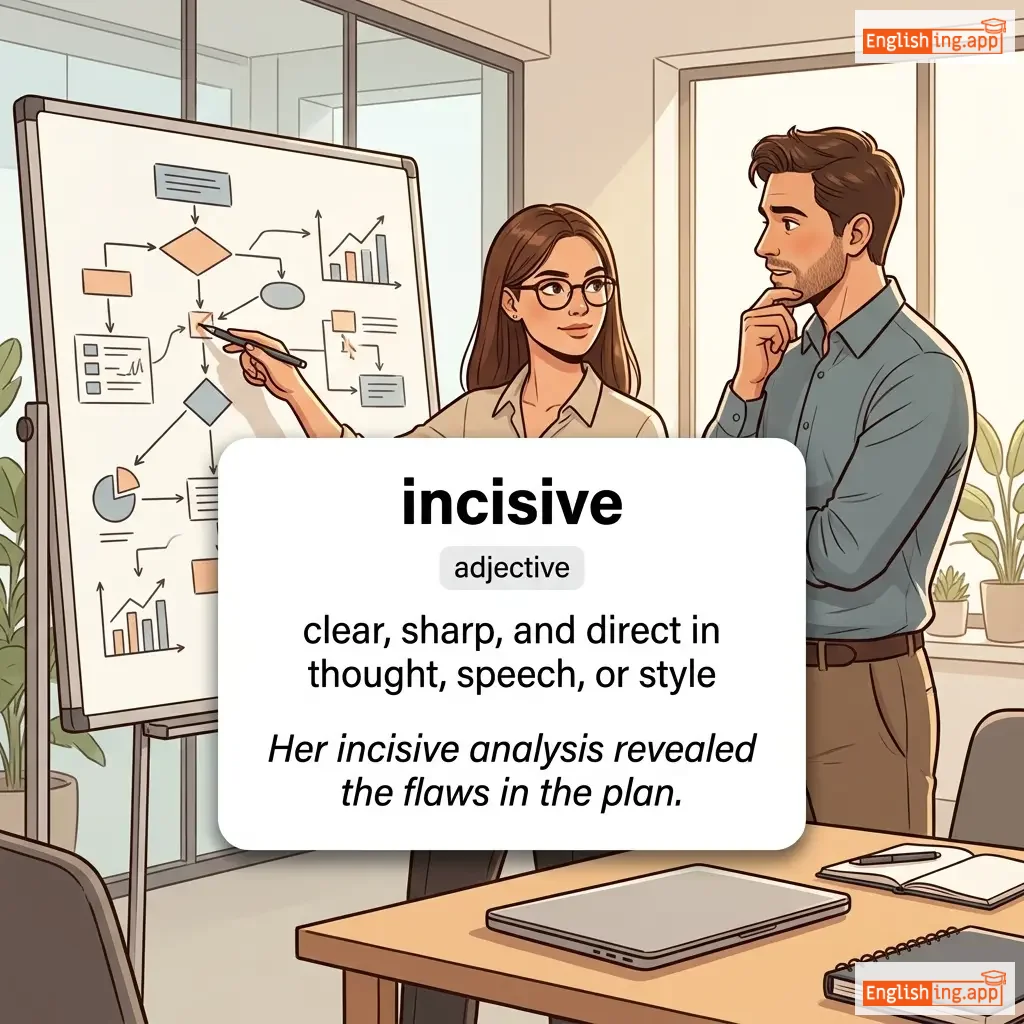
incisive definition card — visual illustration of the meaning
adjective
/ɪnˈsaɪsɪv/
तीव्र (teevr)

clear, sharp, and direct in thought, speech, or style

"Her incisive analysis revealed the flaws in the plan."

"उसकी तीव्र विश्लेषण ने योजना में दोषों को उजागर किया।" (Uski teevr vishleshan ne yojna mein doshon ko ujagar kiya.)
noun
/ɪnˈsaɪzər/
काटने वाला दांत (kaatne wala daant)

a narrow-edged tooth at the front of the mouth, adapted for cutting

"The dentist noted that his upper left incisor was chipped."

"दंत चिकित्सक ने नोट किया कि उसका ऊपर बायां काटने वाला दांत चिपा हुआ था।" (Dant chikitsak ne not kiya ki uska upar bayaan kaatne wala daant chipa hua tha.)
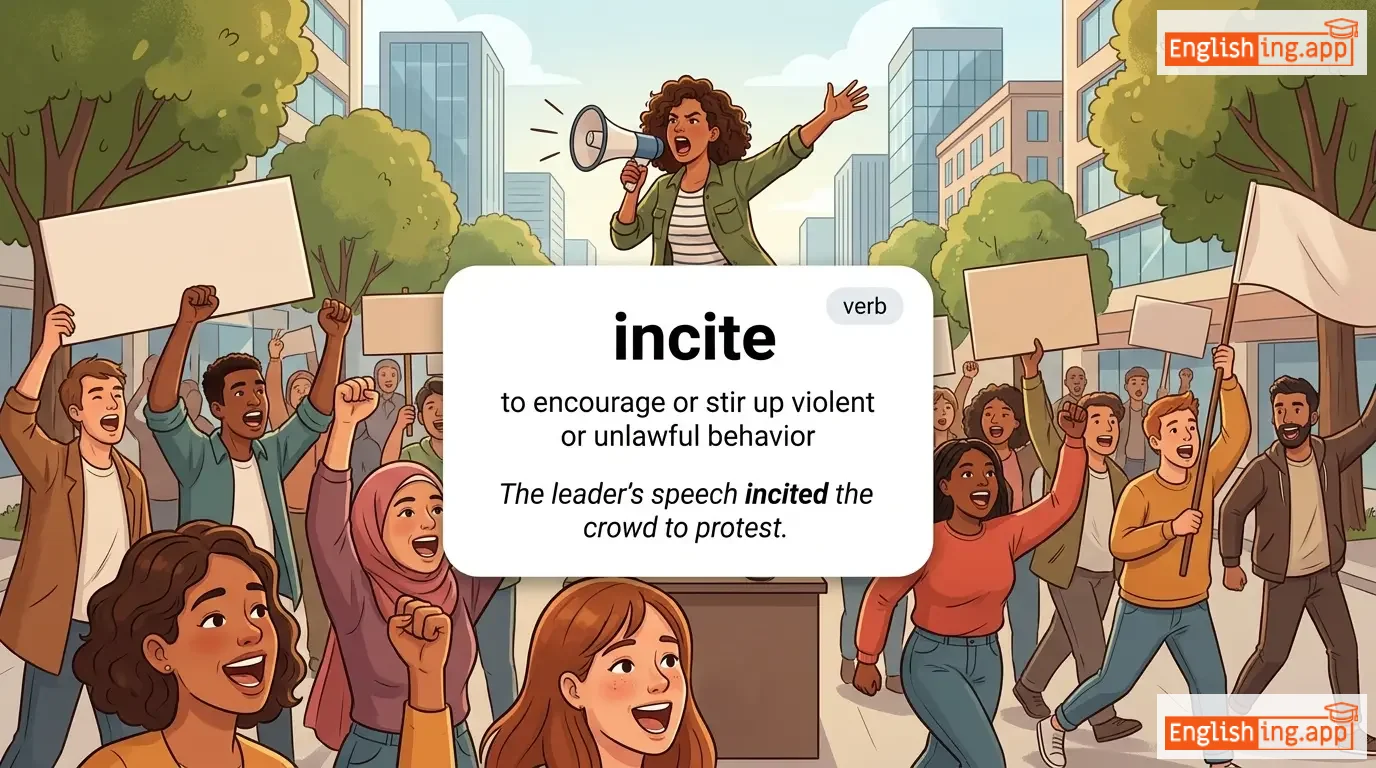
incite definition card — visual illustration of the meaning
verb
/ɪnˈsaɪt/
उत्तेजित करना (uttejit karna)

to encourage or stir up violent or unlawful behavior

"The leader's speech incited the crowd to protest."

"नेता का भाषण भीड़ को विरोध करने के लिए उकसाया।" (Neta ka bhashan bheed ko virodh karne ke liye uksaya.)
noun
/ɪnˈsaɪtmənt/
उकसावा (uksava)

the action of provoking unlawful or violent behavior

"He was arrested for incitement to riot."

"उसे दंगे भड़काने के लिए गिरफ्तार किया गया था।" (Use dangay bhadkane ke liye giraftar kiya gaya tha.)
adjective
/ɪnˈklɛmɛnt/
अप्रिय मौसम (apriya mausam)

unpleasantly cold, wet, or stormy (usually weather)

"The match was canceled due to inclement weather."

"मैच खराब मौसम के कारण रद्द कर दिया गया था।" (Maich kharab mausam ke karan radd kar diya gaya tha.)
noun
/ˌɪnklɪˈneɪʃən/
झुकाव (jhukaav)

A natural tendency or urge to act or feel in a particular way.

"She has an inclination towards helping others."

"वह दूसरों की मदद करने के प्रति झुकाव रखती है।" (Vah doosron ki madad karne ke prati jhukaav rakhti hai.)
verb
/ɪnˈklaɪn/
इच्छुक होना (ichchhuk hona)

to feel willing or favorably disposed toward something; to bend or tilt

"She is inclined to agree with the proposal."

"वह प्रस्ताव के साथ सहमत होने के लिए इच्छुक है।" (Woh prastaav ke saath sahmat hone ke liye ichchhuk hai.)
adjective
/ɪnˈklaɪnd/
प्रवृत्त (pravrtt)

having a tendency or disposition toward something

"He is inclined to help those in need."

"वह ज़रूरतमंदों की मदद करने के लिए प्रवृत्त है।" (Vah zaruratmandon ki madad karne ke liye pravritt hai.)
include definition card — visual illustration of the meaning
verb
/ɪnˈkluːd/
शामिल करना (shamil karna)

to make something part of a whole or group

"The package includes free breakfast."

"पैकेज में मुफ्त नाश्ता शामिल है।" (Package mein muft nashta shamil hai.)
preposition
/ɪnˈkluːdɪŋ/
समेत (samet)

used to show that someone or something is part of a larger group

"Many people attended the event, including students and teachers."

"कई लोग इस इवेंट में शामिल हुए, जिनमें छात्र और शिक्षक भी थे।" (Kai log is event mein shamil hue, jinmein chhatra aur shikshak bhi the.)
noun
/ɪnˈkluːʒən/
समावेशन (samaaveshan)

the action or state of including or being included within a group or structure

"Diversity and inclusion are key values in modern workplaces."

"विविधता और समावेशन आधुनिक कार्यस्थलों में मुख्य मूल्यों में से हैं।" (Vividhta aur samaaveshan aadhunik karyasthalon mein mukhya mulyon mein se hain.)
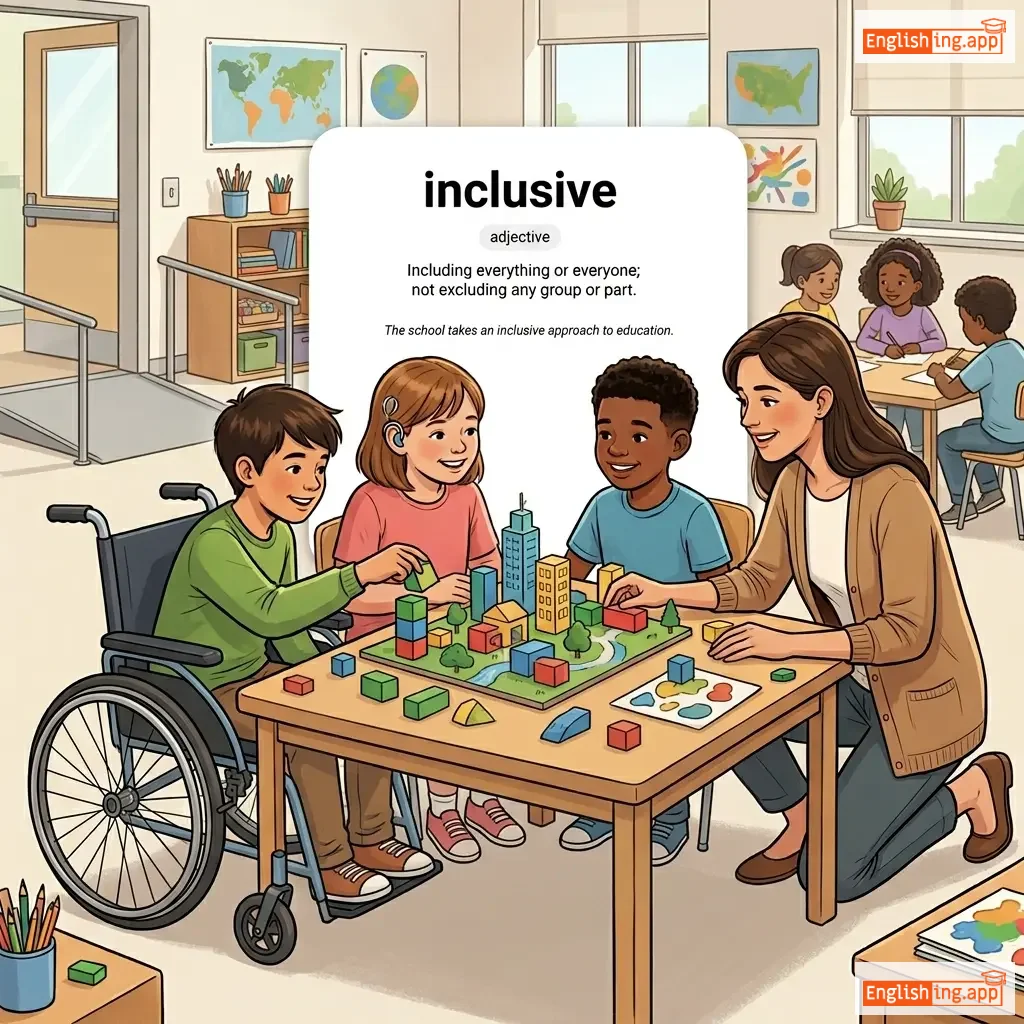
inclusive definition card — visual illustration of the meaning
adjective
/ɪnˈkluːsɪv/
समावेशी (samaveshi)

Including everything or everyone; not excluding any group or part.

"The school takes an inclusive approach to education."

"विद्यालय शिक्षा में समावेशी दृष्टिकोण अपनाता है।" (Vidyalay shiksha mein samaveshi drishtikon apnata hai.)
adjective
/ˌɪnkoʊˈɜːrsəbl̩/
अवाध्य (avadhya)

Not capable of being forced, compelled, or restrained.

"Her incoercible spirit inspired others to fight for justice."

"उसकी अवाध्य भावना ने दूसरों को न्याय के लिए संघर्ष करने के लिए प्रेरित किया।" (Uski avadhya bhavna ne dusron ko nyay ke liye sangharsh karne ke liye prerith kiya.)
adjective
/ɪnˈkɑːdʒɪtənt/
अविचारपूर्ण (avicharpurn)

Lacking thought; inconsiderate or thoughtless.

"It was incogitant of him to make such a rude comment."

"यह उसके लिए एक rude टिप्पणी करने के लिए अविचारपूर्ण था।" (Yeh uske liye ek rude tipanni karne ke liye avicharpurn tha.)
adverb, adjective
/ˌɪnkɑːɡˈniːtoʊ/
गुमनाम (gumnaam)

In disguise or with one's identity concealed.

"The celebrity traveled incognito to avoid the paparazzi."

"सेलिब्रिटी ने पापराज़ी से बचने के लिए गुमनाम होकर यात्रा की।" (Celebrity ne paparazzi se bachne ke liye gumnaam hokar yatra ki.)
noun
/ˌɪnkoʊˈhɪrəns/
असंगति (asangati)

The quality of being unclear, confused, or lacking logical connection.

"His speech was full of incoherence and difficult to follow."

"उसकी बातों में असंगति थी और उसे समझना मुश्किल था।" (Uski baaton mein asangati thi aur use samajhna mushkil tha.)
adjective
/ˌɪnkəʊˈhɪərənt/
अस्पष्ट (aspasht)

Not clear or easy to understand; lacking logical connection.

"His explanation was so incoherent that nobody could follow it."

"उसका विवरण इतना अस्पष्ट था कि कोई भी उसे समझ नहीं सका।" (Uska vivaran itna aspasht tha ki koi bhi use samajh nahi saka.)
adjective
/ˌɪnkəmˈbʌstəbl/
अग्निरोधक (agnirirodhak)

Not capable of catching fire or burning.

"This material is incombustible and safe for construction."

"इस सामग्री को जलने या आग पकड़ने की क्षमता नहीं है और यह निर्माण के लिए सुरक्षित है।" (Is samagri ko jalne ya aag pakadne ki kshamata nahi hai aur yah nirmaan ke liye surakshit hai.)
noun
/ˈɪnkʌm/
आय (aay)

money received for work or through investments

"His monthly income is enough to support his family."

"उसकी मासिक आय परिवार का पालन करने के लिए पर्याप्त है।" (Uski masik aay parivar ka paalan karne ke liye paryapt hai.)
adjective
/ˌɪnkəˈməʊdiəs/
असुविधाजनक (asuvidhajanak)

Uncomfortably small, cramped, or inconvenient.

"We had to stay in an incommodious room during the trip."

"यात्रा के दौरान हमें एक असुविधाजनक कमरे में रहना पड़ा था।" (Yatra ke dauran humein ek asuvidhajanak kamre mein rehna pada tha.)