वोकैबुलरीज

इंग्लिश वोकैबुलरी डिस्कवर, लर्न और मास्टर करें

verb
/ɪmˈplaɪ/
संकेत करना (sanket karna)

To suggest something without directly stating it.

"Her tone seemed to imply that she was upset."

"उसकी आवाज़ से ऐसा लगा कि वह परेशान थी।" (uski awaaz se aisa laga ki vah pareshan thi.)
adjective
/ˌɪmpəˈlaɪt/
अशिष्ट (ashisht)

Not showing good manners; rude.

"It is impolite to interrupt someone while they are speaking."

"किसी को बोलते समय बीच में टोकना अशिष्ट है।" (Kisi ko bolte samay beech mein tokna ashisht hai.)
adverb
/ɪmˈpɒlɪtli/
अशिष्ट रूप से (ashisht rup se)

in a rude or discourteous manner; without showing respect or proper manners

"He spoke impolitely to the waiter despite the polite service."

"विनम्र सेवा के बावजूद उसने वेटर से अशिष्ट रूप से बात की।" (vinamra seva ke bavjood usne waiter se ashisht rup se baat ki)
noun
/ɪmˈpɒlɪtnəs/
अशिष्टता (ashishtata)

lack of good manners or courtesy; rude behavior

"His impoliteness towards the guests shocked everyone."

"मेहमानों के प्रति उसकी अशिष्टता ने सभी को चौंका दिया।" (mehmaanon ke prati uski ashishtata ne sabhi ko chaunka diya)
adjective
/ɪmˈpɑːlɪtɪk/
अविचारपूर्ण (avicharpurn)

Unwise or imprudent; not showing good judgment.

"It would be impolitic to criticize them openly."

"उन्हें खुलेआम आलोचना करना अविचारपूर्ण होगा।" (Unhe khule aam aalochana karna avicharpurn hoga.)
adjective
/ɪmˈpɒndərəbl̩/
अपरिमेय (apariyemey)

Something difficult or impossible to estimate, assess, or understand

"The outcome of the election depends on many imponderable factors."

"चुनाव के परिणाम कई अपरिमेय कारकों पर निर्भर करते हैं।" (Chunav ke parinaam kai apariyemey kaarkon par nirbhar karte hain.)
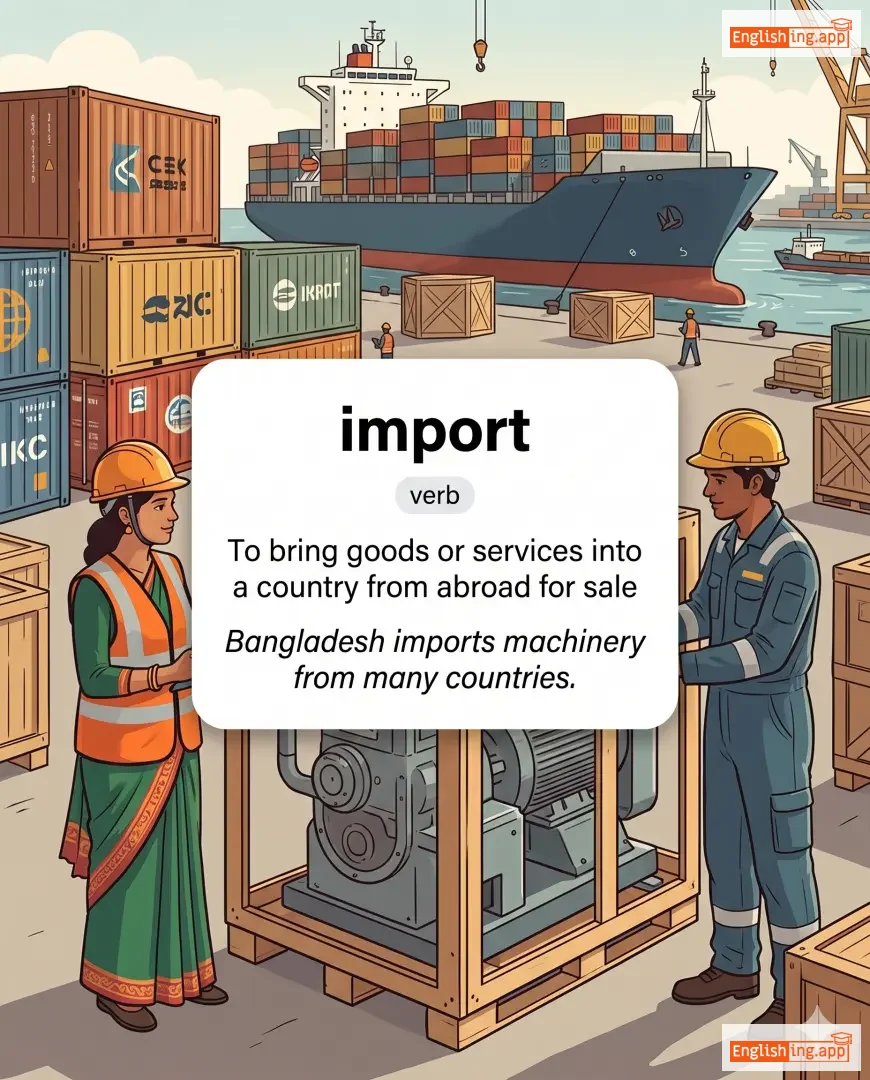
import definition card — visual illustration of the meaning
verb
/ˈɪmpɔːrt/
आयात (aayat)

To bring goods or services into a country from abroad for sale

"Bangladesh imports machinery from many countries."

"बांगलादेश कई देशों से मशीनरी आयात करता है।" (Bangladesh kai deshon se mashinery aayat karta hai.)
importance definition card — visual illustration of the meaning
noun
/ɪmˈpɔːrtəns/
महत्व (mahatva)

the state or fact of being of great significance or value

"She stressed the importance of honesty in all relationships."

"उसने सभी रिश्तों में ईमानदारी के महत्व पर जोर दिया।" (Usne sabhi rishthon mein imandari ke mahatva par zor diya.)
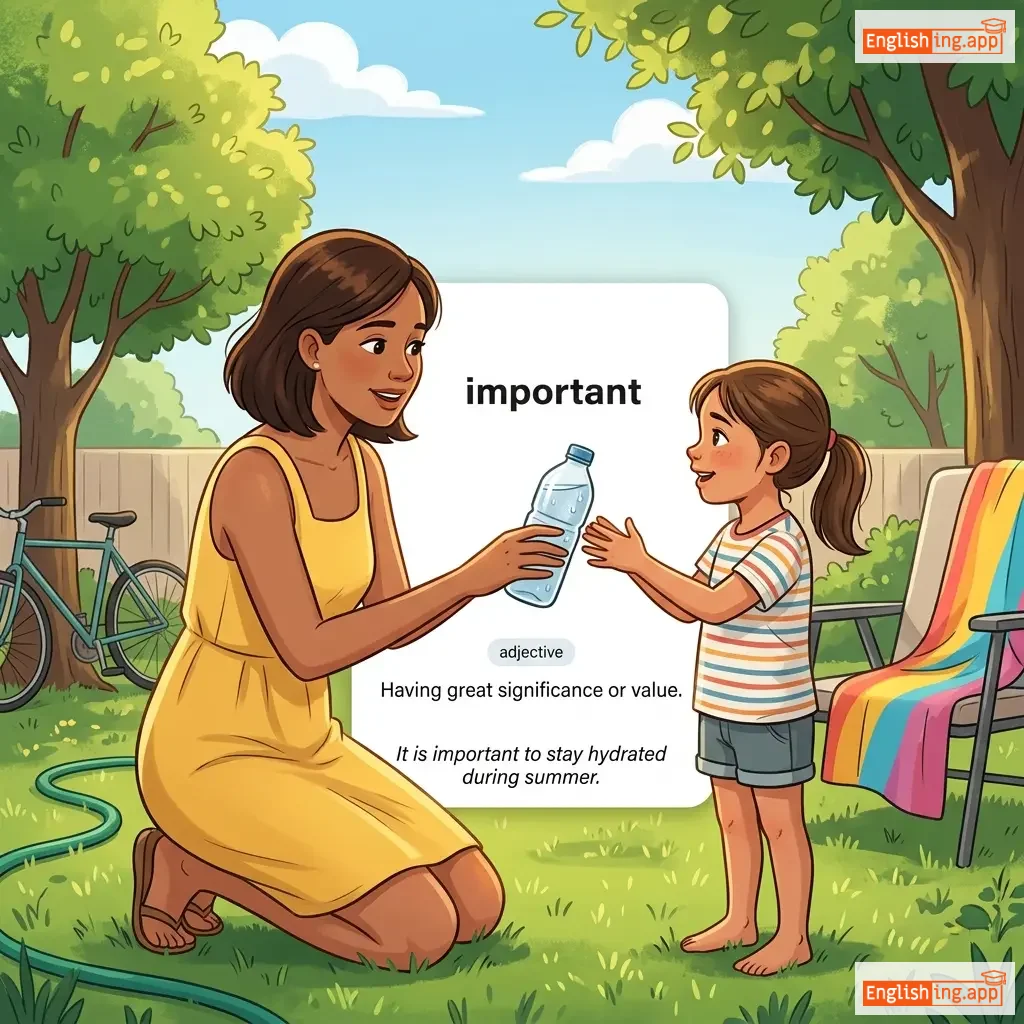
important definition card — visual illustration of the meaning
adjective
/ɪmˈpɔːrtənt/
महत्वपूर्ण (mahatvapurn)

Having great significance or value.

"It is important to stay hydrated during summer."

"गर्मियों में हाइड्रेटेड रहना महत्वपूर्ण है।" (Garmiyon mein hydrated rehna mahatvapurn hai.)
adverb
/ɪmˈpɔːtəntli/
महत्वपूर्ण तरीके से (mahatvapurn tareeke se)

in a way that is of great significance or value

"Importantly, the report highlights the need for immediate action."

"महत्वपूर्ण तरीके से, रिपोर्ट ने तत्काल कार्रवाई की आवश्यकता को उजागर किया।" (Mahatvapurn tareeke se, report ne tatkal karyawahi ki avashyakta ko ujagar kiya.)
noun
/ˌɪmpɔːrˈteɪʃən/
आयात (aayat)

The act of bringing goods or services into a country from abroad

"The importation of luxury goods is strictly regulated."

"लक्ज़री सामान की आयात सख्ती से नियंत्रित है।" (Lazari samaan ki aayat sakhti se niyantrit hai.)
adjective
/ɪmˈpɔːrtʃənət/
अत्यधिक अनुरोध करने वाला (atyadhik anurodh karne wala)

Persistent to the point of annoyance or intrusion

"The importunate salesman kept calling despite repeated refusals."

"अत्यधिक अनुरोध करने वाला विक्रेता बार-बार अस्वीकृत होने के बावजूद फोन करता रहा।" (Atyadhik anurodh karne wala vikreta baar-baar asweekrit hone ke bawajood phone karta raha.)
verb
/ˌɪmpɔːrˈtuːn/
जोर देकर निवेदन करना (jor dekar nivedan karna)

To ask someone persistently or pressingly for something

"The child importuned his mother for a new toy."

"बच्चे ने अपनी माँ से एक नया खिलौना लेने के लिए बार-बार निवेदन किया।" (Bacche ne apni maan se ek naya khilona lene ke liye baar-baar nivedan kiya.)
verb
/ˌɪmpɔːrˈtuːnd/
बार-बार विनती करना (baar-baar vinti karna)

asked someone persistently and pressingly for something

"She importuned her boss for a raise until he finally gave in."

"वह अपने बॉस से तनख्वाह बढ़ाने के लिए बार-बार विनती करती रही, जब तक कि उसने अंततः हां नहीं कह दिया।" (Vah apne boss se tankhwaah badhane ke liye baar-baar vinti karti rahi, jab tak ki usne antatah haan nahi keh diya.)
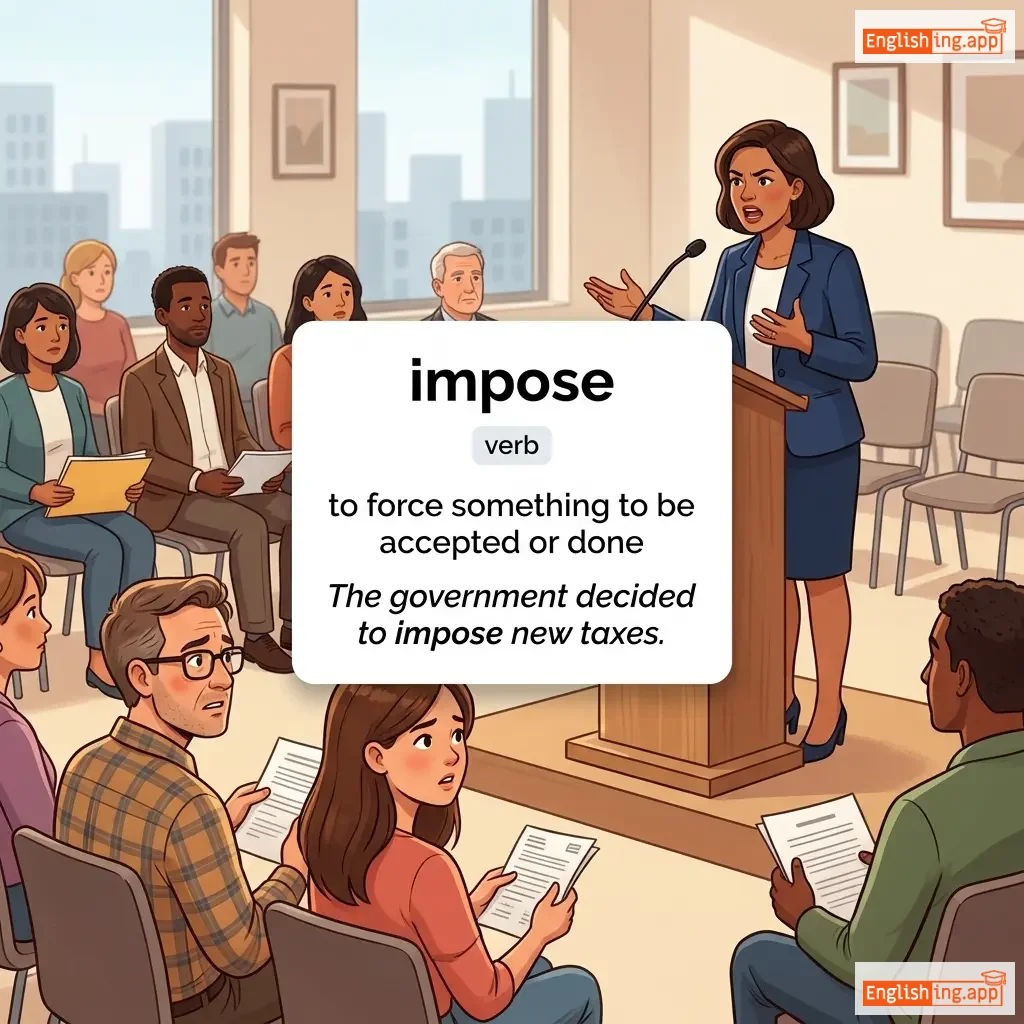
impose definition card — visual illustration of the meaning
verb
/ɪmˈpoʊz/
लागू करना (lagoo karna)

to force something to be accepted or done

"The government decided to impose new taxes."

"सरकार ने नए कर लागू करने का निर्णय लिया।" (Sarkar ne naye kar lagoo karne ka nirnay liya.)
verb
/ɪmˈpoʊzd/
लादना (ladna)

forced something to be accepted or put in place

"The government imposed new regulations on the industry."

"सरकार ने उद्योग पर नई नियमों को लागू किया।" (Sarkar ne udhyog par nai niyamon ko lagu kiya.)
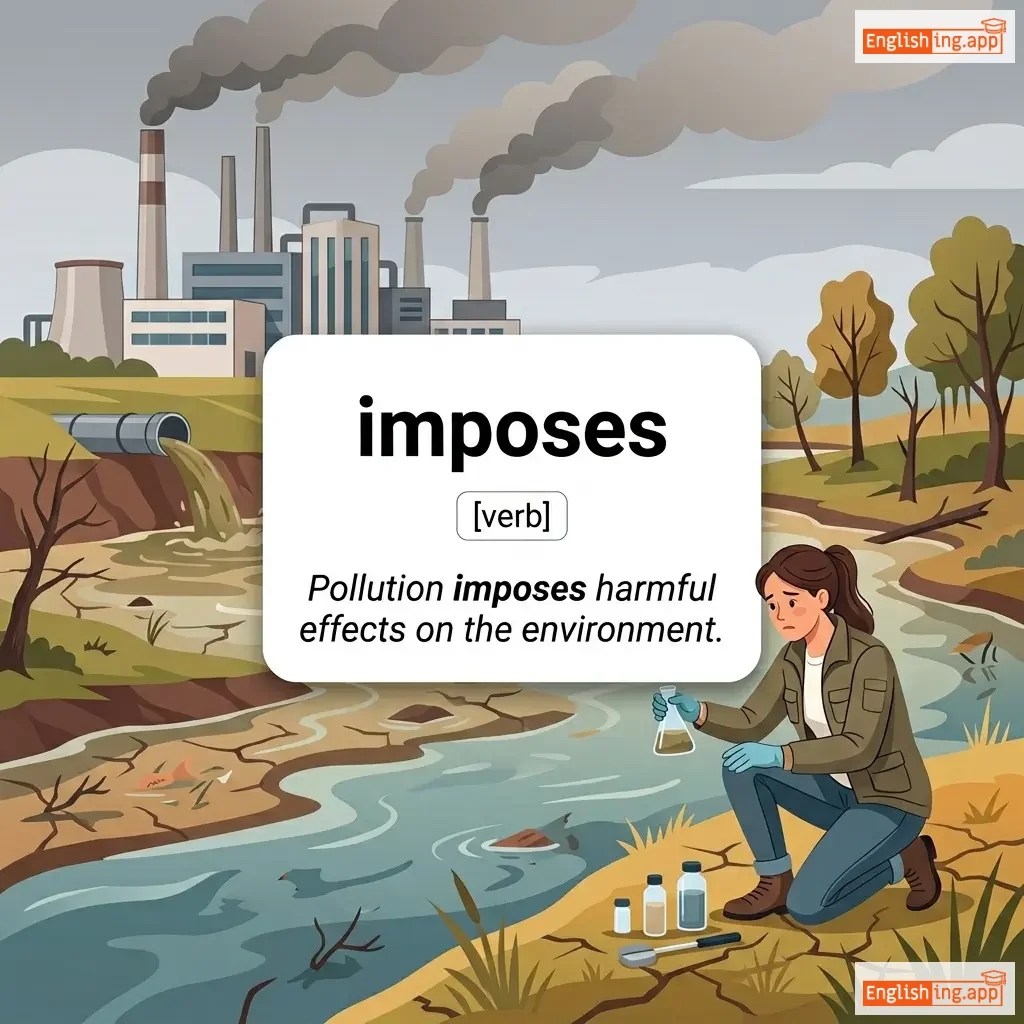
imposes definition card — visual illustration of the meaning
verb
ɪmˈpoʊz
लागू करना (laagu karna)

To establish or apply by authority; to force something unwelcome or unfamiliar to be accepted or put in place.

"Pollution imposes harmful effects on the environment."

"प्रदूषण पर्यावरण पर हानिकारक प्रभाव डालता है।" (Pradushan paryavaran par haanikarak prabhaav daalta hai.)
adjective
/ɪmˈpoʊzɪŋ/
भव्य और प्रभावशाली (bhavya aur prabhavshali)

having an appearance that is grand, impressive, or commanding

"The castle is an imposing structure overlooking the valley."

"महल एक भव्य और प्रभावशाली संरचना है जो घाटी को देख रही है।" (mahal ek bhavya aur prabhavshali sanrachna hai jo ghaati ko dekh rahi hai.)
noun
/ˌɪmpəˈzɪʃən/
लादना (laadna)

the act of forcing something on someone; an unwelcome demand or burden

"The new tax was seen as an unfair imposition on the poor."

"नई कर को गरीबों पर एक अनुचित लादना माना गया था।" (Nayi kar ko gareebon par ek anuchit laadna maana gaya tha.)
noun
/ɪmˌpɒsəˈbɪlɪti/
असंभवता (asambhavata)

the state or fact of being impossible; something that cannot be done or achieved

"Finishing the project in one day was an impossibility."

"एक दिन में परियोजना को पूरा करना असंभवता थी।" (ek din mein pariyojana ko poora karna asambhavata thi)
adjective
/ɪmˈpɑːsəbl/
असंभव (asambhav)

not able to occur, exist, or be done

"It is impossible to finish this work in one day."

"यह काम एक दिन में पूरा करना असंभव है।" (Yeh kaam ek din mein poora karna asambhav hai.)
noun
/ɪmˈpɑːstər/
धोखेबाज़, छलकर्ता (dhokhebaaz, chhalakarta)

a person who pretends to be someone else in order to deceive others

"The man turned out to be an impostor posing as a doctor."

"वह आदमी डॉक्टर के रूप में धोखेबाज़ निकला।" (Woh aadmi doctor ke roop mein dhokhebaaz nikla.)
noun
/ɪmˈpɒstʃər/
धोखाधड़ी (dhokhadhadi)

The act of pretending to be someone else in order to deceive others; deception or fraud.

"The imposture was discovered when the man failed to answer basic questions about his supposed identity."

"धोखाधड़ी का पता तब चला जब आदमी अपनी कथित पहचान के बारे में बुनियादी सवालों का उत्तर नहीं दे सका।" (Dhokhadhadi ka pata tab chala jab aadmi apni kathit pehchaan ke baare mein buniyaadi sawaalon ka uttar nahi de saka.)
adjective
/ˈɪmpətənt/
असहाय (asahay)

Lacking power, ability, or strength to take effective action.

"The citizens felt impotent against the corrupt system."

"नागरिकों को भ्रष्ट सिस्टम के खिलाफ असहाय महसूस हुआ।" (Nagrikon ko bhrasht system ke khilaf asahay mahsus hua.)
verb
/ɪmˈpɒvərɪʃ/
गरीब बनाना (gareeb banana)

To make someone poor or reduce the quality or richness of something.

"The long war impoverished the entire nation."

"लंबे युद्ध ने सम्पूर्ण राष्ट्र को गरीब बना दिया।" (Lambe yudh ne sampoorn rashtr ko gareeb bana diya.)
adjective
/ɪmˈpræktɪkəbl/
अव्यवहारिक (avyavaharik)

Not capable of being carried out or put into practice.

"The plan seemed impracticable due to limited resources."

"संसाधनों की कमी के कारण योजना अव्यवहारिक प्रतीत हो रही थी।" (Sansadhanon ki kami ke karan yojna avyavaharik prateet ho rahi thi.)
verb
/ˈɪmprɪkeɪt/
शाप देना (shaap dena)

To utter a curse or invoke evil upon someone.

"The old woman imprecated her enemies with dark words."

"वृद्ध महिला ने अपने दुश्मनों को काले शब्दों से शाप दिया।" (Vruddh mahila ne apne dushmanon ko kaale shabdon se shaap diya.)
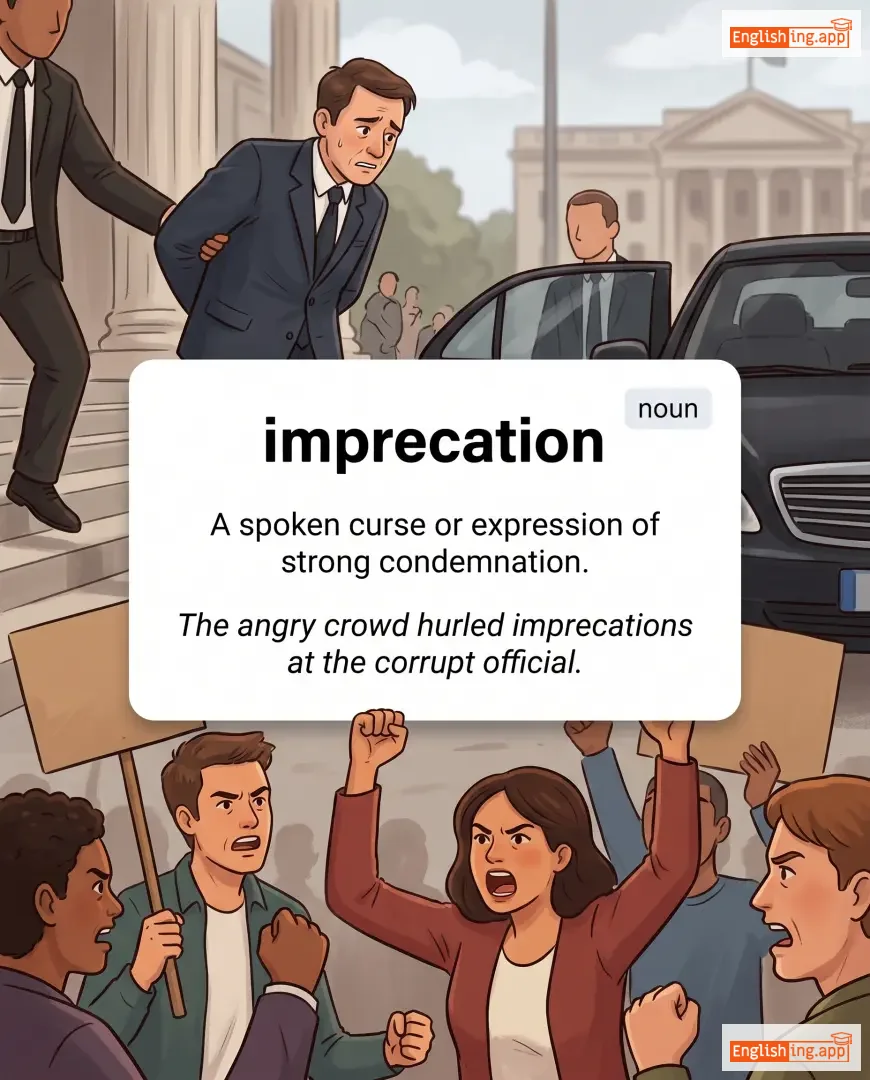
imprecation definition card — visual illustration of the meaning
noun
/ˌɪmprɪˈkeɪʃən/
शाप (shaap)

A spoken curse or expression of strong condemnation.

"The angry crowd hurled imprecations at the corrupt official."

"गुस्साए हुए जनसमूह ने भ्रष्ट अधिकारी पर शाप फेंके।" (Gussaye hue jansamuh ne bhrasht adhikari par shaap pheanke.)
adjective
/ˌɪmprɪˈsaɪs/
अस्पष्ट (aspasht)

Not exact or accurate; vague.

"His explanation was too imprecise to be helpful."

"उसकी व्याख्या इतनी अस्पष्ट थी कि वह मददगार नहीं थी।" (Uski vyakhya itni aspasht thi ki vah madadgar nahin thi.)
adjective
/ɪmˈprɛɡnəbl̩/
अजेय (ajey)

Unable to be captured, broken into, or defeated.

"The fortress was considered impregnable by the enemy."

"किले को दुश्मन ने अजेय समझा था।" (Kile ko dushman ne ajey samjha tha.)
verb
/ˈɪmprɛɡneɪt/
गर्भवती करना / सिक्त करना (garbhvati karna / sikt karna)

To make pregnant; to fill or saturate with something.

"The scientist used a method to impregnate the material with resin."

"विज्ञानी ने रेजिन के साथ सामग्री को इम्प्रेगनेट करने के लिए एक विधि का उपयोग किया।" (Vigyani ne rejin ke saath samagri ko impregnet karne ke liye ek vidhi ka upyog kiya.)
noun
/ˌɪmprəˈsɑːrioʊ/
आयोजक (aayojak)

A person who organizes or finances concerts, plays, or operas.

"The impresario arranged a series of concerts for the rising star."

"इम्प्रेसारियो ने उभरते हुए सितारे के लिए एक श्रृंखला का आयोजन किया।" (Impresario ne ubharta hua sitare ke liye ek shrankhla ka aayojan kiya.)
verb
/ɪmˈprɛs/
प्रभावित करना (prabhavit karna)

to cause someone to feel admiration or respect

"Her speech managed to impress the audience."

"उसकी भाषण ने दर्शकों पर प्रभाव डाला।" (uski bhashan ne darshako par prabhav dala.)
noun
/ɪmˈprɛʃən/
छाप, अवधारणा (chhap, avadharana)

an idea, feeling, or opinion about something or someone

"The book gave me a good first impression."

"किताब ने मुझे एक अच्छा पहला छाप दी।" (kitaab ne mujhe ek accha pehla chhap dee.)
adjective
/ɪmˈprɛsɪv/
प्रभावशाली, सराहनीय (prabhavshali, sarahniye)

causing admiration or respect; remarkable

"The building is an impressive example of modern architecture."

"यह भवन आधुनिक वास्तुकला का एक प्रभावशाली उदाहरण है।" (yah bhavan aadhunik vaastukala ka ek prabhavshali udaharan hai.)
noun
/ˌɪmprɪˈmɑːtər/
आधिकारिक स्वीकृति (aadhikaarik sweekriti)

An official license or approval, especially to publish a book.

"The book was released with the official imprimatur of the church."

"पुस्तक को चर्च की आधिकारिक स्वीकृति के साथ प्रकाशित किया गया था।" (Pustak ko church ki aadhikaarik sweekriti ke saath prakaashit kiya gaya tha.)
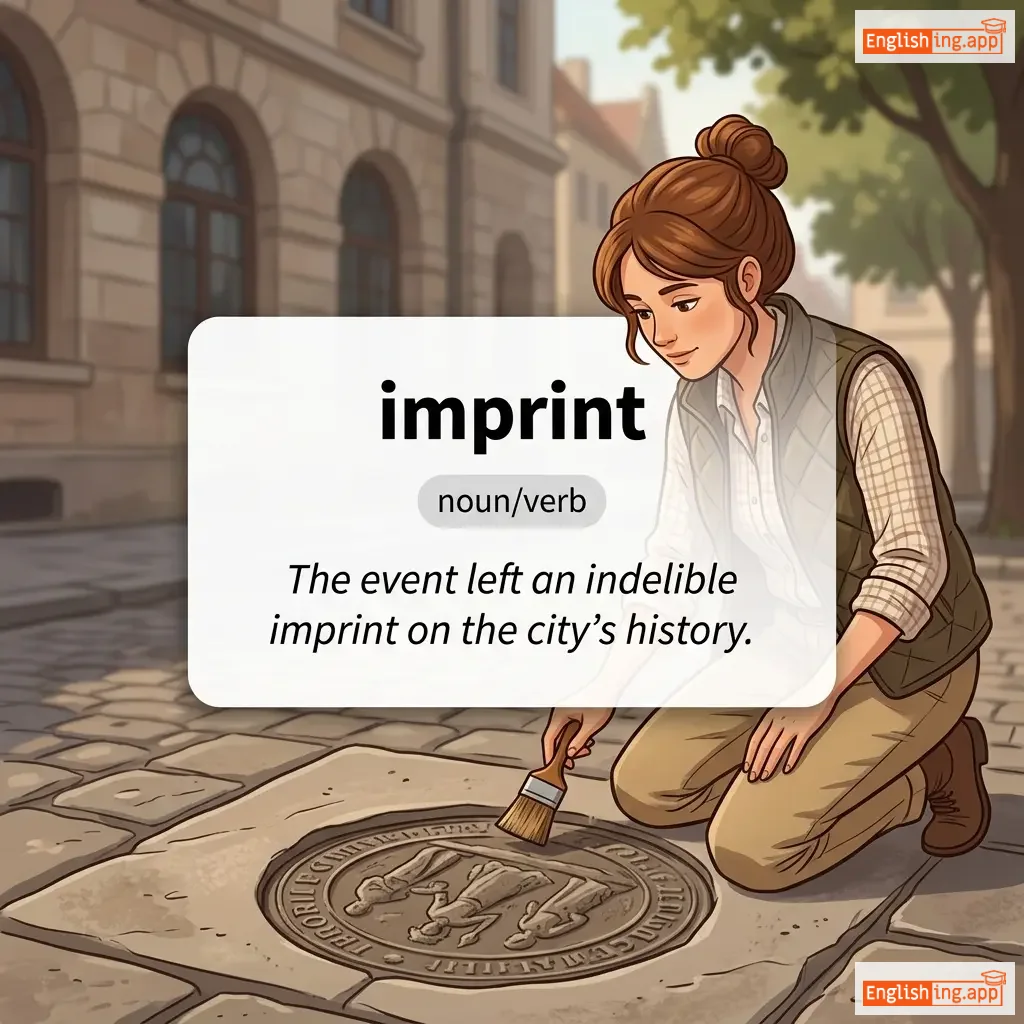
imprint definition card — visual illustration of the meaning
noun/verb
/ˈɪmprɪnt/
छाप (imprint)

A mark or impression made by pressure; to establish or fix firmly in someone's mind.

"The event left an indelible imprint on the city's history."

"घटना ने शहर के इतिहास पर एक अमिट छाप छोड़ दी।" (Ghatna ne shahar ke itihas par ek amit chaap chhod di)
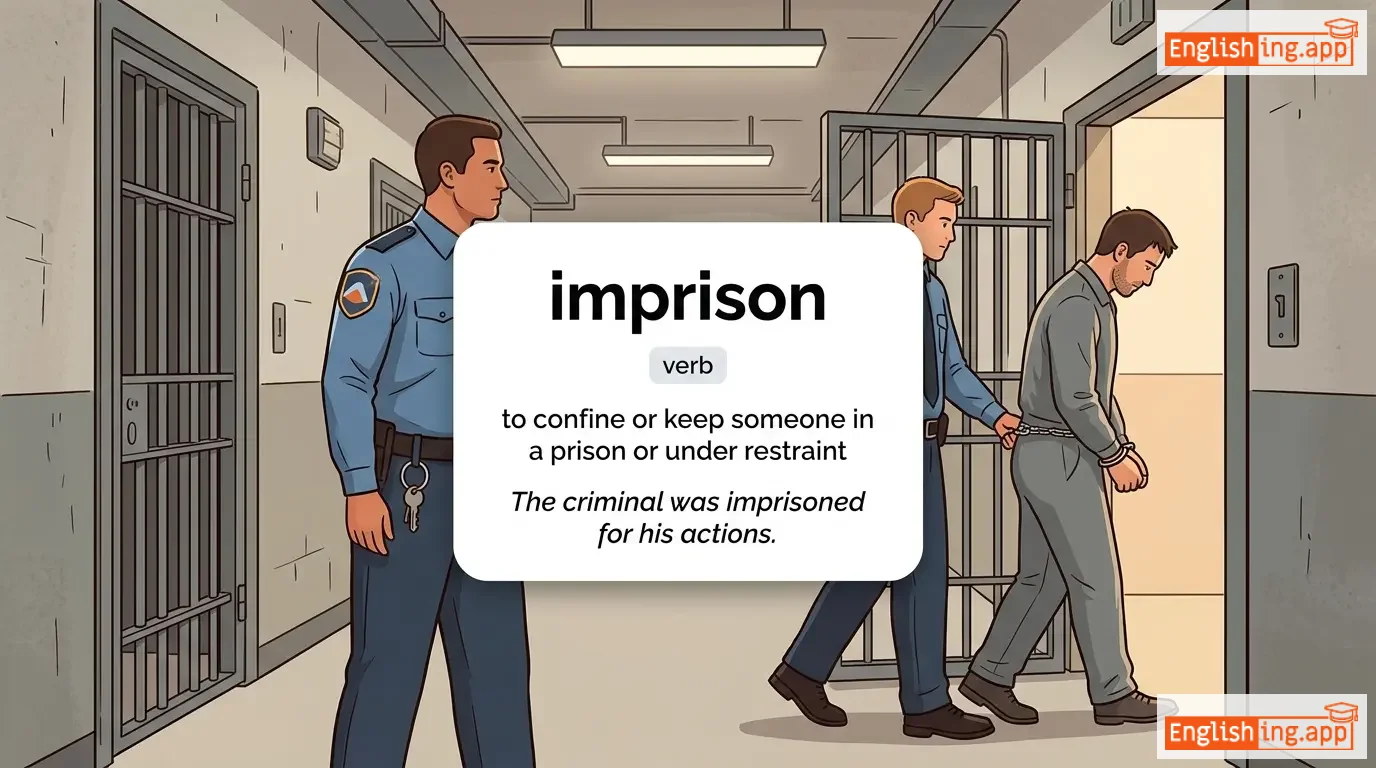
imprison definition card — visual illustration of the meaning
verb
/ɪmˈprɪzən/
क़ैद करना (qaid karna)

to confine or keep someone in a prison or under restraint

"The criminal was imprisoned for his actions."

"अपराधी को उसके कृत्यों के लिए क़ैद किया गया था।" (Aparadhi ko uske krityon ke liye qaid kiya gaya tha.)
noun
/ɪmˈprɪzənmənt/
कारावास (karavaas)

the act of putting someone in prison; the state of being confined as punishment

"He faced imprisonment for violating the court order."

"अदालत के आदेश का उल्लंघन करने पर उसे कारावास का सामना करना पड़ा।" (adalat ke aadesh ka ullanghan karne par use karavaas ka samna karna pada)
noun
/ɪmˌprɒb.əˈbɪl.ə.ti/
असंभावना (asambhavna)

the quality or state of being improbable; unlikely to be true or to happen

"The improbability of winning the lottery twice didn't stop her from buying tickets."

"लॉटरी दोबारा जीतने की असंभावना ने उसे टिकट खरीदने से नहीं रोका।" (lottery dobaara jeetne ki asambhavna ne use ticket kharidne se nahi roka.)
adjective
/ɪmˈprɒbəbl/
असंभाव्य (asanbhavya)

Not likely to be true or to happen.

"It seems improbable that he will arrive on time."

"यह असंभावना लगता है कि वह समय पर पहुंचेगा।" (Yeh asanbhavya lagta hai ki wah samay par pahunchega.)
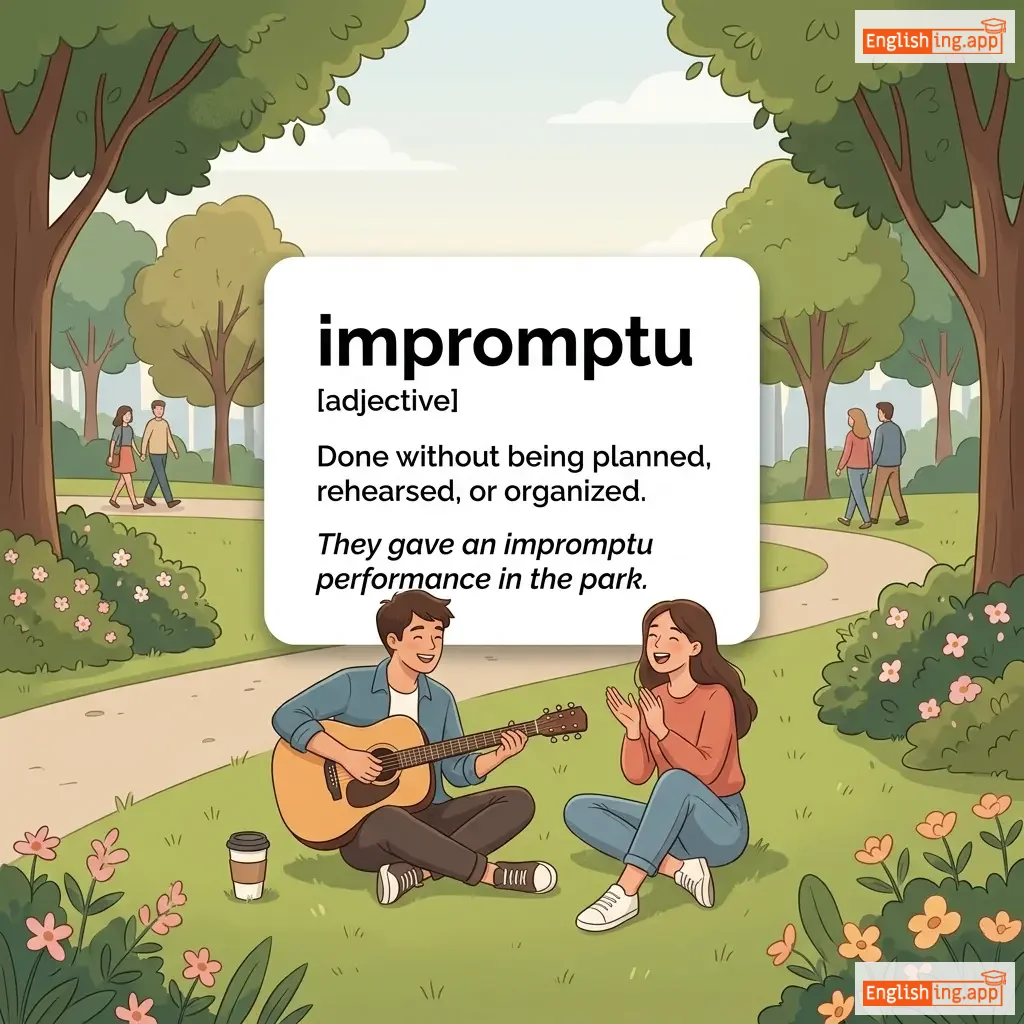
impromptu definition card — visual illustration of the meaning
adjective
/ɪmˈprɒmptjuː/
अचानक किया हुआ (achanak kiya hua)

Done without being planned, rehearsed, or organized.

"They gave an impromptu performance in the park."

"वे पार्क में एक अचानक प्रदर्शन देने गए।" (Ve park mein ek achanak pradarshan dene gaye.)
adjective
/ɪmˈprɒpər/
अनुचित (anuchit)

Not suitable or appropriate; against accepted standards.

"It is improper to talk loudly in the library."

"यह पुस्तकालय में जोर से बात करना अनुचित है।" (Yeh pustakalay mein zor se baat karna anuchit hai.)
noun
/ˌɪmprəˈpraɪəti/
अशिष्टता (ashishtata)

Failure to observe standards of honesty or modesty; improper behavior.

"The politician was accused of financial impropriety."

"राजनेता पर वित्तीय अशिष्टता का आरोप लगाया गया था।" (Rajneta par vittiya ashishtata ka aarop lagaya gaya tha.)
verb
/ɪmˈpruːv/
सुधारना (sudharna)

to make something better or become better

"Regular practice will improve your skills."

"नियमित अभ्यास आपके कौशल को सुधार देगा।" (niyamit abhyas aapke kaushal ko sudhaar dega.)
adjective
/ɪmˈpruːvd/
बेहतर (behtar)

made better or enhanced in quality or condition

"Her health has significantly improved since last month."

"उसकी सेहत पिछले महीने से काफी बेहतर हुई है।" (Uski sehat pichle mahine se kaafi behtar hui hai.)
noun
/ɪmˈpruːvmənt/
सुधार (sudhaar)

the act of making something better

"There has been a significant improvement in his health."

"उसकी सेहत में एक महत्वपूर्ण सुधार हुआ है।" (uski sehat mein ek mahatvapurn sudhaar hua hai.)
improvements definition card — visual illustration of the meaning
noun
ɪmˈpruːv.mənts
सुधार (sudhaar)

The action of making or becoming better; an instance of something becoming or being made better.

"Continuous improvements increase productivity."

"सतत सुधार उत्पादकता बढ़ाता है।" (Satat sudhaar utpaadakta badhaata hai.)
noun
/ɪmˈprɑːvɪdəns/
अविचारिता (avicharita)

Lack of foresight or care for future needs.

"His improvidence led to financial difficulties."

"उसकी अविचारिता ने उसे वित्तीय समस्याओं में डाल दिया।" (Uski avicharita ne use vittiya samasyaon mein daal diya.)
adjective
/ɪmˈprɒvɪdənt/
अज्ञानी (ajnyani)

Not having or showing foresight; spending wastefully or without thought for the future.

"His improvident habits left him with no savings."

"उसकी अज्ञानी आदतों ने उसे बिना बचत के छोड़ दिया।" (uski ajnyani aadaton ne use bina bachat ke chhod diya.)