वोकैबुलरीज

इंग्लिश वोकैबुलरी डिस्कवर, लर्न और मास्टर करें

adjective
/ˌɪməˈtɪəriəl/
अप्रासंगिक (aprasangik)

Not important or relevant; lacking physical substance.

"The judge ruled that the argument was immaterial to the case."

"न्यायाधीश ने फैसला सुनाया कि तर्क मामले से अप्रासंगिक था।" (Nyayadhish ne faisla sunaya ki tark mamle se aprasangik tha.)
adjective
/ˌɪməˈtjʊər/
अपरिपक्व (aparikpva)

Not fully developed; childish or lacking maturity.

"His immature behavior annoyed everyone at the meeting."

"उसका अपरिपक्व व्यवहार बैठक में सभी को परेशान कर रहा था।" (Uska aparikva vyavhaar baithak mein sabhi ko pareshan kar raha tha.)
noun
/ˌɪməˈtjʊərəti/
अपरिपक्वता (aparipakvata)

the state of not being fully developed emotionally, mentally, or physically; lack of maturity

"His immaturity made it difficult for him to handle responsibility."

"उसकी अपरिपक्वता ने जिम्मेदारी संभालना कठिन बना दिया।" (uski aparipakvata ne jimmedari sambhalna kathin bana diya)
adjective
/ɪˈmɛʒərəbl/
अपरिमेय (aparmeey)

Too great or extreme to be measured.

"Her kindness brought him immeasurable happiness."

"उसकी दयालुता ने उसे अपरिमेय खुशी दी।" (Uski dayaluta ne use aparimey khushi di.)
immediacy definition card — visual illustration of the meaning
noun
/ɪˈmiːdiəsi/
तत्कालिता, तात्कालिकता (tatkalita, tatkalikta)

The quality of bringing one into direct and instant involvement with something, giving rise to a sense of urgency or excitement.

"The immediacy of digital communication has reshaped business operations."

"डिजिटल संचार की तत्कालिता ने व्यापार संचालन को फिर से आकार दिया है।" (Digital sanchar ki tatkalita ne vyapar sancharan ko phir se aakaar diya hai.)
adjective
/ɪˈmiːdiət/
तत्काल (tatkaal)

happening or done without delay

"The doctor gave her immediate attention."

"डॉक्टर ने उसे तत्काल ध्यान दिया।" (Doktar ne use tatkaal dhyan diya.)
adverb
/ɪˈmiːdiətli/
तुरंत (turant)

at once; without delay

"She responded immediately to the emergency call."

"उसने आपातकालीन कॉल का तुरंत उत्तर दिया।" (Usne aapatkaaleen kol ka turant uttar diya.)
adjective
/ˌɪməˈmɔːriəl/
प्राचीनकालीन (prachinkaleen)

Extending back beyond memory or record; ancient.

"The tradition has been followed since time immemorial."

"परंपरा समय के प्राचीन काल से अनुसरण की जाती है।" (Parampara samay ke prachin kaal se anusarhan ki jaati hai.)
adjective
/ɪˈmɛns/
विशाल (vishal)

Extremely large or great in size, amount, or degree.

"The project required an immense amount of effort."

"प्रोजेक्ट को पूरा करने के लिए बहुत अधिक प्रयास की आवश्यकता थी।" (Project ko poora karne ke liye bahut adhik prayaas ki aavashyakta thi.)
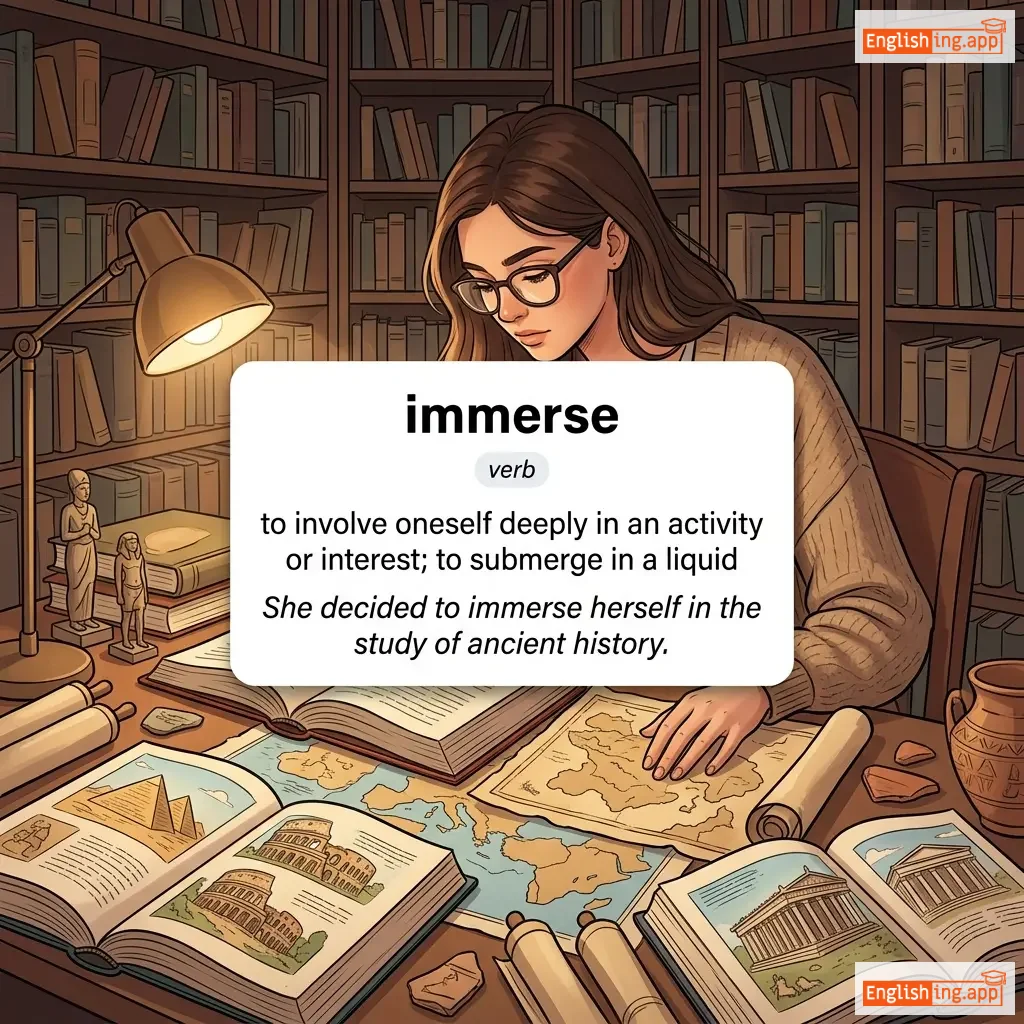
immerse definition card — visual illustration of the meaning
verb
/ɪˈmɜːrs/
डुबोना, गहरे रूप से डूब जाना (dubona, gahre roop se doob jana)

to involve oneself deeply in an activity or interest; to submerge in a liquid

"She decided to immerse herself in the study of ancient history."

"उसने प्राचीन इतिहास के अध्ययन में खुद को डुबोने का निर्णय लिया।" (Usne prachin itihas ke adhyayan mein khud ko dubone ka nirnay liya.)
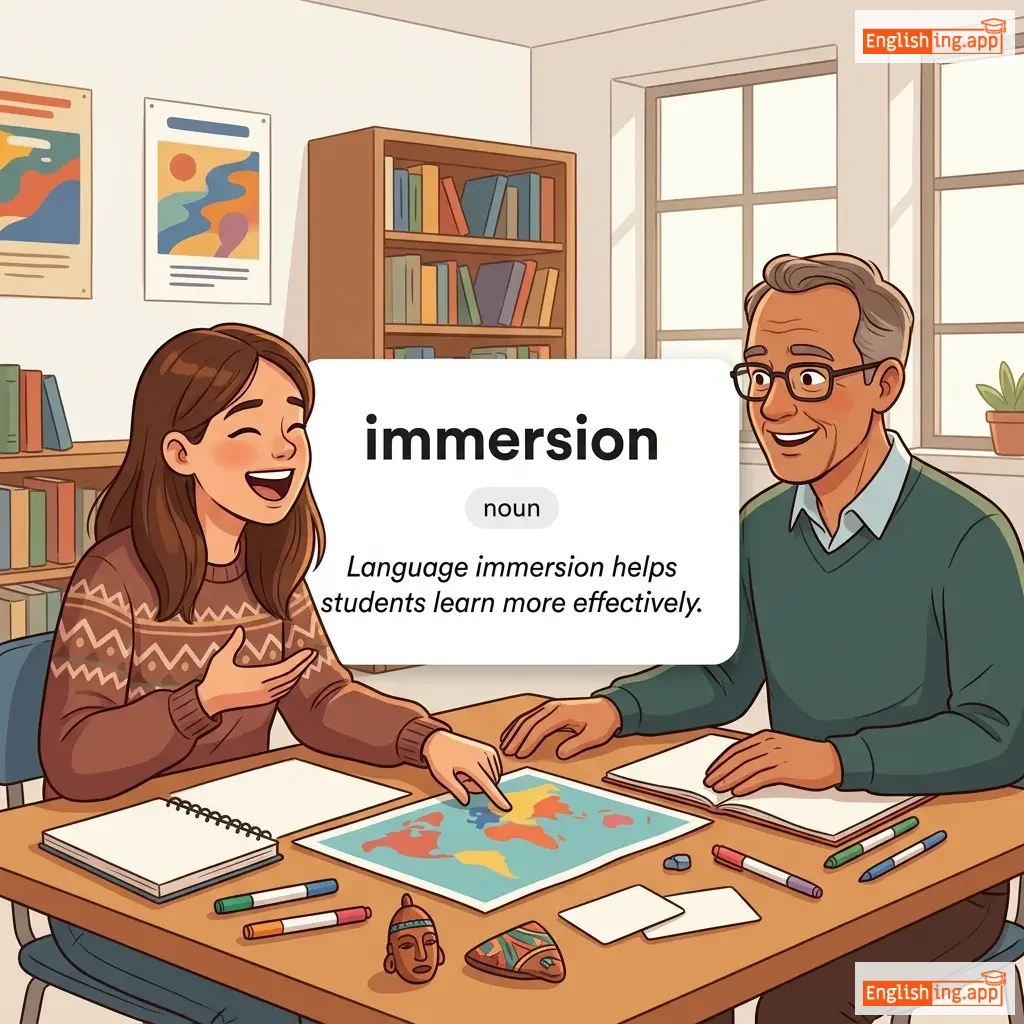
immersion definition card — visual illustration of the meaning
noun
/ɪˈmɜːrʒən/
इमर्शन (immersion)

the act of deeply involving oneself in something; the state of being completely surrounded by liquid

"Language immersion helps students learn more effectively."

"भाषा इमर्शन छात्रों को अधिक प्रभावी तरीके से सीखने में मदद करता है।" (Bhasha immersion chhatron ko adhik prabhavi tareeke se seekhne mein madad karta hai.)
immersive definition card — visual illustration of the meaning
adjective
ɪˈmɜː.sɪv
इमर्सिव (immersive)

Providing, involving, or characterized by deep absorption or immersion in something.

"The immersive experience of VR makes learning more interactive."

"वीआर का इमर्सिव अनुभव सीखने को अधिक इंटरएक्टिव बनाता है।" (VR ka immersive anubhav seekhne ko adhik interactive banata hai)
noun
/ˈɪmɪɡrənt/
प्रवासी (pravasi)

a person who comes to live permanently in a foreign country

"The city has welcomed many new immigrants this year."

"इस वर्ष शहर ने कई नए प्रवासियों का स्वागत किया।" (Is varsh shahar ne kai naye pravasion ka swagat kiya.)
verb
/ˈɪmɪɡreɪt/
आव्रजन करना (aavragan karna)

to come to live permanently in a foreign country

"He immigrated to Canada five years ago."

"वह पांच साल पहले कनाडा में आव्रजन करने के लिए गया था।" (Vah paanch saal pehle Kanada mein aavragan karne ke liye gaya tha.)
noun
/ˌɪmɪˈɡreɪʃən/
आव्रजन (aavran)

the action of coming to live permanently in a foreign country

"Immigration policies vary from country to country."

"आव्रजन नीतियाँ देश दर देश अलग-अलग होती हैं।" (Aavran neetiyan desh dar desh alag-alag hoti hain.)
noun
/ˈɪmɪnəns/
आसन्नता, निकटवर्ती स्थिति (asannata, nikatvarti sthiti)

the state of being about to happen

"The imminence of the storm forced people to take shelter."

"तूफान की आसन्नता ने लोगों को शरण लेने के लिए मजबूर कर दिया।" (toofan ki asannata ne logon ko sharan lene ke liye majboor kar diya.)
adjective
/ˈɪmɪnənt/
निकटस्थ (nikatsth)

About to happen; likely to occur very soon.

"Dark clouds signaled that a storm was imminent."

"अंधेरे बादल संकेत दे रहे थे कि एक तूफान निकटस्थ था।" (Andhere badal sanket de rahe the ki ek toofan nikatsth tha.)
adjective
/ɪˈmɪsəbl/
अविभाज्य (avibhajy)

Describes liquids that do not mix together.

"Oil and water are immiscible liquids."

"तेल और पानी अविभाज्य तरल पदार्थ हैं।" (Tel aur paani avibhajy taral padarth hain.)
adjective
/ɪˈmoʊbəl/
अचल (achal)

unable to move or be moved

"After the accident, he was immobile for weeks."

"दुर्घटना के बाद, वह हफ्तों तक अचल था।" (Durghatna ke baad, vah hafton tak achal tha.)
noun
/ˌɪməʊˈbɪləti/
अचलता (achalata)

The state of being unable to move.

"After the accident, she suffered from immobility in her legs."

"दुर्घटना के बाद, उसे अपने पैरों में अचलता का सामना करना पड़ा।" (Durghatna ke baad, use apne pairon mein achalta ka samna karna pada.)
adjective
/ɪˈmɒdərət/
अत्यधिक (atyadhik)

excessive; beyond reasonable limits

"He has an immoderate love for sweets."

"उसकी मिठाइयों के प्रति अत्यधिक प्यार है।" (Uski mithaiyon ke prati atyadhik pyaar hai.)
adjective
/ɪˈmɒdɪst/
अक्खड़ / अशालीन (akkhad / ashaleen)

lacking humility or decency; excessively proud or improper

"His immodest remarks offended the audience."

"उसकी अक्खड़ टिप्पणी ने दर्शकों को आहत किया।" (Uski akkhad tipanni ne darshako ko aahat kiya.)
noun
/ɪˈmɒdəsti/
अशालीनता (ashalinata)

lack of modesty or decency; behavior or attitude that is overly bold or improper

"The article was criticized for its tone of immodesty."

"लेख की अशालीनता के स्वर के लिए आलोचना की गई।" (lekh ki ashalinata ke swar ke liye aalochna ki gai)
verb
/ˈɪməleɪt/
बलिदान/आग में जलाना (balidan/aag mein jalana)

To kill or sacrifice, especially by burning.

"The protesters threatened to immolate themselves in front of the building."

"प्रदर्शनकारियों ने बिल्डिंग के सामने खुद को आग में जलाने की धमकी दी थी।" (Pradarshankariyon ne building ke samne khud ko aag mein jalane ki dhamki di thi.)
adjective
/ɪˈmɒrəl/
अनीतिक (anetik)

Not conforming to accepted standards of morality; unethical or wicked.

"He was fired for his immoral behavior."

"उसे उसके अनीतिक व्यवहार के कारण निकाल दिया गया।" (Use uske anetik vyavhaar ke kaaran nikaal diya gaya.)
noun
/ˌɪməˈrælɪti/
अनैतिकता (anaitikta)

the quality of being immoral; behavior that violates accepted moral standards

"The community condemned the immorality of the corrupt officials."

"समुदाय ने भ्रष्ट अधिकारियों की अनैतिकता की निंदा की।" (samuday ne bhrasht adhikariyon ki anaitikta ki ninda ki)
adjective; noun
/ɪˈmɔːrtl/
अमर (amar)

living forever; never dying; lasting forever in fame or memory

"Legends often describe heroes as immortal beings who never die."

"कहानियों में नायकों को अक्सर अमर बताया जाता है।" (kahaniyon mein nayakon ko aksar amar bataya jata hai)
noun
/ˌɪmɔːrˈtæləti/
अमरत्व (amartva)

the state of living forever; eternal life or lasting fame beyond death

"Many ancient cultures believed that heroes could achieve immortality through great deeds."

"कई प्राचीन संस्कृतियाँ मानती थीं कि नायक महान कार्यों से अमरत्व प्राप्त कर सकते हैं।" (kai prachin sanskritiyan maanti thin ki nayak mahan karyon se amartva prapt kar sakte hain)
verb
/ɪˈmɔːrtəlaɪz/
अमर करना (amar karna)

to preserve the memory of someone or something forever

"The statue was built to immortalize the hero’s sacrifice."

"प्रतिमा को नायक की बलिदान को अमर करने के लिए बनाया गया था।" (Pratima ko nayak ki balidan ko amar karne ke liye banaya gaya tha.)
immovable definition card — visual illustration of the meaning
adjective
/ɪˈmuːvəbl/
अचल (achal)

impossible to move or change

"The rock was too heavy and immovable."

"पत्थर बहुत भारी और अचल था।" (Patthar bahut bhaari aur achal tha.)
adjective
/ɪˈmjuːn/
रोग प्रतिरोधक (rog pratirodhak)

protected from disease or from the effects of something

"Children who are vaccinated are immune to many diseases."

"जो बच्चे टीका लगवाते हैं वे कई बीमारियों से सुरक्षित रहते हैं।" (Jo bachche tika lagwate hain ve kai bimariyon se surakshit rahte hain.)
immunity definition card — visual illustration of the meaning
noun
/ɪˈmjuːnɪti/
प्रतिरक्षा (pratiroksha)

The state of being protected against disease or harmful influences.

"Vaccination provides immunity against certain infections."

"टीकाकरण कुछ संक्रमणों से प्रतिरक्षा प्रदान करता है।" (Teekakaran kuch sankramanon se pratiroksha pradan karta hai.)
verb
/ɪˈmjʊər/
बंद करना (band karna)

to confine or enclose someone against their will

"The prisoner was immured in a dark cell."

"कैदी को अंधेरे सेल में बंद कर दिया गया था।" (Kaidi ko andhere sel mein band kar diya gaya tha.)
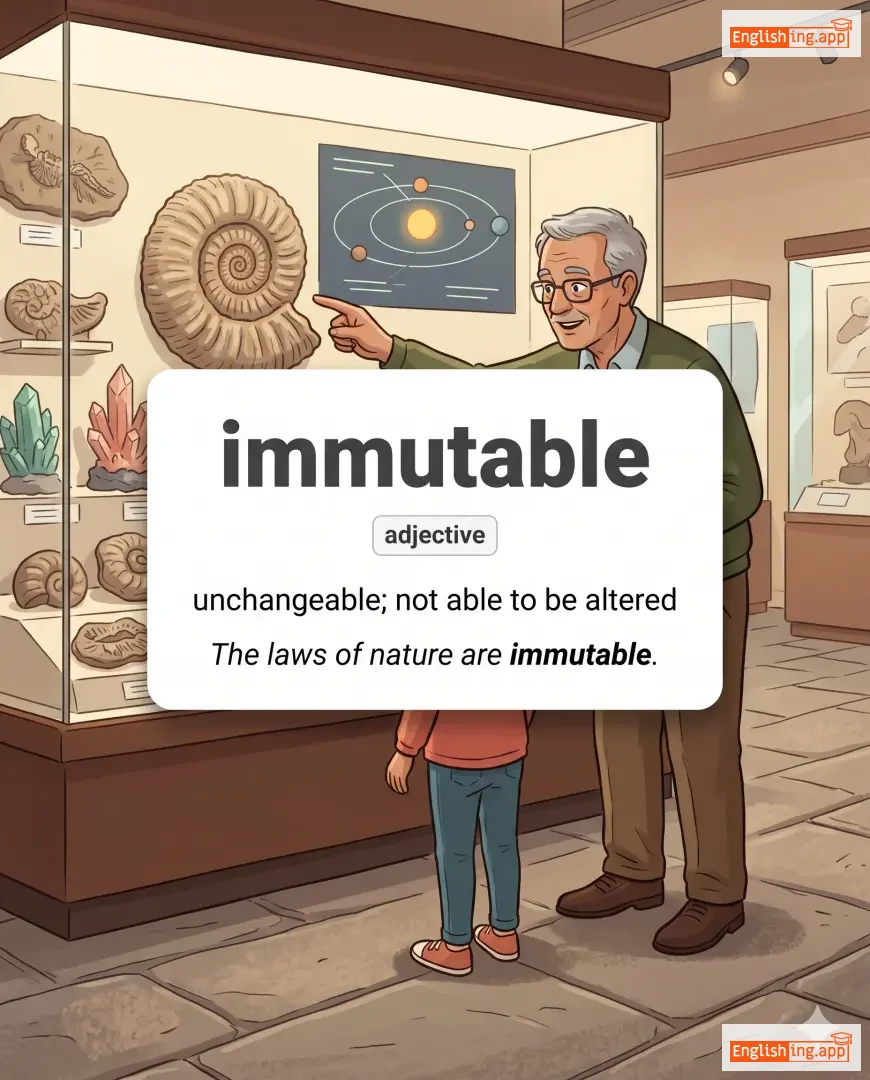
immutable definition card — visual illustration of the meaning
adjective
/ɪˈmjuːtəbl/
अपरिवर्तनीय (aparivartaniya)

unchangeable; not able to be altered

"The laws of nature are immutable."

"प्रकृति के नियम अपरिवर्तनीय हैं।" (Prakriti ke niyam aparivartaniya hain.)
noun
/ɪmp/
छोटा शरारती दानव (chota shararati danav)

a small mischievous devil or sprite; a playful troublemaker

"The child was acting like a little imp, hiding his toys everywhere."

"बच्चा एक छोटे इम्प की तरह बर्ताव कर रहा था, अपने खिलौने हर जगह छिपा रहा था।" (Baccha ek chhote imp ki tarah bartav kar raha tha, apne khilone har jagah chhupa raha tha.)
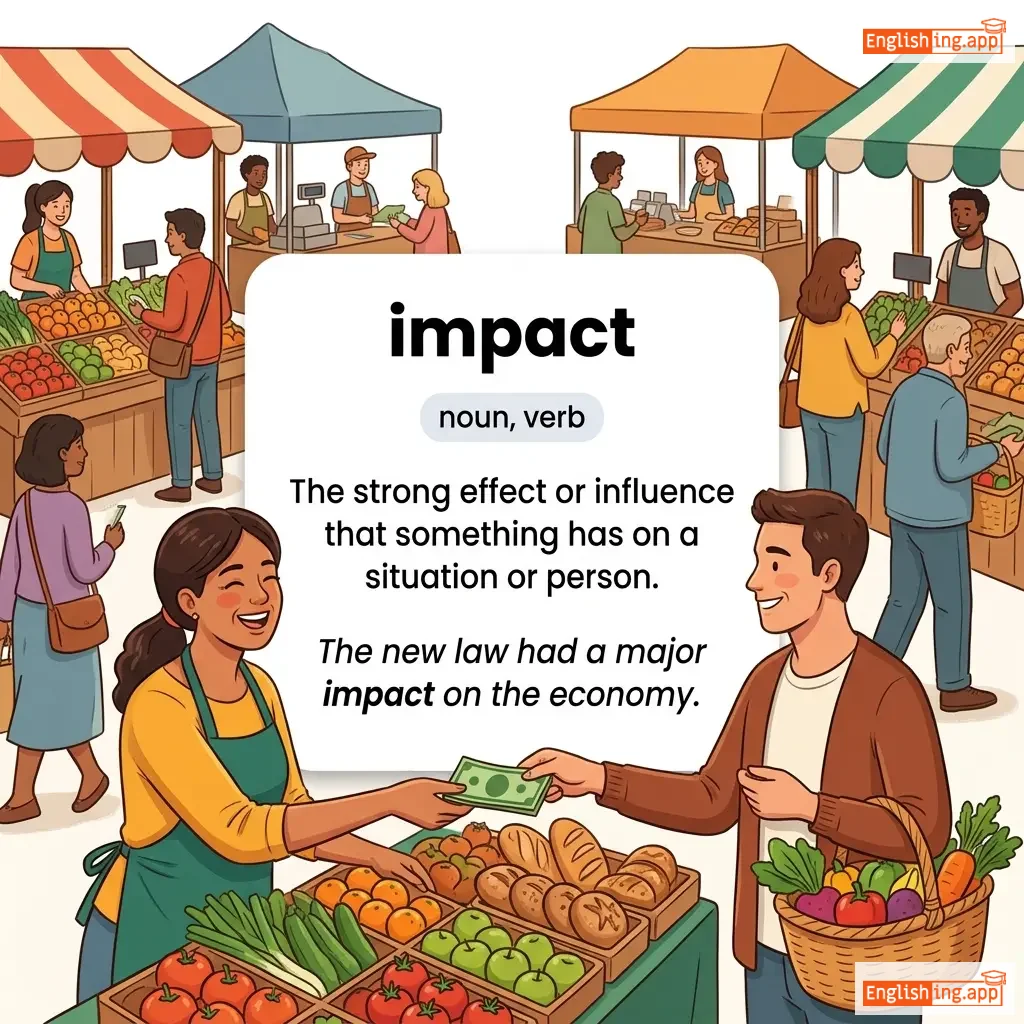
impact definition card — visual illustration of the meaning
noun, verb
/ˈɪmpækt/
प्रभाव (prabhav)

The strong effect or influence that something has on a situation or person.

"The new law had a major impact on the economy."

"नए कानून ने अर्थव्यवस्था पर महत्वपूर्ण प्रभाव डाला।" (Naye kanoon ne arthvyavastha par mahatvapurn prabhav dala.)
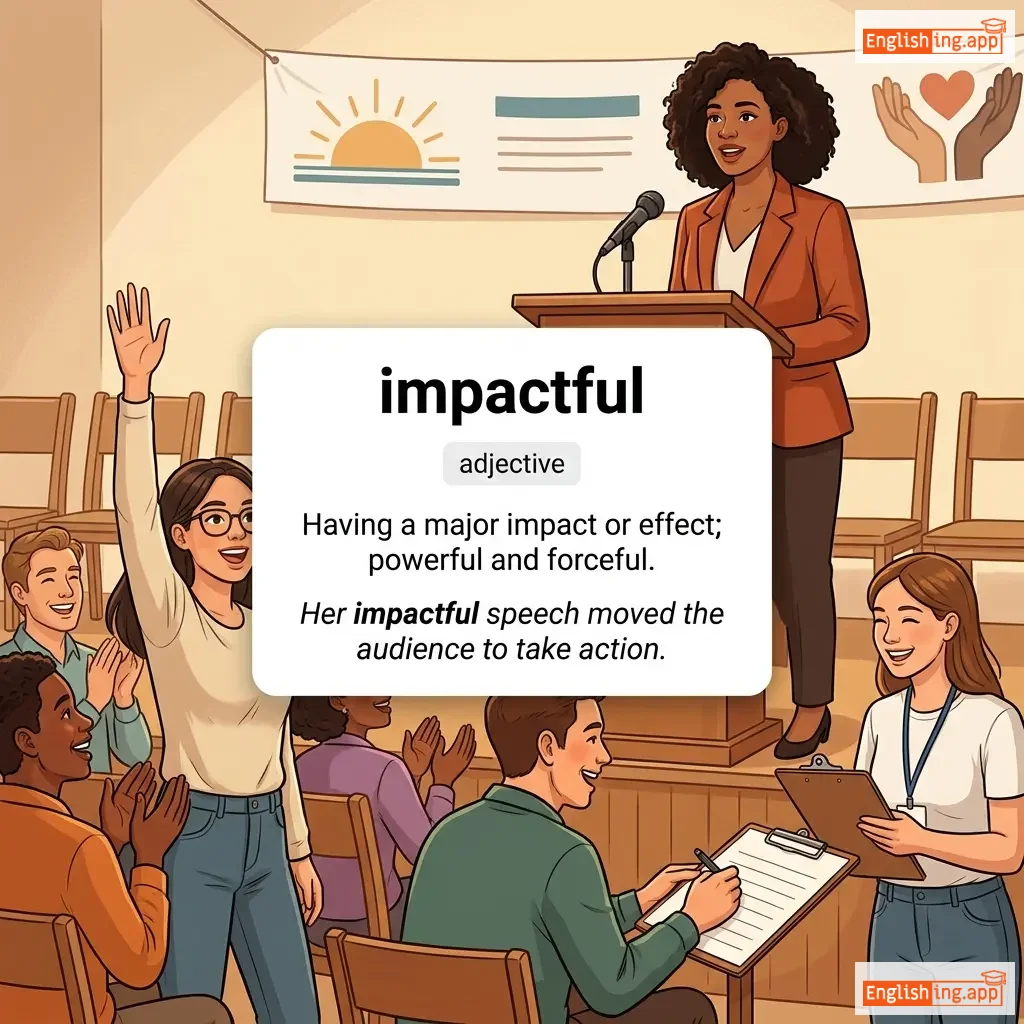
impactful definition card — visual illustration of the meaning
adjective
/ˈɪmpæktfʊl/
प्रभावशाली (prabhavshali)

Having a major impact or effect; powerful and forceful.

"Her impactful speech moved the audience to take action."

"उसकी प्रभावशाली स्पीच ने दर्शकों को कार्रवाई करने के लिए प्रेरित किया।" (Uski prabhavshali speech ne darshako ko karvai karne ke liye prerit kiya.)
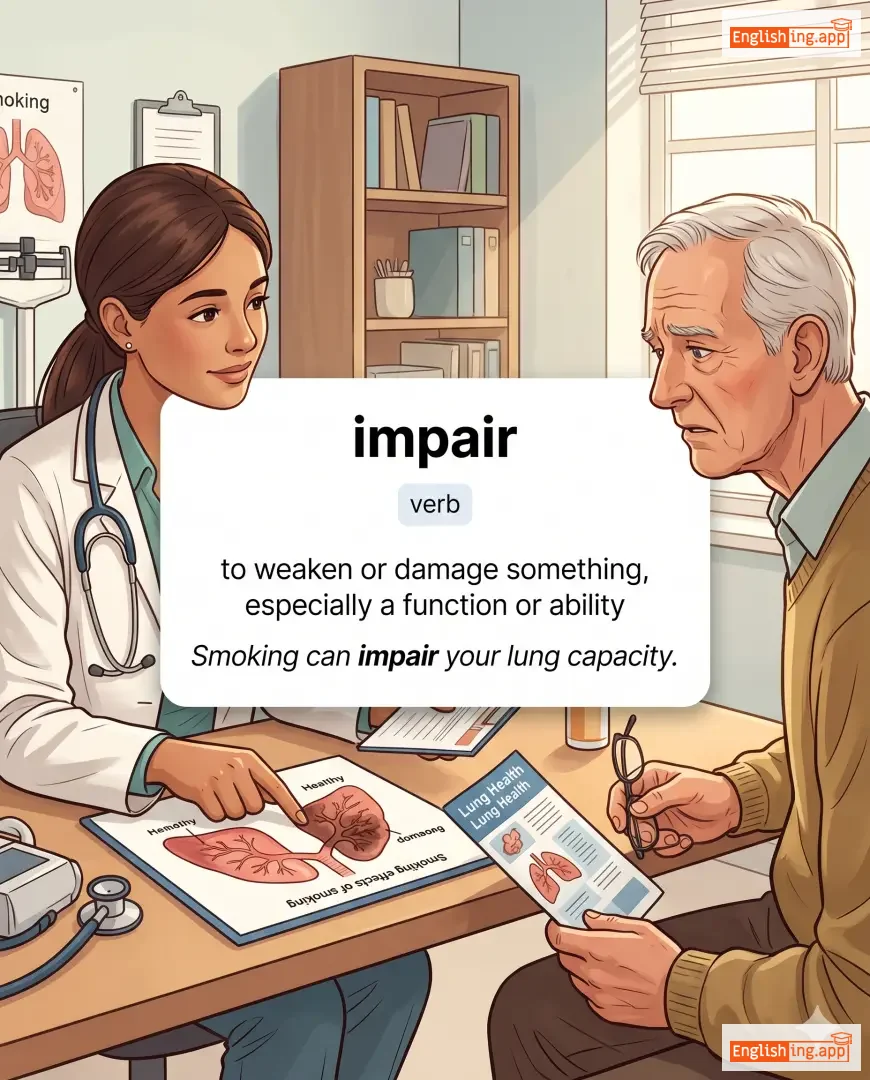
impair definition card — visual illustration of the meaning
verb
/ɪmˈpɛər/
नुकसान पहुँचाना (nuksan pahunchana)

to weaken or damage something, especially a function or ability

"Smoking can impair your lung capacity."

"धूम्रपान आपकी फेफड़े की क्षमता को प्रभावित कर सकता है।" (Dhoomrapan aapki phephde ki kshamata ko prabhavit kar sakta hai.)
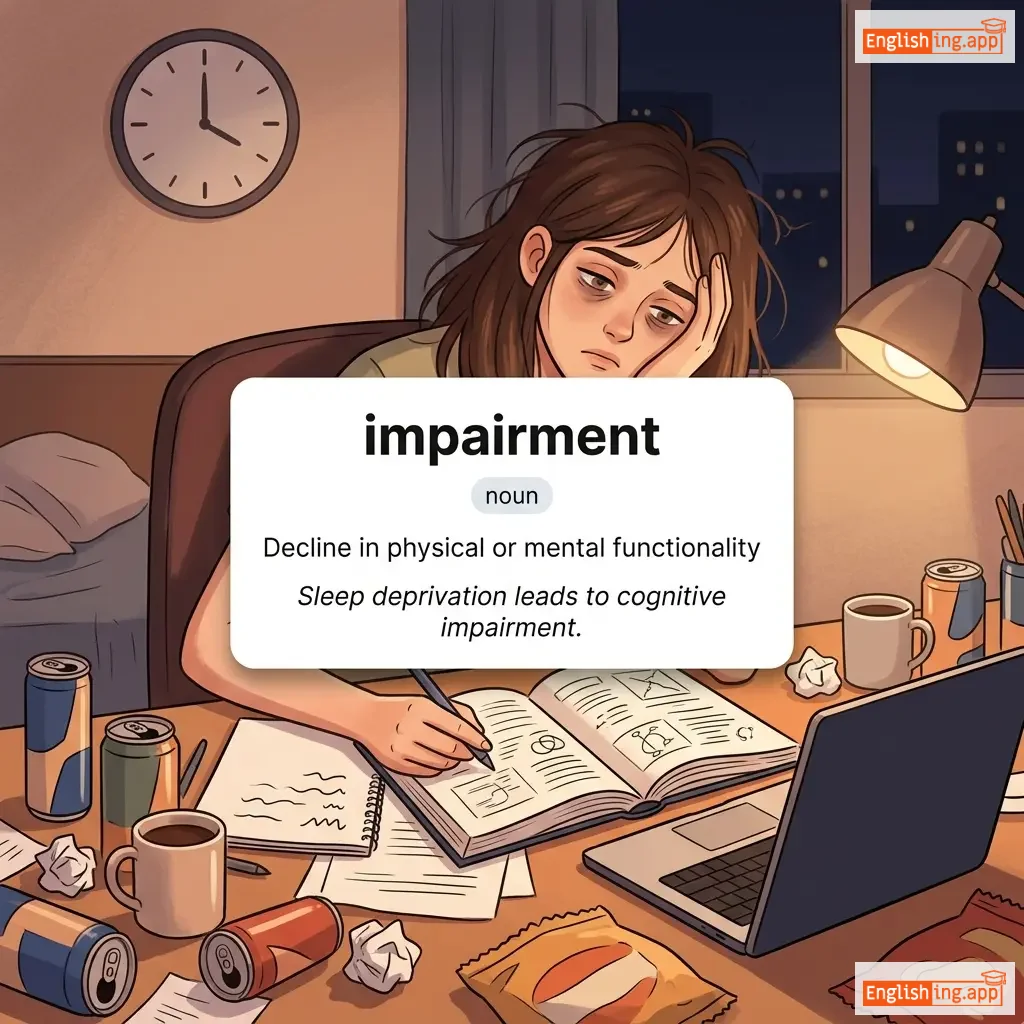
impairment definition card — visual illustration of the meaning
noun
ɪmˈpɛərmənt
अक्षमता (akshamata)

Decline in physical or mental functionality

"Sleep deprivation leads to cognitive impairment."

"नींद की कमी से संज्ञानात्मक अक्षमता होती है।" (Neend ki kami se sangyaanatmak akshamata hoti hai.)
verb
/ɪmˈpeɪl/
गो़दना (godna)

to pierce or fix something with a sharp object

"The knight was impaled by the enemy’s spear."

"योद्धा को दुश्मन के भाले से गो़द दिया गया था।" (Yoddha ko dushman ke bhale se god diya gaya tha.)
adjective
/ɪmˈpælpəbəl/
अस्पर्शनीय (asporshaniya)

unable to be felt by touch; difficult to grasp or understand

"There was an impalpable sense of fear in the room."

"कमरे में एक अस्पर्शनीय डर का अहसास था।" (Kamre mein ek asporshaniya dar ka ahsaas tha.)
verb
/ɪmˈpɑːrt/
दान करना (daan karna)

to make information known; to bestow or communicate

"The teacher imparted valuable knowledge to her students."

"अध्यापक ने अपनी छात्रों को मूल्यवान ज्ञान दिया।" (Adhyapak ne apni chhatron ko mulyavaan gyaan diya.)
adjective
/ɪmˈpɑːrʃəl/
निष्पक्ष (nishpaksh)

Treating all rivals or disputants equally; fair and just.

"The judge remained impartial throughout the trial."

"न्यायाधीश मुकदमे के दौरान निष्पक्ष बने रहे।" (Nyayadhish mukadme ke dauran nishpaksh bane rahe.)
adjective
/ɪmˈpæsəbəl/
अतिक्रमण योग्य नहीं (atikraman yogya nahin)

Impossible to travel along or over.

"The road became impassable after the heavy snowfall."

"भारी बर्फबारी के बाद रोड अतिक्रमण योग्य नहीं रह गई।" (Bhaari barfbaari ke baad road atikraman yogya nahin reh gayi.)
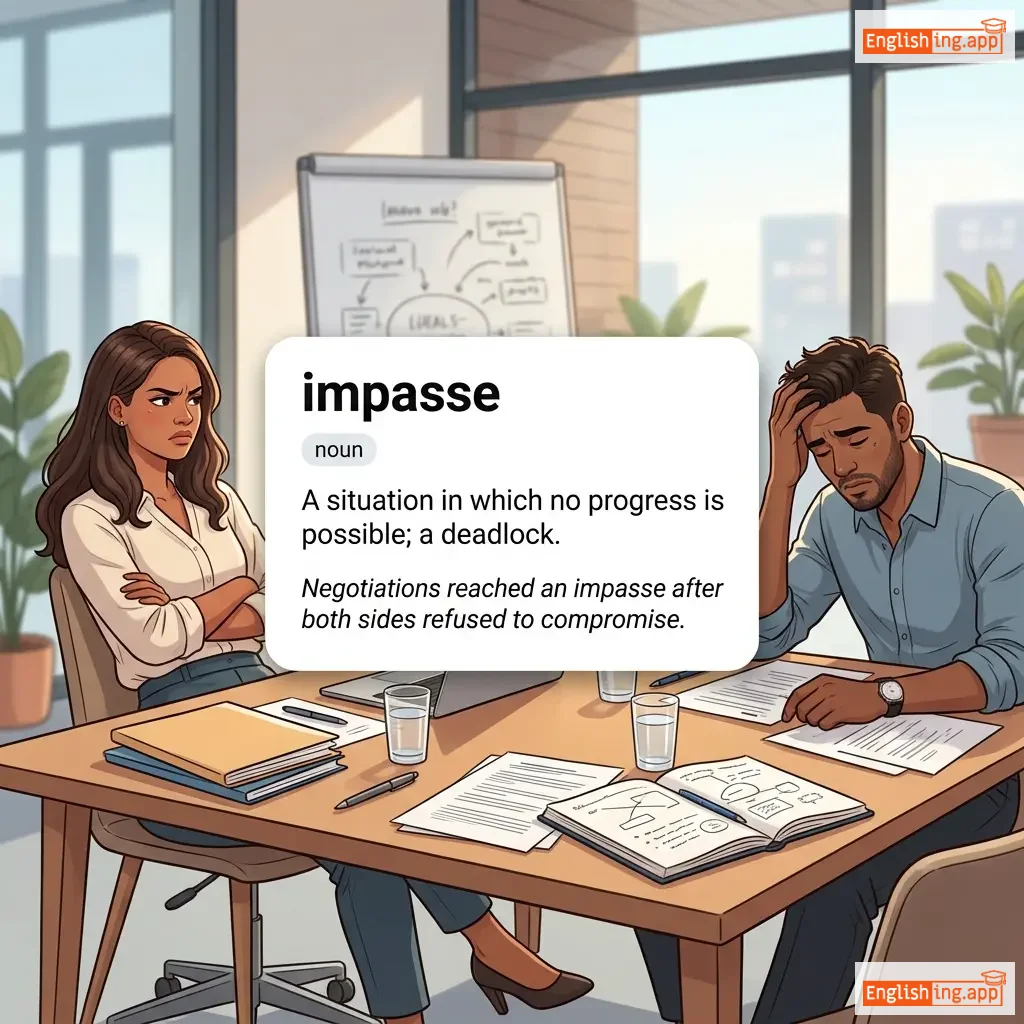
impasse definition card — visual illustration of the meaning
noun
/ˈɪmpæs/
अवरोध (avrodh)

A situation in which no progress is possible; a deadlock.

"Negotiations reached an impasse after both sides refused to compromise."

"दोनों पक्षों ने समझौता करने से इनकार करने के बाद वार्ता एक अवरोध पर पहुँच गई।" (Dono pakshon ne samjhauta karne se inkaar karne ke baad vaartha ek avrodh par pahunch gayi.)
adjective
/ɪmˈpæsɪbəl/
अकष्टवहनीय (akashtavahaniy)

Incapable of suffering or feeling pain (used mainly in theological or philosophical contexts).

"Some philosophers argue that God is impassible and cannot experience human emotions."

"कुछ दार्शनिकों का कहना है कि भगवान अकष्टवहनीय हैं और मानव भावनाएँ महसूस नहीं कर सकते।" (Kuch darshanikon ka kehna hai ki Bhagwan akashtavahaniy hain aur manav bhavnayein mehsoos nahi kar sakte.)
adjective
/ɪmˈpæʃənd/
उत्साही (utsahi)

Filled with or showing great emotion.

"She gave an impassioned speech about human rights."

"उसने मानवाधिकारों के बारे में एक उत्साही भाषण दिया।" (Usne manavadhikaron ke baare mein ek utsahi bhashan diya.)
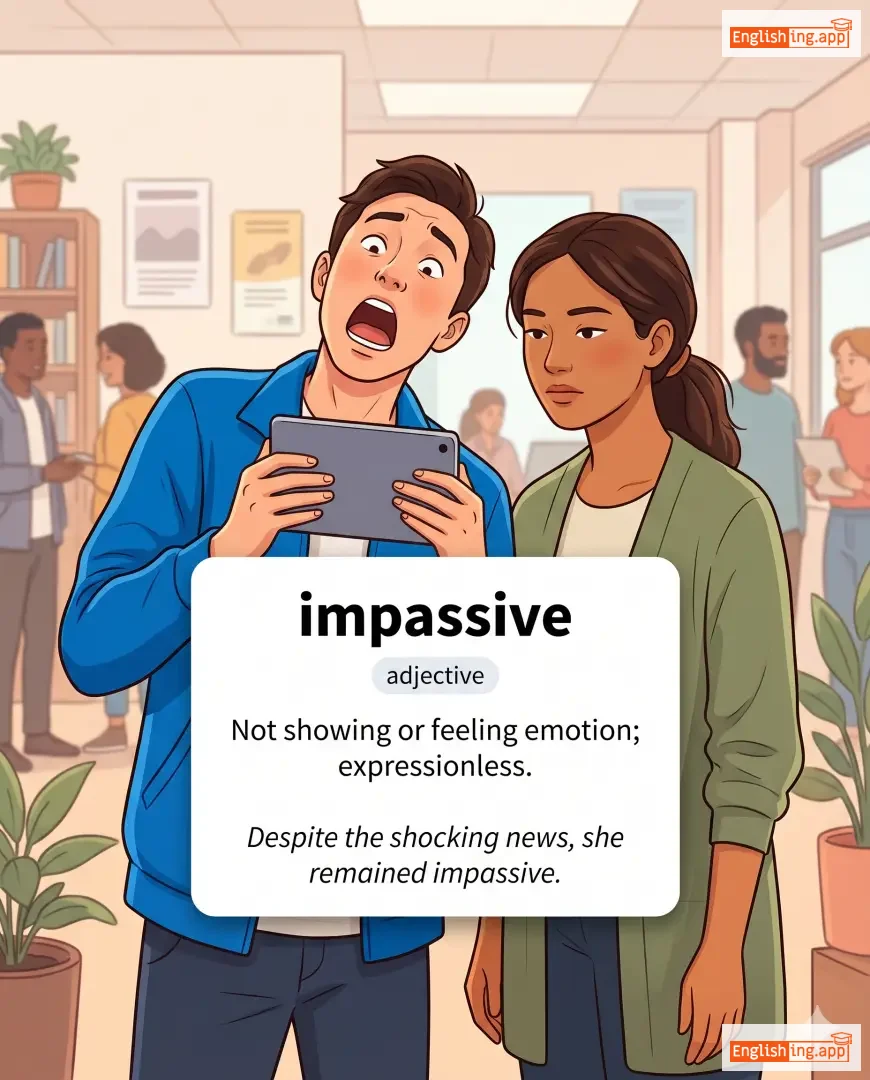
impassive definition card — visual illustration of the meaning
adjective
/ɪmˈpæsɪv/
निरपेक्ष (nirpeksh)

Not showing or feeling emotion; expressionless.

"Despite the shocking news, she remained impassive."

"चौंकाने वाली खबर के बावजूद, वह निरपेक्ष रही।" (Chonkane wali khabar ke bawajood, wah nirpeksh rahi.)
noun
/ɪmˈpeɪʃəns/
अधैर्य (adhairya)

The state of being quickly irritated or unable to wait calmly.

"His impatience grew as the meeting dragged on."

"बैठक लंबी खींचने के कारण उसकी अधैर्यता बढ़ गई।" (Baithak lambi kheenchne ke karan uski adhairyata badh gayi.)
adjective
/ɪmˈpeɪʃənt/
अधीर (adheer)

Not able to wait calmly; restless and eager for something to happen.

"She grew impatient while waiting in the long queue."

"वह लंबी कतार में इंतजार करते हुए अधीर हो गई।" (vah lambi katar mein intezaar karte hue adheer ho gayi.)