वोकैबुलरीज

इंग्लिश वोकैबुलरी डिस्कवर, लर्न और मास्टर करें

adjective
/ˌɪnˈvɜːrs/
विपरीत (vipareet)

Opposite in position, direction, order, or effect.

"There is an inverse relationship between price and demand."

"मूल्य और मांग के बीच एक विपरीत संबंध है।" (Moolya aur maang ke beech ek vipareet sambandh hai.)
adverb
/ɪnˈvɜːrs.li/
विपरीत रूप से; उल्टे तरीके से (vipreet roop se; ulte tareeke se)

in a way that is opposite or contrary; in reverse order or manner

"The price of goods is inversely related to their availability in the market."

"वस्तुओं की कीमत उनकी उपलब्धता से विपरीत रूप से संबंधित है।" (vastuon ki keemat unki uplabdhata se vipreet roop se sambandhit hai.)
noun
/ɪnˈvɜːrʒən/
उलटफेर (ulatfer)

A reversal of the normal order, position, or relationship.

"In poetry, inversion is often used to create emphasis."

"कविता में, उलटफेर का उपयोग अक्सर जोर देने के लिए किया जाता है।" (Kavita mein, ulatfer ka upyog aksar zor dene ke liye kiya jata hai.)
verb
/ɪnˈvɜːrt/
उलटना (ultana)

To turn something upside down or in the opposite position, order, or direction.

"He inverted the glass to let the water drain out."

"उसने पानी बाहर निकलने के लिए गिलास को उलट दिया।" (Usne pani bahar nikalne ke liye gilas ko ulat diya.)
invest definition card — visual illustration of the meaning
verb
/ɪnˈvɛst/
निवेश करना (nivesh karna)

to put money, time, or effort into something with the expectation of achieving a benefit

"He decided to invest in real estate to secure his future."

"उसने अपने भविष्य को सुरक्षित करने के लिए रियल एस्टेट में निवेश करने का निर्णय लिया।" (Usne apne bhavishya ko surakshit karne ke liye real estate mein nivesh karne ka nirnay liya.)
verb
/ɪnˈvɛs.tɪ.ɡeɪt/
जांचना (janchna)

to carry out a systematic inquiry to discover facts or information

"The police will investigate the incident thoroughly."

"पुलिस घटना की पूरी तरह से जांच करेगी।" (Police ghatna ki poori tarah se janch karegi.)
noun
/ɪnˌvɛs.tɪˈɡeɪ.ʃən/
जांच (janch)

the process of inquiring into or examining something carefully to find the truth

"The investigation revealed new evidence about the fraud."

"जांच में धोखाधड़ी के बारे में नया प्रमाण सामने आया।" (Janch mein dhokhadhadi ke baare mein naya pramaan saamne aaya.)
noun
/ɪnˈvɛstɪˌɡeɪtər/
खुशी (khushi)

a person who carries out a formal inquiry or investigation

"The investigator gathered evidence from the crime scene."

"उसने जब पुरस्कार प्राप्त किया तो वह अपनी खुशी छुपा नहीं पाई।" (Usne jab puraskar prapt kiya to vah apni khushi chhupa nahin pai.)
investing definition card — visual illustration of the meaning
verb
ɪnˈvɛst.ɪŋ
निवेश (nivesh)

The act of putting money into financial schemes, shares, property, or a commercial venture with the expectation of achieving a profit.

"Investing in stocks can generate long-term wealth."

"शेयरों में निवेश लंबी अवधि की संपत्ति उत्पन्न कर सकता है।" (Sheeron mein nivesh lambi avadhi ki sampatti utpann kar sakta hai.)
noun
/ɪnˈvɛstɪtʃər/
पदवी प्रदान समारोह (padvi pradan samaroha)

the formal ceremony of conferring authority, rank, or office

"The king held an investiture ceremony for the new knight."

"राजा ने नए नाइट के लिए पदवी प्रदान समारोह आयोजित किया।" (raja ne naye knight ke liye padvi pradan samaroha aayojit kiya.)
investment definition card — visual illustration of the meaning
noun
/ɪnˈvɛst.mənt/
निवेश (nivesh)

the action or process of putting money, time, or resources into something for future benefit

"Her investment in technology startups has paid off well."

"उसने प्रौद्योगिकी स्टार्टअप्स में निवेश किया है और यह अच्छा परिणाम दे रहा है।" (Usne praudyogiki startup mein nivesh kiya hai aur yah accha parinaam de raha hai.)
noun
/ɪnˈvɛstər/
निवेशक (niveshak)

a person or organization that puts money into financial schemes, property, or business ventures with the expectation of achieving a profit

"The investor funded the startup with a large sum of money."

"निवेशक ने स्टार्टअप को एक बड़ी रकम से फंड किया।" (niveshak ne startup ko ek badi rakam se fund kiya.)
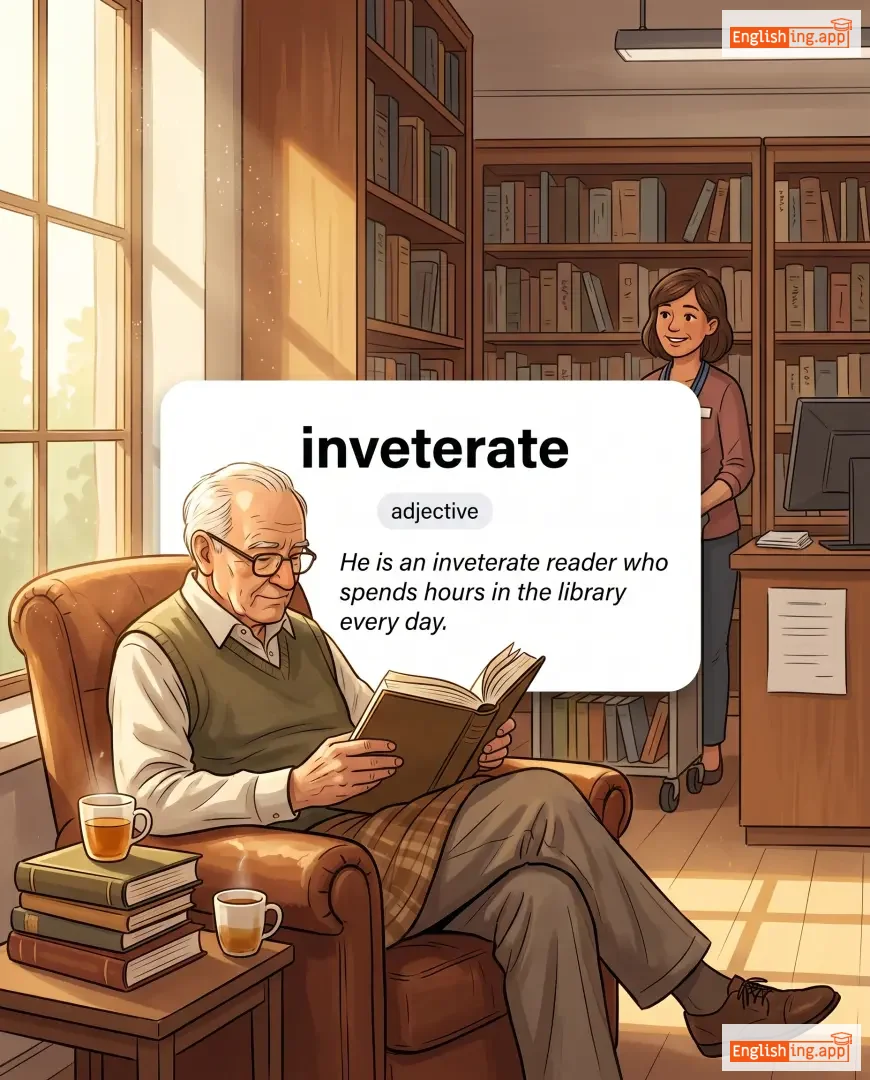
inveterate definition card — visual illustration of the meaning
adjective
/ɪnˈvɛtərət/
जड़वादी (jadvadi)

having a long-established habit, activity, or interest that is unlikely to change

"He is an inveterate reader who spends hours in the library every day."

"वह एक जड़वादी पाठक है जो हर दिन घंटों पुस्तकालय में बिताता है।" (vah ek jadvadi pathak hai jo har din ghanton pustakalay mein bitata hai)
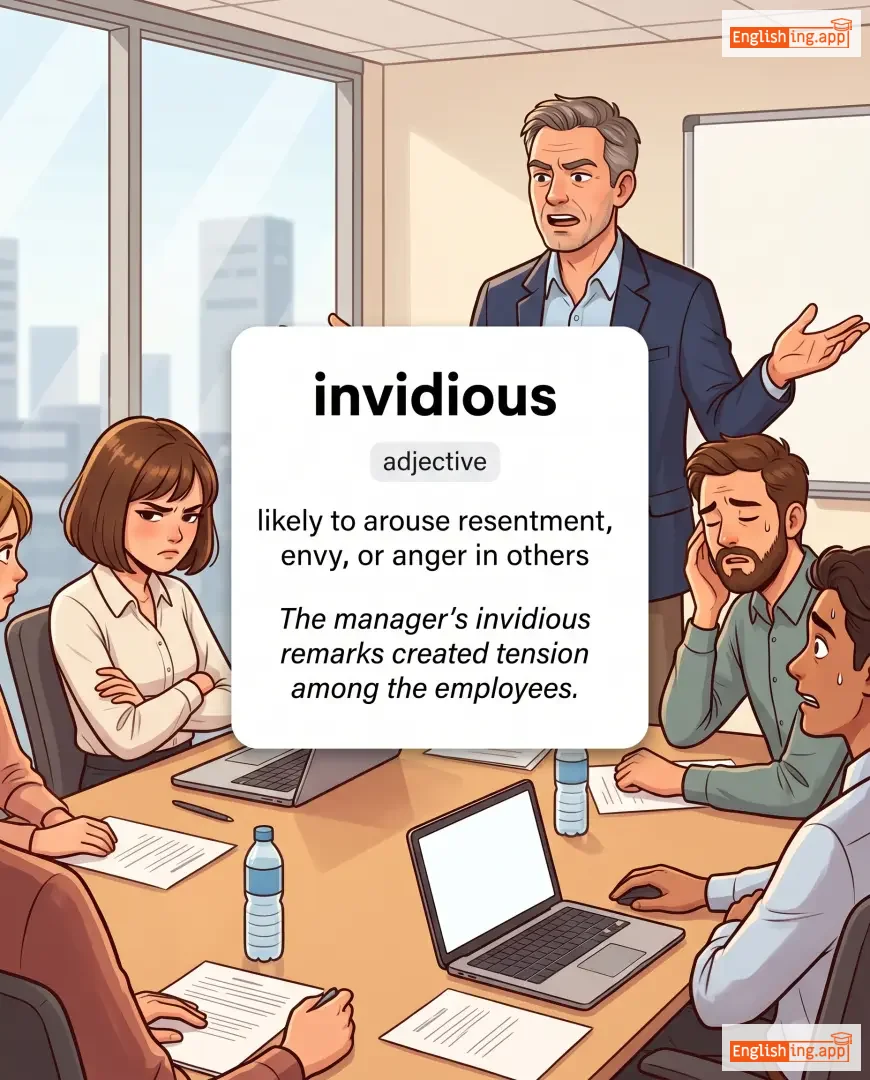
invidious definition card — visual illustration of the meaning
adjective
/ɪnˈvɪdiəs/
ईर्ष्यापूर्ण (irshyapurn)

likely to arouse resentment, envy, or anger in others

"The manager's invidious remarks created tension among the employees."

"मैनेजर की ईर्ष्यापूर्ण टिप्पणी ने कर्मचारियों के बीच तनाव पैदा किया।" (manager ki irshyapurn tippani ne karmachariyon ke beech tanav paida kiya.)
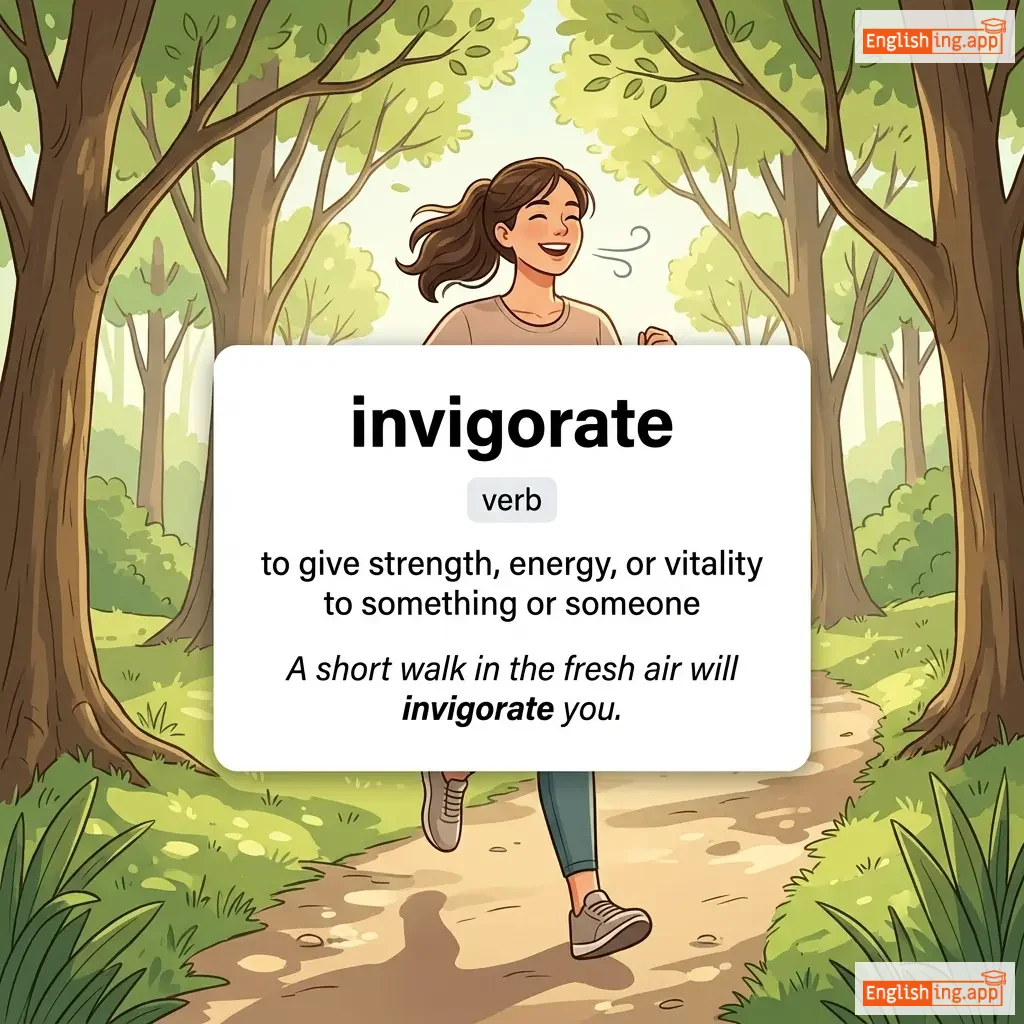
invigorate definition card — visual illustration of the meaning
verb
/ɪnˈvɪɡəreɪt/
उत्साहित करना (utsahit karna)

to give strength, energy, or vitality to something or someone

"A short walk in the fresh air will invigorate you."

"ताजे हवा में एक छोटी सी सैर आपको ताकत देगी।" (Taje hawa mein ek chhoti si sair aapko taqat degi.)
adjective
/ɪnˈvɪnsəbl/
अजेय (ajey)

too powerful to be defeated or overcome

"The team seemed invincible after winning ten matches in a row."

"टीम दस मैच लगातार जीतने के बाद अजेय लग रही थी।" (Teem das match lagatar jeetne ke baad ajey lag rahi thi.)
adjective
/ɪnˈvaɪələbl/
अपरिवर्तनीय (aparivartaniya)

never to be broken, dishonored, or violated

"Human rights are considered inviolable in modern democracies."

"मानव अधिकार आधुनिक लोकतंत्रों में अपरिवर्तनीय माने जाते हैं।" (Manav adhikar aadhunik loktantron mein aparivartaniya maane jaate hain.)
adjective
/ɪnˈvaɪələt/
अप्रभ्रष्ट (aprabhrasht)

free from violation, injury, or desecration; kept safe and untouched

"The ancient temple remained inviolate for centuries."

"प्राचीन मंदिर सदियों तक अप्रभ्रष्ट रहा।" (Prachin mandir sadiyon tak aprabhrasht raha.)
adjective
/ɪnˈvɪzɪbəl/
अदृश्य (adrishya)

unable to be seen; not visible to the eye

"The stars became invisible as the sun rose."

"जैसे ही सूरज उगा, तारे अदृश्य हो गए।" (Jaise hi sooraj uga, taare adrishya ho gaye.)
noun
/ˌɪnvɪˈteɪʃən/
खुशी (khushi)

a written or spoken request to attend an event or to participate in something

"She sent me an invitation to her wedding."

"जब उसे पुरस्कार मिला, तो वह अपनी खुशी छुपा नहीं पाई।" (Jab use puraskaar mila, to vah apni khushi chhupa nahi paayi.)
verb
/ɪnˈvaɪt/
निमंत्रण देना (nimantran dena)

to ask someone to come to a place or event

"She invited her friends to the party."

"उसने अपने दोस्तों को पार्टी में बुलाया।" (Usne apne doston ko party mein bulaya.)
verb
/ɪnˈvaɪtɪd/
आमंत्रित (aamantrit)

asked someone formally or politely to go somewhere or do something

"She was invited to the party."

"उसे पार्टी में आमंत्रित किया गया था।" (use party mein aamantrit kiya gaya tha)
noun
/ɪnˈvaɪtər/
आमंत्रण देने वाला व्यक्ति (amantran dene wala vyakti)

a person who invites someone to an event, meeting, or place

"The invitor greeted all the guests warmly at the entrance."

"आमंत्रण देने वाले व्यक्ति ने प्रवेश द्वार पर मेहमानों का स्वागत किया।" (amantran dene wale vyakti ne pravesh dwar par mehmano ka swagat kiya)
noun
/ˌɪnvəˈkeɪʃən/
आह्वान (ahwan)

the act of calling upon a higher power for help, blessing, or inspiration

"The ceremony began with an invocation to the gods."

"समारोह की शुरुआत देवताओं से आह्वान से हुई।" (Samaroh ki shuruat devtaon se ahwan se hui.)
noun
/ˈɪnvɔɪs/
चालान (chalan)

a list of goods sent or services provided, with the amount due for payment

"The company sent an invoice for the delivered products."

"कंपनी ने भेजे गए उत्पादों के लिए एक चालान भेजा।" (Company ne bheje gaye utpadon ke liye ek chalan bheja.)
verb
/ɪnˈvoʊk/
आह्वान करना (ahvan karna)

to call upon a higher power, authority, or principle for help, support, or justification

"The lawyer invoked the constitution to defend his client."

"वकील ने अपने मुवक्किल की रक्षा करने के लिए संविधान का आह्वान किया।" (vakil ne apne muvakkil ki raksha karne ke liye samvidhan ka ahvan kiya.)
adjective
/ɪnˈvɑːlənˌtɛri/
अनिच्छास्पद (anichchhaspad)

done without will or conscious control

"He gave an involuntary shiver when he heard the loud noise."

"उसने जोर की आवाज सुनकर अनिच्छास्पद रूप से कांप दिया।" (Usne zor ki awaaz sunkar anichchhaspad roop se kaamp diya.)
noun
/ˌɪnvəˈluːʃən/
जटिलता (jatilata)

a complicated or intricate form or state; in biology, the shrinking of an organ after its function has finished

"The story was full of involution, making it hard to follow."

"कहानी में जटिलता थी, जिससे इसे समझना मुश्किल हो गया था।" (Kahani mein jatilata thi, jisse ise samajhna mushkil ho gaya tha.)
verb
/ɪnˈvɑːlv/
शामिल करना (shamil karna)

to include as a necessary part, or to engage someone in an activity

"The project will involve several departments working together."

"परियोजना में कई विभाग एक साथ काम करेंगे।" (pariyojna mein kai vibhag ek sath kaam karenge.)
adjective
/ɪnˈvɑːlvd/
संलिप्त (sanlipt)

complicated or engaged in something

"She was deeply involved in community service."

"वह सामुदायिक सेवा में गहरे रूप से संलिप्त थी।" (Vah samudaayik seva mein gahare roop se sanlipt thi.)
noun
/ɪnˈvɒlvmənt/
संबद्धता (sambaddhata)

the act of taking part in something

"His involvement in the project was crucial."

"परियोजना में उसकी संबद्धता महत्वपूर्ण थी।" (Pariyojana mein uski sambaddhata mahatvapurn thi.)
adjective
/ɪnˈvʌlnərəbl/
अपराजेय (aparajey)

Impossible to harm, damage, or defeat.

"The fortress was thought to be invulnerable to attack."

"किला हमले से बचने के लिए अपराजेय माना जाता था।" (Kila hamle se bachne ke liye aparajey maana jaata tha.)
adverb
/ˈɪnwərdli/
अंदर से (andar se)

In the mind or spirit; not outwardly visible.

"She smiled outwardly but inwardly she was worried."

"वह बाहर से मुस्कुराई, लेकिन अंदर से वह चिंतित थी।" (Woh baahar se muskurayi, lekin andar se woh chintit thi.)
noun
/aɪˈoʊtə/
अत्यंत नगण्य (atyant nagny)

An extremely small amount.

"He did not show an iota of fear."

"उसने डर का एक भी अंश नहीं दिखाया।" (Usne dar ka ek bhi ansh nahi dikhaya.)
adjective/noun
/ɪˈrɑːki/
इराकी (iraaki)

relating to Iraq or its people

"The Iraqi culture is rich and diverse."

"इराकी संस्कृति समृद्ध और विविध है।" (iraaki sanskruti samriddh aur vivid hai.)
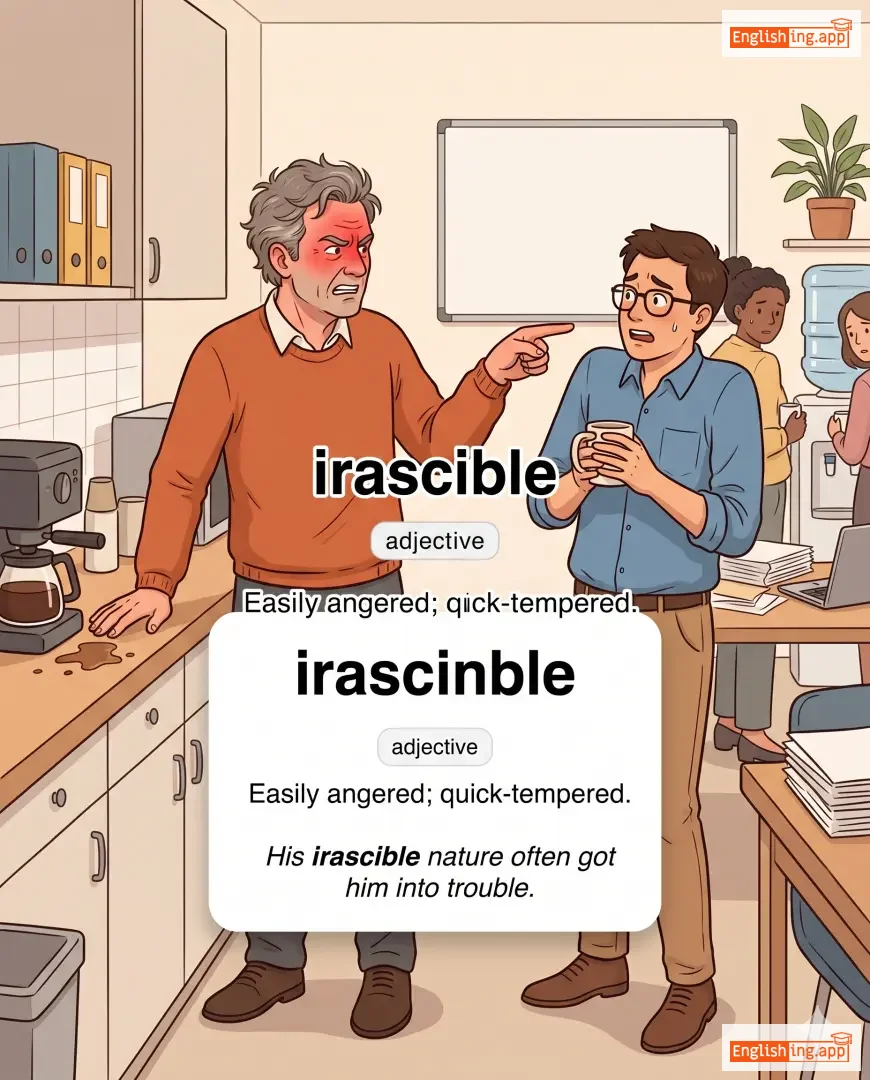
irascible definition card — visual illustration of the meaning
adjective
/ɪˈræsɪbl/
चिड़चिड़ा (chidhchidhā)

Easily angered; quick-tempered.

"His irascible nature often got him into trouble."

"उसका चिड़चिड़ा स्वभाव अक्सर उसे मुसीबत में डाल देता था।" (Uskā chidhchidhā svabhāv aksar use musībat mein ḍāl detā thā.)
adjective
/aɪˈreɪt/
गुस्से में (gusse mein)

Extremely angry.

"The customer became irate after waiting for hours."

"ग्राहक घंटों इंतजार करने के बाद गुस्से में हो गए।" (Grahak ghanton intezaar karne ke baad gusse mein ho gaye.)
noun
/aɪər/
गुस्सा, क्रोध (gussa, krodh)

intense anger or rage

"The new policy provoked the ire of the employees."

"नई नीति ने कर्मचारियों का गुस्सा बढ़ा दिया।" (Nayi neeti ne karyakartao ka gussa badha diya.)
noun
/ˌɪrɪˈdɛsəns/
इंद्रधनुषी चमक (indradhanushi chamak)

a play of lustrous, changing colors like those of a rainbow

"The butterfly's wings shimmered with iridescence."

"तितली के पंख इंद्रधनुषी चमक से चमक रहे थे।" (Titli ke pankh indradhanushi chamak se chamak rahe the.)
adjective
/ˌɪrɪˈdɛsənt/
इन्द्रधनुषी (indradhanushi)

showing luminous colors that seem to change when seen from different angles

"She wore an iridescent dress that sparkled in the light."

"उसने एक इन्द्रधनुषी पोशाक पहना जो रोशनी में झिलमिलाती थी।" (Usne ek indradhanushi poshak pehna jo roshni mein jhilmilati thi.)
adjective/noun
/ˈaɪrɪʃ/
सुख (sukh)

relating to Ireland, its people, or its language

"The Irish countryside is very beautiful."

"जब उसे पुरस्कार मिला, तो वह अपनी खुशी छिपा नहीं सकी।" (Jab use puraskar mila, to woh apni khushi chhupa nahi saki.)
verb
/ɜːrk/
परेशान करना (pareshan karna)

to annoy or irritate someone

"It irks me when people are late without calling."

"मुझे तब परेशान होता है जब लोग कॉल किए बिना देर करते हैं।" (Mujhe tab pareshan hota hai jab log call kiye bina der karte hain.)
adjective
/ˈɜːrksəm/
परेशान करने वाला (pareshan karne wala)

annoying or irritating

"Waiting in a long line is one of the most irksome tasks."

"लंबी लाइन में इंतजार करना सबसे अधिक परेशान करने वाला काम है।" (Lambi line mein intezar karna sabse adhik pareshan karne wala kaam hai.)
noun/verb
/ˈaɪən/ or /ˈaɪərn/
लोहा / इस्त्री (loha / istri)

a strong, hard metal used in construction; also to press clothes with heat

"He used an iron to smooth his shirt."

"उसने अपनी शर्ट को चिकना करने के लिए आयरन का इस्तेमाल किया।" (Usne apni shirt ko chikna karne ke liye iron ka istemal kiya.)
adjective
/ˈaɪərnˌklæd/
अडिग, अडट (aayronklad)

impossible to change, break, or dispute; very strong and firm

"The company had an ironclad contract with its suppliers."

"कंपनी के पास अपने आपूर्तिकर्ताओं के साथ एक अडिग अनुबंध था।" (Company ke paas apne aapurti karteyon ke saath ek adig anubandh tha.)
adjective
/aɪˈrɒnɪk/
विरोधाभासपूर्ण, व्यंग्यात्मक (aironik)

happening in the opposite way to what is expected, often amusing or sarcastic

"It is ironic that the fire station burned down."

"यह विडंबनात्मक है कि अग्निशमन केंद्र जल गया।" (Yeh vidambanatmak hai ki agnishaman kendra jal gaya.)
adjective
/aɪˈrɒnɪkəl/
विडंबनात्मक (aironikal)

expressing irony; having the nature of irony

"Her ironical tone made everyone uncomfortable."

"उसकी विडंबनात्मक आवाज़ ने सभी को असहज कर दिया।" (Uski vidambanātmāk āwāj ne sabhi ko asahaj kar diyā.)
adverb
/aɪˈrɒnɪkli/
विरोधाभासी तरीके से (virodhabhaasi tareeke se)

in a way that is contrary to what is expected or intended

"Ironically, the fire station burned down."

"विरोधाभासी तरीके से, फायर स्टेशन जलकर नष्ट हो गया।" (Virodhabhaasi tareeke se, fire station jalkar nasht ho gaya.)
noun
/ˈaɪ.ərn.wʊd/
आयरनवुड (ironwood)

a hard, dense wood from various trees; also the tree itself that produces small flowers

"The ironwood tree blooms with tiny white flowers."

"आयरनवुड का पेड़ छोटे सफेद फूलों के साथ खिलता है।" (ironwood ka ped chhote safed phoolon ke saath khilta hai)
noun
/ˈaɪrəni/
व्यंग्य, विडंबना (aironi)

a situation that is strange or amusing because it is the opposite of what is expected; the use of words to convey the opposite meaning

"The irony of the situation was that the winner forgot his own prize."

"स्थिति का व्यंग्य यह था कि विजेता ने अपना पुरस्कार भूल गया।" (sthiti ka vyangya yah tha ki vijeta ne apna puraskar bhool gaya.)