वोकैबुलरीज

इंग्लिश वोकैबुलरी डिस्कवर, लर्न और मास्टर करें

adjective
/ˌɪnhɒˈspɪtəbl/
अतिथी-अपनिवेशी / प्रतिकूल (atithi-apniveshi / pratikul)

Harsh and difficult to live in; unfriendly or unwelcoming to guests.

"The desert is an inhospitable environment for most plants."

"रेगिस्तान अधिकांश पौधों के लिए एक प्रतिकूल वातावरण है।" (registan adhikansh podhon ke liye ek pratikul vatavaran hai.)
adjective
/ɪnˈhjuːmən/
अमानवीय (amanviya)

lacking human qualities of compassion and mercy; cruel or barbaric

"The prisoners were kept in inhuman conditions."

"कैदी अमानवीय परिस्थितियों में रखे गए थे।" (Kaidi amanviya paristhitiyon mein rakhe gaye the.)
verb
/ɪnˈhjuːm/
दफनाना (dafnana)

to bury a dead body in the ground

"They inhumed the warrior with full honors."

"उन्होंने योद्धा को पूरे सम्मान के साथ दफनाया।" (Unhone yoddha ko poore sammaan ke saath dafnaaya.)
adjective
/ɪˈnɪmɪkəl/
विरोधी / शत्रुतापूर्ण (virodhi / shatrutapurn)

tending to obstruct or harm; unfriendly or hostile

"The policy was inimical to the country's economic growth."

"नीति देश की आर्थिक वृद्धि के लिए विरोधी थी।" (Neeti desh ki aarthik vruddhi ke liye virodhi thi.)
inimitable definition card — visual illustration of the meaning
adjective
/ɪˈnɪmɪtəbəl/
अद्वितीय (adwitiya)

so good or unusual as to be impossible to copy; unique

"Her inimitable style made her stand out in the fashion industry."

"उसकी अद्वितीय शैली ने उसे फैशन उद्योग में अलग कर दिया।" (Uski adwitiya shaili ne use fashion udyog mein alag kar diya.)
adjective
/ɪˈnɪkwɪtəs/
अन्यायपूर्ण (anyaaypoorN)

grossly unfair and morally wrong

"Slavery was one of the most iniquitous practices in history."

"गुलामी इतिहास के सबसे अन्यायपूर्ण कृत्यों में से एक थी।" (Gulaami itihaas ke sabse anyaaypoorN krityon mein se ek thi.)
noun
/ɪˈnɪkwɪti/
अन्याय (anyay)

Immoral or grossly unfair behavior.

"The dictator's regime was marked by corruption and iniquity."

"तानाशाह के शासन को भ्रष्टाचार और अन्याय द्वारा चिह्नित किया गया था।" (Tanaashah ke shaasan ko bhrashtachar aur anyay dwara chihnit kiya gaya tha.)
adjective
/ɪˈnɪʃəl/
प्रारंभिक (prarambhik)

Existing or occurring at the beginning.

"Her initial reaction was one of surprise."

"उसकी प्रारंभिक प्रतिक्रिया आश्चर्यचकित करने वाली थी।" (uski prarambhik pratikriya aashcharyachakit karne wali thi.)
adverb
/ɪˈnɪʃəli/
प्रारंभ में (prarambh mein)

At the beginning; at first.

"Initially, he refused the offer but later accepted it."

"प्रारंभ में, उसने प्रस्ताव को अस्वीकार किया लेकिन बाद में स्वीकार कर लिया।" (prarambh mein, usne prastaav ko asweekar kiya lekin baad mein sveekar kar liya.)
initiate definition card — visual illustration of the meaning
verb
/ɪˈnɪʃieɪt/
शुरू करना (shuru karna)

To cause something to begin; to start.

"The company plans to initiate a new training program next month."

"कंपनी अगले महीने एक नया प्रशिक्षण कार्यक्रम शुरू करने की योजना बना रही है।" (Kampani agle mahine ek naya prashikshan karyakram shuru karne ki yojna bana rahi hai.)
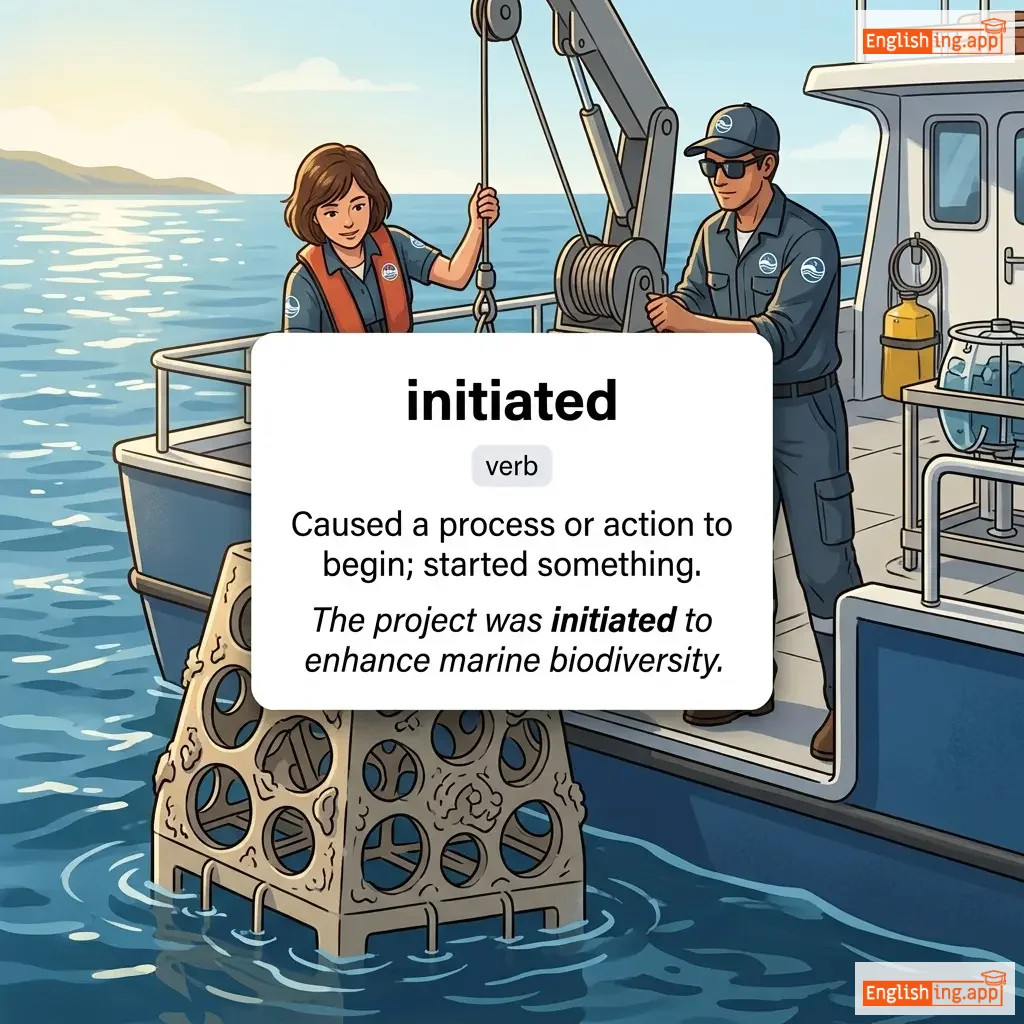
initiated definition card — visual illustration of the meaning
verb
ɪˈnɪʃɪeɪtɪd
प्रारंभ किया (prarambh kiya)

Caused a process or action to begin; started something.

"The project was initiated to enhance marine biodiversity."

"प्रोजेक्ट को समुद्री जैव विविधता को बढ़ाने के लिए शुरू किया गया था।" (Project ko samudri jaiv vividhta ko badhane ke liye shuru kiya gaya tha.)
initiative definition card — visual illustration of the meaning
noun
/ɪˈnɪʃətɪv/
उद्यम (udyam)

The ability to assess and start things independently; a new plan or action.

"The government launched a new initiative to support small businesses."

"सरकार ने छोटे व्यवसायों को समर्थन देने के लिए एक नई पहल शुरू की।" (sarkar ne chhote vyavsayon ko samarthan dene ke liye ek nai pahal shuru ki.)
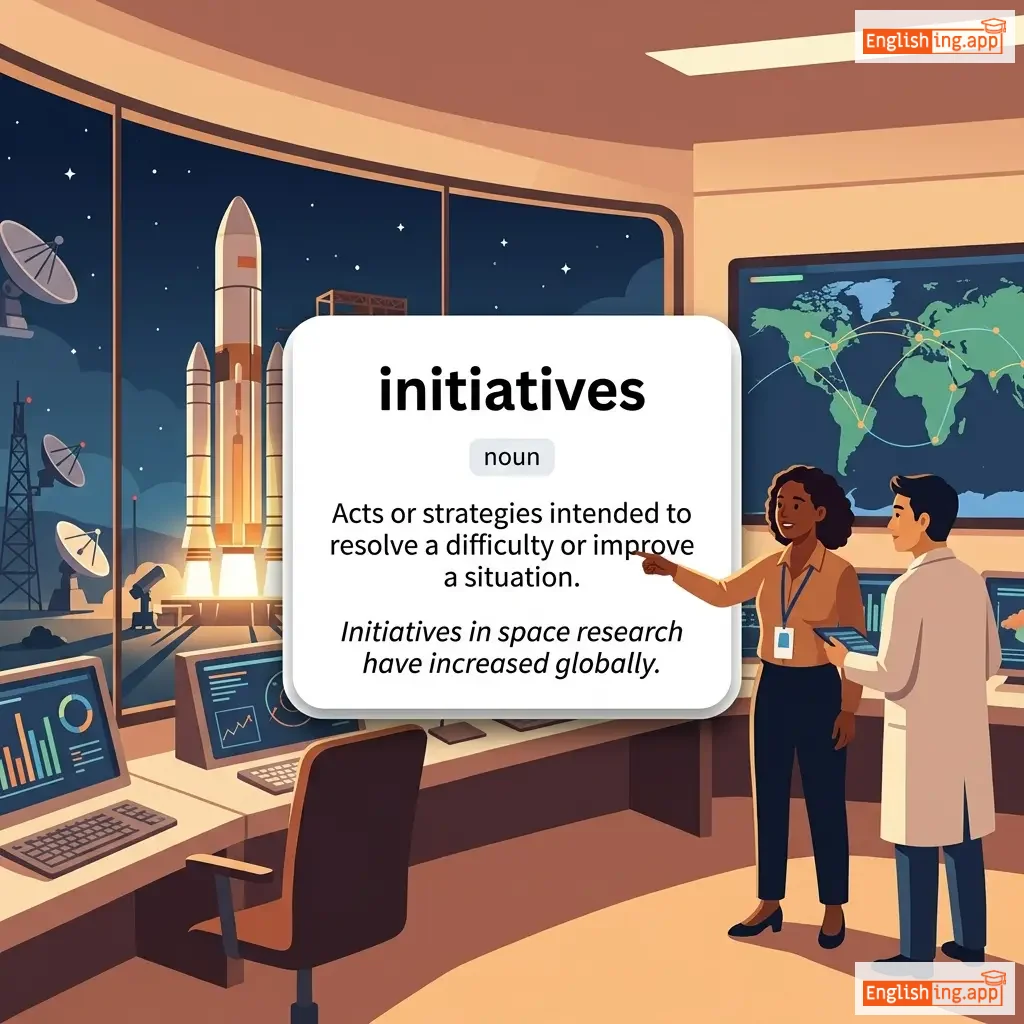
initiatives definition card — visual illustration of the meaning
noun
/ɪˈnɪʃ.ə.tɪvz/
उद्यम (udyam)

Acts or strategies intended to resolve a difficulty or improve a situation.

"Initiatives in space research have increased globally."

"अंतरिक्ष अनुसंधान में प्रयास वैश्विक स्तर पर बढ़े हैं।" (Antariksh anusandhan mein prayaas vaishvik star par badhe hain.)
verb
/ɪnˈdʒɛkt/
इंजेक्ट करना (injekt karna)

To introduce a substance, especially a drug, into the body using a needle.

"The nurse will inject the vaccine into the patient's arm."

"नर्स मरीज के हाथ में वैक्सीन इंजेक्ट करेगी।" (Nars mareez ke haath mein vaccine inject karegi.)
noun
/ɪnˈdʒɛkʃən/
इंजेक्शन (injekshan)

the act of introducing a substance into the body through a needle

"The nurse gave me an injection to prevent the infection."

"नर्स ने संक्रमण रोकने के लिए मुझे इंजेक्शन दिया।" (nars ne sankraman rokne ke liye mujhe injekshan diya.)
noun
/ɪnˈdʒʌŋkʃən/
निषेधाज्ञा (nishedhajna)

A judicial order restraining a person from an action or compelling a certain act.

"The court issued an injunction to stop the company from polluting the river."

"कोर्ट ने नदी को प्रदूषित करने से रोकने के लिए कंपनी पर एक निषेधाज्ञा जारी की।" (Kort ne nadi ko pradushit karne se rokne ke liye company par ek nishedhajna jari ki.)
verb
/ˈɪndʒər/
चोट पहुँचाना (chot pahunchana)

to cause physical harm or damage to someone or something

"He injured his leg while playing football."

"फुटबॉल खेलते वक्त उसने अपना पैर चोटिल कर लिया।" (Football khelte waqt usne apna pair chotil kar liya.)
adjective
/ɪnˈdʒʊəriəs/
हानिकारक (hanikarak)

Causing or likely to cause harm or damage.

"Smoking is injurious to health."

"धूम्रपान स्वास्थ्य के लिए हानिकारक है।" (Dhoomrapan swasthya ke liye hanikarak hai.)
noun
/ˈɪndʒəri/
चोट (chot)

Harm or damage to a person’s body caused by an accident or attack.

"He suffered a serious injury during the football match."

"उसने फुटबॉल मैच के दौरान गंभीर चोट पाई।" (Usne football match ke dauran gambhir chot pai.)
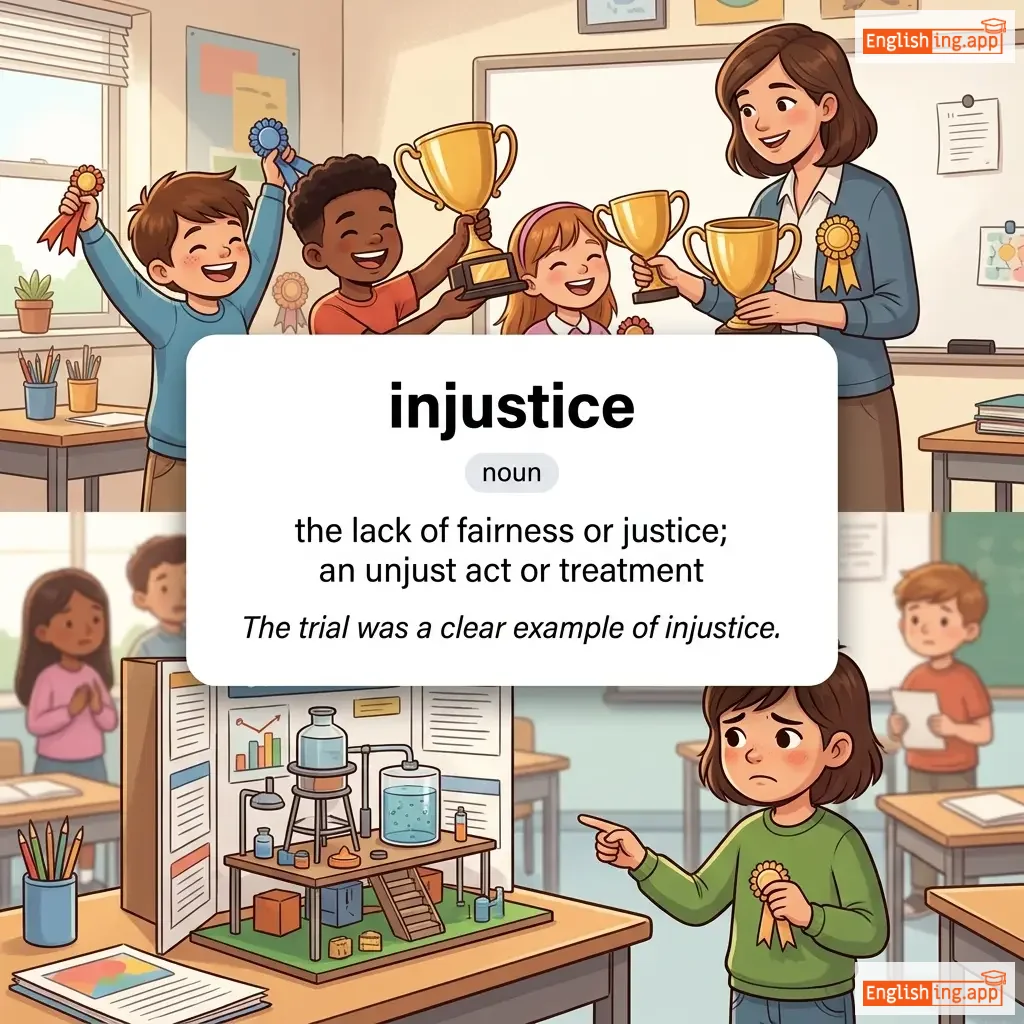
injustice definition card — visual illustration of the meaning
noun
/ɪnˈdʒʌstɪs/
अविचार (avichar)

the lack of fairness or justice; an unjust act or treatment

"The trial was a clear example of injustice."

"यह मुकदमा एक स्पष्ट अन्याय का उदाहरण था।" (Yeh mukadma ek spasht avichar ka udaharan tha.)
noun
/ɪŋk/
स्याही (syahi)

a colored liquid used for writing, printing, or drawing

"The ink in my pen ran out during the exam."

"मेरे पेन में स्याही परीक्षा के दौरान खत्म हो गई।" (Mere pen mein syahi pariksha ke dauran khatam ho gayi.)
noun
/ˈɪŋklɪŋ/
संकेत (sanket)

A slight idea, hint, or suspicion about something.

"She had an inkling that he was planning a surprise."

"उसके पास एक हल्की सी आहट थी कि वह एक सरप्राइज़ की योजना बना रहा था।" (uske paas ek halki si aahat thi ki wah ek surprise ki yojana bana raha tha.)
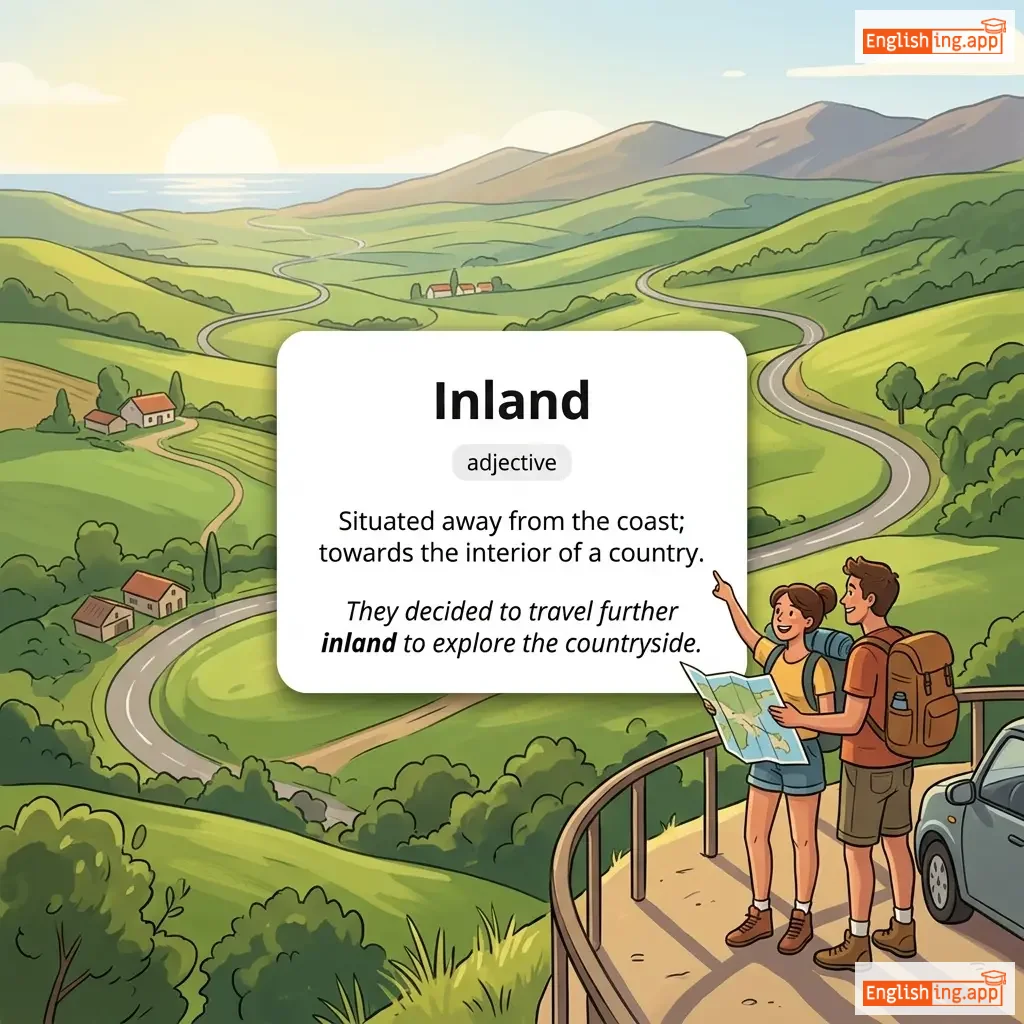
Inland definition card — visual illustration of the meaning
adjective
/ˈɪnlənd/
आंतरिक (aantarik)

Situated away from the coast; towards the interior of a country.

"They decided to travel further inland to explore the countryside."

"उन्होंने देश के अंदर और आगे यात्रा करने का निर्णय लिया।" (unhone desh ke andar aur aage yatra karne ka nirnay liya.)
noun
/ˈɪnlɛt/
जलप्रवेश (jalpravesh)

A small arm of the sea, a lake, or a river; an opening or passage for entry.

"The boat entered a narrow inlet along the coast."

"नौका तट के साथ एक संकरे जलप्रवेश में प्रवेश कर गई।" (nauka tath ke saath ek sankare jalpravesh mein pravesh kar gayi.)
noun
/ˈɪnˌmeɪt/
कैदी (kaidi)

a person confined to an institution such as a prison or hospital

"The prison has over a thousand inmates."

"जेल में हजारों कैदी हैं।" (Jail mein hazaron kaidi hain.)
adjective
/ˈɪnmoʊst/
गहरे से गहरा (gahare se gahra)

Situated at the very heart or deepest part; most private or secret.

"She revealed her inmost thoughts to her closest friend."

"उसने अपनी गहरी विचारधारा को अपने सबसे करीबी दोस्त से साझा किया।" (Usne apni gahri vichardhara ko apne sabse kareebi dost se saajha kiya.)
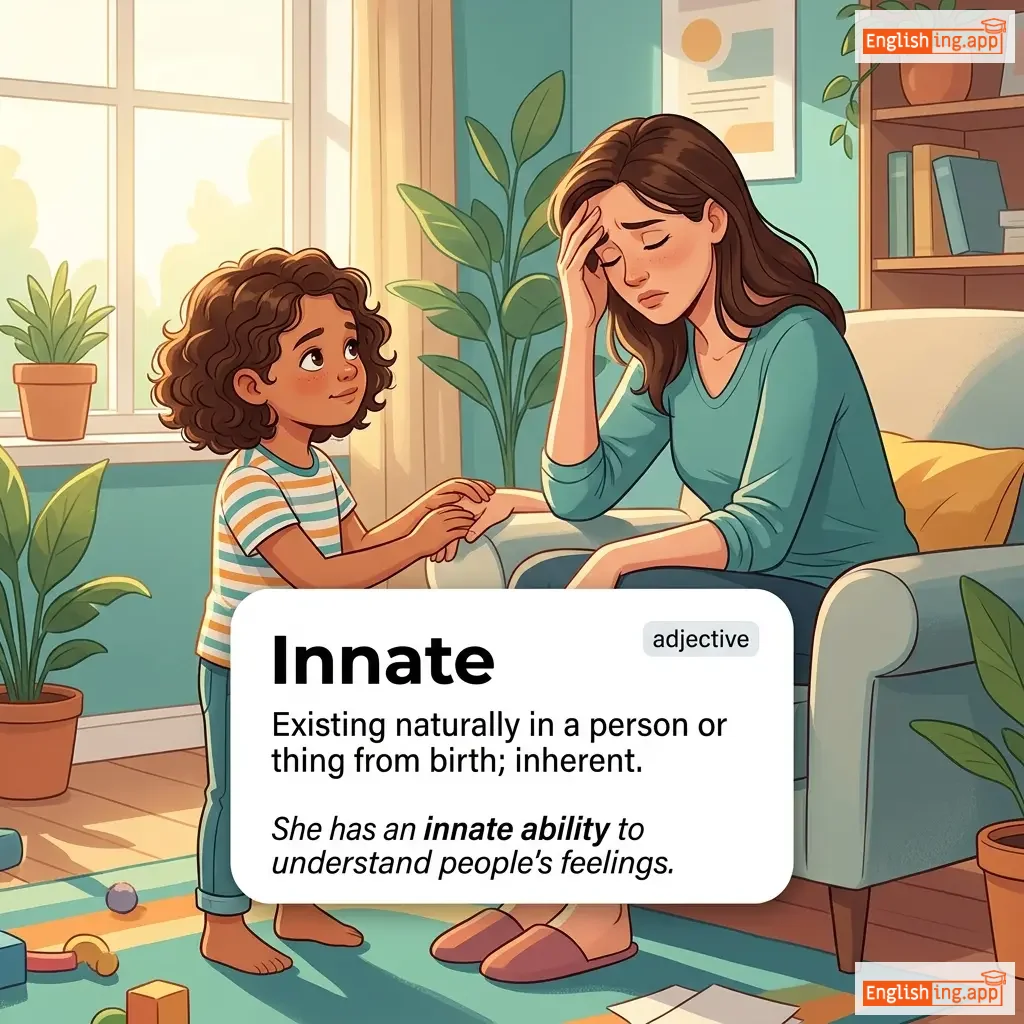
Innate definition card — visual illustration of the meaning
adjective
/ɪˈneɪt/
स्वाभाविक (swabhavik)

Existing naturally in a person or thing from birth; inherent.

"She has an innate ability to understand people's feelings."

"वह लोगों की भावनाओं को समझने की एक स्वाभाविक क्षमता रखती है।" (vah logon ki bhavanao ko samajhne ki ek swabhavik kshamata rakhti hai.)
adjective
/ˈɪnər/
आंतरिक (aantarik)

Located inside or closer to the center; relating to one’s thoughts or feelings.

"She shared her inner thoughts with her best friend."

"वह अपनी आंतरिक विचारों को अपने सबसे अच्छे दोस्त से साझा करती है।" (vah apni aantarik vicharon ko apne sabse achhe dost se saajha karti hai.)
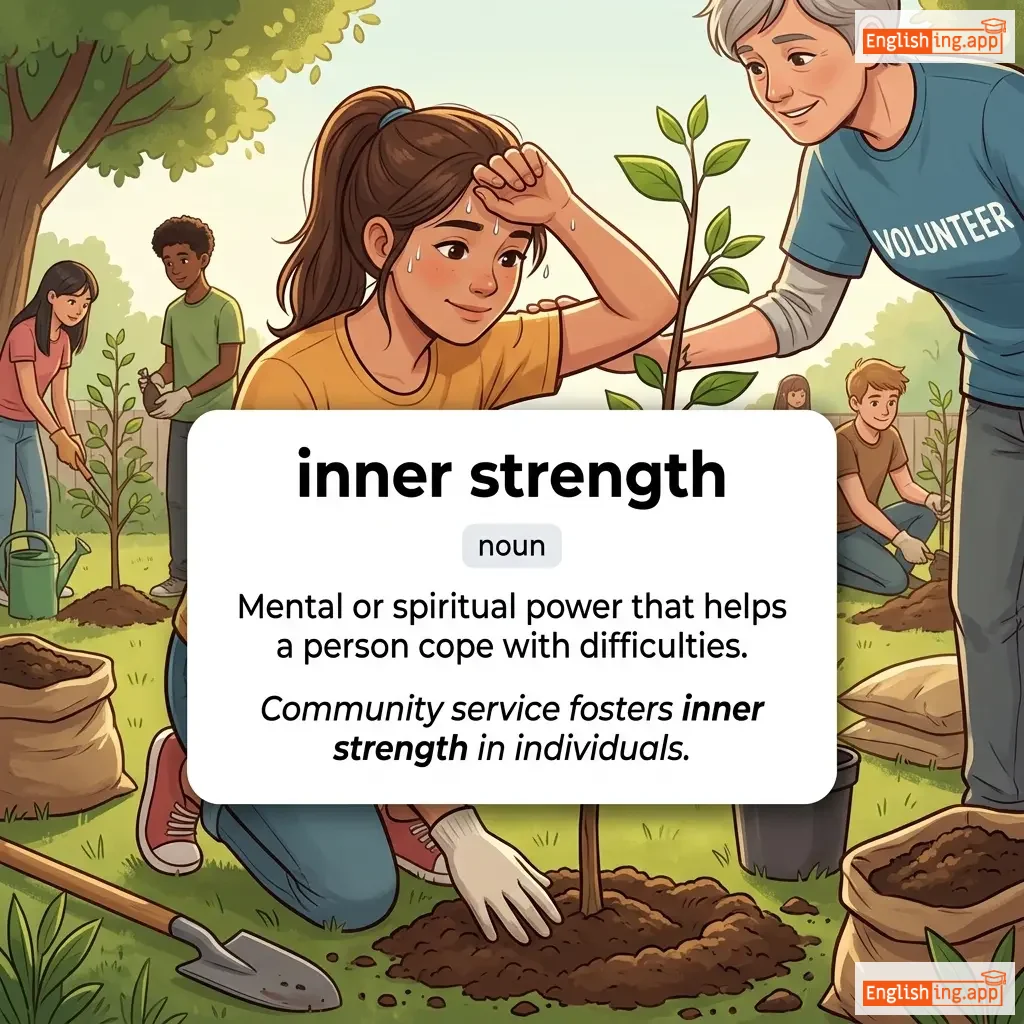
inner strength definition card — visual illustration of the meaning
noun
ˈɪnər strɛŋkθ
आंतरिक शक्ति (antarik shakti)

Mental or spiritual power that helps a person cope with difficulties.

"Community service fosters inner strength in individuals."

"समाज सेवा व्यक्तियों में आंतरिक शक्ति को बढ़ावा देती है।" (Samaj seva vyaktiyon mein antarik shakti ko badhawa deti hai.)
adjective
/ˈɪnərmoʊst/
गहरीतम; सबसे व्यक्तिगत (gahreetam; sabse vyaktigat)

most private and secret; deepest; most personal

"She shared her innermost feelings with her closest friend."

"उसने अपनी गहरीतम भावनाओं को अपने सबसे करीबी दोस्त के साथ साझा किया।" (Usne apni gahreetam bhavnaon ko apne sabse kareeb dost ke saath saanjha kiya.)
adjective
/ˈɪnəsənt/
निर्दोष (nirdosh)

not guilty of a crime or wrongdoing; harmless

"The court found him innocent of all charges."

"कोर्ट ने उसे सभी आरोपों से निर्दोष पाया।" (court ne use sabhi aaropon se nirdosh paya.)
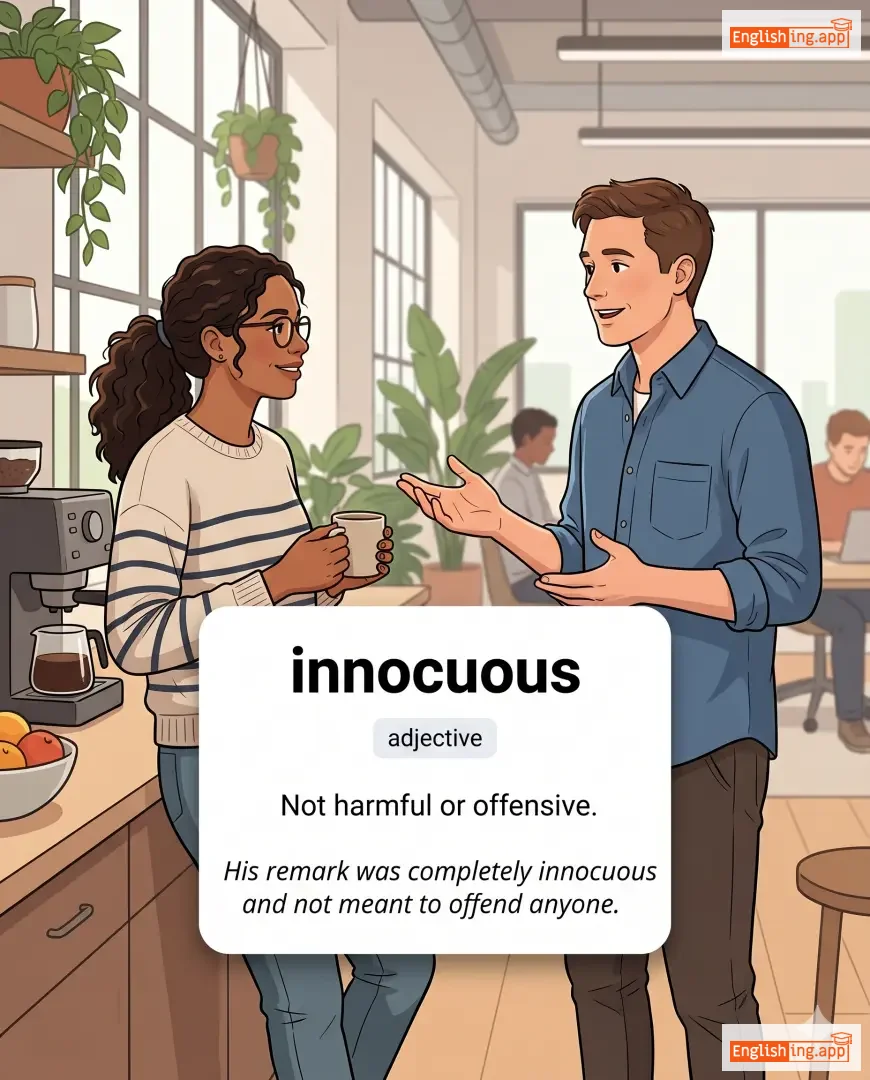
innocuous definition card — visual illustration of the meaning
adjective
/ɪˈnɒkjuəs/
निहत्था (nihattha)

Not harmful or offensive.

"His remark was completely innocuous and not meant to offend anyone."

"उसकी टिप्पणी पूरी तरह से निहत्थी थी और किसी को आहत करने का उद्देश्य नहीं था।" (Uski tippani poori tarah se nihatthi thi aur kisi ko aahat karne ka uddeshya nahin tha.)
verb
/ˈɪnəveɪt/
नए तरीके, विचार या उत्पाद पेश करना (nae tareeke, vichar ya utpad pesh karna)

To introduce new methods, ideas, or products.

"The company must innovate to stay ahead of its competitors."

"कंपनी को अपने प्रतिस्पर्धियों से आगे रहने के लिए नवाचार करना होगा।" (Kampani ko apne pratispardhiyon se aage rehne ke liye navachar karna hoga.)
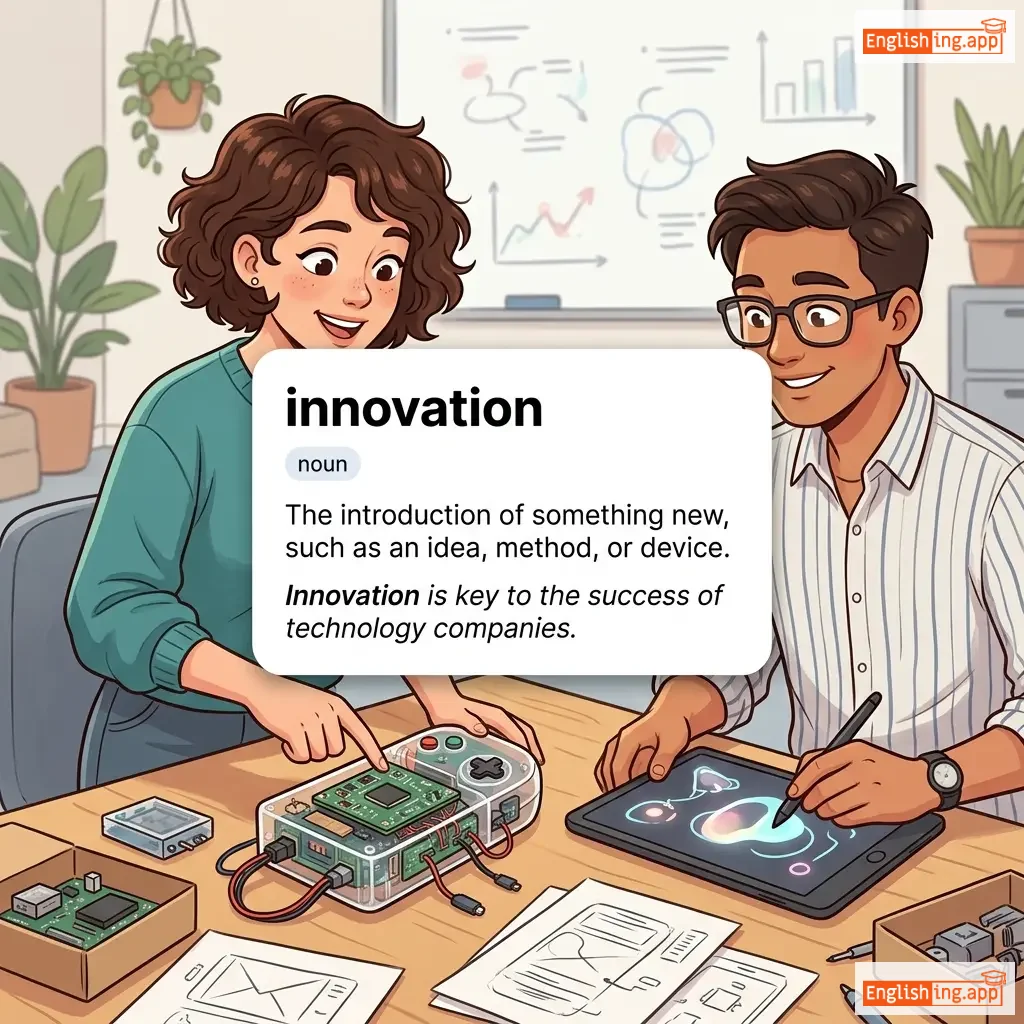
innovation definition card — visual illustration of the meaning
noun
/ˌɪnəˈveɪʃən/
नवोन्मेष (navonmesh)

The introduction of something new, such as an idea, method, or device.

"Innovation is key to the success of technology companies."

"नवोन्मेष तकनीकी कंपनियों की सफलता की कुंजी है।" (Navonmesh takneeki kampaniyon ki safalta ki kunji hai.)
innovative definition card — visual illustration of the meaning
adjective
/ˈɪnəˌveɪtɪv/
नवोन्मेषी (navonmeshi)

introducing new ideas, methods, or products; creative and original

"The company is known for its innovative solutions."

"कंपनी अपनी नवोन्मेषी समाधानों के लिए जानी जाती है।" (Company apni navonmeshi samadhanon ke liye jani jati hai.)
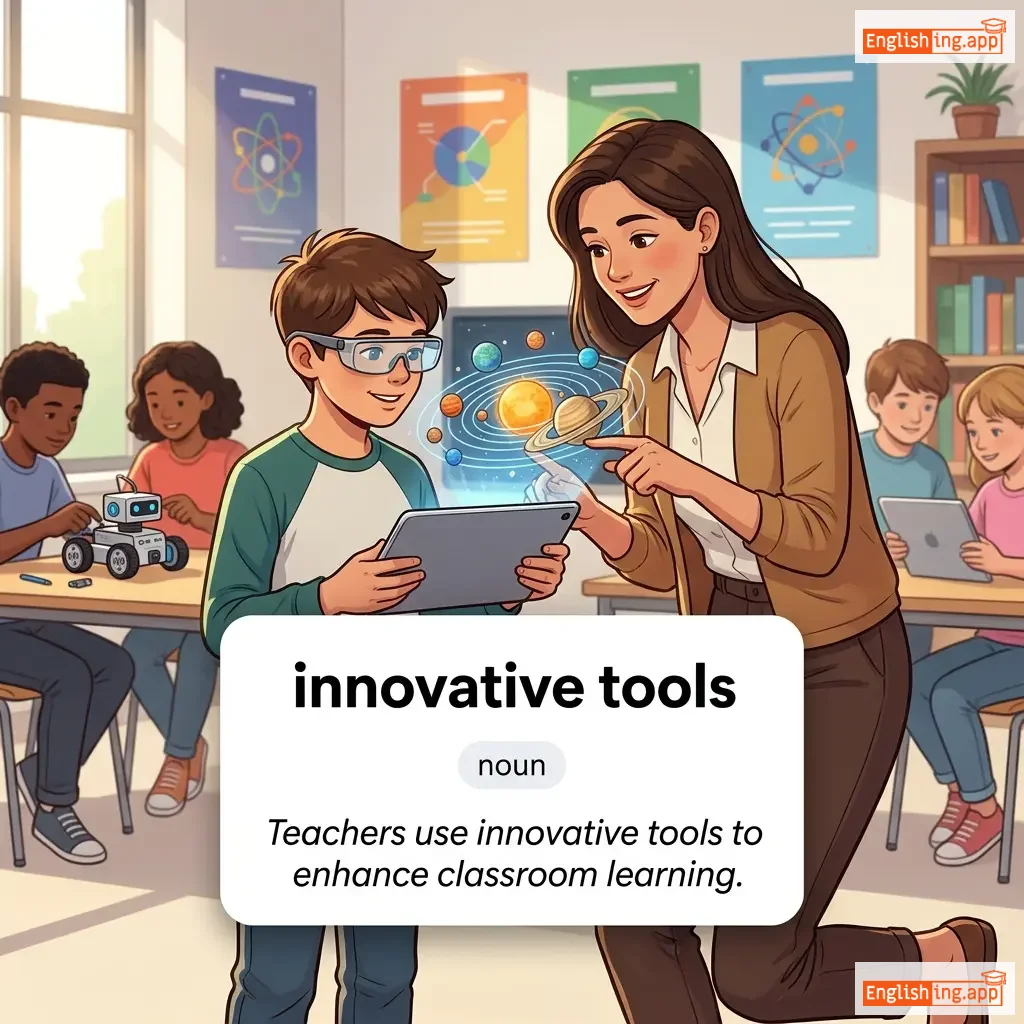
innovative tools definition card — visual illustration of the meaning
noun
ˈɪnəveɪtɪv tuːlz
नवोन्मेषी उपकरण (navonmeshi upkaran)

Creative devices or advanced technologies that introduce new methods or approaches to accomplish tasks.

"Teachers use innovative tools to enhance classroom learning."

"शिक्षक कक्षा शिक्षण को बेहतर बनाने के लिए नवोन्मेषी उपकरणों का उपयोग करते हैं।" (Shikshak kaksha shikshan ko behtar banane ke liye navonmeshi upkaranon ka upyog karte hain.)
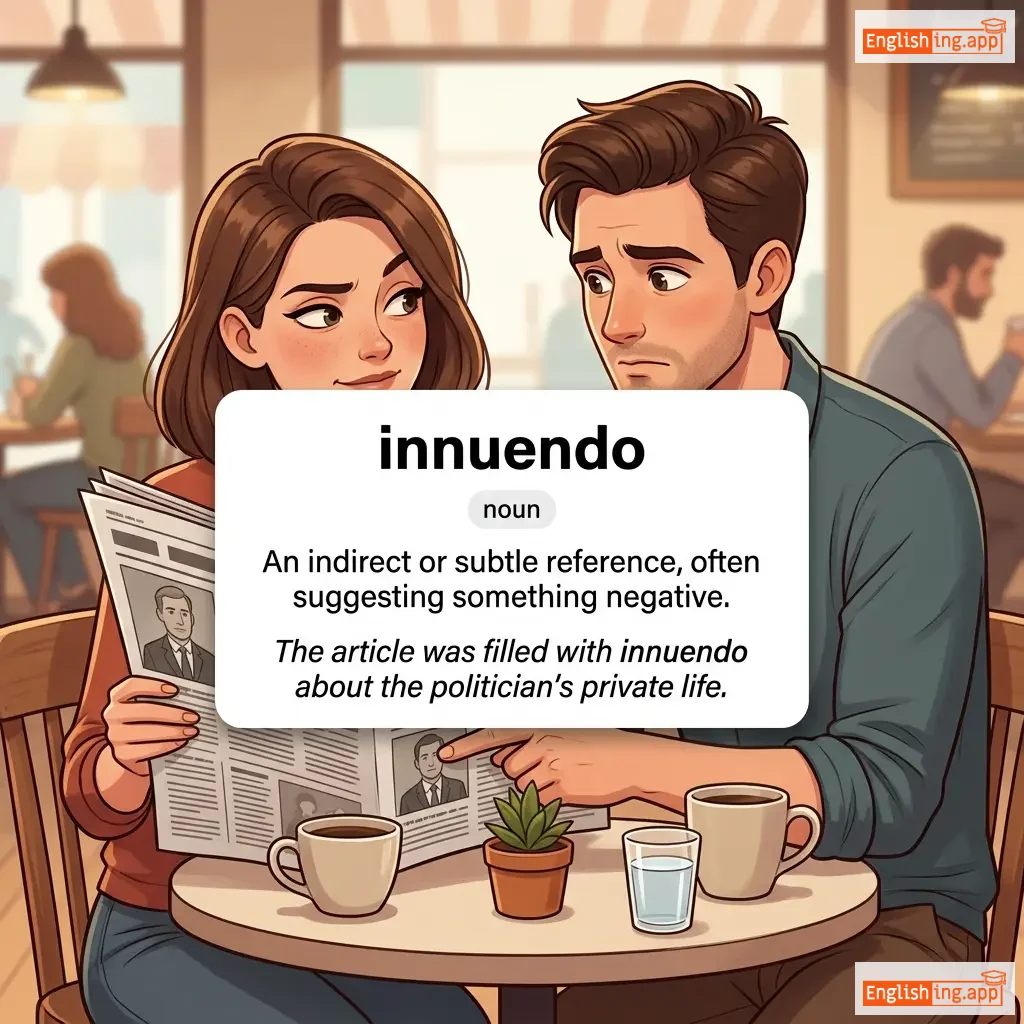
innuendo definition card — visual illustration of the meaning
noun
/ˌɪnjuˈɛndoʊ/
संकेत (sanket)

An indirect or subtle reference, often suggesting something negative.

"The article was filled with innuendo about the politician's private life."

"लेख में राजनेता के निजी जीवन के बारे में संकेत भरे थे।" (lekh mein raajneeta ke nijee jeevan ke baare mein sanket bhare the.)
adjective
/ɪˈnuːm(ə)rəbəl/
असंख्य (asankhya)

Too many to be counted.

"She has innumerable memories of her childhood."

"उसके पास अपने बचपन की असंख्य यादें हैं।" (Uske paas apne bachpan ki asankhya yaadein hain.)
adjective
/ˌɪnəˈfɛnsɪv/
अपमानजनक नहीं (apmanjanak nahi)

Not likely to offend or provoke; harmless.

"His inoffensive remarks kept the conversation friendly."

"उसकी अपमानजनक नहीं टिप्पणियाँ बातचीत को दोस्ताना बनाए रखती थीं।" (uski apmanjanak nahi tippaniyan baatcheet ko dostana banaye rakhti thin.)
adjective
/ˌɪnˌɑːpərˈtuːn/
असुविधाजनक समय (asuvidhajanak samay)

Happening at a bad or inconvenient time.

"His call came at the most inopportune moment."

"उसका कॉल सबसे असुविधाजनक समय पर आया।" (uska call sabse asuvidhajanak samay par aaya.)
adjective
/ɪˈnɔːrdənət/
अत्यधिक (atyadhik)

Excessive or unusually large in degree.

"She spent an inordinate amount of time on her phone."

"उसने अपने फोन पर अत्यधिक समय बिताया।" (Usne apne phone par atyadhik samay bitaya.)
adjective
/ˌɪnɔːrˈɡænɪk/
अकार्बनिक (akaarbanik)

relating to substances that are not derived from living organisms; lacking organic structure or growth

"Inorganic compounds are commonly studied in chemistry labs."

"अकार्बनिक यौगिकों का अध्ययन रसायन विज्ञान में किया जाता है।" (akaarbanik yaugikon ka adhyayan rasayan vigyan mein kiya jata hai)
noun
/ˈɪnpʊt/
इनपुट, प्रदान की गई जानकारी (input, pradan ki gayi jankari)

information, advice, or data that is put into a system, device, or process

"The manager asked for everyone's input on the new project."

"मैनेजर ने नए प्रोजेक्ट पर सभी के इनपुट के लिए पूछा।" (Manager ne naye project par sabhi ke input ke liye poocha.)
noun
/ˈɪnkwest/
जांच (janch)

A legal or official inquiry, especially into the cause of a death.

"The inquest revealed the cause of the accident."

"जांच ने दुर्घटना के कारण का खुलासा किया।" (janch ne durghatna ke karan ka khulasa kiya.)
inquire definition card — visual illustration of the meaning
verb
/ɪnˈkwaɪər/
पूछना (poochna)

To ask for information; to investigate.

"She inquired about the details of the job."

"उसने नौकरी के विवरण के बारे में पूछा।" (usne naukri ke vivaran ke baare mein poocha.)
noun
/ɪnˈkwaɪəri/ or /ˈɪnkwəri/
जांच / पूछताछ (janch / poochtaach)

An act of asking for information; an investigation into something.

"The committee launched an inquiry into the financial irregularities."

"समिति ने वित्तीय अनियमितताओं की जांच शुरू की।" (Samiti ne vittiya aniyamitataon ki janch shuru ki.)
noun
/ˌɪnkwɪˈzɪʃən/
अत्यधिक और कठोर पूछताछ (atyadhik aur kathor puchtaach)

A prolonged and intense questioning or investigation, often harsh in nature.

"The journalist faced an inquisition from the panel about his sources."

"पत्रकार को पैनल से उनके स्रोतों के बारे में एक कठोर पूछताछ का सामना करना पड़ा।" (Patrakar ko panel se unke srotoun ke baare mein ek kathor puchtaach ka saamna karna pada.)
adjective
/ɪnˈkwɪzɪtɪv/
जिज्ञासु (jigyasu)

Curious or eager to learn and ask questions.

"The inquisitive child asked endless questions about the stars."

"जिज्ञासु बच्चे ने सितारों के बारे में अनगिनत सवाल पूछे।" (Jigyasu bachche ne sitaron ke baare mein anginat sawal pooche.)
noun
/ɪnˈkwɪzɪtər/
अन्वेषक (anveshak)

A person who asks many questions, often in an official or harsh manner.

"The inquisitor demanded detailed answers from the witness."

"अन्वेषक ने गवाह से विस्तृत उत्तर मांगे।" (Anveshak ne gawah se vistarit uttar maange.)
noun
/ˈɪnroʊd/
प्रगति (pragati)

An advance or significant progress, often at the expense of something else.

"The company made significant inroads into the mobile market."

"कंपनी ने मोबाइल बाजार में महत्वपूर्ण प्रगति की।" (Company ne mobile bazar mein mahatvapurn pragati ki.)