वोकैबुलरीज

इंग्लिश वोकैबुलरी डिस्कवर, लर्न और मास्टर करें

verb
/ɪnˈfleɪt/
फुलाना; कृत्रिम रूप से बढ़ाना (phulana; kritrim rup se badhana)

to fill with air or gas so it expands; to increase excessively or artificially

"The mechanic inflated the tire to the correct pressure."

"मैकेनिक ने टायर को सही दबाव तक फुलाया।" (mekanik ne tayar ko sahi dabav tak phulaya)
adjective
/ɪnˈfleɪtɪd/
फूला़ हुआ (phoola hua)

excessively increased in size, value, or importance; filled with air or gas

"The company faced criticism for its inflated prices."

"कंपनी को इसके फूलाए हुए दामों के लिए आलोचना का सामना करना पड़ा।" (Kampani ko iske phoolaye hue daamon ke liye alochana ka samna karna pada.)
inflation definition card — visual illustration of the meaning
noun
/ɪnˈfleɪʃən/
मुद्रास्फीति (mudrasfiti)

A general increase in prices and fall in the purchasing value of money.

"The government is taking steps to control inflation."

"सरकार मुद्रास्फीति को नियंत्रित करने के कदम उठा रही है।" (Sarkar mudrasfiti ko niyantrit karne ke kadam utha rahi hai.)
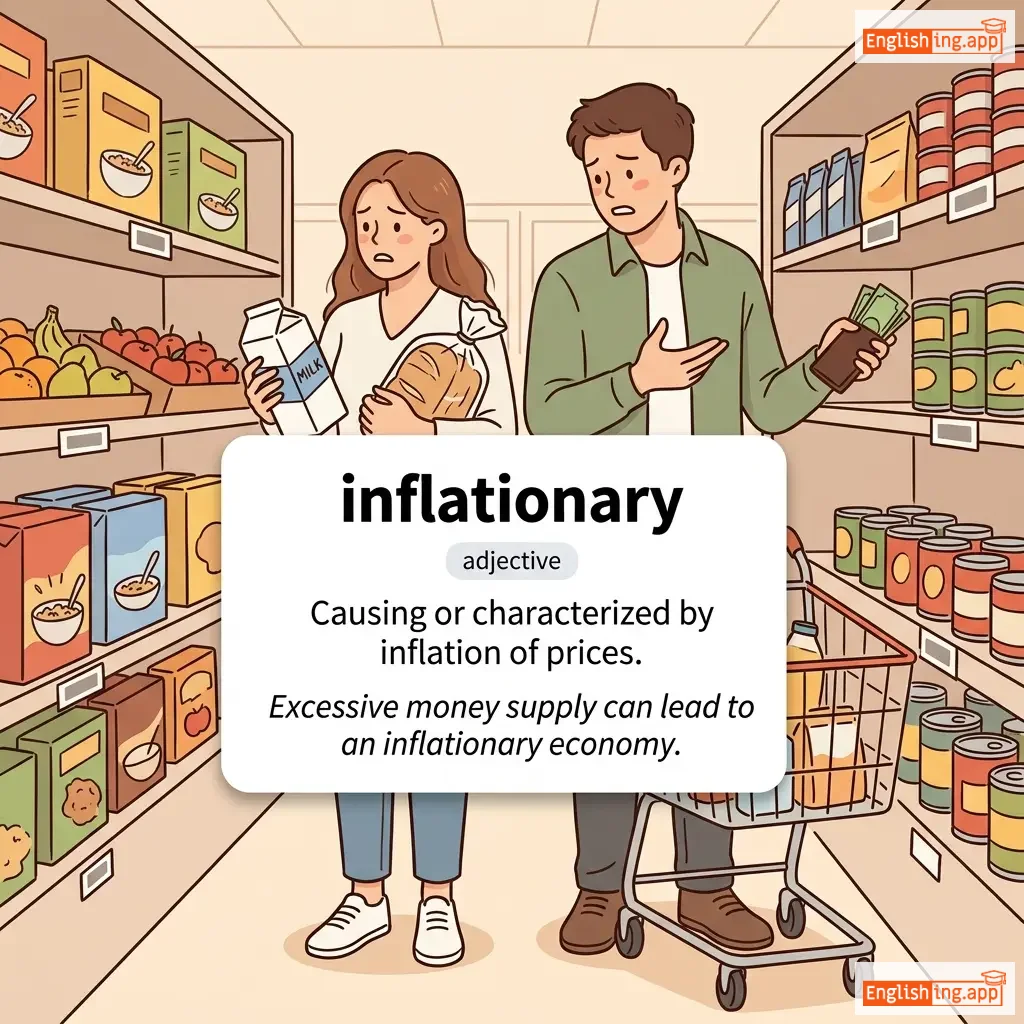
inflationary definition card — visual illustration of the meaning
adjective
/ɪnˈfleɪ.ʃə.ner.i/
मुद्रास्फीति संबंधी (mudrasphiti sambandhi)

Causing or characterized by inflation of prices.

"Excessive money supply can lead to an inflationary economy."

"अत्यधिक धन आपूर्ति मुद्रास्फीति अर्थव्यवस्था की ओर ले जा सकती है।" (Atyadhik dhan aapoorti mudrasphiti arthavyavastha ki or le ja sakti hai.)
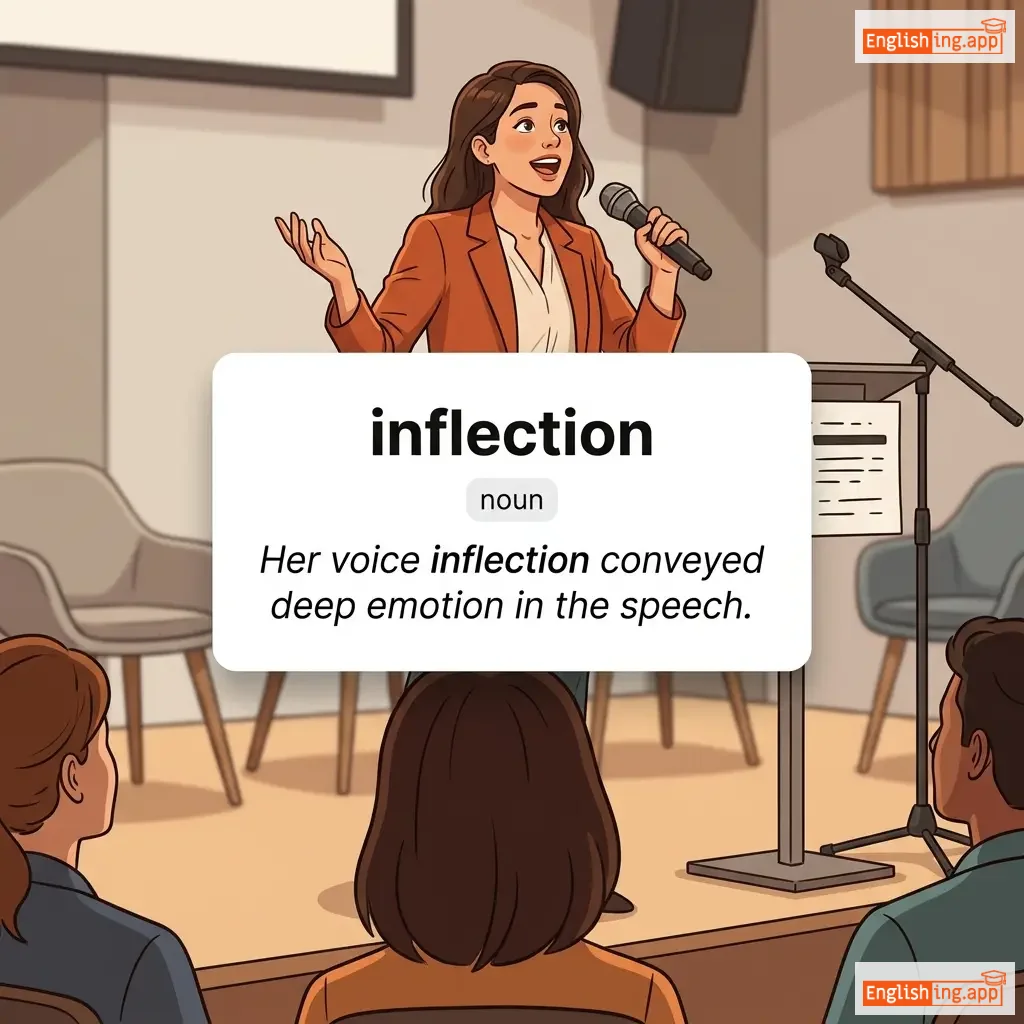
inflection definition card — visual illustration of the meaning
noun
/ɪnˈflɛk.ʃən/
स्वर परिवर्तन या टोन (swar parivartan ya ton)

A change in the tone or pitch of the voice when speaking, which helps convey meaning and emotion.

"Her voice inflection conveyed deep emotion in the speech."

"उसकी आवाज़ का इन्फ्लेक्शन भाषण में गहरी भावनाएँ व्यक्त कर रहा था।" (Uski awaaz ka inflection bhashan mein gehri bhavnayein vyakt kar raha tha.)
noun
/ˌɪnflɛksɪˈbɪlɪti/
अकठोरता (akathorta)

the quality of being rigid or unwilling to change; lack of adaptability

"The inflexibility of the rules caused unnecessary delays."

"नियमों की अकठोरता ने अनावश्यक देरी पैदा की।" (niyamon ki akathorta ne anavashyak deri paida ki)
adjective
/ɪnˈflɛksəbl/
अडिग (adig)

Not able to bend or change; unwilling to change ideas or behavior.

"His inflexible attitude made negotiations difficult."

"उसका अडिग रवैया वार्ता को कठिन बना रहा था।" (uska adig ravaiya vartaa ko kathin bana raha tha.)
verb
/ɪnˈflɪkt/
लादना (ladna)

to cause something unpleasant or painful to be suffered by someone or something

"The storm inflicted considerable damage to the city."

"तूफान ने शहर को गंभीर नुकसान पहुँचाया।" (Toofan ne shahar ko gambhir nuksan pahunchaya.)
noun
/ˈɪn.floʊ/
प्रवाह (pravah)

The movement of things such as money, people, or water into a place.

"The inflow of tourists boosted the local economy."

"पर्यटकों का प्रवाह स्थानीय अर्थव्यवस्था को बढ़ावा दे रहा था।" (Paryatakon ka pravah sthanīya arthavyavasthā ko baṛhāvā de rahā thā.)
noun/verb
/ˈɪnfluəns/
प्रभाव (prabhav)

The power to affect how someone thinks or acts.

"Her teacher had a strong influence on her career choice."

"उसकी शिक्षक का उस पर करियर चुनाव पर मजबूत प्रभाव था।" (uski shikshak ka us par kariyer chunaav par majboot prabhav tha.)
Influencer definition card — visual illustration of the meaning
noun
/ˈɪn.flu.ən.sər/
प्रभावक, सोशल मीडिया पर प्रचारक व्यक्ति (prabhavak, social media par pracharakh vyakti)

A person with the ability to influence potential buyers of a product or service by promoting or recommending the items on social media.

"Social media influencers shape consumer preferences."

"सोशल मीडिया इन्फ्लुएंसर उपभोक्ताओं की प्राथमिकताओं को आकार देते हैं।" (Social media influencer upbhoktaon ki prathmiktaon ko aakaar dete hain.)
adjective
/ˌɪnfluˈɛnʃl/
प्रभावशाली (prabhavshali)

Having great power to change or affect people or things.

"She is one of the most influential leaders of our time."

"वह हमारे समय के सबसे प्रभावशाली नेताओं में से एक हैं।" (vah hamare samay ke sabse prabhavshali netao mein se ek hain)
noun
/ˈɪnflʌks/
प्रवाह (pravah)

A large arrival or flow of people or things.

"The city experienced an influx of tourists during the festival."

"शहर ने त्योहार के दौरान पर्यटकों का प्रवाह अनुभव किया।" (shahar ne tyohaar ke dauran paryatakoon ka pravah anubhav kiya.)
noun
/ˈɪnfoʊ/
सूचना (soochna)

information; knowledge or facts about something or someone

"She gave me all the info I needed for the meeting."

"उसने मुझे बैठक के लिए जरूरी सारी जानकारी दी।" (Usne mujhe baithak ke liye zaroori saari jaankari di.)
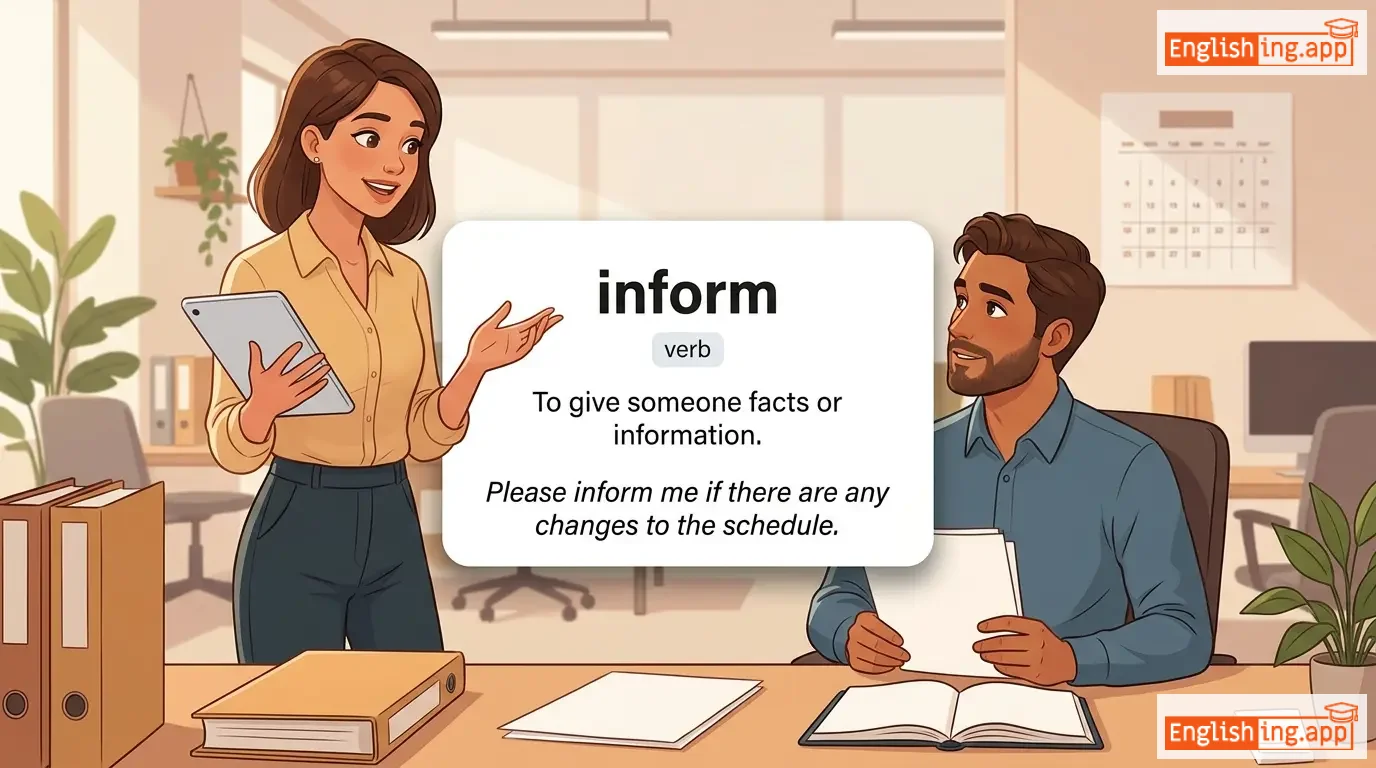
inform definition card — visual illustration of the meaning
verb
/ɪnˈfɔːrm/
सूचित करना (soochit karna)

To give someone facts or information.

"Please inform me if there are any changes to the schedule."

"कृपया मुझे सूचित करें यदि कार्यक्रम में कोई बदलाव हो।" (kripya mujhe soochit karein yadi karyakram mein koi badlav ho.)
adjective
/ɪnˈfɔːrməl/
अनौपचारिक (anaupcharik)

relaxed, friendly, and not following strict rules or conventions

"They had an informal meeting at the coffee shop."

"उन्होंने कॉफी शॉप में एक अनौपचारिक बैठक की।" (unhone coffee shop mein ek anaupcharik baithak ki.)
noun
/ˌɪnfərˈmeɪʃən/
जानकारी (jankari)

Facts or knowledge provided or learned about something.

"The website provides useful information about travel destinations."

"वेबसाइट यात्रा स्थलों के बारे में उपयोगी जानकारी प्रदान करती है।" (Website yatra sthalon ke baare mein upyogi jankari pradan karti hai.)
adjective
/ɪnˈfɔːrmətɪv/
सूचनात्मक (informative)

giving or providing useful information; educational; instructive

"The documentary was very informative and educational."

"डॉक्यूमेंट्री बहुत सूचनात्मक और शिक्षणीय थी।" (dokyumentree bahut soochnatmak aur shikshaney thee)
noun
/ɪnˈfrækʃən/
उल्लंघन (ullanghan)

A violation or breach of a rule, law, or agreement.

"The student was punished for a minor infraction of the school rules."

"छात्र को स्कूल के नियमों के एक छोटे उल्लंघन के लिए दंडित किया गया था।" (Chhatra ko school ke niyamon ke ek chhote ullanghan ke liye dandit kiya gaya tha.)
infrastructural development definition card — visual illustration of the meaning
noun
ˌɪnfrəˈstrʌktʃərəl dɪˈveləpmənt
आधारभूत संरचना विकास (aadharbhoot sanrachna vikas)

The process of building and improving the basic physical and organizational structures and facilities needed for the operation of a society or enterprise.

"Infrastructural development is necessary for efficient recycling."

"आधारभूत संरचना विकास प्रभावी पुनर्चक्रण के लिए आवश्यक है।" (Aadharbhoot sanrachna vikas prabhavi punarchakran ke liye avashyak hai.)
infrastructure definition card — visual illustration of the meaning
noun
/ˈɪnfrəˌstrʌktʃər/
बुनियादी ढांचा (buniyaadi dhancha)

the basic physical and organizational structures and facilities needed for the operation of a society or enterprise

"The government is investing heavily in transport infrastructure."

"सरकार परिवहन बुनियादी ढांचे में भारी निवेश कर रही है।" (Sarkar parivahan buniyaadi dhancha mein bhaari nivesh kar rahi hai.)
noun
/ɪnˈfriːkwəns/
दुर्लभता (durlabhta)

The state of occurring rarely or at long intervals.

"The infrequence of their meetings made it hard to maintain close ties."

"उनकी बैठकों की दुर्लभता ने करीबी संबंध बनाए रखना कठिन बना दिया था।" (Unki baithako ki durlabhta ne kareebi sambandh banaye rakhna kathin bana diya tha.)
adjective
/ɪnˈfriːkwənt/
असामान्य (asamanya)

Happening rarely or not often.

"He made infrequent visits to his hometown after moving abroad."

"वह विदेश जाने के बाद अपने घर लौटने के लिए कम ही जाता था।" (Vah videsh jane ke baad apne ghar lautne ke liye kam hi jata tha.)
verb
/ɪnˈfrɪndʒ/
उल्लंघन करना (ullanghan karna)

To actively break the terms of a law, agreement, or right.

"Copying this software without permission will infringe copyright laws."

"बिना अनुमति के इस सॉफ़्टवेयर की नकल करना कॉपीराइट कानून का उल्लंघन करेगा।" (Bina anumati ke is software ki nakal karna copyright kanoon ka ullanghan karega.)
verb
/ɪnˈfjʊərieɪt/
गुस्सा दिलाना (gussa dilana)

To make someone extremely angry.

"His careless remarks infuriated the entire team."

"उसकी लापरवाह टिप्पणियों ने पूरी टीम को गुस्सा दिला दिया।" (Uski laparwah tippaniyon ne puri team ko gussa dila diya.)
verb
/ɪnˈfjuːz/
सम्मिलित करना (sammilit karna)

to fill or spread through something; to instill a quality, idea, or feeling

"The teacher tried to infuse her students with a love for reading."

"शिक्षक ने अपने छात्रों में पढ़ाई के लिए प्रेम भरने की कोशिश की।" (shikshak ne apne chatron mein padhai ke liye prem bharne ki koshish ki.)
noun
/ɪnˈfjuːʒən/
पदार्थ का मिश्रण (padarth ka mishran)

the act of introducing something into another; a drink made by steeping leaves or herbs in liquid

"She prepared a calming infusion of chamomile tea."

"उसने कैमोमाइल चाय का एक शांतिपूर्ण मिश्रण तैयार किया।" (Usne chamomile chai ka ek shantipoorn mishran tayar kiya.)
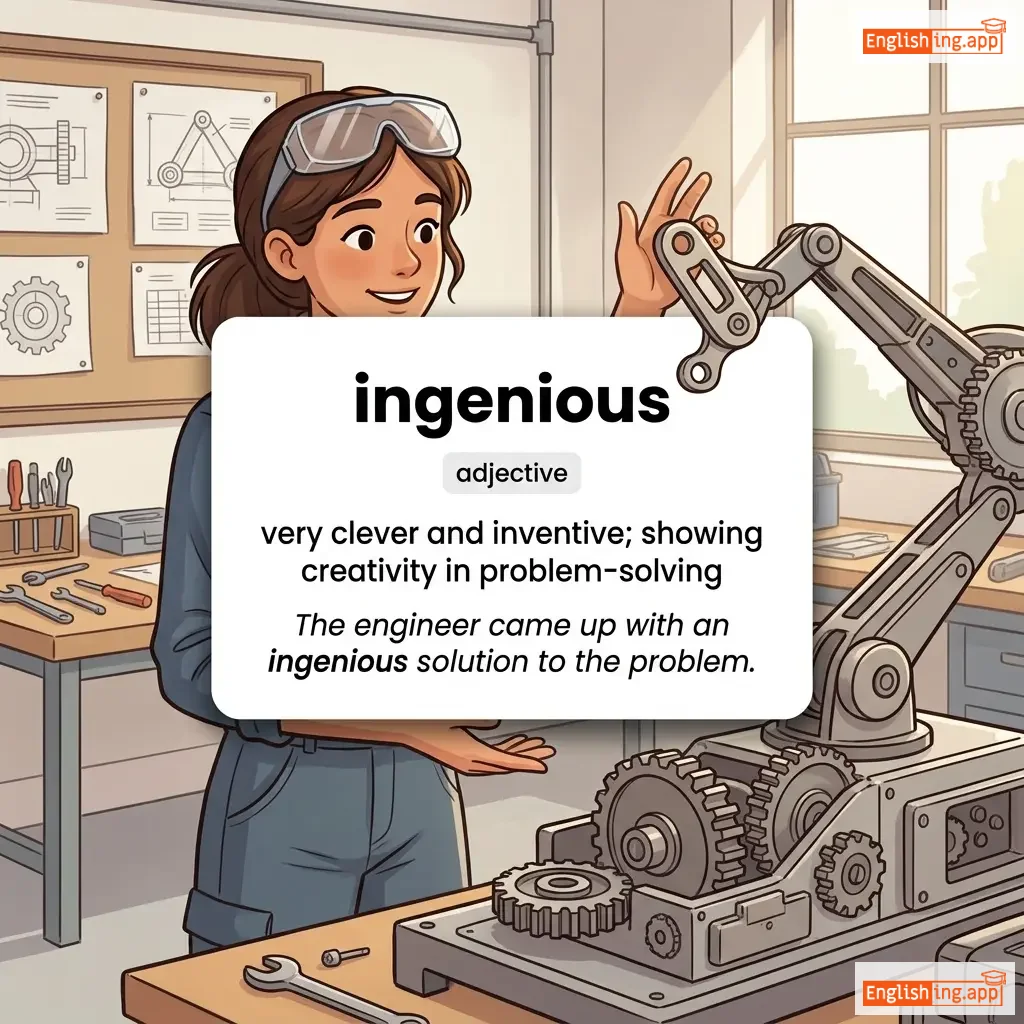
ingenious definition card — visual illustration of the meaning
adjective
/ɪnˈdʒiːniəs/
चतुर (chatur)

very clever and inventive; showing creativity in problem-solving

"The engineer came up with an ingenious solution to the problem."

"इंजीनियर ने समस्या का चतुर समाधान निकाला।" (Engineer ne samasya ka chatur samaadhan nikaala.)
noun
/ˈænʒənuː/
निरदोष युवती (nirdosh yuvati)

an innocent, naïve young woman, especially as represented in literature or theater

"She played the role of the ingénue in the play with great charm."

"उसने नाटक में निर्दोष युवती का किरदार बड़ी चपलता से निभाया।" (Usne natak mein nirdosh yuvati ka kirdar badi chaplata se nibhaya.)
ingenuity definition card — visual illustration of the meaning
noun
/ˌɪndʒəˈnjuːɪti/
चतुराई (chaturai)

the quality of being clever, original, and inventive

"The project was completed on time thanks to the ingenuity of the team."

"प्रोजेक्ट समय पर टीम की चतुराई के कारण पूरा हुआ।" (Projeckat samay par team ki chaturai ke kaaran poora hua.)
ingenuous definition card — visual illustration of the meaning
adjective
/ɪnˈdʒɛnjuəs/
साधारण (saadharan)

Innocent, naive, and unsuspecting; showing childlike simplicity and sincerity.

"Her ingenuous smile revealed her genuine kindness."

"उसकी साधारण मुस्कान ने उसकी सच्ची दयालुता को उजागर किया।" (uski saadharan muskan ne uski sachchi dayaluta ko ujagar kiya.)
verb
/ɪnˈdʒɛst/
उपभोग करना (upbhog karna)

To take food, drink, or another substance into the body, usually by swallowing.

"The patient must ingest the medicine with water."

"मरीज को दवाई पानी के साथ इंजेस्ट करनी होगी।" (mareez ko dawaai paani ke saath ingest karni hogi.)
adjective
/ɪnˈɡlɔːriəs/
अपमानजनक (apmanjanak)

Causing shame or disgrace; not bringing honor or glory.

"The army suffered an inglorious defeat."

"सेना को एक अपमानजनक हार का सामना करना पड़ा।" (senā ko ek apmānjanak hār kā sāmnā karnā paṛā.)
verb
/ɪnˈɡrɑːft/
गहरे रूप से लगाना (gahare roop se lagana)

To implant or fix deeply, often used in the sense of grafting an idea or quality.

"The teacher tried to ingraft good manners in the students."

"शिक्षक ने विद्यार्थियों में अच्छे व्यवहार को गहरे रूप से स्थापित करने की कोशिश की।" (shikshak ne vidyarthiyon mein acche vyavhaar ko gahare roop se sthaapit karne ki koshish ki.)
adjective
/ɪnˈɡreɪnd/
गहरे तरीके से स्थापित (gahare tareeke se sthapit)

Firmly fixed or established; deeply rooted and difficult to change.

"His ingrained habits were hard to break."

"उसके गहरे तरीके से स्थापित आदतें तोड़ना कठिन था।" (uske gahare tareeke se sthapit aadatein todna kathin tha.)
noun
/ˈɪnˌɡreɪt/
अकृतज्ञ व्यक्ति (ingrate)

An ungrateful person; someone who shows no appreciation.

"He worked hard for his friend, but the ingrate never thanked him."

"उसने अपने दोस्त के लिए कड़ी मेहनत की, लेकिन वह अकृतज्ञ व्यक्ति ने उसे कभी धन्यवाद नहीं दिया." (Usne apne dost ke liye kadhi mehnat ki, lekin vah akrtagya vyakti ne use kabhi dhanyavaad nahi diya.)
verb
/ɪnˈɡreɪʃiˌeɪt/
प्रिय बनाने की कोशिश करना (priya banane ki koshish karna)

To gain favor or approval by deliberate effort, often in a flattering way.

"She tried to ingratiate herself with her boss by complimenting him often."

"उसने अपने बॉस के साथ अक्सर तारीफ करके खुद को प्रिय बनाने की कोशिश की।" (Usne apne boss ke saath aksar tareef karke khud ko priya banane ki koshish ki.)
adjective
/ɪnˈɡreɪʃiˌeɪtɪŋ/
चापलूसी करने वाला (chaplusi karne wala)

Charming or flattering in a way intended to gain favor.

"His ingratiating smile made everyone trust him quickly."

"उसकी चापलूसी करने वाली मुस्कान ने सभी को जल्दी ही उस पर विश्वास करने के लिए मजबूर कर दिया।" (Uski chaplusi karne wali muskan ne sabhi ko jaldi hi us par vishwas karne ke liye majbur kar diya.)
noun
/ɪnˈɡrætɪˌtjuːd/
अकृतज्ञता (akritajyata)

Lack of gratitude; failure to show thanks or appreciation.

"His ingratitude hurt her feelings after all she had done for him."

"उसकी अकृतज्ञता ने उसे चोट पहुँचाई, जबकि उसने उसके लिए बहुत कुछ किया था।" (Uski akritajyata ne use chot pahunchai, jabki usne uske liye bahut kuch kiya tha.)
noun
/ɪnˈɡriːdiənt/
सामग्री (sāmagri)

A component part or element of something, especially in a recipe.

"Flour is a key ingredient in baking bread."

"आटा ब्रेड बनाने में एक महत्वपूर्ण सामग्री है।" (Āṭā bread banāne mein ek mahatvapūrṇ sāmagri hai.)
verb
/ɪnˈhæbɪt/
रहना (rehna)

to live in; to occupy as a dwelling

"Many animals inhabit the forest."

"कई जानवर जंगल में रहते हैं।" (Kai janwar jangal mein rahte hain.)
noun
/ɪnˈhæbɪtənt/
निवासी (nivaasi)

a person or animal that lives in a particular place

"The inhabitants of the village rely on farming for their livelihood."

"गाँव के निवासी अपनी आजीविका के लिए खेती पर निर्भर करते हैं।" (Gaon ke nivaasi apni aajeevika ke liye kheti par nirbhar karte hain.)
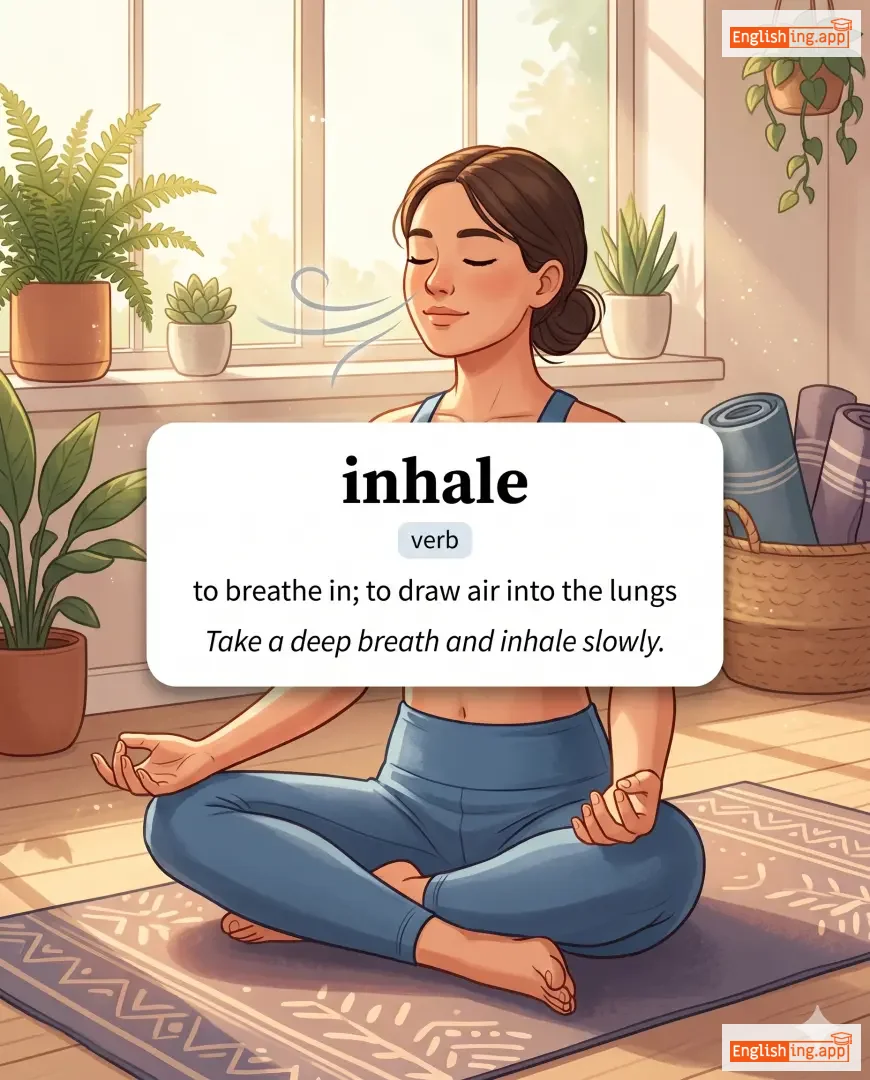
inhale definition card — visual illustration of the meaning
verb
/ɪnˈheɪl/
सांस लेना (inhel)

to breathe in; to draw air into the lungs

"Take a deep breath and inhale slowly."

"गहरी सांस लें और धीरे-धीरे सांस अंदर खींचें." (tek a deep breath end inhel sloli)
adjective
/ɪnhɑːrˈmoʊniəs/
बेसुरे (besure)

lacking harmony; discordant in sound; not in tune

"The inharmonious sounds from the broken piano made everyone cover their ears."

"टूटी हुई पियानो से निकलने वाली बेसुरे आवाजों ने सभी को उनके कान ढकने पर मजबूर कर दिया।" (tooti hui piano se nikalne wali besure awajon ne sabhi ko unke kan dhakne par majboor kar diya.)
noun
/ɪnˈhɪərəns/
अंतर्निहितता (antarnihitata)

The state of being an essential or permanent part of something.

"The inherence of risk is part of every business venture."

"जोखिम की अंतर्निहितता हर व्यापारिक प्रयास का हिस्सा है।" (Jokhim ki antarnihitata har vyaparik prayaas ka hissa hai.)
inherent definition card — visual illustration of the meaning
adjective
/ɪnˈhɛrənt/
स्वाभाविक (swabhavik)

Existing in something as a natural, permanent, or essential quality.

"There are inherent risks in extreme sports."

"चरम खेलों में स्वाभाविक जोखिम होते हैं।" (charam khelon mein swabhavik jokhim hote hain.)
inherit definition card — visual illustration of the meaning
verb
/ɪnˈhɛrɪt/
उत्तराधिकार में प्राप्त करना (uttaradhikar mein prapt karna)

to receive property, money, or traits from someone after their death or from ancestors

"She inherited her father's house after his death."

"वह अपने पिता का घर उनके मृत्यु के बाद उत्तराधिकार में प्राप्त किया।" (vah apne pita ka ghar unke mrityu ke baad uttaradhikar mein prapt kiya)
noun
/ɪnˈhɛrɪtər/
उत्तराधिकारी (uttaradhikaari)

a person who receives money, property, or a title when someone dies

"She became the inheritor of her family's estate."

"वह अपने परिवार की संपत्ति की उत्तराधिकारी बन गई।" (vah apne parivaar ki sampatti ki uttaradhikaari ban gayi.)
inhibit definition card — visual illustration of the meaning
verb
/ɪnˈhɪbɪt/
रोकना (rokna)

To hinder, restrain, or prevent an action or process.

"Fear can inhibit creativity."

"डर रचनात्मकता को रोक सकता है।" (Dar rachnatmakta ko rok sakta hai.)
adjective
/ɪnˈhɪbɪtɪd/
संकोचित (sankochit)

Unable to act in a relaxed and natural way, especially due to self-consciousness or restraint.

"He was too inhibited to express his true feelings."

"वह अपनी असली भावनाओं को व्यक्त करने के लिए बहुत संकोचित था।" (Vah apni asli bhavnaon ko vyakt karne ke liye bahut sankochit tha.)