वोकैबुलरीज

इंग्लिश वोकैबुलरी डिस्कवर, लर्न और मास्टर करें

verb
/ˈhɑːrpɪŋ/
लगातार शिकायत करना (lagatar shikayat karna)

continuously talking or complaining about something in a tiresome way

"She kept harping on about the mistakes I made."

"वह मेरे द्वारा की गई गलतियों के बारे में बार-बार शिकायत करती रही।" (Woh mere dwara ki gayi galtiyon ke baare mein baar-baar shikayat karti rahi.)
adjective
/ˈhæriːd/
अत्यधिक व्यस्त या चिंतित (atyadhik vyast ya chintit)

feeling strained or stressed due to being overworked or constantly bothered

"The harried teacher struggled to calm the noisy classroom."

"अत्यधिक व्यस्त शिक्षक ने शोर-शराबे से भरी कक्षा को शांत करने के लिए संघर्ष किया।" (Atyadhik vyast shikshak ne shor-sharabe se bhari kaksha ko shaant karne ke liye sangharsh kiya.)
verb
/ˈhæroʊ/
कष्ट देना / ज़मीन हल करना (kasht dena / zameen hal karna)

to cause distress or torment; also to break up and smooth soil with a farm tool

"The tragic news harrowed the entire family."

"दुखद समाचार ने पूरे परिवार को दुखी कर दिया।" (Dukhad samachar ne poore parivar ko dukhi kar diya.)
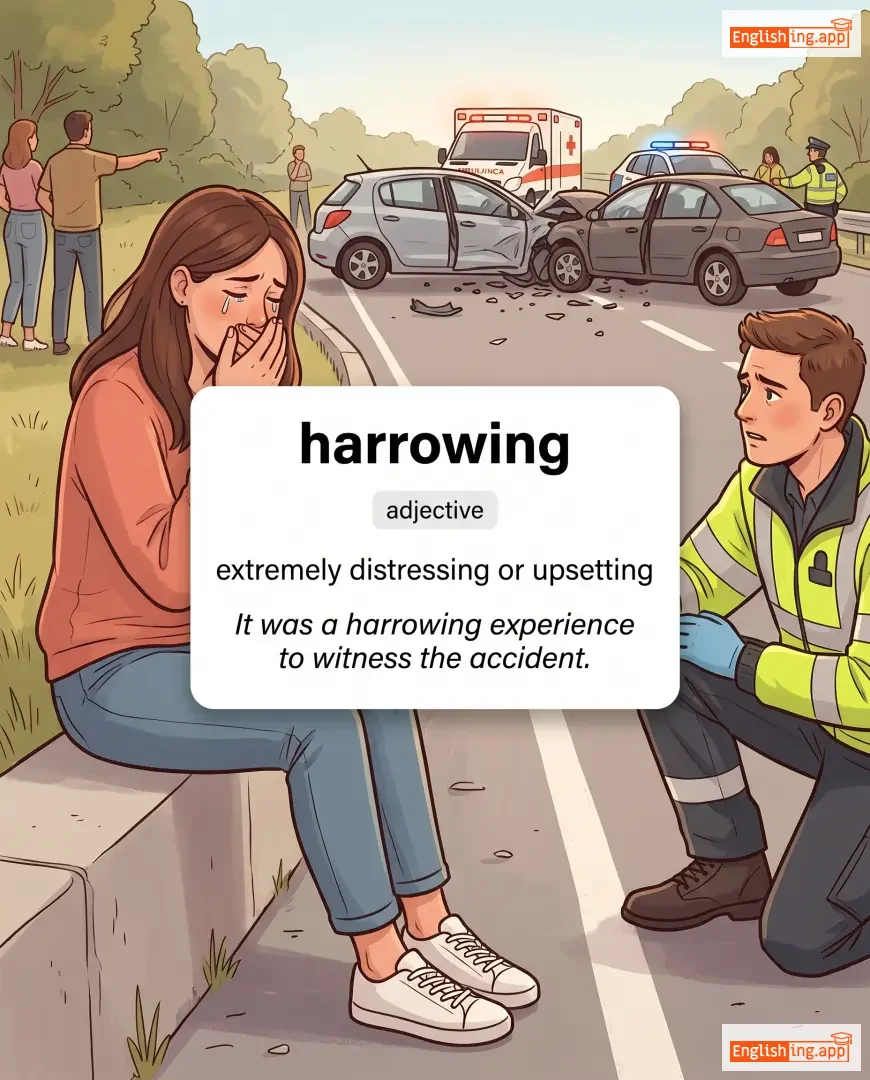
harrowing definition card — visual illustration of the meaning
adjective
/ˈhær.oʊ.ɪŋ/
भयावह और पीड़ादायक (bhayavah aur peedadayak)

extremely distressing or upsetting

"It was a harrowing experience to witness the accident."

"यह दुर्घटना देखना एक भयावह अनुभव था।" (Yeh durghatna dekhna ek bhayavah anubhav tha.)
verb
/ˈhæri/
हमला करना, तंग करना (hamla karna, tang karna)

to constantly attack, harass, or annoy

"The army harried the enemy with sudden raids."

"फौज ने अचानक हमले किए और दुश्मन को तंग किया।" (Fauj ne achanak hamle kiye aur dushman ko tang kiya.)
adjective
/hɑːrʃ/
कठोर (kathor)

Unpleasantly rough or severe in sound, taste, conditions, or treatment.

"The teacher's harsh tone frightened the students."

"अध्यापक की कठोर आवाज़ ने छात्रों को डरा दिया।" (Adhyapak ki kathor awaaz ne chhatron ko dara diya.)
noun
/ˈhɑːrvɪst/
फसल काटना (fasal katna)

the process or period of gathering crops

"Farmers are busy during the rice harvest season."

"किसान चावल की फसल काटने के मौसम में व्यस्त होते हैं।" (Kisan chawal ki fasal katne ke mausam mein vyast hote hain.)
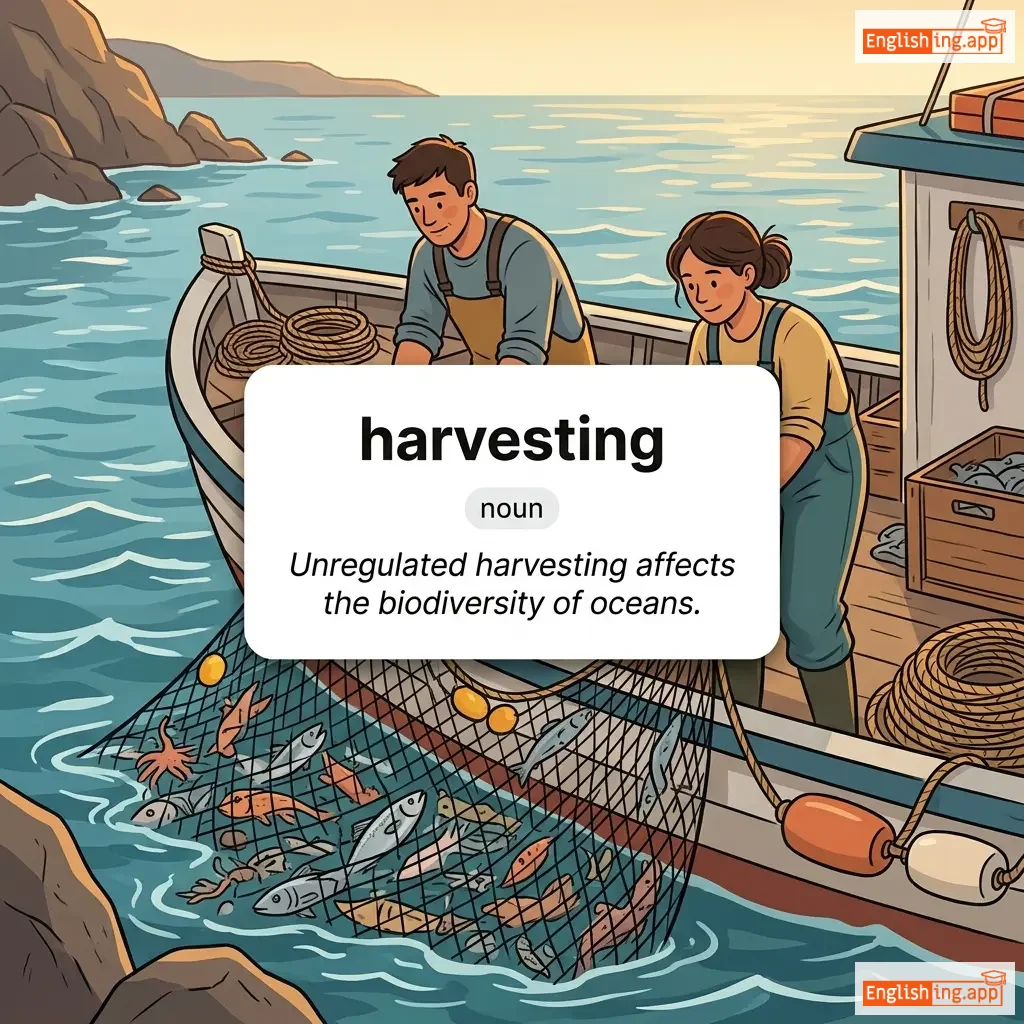
harvesting definition card — visual illustration of the meaning
noun
ˈhɑːrvɪstɪŋ
कटाई (katai)

The process of gathering a ripe crop from the fields or collecting natural resources.

"Unregulated harvesting affects the biodiversity of oceans."

"अनियंत्रित कटाई महासागरों की जैव विविधता को प्रभावित करती है।" (Aniyantrit katai mahasagaron ki jaiv vividhata ko prabhavit karti hai.)
noun
/hæˈʃiːʃ/
हशीश (hashish)

a drug made from the resin of the cannabis plant

"The police arrested him for possessing hashish."

"पुलिस ने उसे हशीश रखने के लिए गिरफ्तार किया।" (Police ne use hashish rakhne ke liye giraftaar kiya.)
noun
/ˈhæs.əl/
झंझट; परेशानी; कठिनाई (jhanjhat, pareshani, kathinai)

irritating inconvenience; trouble or difficulty; a situation causing problems

"Booking tickets online can save you the hassle of waiting in long queues at the theater."

"ऑनलाइन टिकट बुकिंग आपको थिएटर में लंबी कतारों में इंतजार करने की झंझट से बचा सकती है।" (online ticket booking aapko theatre mein lambi kataron mein intezaar karne ki jhanjhat se bacha sakti hai.)
noun
/heɪst/
तेज़ी; जल्दबाज़ी; (tezī, jaldabāzī)

swiftness of motion; urgent need of quick action; excessive speed or urgency

"In his haste to catch the train, he forgot to take his wallet from the table."

"ट्रेन पकड़ने की जल्दी में, वह टेबल से अपना बटुआ लेना भूल गया।" (train pakadne kī jaladī meṁ, vah ṭebal se apnā baṭuā lenā bhool gayā.)
verb
/ˈheɪsən/
जल्दी करना (jaldi karna)

To move or act quickly; to cause something to happen sooner.

"He hastened to finish his work before the deadline."

"उसने डेडलाइन से पहले अपना काम खत्म करने के लिए जल्दी किया।" (Usne deadline se pehle apna kaam khatam karne ke liye jaldi kiya.)
adverb
/ˈheɪs.tɪ.li/
जल्दी में (jaldi mein)

in a hurried or rushed manner; quickly and carelessly

"She hastily packed her bags before leaving for the airport."

"वह हड़बड़ी में अपने बैग पैक कर रही थी एयरपोर्ट के लिए।" (vah hadbadi mein apne bag pack kar rahi thi airport ke liye.)
adjective
/ˈheɪsti/
अत्यधिक शीघ्र (atyadhik sheeghra)

Done with excessive speed or urgency, often without careful thought.

"She made a hasty decision without considering the consequences."

"वह परिणामों पर विचार किए बिना एक जल्दी निर्णय लिया।" (Wah parinaamon par vichar kiye bina ek jaldi nirnay liya.)
noun
/hæt/
टोपी (topi)

a shaped covering for the head, often with a brim

"He wore a black hat to the party."

"वह पार्टी में एक काले टोपी पहने हुए था।" (Vah party mein ek kaale topi pehane hue tha.)
verb
/hætʃ/
अंडा से चूजा बाहर आना / योजना बनाना (anda se chooja baahar aana / yojana banana)

To cause a young animal to emerge from an egg; to plan secretly.

"The chicks hatched early in the morning."

"चूजे सुबह जल्दी अंडे से बाहर निकले।" (Chooje subah jaldi ande se baahar nikle.)
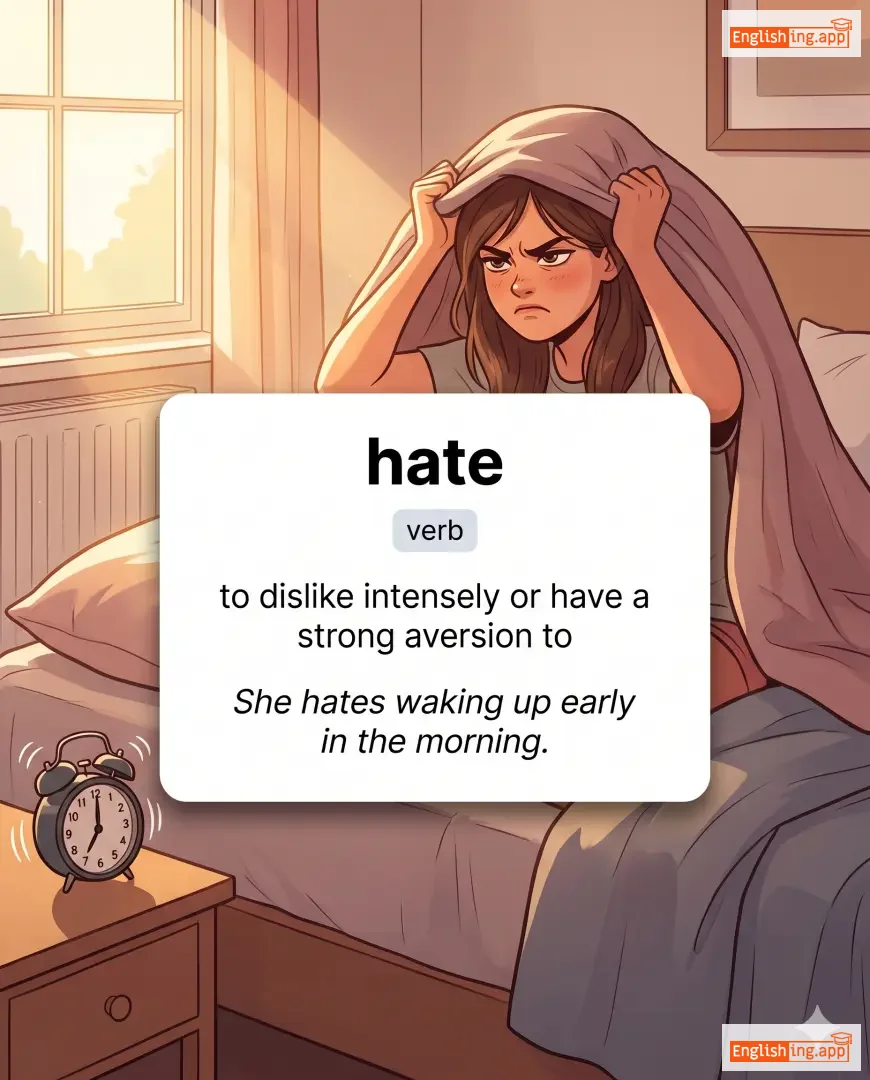
hate definition card — visual illustration of the meaning
verb
/heɪt/
घृणा करना (ghrina karna)

to dislike intensely or have a strong aversion to

"She hates waking up early in the morning."

"वह सुबह जल्दी उठने से नफरत करती है।" (Wah subah jaldi uthne se nafrat karti hai.)
adjective
/ˈheɪt.fəl/
घृणित (ghrit)

causing or deserving hatred; extremely unpleasant or offensive

"His hateful comments hurt everyone's feelings."

"उसकी घृणित टिप्पणियाँ सबकी भावनाओं को आहत करती हैं।" (uski ghrinit tippaniyan sabki bhavnanon ko aahat karti hain.)
noun
/ˈheɪtrɪd/
नफ़रत (nafrat)

intense dislike or ill will

"His hatred for the enemy was evident in his actions."

"उसकी दुश्मन के प्रति नफ़रत उसके कामों में स्पष्ट थी।" (Uski dushman ke prati nafrat uske kamon mein spasht thi.)
noun
/ˈhɔːtɪnəs/
अहंकार (ahankar)

The appearance or quality of being arrogantly superior and disdainful.

"His haughtiness made him unpopular among his peers."

"उसका अहंकार उसे अपने सहकर्मियों के बीच अप्रिय बना देता था।" (Uska ahankar use apne sahkarmiyon ke beech apriya bana deta tha.)
adjective
/ˈhɔːti/
अहंकारी (ahankari)

arrogantly superior and disdainful

"She gave him a haughty look and walked away."

"उसने उसे अहंकारी नज़र से देखा और चली गई।" (Usne use ahankari nazar se dekha aur chali gayi.)
verb
/hɔːl/
खींचना (kheenchna)

to pull or drag something heavy with effort

"The workers hauled the boxes into the truck."

"कर्मचारियों ने बक्से ट्रक में खींचे।" (Karmachariyon ne bakse truck mein kheenche.)
haunt definition card — visual illustration of the meaning
verb
/hɔːnt/
भूतिया या दिमाग में बार-बार आना (bhootiya ya dimaag mein baar-baar aana)

to appear frequently in or fill the mind of someone; to visit a place regularly

"The old memories still haunt him."

"पुरानी यादें अब भी उसे तंग करती हैं।" (Purani yaadein ab bhi use tang karti hain.)
noun
/oʊˈtɜːr/
अहंकार (ahankar)

disdainful pride; arrogance

"His hauteur made it difficult for others to approach him."

"उसका अहंकार दूसरों के लिए उसे नजदीक आने में मुश्किल बना देता था।" (Uska ahankar dusron ke liye use najdeek aane mein mushkil bana deta tha.)
verb
/hæv/
रखना (rakhna)

to possess, own, or hold

"They have three children."

"उनके पास तीन बच्चे हैं।" (Unke paas teen bachche hain.)
noun
/ˈheɪvən/
आश्रयस्थल (ashrayasthal)

a safe place or shelter

"The library became a haven for students during exams."

"परीक्षाओं के दौरान लाइब्रेरी छात्रों के लिए एक आश्रयस्थल बन गई।" (Parikshaon ke dauran library chhatron ke liye ek ashrayasthal ban gayi.)
noun
/ˈhævək/
विनाश (vinaash)

widespread destruction or disorder

"The storm caused havoc in the coastal villages."

"आंधी ने तटीय गाँवों में विनाश मचाया।" (Aandhi ne tatiya gaanv mein vinaash machaya.)
noun
/hɔːk/
चील (cheel)

A bird of prey with keen eyesight and sharp talons; also refers to a person who strongly supports aggressive or warlike policies.

"The hawk soared high above the valley."

"चील ने घाटी के ऊपर ऊँचाई से उड़ान भरी।" (cheel ne ghaati ke upar unchai se udan bhari.)
noun
/ˈhɔː.kər/
हॉकर (horkar)

a person who travels about selling goods, typically from door to door or on the street

"The hawker sold fresh fruits from his cart."

"हॉकर ने अपनी ठेले से ताजे फल बेचे।" (horkar ne apni thele se taze phal beche.)
noun
/ˈhɔːzər/
नौका बांधने का मोटा रस्सा (nauka baandhne ka mota rassa)

A thick rope or cable used in mooring or towing a ship.

"The sailors secured the ship to the dock with a heavy hawser."

"नाविकों ने जहाज को डॉक से जोड़ने के लिए एक भारी हॉज़ेर का उपयोग किया।" (Navikon ne jahaj ko dock se jodne ke liye ek bhari hawzer ka upyog kiya.)
noun
/ˈhɔːθɔːrn/
काँटेदार झाड़ी (kaantedar jhaadi)

A thorny shrub or small tree with white or pink flowers, often used for hedges.

"The garden was lined with blooming hawthorn bushes."

"बग़ीचा खिलते हुए हॉथॉर्न झाड़ियों से घिरा हुआ था।" (Bagicha khilte huye hawthorn jhaadiyon se ghira hua tha.)
noun
/heɪ/
घास (ghas)

grass that has been cut, dried, and stored for use as animal feed

"The cows were eating hay in the barn."

"गायें अस्तबल में घास खा रही थीं।" (Gayein astabal mein ghas kha rahi thi.)
noun
/ˈhæzərd/
खतरा (khatra)

A danger or risk.

"Wet floors are a common hazard in the workplace."

"गीली मंजिलें कार्यस्थल में एक सामान्य खतरा हैं।" (Gili manzilein karyasthal mein ek samanya khatra hain.)
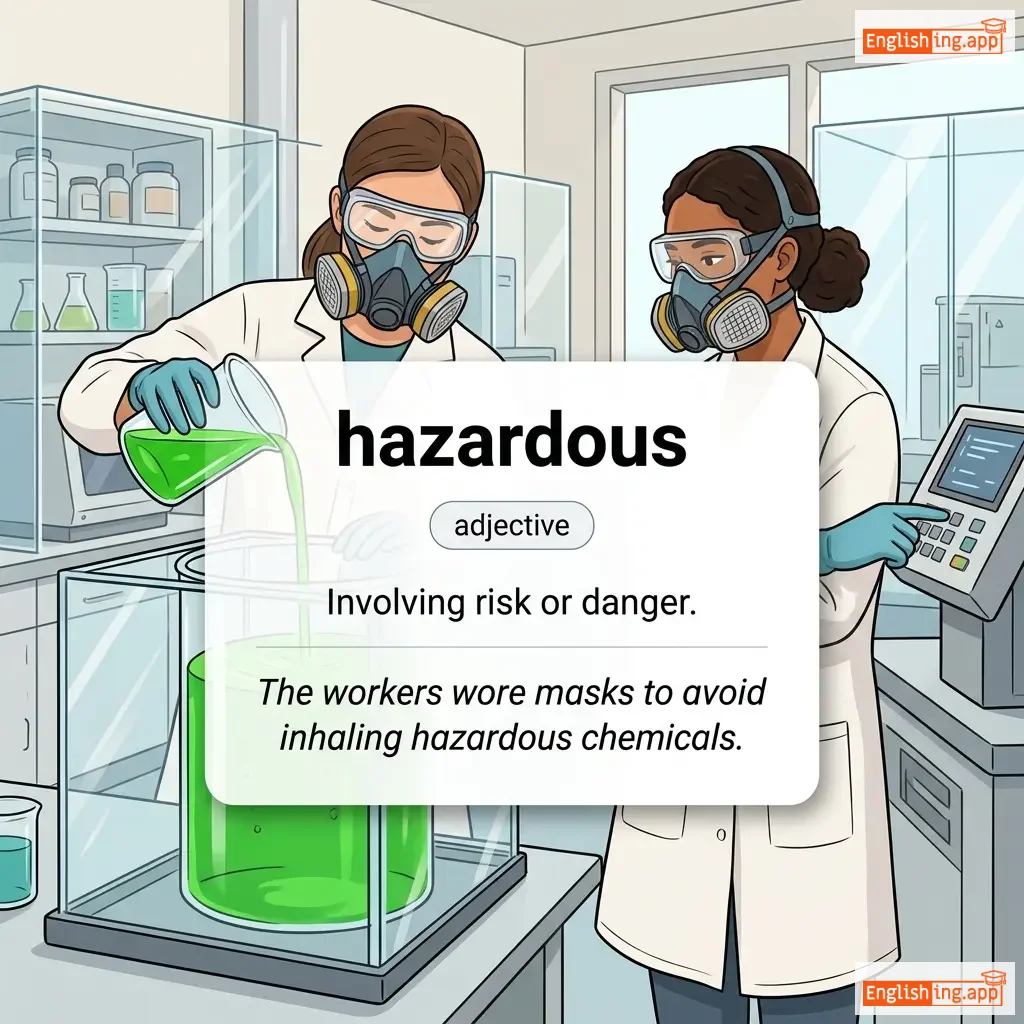
hazardous definition card — visual illustration of the meaning
adjective
/ˈhæzərdəs/
खतरनाक (khatarnak)

Involving risk or danger.

"The workers wore masks to avoid inhaling hazardous chemicals."

"कर्मचारियों ने खतरनाक रासायनिक पदार्थों को सांस में न लेने के लिए मास्क पहने।" (Karmachariyon ne khatarnak rasanik padarthon ko saans mein na lene ke liye mask pehne.)
noun
/heɪz/
धुंध (dhundh)

a slight obscuration of the lower atmosphere, typically caused by fine suspended particles; confusion

"The morning haze lifted gradually as the sun rose higher in the sky."

"सुबह की धुंध धीरे-धीरे हटने लगी जैसे ही सूरज आसमान में ऊँचा हुआ।" (subah ki dhundh dheere-dheere hatne lagi jaise hi suraj aasmaan mein uncha hua.)
adjective
/ˈheɪzi/
धुंधला (dhundhla)

Unclear, misty, or not easy to see; also vague or uncertain.

"The mountains looked hazy in the morning light."

"सुबह की रोशनी में पहाड़ धुंधले दिख रहे थे।" (Subah ki roshni mein pahaad dhundhle dikh rahe the.)
pronoun
/hiː/
वह (पुरुष) (vah (purush))

used to refer to a male person or animal already mentioned or easily identified

"He is my best friend."

"वह मेरा सबसे अच्छा दोस्त है।" (Vah mera sabse accha dost hai.)
noun, verb
/hɛd/
सिर / प्रमुख (sir / pramukh)

The upper part of the human body or to lead or be in charge of something.

"She turned her head to look out the window."

"वह खिड़की से बाहर देखने के लिए अपना सिर घुमाती है।" (Wah khidki se bahar dekhne ke liye apna sir ghumati hai.)
adverb
/ˈhed ɑn/
सामने-सामने (saamne-saamne)

directly facing; in direct confrontation or collision

"The two cars collided head-on at the intersection."

"दो कारें चौराहे पर सामने-सामने टकराई थीं।" (do kaarein chaurahe par saamne-saamne takraai theen.)
noun
/ˈhɛdeɪk/
सिरदर्द (sirdard)

a continuous pain in the head; something that causes worry or difficulty

"Too much screen time can give you a terrible headache."

"बहुत अधिक स्क्रीन समय आपको भयंकर सिरदर्द दे सकता है।" (bahut adhik screen samay aapko bhayankar sirdard de sakta hai)
adverb
/ˌhɛdˈfɜrst/
सिर पहले (sir pahle)

With the head leading; in a reckless or hasty manner.

"He dived headfirst into the pool."

"उसने सिर पहले पूल में कूद डाला।" (Usne sir pahle pool mein kood daala.)
heading definition card — visual illustration of the meaning
noun
/ˈhed.ɪŋ/
शीर्षक (shirshak)

a title at the head of a page or section of a book; the direction or course being followed

"The newspaper article had a bold heading that immediately caught the reader's attention."

"समाचार पत्र के लेख में एक बोल्ड शीर्षक था जिसने तुरंत पाठकों का ध्यान आकर्षित किया।" (samachar patra ke lekh mein ek bold sheershak tha jisne turant pathakon ka dhyan aakarshit kiya.)
noun
/ˈhɛdˌlaɪn/
हेडलाइन (headline)

The title of a newspaper article printed in large letters.

"The scandal made front-page headlines."

"स्कैंडल ने फ्रंट पेज की हेडलाइंस बनाई।" (scandal ne front page ki headlines banayi.)
adverb
/ˈhɛdˌlɔŋ/
हड़बड़ी में (hadhabadi mein)

With the head leading; in a rush or without thinking.

"She rushed headlong into the new project."

"वह नए प्रोजेक्ट में हड़बड़ी में कूद पड़ी।" (Woh naye project mein hadbadi mein kood padi.)
noun
/ˈhɛdˌkwɔːrtərz/
मुख्यालय (mukhyalay)

The main office or center of operations of an organization.

"The company’s headquarters is located in New York."

"कंपनी का मुख्यालय न्यूयॉर्क में स्थित है।" (Company ka mukhyalay New York mein sthit hai.)
adjective
/ˈhɛdˌstrɔŋ/
हठी (hathi)

Determined to do what one wants, even if it is not sensible.

"The headstrong child refused to listen to anyone."

"हठी बच्चा किसी की बात सुनने को तैयार नहीं था।" (Hathi bachcha kisi ki baat sunne ko tayaar nahi tha.)
noun
/ˈhed.weɪ/
प्रगति; सुधार; आगे बढ़ना (pragati, sudhaar, aage badhna)

forward movement or progress, especially when this is slow or difficult

"Despite the challenges, the research team made significant headway in developing the new vaccine."

"चुनौतियों के बावजूद, शोध टीम ने नए टीके को विकसित करने में महत्वपूर्ण प्रगति की।" (chunautiyon ke baavajood, shodh team ne naye teeke ko viksit karne mein mahatvapurn pragati ki.)
adjective
/ˈhɛdi/
नशे में डालने वाला (nashe mein dalne wala)

Exciting or intoxicating; having a strong or exhilarating effect.

"The heady aroma of the flowers filled the room."

"फूलों की नशे में डालने वाली खुशबू ने कमरे को भर दिया।" (Phoolon ki nashe mein dalne wali khushboo ne kamre ko bhar diya.)
heal definition card — visual illustration of the meaning
verb
/hiːl/
ठीक करना (theek karna)

to make or become healthy again after an injury or illness

"Time helps to heal both physical and emotional wounds."

"समय शारीरिक और भावनात्मक घावों को ठीक करने में मदद करता है।" (Samay sharirik aur bhavnatmak ghaavon ko theek karne mein madad karta hai.)
noun
/hɛlθ/
स्वास्थ्य (swasthya)

The state of being free from illness or injury.

"Exercise is important for good health."

"व्यायाम अच्छे स्वास्थ्य के लिए महत्वपूर्ण है।" (Vyayam acche swasthya ke liye mahatvapurn hai.)