वोकैबुलरीज

इंग्लिश वोकैबुलरी डिस्कवर, लर्न और मास्टर करें

noun
/ˈhɪpnətɪzəm/
हिप्नोटिज़्म (hipnotizm)

The practice or act of inducing hypnosis.

"He studied hypnotism as part of his psychology degree."

"उसने अपने मनोविज्ञान डिग्री के हिस्से के रूप में हिप्नोटिज़्म का अध्ययन किया।" (Usne apne manovigyan degree ke hisse ke roop mein hypnotism ka adhyayan kiya.)
verb
/ˈhɪpnətaɪz/
हिप्नोटाइज़ करना (hipnotaiz karna)

to put someone into a state of hypnosis; to influence someone's mind deeply

"The magician tried to hypnotize the audience."

"मैजिशियन ने दर्शकों को हिप्नोटाइज़ करने की कोशिश की।" (Maijishiyan ne darshako ko hypnotize karne ki koshish ki.)
noun
/ˌhaɪpəˈkɒndrɪæk/
हाइपोकॉन्ड्रिएक (hypokondriyak)

a person who is excessively worried about having a serious illness

"She is a hypochondriac who visits the doctor every week."

"वह एक हाइपोकॉन्ड्रिएक है जो हर सप्ताह डॉक्टर के पास जाता है।" (Vah ek hypochondriac hai jo har saptah doctor ke paas jata hai.)
noun
/hɪˈpɒkrəsi/
ढोंग (dhong)

the practice of claiming to have moral standards or beliefs but behaving in a way that contradicts them

"His speech against corruption was full of hypocrisy."

"उसका भाषण भ्रष्टाचार के खिलाफ पूरी तरह से ढोंग से भरा था।" (Uska bhashan bhrashtachar ke khilaf puri tarah se dhong se bhara tha.)
noun
/ˈhɪpəkrɪt/
पाखंडी (pakhandi)

a person who pretends to have moral standards or beliefs but acts against them

"People called him a hypocrite for lying about his actions."

"लोगों ने उसके झूठ बोलने के लिए उसे पाखंडी कहा।" (Logon ne uske jhooth bolne ke liye use pakhandi kaha.)
adjective
/ˌhɪpəˈkrɪtɪkəl/
ढोंगी (dhongi)

behaving in a way that suggests you have higher standards than you actually do

"It was hypocritical of him to complain about dishonesty."

"उससे यह ढोंगीपन था कि वह बेईमानी के बारे में शिकायत कर रहा था।" (Usse yah dhongiapan tha ki vah beemani ke baare mein shikayat kar raha tha.)
adjective
/ˌhaɪpəˈdɜːrmɪk/
हाइपोडर्मिक (haipodermik)

relating to the region immediately beneath the skin; also refers to a type of needle or syringe used to inject drugs beneath the skin.

"The doctor used a hypodermic needle to administer the vaccine."

"डॉक्टर ने वैक्सीन लगाने के लिए एक हाइपोडर्मिक सुई का इस्तेमाल किया।" (Doktar ne vaiksin lagane ke liye ek haipodermik sui ka istemal kiya.)
noun
/haɪˈpɒtənjuːs/
कर्ण (karn)

the longest side of a right-angled triangle, opposite the right angle.

"In a right triangle, the hypotenuse is always longer than the other two sides."

"एक समकोण त्रिभुज में, कर्ण हमेशा अन्य दो भुजाओं से लंबा होता है।" (Ek samkon tribhuj mein, karn hamesha anya do bhujayon se lamba hota hai.)
verb
/haɪˈpɒθɪkeɪt/
बंधक रखना (bandhak rakhna)

to pledge something, such as property, as security for a debt without giving up possession of it.

"The company hypothecated its assets to secure the loan."

"कंपनी ने अपने संपत्तियों को ऋण सुरक्षित करने के लिए बंधक रखा।" (Company ne apne sampattiyon ko rin surakshit karne ke liye bandhak rakha.)
noun
/haɪˈpɒθəsɪs/
परिकल्पना (parikalpana)

a proposed explanation made on the basis of limited evidence as a starting point for further investigation.

"The scientist tested her hypothesis through multiple experiments."

"वैज्ञानिक ने अपनी परिकल्पना का परीक्षण कई प्रयोगों के माध्यम से किया।" (vaigyanik ne apni parikalpana ka parikshan kai prayogo ke madhyam se kiya)
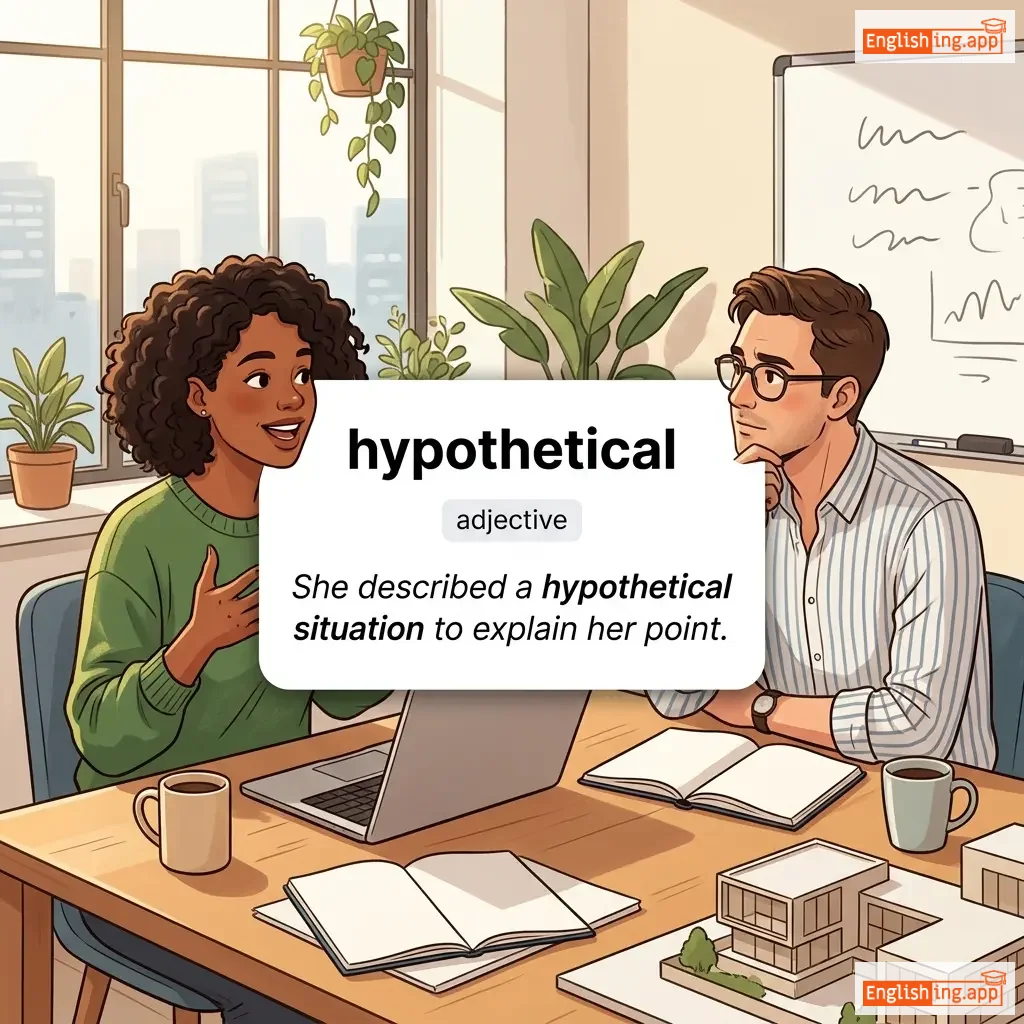
hypothetical definition card — visual illustration of the meaning
adjective
/ˌhaɪpəˈθetɪkl/
काल्पनिक (kalpanik)

based on or serving as a hypothesis; imagined or supposed for the sake of discussion.

"She described a hypothetical situation to explain her point."

"उसने अपने बिंदु को समझाने के लिए एक काल्पनिक स्थिति का वर्णन किया।" (Usne apne bindu ko samjhane ke liye ek kalpanik sthiti ka varnan kiya.)
noun
/hɪˈstɪəriə/
हिस्टीरिया (histeria)

An uncontrollable outburst of emotion or fear, often characterized by irrational behavior.

"The crowd was in a state of hysteria during the concert."

"कॉनसर्ट के दौरान भीड़ हिस्टीरिया की स्थिति में थी।" (Concert ke dauran bheed histeria ki sthiti mein thi.)
adjective
/hɪˈstɛrɪkəl/
हास्यास्पद या अत्यधिक भावुक (hasyaspad ya atyadhik bhavuk)

Extremely funny or uncontrollably emotional.

"The comedian's jokes were absolutely hysterical."

"कॉमेडियन के जोक्स बिल्कुल हास्यास्पद थे।" (Komedian ke jokes bilkul hasyaspad the.)