वोकैबुलरीज

इंग्लिश वोकैबुलरी डिस्कवर, लर्न और मास्टर करें

adjective
/ˈfræʤaɪl/
नाज़ुक (nazuk)

Easily broken or damaged; delicate.

"Be careful with that vase, it's very fragile."

"उस फूलदान के साथ सावधान रहना, यह बहुत नाज़ुक है।" (Us phūldān ke sāth sābdhān rehnā, yah bahut nāzuk hai.)
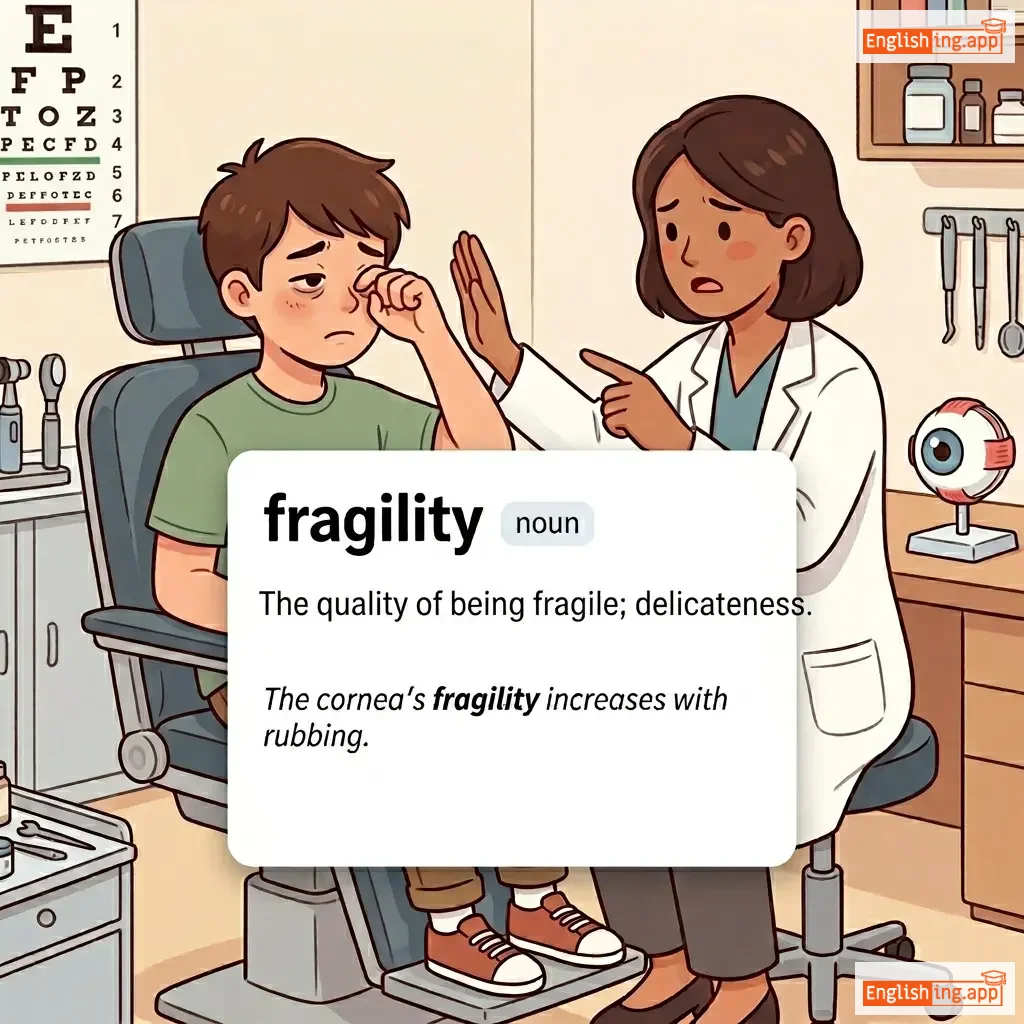
fragility definition card — visual illustration of the meaning
noun
/frəˈdʒɪl.ɪ.ti/
नाजुकता (najukta)

The quality of being fragile; delicateness.

"The cornea's fragility increases with rubbing."

"कॉर्निया की नाजुकता रगड़ने से बढ़ जाती है।" (kornia ki najukta ragadne se badh jati hai)
noun
/ˈfræɡmənt/
टुकड़ा (tukda)

a small piece broken off something larger

"He found a fragment of ancient pottery near the river."

"उसने नदी के पास प्राचीन मिट्टी के बर्तन का एक टुकड़ा पाया।" (Usne nadi ke paas pracheen mitti ke bartan ka ek tukda paaya.)
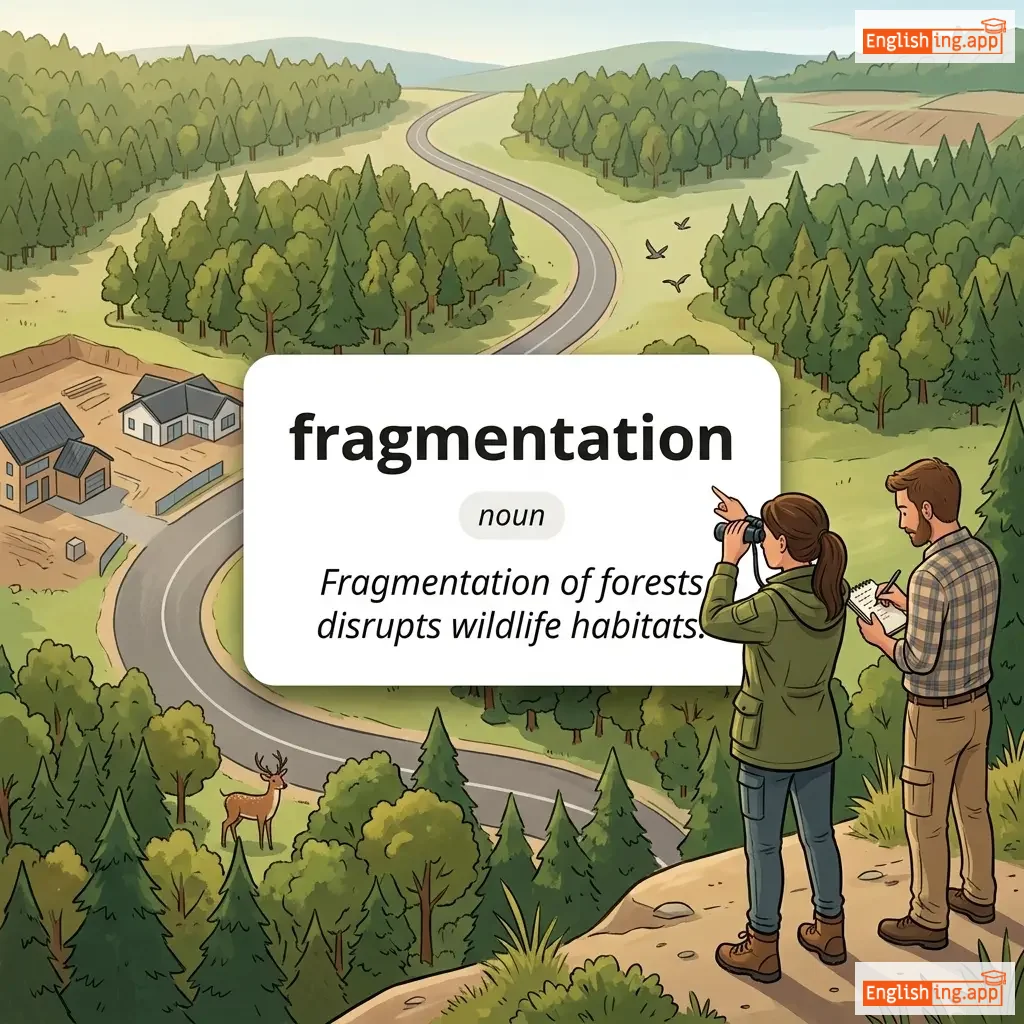
fragmentation definition card — visual illustration of the meaning
noun
/ˌfræɡ.mənˈteɪ.ʃən/
खंडन (khandan)

The process of breaking into fragments; division of habitat into isolated patches.

"Fragmentation of forests disrupts wildlife habitats."

"जंगलों का खंडन वन्यजीवों के आवासों को बाधित करता है।" (Janglon ka khandan vanyajeevon ke aawasoon ko baadhit karta hai.)
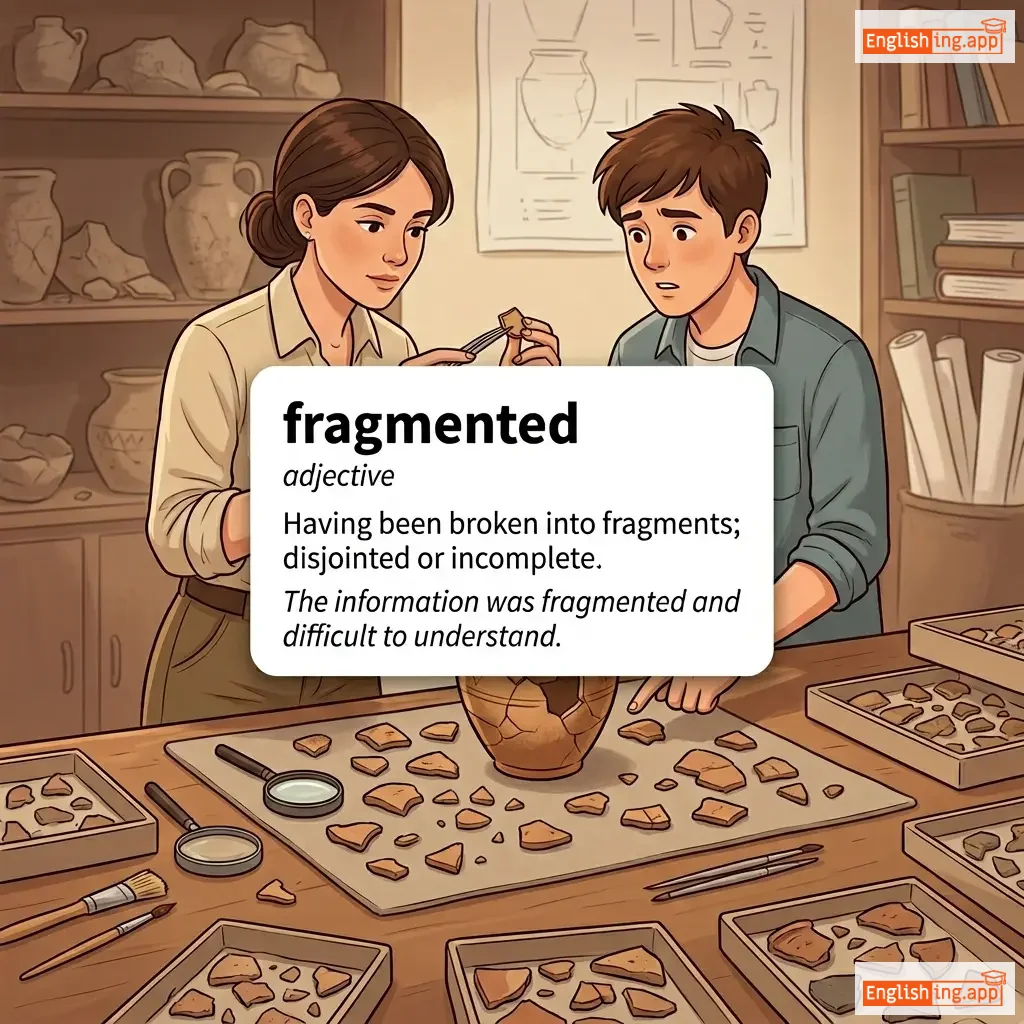
fragmented definition card — visual illustration of the meaning
adjective
/ˈfræɡməntɪd/
खंडित, विभक्त, अधूरा (khandit, vibhakt, adhura)

Having been broken into fragments; disjointed or incomplete.

"The information was fragmented and difficult to understand."

"सूचना खंडित थी और समझने में कठिनाई हो रही थी।" (Sochna khandit thi aur samajhne mein kathinai ho rahi thi.)
noun
/ˈfreɪɡrəns/
सुगंध (sugandh)

A pleasant, sweet smell.

"The fragrance of fresh flowers filled the room."

"ताजे फूलों की खुशबू कमरे में फैल गई।" (Taje phoolon ki khushboo kamre mein phail gayi.)
adjective
/freɪl/
दुबला (dubla)

Physically weak and delicate.

"The old man was too frail to walk without help."

"वृद्ध आदमी बिना मदद के चलने के लिए बहुत कमजोर था।" (Vriddh aadmi bina madad ke chalne ke liye bahut kamzor tha.)
noun
/ˈfreɪlti/
दुर्बलता (durbalta)

The condition of being weak, delicate, or easily broken.

"Old age often comes with physical frailty."

"बुजुर्गावस्था अक्सर शारीरिक दुर्बलता के साथ आती है।" (Bujurgavastha aksar sharirik durbalta ke saath aati hai.)
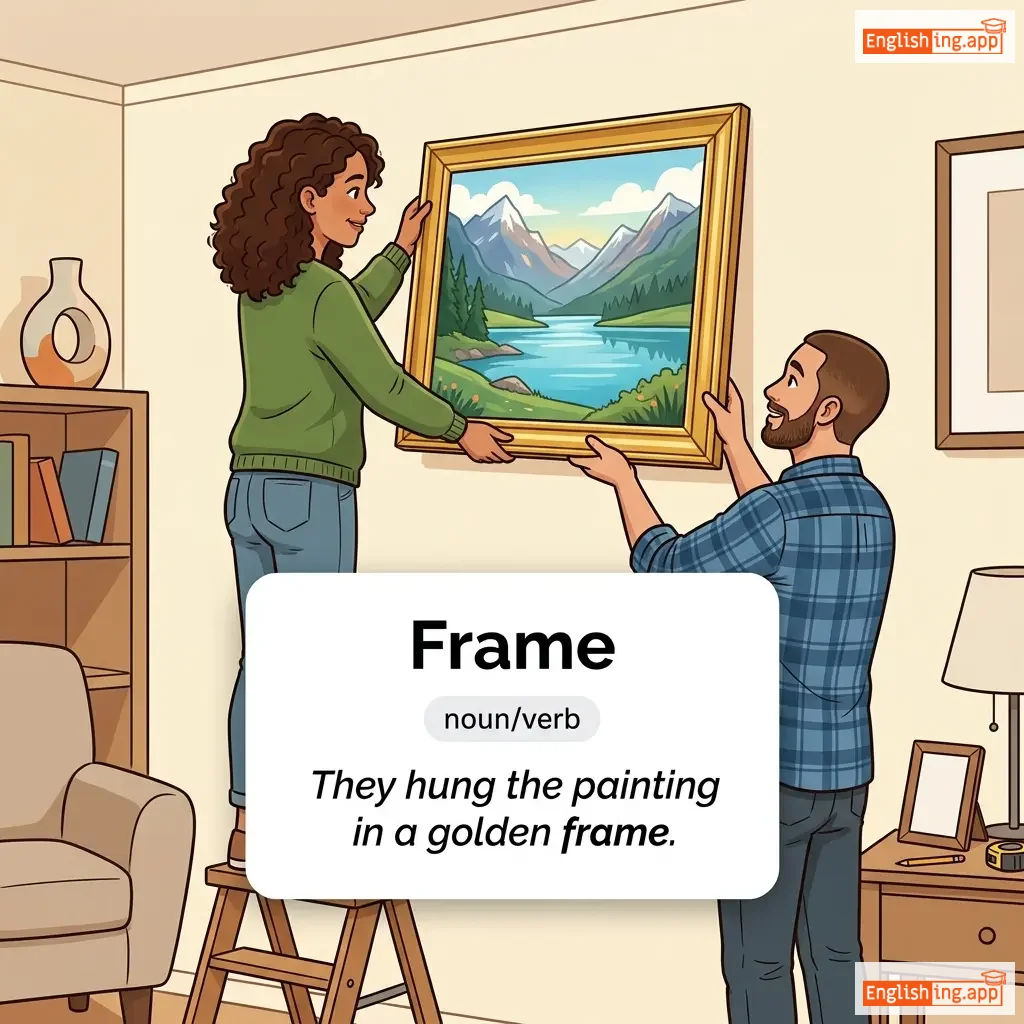
Frame definition card — visual illustration of the meaning
noun/verb
/freɪm/
फ्रेम / संरचना (frem / sanrachna)

A rigid structure that surrounds or encloses something; to construct or formulate.

"They hung the painting in a golden frame."

"उन्होंने पेंटिंग को एक सुनहरी फ्रेम में लटकाया।" (unhone painting ko ek sunahri frem mein latkaya.)
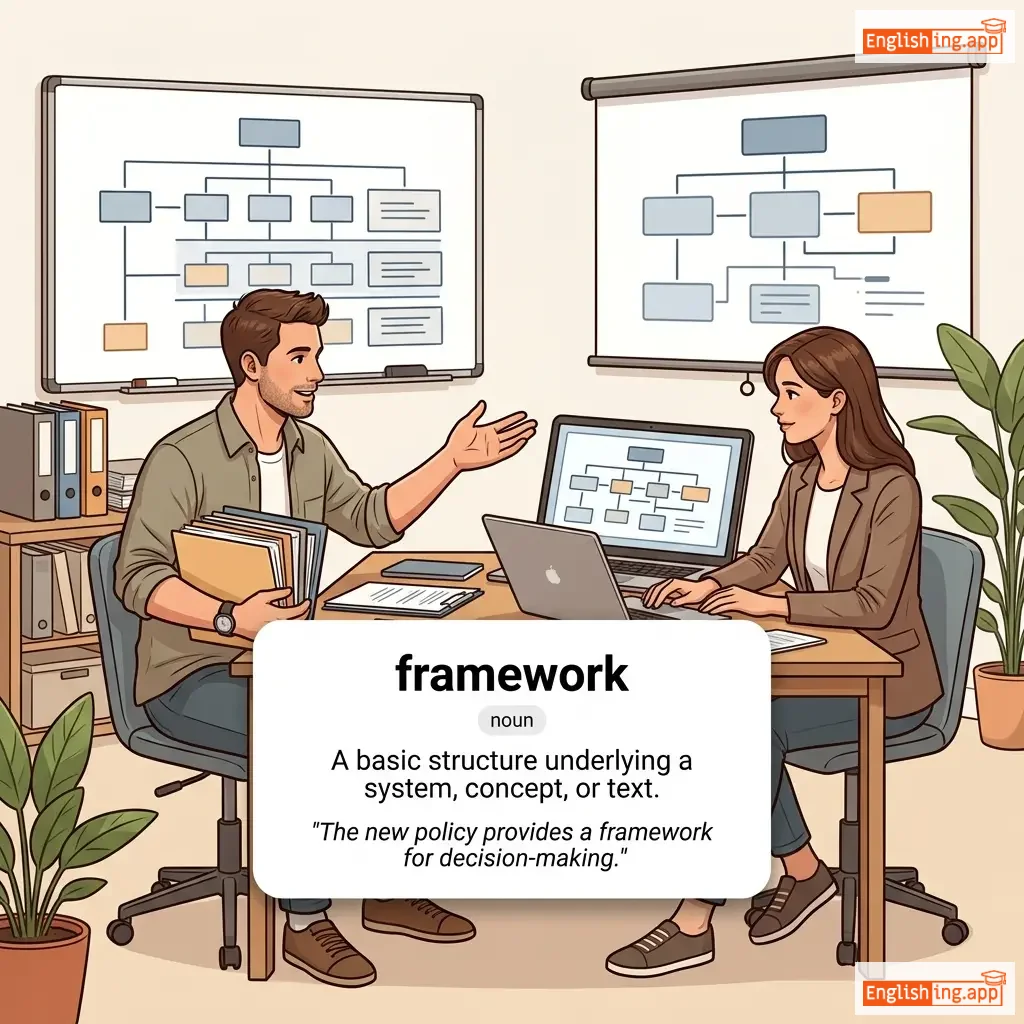
framework definition card — visual illustration of the meaning
noun
/ˈfreɪmˌwɜːrk/
ढांचा (dhancha)

A basic structure underlying a system, concept, or text.

"The new policy provides a framework for decision-making."

"नई नीति निर्णय लेने के लिए एक ढांचा प्रदान करती है।" (nayi niti nirnay lene ke liye ek dhancha pradan karti hai.)
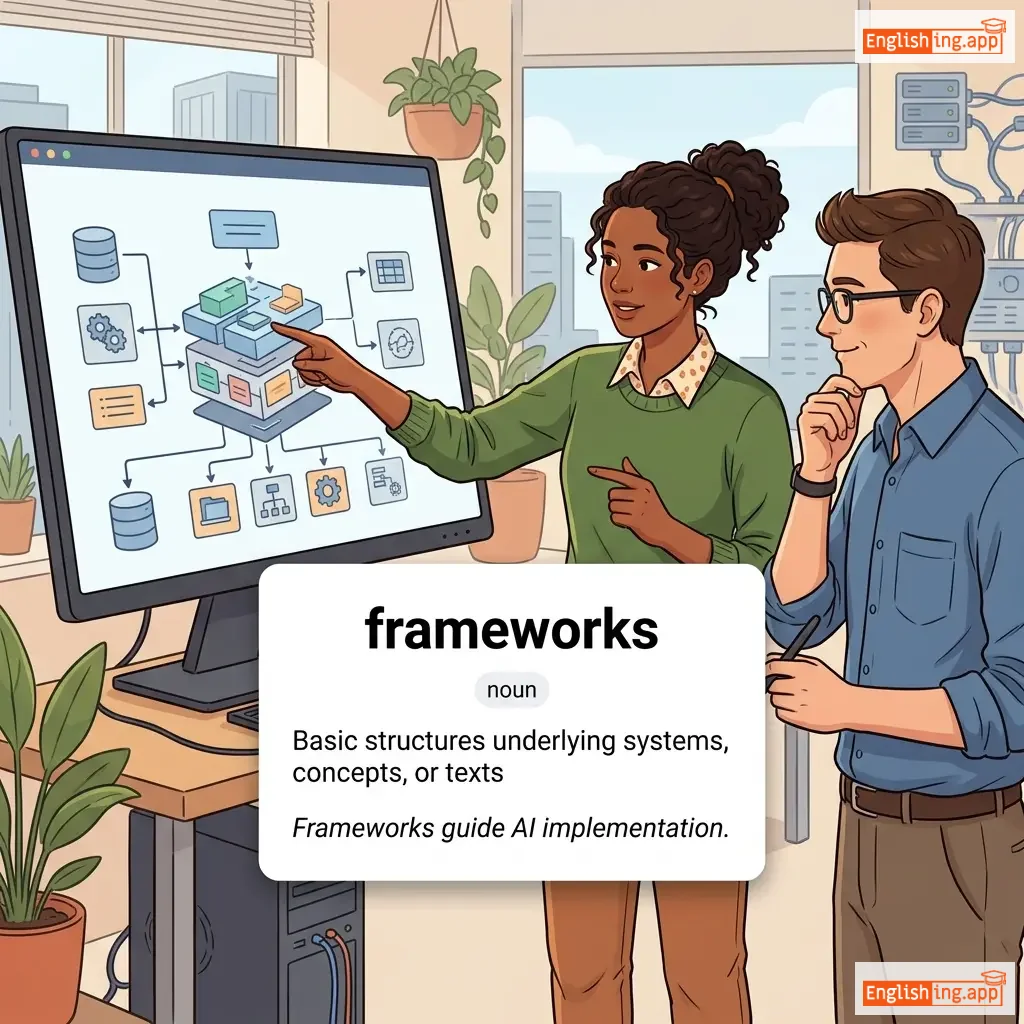
frameworks definition card — visual illustration of the meaning
noun
ˈfreɪm.wɜːks
ढांचा (dhancha)

Basic structures underlying systems, concepts, or texts

"Frameworks guide AI implementation."

"ढांचे एआई कार्यान्वयन का मार्गदर्शन करते हैं।" (Dhanche AI karyanvayan ka margdarshan karte hain.)
noun, verb
/ˈfrænʧaɪz/
फ्रेंचाइज़ (franchise)

A legal right to sell or distribute goods or services in a specific area; to grant such a right.

"He opened a new fast-food franchise in the city."

"उसने शहर में एक नया फास्ट-फूड फ्रेंचाइज़ खोला।" (Usne shahar mein ek naya fast-food franchise khola.)
adjective
/fræŋk/
ईमानदार (imaan-daar)

open, honest, and direct in speech or expression

"She was frank about her feelings on the matter."

"वह इस मामले पर अपनी भावनाओं के बारे में ईमानदार थी।" (Woh is maamle par apni bhavanaon ke baare mein imaan-daar thi.)
noun
/ˈfræŋkɪnsɛns/
धूप (dhoop)

An aromatic gum resin used in incense and perfumes, often in religious ceremonies.

"The temple was filled with the sweet smell of burning frankincense."

"मंदिर में जलते हुए धूप की मीठी खुशबू फैल रही थी।" (Mandir mein jalte huye dhoop ki meethee khushboo phail rahi thi.)
adverb
/ˈfræŋkli/
खुलकर (khulkar)

in an honest and direct way

"Frankly, I don’t think this plan will work."

"सच कहूँ तो, मुझे नहीं लगता कि यह योजना काम करेगी।" (Sach kahoon to, mujhe nahi lagta ki yah yojana kaam karegi.)
adjective
/ˈfræntɪk/
उत्तेजित (uttejit)

Extremely anxious, hurried, or out of control due to fear or excitement.

"She made a frantic call to her family after the accident."

"दुर्घटना के बाद उसने अपने परिवार को उत्तेजित होकर फोन किया।" (Durghatna ke baad usne apne parivar ko uttejit hokar phone kiya.)
adjective
/frəˈtɜːrnəl/
भाईचारे से संबंधित (bhaichare se sambandhit)

Relating to brothers or brotherhood; friendly and supportive.

"The two nations maintain a fraternal relationship."

"दो देशों के बीच भाईचारे का संबंध बनाए रखा गया।" (Do deshon ke beech bhaichare ka sambandh banaye rakha gaya.)
noun
/frɔːd/
धोखाधड़ी (dhokhadhadi)

A wrongful or criminal deception intended to result in financial or personal gain.

"The company collapsed due to massive accounting fraud."

"फर्म विशाल लेखा धोखाधड़ी के कारण ढह गई।" (Pharm vishal lekha dhokhadhadi ke karan dhah gayi.)
noun
/ˈfrɔːdjʊləns/
धोखाधड़ी (dhokhaadhadi)

The quality or state of being fraudulent; deceitfulness.

"The audit revealed fraudulence in the financial statements."

"ऑडिट ने वित्तीय विवरणों में धोखाधड़ी का पता लगाया।" (Audit ne vittiya vivaranon mein dhokhaadhadi ka pata lagaya.)
adjective
/ˈfrɔːdjʊlənt/
धोखाधड़ीपूर्ण (dhokhadri poorn)

Involving or using deceit, especially criminal deception.

"He was arrested for making fraudulent insurance claims."

"वह धोखाधड़ी वाले बीमा दावे करने के लिए गिरफ्तार किया गया था।" (Vah dhokhadri wale beema daave karne ke liye giraftaar kiye gaye the.)
adjective
/frɔːt/
भरा (bhara)

Filled with or likely to result in something undesirable.

"The negotiations were fraught with tension and uncertainty."

"बातचीत तनाव और अनिश्चितता से भरी हुई थी।" (Baatchit tanav aur anishchitata se bhari hui thi.)
noun/verb
/freɪ/
झगड़ा, घिसकर टूटना (jhagda, ghiskar tootna)

As a noun, a fight or heated dispute; as a verb, to unravel or wear out through friction.

"He tried to stay calm, but his nerves began to fray during the argument."

"वह शांत रहने की कोशिश कर रहा था, लेकिन तर्क के दौरान उसकी नसें फटीं।" (vah shant rehne ki koshish kar raha tha, lekin tark ke dauran uski nasein fati.)
noun
/ˈfrek.əl/
मस्सा; तिल; दाग; (massa; til; daag)

a small brownish spot on the skin, often becoming more pronounced through exposure to the sun

"Her face was covered with cute freckles that appeared every summer."

"उसका चेहरा क्यूट फ्रेकल्स से ढका हुआ था जो हर गर्मी में दिखाई देते थे।" (uska chehra kyoot frekals se dhaka hua tha jo har garmi mein dikhai dete the.)
adjective/verb/adverb
/friː/
मुक्त / फ्री (mukta / free)

Not under the control or in the power of another; able to act or be done as one wishes.

"The children are free to play outside."

"बच्चे बाहर खेलने के लिए मुक्त हैं।" (bachche baahar khelne ke liye mukta hain.)
noun
/ˈfriː taɪm/
फुर्सत का समय (fursat ka samay)

time when a person is not working or occupied and can do activities they enjoy

"She likes to read books in her free time."

"वह अपने फुर्सत के समय में किताबें पढ़ना पसंद करती है।" (vah apne fursat ke samay mein kitaaben padhna pasand karti hai)
noun
/ˈfriːˌbuːtər/
डाकू (daku)

A pirate or plunderer who roams freely in search of wealth.

"The freebooter raided the merchant ships along the coast."

"फ्रीबूटर ने तटीय मार्ग में व्यापारी जहाजों पर हमला किया।" (Freebooter ne tatiya marg mein vyapari jahazon par hamla kiya.)
freedom definition card — visual illustration of the meaning
noun
/ˈfriːdəm/
स्वतंत्रता (svatantrata)

The state of being free; the power or right to act, speak, or think without hindrance or restraint.

"Freedom of speech is a fundamental right in many countries."

"वाक् स्वतंत्रता कई देशों में एक मौलिक अधिकार है।" (vak svatantrata kai deshon mein ek maulik adhikar hai.)
noun
/ˈfriːdəm ˌfaɪtər/
स्वतंत्रता सेनानी (swatantrata senani)

a person who takes part in an armed or political struggle to achieve freedom or independence for their people or country

"The freedom fighter dedicated his life to the liberation of his homeland."

"उस स्वतंत्रता सेनानी ने अपने देश की आज़ादी के लिए जीवन समर्पित कर दिया।" (us swatantrata senani ne apne desh ki azadi ke liye jivan samarpit kar diya)
noun
/ˈfriːˌlænsər/
स्वतंत्र कर्मचारी (svatantra karmachari)

A person who works independently without being permanently employed by one organization.

"She works as a freelancer designing websites for different clients."

"वह एक फ्रीलांसर के रूप में विभिन्न ग्राहकों के लिए वेबसाइट डिज़ाइन करती है।" (Vah ek freelancer ke roop mein vibhinn graahkon ke liye website design karti hai.)
adverb
/ˈfriːli/
स्वतंत्र रूप से (svatantra roop se)

without restriction or control; willingly

"Information should flow freely in a democratic society."

"सूचना को एक लोकतांत्रिक समाज में स्वतंत्र रूप से बहना चाहिए।" (Soochna ko ek loktantrik samaj mein svatantra roop se behna chahiye.)
noun
/ˈfriːˌmeɪsən/
फ्रीमेसन सदस्य (freemason sadasya)

A member of an international fraternity known as Freemasonry, focused on moral and spiritual values.

"His grandfather was a respected freemason in the community."

"उसके दादा समुदाय में एक सम्मानित फ्रीमेसन थे।" (Uske dada samudaay mein ek sammanit freemason the.)
noun
/ˈfriːˌθɪŋkər/
स्वतंत्र विचारक (svatantra vicharak)

A person who forms opinions based on reason and independent thought rather than tradition or authority.

"Voltaire was considered a great freethinker of his time."

"वोल्टेयर को उनके समय के महान स्वतंत्र विचारक के रूप में माना जाता था।" (Voltaire ko unke samay ke mahaan svatantra vicharak ke roop mein maana jaata tha.)
verb
/friːz/
बर्फ़ होना (baraf hona)

To turn into ice or cause to become hard due to extreme cold.

"The water in the lake will freeze during winter."

"झील का पानी सर्दियों में बर्फ़ में बदल जाएगा।" (Jheel ka paani sardi mein baraf mein badal jaayega.)
adjective
/frɛntʃ/
फ्रांसीसी (francī)

Relating to France, its people, or their language.

"We enjoyed delicious French cuisine on our trip to Paris."

"हमने पेरिस में अपनी यात्रा के दौरान स्वादिष्ट फ्रेंच खाना का आनंद लिया।" (Hamne Paris mein apni yātrā ke dauran swādiṣṭ French khānā kā ānanda liyā.)
adjective
/frəˈnɛtɪk/
व्यग्र (vyagr)

Fast and energetic in a wild or uncontrolled way.

"The stock market experienced frenetic trading after the announcement."

"घोषणा के बाद शेयर बाजार में व्यग्र ट्रेडिंग हुई।" (Ghoshna ke baad sheyar bazaar mein vyagr trading hui.)
adjective
/ˈfrɛn.zid/
उन्मत्त (unmatt)

Wildly excited or uncontrolled

"The frenzied crowd cheered as the band took the stage."

"उन्मत्त भीड़ ने जब बैंड ने मंच पर कदम रखा, तो तालियाँ बजाईं।" (Unmatt bheed ne jab band ne manch par kadam rakha, to taaliyaan bajayi.)
noun
/ˈfrɛn.zi/
उन्माद (unmaad)

A state of uncontrolled excitement or wild behavior

"The news of the sale caused a shopping frenzy."

"बिक्री की खबर ने एक खरीदारी के उन्माद को जन्म दिया।" (Bikri ki khabar ne ek khareedari ke unmaad ko janm diya.)
noun
/ˈfriː.kwən.si/
आवृत्ति (aavritti)

The rate at which something occurs or is repeated over a period of time

"The frequency of bus services has been increased during rush hours."

"बस सेवाओं की आवृत्ति ने भीड़ भरे समय में बढ़ा दी गई है।" (Bus sevaon ki aavritti ne bheed bhare samay mein badha di gayi hai.)
adjective, verb
/ˈfriː.kwənt/ (adj.), /friːˈkwent/ (verb)
आवर्ती (aavarti)

Adjective: happening often; Verb: to visit a place regularly

"He is a frequent visitor to the library."

"वह पुस्तकालय में एक आवर्ती आगंतुक है।" (Wah pustakalay mein ek aavarti aagantuk hai.)
adverb
/ˈfriːkwəntli/
अक्सर (aksar)

Happening often or at short intervals.

"He frequently visits his grandparents on weekends."

"वह अक्सर सप्ताहांत में अपने दादा-दादी से मिलने जाता है।" (Vah aksar saptahant mein apne dada-dadi se milne jata hai.)
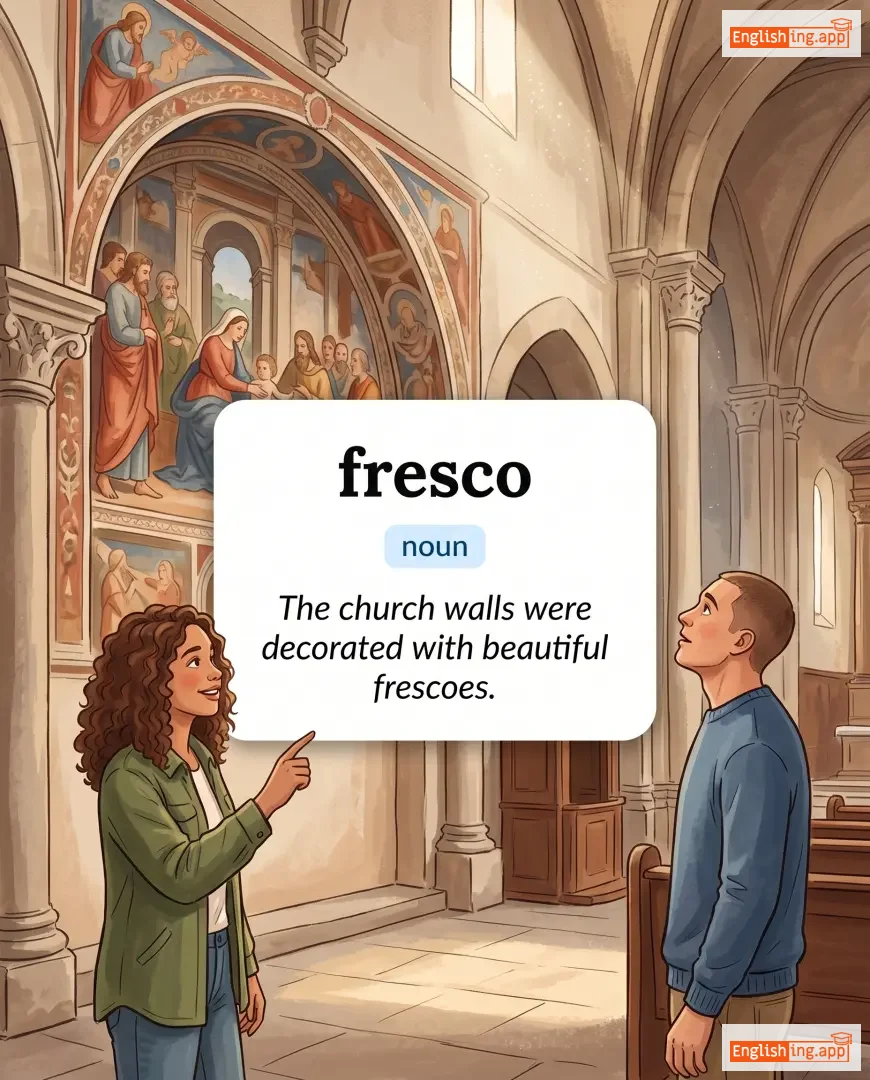
fresco definition card — visual illustration of the meaning
noun
/ˈfrɛs.koʊ/
फ्रेस्को (fresko)

A painting done rapidly in watercolor on wet plaster so that the colors penetrate the surface

"The church walls were decorated with beautiful frescoes."

"चर्च की दीवारों को सुंदर फ्रेस्को से सजाया गया था।" (Church ki deewaron ko sundar fresco se sajaya gaya tha.)
adjective
/frɛʃ/
ताजगी (tajgi)

new, recently made, or clean and pure

"The bread is still fresh from the oven."

"रोटी अभी भी ओवन से ताजगी में है।" (Roti abhi bhi oven se tajgi mein hai.)
noun
/ˈfrɛʃɪt/
अचानक नदी का उफान (achanak nadi ka ufaan)

A sudden overflow of a stream or river caused by heavy rain or melting snow.

"After the storm, the river turned into a raging freshet."

"आंधी के बाद नदी एक उग्र फ्रेशेट में बदल गई।" (Aandhi ke baad nadi ek ugr freshet mein badal gayi.)
noun
/ˈfreʃmən/
नवीन छात्र (naveen chhatra)

a first-year student at a high school, college, or university

"The freshman felt nervous on his first day at university."

"फ्रेशमैन पहले दिन विश्वविद्यालय में घबराया हुआ महसूस कर रहा था।" (Freshman pehle din vishwavidyalay mein ghabraaya hua mahsus kar raha tha.)
noun
/ˈfrɛʃnəs/
ताजगी (tajgi)

The quality of being new, clean, and full of energy.

"The freshness of the morning air made everyone feel alive."

"सुबह की ताजगी ने सभी को जीवित महसूस कराया।" (Subah ki tajgi ne sabhi ko jeevit mehsoos karaya.)
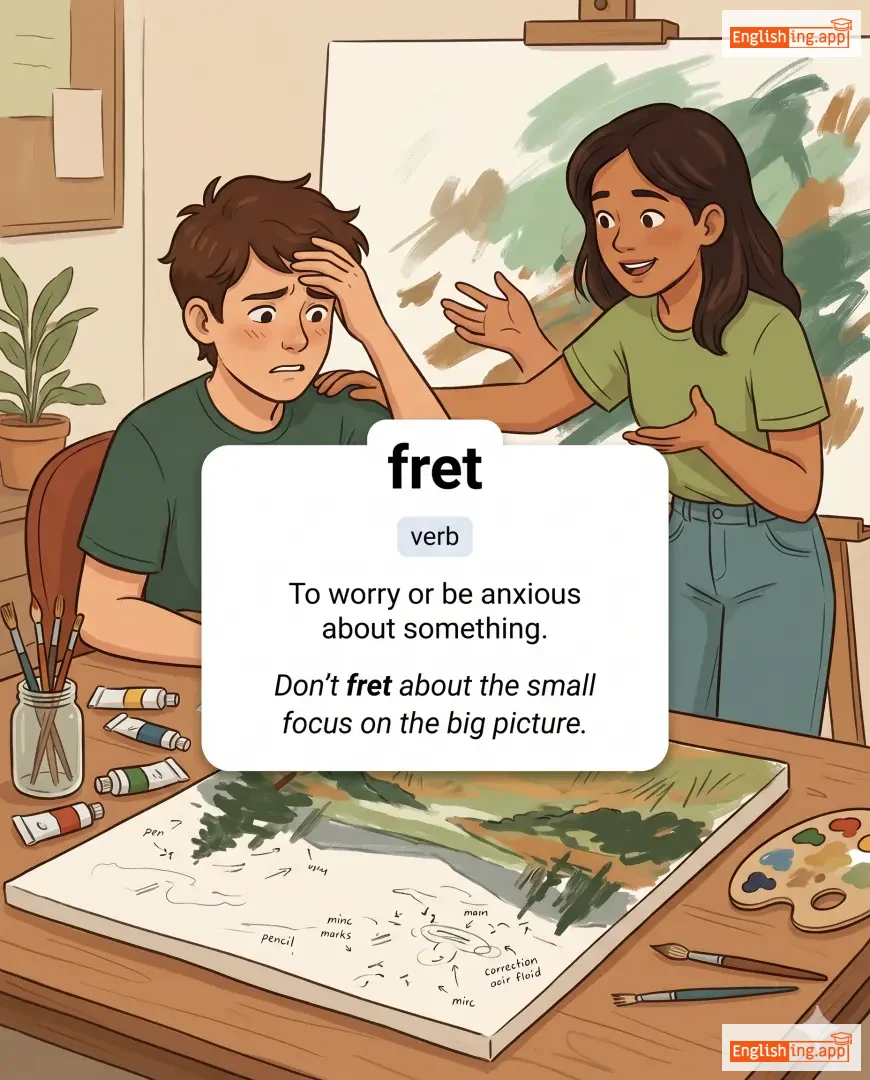
fret definition card — visual illustration of the meaning
verb
/frɛt/
चिंता करना (chinta karna)

To worry or be anxious about something.

"Don't fret about the small mistakes; focus on the big picture."

"छोटी गलतियों के बारे में चिंता मत करो; बड़े चित्र पर ध्यान केंद्रित करो।" (chhoti galtiyon ke baare mein chinta mat karo; bade chitra par dhyaan kendrit karo.)
adjective
/ˈfrɛtfəl/
चिंतित (chintit)

Feeling or showing distress or irritation.

"The baby was fretful all night and could not sleep."

"बेबी पूरी रात चिंतित था और सो नहीं सका।" (Bebi puri raat chintit tha aur so nahi saka.)
adjective
/ˈfraɪəbl/
नाजुक (naajuk)

Easily crumbled or reduced to powder.

"The old brick wall was friable and broke apart at a touch."

"पुरानी ईंट की दीवार नाजुक थी और जैसे ही उसे छुआ वह टूट गई।" (Purani eent ki deewar naajuk thi aur jaise hi use chhua wah toot gayi.)
noun
/ˈfrɪkʃən/
घर्षण (gharshan)

the resistance that one surface or object encounters when moving over another; conflict or tension between people or groups

"There was friction between the two departments over resource allocation."

"दो विभागों के बीच संसाधन आवंटन को लेकर घर्षण था।" (Do vibhagon ke beech sansadhan aavantan ko lekar gharshan tha.)
noun
/ˈfraɪ.deɪ/
शुक्रवार (shukravaar)

the day of the week following Thursday and preceding Saturday

"We have a team meeting every Friday afternoon."

"हमारी हर शुक्रवार दोपहर को एक टीम मीटिंग होती है।" (hamaari har shukravaar dopahar ko ek team meeting hoti hai)