वोकैबुलरीज

इंग्लिश वोकैबुलरी डिस्कवर, लर्न और मास्टर करें

noun, verb
/fɔːrd/
उथला स्थान जहाँ नदी पार की जा सकती है (uthla sthan jahan nadi paar ki ja sakti hai)

A shallow place in a river where one can cross; to cross a river at such a place.

"The travelers decided to ford the river at dawn."

"यात्रियों ने सुबह नदी को उथले स्थान से पार करने का फैसला किया।" (Yatriyon ne subah nadi ko uthle sthan se paar karne ka faisla kiya.)
noun
/ˈfɔːrˌbɛər/
पूर्वज (purvaj)

An ancestor, especially one who lived a long time ago.

"He often speaks of his forebears with great respect."

"वह अक्सर अपने पूर्वजों का बहुत सम्मान से जिक्र करते हैं।" (Woh aksar apne purvajon ka bahut sammaan se zikr karte hain.)
noun
/ˈfɔːrˌbɛərz/
पूर्वज (purvaj)

Ancestors or people in previous generations from whom one is descended.

"We must honor the traditions of our forebears."

"हमें अपने पूर्वजों की परंपराओं का सम्मान करना चाहिए।" (Humein apne purvajon ki paramparao ka samman karna chahiye.)
verb
/fɔːrˈboʊd/
अशुभ संकेत देना (ashubh sanket dena)

To predict or have a strong inner feeling of a future misfortune or evil.

"Dark clouds forebode a coming storm."

"अंधेरे बादल एक आने वाली आंधी का संकेत देते हैं।" (Andhere baadal ek aane wali aandhi ka sanket dete hain.)
noun/adjective
/fɔːrˈboʊdɪŋ/
अशुभ आभास (ashubh aabhaas)

A feeling that something bad will happen; ominous.

"She felt a deep sense of foreboding as she entered the abandoned house."

"वह पुरानी और वीरान घर में प्रवेश करते हुए एक गहरे अशुभ आभास को महसूस कर रही थी।" (Vah puraani aur veeraan ghar mein pravesh karte huye ek gahare ashubh aabhaas ko mehsoos kar rahi thi.)
noun/verb
/ˈfɔːrkæst/
पूर्वानुमान (purvanuman)

To predict future events, especially weather or economic trends.

"The weather office forecast heavy rain for tomorrow."

"मौसम विभाग ने कल के लिए भारी बारिश का पूर्वानुमान किया।" (Mausam vibhag ne kal ke liye bhaari baarish ka purvanuman kiya.)
noun
/ˈfoʊksl/
जहाज का अग्रभाग (jahaz ka agrabhag)

The forward part of a ship below the deck, traditionally used as living quarters for the crew.

"The sailors gathered in the forecastle after their shift."

"नाविक अपने शिफ्ट के बाद फोकसल में इकट्ठा हुए।" (Navik apne shift ke baad fokasal mein ikattha hue.)
verb
/fɔːrˈkloʊz/
फोरक्लोज़ करना (foreclose karna)

to take possession of a property due to the owner's failure to keep up mortgage payments

"The bank decided to foreclose on the property after months of missed payments."

"बैंक ने मिस्ड पेमेंट्स के बाद संपत्ति पर फोरक्लोज़ करने का निर्णय लिया।" (Bank ne missed payments ke baad sampatti par foreclose karne ka nirnay liya.)
noun
/fɔːrˈkloʊʒər/
फोरक्लोजर (foreclosure)

The legal process by which a lender takes control of a property from a borrower who has failed to make payments.

"The family lost their home due to foreclosure after missing several mortgage payments."

"परिवार ने कई मॉर्गेज भुगतान न करने के कारण फोरक्लोजर के कारण अपना घर खो दिया।" (parivaar ne kai mortgage bhugtan na karne ke kaaran foreclosure ke kaaran apna ghar kho diya.)
noun
/ˈfɔːrkɔːrt/
आंगन (aangan)

an open area in front of a large building, especially a petrol station or hotel

"The car was parked in the hotel forecourt."

"कार होटल के आंगन में खड़ी थी।" (Car hotel ke aangan mein khadi thi.)
noun
/ˈfɔːrˌfɑːðər/
पूर्वज (purvaj)

an ancestor, especially one who was part of an earlier generation of a family or nation

"Our forefathers fought for independence."

"हमारे पूर्वजों ने स्वतंत्रता के लिए संघर्ष किया था।" (Hamare purvajon ne svatantrata ke liye sangharsh kiya tha.)
verb
/fɔːrˈɡoʊ/
त्याग करना (tyag karna)

to decide not to do or have something pleasant or valuable

"She decided to forego dessert to maintain her diet."

"अपनी डाइट बनाए रखने के लिए उसने मिठाई छोड़ने का निर्णय लिया।" (Apni diet banaye rakhne ke liye usne mithai chhodne ka nirnay liya.)
noun
/ˈfɔːrɡraʊnd/
फोरग्राउंड (foreground)

the part of a scene that is nearest to and in front of the viewer

"The flowers in the foreground brightened the picture."

"फूल जो सामने थे, उन्होंने चित्र को चमकाया।" (phool jo samne the, unhone chitra ko chamkaaya.)
noun
/ˈfɔːrˌhɛd/ or /ˈfɔːrɪd/
माथा (maatha)

The part of the face above the eyebrows.

"She wiped the sweat from her forehead."

"उसने अपने माथे से पसीना पोंछा।" (Usne apne maathe se paseena poncha.)
adjective
/ˈfɔːrən/ or /ˈfɑːrən/
विदेशी (videshi)

Belonging to or coming from another country.

"She loves studying foreign languages."

"उसे विदेशी भाषाएँ सीखना पसंद है।" (Use videshi bhashayein seekhna pasand hai.)
noun
/ˈfɔːrənər/ or /ˈfɑːrənər/
विदेशी (videshi)

A person from another country.

"The city welcomes every foreigner with kindness."

"शहर हर विदेशी का स्वागत करता है।" (Shahar har videshi ka swagat karta hai.)
verb
/fɔːrˈdʒʌdʒ/
पूर्व में निर्णय करना (purv mein nirnay karna)

To judge beforehand without adequate information.

"It is unfair to forejudge someone without knowing the facts."

"यह अनुचित है कि बिना तथ्यों को जाने किसी को पूर्व में निर्णय किया जाए।" (Yah anuchit hai ki bina tathyon ko jaane kisi ko purv mein nirnay kiya jaye.)
noun
/ˈfɔːrˌnɑːlɪdʒ/
पूर्वज्ञान (purvajnan)

Awareness of something before it happens or exists.

"The prophet claimed to have foreknowledge of the event."

"भविष्यवक्ता ने घटना के बारे में पूर्वज्ञान होने का दावा किया।" (Bhavishyavakta ne ghatna ke baare mein purvajnan hone ka daawa kiya.)
noun
/ˈfɔːrmən/
मजदूरों के समूह का प्रभारी व्यक्ति, विशेष रूप से एक फैक्ट्री या निर्माण स्थल में (majdooron ke samooh ka prabhari vyakti, vishesh roop se ek factory ya nirmaan sthal mein)

a person in charge of a group of workers, especially in a factory or construction site

"The foreman supervised the workers on the construction site."

"फोरमैन ने निर्माण स्थल पर श्रमिकों की निगरानी की।" (Foreman ne nirmaan sthal par shramikon ki nigraani ki.)
adjective
/ˈfɔːrmoʊst/
प्रधान (pradhan)

most important; leading; first in rank or position

"She is one of the foremost experts in the field."

"वह इस क्षेत्र में अग्रणी विशेषज्ञों में से एक हैं।" (Wah is kshetra mein agrani visheshagyon mein se ek hain.)
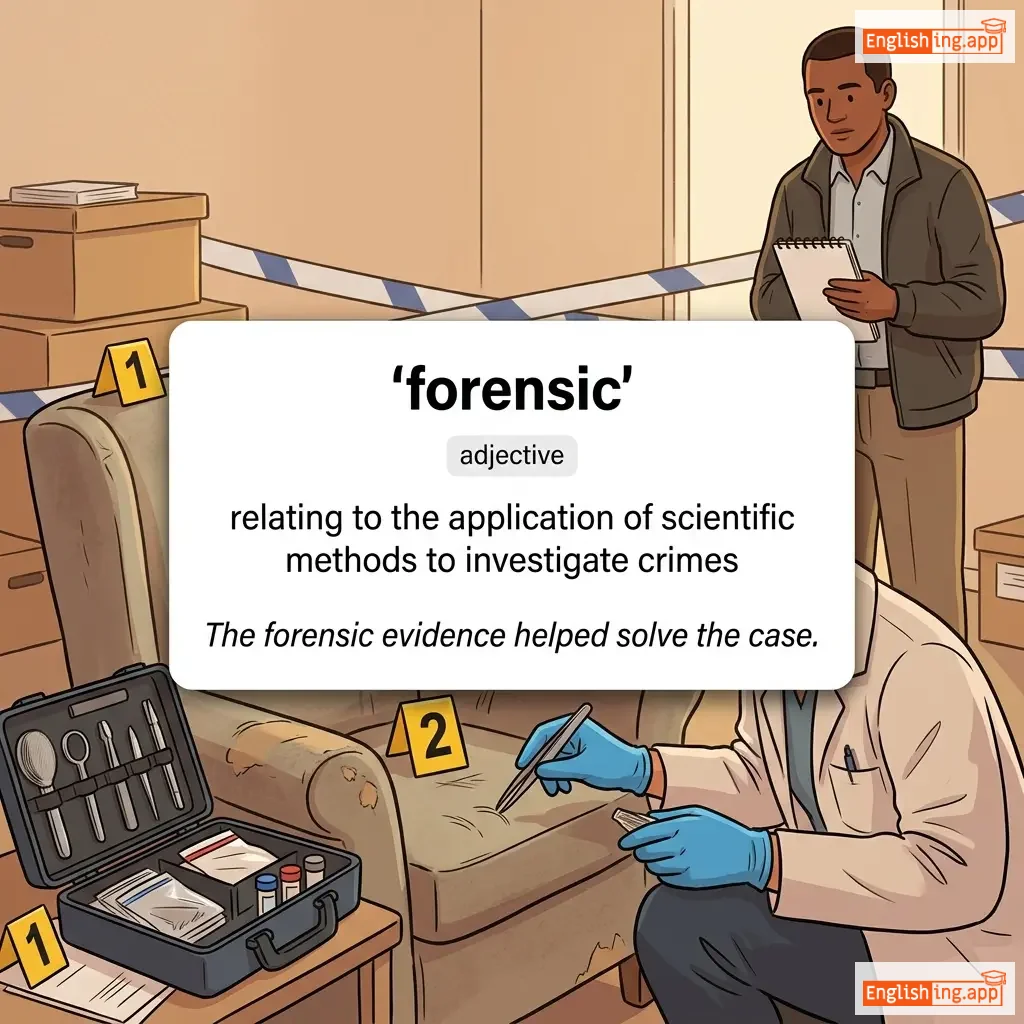
forensic definition card — visual illustration of the meaning
adjective
/fəˈrɛnsɪk/
न्यायिक (nyayik)

relating to the application of scientific methods to investigate crimes

"The forensic evidence helped solve the case."

"फॉरेन्सिक प्रमाण ने मामले को हल करने में मदद की।" (Forensic pramaan ne mamle ko hal karne mein madad ki.)
verb
/ˌfɔːrɔːrˈdeɪn/
पूर्वनिर्धारण करना (purvnirdharan karna)

to determine or decree something in advance; to predestine

"Some believe that our lives are foreordained by fate."

"कुछ लोग मानते हैं कि हमारे जीवन को पूर्व निर्धारित किया गया है।" (Kuch log maante hain ki hamare jeevan ko purv nirdharit kiya gaya hai.)
noun
/ˌfɔːrɔːrdɪˈneɪʃən/
पूर्वनिर्धारण (purv-nirdharan)

the act of determining something in advance; predestination

"The doctrine of foreordination suggests that events are fixed by divine will."

"पूर्वनिर्धारण का सिद्धांत कहता है कि घटनाएँ ईश्वरीय इच्छा से निर्धारित होती हैं।" (Purv-nirdharan ka siddhant kehta hai ki ghatnayein ishwari ichchha se nirdharit hoti hain.)
noun
/ˈfɔːrˌpiːk/
जहाज के आगे का कक्ष (jahaz ke aage ka kaksh)

The compartment in the forward part of a ship, often used for storage.

"The sailors stored extra ropes in the forepeak."

"नाविकों ने अतिरिक्त रस्सियाँ फोरपिक में जमा कीं।" (Navikon ne atirikt rassiyaa forepik mein jama keen.)
verb
/ˌfɔːrˈrʌn/
पहले जाना (pehle jana)

To go before; to precede in time, place, or action.

"Dark clouds often forerun a storm."

"डार्क क्लाउड्स अक्सर एक तूफान से पहले होते हैं।" (Dark clouds aksar ek toofan se pehle hote hain.)
noun
/ˈfɔːrˌrʌnər/
पूर्वसूचक (purvasoochak)

A person or thing that comes before another; a predecessor or harbinger.

"The Wright brothers were the forerunners of modern aviation."

"व्राइट बंधुओं ने आधुनिक विमानन के अग्रदूत के रूप में कार्य किया।" (Wright bandhuon ne aadhunik vimaanan ke agradoot ke roop mein kaary kiya.)
noun
/ˈfɔːrˌseɪl/
आगे की पाल (aage ki paal)

The principal sail set on the foremast of a sailing vessel.

"The crew adjusted the foresail to catch the wind."

"क्रू ने हवा पकड़ने के लिए फोरसेल को समायोजित किया।" (Kroo ne hawa pakadne ke liye foresail ko samaayojit kiya.)
verb
/fɔːrˈsiː/
पूर्वानुमान करना (purvanuman karna)

To be aware of beforehand; to predict or expect.

"She could foresee the challenges ahead."

"वह आने वाली चुनौतियों को पूर्वानुमान कर सकती थी।" (Vah aane wali chunautiyon ko purvanuman kar sakti thi.)
adjective
/fɔːrˈsiːəbl/
पूर्वानुमानित (purvanumanit)

Able to be predicted or expected in advance

"The company is unlikely to make changes in the foreseeable future."

"कंपनी निकट भविष्य में परिवर्तन करने की संभावना नहीं है।" (Company nikat bhavishya mein parivartan karne ki sambhavana nahi hai.)
verb
/fɔːrˈʃædoʊ/
पूर्वाभास देना (purvabhash dena)

To indicate or suggest something that will happen in the future

"Dark clouds foreshadowed an approaching storm."

"अंधेरे बादल एक आने वाली आंधी का पूर्वाभास दे रहे थे।" (Andhere baadal ek aane wali aandhi ka purvabhaas de rahe the.)
noun
/ˈfɔːrʃɔːr/
किनारा (kinara)

The part of the shore between the high and low tide marks

"Children were playing on the foreshore, collecting shells."

"बच्चे फोरशोर पर खेल रहे थे, शेल्स इकट्ठा कर रहे थे।" (Bachche foreshore par khel rahe the, shells ikattha kar rahe the.)
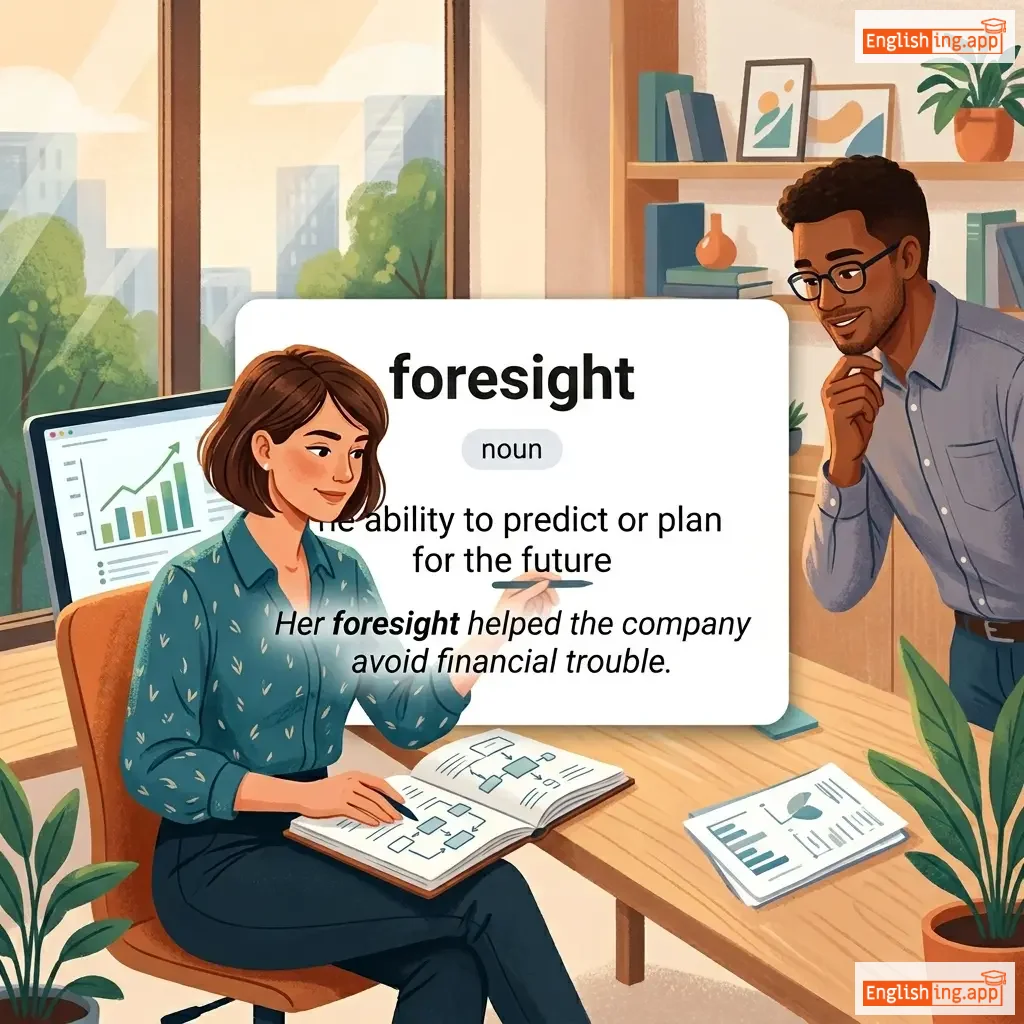
foresight definition card — visual illustration of the meaning
noun
/ˈfɔːrsaɪt/
दूरदृष्टि (durdristi)

The ability to predict or plan for the future

"Her foresight helped the company avoid financial trouble."

"उसकी दूरदृष्टि ने कंपनी को वित्तीय संकट से बचने में मदद की।" (Uski durdristi ne company ko vittiya sankat se bachne mein madad ki.)
noun
/ˈfɔːrɪst/
जंगल (jangal)

A large area covered chiefly with trees and undergrowth.

"They went hiking in the forest."

"वे जंगल में हाइकिंग करने गए थे।" (ve jangal mein hiking karne gaye the.)
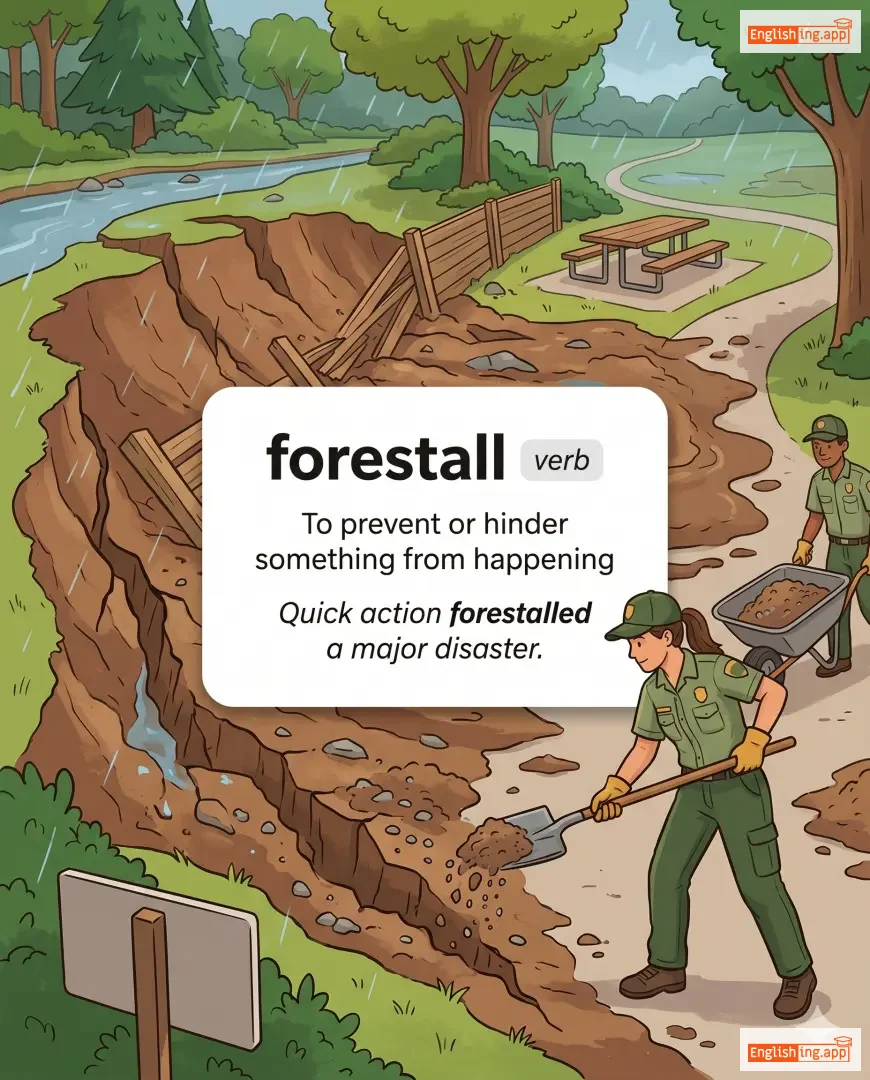
forestall definition card — visual illustration of the meaning
verb
/fɔːrˈstɔːl/
रोकना (rokna)

To prevent or hinder something from happening

"Quick action forestalled a major disaster."

"त्वरित कार्रवाई ने एक बड़ी आपदा को रोका।" (Tvarit karwai ne ek badi aapda ko roka.)
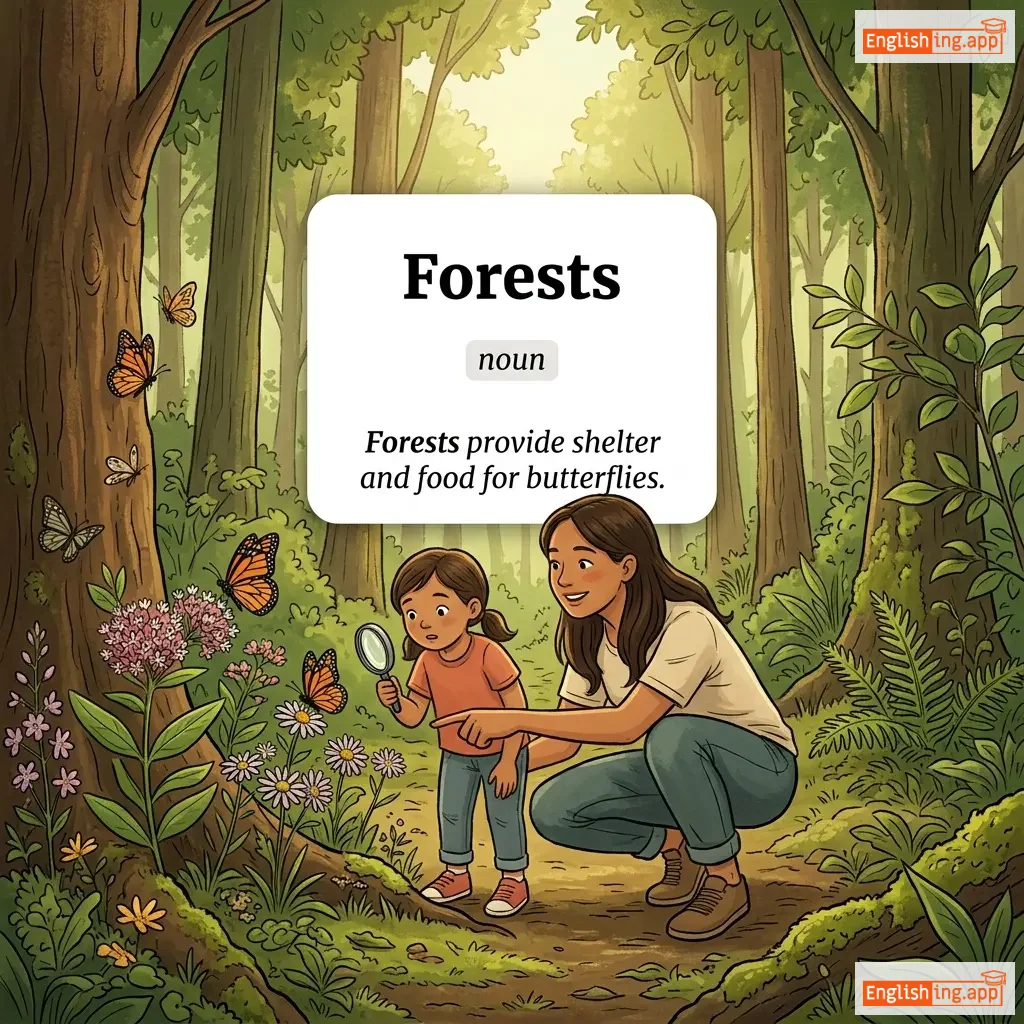
Forests definition card — visual illustration of the meaning
noun
ˈfɔːrɪsts
जंगल (jangal)

Large areas covered with trees and undergrowth, providing natural habitats for wildlife.

"Forests provide shelter and food for butterflies."

"जंगल तितलियों के लिए आश्रय और भोजन प्रदान करते हैं।" (Jangal titliyon ke liye aashray aur bhojan pradan karte hain.)
verb
/fɔːrˈtɛl/
पूर्वानुमान करना (purvanuman karna)

to predict or announce something before it happens

"The old man claimed he could foretell the future."

"वृद्ध व्यक्ति ने दावा किया कि वह भविष्य को पूर्वानुमान कर सकता था।" (Vriddh vyakti ne daawa kiya ki vah bhavishya ko purvanuman kar sakta tha.)
noun
/ˈfɔːrˌθɔːt/
पूर्वविचार (purvavichar)

careful consideration of what will be necessary or may happen in the future

"With a little forethought, we could have avoided the problem."

"थोड़ी सी पूर्वविचार से, हम समस्या से बच सकते थे।" (Thodi si purvavichar se, hum samasya se bach sakte the.)
adverb
/fɔːrˈɛvər/
हमेशा (hamesha)

For all future time; for always.

"She promised to love him forever."

"उसने वादा किया था कि वह उसे हमेशा प्यार करेगी।" (Usne vada kiya tha ki woh use hamesha pyaar karegi.)
noun
/ˈfɔːrwɜːrd/
भूमिका (bhoomika)

a short introduction at the beginning of a book, typically written by someone other than the author

"The foreword of the book was written by a famous historian."

"किताब की भूमिका एक प्रसिद्ध इतिहासकार द्वारा लिखी गई थी।" (Kitab ki bhoomika ek prasiddh itihaskar dwara likhi gayi thi.)
verb
/ˈfɔːrfɪt/
हारे हुए, दंडस्वरूप खोना (haare huye, dandswaroop khona)

to lose or give up something, usually as a penalty for wrongdoing

"He had to forfeit the match after breaking the rules."

"नियम तोड़ने के बाद उसे मैच छोड़ना पड़ा।" (niyam todne ke baad use match chhodna pada.)
verb
/fɔːrˈfɛnd/
रक्षा करना, बचाना, प्रतिरोध करना (raksha karna, bachana, pratirudh karna)

to protect or defend against something undesirable; to prevent

"May good fortune forfend any danger from our journey."

"ईश्वर करें हमारी यात्रा से कोई खतरा न हो।" (Ishwar karein hamari yatra se koi khatra na ho.)
verb
/fɔːrdʒ/
निर्माण करना, जाल बनाना (nirman karna, jaal banana)

to create or shape something, often with effort or skill; also to counterfeit or fake something

"The blacksmith forged a strong sword from the iron."

"ब्लैकस्मिथ ने आयरन से एक मजबूत तलवार फॉर्ज़ की।" (Blacksmith ne iron se ek majboot talwar forge ki.)
noun
/ˈfɔːrdʒər/
धोखेबाज (dhokhebaj)

a person who makes fake documents, artworks, or signatures

"The police arrested a forger who had been selling counterfeit paintings."

"पुलिस ने एक धोखेबाज को गिरफ्तार किया जो नकली पेंटिंग बेच रहा था।" (Police ne ek dhokhebaj ko giraftar kiya jo nakli painting bech raha tha.)
noun
/ˈfɔːrdʒəri/
जालसाजी (jalsaji)

the crime of making fake documents, money, or artworks

"The bank detected a forgery in the signature on the cheque."

"बैंक ने चेक पर हस्ताक्षर में जालसाजी का पता लगाया।" (Bank ne chek par hastakshar mein jalsaji ka pata lagaya.)
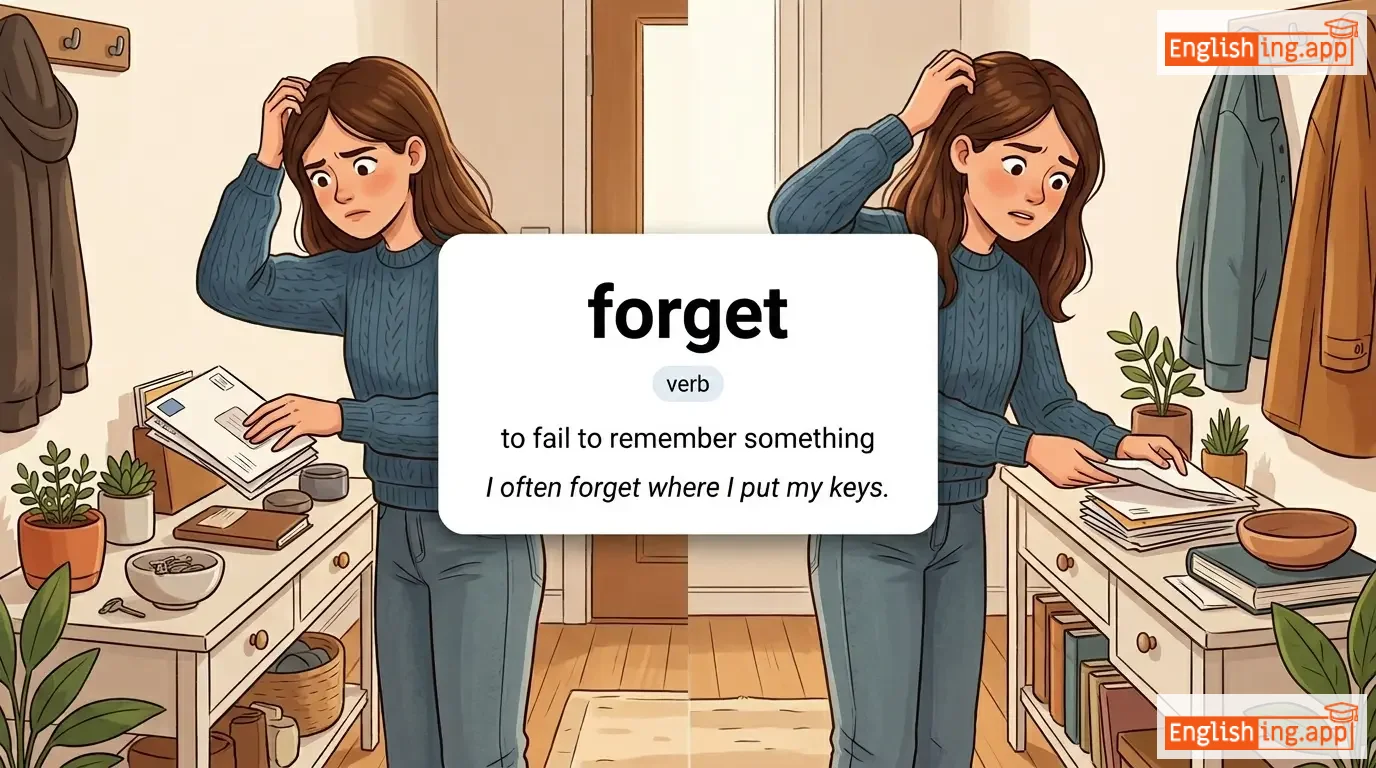
forget definition card — visual illustration of the meaning
verb
/fəˈɡɛt/
भूल जाना (bhool jana)

to fail to remember something

"I often forget where I put my keys."

"मैं अक्सर भूल जाता हूँ कि मैंने अपनी चाबियाँ कहाँ रखी हैं।" (Main aksar bhool jata hoon ki maine apni chaabiyan kahaan rakhi hain.)
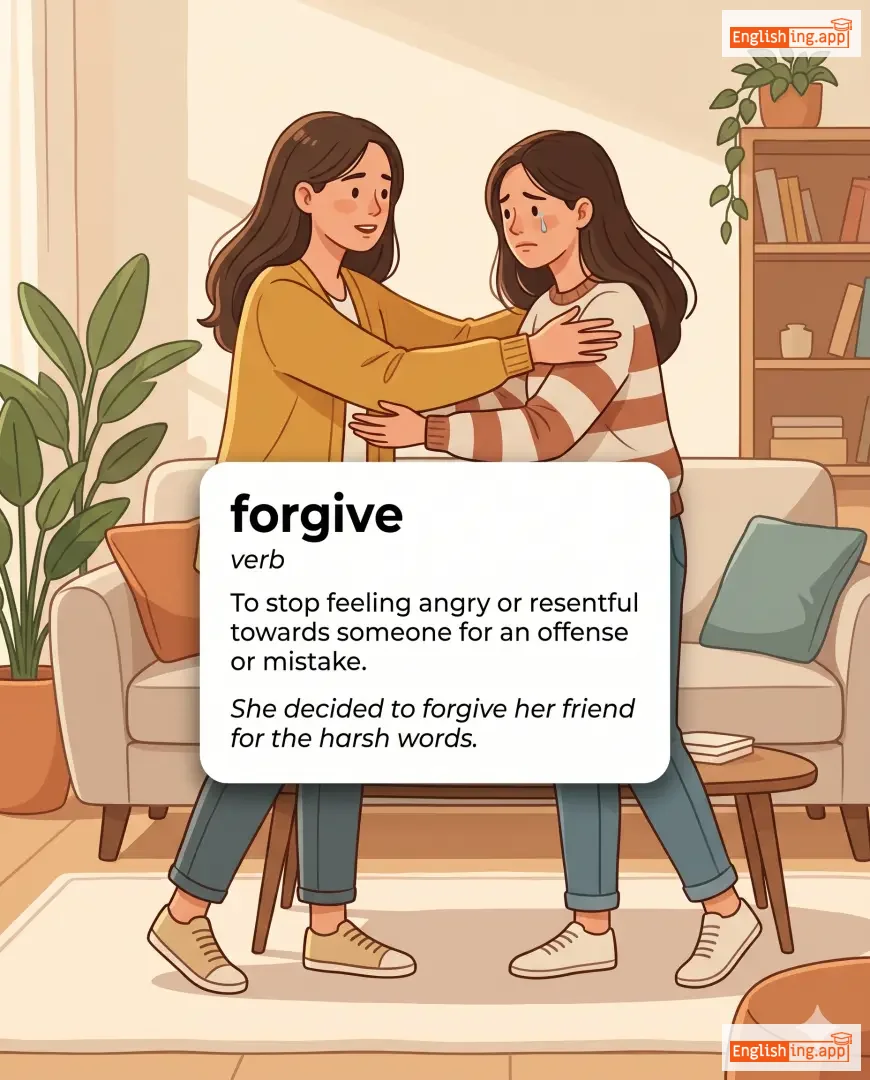
forgive definition card — visual illustration of the meaning
verb
/fərˈɡɪv/
माफ़ करना (maaf karna)

To stop feeling angry or resentful towards someone for an offense or mistake.

"She decided to forgive her friend for the harsh words."

"उसने कठोर शब्दों के लिए अपने दोस्त को माफ़ करने का फ़ैसला किया।" (Usne kathor shabdon ke liye apne dost ko maaf karne ka faisla kiya.)
adjective
/fəˈɡɪv.ɪŋ/
क्षमा करनेवाला (kshama karnewala)

ready and willing to forgive; merciful; lenient

"She has a forgiving nature and rarely holds grudges."

"उसकी क्षमाशील प्रवृत्ति है और वह शायद ही कभी नाराजगी रखती है।" (uski kshama-sheel pravritti hai aur vah shaayad hii kabhi naaraazgi rakhti hai)
verb
/fɔːrˈɡoʊ/
त्याग करना (tyag karna)

to decide not to do or have something

"She decided to forgo dessert to maintain her diet."

"वह अपने आहार को बनाए रखने के लिए मिठाई छोड़ने का निर्णय लिया।" (Woh apne aahaar ko banaye rakhne ke liye mithai chhodne ka nirnay liya.)
noun
/fɔːk/
कांटा (kanta)

a tool with two or more prongs used for eating or serving food

"He ate his salad with a fork."

"उसने सलाद कांटे से खाया।" (Usne salad kaante se khaya.)
adjective
/fərˈlɔːrn/
निराश, उदास (nirash, udas)

extremely sad, lonely, or abandoned

"The abandoned puppy looked so forlorn in the rain."

"परित्यक्त पप्पी बारिश में बहुत निराश दिख रहा था।" (Parityakt pappī bārish mein bahut nirāsh dikh rahā thā.)