वोकैबुलरीज

इंग्लिश वोकैबुलरी डिस्कवर, लर्न और मास्टर करें

noun
/ɪˈmɜːrdʒəns/
उद्भव (udbhav)

the process of coming into view, existence, or prominence

"The emergence of new technologies has transformed communication."

"नई तकनीकों का उद्भव संचार को बदल चुका है।" (Nayi takneekon ka udbhav sanchar ko badal chuka hai.)
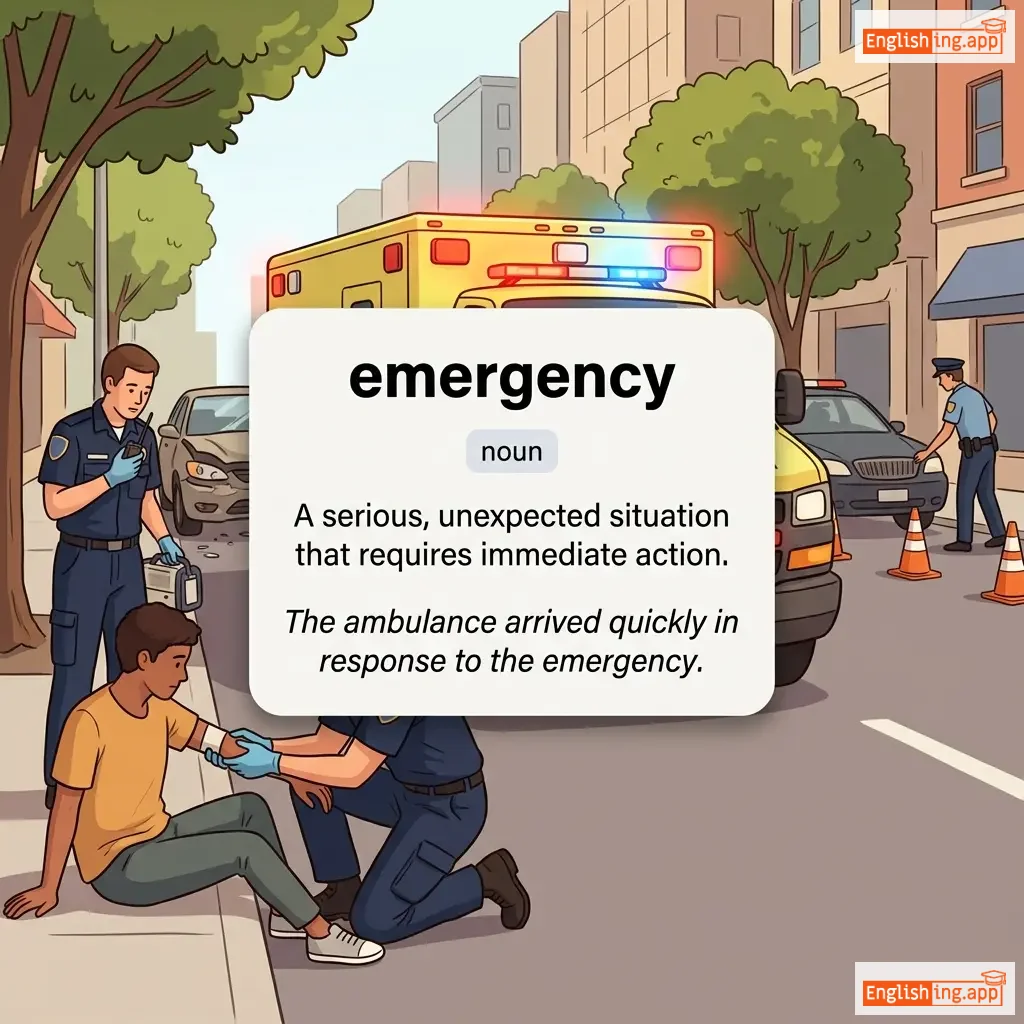
emergency definition card — visual illustration of the meaning
noun
/ɪˈmɜrdʒənsi/
आपातकाल (aapatkaal)

A serious, unexpected situation that requires immediate action.

"The ambulance arrived quickly in response to the emergency."

"एंबुलेंस आपातकाल के जवाब में जल्दी पहुंची" (Ambulance aapatkaal ke jawab mein jaldi pahunchi)
adjective
/ɪˈmɜːrdʒənt/
उदित (udit)

just coming into existence or becoming prominent

"The emergent startup quickly attracted investors."

"उदित स्टार्टअप ने जल्दी निवेशकों को आकर्षित किया।" (Udit startup ne jaldi niveshkon ko aakarshit kiya.)
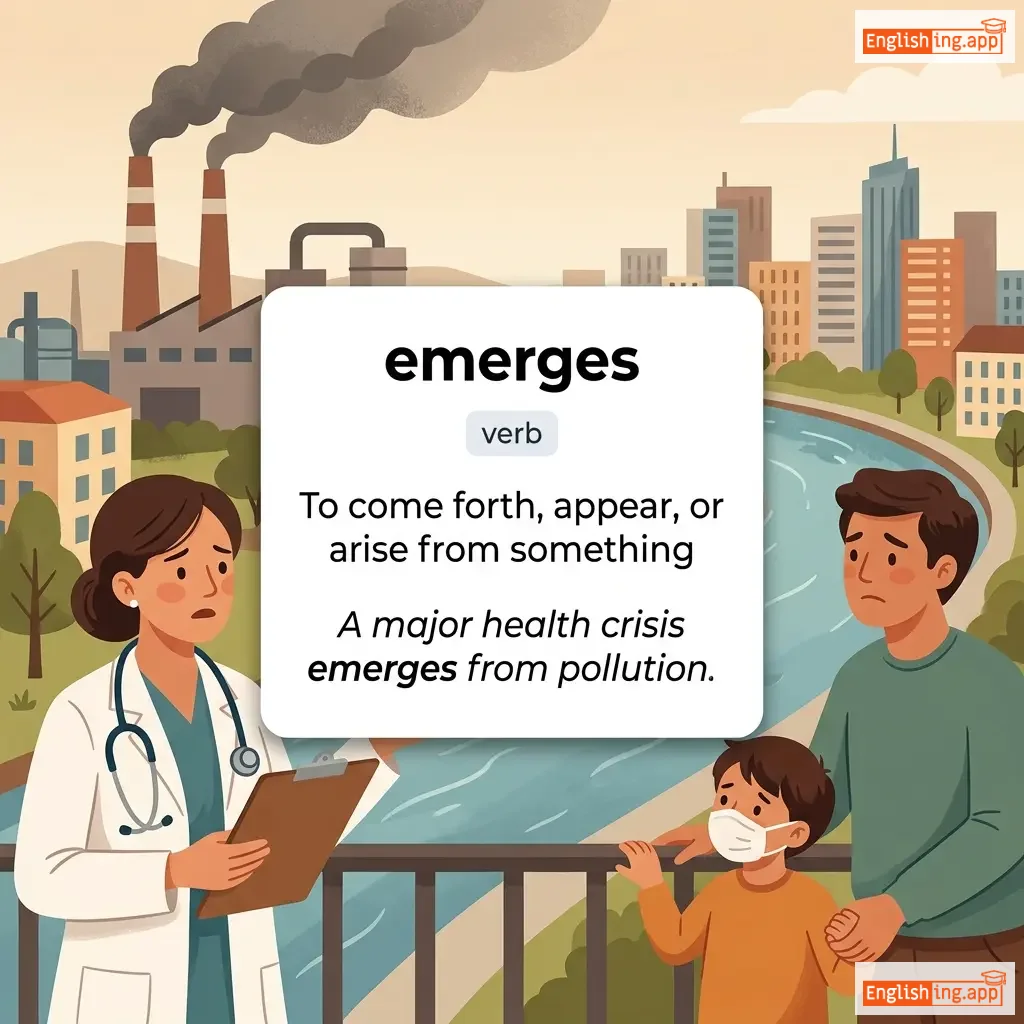
emerges definition card — visual illustration of the meaning
verb
ɪˈmɜːdʒɪz
उभरना (ubharna)

To come forth, appear, or arise from something

"A major health crisis emerges from pollution."

"एक प्रमुख स्वास्थ्य संकट प्रदूषण से उभरता है।" (Ek pramukh swasthya sankat pradushan se ubharta hai.)
adjective
/ɪˈmɜːrdʒɪŋ/
उभरते (ubharte)

becoming known, developing, or starting to exist

"Bangladesh is one of the fastest emerging economies in the world."

"भारत दुनिया के सबसे तेज़ उभरते हुए अर्थव्यवस्थाओं में से एक है।" (Bharat duniya ke sabse tez ubharte hue arthavyavasthao mein se ek hai.)
adjective
/ɪˈmɛrɪtəs/
सम्मानित अवकाशप्राप्त (sammanit avkashprapt)

having retired but allowed to retain their title as an honor

"He is a professor emeritus at the university."

"वह विश्वविद्यालय में एक सम्मानित अवकाशप्राप्त प्रोफेसर है।" (vah vishwavidyalaya mein ek sammanit avkashprapt professor hai)
noun
/ɪˈmɛtɪk/
उल्टी करने वाली दवा (ulti karne wali dawa)

a substance that causes vomiting

"The doctor administered an emetic to remove the poison."

"डॉक्टर ने जहर निकालने के लिए उल्टी करने वाली दवा दी।" (Doctor ne zahar nikalne ke liye ulti karne wali dawa di.)
noun
/ˈɛmɪɡrənt/
प्रवासी (pravasi)

A person who leaves their own country to settle permanently in another.

"The emigrant started a new life in Canada."

"प्रवासी ने कनाडा में एक नई ज़िन्दगी शुरू की।" (Pravasi ne Kanada mein ek nai zindagi shuru ki.)
verb
/ˈɛmɪˌɡreɪt/
देश छोड़ना (desh chhodna)

To leave one's own country in order to settle permanently in another.

"Many people emigrated from Europe to America in the 19th century."

"कई लोग 19वीं सदी में यूरोप से अमेरिका गए थे।" (Kai log 19vi sadi mein Europe se America gaye the.)
noun
/ˈɛmɪnəns/
प्रतिष्ठा (pratishtha)

Fame or recognized superiority, especially within a particular sphere.

"She rose to eminence as a leading scientist."

"वह एक प्रमुख वैज्ञानिक के रूप में प्रतिष्ठा में बढ़ी।" (Wah ek pramukh vaigyanik ke roop mein pratishtha mein badhi.)
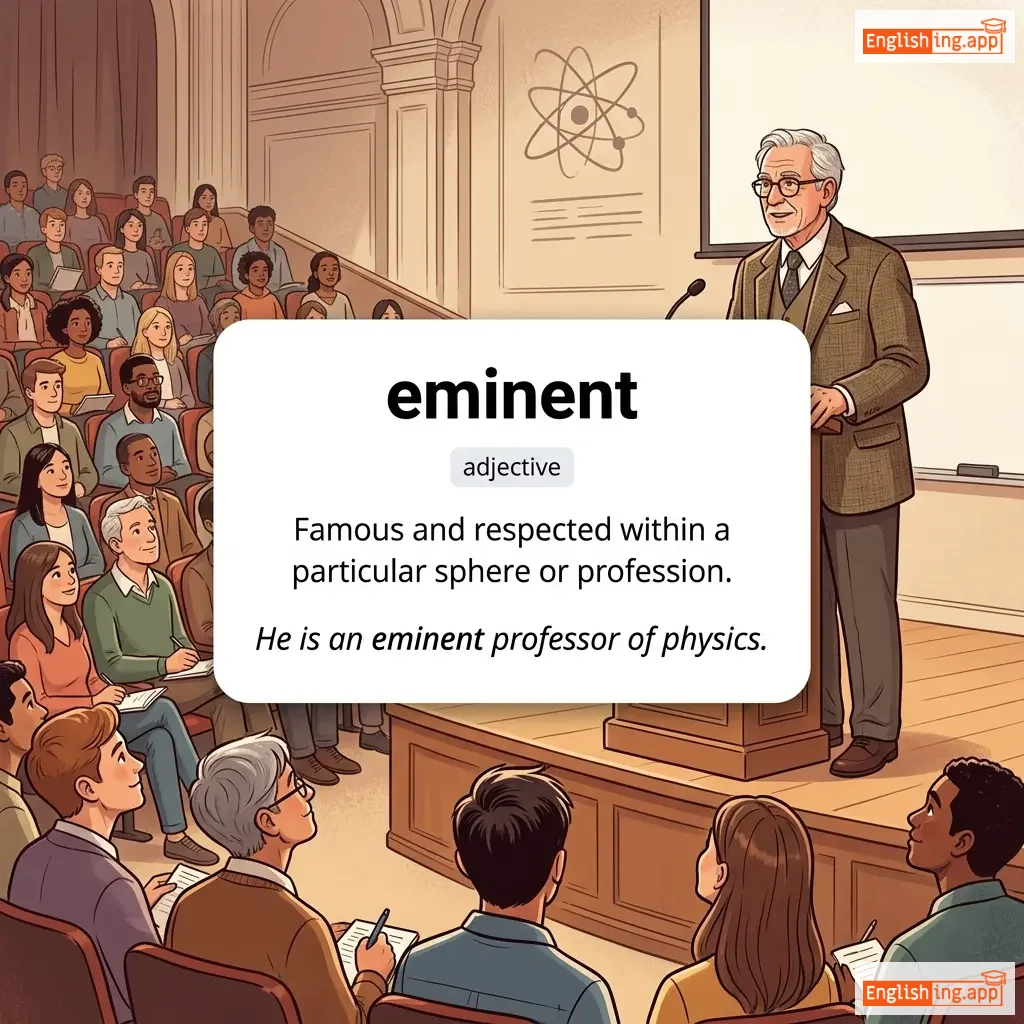
eminent definition card — visual illustration of the meaning
adjective
/ˈɛmɪnənt/
प्रसिद्ध (prasiddh)

Famous and respected within a particular sphere or profession.

"He is an eminent professor of physics."

"वह भौतिकी के एक प्रसिद्ध प्रोफेसर हैं।" (Vah bhoutiki ke ek prasiddh professor hain.)
noun
/ˈɛmɪsɛri/
दूत (dut)

A person sent on a special mission, usually as a diplomatic representative.

"The king sent an emissary to negotiate peace."

"राजा ने शांति के लिए बातचीत करने के लिए एक दूत भेजा।" (Raja ne shanti ke liye baatcheet karne ke liye ek dut bheja.)
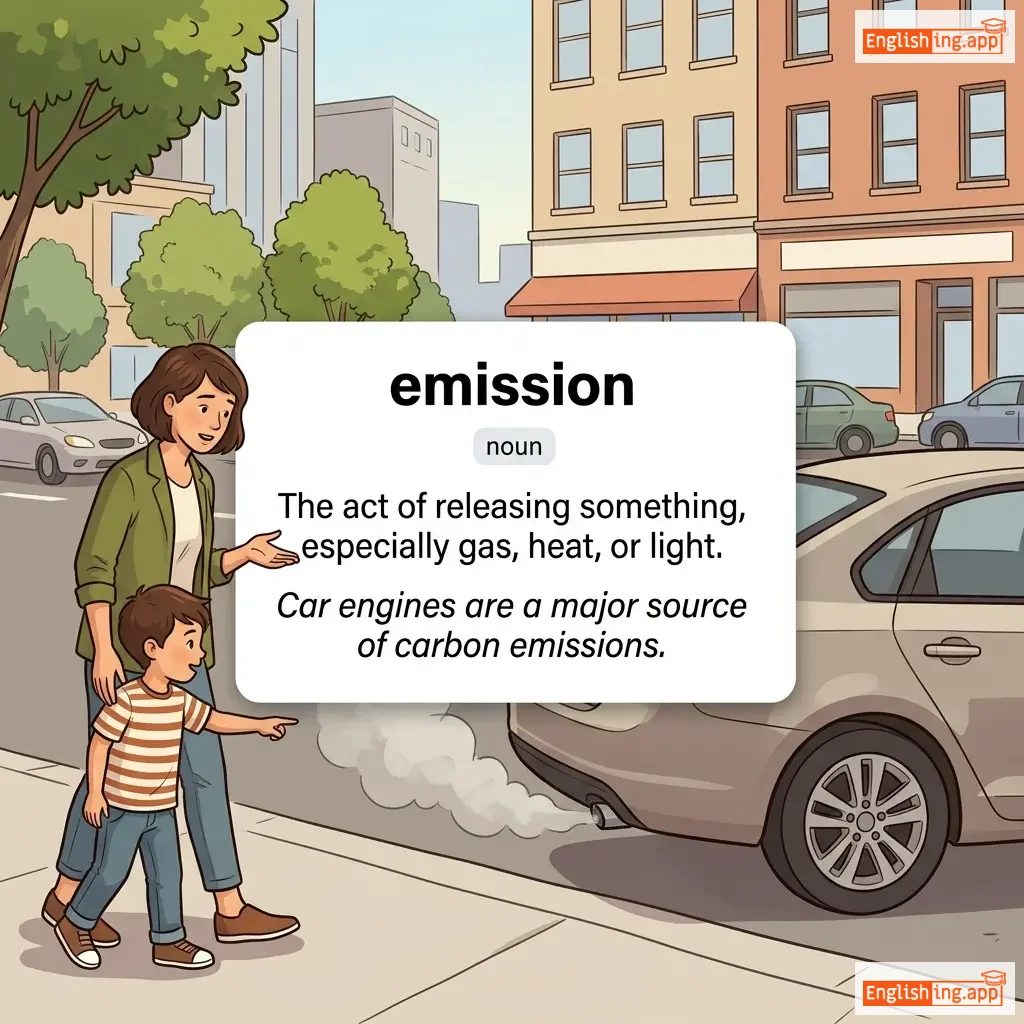
emission definition card — visual illustration of the meaning
noun
/ɪˈmɪʃən/
उत्सर्जन (utsarjan)

The act of releasing something, especially gas, heat, or light.

"Car engines are a major source of carbon emissions."

"कार के इंजन कार्बन उत्सर्जन का एक प्रमुख स्रोत हैं।" (Car ke engine carbon utsarjan ka ek pramukh srot hain.)
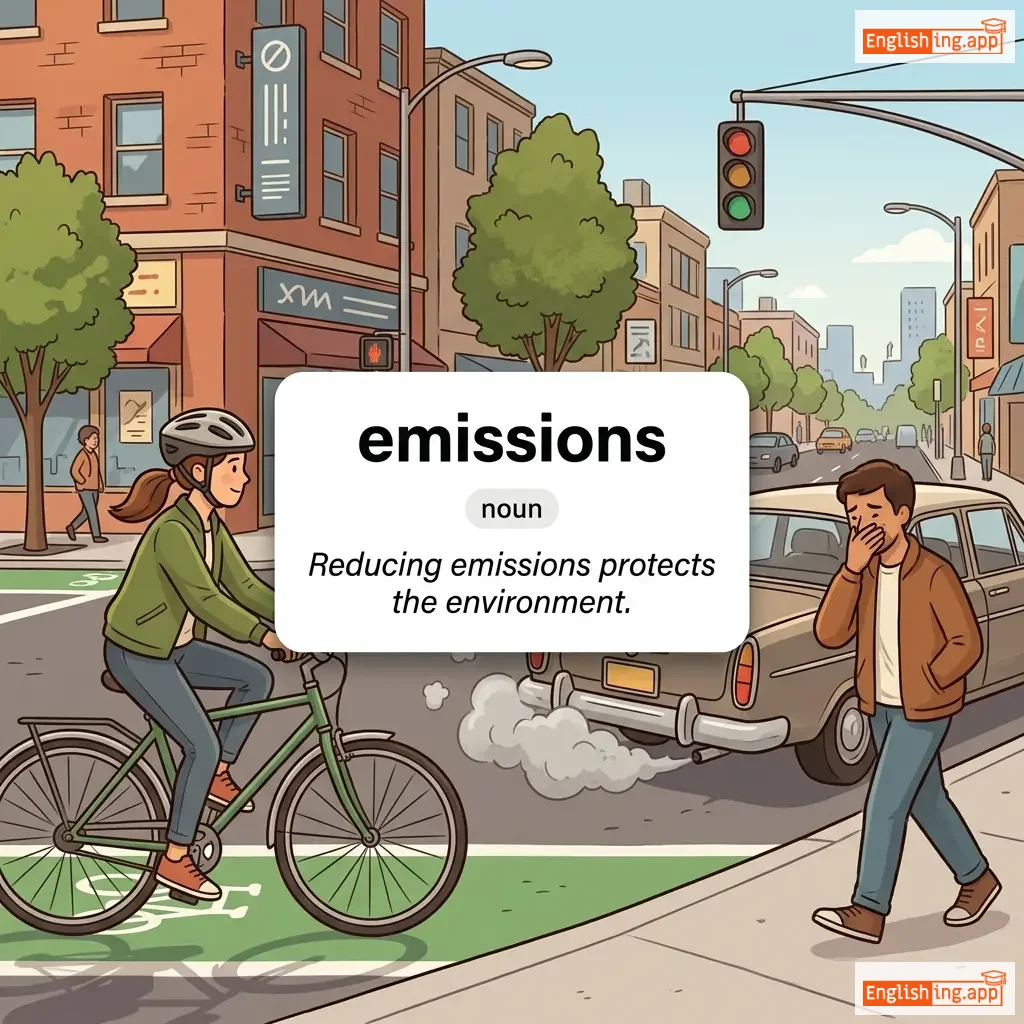
emissions definition card — visual illustration of the meaning
noun
/ɪˈmɪʃ.ənz/
उत्सर्जन (utsarjan)

The production and discharge of something, especially gas, heat, light, or radiation.

"Reducing emissions protects the environment."

"उत्सर्जन को घटाना पर्यावरण की रक्षा करता है।" (Utsarjan ko ghataana paryavaran ki raksha karta hai.)
verb
/ɪˈmɪt/
निकलना (nikalna)

to send out something such as light, heat, sound, or gas

"The factory emits smoke into the atmosphere."

"कारख़ाना वातावरण में धुआं छोड़ता है।" (Karkhana vatavaran mein dhuan chhodta hai.)
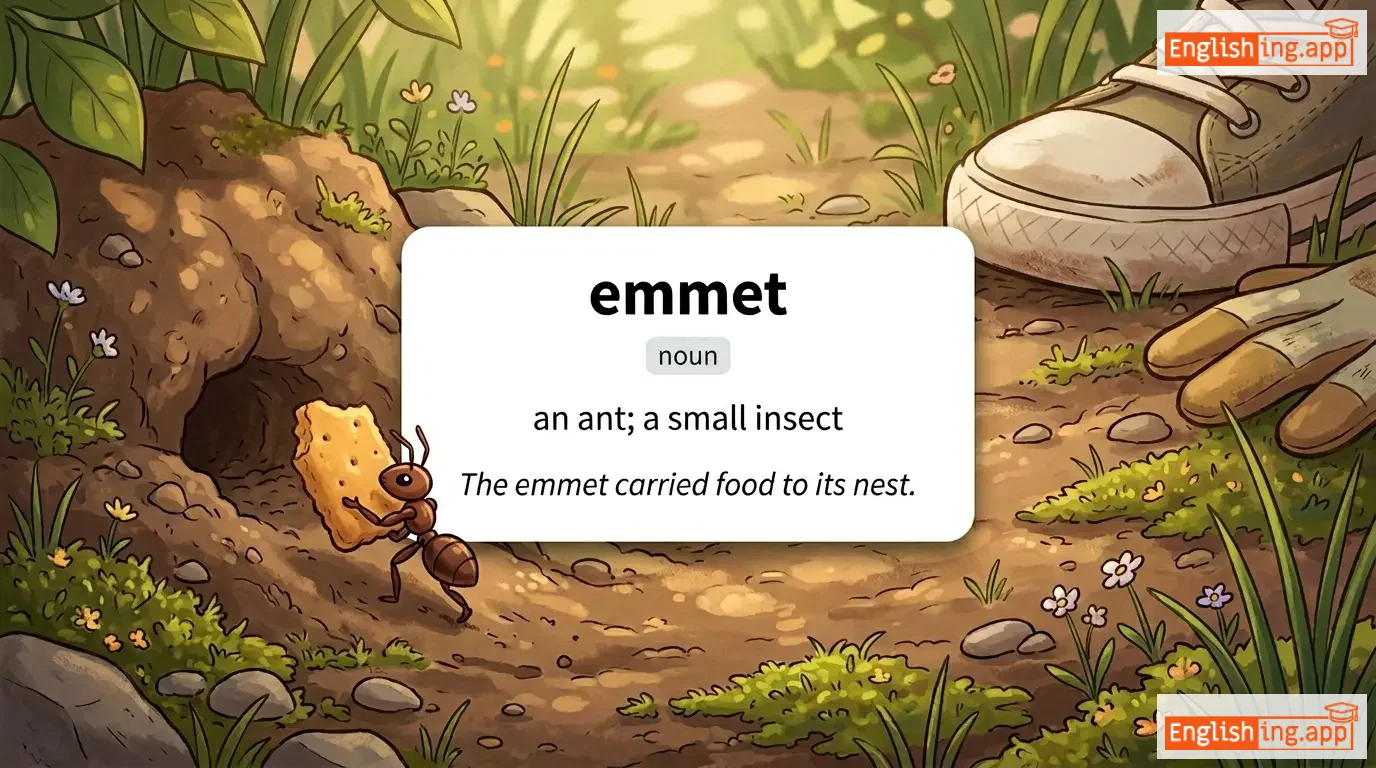
emmet definition card — visual illustration of the meaning
verb
/ˈɛmɪt/
चींटी (chinti)

an ant; a small insect

"The emmet carried food to its nest."

"चींटी ने अपना खाना अपने घोंसले में ले जाया।" (Chinti ne apna khana apne gonsle mein le jaya)
emollient definition card — visual illustration of the meaning
noun/adjective
/ɪˈmɒliənt/
त्वचा को मुलायम करने वाली सामग्री (tvak ko mulayam karne wali samagri)

a substance that softens or soothes the skin

"She used an emollient cream to treat her dry skin."

"उसने अपनी सूखी त्वचा का इलाज करने के लिए एक इमोलिएंट क्रीम का उपयोग किया।" (Usne apni sookhi tvak ka ilaaj karne ke liye ek emollient cream ka upyog kiya.)
noun
/ɪˈmɒljʊmənt/
वेतन (vetan)

payment for work or services; salary or fees

"The professor received his annual emolument from the university."

"प्रोफेसर को विश्वविद्यालय से उनका वार्षिक वेतन प्राप्त हुआ।" (Professor ko vishwavidyalay se unka varshik vetan prapt hua.)
noun
/ɪˈmoʊʃən/
भावना (bhavna)

A strong feeling such as happiness, sadness, anger, or fear.

"She was overwhelmed with emotion when she heard the news."

"जब उसने खबर सुनी, तो वह भावना से अभिभूत हो गई।" (Jab usne khabar suni, to woh bhavna se abhibhoot ho gayi.)
emotional definition card — visual illustration of the meaning
adjective
/ɪˈmoʊʃənəl/
भावनात्मक (bhavnatmak)

Relating to a person’s feelings, or easily affected by them.

"He gave an emotional speech about his childhood."

"उसने अपने बचपन के बारे में एक भावनात्मक भाषण दिया।" (Usne apne bachpan ke baare mein ek bhavnatmak bhashan diya.)
emotionality definition card — visual illustration of the meaning
noun
ɪˌməʊ.ʃəˈnæl.ɪ.ti
भावनात्मकता (bhavnatmakta)

The quality of being driven by emotions rather than reason; emotional responsiveness.

"His emotionality often influenced his decisions."

"उसकी भावनात्मकता अक्सर उसके निर्णयों को प्रभावित करती थी।" (Uski bhavnatmakta aksar uske nirnayon ko prabhavit karti thi.)
adverb
/ɪˈməʊʃənəli/
भावनात्मक रूप से (bhavnatmak roop se)

in a way that relates to a person's feelings or emotions

"She became emotionally attached to her pet."

"वह अपने पालतू जानवर से भावनात्मक रूप से जुड़ गई थी।" (vah apne paaltu jaanwar se bhavnatmak roop se jud gayi thi.)
emotions definition card — visual illustration of the meaning
noun
ɪˈməʊʃənz
भावनाएँ (bhavanayein)

Strong feelings deriving from one's circumstances, mood, or relationships with others.

"Emotions ran high during the protests."

"प्रदर्शनों के दौरान भावनाएँ ऊँची थीं।" (Pradarshanon ke dauran bhavanayein unchi thi.)
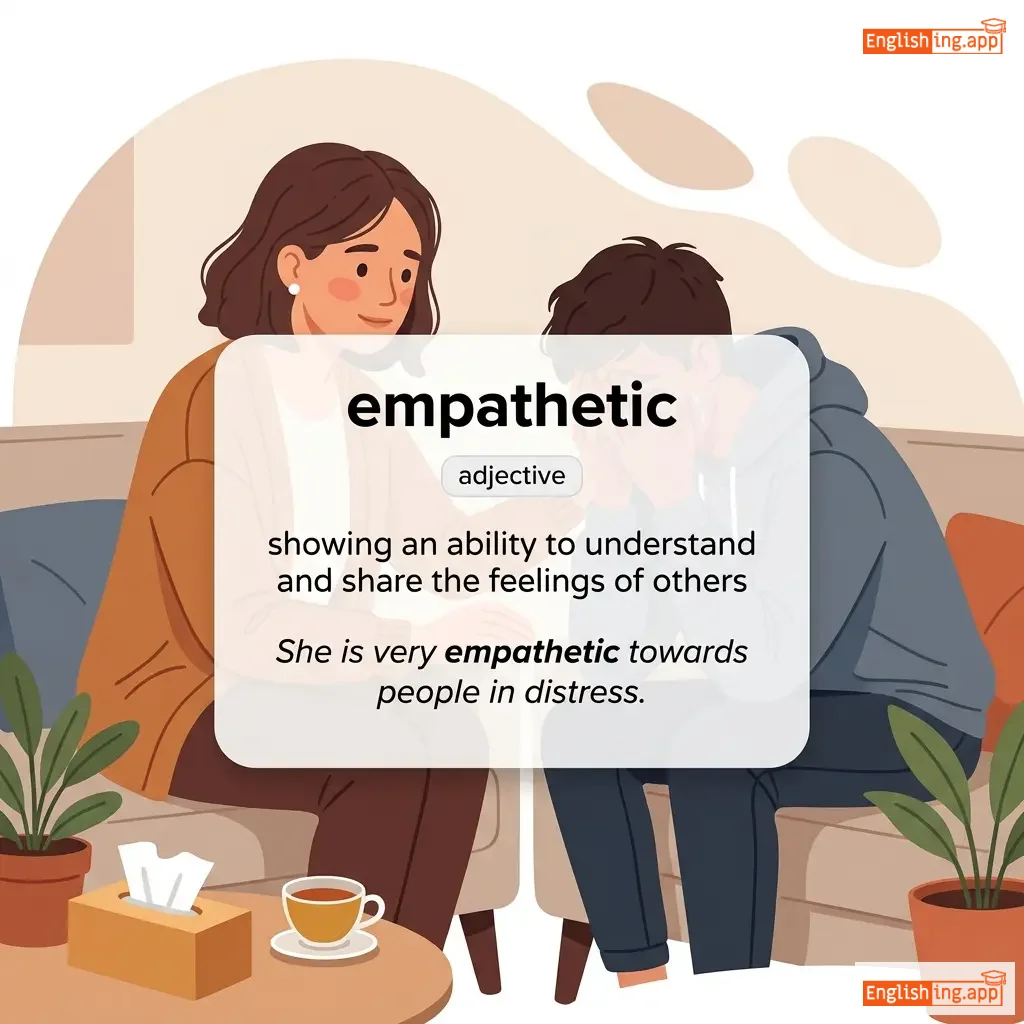
empathetic definition card — visual illustration of the meaning
adjective
/ˌɛmpəˈθɛtɪk/
सहानुभूतिपूर्ण (sahanubhootikpoorn)

showing an ability to understand and share the feelings of others

"She is very empathetic towards people in distress."

"वह संकट में पड़े लोगों के प्रति बहुत सहानुभूति रखती है।" (Wah sankat mein pade logon ke prati bahut sahanubhuti rakhti hai.)
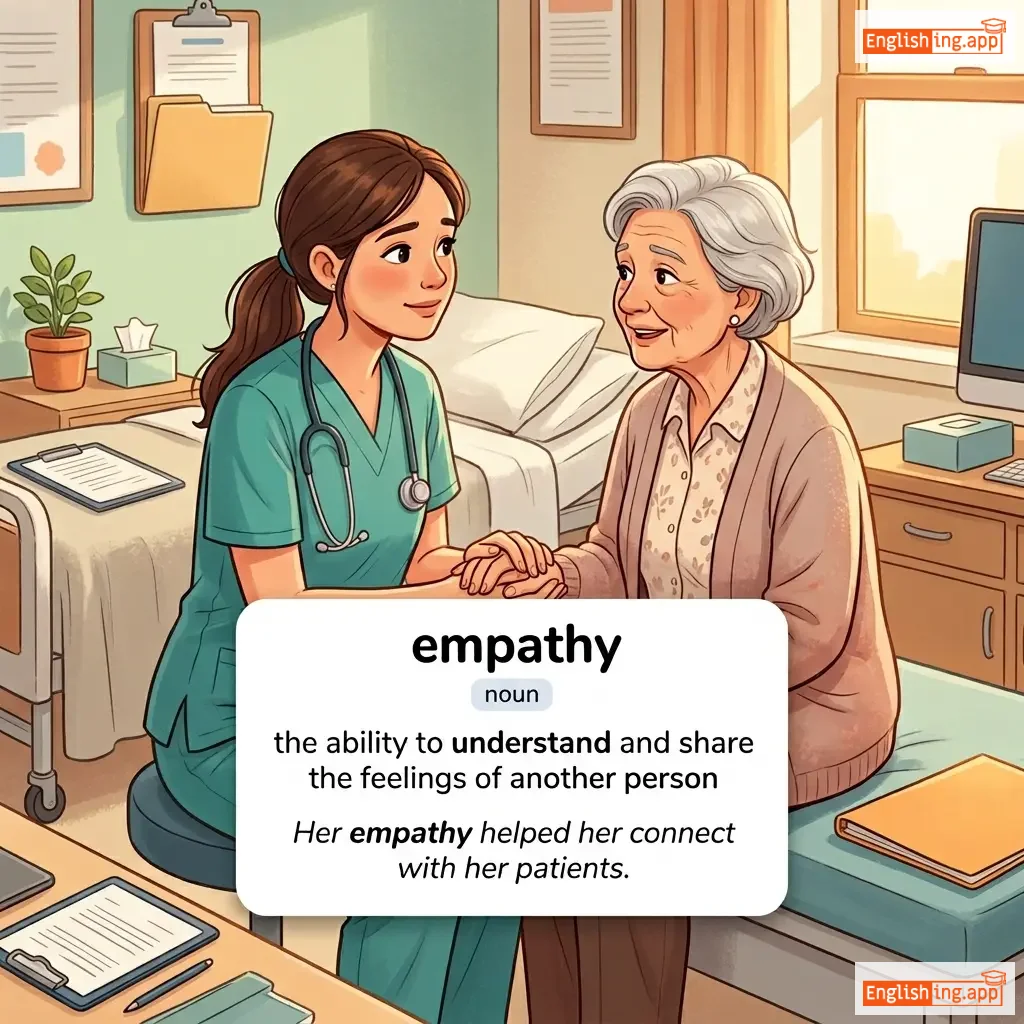
empathy definition card — visual illustration of the meaning
noun
/ˈɛmpəθi/
सहानुभूति (sahanubhuti)

the ability to understand and share the feelings of another person

"Her empathy helped her connect with her patients."

"उसकी सहानुभूति ने उसे अपने मरीजों से जुड़ने में मदद की।" (Uski sahanubhuti ne use apne marijon se judne mein madad ki.)
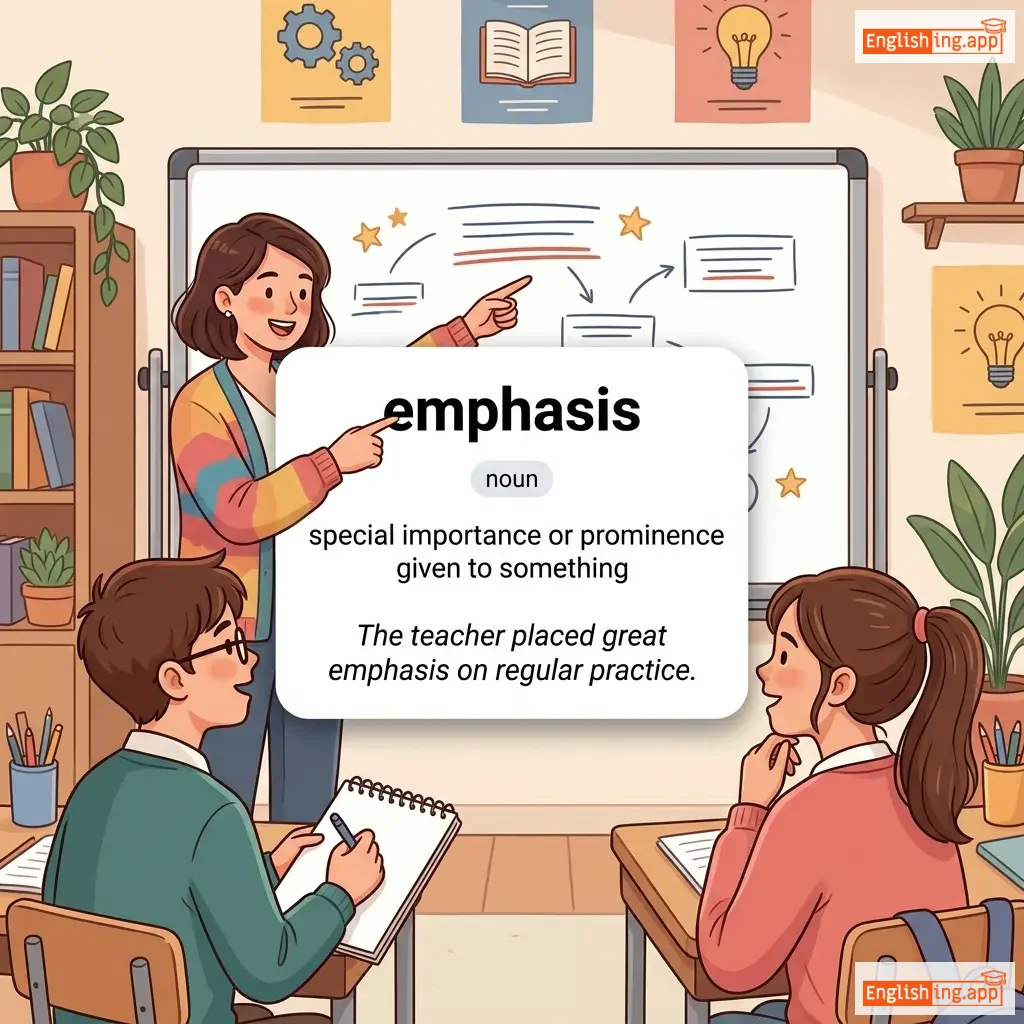
emphasis definition card — visual illustration of the meaning
noun
/ˈɛmfəsɪs/
ज़ोर (zor)

special importance or prominence given to something

"The teacher placed great emphasis on regular practice."

"शिक्षक ने नियमित अभ्यास पर विशेष ज़ोर दिया।" (Shikshak ne niyamit abhyas par vishesh zor diya.)
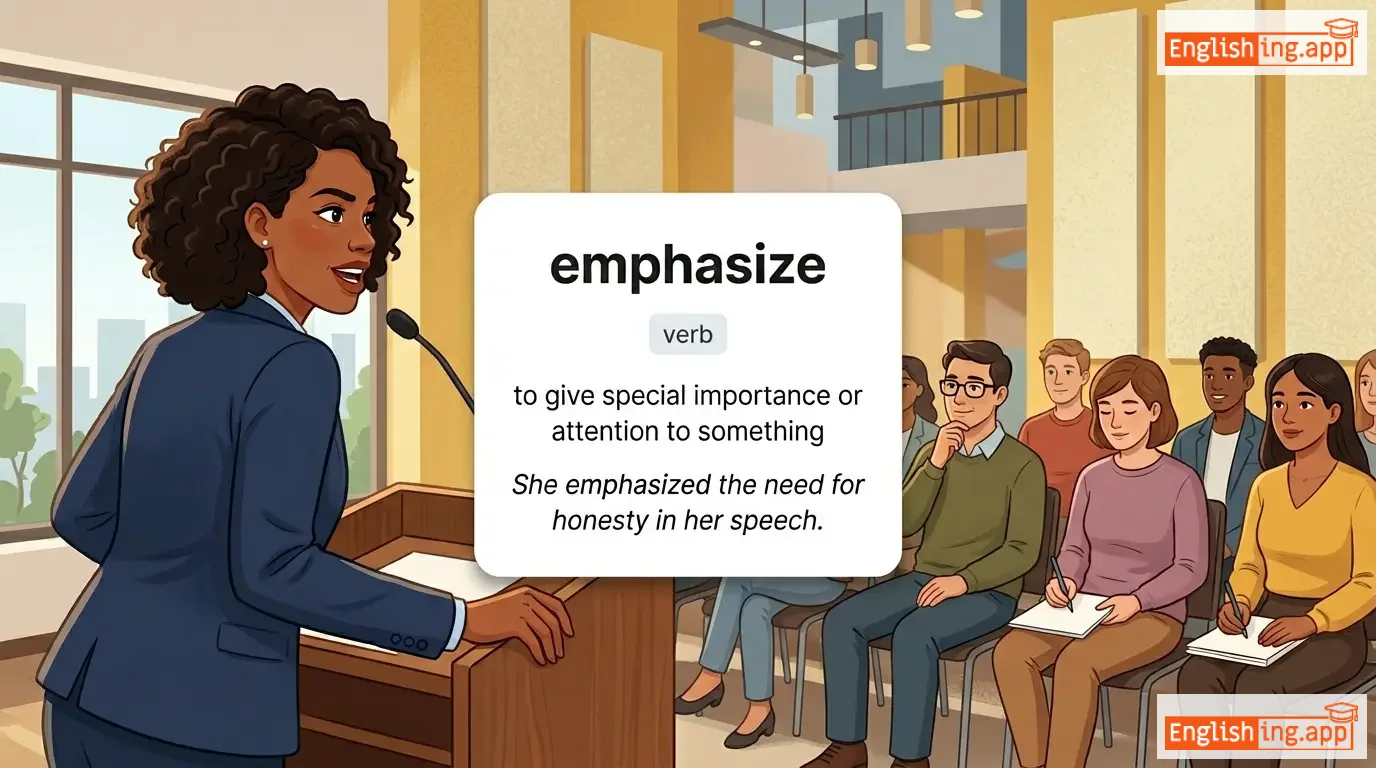
emphasize definition card — visual illustration of the meaning
verb
/ˈɛmfəsaɪz/
ज़ोर देना (zor dena)

to give special importance or attention to something

"She emphasized the need for honesty in her speech."

"उसने अपनी स्पीच में ईमानदारी की आवश्यकता को ज़ोर दिया।" (Usne apni speech mein imaandari ki avashyakta ko zor diya.)
adjective
/ɛmˈfætɪk/
जोरदार (jordar)

expressed with emphasis; strongly expressive

"He gave an emphatic denial of the rumors."

"उसने अफवाहों का जोरदार खंडन किया।" (Usne afwahon ka jordar khandan kiya.)
noun
/ˈempaɪər/
साम्राज्य (samrajya)

a group of countries or regions controlled by one ruler or government

"The Roman Empire lasted for centuries."

"रोमन साम्राज्य सदियों तक चला।" (Roman samrajya sadiyon tak chala.)
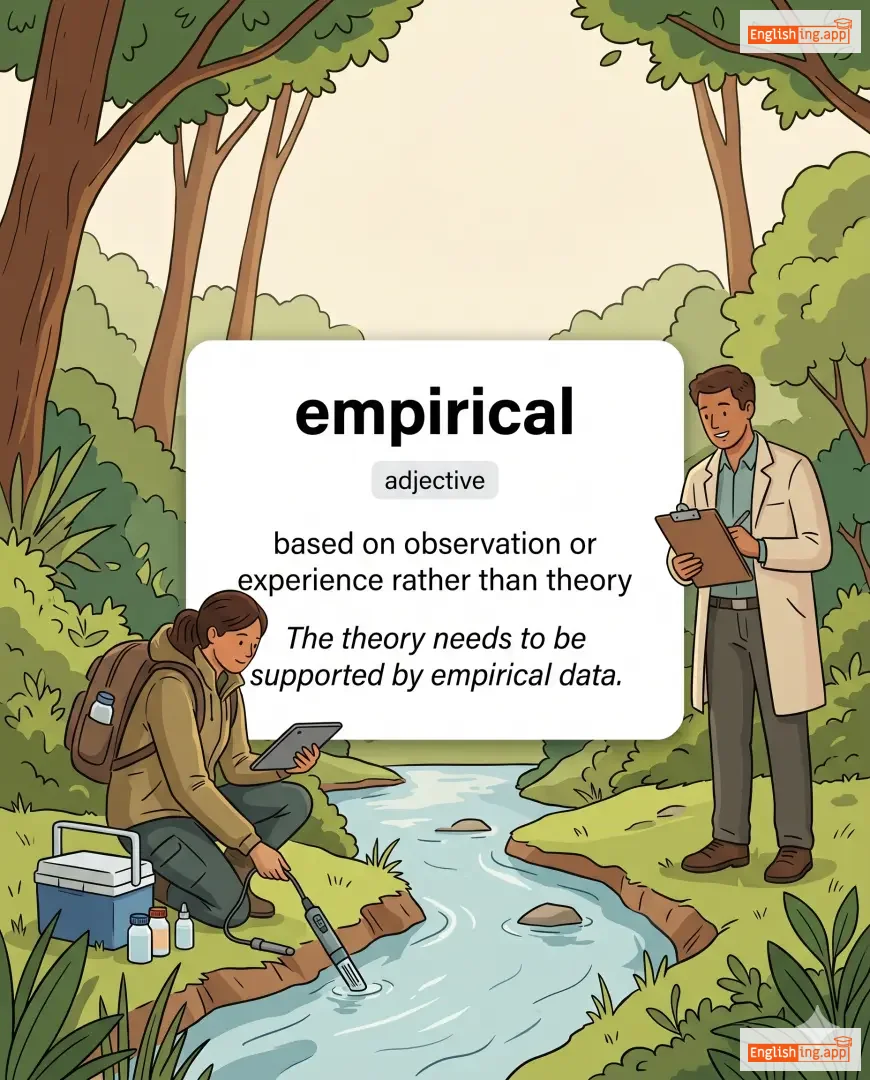
empirical definition card — visual illustration of the meaning
adjective
/ɛmˈpɪrɪkəl/
व्यावहारिक (vyavaharik)

based on observation or experience rather than theory

"The theory needs to be supported by empirical data."

"सिद्धांत को व्यावहारिक डेटा द्वारा समर्थित किया जाना चाहिए।" (Siddhant ko vyavaharik data dwara samarthit kiya jana chahiye.)
noun
/ɛmˈpɪrɪˌsɪzəm/
अनुभववाद (anubhavvad)

the theory that all knowledge is derived from sense-experience

"Empiricism argues that knowledge comes from experience and observation."

"अनुभववाद यह तर्क करता है कि ज्ञान अनुभव और अवलोकन से आता है।" (Anubhavvad yah tark karta hai ki gyaan anubhav aur avlokan se aata hai.)
verb
/ɪmˈplɔɪ/
किसी को नौकरी देना (kisi ko naukri dena)

to hire someone to do a job; to use something effectively

"The company plans to employ more engineers next year."

"कंपनी अगले साल और इंजीनियरों को काम पर रखने की योजना बना रही है।" (Kampani agle saal aur engineers ko kaam par rakhne ki yojna bana rahi hai.)
noun
/ɛmˈplɔɪ.iː/
कर्मचारी (karmachari)

A person who works for an organization or company in return for payment.

"The company values each employee's contribution to its success."

"कंपनी प्रत्येक कर्मचारी के योगदान को महत्व देती है।" (Company pratyek karmachari ke yogdan ko mahatva deti hai.)
noun
/ɪmˈplɔɪər/
नियोक्ता (niyokta)

A person or organization that hires and pays people to work.

"The employer promised better benefits to attract skilled workers."

"नियोक्ता ने कुशल कर्मचारियों को आकर्षित करने के लिए बेहतर लाभ का वादा किया।" (Niyokta ne kushal karmachariyon ko akarshit karne ke liye behtar labh ka wada kiya.)
employment definition card — visual illustration of the meaning
noun
/ɪmˈplɔɪmənt/
रोज़गार (rozgar)

the state of having a paid job or work

"The government is working to increase youth employment."

"सरकार युवा रोजगार बढ़ाने के लिए काम कर रही है।" (Sarkar yuva rozgar badhane ke liye kaam kar rahi hai.)
noun
/ɛmˈpɔːriəm/
बड़ा स्टोर (bada store)

A large retail store selling a wide variety of goods.

"They visited the new emporium to buy furniture and home decor."

"वे नए एंपोरियम गए थे ताकि फर्नीचर और होम डेकोर खरीद सकें।" (Ve naye emporium gaye the taaki furniture aur home decor kharid sakein.)
verb
/ɪmˈpaʊər/
सशक्त बनाना (sashakt banana)

To give someone the power or authority to do something; to make someone stronger or more confident.

"Education can empower people to improve their lives."

"शिक्षा लोगों को उनके जीवन को सुधारने के लिए सशक्त बना सकती है।" (Shiksha logon ko unke jeevan ko sudharne ke liye sashakt bana sakti hai.)
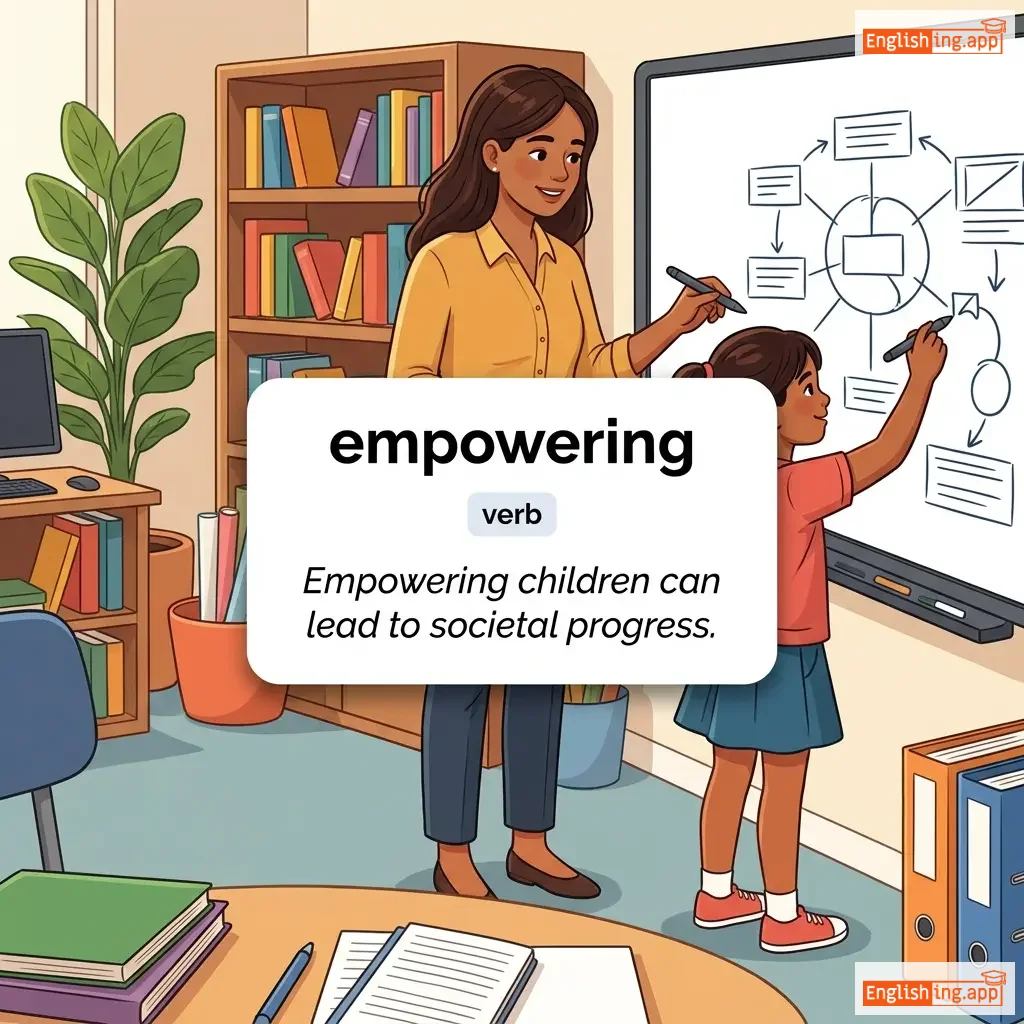
empowering definition card — visual illustration of the meaning
verb
ɪmˈpaʊərɪŋ
सशक्त बनाना (sashakt banana)

Giving someone the authority or power to do something; making someone stronger and more confident.

"Empowering children can lead to societal progress."

"बच्चों को सशक्त बनाना सामाजिक प्रगति की ओर ले जा सकता है।" (Bachchon ko sashakt banana samajik pragati ki or le ja sakta hai.)
empowerment definition card — visual illustration of the meaning
noun
/ɪmˈpaʊə.mənt/
सशक्तिकरण (sashaktikaran)

Authority or power given to someone to do something.

"Empowerment initiatives enhance confidence."

"सशक्तिकरण पहलों से आत्मविश्वास बढ़ता है।" (Sashaktikaran pehluon se aatmvishwas badhta hai.)
adjective
/ˈɛmpti/
खाली (khali)

containing nothing; not filled

"The box was completely empty."

"बक्सा पूरी तरह से खाली था।" (Baksa puri tarah se khali tha.)
adjective
/ɛmˈpaɪriəl/
स्वर्गीय (swargiy)

Heavenly, divine, or relating to the highest heavens.

"The poet described the empyreal beauty of the stars."

"कवि ने तारों की स्वर्गीय सुंदरता का वर्णन किया।" (Kavi ne taron ki swargiy sundarta ka varnan kiya.)
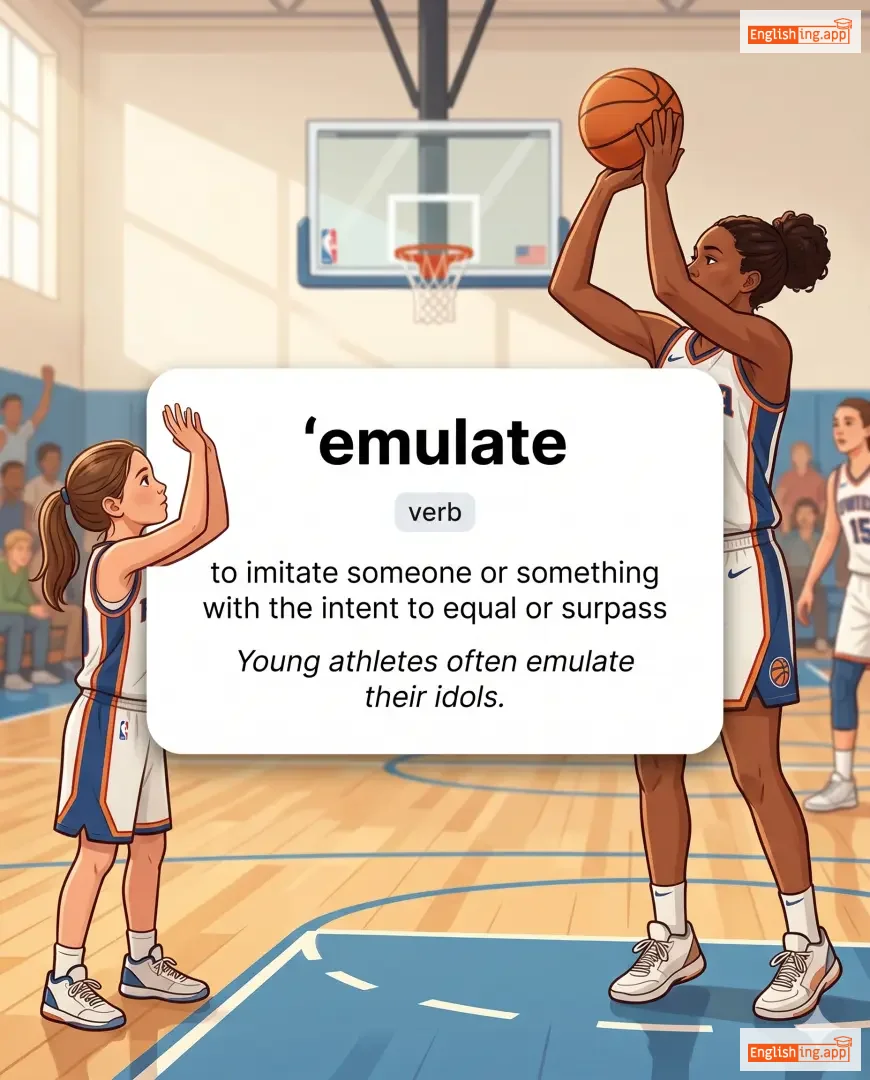
emulate definition card — visual illustration of the meaning
verb
/ˈɛm.jʊˌleɪt/
अनुकरण करना (anukaran karna)

to imitate someone or something with the intent to equal or surpass

"Young athletes often emulate their idols."

"युवा खिलाड़ी अक्सर अपने आदर्शों की नकल करते हैं।" (Yuva khiladi aksar apne aadarshon ki nakal karte hain.)
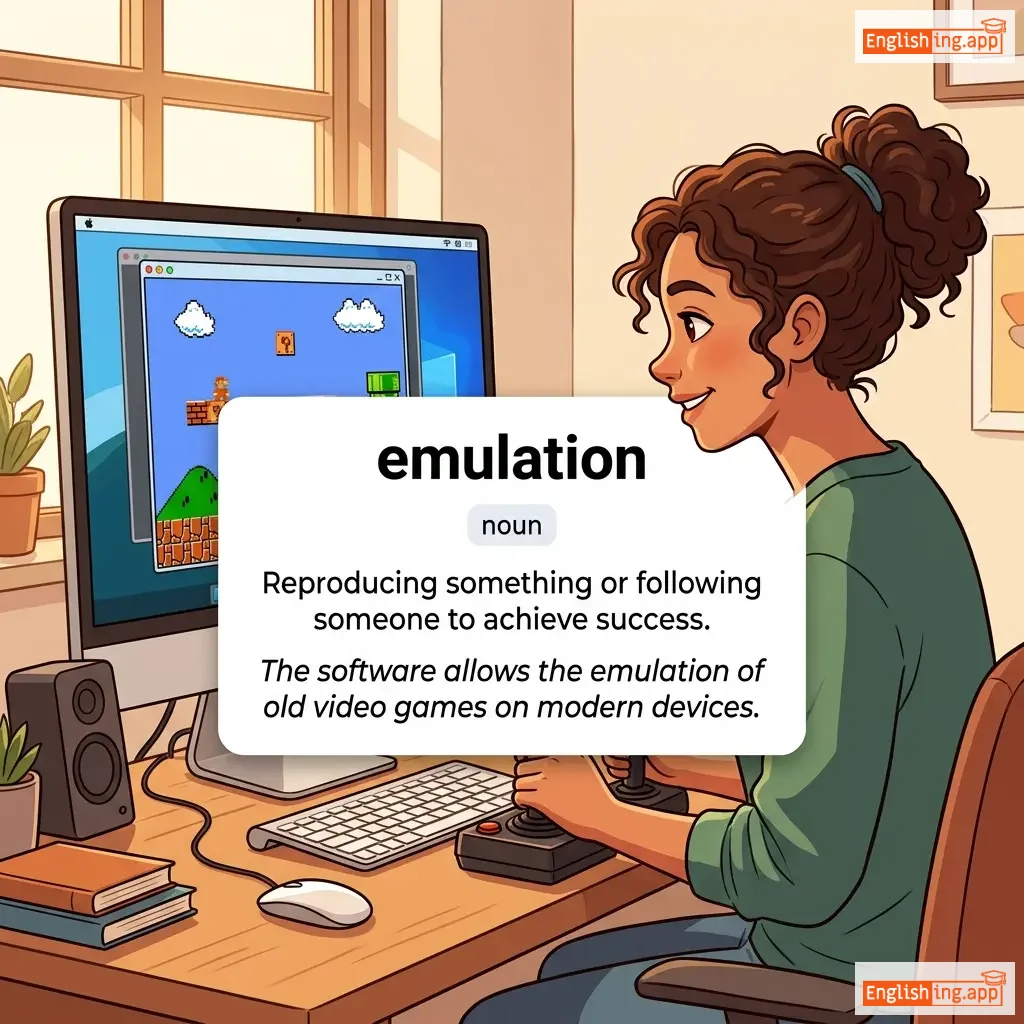
emulation definition card — visual illustration of the meaning
noun
/ˌɛmjʊˈleɪ.ʃən/
अनुकरण (anukaran)

Reproducing something or following someone to achieve success.

"The software allows the emulation of old video games on modern devices."

"सॉफ़्टवेयर पुराने वीडियो गेम्स की अनुकरण क्षमता प्रदान करता है।" (Software purane video games ki anukaran kshamata pradan karta hai.)
enable definition card — visual illustration of the meaning
verb
/ɪˈneɪbəl/
सक्षम करना (saksham karna)

to make something possible; to give someone the ability to do something

"This software will enable users to create their own websites."

"यह सॉफ़्टवेयर उपयोगकर्ताओं को अपनी वेबसाइट बनाने में सक्षम बनाएगा।" (Yeh software upyogkartao ko apni website banane mein saksham banayega.)
verb
/ɪˈnækt/
कानून बनाना (kanun banana)

to make into law; to perform or act out

"The government decided to enact a new policy on education."

"सरकार ने शिक्षा पर एक नई नीति बनाने का निर्णय लिया।" (Sarkar ne shiksha par ek nai niti banane ka nirnay liya.)
noun
/ɪˈnæməl/
इनेमल (enamel)

a hard, glossy substance used as a protective or decorative coating; the hard outer layer of teeth

"The dentist explained that enamel protects the teeth from decay."

"दंत चिकित्सक ने समझाया कि इनेमल दांतों को सड़ने से बचाता है।" (Dant chikitsak ne samjhaya ki enamel danton ko sadne se bachata hai.)
verb
/ɪˈnæmər/
प्रेम में होना (prem mein hona)

to be filled with love or admiration for

"She was enamored with the beautiful scenery."

"वह सुंदर दृश्य से मोहित थी।" (Wah sundar drishya se mohit thi.)
adjective
/ɪˈnæmərd/
प्रेम में आकंठ डूबा (prem mein aakanth dooba)

filled with love or admiration

"He became enamored with classical music after attending the concert."

"वह संगीत समारोह के बाद शास्त्रीय संगीत से enamored हो गया।" (Vah sangeet samaroh ke baad shastriya sangeet se enamored ho gaya.)
verb
/ɪnˈkæmp/
शिविर स्थापित करना (shivir sthapit karna)

to set up or establish a camp

"The soldiers encamped near the river for the night."

"सैनिकों ने रात के लिए नदी के किनारे शिविर स्थापित किया।" (Sainiko ne raat ke liye nadi ke kinare shivir sthapit kiya.)
encapsulate definition card — visual illustration of the meaning
verb
/ɪnˈkæp.sjʊ.leɪt/
सारांशित करना (saaranshit karna)

To express the essential features of something succinctly; to summarize or contain within.

"The introduction should encapsulate the main points of the article."

"परिचय में लेख के मुख्य बिंदुओं का सारांशित करना चाहिए।" (Parichay mein lekh ke mukhya binduon ka saaranshit karna chahiye.)