वोकैबुलरीज

इंग्लिश वोकैबुलरी डिस्कवर, लर्न और मास्टर करें

noun
/ˈiːv.nɪŋ/
शाम (shaam)

the part of the day between afternoon and night

"We went for a walk in the cool evening."

"हम ठंडी शाम में घूमने गए।" (Hum thandi shaam mein ghoomne gaye.)
noun
/ɪˈvent/
घटना (ghatna)

something that happens, especially something important

"The concert was the biggest event of the year."

"कंसर्ट साल का सबसे बड़ा इवेंट था।" (Concert saal ka sabse bada event tha.)
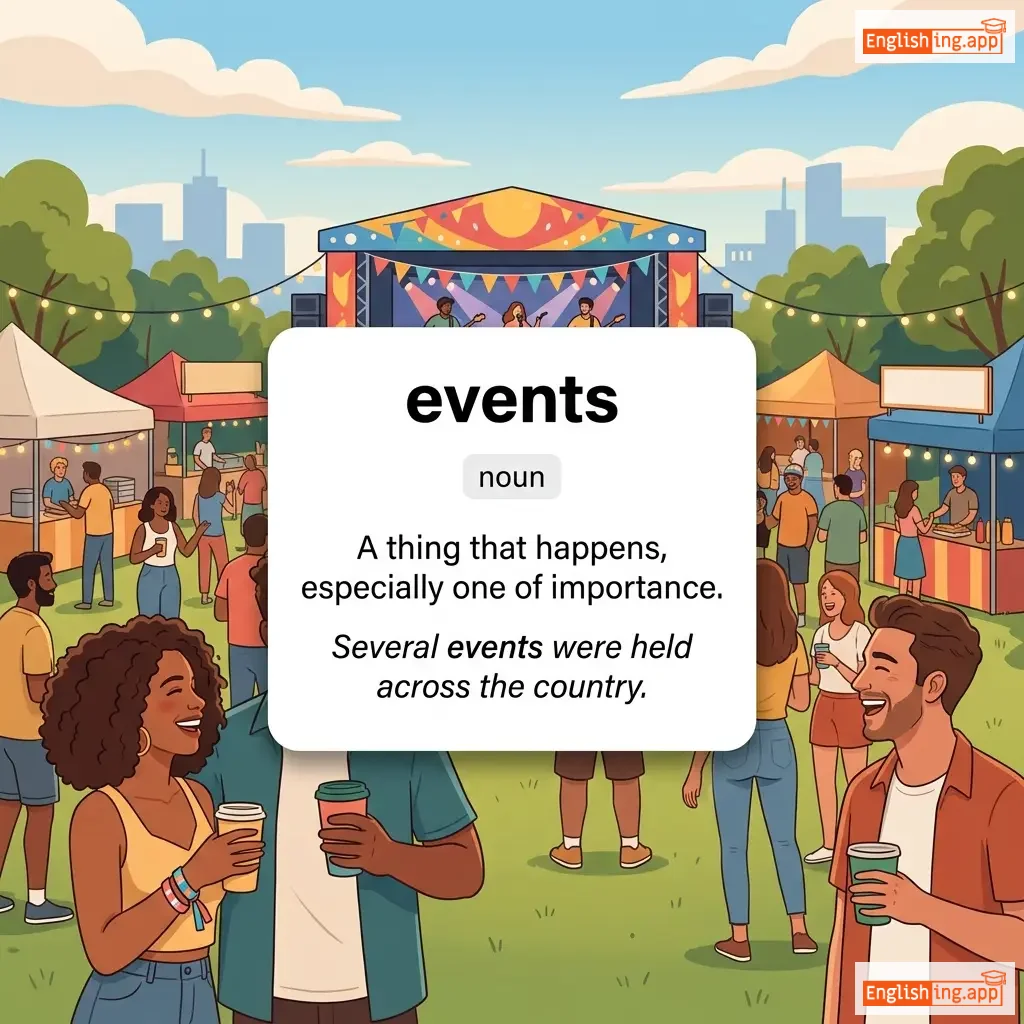
events definition card — visual illustration of the meaning
noun
ɪˈvɛnts
घटनाएँ (ghatnayein)

A thing that happens, especially one of importance.

"Several events were held across the country."

"देश भर में कई घटनाएँ आयोजित की गईं।" (Desh bhar mein kai ghatnayein aayojit ki gayi.)
adjective
/ɪˈvɛntʃuəl/
अंतिम (antim)

Happening at the end of a process or as the final result.

"His hard work led to his eventual success."

"उसका कठिन परिश्रम उसके अंतिम सफलता का कारण बना।" (Uska kathin parishram uske antim safalta ka kaaran bana.)
adverb
/ɪˈven.tʃu.ə.li/
आखिरकार (aakhirkaar)

in the end, especially after a long delay or series of problems

"He eventually finished his degree after many challenges."

"वह अंततः कई चुनौतियों के बाद अपनी डिग्री पूरी कर पाया।" (Vah antatah kai chunautiyon ke baad apni degree poori kar paaya.)
adverb
/ˈev.ər/
कभी (kabhi)

at any time; always; continuously

"Have you ever been to London?"

"क्या तुम कभी लंदन गए हो?" (Kya tum kabhi London gaye ho?)
adjective
/ˈevər ˈlæstɪŋ/
शाश्वत; स्थायी; (shashvat; sthayi)

eternal; permanent; enduring forever

"Their love is ever-lasting and will never fade."

"उनका प्यार शाश्वत है और कभी फीका नहीं पड़ेगा।" (unka pyaar shashvat hai aur kabhi feeka nahi padega.)
evergreen definition card — visual illustration of the meaning
adjective
/ˈɛv.ə.ɡriːn/
स्थायी हरा (sthaayi hara)

Remaining green and functional throughout the year; not shedding leaves seasonally.

"Evergreen trees like pine and fir stay green year-round."

"एवरग्रीन पेड़ जैसे पाइन और फर पूरे साल हरे रहते हैं।" (Evergreen ped jaise pain aur far poore saal hare rehte hain.)
adjective
/ˌɛvərˈlæstɪŋ/
अनन्तकालिक (anantkalik)

Lasting forever or for an indefinitely long time.

"The poet wrote about his everlasting love for nature."

"कवि ने प्रकृति के प्रति अपनी अनन्तकालिक प्रेम के बारे में लिखा।" (Kavi ne prakriti ke prati apni anantkalik prem ke baare mein likha.)
verb
/ɪˈvɜːrt/
बाहर की ओर घुमाना (bahar ki or ghoomana)

To turn inside out or outward.

"The surgeon had to evert the eyelid during the procedure."

"सर्जन को ऑपरेशन के दौरान पलक को पलटना पड़ा था।" (Sarjan ko operation ke dauran palk ko palatna pada tha.)
determiner
/ˈɛvri/
प्रत्येक (pratyek)

used to refer to all members of a group without exception

"She reads every book she can find."

"वह हर किताब पढ़ती है जो उसे मिलती है।" (vah har kitaab padhti hai jo use milti hai)
pronoun
/ˈɛvribɒdi/
सभी (sabhi)

all people; everyone

"Everybody enjoyed the party."

"सभी ने पार्टी का आनंद लिया।" (Sabhi ne party ka anand liya.)
adjective
/ˈɛvrideɪ/
प्रतिदिन (pratidin)

common or ordinary; occurring daily

"These shoes are perfect for everyday use."

"ये जूते प्रतिदिन उपयोग के लिए perfect हैं।" (Ye jute pratidin upyog ke liye perfect hain.)
pronoun
/ˈɛvrɪwʌn/
सब लोग (sab log)

every person; all people

"Everyone must bring their own lunch."

"सबको अपनी लंच लानी चाहिए।" (Sabko apni lunch lani chahiye.)
pronoun
/ˈɛvrɪθɪŋ/
सब कुछ (sab kuch)

all things; the whole lot

"He packed everything in his suitcase."

"उसने अपना सारा सामान सूटकेस में पैक कर लिया।" (Usne apna saara samaan suitcase mein pack kar liya.)
adverb
/ˈɛv.ri.wɛər/
हर जगह (har jagah)

in or to all places

"Tourists can be seen everywhere in the city during summer."

"गर्मी के मौसम में शहर में हर जगह पर्यटक देखे जा सकते हैं।" (garmi ke mausam mein shaher mein har jagah paryatak dekhe ja sakte hain.)
verb
/ɪˈvɪkt/
निकालना (nikaalna)

To expel someone from a property, usually by legal process.

"The landlord decided to evict the tenants for not paying rent."

"मालिक ने किरायेदारों को किराया न देने पर बाहर निकालने का निर्णय लिया।" (Malik ne kirayedaron ko kiraya na dene par baahar nikaalne ka nirnay liya.)
noun
/ˈɛv.ɪ.dəns/
साक्ष्य (saakshya)

facts or information that show whether something is true or not

"The lawyer presented new evidence in court."

"वकील ने अदालत में नया साक्ष्य प्रस्तुत किया।" (Vakeel ne adalat mein naya saakshya prastut kiya.)
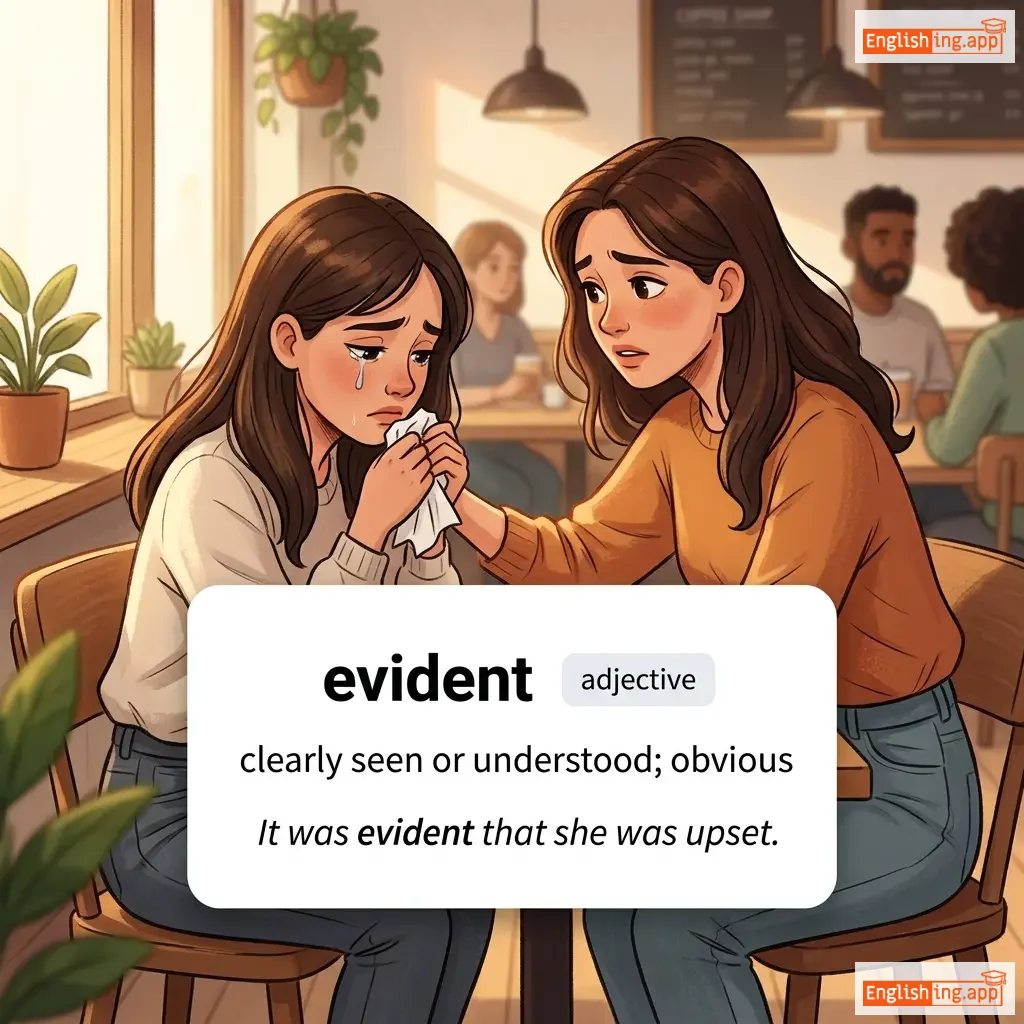
evident definition card — visual illustration of the meaning
adjective
/ˈɛvɪdənt/
स्पष्ट (spasht)

clearly seen or understood; obvious

"It was evident that she was upset."

"यह स्पष्ट था कि वह उदास थी।" (Yeh spasht tha ki wah udaas thi.)
adjective
/ˌɛvɪˈdɛnʃəl/
प्रमाणात्मक (pramaatmak)

relating to or providing evidence

"The lawyer presented evidential support for her claims."

"वकील ने अपने दावों के लिए प्रमाणात्मक समर्थन प्रस्तुत किया।" (Vakeel ne apne daavon ke liye pramaatmak samarthan prastut kiya.)
adjective
/ˈiːvəl/
दुष्ट (dusht)

Profoundly immoral and wicked.

"They believed the villain was the embodiment of evil."

"उन्हें विश्वास था कि खलनायक दुष्टता का प्रतीक था।" (Unhein vishwas tha ki khalaanayak dushtata ka pratik tha.)
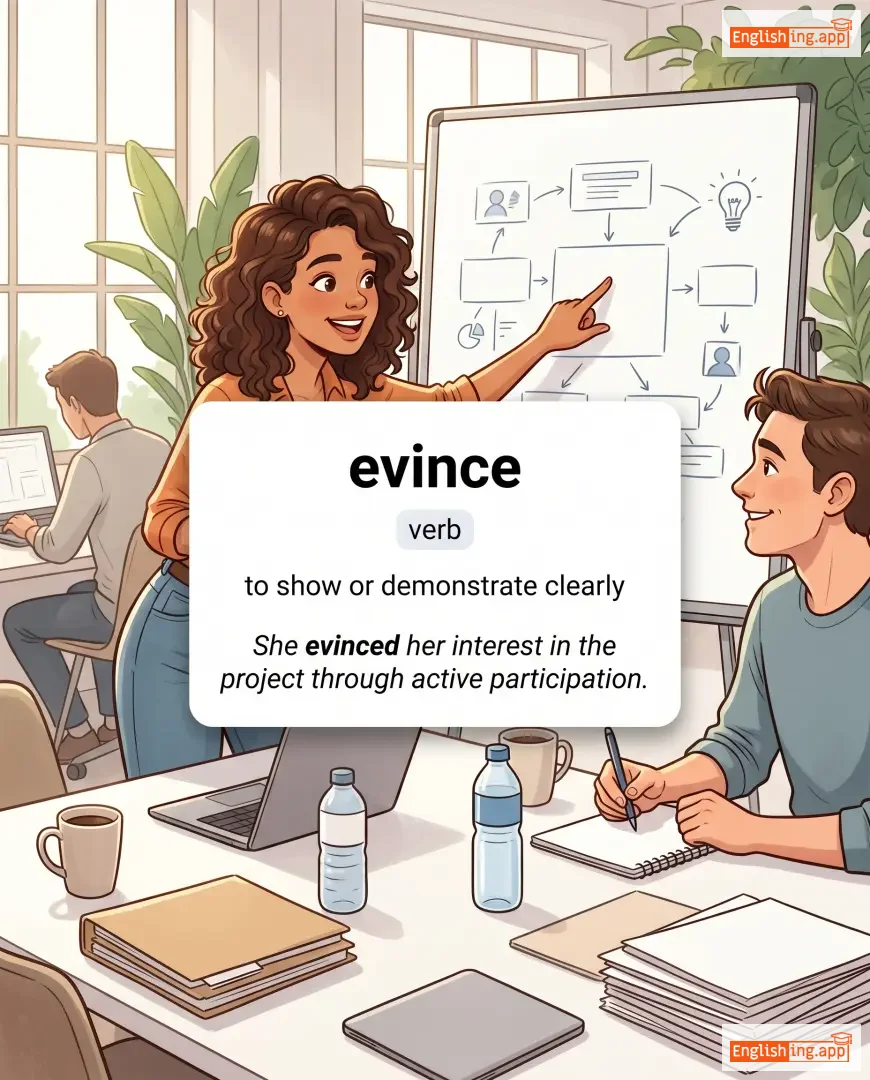
evince definition card — visual illustration of the meaning
verb
/ɪˈvɪns/
प्रकट करना (prakat karna)

to show or demonstrate clearly

"She evinced her interest in the project through active participation."

"वह सक्रिय भागीदारी के माध्यम से परियोजना में अपनी रुचि प्रदर्शित कर रही थी।" (Wah sakriya bhagidari ke madhyam se pariyojna mein apni ruchi pradarshit kar rahi thi.)
verb
/ɪˈvɪsəˌreɪt/
आंत निकालना, नष्ट करना (aant nikaalna, nasht karna)

to remove the internal organs of; to deprive of essential content

"The critics eviscerated the movie for its weak storyline."

"आलोचकों ने कमजोर कहानी के लिए फिल्म को नष्ट कर दिया।" (Aalochakon ne kamzor kahani ke liye film ko nasht kar diya.)
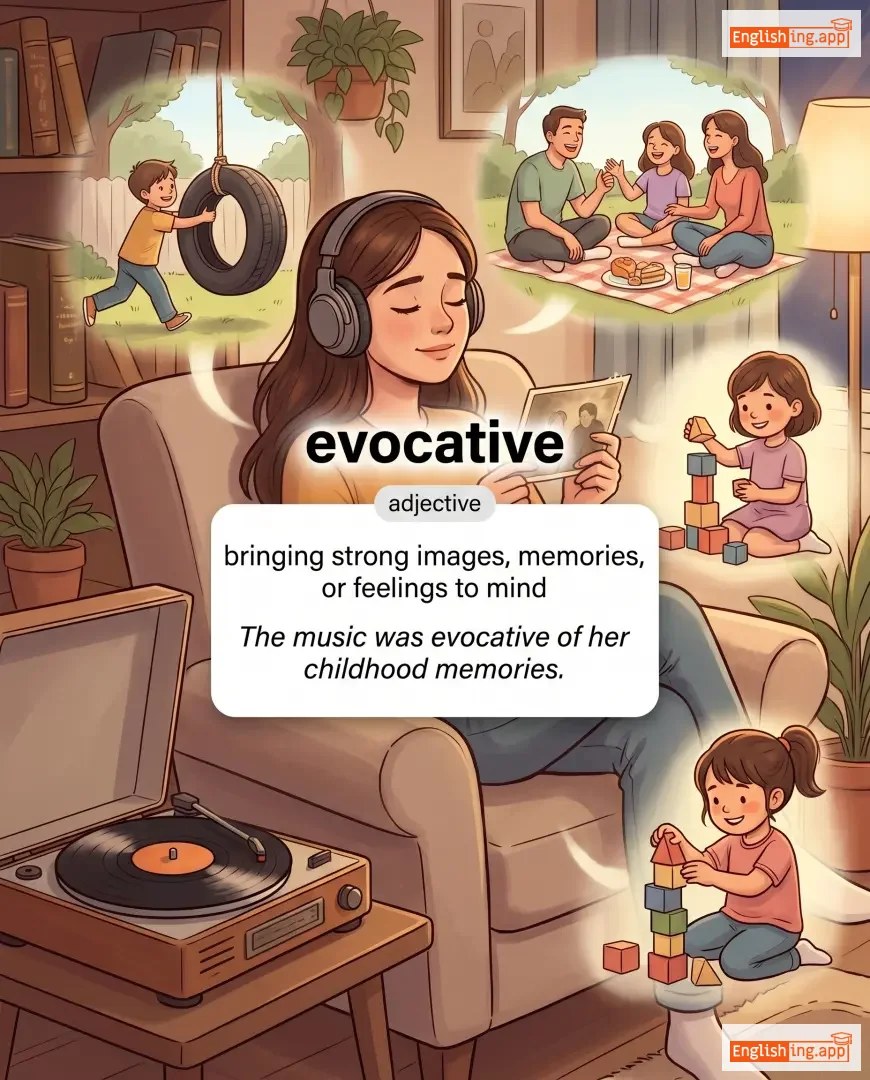
evocative definition card — visual illustration of the meaning
adjective
/ɪˈvɒkətɪv/
स्मृति जागृत करने वाला (smriti jagrit karne wala)

bringing strong images, memories, or feelings to mind

"The music was evocative of her childhood memories."

"संगीत ने उसके बचपन की यादों को ताजा कर दिया।" (Sangeet ne uske bachpan ki yaadon ko taaza kar diya.)
verb
/ɪˈvoʊk/
जागाना (jagana)

to bring a feeling, memory, or image into the mind

"The old song evoked memories of her childhood."

"पुराना गाना उसके बचपन की यादें जगा देता था।" (Purana gana uske bachpan ki yaadein jaga deti thi.)
noun
/ˌɛvəˈluːʃən/
विकास (vikas)

the gradual development of something, especially from a simple to a more complex form

"The theory of evolution explains how species change over time."

"विकास का सिद्धांत यह बताता है कि प्रजातियाँ समय के साथ कैसे बदलती हैं।" (Vikas ka siddhant yah batata hai ki prajatiyan samay ke saath kaise badalti hain.)
evolutionary definition card — visual illustration of the meaning
adjective
/ˌɛvəlʊˈʃɛnəri/
विकासीय (evolutionary)

relating to or characterized by evolution, especially in terms of gradual development or change

"The company has adopted an evolutionary approach to its product development."

"कंपनी ने अपने उत्पाद विकास के लिए एक विकासवादी दृष्टिकोण अपनाया है।" (kampani ne apne utpaad vikaas ke liye ek vikasvaadi drishtikon apnaaya hai.)
verb
/ɪˈvɑːlv/
विकसित होना (vikasit hona)

to develop gradually, especially into a more complex or advanced state

"Over time, the company evolved into a global brand."

"समय के साथ, कंपनी एक वैश्विक ब्रांड में विकसित हो गई।" (Samay ke saath, company ek vaishvik brand mein viksit ho gayi.)
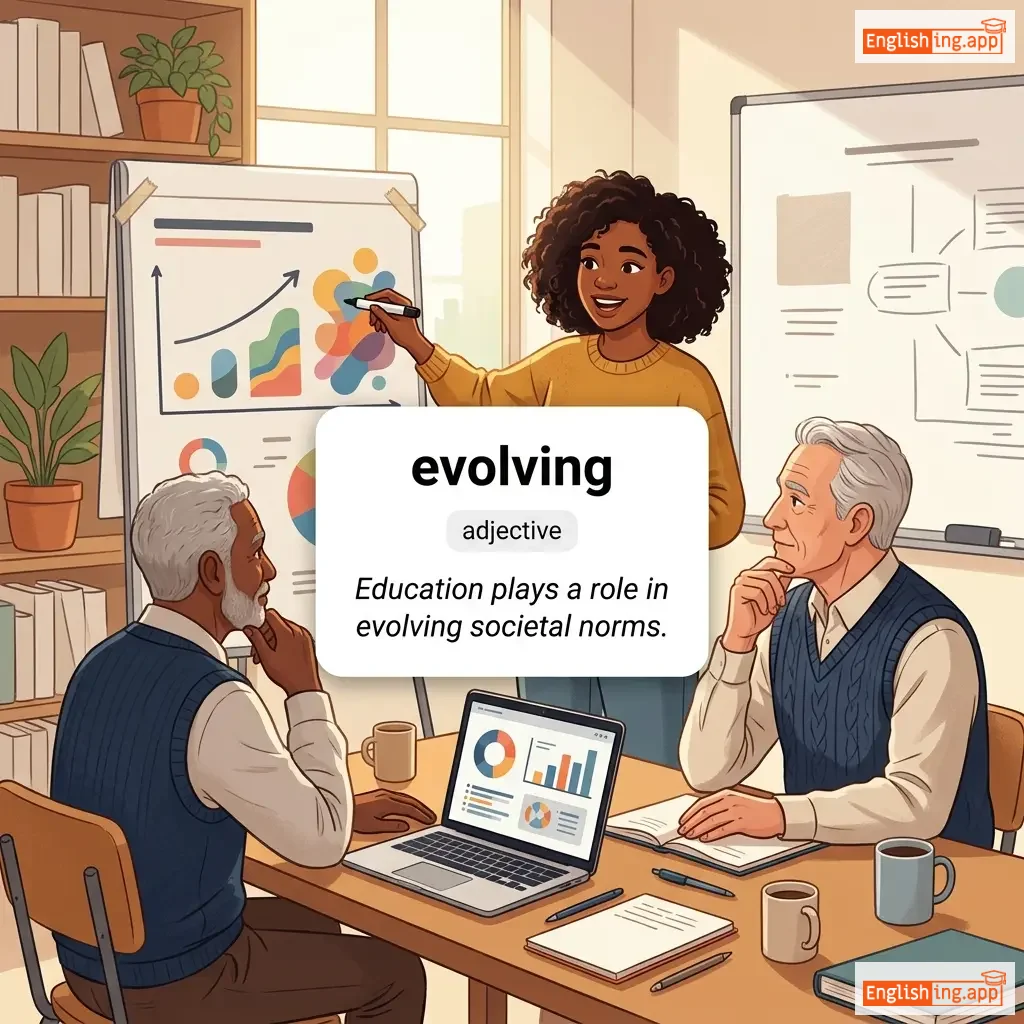
evolving definition card — visual illustration of the meaning
adjective
ɪˈvɒlvɪŋ
विकसित हो रहा (vikasit ho raha)

Developing gradually, especially from a simple to a more complex form; changing and developing.

"Education plays a role in evolving societal norms."

"शिक्षा समाज के मानकों को विकसित करने में भूमिका निभाती है।" (Shiksha samāj ke mānako ko vikasit karne meṁ bhūmikā nibhātī hai.)
noun
/juː/
मादा भेड़ (maada bhed)

a female sheep

"The ewe gave birth to two lambs in the spring."

"वसंत में मादा भेड़ ने दो मेमनों को जन्म दिया।" (Vasant mein maada bhed ne do memnon ko janm diya.)
noun
/ˈjuːər/
पानी का बर्तन (pani ka bartann)

a large jug with a wide mouth, especially used in the past for carrying water

"The servant filled the ewer with fresh water."

"नौकर ने यूर में ताजा पानी भरा।" (Naukar ne yoor mein taza pani bhara.)
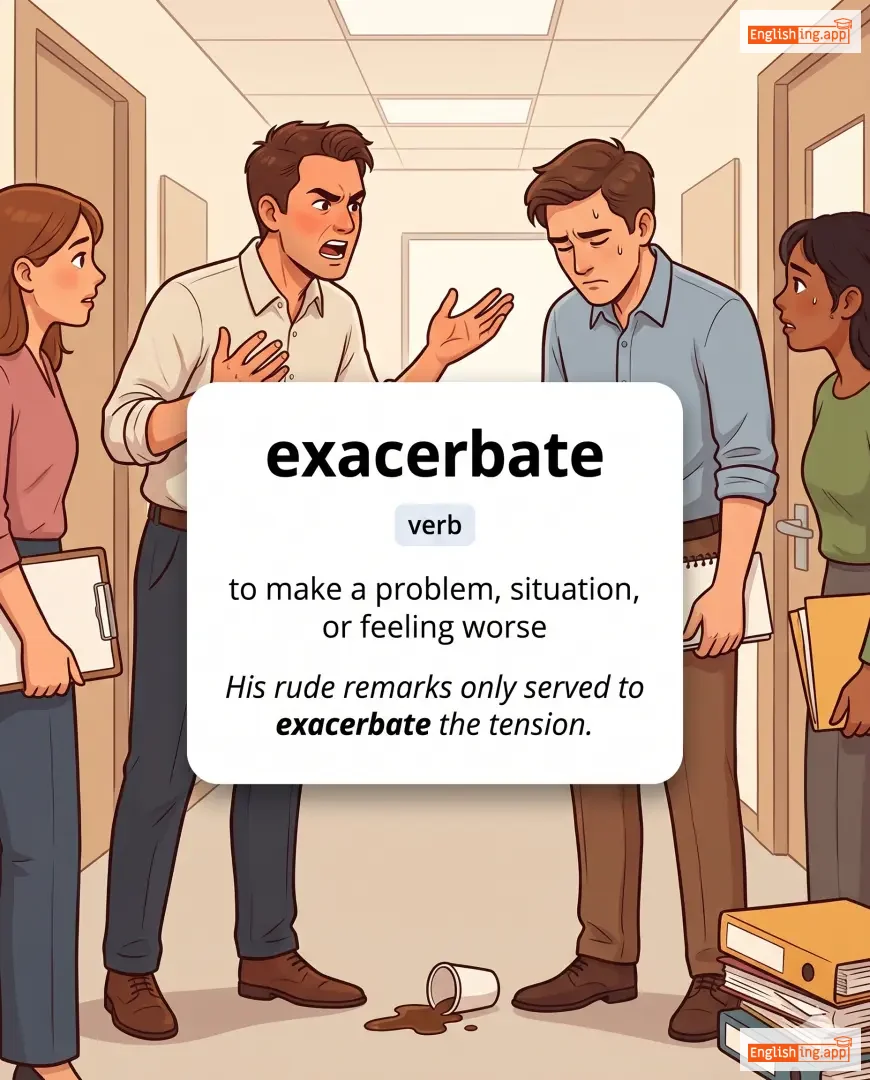
exacerbate definition card — visual illustration of the meaning
verb
/ɪɡˈzæsərˌbeɪt/
बढ़ाना (badhana)

to make a problem, situation, or feeling worse

"His rude remarks only served to exacerbate the tension."

"उसकी अपमानजनक टिप्पणियाँ केवल तनाव को बढ़ाने का काम कर रही थीं।" (uski apmaanjanak tippaniyan keval tanav ko badhane ka kaam kar rahi thin.)
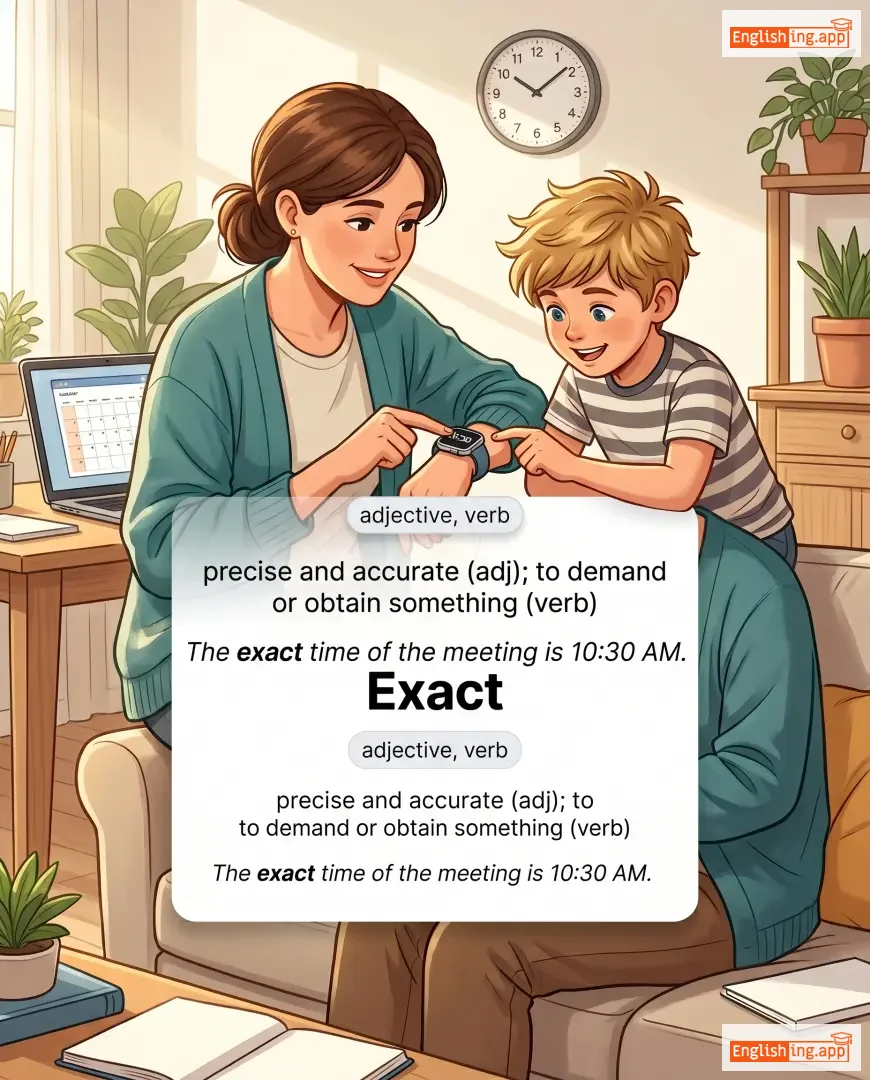
Exact definition card — visual illustration of the meaning
adjective, verb
/ɪɡˈzækt/
सटीक (sateek)

precise and accurate (adj); to demand or obtain something (verb)

"The exact time of the meeting is 10:30 AM."

"बैठक का सटीक समय 10:30 AM है।" (baithak ka sateek samay 10:30 AM hai.)
adjective
/ɪɡˈzæktɪŋ/
कठोर (kathor)

demanding a lot of effort, attention, or precision

"She is known for her exacting standards in design."

"वह डिजाइन में अपनी कठोर मानकों के लिए जानी जाती है।" (vah design mein apni kathor maankon ke liye jaani jaati hai.)
noun
/ɪɡˈzækʃən/
जबरदस्ती वसूली (zabardasti vasooli)

the act of demanding or obtaining something, especially unfairly

"The peasants suffered under the king's heavy exactions."

"किसानों ने राजा की भारी जबरदस्ती वसूली के तहत कष्ट उठाया।" (Kisano ne raja ki bhaari zabardasti vasooli ke tahat kasht uthaya.)
adverb
/ɪɡˈzæktli/
सही तरीके से (sahi tareeke se)

in a precise or accurate manner; without any error

"She explained the process exactly as it happened."

"उसने प्रक्रिया को ठीक वैसा ही समझाया जैसा हुआ था।" (Usne prakriya ko thik waisa hi samjhaya jaisa hua tha.)
verb
/ɪɡˈzædʒəˌreɪt/
अतिरंजित करना (atiranjit karna)

to describe something as better, worse, or more important than it really is

"He tends to exaggerate his achievements."

"वह अपनी उपलब्धियों को बढ़ा-चढ़ा कर प्रस्तुत करता है।" (vah apni uplabdhiyon ko badha-chadha kar prastut karta hai.)
noun
/ɪɡˌzædʒ.əˈreɪ.ʃən/
अतिरेक (atirek)

a statement that represents something as better or worse than it really is

"His story about the fish he caught was clearly an exaggeration."

"उसकी मछली पकड़ने की कहानी स्पष्ट रूप से एक अतिरेक थी।" (uski machhli pakadne ki kahani spashth roop se ek atirek thi)
verb
/ɪɡˈzɔːlt/
उच्च प्रशंसा करना, सम्मानित करना (uchch prashansa karna, sammaanit karna)

to praise highly or raise in rank, honor, or power

"The community exalted the teacher for his dedication."

"समुदाय ने शिक्षक को उनकी निष्ठा के लिए सम्मानित किया।" (Samudaay ne shikshak ko unki nishtha ke liye sammaanit kiya.)
noun
/ɪɡˈzæm/
परीक्षा (pariksha)

a formal test of a person's knowledge or skill in a subject

"She studied hard for her final exam."

"वह अपनी अंतिम परीक्षा के लिए कड़ी मेहनत कर रही थी।" (Woh apni antim pariksha ke liye kadi mehnat kar rahi thi.)
noun
/ɪɡˌzæm.ɪˈneɪ.ʃən/
परीक्षा (pariksha)

a formal test of knowledge or ability

"She is preparing for her final examination."

"वह अपनी अंतिम परीक्षा की तैयारी कर रही है।" (Vah apni antim pariksha ki taiyari kar rahi hai.)
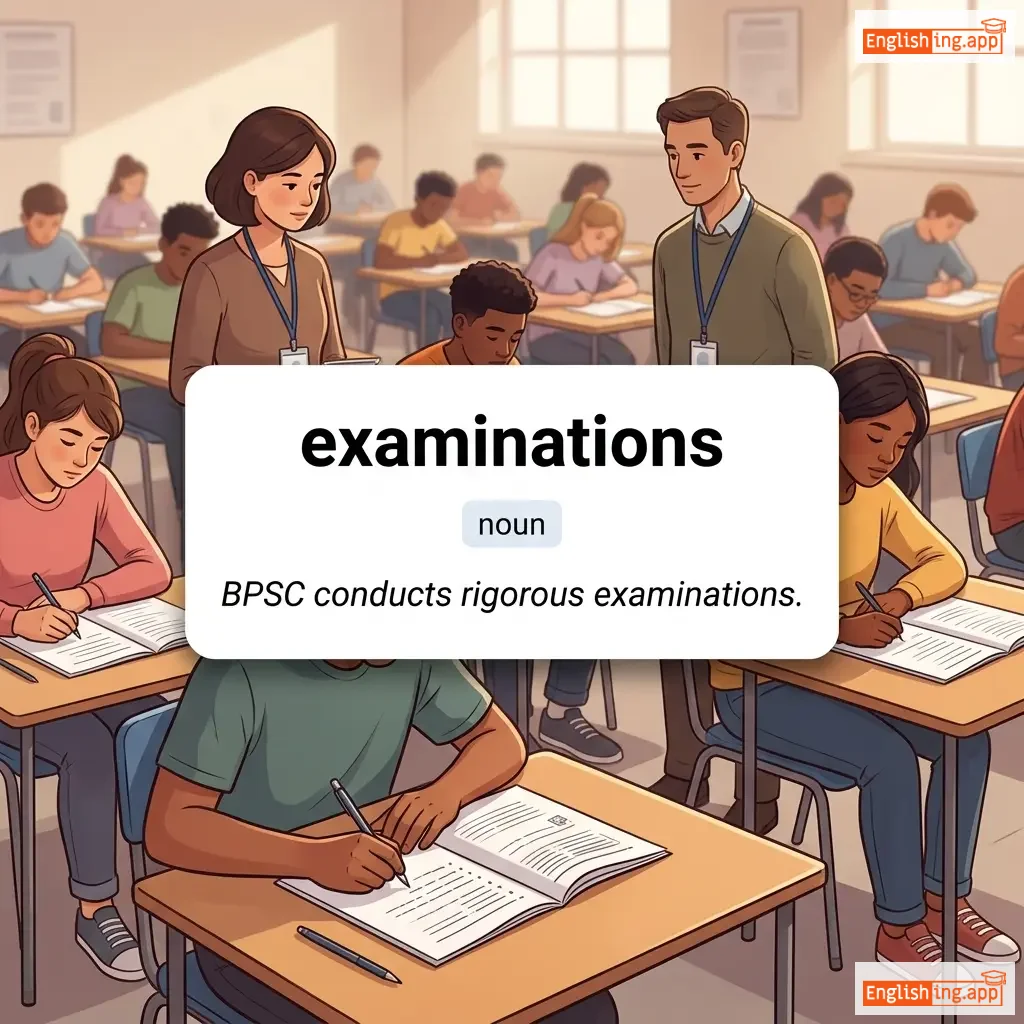
examinations definition card — visual illustration of the meaning
noun
ɪɡˌzæm.ɪˈneɪ.ʃənz
परीक्षाएं (parikshaen)

A detailed inspection or investigation; a formal test of a person's knowledge or proficiency.

"BPSC conducts rigorous examinations."

"बीपीएससी कठोर परीक्षाएं आयोजित करता है।" (BPSC kathor parikshaen aayojit karta hai.)
verb
/ɪɡˈzæm.ɪn/
सुख (sukh)

to look at something carefully in order to understand it

"The doctor will examine the patient tomorrow."

"जब उसने पुरस्कार प्राप्त किया तो वह अपनी खुशी छिपा नहीं पाई।" (Jab usne puraskar prapt kiya to wah apni khushi chhupa nahi paayi.)
noun
/ɪɡˌzæm.ɪˈniː/
परिक्षार्थी (pariksharthi)

a person who is being tested in an examination

"Each examinee was given two hours to complete the test."

"प्रत्येक परीक्षार्थी को परीक्षा पूरा करने के लिए दो घंटे का समय दिया गया था।" (pratyek pariksharthi ko pariksha poora karne ke liye do ghante ka samay diya gaya tha.)
noun
/ɪɡˈzæmɪnər/
परीक्षक (parikshak)

A person who tests or inspects knowledge, skills, or qualifications

"The examiner reviewed each student's answer sheet carefully."

"परीक्षक ने प्रत्येक छात्र की उत्तर पुस्तिका ध्यान से जांची।" (parikshak ne pratyek chhatra ki uttar pustika dhyan se janchi)
noun
/ɪɡˈzɑːm.pəl/
उदाहरण (udaharan)

a thing or person regarded as a model to be followed or avoided

"He is a good example of a hardworking student."

"वह एक मेहनती छात्र का अच्छा उदाहरण है।" (Vah ek mehnati chhatra ka accha udaharan hai.)
verb
/ɪɡˈzæspəˌreɪt/
क्रोधित करना (krodhit karna)

to irritate or annoy intensely

"His constant complaints began to exasperate his coworkers."

"उसकी लगातार शिकायतें उसके सहकर्मियों को परेशान करने लगीं।" (Uski lagatar shikayaten uske sahkarmiyon ko pareshan karne lagi.)
adjective
/ɪɡˈzæspəˌreɪtɪd/
अत्यंत चिढ़ा हुआ (atyant chidha hua)

greatly annoyed or irritated

"She gave him an exasperated look after his repeated mistakes."

"उसने अपनी बार-बार की गलतियों के बाद उसे एक चिढ़ी हुई नज़र दी।" (Usne apni baar-baar ki galtiyon ke baad use ek chidhi hui nazar di.)
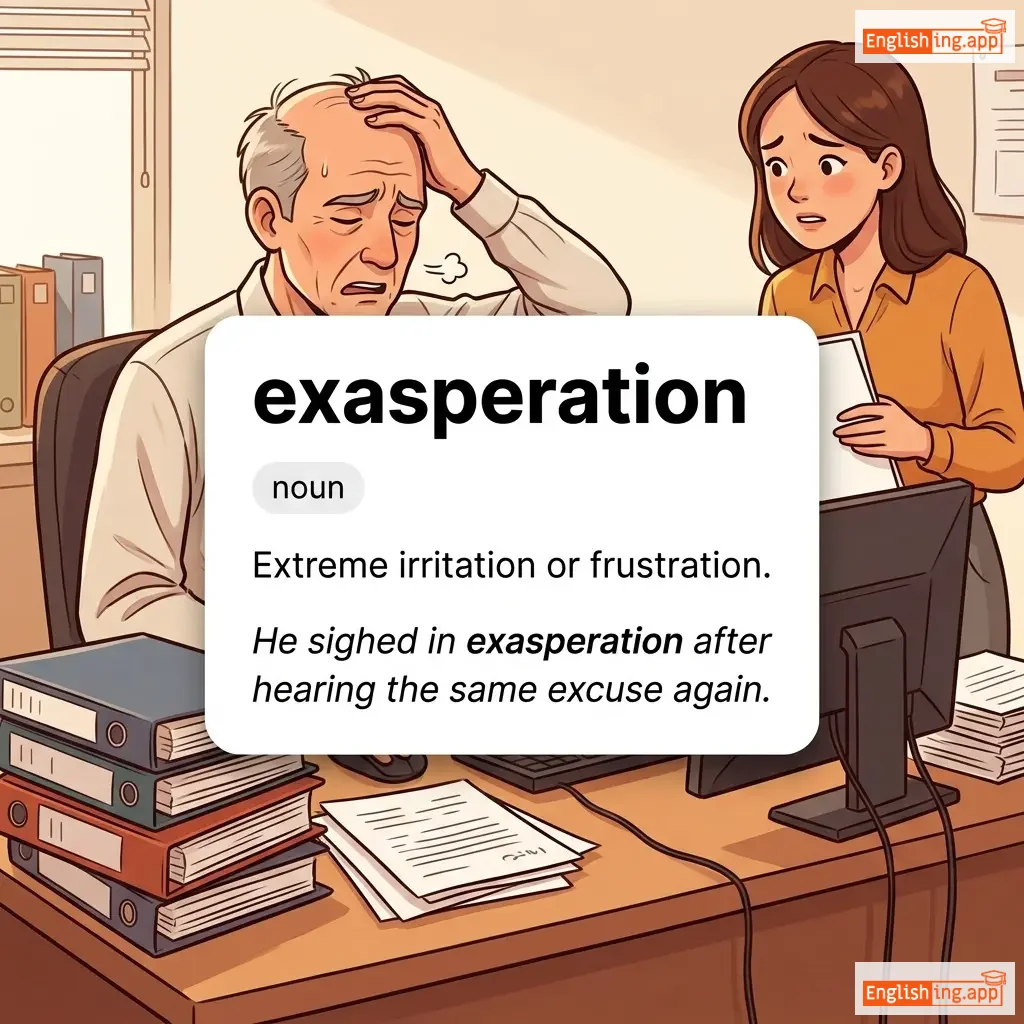
exasperation definition card — visual illustration of the meaning
noun
ɪɡˌzæs.pəˈreɪ.ʃən
झुंझलाहट (exasperation)

Extreme irritation or frustration.

"He sighed in exasperation after hearing the same excuse again."

"उसने बार-बार उसी बहाने को सुनकर अत्यंत झुंझलाहट के साथ सांस छोड़ दी।" (Usne baarbaar usi bahane ko sunakar atyant jhunjhalaht ke saath saans chod di.)
verb
/ˈɛkskəˌveɪt/
सुख (sukh)

to dig out or remove earth carefully, often for building or archaeological purposes

"The workers excavated the site to prepare for construction."

"जब उसे पुरस्कार मिला तो वह अपनी खुशी छुपा नहीं सकी।" (Jab use puraskaar mila to vah apni khushi chhupa nahi sakee.)