वोकैबुलरीज

इंग्लिश वोकैबुलरी डिस्कवर, लर्न और मास्टर करें

adjective
/ɪˈkwɪvələnt/
समान; समकक्ष (saman; samaksh)

Equal in value, function, meaning, or effect.

"One euro is roughly equivalent to one dollar."

"एक यूरो लगभग एक डॉलर के समान है।" (Ek euro lagbhag ek dollar ke saman hai.)
adjective
/ɪˈkwɪvəkəl/
अस्पष्ट (aspasht)

Open to more than one interpretation; ambiguous.

"His equivocal answer confused everyone."

"उसका अस्पष्ट उत्तर सभी को भ्रमित कर गया।" (Uska aspasht uttar sabhi ko bhramit kar gaya.)
equivocate definition card — visual illustration of the meaning
verb
/ɪˈkwɪvəˌkeɪt/
संदिग्ध तरीके से बोलना (sandigdh tareeke se bolna)

To speak ambiguously or avoid giving a clear answer.

"The politician equivocated when asked about the scandal."

"राजनीतिज्ञ ने स्कैंडल के बारे में पूछे जाने पर संदेहास्पद तरीके से जवाब दिया।" (Rajniti-jñ ne scandal ke baare mein pooche jaane par sandigdh tareeke se jawaab diya.)
noun
/ɪˌkwɪvəˈkeɪʃən/
अस्पष्टता का उपयोग (aspashtata ka upyog)

The use of ambiguous language to conceal the truth or to avoid committing oneself.

"The politician’s equivocation frustrated voters who wanted a clear answer."

"राजनीतिक व्यक्ति की अस्पष्टता ने उन मतदाताओं को निराश किया जो स्पष्ट उत्तर चाहते थे।" (Rajnaitik vyakti ki aspashtata ne un matdataon ko nirash kiya jo spasht uttar chahte the.)
noun
/ˈɪərə/
युग (yug)

a long and distinct period of history with a particular feature or characteristic

"The invention of the internet marked a new era in communication."

"इंटरनेट के आविष्कार ने संचार में एक नए युग की शुरुआत की।" (Internet ke aavishkar ne sanchar mein ek naye yug ki shuruat ki.)
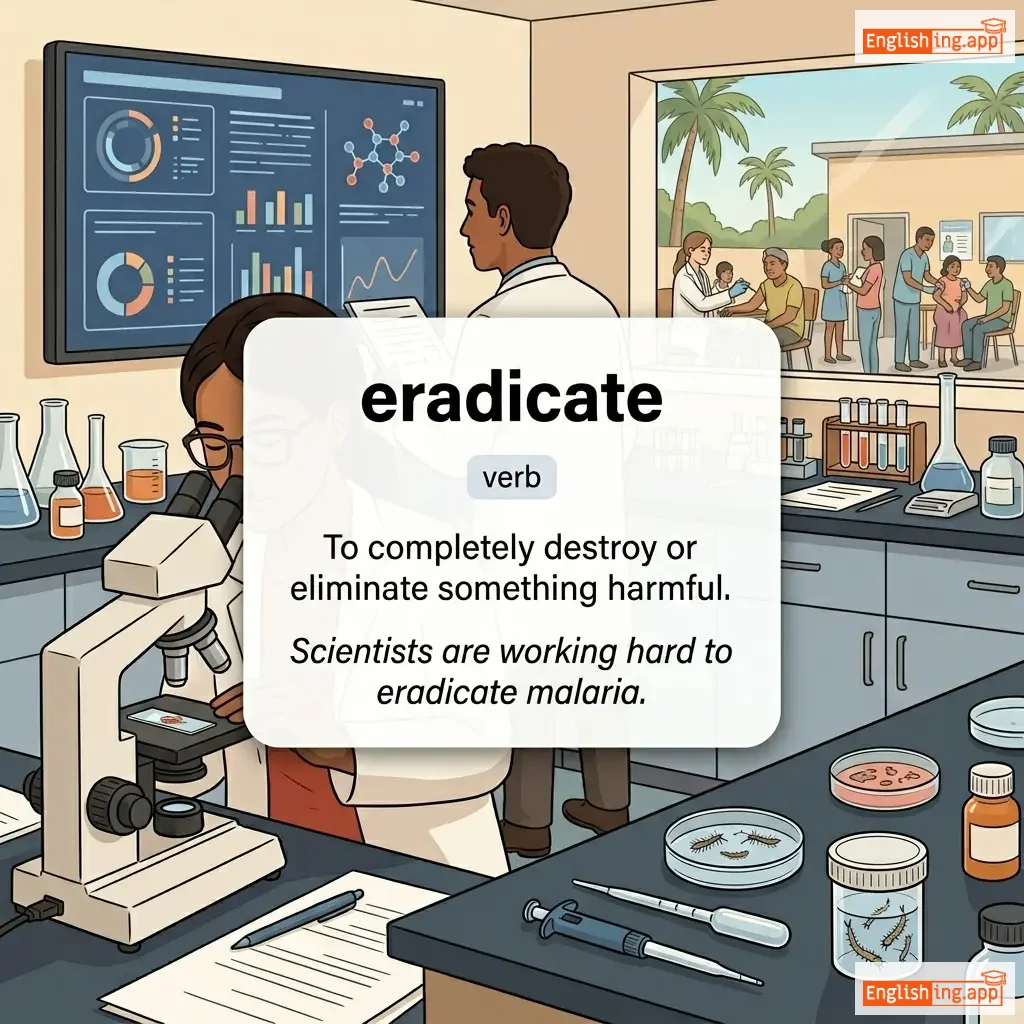
eradicate definition card — visual illustration of the meaning
verb
/ɪˈrædɪˌkeɪt/
नष्ट करना; मिटाना (nasht karna; mitana)

To completely destroy or eliminate something harmful.

"Scientists are working hard to eradicate malaria."

"वैज्ञानिक मलरिया को समाप्त करने के लिए कठिन परिश्रम कर रहे हैं।" (Vaigyanik malaria ko samaapt karne ke liye kathin parishram kar rahe hain.)
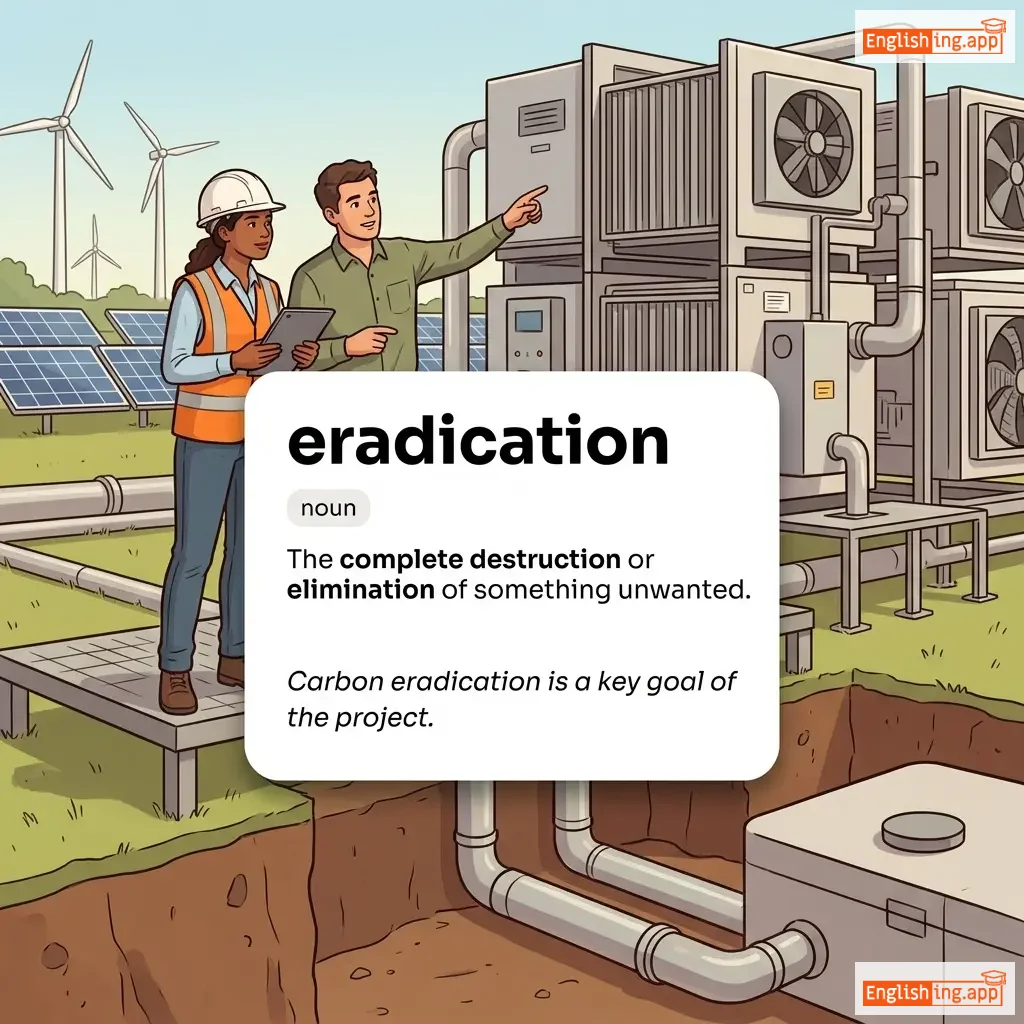
eradication definition card — visual illustration of the meaning
noun
ɪˌræd.ɪˈkeɪ.ʃən
नाश (nash)

The complete destruction or elimination of something unwanted.

"Carbon eradication is a key goal of the project."

"कार्बन नाश परियोजना का एक मुख्य लक्ष्य है।" (Carbon nash pariyojna ka ek mukhya lakshya hai.)
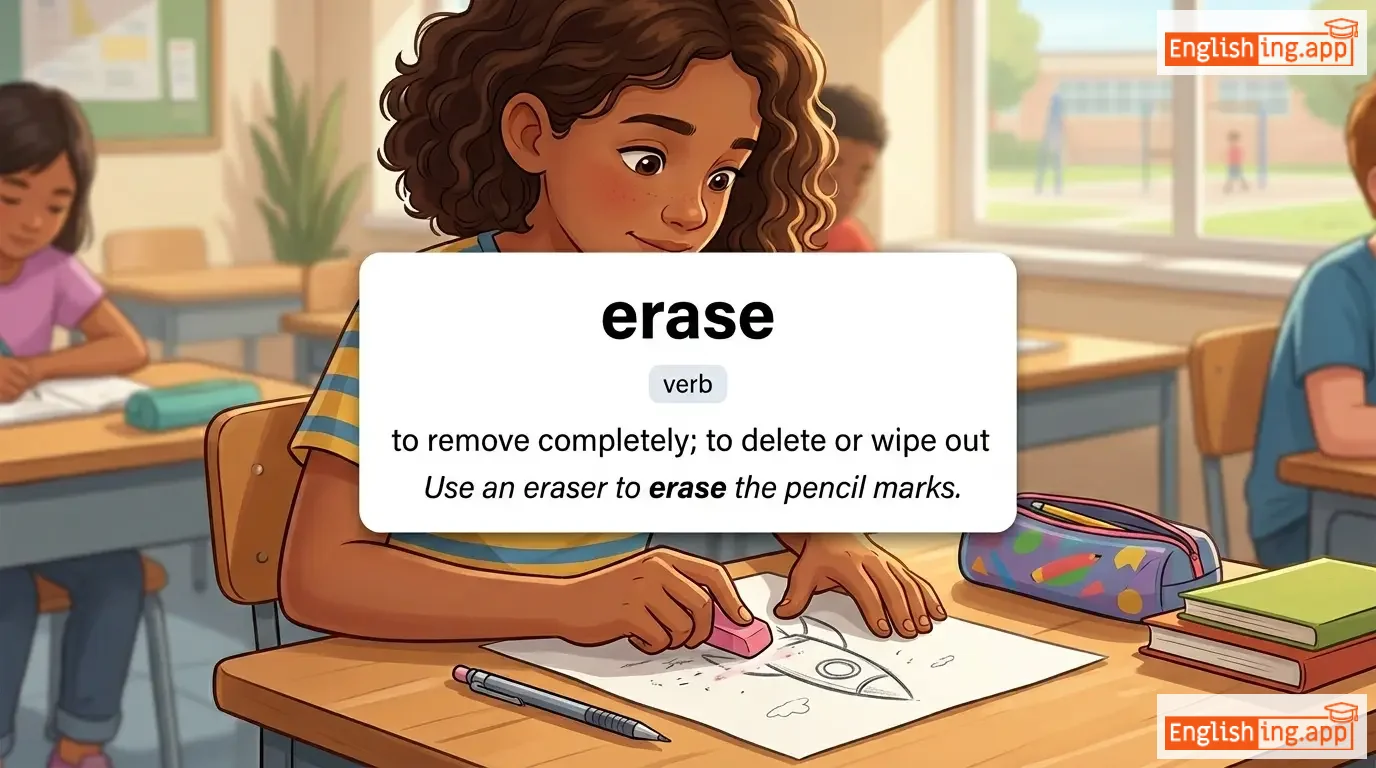
erase definition card — visual illustration of the meaning
verb
/ɪˈreɪs/
मिटाना (mitana)

to remove completely; to delete or wipe out

"Use an eraser to erase the pencil marks."

"पेंसिल के निशान मिटाने के लिए एक इरेज़र का उपयोग करें।" (Pencil ke nishan mitane ke liye ek eraser ka upyog karein.)
erect definition card — visual illustration of the meaning
verb
/ɪˈrɛkt/
बनाना (banana)

to build or construct something upright

"The workers erected a new building in the city center."

"मज़दूरों ने शहर के केंद्र में एक नई इमारत एरेक्ट की।" (Mazdooron ne shahar ke kendra mein ek nayi imarat erect ki.)
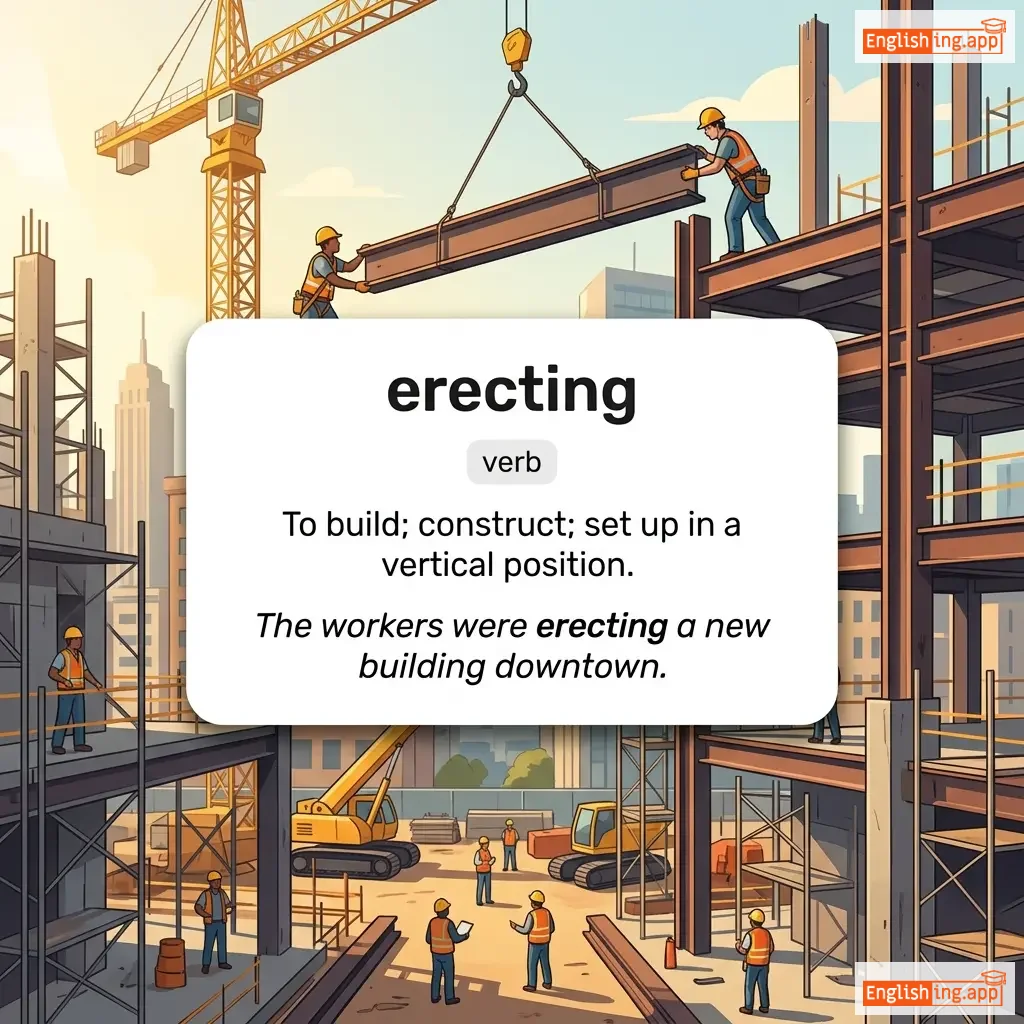
erecting definition card — visual illustration of the meaning
verb
ɪˈrɛktɪŋ
निर्माण (nirman)

To build; construct; set up in a vertical position.

"The workers were erecting a new building downtown."

"कर्मचारी एक नई इमारत बना रहे थे।" (Karmachari ek nai imarat bana rahe the.)
ergonomic definition card — visual illustration of the meaning
adjective
/ˌɜː.ɡəˈnɒm.ɪk/
एर्गोनोमिक (ergonomic)

Designed for efficiency and comfort in the working environment.

"The office chairs are designed to be ergonomic."

"ऑफिस की कुर्सियाँ इस तरह से डिज़ाइन की गई हैं कि वे आरामदायक हों।" (Offis ki kursiyan is tarah se dizain ki gayi hain ki ve aaramdayak hon.)
verb
/ɪˈroʊd/
क्षय करना (kshay karna)

to gradually wear away or destroy by natural forces such as water, wind, or chemical action

"The coastline has begun to erode due to constant waves."

"तटरेखा लगातार लहरों के कारण घिसने लगी है।" (Tatrekha lagatar lahron ke karan ghisne lagi hai.)
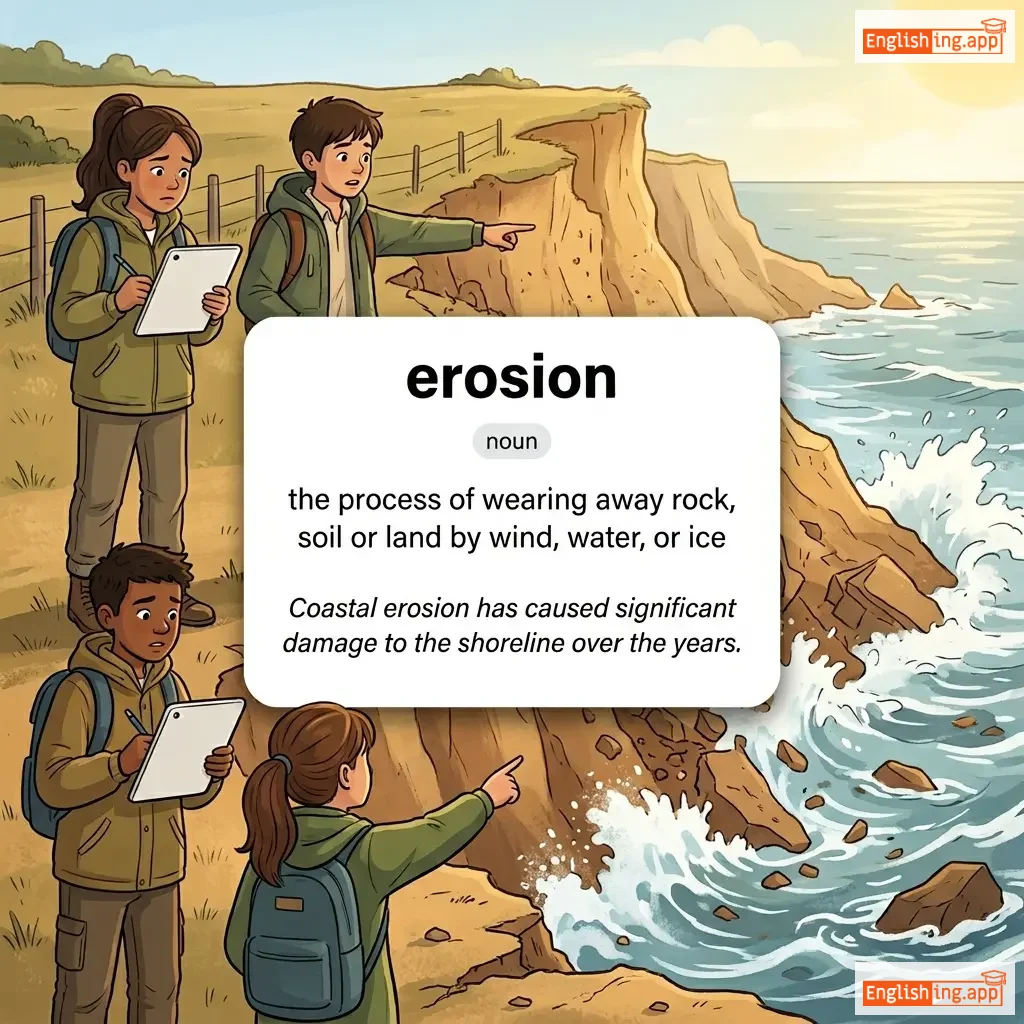
erosion definition card — visual illustration of the meaning
noun
/ɪˈroʊ.ʒən/
क्षय (kshay)

the process of wearing away rock, soil, or land by wind, water, or ice

"Coastal erosion has caused significant damage to the shoreline over the years."

"तटीय क्षय ने वर्षों में समुद्र तट को महत्वपूर्ण नुकसान पहुँचाया है।" (Tatiy kshay ne varshon mein samudra tat ko mahatvapurn nuksan pahunchaya hai.)
adjective
/ɪˈrɒtɪk/
कामुक (kaamuk)

relating to or tending to arouse sexual desire or excitement

"The novel contained several erotic scenes."

"उपन्यास में कई कामुक दृश्य थे।" (Upanyaas mein kai kaamuk drishya the.)
verb
/ɜːr/
गलती करना (galti karna)

to make a mistake or be incorrect

"To err is human, to forgive divine."

"गलती करना इंसान की स्वभाव है, माफ करना ईश्वर का कार्य।" (Galti karna insaan ki swabhav hai, maaf karna Ishwar ka kaam.)
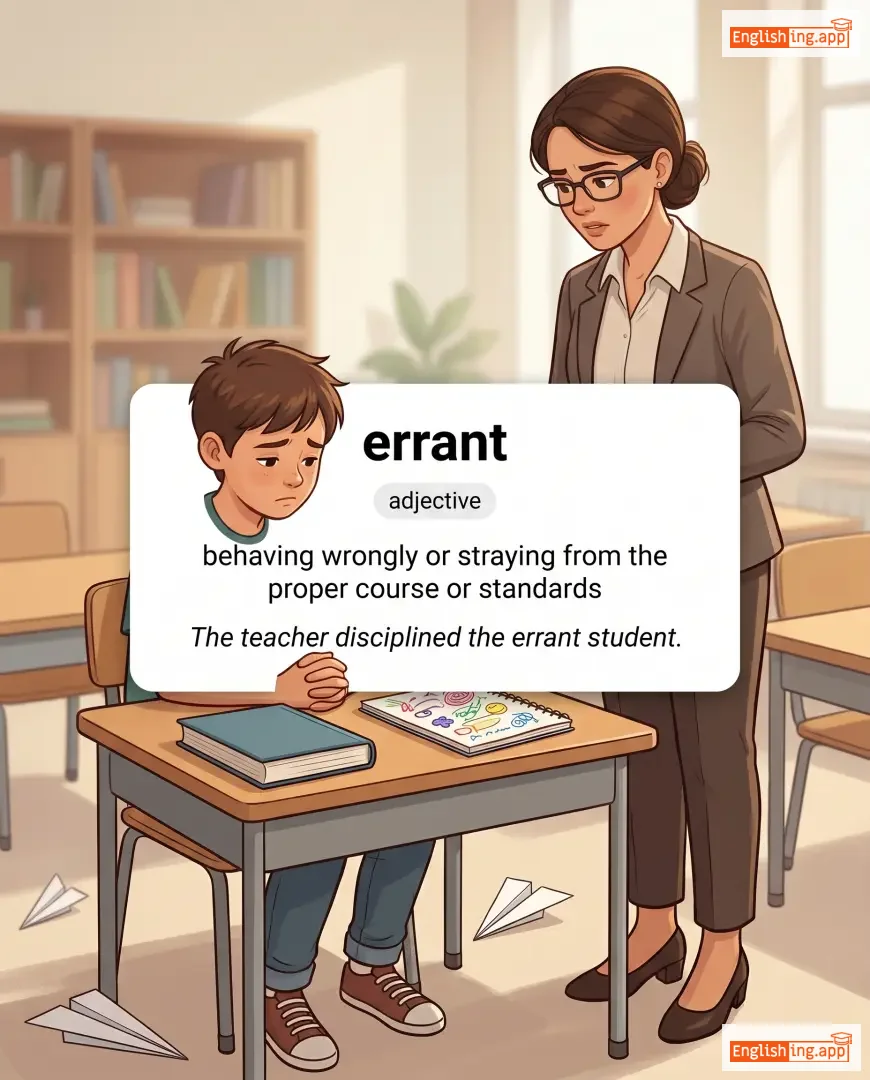
errant definition card — visual illustration of the meaning
adjective
/ˈɛrənt/
भ्रष्ट (bhrosht)

behaving wrongly or straying from the proper course or standards

"The teacher disciplined the errant student."

"शिक्षक ने भ्रष्ट छात्र को दंडित किया।" (Shikshak ne bhrosht chatra ko dandit kiya.)
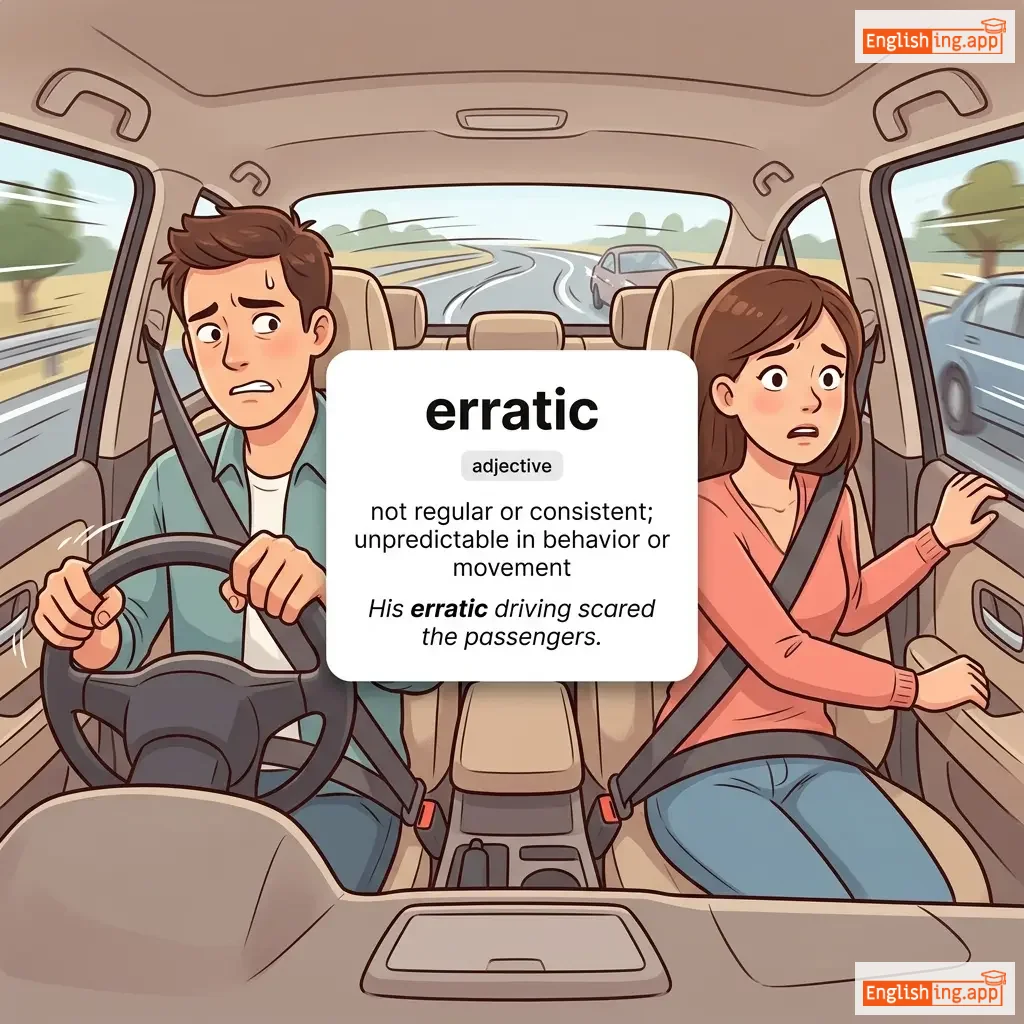
erratic definition card — visual illustration of the meaning
adjective
/ɪˈrætɪk/
अस्थिर (asthir)

not regular or consistent; unpredictable in behavior or movement

"His erratic driving scared the passengers."

"उसकी अराजक ड्राइविंग ने यात्रियों को डराया।" (Uski arajak driving ne yatriyon ko daraya.)
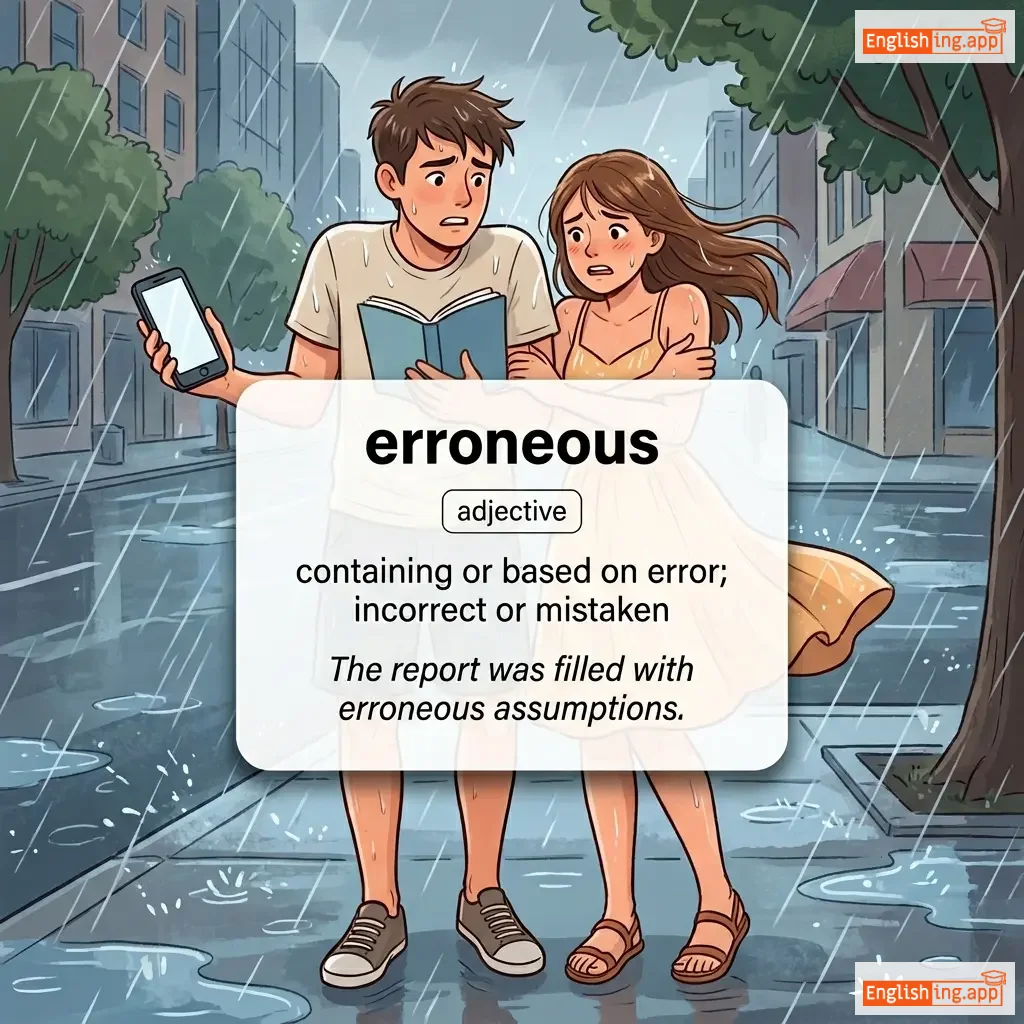
erroneous definition card — visual illustration of the meaning
adjective
/ɪˈrəʊniəs/
गलत (galat)

containing or based on error; incorrect or mistaken

"The report was filled with erroneous assumptions."

"रिपोर्ट में गलत अनुमान थे।" (Report mein galat anuman the.)
noun
/ˈɛrər/
त्रुटि (truti)

A mistake or inaccuracy in action, thought, or judgment.

"The report contained a major error in the data analysis."

"रिपोर्ट में डेटा विश्लेषण में एक महत्वपूर्ण त्रुटि थी।" (Report mein data vishleshan mein ek mahatvapurn truti thi.)
adjective
/ˈɛrzæts/
नकली (nakali)

made or used as a substitute, typically an inferior one

"The cheap shoes were made of ersatz leather."

"सस्ते जूते नकली चमड़े से बने थे।" (Saste joote nakali chamde se bane the.)
adjective
/ˈɜːrstwaɪl/
पूर्व (purv)

former or in the past

"They were erstwhile friends but no longer speak."

"वे पूर्व मित्र थे लेकिन अब बात नहीं करते।" (Ve purv mitr the lekin ab baat nahi karte.)
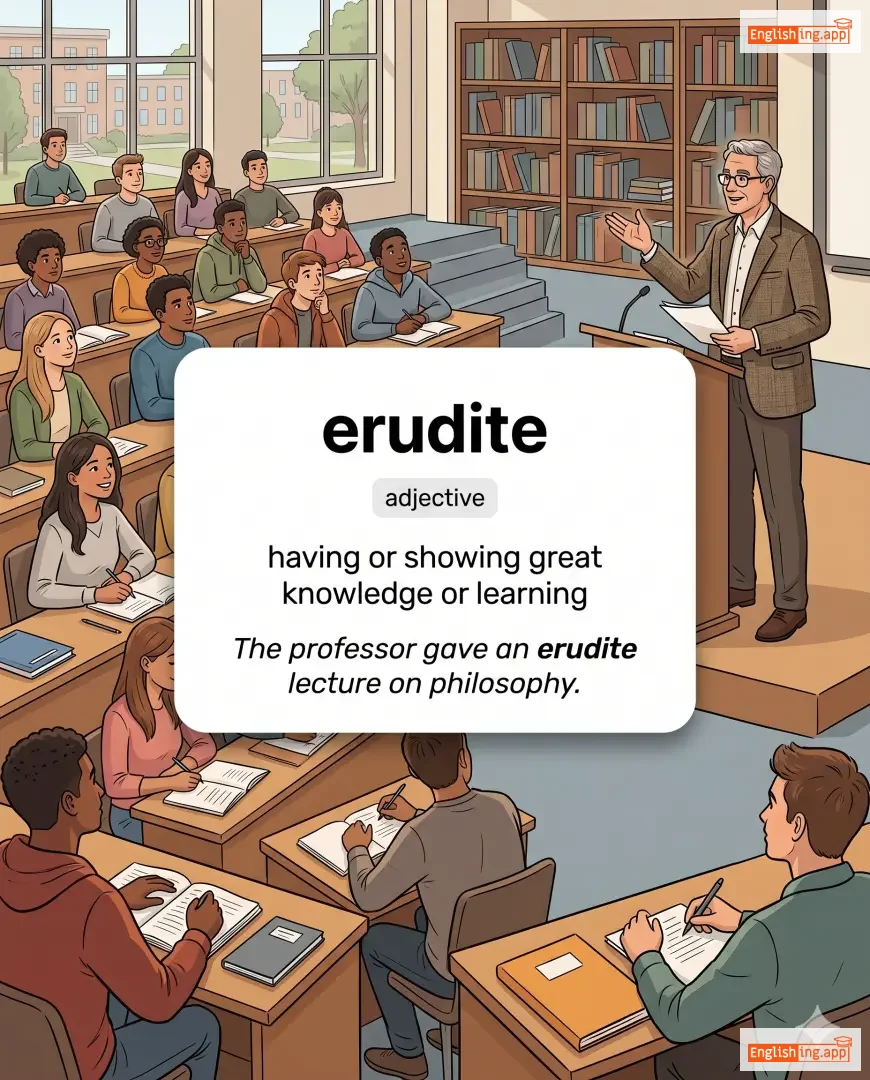
erudite definition card — visual illustration of the meaning
adjective
/ˈɛrjʊˌdaɪt/
ज्ञानी (gyani)

having or showing great knowledge or learning

"The professor gave an erudite lecture on philosophy."

"प्रोफेसर ने दर्शनशास्त्र पर एक ज्ञानी व्याख्यान दिया।" (Professor ne darshan shastra par ek gyani vyakhyan diya.)
erudition definition card — visual illustration of the meaning
noun
/ˌɛrjʊˈdɪʃən/
ज्ञान (gyan)

extensive knowledge acquired through reading and study

"Her erudition was evident in her detailed analysis of the text."

"उसकी ज्ञान का प्रदर्शन उसकी विस्तृत विश्लेषण में स्पष्ट था।" (Uski gyan ka pradarshan uski vistaarit vishleshan mein spasht tha.)
verb
/ɪˈrʌpt/
विस्फोट करना (visfot karna)

to burst forth suddenly and violently

"The volcano erupted after centuries of dormancy."

"ज्वालामुखी सदियों तक के अवसाद के बाद एरप्ट हुआ।" (Jwalamukhi sadiyon tak ke avsaad ke baad erupt hua.)
noun
/ɪˈrʌp.ʃən/
उत्क्षेपण; ज्वालामुखी विस्फोट (utkshepan, jwalamukhi visfot)

a sudden violent occurrence or outburst; volcanic explosion

"The volcanic eruption forced thousands of people to evacuate the area."

"ज्वालामुखी का विस्फोट हजारों लोगों को क्षेत्र से भागने के लिए मजबूर कर दिया।" (jwalamukhi ka visfot hazaron logon ko kshetra se bhagne ke liye majboor kar diya.)
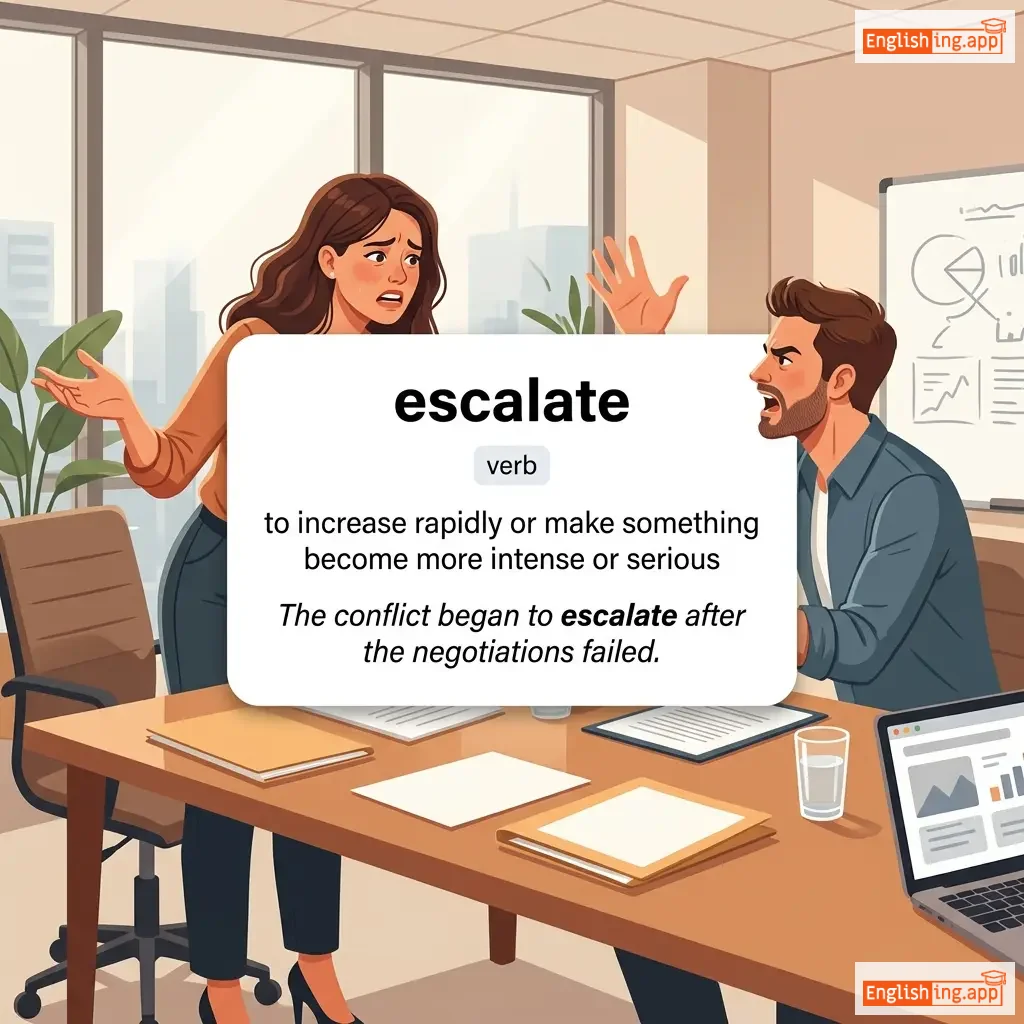
escalate definition card — visual illustration of the meaning
verb
/ˈɛskəleɪt/
बढ़ाना (badhana)

to increase rapidly or make something become more intense or serious

"The conflict began to escalate after the negotiations failed."

"संचालन विफल होने के बाद संघर्ष बढ़ने लगा था।" (Sanchaalan viphal hone ke baad sangharsh baṛhne laga thā.)
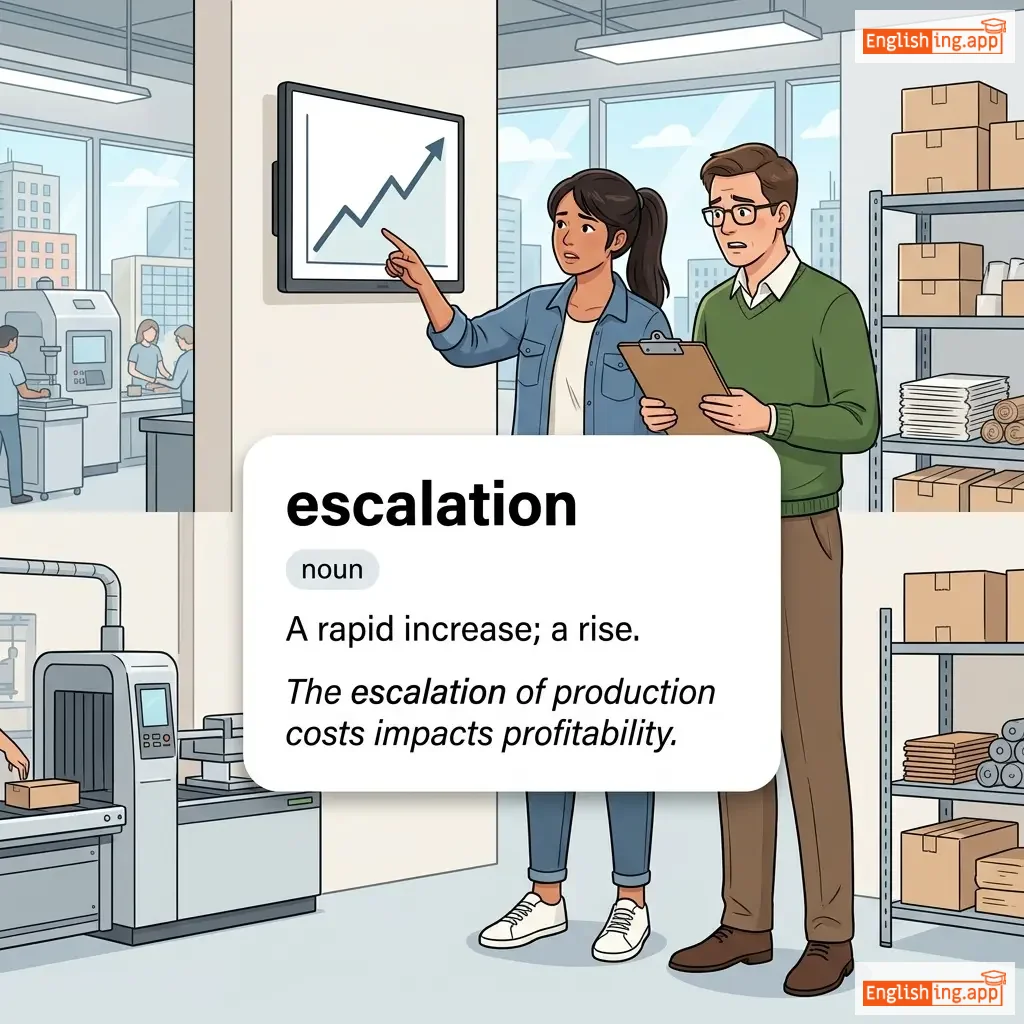
escalation definition card — visual illustration of the meaning
noun
ˌes.kəˈleɪ.ʃən
लागत या स्थिति में तेजी से वृद्धि (laagat ya sthiti mein tezi se vruddhi)

A rapid increase; a rise.

"The escalation of production costs impacts profitability."

"उत्पादन लागत में वृद्धि लाभप्रदता पर प्रभाव डालती है।" (utpadan laagat mein vruddhi laabhpradta par prabhav daalti hai.)
noun
/ˈɛskəpeɪd/
साहसिक कार्य (sahasic karya)

an adventurous, exciting, or reckless act

"Their summer escapade included camping and mountain climbing."

"उनकी समर एस्केपेड में कैम्पिंग और पहाड़ चढ़ाई शामिल थी।" (Unki summer escapade mein camping aur pahar chadhai shamil thi.)
verb
/ɪˈskeɪp/
भागना (bhagna)

To break free from confinement or control; to get away.

"The prisoner tried to escape from jail."

"कैदी ने जेल से भागने की कोशिश की।" (kaidi ne jail se bhagne ki koshish ki.)
verb
/ɪsˈtʃuː/
परहेज़ करना (parhez karna)

to deliberately avoid or abstain from something

"She chose to eschew junk food for a healthier diet."

"उसने एक हेल्थी डाइट के लिए जंक फूड से परहेज़ करने का फैसला किया।" (Usne ek healthy diet ke liye junk food se parhez karne ka faisla kiya.)
verb
/ˈɛskɔrt/
साथ जाना (saath jana)

to accompany someone; to guide or protect while going somewhere

"The guard escorted the visitor to the office."

"गार्ड ने आगंतुक को कार्यालय तक एस्कॉर्ट किया।" (GaarD ne aagantuk ko kaaryaalay tak escort kiya.)
noun
/ɪˈskʌtʃən/
कोट ऑफ़ आर्म्स वाला ढाल (kot of arms wala dhal)

a shield or emblem bearing a coat of arms

"The family crest was displayed on the escutcheon above the fireplace."

"परिवार का प्रतीक चिमनी के ऊपर एस्क्यचियन पर प्रदर्शित था।" (Parivaar ka pratik chimni ke upar escutcheon par pradarshit tha.)
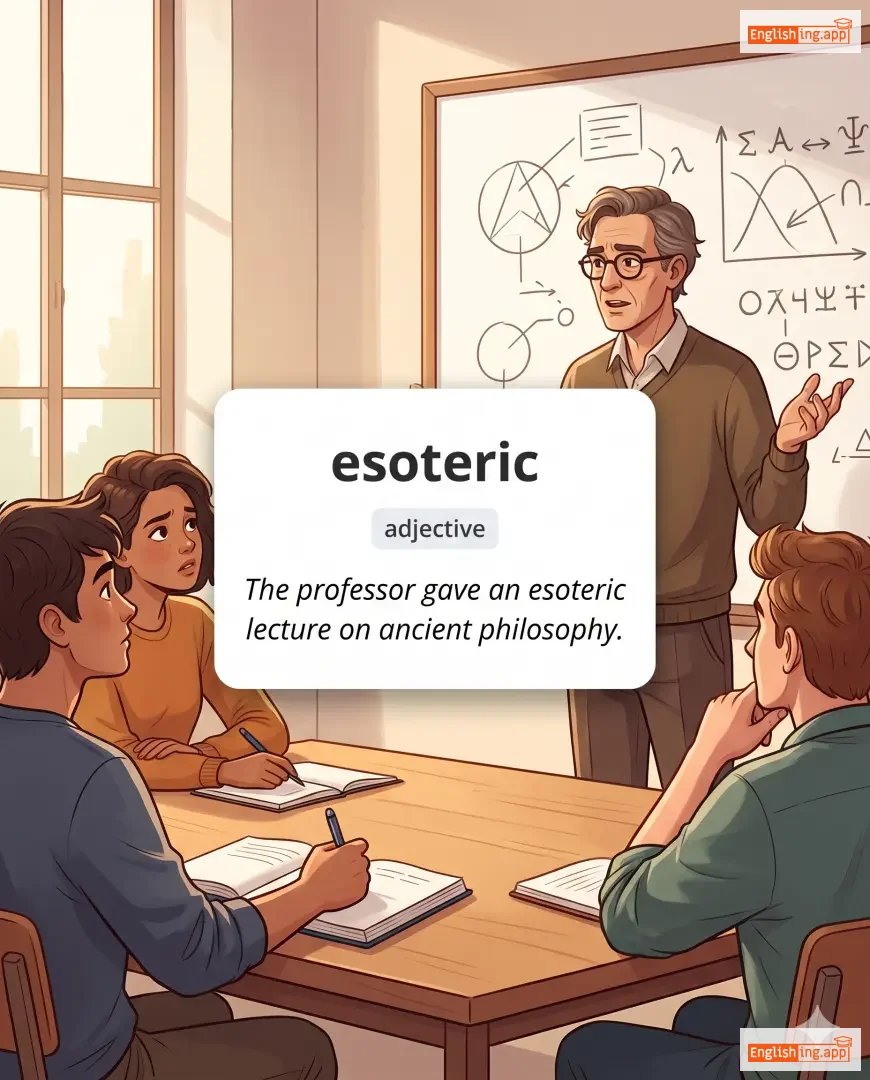
esoteric definition card — visual illustration of the meaning
adjective
/ˌɛsəˈtɛrɪk/
गोपनीय (gopniya)

intended for or understood by only a small number of people with special knowledge

"The professor gave an esoteric lecture on ancient philosophy."

"प्रोफेसर ने प्राचीन दर्शन पर एक गोपनीय व्याख्यान दिया।" (Professor ne prachin darshan par ek gopniya vyakhyan diya.)
adjective
/ɪˈspeʃəl/
विशेष (vishesh)

Particularly remarkable or significant; distinguished from others

"This is an especial opportunity you should not miss."

"यह एक विशेष अवसर है जिसे आपको मिस नहीं करना चाहिए।" (Yah ek vishesh avsar hai jise aapko mis nahi karna chahiye.)
adverb
/ɪˈspɛʃəli/
विशेष रूप से (vishesh roop se)

Used to single out one person, thing, or situation over all others.

"I love all kinds of fruit, especially mangoes."

"मैं सभी प्रकार के फल पसंद करता हूँ, खासकर आम।" (Main sabhi prakaar ke phal pasand karta hoon, khaaskar aam.)
noun
/ˈɛspiənɑːʒ/
जासूसी (jaasusi)

The practice of spying or using spies to gather secret information, usually for political or military purposes.

"The agent was arrested on charges of espionage against the state."

"एजेंट को राज्य के खिलाफ जासूसी के आरोप में गिरफ्तार किया गया था।" (Agent ko rajya ke khilaf jaasusi ke aarop mein giraftaar kiya gaya tha.)
verb
/ɪˈspaʊz/
समर्थन करना (samarthan karna)

To adopt or support a cause, belief, or way of life.

"She espoused the philosophy of nonviolence throughout her career."

"उसने अपने करियर में अहिंसा के सिद्धांत को स्वीकार किया।" (Usne apne career mein ahimsa ke siddhant ko sweekar kiya.)
noun
/ɛˌspriː də ˈkɔːr/
समूह भावना (samooh bhavna)

A feeling of pride, fellowship, and loyalty shared by members of a group.

"The team's esprit de corps was evident in their cooperative effort."

"टीम की समूह भावना उनके सहयोगात्मक प्रयास में स्पष्ट थी।" (Team ki samooh bhavna unke sahyogaatmak prayaas mein spashth thi.)
verb
/ɪˈspaɪ/
देखना (dekhna)

To catch sight of or notice something, especially from a distance.

"From the hilltop, she espied a small village in the valley."

"हिलटॉप से, उसने घाटी में एक छोटा गांव देखा।" (Hilltop se, usne ghaati mein ek chhota gaon dekha.)
noun
/ˈɛskwaɪər/
एस्क्वायर (esqwire)

A title of respect often used after a man's name, especially for lawyers in the United States.

"John Smith, Esquire, will be representing the client in court."

"जॉन स्मिथ, एस्क्वायर, अदालत में क्लाइंट का प्रतिनिधित्व करेंगे।" (Jon Smith, Esquire, adalat mein client ka pratinidhitva karenge.)
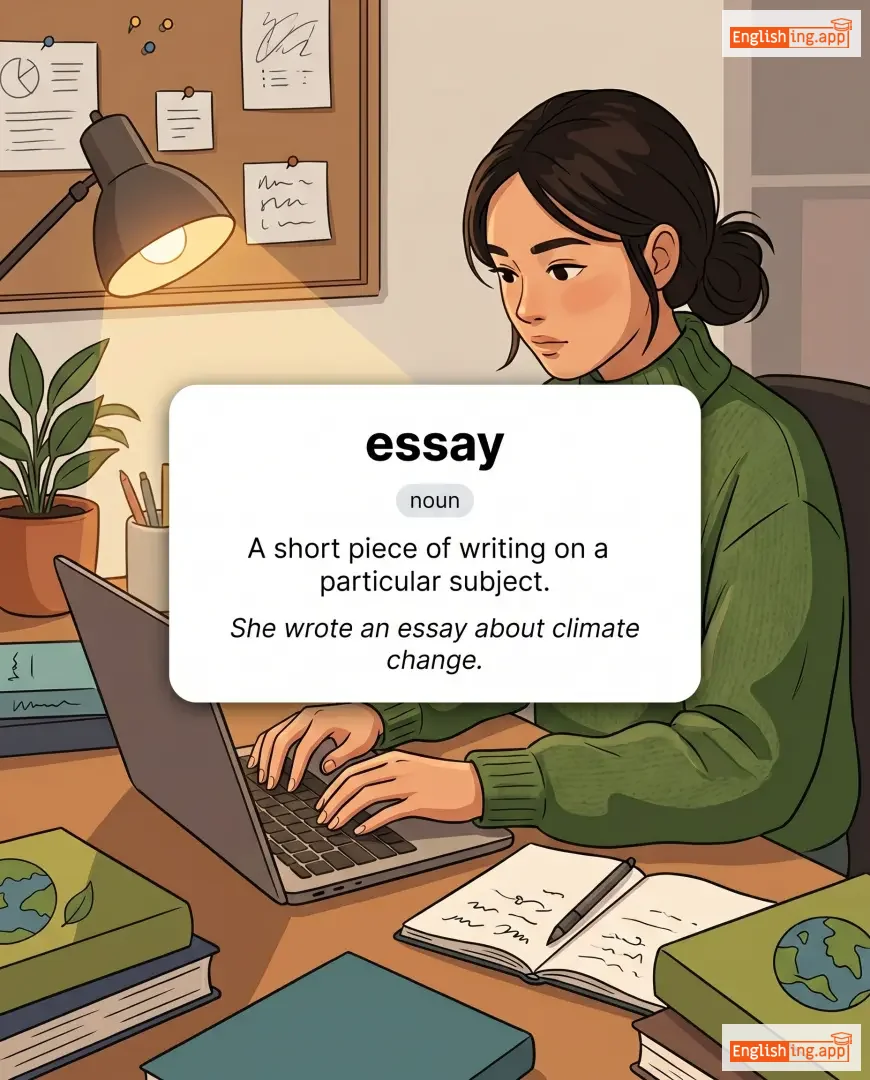
essay definition card — visual illustration of the meaning
noun
/ˈɛseɪ/
निबंध (nibandh)

A short piece of writing on a particular subject.

"She wrote an essay about climate change."

"उसने जलवायु परिवर्तन पर एक निबंध लिखा।" (Usne jalvayu parivartan par ek nibandh likha.)
noun
/ˈɛsəns/
सार (saar)

The intrinsic nature or indispensable quality of something that determines its character.

"The essence of democracy is freedom of speech."

"लोकतंत्र का सार भाषण की स्वतंत्रता है।" (Loktantra ka saar bhasha ki svatantrata hai.)
adjective
/ɪˈsɛnʃəl/
आवश्यक (avashyak)

Absolutely necessary; extremely important.

"Water is essential for life."

"जीवन के लिए पानी आवश्यक है।" (Jeevan ke liye pani avashyak hai.)
adverb
/ɪˈsɛnʃəli/
मूलतः (moolatah)

Used to emphasize the basic or fundamental nature of something.

"The two plans are essentially the same."

"दो योजनाएँ मूलतः एक जैसी हैं।" (Do yojnaayein moolatah ek jaisi hain.)
verb
/ɪˈstæblɪʃ/
स्थापित करना (sthapit karna)

To set up, create, or bring into existence something on a firm basis.

"The company plans to establish a new office in Dhaka."

"कंपनी ढाका में एक नया ऑफिस स्थापित करने की योजना बना रही है।" (Kampani Dhaka mein ek naya office sthapit karne ki yojana bana rahi hai.)
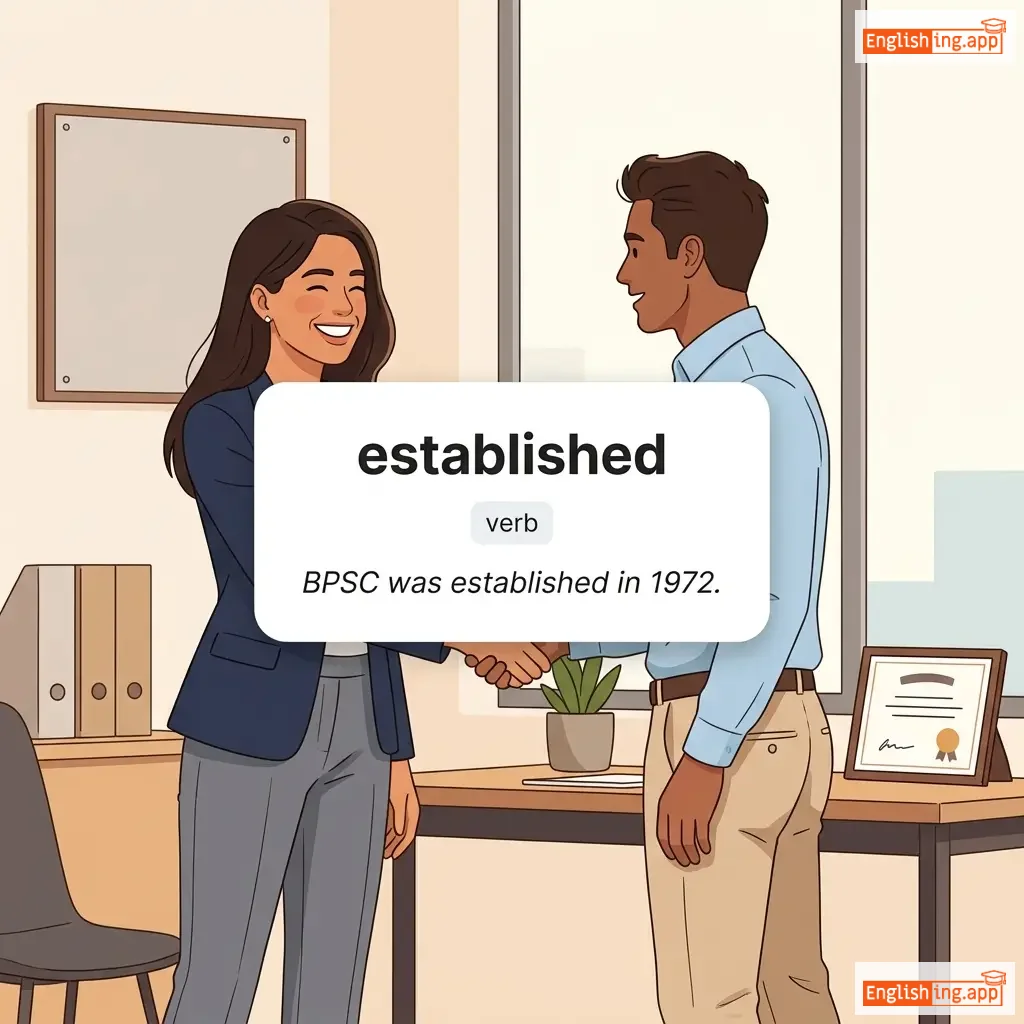
established definition card — visual illustration of the meaning
verb
ɪˈstæb.lɪʃt
स्थापित (sthapit)

Set up on a firm or permanent basis; having existed for a long time and therefore recognized.

"BPSC was established in 1972."

"BPSC 1972 में स्थापित किया गया था।" (BPSC 1972 mein sthapit kiya gaya tha.)
noun
/ɪˈstæblɪʃmənt/
संस्था (sanstha)

An organization, business, or system; the act of setting something up.

"The restaurant is a new establishment in town."

"रेस्तरां शहर में एक नया प्रतिष्ठान है।" (Restauran shahar mein ek naya pratishthan hai.)
noun
/ɪˈsteɪt/
सुख (sukh)

A large area of land, property, or possessions owned by someone, often including a big house.

"The family owned a large estate in the countryside."

"जब उसे पुरस्कार मिला, तो वह अपनी खुशी छुपा नहीं सकी।" (Jab use puraskaar mila, to wah apni khushi chhupa nahin sakee.)
noun/verb
/ɪˈstiːm/
सम्मान (sammaan)

Respect and admiration, typically for a person.

"She is held in high esteem by her colleagues."

"वह अपने सहकर्मियों द्वारा उच्च सम्मानित हैं।" (Wah apne sahkarmiyon dwara uchch sammaanit hain.)
adjective
/ɪˈstiːmd/
सम्मानित (sammanit)

respected and admired; held in high regard

"He is an esteemed professor at the university."

"वह विश्वविद्यालय में एक सम्मानित प्रोफेसर हैं।" (vah vishwavidyalay mein ek sammanit professor hain)