वोकैबुलरीज

इंग्लिश वोकैबुलरी डिस्कवर, लर्न और मास्टर करें

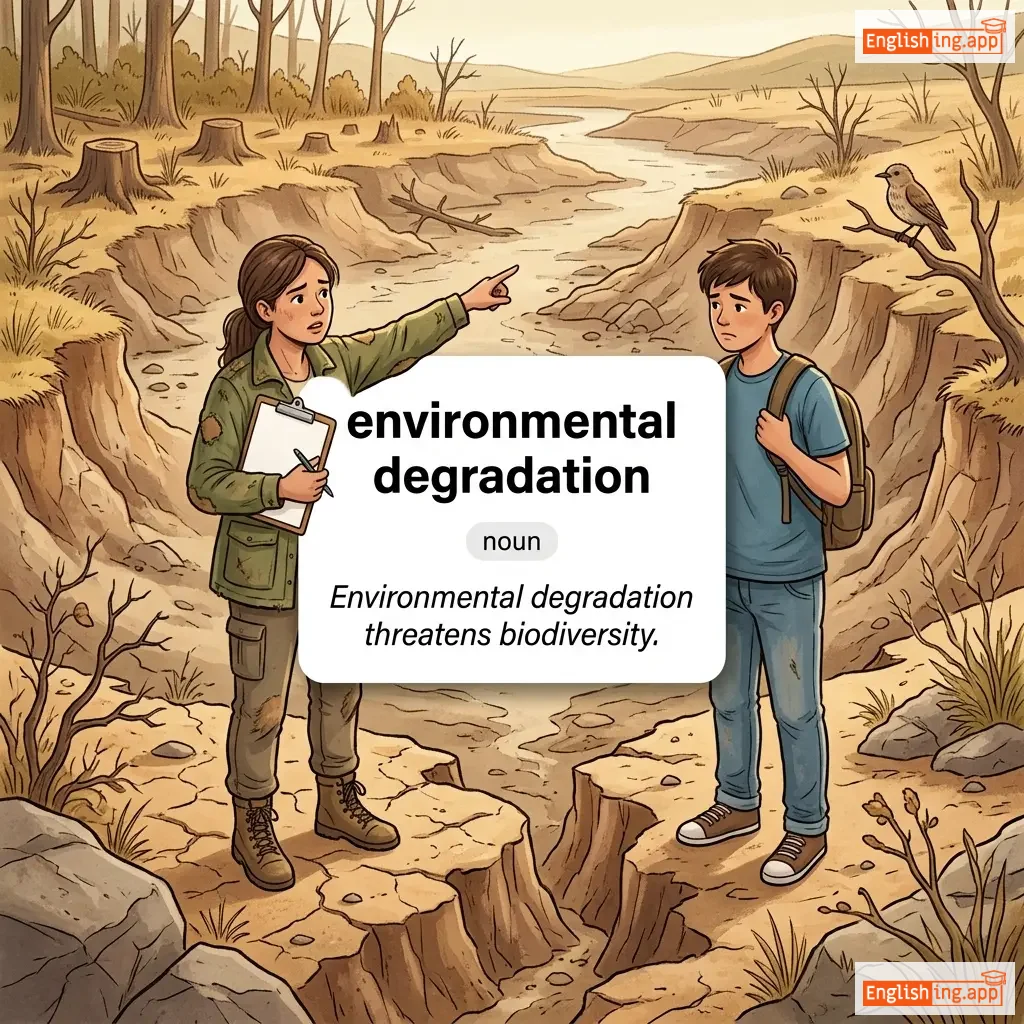
environmental degradation definition card — visual illustration of the meaning
noun
ɪnˌvaɪrənˈmɛntəl ˌdɛɡrəˈdeɪʃən
पर्यावरणीय अवनति (paryavarnik avnati)

The deterioration of the environment through depletion of resources and destruction of ecosystems.

"Environmental degradation threatens biodiversity."

"पर्यावरणीय अवनति जैव विविधता को खतरे में डालती है।" (Paryavarnik avnati jaiv vividhta ko khatre mein daalti hai.)
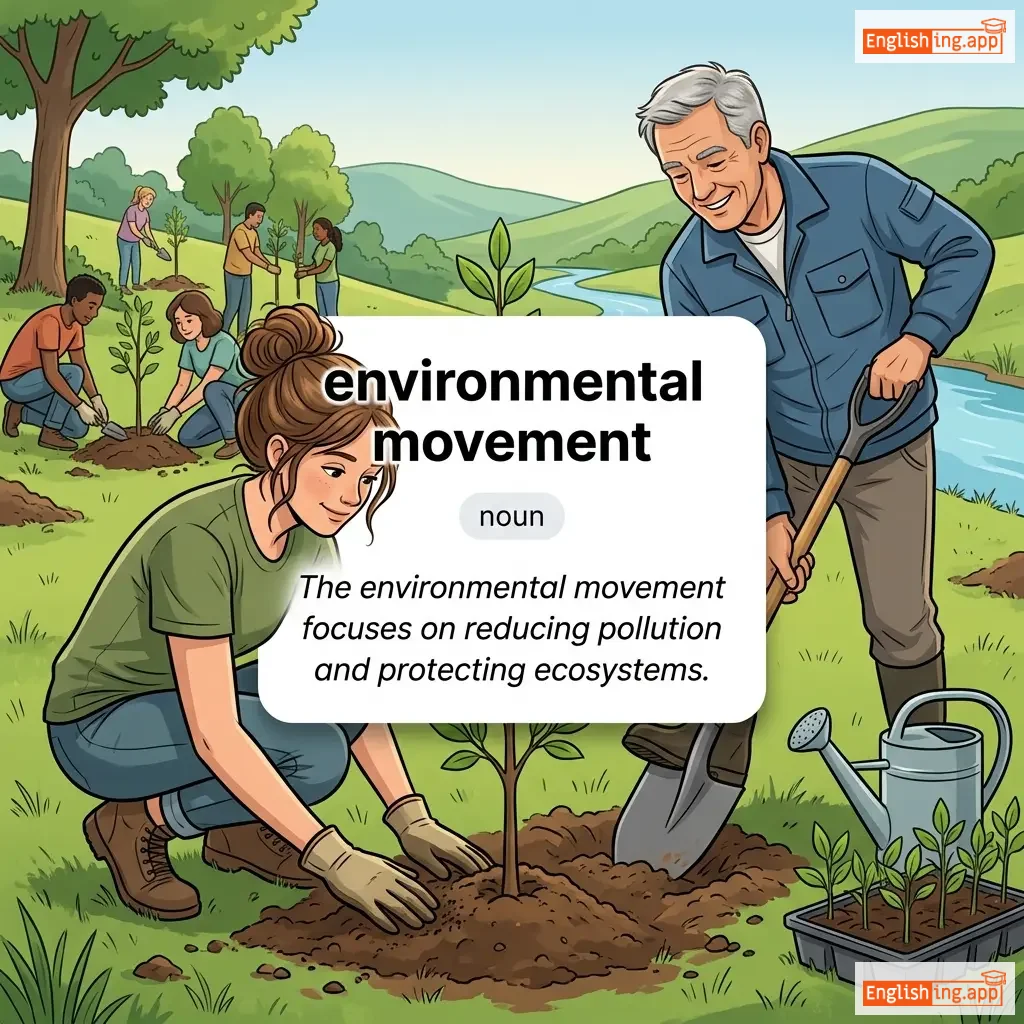
environmental movement definition card — visual illustration of the meaning
noun
/ɪnˌvaɪrənˈmɛntəl ˈmuːvmənt/
पर्यावरण आंदोलन (paryavaran aandolan)

A social or political movement aimed at protecting the environment and promoting sustainable practices through advocacy, education, and policy changes.

"The environmental movement focuses on reducing pollution and protecting ecosystems."

"पर्यावरण आंदोलन प्रदूषण को कम करने और पारिस्थितिकी प्रणालियों की रक्षा पर ध्यान केंद्रित करता है।" (Paryavaran aandolan pradooshan ko kam karne aur paristhitiki pranaliyon ki raksha par dhyan kendrit karta hai.)
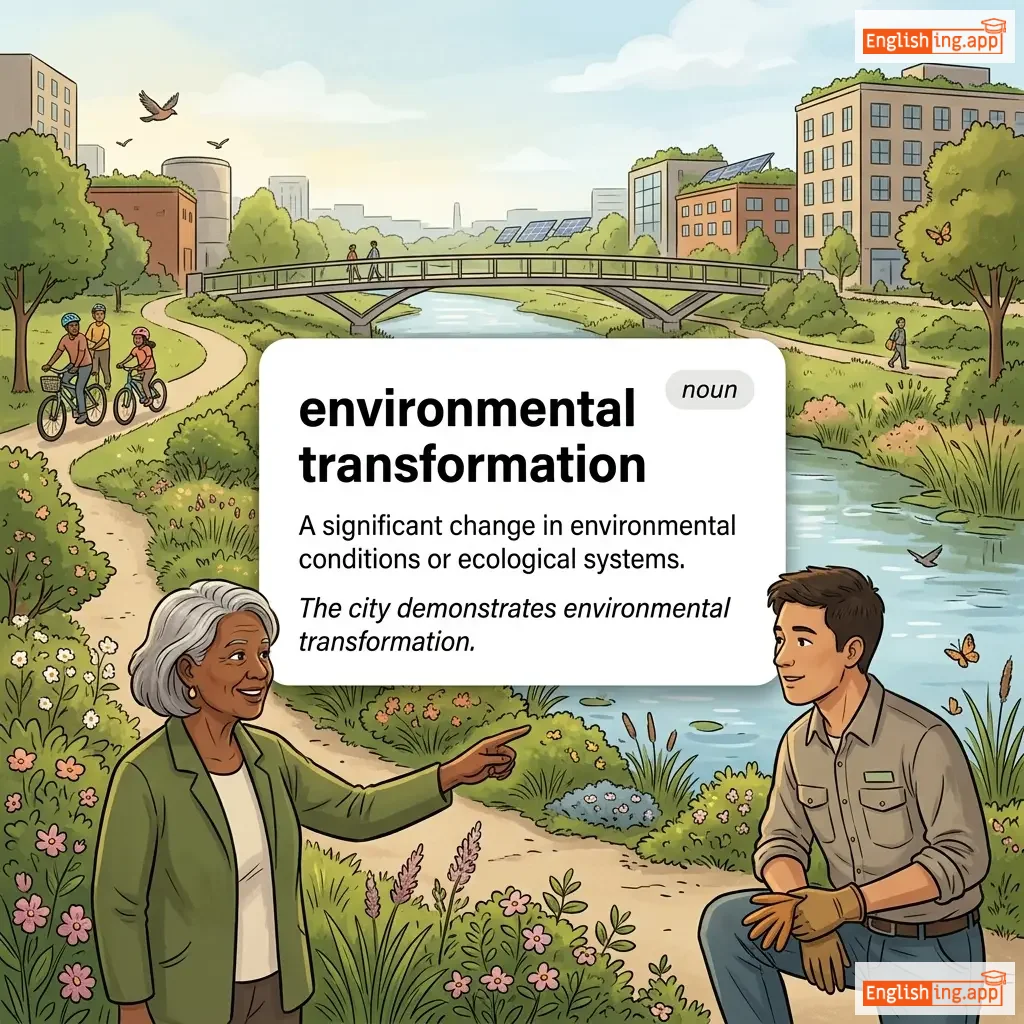
environmental transformation definition card — visual illustration of the meaning
noun
ɪnˌvaɪ.rənˈmen.təl ˌtræns.fəˈmeɪ.ʃən
पर्यावरणीय परिवर्तन (paryavarniya parivartan)

A significant change in environmental conditions or ecological systems.

"The city demonstrates environmental transformation."

"शहर पर्यावरणीय परिवर्तन को प्रदर्शित करता है।" (Shahar paryavarniya parivartan ko pradarshit karta hai.)
verb
/ɪnˈvɪʒən/
कल्पना करना (kalpana karna)

to imagine or picture something in the future; to visualize a possibility or goal

"She envisions a world where everyone has equal access to education."

"वह एक ऐसी दुनिया की कल्पना करती है जहाँ सभी को शिक्षा तक समान पहुँच प्राप्त हो।" (Vah ek aisi duniya ki kalpana karti hai jahan sabhi ko shiksha tak samaan pahuch prapt ho.)
enzymatic definition card — visual illustration of the meaning
adjective
/ˌen.zɪˈmæt.ɪk/
एंजाइम से संबंधित (enzyme se sambandhit)

Relating to or involving enzymes, which are proteins that catalyze biochemical reactions in living organisms.

"Enzymatic reactions regulate metabolism in the human body."

"एंजाइमेटिक प्रतिक्रियाएं मानव शरीर में चयापचय को नियंत्रित करती हैं।" (Enzymatic pratikriyaayein manav sharir mein chayapachay ko niyantrit karti hain.)
noun
/ˈiːən/
युग (yug)

an indefinitely long period of time; an age

"Dinosaurs lived millions of years ago, in a different eon."

"डायनासोर लाखों साल पहले, एक अलग युग में रहते थे।" (Dinosaur laakhon saal pehle, ek alag yug mein rehte the.)
noun
/ˈɛpəlɛt/
कंधे का आभूषण (kandhe ka aabhushan)

An ornamental shoulder piece on a garment, especially on the coat or jacket of a military uniform.

"The general’s uniform had a golden epaulet on each shoulder."

"जनरल की यूनिफॉर्म में प्रत्येक कंधे पर एक सुनहरी एपॉलेट था।" (General ki uniform mein pratyek kandhe par ek sunahri epaulet tha.)
noun
/ˈɛpəlɛt/
कंधे की सजावट (kandhe ki sajawat)

A variant spelling of epaulet, also meaning a shoulder ornament, especially on military uniforms.

"The officer’s epaulette shone brightly under the sunlight."

"अधिकारी का एपॉलेट सूरज की रोशनी में चमक रहा था।" (adhikari ka epaulette suraj ki roshni mein chamak raha tha.)
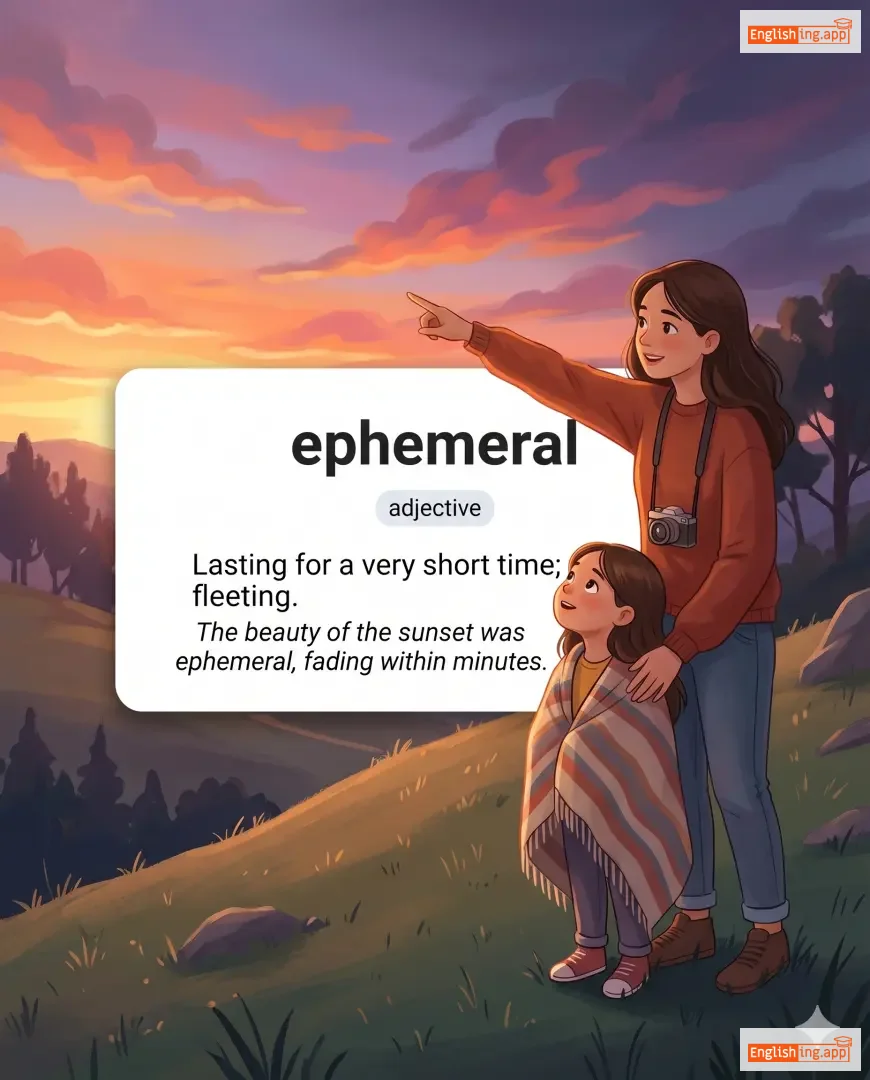
ephemeral definition card — visual illustration of the meaning
adjective
/ɪˈfɛmərəl/
क्षणिक (kshanik)

Lasting for a very short time; fleeting.

"The beauty of the sunset was ephemeral, fading within minutes."

"सूर्यास्त की सुंदरता क्षणिक थी, कुछ ही मिनटों में गायब हो गई।" (Suryast ki sundarta kshanik thi, kuch hi minaton mein gayab ho gayi.)
noun, adjective
/ˈɛpɪk/
महाकाव्य (mahaakavya)

A long narrative poem or story about heroic deeds; also used to describe something grand or impressive.

"The Iliad is considered one of the greatest epics of ancient literature."

"इलियड को प्राचीन साहित्य के सबसे महान महाकाव्यों में से एक माना जाता है।" (Iliad ko prachin sahitya ke sabse mahaan mahaakavyon mein se ek maana jaata hai.)
noun
/ˈɛpɪkjʊr/
रसज्ञ (rasajn)

A person who enjoys fine food and drink, often with refined taste.

"As an epicure, she always sought out the finest restaurants in the city."

"एक रसज्ञ के रूप में, वह हमेशा शहर के सबसे बेहतरीन रेस्टोरेंट्स की तलाश करती थी।" (ek rasajn ke roop mein, woh hamesha shahar ke sabse behtareen restaurants ki talash karti thi.)
adjective
/ˌɛpɪkjʊˈriːən/
एपिक्यूरियन (epikyurian)

relating to the enjoyment of fine food, drink, and luxury

"The chef prepared an epicurean feast for the guests."

"शेफ ने मेहमानों के लिए एक एपिक्यूरियन दावत तैयार की।" (Shef ne mehmanon ke liye ek epikyurian dawat tayar ki.)
noun
/ˈɛpɪˌsaɪkl/
उपवृत्ताकार कक्षपथ (upavrittaakar kakshpath)

a small circle whose center moves around the circumference of a larger one, used in ancient astronomy

"The concept of the epicycle was used to explain planetary motion."

"एपिसाइकिल की अवधारणा का उपयोग ग्रहों की गति को समझाने के लिए किया गया था।" (episaykel ki avdharaana ka upyog grahon ki gati ko samjhaane ke liye kiya gaya tha.)
noun
/ˌɛpɪˈsaɪklɔɪd/
एपिसायक्लॉयड (episaykloid)

a curve traced by a point on the circumference of a circle that rolls around the outside of another circle

"The mathematician demonstrated how to draw an epicycloid."

"गणितज्ञ ने दिखाया कि कैसे एक एपिसायक्लॉयड खींचें।" (Ganitgya ne dikhaya ki kaise ek episaykloid kheenchhen.)
noun
/ˌɛpɪˈdɛmɪk/
खुशी (khushi)

a widespread occurrence of an infectious disease in a community at a particular time

"The flu epidemic affected thousands of people in the city."

"वह पुरस्कार मिलने पर अपनी खुशी छुपा नहीं पाई।" (Wah puraskar milne par apni khushi chhupa nahi paayi.)
noun
/ˌɛpɪˈdɜːrmɪs/
त्वचा की बाहरी परत (twacha ki baahri parat)

the outer layer of cells covering the body of an organism, especially the skin

"The epidermis protects the body from harmful bacteria."

"एपिडर्मिस शरीर को हानिकारक बैक्टीरिया से बचाता है।" (Epidermis sharir ko haanikarak bacteria se bachata hai.)
noun
/ˈɛpɪɡræm/
उपदेशात्मक कविता (updeshatmak kavita)

A short, witty saying or poem that expresses an idea in a clever way.

"Oscar Wilde was famous for his sharp epigrams."

"ऑस्कर वाइल्ड अपने तीखे एपिग्राम्स के लिए प्रसिद्ध थे।" (Oscar Wilde apne teekhe epigrams ke liye prasiddh the.)
noun
/ˈɛpɪˌlɔːɡ/
उपसंहार अध्याय (upasnhar addhay)

A section at the end of a book, play, or speech that serves as a conclusion.

"The author included an epilogue to explain what happened to the characters later."

"लेखक ने पात्रों के बाद के जीवन को समझाने के लिए एक उपसंहार जोड़ा।" (Lekhak ne patro ke baad ke jeevan ko samjhaane ke liye ek upasnhar joda.)
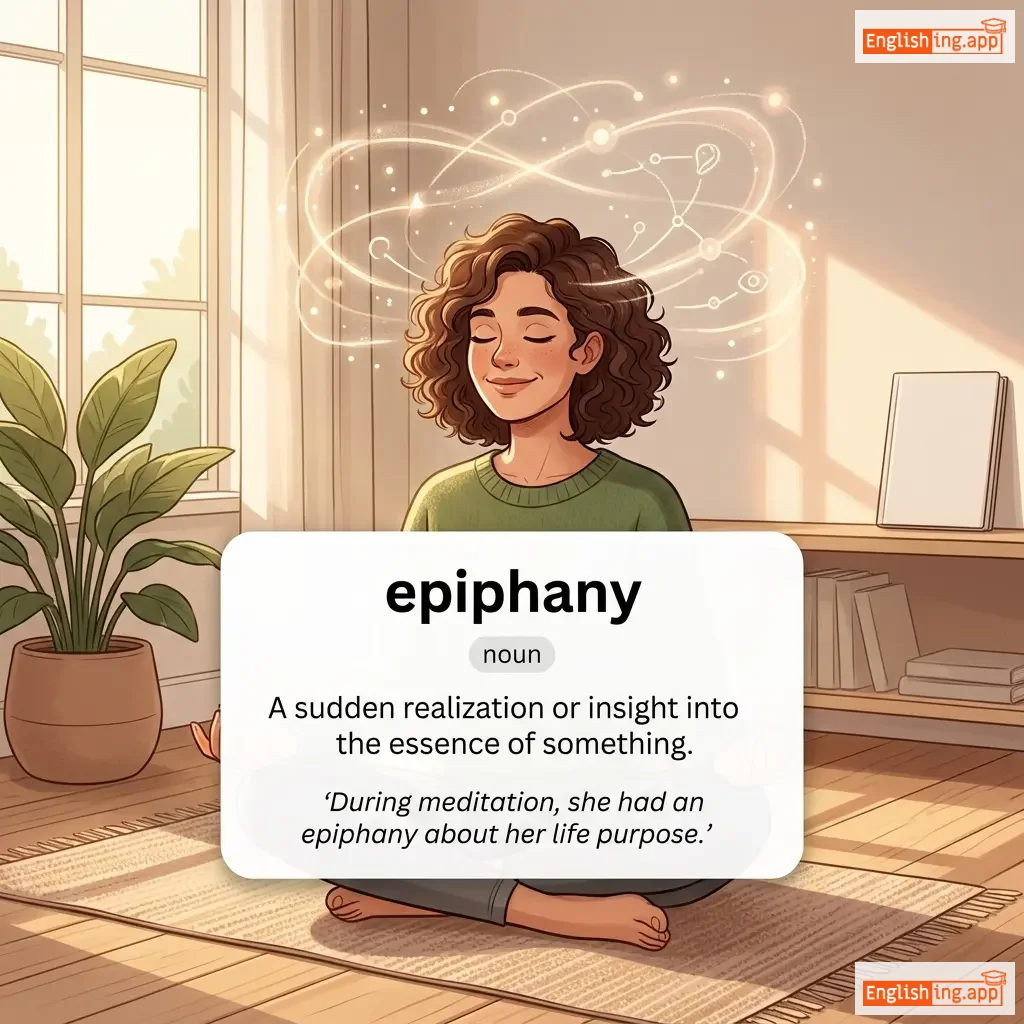
epiphany definition card — visual illustration of the meaning
noun
/ɪˈpɪfəni/
आकस्मिक बोध (aakasmik bodh)

A sudden realization or insight into the essence of something.

"During meditation, she had an epiphany about her life purpose."

"ध्यान के दौरान, उसे अपने जीवन के उद्देश्य के बारे में एक आकस्मिक बोध हुआ।" (Dhyan ke dauran, use apne jeevan ke uddeshya ke baare mein ek aakasmik bodh hua.)
noun
/ˈɛpɪsoʊd/
एपिसोड (episod)

An event or part of a story, or one installment in a series.

"The last episode of the drama was watched by millions."

"ड्रामा का आखिरी एपिसोड लाखों लोगों ने देखा।" (drama ka aakhri episod laakhon logon ne dekha.)
adjective
/ˌɛpɪˈsɒdɪk/
खंडित (khandit)

Happening occasionally or in separate parts; related to episodes.

"Her interest in art was episodic, coming and going over the years."

"उसकी कला में रुचि एपिसोडिक थी, सालों तक आती और जाती रही।" (Uski kala mein ruchi episodic thi, saalon tak aati aur jaati rahi.)
noun
/ɪˌpɪstəˈmɒlədʒɪst/
संज्ञानज्ञ (sanjnyanjnya)

A scholar or expert who studies the nature, sources, and limits of knowledge.

"The epistemologist debated how humans can truly know anything with certainty."

"एपिस्टेमोलॉजिस्ट ने बहस की कि मनुष्य सच्चाई को कितनी निश्चितता से जान सकता है।" (Epistemologist ne behas ki ki manushya sachchai ko kitni nishchitata se jaan sakta hai.)
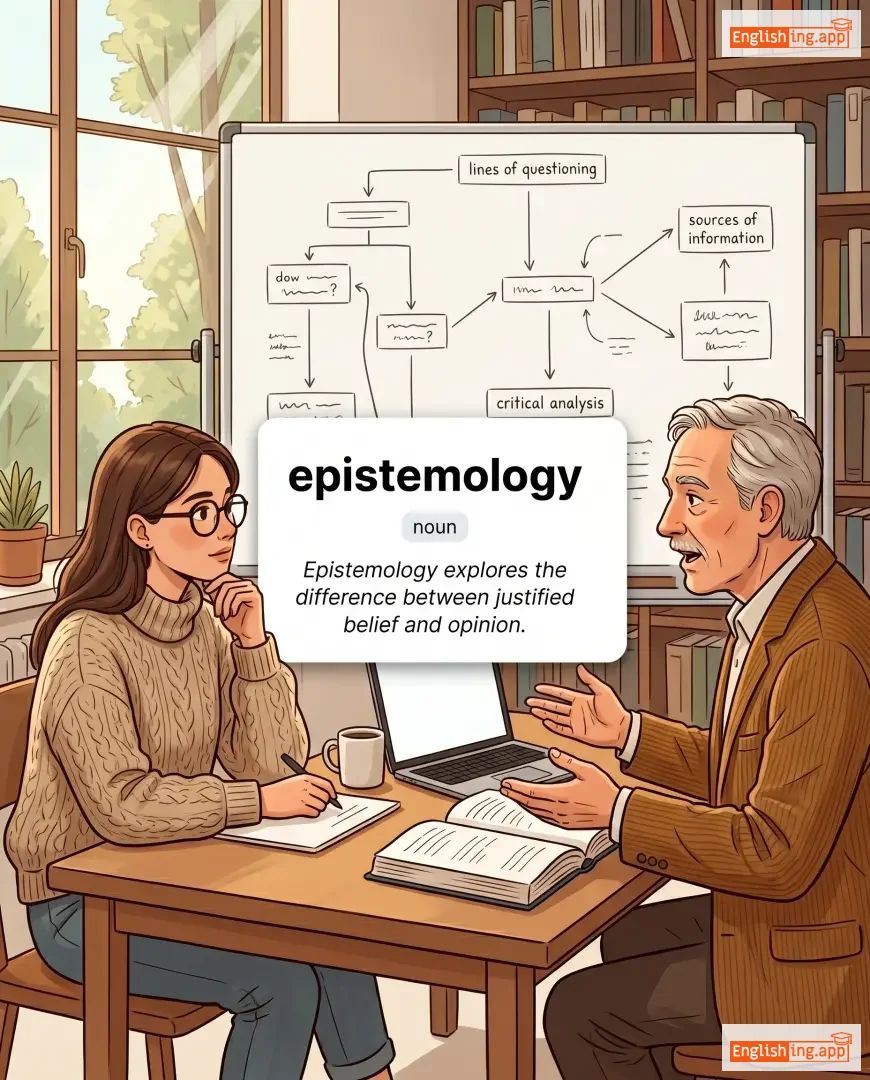
epistemology definition card — visual illustration of the meaning
noun
/ɪˌpɪstəˈmɒlədʒi/
ज्ञानमीमांसा (gyanamimamsa)

The branch of philosophy that studies the nature, origin, and scope of knowledge.

"Epistemology explores the difference between justified belief and opinion."

"ज्ञानमीमांसा प्रमाणित विश्वास और राय के बीच अंतर की खोज करती है।" (Gyanmimamsa pramanit vishwas aur ray ke beech antar ki khoj karti hai.)
noun
/ɪˈpɪsəl/
पत्र (patra)

A letter, especially a formal or didactic one; often used for letters in the New Testament.

"He wrote a long epistle to his friend about his travels."

"उसने अपने यात्रा के बारे में अपने दोस्त को एक लंबा पत्र लिखा।" (Usne apne yatra ke baare mein apne dost ko ek lamba patra likha.)
adjective
/ɪˈpɪstələri/
पत्रात्मक (patratmak)

Related to the writing of letters; expressed in or through letters.

"The novel is written in an epistolary style, consisting of letters between characters."

"उपन्यास एक पत्रात्मक शैली में लिखा गया है, जिसमें पात्रों के बीच पत्र होते हैं।" (Upanyaas ek patratmak shaili mein likha gaya hai, jismein patraon ke beech patra hote hain.)
noun
/ˈɛpɪtɑːf/
शवलेख (shavlekh)

A short text written on a tombstone in memory of the deceased.

"The gravestone bore an epitaph honoring the soldier’s bravery."

"कब्र पर एक शवलेख था जो सैनिक की बहादुरी को सम्मानित करता था।" (Kabar par ek shavlekh tha jo sainik ki bahaduri ko sammanit karta tha.)
noun
/ˈɛpɪθɛt/
उपाधि (upadhi)

A descriptive phrase or word used to characterize someone or something, often as a nickname.

"He earned the epithet ‘The Great’ for his remarkable achievements."

"उसने अपनी असाधारण उपलब्धियों के लिए ‘द ग्रेट’ उपाधि प्राप्त की।" (Usne apni asadharan uplabdhiyon ke liye ‘The Great’ upadhi praapt ki.)
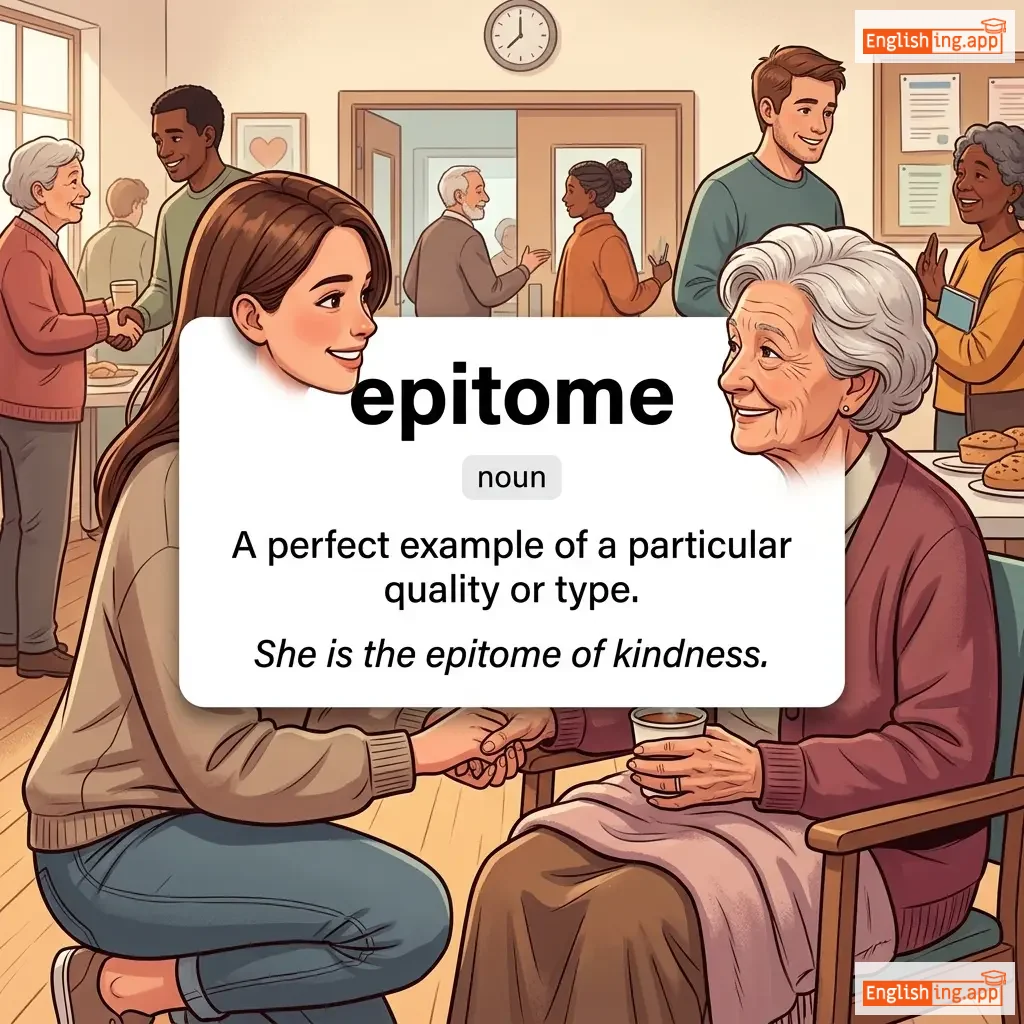
epitome definition card — visual illustration of the meaning
noun
/ɪˈpɪtəmi/
परिपूर्ण उदाहरण (paripoorn udaharan)

A perfect example of a particular quality or type.

"She is the epitome of kindness."

"वह दया का परिपूर्ण उदाहरण है।" (vah daya ka paripoorn udaharan hai)
noun
/ˌɛpɪzəʊˈɒtɪk/
पशु महामारी (pashu mahaamaari)

An outbreak of disease affecting many animals of one kind at the same time.

"The farmer feared an epizootic might wipe out his cattle."

"किसान को डर था कि एक पशु महामारी उसके मवेशियों को नष्ट कर सकती है।" (Kisaan ko dar tha ki ek pashu mahaamaari uske maveshiyon ko nasht kar sakti hai.)
epoch definition card — visual illustration of the meaning
noun
/ˈiːpɒk/
युग (yug)

A period of time in history or a person's life, typically one marked by notable events or characteristics.

"The invention of the internet marked a new epoch in human history."

"इंटरनेट का आविष्कार मानव इतिहास में एक नए युग की शुरुआत थी।" (Internet ka avishkar manav itihaas mein ek naye yug ki shuruat thi.)
noun
/ˈɛpəʊd/
कविता का एक रूप (kavita ka ek roop)

A form of lyric poem written in couplets, often following a strophe and antistrophe in classical Greek poetry.

"The poet concluded his ode with a striking epode."

"कवि ने अपनी ओड को एक अद्वितीय एपोड से समाप्त किया।" (Kavi ne apni ode ko ek advitiya epode se samaapt kiya.)
noun
/ˈɛpənɪm/
उदाहरण देने वाला व्यक्ति (udaharan dene wala vyakti)

A person after whom a discovery, invention, place, or other thing is named.

"Sandwich is an eponym named after the Earl of Sandwich."

"सैंडविच एक उदाहरण देने वाला नाम है, जो सैंडविच के अर्ल के नाम पर रखा गया है।" (Sandwich ek udaharan dene wala naam hai, jo Sandwich ke Arl ke naam par rakha gaya hai.)
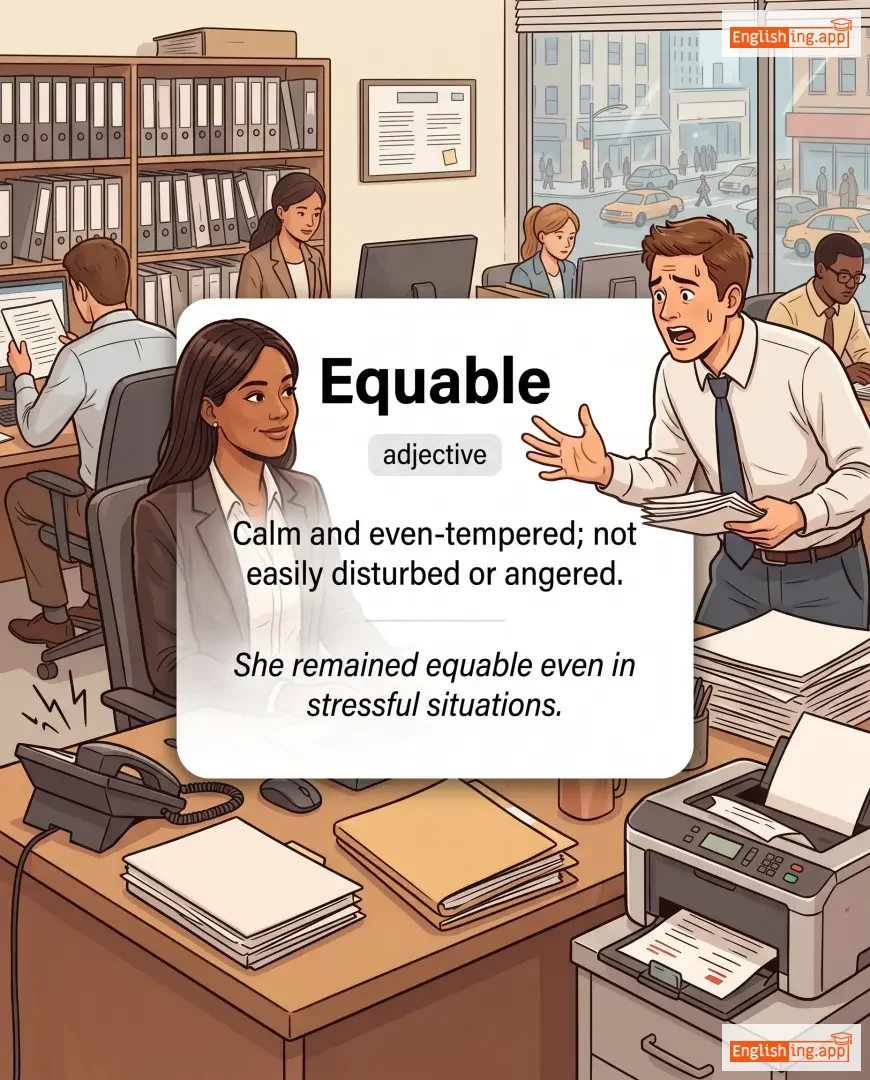
Equable definition card — visual illustration of the meaning
adjective
/ˈɛkwəbl̩/
शांत (shant)

Calm and even-tempered; not easily disturbed or angered.

"She remained equable even in stressful situations."

"वह तनावपूर्ण परिस्थितियों में भी शांत रही।" (Wah tanavpoorn paristhitiyon mein bhi shant rahi.)
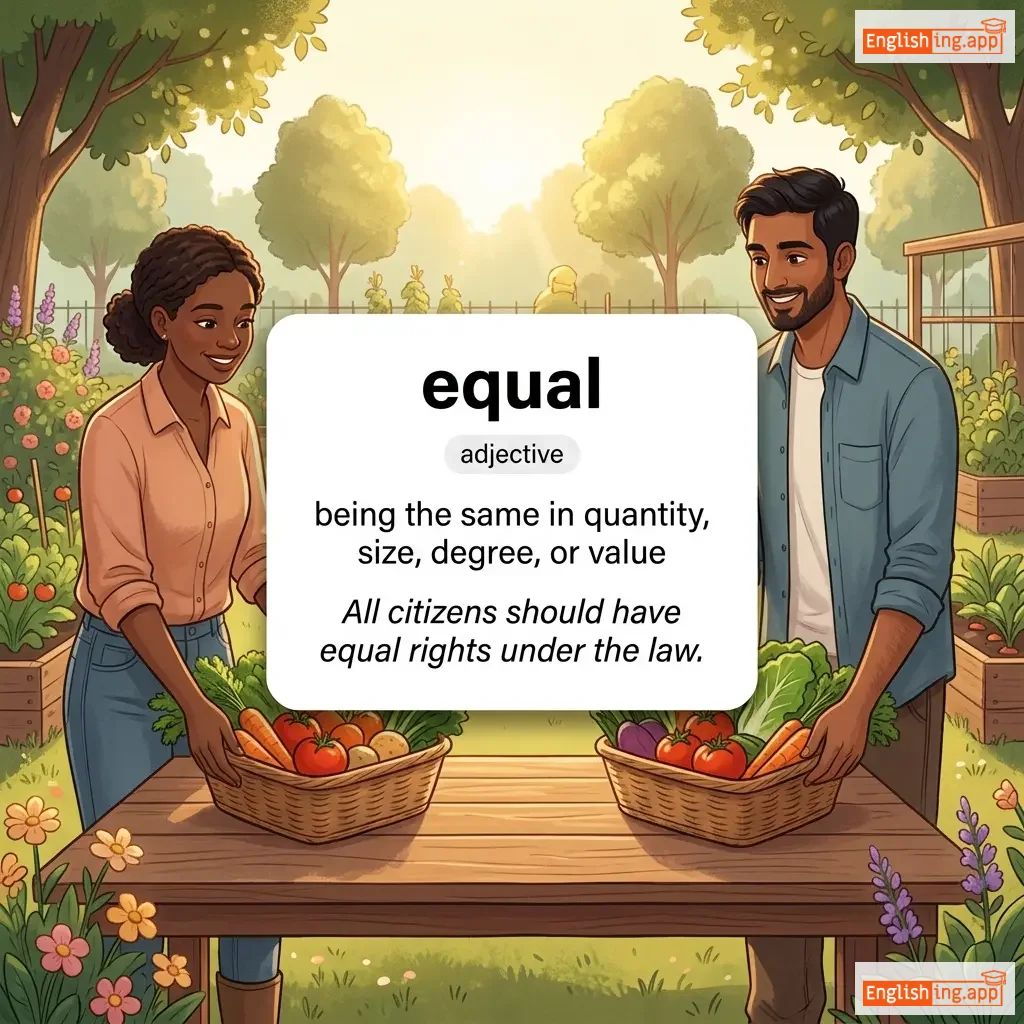
equal definition card — visual illustration of the meaning
adjective
/ˈiːkwəl/
समान (samaan)

being the same in quantity, size, degree, or value

"All citizens should have equal rights under the law."

"सभी नागरिकों को क़ानून के तहत समान अधिकार मिलना चाहिए।" (Sabhi nagrikon ko kaanoon ke tahat samaan adhikaar milna chahiye.)
equality definition card — visual illustration of the meaning
noun
/ɪˈkwɒləti/
समानता (samanata)

the state of being equal, especially in rights, status, and opportunities

"The organization works to promote gender equality in the workplace."

"संगठन कार्यस्थल पर लिंग समानता को बढ़ावा देने के लिए काम करता है।" (Sangathan karyasthal par ling samanata ko badhava dene ke liye kaam karta hai.)
verb
/ˈiːkwəlaɪz/
बराबरी करना (barabari karna)

To make equal or level in status, value, or amount.

"The team equalized the score in the last minute."

"टीम ने आखिरी मिनट में स्कोर बराबरी किया।" (Team ne aakhiri minute mein score barabari kiya.)
adverb
/ˈiːkwəli/
समान रूप से (saman roop se)

in an equal or fair way; to the same degree

"The prize money was equally divided among the winners."

"पुरस्कार राशि को विजेताओं के बीच समान रूप से विभाजित किया गया था।" (Puraskar rashi ko vijetaon ke beech saman roop se vibhajit kiya gaya tha.)
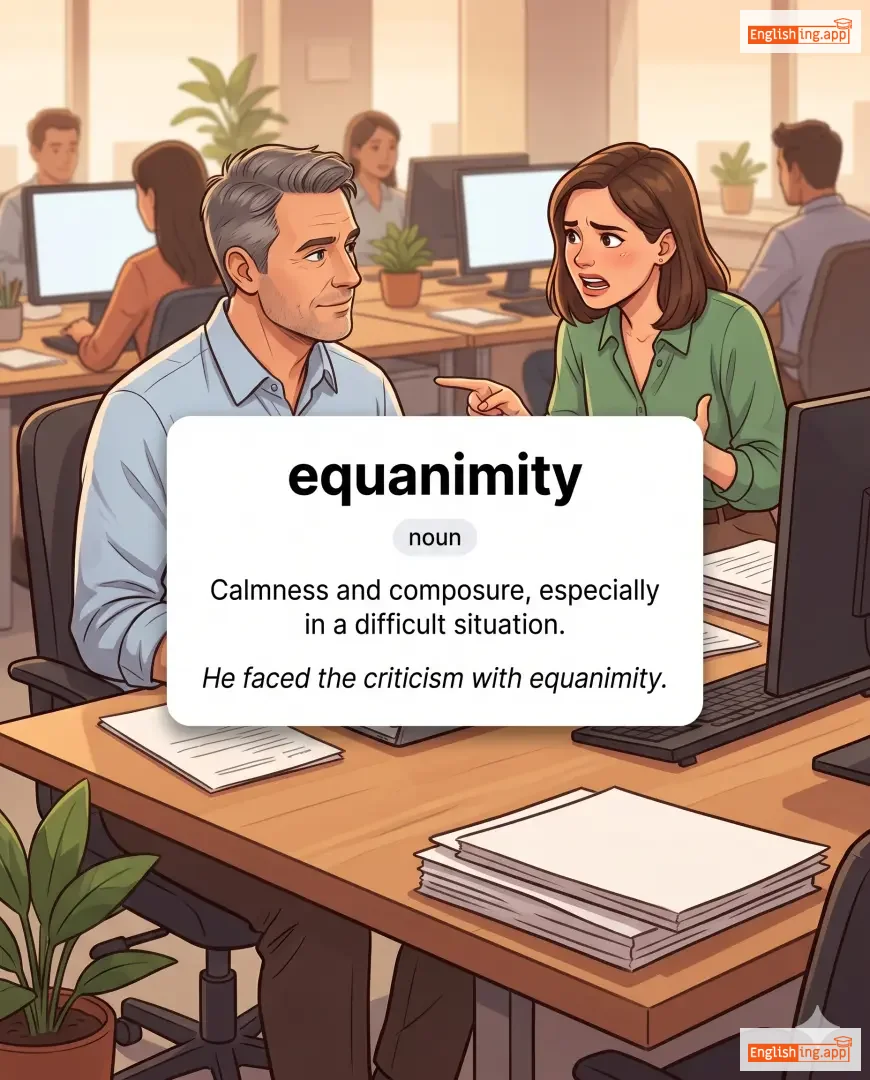
equanimity definition card — visual illustration of the meaning
noun
/ˌekwəˈnɪmɪti/
मनोसामान्यता (manosamanya)

Calmness and composure, especially in a difficult situation.

"He faced the criticism with equanimity."

"उसने आलोचना का सामना मनोसामान्यता से किया।" (Usne alochana ka samna manosamanya se kiya.)
verb
/ɪˈkweɪt/
समान करना (samaan karna)

To consider as equal or equivalent.

"Many people equate wealth with success."

"कई लोग संपत्ति को सफलता के साथ समान मानते हैं।" (kai log sampatti ko safalta ke saath samaan maante hain.)
noun
/ɪˈkweɪʒən/
समीकरण (samikaran)

a mathematical statement that shows the equality of two expressions

"He solved the equation to find the value of x."

"उसने x का मान खोजने के लिए समीकरण हल किया।" (Usne x ka maan khojne ke liye samikaran hal kiya.)
adjective
/ɪˈkwɛstriən/
घोड़ा सवारी से संबंधित (ghoda sawari se sambandhit)

Relating to horse riding or horseback riders.

"She won several equestrian competitions."

"उसने कई घुड़सवारी प्रतियोगिताओं में जीत हासिल की।" (Usne kai ghudsawari protijogitaon mein jeet haasil ki.)
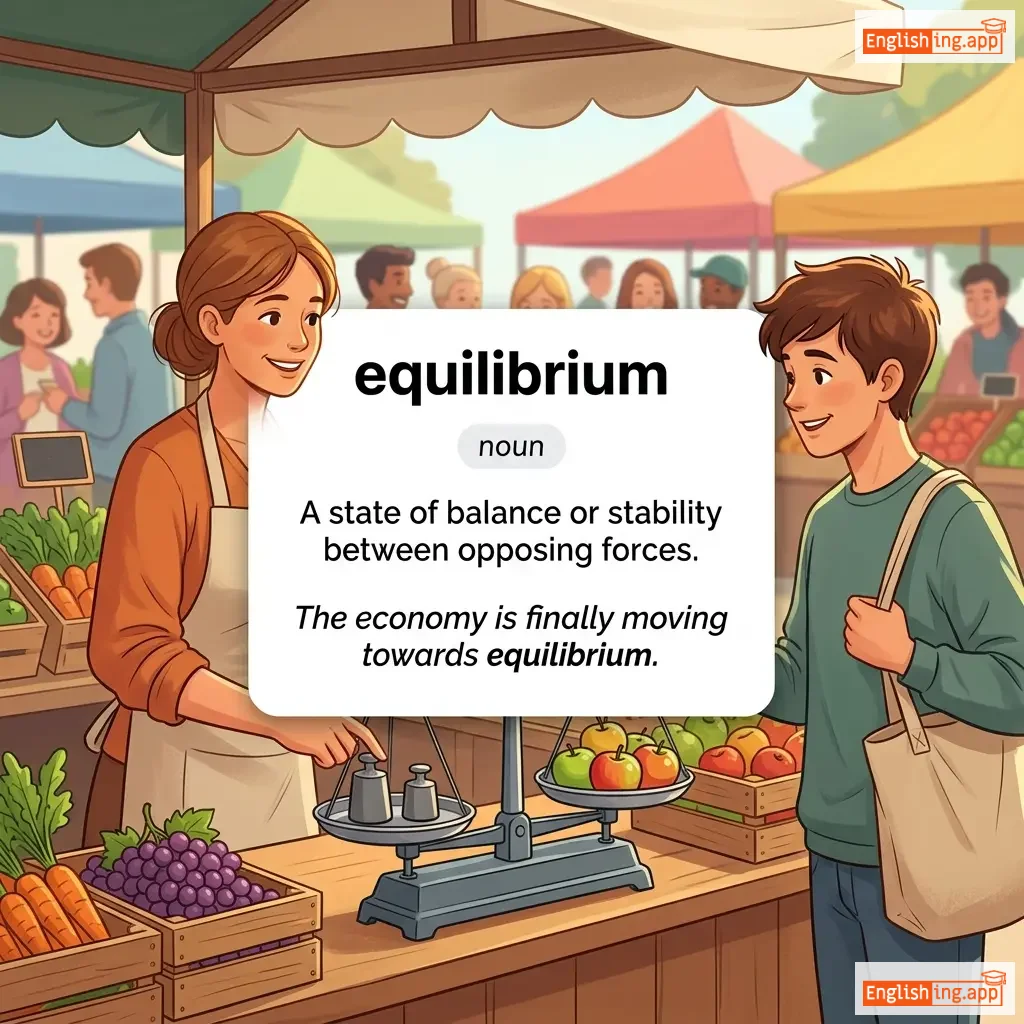
equilibrium definition card — visual illustration of the meaning
noun
/ˌiːkwɪˈlɪbriəm/
संतुलन (santulan)

A state of balance or stability between opposing forces.

"The economy is finally moving towards equilibrium."

"अर्थव्यवस्था अंततः संतुलन की ओर बढ़ रही है।" (arthvyavastha antatah santulan ki or badh rahi hai.)
adjective
/ˈiːkwaɪn/
घोड़ा संबंधित (ghoda sambandhit)

Relating to or resembling a horse.

"The veterinarian specialized in equine medicine."

"वेटेरिनरी डॉक्टर ने घोड़ा संबंधित चिकित्सा में विशेषज्ञता प्राप्त की थी।" (Veterinary doctor ne ghoda sambandhit chikitsa mein visheshagya prapt ki thi.)
noun
/ˈiːkwɪnɒks/
दिन-रात समान समय (din-raat samaan samay)

The time or date when day and night are of equal length, occurring twice a year.

"The spring equinox marks the beginning of longer days."

"वसंत विषुव लंबी दिनों की शुरुआत को दर्शाता है।" (Vasant Vishuv lambi dinon ki shuruaat ko darshata hai.)
verb
/ɪˈkwɪp/
सज्जित करना (sajhit karna)

to provide someone or something with the necessary items or skills for a task

"The school equipped its students with modern technology."

"विद्यालय ने अपने छात्रों को आधुनिक प्रौद्योगिकी से सुसज्जित किया।" (Vidyalay ne apne chhatron ko aadhunik pradyogiki se sujhit kiya.)
noun
/ˈɛkwɪpɪdʒ/
सजावट या घोड़ा गाड़ी (sajawat ya ghoda gadi)

Equipment or a carriage with its accessories.

"The nobleman arrived in a grand equipage."

"राजा एक भव्य घोड़ा गाड़ी में पहुँचे थे।" (Raja ek bhavya ghoda gadi mein pahunche the.)
noun
/ɪˈkwɪpmənt/
उपकरण (upkaran)

the necessary tools, machines, or other items needed for a particular purpose

"The laboratory bought new equipment for research."

"प्रयोगशाला ने अनुसंधान के लिए नया उपकरण खरीदा।" (prayogshala ne anusandhan ke liye naya upkaran kharida.)
noun
/ˈɛkwɪpɔɪz/
संतुलन (santulan)

A state of balance or equilibrium.

"Her calmness created an equipoise in the heated debate."

"उसकी शांति ने गरम बहस में संतुलन पैदा किया।" (Uski shanti ne garam bahas mein santulan paida kiya.)
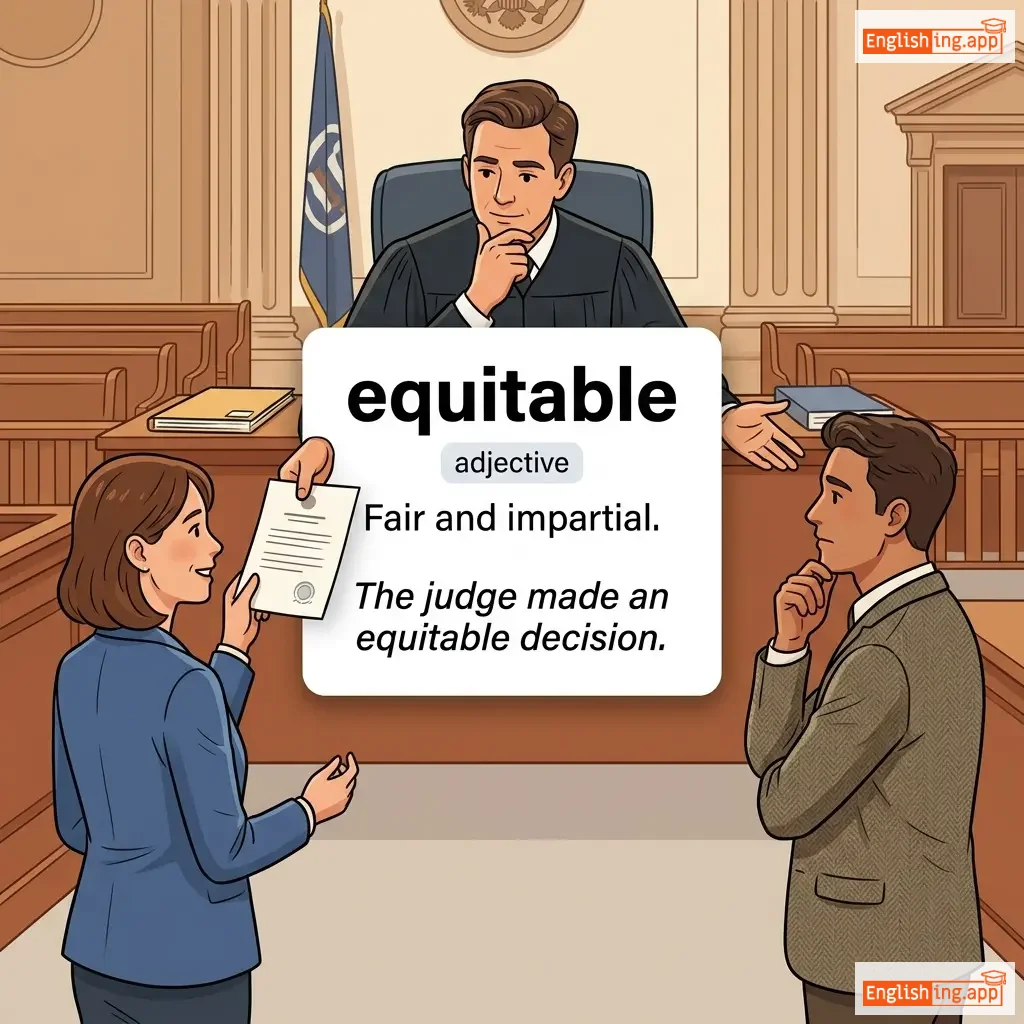
equitable definition card — visual illustration of the meaning
adjective
/ˈɛkwɪtəbl/
न्यायसंगत (nyayasangat)

Fair and impartial.

"The judge made an equitable decision."

"न्यायधीश ने एक न्यायसंगत निर्णय लिया।" (Nyayadhish ne ek nyayasangat nirnay liya.)
equity definition card — visual illustration of the meaning
noun
/ˈɛkwɪti/
समानता; स्वामित्व का हिस्सा (samanata; swamitva ka hissa)

The quality of being fair and impartial; ownership interest in a company or property.

"She invested in the company to gain equity."

"उसने कंपनी में निवेश किया ताकि वह समानता प्राप्त कर सके।" (Usne company mein nivesh kiya taaki vah samanata prapt kar sake.)