वोकैबुलरीज

इंग्लिश वोकैबुलरी डिस्कवर, लर्न और मास्टर करें

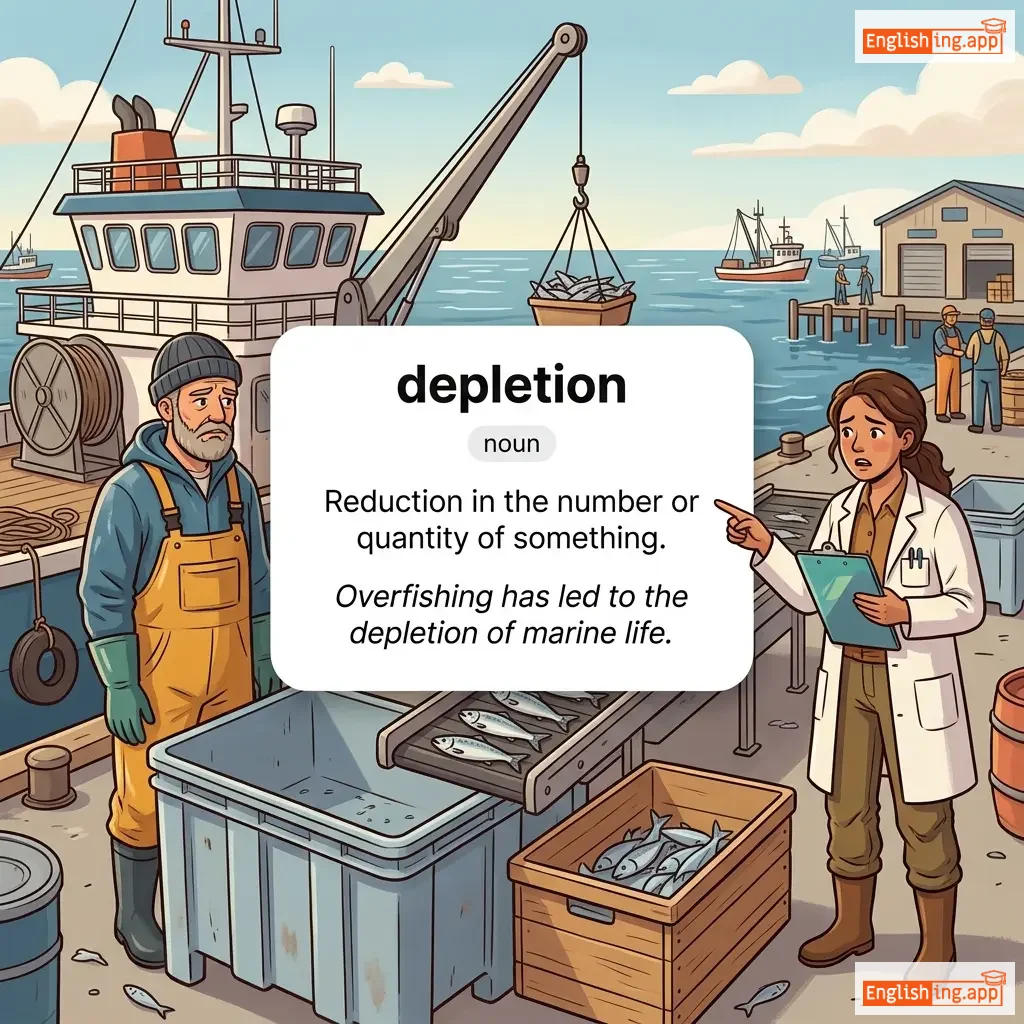
depletion definition card — visual illustration of the meaning
noun
dɪˈpliː.ʃən
कमी (kami)

Reduction in the number or quantity of something.

"Overfishing has led to the depletion of marine life."

"ओवरफिशिंग ने समुद्री जीवन की कमी कर दी है।" (Overfishing ne samudri jeevan ki kami kar di hai.)
adjective
/dɪˈplɔːrəbl/
निंदनीय (nindanīya)

deserving strong condemnation; shockingly bad in quality

"The refugees were living in deplorable conditions."

"शरणार्थी निंदनीय परिस्थितियों में रह रहे थे।" (Sharanārthī nindanīya paristhitīyon mein reh rahe the.)
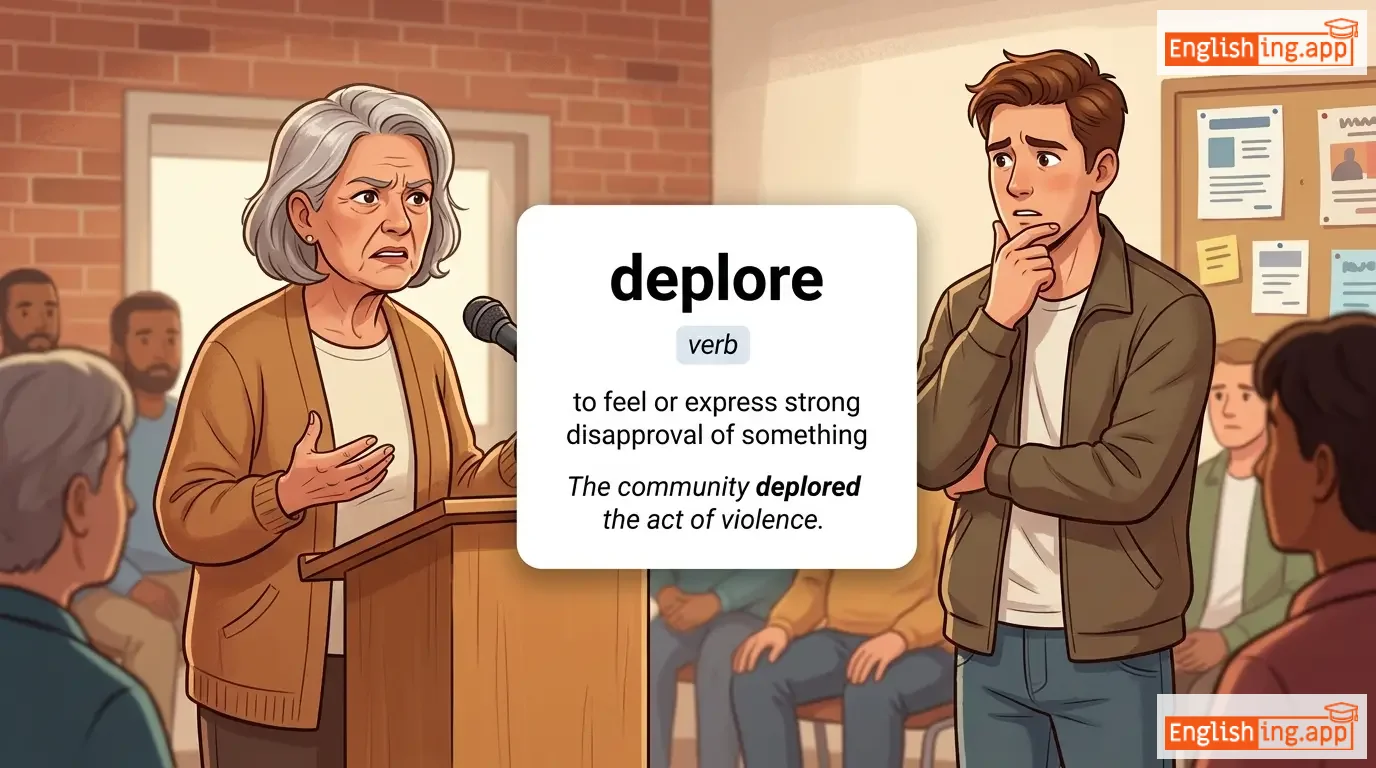
deplore definition card — visual illustration of the meaning
verb
/dɪˈplɔːr/
निंदा करना (ninda karna)

to feel or express strong disapproval of something

"The community deplored the act of violence."

"समुदाय ने हिंसा के कृत्य की निंदा की।" (Samudaay ne hinsa ke krity ki ninda ki.)
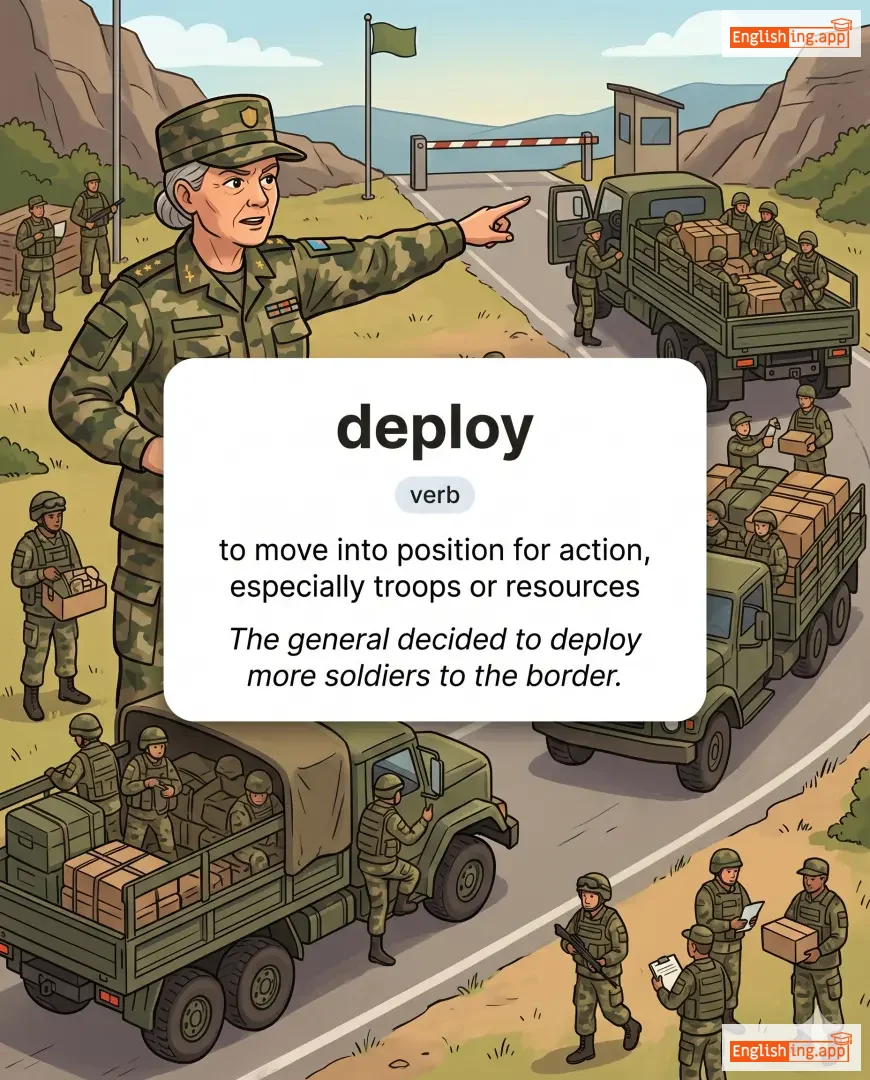
deploy definition card — visual illustration of the meaning
verb
/dɪˈplɔɪ/
तैनात करना (tainat karna)

to move into position for action, especially troops or resources

"The general decided to deploy more soldiers to the border."

"जनरल ने सीमा पर अधिक सैनिक तैनात करने का निर्णय लिया।" (General ne seema par adhik sainik tainat karne ka nirnay liya.)
deployment definition card — visual illustration of the meaning
noun
/dɪˈplɔɪmənt/
परिनियोजन (pariniyojan)

the action of moving or positioning something into place for use

"The deployment of the new software was completed successfully."

"नए सॉफ़्टवेयर का परिनियोजन सफलतापूर्वक पूरा हुआ।" (Naye software ka pariniyojan safaltapoorvak poora hua.)
noun
/dɪˈpoʊnənt/
गवाह (gawah)

A person who gives testimony under oath, especially in a written deposition.

"The deponent confirmed the accuracy of the statement during the trial."

"गवाह ने मुकदमे के दौरान बयान की सटीकता की पुष्टि की।" (Gawah ne mukadme ke dauran bayan ki satikta ki pushti ki.)
verb
/diːˈpɒpjʊˌleɪt/
जनसंख्या घटाना (jansankhya ghataana)

To reduce the number of people living in a place.

"The war threatened to depopulate the once-thriving town."

"युद्ध ने एक समय समृद्ध नगर को जनसंख्या घटाने का खतरा पैदा किया।" (Yuddh ne ek samay samriddh nagar ko jansankhya ghataane ka khatra paida kiya.)
verb
/dɪˈpɔːrt/
देश से बाहर करना (desh se bahar karna)

To expel a foreigner from a country, usually for legal or political reasons.

"The government decided to deport the illegal immigrants."

"सरकार ने अवैध प्रवासियों को देश से बाहर करने का निर्णय लिया।" (Sarkar ne avaidh pravasiyon ko desh se bahar karne ka nirnay liya.)
noun
/ˌdiːpɔːrˈteɪʃən/
निर्वासन (nirvaasan)

The act of expelling a foreigner from a country.

"The deportation of hundreds of workers sparked international criticism."

"सैकड़ों मजदूरों के निर्वासन ने अंतरराष्ट्रीय आलोचना को जन्म दिया।" (saekdon mazdooron ke nirvasan ne antarashtriya aalochana ko janm diya.)
noun
/dɪˈpɔːrtmənt/
व्यवहार (vyavhaar)

A person's behavior or manners, especially in a formal situation.

"Her deportment during the ceremony impressed everyone."

"समारोह के दौरान उसका व्यवहार सभी को प्रभावित कर गया।" (Samaroh ke dauran uska vyavhaar sabhi ko prabhavit kar gaya.)
verb
/dɪˈpoʊz/
पदच्युत करना (padhcyut karna)

to remove someone from office or power, especially suddenly and forcefully

"The rebels managed to depose the dictator after years of unrest."

"विद्रोहियों ने वर्षों की अशांति के बाद तानाशाह को पदच्युत करने में सफलता पाई।" (Vidhrohiyon ne varshon ki ashanti ke baad tanashah ko padhcyut karne mein safalta pai.)
noun/verb
/dɪˈpɑːzɪt/
जमा, अग्रिम राशि (jama, agrim rashi)

to place money in a bank account, or a sum paid in advance as security; a layer of material left naturally

"She deposited $500 into her savings account."

"उसने अपने सेविंग्स अकाउंट में $500 जमा किए।" (Usne apne savings account mein $500 jama kiye.)
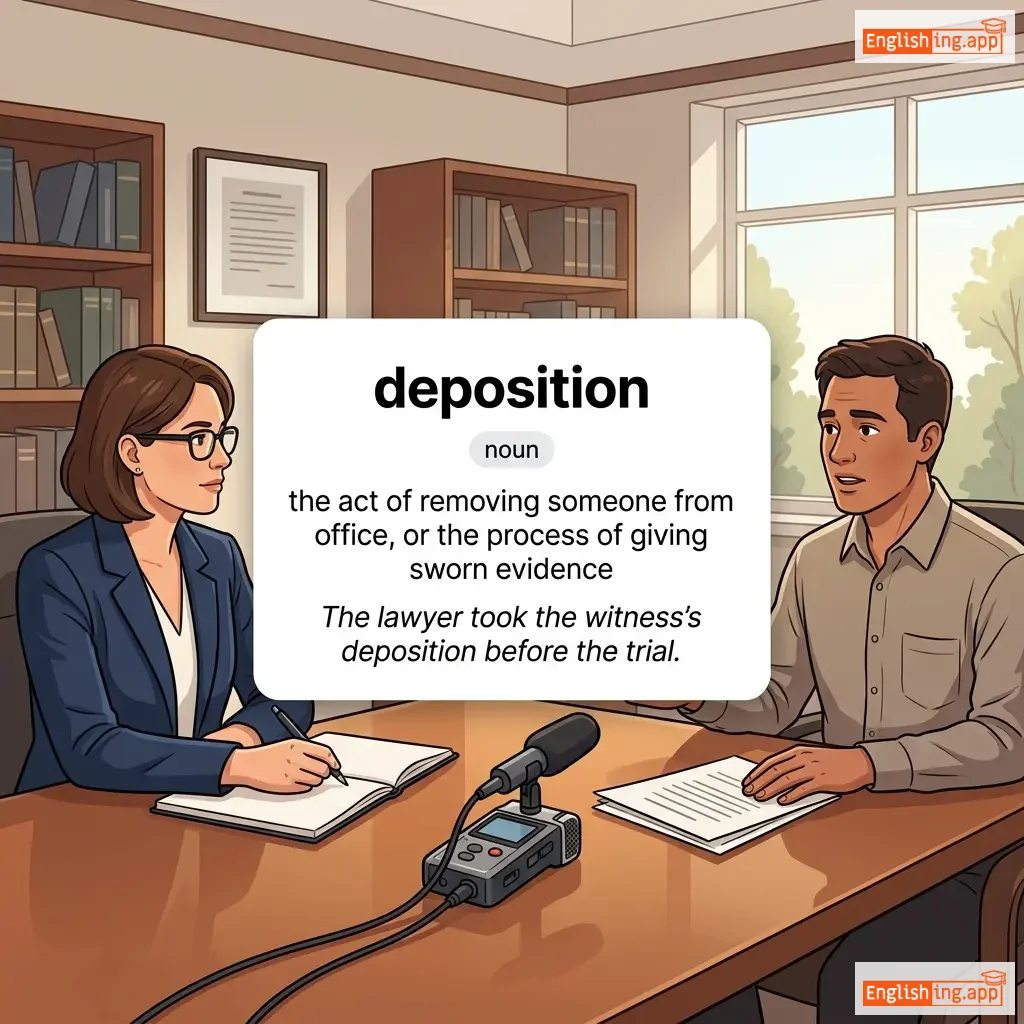
deposition definition card — visual illustration of the meaning
noun
/ˌdepəˈzɪʃən/
पदच्युति, शपथ पत्र (padchyuti, shapath patra)

the act of removing someone from office, or the process of giving sworn evidence

"The lawyer took the witness’s deposition before the trial."

"वकील ने trial से पहले गवाह का बयान लिया।" (Vakeel ne trial se pehle gawah ka bayan liya.)
noun
/dɪˈpɑːzɪtər/
जमाकर्ता (jamakarta)

a person who places money in a bank or financial institution

"The bank provides insurance to protect depositors’ funds."

"बैंक जमाकर्ताओं के फंड्स की सुरक्षा के लिए बीमा प्रदान करता है।" (Bank jamakartao ke funds ki suraksha ke liye beema pradan karta hai.)
noun
/dɪˈpɑːzətɔːri/
संग्रहण स्थल, जमा स्थल (sangrahan sthal, jama sthal)

a place where things are stored or deposited, especially financial assets

"The national depository safeguards all government bonds."

"राष्ट्रीय डिपॉज़िटरी सभी सरकारी बॉंड्स की सुरक्षा करता है।" (Rashtriya depository sabhi sarkari bonds ki suraksha karta hai.)
verb
/dɪˈpreɪv/
दुराचारी बनाना (durachari banana)

to corrupt morally; to make someone immoral or wicked

"The novel was criticized for attempting to deprave the minds of young readers."

"उपन्यास को युवा पाठकों के दिमाग को दुराचारी बनाने के प्रयास के लिए आलोचना की गई थी।" (Upanyas ko yuva pathokon ke dimaag ko durachari banane ke prayaas ke liye alochana ki gayi thi.)
adjective
/dɪˈpreɪvd/
निकृष्ट (nikrisht)

morally corrupt or wicked

"The film depicts the life of a depraved criminal."

"फिल्म एक निकृष्ट अपराधी के जीवन को चित्रित करती है।" (Film ek nikrisht aparadhi ke jeevan ko chitrit karti hai.)
noun
/dɪˈprævɪti/
दुष्टता (dushtata)

moral corruption; wickedness

"The film portrays the moral depravity of a corrupt society."

"फिल्म एक भ्रष्ट समाज की नैतिक दुष्टता को चित्रित करती है।" (Film ek bhrasht samaj ki naitik dushtata ko chitrit karti hai.)
verb
/ˈdɛprɪˌkeɪt/
असंतोष व्यक्त करना (asantosh vyakt karna)

to express disapproval of something

"The teacher deprecated the use of slang in academic essays."

"टीचर ने अकादमिक निबंधों में स्लैंग के उपयोग की निंदा की।" (Teacher ne academic nibandon mein slang ke upyog ki ninda ki.)
adjective
/ˈdɛprɪkətɔːri/
अवमाननात्मक (avamananatmak)

expressing disapproval or belittling

"He gave a deprecatory remark about their performance."

"उसने उनके प्रदर्शन के बारे में अवमाननात्मक टिप्पणी की।" (Usne unke pradarshan ke baare mein avamananatmak tippani ki.)
verb
/dɪˈpriːʃieɪt/
मूल्यह्रास (mulyahrash)

to reduce in value over time

"Cars tend to depreciate quickly in their first few years."

"कारें पहले कुछ वर्षों में जल्दी मूल्यह्रास होती हैं।" (Kaarein pehle kuch varshon mein jaldi mulyahrash hoti hain.)
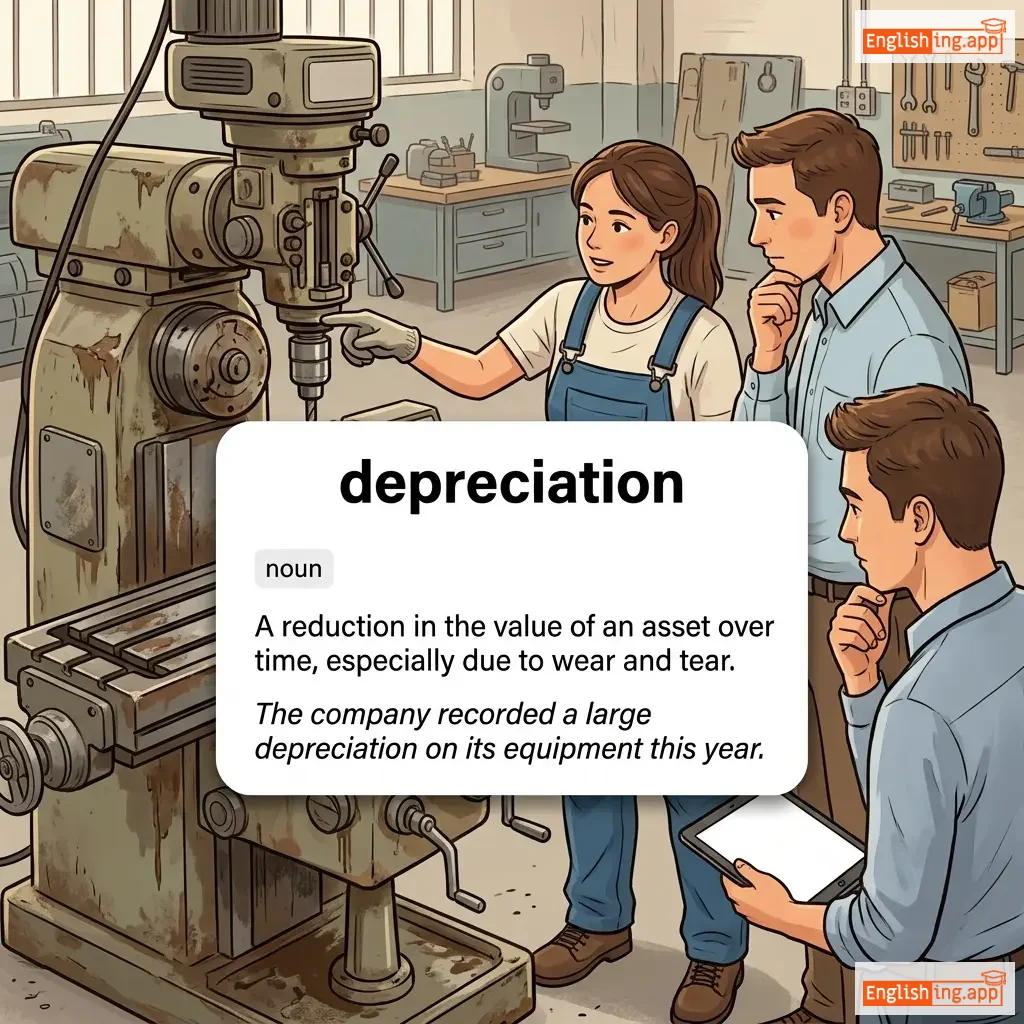
depreciation definition card — visual illustration of the meaning
noun
/dɪˌpriːʃiˈeɪʃən/
मूल्यह्रास (mulyahrash)

A reduction in the value of an asset over time, especially due to wear and tear.

"The company recorded a large depreciation on its equipment this year."

"कंपनी ने इस वर्ष अपनी उपकरणों पर बड़ा मूल्यह्रास दर्ज किया।" (Company ne is varsh apni upkaran par bada mulyahrash darj kiya.)
noun
/ˌdɛprɪˈdeɪʃən/
लूटपाट (lootpaat)

An act of attacking or plundering; damage caused by such acts.

"The villagers feared the depredation of wild animals at night."

"ग्रामवासियों को रात में जंगली जानवरों के लूटपाट का डर था।" (Gramvasiyon ko raat mein jangli janwaron ke lootpaat ka dar tha.)
verb
/dɪˈprɛs/
उदास करना (udas karna)

To make someone feel sad or without hope; to reduce the level or strength of something.

"The gloomy weather tends to depress people."

"उदास मौसम अक्सर लोगों को उदास कर देता है।" (udaas mausam aksar logon ko udaas kar deta hai.)
noun
/dɪˈprɛsənt/
डिप्रेसेंट (dipresent)

A drug that reduces functional or nervous activity in the body.

"Alcohol acts as a depressant on the central nervous system."

"एल्कोहल केंद्रीय तंत्रिका तंत्र पर एक डिप्रेसेंट के रूप में कार्य करता है।" (Alkohol kendriya tantrika tantra par ek dipresent ke roop mein kaary karta hai.)
adjective
/dɪˈprɛst/
निराश (nirash)

Feeling very sad and without hope; in a state of unhappiness.

"She felt depressed after losing her job."

"अपनी नौकरी खोने के बाद वह निराश महसूस कर रही थी।" (Apni naukri khone ke baad vah nirash mehsoos kar rahi thi.)
noun
/dɪˈprɛʃən/
डिप्रेशन (depression)

A state of severe sadness or hopelessness; also a prolonged downturn in economic activity.

"She has been battling depression for several months."

"वह कई महीनों से डिप्रेशन से जूझ रही है।" (Vah kai mahino se depression se joojh rahi hai.)
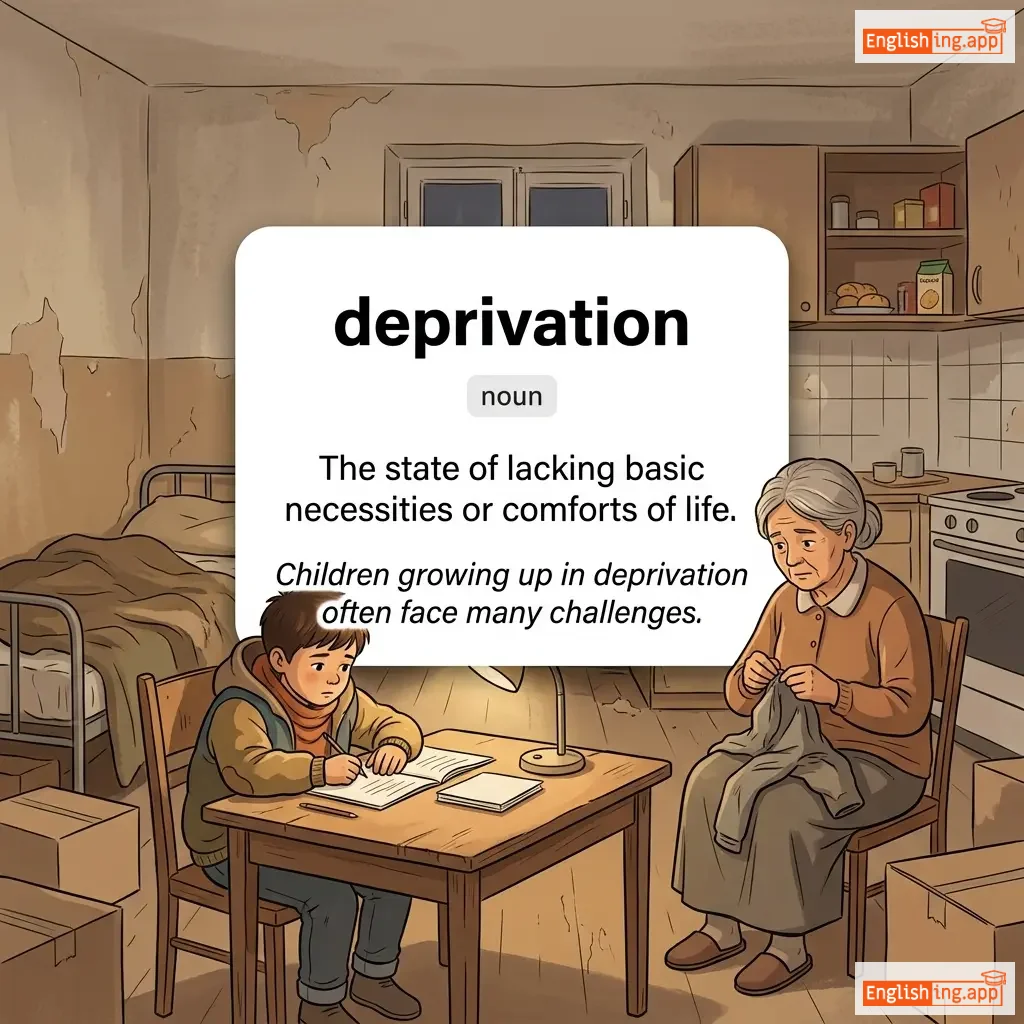
deprivation definition card — visual illustration of the meaning
noun
/ˌdɛprɪˈveɪʃən/
कमी (kami)

The state of lacking basic necessities or comforts of life.

"Children growing up in deprivation often face many challenges."

"कमी में बढ़ रहे बच्चे अक्सर कई चुनौतियों का सामना करते हैं।" (kami mein badh rahe bachche aksar kai chunautiyon ka samna karte hain.)
verb
/dɪˈpraɪv/
वंचित करना (vanchit karna)

to take something away from someone, or prevent them from having it

"The new law may deprive people of their rights."

"नया कानून लोगों को उनके अधिकारों से वंचित कर सकता है।" (Naya kanoon logon ko unke adhikaron se vanchit kar sakta hai.)
noun
/dɛpθ/
गहराई (gahraai)

The distance from the top to the bottom of something; the intensity or complexity of a subject.

"The diver measured the depth of the ocean trench."

"डाइवर ने महासागर की खाई की गहराई मापी।" (Diver ne mahaasagar ki khaai ki gahraai maapi.)
verb
/ˈdɛpjʊˌtaɪz/
सहायक नियुक्त करना (sahayak niyukt karna)

To appoint someone as a deputy; to act as a substitute or representative.

"The sheriff decided to deputize several locals to help maintain order."

"शेरिफ ने आदेश बनाए रखने में मदद करने के लिए कई स्थानीय लोगों को सहायक नियुक्त करने का निर्णय लिया।" (Sherif ne aadesh banaye rakhne mein madad karne ke liye kai sthalīya logon ko sahayak niyukt karne ka nirnay liya.)
noun
/ˈdɛpjʊti/
उपस्थापित (upasthapit)

A person appointed as a substitute with power to act.

"The deputy will lead the meeting in the manager’s absence."

"मैनेजर की अनुपस्थिति में उपस्थापित बैठक का संचालन करेगा।" (Manager ki anupasthiti mein upasthapit baithak ka sanchalan karega.)
verb
/dɪˈræsɪˌneɪt/
उखाड़ना / जड़ से उखाड़ देना (ukhadna / jhad se ukhad dena)

To uproot something completely; to displace people from their native environment or culture.

"The conflict deracinated many families from their homeland."

"संघर्ष ने कई परिवारों को उनके मातृभूमि से उखाड़ दिया।" (Sangharsh ne kai parivaron ko unke matribhumi se ukhad diya.)
adjective
/dɪˈreɪndʒd/
पागल (paagal)

mentally disturbed or insane; behaving irrationally

"The deranged man shouted nonsense in the street."

"पागल आदमी सड़क पर बकवास चिल्ला रहा था।" (Paagal aadmi sadak par bakwaas chilla raha tha.)
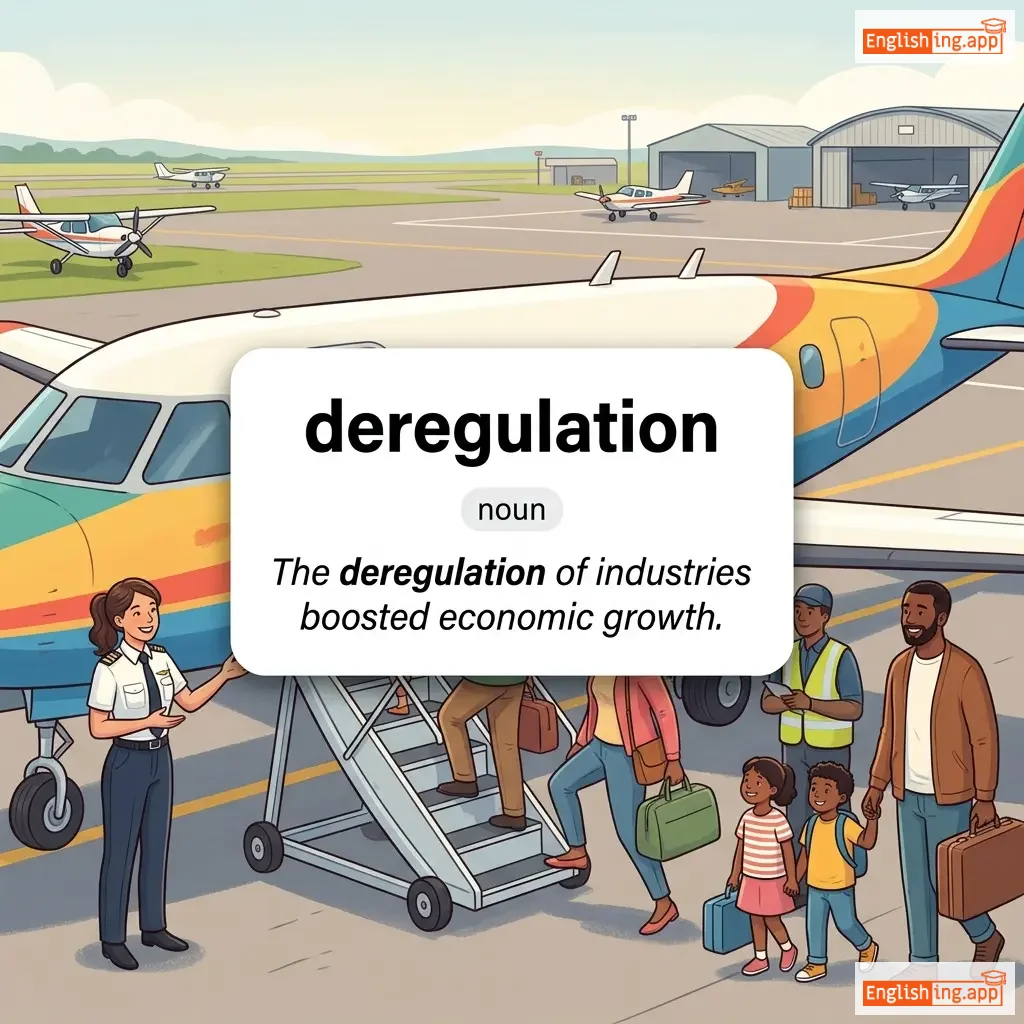
deregulation definition card — visual illustration of the meaning
noun
/ˌdiː.rɛɡ.jʊˈleɪ.ʃən/
नियमन समाप्ति (niyaman samapti)

The removal or reduction of government regulations and controls, often involving liberalization, free market policies, or privatization.

"The deregulation of industries boosted economic growth."

"उद्योगों के नियमन की समाप्ति ने आर्थिक वृद्धि को बढ़ावा दिया।" (udyogon ke niyaman ki samapti ne aarthik vruddhi ko badhava diya.)
adjective, noun
/ˈdɛrəlɪkt/
परित्यक्त (parityakt)

in poor condition due to neglect or disuse; a homeless or neglected person

"The old factory stood derelict for decades."

"पुरानी फैक्ट्री दशकों तक परित्यक्त खड़ी रही।" (Purani factory dashkon tak parityakt khadi rahi.)
noun
/ˌdɛrɪˈlɪkʃən/
उपेक्षा (upeksha)

the state of being abandoned; neglect of duty

"The officer was charged with dereliction of duty."

"अधिकारियों पर कर्तव्य में उपेक्षा का आरोप लगाया गया था।" (Adhikariyon par kartavya mein upeksha ka aarop lagaya gaya tha.)
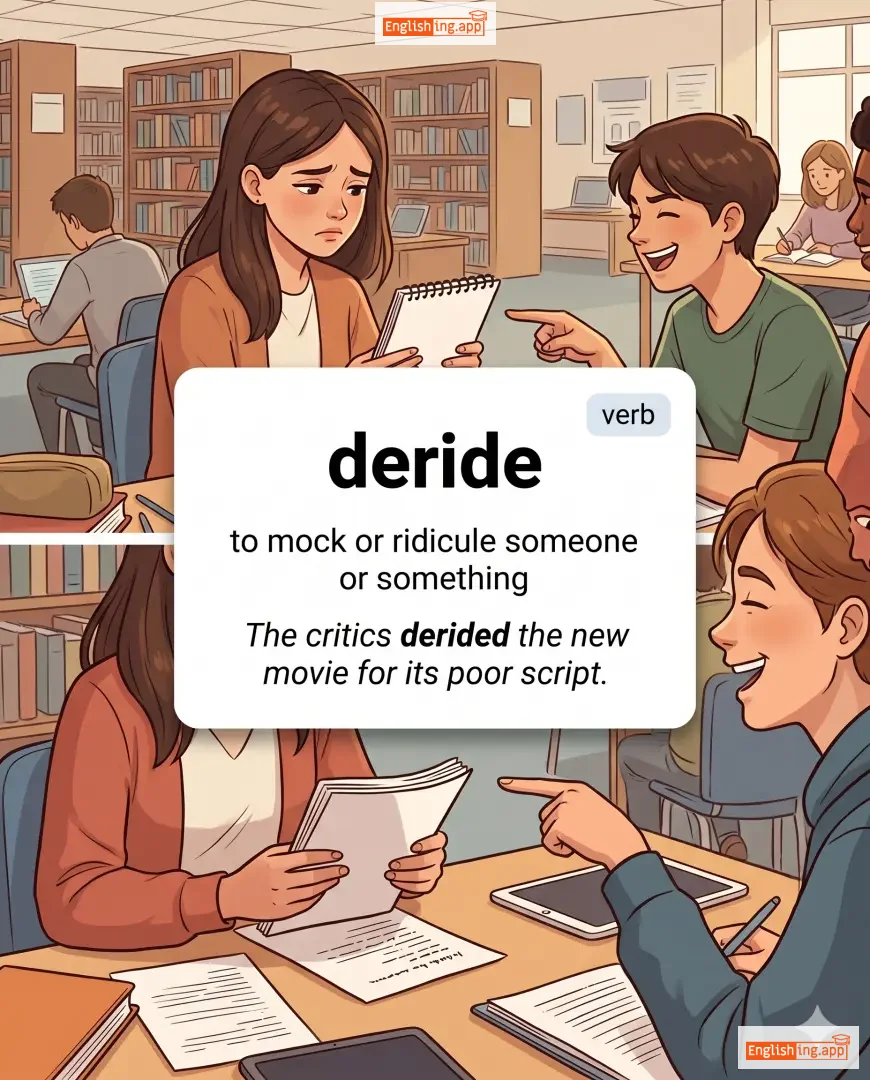
deride definition card — visual illustration of the meaning
verb
/dɪˈraɪd/
उपहास करना (upahas karna)

to mock or ridicule someone or something

"The critics derided the new movie for its poor script."

"समीक्षकों ने नई फिल्म का खराब पटकथा के लिए उपहास किया।" (Sameekshako ne nai film ka kharab patakatha ke liye upahas kiya.)
adjective
/dɪˈrɪzəbl/
उपहास योग्य (upahas yogya)

deserving ridicule or mockery

"His excuse was so weak that it was plainly derisible."

"उसका बहाना इतना कमजोर था कि वह स्पष्ट रूप से उपहास योग्य था।" (Uska bahaana itna kamzor tha ki vah spasht roop se upahas yogya tha.)
noun
/dɪˈrɪʒən/
अपमान (apmaan)

Contemptuous ridicule or mockery.

"His ideas were greeted with derision by the audience."

"उसके विचारों का अपमान के साथ स्वागत किया गया था।" (Uske vicharon ka apmaan ke saath swagat kiya gaya tha.)
adjective
/dɪˈraɪsɪv/
अपमानजनक (apmanjanak)

Expressing contempt or ridicule.

"She gave a derisive laugh at his attempt to sing."

"उसने उसकी गाने की कोशिश पर अपमानजनक हंसी दी।" (usne uski gaane ki koshish par apmanjanak hansi di.)
noun
/ˌdɛrɪˈveɪʃən/
व्युत्पत्ति (vyutpatti)

The origin or development of something from a source.

"The derivation of the word comes from Latin."

"शब्द की व्युत्पत्ति लैटिन से आई है।" (shabd ki vyutpatti latin se aayi hai.)
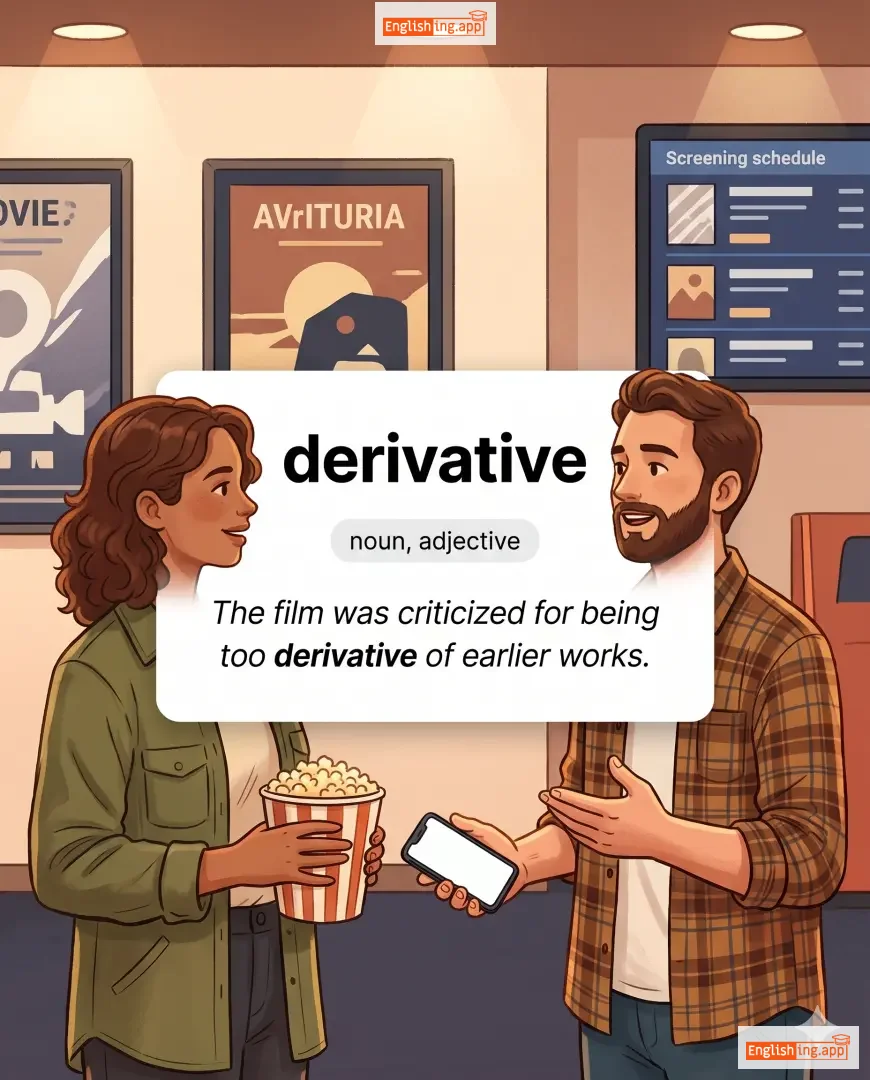
derivative definition card — visual illustration of the meaning
noun, adjective
/dɪˈrɪvətɪv/
व्युत्पन्न / अनुकरणीय (vyutpann / anukaraniya)

Something that is based on another source; in math, a measure of how a function changes.

"The film was criticized for being too derivative of earlier works."

"फिल्म को इसके पहले के कामों से बहुत अधिक व्युत्पन्न होने के लिए आलोचना की गई थी।" (film ko iske pehle ke kamon se bahut adhik vyutpann hone ke liye alochana ki gayi thi.)
verb
/dɪˈraɪv/
स्रोत से प्राप्त करना (srot se prapt karna)

To obtain something from a source.

"Many English words derive from Latin."

"कई अंग्रेजी शब्द लैटिन से प्राप्त होते हैं।" (kai angrezi shabd latin se prapt hote hain.)
adjective
/dɪˈraɪvd/
व्युत्पन्न (vyutpann)

Developed or obtained from something else; not original.

"The word is derived from Latin."

"यह शब्द लैटिन से व्युत्पन्न है।" (Yeh shabd Latin se vyutpann hai.)
noun
/ˌdɜːrməˈtɑːlədʒɪst/
चर्म रोग विशेषज्ञ (charm rog visheshagya)

A doctor who specializes in the treatment of skin diseases.

"She consulted a dermatologist for her skin allergy."

"उसने अपनी त्वचा की एलर्जी के लिए एक डर्मेटोलॉजिस्ट से सलाह ली।" (Usne apni tvacha ki allergy ke liye ek dermatologist se salah li.)
noun
/ˌdɜːrməˈtɑːlədʒi/
त्वचाविज्ञान (tvachavigyan)

The branch of medicine concerned with the skin and its diseases.

"He studied dermatology at medical school."

"उसने मेडिकल स्कूल में डर्माटोलॉजी का अध्ययन किया।" (Usne medical school mein dermatology ka adhyayan kiya.)
adjective
/dɪˈrɒɡətɪv/
अपमानजनक (apmanjanak)

Expressing a low opinion or showing lack of respect.

"He made a derogative remark about her work."

"उसने उसके काम के बारे में एक अपमानजनक टिप्पणी की।" (Usne uske kaam ke baare mein ek apmanjanak tippani ki.)
adjective
/dɪˈrɒɡətɔːri/
अपमानजनक (apmanjanak)

Showing a critical or disrespectful attitude.

"The article contained derogatory comments about the politician."

"लेख में राजनेता के बारे में अपमानजनक टिप्पणी थी।" (lekh mein rajneta ke baare mein apmanjanak tippani thi.)
noun
/ˈdɛrɪk/
डेरिक (derik)

A framework or tower used for supporting a crane, especially for oil drilling or lifting heavy loads.

"The workers assembled a derrick at the oil drilling site."

"मजदूरों ने तेल ड्रिलिंग साइट पर एक डेरिक इकट्ठा किया।" (Mazdooron ne tel drilling site par ek derik ikattha kiya.)