वोकैबुलरीज

इंग्लिश वोकैबुलरी डिस्कवर, लर्न और मास्टर करें

noun
/draɪ ˈtʃɪl.i/
सूखा मिर्च (sookha mirch)

dried chili peppers used as spice for adding heat to food

"The recipe calls for two dry chillies to make it spicy."

"इस रेसिपी में इसे मसालेदार बनाने के लिए दो सूखी मिर्च की आवश्यकता है।" (is recipe mein ise masaledaar banane ke liye do sookhi mirch ki avashyakta hai。)
noun
/draɪ fɪʃ/
सूखी मछली (sookhi machhli)

fish that has been preserved by drying in the sun or by other dehydration methods

"Dry fish is a popular preserved food in many coastal regions."

"सूखी मछली कई तटीय क्षेत्रों में एक लोकप्रिय संरक्षित भोजन है।" (sookhi machhli kai tateey kshetron mein ek lokpriya sanrakshit bhojan hai)
noun
/draɪ ɡuːs ˈbɛri/
सूखा आंवला (sookha aamla)

dehydrated amla fruit, rich in vitamin C and used for medicinal and culinary purposes

"Dry goose berry powder is excellent for hair growth."

"सूखा आंवला पाउडर बालों की वृद्धि के लिए उत्कृष्ट है।" (sookha aamla powder balo ki vruddhi ke liye utkrist hai)
noun
/draɪ ˈmæŋgoʊ ˈpaʊdər/
आमचूर (amchur)

a tangy powder made from dried raw mangoes, used as a spice in Indian cuisine

"The chef sprinkled dry mango powder over the chaat for extra tanginess."

"शेफ ने चाट पर अतिरिक्त खट्टापन देने के लिए आमचूर छिड़का।" (shef ne chaat par atirikt khattapan dene ke liye amchur chhidka.)
adjective
/ˈdjuːəl/
दोहरी (dohri)

having two parts or elements; two in one

"The dual nature of the problem required careful consideration."

"समस्या की दोहरी प्रकृति के लिए सावधानीपूर्वक विचार की आवश्यकता थी।" (Samasya ki dohri prakriti ke liye saavdhani poorvak vichar ki avashyakta thi.)
verb
/dʌb/
डब (dab)

to give a name or label to something; to add a soundtrack to a film or recording

"The movie was dubbed into several languages for international release."

"फिल्म को अंतर्राष्ट्रीय रिलीज़ के लिए कई भाषाओं में डब किया गया था।" (Film ko antarraashtreey release ke liye kai bhashao mein dab kiya gaya tha.)
adjective
/ˈdjuːbiəs/
संदेहास्पद (sandehaspad)

Hesitating or doubting; not to be relied upon.

"She gave him a dubious look after hearing his excuse."

"उसने उसके बहाने को सुनकर उसे संदिग्ध नज़र से देखा।" (Usne uske bahaane ko sunkar use sandigdh nazar se dekha.)
noun, verb
/dʌk/
खुशी (khushi)

a waterbird with a broad bill and webbed feet; to lower the head or body quickly to avoid something

"He ducked to avoid the flying ball."

"जब उसने पुरस्कार प्राप्त किया, तो वह अपनी खुशी छुपा नहीं सकी।" (Jab usne puraskar prapt kiya, to wah apni khushi chhupa nahi saki.)
noun
/ˈdʌklɪŋ/
बत्तख का बच्चा (battakh ka bachcha)

a young duck

"The mother duck led her ducklings to the pond."

"माँ बत्तख ने अपने बत्तखों को तालाब की ओर ले गईं।" (maa battakh ne apne battakhon ko talaab ki or le gayi)
adjective
/ˈdʌktaɪl/
लचीला (lachila)

capable of being stretched into a thin wire without breaking; easily influenced

"Gold is a very ductile metal."

"सोना एक बहुत लचीला धातु है।" (Sona ek bahut lachila dhaatu hai.)
adjective
/djuː/
नियत (niyat)

expected at a certain time or required by a certain date

"The rent is due on the first of every month."

"किराया हर महीने की पहली तारीख को देय होता है।" (kiraya har mahine ki pehli tareekh ko dey hota hai.)
noun
/djuːˈɛnə/
उम्रदराज महिला (umradharaj mahila)

an older woman acting as a governess or chaperone, especially in Spanish families

"The young lady was accompanied by a duenna during the festival."

"त्योहार के दौरान युवा महिला के साथ एक उम्रदराज महिला थीं।" (Tyohar ke dauran yuva mahila ke saath ek umradharaj mahila thin.)
noun
/djuːˈɛt/
डुएट (duet)

a musical performance by two singers or instrumentalists

"They sang a beautiful duet together on stage."

"उन्होंने मंच पर एक सुंदर डुएट एक साथ गाया।" (Unhone manch par ek sundar duet ek sath gaya.)
adjective
/ˈdʌlsɪt/
मधुर (madhur)

sweet and soothing (often used ironically)

"She was enchanted by his dulcet voice."

"वह उसकी मधुर आवाज से मंत्रमुग्ध हो गई थी।" (Wah uski madhur awaaz se mantramugdh ho gayi thi.)
adjective
/dʌl/
बोर (bor)

lacking brightness, vividness, or interest; boring or not sharp

"The lecture was so dull that many students fell asleep."

"व्याख्यान इतना उबाऊ था कि कई छात्रों को नींद आ गई।" (Vyakhyan itna ubaoo tha ki kai chhatron ko neend aa gayi.)
noun
/ˈdʌlərd/
मूर्ख व्यक्ति (murkh vyakti)

a slow or stupid person

"He was considered a dullard by his classmates."

"उसे उसके सहपाठियों द्वारा एक मूर्ख व्यक्ति माना जाता था।" (Use uske sahpathiyon dwara ek murkh vyakti maana jaata tha.)
adverb
/ˈduːli/
समय पर, उचित रूप से (samay par, uchit roop se)

in accordance with what is required or appropriate; at the proper time

"The documents were duly signed and submitted."

"दस्तावेज़ समय पर सही तरीके से साइन और जमा किए गए।" (dastaavez samay par sahi tareeke se sign aur jama kiye gaye.)
adjective
/dʌm/
मूर्ख / बहरा (murkh / behra)

lacking intelligence or unable to speak

"He made a dumb mistake during the exam."

"उसने परीक्षा के दौरान एक मूर्ख गलती की।" (Usne pariksha ke dauran ek murkh galti ki.)
verb
/ˈdʌmfaʊnd/
हैरान करना (hairan karna)

to greatly astonish or shock someone so they are temporarily speechless

"The magician's trick dumbfounded the audience."

"जादूगर का ट्रिक दर्शकों को हैरान कर गया।" (Jadugar ka trick darshako ko hairan kar gaya.)
noun
/ˈdʌmi/
मॉक / मूर्ख व्यक्ति (mock / murkh vyakti)

a model or replica of a human used for practice, display, or testing; also a term for a foolish person

"The tailor used a dummy to display the dress."

"दर्जी ने ड्रेस को प्रदर्शित करने के लिए एक डमी का उपयोग किया।" (Darji ne dress ko pradarshit karne ke liye ek dummy ka upyog kiya.)
verb
/dʌmp/
किसी चीज़ को लापरवाही से फेंकना या छोड़ना (kisi cheez ko laparwahi se phenkna ya chhodna)

to drop or dispose of something carelessly; to end a relationship suddenly

"He dumped all the trash into the bin."

"उसने सारे कचरे को बिन में डंप कर दिया।" (Usne saare kachre ko bin mein dump kar diya.)
verb
/dʌn/
ऋण की वसूली करना (rin ki vasooli karna)

to demand payment of a debt persistently

"The landlord dunned the tenant for unpaid rent."

"मालिक ने किराएदार से बकाया किराया बार-बार मांगा।" (Maalik ne kiraayedar se bakaaya kiraaya baar-baar maanga.)
noun
/djuːn/
रेत का टीला (ret ka teela)

A hill or ridge of sand formed by the wind, usually found in deserts or near beaches.

"The children played on the sand dune by the beach."

"बच्चे समुद्र तट पर रेत के टीले पर खेल रहे थे।" (Bachche samudra tat par ret ke teele par khel rahe the.)
noun
/ˈdjuːəʊ/
जोड़ी (jodi)

a pair of people or things, especially in music or entertainment

"The musical duo performed their latest hit at the concert."

"संगीत जोड़ी ने अपने नवीनतम हिट का प्रदर्शन किया।" (Sangeet jodi ne apne naveenatam hit ka pradarshan kiya.)
dupe definition card — visual illustration of the meaning
verb
/djuːp/
ठगना (thagna)

To deceive or trick someone into believing or doing something.

"He was duped into buying a fake watch."

"वह एक नकली घड़ी खरीदने के लिए ठगा गया था।" (vah ek nakli ghadi kharidne ke liye thaga gaya tha.)
noun
/ˈdjuːplɛks/
डुप्लेक्स घर (duplex ghar)

A house or apartment divided into two separate residences.

"They live in a duplex near the city center."

"वे शहर के केंद्र के पास एक डुप्लेक्स में रहते हैं।" (ve shahar ke kendra ke paas ek duplex mein rehte hain.)
adjective
/djuːˈplɪsɪtəs/
धोखेबाज़ (dhokhebaaz)

Deceitful; deliberately deceptive or dishonest.

"The politician was criticized for his duplicitous statements."

"राजनेता को उसके धोखेबाज़ बयान के लिए आलोचना की गई।" (Raajneeta ko uske dhokhebaaz bayan ke liye aalochana ki gayi.)
noun
/djuːˈplɪsɪti/
दुराचार (durachar)

Deceitfulness or double-dealing; dishonesty.

"Her duplicity was revealed during the investigation."

"जांच के दौरान उसकी दुराचारिता उजागर हो गई।" (Jaanch ke dauran uski durachaarita ujagar ho gayi.)
durability definition card — visual illustration of the meaning
noun
/ˌdʊr.əˈbɪl.ə.ti/
स्थायित्व (sthayitva)

the ability to withstand wear, pressure, or damage; lasting quality

"The durability of the new smartphone impressed customers with its resistance."

"नए स्मार्टफोन की स्थायित्व ने ग्राहकों को अपनी प्रतिरोध क्षमता से प्रभावित किया।" (Naye smartphone ki sthayitva ne graahako ko apni pratirodh kshamata se prabhavit kiya.)
adjective
/ˈdjʊərəbəl/
स्थायी; टिकाऊ; मजबूत; (dyoorbal)

able to withstand wear, pressure, or damage; lasting; strong

"This durable fabric will last for many years."

"यह टिकाऊ कपड़ा कई सालों तक चलेगा।" (yah tikau kapda kai salon tak chalega)
noun
/ˈdjʊərəns/
कारावास (karawas)

imprisonment or confinement

"The prisoner spent years in durance before his release."

"क़ैदी ने अपनी रिहाई से पहले वर्षों कारावास में बिताए।" (Kaidi ne apni rihaai se pehle varsho kaarawas mein bitaye.)
noun
/djʊˈreɪʃən/
कालावधि (kaalavadhi)

the length of time that something continues

"The meeting lasted for the duration of two hours."

"बैठक दो घंटे की कालावधि तक चली।" (Baithak do ghante ki kaalavdhi tak chali.)
noun
/djʊˈrɛs/
दबाव (dabaav)

threats, violence, or pressure used to force someone to do something

"She signed the contract under duress."

"उसने दबाव में आकर अनुबंध पर हस्ताक्षर किए।" (Usne dabaav mein aakar anubandh par hastakshar kiye.)
noun
/ˈdʊr.i.ən/
डूरियन (duuriyan)

a large spiky tropical fruit known for its strong smell and creamy custard-like flesh

"Durian is known as the king of fruits in Southeast Asia despite its pungent odor."

"डूरियन अपनी तीखी गंध के बावजूद दक्षिणपूर्व एशिया में फलों का राजा माना जाता है।" (duuriyan apanee teekhee gandh ke bavujood dakshinpurv asia mein phalon ka raja maana jaata hai.)
preposition
/ˈdjʊərɪŋ/
के दौरान (ke dauran)

throughout the course of a period of time

"I fell asleep during the movie."

"मैं फिल्म के दौरान सो गया।" (main film ke dauran so gaya.)
noun
/dʌsk/
संझा; सांध्यकाल; (sanjha, sandhya kaal)

the period of the day when daylight is fading; twilight

"They walked along the beach during dusk, watching the sunset."

"वे डस्क के दौरान समुद्र तट पर चल रहे थे, सूर्यास्त देख रहे थे।" (ve dusk ke dauran samudra tat par chal rahe the, suryaast dekh rahe the.)
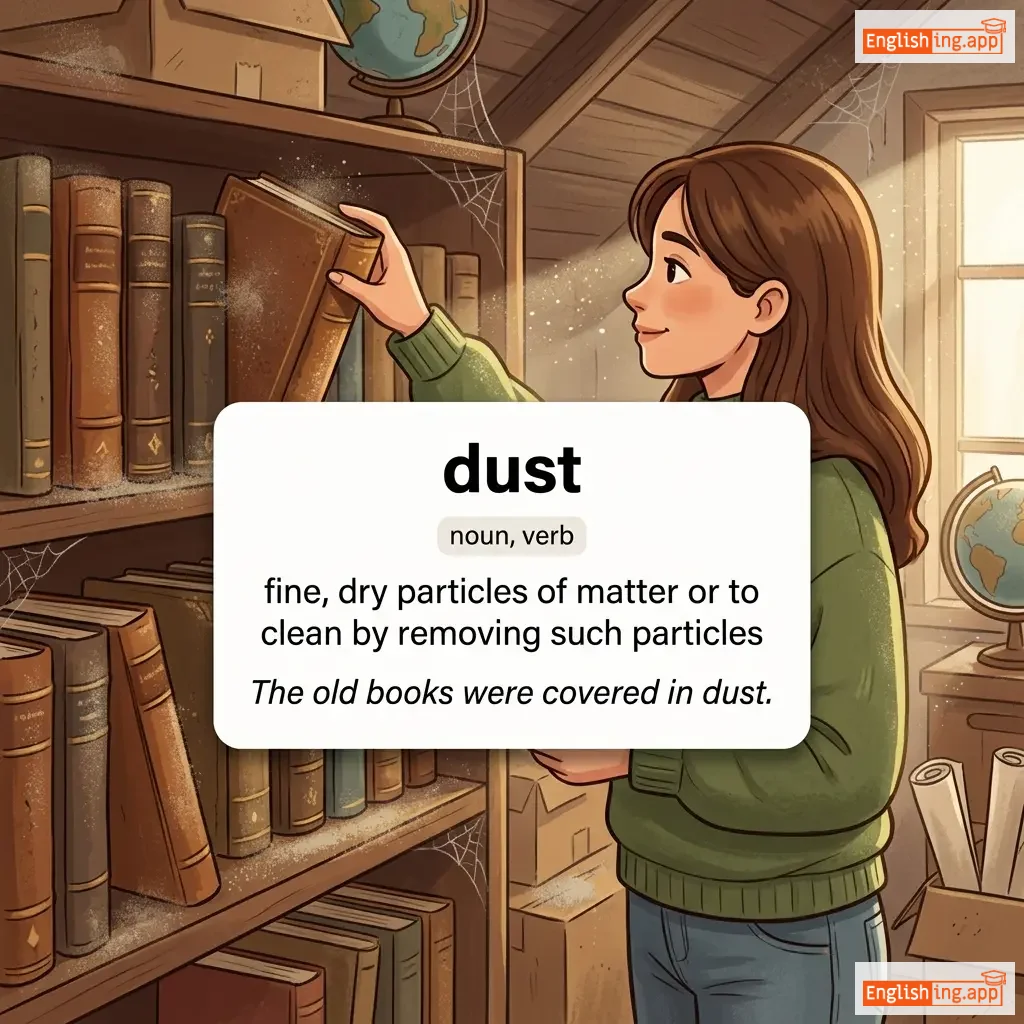
dust definition card — visual illustration of the meaning
noun, verb
/dʌst/
धूल (dhool)

fine, dry particles of matter or to clean by removing such particles

"The old books were covered in dust."

"पुरानी किताबों में धूल चढ़ी हुई थी।" (purani kitabon mein dhool chhadi hui thi.)
noun
/ˈdʌst.bɪn/
कचरा पात्र (kachra patra)

a container for holding waste or garbage before disposal

"Please throw the paper into the dustbin after use."

"कृपया उपयोग के बाद कागज को डस्टबिन में फेंक दें।" (kripya upyog ke baad kagaz ko dustbin mein phenk den)
adjective
/ˈdʌsti/
धूलभरा (dhoolbhara)

covered with or full of dust; dry and dull from lack of moisture or use

"The old bookshelf was dusty after years of neglect."

"कई सालों की उपेक्षा के बाद पुरानी किताबों की अलमारी धूलभरी थी।" (kai saalon ki upeksha ke baad purani kitabon ki almari dhoolbhari thi)
adjective
/dʌtʃ/
डच (dach)

relating to the Netherlands, its people, or their language

"She enjoys Dutch paintings from the 17th century."

"वह 17वीं सदी के डच चित्रकला का आनंद लेती है।" (vah 17vi sadi ke dach chitrakala ka anand leti hai.)
adjective
/ˈdjuːtiəs/
आज्ञाकारी (aajyakaari)

dutiful; obedient and respectful

"The duteous child always followed her parents’ instructions."

"आज्ञाकारी बच्चा हमेशा अपने माता-पिता के निर्देशों का पालन करता था।" (Aajyakaari bachcha hamesha apne mata-pita ke nirdeshon ka paalan karta tha.)
adjective
/ˈdjuːtiəbl/
शुल्क योग्य (shulk yogya)

subject to customs duty or tax

"Imported electronics are often dutiable at the border."

"आयातित इलेक्ट्रॉनिक्स अक्सर सीमा पर शुल्क योग्य होते हैं।" (Aayatit electronics aksar seema par shulk yogya hote hain.)
adjective
/ˈdjuːtɪfəl/
कर्तव्यनिष्ठ (kartavyanisth)

Willingly obedient and responsible in performing one's duty.

"She is a dutiful daughter who always takes care of her parents."

"वह एक कर्तव्यनिष्ठ बेटी है जो हमेशा अपने माता-पिता की देखभाल करती है।" (Vah ek kartavyanisth beti hai jo hamesha apne mata-pita ki dekhbhaal karti hai.)
noun
/ˈdjuːti/
कर्तव्य (kartavya)

a moral or legal obligation; a responsibility

"It is our duty to protect the environment."

"यह हमारा कर्तव्य है कि हम पर्यावरण की रक्षा करें।" (Yeh hamara kartavya hai ki hum paryavaran ki raksha karein.)
noun
/dwɔːrf/
बौना (bouna)

a person, animal, or plant much smaller than average

"Snow White lived with seven dwarfs."

"स्नो व्हाइट सात बौनों के साथ रहती थी।" (Sno White saat bouno ke saath rahti thi.)
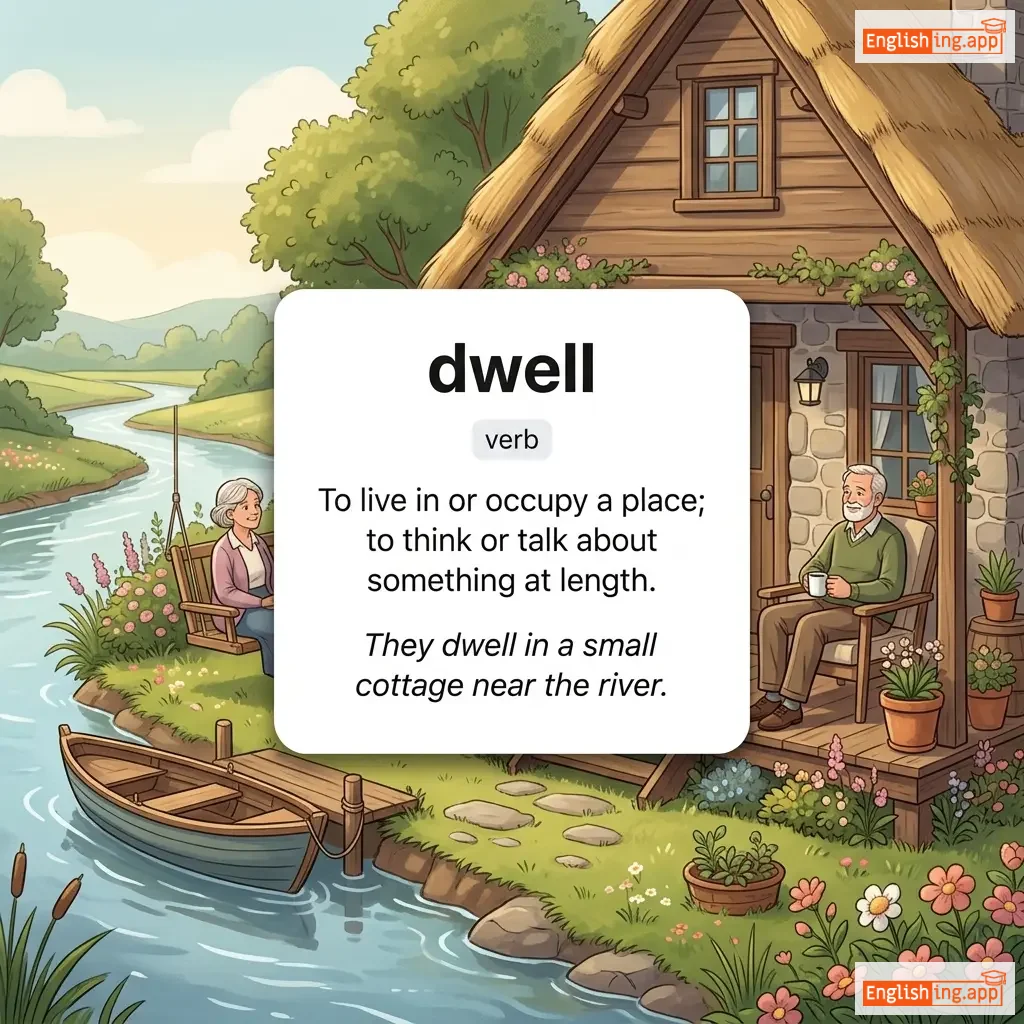
dwell definition card — visual illustration of the meaning
verb
/dwɛl/
रहना (rehna)

To live in or occupy a place; to think or talk about something at length.

"They dwell in a small cottage near the river."

"वे नदी के पास एक छोटे से मकान में रहते हैं।" (Ve nadi ke paas ek chhote se makaan mein rehte hain.)
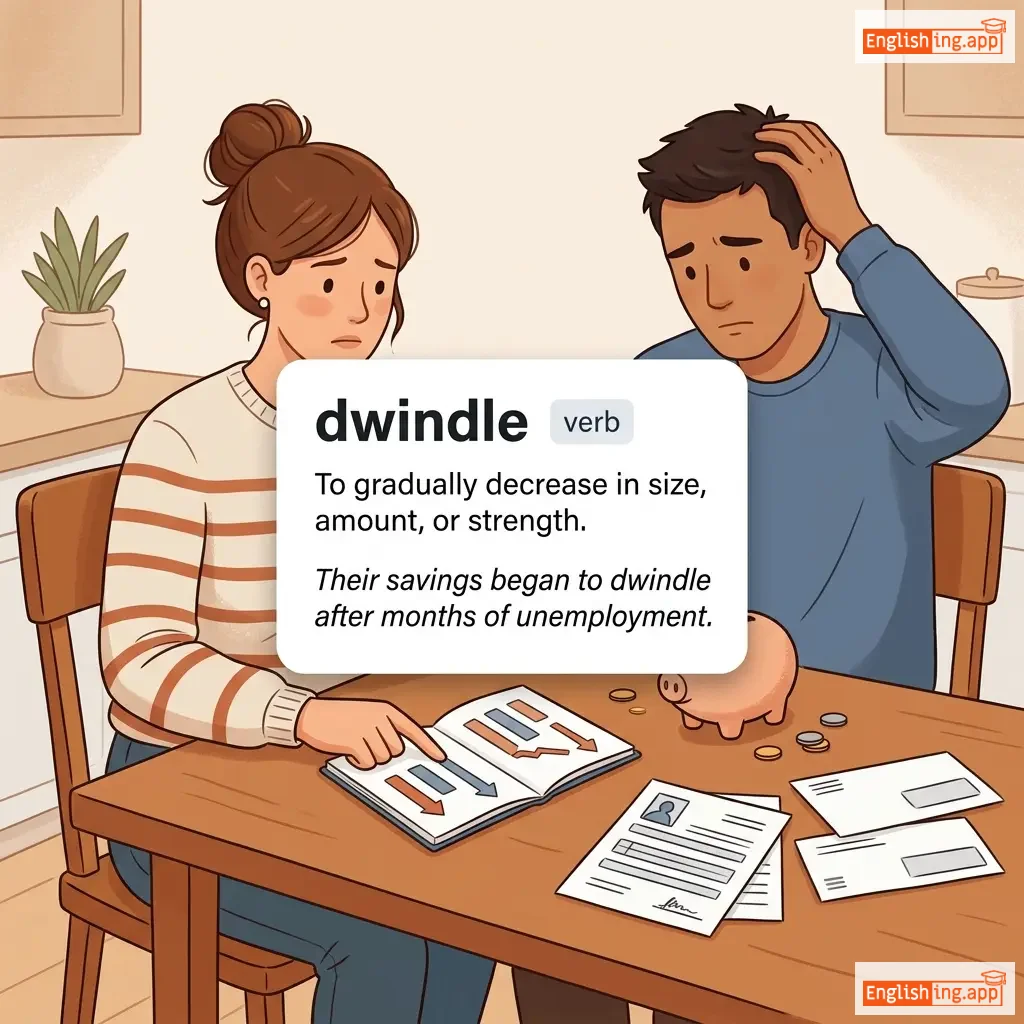
dwindle definition card — visual illustration of the meaning
verb
/ˈdwɪndl/
कम होना (kam hona)

To gradually decrease in size, amount, or strength.

"Their savings began to dwindle after months of unemployment."

"उनकी बचत बेरोज़गारी के महीनों के बाद घटने लगी।" (Unki bachat berozgaari ke mahino ke baad ghatne lagi.)
adjective
/ˈdwɪndlɪŋ/
घटता हुआ (ghatata hua)

Gradually reducing in number, size, or strength.

"The villagers relied on dwindling water supplies."

"गाँव वाले घटते पानी के स्रोतों पर निर्भर थे।" (Gaav wale ghatte paani ke sroton par nirbhar the.)
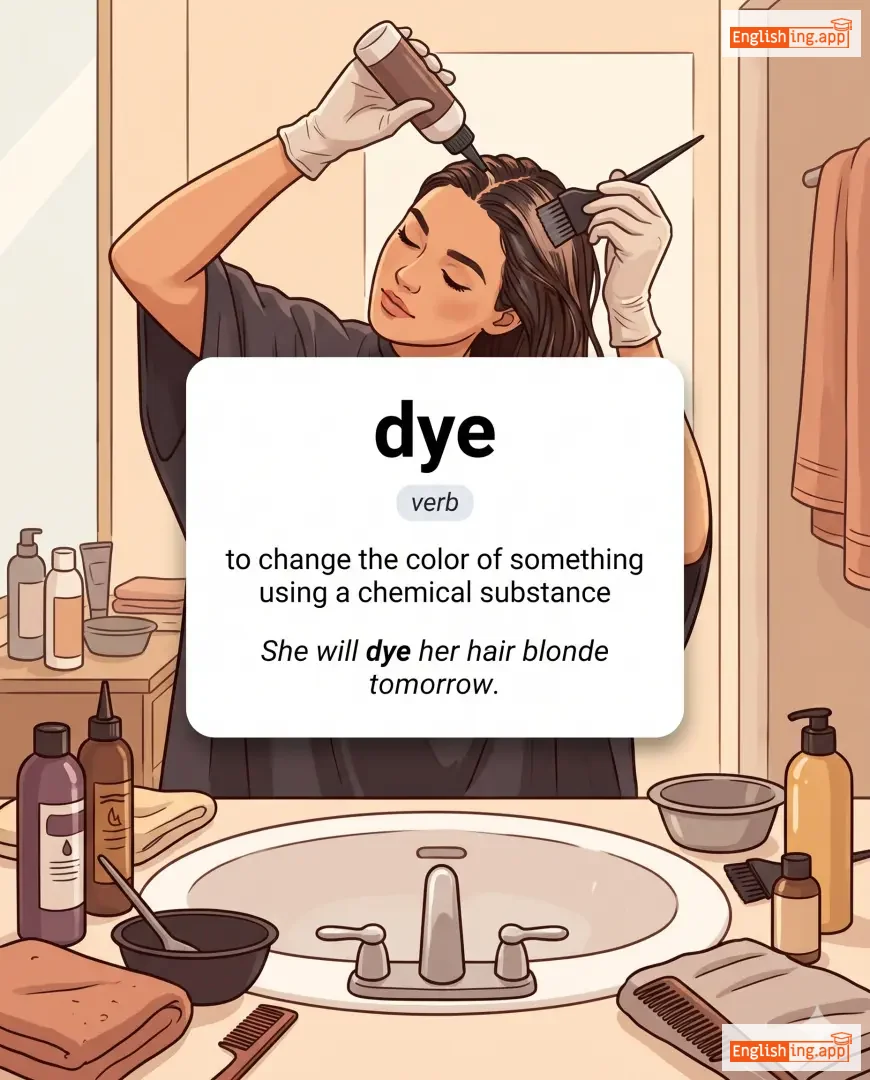
dye definition card — visual illustration of the meaning
verb
/daɪ/
रंगना (rangna)

to change the color of something using a chemical substance

"She will dye her hair blonde tomorrow."

"वह कल अपने बालों को सुनहरा रंग देगी।" (vah kal apne baalon ko sunahra rang degi)
verb
/ˈdaɪɪŋ/
मरना (marna)

to stop living; approaching death

"The old man was dying peacefully in his sleep."

"वृद्ध आदमी अपने सोने के दौरान शांति से मर रहा था।" (Vriddh aadmi apne sone ke dauran shaanti se mar raha tha.)