वोकैबुलरीज

इंग्लिश वोकैबुलरी डिस्कवर, लर्न और मास्टर करें

noun
/ˈdɔːrˌkiːpər/
दरबान (darban)

A person whose job is to guard or manage the entrance of a building or room.

"The doorkeeper checked everyone’s passes before they entered the hall."

"डोरकीपर ने हॉल में प्रवेश करने से पहले सभी के पास जांचे।" (Dorkeeper ne hall me pravesh karne se pehle sabhi ke pass jaanche)
noun
/ˈdɔː.weɪ/
दरवाजे का रास्ता (darwaze ka rasta)

the space where a door opens into a room or building

"She stood in the doorway waiting for him to arrive."

"वह दरवाजे के पास खड़ी थी, उसे आने का इंतजार कर रही थी।" (Vah darwaze ke paas khadi thi, use aane ka intezaar kar rahi thi.)
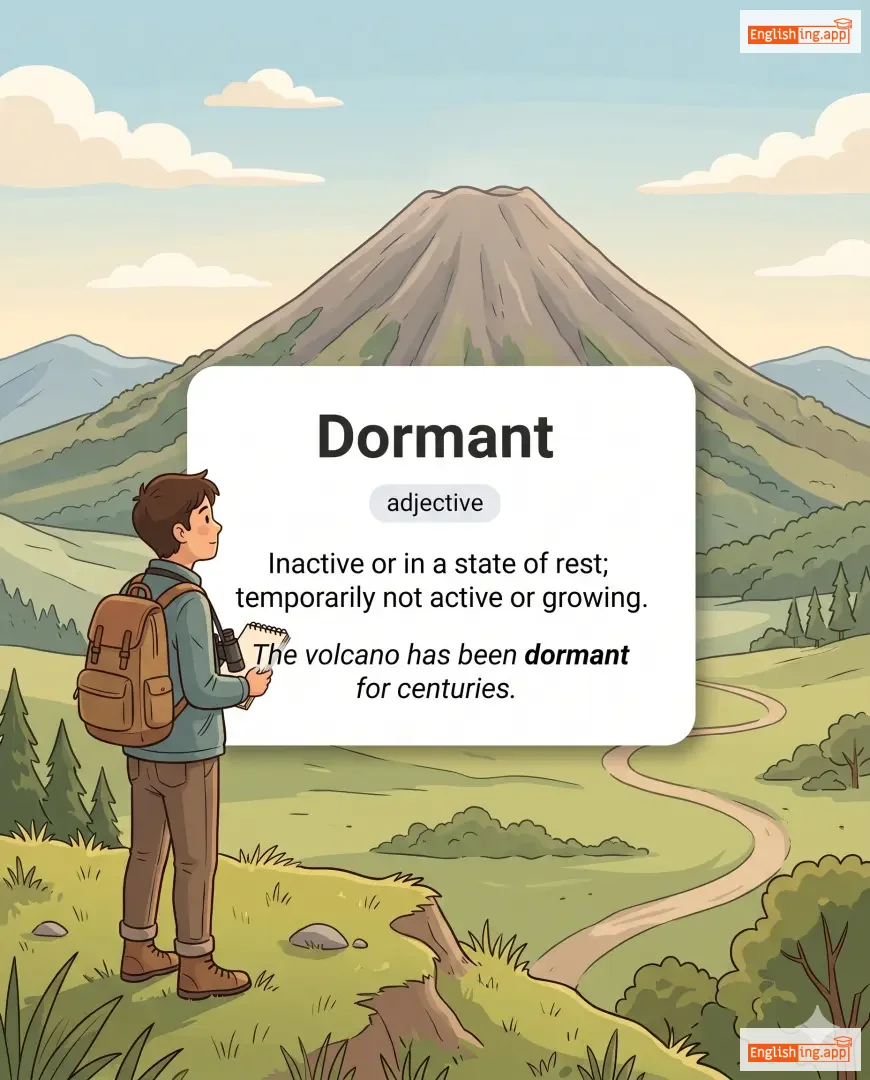
Dormant definition card — visual illustration of the meaning
adjective
/ˈdɔːrmənt/
निष्क्रिय (nishkriya)

Inactive or in a state of rest; temporarily not active or growing.

"The volcano has been dormant for centuries."

"ज्वालामुखी सदी दर सदी निष्क्रिय रहा है।" (Jwalamukhi sadi dar sadi nishkriya raha hai.)
noun
/ˈdɔːrmər/
छत की खिड़की (chhat ki khidki)

A window that projects vertically from a sloping roof.

"The old house had a dormer overlooking the garden."

"पुरानी घर में एक डॉरमर था जो बाग़ीचे को देख रहा था।" (Purani ghar mein ek dormer tha jo baagiche ko dekh raha tha.)
adjective
/ˈdɔːrsəl/
पीठीय (peethiy)

Relating to the back or upper side of an animal or body part.

"Sharks have a prominent dorsal fin."

"शार्क्स के पास एक प्रमुख पीठीय पंख होता है।" (Sharks ke paas ek pramukh peethiy pankh hota hai.)
noun
/doʊs/
खुराक (khuraak)

a measured amount of a medicine or drug taken at one time

"The doctor prescribed one dose of the medicine every six hours."

"डॉक्टर ने हर छह घंटे में एक डोज़ दवाई लेने के लिए कहा था।" (Daktar ne har chhah ghante mein ek doze dawa lene ke liye kaha tha.)
noun
/ˈdɑːsieɪ/
डॉसिएर (dosier)

A collection of documents about a particular person, event, or subject.

"The lawyer presented a dossier of evidence to the court."

"वकील ने अदालत में साक्ष्य का एक डॉसिएर प्रस्तुत किया।" (Vakil ne adalat mein sakshya ka ek dosier prastut kiya.)
noun
/dɒt/
बिंदु (bindu)

a small round mark or spot

"She drew a red dot on the paper."

"उसने कागज पर एक लाल बिंदु बनाया।" (Usne kagaz par ek laal bindu banaya.)
noun
/ˈdoʊtɪdʒ/
बुढ़ापे (budhape)

The period of old age, especially when one is weak or senile.

"He spent his dotage reminiscing about his youth."

"उसने अपनी बुढ़ापे में अपनी जवानी की यादें ताजा करते हुए समय बिताया।" (Usne apni budhape mein apni jawani ki yaadein taza karte hue samay bitaya.)
verb
/doʊt/
अत्यधिक प्यार (atyadhik pyaar)

to show excessive love or fondness for someone or something

"She tends to dote on her grandchildren."

"वह अपने पोते-पोतियों पर अत्यधिक प्यार दिखाती है।" (Vah apne pote-potiyon par atyadhik pyaar dikhati hai.)
verb
/ˈdʌbəl/
दोगुना करना (doguna karna)

to make twice as much in size, number, or amount

"The company hopes to double its profits this year."

"कंपनी इस वर्ष अपने लाभ को दोगुना करने की उम्मीद कर रही है।" (Kampani is varsh apne labh ko doguna karne ki ummid kar rahi hai.)
noun
/ˈdʌbəl ˈdekər/
डबल डेकker बस (dabal deker bas)

a bus with two levels or floors for passengers

"The red double decker bus is a famous symbol of London."

"लाल डबल डेकker बस लंदन का एक प्रसिद्ध प्रतीक है।" (lal dabal deker bas london ka ek prasiddh pratik hai)
noun
/ˈdʌblɪt/
डबलट / घनी जैकेट (doublet / ghani jacket)

a close-fitting jacket worn by men in the Renaissance; also, a pair of similar things

"The actor wore a velvet doublet for the Shakespearean play."

"अभिनेता ने शेक्सपियरियन नाटक के लिए एक वेलवेट डबलट पहना।" (Abhineta ne Shakespeareian natak ke liye ek velvet doublet pehna.)
adverb
/ˈdʌbli/
दोहरी तरह से (dohri tarah se)

in a twofold manner; to twice the degree

"She felt doubly fortunate after winning the prize and getting a promotion."

"उसने पुरस्कार जीतने और पदोन्नति पाने के बाद खुद को दोहरी किस्मत वाला महसूस किया।" (Usne puraskaar jeetne aur padonnati paane ke baad khud ko dohari kismat waala mehsoos kiya.)
Doubt definition card — visual illustration of the meaning
noun/verb
/daʊt/
संदेह (sandeh)

a feeling of uncertainty or lack of conviction; to be uncertain about something

"She had doubts about the success of the plan."

"उसने योजना की सफलता के बारे में संदेह किया।" (Usne yojana ki safalta ke baare mein sandeh kiya.)
adjective
/ˈdaʊt.fəl/
संदिग्ध; सवालों से भरा; किसी चीज़ के बारे में अनिश्चित महसूस करना (sandigdh; sawalon se bhara; kisi cheez ke baare mein anishchit mehsoos karna)

uncertain; questionable; feeling uncertain about something

"I am doubtful about the success of this project."

"मैं इस परियोजना की सफलता को लेकर संदिग्ध हूँ।" (main is pariyojana ki safalta ko lekar sandigdh hoon.)
noun
/doʊ/
आटा (ata)

a mixture of flour, water, and other ingredients used to make bread or pastries

"She kneaded the dough for ten minutes before baking."

"उसने दस मिनट तक आटा गूंधा और फिर उसे पकाया।" (Usne das minute tak aata goondha aur phir use pakaya.)
adjective
/ˈdaʊti/
साहसी (sahasi)

brave, valiant, courageous

"The doughty soldier never backed down from a challenge."

"साहसी सैनिक कभी भी किसी चुनौती से पीछे नहीं हटा।" (Sahasi sainik kabhi bhi kisi chunauti se peeche nahi hata.)
adjective
/ˈdaʊ.ər/
कठोर (kathor)

relentlessly severe, stern, or gloomy in manner or appearance

"His dour expression made the meeting uncomfortable."

"उसकी कठोर मुद्रा ने बैठक को असहज बना दिया।" (Uski kathor mudra ne baithak ko asahaj bana diya.)
verb
/daʊs/
बुझाना / डालना (bujhana / dalna)

to pour liquid over; to extinguish a fire or light

"Firefighters doused the flames with water."

"फायरफाइटर्स ने पानी से आग बुझाई।" (Firefighters ne pani se aag bujhayi.)
noun
/dʌv/
कबूतर (kabootar)

a small, gentle bird with soft cooing sounds, often white and symbolizing peace

"The white dove flew peacefully across the blue sky."

"सफेद कबूतर नीले आकाश में शांति से उड़ रहा था।" (safed kabootar neele aakash mein shanti se ud raha tha)
verb
/ˈdʌv.teɪl/
मेल खाना / पूरी तरह से एक साथ फिट होना (mel khaana / poori tarah se ek saath fit hona)

to fit or combine perfectly together

"Her plans dovetail perfectly with our goals."

"उसकी योजनाएँ हमारे लक्ष्यों के साथ पूरी तरह मेल खाती हैं।" (Uski yojnaayein hamare lakshyon ke saath poori tarah mel khaati hain.)
adjective
/ˈdaʊ.di/
फैशनहीन / बेरंग (fashionheen / berang)

unfashionable, dull, or shabby in appearance

"She wore a dowdy dress to the party."

"उसने पार्टी में एक फैशनहीन ड्रेस पहनी।" (Usne party mein ek fashionheen dress pehni.)
adverb
/daʊn/
नीचे (neeche)

from a higher to a lower position

"He walked down the stairs slowly."

"वह धीरे-धीरे सीढ़ियों से नीचे आया।" (Wah dheere-dheere seediyaan se neeche aaya.)
adjective
/ˈdaʊn.kæst/
उदास (daunkaast)

feeling sad, dejected, or with lowered eyes

"He looked downcast after hearing the bad news."

"खराब खबर सुनने के बाद वह उदास दिखा" (kharab khabar sunne ke baad vah udaas dikha)
noun
/ˈdaʊn.fɔːl/
पतन; गिरावट; विनाश (patan, girawat, vinash)

a loss of power, prosperity, or status; the cause of such a loss

"His arrogance and pride led to his eventual downfall in business."

"उसकी अडिगता और घमंड ने अंततः व्यापार में उसके पतन का कारण बना दिया।" (uski adigta aur ghamand ne antatah vyapar mein uske patan ka karan bana diya.)
verb
/ˈdaʊn.pleɪ/
महत्व कम करना (mahatv kam karna)

to make something seem less important than it really is

"The company tried to downplay the risks of the new product."

"कंपनी नए उत्पाद के जोखिमों को महत्व कम करने की कोशिश कर रही थी।" (Company naye utpad ke jokhimo ko mahatv kam karne ki koshish kar rahi thi.)
noun
/ˈdaʊnˌpɔːr/
मूसलधार बारिश (moosaldhaar barish)

A sudden and heavy fall of rain.

"We got caught in a sudden downpour on our way home."

"हम घर जाते समय अचानक मूसलधार बारिश में फंस गए।" (Hum ghar jaate samay achanak moosaldhaar baarish mein fans gaye.)
adverb
/ˌdaʊnˈsteəz/
नीचे (neeche)

on or to a lower floor of a building

"Please go downstairs and wait in the lobby."

"कृपया नीचे जाएं और लॉबी में इंतजार करें।" (kripya neeche jaayein aur lobby mein intezaar karein)
noun
/ˈdaʊnˌtaʊn/
शहर का केंद्रीय भाग (shahar ka kendriya bhag)

the central part of a city

"They spent the afternoon shopping downtown."

"उन्होंने दोपहर में शहर के केंद्रीय भाग में खरीदारी की।" (Unhone dopahar mein shahar ke kendriya bhag mein khareedari ki.)
adverb
/ˈdaʊnwədz/
नीचे की ओर; निचले दिशा में (neeche ki or; nichle disha mein)

towards a lower place or position; in a downward direction

"The ball rolled downwards along the slope."

"गेंद ढलान के साथ नीचे की ओर लुकी।" (gend dhalan ke saath neeche ki or luki.)
noun
/ˈdaʊri/
दहेज (dahej)

Property or money brought by a bride to her husband at marriage.

"The dowry tradition is still followed in some cultures."

"कुछ संस्कृतियों में आज भी दहेज की परंपरा निभाई जाती है।" (Kuch sanskritiyon mein aaj bhi dahej ki parampara nibhaayi jaati hai.)
verb
/daʊz/
पानी खोजना या भिगोना (pani khojna ya bhigona)

To search for underground water or minerals using a divining rod; also to drench or extinguish with liquid.

"The farmer tried to dowse for water in the dry field."

"किसान ने सूखे खेत में पानी खोजना के लिए डाउज़ करने की कोशिश की।" (Kisan ne sukhay khet mein pani khojna ke liye douse karne ki koshish ki.)
noun
/ˈdɔɪən/
प्रमुख व्यक्ति (pramukh vyakti)

The most respected or prominent person in a particular field.

"He is regarded as the doyen of modern literature in the country."

"वह देश में आधुनिक साहित्य के डॉयेन माने जाते हैं।" (Vah desh mein aadhunik sahitye ke doyen maane jaate hain.)
verb
/doʊz/
तंद्रा लगना (tandra lagna)

To sleep lightly for a short time.

"He dozed off while reading the book."

"वह किताब पढ़ते हुए तंद्रा में चला गया।" (Woh kitaab padhte huye tandra mein chala gaya.)
noun
/ˈdʌzən/
दर्जन (darjan)

a group of twelve

"She bought a dozen eggs from the market."

"उसने बाजार से एक दर्जन अंडे खरीदे।" (Usne bazaar se ek darjan ande khareede.)
adjective
/dræb/
नीरस (niros)

Dull, lacking brightness or interest; monotonous.

"The room looked drab with its gray walls and dim lighting."

"धूसर दीवारों और मद्धम रोशनी के साथ कमरा नीरस लग रहा था।" (dhoosar deewaron aur maddham roshni ke saath kamra niros lag raha tha)
noun
/ˈdrækmə/
ड्रैक्मा (drakma)

The basic monetary unit of Greece before the adoption of the euro.

"The old coin collection included a silver drachma."

"द पुराने सिक्के संग्रह में एक चांदी की ड्रैक्मा शामिल थी।" (Da purane sikke sangrah mein ek chaandi ki drakma shamil thi.)
adjective
/drəˈkoʊniən/
क्रूर (kroor)

Extremely harsh and severe, especially laws or rules.

"The new regulations were criticized as draconian."

"नई विनियमों को क्रूर बताया गया।" (Nayi viniyamon ko kroor bataya gaya.)
noun/verb
/dræft/
ड्राफ्ट (draft)

A preliminary version of a piece of writing; to prepare a preliminary version of a document.

"She finished the first draft of her novel."

"वह अपनी उपन्यास का पहला ड्राफ्ट पूरा कर चुकी थी।" (Wah apni upanyas ka pehla draft poora kar chuki thi.)
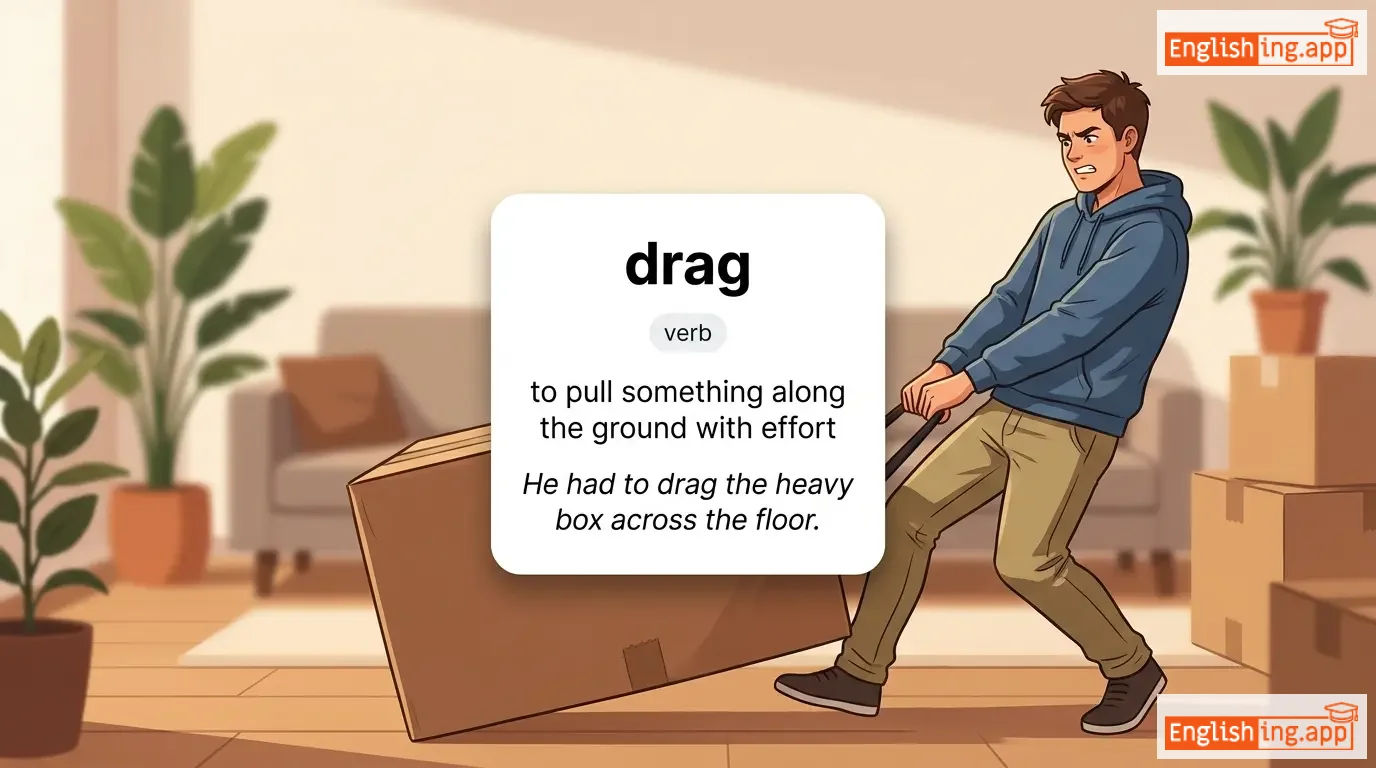
drag definition card — visual illustration of the meaning
verb
/dræɡ/
खींचना (kheenchna)

to pull something along the ground with effort

"He had to drag the heavy box across the floor."

"उसे भारी बॉक्स को फर्श पर खींचना पड़ा।" (Use bhari box ko farsh par kheenchna pada.)
noun
/ˈdræɡˌnɛt/
विस्तृत जांच (vistrit jaanch)

A systematic search or investigation, often by police to catch criminals.

"The police launched a dragnet to capture the fugitives."

"पुलिस ने अपराधियों को पकड़ने के लिए एक विस्तृत जांच शुरू की।" (Police ne apraadhiyon ko pakadne ke liye ek vistrit jaanch shuru ki.)
noun
/ˈdræɡ.ən.flaɪ/
ड्रैगनफ्लाई (dragonfly)

a large insect with four transparent wings that lives near water

"The dragonfly hovered over the pond."

"ड्रैगनफ्लाई तालाब के ऊपर मंडरा रही थी।" (dragonfly taalab ke upar mandra rahi thi)
verb
/drəˈɡuːn/
जबरदस्ती करना (jabardasti karna)

to force someone to do something through coercion or intimidation

"The manager tried to dragoon the team into working overtime."

"मैनेजर ने टीम को ओवरटाइम काम करने के लिए मजबूर करने की कोशिश की।" (Manager ne team ko overtime kaam karne ke liye majboor karne ki koshish ki.)
verb
/dreɪn/
पानी निकालना (pani nikalna)

to cause liquid to flow away from something; to remove liquid

"He drained the pasta before adding the sauce."

"उसने सॉस डालने से पहले पास्ता से पानी निकाला।" (Usne sauce daalne se pehle pasta se pani nikala.)
noun
/ˈdreɪ.nɪdʒ/
जलनिकासी (jalnikasi)

the system or process by which water or other liquids are drained away

"Poor drainage caused flooding in the neighborhood."

"खराब जलनिकासी के कारण पड़ोस में बाढ़ आई।" (Kharab jalnikasi ke kaaran pados mein baadh aayi.)
noun
/dreɪk/
बतख (batakh)

a male duck; a type of waterfowl

"The drake led his family of ducks across the pond."

"बतख ने अपने बत्तख के परिवार को तालाब के पार ले जाया।" (batakh ne apne battakh ke parivar ko talab ke paar le jaya.)
noun
/ˈdrɑː.mə/
नाटक (natak)

a play for theater, radio, or television, or an exciting or emotional situation

"She loves watching historical drama series."

"वह ऐतिहासिक नाटक सीरीज़ देखना पसंद करती है।" (vah aitihasik natak series dekhna pasand karti hai.)
adjective
/drəˈmætɪk/
नाटकीय (natakiy)

sudden and striking; relating to drama or theater

"The play ended with a dramatic twist."

"प्ले एक नाटकीय मोड़ के साथ समाप्त हुआ।" (Play ek natakiy mod ke saath samaapt hua.)
adverb
/drəˈmætɪkli/
नाटकीय रूप से (naatakiya roop se)

in a sudden, striking, or exaggerated way

"Sales increased dramatically after the campaign."

"कंपेन के बाद बिक्री नाटकीय रूप से बढ़ी।" (Campaign ke baad bikri naatakiya roop se badhi.)