वोकैबुलरीज

इंग्लिश वोकैबुलरी डिस्कवर, लर्न और मास्टर करें

adjective
/ˈdɪzməl/
उदास; निराशाजनक; दुखदायी (udas; nirashajanak; dukhdayi)

gloomy; depressing; causing sadness or despair

"The weather was dismal with heavy rain and dark clouds."

"मौसम भारी बारिश और काले बादलों के साथ उदास था।" (mausam bhaari baarish aur kaale baadalon ke saath udaas tha)
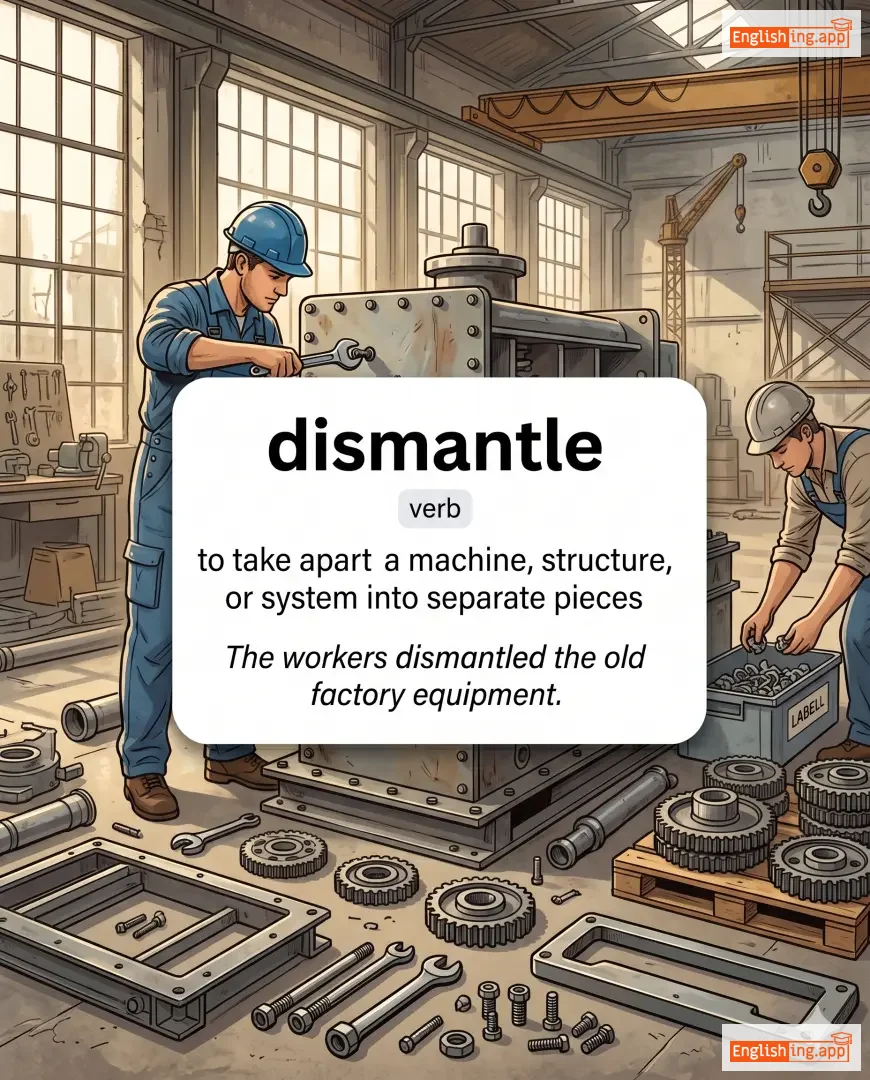
dismantle definition card — visual illustration of the meaning
verb
/dɪsˈmæntl̩/
तोड़ना (todna)

to take apart a machine, structure, or system into separate pieces

"The workers dismantled the old factory equipment."

"मजदूरों ने पुराने कारखाने के उपकरणों को तोड़ दिया।" (mazdooron ne purane karkhane ke upkaranon ko tod diya.)
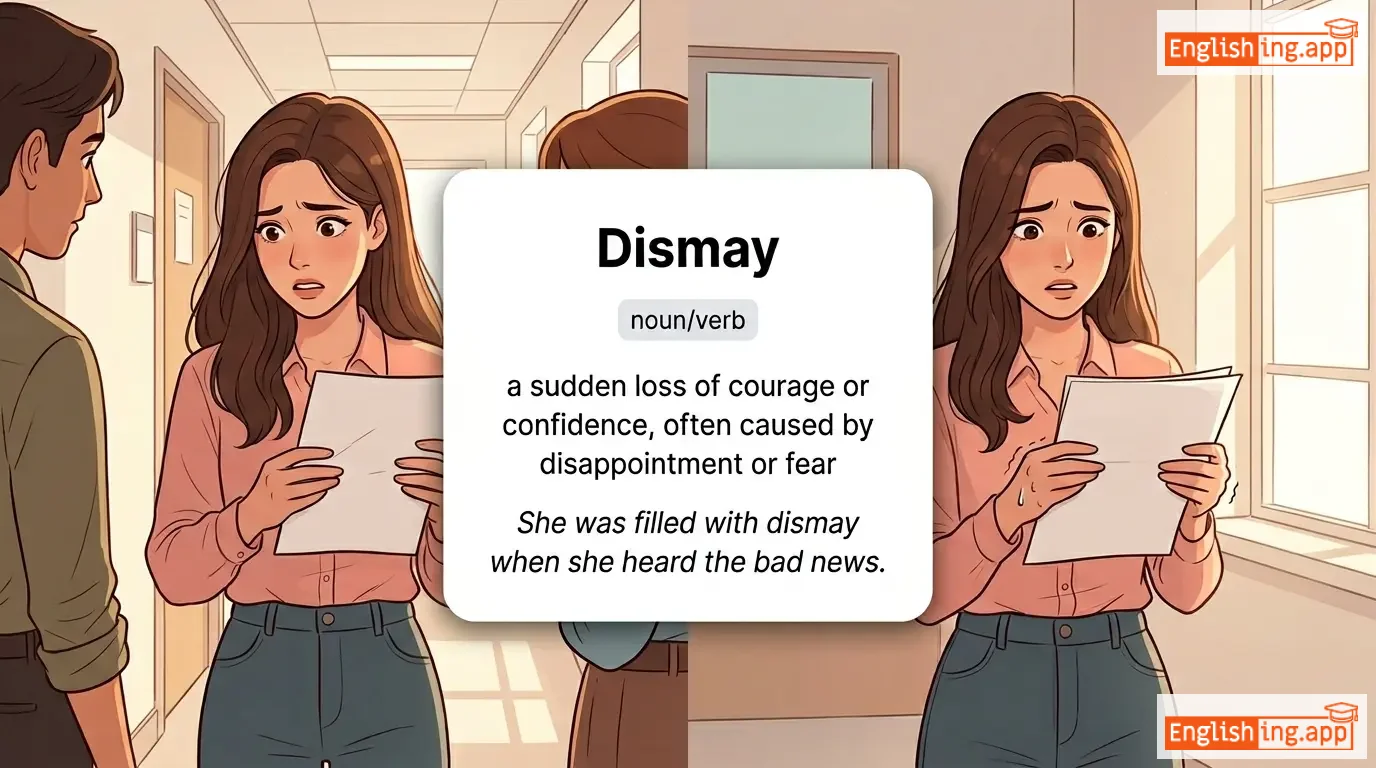
Dismay definition card — visual illustration of the meaning
noun/verb
/dɪsˈmeɪ/
निराशा या डर (nirasha ya dar)

a sudden loss of courage or confidence, often caused by disappointment or fear

"She was filled with dismay when she heard the bad news."

"वह बुरी खबर सुनकर निराश हो गई थी।" (vah buri khabar sunkar nirash ho gayi thi.)
verb
/dɪsˈmɛmbər/
अंगभंग करना (angbhang karna)

to cut or tear the limbs from a body; to divide into separate parts

"The king ordered his enemies to be dismembered."

"राजा ने अपने दुश्मनों को अंगभंग करने का आदेश दिया।" (raja ne apne dushmanon ko angbhang karne ka aadesh diya.)
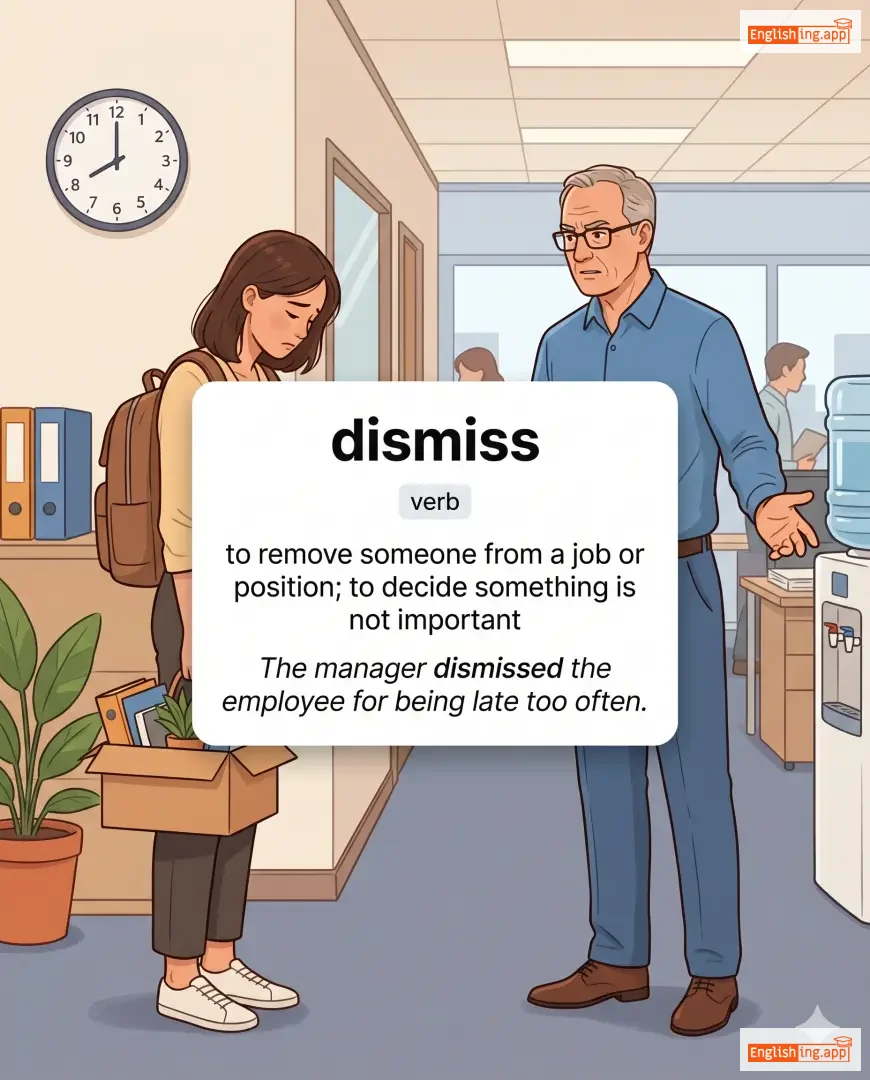
dismiss definition card — visual illustration of the meaning
verb
/dɪsˈmɪs/
निकालना, नकारना (nikaalna, nakarna)

to remove someone from a job or position; to decide something is not important

"The manager dismissed the employee for being late too often."

"मैनेजर ने कर्मचारी को बार-बार देर से आने के लिए डिसमिस किया।" (manager ne karmachari ko baar-baar der se aane ke liye dismiss kiya.)
noun
/dɪsˈmɪsl̩/
निलंबन, बर्खास्तगी (nilamban, barkhastgi)

the act of removing someone from their job; the act of treating something as unimportant

"His unfair dismissal led to a lawsuit against the company."

"उसका अनुचित निलंबन कंपनी के खिलाफ मुकदमा लाया।" (uska anuchit nilamban company ke khilaf mukadma laya.)
verb
/ˌdɪsˈmaʊnt/
उतरना (utarna)

to get off or down from something, especially a horse, bicycle, or motorcycle

"The rider dismounted from the horse after a long journey."

"लंबी यात्रा के बाद सवार घोड़े से उतर गया।" (Lambi yatra ke baad sawar ghode se utar gaya.)
noun
/ˌdɪsəˈbiːdiəns/
अवज्ञा (avignya)

failure or refusal to obey rules, laws, or authority

"The child's disobedience worried his parents."

"बच्चे की अवज्ञा ने उसके माता-पिता को चिंतित कर दिया।" (Bacche ki avignya ne uske mata-pita ko chintit kar diya.)
adjective
/ˌdɪsəˈbiːdiənt/
अवज्ञाकारी (avgyakari)

refusing or failing to obey rules or authority

"The teacher scolded the disobedient students."

"शिक्षक ने अवज्ञाकारी छात्रों को डांटा।" (Shikshak ne avgyakari chhatron ko daanta.)
noun
/dɪsˈɔːrdər/
विकार (vikar)

A state of confusion or lack of order; also a medical or mental condition.

"The protest ended in disorder when the crowd became violent."

"प्रदर्शन हिंसक हो जाने पर यह विकार में समाप्त हो गया।" (Pradarshan hinsak ho jane par yah vikar mein samaapt ho gaya.)
verb
/dɪsˈoʊn/
अस्वीकार करना (asvikar karna)

to refuse to acknowledge or accept responsibility for someone or something

"He decided to disown his reckless brother."

"उसने अपने लापरवाह भाई को डिसओन करने का फैसला किया।" (Usne apne laparwaha bhai ko disown karne ka faisla kiya.)
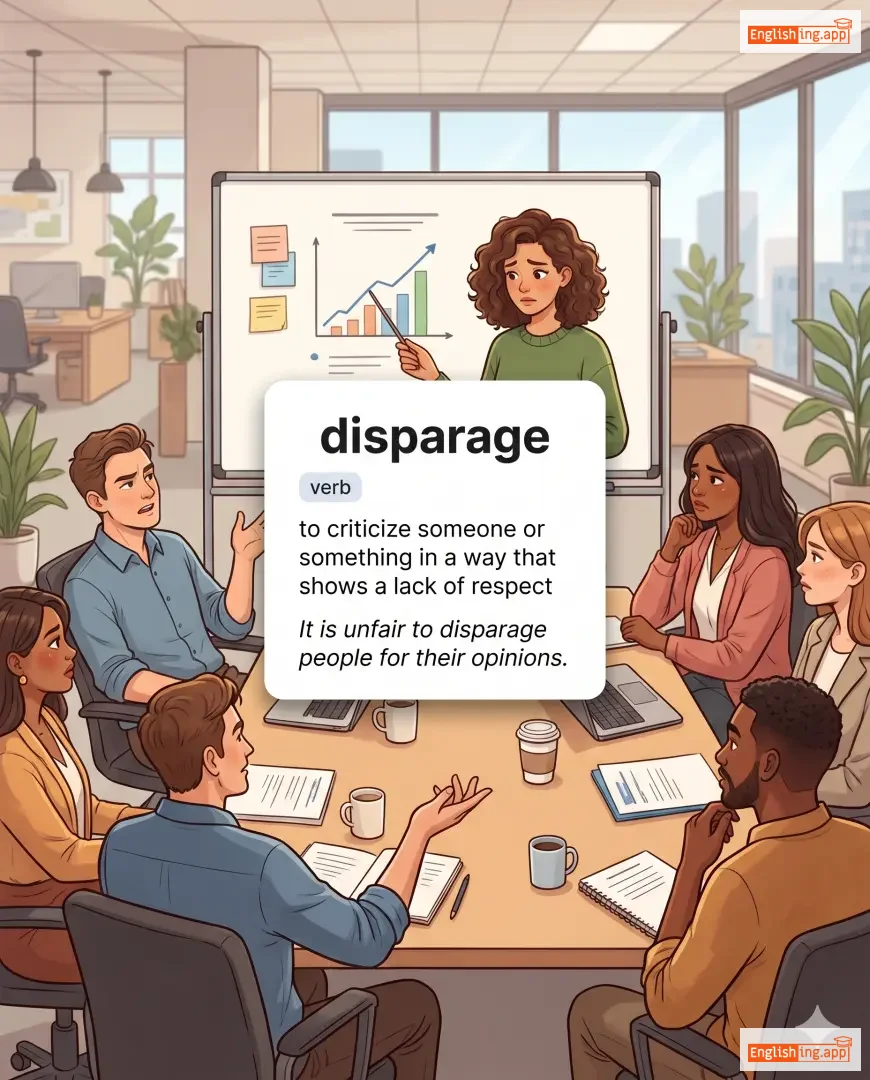
disparage definition card — visual illustration of the meaning
verb
/dɪsˈpærɪdʒ/
अपमान करना (apmaan karna)

to criticize someone or something in a way that shows a lack of respect

"It is unfair to disparage people for their opinions."

"यह दूसरों की राय के लिए लोगों का अपमान करना गलत है।" (Yeh doosron ki rai ke liye logon ka apmaan karna galat hai.)
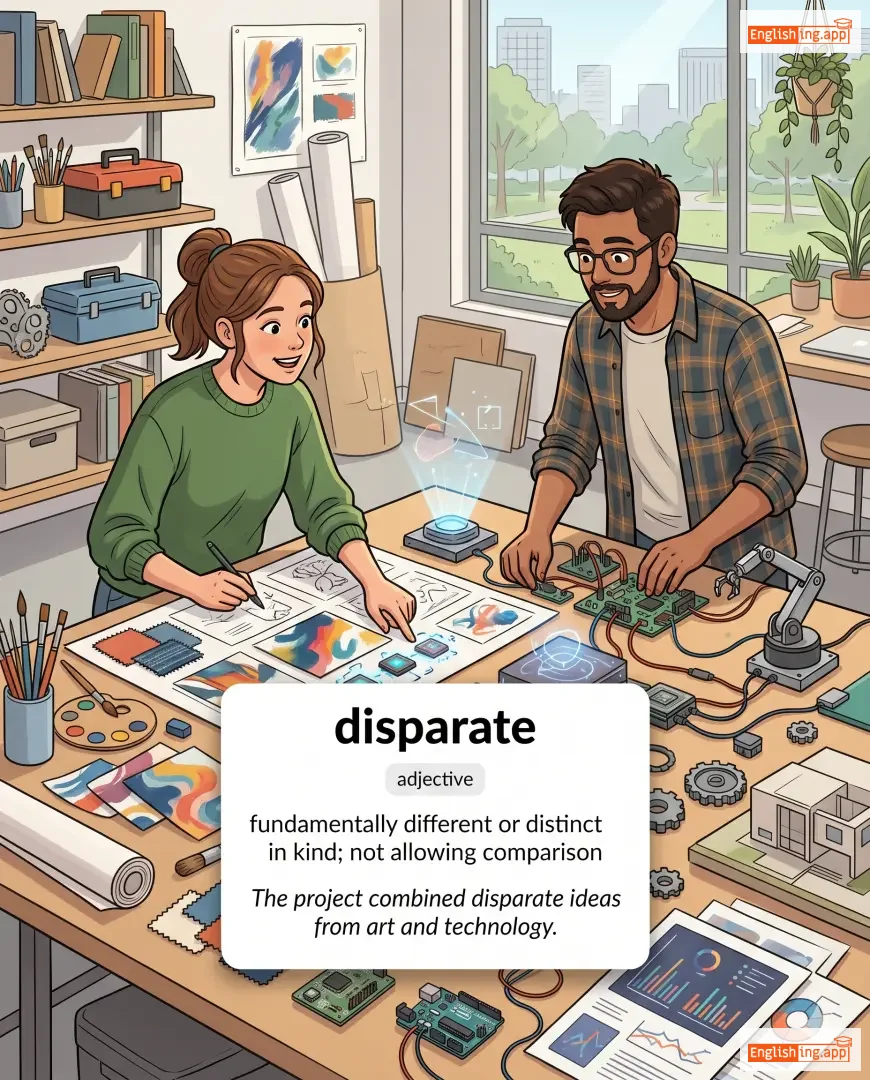
disparate definition card — visual illustration of the meaning
adjective
/ˈdɪspərət/
विभिन्न (vibhinn)

fundamentally different or distinct in kind; not allowing comparison

"The project combined disparate ideas from art and technology."

"प्रोजेक्ट ने कला और प्रौद्योगिकी से विभिन्न विचारों को जोड़ा।" (Project ne kala aur pradyogiki se vibhinn vicharon ko joda.)
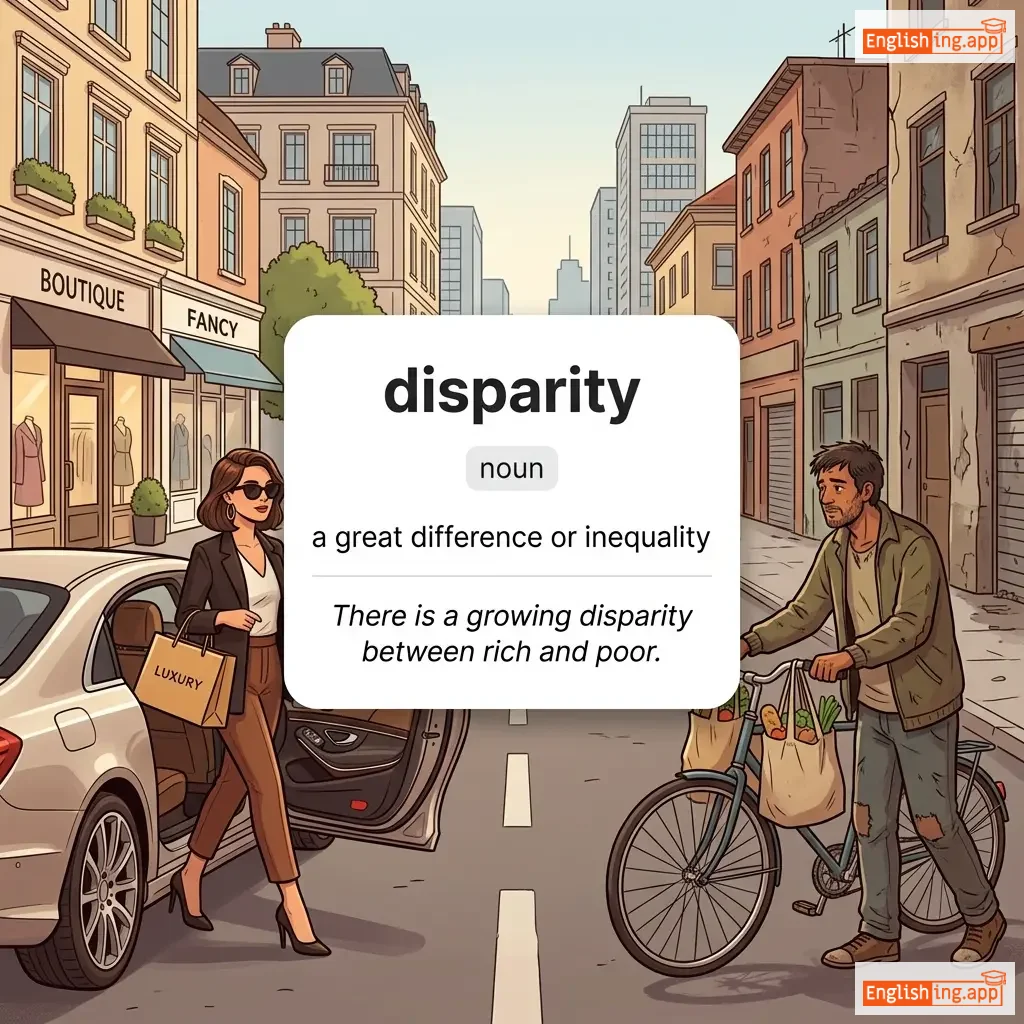
disparity definition card — visual illustration of the meaning
noun
/dɪˈspærəti/
असमानता (asamanata)

a great difference or inequality

"There is a growing disparity between rich and poor."

"धनी और गरीब के बीच एक बढ़ती हुई असमानता है।" (Dhani aur gareeb ke beech ek badhti hui asamanata hai.)
adjective
/dɪsˈpæʃənət/
निर्विकार (nirvikar)

not influenced by strong emotion; impartial

"The judge remained dispassionate throughout the trial."

"न्यायधीश trial के दौरान निर्विकार बने रहे।" (Nyayadhish trial ke dauran nirvikar bane rahe.)
verb
/dɪˈspætʃ/
भेजना (bhejna)

to send off to a destination or for a purpose

"The company dispatched aid to the flood victims."

"कंपनी ने बाढ़ पीड़ितों को सहायता भेजी।" (Company ne baadh peediton ko sahayata bheji.)
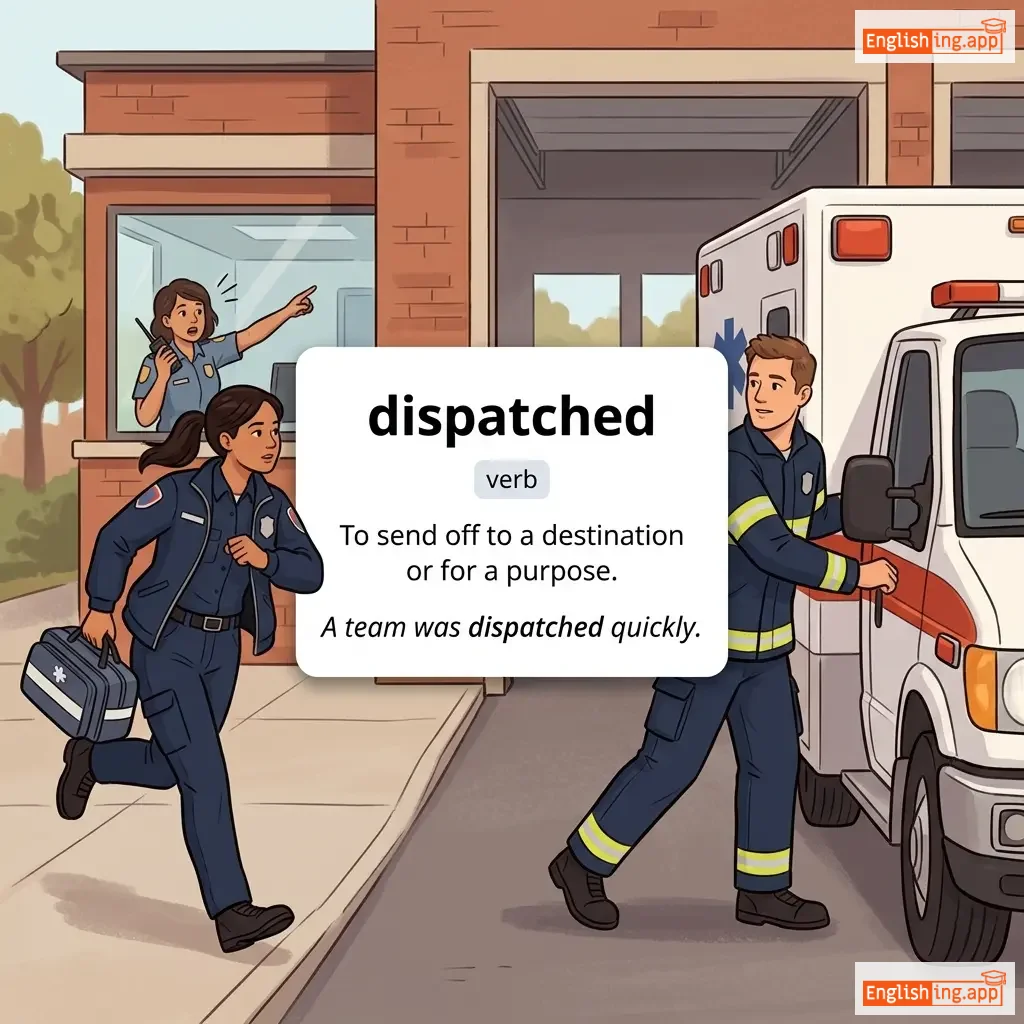
dispatched definition card — visual illustration of the meaning
verb
dɪˈspætʃt
भेजा गया (bheja gaya)

To send off to a destination or for a purpose.

"A team was dispatched quickly."

"एक टीम जल्दी भेजी गई थी।" (Ek team jaldi bheji gayi thi.)
verb
/dɪˈspɛl/
दूर करना (dur karna)

to make a doubt, feeling, or belief disappear

"The teacher's explanation dispelled the students' confusion."

"शिक्षक की व्याख्या ने छात्रों की उलझन को दूर कर दिया।" (Shikshak ki vyakhya ne chhatron ki uljhan ko dur kar diya.)
noun
/ˌdɪspɛnˈseɪʃən/
छूट (dispensation)

An exemption from a rule or usual requirement; a system of order, government, or control.

"The school granted him a special dispensation to skip the exam due to illness."

"विद्यालय ने बीमारी के कारण उसे परीक्षा छोड़ने के लिए एक विशेष छूट दी।" (vidyalay ne bimari ke karan use pariksha chhodne ki ek vishesh chhoot de di.)
verb
/dɪˈspɛns/
वितरित करना (vitrit karna)

To distribute or provide something, especially in portions.

"The machine dispenses clean drinking water."

"मशीन साफ पानी प्रदान करती है।" (Machine saaf paani pradan karti hai.)
verb
/dɪˈspɜːrs/
विखरना (vikharnā)

To scatter or spread widely in different directions.

"The police used tear gas to disperse the crowd."

"पुलिस ने भीड़ को बिखेरने के लिए आंसू गैस का उपयोग किया।" (Police ne bhīṛ ko bikhērne ke liye ānsū gais kā upyog kiyā.)
adjective
/dɪˈspɜːrst/
विखरित (vikharit)

Scattered or spread across a wide area.

"The dispersed population made it difficult to provide public services."

"विखरी हुई जनसंख्या ने सार्वजनिक सेवाएँ प्रदान करना मुश्किल बना दिया।" (Vikhri hui janasankhya ne sarvajanik sevaayein pradan karna mushkil bana diya.)
noun
/dɪˈspɜːrʒən/
विखंडन (vikhandan)

The action or process of distributing things or people over a wide area.

"The dispersion of seeds by the wind helps plants reproduce."

"द विंड द्वारा बीजों का डिस्पर्शन पौधों को पुनरुत्पादन में मदद करता है।" (Da wind dvara bijon ka dispersion podhon ko punarutpadan mein madad karta hai.)
adjective
/dɪˈspɪrɪtɪd/
निराश (nirash)

Having lost enthusiasm, hope, or confidence; dejected.

"After losing the match, the team looked dispirited."

"मैच हारने के बाद, टीम निराश दिख रही थी।" (Maich haarne ke baad, team nirash dikh rahi thi.)
verb
/dɪsˈpleɪs/
स्थानांतरित करना (sthanantarit karna)

To force someone or something out of its usual place or position.

"The flood displaced hundreds of families from their homes."

"बाढ़ ने सैंकड़ों परिवारों को उनके घरों से विस्थापित कर दिया।" (Baadh ne sainkron parivaroon ko unke gharo se visthapit kar diya.)
verb
/dɪˈspleɪ/
प्रदर्शन करना (pradarshan karna)

To show or exhibit something to be seen.

"The shop displayed its new products in the window."

"दुकान ने अपनी नई उत्पादों को खिड़की में डिस्प्ले किया।" (Dukaan ne apni nayi utpadon ko khidki mein display kiya.)
verb
/dɪsˈpɔːrt/
मनोरंजन करना (manoranjan karna)

To amuse oneself in a lively or playful way.

"The children disported themselves in the garden."

"बच्चे बग़ीचे में मनोरंजन कर रहे थे।" (Bachche bagiche mein manoranjan kar rahe the.)
noun
/dɪsˈpoʊzl/
निपटान (nipatan)

the action or process of getting rid of something

"The disposal of waste is crucial for maintaining a clean environment."

"कचरे का निपटान एक स्वच्छ पर्यावरण बनाए रखने के लिए महत्वपूर्ण है।" (kachre ka nipatan ek swachh paryavaran banaye rakhne ke liye mahatvapurn hai.)
verb
/dɪˈspoʊz/
फेंकना (phenkna)

To get rid of something, or to arrange or incline towards something.

"He disposed of the old furniture responsibly."

"उसने पुराने फर्नीचर को जिम्मेदारी से फेंक दिया।" (Usne purane furniture ko jimmedari se phenk diya.)
noun
/ˌdɪspəˈzɪʃən/
स्वभाव (swabhav)

A person's usual attitude or temperament; arrangement or tendency.

"She has a cheerful disposition despite the difficulties."

"वह कठिनाइयों के बावजूद एक हर्षित स्वभाव रखती है।" (Vah kathinaaiyon ke baawajood ek harshit swabhav rakhti hai.)
verb
/ˌdɪspəˈzɛs/
वंचित करना (vanchit karna)

to deprive someone of land, property, or other possessions

"The new law threatened to dispossess many farmers of their land."

"नया कानून कई किसानों को उनकी ज़मीन से वंचित करने की धमकी देता है।" (Naya kanoon kai kisano ko unki zameen se vanchit karne ki dhamki deta hai.)
noun
/ˌdɪsprəˈpɔːrʃən/
असंतुलन (asantulan)

a lack of balance or symmetry; an inequality

"There is a clear disproportion between rich and poor in many societies."

"विभिन्न समाजों में अमीर और गरीब के बीच स्पष्ट असंतुलन है।" (Vibhinn samajon mein ameer aur gareeb ke beech spasht asantulan hai.)
verb
/dɪsˈpruːv/
गलत साबित करना (galat sabit karna)

to show that something is false or wrong

"The scientist worked hard to disprove the old theory."

"वैज्ञानिक ने पुरानी सिद्धांत को गलत साबित करने के लिए कड़ी मेहनत की।" (Vaigyanik ne purani siddhant ko galat sabit karne ke liye kadi mehnat ki.)
adjective
/dɪˈspjuːtəbl/
विवादास्पद; संदेहास्पद (vivaadaspad; sandehaspad)

open to debate or argument; questionable

"The facts in the case are disputable and need further investigation."

"मामले के तथ्य विवादास्पद हैं और आगे की जांच की आवश्यकता है।" (maamle ke tathya vivaadaspad hain aur aage ki jaanch ki avashyakta hai.)
noun
/ˌdɪspjuːˈteɪʃən/
विवाद (vivad)

a formal debate or argument

"The disputation between the two scholars lasted for hours."

"द दो स्कॉलर्स के बीच विवाद घंटों तक चला।" (Da do scholars ke beech vivad ghanton tak chala.)
adjective
/ˌdɪspjuːˈteɪʃəs/
विवादप्रिय (vivaadpriya)

fond of or given to argument and debate

"His disputatious nature often led to heated conversations."

"उसका विवादप्रिय स्वभाव अक्सर गर्मागर्म चर्चाओं का कारण बनता था।" (Uska vivaadpriya swabhav aksar garmagarm charchao ka kaaran banta tha.)
noun/verb
/dɪˈspjuːt/
विवाद, झगड़ा (vivaad, jhagda)

a disagreement or argument about something important

"The two countries are in dispute over the border issue."

"दो देशों के बीच सीमा मुद्दे पर विवाद चल रहा है।" (Do deshon ke beech seema mudde par vivaad chal raha hai.)
verb
/dɪsˈkwɑːlɪfaɪ/
अयोग्य घोषित करना (ayogya ghoshit karna)

to officially prevent someone from participating or being eligible

"The referee decided to disqualify the player for cheating."

"रेफरी ने धोखाधड़ी के लिए खिलाड़ी को अयोग्य घोषित करने का निर्णय लिया।" (Refari ne dhokhadhadi ke liye khiladi ko ayogya ghoshit karne ka nirnay liya.)
noun/verb
/dɪsˈkwaɪət/
अशांति (ashanti)

A feeling of worry or unease; to make someone feel anxious or uneasy.

"The strange silence filled the room with disquiet."

"अजीब ख़ामोशी ने कमरे को अशांति से भर दिया।" (Ajeeb khamoshi ne kamre ko ashanti se bhar diya.)
adjective
/dɪsˈkwaɪətɪŋ/
चिंताजनक (chintajanak)

Causing worry, unease, or anxiety.

"The news report was deeply disquieting to the public."

"समाचार रिपोर्ट सार्वजनिक के लिए गहरे चिंताजनक थी।" (Samachar report sarvjanik ke liye gahare chintajanak thi.)
noun
/dɪsˈkwaɪɪtjuːd/
बेचैनी (disquietude)

A state of uneasiness, anxiety, or restlessness.

"His constant pacing showed his inner disquietude."

"उसकी लगातार चहलकदमी ने उसकी आंतरिक बेचैनी को दिखाया।" (Uski lagataar chahalkadmi ne uski aantarik bechaini ko dikhaya.)
noun
/ˌdɪskwɪˈzɪʃən/
विस्तृत विवेचन (vistrit vivechan)

A long or elaborate discussion or written essay on a particular subject.

"The professor gave a lengthy disquisition on ancient philosophy."

"प्रोफेसर ने प्राचीन दर्शन पर एक लंबी विवेचना दी।" (Professor ne pracheen darshan par ek lambi vivechana dee.)
verb/noun
/ˌdɪsrɪˈɡɑːrd/
उपेक्षा (upeksha)

To ignore something; lack of consideration or respect for something.

"He disregarded the warning signs and kept driving."

"उसने चेतावनी के संकेतों की अनदेखी की और ड्राइविंग जारी रखी।" (Usne chetavni ke sanketon ki andekhi ki aur driving jari rakhi.)
adjective
/dɪsˈrɛpjətəbl̩/
बदनाम (badnaam)

having a bad reputation; not considered respectable or trustworthy

"The journalist avoided staying in the disreputable part of town."

"पत्रकार ने शहर के बदनाम इलाके में रहने से बचने की कोशिश की।" (Patrakar ne shahar ke badnaam ilake mein rehne se bachne ki koshish ki.)
noun
/ˌdɪsrɪˈpjuːt/
कुख्याति (kukhyati)

the state of being held in low esteem or having a bad reputation

"The scandal brought the politician into disrepute."

"उस कांड ने राजनीतिज्ञ को कुख्याति में डाल दिया।" (Us kaand ne rajneetijy ko kukhyati mein daal diya.)
verb
/dɪsˈroʊb/
कपड़े उतारना (kapde utaarna)

to remove one's clothes

"The monk disrobed before entering the river."

"संन्यासी नदी में प्रवेश करने से पहले कपड़े उतारने लगे।" (Sannyaasi nadi mein pravesh karne se pehle kapde utaarne lage.)
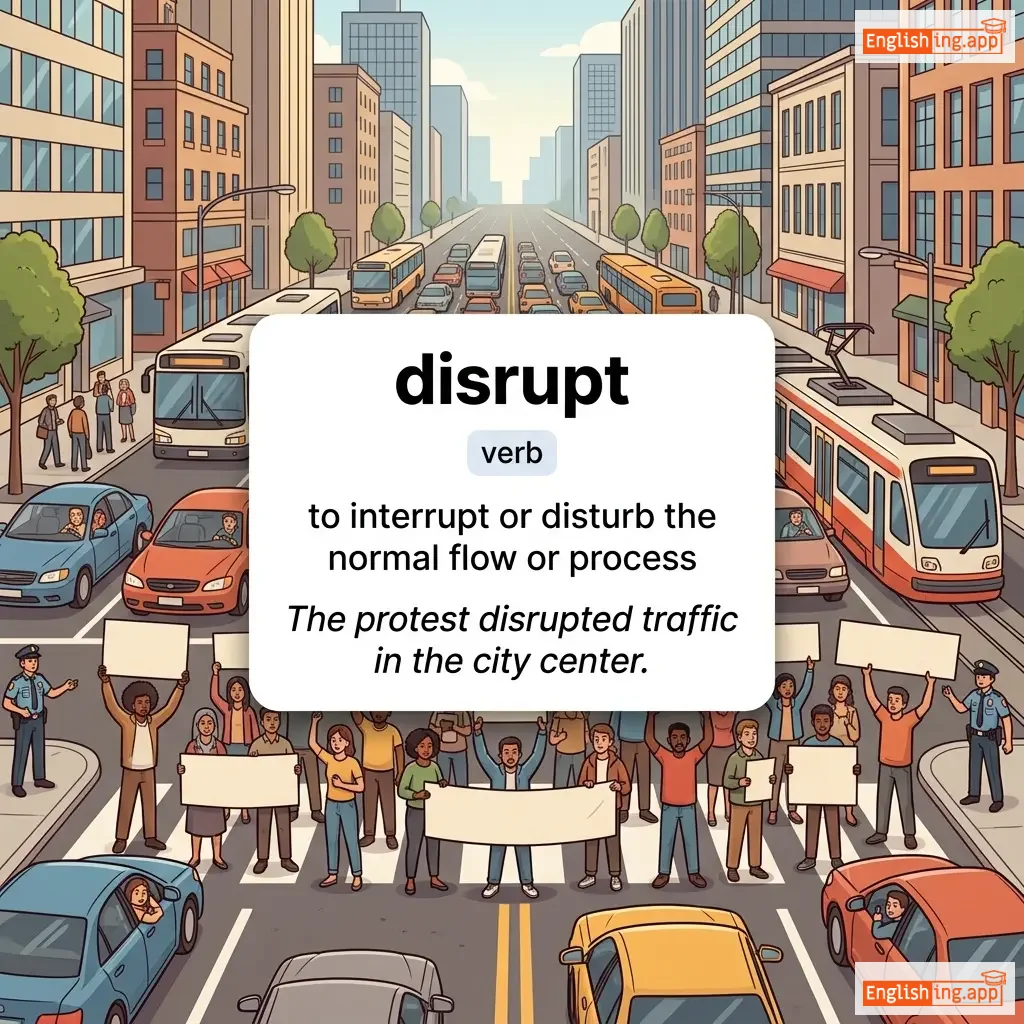
disrupt definition card — visual illustration of the meaning
verb
/dɪsˈrʌpt/
विघटन करना (vighatan karna)

to interrupt or disturb the normal flow or process

"The protest disrupted traffic in the city center."

"प्रदर्शन ने शहर के केंद्र में यातायात को बाधित कर दिया।" (Pradarshan ne shahar ke kendra mein yaataayaat ko baadhit kar diya.)
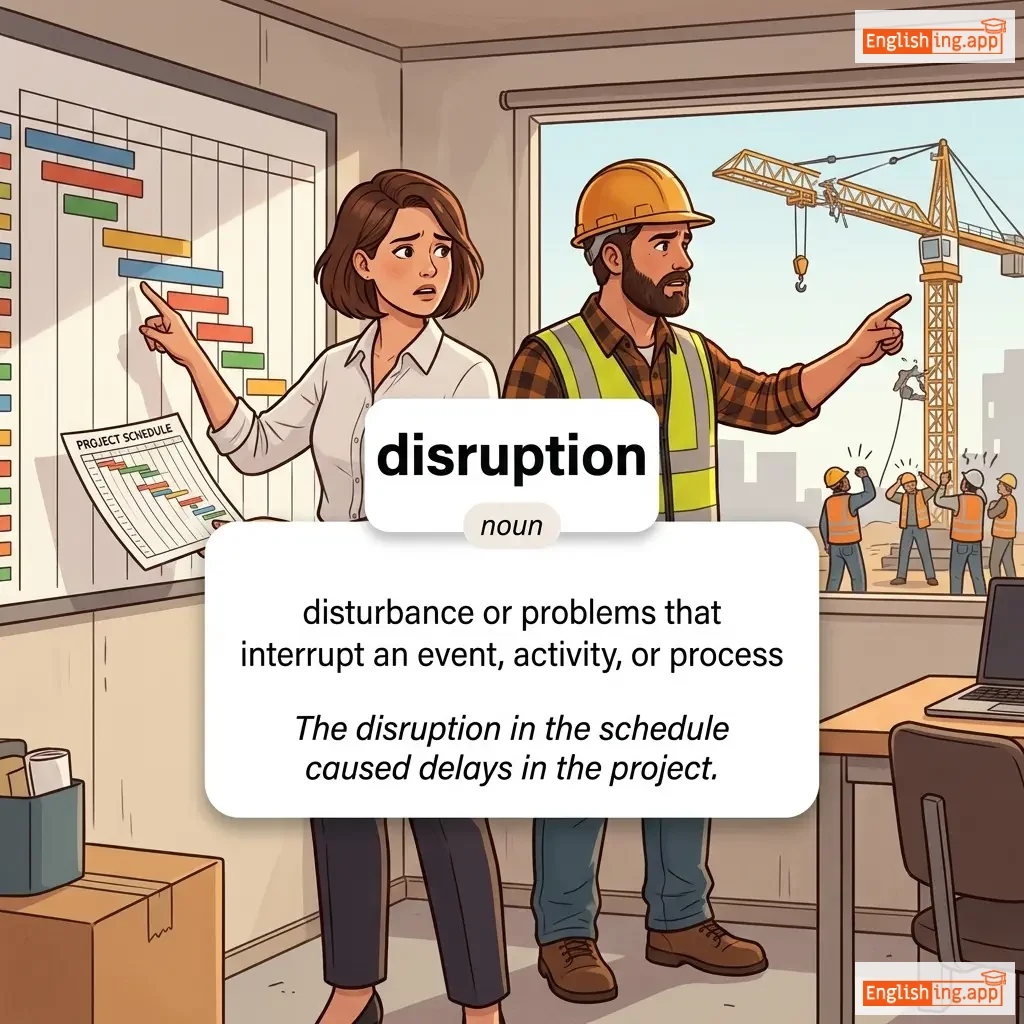
disruption definition card — visual illustration of the meaning
noun
/dɪsˈrʌpʃən/
विघटन (vighatan)

disturbance or problems that interrupt an event, activity, or process

"The disruption in the schedule caused delays in the project."

"समय सारणी में विघटन के कारण परियोजना में देरी हुई।" (Samay sarani mein vighatan ke kaaran pariyojna mein deri hui.)
disruptive definition card — visual illustration of the meaning
adjective
/dɪsˈrʌp.tɪv/
विघटनकारी (vighatankari)

Something that brings major changes to existing markets or industries

"E-commerce has been disruptive to traditional retail businesses."

"ई-कॉमर्स ने पारंपरिक खुदरा व्यवसायों में विघटन किया है।" (I-komers ne paaramparik khudra vyavsayon mein vighatan kiya hai.)
verb
/dɪsˈsætɪsfaɪ/
असंतुष्ट करना (asantusht karna)

to fail to please or meet expectations; to make someone unhappy

"The poor service dissatisfies many customers."

"खराब सेवा कई ग्राहकों को असंतुष्ट करती है।" (Kharab seva kai graahakon ko asantusht karti hai.)