वोकैबुलरीज

इंग्लिश वोकैबुलरी डिस्कवर, लर्न और मास्टर करें

adjective
/daɪˈɒsɪsən/
डायोसीस से संबंधित (dayosis se sambandhit)

relating to a diocese or the district under the supervision of a bishop in the Christian Church

"The diocesan council met to discuss church affairs."

"डायोसीसन काउंसिल चर्च मामलों पर चर्चा करने के लिए मिली थी।" (dayosishan council church mamlon par charcha karne ke liye mili thi.)
noun
/ˌdaɪəˈrɑːmə/
त्रि-आयामी दृश्य (tri-aayami drishya)

a three-dimensional model representing a scene, often with miniature figures

"The museum displayed a diorama of an ancient village."

"संग्रहालय में एक प्राचीन गांव का त्रि-आयामी दृश्य प्रदर्शित किया गया था।" (Sangrahalay mein ek prachin gaon ka tri-aayami drishya pradarshit kiya gaya tha.)
verb
/dɪp/
डुबोना (dubona)

to put something quickly into a liquid and take it out again

"She dipped her bread into the soup."

"वह अपनी रोटी को सूप में डुबो रही थी।" (Woh apni roti ko soup mein dubo rahi thi.)
noun
/ˈdɪfθɒŋ/
द्विस्वार (dviswar)

A complex vowel sound that begins with one vowel and glides into another within the same syllable.

"The word 'coin' contains a diphthong."

"'कॉइन' शब्द में एक द्विस्वार है।" ('coin' shabd mein ek dviswar hai.)
noun
/dɪˈpləʊ.mə/
डिप्लोमा (diploma)

an official document showing that a person has completed a course of study or training

"She received her diploma after finishing the nursing program."

"उसने नर्सिंग कार्यक्रम को समाप्त करने के बाद अपना डिप्लोमा प्राप्त किया।" (Usne nursing karyakram ko samaapt karne ke baad apna diploma prapt kiya.)
noun
/dɪˈpləʊməsi/
कूटनीति (diplomesi)

The profession, activity, or skill of managing international relations or handling affairs tactfully.

"Effective diplomacy helped avoid the conflict."

"प्रभावी कूटनीति ने संघर्ष से बचने में मदद की।" (prabhaavi kootneeti ne sangharsh se bachne mein madad ki)
noun
/ˈdɪpləmæt/
राजनयिक (rajanayik)

An official representing a country abroad; a person skilled in dealing with people tactfully.

"The diplomat negotiated a peace agreement."

"राजनयिक ने एक शांति समझौते पर बातचीत की।" (rajanayik ne ek shanti samjhaute par baatcheet ki.)
adjective
/ˌdɪpləˈmætɪk/
राजनयिक (rajanayik)

Concerning diplomacy; having or showing skill in dealing with people in a sensitive and effective way.

"She gave a diplomatic response to avoid offending anyone."

"उसने किसी को आहत न करने के लिए एक राजनयिक प्रतिक्रिया दी।" (usne kisi ko aahat na karne ke liye ek rajanayik pratikriya di.)
diplomatic milestone definition card — visual illustration of the meaning
noun
/ˌdɪp.ləˈmæt.ɪk ˈmaɪl.stəʊn/
राजनयिक मील का पत्थर (raajnayik meel ka patthar)

A significant achievement or important event in diplomatic relations.

"Hosting the summit was a diplomatic milestone."

"समीट का आयोजन एक राजनयिक मील का पत्थर था।" (Summit ka aayojan ek raajnayik meel ka patthar tha.)
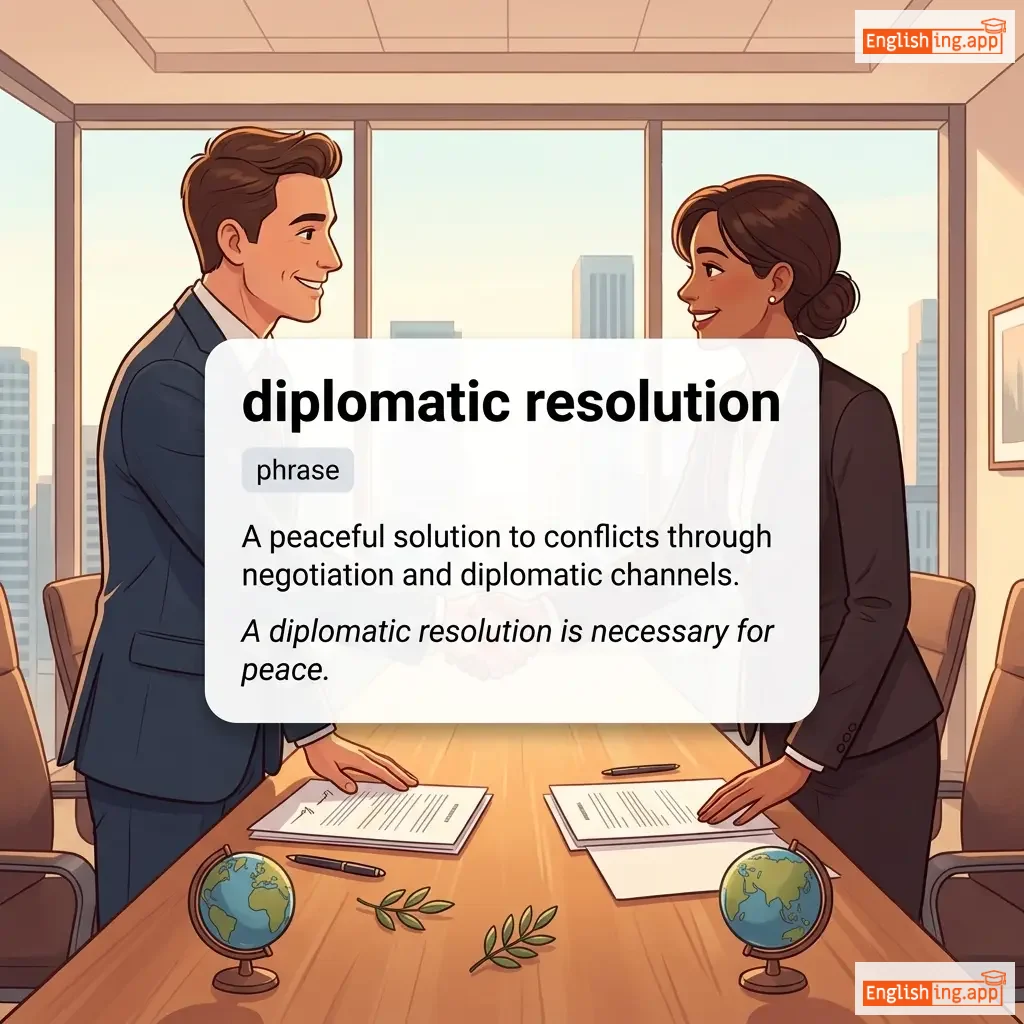
diplomatic resolution definition card — visual illustration of the meaning
phrase
ˌdɪp.ləˈmæt.ɪk rɛz.əˈluː.ʃən
कूटनीतिक समाधान (kootnitik samadhan)

A peaceful solution to conflicts through negotiation and diplomatic channels.

"A diplomatic resolution is necessary for peace."

"शांति के लिए एक कूटनीतिक समाधान आवश्यक है।" (Shaanti ke liye ek kootnitik samaadhan aavashyak hai.)
noun
/dɪˈpləʊmətɪst/
राजनयिक (rajanayik)

A person skilled in diplomacy; another word for diplomat.

"The diplomatist handled the negotiations with great tact."

"राजनयिक ने बड़ी समझदारी से बातचीत की।" (rajanayik ne badi samajhdari se baatcheet ki.)
noun
/ˌdɪpsəˈmeɪniæk/
मद्यपानप्रेमी (madyapanpremi)

A person with an uncontrollable craving for alcoholic drinks.

"The novel portrayed the tragic downfall of a dipsomaniac who lost everything to alcohol."

"उपन्यास में एक डिप्सोमैनियाक की दुखद गिरावट को दर्शाया गया है, जिसने शराब के कारण सब कुछ खो दिया।" (Upanyas mein ek dipsomaniak ki dukhd ghirawat ko darshaya gaya hai, jisne sharab ke karan sab kuch kho diya.)
adjective
/ˈdaɪər/
भयंकर (bhayankar)

Extremely serious or urgent.

"The refugees were in dire need of food and shelter."

"शरणार्थी खाद्य और आश्रय के भयंकर संकट में थे।" (Sharanarthi khadya aur aashray ke bhayankar sankat mein the.)
verb
/dəˈrɛkt/ or /daɪˈrɛkt/
निर्देश देना (nirdesh dena)

to manage or control the course of something; to give instructions

"She directed the team to complete the project on time."

"उसने टीम को परियोजना को समय पर पूरा करने के लिए निर्देशित किया।" (Usne team ko pariyojana ko samay par poora karne ke liye nirdeshit kiya.)
noun
/dəˈrɛkʃən/ or /daɪˈrɛkʃən/
दिशा, मार्गदर्शन (disha, margdarshan)

the course or path on which someone or something is moving; instructions on what to do

"He asked for directions to the train station."

"उसने ट्रेन स्टेशन का रास्ता पूछा।" (Usne train station ka rasta poocha.)
adverb
/dəˈrɛktli/ or /daɪˈrɛktli/
सीधे (seedhe)

in a straight line or manner; without anything in between

"She spoke directly to the manager about her concerns."

"उसने अपने मुद्दों के बारे में सीधे प्रबंधक से बात की।" (Usne apne muddon ke baare mein seedhe prabandhak se baat ki.)
noun
/dəˈrɛktər/ or /daɪˈrɛktər/
निर्देशक (nirdeshak)

a person who manages or oversees a company, department, or film

"The director gave final approval for the new movie script."

"निर्देशक ने नई फिल्म स्क्रिप्ट के लिए अंतिम अनुमोदन दिया।" (Nirdeshak ne nai film script ke liye antim anumodan diya.)
noun
/dɪˈrɛktəri/
निर्देशिका (nirdeshika)

a book or online resource listing people, businesses, or services with relevant details

"I need to find a plumber in the phone directory."

"मुझे फोन निर्देशिका में एक प्लंबर ढूंढने की जरूरत है।" (Mujhe phone nirdeshika mein ek plumber dhoondhne ki zaroorat hai.)
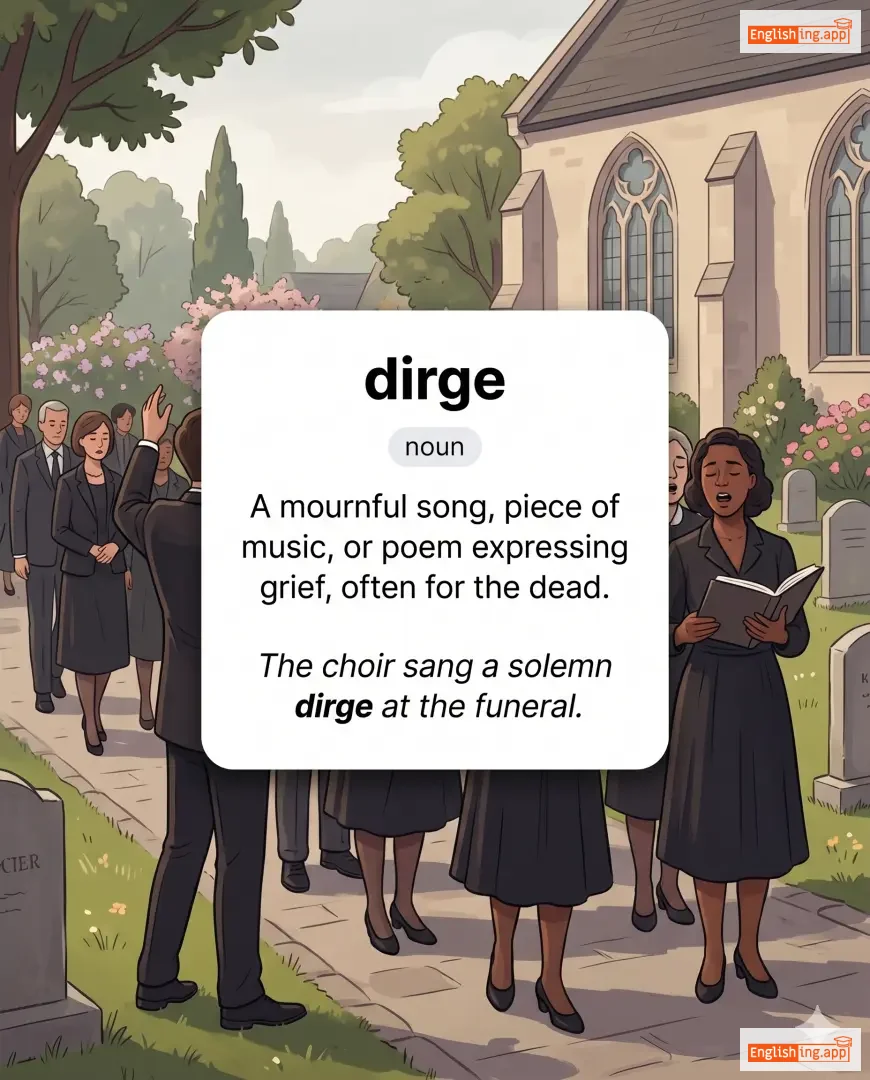
dirge definition card — visual illustration of the meaning
noun
/dɜːrdʒ/
शोकगीत (shokgeet)

A mournful song, piece of music, or poem expressing grief, often for the dead.

"The choir sang a solemn dirge at the funeral."

"कोरस ने अंतिम संस्कार में एक गंभीर शोकगीत गाया।" (Koras ne antim sanskar mein ek gambhir shokgeet gaya.)
noun
/dɜːrt/
मिट्टी, गंदगी (mitti, gandagi)

Loose soil or unclean matter; anything that makes a surface unclean.

"Her shoes were covered in dirt after walking through the field."

"खेत में चलने के बाद उसके जूते मिट्टी से ढके हुए थे।" (Khet mein chalne ke baad uske joote mitti se dhake hue the.)
adjective
/ˈdɜːr.ti/
गंदा (ganda)

Covered with or containing an unclean substance.

"His shoes were dirty after walking in the mud."

"कीचड़ में चलने के बाद उसके जूते गंदे हो गए थे।" (Keechad mein chalne ke baad uske joote gande ho gaye the.)
noun
/ˌdɪsəˈbɪləti/
अक्षमता (akshamata)

A physical or mental condition that limits a person's movements, senses, or activities.

"The organization supports people living with disability."

"संगठन विकलांगता के साथ जीवन जीने वाले लोगों का समर्थन करता है।" (Sangathan viklangata ke saath jeevan jeene wale logon ka samarthan karta hai.)
verb
/dɪsˈeɪbl/
अक्षम करना (aksham karna)

to make something unable to function or operate

"The technician disabled the alarm system temporarily."

"तकनीशियन ने अलार्म सिस्टम को अस्थायी रूप से अक्षम किया।" (taknishiyan ne alarm system ko asthayi roop se aksham kiya)
adjective
/dɪsˈeɪbld/
विकलांग (viklaang)

having a physical or mental condition that limits movements, senses, or activities

"The park has special facilities for disabled people."

"पार्क में विकलांग लोगों के लिए विशेष सुविधाएँ हैं।" (Park mein viklaang logon ke liye vishesh suvidhaayein hain.)
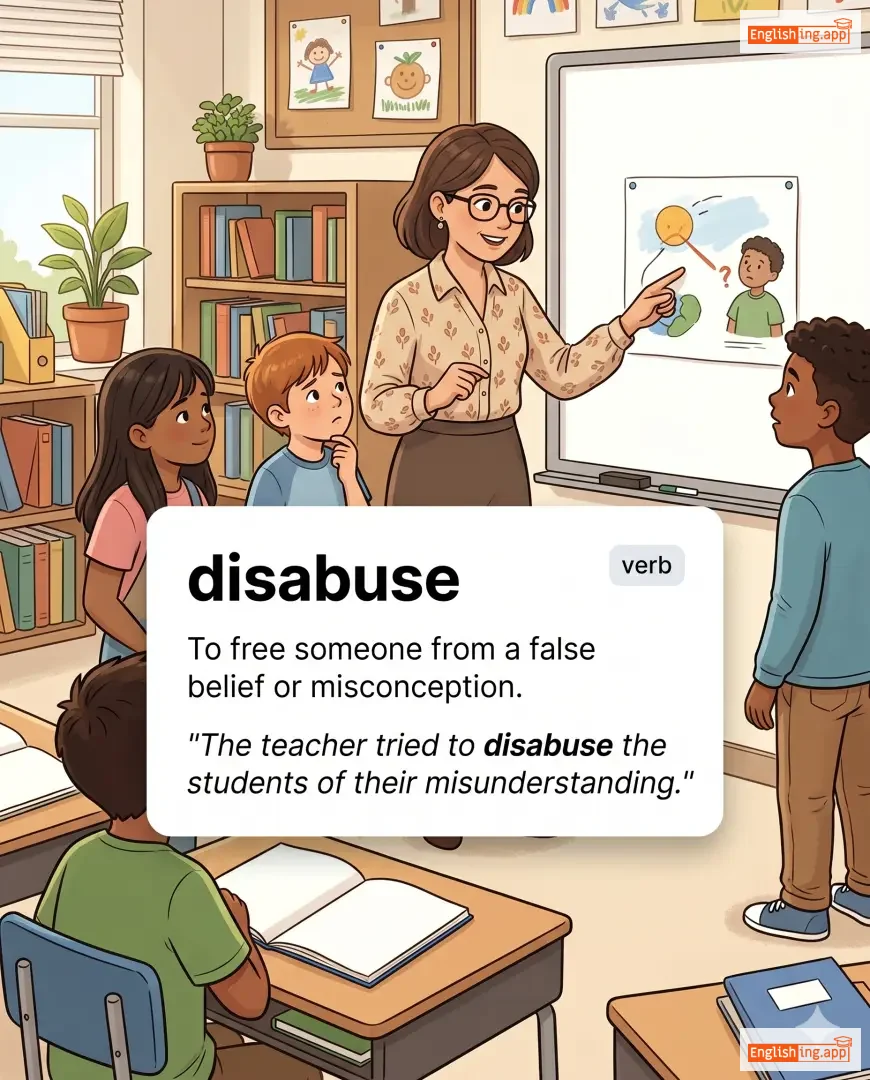
disabuse definition card — visual illustration of the meaning
verb
/ˌdɪsəˈbjuːz/
झूठी धारणा से मुक्त करना (jhoothi dharana se mukt karna)

To free someone from a false belief or misconception.

"The teacher tried to disabuse the students of their misunderstanding."

"शिक्षक ने छात्रों को उनकी गलतफहमी से मुक्त करने की कोशिश की।" (Shikshak ne chhatron ko unki galatfahmi se mukt karne ki koshish ki.)
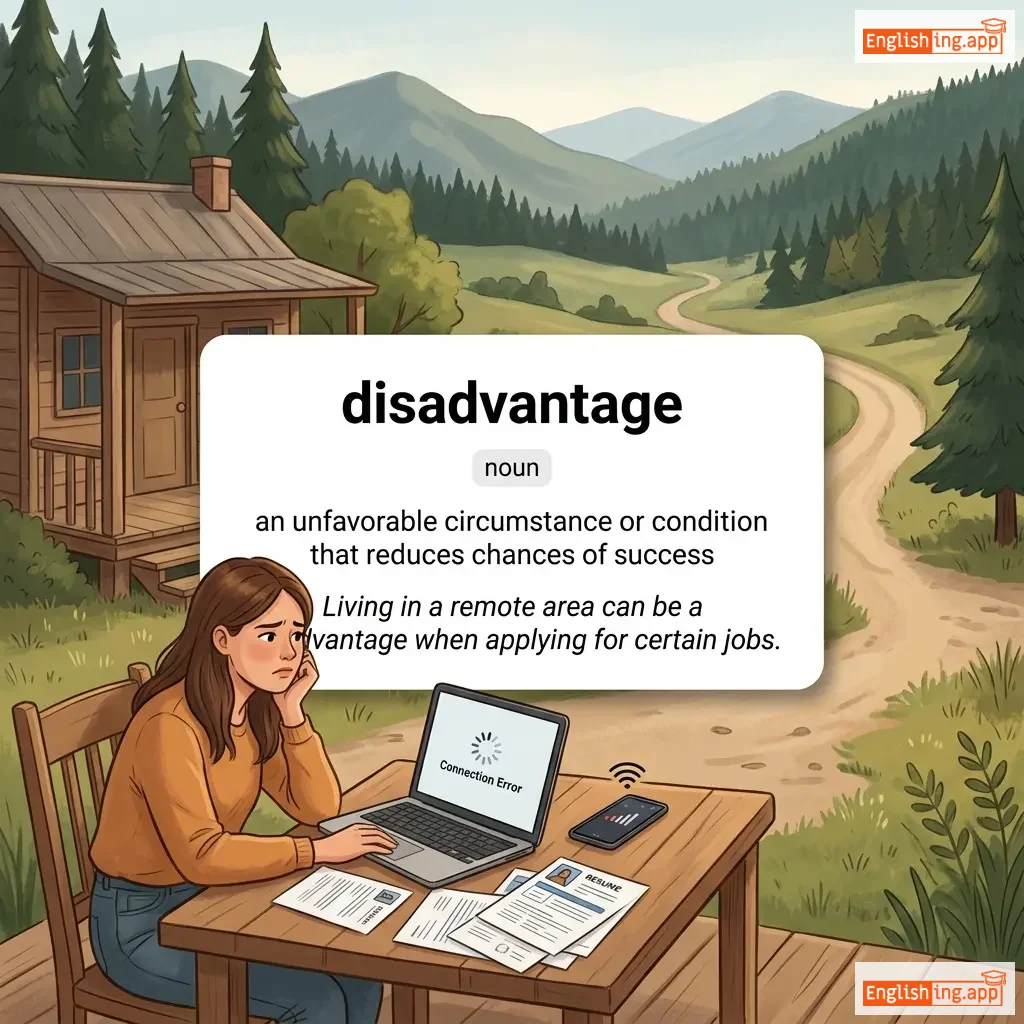
disadvantage definition card — visual illustration of the meaning
noun
/ˌdɪs.ədˈvæn.tɪdʒ/
नुकसान; असुविधा (nuksan; asubidha)

an unfavorable circumstance or condition that reduces chances of success

"Living in a remote area can be a disadvantage when applying for certain jobs."

"रिमोट एरिया में रहना कुछ जॉब्स के लिए आवेदन करते समय एक डिसएडवांटेज हो सकता है।" (remote area mein rehna kuch jobs ke liye aavedan karte samay ek disadvantage ho sakta hai.)
adjective
/ˌdɪsədˈvæntɪdʒd/
वंचित (vanchit)

Lacking the basic resources or conditions needed for a good standard of living or equal opportunities.

"The program provides support to disadvantaged children."

"कार्यक्रम वंचित बच्चों को समर्थन प्रदान करता है।" (karyakram vanchit bachcho ko samarthan pradan karta hai.)
adjective
/ˌdɪsəˈfɛktɪd/
असंतुष्ट (asantusht)

Dissatisfied and rebellious, especially against authority or leadership.

"The reforms were introduced to calm the disaffected youth."

"संशोधन उन असंतुष्ट युवाओं को शांत करने के लिए पेश किए गए थे।" (Sanshodhan un asantusht yuvao ko shant karne ke liye pesh kiye gaye the.)
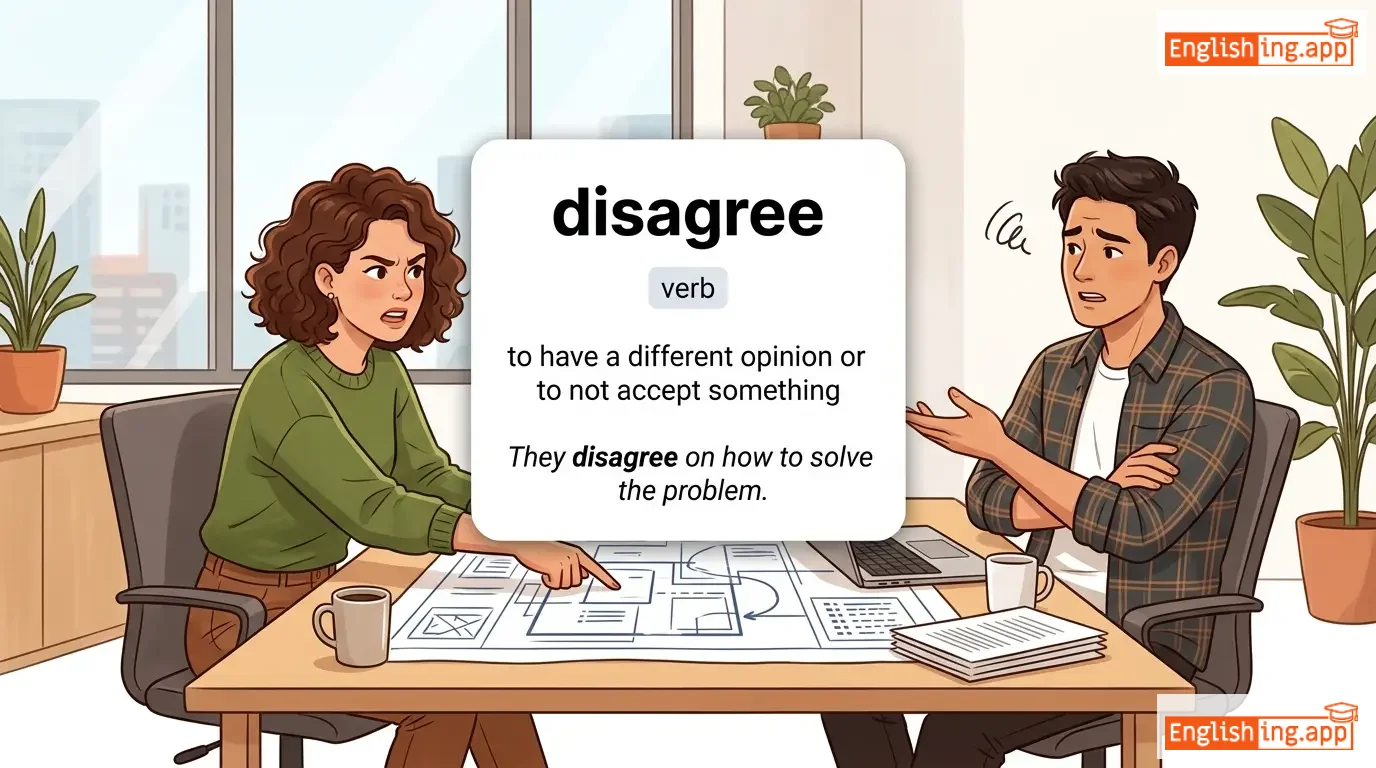
disagree definition card — visual illustration of the meaning
verb
/ˌdɪsəˈɡriː/
असहमत होना (asahmat hona)

to have a different opinion or to not accept something

"They disagree on how to solve the problem."

"वे समस्या को हल करने पर असहमत हैं।" (ve samasya ko hal karne par asahmat hain.)
adjective
/ˌdɪsəˈɡriːəbl/
अप्रिय (apriya)

Unpleasant or offensive; causing discomfort or annoyance.

"The weather was cold and disagreeable."

"मौसम ठंडा और अप्रिय था।" (Mausam thanda aur apriya tha.)
noun
/ˌdɪsəˈɡriːmənt/
विवाद (vivaad)

a failure to agree or a difference in opinion

"Their disagreement on the issue caused a delay in the project."

"उनकी इस मुद्दे पर असहमति ने परियोजना में देरी का कारण बना दिया।" (Unki is mudde par asahmati ne pariyojna mein deri ka kaaran bana diya.)
verb
/ˌdɪsəˈlaʊ/
अस्वीकार करना (asweekar karna)

to refuse to allow or accept something

"The referee disallowed the goal for offside."

"रेफरी ने ऑफसाइड के लिए गोल अस्वीकार कर दिया।" (Referee ne offside ke liye gol asweekar kar diya.)
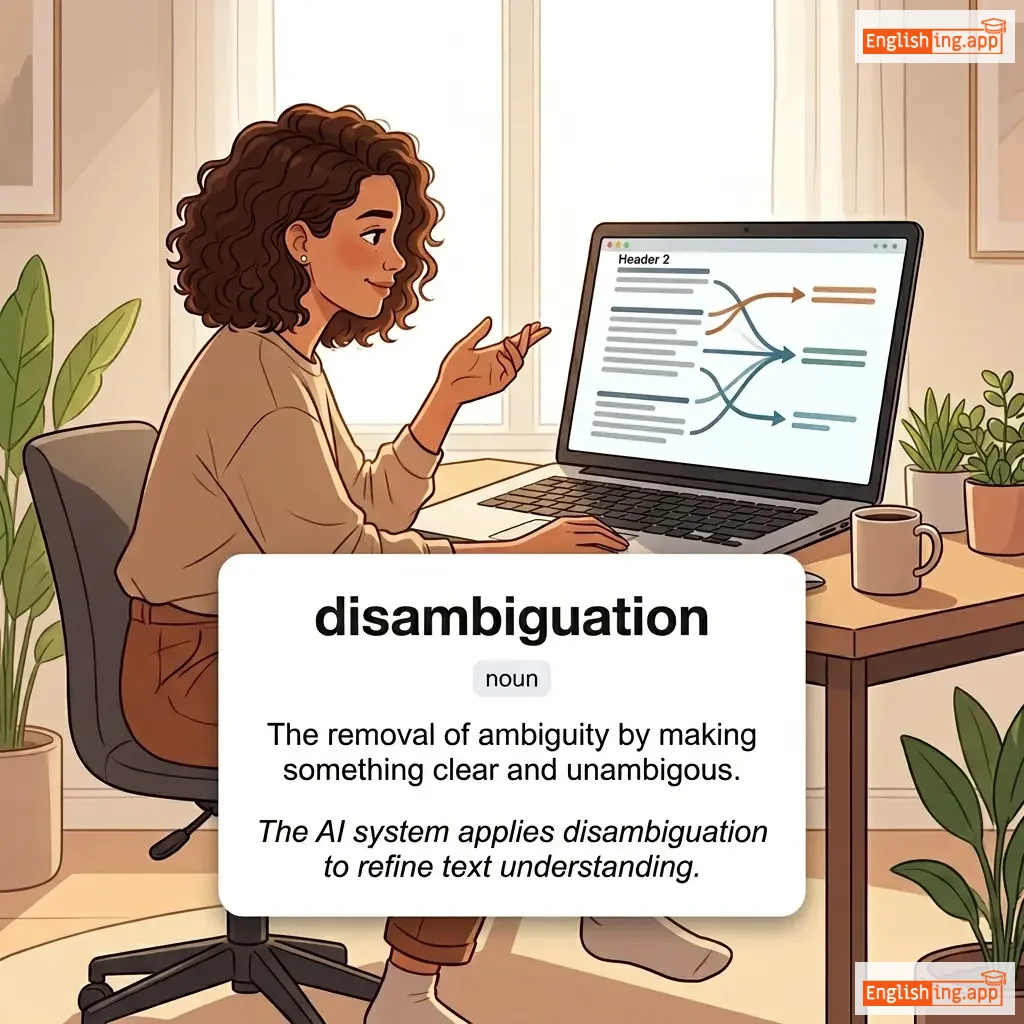
disambiguation definition card — visual illustration of the meaning
noun
ˌdɪs.æmˌbɪɡ.juˈeɪ.ʃən
स्पष्टता की प्राप्ति (disambiguation)

The removal of ambiguity by making something clear and unambiguous.

"The AI system applies disambiguation to refine text understanding."

"एआई सिस्टम पाठ को समझने के लिए डिसअम्बिगुएशन लागू करता है।" (AI system path ko samajhne ke liye disambiguation lagu karta hai.)
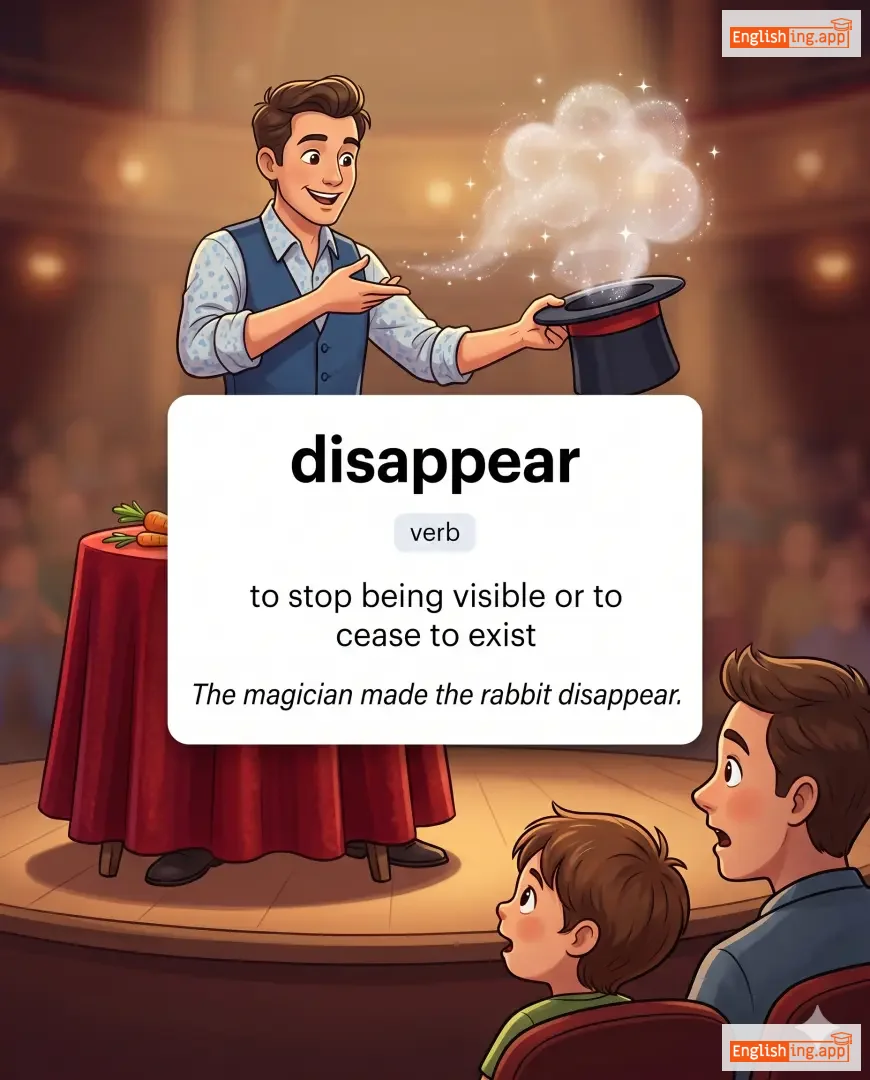
disappear definition card — visual illustration of the meaning
verb
/ˌdɪsəˈpɪər/
गायब होना (gayab hona)

to stop being visible or to cease to exist

"The magician made the rabbit disappear."

"जादूगर ने खरगोश को गायब कर दिया।" (Jadugar ne khargosh ko gayab kar diya.)
disappoint definition card — visual illustration of the meaning
verb
/ˌdɪsəˈpɔɪnt/
निराश करना (niraash karna)

to fail to fulfill expectations or hopes

"I don’t want to disappoint my parents."

"मैं अपने माता-पिता को निराश नहीं करना चाहता।" (Main apne mata-pita ko niraash nahi karna chahta.)
adjective
/ˌdɪsəˈpɔɪntɪd/
निराश (nirash)

sad or displeased because something has not happened as expected

"She was disappointed with her exam results."

"वह अपनी परीक्षा के परिणामों से निराश थी।" (Vah apni pariksha ke parinaamon se nirash thi.)
noun
/ˌdɪsəˈpɔɪntmənt/
निराशा (niraasha)

the feeling of sadness or displeasure caused by the non-fulfillment of one's hopes or expectations

"Her face showed deep disappointment after hearing the results."

"उसके चेहरे पर परिणामों को सुनकर गहरी निराशा दिखी।" (Uske chehre par parinaamon ko sunkar gehri niraasha dikhi.)
noun
/ˌdɪsæprəˈbeɪʃən/
कठोर अस्वीकृति (kathor asweekriti)

strong disapproval, typically on moral grounds

"The policy was met with widespread disapprobation."

"नीति को व्यापक अस्वीकृति का सामना करना पड़ा था।" (Neeti ko vyapak asweekriti ka samna karna pada tha.)
noun
/ˌdɪsəˈpruːvəl/
अस्वीकृति (asweekriti)

The expression of an unfavorable opinion or judgment

"Her parents showed clear disapproval of her decision to drop out of college."

"उसके माता-पिता ने कॉलेज छोड़ने के उसके फैसले पर स्पष्ट अस्वीकार दिखाया।" (uske mata-pita ne college chhodne ke uske faisle par spashth asweekar dikhaya.)
verb
/ˌdɪsəˈpruːv/
नापसंद करना (naapasand karna)

to have a negative opinion about something; to consider something wrong or bad

"Many parents disapprove of smoking."

"कई माता-पिता धूम्रपान को नापसंद करते हैं।" (kai maata-pita dhumrapan ko naapasand karte hain.)
verb
/dɪsˈɑːrm/
हथियार छीन लेना (hathiyar cheen lena)

to take weapons away from someone; to make someone feel less hostile

"The soldiers were ordered to disarm the rebels."

"सैनिकों को विद्रोहियों से हथियार छीनने का आदेश दिया गया था।" (sainikon ko vidrohi se hathiyar cheen ne ka aadesh diya gaya tha.)
verb
/ˌdɪsəˈreɪndʒ/
अगठन करना (agathan karna)

to disturb the order or arrangement of something

"The wind disarranged her hair."

"हवा ने उसके बाल बिगाड़ दिए।" (hawa ne uske baal bigaad diye.)
disarray definition card — visual illustration of the meaning
noun
/ˌdɪsəˈreɪ/
अव्यवस्था (avyavastha)

a state of disorder or confusion

"The office was in complete disarray after the move."

"ऑफिस को स्थानांतरित करने के बाद पूरी तरह से अव्यवस्था में था।" (ofis ko sthanantarit karne ke baad puri tarah se avyavastha mein tha.)
verb
/ˌdɪsəˈsɛmbəl/
विखंडित करना (vikhandit karna)

To take apart something into its separate pieces.

"He had to disassemble the computer to repair it."

"उसे इसे ठीक करने के लिए कंप्यूटर को डिसअसेंबल करना पड़ा।" (Use ise theek karne ke liye computer ko disassemble karna pada.)
noun
/dɪˈzæstər/
आपदा (aapda)

A sudden event that causes great damage or loss of life.

"The earthquake was a major disaster."

"भूकंप एक बड़ा आपदा था।" (Bhookamp ek bada aapda tha.)
adjective
/dɪˈzæstrəs/
विनाशकारी (dijaastras)

causing great damage or harm

"The flood caused disastrous damage to the city."

"बाढ़ ने शहर को विनाशकारी नुकसान पहुँचाया" (baadh ne shahar ko vinaashkaari nuksaan pahunchaya)
verb
/ˌdɪsəˈvaʊ/
नकारना (nakarna)

to deny responsibility for or connection with something

"He disavowed any involvement in the scandal."

"उसने स्कैंडल में किसी भी संबंध को नकारा।" (usne scandal mein kisi bhi sambandh ko nakara.)
noun
/ˌdɪsəˈvaʊəl/
अस्वीकरण (asvikaran)

the denial of any responsibility, connection, or support

"The politician issued a firm disavowal of the controversial remarks."

"राजनीतिक नेता ने विवादास्पद टिप्पणियों का दृढ़ अस्वीकरण जारी किया।" (Raajneetik neta ne vivaadaspad tippaniyon ka drirh asvikaran jari kiya.)
verb
/dɪsˈbænd/
विभाजित करना (vibhajit karna)

to break up and stop functioning as a group or organization

"The club decided to disband after twenty years of activity."

"क्लब ने बीस साल की गतिविधि के बाद विभाजित करने का निर्णय लिया।" (Klub ne bees saal ki gatividhi ke baad vibhajit karne ka nirnay liya.)
verb
/dɪsˈbɑːr/
किसी वकील को कानूनी पेशे से औपचारिक रूप से हटा देना (kisi vakil ko kanooni peshe se aupcharik roop se hata dena)

to officially remove a lawyer from the legal profession

"The corrupt lawyer was disbarred for unethical conduct."

"भ्रष्ट वकील को अनैतिक आचरण के लिए डिसबार किया गया था।" (Bhrasht vakil ko anaitik aacharan ke liye disbar kiya gaya tha.)