वोकैबुलरीज

इंग्लिश वोकैबुलरी डिस्कवर, लर्न और मास्टर करें

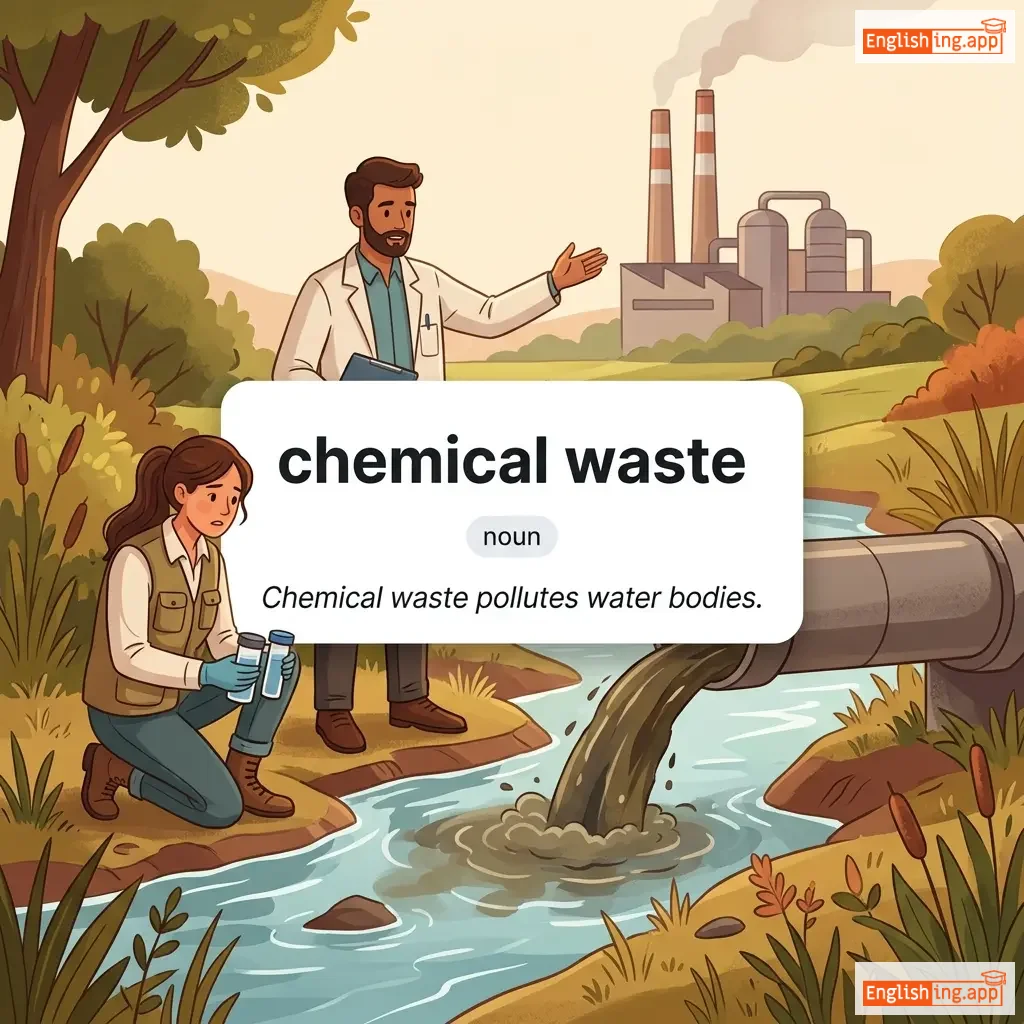
chemical waste definition card — visual illustration of the meaning
noun
ˈkɛmɪkəl weɪst
रासायनिक कचरा (rasaayanik kachra)

Waste material from industrial or laboratory processes that contains harmful chemicals.

"Chemical waste pollutes water bodies."

"रासायनिक कचरा जलाशयों को प्रदूषित करता है।" (Rasaayanik kachra jalashayon ko pradushit karta hai.)
noun
/ʃəˈmiːz/
शमीज (shamij)

a woman's loose-fitting undergarment or dress hanging straight from the shoulders

"The vintage chemise was made of delicate lace and silk."

"पुरानी शमीज महीन लेस और रेशम से बनी हुई थी।" (puraani shamij maheen leis aur resham se bani hui thi.)
noun
/ˈkemɪst/
रसायनज्ञ; औषधि विक्रेता (rasayanagya; aushadhi vikreta)

a scientist who studies chemistry; a person trained to prepare and dispense medicines

"The chemist analyzed the sample to determine its composition."

"रसायनज्ञ ने नमूने का विश्लेषण करके उसकी संरचना निर्धारित की।" (rasayanagya ne namune ka vishleshan karke uski sanrachna nirdharit ki)
noun
/ˈkɛmɪstri/
रसायनशास्त्र (rasayanashastra)

the branch of science that studies substances and their interactions; also the emotional connection between people

"They have great chemistry and work well together."

"उनके बीच बेहतरीन केमिस्ट्री है और वे एक साथ अच्छा काम करते हैं।" (Unke beech behatareen chemistry hai aur ve ek saath accha kaam karte hain.)
adjective
/ˈtʃɛkərd/
धारीदार (dhareedaar)

Having a pattern of squares, or marked by varied and contrasting experiences or periods.

"He had a chequered career with both great successes and failures."

"उसका एक धारीदार करियर था जिसमें महान सफलताएँ और विफलताएँ दोनों थीं।" (Uska ek dhareedaar kariyer tha jismein mahaan safaltaayein aur viphaltaayein dono thi.)
verb
/ˈtʃɛrɪʃ/
सयत्नपूर्वक रखना (sayatnapurvak rakhna)

To hold something dear, to love and protect, or to keep a hope or memory alive.

"She cherishes the memories of her childhood home."

"वह अपनी बचपन के घर की यादों को सयत्नपूर्वक रखती है।" (Vah apni bachpan ke ghar ki yaadon ko sayatnapurvak rakhti hai.)
noun
/ˈtʃer.i/
चेरी (cheri)

a small round red or black fruit with a hard seed inside

"She picked fresh cherries from the tree in her garden."

"वह अपने बगीचे से ताजे चेरी तोड़ रही थी।" (vah apne bagiche se taze cheri tod rahi thi.)
noun
/ˈtʃer.i ˌblɒs.əm/
चेरी फूल (cherri phool)

the pink or white flowers of a cherry tree that bloom in spring

"The cherry blossoms bloom beautifully in April."

"चेरी फूल अप्रैल में सुंदरता से खिलते हैं।" (cherri phool april mein sundarta se khilte hain.)
adjective
/tʃəˈruːbɪk/
देवदूत जैसा (devdhoot jaisa)

Innocent, sweet, and angelic, like a cherub.

"The baby had a cherubic smile that melted everyone’s heart."

"बच्चे के चेहरे पर एक देवदूत जैसा मुस्कान था, जिसने सभी का दिल छू लिया।" (Bacche ke chehre par ek devdhoot jaisa muskaan tha, jisne sabhi ka dil chhoo liya.)
noun
/tʃɛst/
छाती (chaati)

the front part of the human body between the neck and the stomach

"He felt a pain in his chest after running."

"दौड़ने के बाद उसे अपनी छाती में दर्द महसूस हुआ।" (Daudne ke baad use apni chaati mein dard mehsoos hua.)
noun
/ˈʃɛvrən/
वी-आकार का चिन्ह (vi-aakaar ka chinh)

A V-shaped pattern, often used in military insignia or design.

"The sergeant’s uniform displayed three chevrons on the sleeve."

"सार्जेंट की यूनिफॉर्म में बाजू पर तीन शेव्रन थे।" (Saarjent ki uniform mein baazu par teen shevron the.)
verb
/tʃuː/
खुशी (khushi)

to bite food into smaller pieces with your teeth before swallowing it

"You should chew your food properly to help with digestion."

"जब उसे पुरस्कार मिला तो वह अपनी खुशी छुपा नहीं पाई।" (Jab use puraskar mila to wah apni khushi chhupa nahi paayi.)
noun
/kiˌɑːrəˈskjʊəroʊ/
प्रकाश और अंधकार के बीच तीव्र विपरीतता (prakash aur andhkar ke beech teevra vipareetata)

The use of strong contrasts between light and dark in art or literature to create a dramatic effect.

"The artist's painting used chiaroscuro to highlight the figure's face."

"कला के कृतियों में चेहरों को उजागर करने के लिए चियारोस्कुरो का उपयोग किया गया।" (kala ke krityon mein chehron ko ujagar karne ke liye chiyaroskuro ka upyog kiya gaya.)
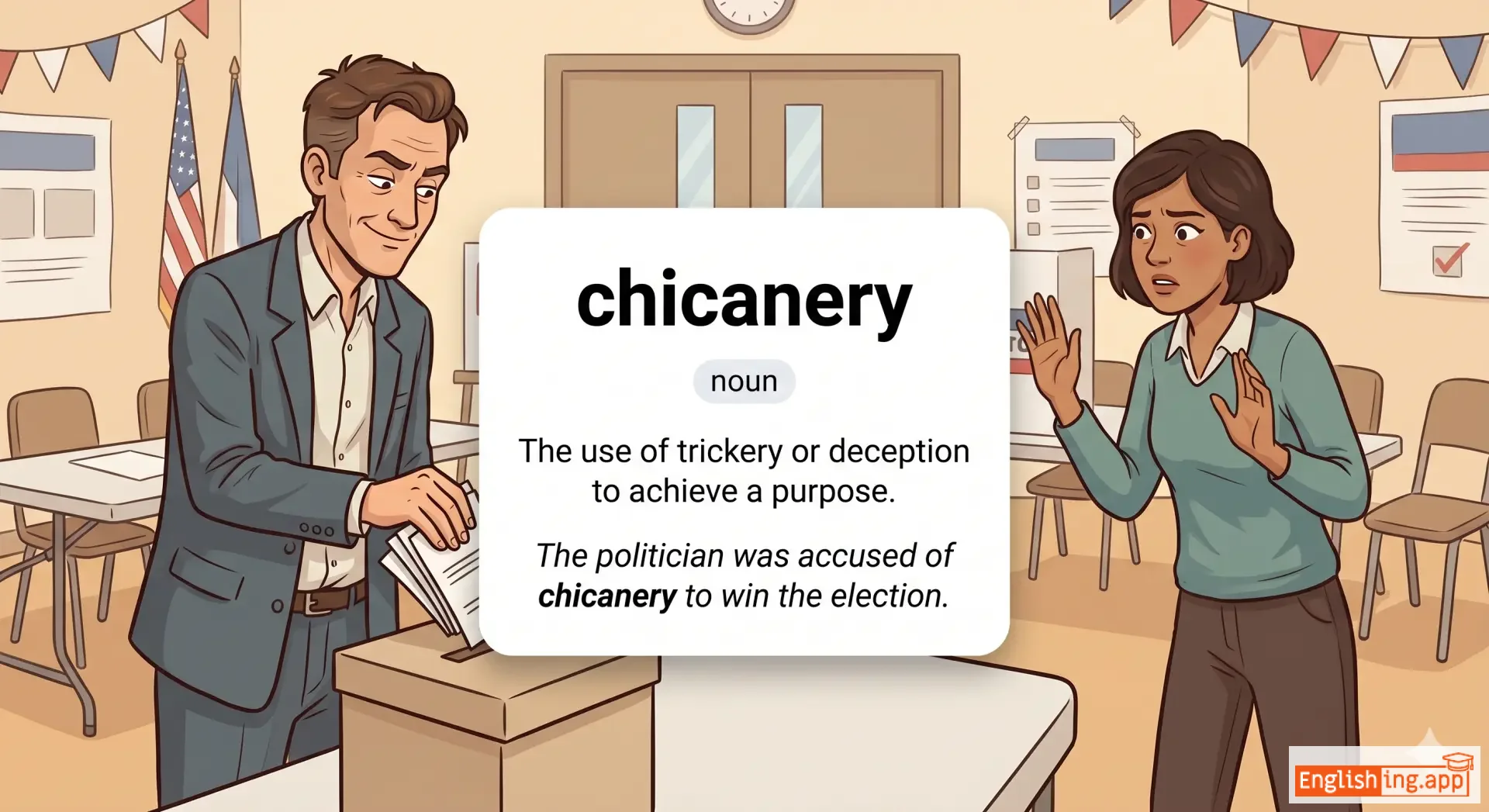
chicanery definition card — visual illustration of the meaning
noun
/ʃɪˈkeɪnəri/
धोखाधड़ी (dhokhadhadi)

The use of trickery or deception to achieve a purpose.

"The politician was accused of chicanery to win the election."

"राजनीतिज्ञ पर चुनाव जीतने के लिए धोखाधड़ी का आरोप लगाया गया था।" (raajneetik par chunaav jeetne ke liye dhokhadhadi ka aarop lagaya gaya tha.)
noun
/ˈtʃɪk piː/
चने (chane)

round beige legume; protein-rich pulse used in various dishes

"Soak the chick peas overnight before cooking them for better digestion."

"चिक पीज़ को पकाने से पहले रात भर भिगोकर रखें ताकि पाचन बेहतर हो सके।" (chik peez ko pakane se pehle raat bhar bhigokar rakhen taaki paachan behtar ho sake.)
noun
/ˈtʃɪkɪn/
मुर्गा (murga)

a domestic bird kept for its eggs or meat

"We had fried chicken for dinner."

"हमने रात के खाने में फ्राई चिकन खाया।" (hamne raat ke khane mein fry murga khaya.)
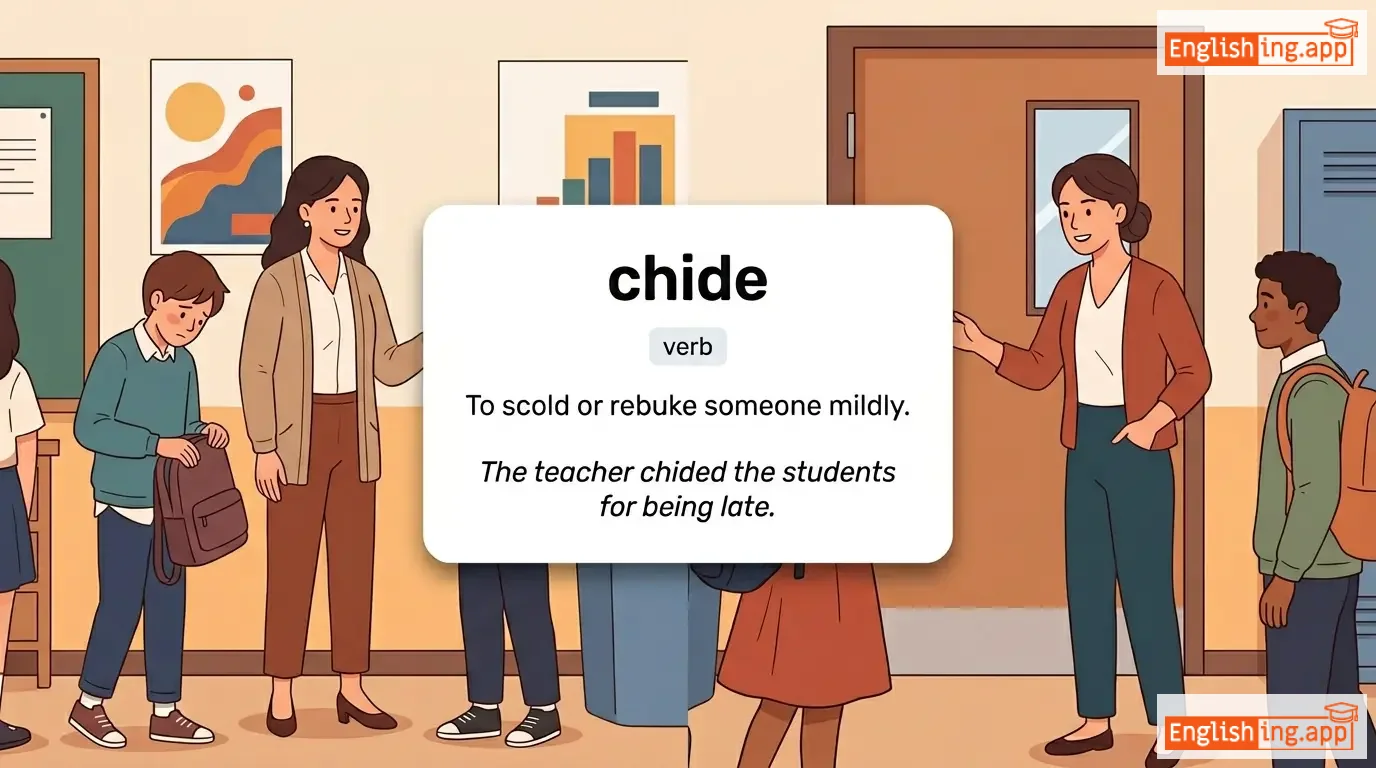
chide definition card — visual illustration of the meaning
verb
/tʃaɪd/
डाँटना (daantna)

To scold or rebuke someone mildly.

"The teacher chided the students for being late."

"टीचर ने देर होने पर छात्रों को डाँटा।" (teacher ne der hone par chhatron ko daanta.)
noun
/tʃiːf/
मुखिया (mukhia)

a leader or person in charge of a group or organization

"The chief of the village made an important decision."

"गाँव के मुखिया ने एक महत्वपूर्ण निर्णय लिया।" (Gaon ke mukhiya ne ek mahatvapurn nirnay liya.)
adverb
/ˈtʃiːfli/
मुख्यतः (mukhyatah)

mainly; primarily

"The festival is celebrated chiefly by young people."

"त्योहार मुख्यतः युवा लोगों द्वारा मनाया जाता है।" (Tyohar mukhyatah yuva logon dwara manaya jata hai.)
noun
/ʃɪˈfɒn/
शिफॉन कपड़ा (shifon kapda)

A lightweight, sheer fabric often used in dresses or scarves.

"She wore a beautiful chiffon dress at the party."

"उसने पार्टी में एक खूबसूरत शिफॉन ड्रेस पहनी थी।" (usne party mein ek khoobsurat shifon dress pehni thi.)
noun
/tʃaɪld/
बच्चा (bachcha)

a young human being below the age of puberty or below the legal age of majority

"The child played happily in the park."

"बच्चा खुशी-खुशी पार्क में खेल रहा था।" (bachcha khushi-khushi park mein khel raha tha.)
noun
/ˈtʃaɪldhʊd/
बचपन (bachpan)

the period of being a child

"She spent her childhood in a small village."

"उसने अपना बचपन एक छोटे से गांव में बिताया।" (Usne apna bachpan ek chhote se gaon mein bitaya.)
adjective
/ˈtʃaɪl.dɪʃ/
बालसुलभ; बच्चों जैसा लेकिन वयस्क के लिए अनुपयुक्त (balsulabh; bachon jaisa lekin vayask ke liye anupyukt)

immature and silly; behaving in a way that is typical of a child but inappropriate for an adult

"His childish behavior during the meeting was quite embarrassing."

"बैठक के दौरान उसका बालसुलभ व्यवहार काफी शर्मनाक था।" (baithak ke dauran uska balsulabh vyavhaar kaafi sharmnaak tha.)
adjective
/ˈtʃaɪld.laɪk/
बच्चे जैसा; निर्दोष और विश्वासपूर्ण; सरल और प्यारा (bachche jaisa; nirdosh aur vishwaspoor; saral aur pyaara)

innocent and trusting like a child; having the good qualities of a child; pure and simple

"She maintained a childlike wonder about the world around her."

"उसने अपने चारों ओर की दुनिया के बारे में बच्चों जैसा अचरज बनाए रखा।" (usne apne charon or ki duniya ke baare mein bachon jaisa achraja banaye rakha.)
verb
/tʃɪl/
ठंडा करना / आराम करना (thanda karna / aaram karna)

to make something cold or to relax and take it easy

"We decided to chill at home after a long day."

"हमने एक लंबी दिन के बाद घर पर आराम करने का निर्णय लिया।" (Hamne ek lambi din ke baad ghar par aaram karne ka nirnay liya.)
noun
/ˈtʃɪl.i ˈpaʊ.dər/
मिर्च पाउडर (mirch powder)

a spice made from ground dried chili peppers, used to add heat and flavor to food

"Add two teaspoons of chilli powder to make the dish spicier."

"डिश को और मसालेदार बनाने के लिए दो चम्मच मिर्च पाउडर डालें।" (dish ko aur masaledar banane ke liye do chammach mirch powder daalein)
adjective
/ˈtʃɪli/
ठंडा (thanda)

uncomfortably or unpleasantly cold

"It was a chilly morning in December."

"दिसंबर में यह एक ठंडी सुबह थी।" (Disambar mein yah ek thandi subah thi.)
noun
/ˈtʃɪl.i/
ठंडा; तीखा मिर्च; (thanda, teekha mirch)

noticeably cold; a hot-tasting pod of a variety of capsicum, used as a spice

"The chef added red chilli to make the curry spicier."

"सेफ ने करी को और तीखा बनाने के लिए लाल मिर्च डाली।" (chef ne curry ko aur teekha banane ke liye laal mirch daali.)
noun
/kaɪˈmɪərə/
कल्पित राक्षस / माया (kalpit rakshas / maya)

A mythical creature with parts from different animals; also used to mean a fanciful illusion or unattainable dream.

"The idea of a perfect society is often a chimera."

"एक आदर्श समाज का विचार अक्सर एक काइमेरा होता है।" (ek aadarsh samaj ka vichar aksar ek kaimera hota hai.)
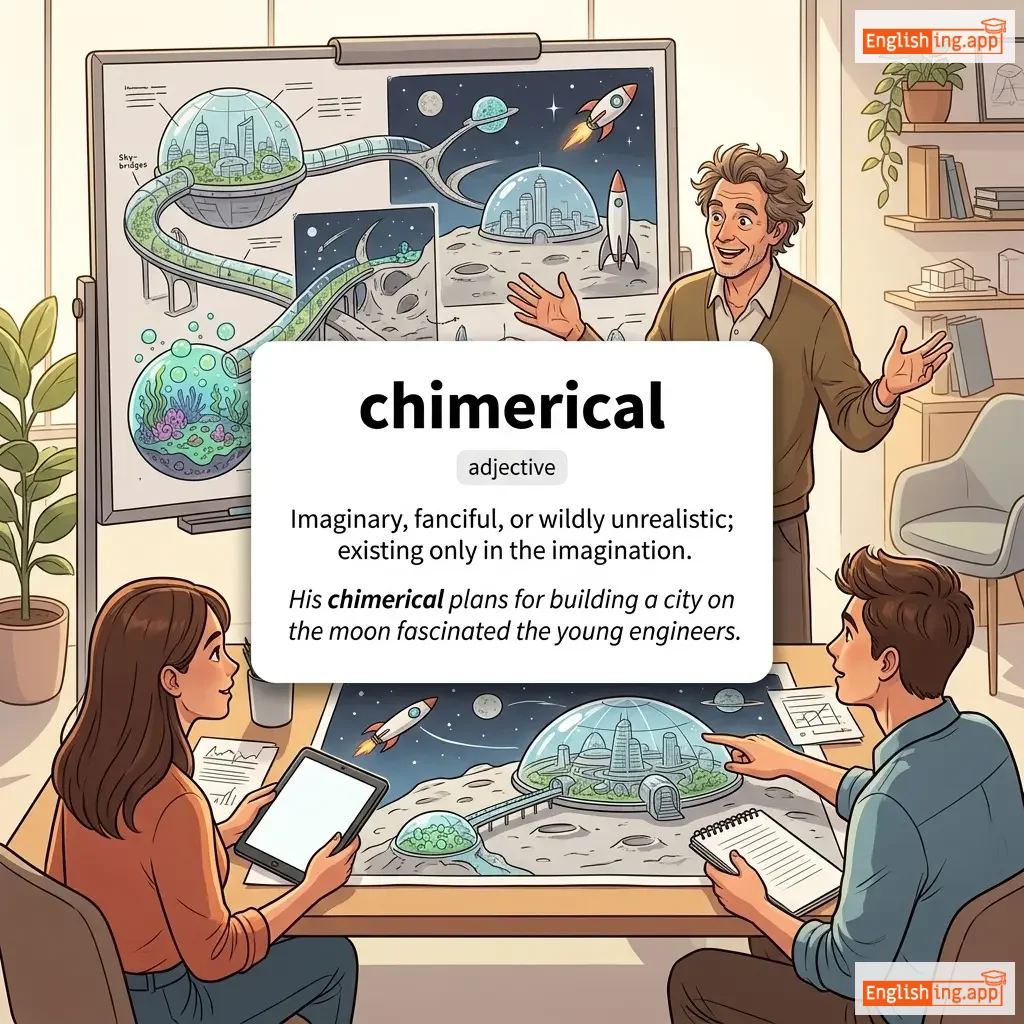
chimerical definition card — visual illustration of the meaning
adjective
/kaɪˈmɛrɪkəl/
काल्पनिक (kalpanik)

Imaginary, fanciful, or wildly unrealistic; existing only in the imagination.

"His chimerical plans for building a city on the moon fascinated the young engineers."

"उसके चाइमेरिकल योजना चाँद पर एक शहर बनाने के लिए युवा इंजीनियरों को मोहित कर दिया।" (Uske chimerical yojna chand par ek shahar banane ke liye yuva engineers ko mohit kar diya.)
noun
/tʃɪn/
ठोड़ी (thodi)

the part of the face below the mouth

"He rested his chin on his hand while thinking."

"वह सोचते हुए अपनी ठोड़ी पर हाथ रखे हुए था।" (Vah sochte hue apni thodi par haath rakhe hue tha.)
noun
/ˈtʃaɪ.nə bɑːks/
कामिनी (kamini)

a small evergreen shrub with tiny white fragrant flowers

"The China box plant produced clusters of small white flowers."

"कामिनी के पौधे ने छोटे सफेद फूलों के गुच्छे उत्पन्न किए।" (Kamini ke paudhe ne chhote safed phoolon ke guchhe utpann kiye.)
noun
/ˈtʃaɪ.nə roʊz/
गुड़हल (gudhal)

a tropical flowering plant with large, showy flowers in various colors

"The bright red China-rose flowers decorated the entrance of the house."

"चमकीले लाल गुड़हल के फूलों ने घर के प्रवेश द्वार को सजाया।" (Chamkile lal gudhal ke phoolon ne ghar ke pravesh dwar ko sajaya.)
noun
/ˈtʃaɪ.nə.weər/
चीन मिट्टी के बर्तन (cheen mitti ke bartan)

dishes, plates, cups, and other tableware made of porcelain or fine ceramic

"The expensive china-ware was displayed in the cabinet."

"महंगे चीन मिट्टी के बर्तन को अलमारी में प्रदर्शित किया गया था।" (mahenge cheen mitti ke bartan ko alamaaree mein pradarshit kiya gaya tha.)
adjective, noun
/tʃaɪˈniːz/
चीनी (cheeni)

relating to China, its people, or its language

"We went to a Chinese restaurant last night."

"हम कल रात एक चीनी रेस्तरां में गए थे।" (Hum kal raat ek cheeni restaurant mein gaye the.)
noun, verb
/tʃɪp/
टुकड़ा / टूटकर निकला हिस्सा (tukda / tootkar nikla hissa)

A small piece broken off from something; or to cut or break a small piece from something.

"He accidentally chipped the edge of the table."

"वह दुर्घटनावश टेबल के कोने को चिप कर बैठा।" (Wah durghatnavash table ke kone ko chip kar baitha.)
noun
/ˈkaɪrəˌmænsi/
हाथ देख कर भविष्यवाणी (haath dekh kar bhavishyavani)

The practice of predicting the future by interpreting the lines on the palms of hands; palmistry.

"The old woman practiced chiromancy and told fortunes for travelers."

"बूढ़ी महिला काइरोमैंसी का अभ्यास करती थीं और यात्रियों के लिए भविष्यवाणियाँ बताती थीं।" (Boodhi mahila kairomancy ka abhyas karti thin aur yatrion ke liye bhavishyavaniyan batati thin.)
noun
/kɪˈrɒpədɪst/
पैरों का डॉक्टर (pairon ka doctor)

A healthcare professional who diagnoses and treats foot problems.

"The chiropodist treated her painful corns and calluses."

"किरोपोडिस्ट ने उसकी दर्दनाक कॉर्न्स और कॉलस का इलाज किया।" (Chiropodist ne uski dardnaak corns aur calluses ka ilaaj kiya.)
noun, verb
/ˈtʃɪzəl/
छेदी करने का औजार (chedi karne ka auzar)

A tool with a sharp edge used for cutting or shaping hard materials; or to cut or carve with such a tool.

"The sculptor chiseled the marble into a beautiful statue."

"कला कारीगर ने संगमरमर को एक सुंदर मूर्ति में आकार दिया।" (Kala karigar ne sangmarmar ko ek sundar murti mein aakar diya.)
noun
/tʃɪt/
चिट (chit)

a short note, typically a brief informal letter; a voucher for a sum owed

"She left a chit on the table asking him to call her back."

"वह टेबल पर एक चिट छोड़ गई, जिसमें उसने उसे फोन करने के लिए कहा था।" (vah table par ek chit chhod gayi, jismein usne use phone karne ke liye kaha tha.)
adjective
/ˈʃɪvəlrəs/
शिष्ट और साहसी (shisht aur sahasi)

Behaving in a courteous, gallant, and honorable way, especially toward women.

"He was chivalrous, always opening doors for others."

"वह शिष्ट था, हमेशा दूसरों के लिए दरवाजे खोलता।" (vah shisht tha, hamesha doosron ke liye darwaje kholta.)
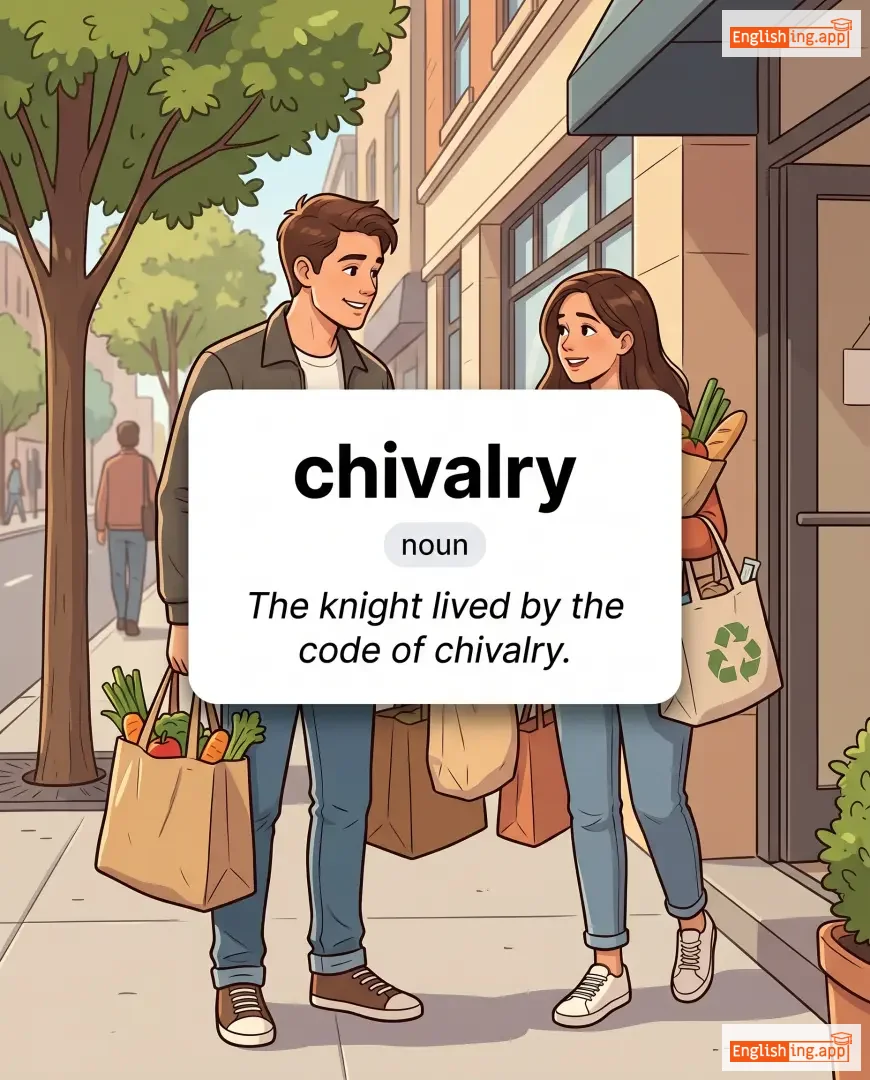
chivalry definition card — visual illustration of the meaning
noun
/ˈʃɪvəlri/
शिवलरी (shivalri)

The medieval knightly system with its moral, social, and religious code; courteous behavior, especially toward women.

"The knight lived by the code of chivalry."

"नाइट शिवलरी के कोड के अनुसार जीवन जीते थे।" (Knight shivalri ke kod ke anusar jeevan jeete the.)
noun
/ˈtʃɒklət/
चॉकलेट (choklet)

a sweet, brown food made from roasted cocoa beans

"She bought a bar of chocolate from the store."

"वह दुकान से एक चॉकलेट का बार खरीदने गई थी।" (vah dukaan se ek choklet ka baar kharidne gayi thi.)
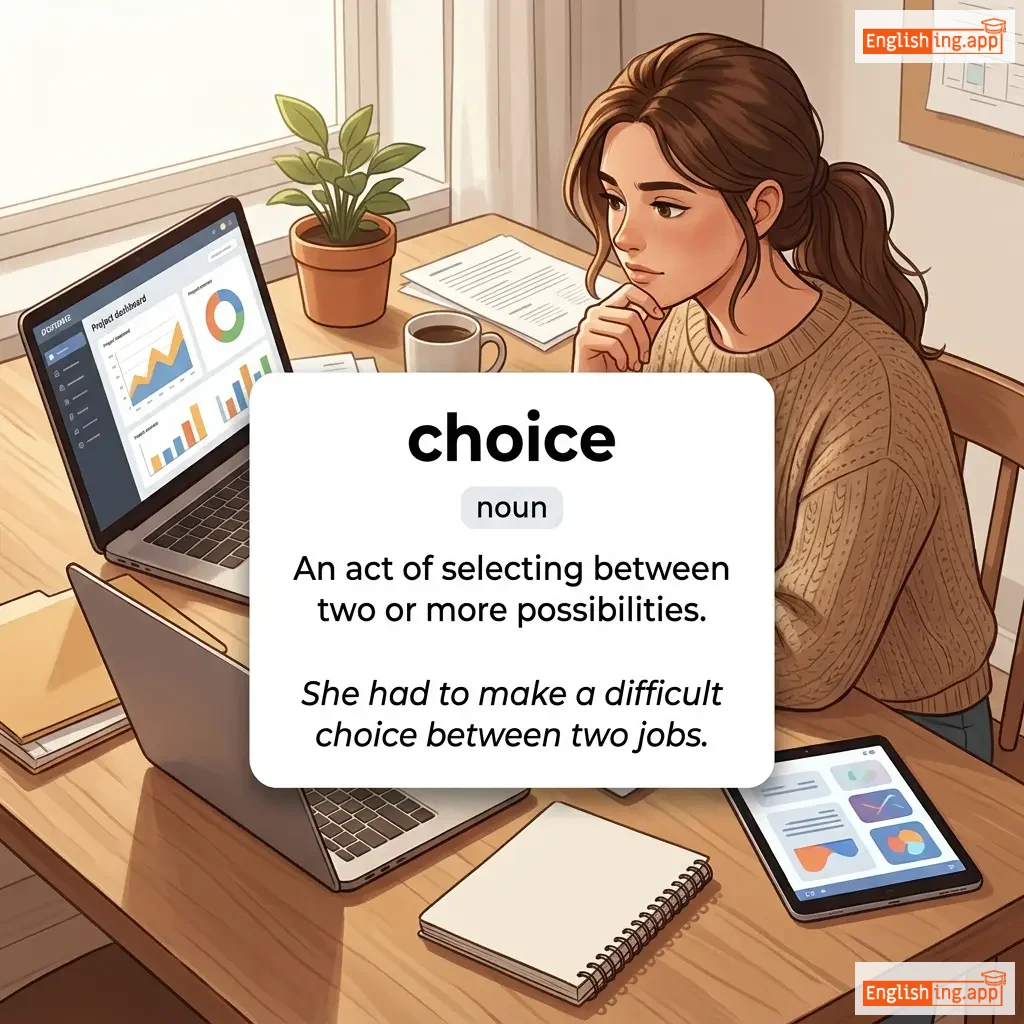
choice definition card — visual illustration of the meaning
noun
/tʃɔɪs/
चुनाव (chunav)

An act of selecting between two or more possibilities.

"She had to make a difficult choice between two jobs."

"उसे दो नौकरियों के बीच एक कठिन चुनाव करना था।" (Use do naukriyon ke beech ek kathin chunav karna tha.)
noun
/ˈkwaɪər/
गायक समूह (gaayak samuh)

An organized group of singers, typically performing in church services or concerts.

"The choir sang beautifully during the ceremony."

"समारोह के दौरान गायक समूह ने सुंदरता से गाया।" (Samaroh ke dauran gaayak samuh ne sundarta se gaya.)
noun
/ˈkɒlərə/
कोलेरा (kolera)

An infectious disease of the small intestine causing severe vomiting and diarrhea.

"The village suffered an outbreak of cholera after the flood."

"बाढ़ के बाद गाँव में कोलेरा का प्रकोप हुआ।" (Baadh ke baad gaav mein kolera ka prakop hua.)
adjective
/ˈkɒlərɪk/
चिड़चिड़ा (chichida)

Easily angered; irritable and hot-tempered.

"His choleric nature often got him into arguments."

"उसका चिड़चिड़ा स्वभाव अक्सर उसे बहसों में डाल देता था।" (uska chichida swabhav aksar use behason mein daal deta tha.)
noun
/kəˈlɛstərɒl/
कोलेस्ट्रॉल (kolesterol)

a fatty substance found in the blood, high levels of which can cause health problems

"High cholesterol can increase the risk of heart disease."

"उच्च कोलेस्ट्रॉल हृदय रोग का खतरा बढ़ा सकता है।" (uchch kolesterol hriday rog ka khatra badha sakta hai.)
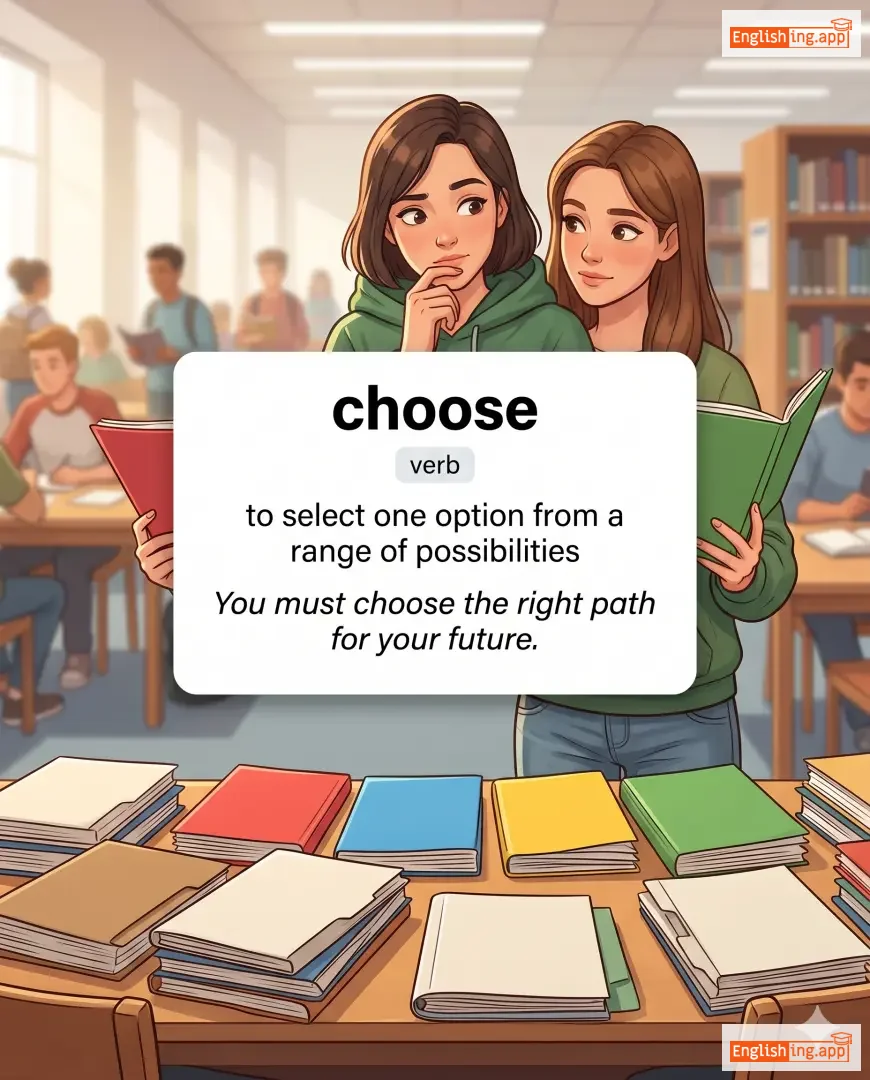
choose definition card — visual illustration of the meaning
verb
/tʃuːz/
चुनना (chunna)

to select one option from a range of possibilities

"You must choose the right path for your future."

"तुम्हें अपने भविष्य के लिए सही रास्ता चुनना होगा।" (Tumhe apne bhavishya ke liye sahi rasta chunna hoga.)
adjective
/ˈtʃuː.zi/
चुज़ी; बहुत चयनात्मक; जो चीज़ पसंद हो वही स्वीकार करें (chooji)

very careful in choosing; selective; particular about what one likes or accepts

"He's very choosy about the restaurants where he eats."

"वह उन रेस्तरां के बारे में बहुत चुज़ी है जहाँ वह खाता है।" (vah un restoran ke baare mein bahut chooji hai jahan vah khata hai.)