वोकैबुलरीज

इंग्लिश वोकैबुलरी डिस्कवर, लर्न और मास्टर करें

noun
/ˈkænvəs/
कैनवास (kainvaas)

A strong, coarse cloth used for tents, sails, or painting.

"The artist prepared a canvas for his new painting."

"कलाकार ने अपने नए चित्र के लिए कैनवास तैयार किया।" (kalakaar ne apne naye chitr ke liye kainvas taiyar kiya)
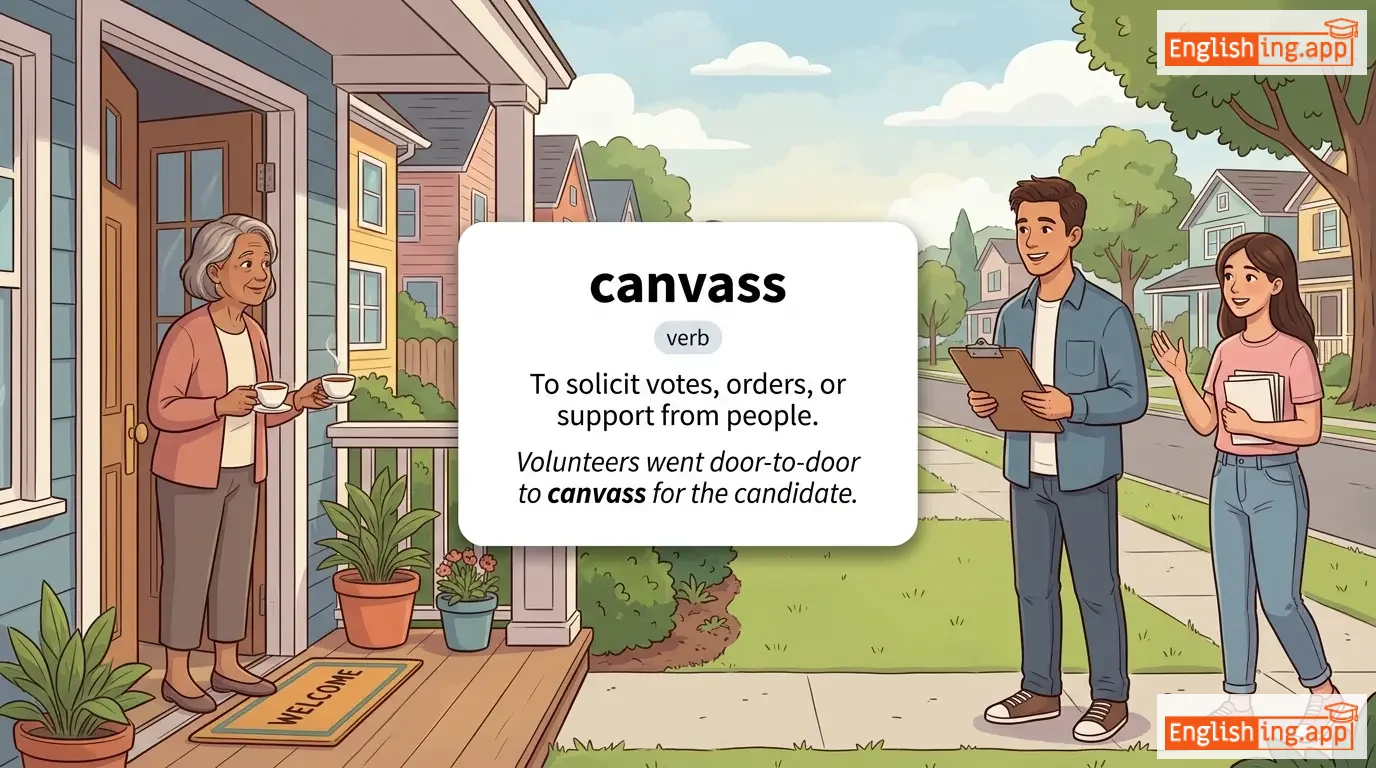
canvass definition card — visual illustration of the meaning
verb
/ˈkænvəs/
वोट मांगना (vot maangna)

To solicit votes, orders, or support from people.

"Volunteers went door-to-door to canvass for the candidate."

"स्वयंसेवक उम्मीदवार के लिए वोट मांगने के लिए घर-घर गए।" (Swayamsevak ummidwaar ke liye vot maangne ke liye ghar-ghar gaye.)
noun
/ˈkænjən/
कणियन (kaniyan)

A deep gorge, typically one with a river flowing through it.

"The Colorado River carved the Grand Canyon over millions of years."

"कोलोराडो नदी ने लाखों वर्षों में ग्रांड कैन्यन को काटा।" (Kolorado nadi ne laakhon varsho mein Grand Canyon ko kaata.)
noun
/kæp/
टोपी (topi)

A covering for the head, often with a visor.

"He wore a red cap to the baseball game."

"उसने लाल टोपी बेसबॉल खेल के लिए पहनी।" (Usne lal topi baseball khel ke liye pehni.)
capability definition card — visual illustration of the meaning
noun
/ˌkeɪpəˈbɪləti/
काबिलiyat (kaabiliyat)

the power or ability to do something; potential for effectiveness or success

"The company has the capability to expand internationally."

"कंपनी के पास अंतरराष्ट्रीय स्तर पर विस्तार करने की क्षमता है।" (kampani ke paas antarrashtriya star par vistar karne ki kshamata hai)
adjective
/ˈkeɪpəbl/
सक्षम (saksham)

having the ability, fitness, or quality necessary to do something

"She is capable of handling difficult situations calmly."

"वह कठिन परिस्थितियों को शांति से संभालने में सक्षम है।" (Wah kathin paristhitiyon ko shanti se sambhalne mein saksham hai.)
adjective
/kəˈpeɪʃəs/
विशाल (vishal)

Having a lot of space inside; roomy.

"The capacious hall could seat over five hundred guests."

"वृहद हॉल में पांच सौ से अधिक मेहमान बैठ सकते थे।" (Vrihad hall mein paanch sau se adhik mehmaan baith sakte the.)
capacity definition card — visual illustration of the meaning
noun
/kəˈpæsəti/
क्षमता (kshemta)

the maximum amount that something can contain or produce; ability to do something

"The stadium has a seating capacity of 50,000."

"स्टेडियम की बैठने की क्षमता 50,000 है।" (Stadium ki baithne ki kshamata 50,000 hai.)
noun
/kəˈpærɪsən/
घोड़े के लिए एक अलंकरणीय आवरण; समृद्ध और विस्तृत वस्त्र या सजावट (ghode ke liye ek alankaraneey aavaran; samriddh aur vistarat vastr ya sajoavat)

an ornamental covering for a horse; rich and elaborate clothing or decoration

"The king’s horse was adorned with a golden caparison."

"राजा का घोड़ा सुनहरे कैपरिसन से सजाया गया था।" (Raja ka ghoda sunahare caparison se sajaya gaya tha.)
capillaries definition card — visual illustration of the meaning
noun
/kəˈpɪl.ər.iz/
सूक्ष्म रक्तवाहिकाएँ (sookshm raktvahikayein)

Any of the fine branching blood vessels that form a network between the arterioles and venules.

"Broken capillaries cause dark circles."

"टूटे हुए कैपिलरीज डार्क सर्कल्स का कारण बनते हैं।" (Toote hue capillaries dark circles ka kaaran bante hain.)
noun
/ˈkæpɪˌlɛri/
सूक्ष्म रक्तवाहिका (sookshm raktvahika)

a very thin blood vessel that connects arteries and veins

"Oxygen passes from the blood into tissues through capillaries."

"ऑक्सीजन रक्त से ऊतकों में कैपिलरी के माध्यम से जाता है।" (Oxygen rakt se ootakon mein capillary ke madhyam se jata hai.)
noun
/ˈkæpɪtl/
राजधानी / पूंजी (raajdhani / punji)

a city that serves as the seat of government; also wealth in the form of money or assets

"Dhaka is the capital of Bangladesh."

"ढाका बांग्लादेश की राजधानी है।" (Dhaka Bangladesh ki raajdhani hai.)
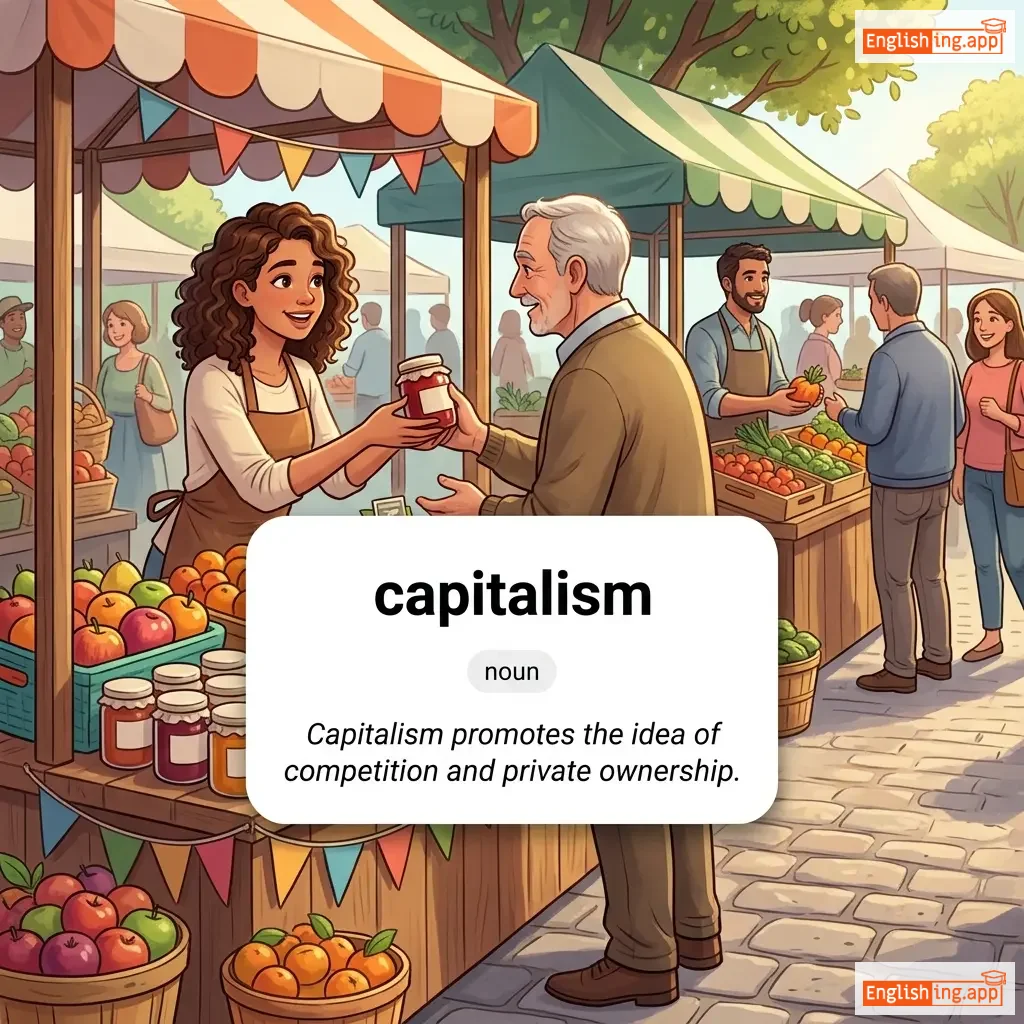
capitalism definition card — visual illustration of the meaning
noun
/ˈkæpɪtəlɪzəm/
पूंजीवाद (punjivad)

an economic system where private individuals or corporations control the means of production and distribution of goods

"Capitalism promotes the idea of competition and private ownership."

"पूंजीवाद प्रतिस्पर्धा और निजी स्वामित्व के विचार को बढ़ावा देता है।" (Punjivad pratishpardha aur niji swamitva ke vichar ko badhava deta hai.)
noun/adjective
/ˈkæpɪtəlɪst/
पूंजीवादी (kapitalist)

a person who supports or believes in capitalism; a wealthy business owner

"The capitalist believes in the freedom of the market."

"पूंजीवादी बाज़ार की स्वतंत्रता में विश्वास करता है।" (punjivadi bazaar ki swatantrata mein vishvas karta hai.)
capitalization definition card — visual illustration of the meaning
noun
/ˌkæp.ɪ.təl.aɪˈzeɪ.ʃən/
पूंजीकरण (poonjikaran)

The provision of capital for a company or the total value of a company's shares.

"The startup secured significant capitalization from investors."

"स्टार्टअप ने निवेशकों से महत्वपूर्ण पूंजीकरण सुनिश्चित किया।" (Startap ne niveshkon se mahatvapurn punjikaran sunishchit kiya.)
verb
/kəˈpɪtjʊˌleɪt/
समर्पण करना (samarpan karna)

to surrender or give in after resisting

"The army had no choice but to capitulate to the enemy."

"सेना को शत्रु के सामने समर्पण करना पड़ा।" (Sena ko shatru ke samne samarpan karna pada.)
noun
/kəˈpriːs/
आकस्मिक बदलाव (aakasmik badlav)

a sudden, unpredictable change of mood or behavior

"She bought the expensive dress on a caprice."

"उसने एक आकस्मिक बदलाव के तहत महँगा ड्रेस खरीदी।" (Usne ek aakasmik badlav ke taht mahanga dress khareedi.)
capricious definition card — visual illustration of the meaning
adjective
/kəˈprɪʃəs/
संवेदनशील (sanvedansheel)

given to sudden and unaccountable changes of mood or behavior

"The stock market can be capricious, shifting dramatically without warning."

"शेयर बाजार संवेदनशील हो सकता है, बिना चेतावनी के अचानक बदलता है।" (sheyar bazaar sanvedansheel ho sakta hai, bina chetavani ke achanak badalta hai.)
noun
/ˈkæp.sɪ.kəm/
शिमला मिर्च (shimla mirch)

sweet pepper; bell pepper; colorful vegetable used in cooking

"Add red and green capsicum to make the dish colorful and nutritious."

"लाल और हरे शिमला मिर्च को डिश को रंगीन और पौष्टिक बनाने के लिए डालें।" (lal aur hare shimla mirch ko dish ko rangeen aur poshtik banane ke liye daalein.)
verb
/ˈkæp.saɪz/
उलटना (ultna)

to overturn in the water

"The small fishing boat capsized during the storm."

"तूफान के दौरान छोटी मछली पकड़ने वाली नाव उलट गई थी।" (Toofan ke dauran chhoti machhli pakadne wali naav ulat gayi thi.)
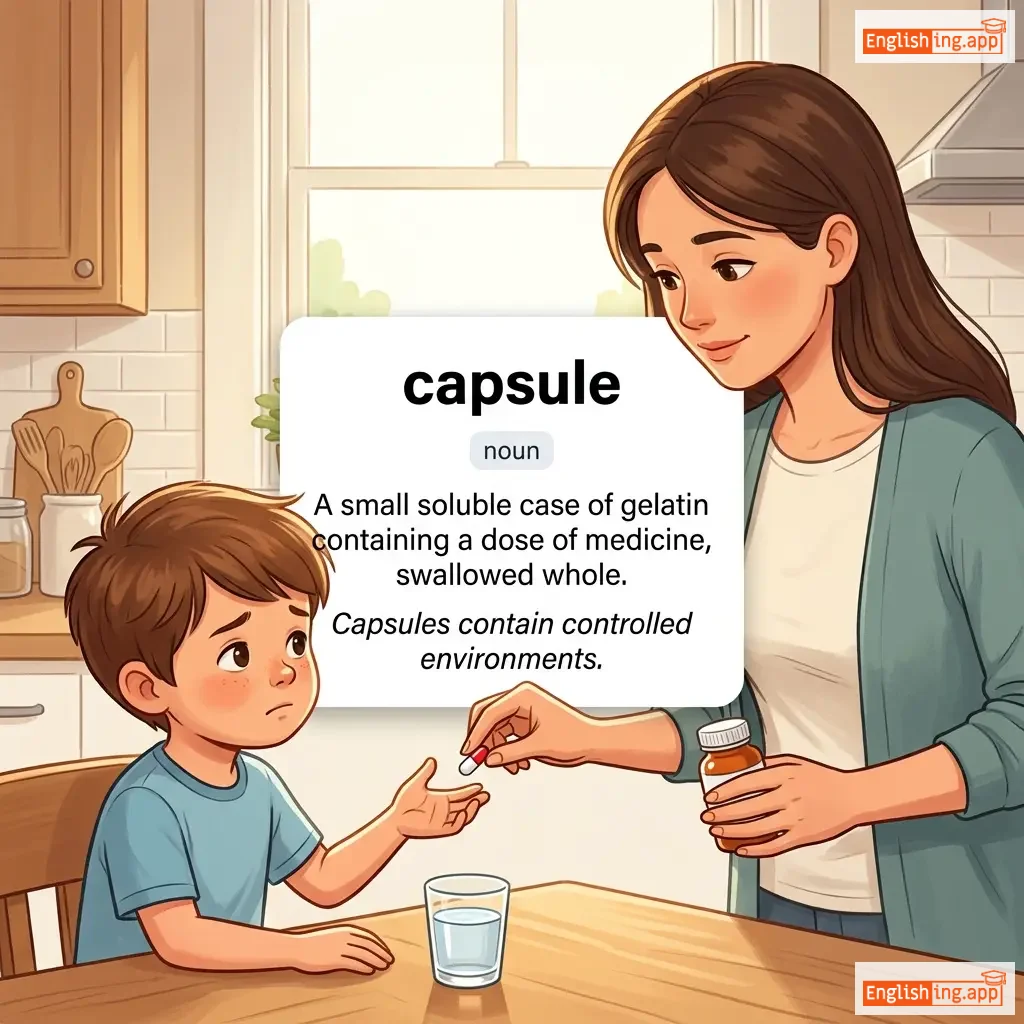
capsule definition card — visual illustration of the meaning
noun
ˈkæp.sjuːl
कैप्सूल। एक छोटा घुलनशील जेल युक्त डिब्बा जिसमें दवा की खुराक होती है, जिसे पूरे का पूरा निगल लिया जाता है। (kaipsul. ek chhota ghulansheel jel yukt dibba jismein dawa ki khuraak hoti hai, jise poora ka poora nigal liya jaata hai.)

A small soluble case of gelatin containing a dose of medicine, swallowed whole.

"Capsules contain controlled environments."

"कैप्सूल नियंत्रित वातावरण में होते हैं।" (Kaipsul niyantrit vatavaran mein hote hain.)
noun
/ˈkæptɪn/
कैप्टन (captain)

the leader of a team, ship, or group

"The captain led his team to victory."

"कैप्टन ने अपनी टीम को जीत दिलाई।" (Captain ne apni team ko jeet dilayi.)
noun
/ˈkæp.ʃən/
कैप्शन (caption)

a brief explanation or description accompanying an illustration or photograph

"The caption under the photo explained who the people were."

"फोटो के नीचे कैप्शन ने बताया कि लोग कौन थे।" (Photo ke neeche caption ne bataya ki log kaun the.)
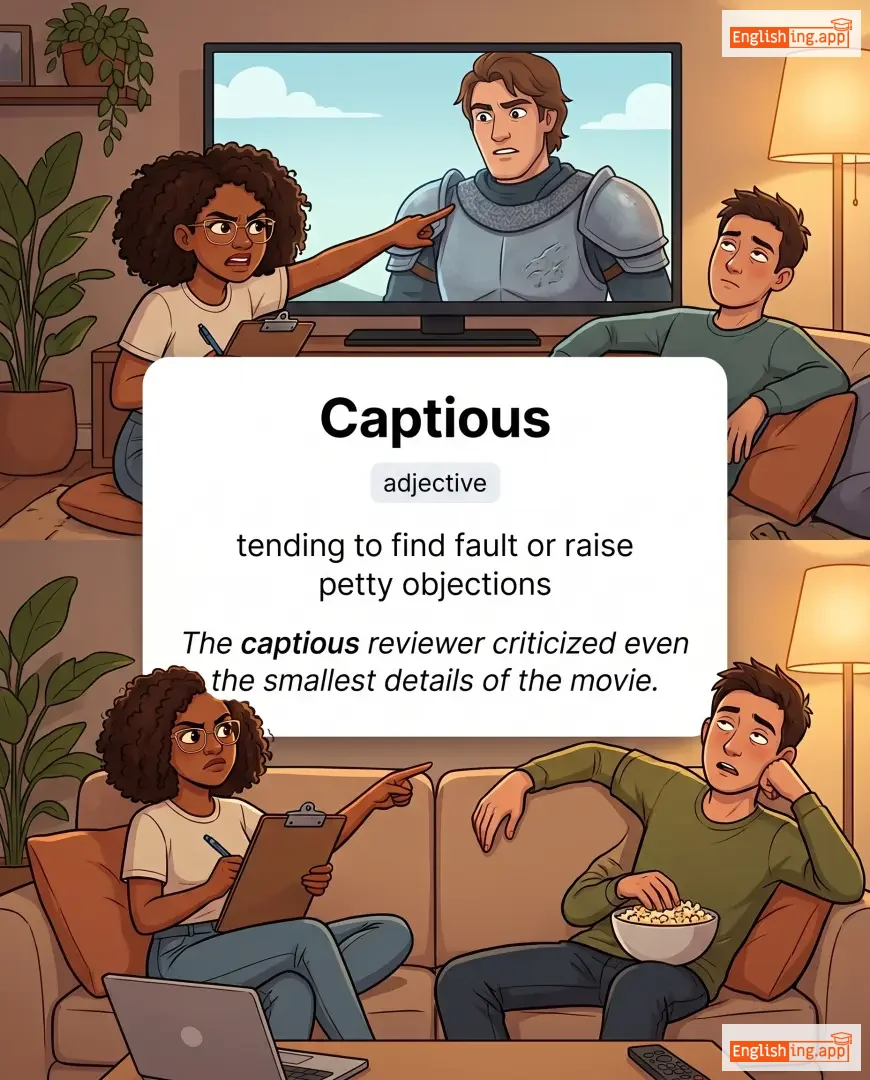
Captious definition card — visual illustration of the meaning
adjective
/ˈkæp.ʃəs/
चिड़चिड़ा (chidhchidhā)

tending to find fault or raise petty objections

"The captious reviewer criticized even the smallest details of the movie."

"चिड़चिड़े समीक्षक ने फिल्म के सबसे छोटे विवरणों की भी आलोचना की।" (Chidhchidhā samīkṣak ne film ke sabse chhote vivaraṇo ki bhi ālochnā ki.)
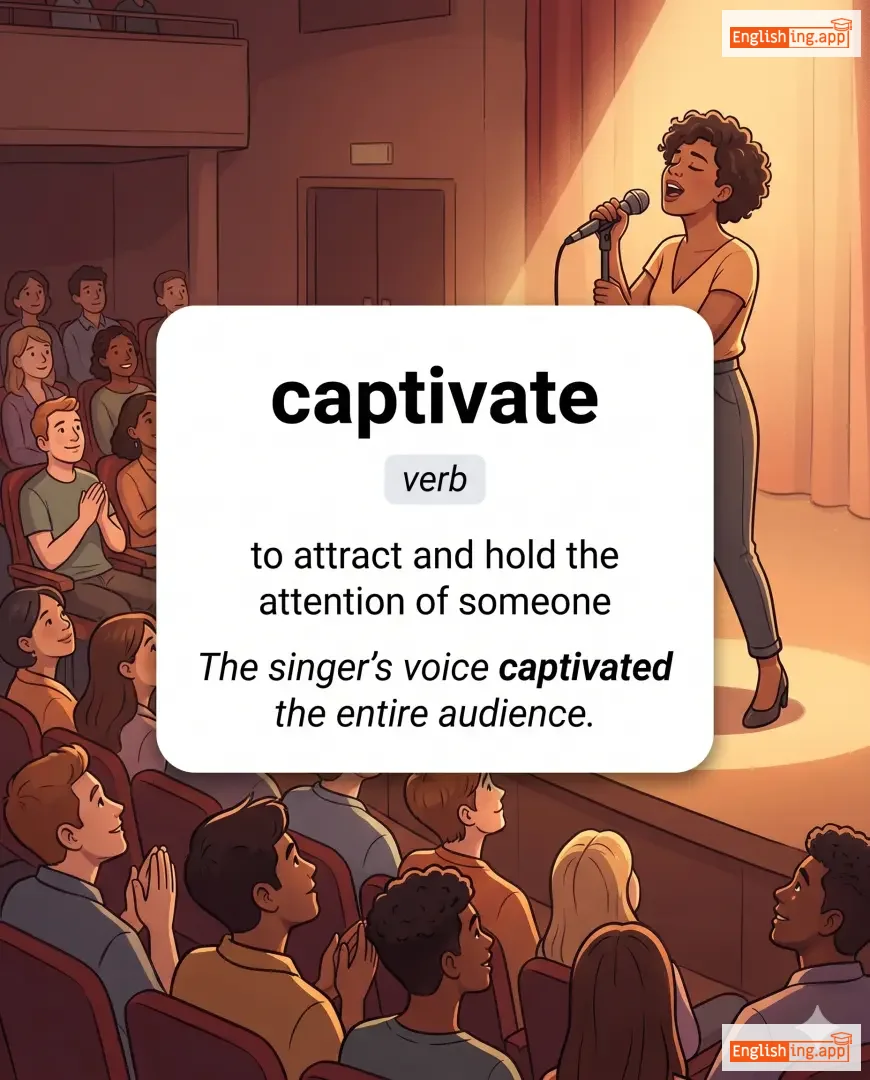
captivate definition card — visual illustration of the meaning
verb
/ˈkæp.tɪ.veɪt/
आकर्षित करना (aakarshit karna)

to attract and hold the attention of someone

"The singer’s voice captivated the entire audience."

"गायक की आवाज़ ने पूरे दर्शकों को आकर्षित कर लिया।" (Gaayak ki awaaz ne poore darshako ko aakarshit kar liya.)
noun
/ˈkæp.tɪv/
बंदी (bandi)

a person who has been taken prisoner or an animal that has been confined

"The captive was held in a small cell for several months."

"बंदी को कई महीनों तक एक छोटे से कमरे में रखा गया था।" (bandi ko kai mahinon tak ek chhote se kamre mein rakha gaya tha.)
noun
/kæpˈtɪvɪti/
बंदिश (bandish)

the state of being imprisoned, confined, or kept under control

"The rare bird has been bred in captivity."

"दुर्लभ पक्षी को बंदिश में पाला गया।" (Durlabh pakshi ko bandish mein paala gaya.)
noun
/ˈkæptər/
धारक (dhark)

a person or group who has captured someone or something

"The hostage managed to escape from his captors."

"बंधक अपने कैप्टर्स से भागने में सफल हो गया।" (Bandhak apne captors se bhagne mein safal ho gaya.)
verb
/ˈkæptʃər/
पकड़ना (pakadna)

to take control of something or someone by force

"The soldiers managed to capture the enemy base."

"सैनिकों ने दुश्मन के अड्डे को पकड़ने में सफलता प्राप्त की।" (Sainiko ne dushman ke adde ko pakadne mein safalta prapt ki.)
noun
/kɑːr/
कार (car)

a road vehicle with an engine, four wheels, and seats for passengers

"She bought a new car last week."

"उसने पिछले सप्ताह एक नई कार खरीदी।" (Usne pichle saptah ek nai car khareedi.)
noun
/kəˈræf/
काँच का पात्र (kaanch ka patra)

a glass container without handles used for serving drinks like water or wine

"The waiter brought a carafe of water to the table."

"वेटर ने मेज़ पर एक कैरेफ़ पानी रखा।" (Vetar ne mez par ek kairef pani rakha.)
noun
/ˈkærəˌpeɪs/
कछुए और केकड़ों की पीठ पर एक कठोर खोल (kachhue aur kekdon ki peeth par ek kathor kohl)

the hard shell covering the back of some animals like turtles and crabs

"The turtle withdrew into its carapace for protection."

"कछुआ अपनी सुरक्षा के लिए अपने कैरापेस में चला गया।" (Kachhua apni suraksha ke liye apne carapace mein chala gaya.)
noun
/ˈkærət/
रत्न का वजन मापने की इकाई (ratn ka vajan mapne ki ikai)

a unit of weight for precious stones, equal to 200 milligrams

"She received a two-carat diamond ring for her engagement."

"उसे अपनी सगाई के लिए दो कैरेट का हीरा अंगूठी मिली।" (Use apni sagai ke liye do carat ka heera anguthi mili.)
noun
/ˈkær.ə.væn/
कारवां (karwan)

a group of people traveling together, especially through desert areas

"The merchant caravan crossed the desert with camels carrying precious goods."

"विपारी का कारवां रेगिस्तान को पार करते हुए ऊंटों पर कीमती सामान लाता था।" (viparee ka karwan registan ko paar karte hue unton par keemtee samaan laata tha.)
noun
/ˈkær.ə.weɪ siːdz/
अजवाइन के बीज (karave seeds)

aromatic seeds of the caraway plant used as a spice in cooking and baking

"The bread was flavored with caraway seeds."

"ब्रेड को कारावे के बीजों से स्वाद दिया गया था." (bread ko karave ke bejon se swad diya gaya tha.)
noun
/ˌkɑːrboʊˈhaɪdreɪt/
कार्बोहाइड्रेट (karbohaidret)

a nutrient that provides energy, found in foods like rice, bread, and sugar

"Rice and potatoes are rich in carbohydrates."

"चावल और आलू कार्बोहाइड्रेट्स में समृद्ध होते हैं।" (Chawal aur aalu karbohaidrets mein samriddh hote hain.)
carbohydrates definition card — visual illustration of the meaning
noun
/ˌkɑː.bəʊˈhaɪ.dreɪts/
कार्बोहाइड्रेट्स (carbohydrates)

Organic compounds consisting of carbon, hydrogen, and oxygen, serving as a primary source of energy for the body.

"Whole grains are a great source of healthy carbohydrates."

"सम्पूर्ण अनाज स्वस्थ कार्बोहाइड्रेट्स का एक महान स्रोत है।" (Sampurn anaj swasth carbohydrates ka ek mahan srot hai.)
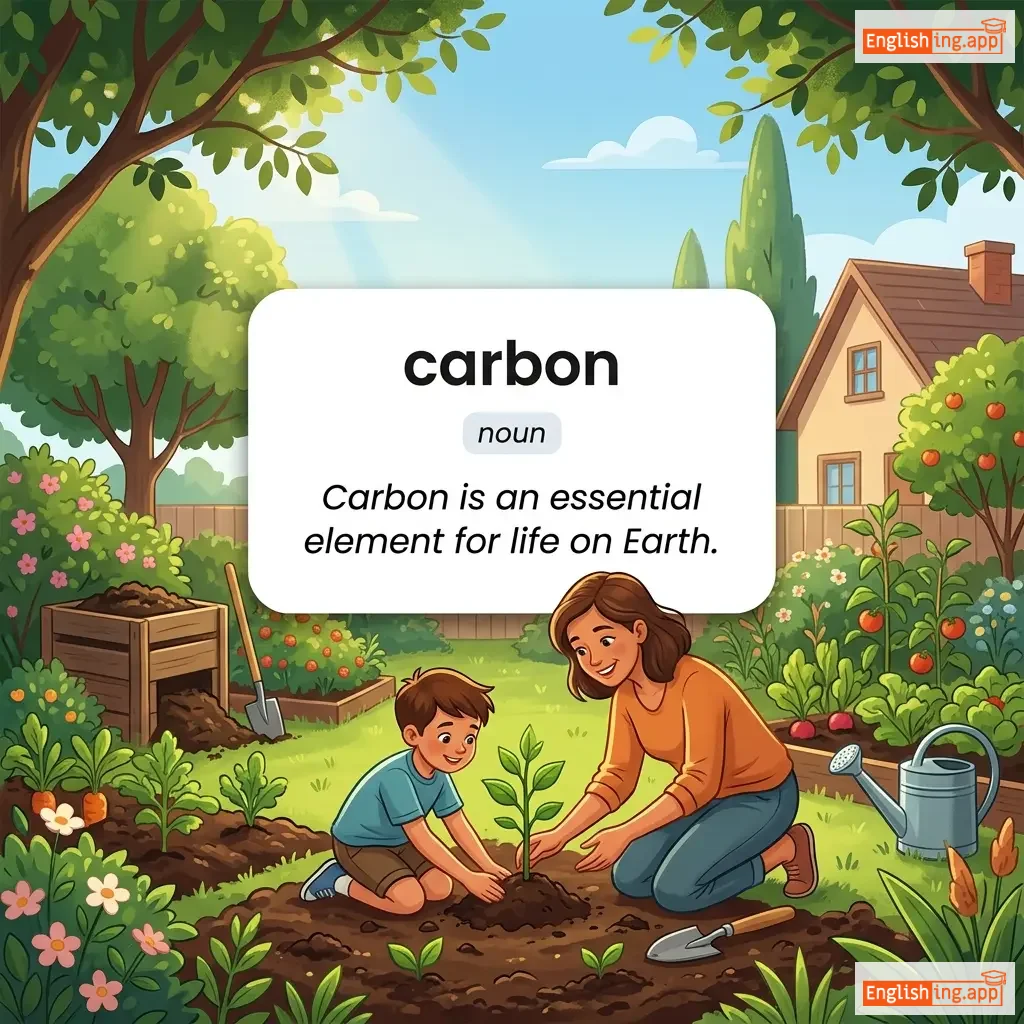
carbon definition card — visual illustration of the meaning
noun
/ˈkɑːrbən/
कार्बन (carbon)

a chemical element found in all living things and used as fuel when combined with oxygen

"Carbon is an essential element for life on Earth."

"कार्बन पृथ्वी पर जीवन के लिए एक आवश्यक तत्व है।" (carbon prithvi par jeevan ke liye ek avashyak tattv hai)
carbon footprint definition card — visual illustration of the meaning
noun
/ˈkɑː.bən ˈfʊt.prɪnt/
कार्बन फुटप्रिंट (carbon footprint)

The amount of carbon dioxide and other carbon compounds emitted due to the consumption of fossil fuels by a particular person, group, etc.

"Reducing carbon footprint is essential for combating climate change."

"कार्बन फुटप्रिंट को कम करना जलवायु परिवर्तन से लड़ने के लिए महत्वपूर्ण है।" (Carbon footprint ko kam karna jalvayu parivartan se ladhne ke liye mahatvapurn hai.)
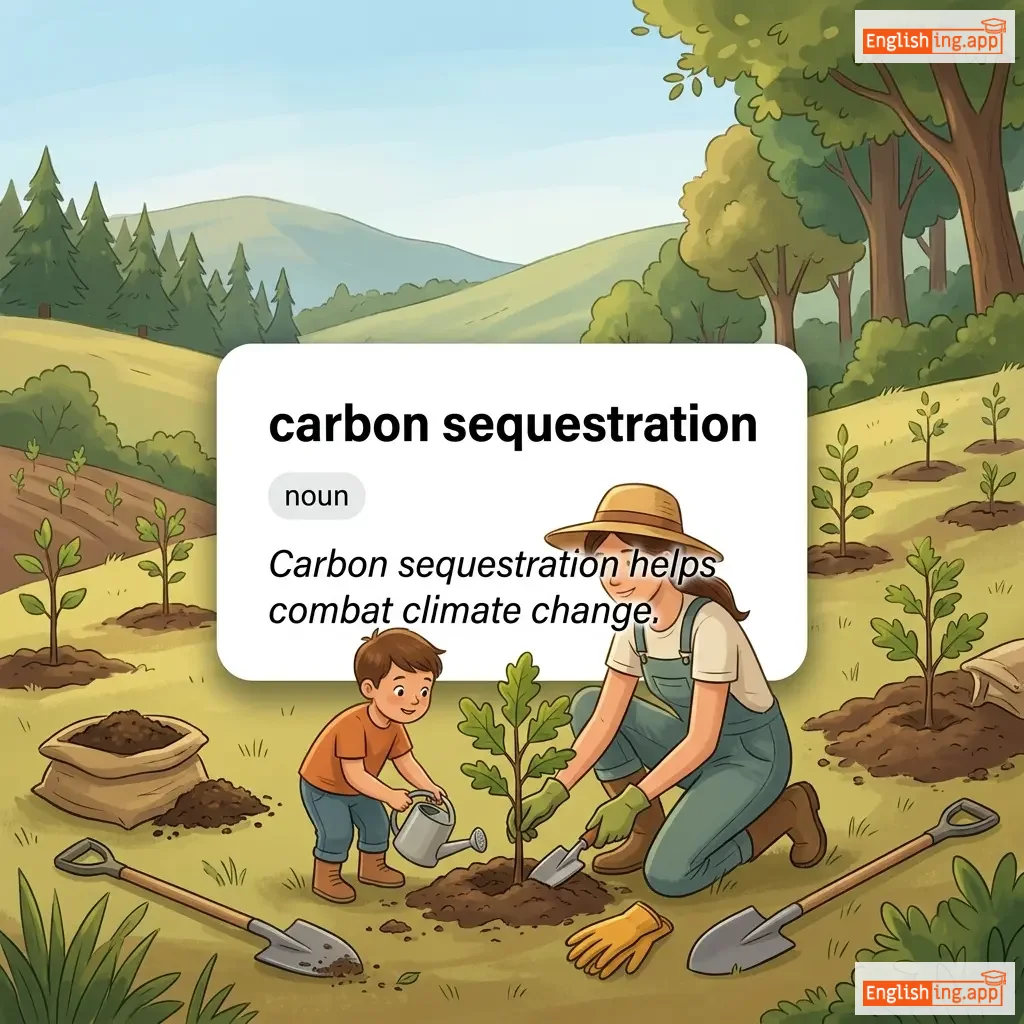
carbon sequestration definition card — visual illustration of the meaning
noun
ˈkɑː.bən ˌsiː.kwɪˈstreɪ.ʃən
कार्बन संसेचन (carbon sansechan)

The process of storing carbon dioxide in vegetation, soils, geological formations, and the ocean to reduce carbon dioxide concentrations in the atmosphere.

"Carbon sequestration helps combat climate change."

"कार्बन सीक्वेस्ट्रेशन जलवायु परिवर्तन से निपटने में मदद करता है।" (Carbon sequestration jalvayu parivartan se nipatne mein madad karta hai.)
carbon-neutral definition card — visual illustration of the meaning
adjective
ˌkɑː.bən ˈnjuː.trəl
कार्बन-न्यूट्रल (carbon-neutral)

Having a balance between emitting carbon and absorbing carbon from the atmosphere; not adding to overall carbon emissions.

"The company aims to be carbon-neutral by 2030."

"कंपनी का उद्देश्य 2030 तक कार्बन-न्यूट्रल होना है।" (Kampani ka uddeshya 2030 tak carbon-neutral hona hai.)
noun
/ˈkɑːrkəs/
पशु का मृत शरीर (pashu ka mrt sharir)

the dead body of an animal, especially after being slaughtered

"Vultures fed on the carcass left in the field."

"गिद्ध खेत में पड़ा हुआ मृत शरीर खा रहे थे।" (Gidh khet mein pada hua mrt sharir kha rahe the.)
carcinogenic definition card — visual illustration of the meaning
adjective
/ˌkɑːrsɪnəˈdʒɛnɪk/
कैंसर उत्पन्न करने वाला (cancer utpann karne wala)

having the potential to cause cancer

"Scientists warned that the chemical is carcinogenic."

"वैज्ञानिकों ने चेतावनी दी कि रसायन कैंसर उत्पन्न करने वाला है।" (Vigyanikon ne chetavani di ki rasanik cancer utpann karne wala hai.)
💳

card

noun
/kɑːrd/

A small, flat piece of stiff paper or thin cardboard used for various purposes, such as identification, greetings, or playing games.

"She handed me her business card after the meeting."

noun
/ˈkɑːrdəməm/
इलायची (ilaichi)

aromatic seeds from a plant in the ginger family, used as a spice

"The recipe calls for a pinch of ground cardamom."

"व्यंजन में एक चुटकी पिसी हुई इलायची की आवश्यकता होती है।" (vyajan mein ek chutki pisi hui ilaichi ki avashyakta hoti hai.)
adjective
/ˈkɑːr.di.æk/
हृदय संबंधित (hriday sambandhit)

Relating to the heart.

"The patient was admitted with a cardiac condition."

"मरीज को हृदय संबंधित समस्या के कारण भर्ती किया गया था।" (Mareez ko hriday sambandhit samasya ke karan bharti kiya gaya tha.)
cardinal definition card — visual illustration of the meaning
adjective, noun
/ˈkɑːr.dɪ.nəl/
प्रधान / मौलिक (pradhan / maulik)

As an adjective: of prime importance; as a noun: a high-ranking Catholic clergyman or a type of bird.

"Honesty is a cardinal virtue in life."

"ईमानदारी जीवन में एक मौलिक गुण है।" (Imandari jeevan mein ek maulik gun hai.)
noun
/ˌkɑːr.diˈɒl.ə.dʒɪst/
हृदय रोग विशेषज्ञ (hriday rog visheshagya)

A doctor specializing in diagnosing and treating heart diseases.

"She made an appointment with a cardiologist for her chest pain."

"उसने अपनी छाती में दर्द के लिए एक कार्डियोलॉजिस्ट से अपॉइंटमेंट ली।" (Usne apni chhati mein dard ke liye ek cardiologist se appointment li.)
cardiovascular definition card — visual illustration of the meaning
adjective
/ˌkɑː.di.əʊˈvæs.kjʊ.lər/
हृदय और रक्त वाहिकाओं से संबंधित (hriday aur rakt vahikaon se sambandhit)

Relating to the heart and blood vessels.

"Regular exercise improves cardiovascular health."

"नियमित व्यायाम कार्डियोवास्कुलर स्वास्थ्य में सुधार करता है।" (Niyamit vyayam cardiovascular swasthya mein sudhar karta hai.)
noun/verb
/kɛr/
देखभाल (dekbhal)

The process of looking after someone or something; to be concerned or interested.

"She took great care of her younger brother."

"वह अपने छोटे भाई का बहुत ख्याल रखती थी।" (Wah apne chhote bhai ka bahut khayal rakhti thi.)