वोकैबुलरीज

इंग्लिश वोकैबुलरी डिस्कवर, लर्न और मास्टर करें

noun
/kriˈeɪʃən/
सृष्टि (srishti)

The act of bringing something into existence; something that has been made or produced.

"The artist’s latest creation was admired by everyone at the gallery."

"कलाकार का नवीनतम सृजन गैलरी में सभी द्वारा सराहा गया।" (Kalaakar ka naveenatam srijan gallery mein sabhi dvara saraha gaya.)
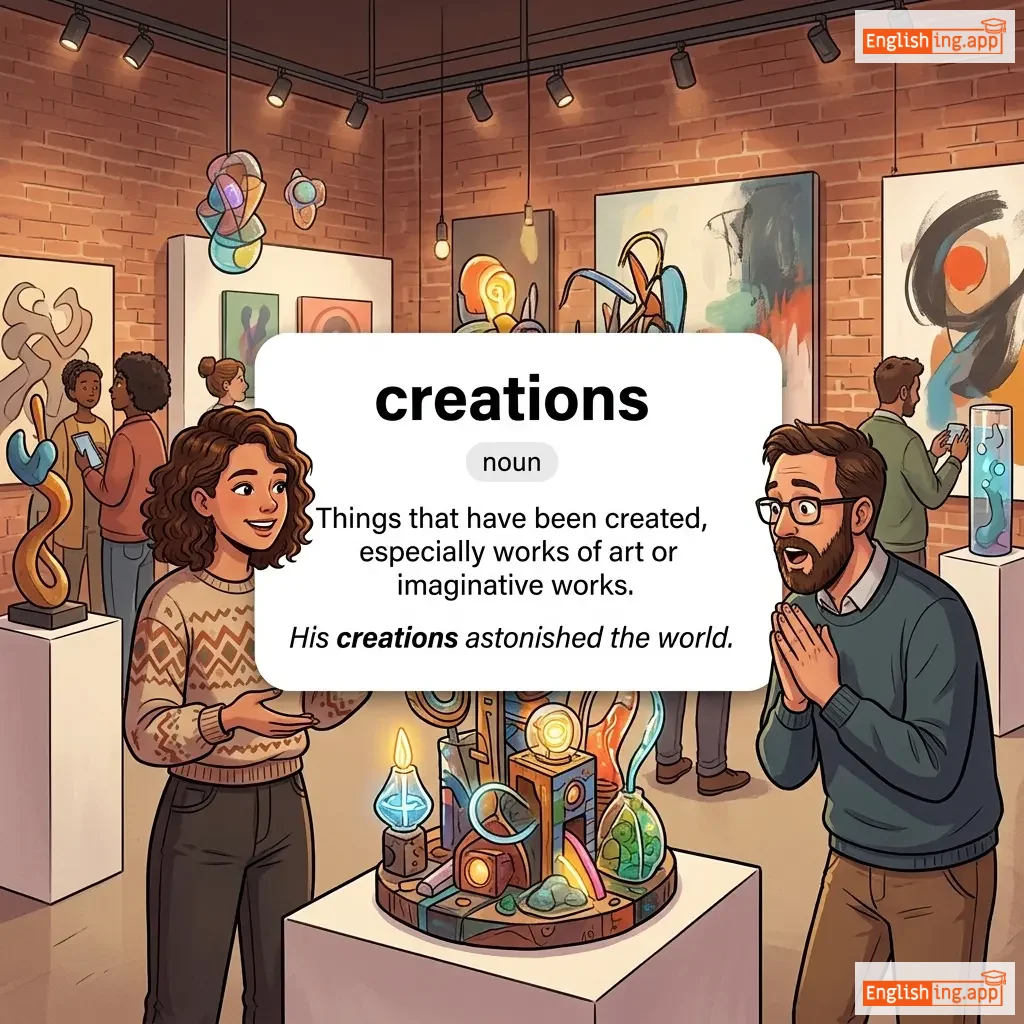
creations definition card — visual illustration of the meaning
noun
/kriˈeɪ.ʃənz/
सृष्टियाँ (srishtiyan)

Things that have been created, especially works of art or imaginative works.

"His creations astonished the world."

"उसकी सृष्टियाँ दुनिया को चौंका दी।" (Uski srishtiyan duniya ko chonka dee.)
adjective
/kriˈeɪtɪv/
रचनात्मक (rachnatmak)

Having the ability to produce new and original ideas or things.

"She is very creative in her writing."

"वह अपनी लेखनी में बहुत रचनात्मक है।" (Vah apni lekhani mein bahut rachnatmak hai.)
creative exhibits definition card — visual illustration of the meaning
adjective + noun
kriˈeɪtɪv ɪɡˈzɪbɪts
रचनात्मक प्रदर्शन (rachnatmak pradarshan)

Artistic displays or presentations that show originality and imagination.

"The creative exhibits highlighted recycling possibilities."

"रचनात्मक प्रदर्शन ने पुनर्चक्रण की संभावनाओं को उजागर किया।" (Rachnatmak pradarshan ne punarchakran ki sambhavnāon ko ujāgar kiyā.)
creativity definition card — visual illustration of the meaning
noun
/ˌkriːeɪˈtɪvɪti/
सृजनात्मकता (srijanatmakta)

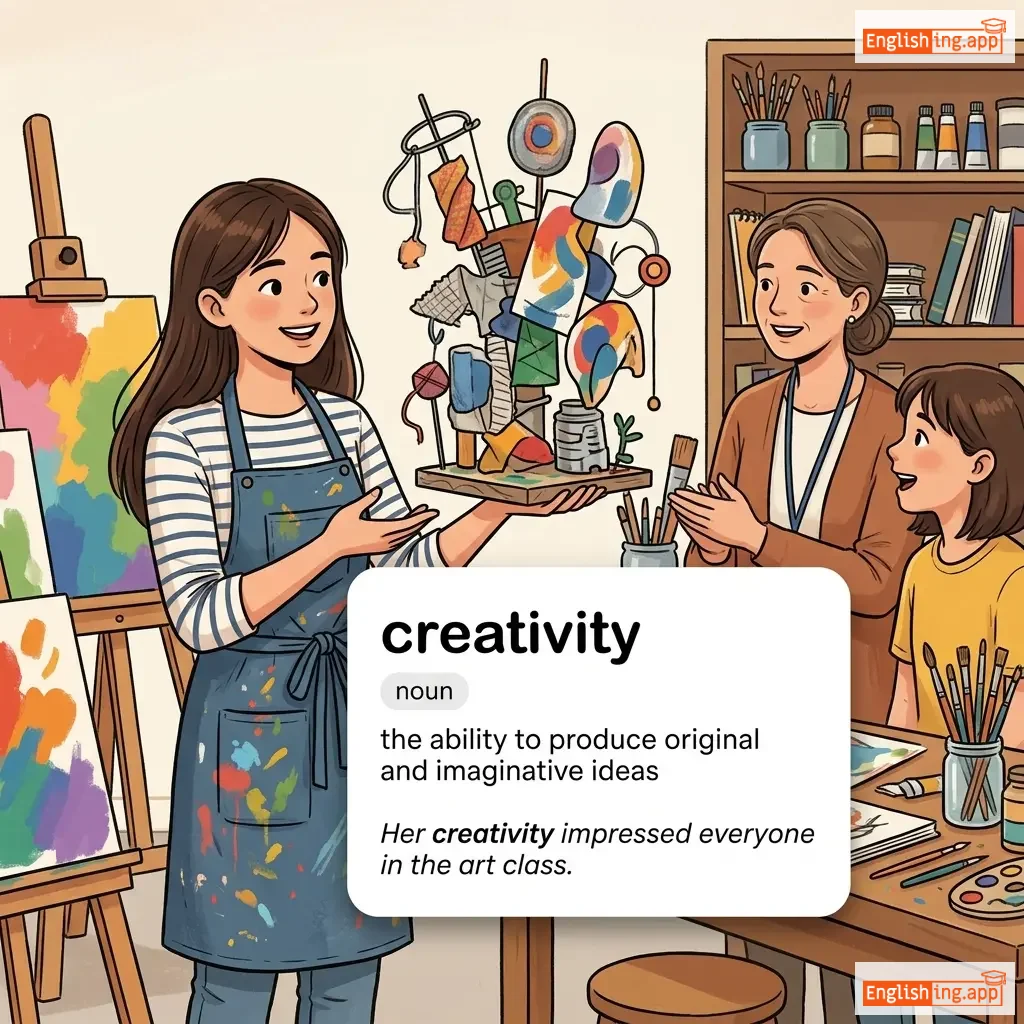
the ability to produce original and imaginative ideas

"Her creativity impressed everyone in the art class."

"उसकी सृजनात्मकता ने कला कक्षा में सभी को प्रभावित किया।" (Uski srijanatmakta ne kala kaksha mein sabhi ko prabhavit kiya.)
noun
/krɪˈeɪtə/
निर्माता (nirmata)

a person who brings something into existence

"He is the creator of many successful startups."

"वह कई सफल स्टार्टअप्स का निर्माता है।" (Vah kai safal startups ka nirmata hai.)
noun
/ˈkriːtʃər/
प्राणी (prani)

A living being, especially an animal.

"The forest is full of strange creatures."

"जंगल अजीब प्राणियों से भरा हुआ है।" (Jangal ajeeb praniyon se bhara hua hai.)
credence definition card — visual illustration of the meaning
noun
/ˈkriː.dəns/
विश्वास, स्वीकृति (vishwas, sveekriti)

belief in or acceptance of something as true

"The witness gave credence to the defendant's alibi."

"गवाह ने प्रतिवादी के बयान को विश्वास योग्य माना।" (Gawah ne prativadi ke bayan ko vishwas yogya maana.)
noun
/krɪˈden.ʃəl/
प्रमाणपत्र, योग्यता का प्रमाण (pramaantapatra, yogytā kā pramāṇ)

a qualification, achievement, or aspect of a person's background used to indicate suitability for something

"She presented her credentials before starting the new job."

"उसने नई नौकरी शुरू करने से पहले अपने प्रमाणपत्र प्रस्तुत किए।" (Usne naī naukarī shurū karne se pahle apne pramaantapatra prastut kiye.)
credibility definition card — visual illustration of the meaning
noun
/ˌkrɛd.ɪˈbɪl.ɪ.ti/
विश्वसनीयता (vishwasneeyata)

the quality of being trusted and believed in

"The journalist's credibility was questioned after the report."

"पत्रकार की विश्वसनीयता रिपोर्ट के बाद सवालों के घेरे में थी।" (Patrakar ki vishwasneeyata report ke baad sawalon ke ghere mein thi.)
adjective
/ˈkrɛd.ɪ.bəl/
विश्वसनीय (vishwasneey)

able to be believed; convincing

"Her explanation was credible enough to convince the committee."

"उसकी व्याख्या समिति को मनाने के लिए पर्याप्त विश्वसनीय थी।" (Uski vyakhya samiti ko manane ke liye paryapt vishwasneey thi.)
noun, verb
/ˈkrɛdɪt/
ऋण, श्रेय (rin, shrey)

As a noun: the ability to obtain goods or services before payment; recognition for an achievement. As a verb: to publicly acknowledge someone's contribution.

"She received credit for her contribution to the project."

"उसने परियोजना में अपने योगदान के लिए श्रेय प्राप्त किया।" (Usne pariyojna mein apne yogdan ke liye shrey prapt kiya.)
adjective
/ˈkrɛdɪtəbl/
प्रशंसनीय (prashansneeya)

Deserving praise or acknowledgment, though not necessarily outstanding.

"She made a creditable effort in completing the project on time."

"उसने समय पर परियोजना पूरी करने के लिए एक प्रशंसनीय प्रयास किया।" (Usne samay par pariyojna poori karne ke liye ek prashansneeya prayaas kiya.)
credo definition card — visual illustration of the meaning
noun
/ˈkriːdoʊ/
विश्वास (vishwas)

A statement of the beliefs or aims that guide someone's actions.

"Honesty has always been the central credo of his life."

"ईमानदारी हमेशा उसके जीवन का केंद्रीय विश्वास रही है।" (Imaandari hamesha uske jeevan ka kendriya vishwas rahi hai.)
noun
/krəˈdjuːlɪti/
आत्मविश्वास की अधिक प्रवृत्ति (aatmvishwas ki adhik pravritti)

A tendency to be too ready to believe that something is real or true.

"The scam succeeded because of the victim's credulity."

"धोखाधड़ी सफल हुई क्योंकि पीड़ित की क्रेड्युलिटी थी।" (Dhokhaadhadi safal hui kyunki peedit ki credulity thi.)
adjective
/ˈkrɛdʒʊləs/
अत्यधिक विश्वास करनेवाला (atyadhik vishwas karnewala)

Having or showing too great a readiness to believe things.

"The credulous child believed every story she heard."

"विश्वास करनेवाले बच्चे ने हर कहानी को सच माना।" (Vishwas karnewale bachche ne har kahani ko sach mana.)
noun
/kriːd/
विश्वास, सिद्धांत (vishwas, siddhant)

A system of religious or spiritual beliefs or a guiding principle.

"Freedom of speech is part of his personal creed."

"स्वतंत्रता की अभिव्यक्ति उसका व्यक्तिगत विश्वास का हिस्सा है।" (Svatantrata ki abhivyakti uska vyaktigat vishwas ka hissa hai.)
noun
/kriːk/
नदी की छोटी धारा (nadi ki chhoti dhaara)

a small stream or narrow river

"We went fishing by the creek near our house."

"हम अपने घर के पास के झरने के पास मछली पकड़ने गए थे।" (Ham apne ghar ke paas ke jharne ke paas machhli pakadne gaye the.)
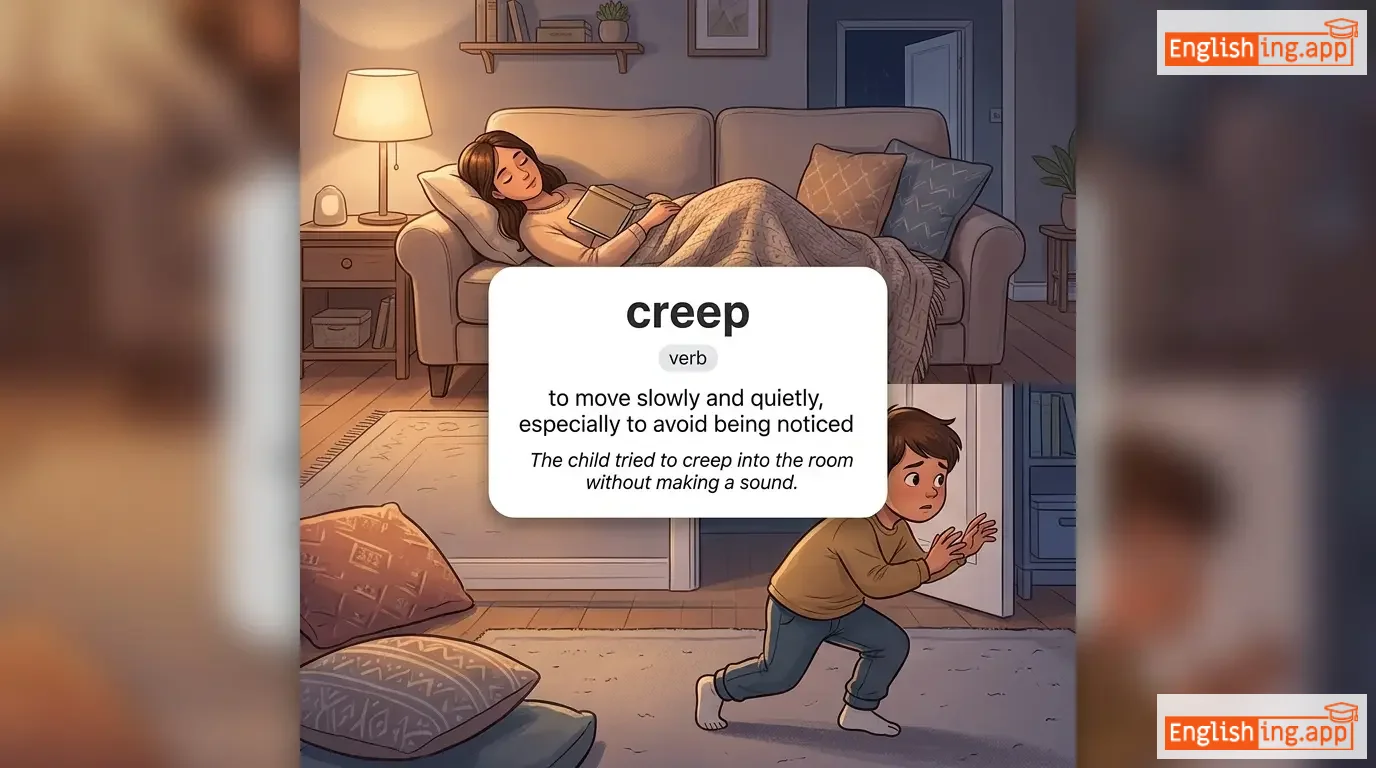
creep definition card — visual illustration of the meaning
verb
/kriːp/
धीरे-धीरे चलना (dheere-dheere chalna)

to move slowly and quietly, especially to avoid being noticed

"The child tried to creep into the room without making a sound."

"बच्चा बिना आवाज किए कमरे में घुसने की कोशिश कर रहा था।" (Baccha bina awaaz kiye kamre mein ghusne ki koshish kar raha tha.)
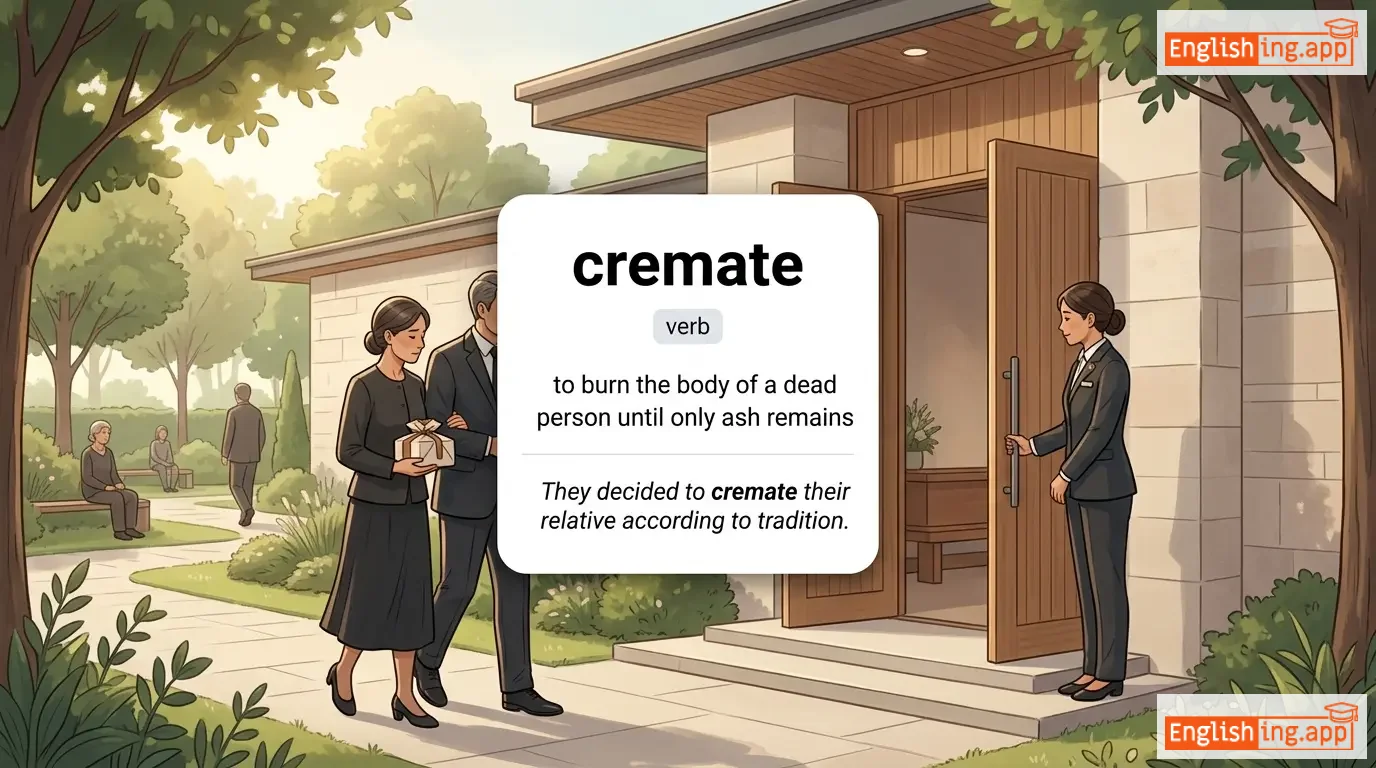
cremate definition card — visual illustration of the meaning
verb
/ˈkriː.meɪt/
दाह करना (dah karna)

to burn the body of a dead person until only ash remains

"They decided to cremate their relative according to tradition."

"वे परंपरा के अनुसार अपने रिश्तेदार को दाह संस्कार करने का निर्णय लिया।" (Ve parampara ke anusar apne rishtedar ko dah sanskar karne ka nirnay liya.)
noun
/ˈkrɛməˌtɔːri/
श्मशान (shmashan)

a place where dead bodies are cremated

"The crematory was located near the cemetery."

"क्रीमेटरी क़ब्रिस्तान के पास था।" (Crematory qabrastaan ke paas tha.)
adjective
/krɪˈpʌskjʊlər/
गोधूलि संबंधी (godhooli sambandhee)

relating to twilight or active during twilight

"Bats are crepuscular animals, most active at dawn and dusk."

"बैट्स गोधूलि समय के जानवर होते हैं, जो प्रातः और संध्या के समय सबसे अधिक सक्रिय होते हैं।" (Bats godhooli samay ke janwar hote hain, jo pratah aur sandhya ke samay sabse adhik sakriya hote hain.)
noun
/krəˈʃɛndoʊ/
ध्वनि का क्रमबद्ध वृद्धि (dhvani ka krombaddh vruddhi)

a gradual increase in loudness or intensity, especially in music

"The orchestra built to a powerful crescendo before the finale."

"ऑर्केस्ट्रा ने फिनाले से पहले एक शक्तिशाली क्रेशेंडो बनाया।" (Orkestra ne finale se pehle ek shaktishali crescendo banaya.)
noun
/krɛst/
शिखर (shikhar)

the top of a hill, wave, or mountain; a symbol of identity

"The hikers reached the crest of the mountain at sunrise."

"हाइकर सूर्योदय के समय पर्वत की चोटी पर पहुंचे।" (Haikar suryoday ke samay parvat ki chhoti par pahunche.)
adjective
/ˈkrɛstˌfɔːlən/
निराश (niraash)

sad and disappointed

"He looked crestfallen after hearing the bad news."

"बुरी खबर सुनने के बाद वह निराश दिख रहा था।" (Buri khabar sunne ke baad vah niraash dikh raha tha.)
noun
/krəˈvæs/
गहरी दरार (gehri darar)

a deep crack in a glacier or the earth’s surface

"The climbers carefully crossed the icy crevasse."

"चढ़ाई करने वाले ध्यान से बर्फीली दरार को पार कर गए।" (Chadhai karne wale dhyan se barfili darar ko paar kar gaye.)
noun
/ˈkrɛvɪs/
दरार (daraar)

a narrow crack or opening, especially in a rock or wall

"The lizard hid in a crevice between the stones."

"छिपकली पत्थरों के बीच एक दरार में छिपी हुई थी।" (Chhipkali patharon ke beech ek daraar mein chhapi hui thi.)
👨‍✈️

crew (क्रू)

noun
/kruː/
क्रू (kru)

A group of people working together, especially on a ship, aircraft, or project.

"The ship's crew worked tirelessly during the storm."

"तूफान के दौरान जहाज के क्रू ने थक-हार कर काम किया।" (Toofan ke dauran jahaj ke kru ne thakhaar kar kaam kiya.)
noun
/ˈkrɪk.ɪt/
झींझी (jhinjhi)

a jumping insect that makes a chirping sound by rubbing its wings together

"We could hear crickets chirping in the evening."

"हम शाम को क्रिकेट की आवाज़ सुन सकते थे।" (ham shaam ko cricket ki awaaz sun sakte the.)
noun
/kraɪm/
अपराध (apraadh)

An illegal act punishable by law.

"The police are investigating the crime."

"पुलिस अपराध की जांच कर रही है।" (Police apraadh ki jaanch kar rahi hai.)
noun, adjective
/ˈkrɪmɪnəl/
अपराधी (apraadhi)

A person who has committed a crime; relating to crime

"The police arrested a dangerous criminal last night."

"पुलिस ने पिछले रात एक खतरनाक अपराधी को गिरफ्तार किया।" (Police ne pichhle raat ek khatarnaak apraadhi ko giraftar kiya.)
adjective
/ˈkrɪm.zən/
गहरे लाल (gahre lal)

a deep purplish-red color

"The crimson sunset painted the sky with beautiful shades."

"गहरे लाल सूर्योदय ने आकाश को सुंदर रंगों से रंग दिया।" (gahre lal suryoday ne akash ko sundar rangon se rang diya.)
verb
/krɪndʒ/
लज्जित होना (lajjit hona)

To shrink back in fear, embarrassment, or discomfort.

"She cringed when she remembered her mistake."

"वह अपनी गलती याद करते हुए लज्जित हुई।" (Wah apni galti yaad karte hue lajjit hui.)
verb
/ˈkrɪŋ.kəl/
झुर्री (jhurri)

To form small creases or wrinkles.

"She crinkled her nose at the strange smell."

"उसने अजीब गंध से अपनी नाक सिकोड़ दी।" (Usne ajeeb gandh se apni naak sikod di.)
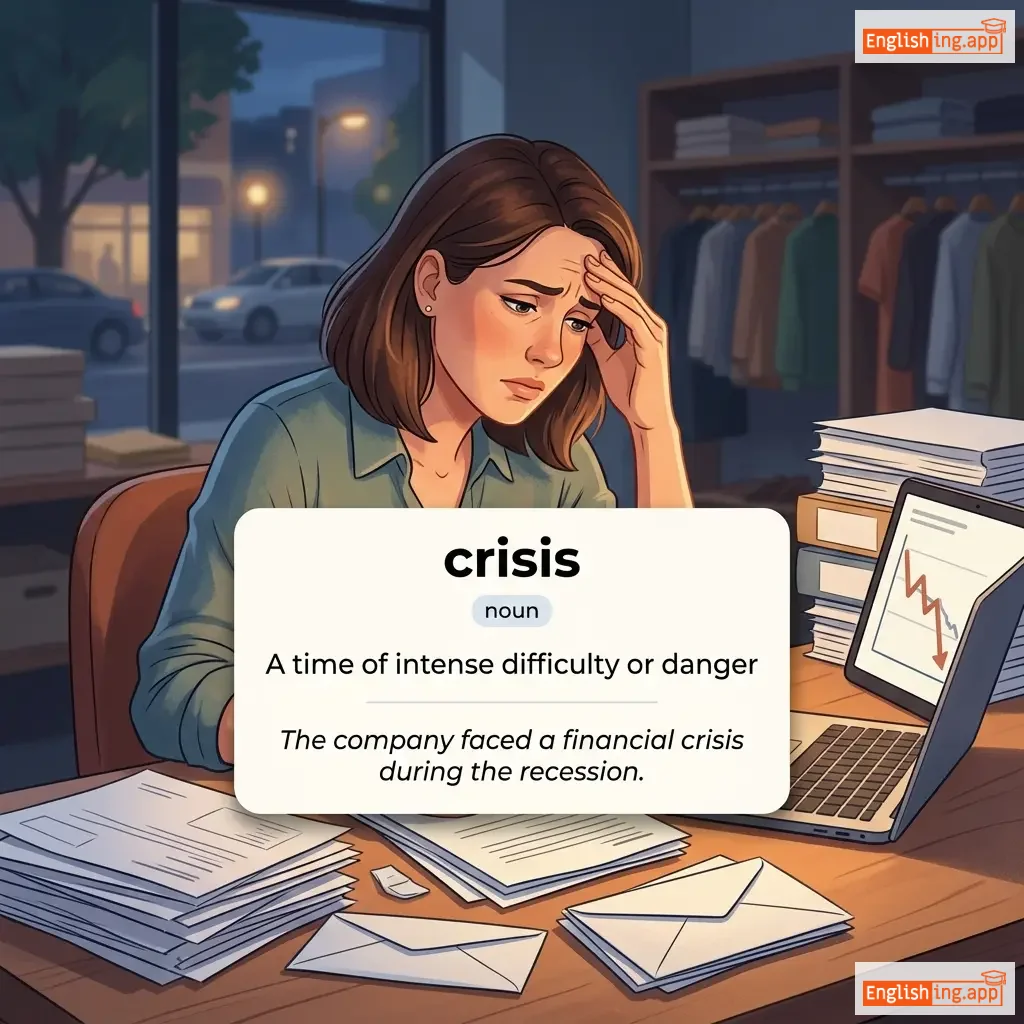
crisis definition card — visual illustration of the meaning
noun
/ˈkraɪsɪs/
संकट (sankat)

A time of intense difficulty or danger

"The company faced a financial crisis during the recession."

"कंपनी ने मंदी के दौरान एक वित्तीय संकट का सामना किया।" (Company ne mandi ke dauran ek vittiya sankat ka samna kiya.)
noun
/kraɪˈtɪəriə/
मानदंड (mandand)

Standards or principles by which something is judged or decided.

"The candidates were evaluated based on strict criteria."

"उम्मीदवारों का कठोर मानदंडों के आधार पर मूल्यांकन किया गया।" (Ummeedwaron ka kathor mandandon ke aadhar par mulyankan kiya gaya.)
noun
/kraɪˈtɪəriən/
मानदंड (maandand)

A standard or rule used to make a judgment or decision.

"Honesty is an important criterion for this job."

"ईमानदारी इस नौकरी के लिए एक महत्वपूर्ण मानदंड है।" (Imaandari is naukri ke liye ek mahatvapurn maandand hai.)
noun
/ˈkrɪtɪk/
आलोचक (aalochak)

A person who judges the merits of something, especially art or literature

"The film critic praised the director's latest movie."

"फिल्म आलोचक ने निर्देशक की नवीनतम फिल्म की सराहना की।" (Film aalochak ne nirdeshak ki naveenatam film ki sarahna ki.)
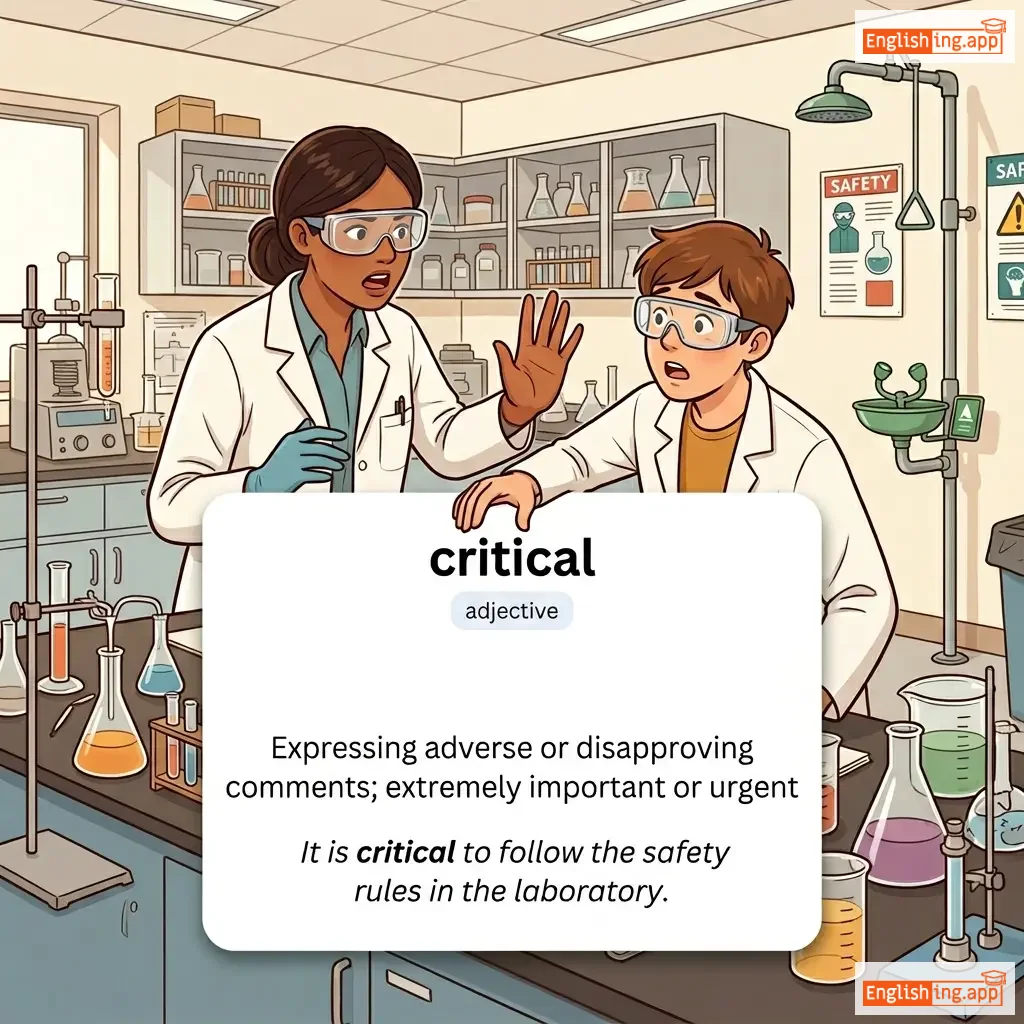
critical definition card — visual illustration of the meaning
adjective
/ˈkrɪtɪkəl/
महत्वपूर्ण / संकटपूर्ण (mahatvapoorn / sankatpoorn)

Expressing adverse or disapproving comments; extremely important or urgent

"It is critical to follow the safety rules in the laboratory."

"प्रयोगशाला में सुरक्षा नियमों का पालन करना अत्यंत महत्वपूर्ण है।" (Prayogshala mein suraksha niyamon ka paalan karna atyant mahatvapoorn hai.)
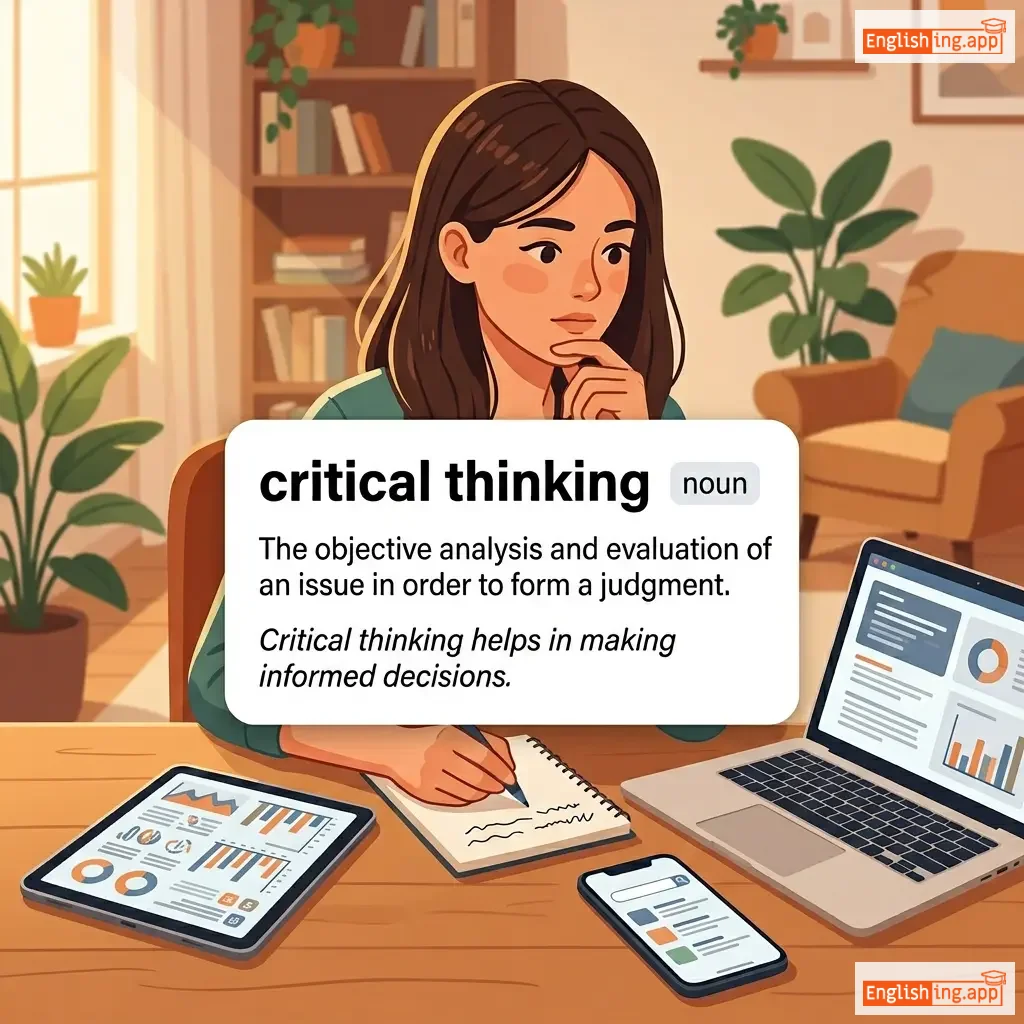
critical thinking definition card — visual illustration of the meaning
noun
ˈkrɪt.ɪ.kəl ˈθɪŋ.kɪŋ
समीक्षात्मक सोच (sameekshatmak soch)

The objective analysis and evaluation of an issue in order to form a judgment.

"Critical thinking helps in making informed decisions."

"समीक्षात्मक सोच सूचित निर्णय लेने में मदद करती है।" (Sameekshatmak soch soochit nirnay lene mein madad karti hai.)
adverb
/ˈkrɪtɪkli/
गंभीरता से (gambheerta se)

in a way that expresses disapproval or a very serious, important way

"He was critically injured in the accident."

"वह दुर्घटना में गंभीर रूप से घायल हुआ था।" (Vah durghatna mein gambheer roop se ghaayal hua tha.)
noun
/ˈkrɪtɪˌsɪzəm/
आलोचना (aalochana)

The expression of disapproval or judgment of the merits of something

"The new policy has faced a lot of criticism from the public."

"नई नीति को जनता से बहुत आलोचना मिली है।" (Nayi neeti ko janata se bahut aalochana mili hai.)
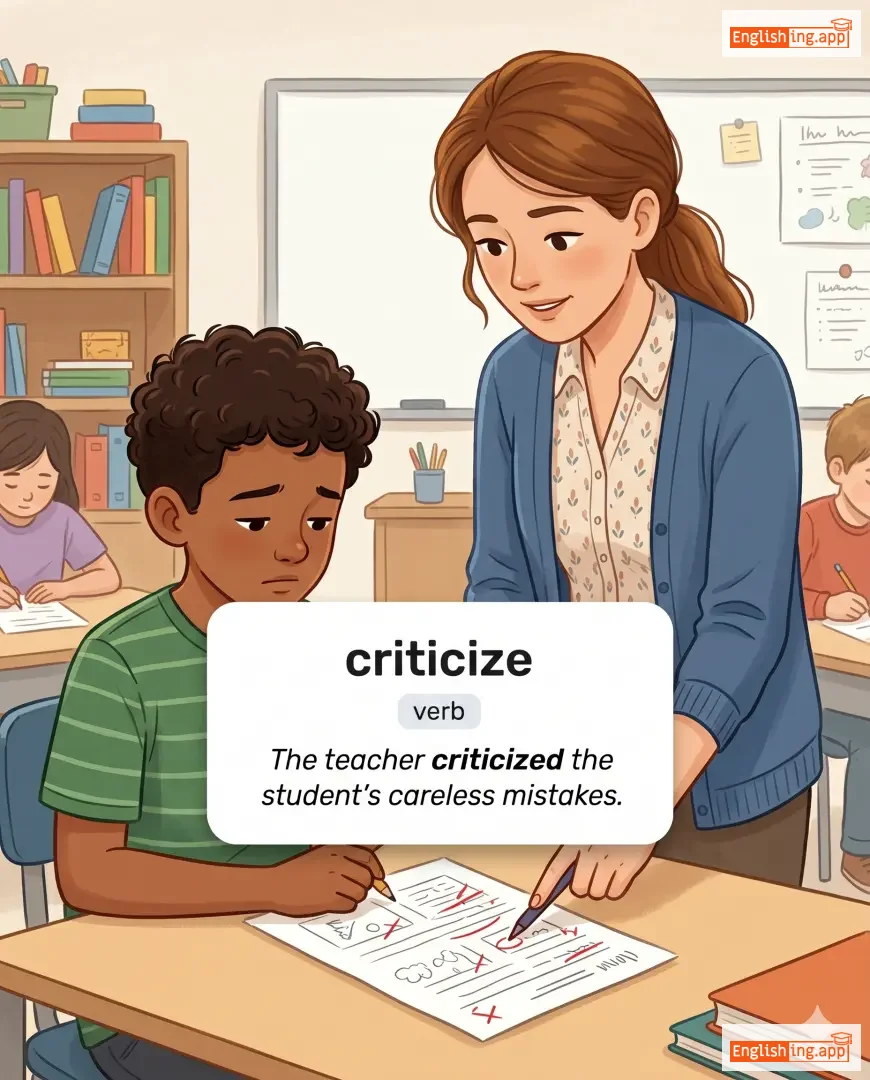
criticize definition card — visual illustration of the meaning
verb
/ˈkrɪtɪsaɪz/
आलोचना करना (aalochana karna)

to express disapproval of someone or something by pointing out faults or shortcomings

"The teacher criticized the student's careless mistakes."

"अध्यापक ने छात्र की लापरवाह गलतियों की आलोचना की।" (Adhyapak ne chatra ki laaparwah galtiyon ki aalochana ki.)
noun/verb
/krɪˈtiːk/
आलोचना (aalochna)

A detailed analysis and assessment of something, especially a literary, philosophical, or political theory; to evaluate critically.

"The professor asked the students to critique each other's essays."

"प्रोफेसर ने छात्रों से एक-दूसरे के निबंधों की आलोचना करने को कहा।" (Professor ne chhatron se ek-doosre ke nibandhon ki alochna karne ko kaha.)
noun/verb
/kroʊˈʃeɪ/
क्रोशे (kroshe)

Needlework made by interlocking loops of thread with a hooked needle; the act of making such items.

"She learned how to crochet a scarf for winter."

"वह सर्दी के लिए एक स्कार्फ क्रोशे करना सीखी।" (Woh sardi ke liye ek scarf crochet karna seekhi.)
noun
/krɑk pɑt/
क्रॉक पॉट (krok pot)

an electric cooking pot that cooks food slowly at low temperatures

"I put the chicken and vegetables in the crock pot before going to work."

"मैं काम पर जाने से पहले चिकन और सब्जियां क्रॉक पॉट में डालता हूँ" (main kaam par jaane se pehle chicken aur sabziyan krok pot mein daalta hoon)
noun
/ˈkrɒkəri/
बर्तन (bartan)

Dishes, plates, cups, and other items made of earthenware or china.

"The hotel provided clean crockery for the guests."

"होटल ने मेहमानों के लिए साफ बर्तन उपलब्ध कराए।" (Hotel ne mehmanon ke liye saaf bartan uplabdh karaaye.)
noun
/ˈkrɒk.ə.daɪl/
मगरमच्छ (magarmachchh)

a large reptile with a long mouth and sharp teeth that lives in rivers and lakes in hot countries

"The crocodile slowly moved through the murky water."

"मगरमच्छ धीरे-धीरे गंदे पानी में से गुजर रहा था।" (magarmachchh dheere-dheere gande pani mein se guzra raha tha)
noun
/kroʊn/
वृद्धा महिला (vruddha mahila)

An old woman, often one who is thin and ugly, sometimes associated with witch-like qualities.

"The children were scared by the story of the wicked crone in the forest."

"बच्चे जंगल में बुरी वृद्धा महिला की कहानी से डर गए थे।" (Bachche jangal mein buri vruddha mahila ki kahani se dar gaye the.)
noun
/ˈkroʊniˌɪzəm/
घृणित पक्षपातीवाद (ghrinat pakshapativad)

The practice of favoring friends or associates, especially in political appointments or business deals.

"The company was accused of cronyism in hiring practices."

"कंपनी को भर्ती प्रथाओं में घृणित पक्षपातीवाद का आरोप लगा था।" (Kampani ko bharti prathao mein ghrinat pakshapativad ka aarop laga tha.)