वोकैबुलरीज

इंग्लिश वोकैबुलरी डिस्कवर, लर्न और मास्टर करें

noun
/kɔːrs flaʊər/
कोर्स आटा (kors ata)

coarsely ground flour with larger particles, typically used for baking bread

"She used course flour to make homemade bread with a rustic texture."

"उसने घर का बना रोटी बनाने के लिए कोर्स फ्लावर का इस्तेमाल किया जिसमें एक देहाती बनावट थी।" (usne ghar ka bana roti banane ke liye kors flour ka istemal kiya jismein ek dehati banawat thi.)
noun
/ˈkɔːrsər/
तेज़ घोड़ा या शिकार के लिए प्रयुक्त घोड़ा (tez ghoda ya shikar ke liye prayukt ghoda)

a swift horse or a hunting horse

"The knight rode a fast courser into battle."

"योद्धा ने युद्ध में तेज़ कोर्सर की सवारी की।" (Yoddha ne yudh mein tez courser ki sawaari ki.)
noun,verb
/kɔːrt/
अदालत या ध्यान आकर्षित करने का स्थान (adalat ya dhyan akarshit karne ka sthan)

a place where legal cases are heard or to seek favor or attention

"He courted the judge with respect."

"उसने जज के सामने सम्मान दिखाकर ध्यान आकर्षित करने की कोशिश की।" (Usne jajj ke samne sammaan dikhakar dhyan akarshit karne ki koshish ki.)
adjective
/ˈkɜːrtiəs/
विनम्र (vinamra)

polite, respectful, or considerate in manner

"The staff at the hotel were very courteous to all guests."

"होटल में कर्मचारियों ने सभी मेहमानों के प्रति बहुत विनम्रता दिखाई।" (Hotel mein karmachariyon ne sabhi mehmanon ke prati bahut vinamrata dikhai.)
noun
/ˈkɜːrtəsi/
शिष्टाचार, विनम्रता या सौजन्य (shishtachar, vinamrata ya soujanya)

polite behavior or a polite action; a favor or privilege

"He opened the door as a courtesy."

"उसने दरवाजा एक शिष्टाचार के रूप में खोला।" (Usne darwaza ek shishtachar ke roop mein khola.)
noun
/ˈkɔːtruːm/
अदालत कक्ष (kortroom)

a room in which legal cases are heard and decided by a judge

"The witness was called to testify in the courtroom."

"गवाह को अदालत के कोर्टरूम में गवाही देने के लिए बुलाया गया था" (Gawah ko adaalat ke kortroom mein gawahi dene ke liye bulaya gaya tha)
noun
/ˈkʌzn/
कज़िन (kazin)

A child of one's uncle or aunt.

"My cousin is coming to visit us this weekend."

"मेरा कज़िन इस सप्ताहांत हमसे मिलने आ रहा है।" (Mera kazin is saptahant humse milne aa raha hai.)
noun
/ˈkʌvən/
तांत्रिकों का समूह (tantrikon ka samuh)

a group or gathering of witches

"The witches met secretly in a coven in the forest."

"जादूगरनियां जंगल में एक तांत्रिकों के समूह में गुपचुप मिलीं।" (Jadugarniyan jangal mein ek tantrikon ke samuh mein gupchup mili.)
noun
/ˈkʌvənənt/
संविदा (samvida)

a formal agreement or promise, often legally binding

"The landlord and tenant signed a covenant to maintain the property."

"मालिक और किराएदार ने संपत्ति बनाए रखने के लिए एक संविदा पर हस्ताक्षर किए।" (Malik aur kirayedar ne sampatti banaye rakhne ke liye ek samvida par hastakshar kiye.)
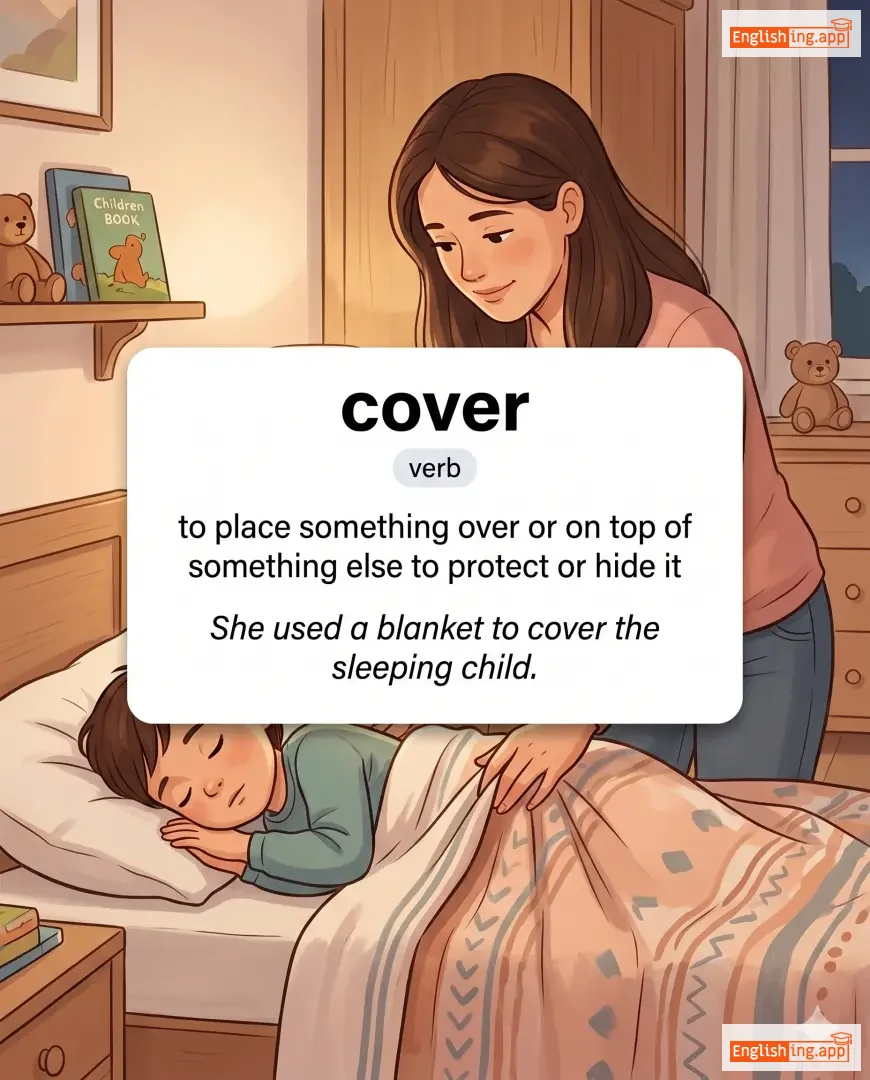
cover definition card — visual illustration of the meaning
verb
/ˈkʌvər/
ढकना (dhakna)

to place something over or on top of something else to protect or hide it

"She used a blanket to cover the sleeping child."

"वह सोते हुए बच्चे को ढकने के लिए कंबल का इस्तेमाल किया।" (Wah sote hue bachche ko dhakne ke liye kambal ka istemal kiya.)
noun
/ˈkʌvərɪdʒ/
कवरेज (kavarej)

The extent or scope of something, such as insurance protection or media reporting.

"The news channel provided extensive coverage of the event."

"समाचार चैनल ने घटना की व्यापक कवरेज प्रदान की।" (Samachar channel ne ghatna ki vyapak kavarej pradan ki.)
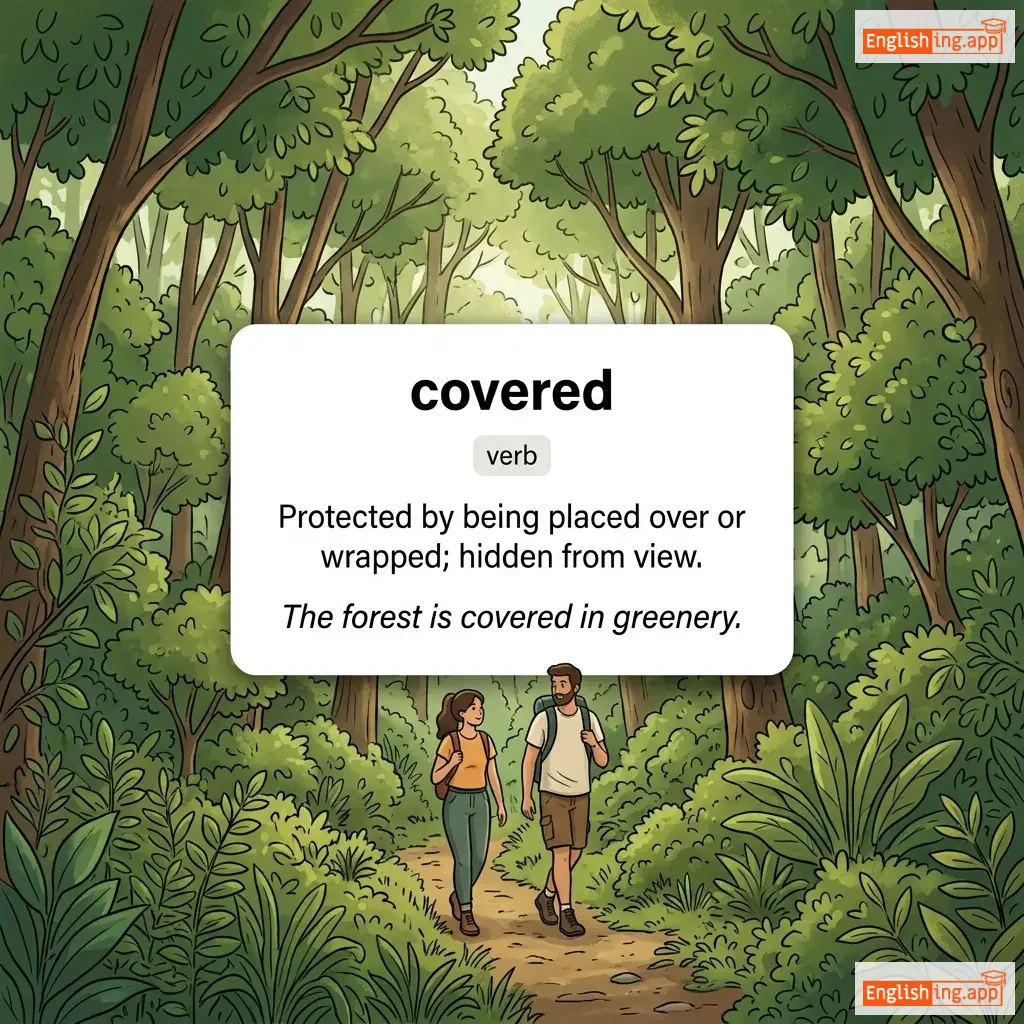
covered definition card — visual illustration of the meaning
verb
/ˈkʌv.ərd/
कवर किया हुआ (kavar kiya hua)

Protected by being placed over or wrapped; hidden from view.

"The forest is covered in greenery."

"जंगल हरे-भरे में कवर किया हुआ है।" (Jangal hare-bhare mein kavar kiya hua hai.)
covert definition card — visual illustration of the meaning
adjective
/ˈkoʊvərt/
गुप्त (gupt)

hidden, secret, or not openly acknowledged

"The spy conducted a covert operation behind enemy lines."

"जासूस ने दुश्मन की सीमाओं के पीछे एक गुप्त अभियान चलाया।" (Jasoos ne dushman ki seemaon ke peeche ek gupt abhiyan chalaya.)
verb
/ˈkʌvət/
लालच करना (lalach karna)

to desire something belonging to someone else

"He coveted his neighbor's new car."

"उसने अपने पड़ोसी की नई कार को लालच किया।" (Usne apne padosi ki nayi car ko lalach kiya.)
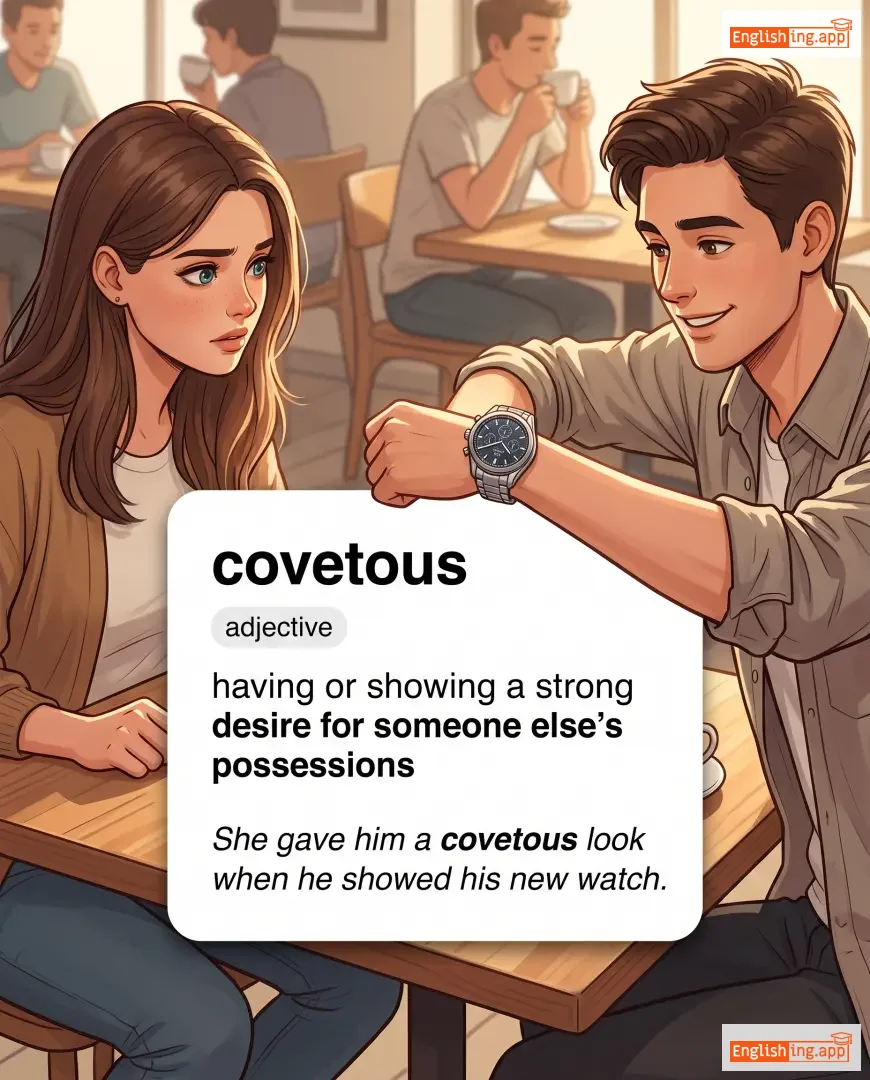
covetous definition card — visual illustration of the meaning
adjective
/ˈkʌvətəs/
लालची (laalchi)

having or showing a strong desire for someone else's possessions

"She gave him a covetous look when he showed his new watch."

"उसने अपनी नई घड़ी दिखाते समय उसे एक लालच भरी नज़र से देखा।" (Usne apni nai ghadi dikhate samay use ek laalch bhari nazar se dekha.)
noun
/ˈkʌvi/
पक्षियों का एक छोटा समूह (pakshiyon ka ek chhota samooh)

a small group of birds, especially partridges or quails

"A covey of quails flew across the field."

"एक कोवी क्वेल्स खेत के ऊपर उड़ गई।" (Ek covey quails khet ke upar ud gayi.)
noun
/kaʊ/
गाय (gaay)

a large domesticated bovine animal kept for milk or meat

"The farmer milked the cow early in the morning."

"किसान ने सुबह जल्दी गाय से दूध दुह लिया।" (Kisan ne subah jaldi gaay se doodh duh liya)
noun
/ˈkaʊ.ərd/
कायर (kayar)

a person who lacks the courage to do or endure dangerous or unpleasant things

"He called himself a coward for not standing up to the bully."

"उसने खुद को कायर कहा क्योंकि उसने बुली के सामने खड़ा नहीं हुआ।" (usne khud ko kayar kaha kyonki usne bully ke samne khada nahi hua.)
noun
/ˈkaʊərdɪs/
कायरता (kāyaratā)

lack of courage; behavior showing fear

"His cowardice prevented him from speaking up."

"उसकी कायरता ने उसे बोलने से रोक दिया।" (Uski kāyaratā ne use bolne se rok diyā.)
noun
/ˈkaʊbɔɪ/
गै़र牧पालक (gairpālka)

a man, typically one on horseback, who herds and tends cattle

"The cowboy rode across the plains."

"काउबॉय मैदान के पार सवारी कर रहा था।" (Cowboy maidān ke paar sawarī kar rahā thā.)
verb
/ˈkaʊər/
डर से झुका होना (dar se jhuka hona)

to crouch down in fear

"The child cowered behind the sofa during the thunderstorm."

"बच्चा तूफान के दौरान सोफे के पीछे डर से झुका हुआ था।" (Baccha toofan ke dauran sofe ke peeche dar se jhuka hua tha.)
noun
/ˈkɒksweɪn/
नाविक प्रमुख (navik pramukh)

the person in charge of navigating and steering a boat, especially a racing or small boat

"The coxswain shouted instructions to the rowing team."

"कॉकस्वेन ने रोइंग टीम को निर्देश दिए।" (Coxswain ne rowing team ko nirdesh diye.)
adjective
/kɔɪ/
संकोची, लज्जाशील (sankochi, lajjashil)

reluctant to give details or reveal feelings; shy or reserved

"She gave a coy smile when asked about her plans."

"जब उससे उसकी योजनाओं के बारे में पूछा गया तो उसने एक संकोची मुस्कान दी।" (Jab usse uski yojnaon ke baare mein poocha gaya to usne ek sankochi muskaan di.)
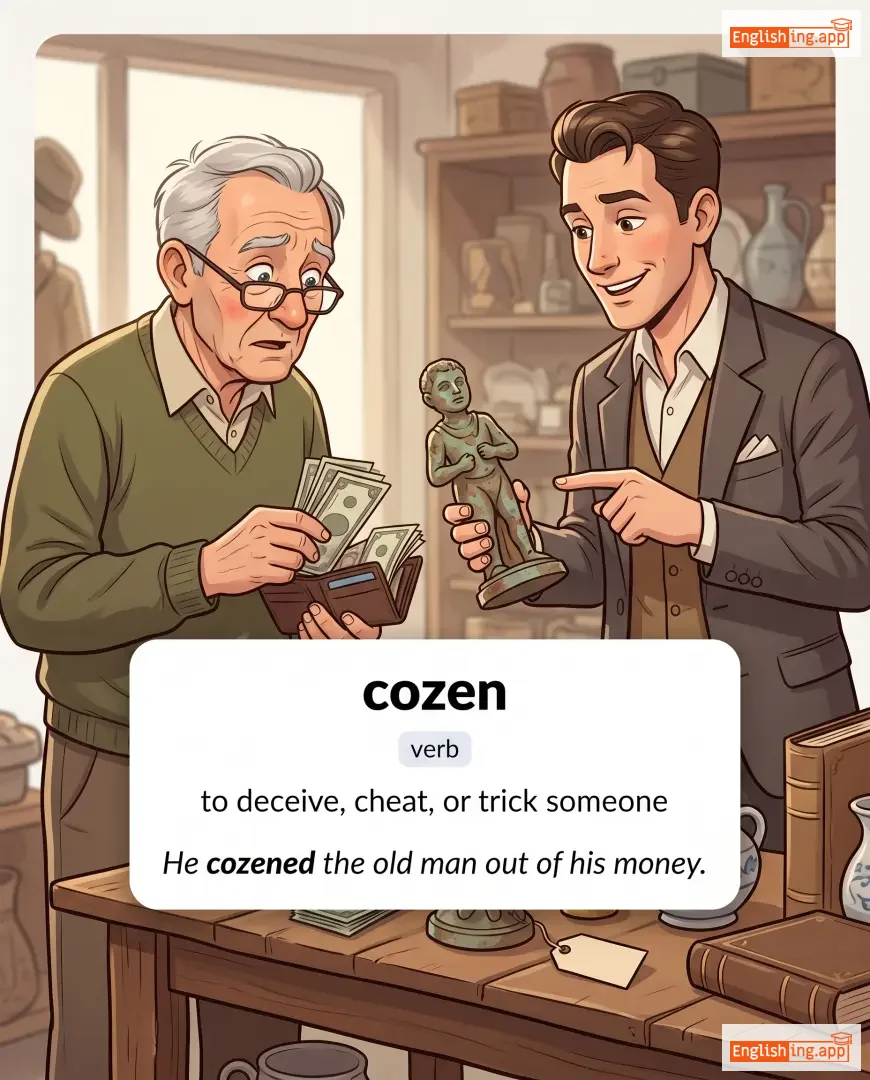
cozen definition card — visual illustration of the meaning
verb
/ˈkʌzən/
धोखा देना, ठगना (dhokha dena, thagna)

to deceive, cheat, or trick someone

"He cozened the old man out of his money."

"उसने पुराने आदमी को उसके पैसे से धोखा देकर ठग लिया।" (Usne purane aadmi ko uske paise se dhokha dekar thag liya.)
adjective
/ˈkoʊzi/
आरामदायक (aaramdayak)

giving a feeling of comfort, warmth, and relaxation

"We sat in a cozy little café on a rainy day."

"हम एक आरामदायक छोटे कैफे में बैठे थे, एक बारिश वाले दिन में।" (ham ek aaramdayak chhote cafe mein baithe the, ek baarish wale din mein.)
noun
/kræb/
केकड़ा (kekda)

a crustacean with a broad carapace, stalked eyes, and five pairs of legs, the first pair of which are modified as pincers

"The crab scuttled sideways across the sand."

"केकड़ा बालू पर साइडवेज़ में रेंगता हुआ गया।" (kekda bālū par sāidvež mein reṅgtā huā gayā.)
adjective
/ˈkræbɪd/
पढ़ने में कठिन, चिड़चिड़ा स्वभाव (padhne mein kathin, chidhchidhā svabhāv)

difficult to read or understand; ill-tempered

"His handwriting was crabbed and almost illegible."

"उसकी हैंडराइटिंग कठिन और लगभग अपरिष्कृत थी।" (Uski handwriting kathin aur lagbhag aparishkrit thi.)
verb
/kræk/
खुशी (khushi)

To break or cause to break without complete separation; to make a sharp sound.

"The glass cracked when it was dropped on the floor."

"जब उसे पुरस्कार मिला, तो वह अपनी खुशी नहीं छिपा सकी।" (Jab use puraskaar mila, to vah apni khushi nahin chhupa sakee.)
noun
/ˈkreɪ.dəl/
पालना (paalna)

a small bed for a baby, especially one that rocks from side to side

"The baby sleeps peacefully in the cradle."

"शिशु पालने में शांतिपूर्वक सोता है।" (shishu paalne mein shaantipoorvak sota hai)
noun
/kræft/
कला, शिल्प, हस्तशिल्प (kala, shilp, hastashilp)

an activity involving skill in making things by hand; a trade or occupation

"She has mastered the craft of pottery."

"उसने मिट्टी के बर्तन बनाने की कला में महारत हासिल कर ली है।" (Usne mitti ke bartan banane ki kala mein maharat haasil kar li hai.)
adjective
/ˈkræfti/
चतुर, चालाक, कपटी (chatur, chalaki, kapti)

skilled at achieving goals through cunning or deceit; sly

"The crafty fox evaded the hunters again."

"चतुर लोमड़ी ने फिर से शिकारीों को धोखा दिया।" (Chatur lomdi ne phir se shikariyon ko dhokha diya.)
noun
/kræɡ/
एक ऊँचा या खड़ी चट्टान (ek uncha ya khadi chattan)

a steep or rugged cliff or rock face

"The hikers climbed the jagged crag to reach the summit."

"यात्रियों ने शिखर तक पहुँचने के लिए खड़ी चट्टान चढ़ी।" (Yatriyon ne shikhar tak pahuchne ke liye khadi chattan chadhi.)
adjective
/kræmpt/
संकुचित, असुविधाजनक रूप से छोटा (sankuchit, asubidhaajanak roop se chhota)

uncomfortably small or restricted

"The room was so cramped that we could barely move."

"कमरे में इतना संकुचित था कि हम मुश्किल से हिल सकते थे।" (Kamre mein itna sankuchit tha ki hum mushkil se hil sakte the.)
noun
/kreɪn/
क्रेन (kren)

a large tall bird with long legs and neck; a machine for lifting heavy objects

"The graceful crane stood motionless by the water's edge."

"सुंदर क्रेन पानी के किनारे शांतिपूर्वक खड़ी थी।" (sundar kren pani ke kinare shantipoorvak khadi thi.)
noun
/ˈkreɪniəm/
कपाल (kapal)

the skull, especially the part enclosing the brain

"The archaeologists carefully examined the ancient cranium."

"प्राचीन क्रेनियम को ध्यान से जांचा गया।" (Prachin cranium ko dhyan se janchha gaya.)
adjective
/ˈkræŋki/
चिड़चिड़ा (chidhchidhā)

bad-tempered, easily annoyed, or irritable

"The child gets cranky when he is hungry."

"बच्चा चिड़चिड़ा हो जाता है जब उसे भूख लगती है।" (Bacchā chiḍhchidhā ho jātā hai jab use bhūkh lagtī hai.)
verb
/kræʃ/
खुशी (khushi)

To collide violently; to suddenly stop working (for machines or computers).

"The car crashed into the wall at high speed."

"उसे पुरस्कार मिलने पर वह अपनी खुशी नहीं छिपा पाई।" (Use puraskar milne par wah apni khushi nahi chhupa pai.)
adjective
/kræs/
अविवेकी, संवेदनशीलता या परिष्कृतता से रहित (aviveki, sanvedansheelta ya parishkrtata se rahit)

lacking sensitivity, refinement, or intelligence

"His crass remarks offended everyone at the meeting."

"उसके अविवेकी टिप्पणियों ने बैठक में सभी को आहत किया।" (Uske aviveki tippaniyon ne baithak mein sabhi ko aahat kiya.)
verb
/kreɪv/
मजबूत इच्छा करना, लालसा करना (majboot ichha karna, lalasa karna)

to have a strong desire for something

"She craves adventure and often travels to remote places."

"वह साहसिकता की तीव्र इच्छा करती है और अक्सर दूरदराज के स्थानों की यात्रा करती है।" (Vah sahasikta ki teevr ichha karti hai aur aksar doordaraz ke sthalon ki yatra karti hai.)
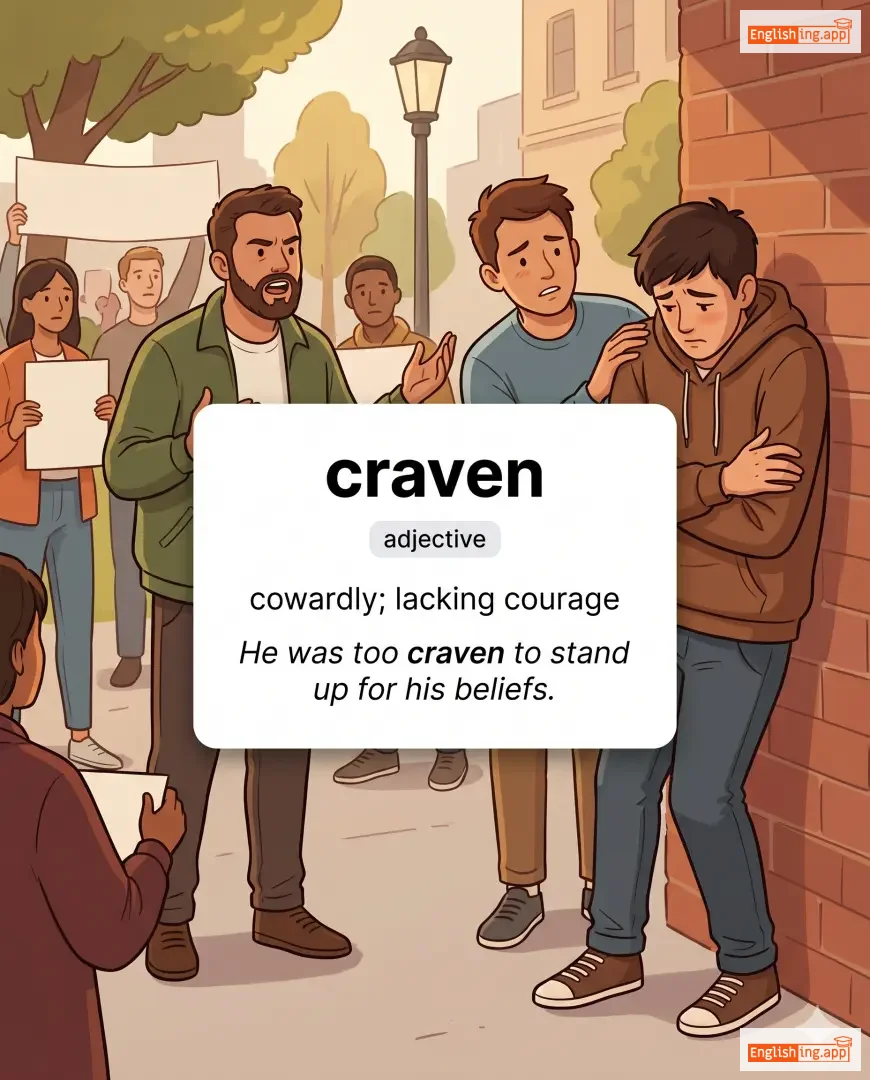
craven definition card — visual illustration of the meaning
adjective
/ˈkreɪvən/
कायर (kayar)

cowardly; lacking courage

"He was too craven to stand up for his beliefs."

"वह अपने विश्वासों के लिए खड़ा होने के लिए बहुत कायर था।" (Vah apne vishwason ke liye khada hone ke liye bahut kayar tha.)
noun
/ˈkreɪvɪŋ/
तगड़ी इच्छा, तीव्र आकांक्षा (tagdi ichha, teevr aakanksha)

a strong desire for something

"She has a craving for chocolate every evening."

"वह हर शाम चॉकलेट के लिए तगड़ी इच्छा करती है।" (Vah har shaam chocolate ke liye tagdi ichha karti hai.)
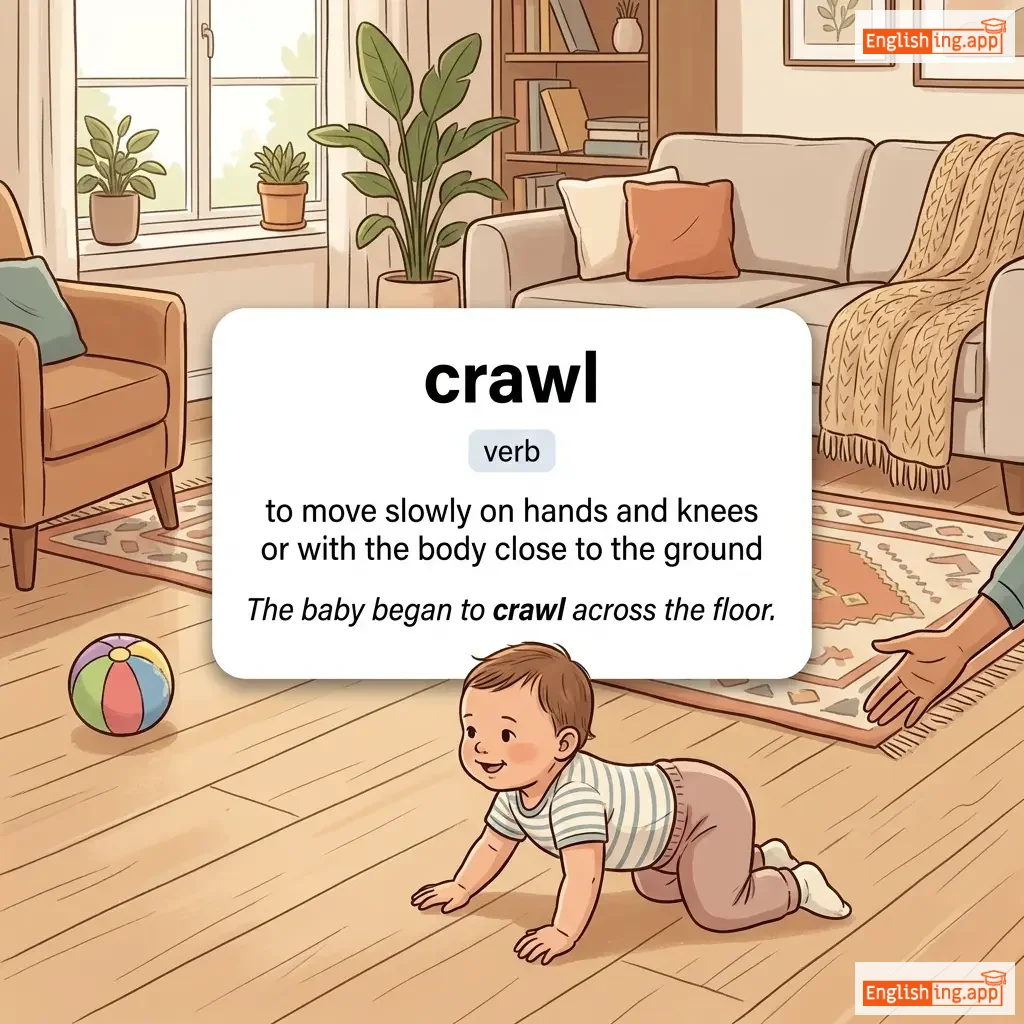
crawl definition card — visual illustration of the meaning
verb
/krɔːl/
रेंगना (rengna)

to move slowly on hands and knees or with the body close to the ground

"The baby began to crawl across the floor."

"बच्चे ने फर्श पर रेंगना शुरू किया।" (bachche ne farsh par rengna shuru kiya.)
adjective
/ˈkreɪzi/
पागल (pagal)

mentally unsound; extremely foolish or enthusiastic

"He had a crazy idea that actually worked."

"उसके पास एक पागल विचार था जो वास्तव में काम कर गया।" (Uske paas ek pagal vichar tha jo vastav mein kaam kar gaya.)
verb
/kriːk/
चिड़चिड़ी आवाज़ करना (chidchidi awaaz karna)

to make a high-pitched, squeaking noise when moved

"The old door creaked as she opened it."

"पुरानी दरवाजा खुलते समय क्रीक करता था।" (Purani darwaza khulte samay creak karta tha.)
noun
/kriːm/
क्रीम (krim)

A thick, fatty part of milk that rises to the top; also a soft substance used in cooking or cosmetics.

"She added some cream to her coffee."

"उसने अपनी कॉफी में कुछ क्रीम डाली।" (Usne apni coffee mein kuch krim daali.)
noun
/ˈkriːməri/
डेयरी उत्पाद निर्माण केंद्र (dairy utpad nirmann kendra)

a place where milk and cream are processed and dairy products are made

"The local creamery produces fresh butter and cheese daily."

"स्थानीय क्रीमैरी रोजाना ताजा मक्खन और पनीर बनाती है।" (Sthaniya creamery rozana taja makkhan aur paneer banati hai.)
adjective
/ˈkriːmi/
क्रीम जैसी चिकनी, समृद्ध बनावट (kreemi jaisi chikni, samriddh banawat)

having a smooth, rich texture like cream

"She poured a creamy sauce over the pasta."

"उसने पास्ता पर क्रीमी सॉस डाला।" (Usne pasta par kreemi sauce daala.)
noun, verb
/kriːs/
क्रीस, मोड़ (kris, mod)

a line or fold produced on paper, cloth, or other material; to make a fold or wrinkle

"She ironed the shirt carefully to remove every crease."

"वह शर्ट को ध्यान से इस्त्री कर रही थी ताकि हर एक क्रीस हट सके।" (Wah shart ko dhyaan se istri kar rahi thi taaki har ek kris hat sake.)
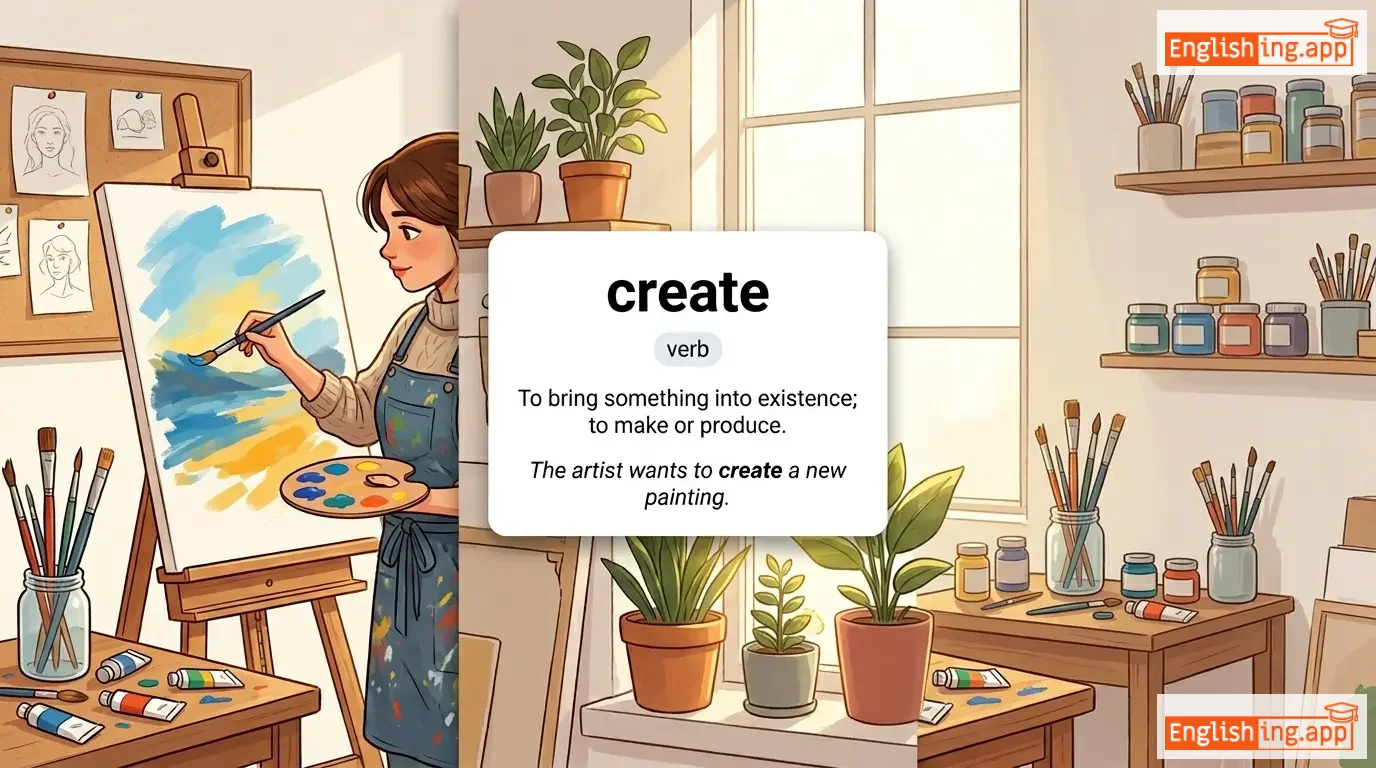
create definition card — visual illustration of the meaning
verb
/kriˈeɪt/
बनाना (banana)

To bring something into existence; to make or produce.

"The artist wants to create a new painting."

"कलाकार एक नई पेंटिंग बनाना चाहता है।" (Kalakar ek nai painting banana chahta hai.)
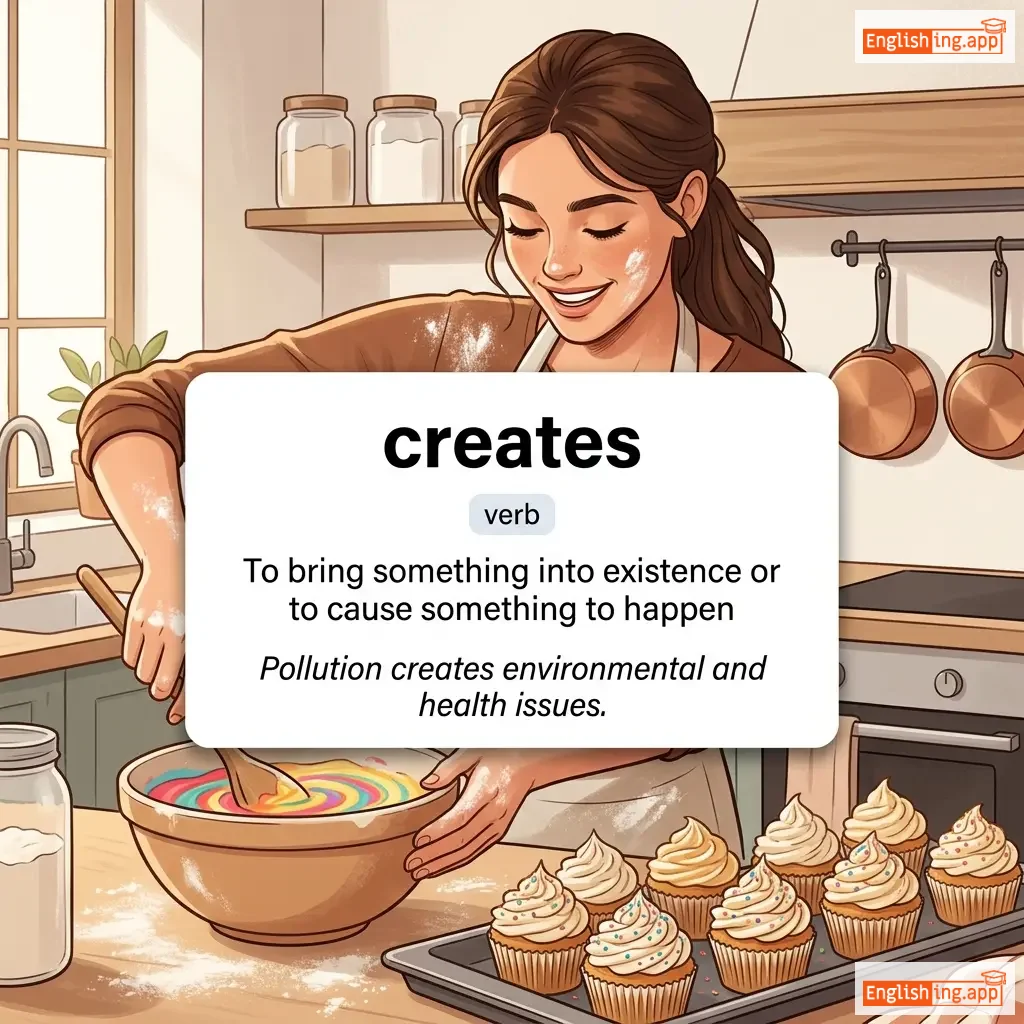
creates definition card — visual illustration of the meaning
verb
kriˈeɪts
सृजन करना (srijan karna)

To bring something into existence or to cause something to happen

"Pollution creates environmental and health issues."

"प्रदूषण पर्यावरण और स्वास्थ्य समस्याएँ उत्पन्न करता है।" (Pradushan paryavaran aur swasthya samasyaen utpann karti hain.)