वोकैबुलरीज

इंग्लिश वोकैबुलरी डिस्कवर, लर्न और मास्टर करें

Consumption definition card — visual illustration of the meaning
noun
/kənˈsʌmpʃən/
उपभोग (upbhog)

The act of using up resources, goods, or energy; also refers to the eating or drinking of something.

"The consumption of electricity increases during the summer."

"गर्मी के दौरान बिजली की खपत बढ़ जाती है।" (Garmi ke dauran bijli ki khapat badh jaati hai.)
adjective
/kənˈsʌmptɪv/
उपभोगी (upbhogi)

Relating to or characterized by consumption; historically used to describe someone suffering from tuberculosis.

"The doctor advised against consumptive habits."

"डॉक्टर ने उपभोगी आदतों के खिलाफ सलाह दी।" (Daktar ne upbhogi aadaton ke khilaf salah di.)
noun/verb
/ˈkɒntækt/
संपर्क (sampark)

Communication or connection with someone.

"You should contact your doctor if symptoms persist."

"आपको लक्षण बने रहने पर अपने डॉक्टर से संपर्क करना चाहिए।" (Aapko lakshan bane rehne par apne doctor se sampark karna chahiye.)
noun
/kənˈteɪdʒən/
संक्रमण (sankraman)

The communication of disease from one person to another by close contact; also the spread of harmful ideas or behaviors.

"Fear spread like a contagion through the crowd."

"डर ने भीड़ में एक संक्रमण की तरह फैलना शुरू कर दिया।" (Dar ne bheed mein ek sankraman ki tarah failna shuru kar diya.)
adjective
/kənˈteɪdʒəs/
संक्रामक (sankramak)

Able to be transmitted from one person to another, typically by direct contact; also used for emotions or attitudes that spread quickly.

"Her laughter was so contagious that everyone started laughing."

"उसकी हंसी इतनी संक्रामक थी कि सभी लोग हंसने लगे।" (Uski hansi itni sankramak thi ki sabhi log hansne lage.)
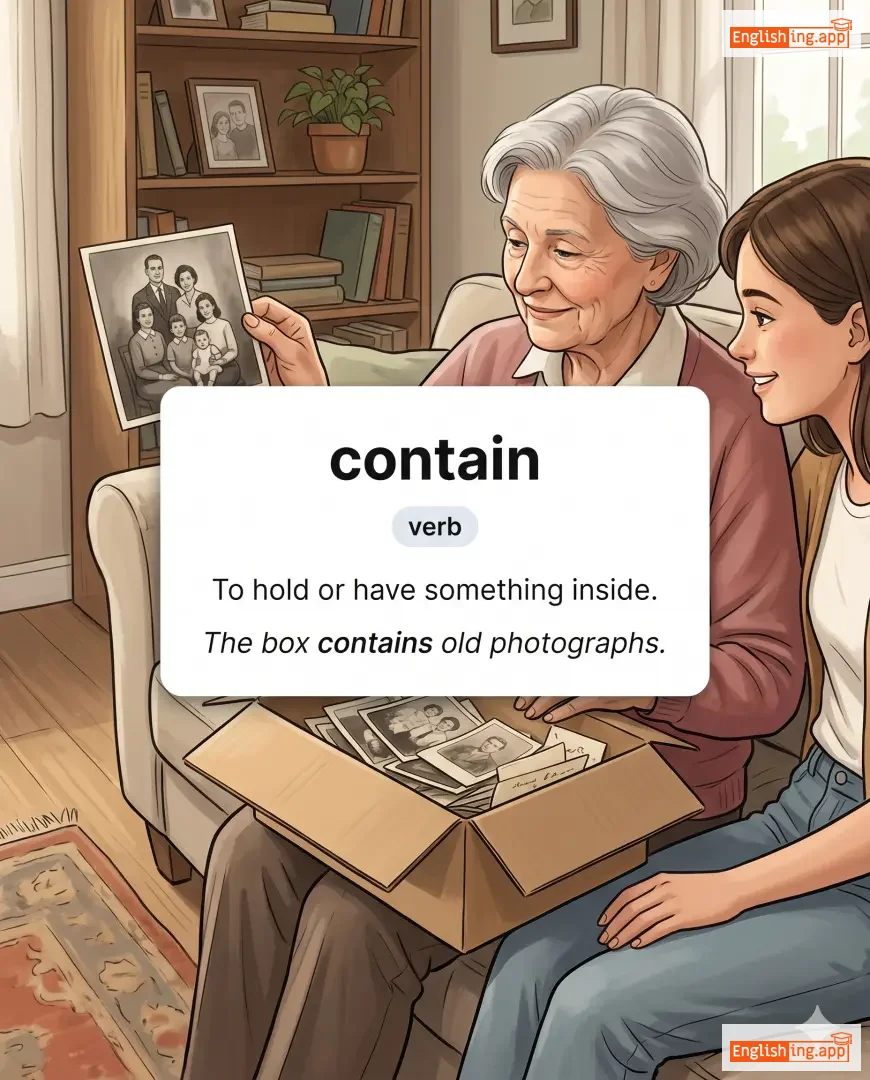
contain definition card — visual illustration of the meaning
verb
/kənˈteɪn/
रखना (rakhna)

To hold or have something inside.

"The box contains old photographs."

"डिब्बे में पुरानी तस्वीरें हैं।" (Dibbe mein purani tasveeren hain.)
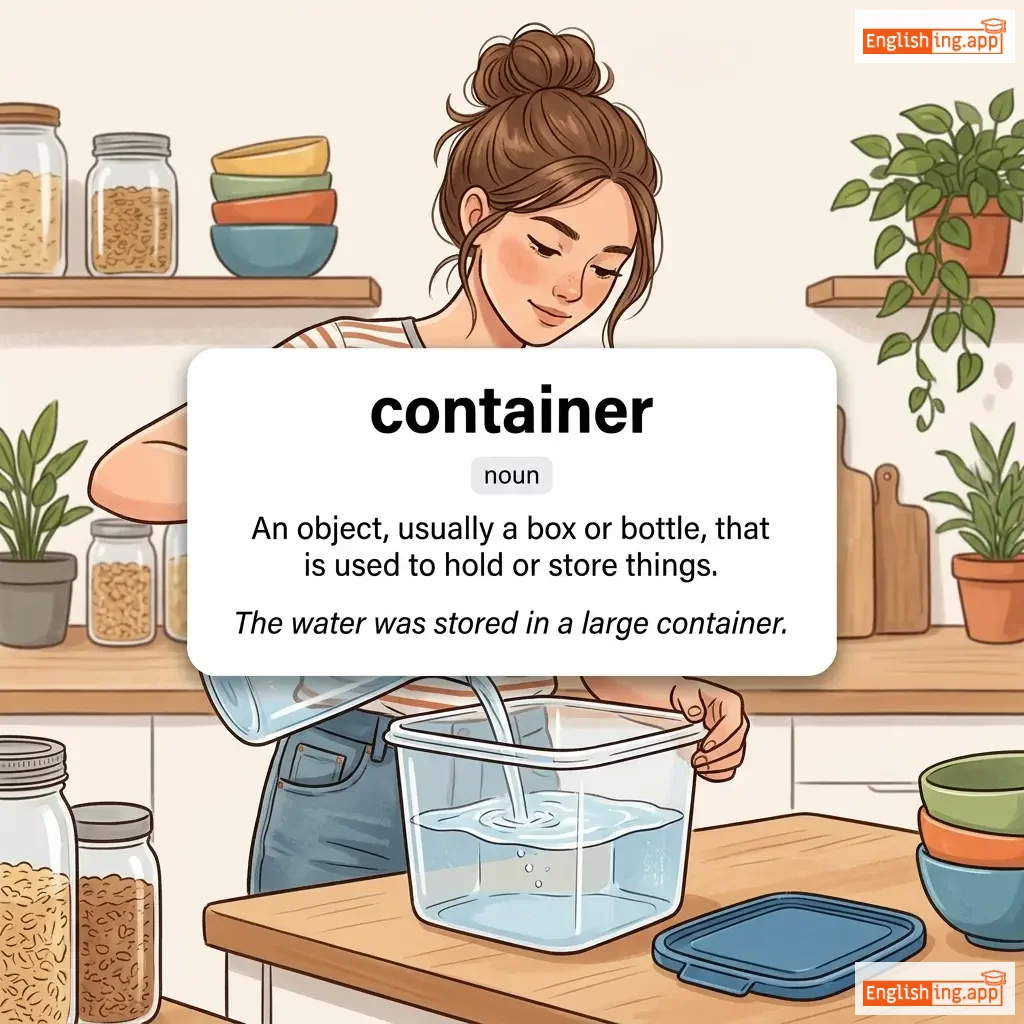
container definition card — visual illustration of the meaning
noun
/kənˈteɪnər/
कंटेनर (container)

An object, usually a box or bottle, that is used to hold or store things.

"The water was stored in a large container."

"पानी एक बड़े कंटेनर में संग्रहित किया गया था।" (Pani ek bade container mein sangrahit kiya gaya tha.)
verb
/kənˈtæmɪneɪt/
प्रदूषित करना (pradushit karna)

To make something impure, dirty, or harmful by contact with a poisonous or polluting substance.

"The river was contaminated by industrial waste."

"नदी औद्योगिक कचरे से प्रदूषित हो गई थी।" (Nadi audyogik kachre se pradushit ho gayi thi.)
contamination definition card — visual illustration of the meaning
noun
kənˌtæm.ɪˈneɪ.ʃən
प्रदूषण (pradushan)

The process of making something less pure by exposure to or addition of a poisonous or polluting substance.

"Contamination of air leads to health issues."

"हवा का प्रदूषण स्वास्थ्य समस्याओं का कारण बनता है।" (Hawa ka pradushan swasthya samasyaon ka kaaran banta hai.)
verb
/kənˈtɛm/
अवज्ञा करना (avijnya karna)

to treat or regard with disdain, scorn, or contempt

"He would never contemn honest work, no matter how humble."

"वह कभी भी ईमानदार काम को अवज्ञा नहीं करेगा, चाहे वह कितना भी सामान्य क्यों न हो।" (Vah kabhi bhi imandaar kaam ko avijnya nahi karega, chahe vah kitna bhi saamaanya kyon na ho.)
verb
/ˈkɒntəmpleɪt/
गंभीरता से सोचना (gambhirta se sochna)

to think deeply and carefully about something; to consider thoughtfully

"She sat quietly to contemplate her future plans."

"वह चुपचाप बैठी थी ताकि वह अपने भविष्य के योजनाओं पर विचार कर सके।" (Vah chupchaap baithi thi taaki vah apne bhavishya ke yojnaon par vichar kar sake.)
contemplation definition card — visual illustration of the meaning
noun
ˌkɒn.təmˈpleɪ.ʃən
गहरी सोच, ध्यान, विचार (gahri soch, dhyan, vichar)

The action of looking thoughtfully at something for a long time; deep reflective thought.

"He spent hours in contemplation about his future."

"उसने अपने भविष्य के बारे में गहरी सोच में घंटों बिताए।" (Usne apne bhavishya ke baare mein gehri soch mein ghanton bitaye.)
contemplative definition card — visual illustration of the meaning
adjective
ˈkɒn.təm.plə.tɪv
गंभीर विचारशील या ध्यानमग्न (gambhir vicharshil ya dhyanmagn)

Expressing or involving prolonged thought; meditative and reflective.

"He spent a contemplative evening reflecting on his decisions."

"उसने अपने निर्णयों पर विचार करते हुए एक विचारशील शाम बिताई।" (Usne apne nirnayon par vichar karte hue ek vicharshil shaam bitayi.)
adjective
/kənˌtɛmpəˈreɪniəs/
समकालिक (samkalik)

existing, happening, or occurring at the same time

"The two artists were contemporaneous and often influenced each other."

"दो कलाकार समकालिक थे और अक्सर एक-दूसरे को प्रभावित करते थे।" (Do kalakar samkalik the aur aksar ek-doosre ko prabhavit karte the.)
adjective
/kənˈtɛmpərɛri/
समकालीन, आधुनिक (samkalin, aadhunik)

belonging to the same time period; modern

"She enjoys contemporary art exhibitions."

"वह समकालीन कला प्रदर्शनी का आनंद लेती है।" (Vah samkalin kala pradarshani ka anand leti hai.)
noun
/kənˈtɛmpt/
अवमानना (avmanana)

a strong feeling of dislike and lack of respect towards someone or something

"He spoke with contempt about the corrupt officials."

"उसने भ्रष्ट अधिकारियों के बारे में अवमानना के साथ बात की।" (Usne bhrasht adhikariyon ke baare mein avmana ke saath baat ki.)
adjective
/kənˈtɛmptəbl/
घृणास्पद, तिरस्कृत (ghrnaspad, tiraskrit)

deserving of contempt; despicable

"His deceitful actions were truly contemptible."

"उसकी धोखाधड़ी भरी क्रियाएँ वास्तव में घृणास्पद थीं।" (Uski dhokhadari bhari kriyayein vastav mein ghrnaspad thin.)
adjective
/kənˈtɛmptʃuəs/
घृणास्पद, तिरस्कारपूर्ण (ghrinaspad, tiraskarpurn)

showing or expressing contempt; scornful

"She gave him a contemptuous glance."

"उसने उसे घृणास्पद नज़र से देखा।" (Usne use ghrinaspad nazar se dekha.)
contend definition card — visual illustration of the meaning
verb
/kənˈtɛnd/
प्रतियोगिता करना, दावा करना (pratiyogita karna, dawa karna)

to strive or compete for something; to assert earnestly

"Athletes from around the world contend for the championship."

"दुनिया भर के एथलीट चैंपियनशिप के लिए प्रतियोगिता कर रहे हैं।" (Duniya bhar ke athletes championship ke liye pratiyogita kar rahe hain.)
noun
/kənˈtɛndər/
प्रतियोगी, दावा करने वाला (pratiyogi, dawa karne wala)

a person or team competing for a title or prize

"She is a strong contender for the mayoral position."

"वह मेयर पद के लिए एक मजबूत प्रतियोगी है।" (Vah mayor pad ke liye ek majboot pratiyogi hai.)
adjective
/ˈkɒntɛnt/
संतुष्ट, खुश (santusht, khush)

in a state of satisfaction; pleased

"He felt content after finishing his work."

"काम खत्म करने के बाद वह संतुष्ट महसूस कर रहा था।" (Kaam khatm karne ke baad wah santusht mehsoos kar raha tha.)
adjective
/kənˈtɛntɪd/
संतुष्ट (santusht)

Feeling or expressing happiness and satisfaction.

"She was contented with her simple life."

"वह अपनी साधारण जिंदगी से संतुष्ट थी।" (Vah apni saadharan zindagi se santusht thi.)
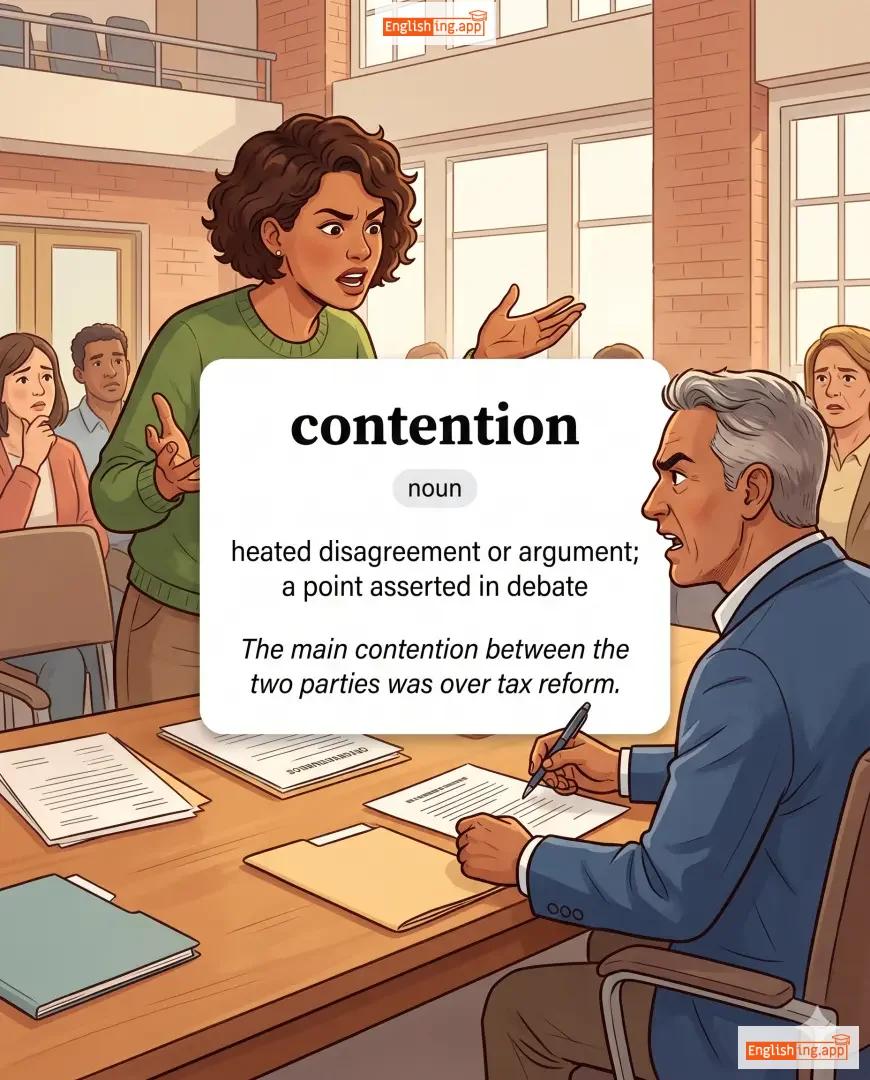
contention definition card — visual illustration of the meaning
noun
/kənˈtɛnʃən/
विवाद, मतभेद (vivad, matbhed)

heated disagreement or argument; a point asserted in debate

"The main contention between the two parties was over tax reform."

"दो पार्टियों के बीच मुख्य विवाद कर टैक्स सुधार पर था।" (Do parties ke beech mukhya vivad kar tax sudhaar par tha.)
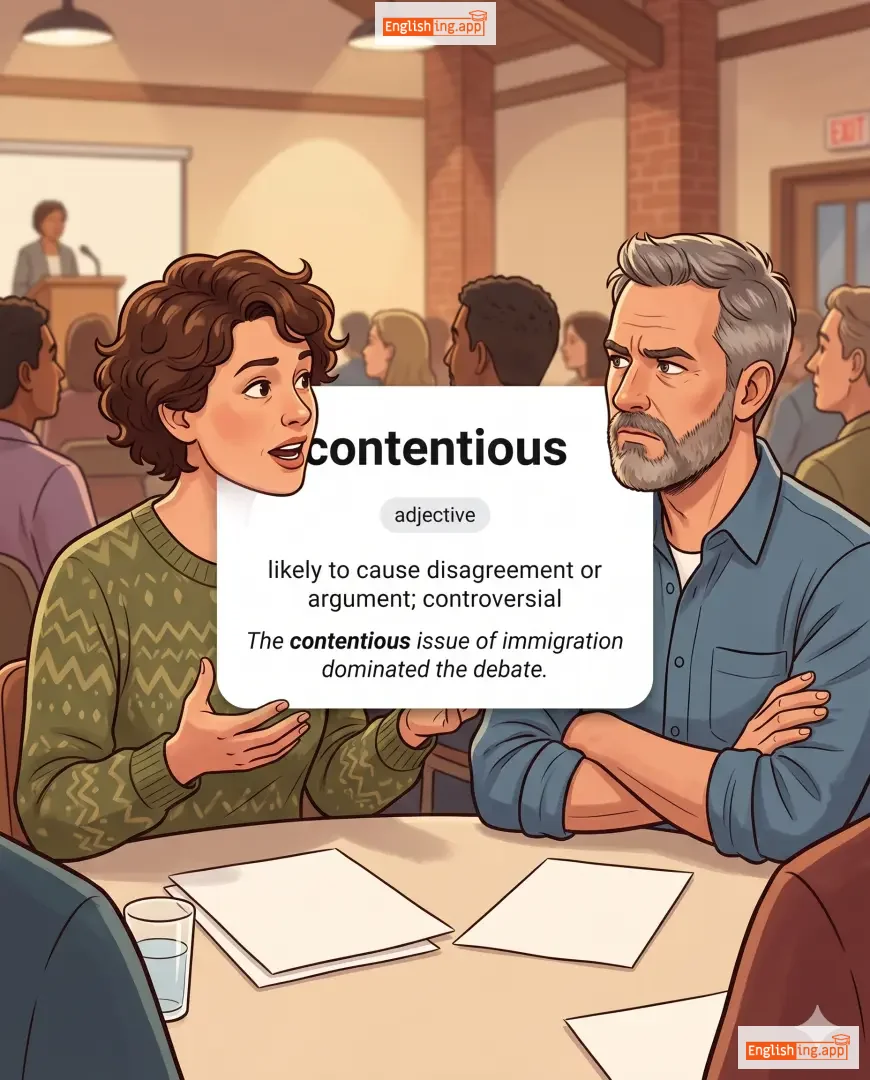
contentious definition card — visual illustration of the meaning
adjective
/kənˈtɛnʃəs/
विवादास्पद (vivaadaspad)

likely to cause disagreement or argument; controversial

"The contentious issue of immigration dominated the debate."

"आप्रवासन का विवादास्पद मुद्दा बहस में छाया रहा।" (Aapravāsan kā vivādāspad mudda behas meṃ chhāyā rahā.)
noun
/kənˈtentmənt/
संतोष (santosh)

a state of happiness and satisfaction with what one has

"She felt a deep sense of contentment after helping others."

"दूसरों की मदद करने के बाद उसे गहरा संतोष महसूस हुआ।" (doosron ki madad karne ke baad use gehra santosh mehsoos hua)
verb, noun
/ˈkɒntɛst/
प्रतियोगिता करना, चुनौती देना (pratiyogita karna, chunauti dena)

verb: to compete or challenge; noun: a competition or dispute

"She decided to contest the election against the incumbent."

"उसने चुनाव में वर्तमान उम्मीदवार के खिलाफ प्रतियोगिता करने का निर्णय लिया।" (Usne chunav mein vartaman ummidwar ke khilaf pratiyogita karne ka nirnay liya.)
noun
/ˈkɒntɛkst/
संदर्भ (sandarbha)

the circumstances or background relevant to an event, statement, or idea

"To understand the quote, you need to know the context in which it was said."

"उद्धरण को समझने के लिए, आपको उस संदर्भ को जानना जरूरी है जिसमें यह कहा गया था।" (Uddharan ko samajhne ke liye, aapko us sandarbha ko janana zaroori hai jismein yah kaha gaya tha.)
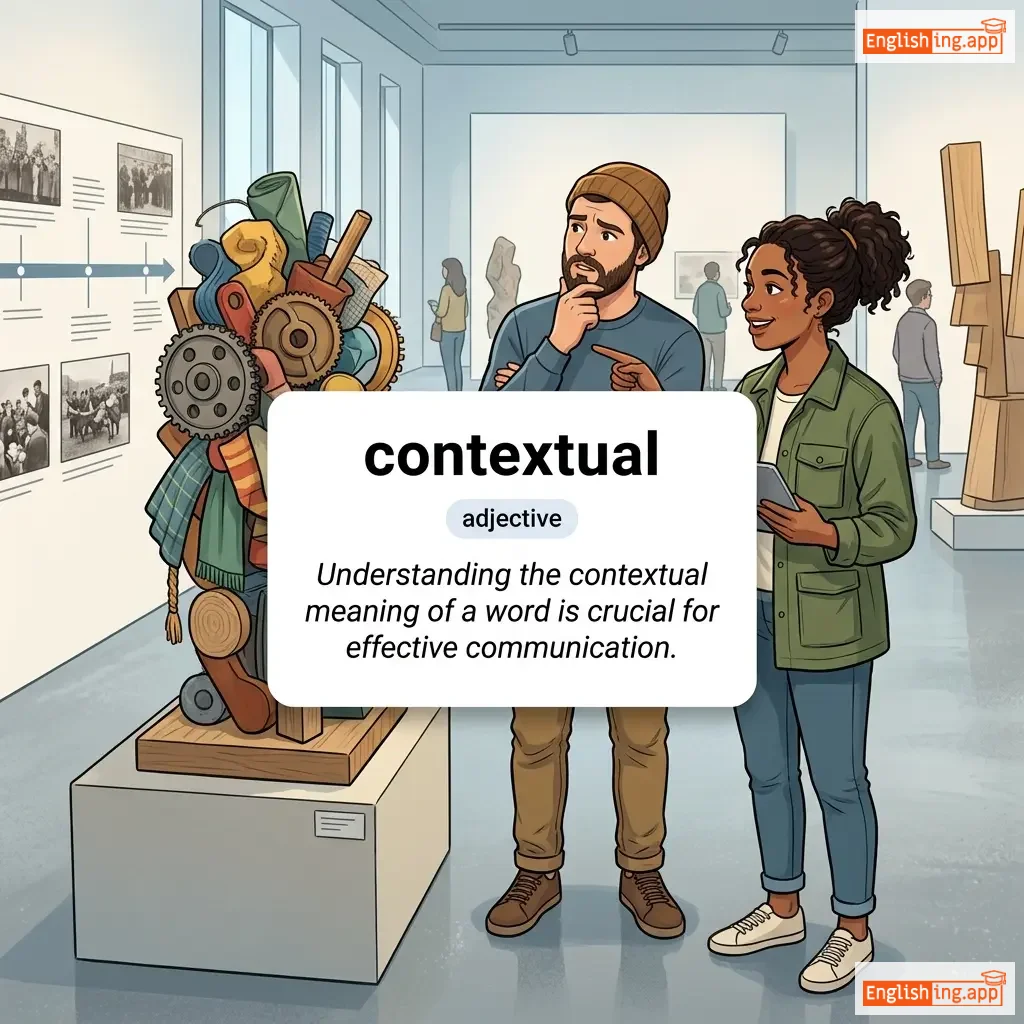
contextual definition card — visual illustration of the meaning
adjective
/kənˈtɛkstʃʊəl/
संदर्भात्मक, परिस्थिति आधारित (sandarbhatmak, paristhiti aadharit)

Depending on or relating to the circumstances that form the setting for an event or statement.

"Understanding the contextual meaning of a word is crucial for effective communication."

"शब्द के संदर्भात्मक अर्थ को समझना प्रभावी संचार के लिए महत्वपूर्ण है।" (Shabd ke sandarbhatmak arth ko samajhna prabhavi sanchar ke liye mahatvapurn hai.)
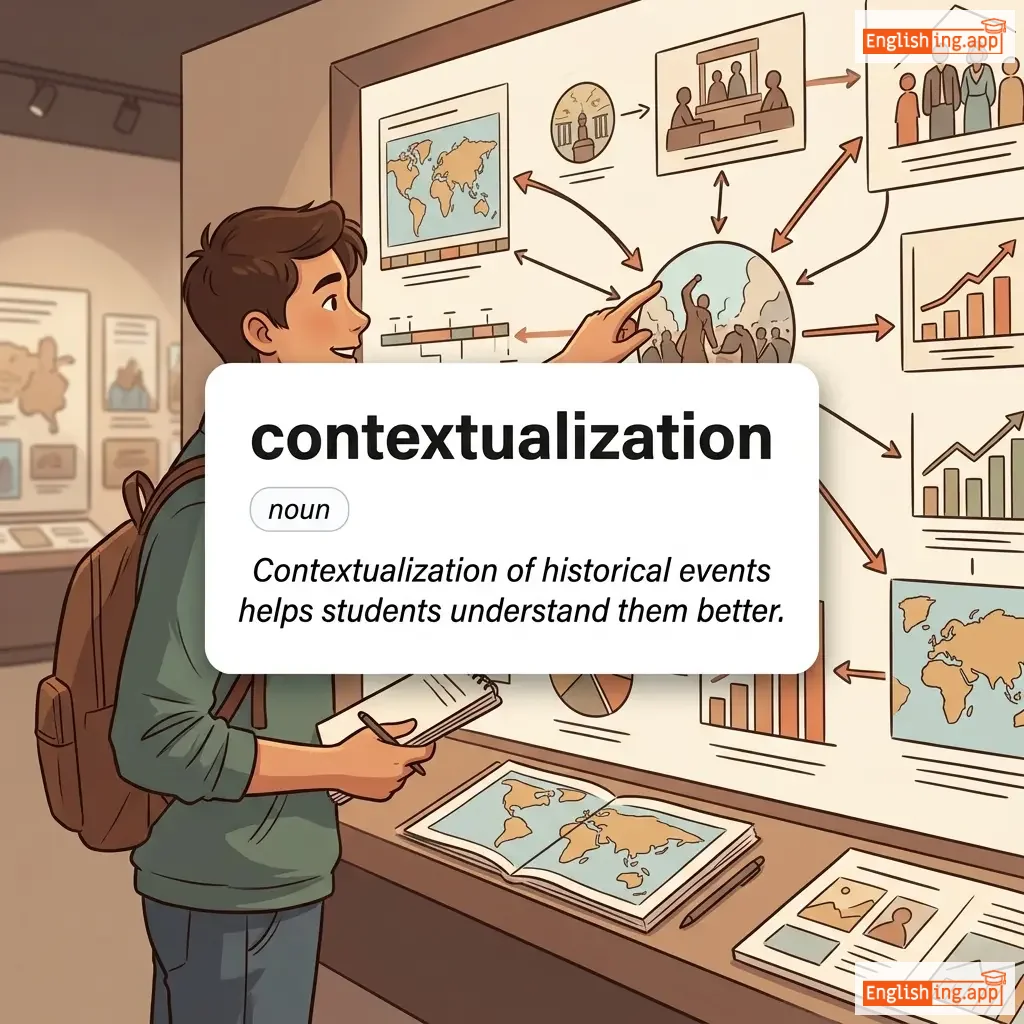
contextualization definition card — visual illustration of the meaning
noun
/kɒnˌtek.stʃu.ə.laɪˈzeɪ.ʃən/
संदर्भ निर्धारण (sandarbha nirdharan)

The process of placing something in its proper context or setting to understand it better.

"Contextualization of historical events helps students understand them better."

"ऐतिहासिक घटनाओं का संदर्भ निर्धारण छात्रों को उन्हें बेहतर तरीके से समझने में मदद करता है।" (Aitihasik ghatnaon ka sandarbh nirdharan chhatron ko unhe behtar tareeke se samajhne mein madad karta hai.)
verb
/kənˈtɛkstʃuəlaɪz/
प्रसंग में रखना, संदर्भ के अनुसार व्याख्या करना (prasang mein rakhna, sandarbh ke anusar vyakhya karna)

to place something in a context or interpret it in relation to its surroundings

"The teacher contextualized the historical event to make it more relevant for students."

"शिक्षक ने ऐतिहासिक घटना को छात्रों के लिए अधिक प्रासंगिक बनाने के लिए संदर्भ में रखा।" (Shikshak ne aitihasik ghatna ko chhatron ke liye adhik prasangik banane ke liye sandarbh mein rakha.)
noun
/kɒn.tɪˈɡjuː.ɪ.ti/
सन्निकटता (sannikatata)

the state of being in direct contact or next to each other

"The contiguity of the two countries facilitates trade."

"दो देशों की सन्निकटता व्यापार को आसान बनाती है।" (Do deshon ki sannikatata vyapar ko aasaan banati hai.)
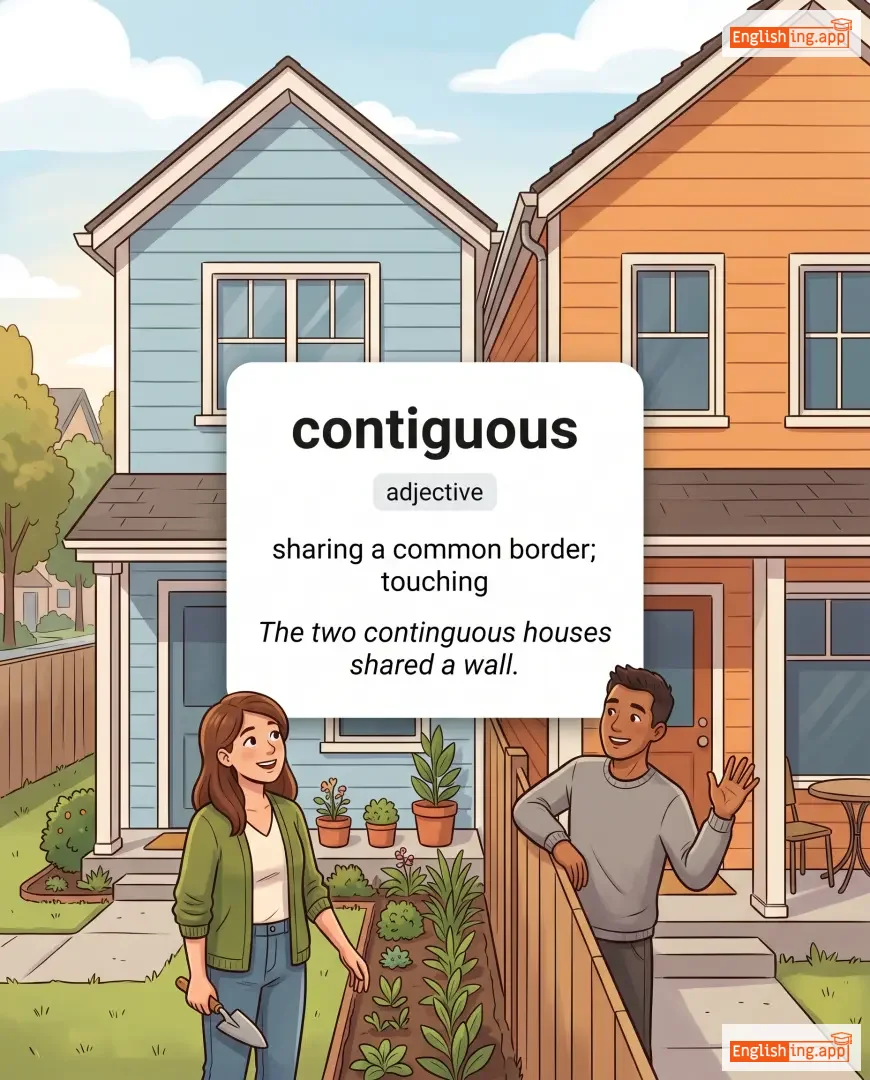
contiguous definition card — visual illustration of the meaning
adjective
/kənˈtɪɡ.ju.əs/
सन्निहित (sannihit)

sharing a common border; touching

"The two continguous houses shared a wall."

"दो सन्निहित घरों ने एक दीवार साझा की।" (Do sannihit gharon ne ek deewaar saanjha ki.)
continence definition card — visual illustration of the meaning
noun
/ˈkɒn.tɪ.nəns/
संयम (sanyam)

self-restraint, especially regarding bodily functions or desires

"He practiced continence to maintain focus on his studies."

"उसने अपनी पढ़ाई पर ध्यान केंद्रित करने के लिए संयम का अभ्यास किया।" (Usne apni padhai par dhyaan kendrit karne ke liye sanyam ka abhyas kiya.)
noun
/ˈkɒntɪnənt/
महाद्वीप (mahadveep)

one of the large landmasses on Earth such as Asia, Africa, or Europe

"Asia is the largest continent in the world."

"एशिया दुनिया का सबसे बड़ा महाद्वीप है।" (Asia duniya ka sabse bada mahadveep hai.)
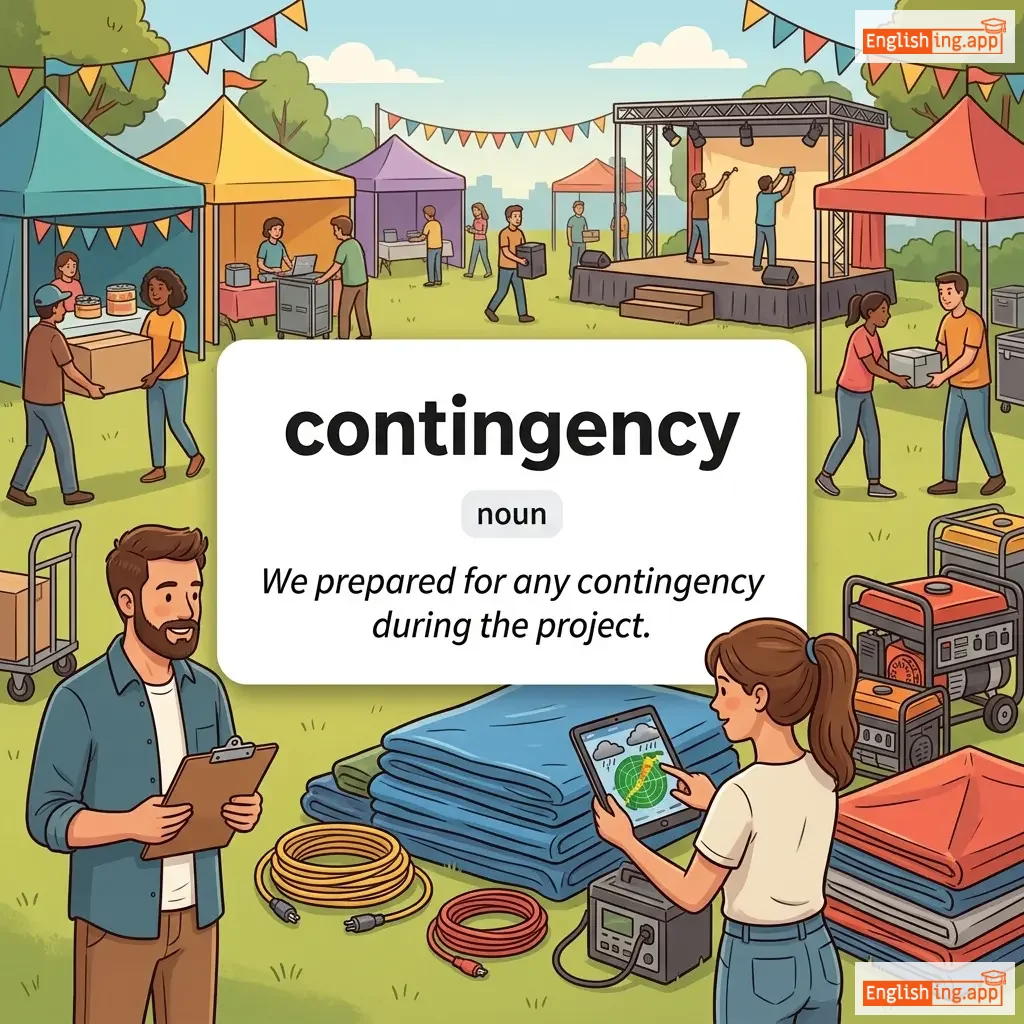
contingency definition card — visual illustration of the meaning
noun
/kənˈtɪn.dʒən.si/
संभावना (sambhavna)

a future event or circumstance that is possible but cannot be predicted with certainty

"We prepared for any contingency during the project."

"हमने परियोजना के दौरान किसी भी संभावित स्थिति के लिए तैयारी की थी।" (Hamne pariyojna ke dauran kisi bhi sambhavit sthiti ke liye taiyari ki thi.)
adjective,noun
/kənˈtɪn.dʒənt/
निर्भरशील / प्रतिनिधि दल (nirbharsheel / pratinidhi dal)

dependent on something else; a group of people representing an organization

"Attendance is contingent on prior registration. / A contingent of students attended the conference."

"उपस्थिति पूर्व पंजीकरण पर निर्भर है। / एक प्रतिनिधि दल सम्मेलन में शामिल हुआ।" (Upasthiti purv panjikaran par nirbhar hai. / Ek pratinidhi dal sammelan mein shamil hua.)
adjective
/kənˈtɪn.ju.əl/
लगातार; निरंतर; (lagatar; nirantar;)

happening repeatedly over a long period of time; constant and uninterrupted

"The continual noise from the construction site was very annoying."

"निर्माण स्थल से लगातार आ रही आवाज बहुत परेशान करने वाली थी।" (nirman sthal se lagatar aa rahi awaaz bahut pareshan karne wali thi.)
adverb
/kənˈtɪnjuəli/
निरंतर (nirantar)

in a continuous and uninterrupted way

"The rain has been falling continually for hours."

"बारिश घंटों से निरंतर गिर रही है।" (Barish ghanton se nirantar gir rahi hai.)
noun
/kənˈtɪn.ju.əns/
निरंतरता (nirantrata)

the state of continuing or being prolonged; persistence

"The continuance of the project depended on securing additional funding."

"परियोजना की निरंतरता अतिरिक्त धनराशि प्राप्त करने पर निर्भर थी।" (Pariyojna ki nirantarata atirikta dhanrashi prapt karne par nirbhar thi.)
noun
/kənˌtɪn.juˈeɪ.ʃən/
सततता (sattata)

the action of carrying something on over time; extension

"The continuation of the series was announced after the finale."

"फिनाले के बाद सीरीज़ का सततता की घोषणा की गई थी।" (Finale ke baad series ka sattata ki ghoshna ki gayi thi.)
verb
/kənˈtɪnjuː/
जारी रखना (jaari rakhna)

To keep happening, existing, or doing something without stopping.

"The rain will continue throughout the night."

"बारिश रातभर जारी रहेगी।" (Barish raatbhar jaari rahegi.)
verb
/kənˈtɪn.juːd/
जारी (jaari)

Kept happening or carried on without stopping.

"She continued working despite the challenges."

"वह चुनौतियों के बावजूद काम करती रही।" (Wah chunautiyon ke bawajood kaam karti rahi.)
verb
/kənˈtɪnjuɪŋ/
जारी रखना (jari rakhna)

to keep doing something without stopping

"They are continuing their journey despite the rain."

"वह बारिश के बावजूद अपनी यात्रा जारी रखे हुए हैं।" (Vah barish ke bawajood apni yatra jaari rakhe hue hain.)
noun
/ˌkɒn.tɪˈnjuː.ɪ.ti/
निरंतरता (nirantarata)

the state of being continuous or connected; consistency over time

"Maintaining continuity in leadership is essential for organizational stability."

"नेतृत्व में निरंतरता बनाए रखना संगठनात्मक स्थिरता के लिए महत्वपूर्ण है।" (Netritwa mein nirantarata banaye rakhna sangathanatmak sthirata ke liye mahatvapurn hai.)
adjective
/kənˈtɪn.ju.əs/
निरंतर (nirantar)

forming an unbroken whole; without interruption

"The factory operates on a continuous 24-hour schedule."

"फैक्ट्री एक निरंतर 24 घंटे की योजना पर काम करती है।" (Factory ek nirantar 24 ghante ki yojana par kaam karti hai.)
adverb
/kənˈtɪnjuəsli/
निरंतर; लगातार; निरंतरता से (nirantar; lagatar; nirantarta se)

without interruption; in an unbroken sequence

"The machine operates continuously for 24 hours."

"मशीन 24 घंटे लगातार काम करती है।" (masheen 24 ghante lagatar kaam karti hai)
noun
/kənˈtɪnjuəm/
निरंतरता (nirantrata)

A continuous sequence in which adjacent elements are not perceptibly different from each other, but the extremes are quite distinct.

"Life and death are often seen as part of the same continuum."

"जीवन और मृत्यु अक्सर एक ही निरंतरता का हिस्सा माने जाते हैं।" (Jeevan aur mrityu aksar ek hi nirantrata ka hissa maane jaate hain.)
verb
/kənˈtɔːrt/
मोड़ना (modna)

to twist or bend out of the normal shape

"She contorted her face in pain after the injury."

"चोट के बाद उसने दर्द में अपना चेहरा मोड़ा।" (Chot ke baad usne dard mein apna chehra modaa.)
noun
/kənˈtɔːrʃən/
मुड़ा हुआ या टेढ़ा आकार; सामान्य आकार से बाहर मुड़ने की क्रिया (muda hua ya tedha aakaar; samaanya aakaar se baahar mudne ki kriya)

a twisted or bent shape; the act of twisting out of the normal shape

"The gymnast's contortion amazed the audience."

"जिमनास्ट का कंटॉर्शन ने दर्शकों को आश्चर्यचकित कर दिया।" (Gymnast ka contortion ne darshako ko aashcharyachakit kar diya.)
noun
/kənˈtɔːrʃənz/
विकृतियों का बहुवचन; मुड़ी हुई या मुड़ी हुई आकृतियाँ (vikritiyon ka bahuchchan; mudhi hui ya mudhi hui aakritiyan)

plural form of contortion; multiple twisted or bent shapes

"The magician's contortions left the crowd in awe."

"द मैजिशियन के कंटॉर्शन्स ने भीड़ को हैरान कर दिया।" (Da maijishiyan ke kontorshans ne bhir ko hairan kar diya.)