वोकैबुलरीज

इंग्लिश वोकैबुलरी डिस्कवर, लर्न और मास्टर करें

adjective
/ˌkæləˈrɪfɪk/
कैलोरीयुक्त (kailoriyukt)

Relating to the amount of energy contained in food or fuel.

"Chocolate is highly calorific, so it should be eaten in moderation."

"चॉकलेट अत्यधिक कैलोरीयुक्त है, इसलिए इसे संयम में खाना चाहिए।" (Choklet atyadhik kailoriyukt hai, isliye ise sanyam mein khana chahiye.)
verb
/kəˈlʌmnieɪt/
बदनामी करना (badnami karna)

To make false and damaging statements about someone; to slander.

"He was furious when he realized they had calumniated his reputation."

"वह गुस्से में था जब उसे एहसास हुआ कि उन्होंने उसकी प्रतिष्ठा को बदनाम कर दिया था।" (Vah gusse mein tha jab use ehsaas hua ki unhone uski pratishtha ko badnaam kar diya tha.)
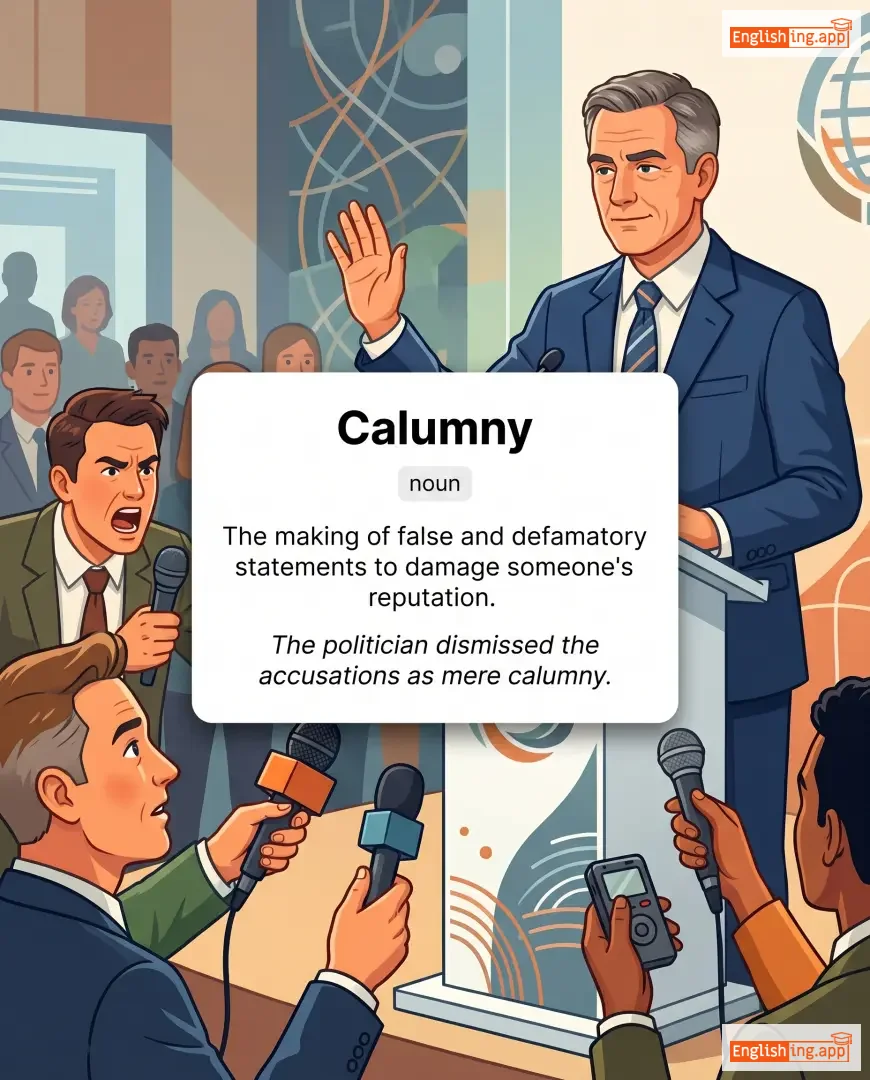
Calumny definition card — visual illustration of the meaning
noun
/ˈkæləmni/
झूठी निंदा (jhoothi ninda)

The making of false and defamatory statements to damage someone's reputation.

"The politician dismissed the accusations as mere calumny."

"राजनीतिज्ञ ने आरोपों को केवल झूठी निंदा कहकर खारिज कर दिया।" (Rajnaitik ne aaropon ko keval jhoothi ninda kehkar kharij kar diya.)
noun
/ˈkælvəri/
गोल्गोथा (kailvari)

A place or experience of intense suffering, originally the site of Jesus’s crucifixion.

"For many refugees, the journey across the desert was a calvary."

"कई शरणार्थियों के लिए, मरुभूमि के पार की यात्रा एक कैल्वरी थी。" (kai sharanarthiyon ke liye, marubhoomi ke paar ki yatra ek kailvari thi)
noun
/ˈkælvɪnɪzəm/
कैल्विनवाद (kalvinvaad)

A Protestant theological system based on John Calvin’s teachings, emphasizing predestination and the sovereignty of God.

"Calvinism played a major role in shaping Protestant theology."

"कैल्विनवाद ने प्रोटेस्टेंट धर्मशास्त्र को आकार देने में महत्वपूर्ण भूमिका निभाई।" (Kalvinvaad ne Protestant dharmashastra ko aakar dene mein mahatvapurn bhoomika nibhayi.)
verb
/ˈkælvɪnaɪz/
कैल्विनवाद के सिद्धांतों के साथ प्रभावित करना (kalvinvaad ke siddhanton ke saath prabhavit karna)

to imbue with the principles or doctrines of Calvinism

"The preacher sought to calvinize the community with strict teachings."

"धर्मोपदेशक ने सख्त उपदेशों के साथ समुदाय को कैल्विनवाद से प्रभावित करने की कोशिश की।" (Dharmopdeshak ne sakht updeshon ke saath samudaay ko kalvinvaad se prabhavit karne ki koshish ki.)
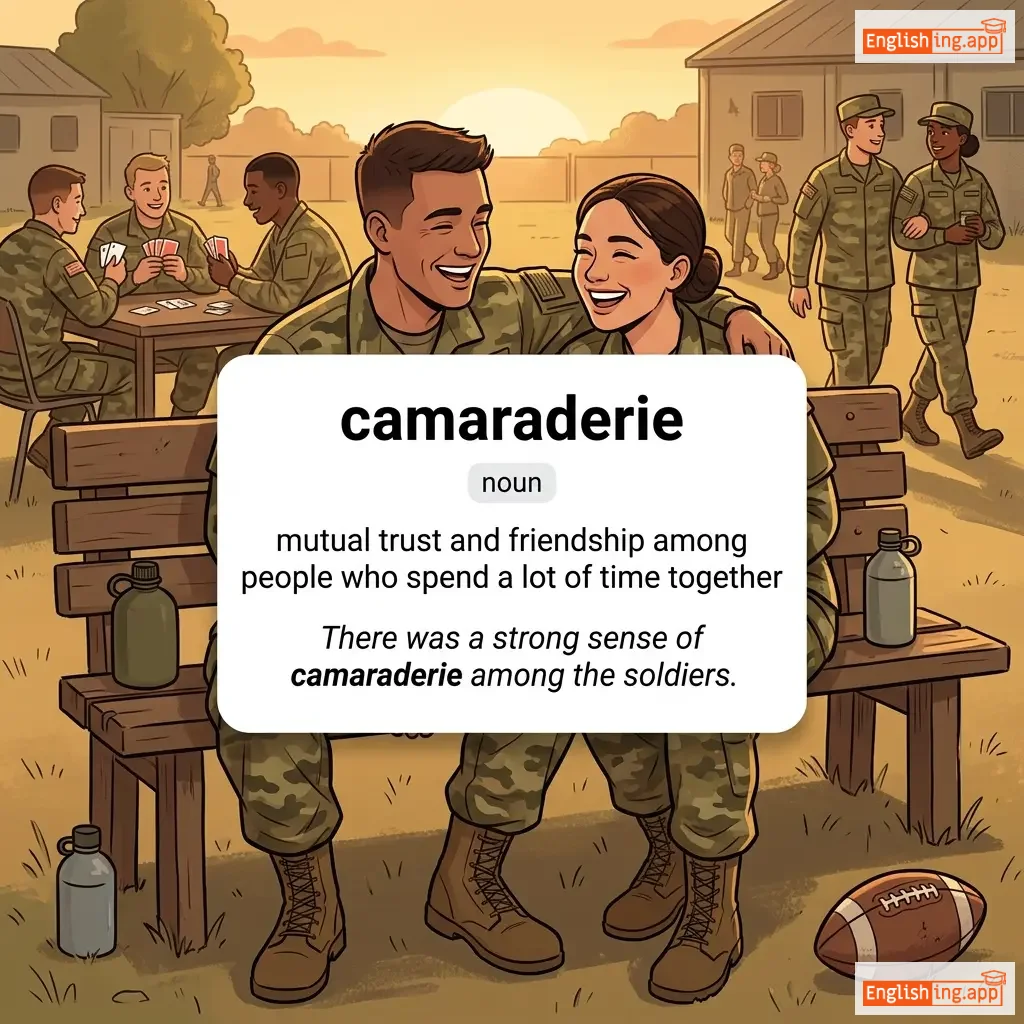
camaraderie definition card — visual illustration of the meaning
noun
/ˌkæməˈrɑːdəri/
सहयोगिता (sahyogita)

mutual trust and friendship among people who spend a lot of time together

"There was a strong sense of camaraderie among the soldiers."

"वहां सैनिकों के बीच एक मजबूत सहयोगिता की भावना थी।" (Vahan sainiko ke beech ek majboot sahyogita ki bhavna thi.)
verb
/keɪm/
आया (aaya)

past tense of 'come'

"She came to the party on time."

"वह पार्टी में समय पर आई।" (Wah party mein samay par aayi.)
noun
/ˈkæm.əl/
ऊँट (unt)

a large animal with one or two humps on its back that lives in hot dry places

"The camel walked slowly across the desert sand."

"ऊँट रेगिस्तान की रेत पर धीरे-धीरे चला।" (unt registan ki ret par dheere-dheere chala)
noun
/ˈkæmi.oʊ/
कैमियो (cameo)

a small but significant role in a play, film, or show, often performed by a well-known person

"The actor made a surprise cameo in the movie."

"उस अभिनेता ने फिल्म में एक हैरान करने वाला कैमियो किया।" (Us abhineta ne film mein ek hairan karne wala cameo kiya.)
noun
/ˈkæm.rə/
कैमरा (kamera)

a device used for taking photographs or recording videos

"She bought a new camera for her photography class."

"उसने अपनी फोटोग्राफी क्लास के लिए एक नया कैमरा खरीदा।" (Usne apni photography class ke liye ek naya kamera kharida.)
noun
/ˈkæməˌflɑːʒ/
छद्मवेश (chadmvish)

the act of hiding or disguising something by making it blend with its surroundings

"The soldiers used camouflage to hide from the enemy."

"सैनिकों ने दुश्मन से छिपने के लिए कैमुफ्लाज का उपयोग किया।" (Sainikon ne dushman se chhupne ke liye camouflage ka upyog kiya.)
noun, verb
/kæmp/
शिविर (shivir)

a place where people stay temporarily in tents or cabins, often outdoors; to stay in such a place

"We decided to camp by the lake during the summer holiday."

"हमने गर्मी की छुट्टियों में झील के पास कैम्प करने का फैसला किया।" (Hamne garmi ki chhuttiyon mein jheel ke paas camp karne ka faisla kiya.)
noun, verb
/kæmˈpeɪn/
अभियान (abhiyan)

a planned series of activities to achieve a specific goal, especially in politics, marketing, or war

"The company launched a campaign to promote its new product."

"कंपनी ने अपने नए उत्पाद को बढ़ावा देने के लिए एक अभियान शुरू किया।" (Company ne apne naye utpad ko badhawa dene ke liye ek abhiyan shuru kiya.)
noun
/ˈkæm.fər/
कैंफर (kaimphar)

a white crystalline substance with a strong aromatic smell, used in medicine and religious ceremonies

"The temple was filled with the fragrant smoke of burning camphor."

"मंदिर जलते हुए कैफर की खुशबू से भरा हुआ था।" (mandir jalte hue kaimphar ki khushboo se bhara hua tha.)
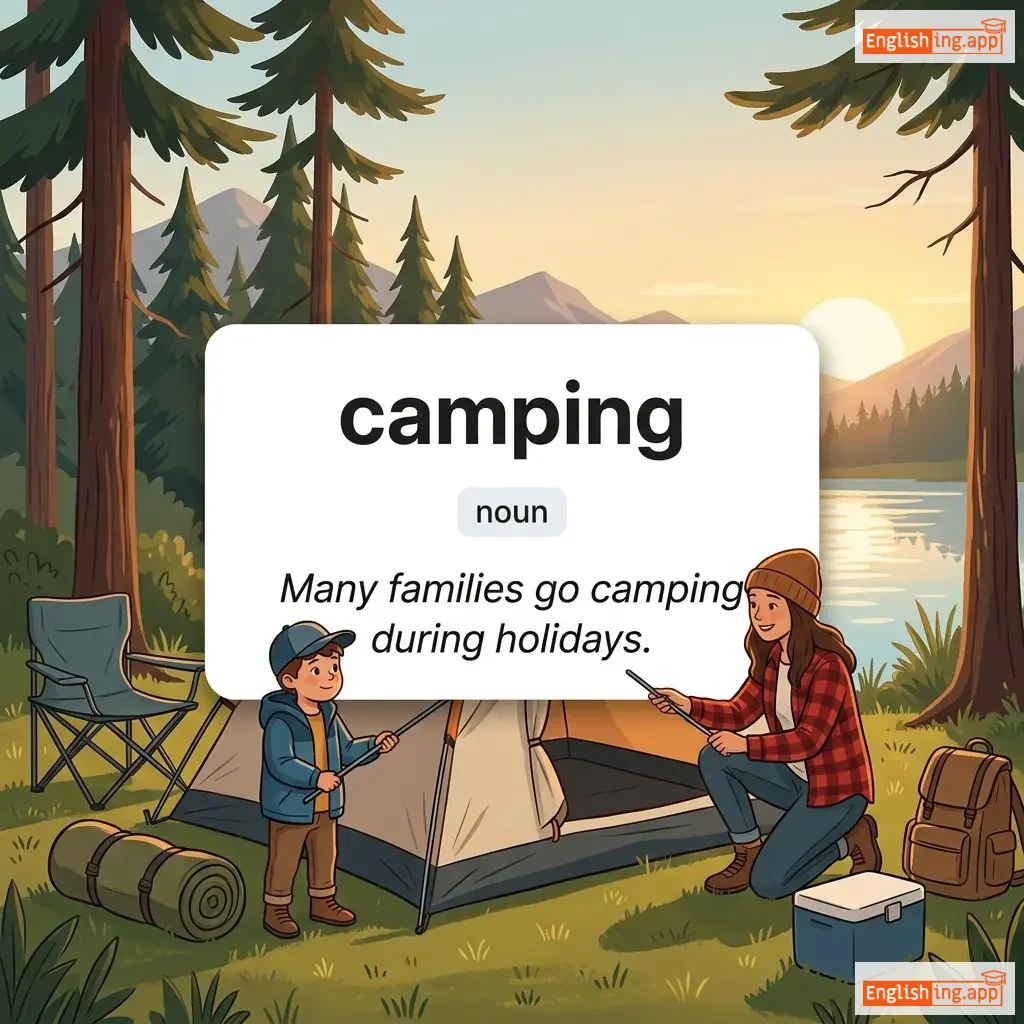
camping definition card — visual illustration of the meaning
noun
ˈkæm.pɪŋ
कैम्पिंग (camping)

Living outdoors temporarily, especially for recreation; staying in a tent or similar shelter.

"Many families go camping during holidays."

"कई परिवार छुट्टियों में कैम्पिंग करने जाते हैं।" (Kai parivaar chhuttiyon mein camping karne jaate hain.)
noun
/ˈkæmpəs/
कैम्पस (campas)

The grounds and buildings of a university, college, or school.

"The university campus is filled with students during the fall semester."

"विश्वविद्यालय का परिसर पतझड़ सेमेस्टर के दौरान छात्रों से भरा हुआ है।" (vishwavidyalay ka parisar patjhad semester ke dauran chhatron se bhara hua hai.)
modal verb
/kæn/
कर पाना (kar paana)

to be able to; to have the ability or possibility to do something

"I can solve this problem easily."

"मैं इस समस्या को आसानी से हल कर सकता हूँ।" (Main is samasya ko aasani se hal kar sakta hoon.)
noun
/ˈkeɪ.nə.naɪt/
कैनानी (kanani)

a member of a people who lived in the ancient land of Canaan in the Middle East

"The Canaanites were known for their advanced trade networks."

"कैनानी अपने उन्नत व्यापार नेटवर्क के लिए प्रसिद्ध थे।" (Kanani apne unnati vyapar network ke liye prasiddh the.)
adjective
/kəˈneɪdiən/
कनाडाई (kanadai)

Relating to Canada or its people.

"She enjoys Canadian culture and traditions."

"वह कनाडाई संस्कृति और परंपराओं का आनंद लेती है।" (Wah kanadai sanskriti aur paramparao ka anand leti hai.)
noun
/kəˈnæl/
नहर (nahar)

an artificial waterway constructed for navigation, irrigation, or drainage

"The canal was built to help transport goods across the region."

"नहर का निर्माण क्षेत्र में सामान के परिवहन में मदद करने के लिए किया गया था।" (Nahar ka nirman kshetra mein saman ke parivahan mein madad karne ke liye kiya gaya tha.)
canard definition card — visual illustration of the meaning
noun
/kəˈnɑːrd/
अफवाह (kanard)

a false or unfounded story or rumor

"The article turned out to be nothing more than a canard."

"यह लेख अंततः सिर्फ एक अफवाह ही निकला।" (yah lekh antatah sirf ek afvaah hi nikla)
noun
/kəˈnɛəri/
कैनरी (canary)

a small, usually yellow bird known for its singing; also used as a warning sign in dangerous conditions

"The canary sang beautifully in its cage."

"कैनरी अपने पिंजरे में सुंदरता से गा रहा था।" (canary apne pinjare mein sundarta se gaa raha tha.)
verb
/ˈkænsəl/
रद्द करना (radd karna)

to decide that something planned will not take place

"The flight was canceled due to heavy rain."

"भारी बारिश के कारण उड़ान रद्द कर दी गई थी।" (Bhaari baarish ke kaaran udan radd kar di gayi thi.)
noun
/ˌkænsəˈleɪʃən/
रद्दीकरण (raddikaran)

the act of stopping something that was planned or scheduled; the act of nullifying or invalidating something

"The airline announced the cancellation of several flights due to bad weather."

"खराब मौसम के कारण कई उड़ानों को रद्द कर दिया गया।" (kharab mausam ke karan kai udaan ko radd kar diya gaya)
noun
/ˈkænsər/
कैंसर (cancer)

A disease in which abnormal cells divide uncontrollably and destroy body tissue.

"Smoking is a leading cause of lung cancer."

"धूम्रपान फेफड़ों के कैंसर का एक प्रमुख कारण है।" (Dhoomrapan fephadon ke cancer ka ek pramukh kaaran hai.)
adjective
/ˈkændɪd/
खुला (khula)

Truthful and straightforward; frank

"She gave a candid account of the challenges she faced."

"उसने जो कठिनाइयाँ झेली थीं, उनका एक खुला विवरण दिया।" (Usne jo kathinaaiyan jheeli thin, unka ek khula vivaran diya.)
noun
/ˈkændɪdeɪt/
उम्मीदवार (ummeedvaar)

A person who applies for a job or is nominated for election.

"The candidate gave a strong speech during the debate."

"उम्मीदवार ने बहस के दौरान एक मजबूत भाषण दिया।" (Ummeedvaar ne bahas ke dauran ek majboot bhashan diya.)
candidates definition card — visual illustration of the meaning
noun
ˈkæn.dɪ.deɪts
उम्मीदवार (umidvaar)

A person who applies for a job or is nominated for election; someone being considered for a position.

"Candidates undergo a rigorous selection process."

"उम्मीदवार एक कठोर चयन प्रक्रिया से गुजरते हैं।" (Umidvaar ek kathor chayan prakriya se guzarte hain.)
noun
/ˈkændɪdnəs/
ईमानदारी (imandari)

The quality of being open, honest, and straightforward

"Her candidness during the meeting impressed everyone."

"मीटिंग के दौरान उसकी ईमानदारी ने सभी को प्रभावित किया।" (Meeting ke dauran uski imandari ne sabhi ko prabhavit kiya.)
noun
/ˈkændl/
मোমबत्ती (mombatti)

a stick of wax with a wick that burns to give light

"She lit a candle during the power cut."

"जब बिजली चली गई तो उसने एक मोमबत्ती जलाई।" (Jab bijli chali gayi to usne ek mombatti jalayi.)
candor definition card — visual illustration of the meaning
noun
/ˈkændər/
ईमानदारी (imaan-daari)

The quality of being open and honest in expression

"His candor in admitting mistakes earned him respect."

"गलतियाँ स्वीकार करने में उसकी ईमानदारी ने उसे सम्मान दिलवाया।" (Galtiyan sweekar karne mein uski imaan-daari ne use samman dilwaya.)
noun
/ˈkændi/
चॉकलेट (choklet)

a sweet food made with sugar or chocolate, often in small pieces

"The children were excited to get candy on Halloween."

"बच्चे हैलोवीन पर कैंडी मिलने को लेकर उत्साहित थे।" (Bacche Halloween par candy milne ko lekar utsahit the.)
adjective, noun
/ˈkeɪnaɪn/
कुत्ते से संबंधित / इंसानों और जानवरों के दांत (kutte se sambandhit / insano aur janwaron ke daant)

Relating to dogs; also refers to the pointed teeth in humans and animals

"The police trained a canine unit for search operations."

"पुलिस ने खोज संचालन के लिए एक कैनाइन यूनिट को प्रशिक्षित किया।" (Police ne khoj sanchaalan ke liye ek canine unit ko prashikshit kiya.)
noun, verb
/ˈkæŋkər/
रोग (rog)

A fungal disease of plants; an ulcerous sore in the mouth; to corrupt or destroy slowly

"The tree was infected with a canker that damaged its bark."

"वृक्ष एक कैंकर से संक्रमित था जिसने उसकी छाल को नुकसान पहुँचाया।" (Vriksh ek canker se sankramit tha jisne uski chhal ko nuksan pahuchaya.)
noun
/ˈkænə/
कन्ना (kanna)

a tropical flowering plant with large, colorful flowers and broad leaves

"The bright orange canna lilies grew tall beside the pond."

"तेज नारंगी कन्ना लिलीज़ पोखर के पास लंबी होकर उग रही थीं।" (tez narangi kanna lilies pokhar ke paas lambi hokar ug rahi thin.)
noun
/ˈkæn.ɪ.bəl/
मानवभक्षी (manavbhakshi)

a person who eats the flesh of other human beings

"The explorer's journal described rumors of cannibals living on the remote island."

"अन्वेषक के जर्नल में एक दूरस्थ द्वीप पर मानवभक्षियों के होने की अफवाह का विवरण था।" (anveshak ke journal mein ek durasth dweep par manavbhakshiyon ke hone ki afwah ka vivaran tha)
noun
/ˈkænən/
तोप (top)

large heavy gun that fires cannonballs or shells

"The castle was defended by several large cannons."

"महल को कई बड़े तोपों से बचाया गया था।" (mahal ko kai bade topon se bachaya gaya tha.)
adjective
/ˈkæni/
चतुर (chatur)

Having good judgment, especially in business or practical matters; shrewd.

"She made a canny investment in real estate."

"उसने रियल एस्टेट में एक चतुर निवेश किया।" (Usne real estate mein ek chatur nivesh kiya.)
noun
/kəˈnuː/
नौका (nauka)

a narrow boat pointed at both ends and moved with a paddle

"They paddled their canoe down the peaceful stream."

"उन्होंने शांत धारा में अपनी नौका को पैडल किया।" (unhone shaant dhaara mein apni nauka ko paidal kiya)
canon definition card — visual illustration of the meaning
noun
/ˈkænən/
कानून (kanun)

A general law, rule, principle, or collection of sacred books accepted as genuine.

"The book is now considered part of the literary canon."

"यह पुस्तक अब साहित्यिक कानूनी का हिस्सा मानी जाती है।" (Yeh pustak ab sahityik kanuni ka hissa mani jati hai.)
adjective
/kəˈnɒnɪkəl/
कैनोनिकल / स्वीकृत (canonical / sveekrit)

Conforming to a general rule or accepted standard; officially recognized.

"Shakespeare’s works are considered canonical in English literature."

"शेक्सपियर के कामों को अंग्रेजी साहित्य में कैनोनिकल माना जाता है।" (Shakespeare ke kaamon ko angrezi sahitya mein canonical maana jaata hai.)
verb
/ˈkænənaɪz/
संत घोषित करना (sant ghoshit karna)

To officially declare a dead person a saint; to regard as great or significant.

"The church canonized the martyr after years of investigation."

"द चर्च ने वर्षों की जांच के बाद शहीद को संत घोषित किया।" (Da church ne varshon ki jaanch ke baad shaheed ko sant ghoshit kiya.)
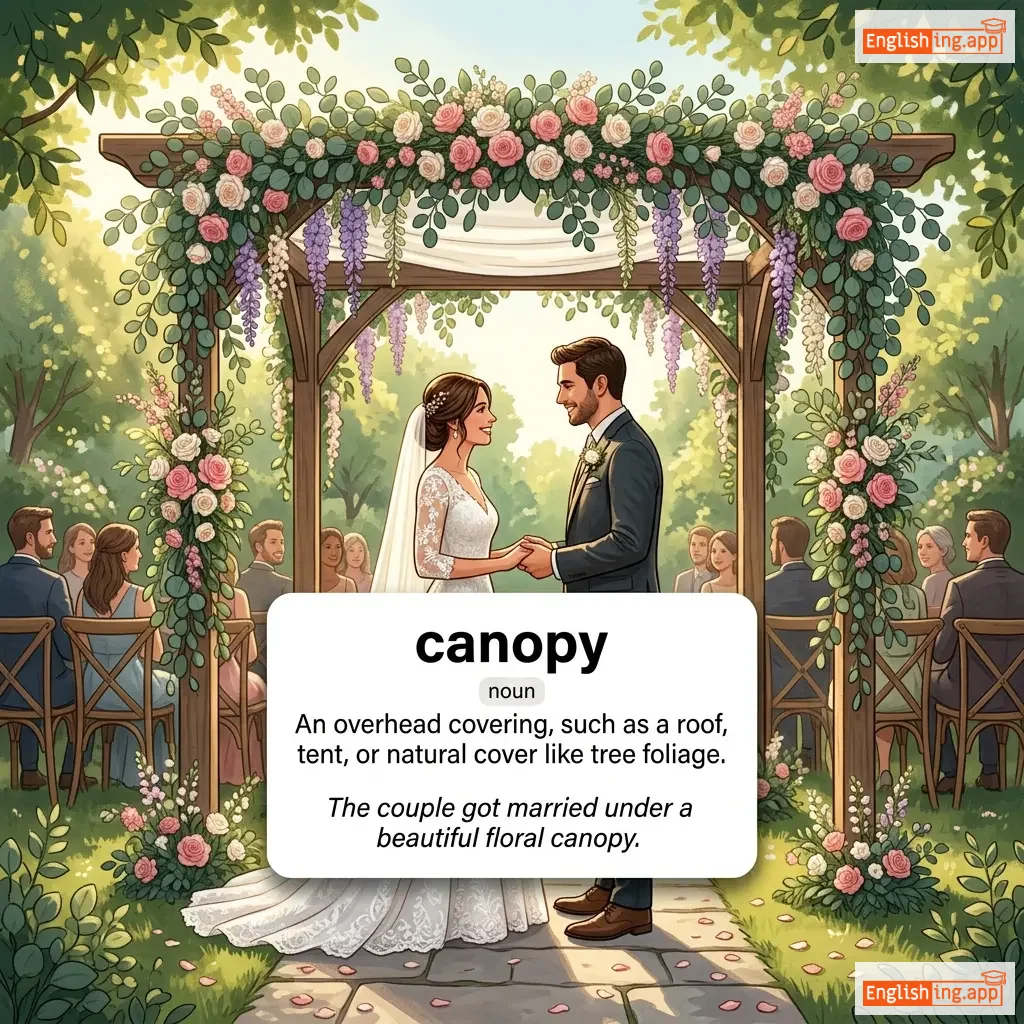
canopy definition card — visual illustration of the meaning
noun
/ˈkænəpi/
कैनोपी (canopy)

An overhead covering, such as a roof, tent, or natural cover like tree foliage.

"The couple got married under a beautiful floral canopy."

"जोड़े ने एक सुंदर फूलों की कैनोपी के नीचे शादी की।" (Jode ne ek sundar phoolon ki canopy ke neeche shaadi ki.)
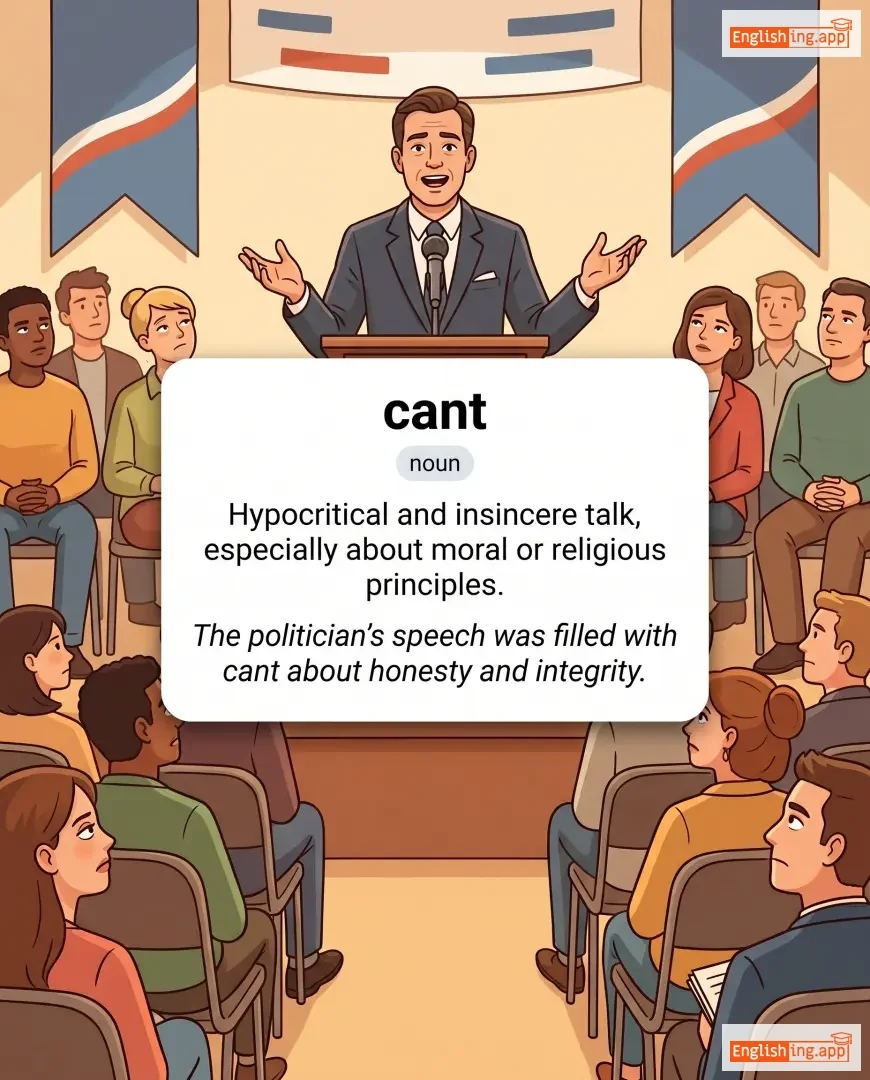
cant definition card — visual illustration of the meaning
noun
/kænt/
धोखाधड़ी की बातें (dhokhadhadi ki baatein)

Hypocritical and insincere talk, especially about moral or religious principles.

"The politician's speech was filled with cant about honesty and integrity."

"राजनेता का भाषण ईमानदारी और अखंडता के बारे में धोखाधड़ी की बातों से भरा हुआ था।" (Raajneta ka bhaashan imandari aur akhandata ke baare mein dhokhadhadi ki baaton se bhara hua tha.)
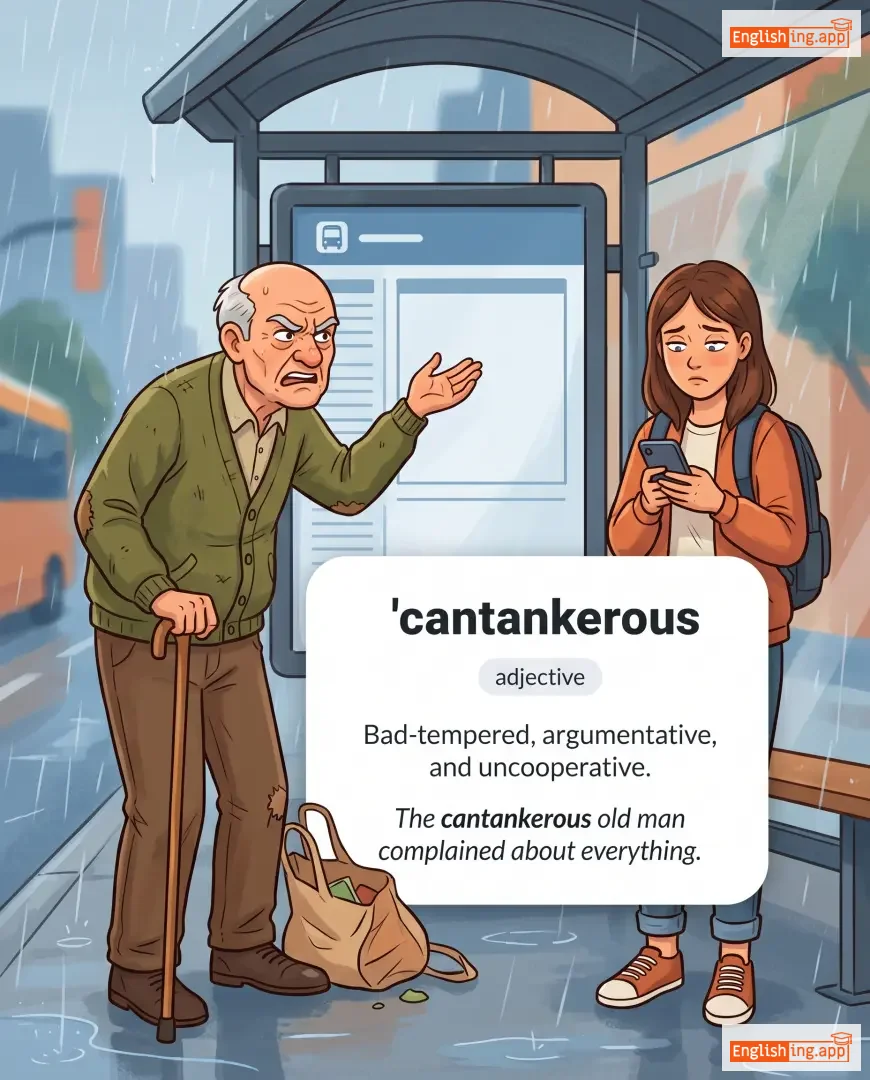
cantankerous definition card — visual illustration of the meaning
adjective
/kænˈtæŋ.kər.əs/
चिड़चिड़ा (chidhchidhā)

Bad-tempered, argumentative, and uncooperative.

"The cantankerous old man complained about everything."

"चिड़चिड़े बूढ़े आदमी ने हर चीज़ पर शिकायत की।" (Chidhchidhé boudhé aadmi ne har cheez par shikayat ki.)
noun
/kænˈtɑː.tə/
कांताटा (kaantataa)

A vocal composition with instrumental accompaniment, typically in several movements, often involving a choir.

"The choir performed a beautiful cantata during the festival."

"गाने की मंडली ने त्योहार के दौरान एक सुंदर कांताटा प्रस्तुत किया।" (Gaane ki mandali ne tyohaar ke dauran ek sundar kaantataa prastut kiya.)
verb
/ˈkæn.tər/
धीमी दौड़ (dheemi daud)

To ride a horse at a controlled, easy pace between a trot and a gallop.

"She cantered her horse across the field with ease."

"वह अपने घोड़े को मैदान में आराम से कैन्टर कर रही थी।" (Vah apne ghode ko maidan mein aaram se canter kar rahi thi.)
noun
/ˈkæn.toʊ/
कांटो (kanto)

A main division of a long poem, especially in epic poetry.

"The Divine Comedy is divided into several cantos."

"दिव्य हास्य को कई कांटों में विभाजित किया गया है।" (Divya haasya ko kai kanton mein vibhaajit kiya gaya hai.)
noun
/kænˈtuːnmənt/
छावनी (chhavani)

A permanent military station or garrison town.

"The army established a new cantonment near the border."

"सेना ने सीमा के पास एक नया छावनी स्थापित किया।" (Sena ne seema ke paas ek naya chhavani sthapit kiya.)