वोकैबुलरीज

इंग्लिश वोकैबुलरी डिस्कवर, लर्न और मास्टर करें

adverb
/ˈbɪt.ə.li/
कड़ाई से; तीव्रता से; (kadaai se; teevrata se;)

in an angry, hurt, or resentful way; extremely; severely

"She complained bitterly about the unfair treatment."

"उसने अनुचित व्यवहार के बारे में कड़ाई से शिकायत की।" (Usne anuchit vyavhaar ke baare mein kadaai se shikayat ki.)
noun
/ˈbɪtərnəs/
कड़वाहट (kadwahat)

a feeling of anger and unhappiness caused by unfair treatment or disappointment

"His bitterness after the breakup was evident to everyone."

"ब्रेकअप के बाद उसकी कड़वाहट सबको साफ दिखाई दे रही थी।" (Breakup ke baad uski kadwahat sabko saaf dikhai de rahi thi.)
noun
/ˈbɪvuˌæk/
अस्थायी शिविर (asthaayee shivir)

a temporary camp without tents or cover, usually used by soldiers or mountaineers

"The climbers set up a bivouac on the mountainside."

"चढ़ाई करने वालों ने पहाड़ की ढलान पर एक अस्थायी शिविर स्थापित किया।" (Chadhai karne walon ne pahaad ki dhalan par ek asthaayee shivir sthaapit kiya.)
noun
/bɪz/
व्यवसाय (vyavsay)

business (informal); commercial enterprise or activity

"He's been in the restaurant biz for twenty years."

"वह पिछले बीस सालों से रेस्तरां के व्यवसाय में है।" (vah pichle bees salon se restoran ke vyavsay mein hai.)
adjective
/bɪˈzɑːr/
अजीब (ajeeb)

very strange or unusual, especially so as to cause interest or amusement

"He told a bizarre story that no one could believe."

"उसने एक अजीब कहानी सुनाई जिसे कोई विश्वास नहीं कर सका।" (Usne ek ajeeb kahani sunayi jise koi vishwas nahi kar saka.)
verb, noun
/blæb/
बेकार बोलना; राज़ खोल देना (bekaar bolna; raaz khol dena)

to talk too much or reveal secrets carelessly; excessive or foolish talk

"He accidentally blabbed the surprise to everyone."

"उसने गलती से सबको सरप्राइज़ बता दिया।" (usne galti se sabko surprise bata diya)
adjective
/blæk/
काला (kala)

of the very darkest color due to the absence of light

"She wore a black dress to the party."

"वह पार्टी में काले रंग का एक पोशाक पहने हुए थी।" (Vah party mein kaale rang ka ek poshaak pehene hue thi.)
noun
/blæk ˈber.i/
काले बेर (kaale ber)

a small dark purple or black fruit that grows on bushes

"We picked fresh blackberries from the garden for our pie."

"हमने अपनी पाई के लिए बगिया से ताजे काले बेर चुने।" (hamne apni pai ke liye bagiya se taje kaale ber chune)
noun
/blæk ˈkɑːr.də.məm/
काला इलायची (kala ilaichi)

a large aromatic spice pod with a smoky flavor, commonly used in Indian and Middle Eastern cooking

"Add black cardamom to the curry for a rich, smoky flavor."

"करी में काला इलायची डालें ताकि इसका समृद्ध, धुएं जैसा स्वाद आए।" (kari mein kala ilaichi daalein taki iska samruddh, dhoon jaise swad aaye)
noun
/blæk ˈpep.ər/
काली मिर्च (kaali mirch)

a hot-tasting spice made from dried peppercorns, widely used for seasoning food

"Season the steak with salt and freshly ground black pepper."

"स्टेक को नमक और ताजे पिसे हुए काले मिर्च से सीजन करें।" (stek ko namak aur taje pise hue kaale mirch se season karein)
noun
/blæk plʌm/
काले आलू (kaale aalu)

a dark purple or black colored edible fruit with sweet and sour taste

"I picked some fresh black plums from the tree in our backyard."

"मैंने हमारे बगीचे से कुछ ताजे काले आलू तोड़े।" (maine hamare bagiche se kuch taje kaale aaloo tode.)
noun
/blæk sɔːlt/
काला नमक (kala namak)

a type of rock salt with a distinctive sulfuric flavor, commonly used in Indian cuisine

"Add a pinch of black salt to enhance the flavor of the fruit salad."

"फल सलाद के स्वाद को बढ़ाने के लिए एक चुटकी काला नमक डालें।" (phal salad ke swad ko badhane ke liye ek chutki kala namak daalein)
noun
/blæk sneɪk/
काला साँप (kaala saap)

a snake with dark or black colored skin

"The black snake slithered through the grass."

"काले साँप ने घास में रेंगते हुए देखा।" (kaale saap ne ghas mein rengte hue dekha)
noun
/blæk biː/
काले-मक्खी (kaale-makkhi)

a large dark-colored bee that makes a loud buzzing sound

"The black-bee was buzzing around the flowers in the garden."

"काले-मक्खी बगिया में फूलों के चारों ओर गूंज रही थी।" (kaale-makkhi bagiyaa mein phoolon ke chaaron or gunj rahi thi.)
verb
/ˈblækˌbɔːl/
बहिष्कृत करना (bahishkrit karna)

to exclude someone socially or vote against their membership in a group or club

"He was blackballed from the club after the controversy."

"वह विवाद के बाद क्लब से बहिष्कृत हो गया था।" (Wah vivad ke baad club se bahishkrit ho gaya tha.)
verb
/ˈblækən/
काला करना (kala karna)

to make something black or darker; to stain, soil, or tarnish

"Smoke from the fire began to blacken the walls."

"आग के धुएँ ने दीवारों को काला कर दिया।" (aag ke dhuen ne deewaron ko kala kar diya)
noun, verb
/ˈblækmeɪl/
ब्लैकमेल करना (blackmail karna)

the act of demanding money or advantage by threatening to reveal secrets; to force someone to act by using such threats

"He tried to blackmail her by threatening to reveal the documents."

"उसने दस्तावेज़ उजागर करने की धमकी देकर उसे ब्लैकमेल करने की कोशिश की।" (usne dastavez ujagar karne ki dhamki dekar use blackmail karne ki koshish ki)
noun
/ˈblæk.smɪθ/
लोहार (bleiksmith)

a person who makes and repairs things made of iron

"The blacksmith hammered the hot iron into a horseshoe."

"लोहार ने गर्म लोहे को एक घोड़े की जूती के आकार दे दिया।" (lohhaar ne garam lohe ko ek ghode ki jooti ke aakar de diya.)
noun
/bleɪd/
धार (dhar)

the flat cutting edge of a tool, knife, or weapon

"The blade of the knife was very sharp."

"चाकू का धार बहुत तेज़ था।" (Chaku ka dhaar bahut tez tha.)
noun
/bleɪn/
फफोला (phphola)

an inflammatory swelling or sore on the skin; a blister or pustule

"The doctor examined the blain on his arm."

"डॉक्टर ने उसकी बांह पर फफोले की जांच की।" (doktar ne uski baah par phphole ki jaanch ki.)
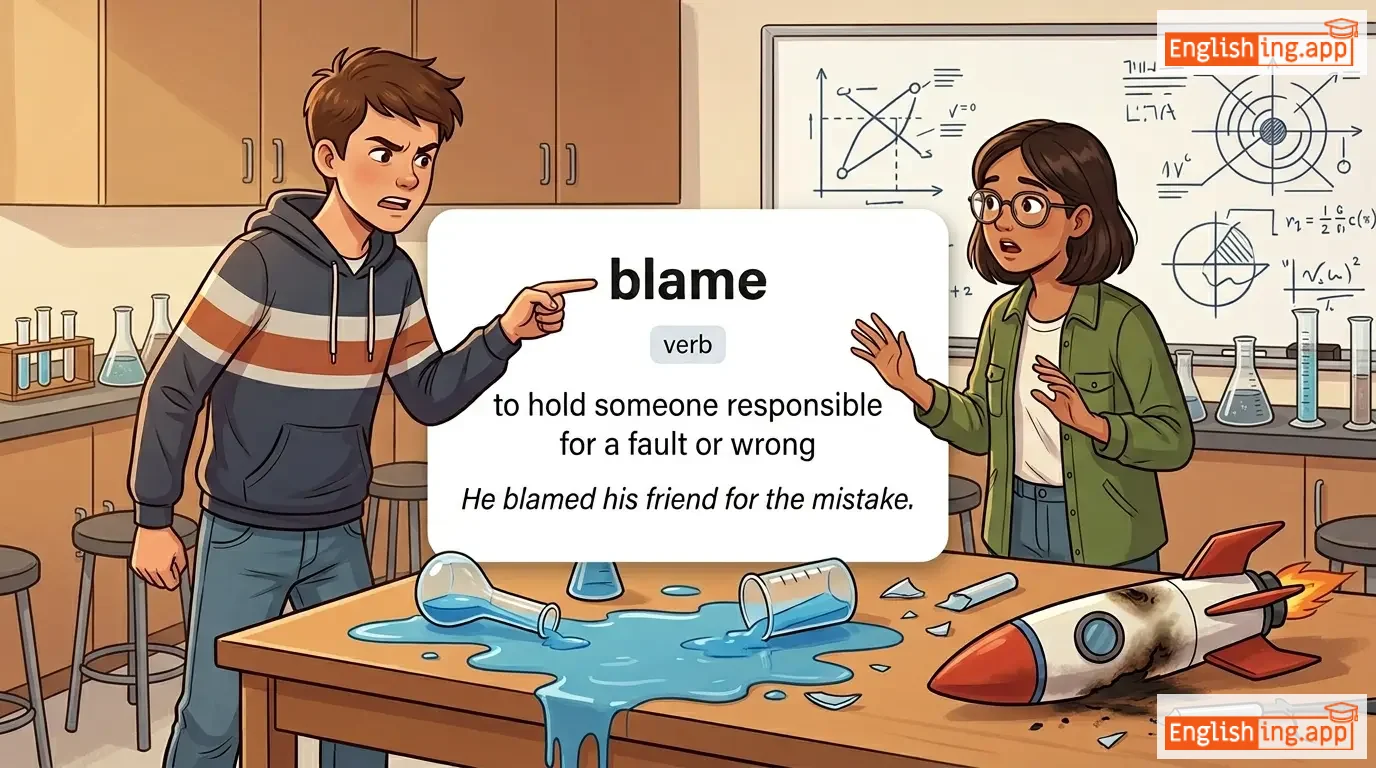
blame definition card — visual illustration of the meaning
verb
/bleɪm/
दोषारोपण करना (dosharopan karna)

to hold someone responsible for a fault or wrong

"He blamed his friend for the mistake."

"उसने अपनी दोस्त को गलती के लिए दोषी ठहराया।" (Usne apni dost ko galti ke liye doshi thahraya.)
adjective
/ˈbleɪmləs/
निर्दोष (nirdosh)

innocent of wrongdoing; not deserving blame

"She remained calm and blameless throughout the investigation."

"वह जांच के दौरान शांत और निर्दोष रही।" (Vah jaanch ke dauran shaant aur nirdosh rahi.)
verb
/blæntʃ/
पीला पड़ना (peela padna)

to turn pale from shock, fear, or to briefly boil food to remove skin or prepare it

"She blanched at the sight of blood."

"वह खून का दृश्य देख कर डर से सफेद पड़ गई।" (Wah khoon ka drishya dekh kar dar se safed pad gayi.)
adjective
/blænd/
बोर (bor)

lacking strong features, flavor, or character; dull or uninteresting

"The soup was too bland for my taste."

"सूप मेरे स्वाद के लिए बहुत बोर था।" (Soup mere swad ke liye bahut bor tha.)
verb
/ˈblændɪʃ/
चापलूसी करना (chaplusi karna)

to flatter or coax someone with kind words or praise in order to influence them

"He blandished the officials with compliments to gain their support."

"उसने समर्थन पाने के लिए अधिकारियों की चापलूसी की।" (usne samarthan paane ke liye adhikariyon ki chaplusi ki)
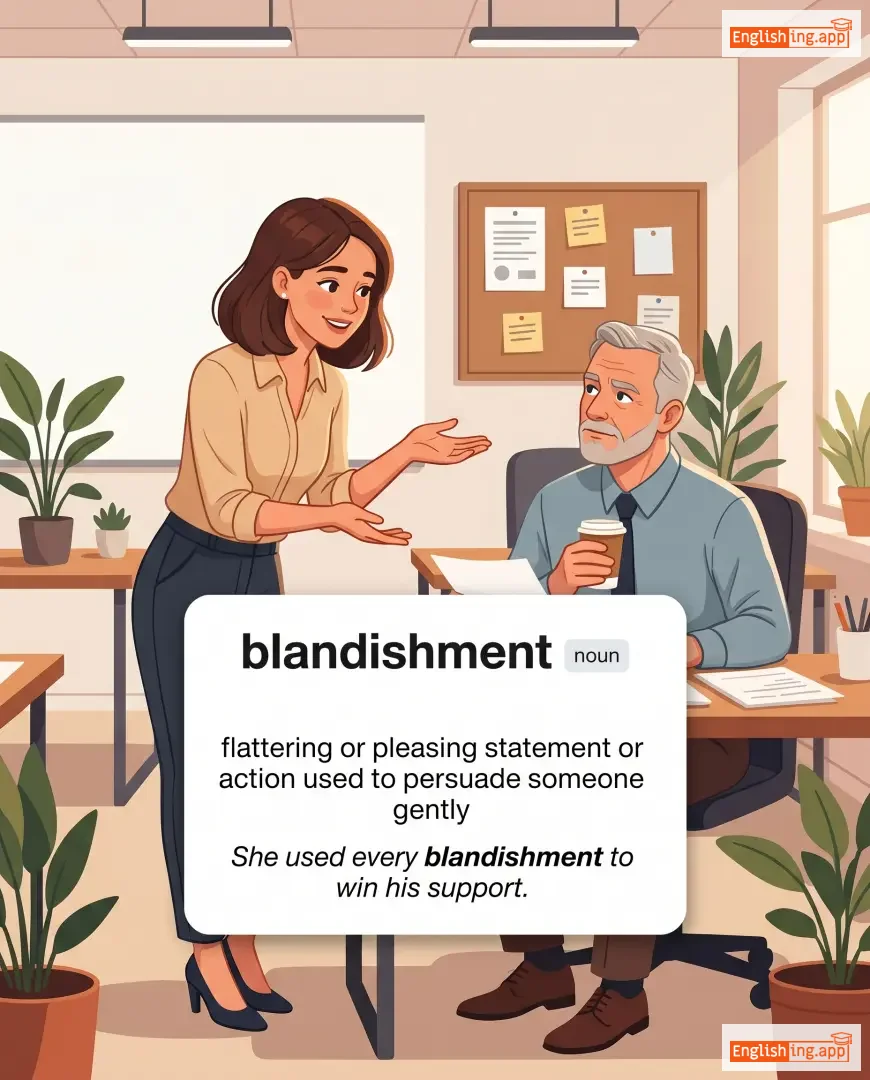
blandishment definition card — visual illustration of the meaning
noun
/ˈblændɪʃmənt/
चापलूसी (chaploosi)

flattering or pleasing statement or action used to persuade someone gently

"She used every blandishment to win his support."

"उसने उसका समर्थन जीतने के लिए हर चापलूसी का इस्तेमाल किया।" (Usne uska samarthan jeetne ke liye har chaploosi ka istemal kiya.)
adjective
/blæŋk/
खाली (khali)

showing no expression or containing nothing written, printed, or recorded.

"Her face went blank when she heard the bad news."

"खराब खबर सुनने के बाद उसका चेहरा खाली हो गया।" (kharab khabar sunne ke baad uska chehra khali ho gaya.)
noun
/ˈblæŋ.kɪt/
कंबल (kambal)

A large piece of cloth used for warmth, typically on a bed.

"She pulled the blanket over her shoulders to stay warm."

"वह गर्म रहने के लिए अपनी कंधों पर कंबल खींचे हुए थी।" (vah garm rehne ke liye apni kandhon par kambal kheenche huye thi.)
verb
/blɛər/
ज़ोर से बजाना (zor se bajana)

to make a loud, harsh sound

"The car horns blared all night."

"गाड़ी के हॉर्न पूरे रात ज़ोर से बजते रहे।" (Gaadi ke horn poore raat zor se bajte rahe.)
adjective
/blɑːˈzeɪ/
उदासीन, बेमुरव्वत (udaseen, bemuravat)

unimpressed or indifferent to something because it has been experienced so often before

"After years of luxury travel, she felt blase about another trip to Paris."

"लक्जरी यात्रा के वर्षों के बाद, उसने पेरिस की एक और यात्रा के बारे में उदासीन महसूस किया।" (Lakjari yatra ke varsho ke baad, usne Paris ki ek aur yatra ke baare mein udaseen mehsoos kiya.)
verb
/blæsˈfiːm/
निंदा करना (ninda karna)

to speak irreverently about God or sacred things

"He was accused of blaspheming during the heated argument."

"उसे गरम तर्क के दौरान निंदा करने का आरोप लगाया गया था।" (Use garam tark ke dauran ninda karne ka aarop lagaya gaya tha.)
adjective
/ˈblæs.fə.məs/
ईश्वरनिंदा करनेवाला (ishwarninda karnewala)

showing disrespect or lack of reverence for God or sacred things

"The book was banned for its blasphemous content."

"यह पुस्तक अपने ईश्वरनिंदा वाले कंटेंट के लिए प्रतिबंधित कर दी गई थी।" (Yeh pustak apne ishwarninda wale content ke liye pratibandhit kar di gayi thi.)
noun
/ˈblæs.fə.mi/
ईश्वरनिंदा (ishwarninda)

the act of speaking disrespectfully about God or sacred things

"In some countries, blasphemy is a punishable offense."

"कुछ देशों में, ईश्वरनिंदा एक दंडनीय अपराध है।" (Kuch deshon mein, ishwarninda ek dandniya aparadh hai.)
noun, verb
/blæst/
विस्फोट, जोरदार धक्का (visphot, joradar dhakka)

a strong gust of wind, an explosion, or a loud sound; to destroy or shatter by explosion

"The explosion sent a powerful blast through the building."

"विस्फोट ने बिल्डिंग के माध्यम से एक शक्तिशाली धक्का भेजा।" (Visphot ne building ke maadhyam se ek shaktishali dhakka bheja.)
adjective
/ˈbleɪtənt/
स्पष्ट (spasht)

done openly and unashamedly; obvious and offensive

"The company's blatant disregard for safety regulations angered the public."

"कंपनी की स्पष्ट अवहेलना सुरक्षा नियमों के लिए जनता को गुस्से में डाल दी।" (Company ki spasht avhelnna suraksha niyamon ke liye janta ko gusse mein dal di.)
verb
/bleɪz/
आग की लपट (aag ki lapat)

to burn brightly or powerfully

"The fire blazed for hours before it was brought under control."

"आग कई घंटों तक जलती रही, इससे पहले कि उसे नियंत्रण में लाया जा सके।" (Aag kai ghanton tak jalti rahi, isse pehle ki use niyantran mein laya ja sake.)
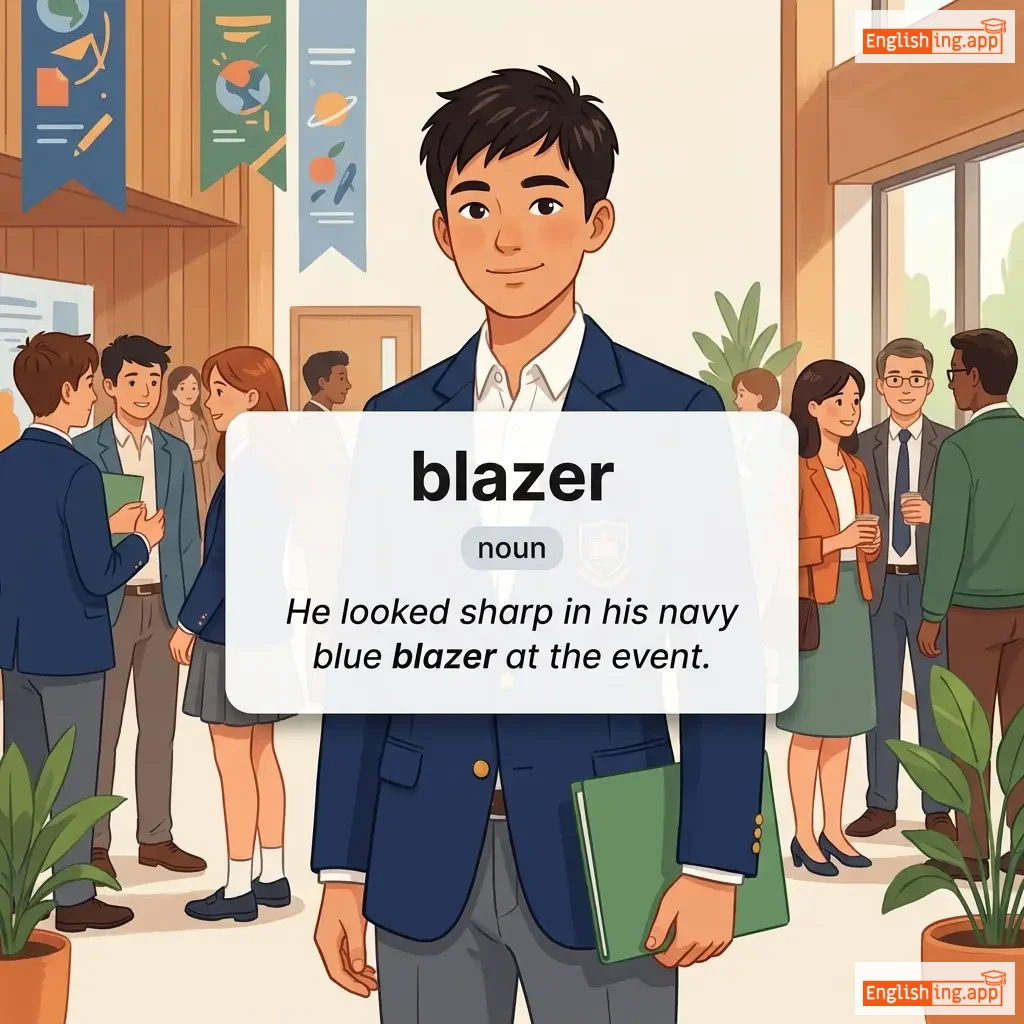
blazer definition card — visual illustration of the meaning
noun
ˈbleɪzə
ब्लेज़र (blazer)

A coloured jacket worn by members of a club, team, or school as part of a uniform.

"He looked sharp in his navy blue blazer at the event."

"वह कार्यक्रम में अपने नेवी ब्लू ब्लेज़र में तेज़ नजर आ रहा था।" (vah karyakram mein apne navy blue blazer mein tez nazar aa raha tha.)
adjective
/ˈbleɪzɪŋ/
जलता हुआ; प्रज्वलित; (jalta hua; prajwalit)

burning fiercely; extremely hot; very bright

"The blazing sun made the day extremely hot."

"जलते सूरज ने दिन को अत्यधिक गर्म बना दिया।" (jalte sooraj ne din ko atyadhik garm bana diya)
verb
/ˈbleɪzən/
प्रदर्शित करना (pradarshit karna)

to display prominently or vividly

"The slogan was blazoned across the banner in bold letters."

"स्लोगन बैनर पर बोल्ड अक्षरों में बड़े स्पष्ट रूप से प्रदर्शित किया गया था।" (Slogan banner par bold aksharon mein bade spasht roop se pradarshit kiya gaya tha.)
adjective
/bliːk/
उदासीन (udaasin)

cold, miserable, or without hope

"The future seemed bleak after the economic downturn."

"आर्थिक मंदी के बाद भविष्य अंधकारमय लग रहा था।" (Aarthik mandi ke baad bhavishya andhakarmay lag raha tha.)
verb
/bliːd/
रक्त बहना (rakt behna)

to lose blood from the body, especially due to injury

"She began to bleed from the cut on her arm."

"वह अपनी बांह पर कट से खून बहाने लगी।" (Woh apni baah par kat se khoon behane lagi.)
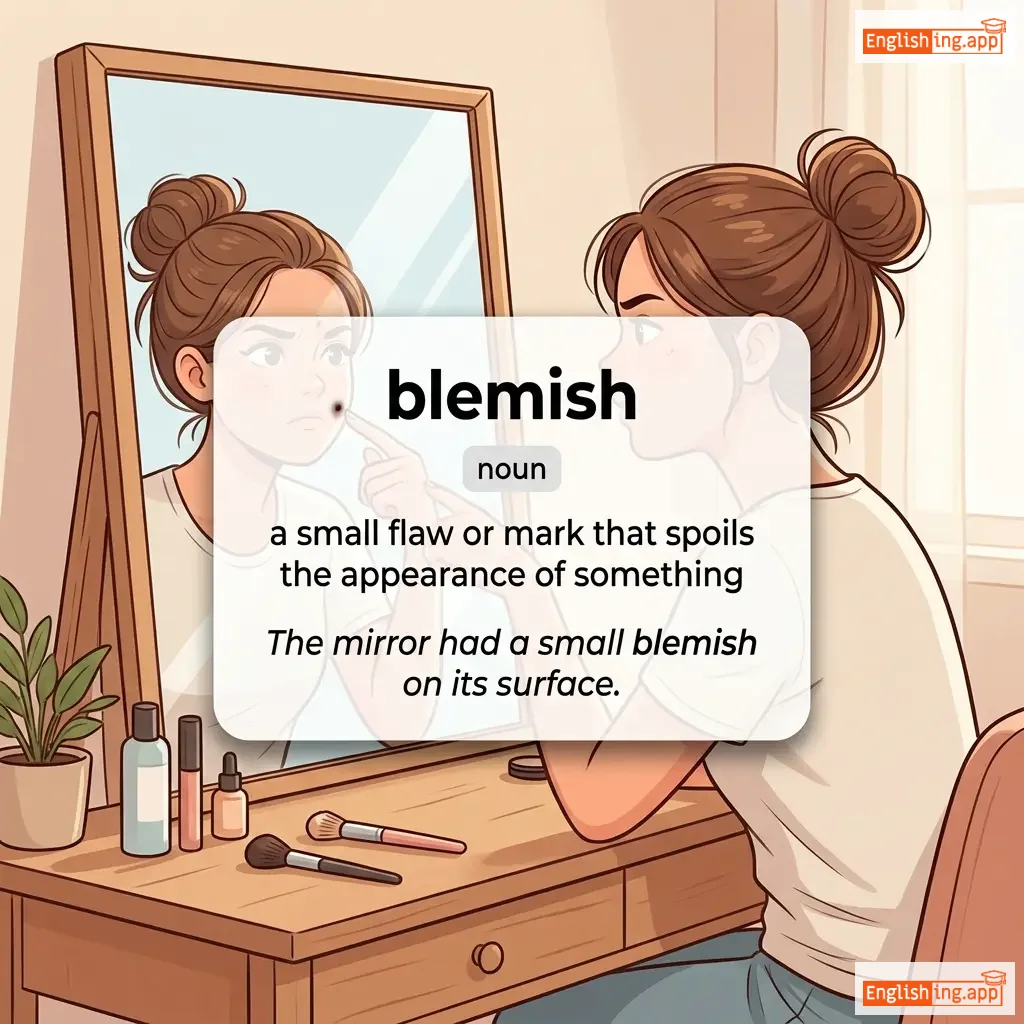
blemish definition card — visual illustration of the meaning
noun
/ˈblɛmɪʃ/
दाग (blemish)

a small flaw or mark that spoils the appearance of something

"The mirror had a small blemish on its surface."

"आइना की सतह पर एक छोटा दाग था." (aaina ki satah par ek chhota daag tha)
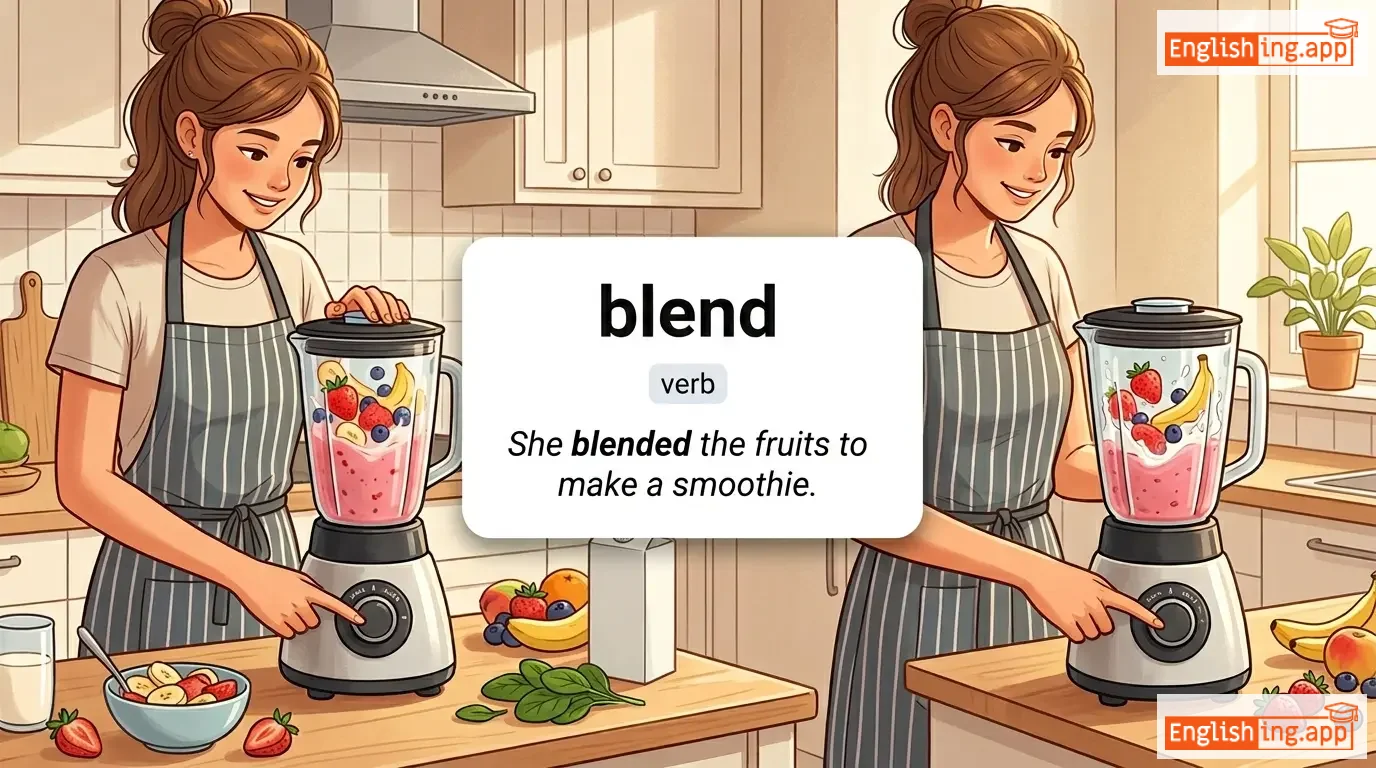
blend definition card — visual illustration of the meaning
verb
/blɛnd/
मिलाना (milana)

to mix different substances or elements together so that they form a smooth combination

"She blended the fruits to make a smoothie."

"उसने स्मूदी बनाने के लिए फलों को ब्लेंड किया।" (Usne smoothie banane ke liye phalon ko blend kiya.)
noun
/ˈblen.dər/
ब्लेंडर (blender)

an electric kitchen appliance used to mix, purée, or emulsify food and liquids

"She used the blender to make a delicious smoothie."

"उसने स्वादिष्ट स्मूदी बनाने के लिए ब्लेंडर का इस्तेमाल किया।" (usne swadisht smoothie banane ke liye blender ka istemal kiya.)
bless definition card — visual illustration of the meaning
verb
/blɛs/
आशीर्वाद देना (ashirwad dena)

to ask for divine favor or protection for someone or something.

"The priest blessed the couple at their wedding ceremony."

"पुरोहित ने शादी के समारोह में जोड़े को आशीर्वाद दिया।" (Purohit ne shaadi ke samaaroh mein jode ko ashirwad diya.)
noun
/ˈblɛsɪŋ/
आशीर्वाद (ashirvad)

a prayer asking for divine favor; something that brings happiness or benefit.

"Good health is a blessing we often take for granted."

"अच्छा स्वास्थ्य एक आशीर्वाद है जिसे हम अक्सर नज़रअंदाज़ करते हैं।" (Accha swasthya ek ashirvad hai jise hum aksar nazarandaaz karte hain.)
noun
/blaɪt/
कलंकिना (kalankina)

A disease or condition that causes plants to wither; something that spoils or damages.

"The drought was a blight on the farmer’s crops."

"सूखा किसान की फसलों पर कलंकिना था।" (Sookha kisan ki faslon par kalankina tha.)
adjective
/ˈblaɪtɪd/
विनष्ट (vinasht)

Spoiled, damaged, or destroyed.

"The blighted neighborhood was abandoned by most residents."

"विनष्ट इलाका अधिकांश निवासियों द्वारा छोड़ दिया गया था।" (Vinasht ilaka adikhansh nivasion dwara chhod diya gaya tha.)
🙈

blind

adjective
/blaɪnd/

Unable to see because of injury, disease, or a congenital condition.

"He has been blind since birth."

verb
/blɪŋk/
पलक झपकाना (palak jhapkana)

to close and open the eyes quickly.

"She blinked rapidly to clear the dust from her eyes."

"उसने अपनी आँखों से धूल साफ करने के लिए तेजी से पलक झपकाई।" (Usne apni aankhon se dhool saaf karne ke liye tezi se palak jhapkai.)