वोकैबुलरीज

इंग्लिश वोकैबुलरी डिस्कवर, लर्न और मास्टर करें

noun
/ˈbæləd/
गाने वाली कविता (gaane wali kavita)

a narrative song or poem, often sentimental or romantic

"The singer performed a moving ballad about lost love."

"गायक ने खोई हुई प्रेम कहानी पर एक दिल छूने वाला बैलड प्रस्तुत किया।" (Gaayak ne khoi hui prem kahani par ek dil chhoone wala ballad prastut kiya.)
noun
/ˈbælæst/
बलास्ट (balast)

heavy material used to stabilize a ship or vehicle

"The ship was loaded with ballast to remain steady in the storm."

"तूफान में स्थिर रहने के लिए जहाज में बैलास्ट लादा गया था।" (Toofan mein sthir rehne ke liye jahaj mein ballast laada gaya tha.)
noun
/bæˈleɪ/
नृत्य कला (nrity kala)

a highly stylized and artistic form of dance

"She has trained for years in classical ballet."

"वह वर्षों से शास्त्रीय बैले में प्रशिक्षण ले रही है।" (Wah varshon se shaastriya ballet mein prashikshan le rahi hai.)
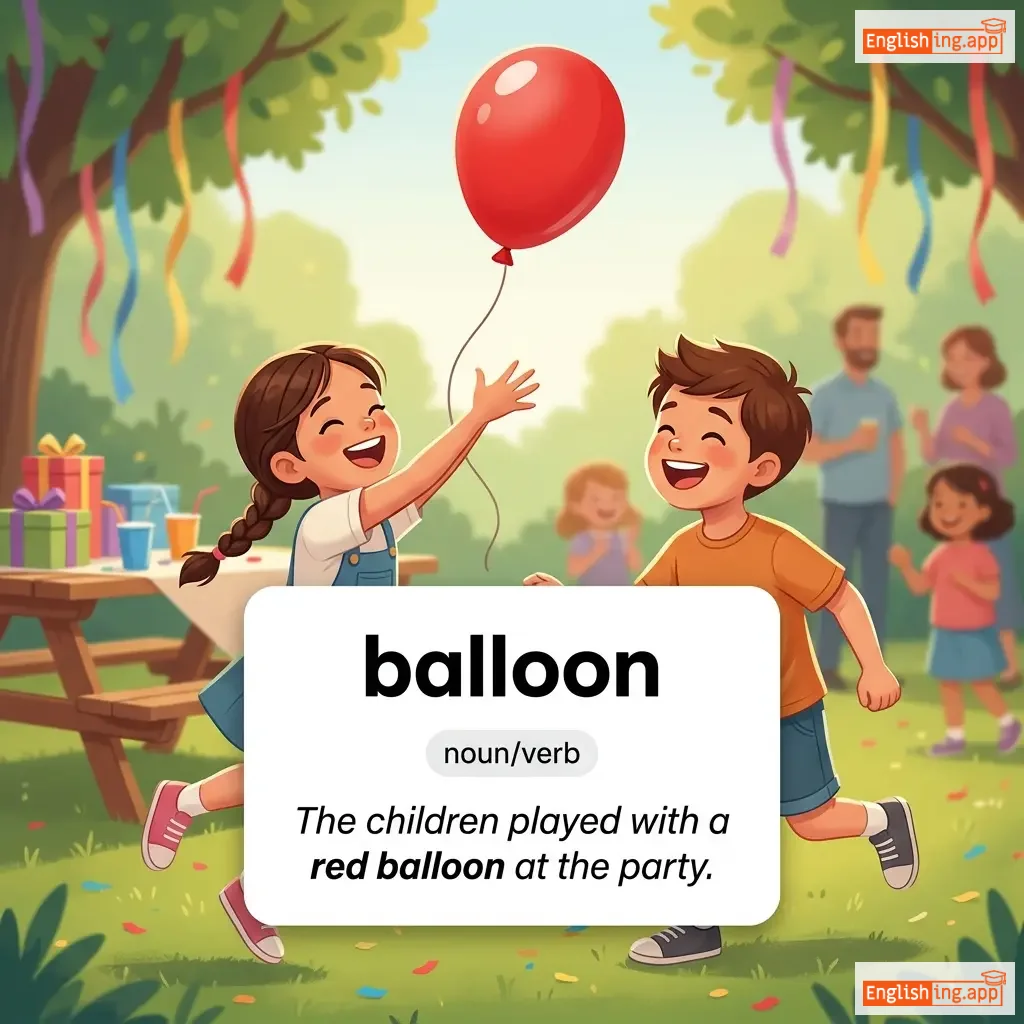
balloon definition card — visual illustration of the meaning
noun/verb
/bəˈluːn/
बैलून (baloon)

A small bag made of thin rubber or similar material that can be inflated with air or gas; as a verb, to expand rapidly.

"The children played with a red balloon at the party."

"बच्चे पार्टी में एक लाल बैलून के साथ खेल रहे थे।" (Bachche party mein ek laal baloon ke saath khel rahe the.)
noun
/ˈbælət/
मतपत्र (matpatra)

a process of voting, usually in secret; the paper used to record a vote

"Voters cast their ballot in the election."

"मतदाताओं ने चुनाव में अपना मतपत्र डाला।" (Matdataon ne chunav mein apna matpatra dala.)
noun
/bɑːm/
बाम (baam)

A soothing ointment or something that provides comfort or relief.

"The balm helped relieve the pain from her sunburn."

"बाम ने उसकी सनबर्न से दर्द को कम करने में मदद की।" (Bam ne uski sunburn se dard ko kam karne mein madad ki.)
adjective
/ˈbɑːmi/
मुलायम और सुखद गर्मी; शांतिदायक। (mulayam aur sukhad garmi; shantidayak.)

Mild and pleasantly warm; soothing.

"We enjoyed a walk on a balmy summer evening."

"हमने एक मुलायम ग्रीष्मकालीन शाम की सैर का आनंद लिया।" (hamne ek mulayam grishmkaaleen shaam ki sair ka anand liya.)
noun
/ˈbɔːlsəm/
बाम की तरह खुशबूदार रेजिन (baam ki tarah khushbudar rezin)

An aromatic resinous substance or plant used for healing or soothing.

"The tree produced a fragrant balsam used in medicine."

"वृक्ष ने एक सुगंधित बालसाम उत्पादित किया जो चिकित्सा में उपयोग किया गया।" (Vrksh ne ek sugandhit balsam utpadit kiya jo chikitsa mein upyog kiya gaya.)
noun
/ˈbɔːl.səm ˈæp.əl/
करेला (karela)

a bitter gourd vegetable with a bumpy green skin, also known as bitter melon

"Balsam apple is cooked with spices to reduce its bitter taste."

"बालसाम एपल को इसके कड़वे स्वाद को कम करने के लिए मसालों के साथ पकाया जाता है।" (balsam apple ko iske kadwe swaad ko kam karne ke liye masalon ke saath pakaya jaata hai)
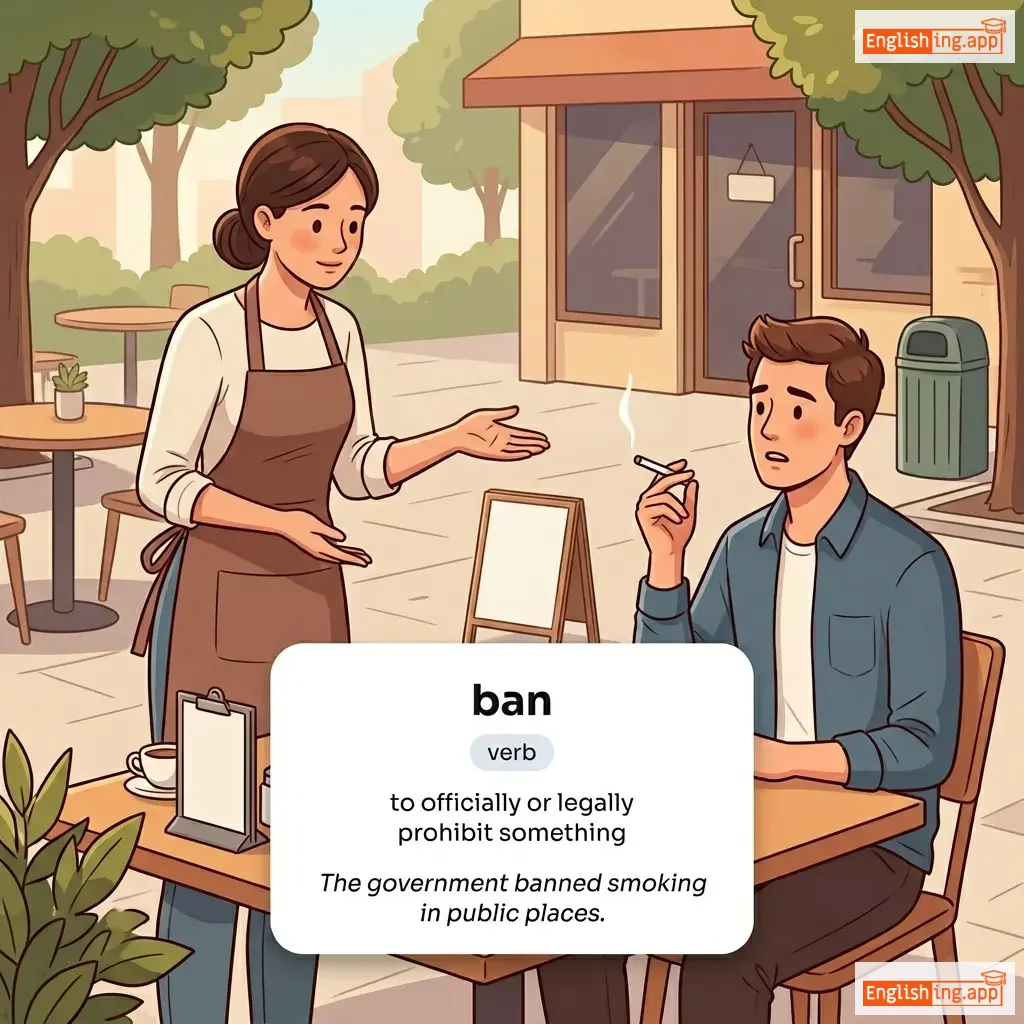
ban definition card — visual illustration of the meaning
verb
/bæn/
प्रतिबंधित करना (pratibandhit karna)

to officially or legally prohibit something

"The government banned smoking in public places."

"सरकार ने सार्वजनिक स्थानों पर धूम्रपान पर बैन लगा दिया।" (Sarkar ne sarvjanik sthanon par dhumrapan par ban laga diya.)
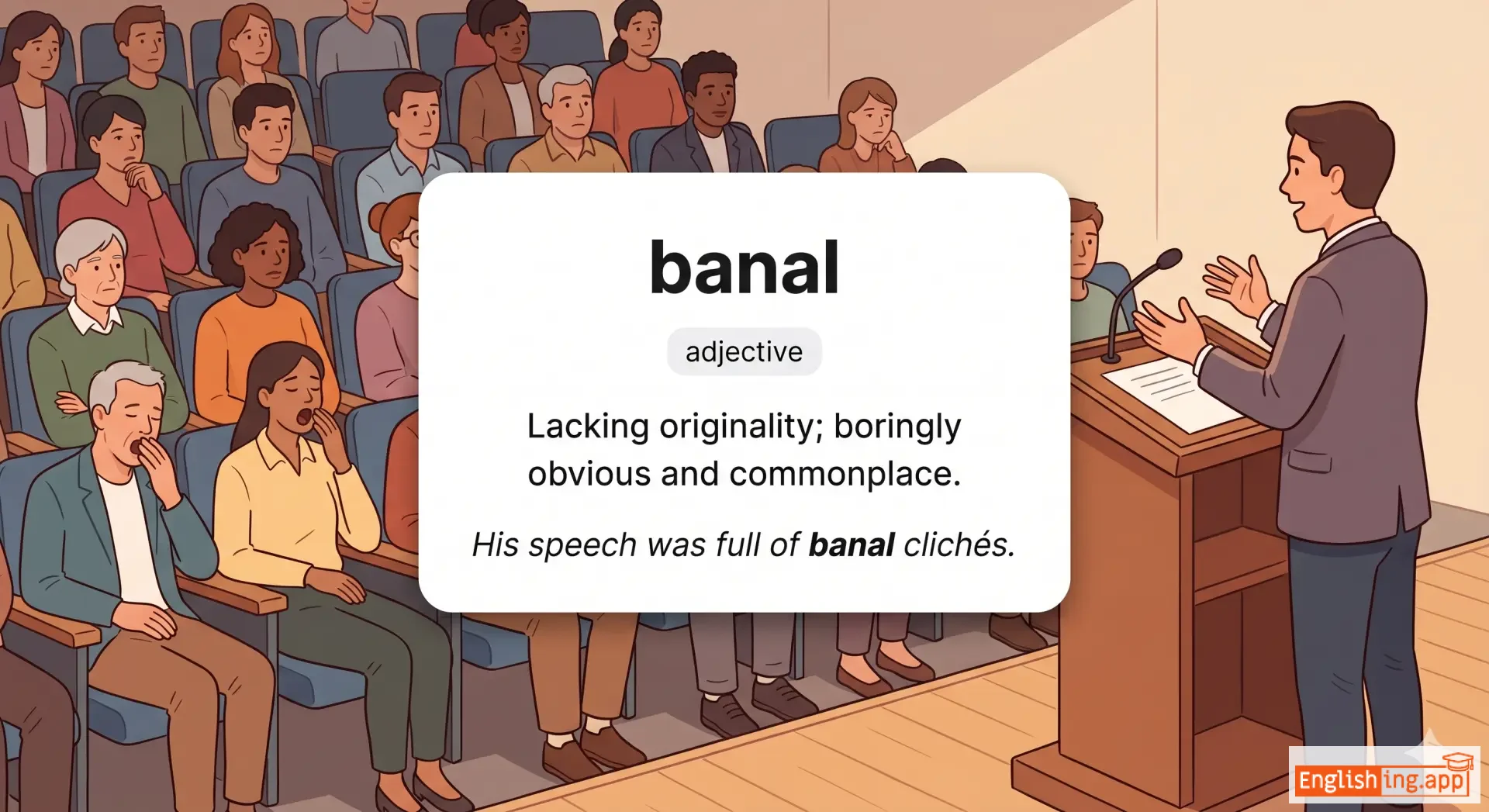
banal definition card — visual illustration of the meaning
adjective
/bəˈnɑːl/ or /ˈbeɪnəl/
साधारण (saadharan)

Lacking originality; boringly obvious and commonplace.

"His speech was full of banal clichés."

"उसका भाषण साधारण क्लिशे से भरा हुआ था।" (Uska bhashan saadharan klishes se bhara hua tha.)
noun
/bəˈnæləti/
साधारणपन (saadhaaranpan)

The condition of being unoriginal, boring, or obvious; trite remark or quality.

"The speech was criticized for its banality and lack of originality."

"स्पीच को इसके साधारणपन और मौलिकता की कमी के लिए आलोचना की गई थी।" (Speech ko iske saadhaaranpan aur maulikta ki kami ke liye aalochana ki gayi thi.)
noun
/bəˈnænə/
खुशी (khushi)

a long curved fruit with a yellow skin and soft sweet flesh inside

"She ate a ripe banana for breakfast."

"जब उसने पुरस्कार प्राप्त किया, तो वह अपनी खुशी को छुपा नहीं पाई।" (Jab usne puraskar prapt kiya, to vah apni khushi ko chhupa nahin pai.)
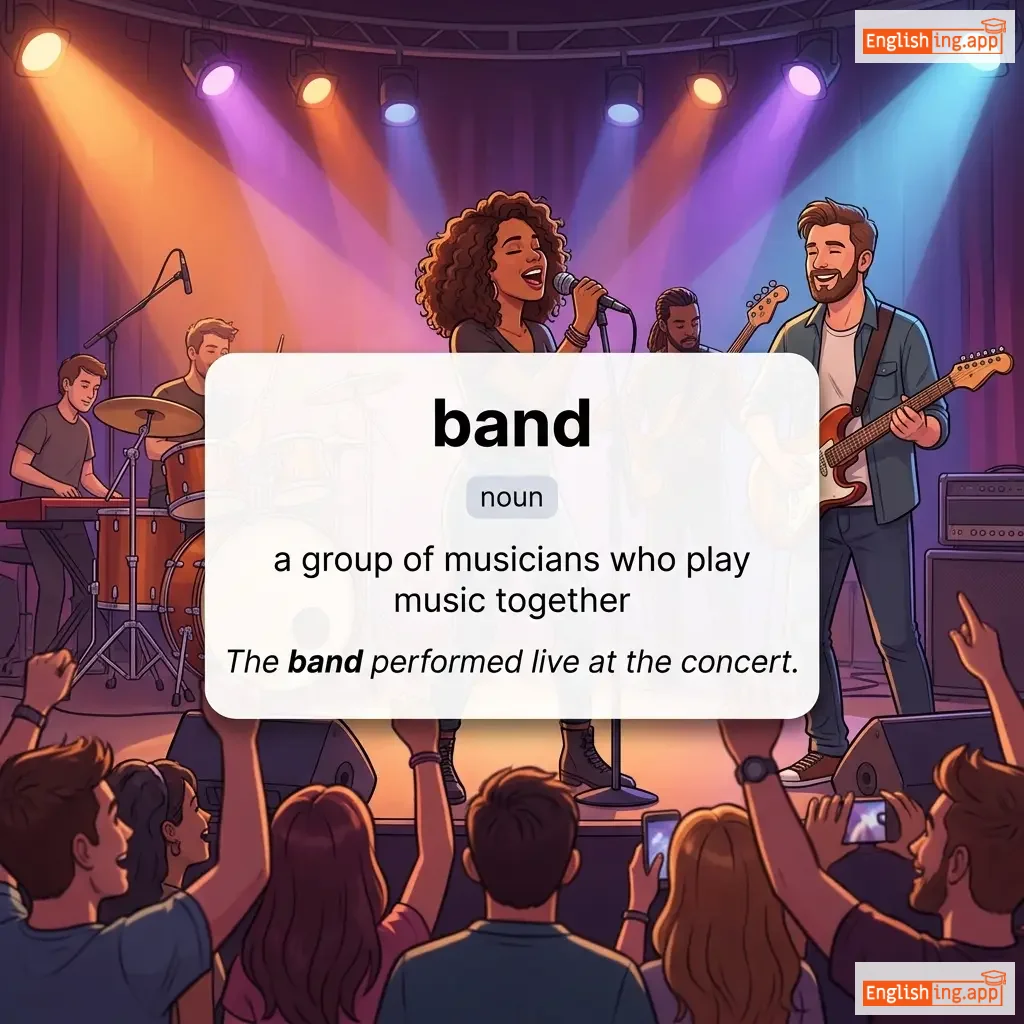
band definition card — visual illustration of the meaning
noun
/bænd/
संगीत बैंड (sangeet band)

a group of musicians who play music together

"The band performed live at the concert."

"बैंड ने कन्सर्ट में लाइव प्रदर्शन किया।" (Band ne concert mein live pradarshan kiya.)
noun, verb
/ˈbændɪdʒ/
पट्टी (patti)

a strip of material used to cover or protect a wound; to cover or wrap a wound with such material

"The nurse carefully bandaged his injured arm."

"नर्स ने उसकी घायल बाँह पर पट्टी बाँधी।" (nurse ne uski ghaayal baanh par patti baandhi)
noun
/bænˈdænə/
बड़ा रंगीन रूमाल (bada rangin rumal)

A large, often brightly colored handkerchief, typically worn on the head or around the neck.

"He tied a red bandanna around his neck."

"उसने अपनी गर्दन के चारों ओर एक लाल बैंडाना बांधा।" (Usne apni gardan ke charon or ek lal bandana bandha.)
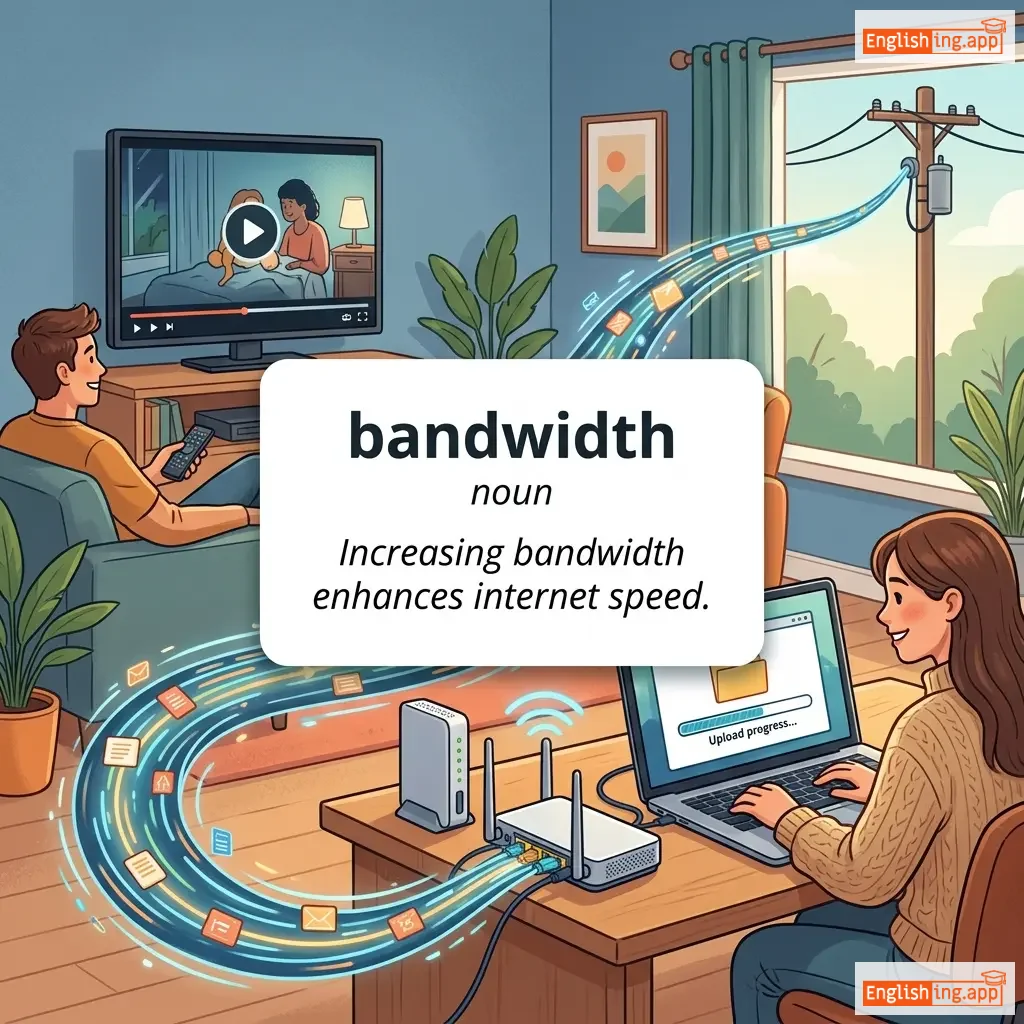
bandwidth definition card — visual illustration of the meaning
noun
ˈbænd.wɪdθ
बैंडविड्थ (bandvidth)

A range of frequencies within a given band, in particular that used for transmitting a signal; the maximum amount of data that can be transmitted in a fixed amount of time.

"Increasing bandwidth enhances internet speed."

"बैंडविड्थ बढ़ाने से इंटरनेट की गति बढ़ती है।" (bandwidth badhane se internet ki gati badhti hai.)
verb
/ˈbændi/
बातचीत करना (baatcheet karna)

To pass (words, ideas, or gossip) back and forth in a casual or argumentative way.

"They bandied jokes across the table."

"वे मेज के पार मजाक बाँड रहे थे।" (Ve mej ke paar mazak baand rahe the.)
noun
/beɪn/
शाप (shaap)

A cause of great distress, harm, or annoyance.

"Traffic jams are the bane of city life."

"यातायात जाम शहर जीवन का शाप हैं।" (Yatayat jaam shahar jeevan ka shaap hain.)
adjective
/ˈbeɪnfəl/
हानिकारक (hanikarak)

Causing harm, ruin, or destruction; deadly or poisonous.

"His baneful influence ruined the community."

"उसका हानिकारक प्रभाव समुदाय को बर्बाद कर गया।" (Uska hanikarak prabhav samudaay ko barbaad kar gaya.)
noun
/bæŋ/
एक अचानक तेज़ आवाज़; एक ज़ोरदार वार या प्रहार (ek achanak tez awaz; ek zordar war ya prahar)

a sudden loud noise; a hard blow or hit

"The door closed with a loud bang that woke everyone up."

"दरवाज़ा एक तेज़ आवाज़ के साथ बंद हुआ, जिससे सभी लोग जाग गए।" (Darwaza ek tez awaz ke saath band hua, jisse sabhi log jaag gaye.)
noun
/ˈbæŋ.ɡəl/
चूड़ी (chudi)

a rigid bracelet or anklet worn as jewelry

"She wore beautiful gold bangles on her wrists."

"उसने अपनी कलाइयों में सुंदर सोने की चूड़ियाँ पहनी थीं।" (usne apni kalaiyon mein sundar sone ki chudiyaan pehni thi.)
noun
/ˈbæn.jən/
बनियन (banian)

a sleeveless undergarment worn next to the skin; vest

"He put on a cotton banian under his shirt."

"उसने अपनी शर्ट के नीचे एक सूती बनियन पहना।" (Usne apni shart ke neeche ek sooti banian pehna.)
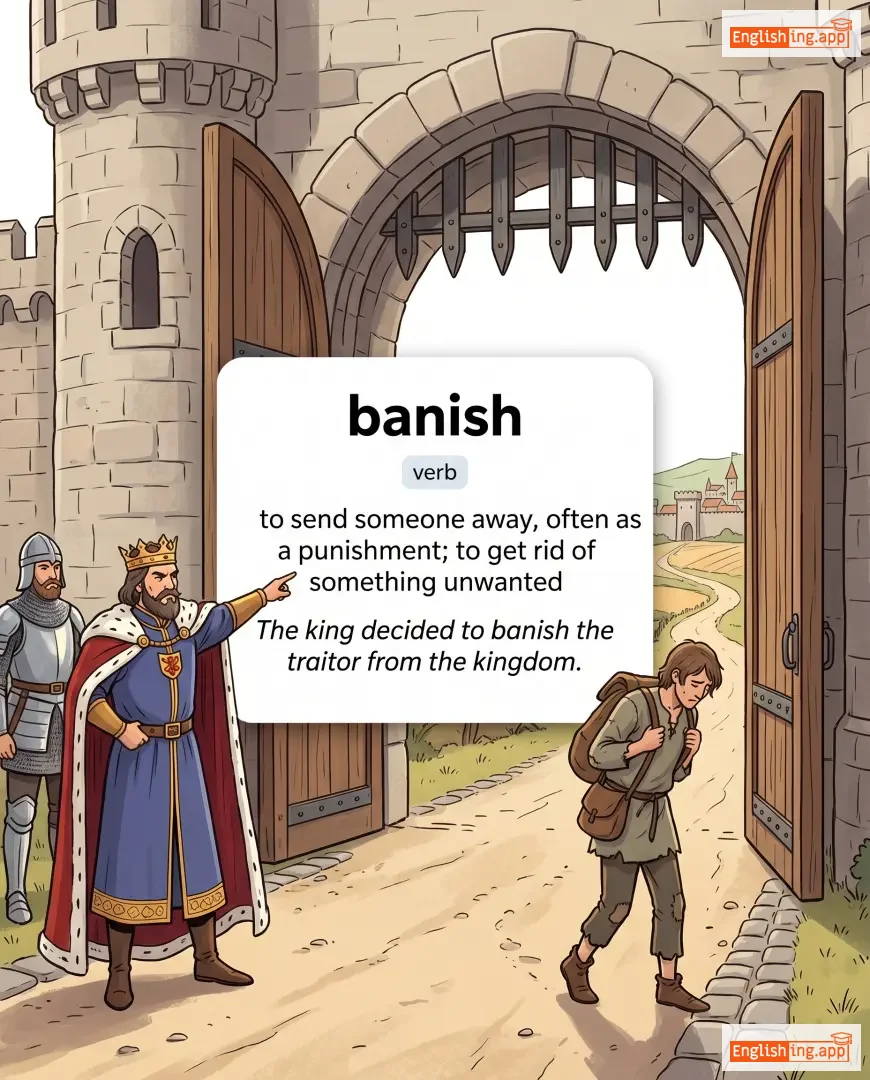
banish definition card — visual illustration of the meaning
verb
/ˈbænɪʃ/
निर्वासित करना (nirvasit karna)

to send someone away, often as a punishment; to get rid of something unwanted

"The king decided to banish the traitor from the kingdom."

"राजा ने विश्वासघाती को राज्य से निर्वासित करने का निर्णय लिया।" (Raja ne vishwashghati ko rajya se nirvasit karne ka nirnay liya.)
noun
/ˈbænɪstər/
सीढ़ी का रेलिंग (seedi ka railing)

a railing supported by posts at the side of a staircase or balcony

"She held the banister tightly while going down the stairs."

"वह सीढ़ी से नीचे उतरते समय रेलिंग को मजबूती से पकड़े हुए थी।" (Vah seedi se neeche utarte samay railing ko majbooti se pakde hue thi.)
noun/verb
/bæŋk/
बैंक (baink)

an institution where money is kept and managed; or to tilt in movement (like an airplane or riverbank)

"She deposited the money in the bank."

"उसने पैसे बैंक में जमा किए।" (Usne paise bank mein jama kiye.)
noun
/ˈbæŋkər/
बैंककर्मी (bankkarmi)

a person who works in or manages a bank

"The banker approved the loan after reviewing the documents."

"बैंककर्मी ने दस्तावेजों की समीक्षा करने के बाद लोन को मंजूरी दी।" (Bankkarmi ne dastavezon ki samiksha karne ke baad lon ko manzoori di.)
banking definition card — visual illustration of the meaning
noun
/ˈbæŋkɪŋ/
बैंकिंग या बैंकिंग सेवाएँ (banking ya banking sevayen)

the business or services provided by a bank

"Online banking has made financial transactions easier."

"ऑनलाइन बैंकिंग ने वित्तीय लेन-देन को आसान बना दिया है।" (online banking ne vittiya len-den ko aasan bana diya hai.)
noun
/ˈbæŋkrʌpt/
दिवालिया (divaliya)

a person unable to pay debts; having no money; completely lacking in something

"The company went bankrupt after years of poor financial management."

"कंपनी वर्षों के खराब वित्तीय प्रबंधन के बाद दिवालिया हो गई।" (Kampani varshon ke kharab vittiya prabandhan ke baad divaliya ho gayi.)
noun
/ˈbæŋkrʌptsi/
दीवालियापन (diwaliyapan)

the state of being unable to pay debts owed, declared by a legal process

"The company declared bankruptcy after months of financial struggles."

"कंपनी ने महीनों की वित्तीय संघर्षों के बाद दीवालियापन घोषित किया।" (Kampani ne maheeno ki vittīya sangharsho ke baad diwaliyapan ghoṣhit kiya.)
noun
/ˈbænər/
बैनर (bainar)

a large printed sign used for advertisements or announcements

"The company displayed a banner to advertise their new product."

"कंपनी ने अपने नए उत्पाद का प्रचार करने के लिए एक बैनर दिखाया।" (Kampani ne apne naye utpaad ka prachaar karne ke liye ek bainar dikhaya.)
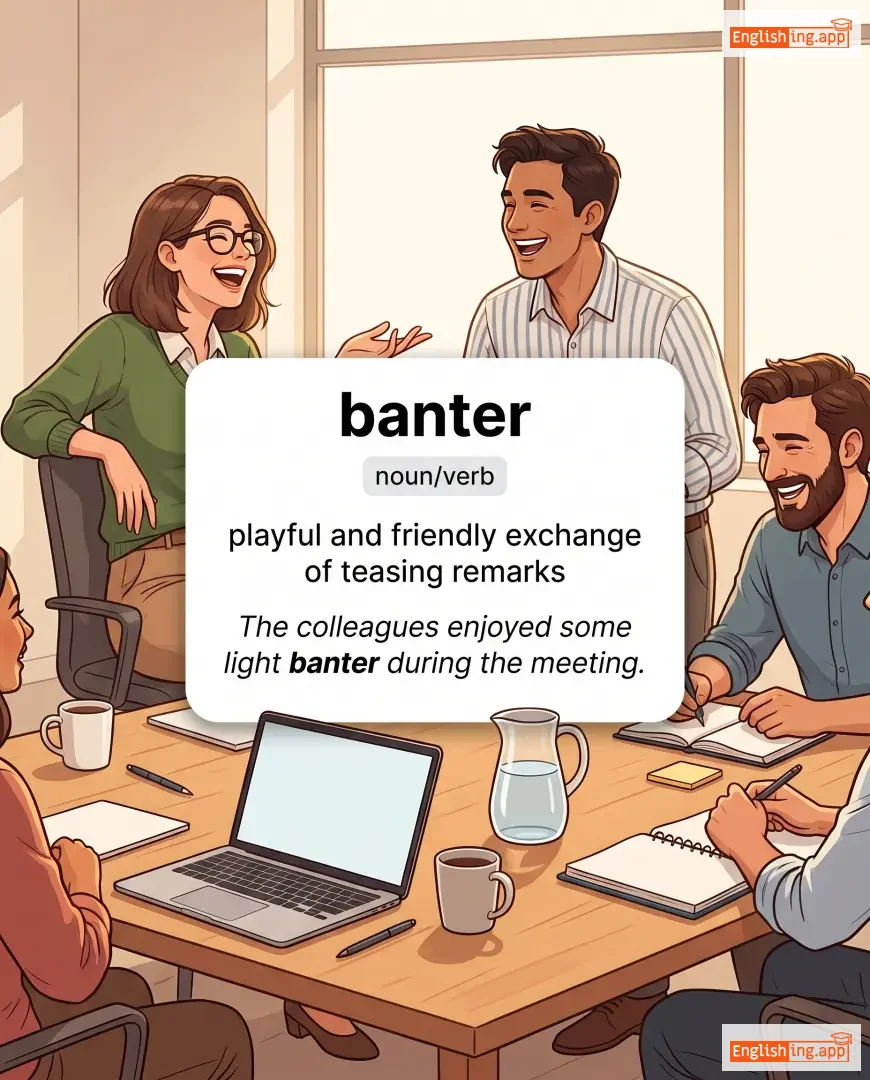
banter definition card — visual illustration of the meaning
noun/verb
/ˈbæntər/
मज़ाक (mazaak)

playful and friendly exchange of teasing remarks

"The colleagues enjoyed some light banter during the meeting."

"सहकर्मियों ने मीटिंग के दौरान कुछ हल्का मज़ाक किया।" (Sahkarmiyon ne meeting ke dauran kuch halka mazaak kiya.)
adjective/verb
/ˈbæntərɪŋ/
मज़ाक करना (mazaak karna)

characterized by good-humored teasing or joking

"They had a bantering conversation at the café."

"वे कैफे में मजाकिया बातचीत कर रहे थे।" (Ve cafe mein mazaakiya baatcheet kar rahe the.)
noun, verb
/bɑːr/
मदिरालय, अवरोध करना (madiralay, avrodh karna)

a counter where drinks are served; to prevent or block

"They decided to meet at the bar after work."

"उन्होंने काम के बाद बार में मिलने का फैसला किया।" (unhone kaam ke baad baar mein milne ka faisla kiya.)
noun
/bɑːrb/
काँटा, तीव्र टिप्पणी (kanta, teevr tipanni)

a sharp projection such as on a fishhook; a cutting remark

"The fishhook has a small barb to keep the fish from escaping."

"मछलीhooks में एक छोटा काँटा होता है जो मछली को भागने से रोकता है।" (machlihooks mein ek chhota kanta hota hai jo machli ko bhagne se rokta hai.)
noun
/ˈbɑːr.bər/
नाई (nai)

a person whose job is to cut men's hair and shave or trim beards

"The barber gave him a perfect haircut for his wedding."

"नाई ने उसकी शादी के लिए एक परफेक्ट हेयरकट दिया।" (nai ne uski shaadi ke liye ek perfect haircut diya.)
noun
/bɑːrˈbeəriən/
बर्बर; असभ्य; (barbar; asabhya)

a person from an uncivilized group; someone who is cruel or brutal

"The ancient Romans considered anyone outside their empire to be barbarians."

"प्राचीन रोमनों ने अपनी साम्राज्य के बाहर किसी को भी बर्बर समझा।" (Prachin romanon ne apni samrajya ke baahar kisi ko bhi barbar samjha.)
noun
/ˈbɑːrbərɪzəm/
बरबरियत (barbariyat)

extreme cruelty or brutality; absence of culture and civilization

"The barbarism of the war crimes shocked the entire international community."

"युद्ध अपराधों की क्रूरता ने अंतरराष्ट्रीय समुदाय को चौंका दिया।" (Yuddh aparadhon ki krurata ne antarraashtreey samudaay ko chonka diya.)
adjective
/ˈbɑːr.bə.rəs/
भयंकर, जंगली (bhayankar, jangli)

extremely cruel or uncivilized

"The prisoners were treated in a barbarous manner."

"कैदियों के साथ एक भयंकर तरीके से व्यवहार किया गया।" (kaidiyon ke saath ek bhayankar tareeke se vyavhaar kiya gaya.)
noun
/ˈbɑːr.kəˌroʊl/
बारकारोल (barcarole)

a traditional Venetian boat song, often in 6/8 time

"The orchestra played a beautiful barcarole that reminded me of Venice."

"ऑर्केस्ट्रा ने एक सुंदर बारकारोल बजाई जो मुझे वेनिस की याद दिलाती थी।" (orkestra ne ek sundar barcarole bajai jo mujhe venis ki yaad dilati thi.)
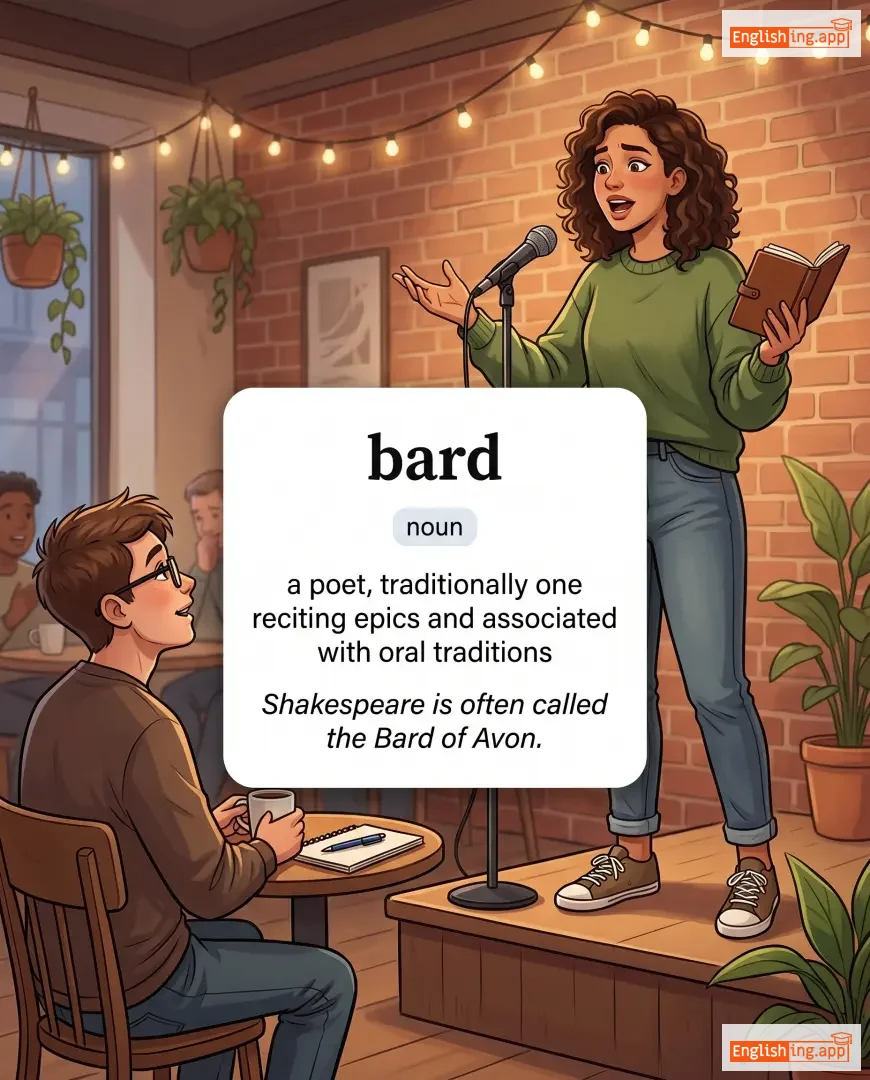
bard definition card — visual illustration of the meaning
noun
/bɑːrd/
कवि (kavi)

a poet, traditionally one reciting epics and associated with oral traditions

"Shakespeare is often called the Bard of Avon."

"शेक्सपियर को अक्सर एवन का कवि कहा जाता है।" (Shakespeare ko aksar Avon ka kavi kaha jaata hai.)
adjective
/beər/
नग्न (nagn)

not covered by any clothing or decoration; simple and without addition

"He walked on the beach with bare feet."

"वह समुद्र तट पर नग्न पैर से चला।" (Wah samudra tat par nagn pair se chala.)
adjective
/ˈbɛərˌfeɪst/
निर्लज्ज (nirlajj)

shameless and undisguised; openly bold or unashamed

"He told a barefaced lie in front of everyone."

"उसने सबके सामने एक निर्लज्ज झूठ बोला।" (Usne sabke samne ek nirlajj jhooth bola.)
adverb
/ˈbɛərli/
मुश्किल से (mushkil se)

only just; almost not

"She barely passed the exam."

"वह मुश्किल से परीक्षा पास की।" (Woh mushkil se pariksha pass ki.)
noun
/ˈbɛərnəs/
नग्नता (nagnata)

the state of being bare or uncovered; lack of decoration, warmth, or concealment

"The bareness of the room made it feel cold and unwelcoming."

"कमरे की नग्नता ने उसे ठंडा और अप्रिय बना दिया।" (kamre ki nagnata ne use thanda aur apriya bana diya)
bargain definition card — visual illustration of the meaning
noun, verb
/ˈbɑːrɡən/
सौदा / सस्ते में खरीदी गई चीज (sauda / saste mein khareedi gayi cheez)

an agreement between two or more parties; something bought at a good price

"We managed to get the car at a real bargain."

"हमने सचमुच एक अच्छा सौदा किया।" (Hamne sachmuch ek accha sauda kiya.)
noun
/ˈbærɪˌtoʊn/
गहरी पुरुष आवाज़ (gahri purush awaaz)

a male singing voice between tenor and bass

"The singer’s baritone voice impressed the audience."

"गायक की बैरीटोन आवाज़ ने दर्शकों को प्रभावित किया।" (Gaayak ki baritone awaaz ne darshako ko prabhavit kiya.)
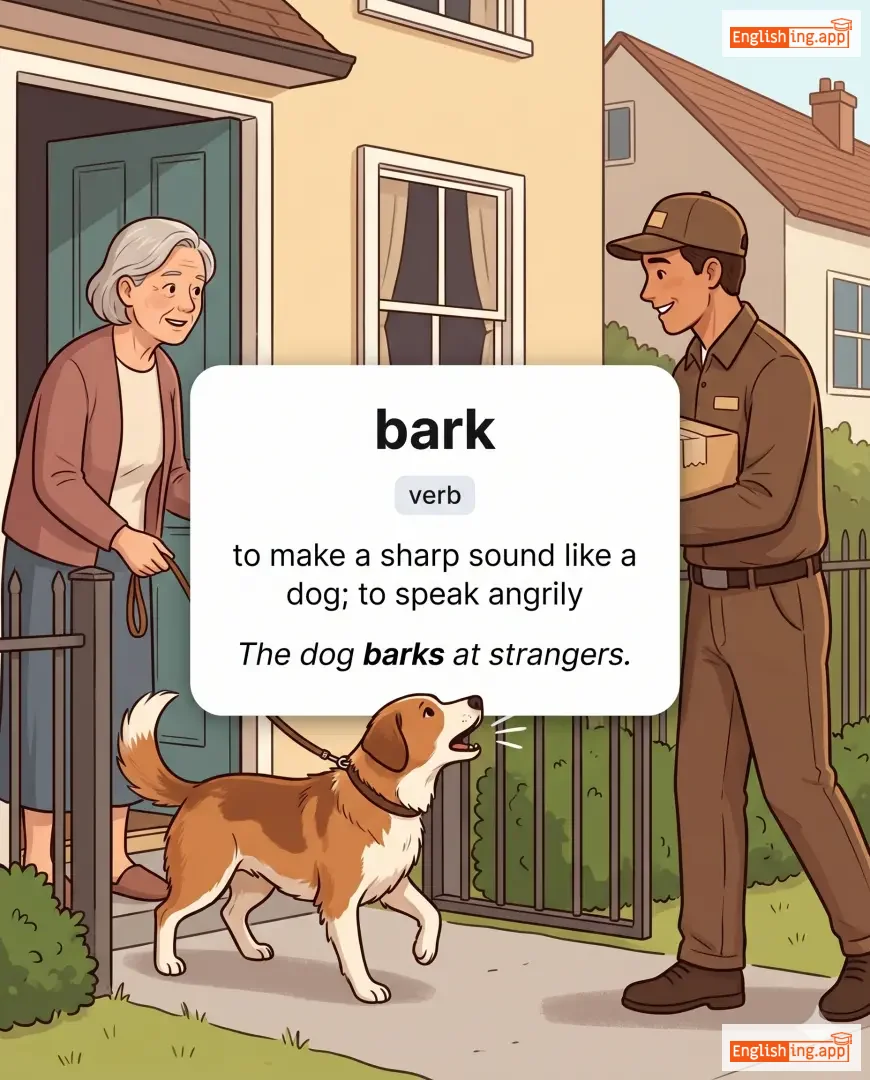
bark definition card — visual illustration of the meaning
verb
/bɑːrk/
भौंकना (bhaunkna)

to make a sharp sound like a dog; to speak angrily

"The dog barks at strangers."

"कुत्ता अजनबियों पर भौंकता है।" (Kutta ajnabiyon par bhaunkta hai)
noun
/ˈbɑː.li/
जौ (jau)

a cereal grain used for food, brewing beer, and animal feed

"The farmer harvested barley from his fields in autumn."

"किसान ने शरद ऋतु में अपने खेतों से जौ की फसल काटी।" (kisan ne sharat ritu mein apne kheton se jau ki fasal kaati.)
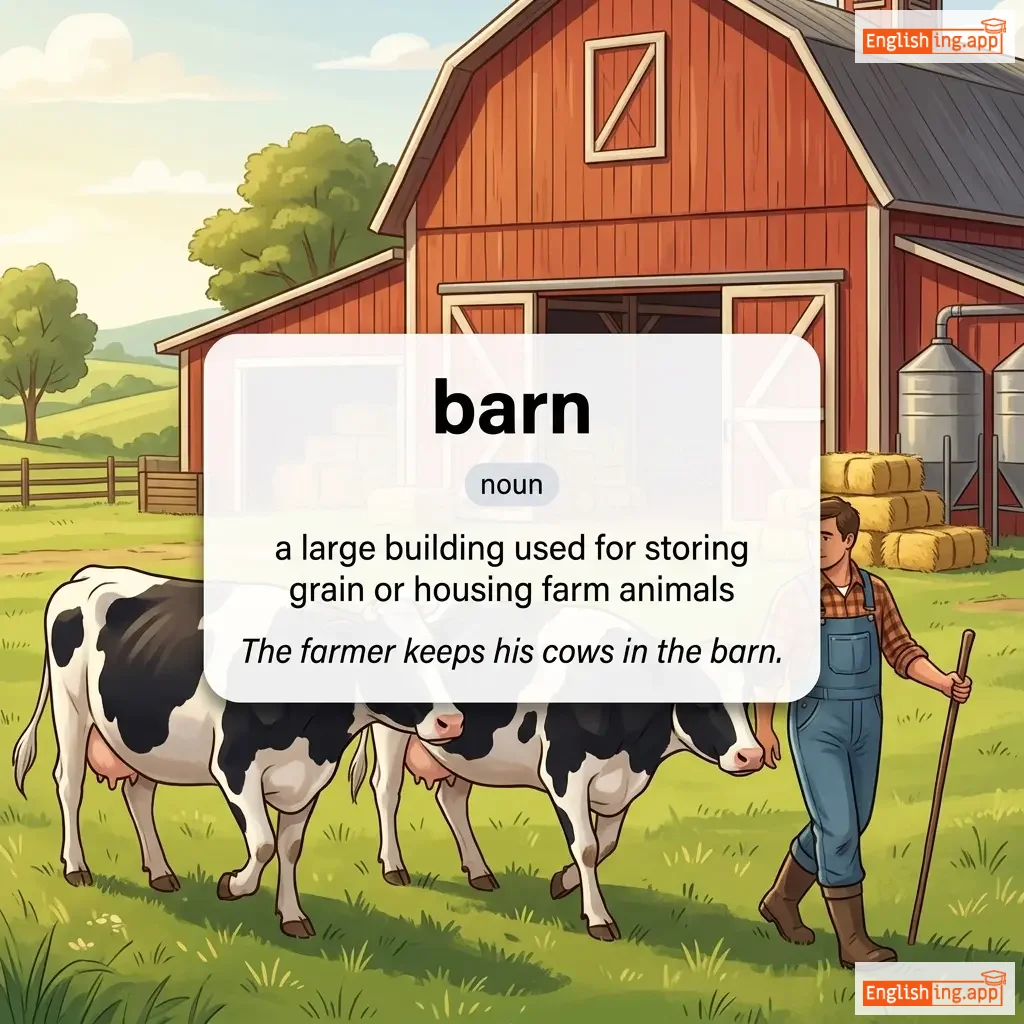
barn definition card — visual illustration of the meaning
noun
/bɑːn/
गोशाला (goshaala)

a large building used for storing grain or housing farm animals

"The farmer keeps his cows in the barn."

"किसान अपनी गायों को गोशाले में रखते हैं।" (Kisaan apni gaayon ko goshale mein rakhte hain.)