वोकैबुलरीज

इंग्लिश वोकैबुलरी डिस्कवर, लर्न और मास्टर करें

adjective
/əˈkjuː.zəˌtɔːr.i/
आरोपपूर्ण (aaroppoorn)

Suggesting blame or indicating someone has done wrong.

"He gave her an accusatory glance."

"उसने उसे आरोपपूर्ण नजर से देखा।" (Usne use aaroppoorn nazar se dekha.)
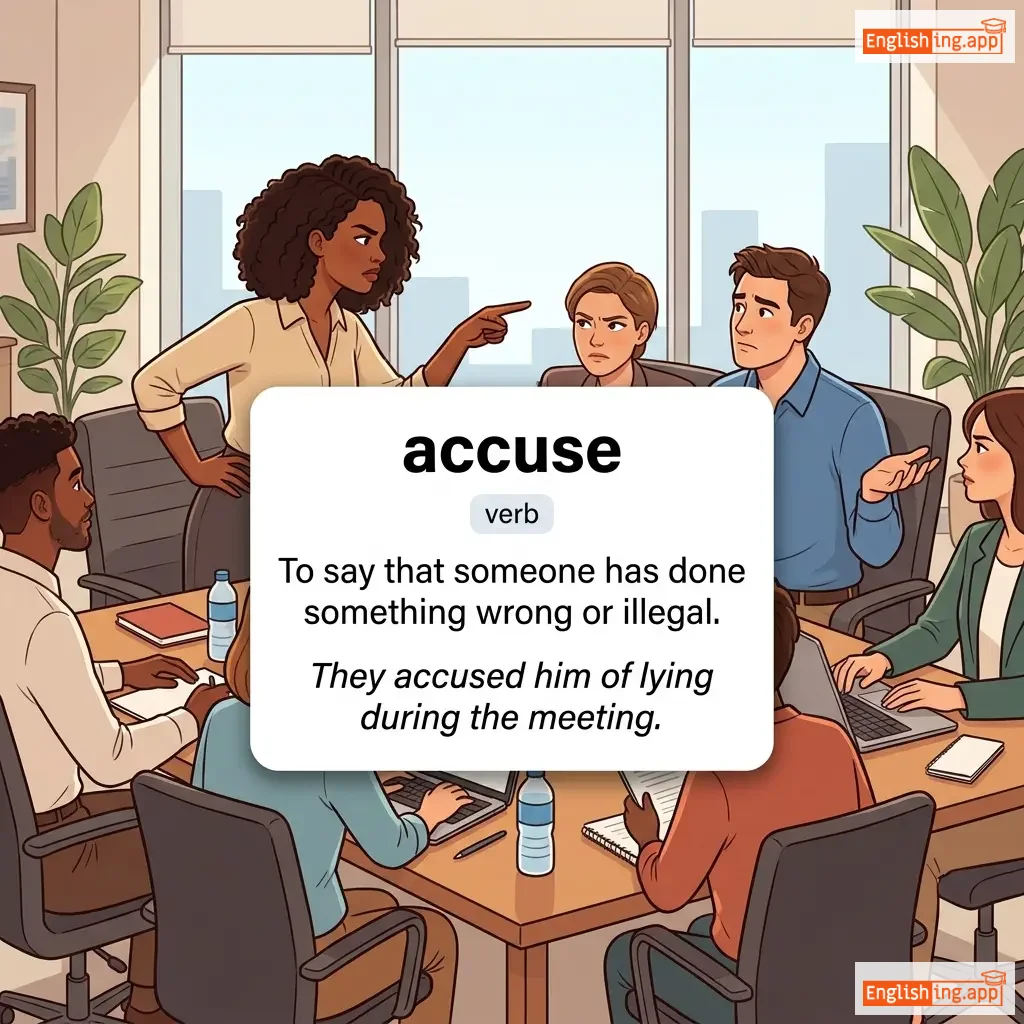
accuse definition card — visual illustration of the meaning
verb
/əˈkjuːz/
आरोप लगाना (aarop lagana)

To say that someone has done something wrong or illegal.

"They accused him of lying during the meeting."

"उन्होंने बैठक के दौरान उसे झूठ बोलने का आरोप लगाया।" (Unhone baithak ke dauran use jhooth bolne ka aarop lagaya.)
noun
/əˈkjuːzd/
आरोपित (aaropit)

a person who has been charged with a crime

"The accused pleaded not guilty in court."

"आरोपित व्यक्ति ने अदालत में दोषी नहीं होने का दावा किया।" (Aaropit vyakti ne adalat mein doshi nahi hone ka daawa kiya.)
verb
/əˈkʌstəm/
आदत डालना (adat dalna)

to make someone familiar with something through regular experience or use

"It took him a while to accustom himself to the new environment."

"उसे नए माहौल में खुद को अभ्यस्त करने में थोड़ा समय लगा।" (Use naye maahol mein khud ko abhyast karne mein thoda samay laga.)
adjective
/eɪˈsɛfələs/
सिरविहीन (sirviheen)

having no leader or head; headless

"The acephalous group soon fell into disorganization."

"सिरविहीन समूह जल्दी अव्यवस्था में गिर गया।" (di esifaelas grup soon fel into disorganization)
adjective
/əˈsɜːrbɪk/
तीखा (teekha)

sharp, harsh, or bitter in tone or taste

"His acerbic comments offended many people in the meeting."

"उसकी तीखी टिप्पणियाँ बैठक में कई लोगों को आहत कर गईं।" (Uski teekhi tippaniyan baithak mein kai logo ko aahat kar gayi.)
noun
/əˈsɜːrbəti/
तीव्रता (teevrata)

bitterness or sharpness of tone, manner, or taste

"The acerbity of his remarks left everyone silent."

"उनकी टिप्पणियों की तीव्रता ने सभी को चुप कर दिया।" (Unki tippaniyon ki teevrata ne sabhi ko chup kar diya.)
noun
/ˈæsɪˌteɪt/
ऐसीटेट (acetate)

a salt or ester of acetic acid; a synthetic material used in textiles and film

"The company produces acetate fibers for clothing."

"कंपनी वस्त्र के लिए एसीटेट फाइबर का उत्पादन करती है।" (Kampani vastr ke liye acetate fiber ka utpadan karti hai.)
adjective
/əˈsiːtɪk/
एसीटिक (asetik)

relating to or containing acetic acid; sour or vinegary in taste or smell

"The acetic smell of vinegar filled the kitchen."

"सिरके की एसीटिक गंध रसोईघर में फैल गई।" (sireke ki asitik gandh rasoi ghar mein phail gayi.)
verb
/eɪk/
दर्द (dard)

to suffer a continuous dull pain

"Her back ached after sitting for so long."

"बहुत देर तक बैठने के बाद उसकी पीठ में दर्द हुआ।" (bahut der tak baithne ke baad uski peeth mein dard hua.)
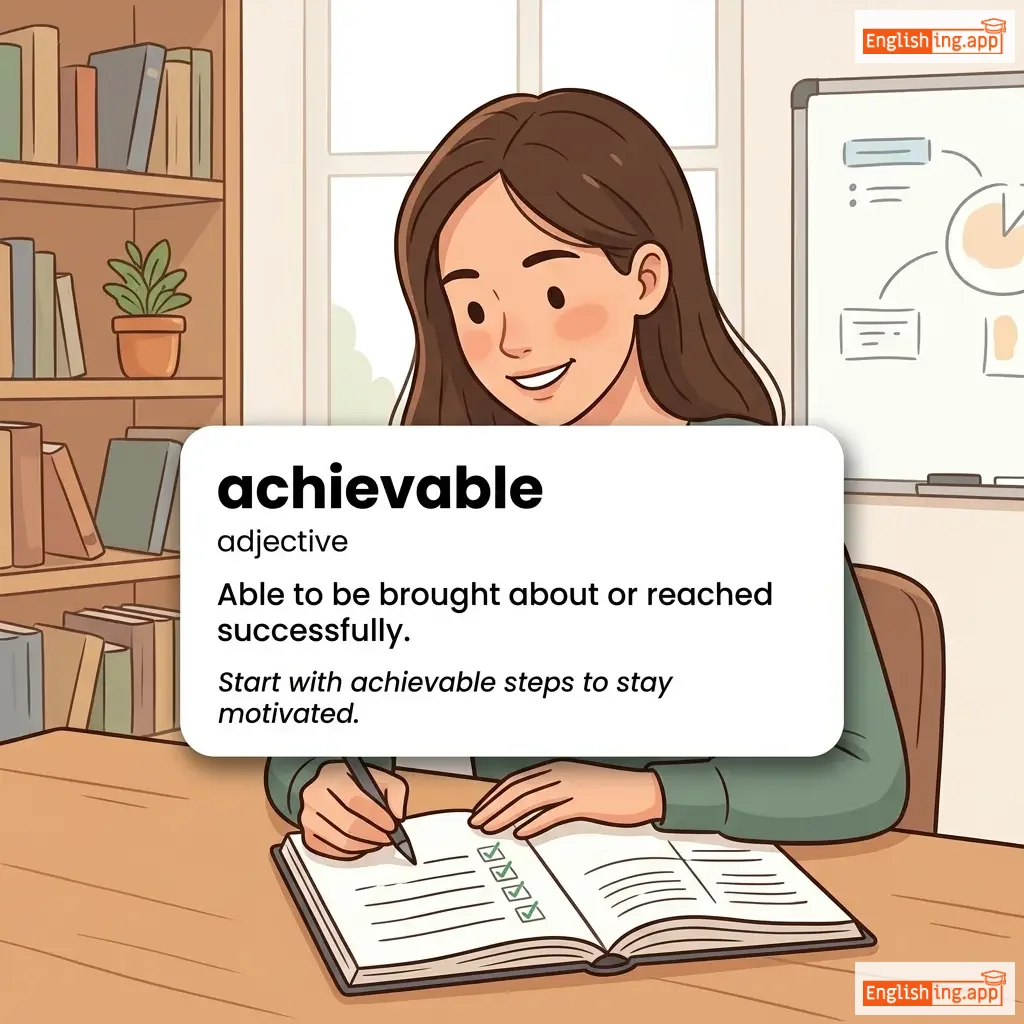
achievable definition card — visual illustration of the meaning
adjective
/əˈtʃiːvəbl/
प्राप्त करने योग्य (praapt karne yogya)

Able to be brought about or reached successfully.

"Start with achievable steps to stay motivated."

"प्राप्त करने योग्य कदमों से शुरू करें ताकि प्रेरित रहें।" (Praapt karne yogya kadmo se shuru karein taaki prerit rahein.)
verb
/əˈtʃiːv/
प्राप्त करना (praapt karna)

to successfully bring about or reach a desired goal or result

"She worked hard to achieve her dream of becoming a doctor."

"वह डॉक्टर बनने का अपना सपना पूरा करने के लिए कड़ी मेहनत करती थी।" (Wah doctor banne ka apna sapna poora karne ke liye kadi mehnat karti thi.)
noun
/əˈtʃiːvmənt/
उपलब्धि (uplabdhī)

Something that has been successfully completed or accomplished through effort or skill.

"Graduating from university was her greatest achievement."

"विश्वविद्यालय से स्नातक होना उसकी सबसे बड़ी उपलब्धि थी।" (Vishwavidyālaya se snātak honā uski sabse baṛī uplabdhī thī.)
adjective
/əˈkɪliən/
अचिलिस-सदृश (achilian)

like or characteristic of Achilles; strong but vulnerable

"His achillean pride made him blind to danger."

"उसका अचिलिस-सदृश गर्व उसे खतरे से अंधा कर दिया था।" (uska achilian garv use khatre se andha kar diya tha.)
adjective
/ˌækrəˈmætɪk/
रंगहीन (ranghin)

without color; free from color

"The designer chose an achromatic palette of black, white, and gray."

"डिज़ाइनर ने काले, सफेद और ग्रे के रंगहीन पैलेट को चुना।" (designer ne kaale, safed aur grey ke ranghin palette ko chuna.)
noun
/ˈæsɪd/
ऐसिड (asid)

a chemical substance that reacts with bases and has a sour taste

"Lemons contain citric acid."

"नींबू में सिट्रिक ऐसिड होता है।" (neembu mein citric acid hota hai.)
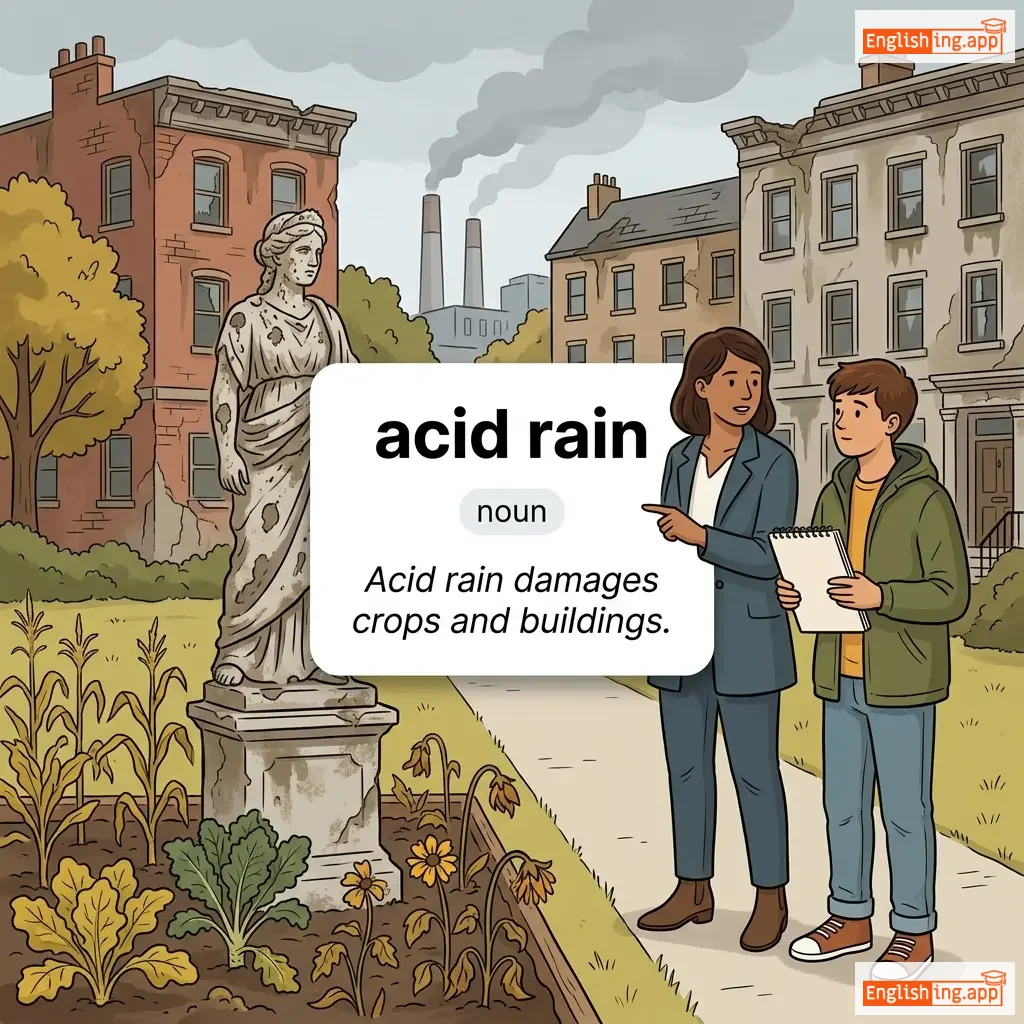
acid rain definition card — visual illustration of the meaning
noun
ˈæsɪd reɪn
एसीड वर्षा (acid varsha)

Rainfall made acidic by atmospheric pollution, especially from industrial emissions.

"Acid rain damages crops and buildings."

"एसीड वर्षा फसलों और भवनों को नुकसान पहुँचाती है।" (Acid varsha faslon aur bhavnon ko nuksan pahuchati hai.)
adjective
/əˈsɪdɪk/
अम्लीय (amliya)

containing acid; having a sour taste; sharp or biting in tone

"The lemon has an acidic taste that makes your mouth pucker."

"नींबू का स्वाद बहुत अम्लीय होता है।" (neembu ka swad bahut amliya hota hai)
verb
/əˈsɪdɪfaɪ/
अम्लीय करना (amliya karna)

to make something acidic or more acidic

"Farmers worry that pollution will acidify the soil."

"किसान इस बात को लेकर चिंतित हैं कि प्रदूषण मिट्टी को अम्लीय बना देगा।" (Kisan is baat ko lekar chintit hain ki pradushan mitti ko amliya bana dega.)
noun
/əˈsɪdɪti/
अम्लता (amlata)

the quality or degree of being acidic; the amount of acid present in a substance

"The acidity of the soil affects how well crops grow."

"मिट्टी की अम्लता फसलों की वृद्धि को प्रभावित करती है।" (mitti ki amlata faslon ki vriddhi ko prabhavit karti hai)
adjective
/əˈsɪdjʊləs/
हल्का खट्टा या तीखा (halka khatta ya tikha)

slightly sour or sharp in taste or manner

"The critic wrote an acidulous review of the movie."

"समीक्षक ने फिल्म की एक तीखी समीक्षा लिखी।" (Sameekshak ne film ki ek tikhi samiksha likhi.)
verb
/əkˈnɒlɪdʒ/
स्वीकार करना (swikar karna)

to accept, admit, or recognize the truth or existence of something

"She refused to acknowledge her mistake."

"उसने अपनी गलती को स्वीकार करने से इंकार कर दिया।" (Usne apni galti ko swikar karne se inkaar kar diya.)
noun
/əkˈnɒlɪdʒmənt/
स्वीकृति (sweekriti)

the act of recognizing or accepting something as true or valid; an expression of gratitude or recognition

"She received an acknowledgement for her contribution to the project."

"उसे परियोजना में योगदान के लिए स्वीकृति मिली।" (use pariyojana mein yogdan ke liye sweekriti mili)
noun
/əkˈnɒlɪdʒmənt/
स्वीकृति (swikrity)

the act of accepting, admitting, or recognizing something

"He received an acknowledgment of his application."

"उसने अपनी आवेदन की स्वीकृति प्राप्त की।" (Usne apni aavedan ki swikrity prapt ki.)
noun
/ˈækmi/
उत्कर्ष (utkarsh)

the highest point of achievement or excellence

"Winning the award was the acme of his career."

"पुरस्कार जीतना उनके करियर की उत्कर्ष थी।" (Puraskar jeetna unke career ki utkarsh thi.)
noun
/ˈækni/
मुँहासे (muhase)

a skin condition in which pores become inflamed and clogged, causing pimples and spots

"Regular cleansing and a balanced diet can help reduce acne."

"नियमित सफाई और संतुलित आहार मुँहासे को कम करने में मदद कर सकते हैं।" (niyamit safai aur santulit aahar muhase ko kam karne mein madad kar sakte hain.)
noun
/ˈækəlaɪt/
अकोलाईट (akolait)

a follower or assistant, especially in a religious service or as a devoted supporter of a leader

"The senator arrived with a small group of acolytes who handled the press."

"सीनेटर प्रेस से जुड़े एक छोटे समूह के अनुयायियों के साथ पहुँचे, जो प्रेस संभालते थे." (seinetar pres se jude ek chhote samuh ke anuyayiyon ke saath pahunchhe jo pres sambhalte the)
adjective
/əˈkuːstɪk/
ध्वनिक (akoustik)

relating to sound or the sense of hearing; not amplified by electrical means

"We recorded an acoustic version of the song in a quiet room."

"हमने शांत कमरे में गीत का ध्वनिक संस्करण रिकॉर्ड किया।" (humne shant kamre mein geet ka dhvanik sanskaran record kiya)
noun
/əˈkuːstɪks/
ध्वनिविज्ञान (dhvanivigyan)

the science of sound, or the properties of a space that affect how sound is heard

"The hall’s excellent acoustics made the orchestra sound rich and clear."

"हॉल की बेहतरीन ध्वनिविज्ञान ने ऑर्केस्ट्रा को समृद्ध और स्पष्ट सुनवाया।" (Haal ki behatareen dhvanivigyan ne orkestrā ko samriddh aur spasht sunwayā.)
verb
/əˈkweɪnt/
परिचित करना (parichit karna)

to make someone familiar with something; to inform or introduce

"Please acquaint yourself with the safety guidelines before operating the machine."

"कृपया मशीन ऑपरेट करने से पहले सुरक्षा दिशानिर्देशों से स्वयं को परिचित करें।" (kripya masheen operate karne se pehle suraksha disha-nirdeshon se swayam ko parichit karein.)
verb
/ˌækwiˈɛs/
चुपचाप स्वीकार करना (chupchup svikaar karna)

to accept something reluctantly but without protest

"She decided to acquiesce to her parents’ wishes."

"उसने अपने माता-पिता की इच्छाओं को चुपचाप स्वीकार करने का निर्णय लिया।" (Usne apne mata-pita ki ichchhaon ko chupchup svikaar karne ka nirnay liya.)
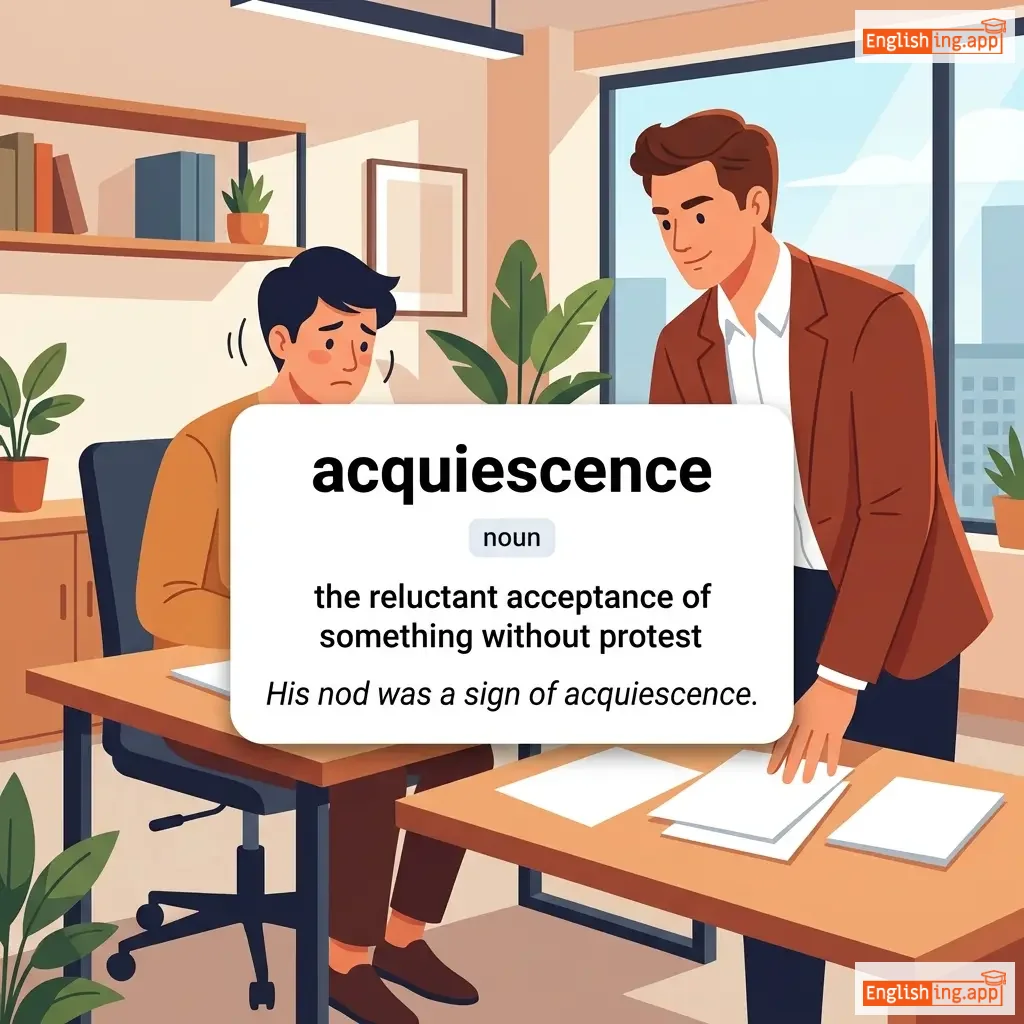
acquiescence definition card — visual illustration of the meaning
noun
/ˌækwiˈɛsəns/
मौन स्वीकृति (maun sveekriti)

the reluctant acceptance of something without protest

"His nod was a sign of acquiescence."

"उसका सिर हिलाना मौन स्वीकृति का संकेत था।" (Uska sir hilana maun sveekriti ka sanket tha.)
adjective
/ˌækwiˈɛsənt/
नम्र स्वीकार करने वाला (namra sveekar karne wala)

ready to accept something without protest, or to do what someone else wants

"He gave an acquiescent smile and agreed to the plan."

"उसने एक नम्र मुस्कान दी और योजना पर सहमति जताई।" (Usne ek namra muskan di aur yojana par sahmati jatai.)
acquire definition card — visual illustration of the meaning
verb
/əˈkwaɪər/
प्राप्त करना (prapt karna)

to obtain or gain possession of something

"She managed to acquire a rare painting at the auction."

"उसने नीलामी में एक दुर्लभ चित्र प्राप्त करने में सफलता पाई।" (Usne neelaami mein ek durlabh chitra prapt karne mein safalta paai.)
noun
/əˈkwaɪərmənt/
अर्जन; प्राप्त उपलब्धि (arjan; prapt uplabdhi)

the act of acquiring something; something that has been acquired, especially a skill or possession

"Language proficiency is an important acquirement for global careers."

"वैश्विक करियर के लिए भाषा दक्षता एक महत्वपूर्ण अर्जन है।" (vaishvik career ke liye bhasha dakshata ek mahatvapurn arjan hai)
Acquisition definition card — visual illustration of the meaning
noun
/ˌækwɪˈzɪʃən/

the act of obtaining or gaining something, often knowledge, skills, or property

"The company announced the acquisition of a smaller competitor."

adjective
/əˈkwɪzətɪv/
लालची (akwisitiv)

excessively interested in acquiring money or material things

"The acquisitive businessman bought every piece of land he could find."

"लोभी व्यवसायी ने जितनी भी जमीन के टुकड़े मिल सके, वे सभी खरीद लिए।" (lobhi vyavsayee ne jitni bhi zameen ke tukde mil sake ve sab kharid liye)
verb
/əˈkwɪt/
दोषमुक्त करना (doshmukt karna)

to free someone from a criminal charge by a verdict of not guilty

"The court decided to acquit the defendant of all charges."

"कोर्ट ने अभियुक्त को सभी आरोपों से मुक्त करने का निर्णय लिया।" (Court ne abhiukt ko sabhi aaropon se mukt karne ka nirnay liya.)
noun
/əˈkwɪtl/
बरी (bari)

a judgment that a person is not guilty of the crime with which they have been charged

"The acquittal of the accused shocked the public."

"The acquittal of the accused shocked the public." (aaropit ki bari ne janta ko chonka diya)
noun
/əˈkwɪtəns/
स्वीकृति पत्र (swikriti patra)

a written receipt acknowledging payment or discharge of a debt

"He demanded an acquittance after paying the loan."

"उसने कर्ज चुकाने के बाद एक स्वीकृति पत्र की मांग की।" (Usne karz chukane ke baad ek swikriti patra ki maang ki.)
🌾

acre

noun
/ˈeɪkər/

a unit of land area equal to 4,840 square yards (about 4,047 square meters)

"The farmer owns five acres of fertile land."

noun
/ˈeɪ.kər.ɪdʒ/
एकड़ भूमि (ekad bhumi)

An area of land measured in acres.

"The farmer owns a large acreage of fertile land."

"किसान के पास उपजाऊ भूमि का एक बड़ा एकड़ है।" (Kisaan ke paas upjaau bhumi ka ek bada ekad hai.)
adjective
/ˈæk.rɪd/
तीखा (teekha)

Having a strong, unpleasantly sharp taste or smell.

"The acrid smoke from the fire made it hard to breathe."

"आग से निकलने वाला तीखा धुआँ सांस लेना मुश्किल बना देता था." (aag se nikalne wala teekha dhuaan saans lena mushkil bana deta tha)
adjective
/ˌæk.rɪˈmoʊ.ni.əs/
तीव्र और गुस्से से भरा (teevr aur gusse se bhara)

Bitter and angry, often involving harsh words.

"The debate turned acrimonious after the controversial remark."

"बहस विवादास्पद टिप्पणी के बाद तीव्र और गुस्से से भरी हो गई।" (Bahas vivaadaspad tippani ke baad teevr aur gusse se bhari ho gayi.)
noun
/ˈæk.rɪ.moʊ.ni/
कड़वाहट (akrimoni)

Bitterness and anger, especially in speech or behavior.

"The divorce was filled with acrimony and disputes."

"तलाक में कड़वाहट और विवाद थे." (talaak mein kadvaahat aur vivaad the.)
noun
/ˌæk.rəˈfoʊ.bi.ə/
ऊँचाई का डर (unchai ka dar)

An extreme or irrational fear of heights.

"Her acrophobia prevented her from climbing the tall building."

"उसकी ऐक्रोफोबिया ने उसे ऊँची इमारत पर चढ़ने से रोक दिया।" (Uski acrophobia ne use unchi imarat par chadhne se rok diya.)
preposition/adverb
/əˈkrɒs/
पार (paar)

From one side to the other side of something.

"He ran across the street to catch the bus."

"वह बस पकड़ने के लिए सड़क पार करके दौड़ पड़ा।" (Vah bas pakadne ke liye sadak paar karke daud pada.)
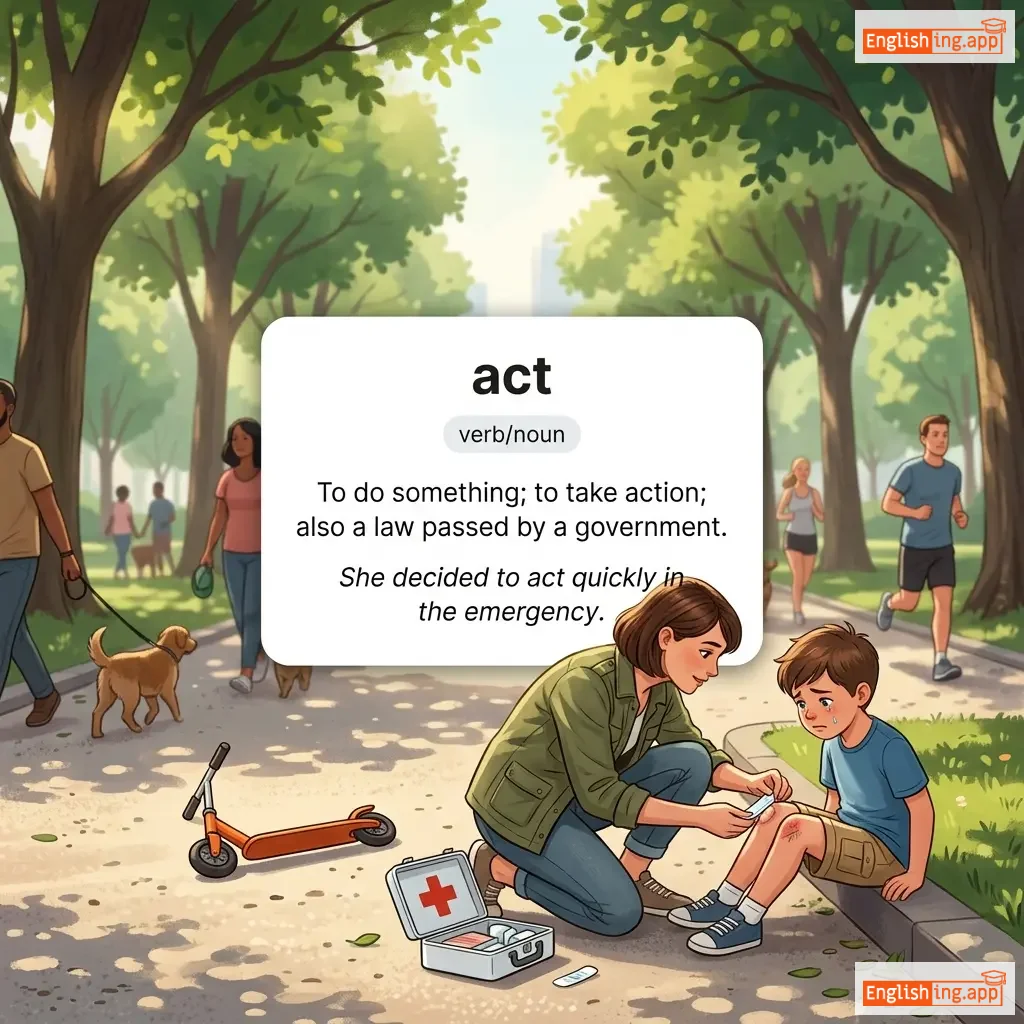
act definition card — visual illustration of the meaning
verb/noun
/ækt/
कार्य / अधिनियम (kaarya / adhiniyam)

To do something; to take action; also a law passed by a government.

"She decided to act quickly in the emergency."

"उसने आपात स्थिति में जल्दी कार्रवाई करने का फैसला किया।" (Usne aapat sthiti mein jaldi kaaryavaahi karne ka faisla kiya.)
noun, adjective, gerund
/ˈæk.tɪŋ/
अभिनय (abhinay)

the art or profession of performing in plays, films, or television; temporary performance of duties; the process of performing an action

"She is studying acting to become a professional actress."

"वह एक पेशेवर अभिनेत्री बनने के लिए अभिनय सीख रही है।" (vah ek peshevar abhinetri banne ke liye abhinay seekh rahi hai)
noun
/ˈækʃən/
कार्य / कदम (karya / kadam)

The process of doing something, typically to achieve a goal.

"The government took immediate action to control inflation."

"सरकार ने मुद्रास्फीति को नियंत्रित करने के लिए त्वरित कार्रवाई की।" (Sarkar ne mudrasphiti ko niyantrit karne ke liye tvarit karvayi ki.)