वोकैबुलरीज

इंग्लिश वोकैबुलरी डिस्कवर, लर्न और मास्टर करें

noun
/ɔː/
आश्चर्य (aashcharya)

a feeling of deep respect mixed with fear or wonder

"The children looked at the fireworks in awe."

"बच्चे आतिशबाजी को आश्चर्य से देख रहे थे।" (Bacche aatishbazi ko aashcharya se dekh rahe the.)
adjective
/ˈɔːfəl/
भयानक (bhayanak)

very bad or unpleasant

"The weather was awful during our trip."

"हमारी यात्रा के दौरान मौसम भयानक था।" (Hamari yatra ke dauran mausam bhayanak tha.)
adverb
/ˈɔːfəli/
बहुत ज़्यादा (bahut zyada)

in a very great degree; extremely; in a way that is very bad or unpleasant

"I am awfully glad to see you again."

"तुमसे फिर मिलकर मैं बहुत ज़्यादा खुश हूँ।" (tumse phir milkar main bahut zyada khush hoon)
adjective
/ˈɔːkwəd/
अजीब (ajeeb)

causing or feeling embarrassment; difficult to deal with

"There was an awkward silence after his joke."

"उसकी जोक के बाद एक अजीब खामोशी थी।" (Uski joke ke baad ek ajeeb khamoshi thi.)
noun
/ɔːl/
आल (aal)

a small pointed tool used for making holes, especially in leather

"The cobbler used an awl to punch holes in the leather."

"जूते वाले ने चमड़े में छेद करने के लिए आल का इस्तेमाल किया।" (Joote wale ne chamde mein chhed karne ke liye aal ka istemal kiya.)
noun
/ˈɔːnɪŋ/
छतरी (chhatri)

a sheet of canvas or material stretched on a frame to shelter a place from the sun or rain

"We sat under the awning to avoid the heavy rain."

"हम भारी बारिश से बचने के लिए छतरी के नीचे बैठे थे।" (Hum bhaari baarish se bachne ke liye chhatri ke neeche baithe the.)
adverb
/əˈraɪ/
गलत (galat)

away from the expected or proper direction; wrong or amiss

"The plan went awry when the weather suddenly changed."

"मौसम अचानक बदलने पर योजना गलत हो गई।" (Mausam achanak badalne par yojana galat ho gayi.)
noun
/æks/
axes (axes)

a tool with a heavy blade for cutting wood

"The lumberjack swung his axe to chop the tree."

"लकड़हारा पेड़ काटने के लिए अपनी कुल्हाड़ी घुमा रहा था।" (lakadhara ped kaatne ke liye apni kulhaadi ghuma raha tha.)
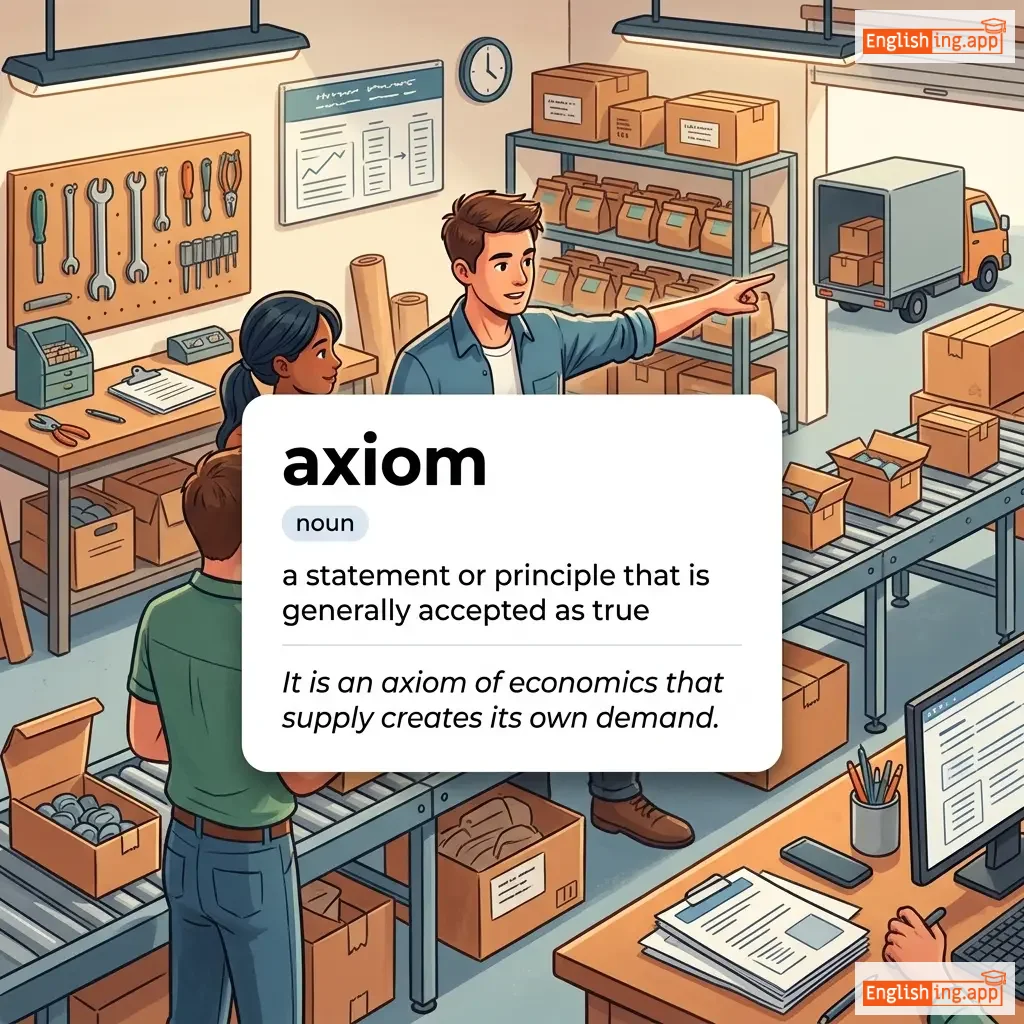
axiom definition card — visual illustration of the meaning
noun
/ˈæk.si.əm/
सिद्धांत (siddhant)

a statement or principle that is generally accepted as true

"It is an axiom of economics that supply creates its own demand."

"यह एक आर्थिक सिद्धांत है कि आपूर्ति अपनी मांग उत्पन्न करती है।" (Yeh ek aarthik siddhant hai ki aapoorti apni maang utpann karti hai.)
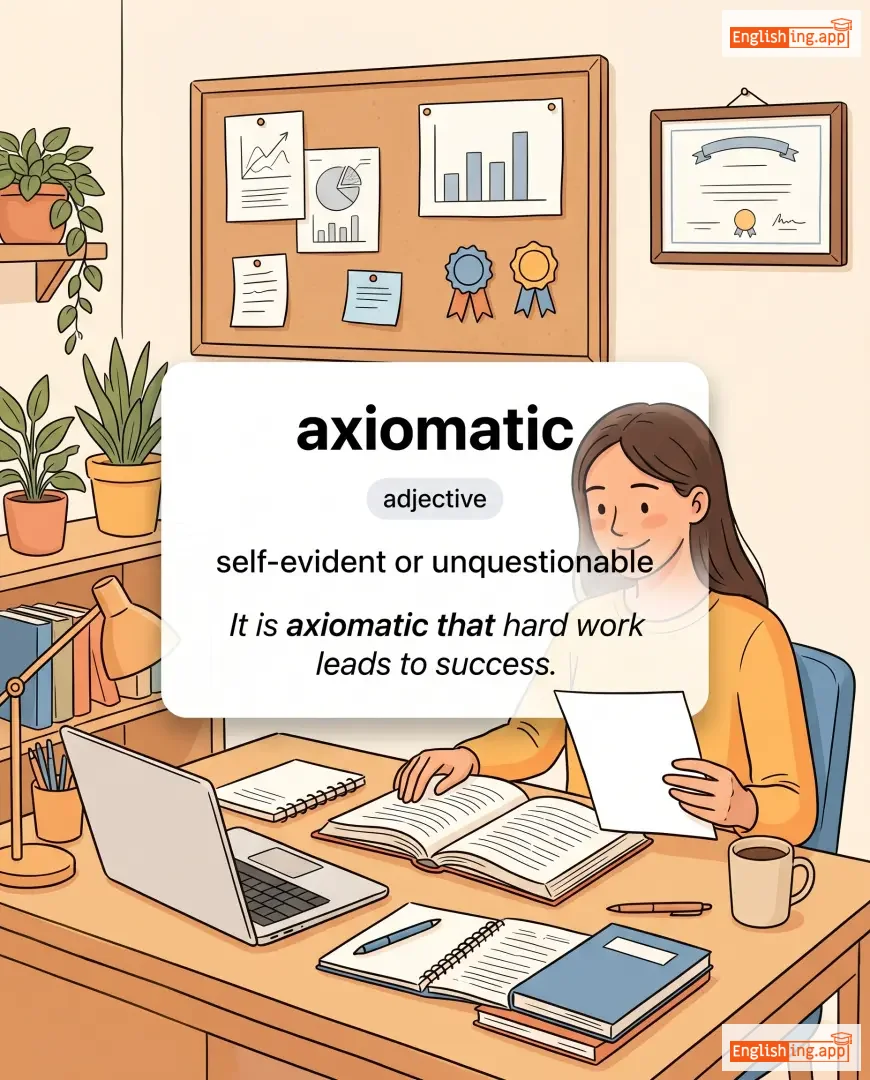
axiomatic definition card — visual illustration of the meaning
adjective
/ˌæk.si.əˈmæt.ɪk/
स्वत:सिद्ध (svatah-siddh)

self-evident or unquestionable

"It is axiomatic that hard work leads to success."

"यह स्वत:सिद्ध है कि कठिन परिश्रम सफलता की ओर ले जाता है।" (Yeh svatah-siddh hai ki kathin parishram safalta ki or le jata hai.)
noun
/aɪ/
हाँ (haan)

an affirmative vote or expression of agreement

"The committee voted aye on the proposal."

"कमिटी ने प्रस्ताव पर हाँ वोट किया।" (Kumiti ne prastaav par haan vote kiya.)
noun
/əˈzeɪ.li.ə/
अज़ालिया फूल (azaliya phool)

a flowering shrub with brightly colored blooms, often grown ornamentally

"The garden was full of blooming azaleas in spring."

"बग़ीचे में वसंत में अज़ालिया फूल खिले हुए थे।" (Bagiche mein vasant mein azaliya phool khile huye the.)
adjective
/ˈæʒər/
आज़्योर (aazyor)

A bright blue color like that of a clear sky.

"The clear sky was painted in a deep shade of azure."

"साफ आसमान गहरे आज़्योर रंग में रंगा हुआ था।" (saaf aasman gahare aazyor rang mein ranga hua tha.)