वोकैबुलरीज

इंग्लिश वोकैबुलरी डिस्कवर, लर्न और मास्टर करें

noun
/ˈæpərtʃər/
दरवाजा / छेद (darwaza / chhed)

an opening, hole, or gap, especially one that lets in light

"Light entered through the small aperture in the wall."

"दीवार में छोटे दरवाजे से रोशनी प्रवेश कर रही थी।" (Deewaar mein chhote darwaze se roshni pravesh kar rahi thi.)
apex definition card — visual illustration of the meaning
noun
/ˈeɪ.pɛks/
शिखर (shikhar)

the highest point or peak of something

"The climbers finally reached the apex of the mountain."

"चढ़ाई करने वाले अंततः पर्वत के शिखर पर पहुंचे।" (chadhai karne wale antatah parvat ke shikhar par pahunche.)
noun
/əˈfeɪ.ʒə/
भाषा विकार (aphasia)

a medical condition that causes loss of ability to speak or understand language

"After the stroke, she was diagnosed with aphasia."

"स्ट्रोक के बाद, उसे भाषा बोलने या समझने की क्षमता के नुकसान के कारण निदान किया गया।" (strok ke baad, uska afezia se nidan kiya gaya.)
noun
/ˈæf.ə.rɪ.zəm/
सूक्ति (sukti)

a short, witty saying that expresses a general truth or principle

"He began his speech with an aphorism about life and success."

"उसने अपने भाषण की शुरुआत जीवन और सफलता के बारे में एक अफोरिज़्म के साथ की।" (usne apne bhashan ki shuruaat jeevan aur safalta ke baare me ek aforizm ke saath ki)
adjective
/ˌæf.əˈrɪs.tɪk/
सूक्ति शैली (sukti shaili)

expressed in the style of a short, witty saying

"Her writing style is concise and aphoristic."

"उसकी लेखन शैली संक्षिप्त और सूक्ति शैली है।" (Uski lekhan shaili sankshipt aur sukti shaili hai.)
noun
/ˈeɪ.pi.ə.rɪst/
मधुमक्खी पालक (madhumakkhi paalak)

a person who keeps and tends bees for honey production

"The apiarist collected fresh honey from the hives."

"मधुमक्खी पालक ने छत्तों से ताजा शहद इकट्ठा किया।" (Madhumakkhi paalak ne chhatton se taja shahad ikattha kiya.)
noun
/ˈeɪ.pi.ˌɛr.i/
मधुमक्खी पालन केंद्र (madhumakkhi paalan kendra)

A place where beehives are kept, especially for commercial purposes.

"The farmer built a new apiary to produce organic honey."

"किसान ने जैविक शहद उत्पादन करने के लिए एक नया मधुमक्खी पालन केंद्र बनाया।" (Kisaan ne jaivik shahad utpadan karne ke liye ek naya madhumakkhi paalan kendra banaya.)
noun
/ˈæp.ɪˌkʌl.tʃər/
मधुमक्खी पालन (madhumakkhi paalan)

The practice of keeping and raising bees for honey and other products.

"Apiculture plays a vital role in agriculture by supporting pollination."

"मधुमक्खी पालन कृषि में महत्वपूर्ण भूमिका निभाता है क्योंकि यह परागण में मदद करता है।" (Madhumakkhi paalan krishi mein mahatvapurn bhoomika nibhata hai kyunki yah paragan mein madad karta hai.)
noun
/əˈplɒm/
आत्मविश्वास (aplom)

Complete and confident self-assurance or poise.

"She handled the difficult questions with aplomb."

"उसने कठिन प्रश्नों का सामना शांति से और आत्मविश्वास के साथ किया।" (usne kathin savalon ka samna shanti se aur atmavishvas ke sath kiya.)
adjective
/əˌpɒk.əˈlɪp.tɪk/
सार्वनाशक (sarvanashak)

Describing the end of the world, or something catastrophic and disastrous.

"The movie depicts an apocalyptic future after a nuclear war."

"फिल्म एक परमाणु युद्ध के बाद एक सर्वनाशक भविष्य को दर्शाती है।" (film ek parmanu yudh ke baad ek sarvanashak bhavishya ko darshati hai.)
adjective
/əˈpɒ.krɪ.fəl/
संदिग्ध (sandigdh)

Of doubtful authenticity, though widely circulated as true.

"The story about him saving the village is probably apocryphal."

"उसके गांव को बचाने की कहानी शायद संदिग्ध है।" (Uske gaon ko bachane ki kahani shayad sandigdh hai.)
apogee definition card — visual illustration of the meaning
noun
/ˈæpədʒiː/
शिखर (shikhar)

the highest or most distant point; the climax or peak of something

"The empire reached its apogee during the 18th century."

"साम्राज्य ने 18वीं सदी के दौरान अपने शिखर तक पहुँच लिया था।" (Samrajya ne atharvi sadi ke dauran apne shikhar tak pahunch liya tha.)
adjective
/ˌeɪpəˈlɪtɪkəl/
राजनीतिक (raajneetik)

not interested in or not connected with politics

"She prefers to stay apolitical and focus on her work."

"वह राजनीति से दूर रहना और अपने काम पर ध्यान केंद्रित करना पसंद करती है।" (vah rajniti se door rehna aur apne kaam par dhyaan kendrit karna pasand karti hai.)
noun
/əˈpɒlədʒɪst/
समर्थक (samarthak)

a person who defends or justifies something, often a controversial belief or institution

"He is known as an apologist for authoritarian regimes."

"वह तानाशाही शासनों का समर्थक के रूप में जाना जाता है।" (vah tanashahi shason ka samarthak ke roop mein jana jata hai.)
verb
/əˈpɒlədʒaɪz/
माफ़ी माँगना (mafi mangna)

to say sorry for something wrong you have done

"He apologized for being late to the meeting."

"उसने मीटिंग में देर होने के लिए माफ़ी माँगी।" (Usne meeting mein der hone ke liye mafi maangi.)
noun
/ˈæpəˌlɔːɡ/
नीतिक कथा (neetik katha)

a short moral story or fable intended to teach a lesson

"The teacher used an old apologue to explain honesty to the children."

"शिक्षक ने बच्चों को ईमानदारी समझाने के लिए एक पुरानी नीतिक कथा का उपयोग किया।" (Shikshak ne bachon ko imandari samjhane ke liye ek purani neetik katha ka upyog kiya.)
noun
/əˈpɒlədʒi/
माफ़ी (epoloji)

a statement expressing regret for something wrong or hurtful

"He offered an apology for being late to the meeting."

"उसने बैठक में देर होने के लिए माफी माँगी।" (usne baithak mein der hone ke liye maafi maangi)
🗣️

apophasis

noun
/əˈpɒfəsɪs/

A rhetorical device where the speaker brings up a subject by denying it or pretending to pass over it.

"The politician used apophasis by saying, 'I won’t even mention my opponent’s scandals.'"

noun
/ˈæpəfθɛm/
संक्षिप्त, बुद्धिमान और शिक्षाप्रद कथन या मुहावरा (apofthem)

A short, pithy, and instructive saying or maxim.

"She always had a witty apophthegm to share at meetings."

"वह हमेशा बैठकों में एक चतुर एपॉफथेम साझा करती थी।" (vah hamesha baithako mein ek chatur apofthem saanjha karti thi.)
adjective
/ˌæpəˈplɛktɪk/
गुस्से से पागल (apoplectic)

Extremely angry; furious.

"He was apoplectic when he heard about the unfair decision."

"वह अन्यायपूर्ण निर्णय के बारे में सुनकर बहुत गुस्से में था।" (vah anyayapurn nirnay ke baare mein sunkar bahut gusse mein tha.)
noun
/ˈæpəplɛksi/
स्ट्रोक या अत्यधिक गुस्से के कारण अचानक बेहोशी या नियंत्रण का नुकसान (apoplexi)

A sudden loss of consciousness or control due to stroke or extreme anger.

"The old man nearly had apoplexy when he heard the shocking news."

"पुराना आदमी शॉकिंग खबर सुनकर लगभग अपोप्लेक्सी से गिर पड़ा।" (purana aadmi shocking khabar sunkar lagbhag apoplexy se gir pada.)
noun
/əˈpɒstəsi/
धर्मत्याग (apostasi)

The abandonment or renunciation of a religious or political belief.

"His public apostasy shocked his followers."

"उसका सार्वजनिक धर्मत्याग उसके अनुयायियों को चौंका गया।" (uska sarvajanik dhormatyag uske anuyaiyon ko chonka gaya.)
noun
/ˈæpəˌsteɪt/
धर्मत्यागी (dharmatyagi)

A person who renounces a religious or political belief or principle.

"He was labeled an apostate after abandoning the faith of his community."

"उसे अपने समुदाय के विश्वास को छोड़ने के बाद धर्मत्यागी कहा गया।" (Use apne samudaay ke vishwas ko chhodne ke baad dharmatyagi kaha gaya.)
noun
/əˈpɒsəl/
प्रचारक, समर्थक (pracharak, samarthak)

A vigorous and pioneering advocate or supporter of a particular cause, often used for the early Christian disciples.

"He became an apostle of environmental protection."

"वह पर्यावरण संरक्षण का एक प्रेरक बन गया।" (Vah paryavaran sanrakshan ka ek prerak ban gaya.)
noun
/əˈpɒstrəfi/

A punctuation mark (') used to indicate possession or the omission of letters or numbers.

"You need an apostrophe in the word 'children’s'."

noun
/əˈpɒθəˌkɛri/
दवाइयाँ तैयार और बेचने वाला व्यक्ति (dawaiyan tayar aur bechne wala vyakti)

A historical term for a person who prepared and sold medicines and drugs.

"The village apothecary provided remedies for many common illnesses."

"गाँव के एपॉथेकरी ने कई सामान्य बीमारियों के लिए उपचार प्रदान किया।" (Gaon ke apothecary ne kai samanya bimariyon ke liye upchar pradan kiya.)
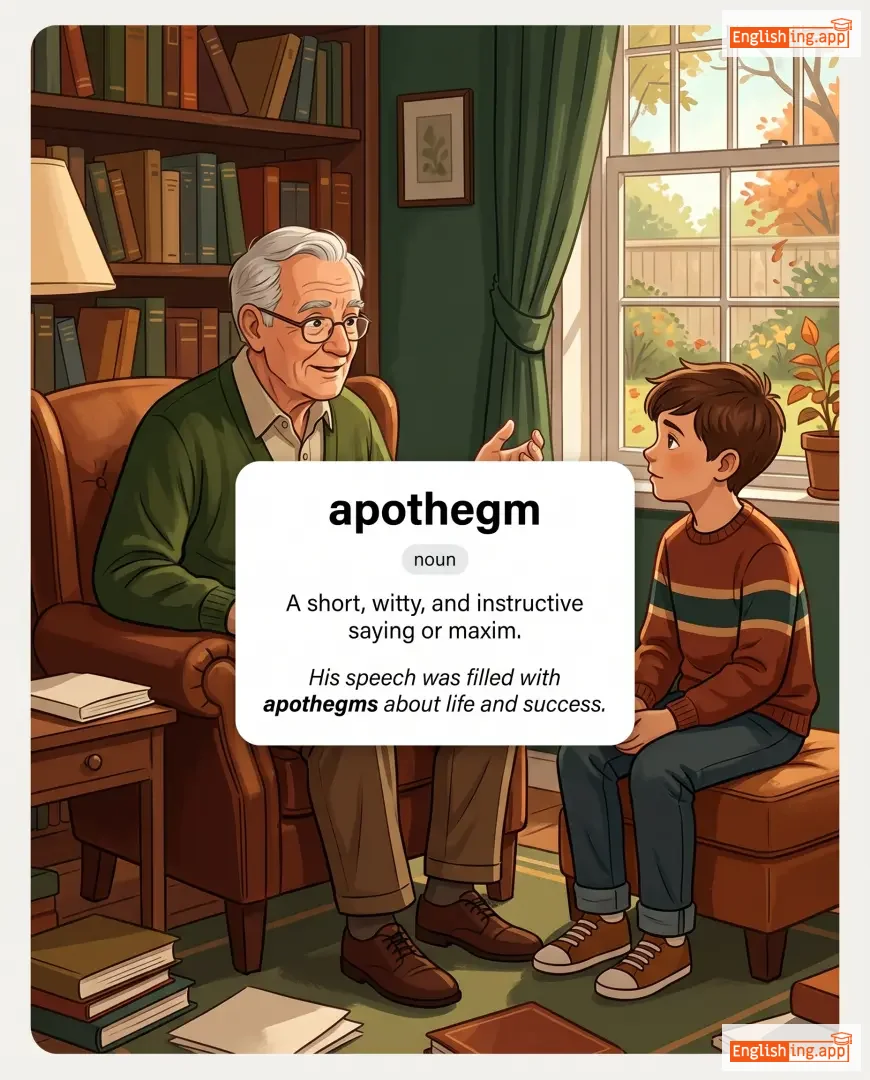
apothegm definition card — visual illustration of the meaning
noun
/ˈæpəˌθɛm/
उक्ति, कथन (uktī, kathan)

A short, witty, and instructive saying or maxim.

"His speech was filled with apothegms about life and success."

"उसका भाषण जीवन और सफलता के बारे में उक्तियों से भरा हुआ था।" (Uska bhāṣaṇ jīvan aur safaltā ke bāre mein uktiyon se bhara huā thā.)
noun
/əˌpɒθiˈoʊsɪs/
पराकाष्ठा, उच्चतम बिंदु (parakastha, uchchattam bindu)

The highest point of development; the perfect example of something; the elevation of someone to divine status.

"Many see the Renaissance as the apotheosis of art and culture in Europe."

"कई लोग पुनर्जागरण को यूरोप में कला और संस्कृति की पराकाष्ठा मानते हैं।" (Kai log punarjagran ko yurop mein kala aur sanskriti ki parakastha maante hain.)
verb
/əˈpɔːl/
चौंका देना (chaunka dena)

To shock or horrify someone with something unpleasant or bad.

"The cruelty of the crime appalled the entire community."

"अपराध की क्रूरता ने पूरे समुदाय को चौंका दिया।" (Aparadh ki krurta ne pure samudaay ko chaunka diya.)
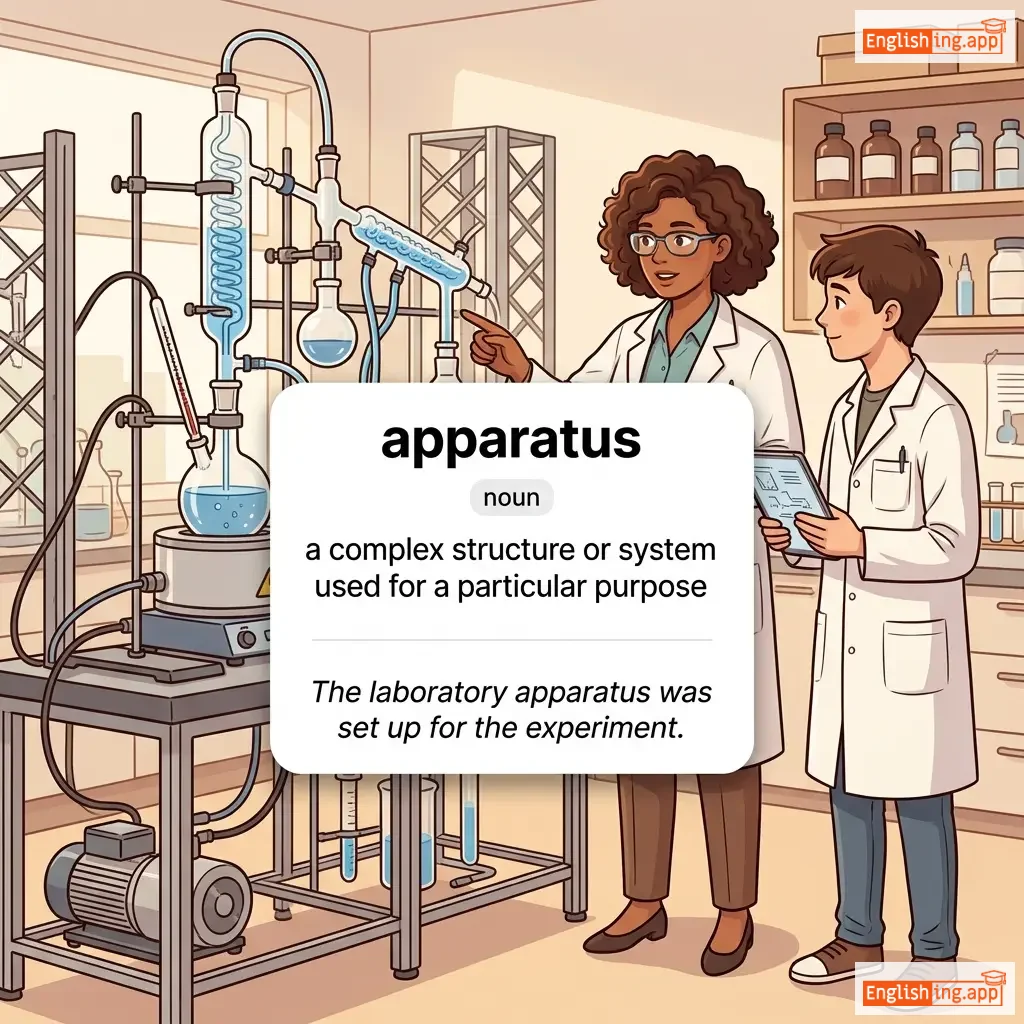
apparatus definition card — visual illustration of the meaning
noun
/ˌæpəˈreɪtəs/
यंत्र (yantra)

a complex structure or system used for a particular purpose

"The laboratory apparatus was set up for the experiment."

"प्रयोग के लिए प्रयोगशाला का यंत्र सेट अप किया गया था।" (prayog ke liye prayogshala ka yantra set up kiya gaya tha.)
noun
/əˈpærəl/
वस्त्र (vastr)

Clothing, especially formal or special clothes.

"The store specializes in wedding apparel."

"दुकान शादी के कपड़ों में विशेषज्ञता रखती है।" (Dukaan shaadi ke kapdon mein visheshagya rakhti hai.)
adjective
/əˈpærənt/
स्पष्ट (spasht)

Clearly visible or understood; obvious.

"It soon became apparent that he was not telling the truth."

"यह जल्दी ही स्पष्ट हो गया कि वह सच नहीं बोल रहा था।" (Yeh jaldi hi spasht ho gaya ki wah sach nahin bol raha tha.)
adverb
/əˈpærəntli/
लगता है (lagta hai)

as far as one knows or can see; seemingly

"Apparently, she forgot about the meeting."

"लगता है, उसने मीटिंग के बारे में भूल गया।" (Lagta hai, usne meeting ke baare mein bhool gaya.)
noun
/ˌæpəˈrɪʃən/
भूतिया रूप (bhutiya roop)

A ghostly figure or an unusual or unexpected appearance.

"The children were frightened by the sudden apparition in the old house."

"बच्चे पुरानी घर में अचानक भूतिया रूप देखकर डर गए।" (Bachche purani ghar mein achanak bhutiya roop dekhkar dar gaye.)
verb, noun
/əˈpiːl/
आवेदन / आकर्षण (avedan / aakarshan)

to make a serious request; to be attractive or interesting; a formal request to a higher authority for a decision to be changed

"The charity appealed to the public for donations."

"चैरिटी ने जनता से दान के लिए अनुरोध किया।" (Charity ne janata se daan ke liye anurodh kiya.)
adjective
/əˈpiːlɪŋ/
आकर्षक (epeeling)

attractive or interesting

"The design of the house is very appealing."

"घर की बनावट बहुत आकर्षक है." (ghar ki banavat bahut aakarshak hai)
verb
/əˈpɪə/
दिखाई देना (dikhai dena)

to become visible or come into sight; to seem

"She appeared suddenly at the door."

"वह अचानक दरवाजे पर प्रकट हुई।" (Wah achanak darwaje par prakat hui.)
noun
/əˈpɪərəns/
रूप (roop)

the way that someone or something looks

"His sudden appearance surprised everyone."

"उसकी अचानक उपस्थिति ने सभी को चौंका दिया।" (Uski achanak upasthiti ne sabhi ko chonka diya.)
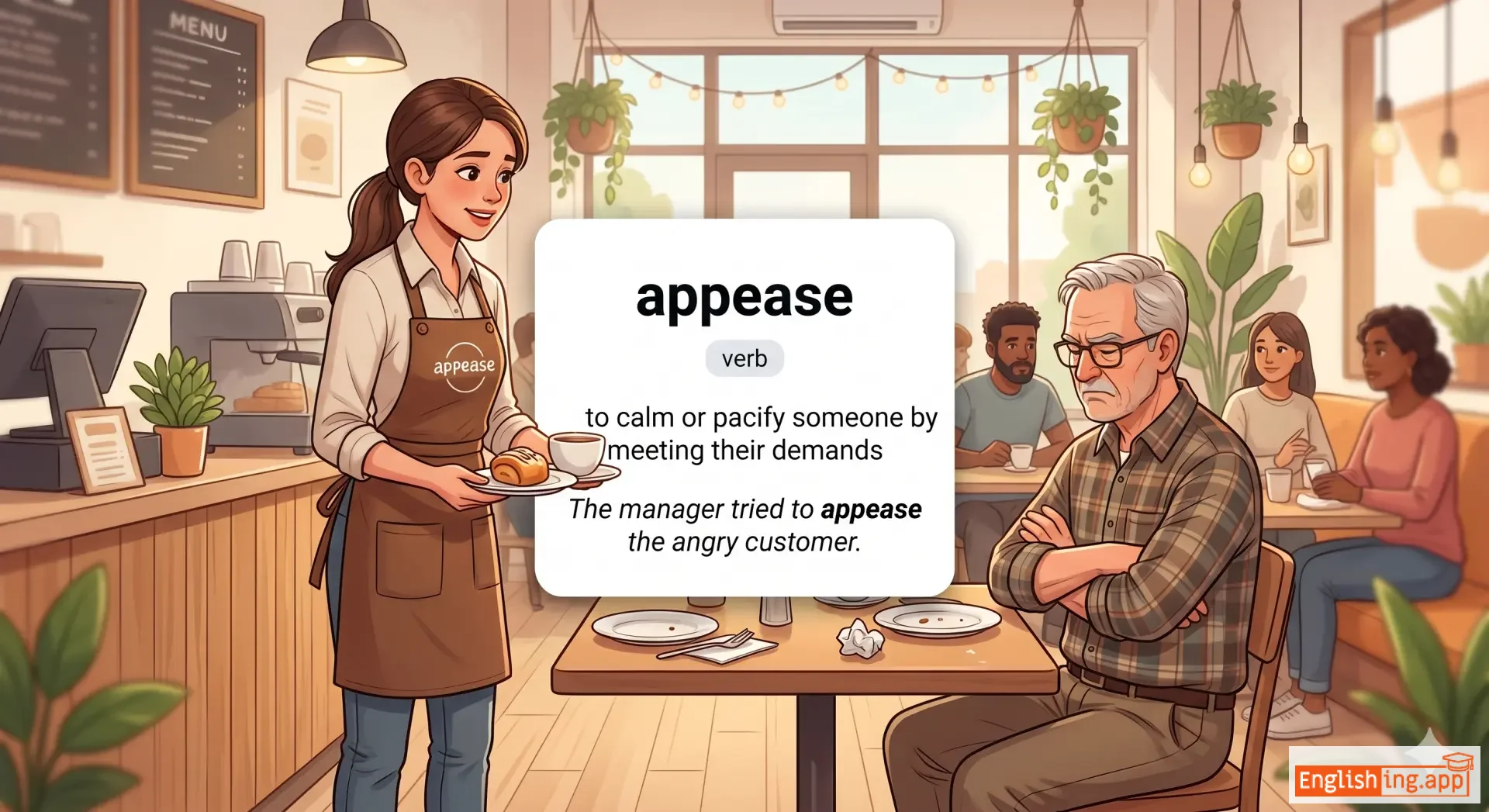
appease definition card — visual illustration of the meaning
verb
/əˈpiːz/
शांत करना / तृप्त करना (shaant karna / tript karna)

to calm or pacify someone by meeting their demands

"The manager tried to appease the angry customer."

"मैनेजर ने गुस्से में ग्राहक को शांत करने की कोशिश की।" (Manager ne gusse mein grahak ko shaant karne ki koshish ki.)
adjective
/ˈæpəˌleɪt/
अपील से संबंधित (apil se sambandhit)

relating to appeals in a court of law

"The case was taken to an appellate court."

"मामला एक अपीली अदालत में लिया गया था।" (Māmla ek apīlī adālat mein liyā gayā thā.)
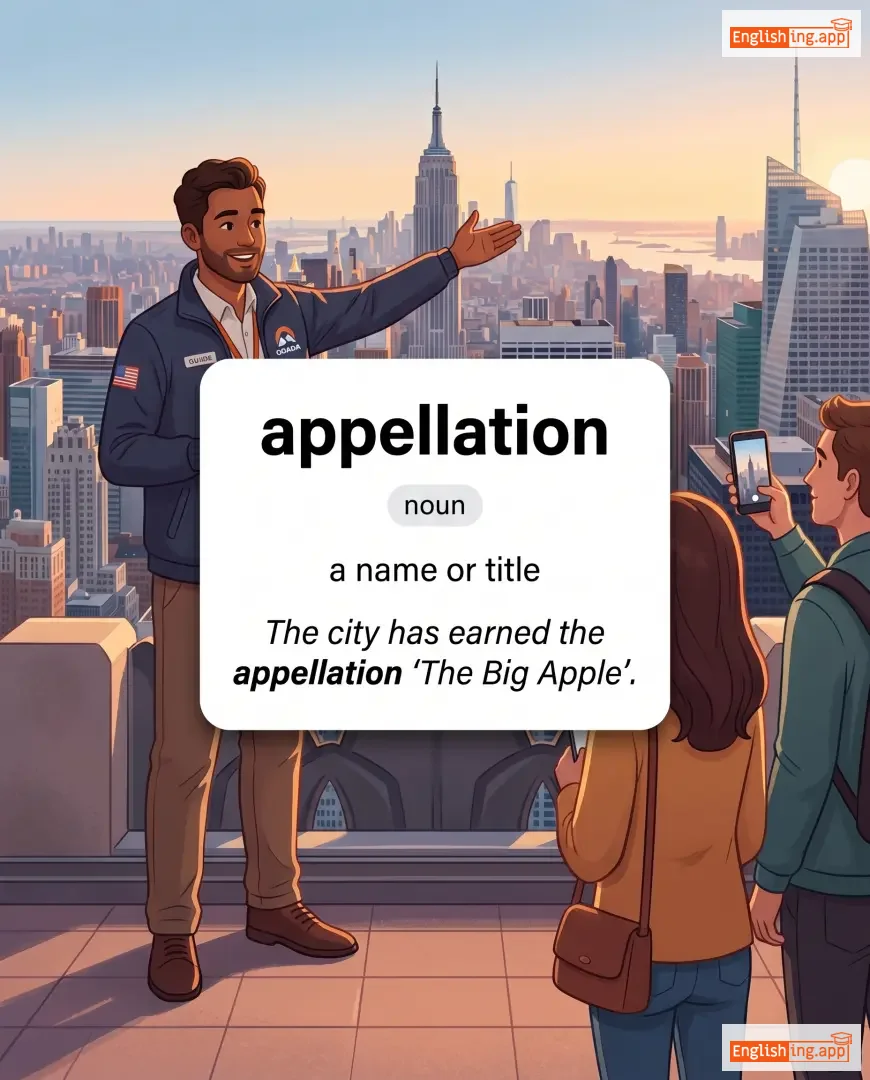
appellation definition card — visual illustration of the meaning
noun
/ˌæpəˈleɪʃən/
उपाधि / नाम (upadhi / naam)

a name or title

"The city has earned the appellation 'The Big Apple'."

"शहर ने 'द बिग एप्पल' उपाधि अर्जित की है।" (Shehar ne 'The Big Apple' upadhi arjit ki hai.)
verb
/əˈpɛnd/
जोड़ना (jodna)

to add something as an attachment or supplement, usually at the end of a document or list

"She decided to append a note to the end of the report."

"उसने रिपोर्ट के अंत में एक नोट जोड़ने का फैसला किया।" (Usne report ke ant mein ek note jodne ka faisla kiya.)
verb
/ˌæpərˈteɪn/
संबंधित होना (sambandhit hona)

to relate to or be connected with something

"The rules only appertain to members of the club."

"नियम केवल क्लब के सदस्यों से संबंधित हैं।" (Niyam keval club ke sadasyon se sambandhit hain.)
appetite definition card — visual illustration of the meaning
noun
/ˈæpɪtaɪt/
भूख (bhukh)

a natural desire for food; a strong desire for something

"After the long walk, I had a huge appetite."

"लंबी सैर के बाद, मुझे बहुत भूख लगी।" (Lambi sair ke baad, mujhe bahut bhukh lagi.)
verb
/ˈæpɪtaɪz/
भूख जगाना (bhookh jagana)

to stimulate the appetite; to make someone eager or interested

"The aroma of fresh bread will appetize the guests before dinner."

"ताज़ी रोटी की खुशबू मेहमानों की भूख जगाएगी।" (taazi roti ki khushboo mehmanon ki bhookh jagaegi)
verb
/əˈplɔːd/
ताली बजाना (taali bajana)

to show approval by clapping or expressing admiration

"The audience applauded the performance."

"दर्शकों ने प्रदर्शन को ताली बजाकर सराहा।" (Darshako ne pradarshan ko taali bajakar saraaha.)
noun
/əˈplɔːz/
तालियाँ (taaliyan)

the sound of people clapping their hands to show approval or enjoyment

"The actor received loud applause after his performance."

"अभिनेता को उनके प्रदर्शन के बाद जोरदार तालियों की गूंज मिली।" (Abhineta ko unke pradarshan ke baad jor-daar taaliyon ki goonj mili.)
noun
/ˈæpəl/
सेब (seb)

a round fruit with red, green, or yellow skin

"She ate a red apple for breakfast."

"उसने नाश्ते में एक लाल सेब खाया।" (Usne nashtay mein ek lal seb khaya.)
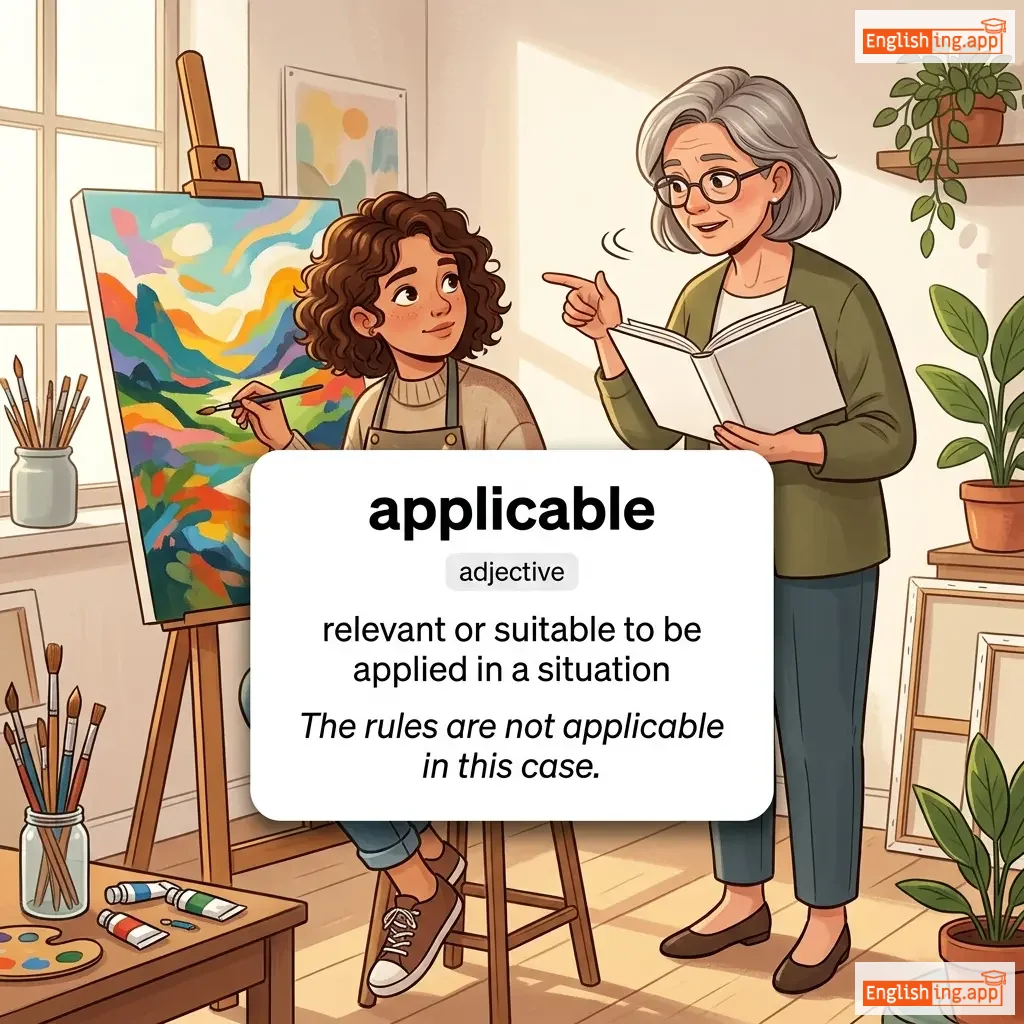
applicable definition card — visual illustration of the meaning
adjective
/ˈæplɪkəbl/
लागू होने योग्य (laagu hone yogya)

relevant or suitable to be applied in a situation

"The rules are not applicable in this case."

"इस मामले में नियम लागू नहीं होते।" (Is maamle mein niyam laagu nahi hote.)
noun
/ˈæplɪkənt/
आवेदक (aveddak)

a person who applies for something, such as a job or a position

"The applicant was interviewed for the position."

"आवेदक का साक्षात्कार पद के लिए लिया गया था।" (Aveddak ka sakshatkar pad ke liye liya gaya tha.)