वोकैबुलरीज

इंग्लिश वोकैबुलरी डिस्कवर, लर्न और मास्टर करें

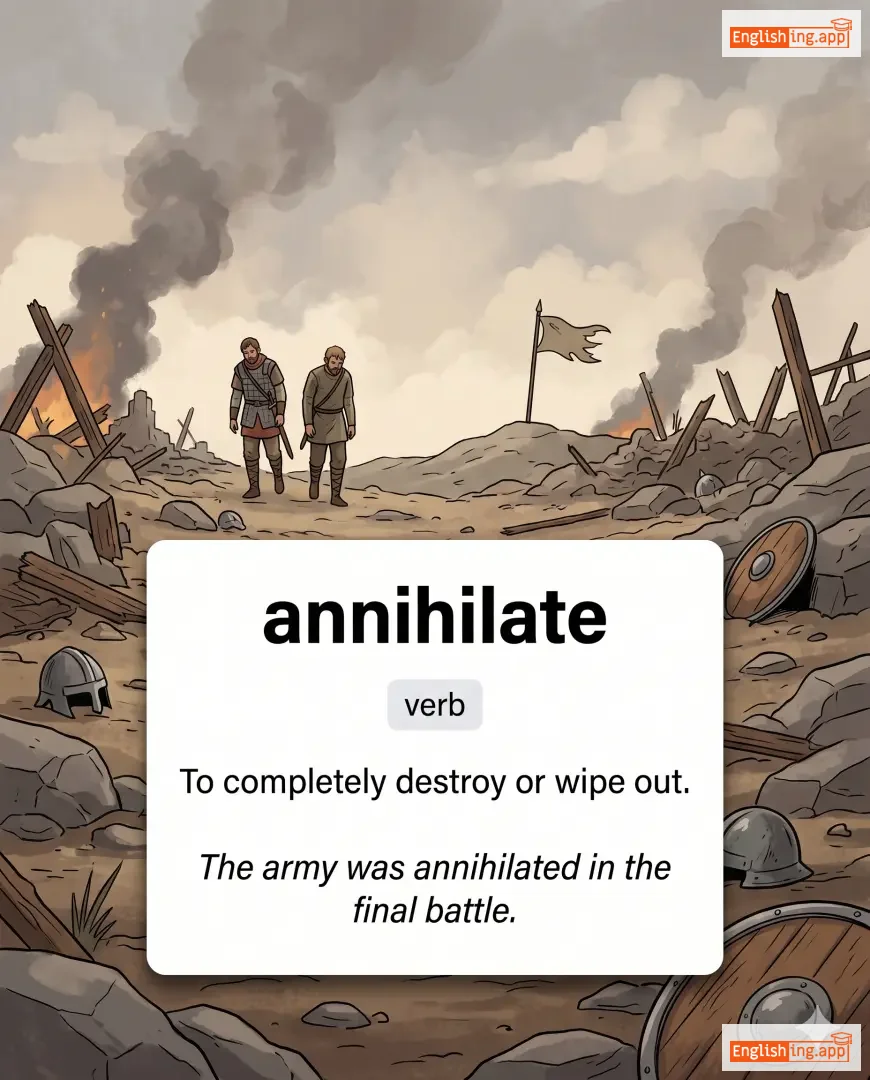
annihilate definition card — visual illustration of the meaning
verb
/əˈnaɪ.ə.leɪt/
पूर्ण रूप से नष्ट करना (poorn roop se nasht karna)

To completely destroy or wipe out.

"The army was annihilated in the final battle."

"आर्मी अंतिम युद्ध में पूरी तरह से नष्ट हो गई।" (Aarme antim yudh mein poori tarah se nasht ho gayi.)
noun
/ˌænɪˈvɜːrsəri/
वर्षगांठ (varshganth)

the yearly recurrence of a date marking a past event

"They celebrated their wedding anniversary with a dinner."

"उन्होंने अपने विवाह की वर्षगांठ को एक रात्रिभोज के साथ मनाया।" (Unhone apne vivah ki varshganth ko ek raatribhoj ke saath manaya.)
verb
/ˈæn.ə.teɪt/
टिप्पणियाँ या नोट्स जोड़ना (tippaniyan ya nots jodna)

to add notes or comments to a text, diagram, or document for explanation or clarification

"The teacher asked the students to annotate the poem with their interpretations."

"शिक्षक ने छात्रों से कविता में अपनी व्याख्याओं के साथ एन्नोटेट करने को कहा।" (Shikshak ne chatron se kavita mein apni vyakhyaon ke saath annotate karne ko kaha.)
verb
/əˈnaʊns/
घोषणा करना (ghoshna karna)

to make a formal public statement about something

"The company will announce the new product tomorrow."

"कंपनी कल नए उत्पाद की घोषणा करेगी।" (Company kal naye utpad ki ghoshna karegi.)
announced definition card — visual illustration of the meaning
verb
əˈnaʊnst
घोषित किया गया (ghoshit kiya gaya)

To make a public and typically formal declaration about a fact, occurrence, or intention.

"The mission was announced publicly."

"मिशन को सार्वजनिक रूप से घोषित किया गया था।" (Mishan ko saarvjanik roop se ghoshit kiya gaya tha.)
noun
/əˈnaʊnsmənt/
घोषणा (ghoshana)

a public or formal statement giving information

"The principal made an important announcement about the new schedule."

"प्रधानाचार्य ने नए कार्यक्रम के बारे में एक महत्वपूर्ण घोषणा की।" (Pradhanacharya ne naye karyakram ke baare mein ek mahatvapurn ghoshna ki.)
verb
/əˈnɔɪ/
चिढ़ाना (chidhana)

to irritate or bother someone and make them feel a little angry or uncomfortable

"His constant humming started to annoy everyone in the room."

"उसकी लगातार हमिंग ने कमरे में सभी को परेशान करना शुरू कर दिया।" (Uski lagatar humming ne kamre mein sabhi ko pareshan karna shuru kar diya.)
adjective
/əˈnɔɪd/
चिढ़ा हुआ (chidha hua)

feeling slightly angry or irritated

"She felt annoyed by the constant noise."

"लगातार शोर से वह चिढ़ा हुआ महसूस कर रही थी।" (lagatar shor se vah chidha hua mehsoos kar rahi thi)
adjective
/əˈnɔɪɪŋ/
परेशान करने वाला (pareshan karne wala)

causing irritation or mild anger; bothersome or troublesome

"The constant noise from the street was extremely annoying."

"सड़क से आने वाली लगातार आवाज़ बहुत परेशान करने वाली थी।" (sadak se aane wali lagatar awaaz bahut pareshan karne wali thi)
adjective
/ˈæn.ju.əl/
वार्षिक (varshik)

happening once every year

"The company holds an annual meeting for all its shareholders."

"कंपनी हर साल अपने सभी शेयरधारकों के लिए वार्षिक बैठक आयोजित करती है।" (Kampani har saal apne sabhi sharedaarakon ke liye varshik baithak aayojit karti hai.)
adverb
/ˈænjuəli/
वार्षिक रूप से (varshik roop se)

once every year; yearly

"The company holds a general meeting annually."

"कंपनी हर साल एक सामान्य बैठक आयोजित करती है।" (Company har saal ek samanya baithak aayojit karti hai.)
noun
/əˈnjuː.ɪ.ti/
वार्षिक भत्ता (varshik bhatta)

a fixed sum of money paid to someone each year, typically for the rest of their life

"She receives an annuity from her late husband's insurance policy."

"वह अपनी दिवंगत पति की बीमा पॉलिसी से वार्षिक भत्ता प्राप्त करती है।" (Vah apni divangat pati ki beema policy se varshik bhatta prapt karti hai.)
verb
/əˈnʌl/
रद्द करना (radd karna)

to declare something legally invalid or cancel it

"The court decided to annul the marriage due to fraud."

"कोर्ट ने धोखाधड़ी के कारण शादी को रद्द करने का निर्णय लिया।" (Court ne dhokhadhadi ke karan shaadi ko radd karne ka nirnay liya.)
noun
/əˌnʌn.siˈeɪ.ʃən/
घोषणा, शुभ समाचार (ghoshna, shubh samachar)

The announcement of something; in Christianity, the announcement by the angel Gabriel to Mary that she would conceive Jesus.

"The church celebrated the Feast of the Annunciation with a special service."

"चर्च ने विशेष सेवा के साथ एन्नंसीएशन के पर्व की मनाई।" (Church ne vishesh seva ke sath Annunciation ke parv ki manai.)
noun
/ˈæn.oʊd/
सकारात्मक इलेक्ट्रोड (sakaratmak electrode)

The positive electrode in a device such as a battery, where current flows into a polarized electrical device.

"The anode of the battery was corroded after long use."

"बैटरी का ऐनोड लंबे उपयोग के बाद जंग लगा था।" (Battery ka anode lambe upyog ke baad jang laga tha.)
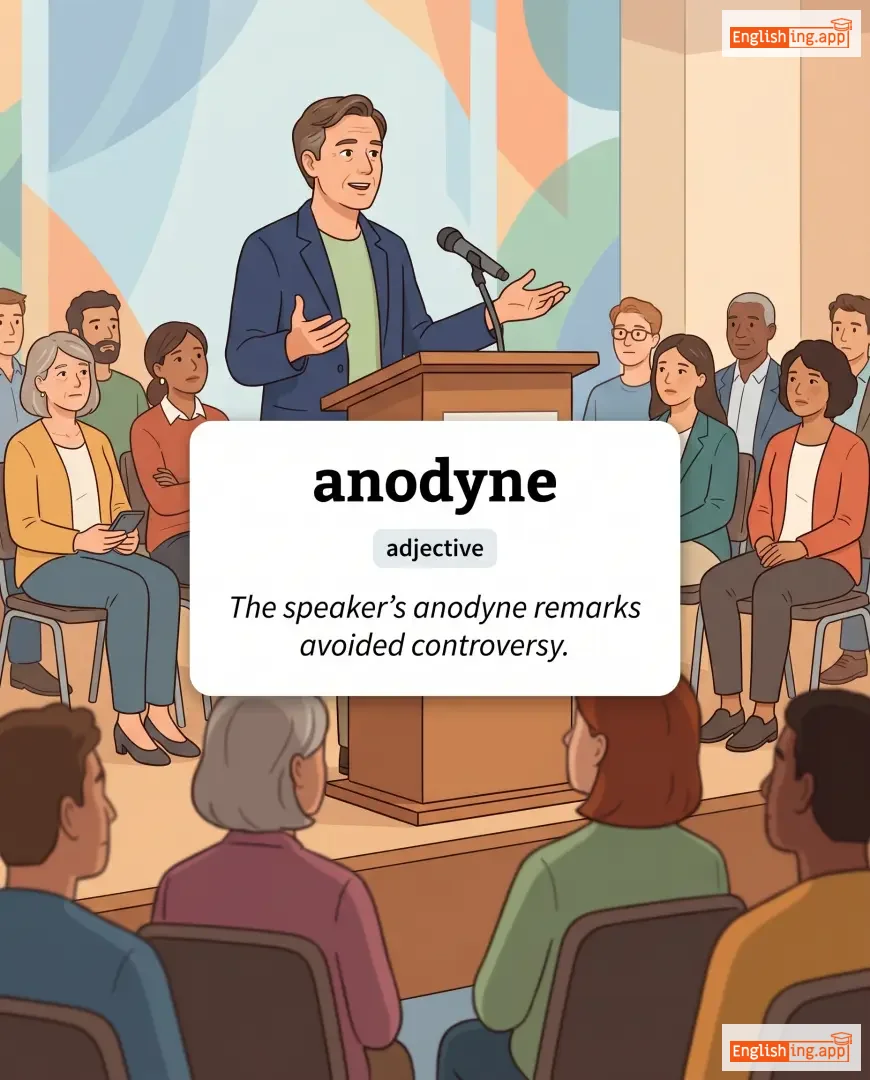
anodyne definition card — visual illustration of the meaning
adjective
/ˈæn.ə.daɪn/
जो नुकसान नहीं करता, निरापद (jo nuksan nahin karta, nirapad)

Not likely to cause offense; bland or harmless. Also refers to something that relieves pain.

"The speaker’s anodyne remarks avoided controversy."

"वक्ता की निरापद टिप्पणी ने विवाद से बचा लिया।" (vakta ki nirapad tipanni ne vivad se bacha liya.)
verb
/əˈnɔɪnt/
तेल लगाना, अभिषेक करना (tel lagana, abhishek karna)

To smear or rub with oil, often as part of a religious ceremony or as a sign of consecration.

"The priest anointed the king with holy oil."

"पुरोहित ने राजा को पवित्र तेल से अभिषेक किया।" (Purohit ne raja ko pavitra tel se abhishek kiya.)
noun
/əˈnɔɪnt.mənt/
अभिषेक (abhishek)

The act of anointing, usually with oil, as part of a ritual or ceremony.

"The anointment of the new leader was a sacred ritual."

"नए नेता का अभिषेक एक पवित्र समारोह था।" (Naye neta ka abhishek ek pavitra samaroha tha.)
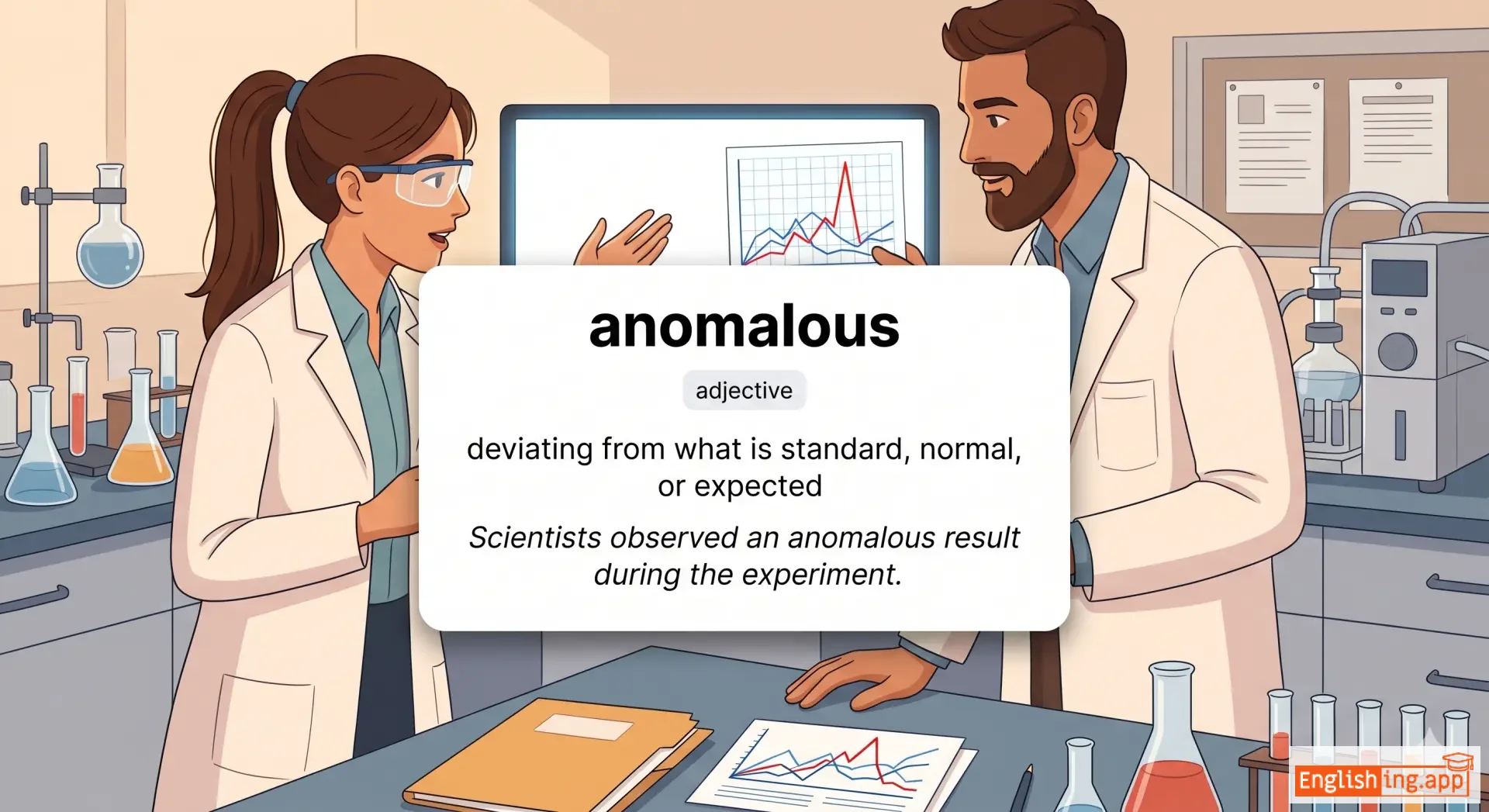
anomalous definition card — visual illustration of the meaning
adjective
/əˈnɒmələs/
असामान्य (asaamanya)

deviating from what is standard, normal, or expected

"Scientists observed an anomalous result during the experiment."

"वैज्ञानिकों ने प्रयोग के दौरान एक असामान्य परिणाम देखा।" (Vaigyanikon ne prayog ke dauraan ek asamanya parinaam dekha.)
noun
/əˈnɒməli/
विचलन (vichlan)

something that deviates from the norm or expected result

"The sudden drop in temperature was considered an anomaly."

"तापमान में अचानक गिरावट को विचलन माना गया।" (Tapmaan mein achanak girawat ko vichlan maana gaya.)
anonymity definition card — visual illustration of the meaning
noun
/ˌænəˈnɪməti/
अनामिता (anamita)

the condition of being anonymous; lack of identity or recognition

"The internet allows people to speak with anonymity."

"इंटरनेट लोगों को अनामिता के साथ बात करने की अनुमति देता है।" (Internet logon ko anamita ke saath baat karne ki anumati deta hai.)
adjective
/əˈnɒnɪməs/
अनाम (anam)

without a name; not identified by name

"The donation was made by an anonymous benefactor."

"दान एक अनाम दाता द्वारा किया गया था।" (Daan ek anam daata dwara kiya gaya tha.)
determiner/pronoun
/əˈnʌðər/
दूसरा (doosra)

one more person or thing of the same type

"Can I have another cup of tea?"

"क्या मुझे एक और कप चाय मिल सकता है?" (Kya mujhe ek aur cup chai mil sakta hai?)
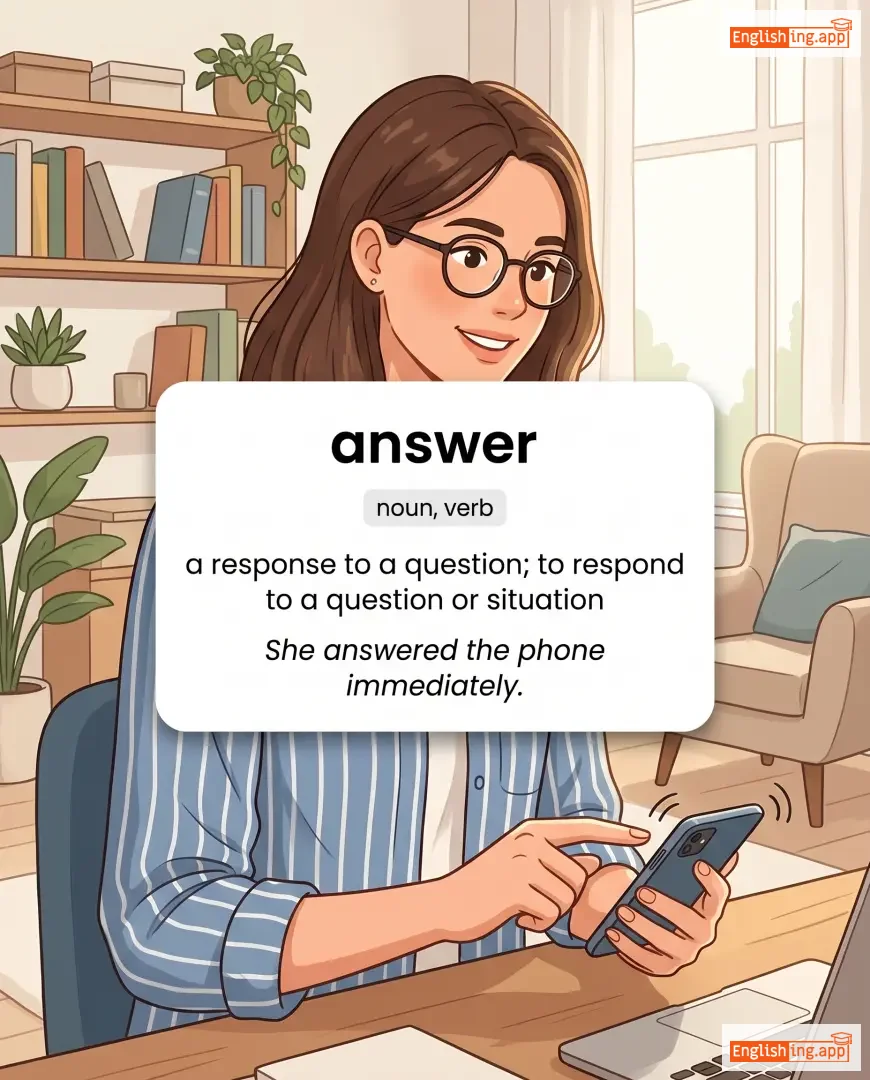
answer definition card — visual illustration of the meaning
noun, verb
/ˈænsər/
उत्तर (uttar)

a response to a question; to respond to a question or situation

"She answered the phone immediately."

"उसने तुरंत फोन का उत्तर दिया।" (Usne turant phone ka uttar diya.)
noun
/ænt/
चींटी (chinti)

a small insect that lives in organized colonies and is known for hard work

"The ant carried a crumb that was twice its size."

"चींटी ने एक टुकड़ा उठाया जो उसके आकार से दोगुना था।" (chinti ne ek tukda uthaya jo uske akar se doguna tha)
noun
/ænˈtæɡənɪzəm/
विरोध (virodh)

active hostility or opposition

"There was clear antagonism between the two political parties."

"दो राजनीतिक पार्टियों के बीच स्पष्ट विरोध था।" (Do rajneetik partiyon ke beech spashth virodh tha.)
verb
/ænˈtæɡənaɪz/
दूसरों को नाराज करना (doosron ko naraaz karna)

to cause someone to become hostile or angry; to provoke opposition

"His rude remarks only served to antagonize his colleagues."

"उसकी रूखी टिप्पणियाँ केवल उसके सहकर्मियों को नाराज करने के लिए थीं।" (Uski rukhi tippaniyan keval uske sahkarmiyon ko naraaz karne ke liye thin.)
adjective
/ænˈtɑːrktɪk/
एंटार्कटिक (antarctic)

relating to the region around the South Pole

"The Antarctic region is known for its extreme cold and icy landscapes."

"एंटार्कटिक क्षेत्र अपनी अत्यधिक ठंड और बर्फीली भूमि के लिए जाना जाता है।" (Antarctic kshetra apni atyadhik thand aur barfili bhoomi ke liye jana jata hai.)
noun
/ˈænti/
खेल के प्रारंभ में रखा गया दांव (khel ke prarambh mein rakha gaya daav)

a stake put up by a player in poker or similar games before receiving cards; also used figuratively to mean an initial investment or contribution

"Each player placed an ante before the game began."

"प्रत्येक खिलाड़ी ने खेल शुरू होने से पहले एक ऐंटी रखी।" (Pratyek kheladi ne khel shuru hone se pehle ek ante rakhi.)
verb
/ˌæntɪˈsiːd/
पहले आना (pehle aana)

to come before in time or order

"A short introduction usually antecedes the main text."

"एक छोटा परिचय आम तौर पर मुख्य पाठ से पहले आता है।" (Ek chhota parichay aam tor par mukhya path se pehle aata hai.)
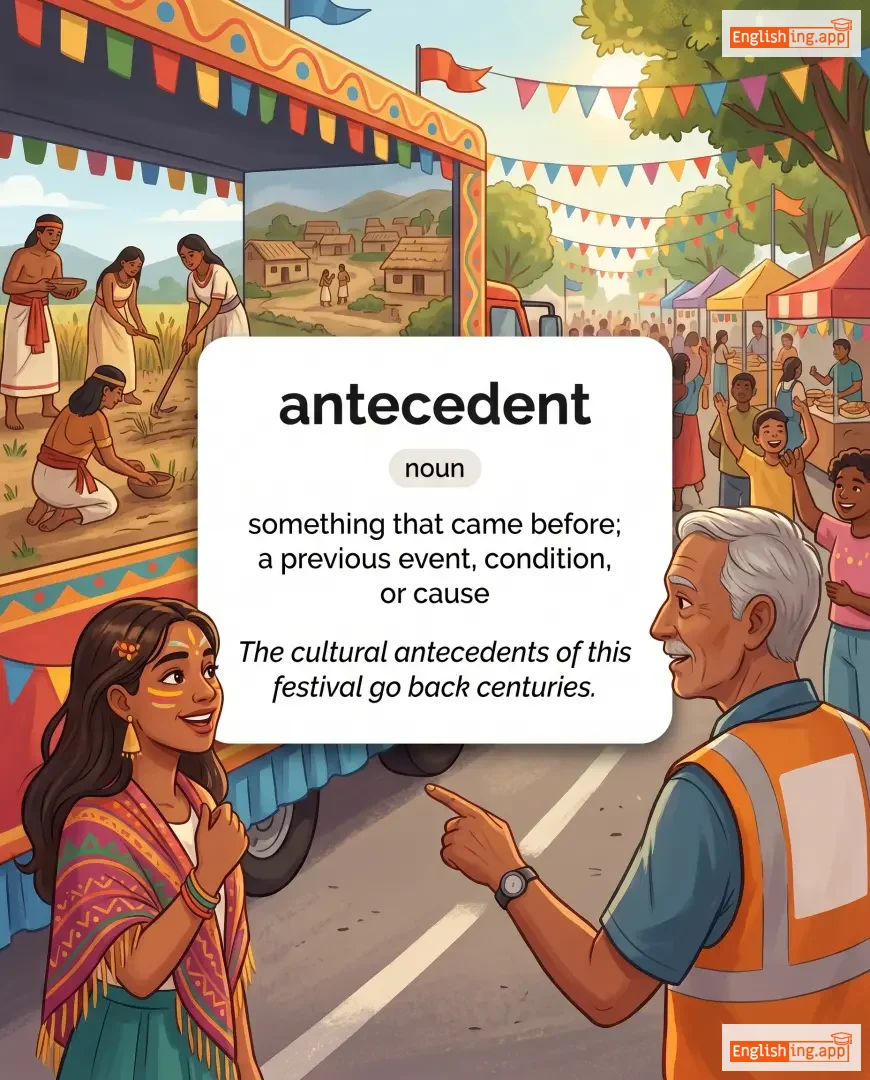
antecedent definition card — visual illustration of the meaning
noun
/ˌæntɪˈsiːdənt/
पूर्वसूत्र (purvsutra)

something that came before; a previous event, condition, or cause

"The cultural antecedents of this festival go back centuries."

"इस त्यौहार के सांस्कृतिक पूर्वसूत्र सदियों पुराने हैं।" (Is tyohar ke sanskritik purvsutra sadiyon purani hain.)
noun
/ˌæntɪˈsiːdənts/
पूर्व इतिहास (purv itihas)

previous events, conditions, or people that influence or serve as a basis for something that follows

"The lawyer examined the criminal antecedents of the suspect."

"वकील ने संदिग्ध के अपराधपूर्ण पूर्व इतिहास की जाँच की।" (Vakeel ne sandigdh ke apradhpoorn purv itihas ki jaanch ki.)
noun
/ˈæntɪˌtʃeɪmbər/
प्रवेश कक्ष (pravesh kaksh)

a small room serving as an entry to a larger one

"The guests waited in the antechamber before being admitted to the hall."

"मेहमानों ने हॉल में प्रवेश करने से पहले प्रवेश कक्ष में इंतजार किया।" (Mehmano ne hall mein pravesh karne se pehle pravesh kaksh mein intezaar kiya.)
verb
/ˈæntɪdeɪt/
पूर्वतिथि (purv-tithi)

to be earlier in time; to assign a date earlier than the actual one

"The manuscript antedates the modern printing press."

"हस्तलिखित पांडुलिपि आधुनिक मुद्रण प्रेस से पहले की है।" (hastlikhit pandulipi aadhunik mudran press se pehle ki hai)
verb
/ˈæntɪdeɪtɪd/
पूर्व तिथि दी गई (purv tithi di gayi)

assigned to an earlier date than the actual one; happened earlier

"The letter was antedated to appear more official."

"पत्र को अधिक आधिकारिक दिखाने के लिए पूर्व तिथि दी गई थी।" (Patra ko adhik aadhikarik dikhane ke liye purv tithi di gayi thi.)
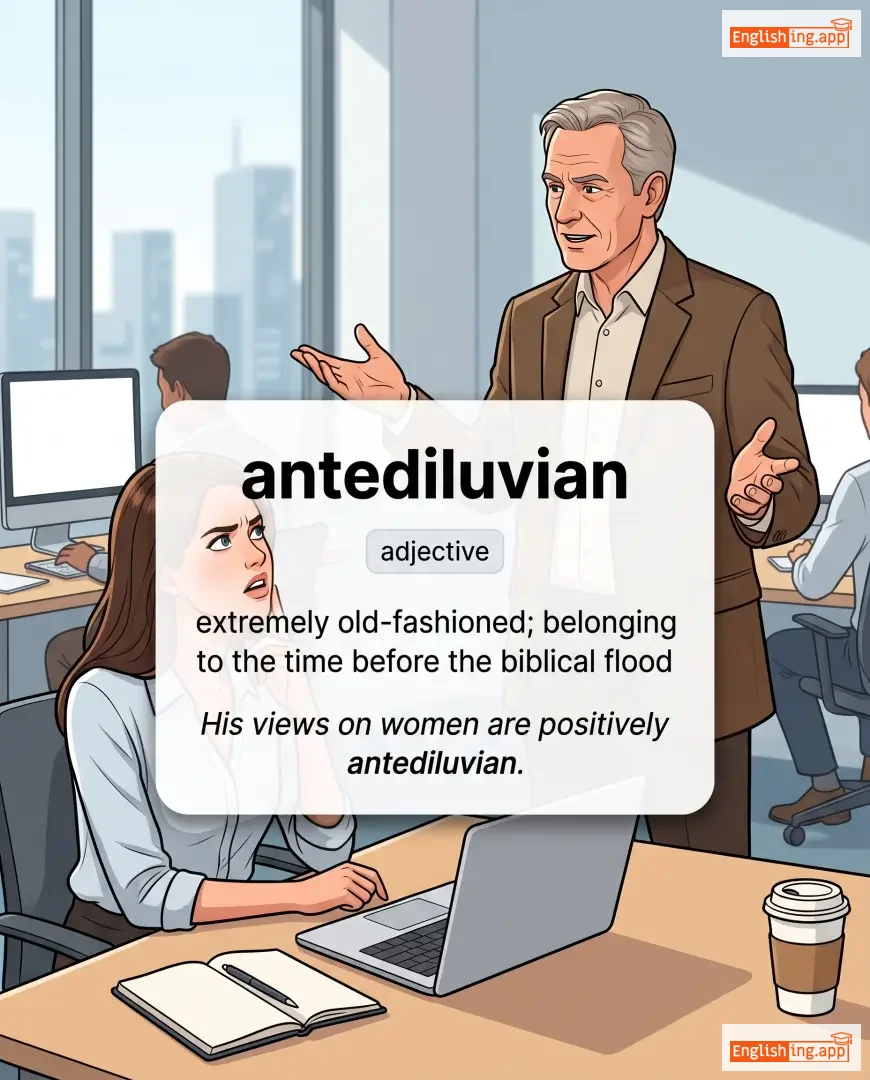
antediluvian definition card — visual illustration of the meaning
adjective
/ˌæntɪdəˈluːviən/
बहुत पुराना (bahut purana)

extremely old-fashioned; belonging to the time before the biblical flood

"His views on women are positively antediluvian."

"उसकी महिलाओं के बारे में विचार पूरी तरह से पुरानी सोच वाले हैं।" (Uski mahilao ke baare mein vichar puri tarah se purani soch wale hain.)
adjective
/ˌæntɪməˈrɪdiən/
दोपहर से पहले का समय (dopahar se pehle ka samay)

Relating to the time before noon; occurring in the morning.

"She scheduled all her important meetings during the antemeridian hours."

"उसने अपनी सभी महत्वपूर्ण मीटिंग्स दोपहर से पहले के समय में तय की थीं।" (Usne apni sabhi mahatvapurn meetings dopahar se pehle ke samay mein tay ki thi.)
adjective
/ˌæntɪˈmʌndeɪn/
विश्व सृष्टि से पूर्व (vishw srishti se purv)

Existing or occurring before the creation of the world.

"Some myths speak of an antemundane chaos before order was established."

"कुछ मिथकों में एक ऐंटेमंडेन अराजकता की बात की गई है जो व्यवस्था स्थापित होने से पहले थी।" (Kuch mithakon mein ek aintemundane arajakta ki baat ki gayi hai jo vyavastha sthapit hone se pehle thi.)
adjective
/ˌæntiˈneɪtl/
प्रसूति पूर्व (prasooti purv)

Relating to the medical care and treatment given to a pregnant woman before the birth of her child.

"She attended regular antenatal checkups throughout her pregnancy."

"वह अपनी गर्भावस्था के दौरान नियमित प्रसूति पूर्व चेकअप्स करती थी।" (Vah apni garbhavastha ke dauran niyamit prasooti purv checkups karti thi.)
adjective
/ænˈtɪriər/
आगे का (aage ka)

Situated at or toward the front; coming before in position or time.

"The anterior part of the brain controls logical thinking."

"मस्तिष्क का आगे का हिस्सा तार्किक सोच को नियंत्रित करता है।" (mastishk ka aage ka hissa tarkik soch ko niyantrit karta hai.)
noun
/ˈæntiruːm/
प्रवेश कक्ष (pravesh kaksh)

A small room leading to a main one, often used as a waiting area.

"The guests waited in the anteroom before being called inside."

"मेहमानों को अंदर बुलाए जाने से पहले प्रवेश कक्ष में इंतजार करना पड़ा।" (mehmaanon ko andar bulae jaane se pahle pravesh kaksh mein intezar karna pada.)
noun
/ˈænθəm/
गान (gaan)

A song that is identified with a particular group, movement, or nation, often expressing pride or unity.

"The national anthem was played before the football match."

"राष्ट्रीय गान फुटबॉल मैच से पहले बजाया गया था।" (Rashtriya gaan football match se pehle bajaya gaya tha.)
noun
/ænˈθɒlədʒi/
संकलन (sankalan)

A collection of literary works, such as poems, short stories, or essays, compiled into one volume.

"She contributed a poem to the new poetry anthology."

"उसने नई कविता संकलन में एक कविता जोड़ी।" (Usne nai kavita sankalan me ek kavita jodi.)
noun
/ˈænθrəsaɪt/
कठिन कोयला (kathin koyla)

A hard, shiny form of coal that burns with little smoke and a high heat value.

"The factory used anthracite as its primary fuel source."

"कारख़ाने ने एन्थ्रेसाइट को अपनी मुख्य ईंधन स्रोत के रूप में इस्तेमाल किया।" (Karkhane ne anthracite ko apni mukhya indhan srot ke roop mein istemal kiya.)
noun
/ˌænθrəpəˈsɛntrɪzəm/
मानवकेंद्रितता (manavkendritata)

The belief that human beings are the most important or central element of existence.

"Anthropocentrism often shapes environmental policies."

"मानवकेंद्रितता अक्सर पर्यावरणीय नीतियों को आकार देती है।" (Manavkendritata aksar paryavaranik neetiyon ko aakaar deti hai.)
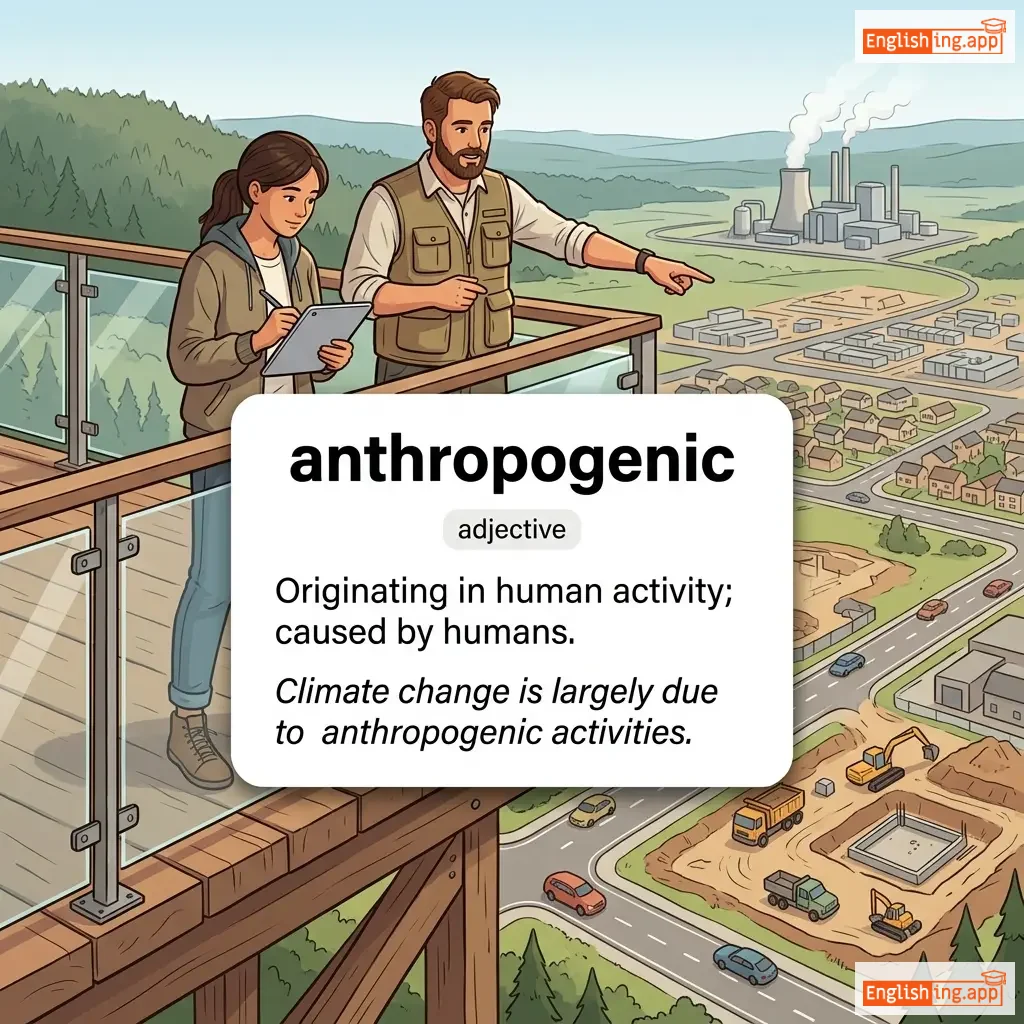
anthropogenic definition card — visual illustration of the meaning
adjective
/ˌæn.θrə.pəˈdʒen.ɪk/
मानवजनित (manavjanit)

Originating in human activity; caused by humans.

"Climate change is largely due to anthropogenic activities."

"जलवायु परिवर्तन मुख्य रूप से मानवजनित गतिविधियों के कारण है।" (Jalvayu parivartan mukhya roop se manavjanit gatividiyon ke kaaran hai.)
adjective, noun
/ˈænθrəpɔɪd/
मानव-सदृश (manav-sadrish)

Resembling a human being in form; a primate such as apes and monkeys.

"The gorilla is considered an anthropoid ape."

"गोरिल्ला को एक मानव-सदृश बंदर माना जाता है।" (Gorilla ko ek manav-sadrish bandar mana jata hai.)
noun
/ˌænθrəˈpɒlədʒɪst/
मानवविज्ञानी (manavvijnani)

a person who studies human societies, cultures, and their development

"The anthropologist spent years studying the tribal community."

"मानवविज्ञानी ने जनजातीय समुदाय का अध्ययन करने में वर्षों बिताए।" (Manavvijnani ne janjati samuday ka adhyayan karne mein varsho bitaye.)
noun
/ˌænθrəˈpɒlədʒi/
मानवशास्त्र (manavashastra)

the scientific study of humans, their societies, cultures, and development

"She decided to major in anthropology at university."

"उसने विश्वविद्यालय में मानवशास्त्र में विशेषज्ञता लेने का निर्णय लिया।" (Usne vishwavidyalaya mein manavashastra mein visheshagya lena ka nirnay liya.)
adjective
/ˌænθrəpəˈmɔːrfɪk/
मानव रूप में (maanav roop mein)

attributing human characteristics to non-human things, like animals or objects

"The cartoon shows an anthropomorphic cat walking on two legs."

"कार्टून में एक मानव रूपी बिल्ली दो पैरों पर चल रही है।" (Cartoon mein ek maanav roopi billi do pairon par chal rahi hai.)