Словари

Словарь английского языка | Значения слов, определения и примеры

👩‍❤️‍👨

wife (вайф)

noun
/waɪf/
жена (zhena)

a woman who is married to someone

"She is the wife of the famous author."

"Она жена знаменитого автора." (Ona zhena znamenitogo avtora.)
verb
/ˈwɪɡəl/
дергаться, колыхаться (dergat'sya, kolykhat'sya)

To move or cause to move with small rapid movements from side to side.

"The baby wiggled happily in her mother's arms."

"Ребёнок весело двигался в руках своей матери." (Rebyonok veselo dvigalsya v rukakh svoey materi.)
adjective
/waɪld/
дикой (dikoy)

living or growing in the natural environment; uncontrolled or untamed

"The children ran wild in the park."

"Дети бегали дико в парке." (Deti begali diko v parke.)
noun
/waɪld bɔːr/
дикая свинья (dikaya svin'ya)

a wild pig that lives in forests and has long curved teeth

"The wild boar ran through the forest quickly."

"Дикая свинья быстро побежала через лес." (dikaya svin'ya bystro pobezhal cherez les)
noun
/ˈwɪldənəs/
дикая местность (dikaya mestnost')

an area of land that has not been changed by people and is still in its natural state

"They camped in the wilderness far from the city."

"Они разбили лагерь в дикой местности, далеко от города." (Oni razbili lagery v dikoy mestnosti, daleko ot goroda.)
noun
/ˈwaɪldˌlaɪf/
дикая природа (dikaya priroda)

animals, birds, and plants living in their natural environment

"The park is home to a wide variety of wildlife."
"Парк является домом для большого разнообразия дикой природы." (Park yavyayetsya domom dlya bol'shogo raznoobraziya dikoy prirody.)
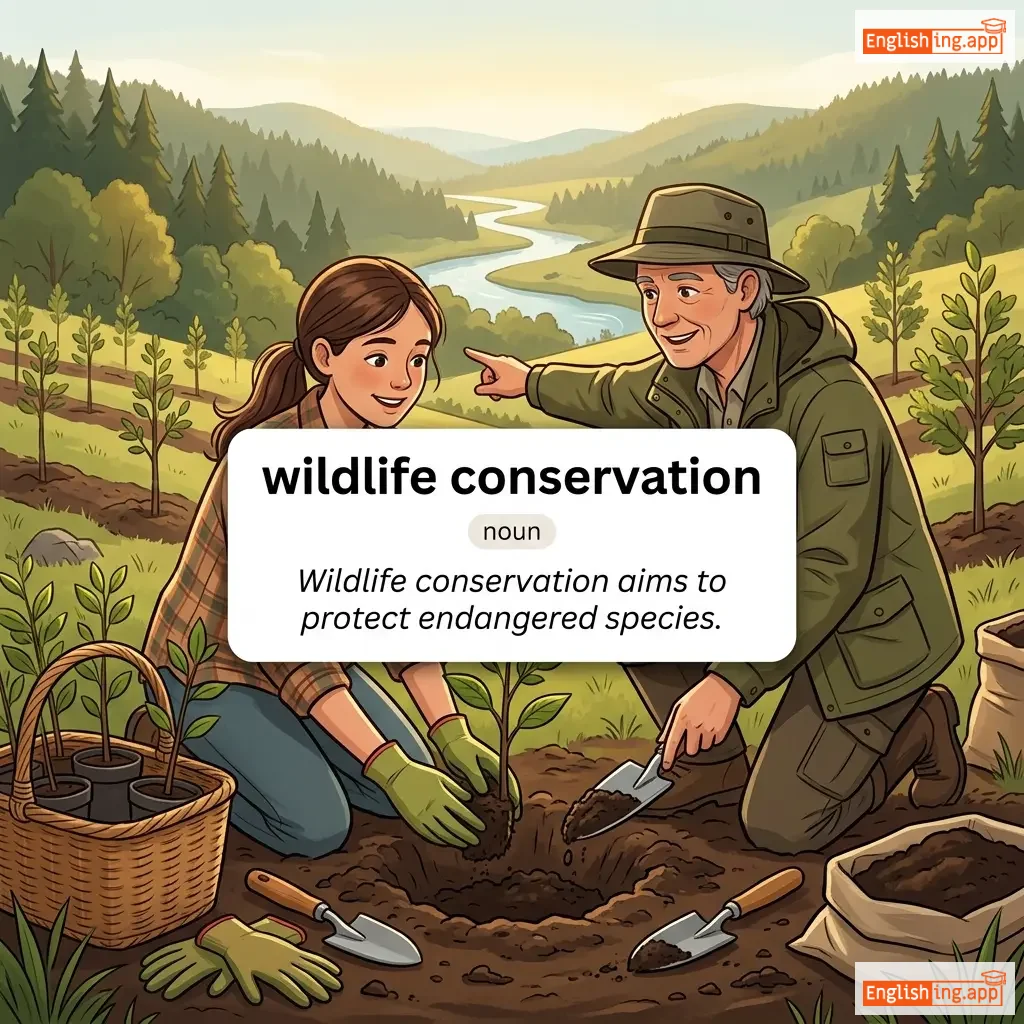
wildlife conservation definition card — visual illustration of the meaning
noun
/ˈwaɪld.laɪf ˌkɒnsərˈveɪʃən/
сохранение дикой природы (soxranenie dikoy prirody)

The practice of protecting wild animal species and their habitats in order to maintain healthy wildlife species or populations and to restore, protect or enhance natural ecosystems.

"Wildlife conservation aims to protect endangered species."
"Сохранение дикой природы направлено на защиту исчезающих видов." (Soxranenie dikoy prirody napravleno na zashchitu ishchizayushchikh vidov.)
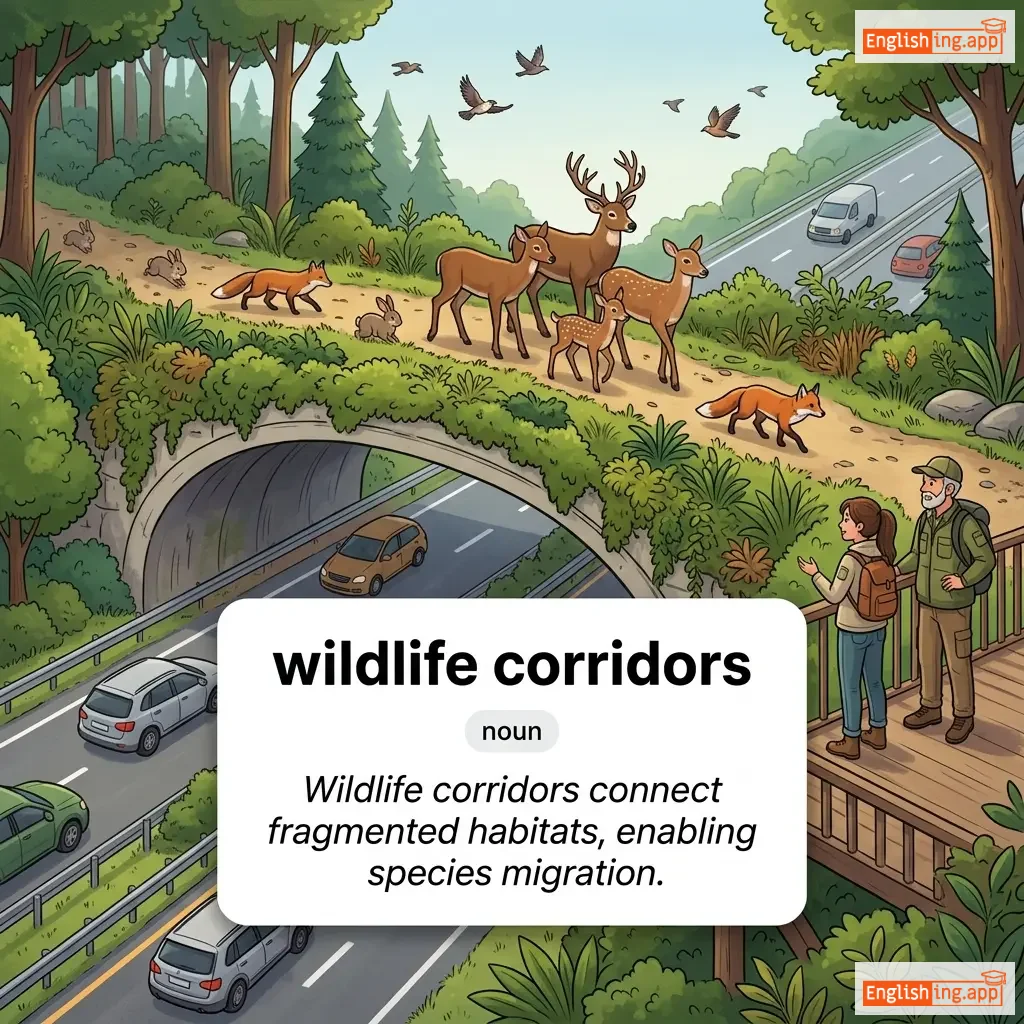
wildlife corridors definition card — visual illustration of the meaning
noun
ˈwaɪldlaɪf ˈkɔːrɪdɔːrz
коридоры дикой природы (koridory dikoy prirody)

Areas of habitat connecting wildlife populations separated by human activities or structures.

"Wildlife corridors connect fragmented habitats, enabling species migration."

"Коридоры дикой природы соединяют фрагментированные среды, позволяя миграцию видов." (Koridory dikoy prirody soyedinyayut fragmentirovannyye sredy, pozvolyayu migratsiyu vidov.)
noun
/waɪl/
хитрость, обман (khitrost', obman)

A trick or clever scheme meant to deceive or outwit someone.

"He used every wile to win her trust."

"Он использовал все свои хитрости, чтобы завоевать её доверие." (On ispol'zoval vse svoi khitrosti, chtoby zaveoyevat' ee doverie.)
adjective
/ˈwɪl.fəl/
упрямый; намеренно (upryamy; namerenno)

deliberately stubborn; done on purpose; intentional

"His wilful disobedience led to punishment."

"Его упрямое непослушание привело к наказанию." (Ego upryamoe neposlushanie privelo k nakazaniyu.)
noun, verb
/wɪl/
воля (volya)

expressing future tense or intention; a legal document

"She will attend the meeting tomorrow."

"Она будет присутствовать на встрече завтра." (Ona budet prisutstvovat na vstreche zavtra.)
adjective
/ˈwɪlfəl/
волевой (volevoy)

Deliberate, intentional, or stubbornly determined to do as one wants.

"Her willful disregard for the rules got her into trouble."

"Её волевой отказ следовать правилам привёл её к проблемам." (Yeyo volevoy otkaz sleduvat' pravilam privyol yeyo k problemam.)
adjective
/ˈwɪlɪŋ/
готовый (gotovyy)

ready, inclined, or eager to do something

"She was willing to help with the project."

"Она была готова помочь с проектом." (Ona byla gotova pomoch' s proyektom.)
adverb
/ˈwɪl.ɪŋ.li/
добровольно (dobrovol'no)

in a willing manner; voluntarily; with free will

"She willingly helped her neighbors during the emergency."

"Она добровольно помогла своим соседям во время чрезвычайной ситуации." (ona dobrovol'no pomogla svoim sosedyam vo vremya chrezvychaynoy situatsii)
noun
/ˈwɪlɪŋnəs/
готовность (gotovnost)

the quality of being prepared or ready to do something

"Her willingness to help others made her very popular."

"Ее готовность помогать другим сделала ее очень популярной." (Eyo gotovnost' pomogat' drugym sdelala eyo ochen' popularnoy.)
adjective
/ˈwɪloʊi/
стройный, тонкий и гибкий, как ива (stroynyy, tonkiy i gibkiy, kak iva)

Gracefully tall, slender, and flexible, like a willow tree.

"She moved with a willowy elegance across the stage."
"Она двигалась с элегантностью ивы по сцене." (ona dvigalas' s elegantsiyu ivyi po stsene)
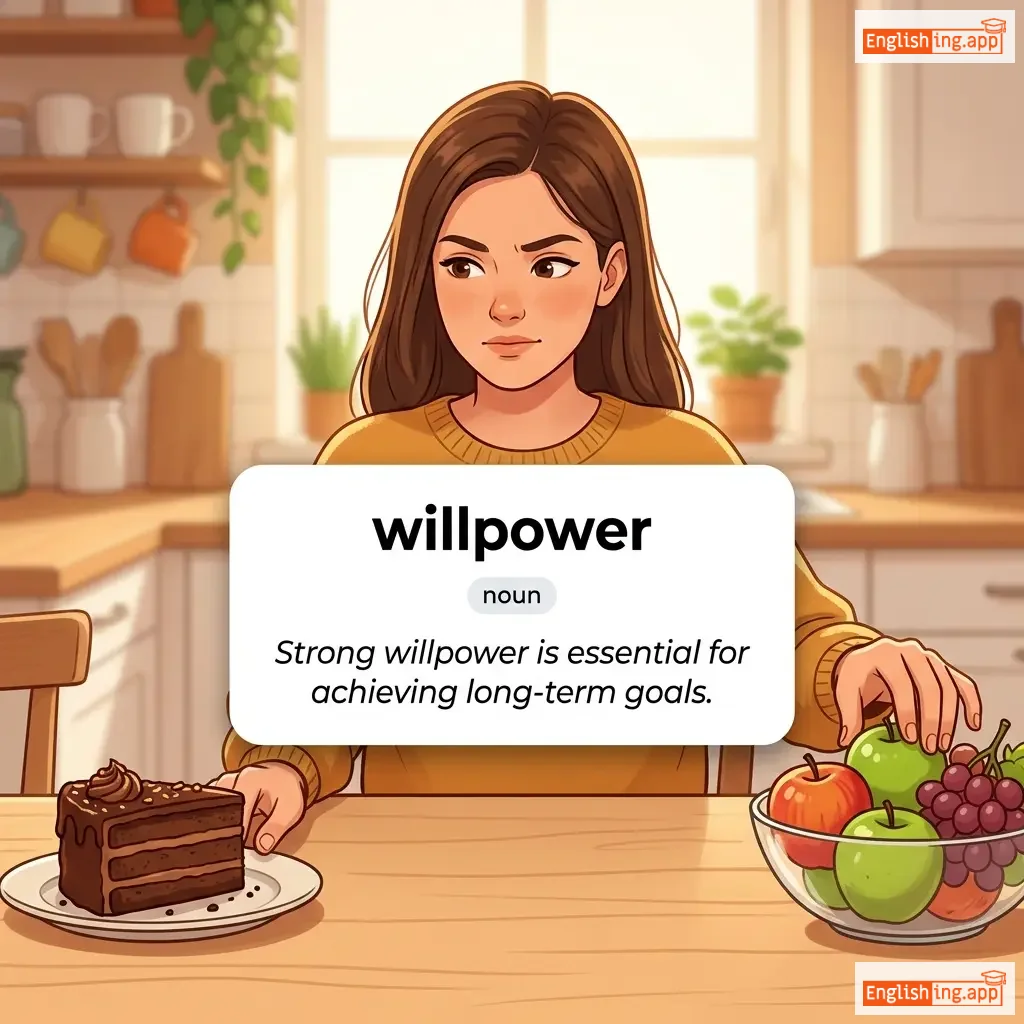
willpower definition card — visual illustration of the meaning
noun
ˈwɪl.paʊər
сила воли (sila voli)

The ability to control your thoughts and actions in order to achieve what you want to do.

"Strong willpower is essential for achieving long-term goals."

"Сильная сила воли необходима для достижения долгосрочных целей." (Sil'naya sila voli neobkhodima dlya dostizheniya dolgoročnykh tseley.)
verb
/wɪlt/
увядать (uvyadat)

To become limp, weak, or drooping, often due to lack of water or energy.

"The flowers wilted in the heat of the sun."

"Цветы увяли на жаре от солнца." (Tsvety uvyali na zhare ot solnca.)
adjective
/ˈwaɪli/
хитрый (khitry)

Skilled at gaining an advantage, especially by being clever or deceitful.

"The wily fox outsmarted the hunters."
"Хитрая лиса обманула охотников." (Khitraya lisa obmanula okhotnikov.)
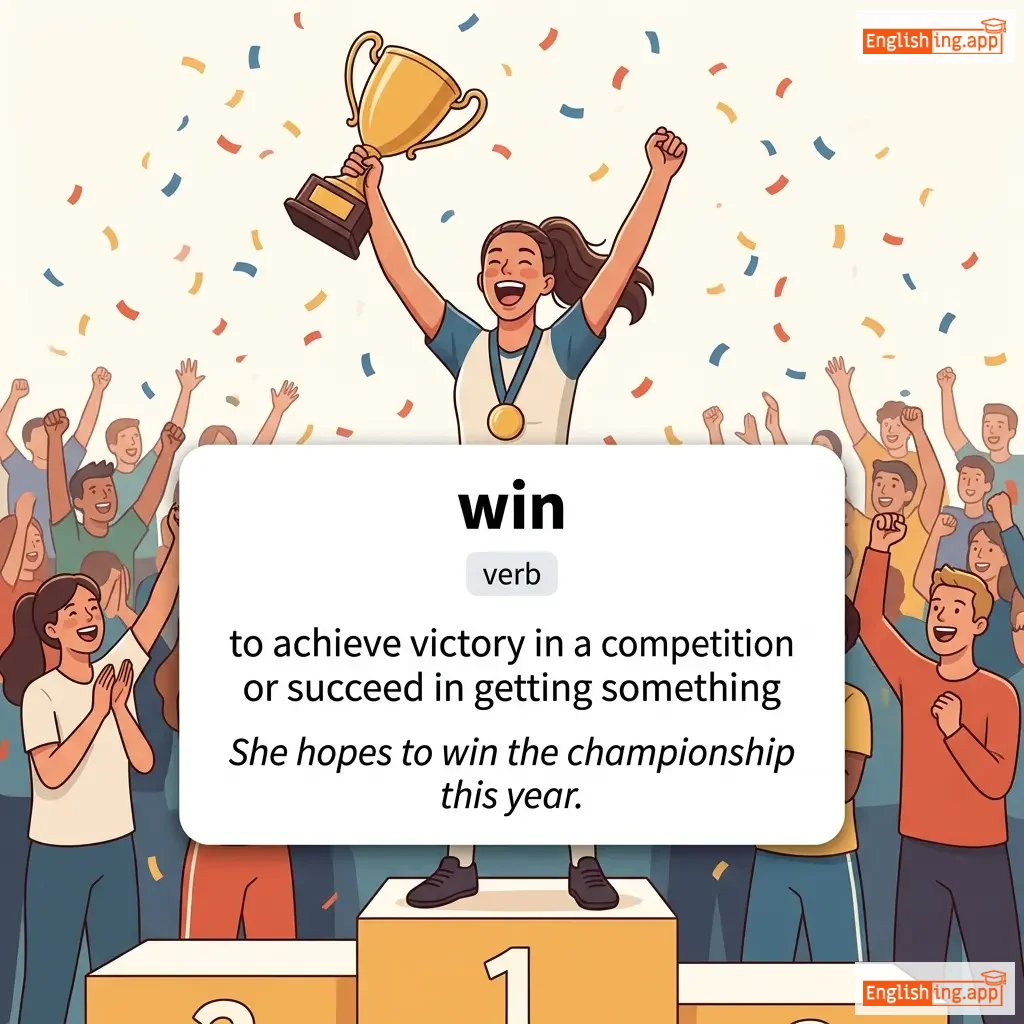
win definition card — visual illustration of the meaning
verb
/wɪn/
выиграть (vyigrat')

to achieve victory in a competition or succeed in getting something

"She hopes to win the championship this year."

"она надеется выиграть чемпионат в этом году." (Ona nadeyetsya vyigrat' chempionat v etom godu.)
verb
/wɪns/
морщиться от боли (morshchitsya ot boli)

To make an involuntary movement of the face or body as a result of pain or distress.

"He winced when the doctor touched his injured arm."

"Он поморщился, когда доктор коснулся его раненой руки." (On pomorshchilsya, kogda doktor kosnulsya ego ranneoy ruki.)
noun
/wɪnd/
ветер (veter)

moving air, especially in the form of a current of air blowing from a particular direction

"The wind is blowing strong today."
"Сегодня ветер дует сильно." (Segodnya veter duyet sil'no.)
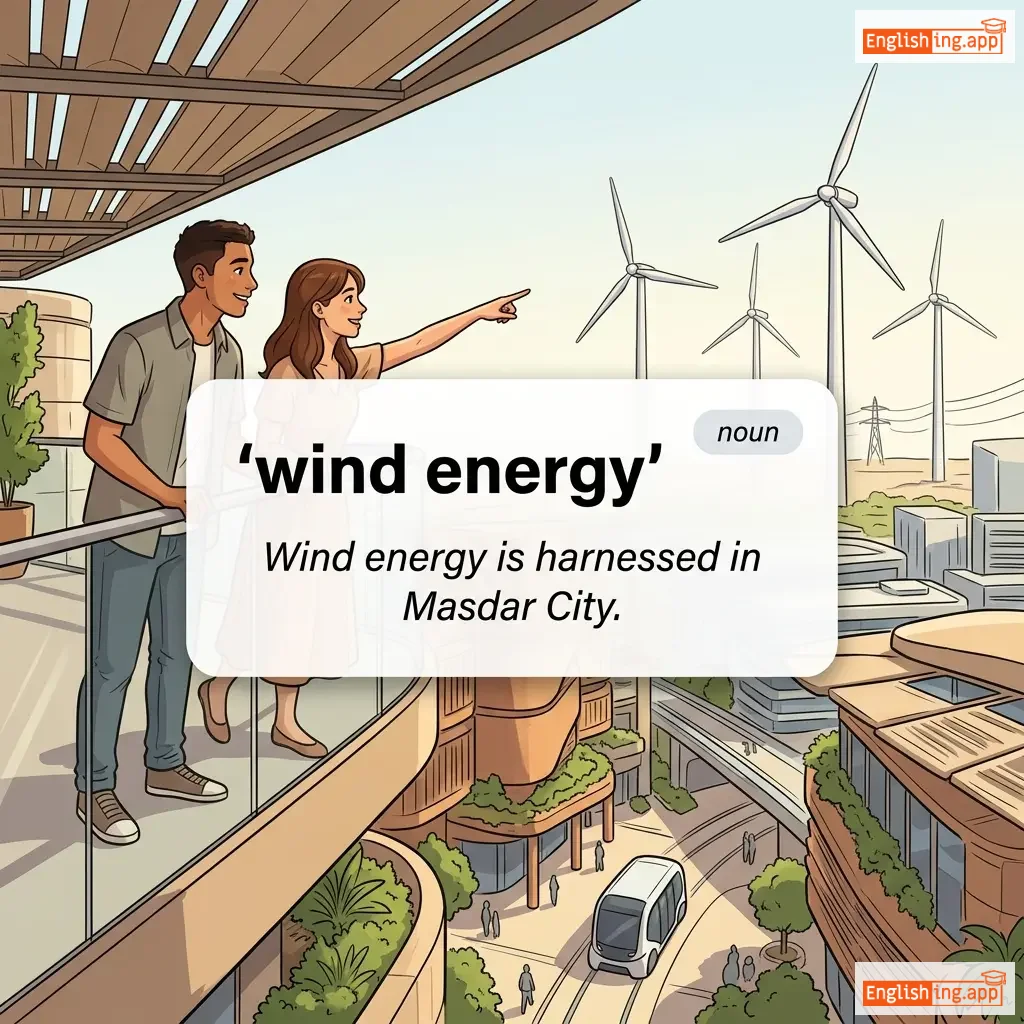
wind energy definition card — visual illustration of the meaning
noun
wɪnd ˈen.ə.dʒi
ветровая энергия (vetrovaya energiya)

Energy generated from wind using wind turbines to convert kinetic energy into electrical power.

"Wind energy is harnessed in Masdar City."

"Ветровая энергия используется в Масдар-Сити." (Vetrovaya energiya ispol'zuyetsya v Masdar-Siti.)
noun
/ˈwɪndbæɡ/
болтун (boltun)

a person who talks too much, especially in a boring or boastful way

"Everyone avoided the windbag at the party because he never let anyone else speak."

"Все избегали болтуна на вечеринке, потому что он никогда не давал говорить другим." (Vse izbegali boltuna na vecherinke, potomu chto on nikogda ne daval govorit' drugim.)
noun
/ˈwɪndfɔːl/
неожиданный доход (neozhidannyy dokhod)

an unexpected piece of good fortune, typically a large amount of money

"The startup received a windfall when a major client paid for a full year in advance."

"Стартап получил неожиданный доход, когда важный клиент заплатил за весь год вперед." (Startap poluchil neozhidannyy dokhod, kogda vazhnyy klient zaplatil za ves' god vpered.)
noun
/ˈwɪndəʊ/
окно (okno)

an opening in a wall or structure that allows light or air to pass through, usually covered with glass or other material

"I opened the window to let the fresh air in."

"Я открыл окно, чтобы впустить свежий воздух." (Ya otkryl okno, chtoby vpuskit' svezhiy vozdukh.)
adjective
/ˈwɪndi/
ветреный (vetreniy)

characterized by strong wind; also, using too many words and saying little

"It was so windy that the umbrellas flipped inside out."

"Было так ветрено, что зонты вывернуло наизнанку." (Bylo tak vetreno chto zonty vyvernulo naiznanku.)
noun
/waɪn/
вино (vino)

an alcoholic drink made from fermented grapes or other fruits

"They served a glass of red wine at the dinner."

"Они подали бокал красного вина на ужин." (Oni podali bokal krasnogo vina na uzhin.)
noun
/ˈwaɪnəri/
винодельня (vinodelnya)

a place where wine is made

"They visited a famous winery in France."
"Они посетили знаменитую винодельню во Франции." (Oni posetili znamenituyu vinodelnyu vo Frantsii.)
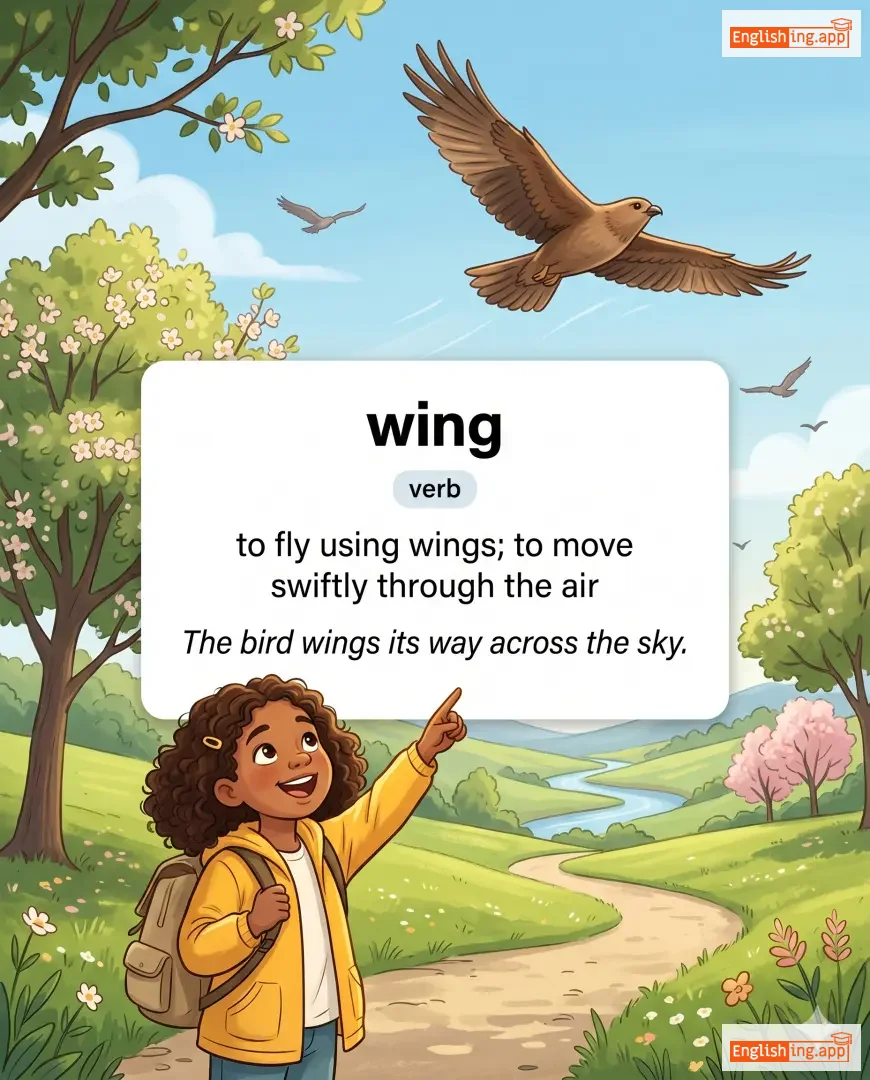
wing definition card — visual illustration of the meaning
noun
/wɪŋ/
крыло (krylo)

a part of a bird or aircraft that is used for flying

"The bird flapped its wings and flew away."

"Птица взмахнула крыльями и улетела." (Ptitsa vzmakhnula krylyami i uletela.)
noun
/ˈwɪŋˌspæn/
размах крыльев (razmakh krylev)

the distance from the tip of one wing to the tip of the other wing

"The eagle has an impressive wingspan of over two meters."

"У орла впечатляющий размах крыльев более двух метров." (U orla vpechatlyayushchij razmakh krylev bolee dvukh metrov.)
noun
/ˈwɪnər/
победитель (pobeditel')

a person who wins a competition or contest

"She was the winner of the race."

"Она была победителем гонки." (Ona byla pobeditelem gonki.)
adjective; noun; gerund
/ˈwɪnɪŋ/
победный (pobednyy)

achieving victory or success; attractive or pleasing in a way that brings success

"She has a winning attitude that inspires the whole team."

"У неё победный настрой, который вдохновляет всю команду." (U nee pobednyy nastroy kotoryy vdokhnovlyaet vsyu komandu)
verb
/ˈwɪn.oʊ/
выбирать; отделять зерно от шелухи (vybirat; otdelyat zerno ot shelukhi)

to remove the less desirable parts from a group; originally, to separate grain from chaff by blowing air

"The committee will winnow the list of applicants to ten finalists."

"Комитет сократит список претендентов до десяти финалистов." (Komitet sokratit spisok pretedentov do desyati finalistov.)
adjective
/ˈwɪnsəm/
привлекательный (privlekatel'nyy)

pleasant and attractive in a fresh, innocent, or charming way

"Her winsome smile instantly put the nervous guests at ease."

"Её привлекательная улыбка сразу же успокоила нервных гостей." (Yeyo privlekatelnaya ulybka srazu zhe uspokoyila nervnykh gostey.)
noun
/ˈwɪntər/
зима (zima)

the coldest season of the year, typically from December to February in the Northern Hemisphere

"Winter in the north can be very harsh with heavy snowfall."

"Зима на севере может быть очень суровой, с сильными снегопадами." (Zima na severe mozhet byt' ochen' surovoy, s sil'nymi snego-padami.)
adjective
/ˈwɪntri/
зимний (zimniy)

Characteristic of or suitable for winter; cold and bleak.

"The wintry wind made everyone shiver as they walked outside."
"Зимний ветер заставил всех вздрогнуть, когда они шли по улице." (Zimniy veter zastavil vsekh vzdrognut', kogda oni shli po ulitse.)
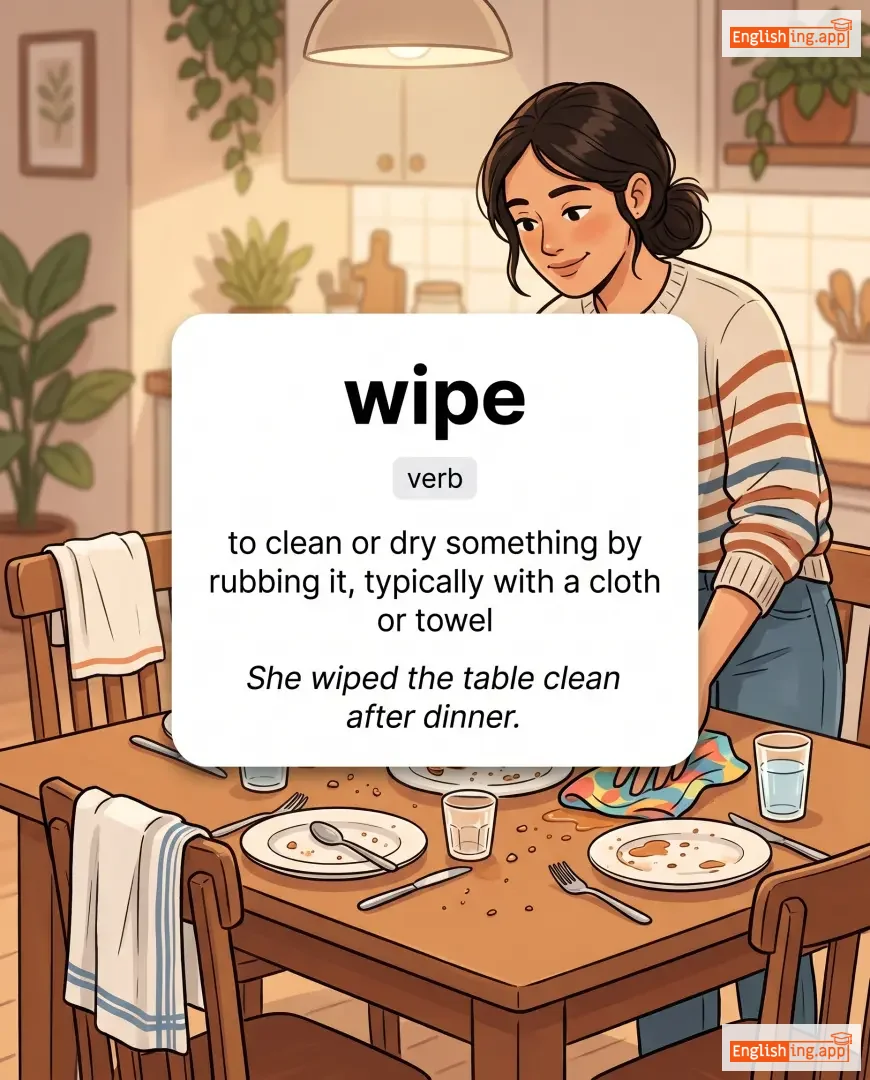
wipe definition card — visual illustration of the meaning
verb
/waɪp/
вытирать (vytirat)

to clean or dry something by rubbing it, typically with a cloth or towel

"She wiped the table clean after dinner."

"Она вытерла стол после ужина." (Ona vyterla stol posle uzhina.)
noun
/ˈwaɪər/
провод (provod)

a thin, flexible thread of metal used to conduct electricity or connect things

"The electrician fixed the wire to restore the power."

"Электрик починил провод, чтобы восстановить питание." (Elektrik pochinit provod, chtoby vosstanovit pitaniye.)
adjective
/ˈwaɪə.ləs/
беспроводной; без проводов (bēspravazdnoy; bēz prōvodōv)

operating without wires; using radio waves for communication

"My wireless headphones provide excellent sound quality without any cables."

"Мои беспроводные наушники обеспечивают отличное качество звука без проводов." (Moyi bēspravazdnoy naushniki obespechivayut otlichnoye kachestvo zvuka bēz prōvodōv.)
adjective
/ˈwaɪəri/
худой, крепкий и выносливый (khudoy, krepkij i vynoslivyj)

Lean, tough, and strong, often with sinewy muscles.

"The wiry athlete moved with remarkable speed and agility."

"Этот худой атлет двигался с невероятной скоростью и ловкостью." (Etot khudoy atlet dvigalsya s neveroyatnoj skorost'yu i lovkost'yu.)
noun
/ˈwɪzdəm/
мудрость (mudrost)

the ability to make sound judgments and decisions based on knowledge and experience

"His wisdom in solving complex problems was admired by everyone."

"Его мудрость в решении сложных проблем была восхищена всеми." (Ego mudrost v reshenii slozhnykh problem byla voskhishchena vsemi.)
adjective
/waɪz/
мудрый (mudryj)

having or showing experience, knowledge, and good judgment

"It was wise of him to save money for the future."

"Ему было мудро сохранить деньги на будущее." (Emu bylo mudro sokhranit' dengi na budushchee.)
wish definition card — visual illustration of the meaning
verb
/wɪʃ/
желать (zhelat')

to desire something or hope for something to happen

"I wish you all the best in your new job."

"Я желаю тебе всего наилучшего в новой работе." (Ya zhelayu tebe vsego nailuchshego v novoy rabote.)
noun
/wɪsp/
небольшой пучок или кусок (nebol'shoy puchok ili kusok)

A small thin or twisted bunch, piece, or amount of something.

"A wisp of smoke rose from the chimney."

"Вспышка дыма поднялась из трубы." (Vspyshka dyma podnyalas' iz truby.)
adjective
/ˈwɪspi/
тонкий и хрупкий (tonkiy i khrupkiy)

Thin, delicate, and weak in appearance or form.

"Her wispy hair blew gently in the breeze."
"Её тонкие волосы легко развивались на ветру." (Eyo tonkiye volosy legko razvivalis na vetru.)
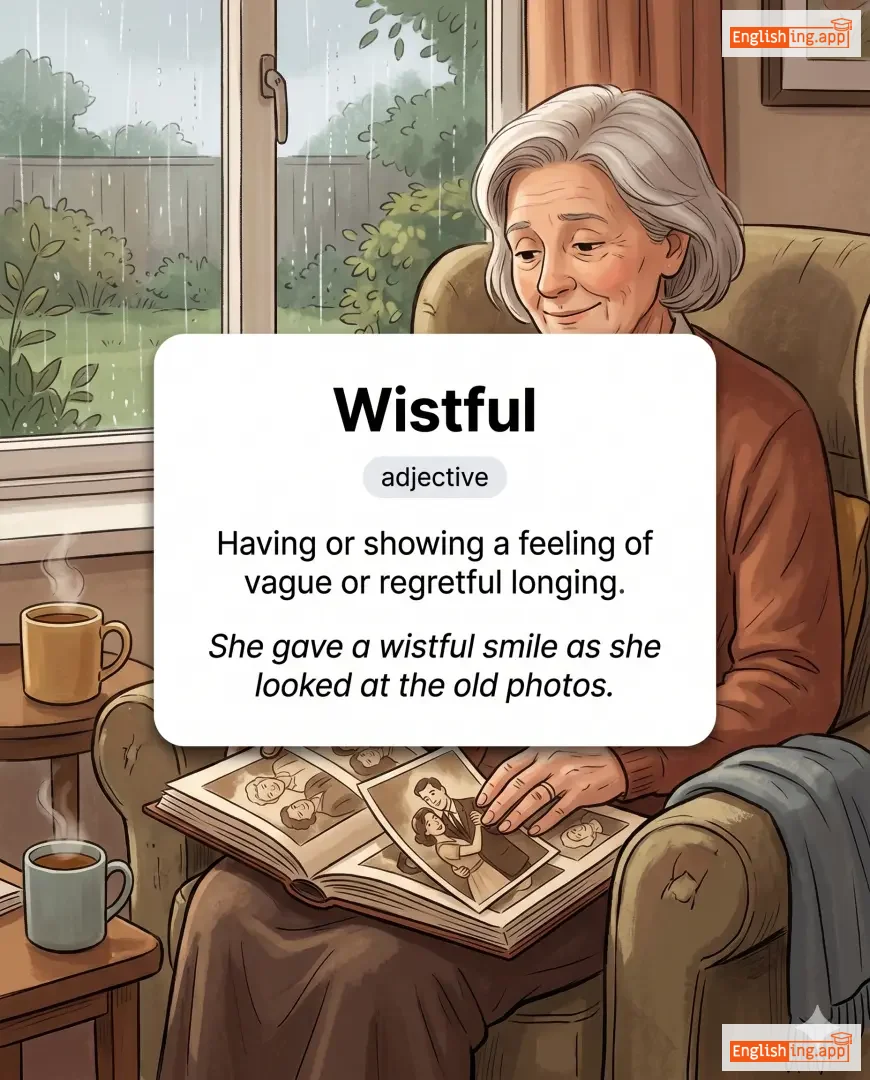
Wistful definition card — visual illustration of the meaning
adjective
/ˈwɪstfəl/
тоскующий (toskuyushchiy)

Having or showing a feeling of vague or regretful longing.

"She gave a wistful smile as she looked at the old photos."

"Она подарила ему грустную улыбку, глядя на старые фотографии." (Ona podarila emu grustnuyu ulybku, glyadya na starye fotografii.)
noun
/wɪt/
остроумие (ostroumie)

the ability to use words and ideas in a quick and inventive way to create humor

"Her sharp wit made everyone laugh at the party."

"Её остроумие заставило всех смеяться на вечеринке." (Yeyo ostroumie zastavilo vsekh smeyatsya na vecherinke.)
🧙‍♀️

Witch (вич)

noun
/wɪtʃ/
ведьма (vedma)

a woman thought to have magic powers, especially evil ones; a practitioner of witchcraft

"The old witch cast a spell on the prince."

"Старая ведьма наложила заклятие на принца." (Staryaya ved'ma nalozhila zaklyatie na printsa.)
noun
/ˈwɪtʃ.krɑːft/
колдовство (koldovstvo)

the practice of magical skills, spells, and abilities

"In old times, many people believed in witchcraft."

"В древние времена многие люди верили в колдовство." (V drevnie vremena mnogie lyudi verili v koldovstvo.)