Словари

Словарь английского языка | Значения слов, определения и примеры
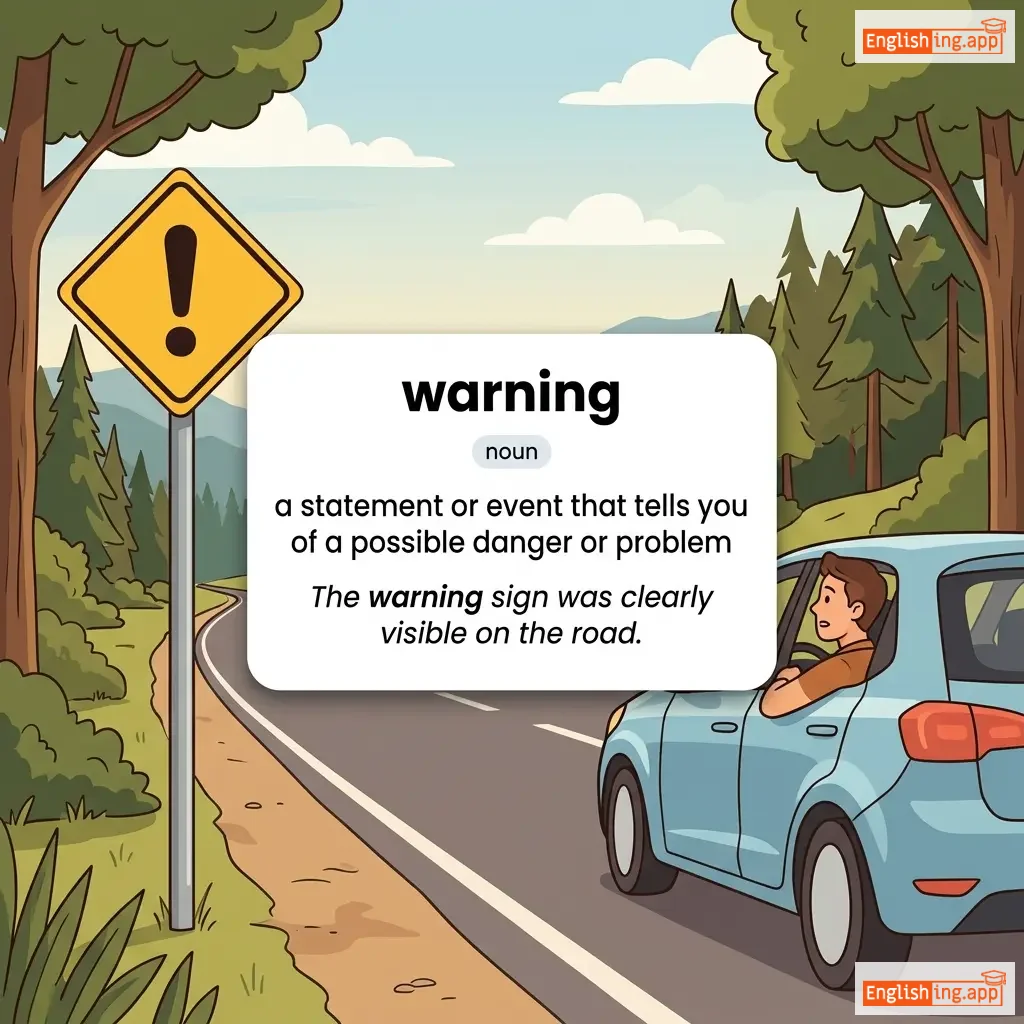
warning definition card — visual illustration of the meaning
noun
/ˈwɔːrnɪŋ/
предупреждение (preduprezhdenie)

a statement or event that tells you of a possible danger or problem

"The warning sign was clearly visible on the road."

"Знак предупреждения был четко виден на дороге." (Znak preduprezhdeniya byl chetko viden na doroge.)
verb
/wɔːrp/
искажать (iskazhat')

To twist or bend out of shape, often due to heat or moisture.

"The wooden door warped in the summer heat."

"Дверь из дерева деформировалась под летней жарой." (Dver' iz dereva deformirovalas' pod letnej zharoj.)
noun/verb
/ˈwɒrənt/
ордер (order)

As a noun: An official authorization or order. As a verb: To justify or make something necessary.

"The judge issued a warrant for his arrest."

"Судья выдал ордер на его арест." (Sudiya vydal order na ego arest.)
warranted definition card — visual illustration of the meaning
adjective/verb
/ˈwɒrəntɪd/
оправдано (opravdano)

Justified or authorized under the circumstances.

"Her anger was warranted after the unfair treatment."

"Ее злость была оправдана после несправедливого обращения." (Eyo zlost' byla opravdana posle nespravedlivogo obshcheniya.)
noun
/ˈwɒrənti/
гарантия (garantiya)

A written guarantee given by a manufacturer or seller promising to repair or replace a product if necessary within a specified period.

"The laptop comes with a two-year warranty."

"Ноутбук поставляется с двухлетней гарантией." (Noutbuk postavlyaetsya s dvukhletney garantiyei.)
noun
/ˈwɒrən/
сеть кроличьих нор (warren)

A network of interconnected rabbit burrows; also used metaphorically for a densely populated building or district.

"The old part of the city is a warren of narrow streets."

"Старая часть города - это сеть узких улиц." (Staryaya chast' goroda - eto set' uzkikh ulits.)
noun
/ˈwɒriər/
воин (voin)

a person engaged or experienced in warfare; a brave or experienced fighter

"The ancient warrior fought fearlessly to protect his land."
"Древний воин сражался бесстрашно, чтобы защитить свою землю." (Drevniy voin srazhalsya besstrashno, chtoby zashchitit' svoyu zemlyu.)
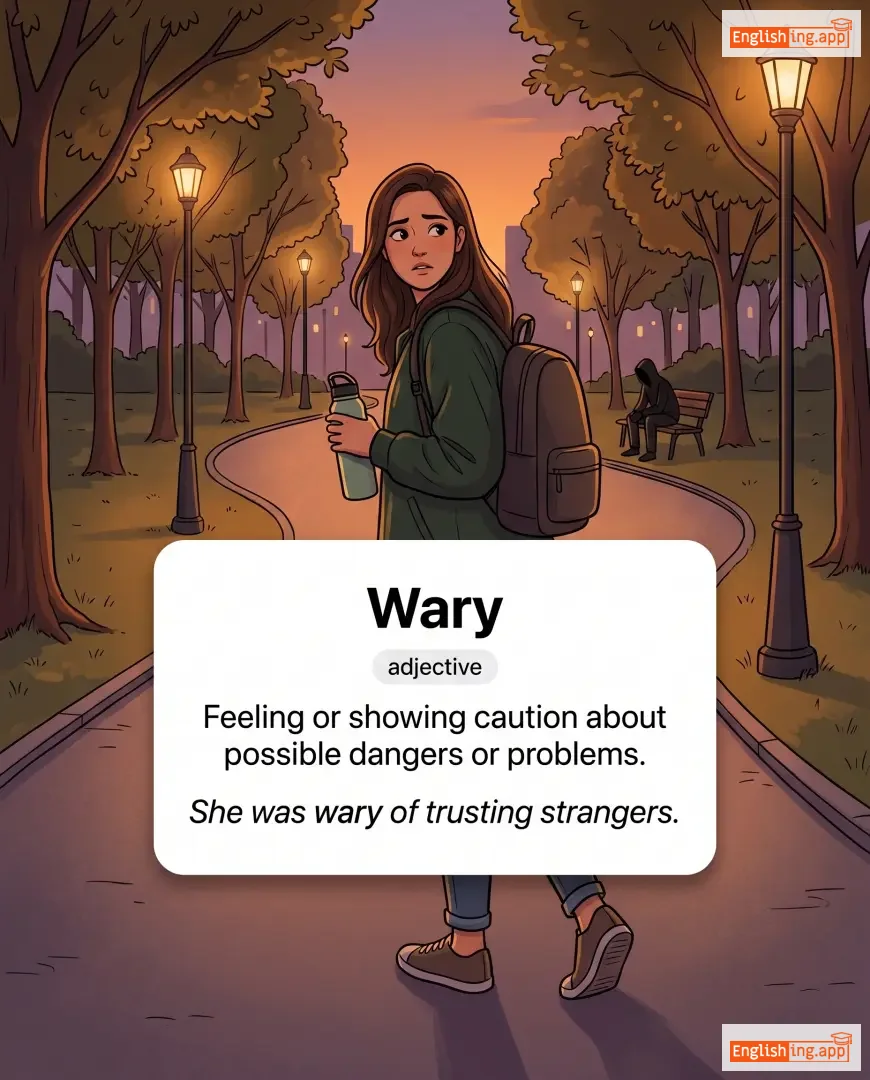
Wary definition card — visual illustration of the meaning
adjective
/ˈweəri/
осторожный (wary)

Feeling or showing caution about possible dangers or problems.

"She was wary of trusting strangers."
"Она была осторожна в отношении доверия незнакомцам." (Ona byla ostorozhna v otnoshenii doveriya neznakomtsam.)
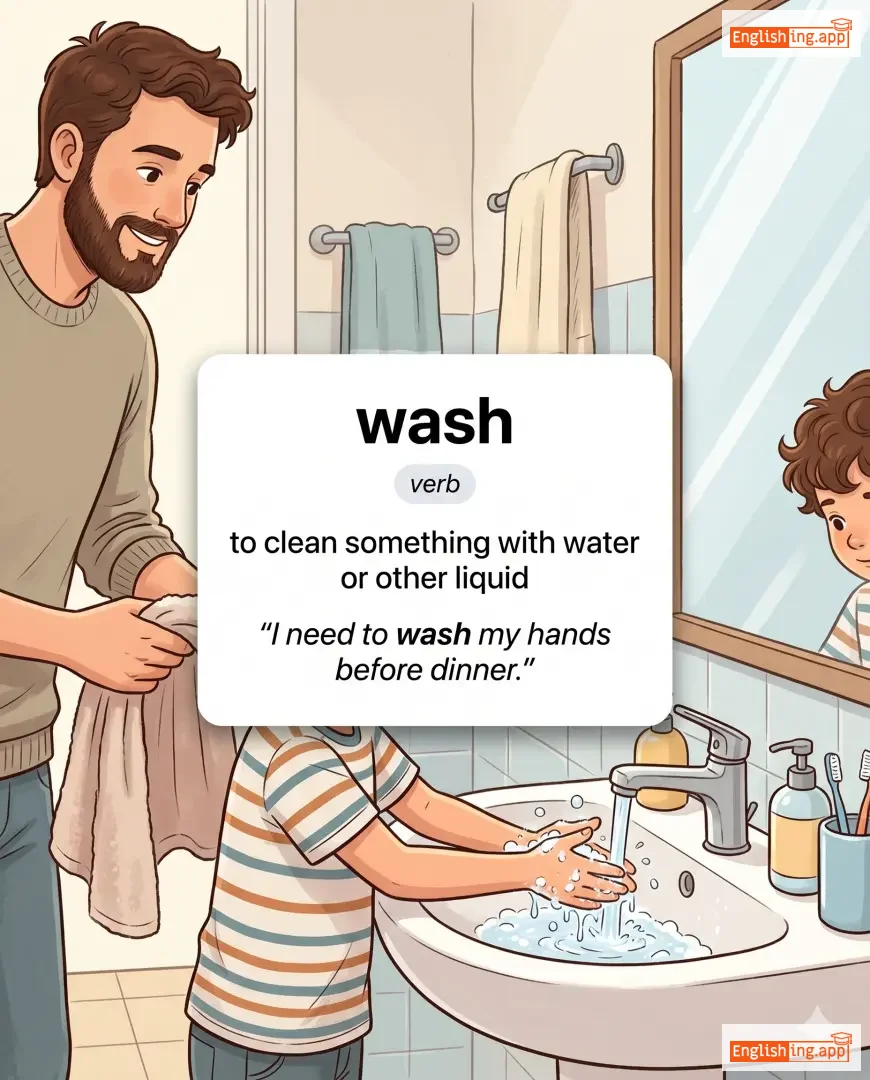
wash definition card — visual illustration of the meaning
verb
/wɒʃ/
мыть (myt)

to clean something with water or other liquid

"I need to wash my hands before dinner."

"Мне нужно помыть руки перед ужином." (Mne nuzhno pomyt' ruki pered uzhinom.)
noun
/ˈwɑː.ʃər mæn/
прачечник (prachechnik)

a person whose job is to wash clothes and linens for others

"The washer man collected dirty clothes from every household in the village."

"Прачечник собирал грязную одежду из каждого дома в деревне." (Prachyechnik sobiral gryaznuyu odezhdu iz kazhdogo doma v derevne)
noun; gerund
/ˈwɒʃɪŋ/
стирка (stirka)

the act of cleaning with water or other liquid; clothes or items that are being washed

"Washing clothes regularly helps maintain hygiene."

"Регулярная стирка одежды помогает поддерживать гигиену." (Regulyarnaya stirka odezhdy pomogaet podderzhivat gigienu)
noun
/ˈwɒʃ.ɪŋ məˌʃiːn/

a machine for washing clothes and other textiles

"The washing machine broke down and needs repair."

noun
/wɒsp/
оса (osa)

a flying insect with a yellow and black striped body and a painful sting

"The wasp stung me when I disturbed its nest."

"Оса ужалила меня, когда я потревожил её гнездо." (Osa uzhavila menya, kogda ya potrevozhil yeyo gnezdo.)
noun
/ˈweɪ.stɪdʒ/
расточительство (rastochitel'stvo)

the action of using or expending something carelessly or without purpose

"The company reduced food wastage by implementing better inventory management."
"Компания сократила расточительство пищи, внедрив лучшую систему управления запасами." (Kompaniya sokratila rastochitel'stvo pishchi, vnedriv luchshuyu sistemu uvelicheniya zapasov.)
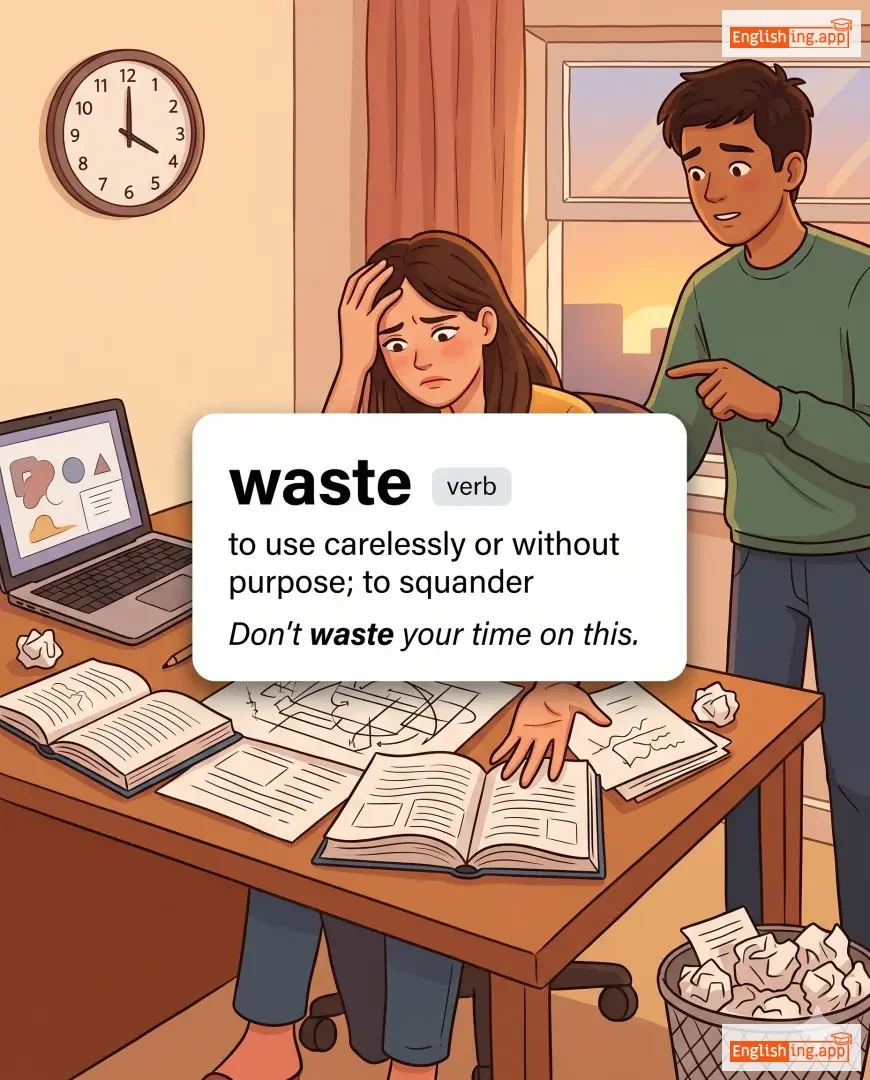
waste definition card — visual illustration of the meaning
noun
/weɪst/
отходы (otkhody)

something that is not useful and is thrown away

"Don't waste your time on unnecessary tasks."

"Не тратьте время на ненужные задачи." (Ne trat'te vremya na nenuzhnyye zadachi.)
noun
/ˈweɪstrəl/
тратящий впустую, бездельник (wastrel)

A person who wastes time, money, or resources; an idler or spendthrift.

"The young man was dismissed as a wastrel by his family."
"Молодого человека его семья посчитала бесполезным, так как он был расточителем." (Molodogo cheloveka ego sem'ya poschitala bespoleznym, tak kak on byl rastochitelem.)
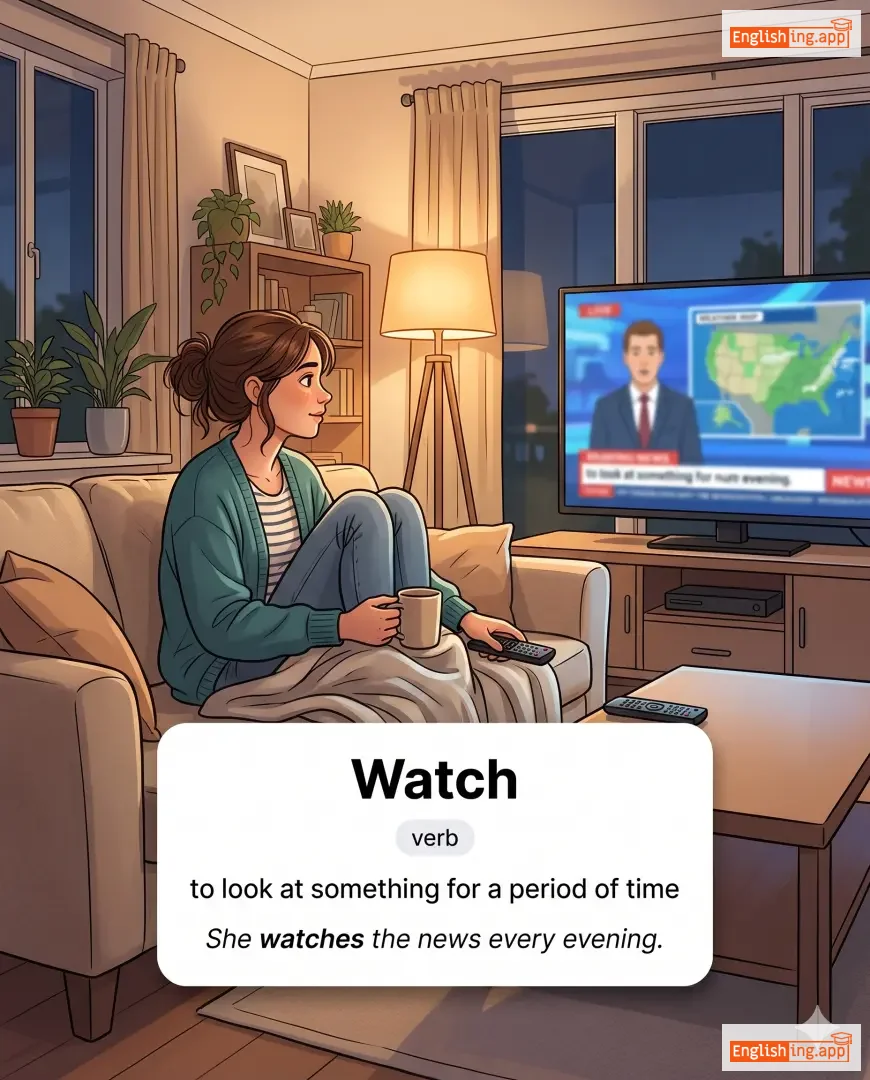
Watch definition card — visual illustration of the meaning
verb
/wɒtʃ/
смотреть (smotret')

to look at something for a period of time

"She watches the news every evening."

"Она смотрит новости каждый вечер." (Ona smotrit novosti kazhdyy vecher.)
noun
/ˈwɒtʃ.mən/
сторож (storozh)

a person employed to guard or watch over a building or area, especially at night

"The watchman patrols the factory every hour to ensure security."
"Сторож патрулирует завод каждый час, чтобы обеспечить безопасность." (Storozh patruliruyet zavod kazhdyy chas, chtoby obespechit' bezopasnost'.)
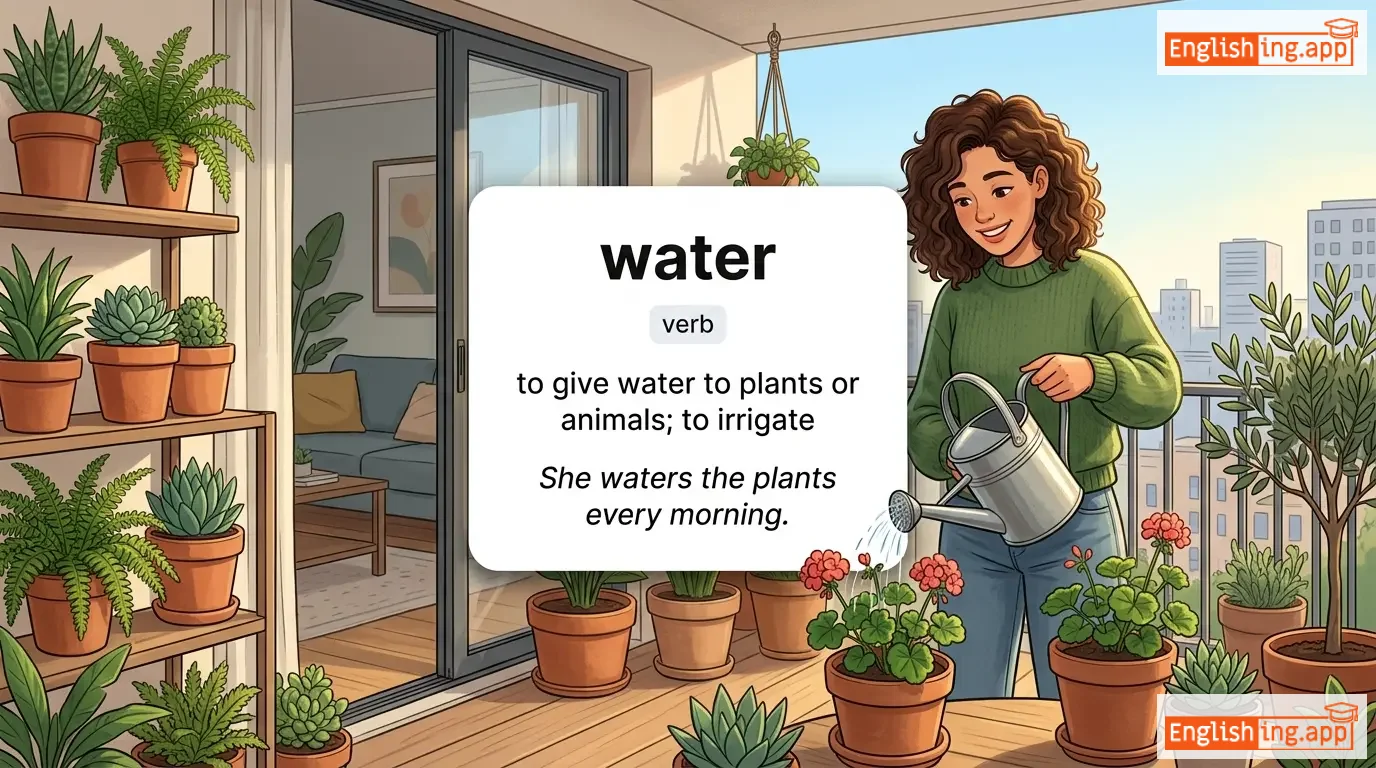
water definition card — visual illustration of the meaning
noun
/ˈwɔːtər/
вода (voda)

a clear, colorless, odorless, and tasteless liquid that is essential for life

"We need to drink water to stay hydrated."

"Нам нужно пить воду, чтобы оставаться гидратированными." (Nam nuzhno pit' vodu, chtoby ostavatsya gidratirovannymi.)
noun
/ˈwɔː.tər ˈtʃes.nʌt/
водяной орех (vodyanoy orekh)

aquatic plant with edible white crisp tubers

"Water chestnuts add a nice crunch to stir-fry dishes."

"Водяные орехи придают жареным блюдам приятный хруст." (Vodyanye orekhi pridayut zharenym blyudam priyatnyy khrust)
noun
/ˈwɔː.tər hen/
водяная курица (vodyanaya kuritsa)

a waterbird with dark plumage that lives near ponds and wetlands

"The water hen swam gracefully across the pond."

"Водяная курица плавала грациозно по пруду." (Vodyanaya kuritsa plavala gratsiozno po prudu.)
noun
/ˈwɔː.tər pɒt/
кувшин для воды (kuvshin dlya vody)

a container used for storing or carrying water

"The water pot in the kitchen was filled with fresh drinking water."

"Кувшин для воды на кухне был полон свежей питьевой воды." (Kuvshin dlya vody na kukhne byl polon svezhey pit'yevoy vody.)
noun
/ˈwɔtər ˈpjʊrəˌfaɪər/
очиститель воды (ochistitel vody)

A device that removes contaminants and impurities from water to make it safe for drinking

"We installed a water purifier in our kitchen to ensure clean drinking water."

"Мы установили фильтр для воды на нашей кухне, чтобы обеспечить чистую питьевую воду." (My ustanovili fil'tr dlya vody na nashey kukhne, chtoby obespechit' chistuyu pit'evuyu vodu.)
noun
/ˈwɔː.tər ˈspɪn.ɪtʃ/
водяной шпинат (vodyanoy shpinat)

A semi-aquatic leafy vegetable with hollow stems, popular in Asian cuisine

"Water spinach grows well in wet soil."

"Водяной шпинат хорошо растет в влажной почве." (Vodyanoy shpinat khorosho rastet v vlazhnoy pochve)
noun
/ˈwɔː.tər ˌlɪl.i/
кувшинка (kuvshinka)

a floating flower that grows on the surface of ponds and lakes

"The white water-lily floated gracefully on the pond."

"Белая кувшинка грациозно плавала на пруду." (belaya kuvshinka gratsiozno plavala na prudu)
noun
/ˈwɔːtərfɔːl/
водопад (Voterfoll)

a cascade of water falling from a height, formed when a river or stream flows over a precipice or steep incline

"The magnificent waterfall attracts thousands of tourists every year."

"Этот великолепный водопад ежегодно привлекает тысячи туристов." (Etot Velikolepnyy vodopad ezhegodno privlekaet tysyachi turistov.)
noun
/ˈwɔː.tər.mel.ən/
арбуз (arbus)

a large round fruit with a hard green skin and sweet red flesh with black seeds

"I bought a fresh watermelon from the market for the summer picnic."

"Я купил свежий арбуз на рынке для летнего пикника." (Ya kupil svezhiy arbus na rynke dlya letnego piknika.)
noun
/ˈwɔːtəʃɛd/
водораздел, ключевой момент (watershed)

An event or period marking a turning point in a situation; also refers to a ridge dividing two drainage areas.

"The independence movement was a watershed in the nation's history."
"Движение за независимость было водоразделом в истории нации." (Dvizhenie za nezavisimost' bylo vodorazdelom v istorii natsii.)
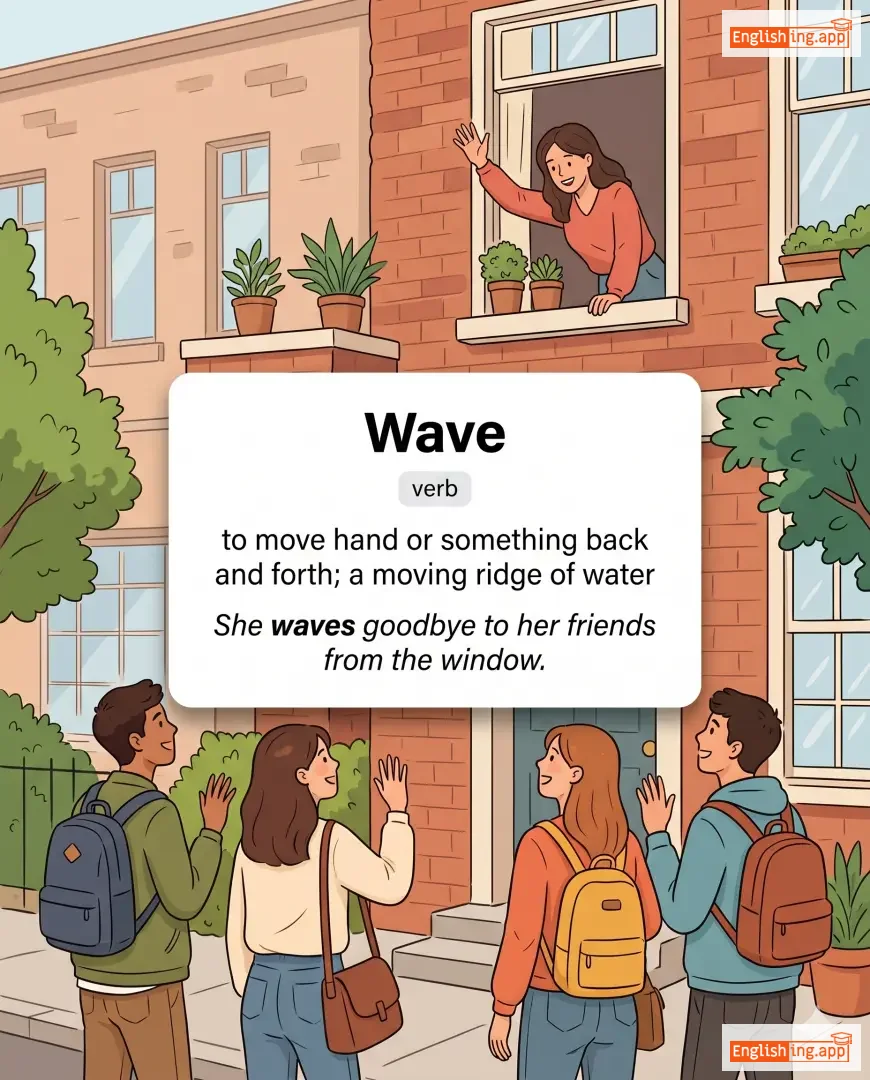
Wave definition card — visual illustration of the meaning
noun
/weɪv/
волна (volna)

a long body of water curling into an arched form and breaking on the shore

"The waves crashed against the rocks during the storm."

"Волны разбивались о камни во время бури." (Volny razbivalis' o kamni vo vremya buri.)
noun
/ˈweɪvlət/
маленькая волна (malenkaya volna)

a small wave or ripple on the surface of water or another medium

"The pond was disturbed only by the tiny wavelets caused by the breeze."

"Пруд был потревожен только маленькими волнами, вызванными бризом." (Prud byl potrevozhenn tolkko malen'kimi volnami, vyzvannymi brizom.)
verb
/ˈweɪvər/
колебаться (kolebatsya)

to become unsteady or indecisive; to hesitate or shake

"She began to waver in her decision to move abroad."

"Она начала колебаться в своем решении переехать за границу." (Ona nachala kolebatsya v svoem reshenii pereyekhat' za granitsu.)
🌕

Wax

verb
/wæks/

to increase gradually in size, number, strength, or intensity

"The moon will wax until it becomes full."

noun
/wæks ɡɔːrd/
восковая тыква (voskovaya tykva)

a large white or green gourd with waxy skin, commonly used in Asian cooking

"The wax gourd soup is very nutritious and helps with digestion."

"Суп из воскового горшка очень питателен и помогает с пищеварением." (Sup iz voskovogo gorshka ochen' pitatelen i pomogayet s pishchevareniem.)
noun
/wæks ˈkændəl/
свеча (svecha)

a cylinder of wax with a wick through it that burns to give light

"We lit a wax candle during the power outage."

"Мы зажгли свечу во время отключения электричества" (My zazhgli svechu vo vremya otklyucheniya elektrichestva)
🛣️

Way (vay)

noun
/weɪ/
путь / метод (put' / metod)

a path, direction, or method of doing something

"He found a new way to solve the problem."

"Он нашел новый способ решения проблемы." (On nashel novyi sposob resheniya problemy.)
verb
/ˌweɪˈleɪ/
неожиданно остановить / атаковать (neozhidanno ostanovit / atakovat)

to stop or interrupt someone unexpectedly, often to attack or detain them

"He was waylaid by reporters as he left the courthouse."

"Его остановили репортеры, когда он покидал суд." (Ego ostanovili reportery, kogda on pokidal sud.)
adjective
/ˈweɪwərd/
непослушный (neposlushny)

Difficult to control or predict because of unusual or perverse behavior.

"The teacher struggled to manage the wayward students."

"Учитель испытывал трудности с управлением непослушными учениками." (Uchitel' ispytyval trudnosti s upravleniem neposlushnymi uchenikami.)
pronoun
/wi/
мы (my)

used by a speaker to refer to himself or herself and one or more other people

"We are going to the park this afternoon."

"Мы идем в парк этим днем." (My idyom v park etim dnyom.)
adjective
/wiːk/
слабый (slaby)

lacking physical strength or energy

"She felt weak after the long run."

"Она почувствовала себя слабой после долгого забега." (Ona pochuvstvovala sebya slaboy posle dolgogo zabega.)
adjective
/ˈwiːk niːd/
трус (trus)

Lacking determination or courage; easily frightened or yielding.

"The leader was criticized for being weak-kneed in the face of opposition."

"Лидер был раскритикован за свою слабость перед оппозицией." (Lider byl raskritikovany za svoyu slabost pered oppozitsiey.)
Weaken definition card — visual illustration of the meaning
verb
/ˈwiːkən/
ослабить (oslabit')

to make or become less strong or powerful

"The long illness weakened his body."

"Долгая болезнь ослабила его тело." (Dolgaya bolezn' oslabila ego telo.)
noun
/ˈwiːknəs/
слабость (slabost)

a state of being weak; a flaw or shortcoming in character or structure

"His main weakness is his lack of patience."

"Его главная слабость — это отсутствие терпения." (Ego glavnaia slabost' — eto otsutstvie terpeniia.)
noun
/wiːl/
счастье (schast'ye)

A raised mark on the skin left after a blow; or general well-being and prosperity.

"The charity worked for the common weal of the community."

"Она не могла скрыть своего счастья, когда получила награду." (Ona ne mogla skryt' svoego schast'ya, kogda poluchila nagradu.)
wealth definition card — visual illustration of the meaning
noun
/wɛlθ/
богатство (bogatstvo)

an abundance of valuable possessions or money; prosperity

"The businessman built his wealth through hard work and smart investments."

"Предприниматель построил свое богатство через тяжелую работу и умные инвестиции." (Predprinimatel' postroil svoyo bogatstvo cherez tyazheluyu rabotu i umnyye investitsii.)
adjective
/ˈwɛlθi/
богатый (bogatyy)

having a great deal of money, resources, or assets

"He became wealthy after investing in real estate."

"Он стал богатым, инвестируя в недвижимость." (On stal bogatym, investiruya v nedvizhimost'.)
👶

wean

verb
/wiːn/

To gradually stop a child or animal from breastfeeding; to detach from a habit.

"Parents often wean their babies around six months old."

noun
/ˈwɛpən/
оружие (oruzhiye)

a thing designed or used for inflicting harm or damage

"He carried a weapon for self-defense."
"Он носил оружие для самообороны." (On nosil oruzhiye dlya samoooborony.)
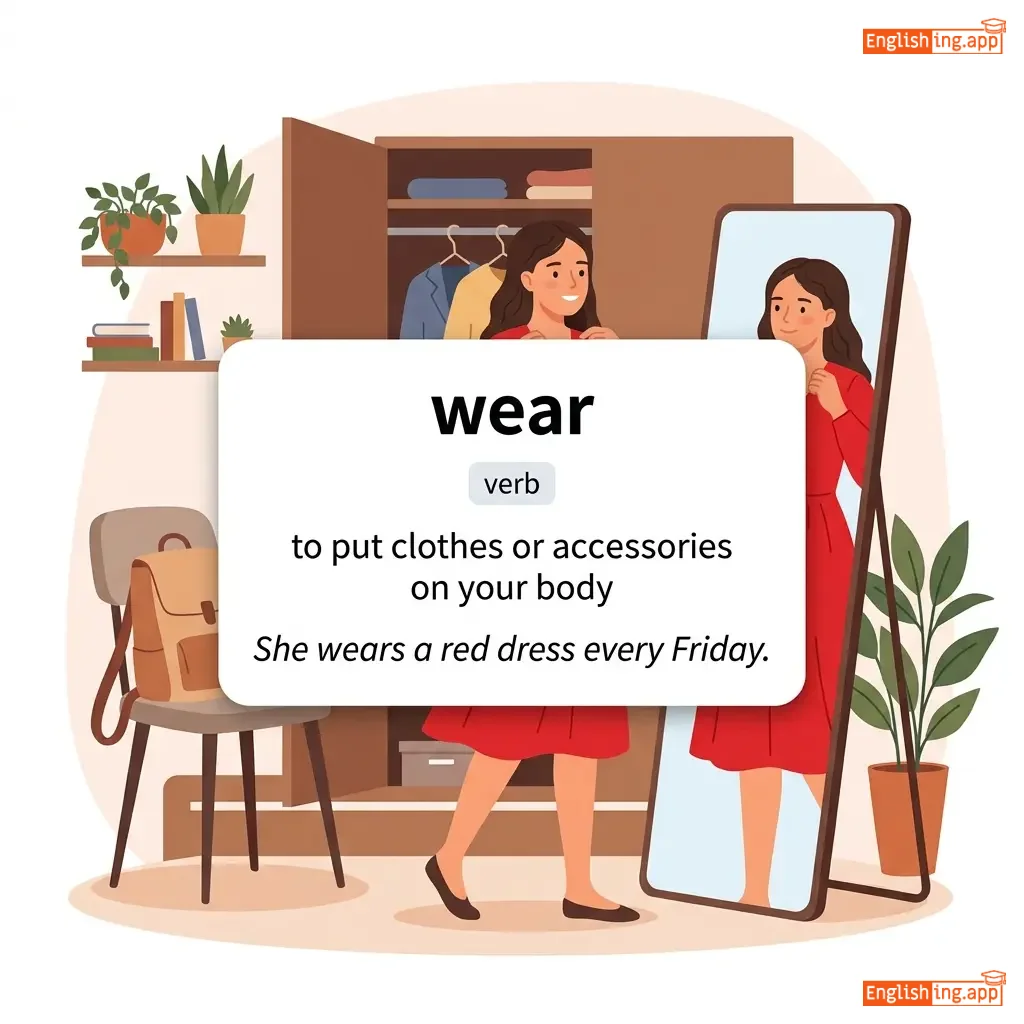
wear definition card — visual illustration of the meaning
verb
/wɛə(r)/
носить (nosit')

to put clothes or accessories on your body

"She wears a red dress every Friday."
"Она носит красное платье каждую пятницу." (Ona nosit krasnoye plat'ye kazhduyu pyatnitsu.)
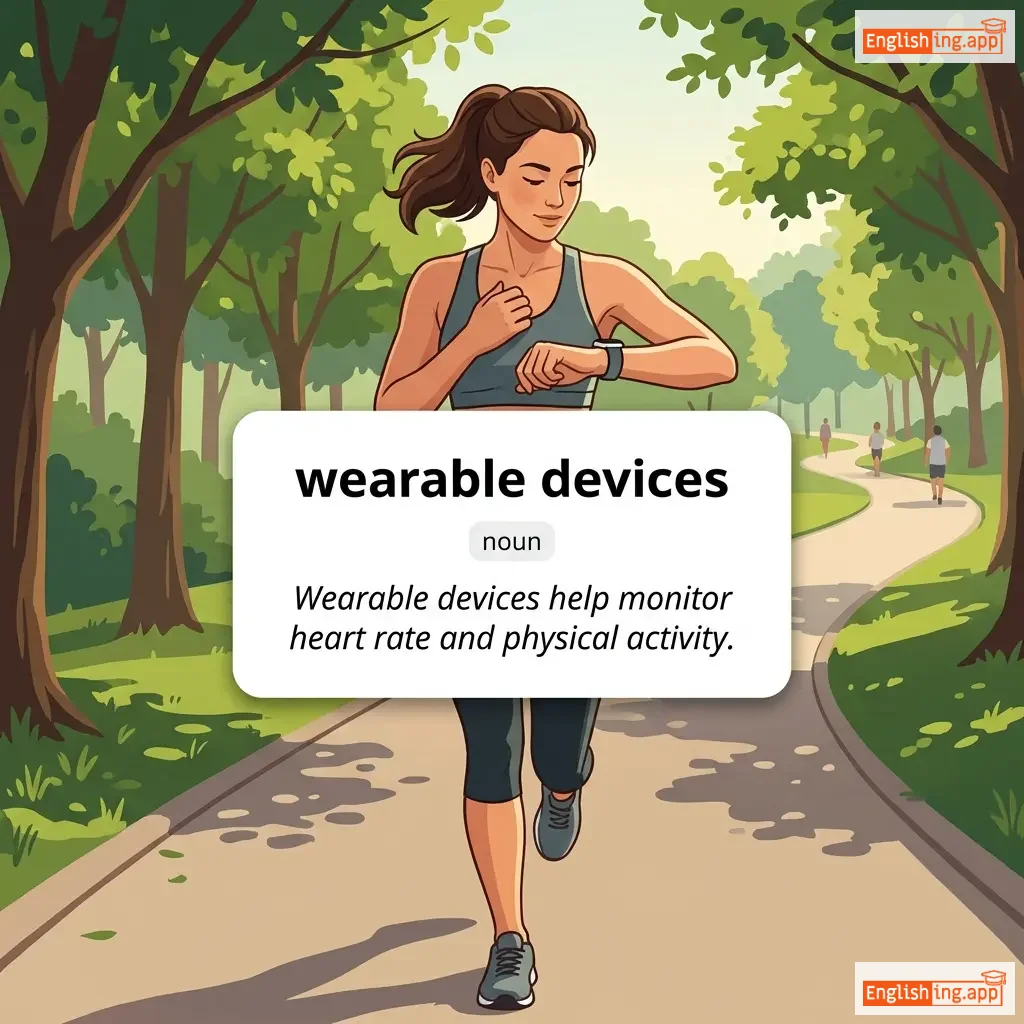
wearable devices definition card — visual illustration of the meaning
noun
ˈweə.rə.bəl dɪˈvaɪ.sɪz
носимые устройства (nosimyye ustroystva)

Electronic devices that can be worn on the body, typically incorporating smart technology for monitoring health or providing information.

"Wearable devices help monitor heart rate and physical activity."

"Носимые устройства помогают мониторить сердечный ритм и физическую активность." (Nosimyye ustroystva pomogayut monitoring serdechnyy ritm i fizicheskuyu aktivnost'.)
adjective
/ˈwɪərɪsəm/
утомительный (utomitel'nyy)

Causing one to feel tired or bored.

"The long and wearisome lecture put the students to sleep."

"Долгая и утомительная лекция заставила студентов уснуть." (Dolgaya i utomitel'naya lektsiya zastavila studentov usnut'.)