Словари

Словарь английского языка | Значения слов, определения и примеры

noun
/ˈveɪ.pər/
пар (par)

a mass of tiny water droplets suspended in the atmosphere; gas formed from a liquid

"Water vapour rises from the hot tea cup."

"Пар воды поднимается от чашки с горячим чаем." (Par vody podnimayetsya ot chashki s goryachim chayem.)
adjective, noun
/ˈvɛriəbl/
переменный (peremennyy)

liable to change; in mathematics, a symbol representing a quantity that may change

"The weather is highly variable in this region."

"Погода в этом регионе очень переменная." (Pogoda v etom regione ochen' peremennaya.)
noun
/ˈvɛriəns/
дисперсия (dispersiya)

the state of being different or inconsistent; in statistics, a measure of the spread between numbers

"There is a wide variance in students' performance levels."

"Существует большая дисперсия в уровнях успеваемости студентов." (Sushchestvuet bol'shaya dispersiya v urovnyakh uspevayemosti studentov.)
noun
/ˈvɛəriənt/
вариант (variant)

A form or version of something that differs in some way from other forms of the same thing.

"The new variant of the virus spread rapidly."

"Новая версия вируса быстро распространилась." (Novaya versiya virusa bystro rasprostranilas'.)
noun
/ˌvɛəriˈeɪʃən/
вариация (variatsiya)

A change or slight difference in condition, amount, or level.

"There is a wide variation in climate across the country."

"Существует большая вариация в климате по всей стране." (Sushchestvuet bol'shaya variatsiya v klimaty po vsei strane.)
adjective
/ˈvɛərɪd/
разнообразный (razoobrazny)

showing many different kinds or forms

"The menu offers a varied selection of dishes."

"Меню предлагает разнообразный выбор блюд." (Menyu predlagaet razoobraznyy vybor blyud.)
verb
/ˈvɛəriəˌɡeɪt/
разнообразить (raznobrazit')

To diversify or mark with different colors or patterns.

"The artist used different shades to variegate the design."

"Художник использовал разные оттенки, чтобы разнообразить дизайн." (Khudozhnik ispol'zoval raznye ottenki, chtoby raznoobrazit' dizajn.)
adjective
/ˈvɛəriəˌɡeɪtɪd/
пестрый (pestryy)

Having different colors, especially in irregular patches or streaks.

"The garden was full of variegated plants."

"Сад был полон пёстрых растений." (sad byl polon pestrykh rasteniy)
noun
/ˌvɛəriəˈɡeɪʃən/
вариегация (variegatsiya)

The appearance of differently colored zones in the leaves, flowers, or stems of plants.

"Variegation makes the foliage look more attractive."

"Вариегация делает листву более привлекательной." (Variegatsiya delayet listvu boleye privlekatelnoy.)
noun
/vəˈraɪəti/
разнообразие (razoobrazije)

the quality or state of being different or diverse; a range of different things

"There is a variety of fruits available in the market."

"На рынке есть разнообразие фруктов." (Na rynke est' razoobrazie fruktov.)
adjective
/ˈvɛə.ri.əs/
разные (raznye)

different from one another; of several different kinds

"She owns various kinds of books."

"Она имеет различные виды книг." (Ona imeyet razlichnye vidy knig.)
noun/verb
/ˈvɑːrnɪʃ/
лак (lak)

A liquid that is applied to wood or other materials to form a hard, shiny surface; also to apply such a liquid.

"The carpenter varnished the table to give it a glossy finish."
"Плотник покрыл стол лаком, чтобы придать ему блестящий вид." (Plotnik pokryl stol lakom, chtoby pridat' yemu blyestyashchiy vid.)
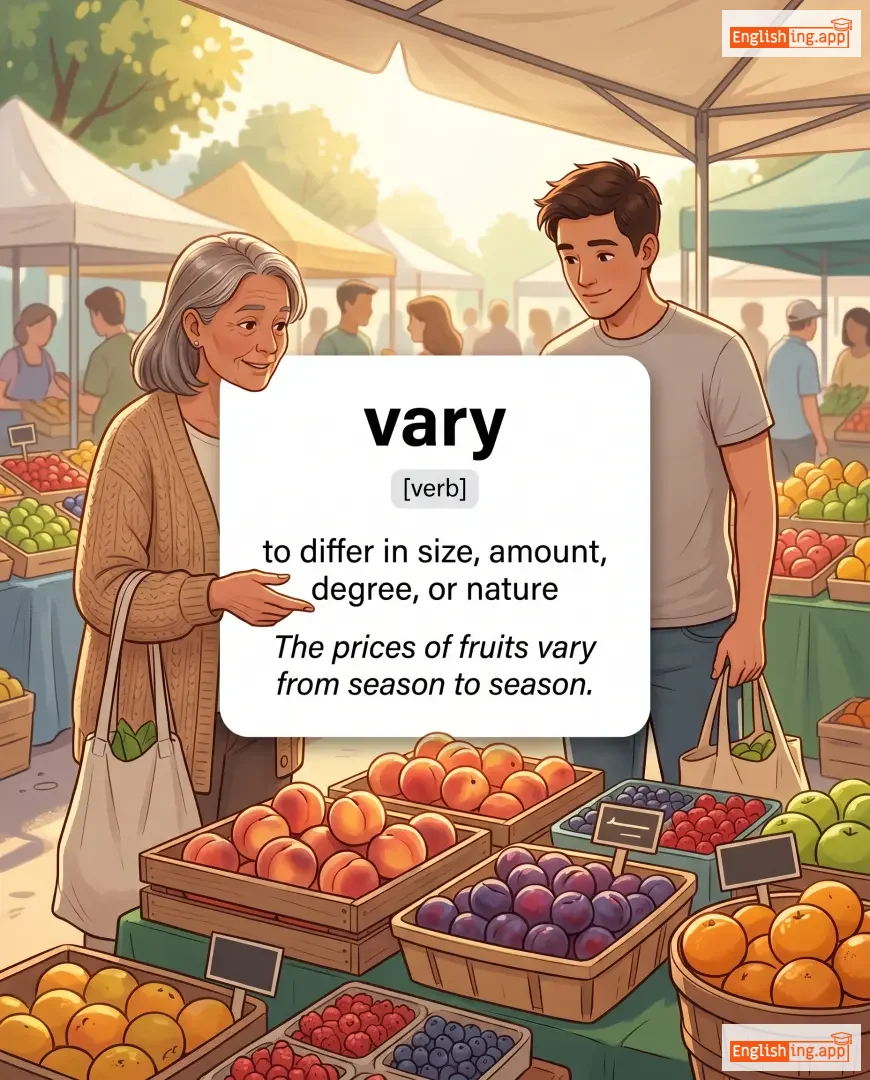
vary definition card — visual illustration of the meaning
verb
/ˈveəri/
варьироваться (varyirovatsya)

to differ in size, amount, degree, or nature

"The prices of fruits vary from season to season."

"Цены на фрукты варьируются от сезона к сезону." (Tseny na frukty varyiruyutsya ot sezona k sezonu.)
noun
/ˈvæsəl/
вассал (vassal)

A person or country in a subordinate position to another, especially in feudal times under a lord.

"The king granted land to his vassal in return for loyalty and service."

"Король предоставил землю своему вассалу в обмен на верность и службу." (Korol' predostavil zemlyu svoemu vassalu v obmen na vernost' i sluzhbu.)
adjective
/vɑːst/
обширный (vast)

extremely large in size, amount, or extent

"The desert stretches across a vast area of land."

"Пустыня простирается по обширной территории." (Pustynya prostirayetsya po obshirnoy territorii.)
noun
/væt/
большая бочка (bolshaya bochka)

A large container used for holding liquids such as dye or wine.

"The workers filled the vat with freshly pressed grape juice."

"Рабочие наполнили большую бочку свежевыжатыми виноградными соками." (Rabochiye napolnili bol'shuyu bochku svezhevyszhatymi vinogradnymi sokami.)
noun
/ˈvɔːdəvɪl/
водевиль (vodevil)

A type of entertainment popular in the early 20th century, featuring a mixture of comedy, song, dance, and variety acts.

"The vaudeville show included comedians, magicians, and dancers."

"Шоу водевиль включало комиков, магов и танцоров." (Shou vodevil vklyuchalo komikov, magov i tantsorov.)
noun/verb
/vɔːlt/
сейф / прыгать (seyf / prygat)

A secure room for storing valuables; also to leap or spring over something.

"The bank kept its gold bars in a secure vault."

"Банк хранил свои золотые слитки в надежном хранилище." (Bank khranil svoi zolotye slity v nadezhnom khranylishche.)
📢

vaunt

verb
/vɔːnt/

to boast or brag about something, especially in an excessive way

"He would often vaunt his achievements in front of his colleagues."

adjective
/ˈvɔːntɪd/
чересчур восхваленный (chereschur voskhvalennyy)

praised or boasted about, especially excessively

"The vaunted technology failed to deliver the expected results."

"Чересчур восхваленная технология не оправдала ожиданий." (Chereschur voskhvalennaya tekhnologiya ne opravdala ozhidaniy.)
verb
/vɪə(r)/
резко изменить направление (rezko izmenit' napravlenie)

to change direction suddenly

"The car veered off the road to avoid the accident."

"Машина свернула с дороги, чтобы избежать аварии." (Mashina svergnula s dorogi, chtoby izbezhat' avarii.)
noun
/ˈvɛdʒ.tə.bəl/
счастье (schastye)

a plant or part of a plant used as food

"I eat vegetables every day for health."

"Она не могла скрыть своего счастья, когда получила награду." (Ona ne mogla skryt' svoego schast'ya, kogda poluchila nagradu.)
noun
/ˈvedʒtəbəl ɔɪl/
растительное масло (rastitel'noe maslo)

Oil extracted from plants, seeds, or nuts used for cooking

"She heated vegetable oil in the pan before adding the vegetables."

"Она разогрела растительное масло в сковороде перед тем, как добавить овощи." (Ona razogrela rastitel'noe maslo v skovorode pered tem, kak dobavit' ovochi.)
noun
/ˈvedʒ.tə.bəlz/
овощи (ovoshi)

plants or parts of plants that are eaten as food, such as peas, beans, cabbage, potatoes, onions, or carrots

"We should eat more vegetables to maintain a healthy diet."

"Нам следует есть больше овощей, чтобы поддерживать здоровое питание." (Nam sleduet yest' bolshe ovoshchey, chtoby podderzhivat' zdorovoye pitaniye.)
adjective
/ˈvɛdʒɪtəl/
растительный (rastitel'nyy)

relating to or consisting of plants or vegetation

"The soup had a distinct vegetal flavor."

"В супе был отчетливый растительный вкус." (V supe byl otchotlivyj rastitel'nyj vkus.)
noun
/ˌvɛdʒəˈtɛəriən/
счастье (schastye)

a person who does not eat meat and sometimes other animal products, eating mainly vegetables, grains, and fruits

"She has been a vegetarian for over ten years."

"Она не могла скрыть свое счастье, когда получила награду." (Ona ne mogla skryt' svoye schast'ye, kogda poluchila nagradu.)
verb
/ˈvɛdʒɪteɪt/
вегетировать (vegetirovat)

to live in a dull, inactive, or unchallenging way, often with little physical or mental effort

"He spent his vacation vegetating on the couch in front of the TV."
"Он провел отпуск, вегетируя на диване перед телевизором." (On provel otpusk, vegetiruyya na divane pered televizorom.)
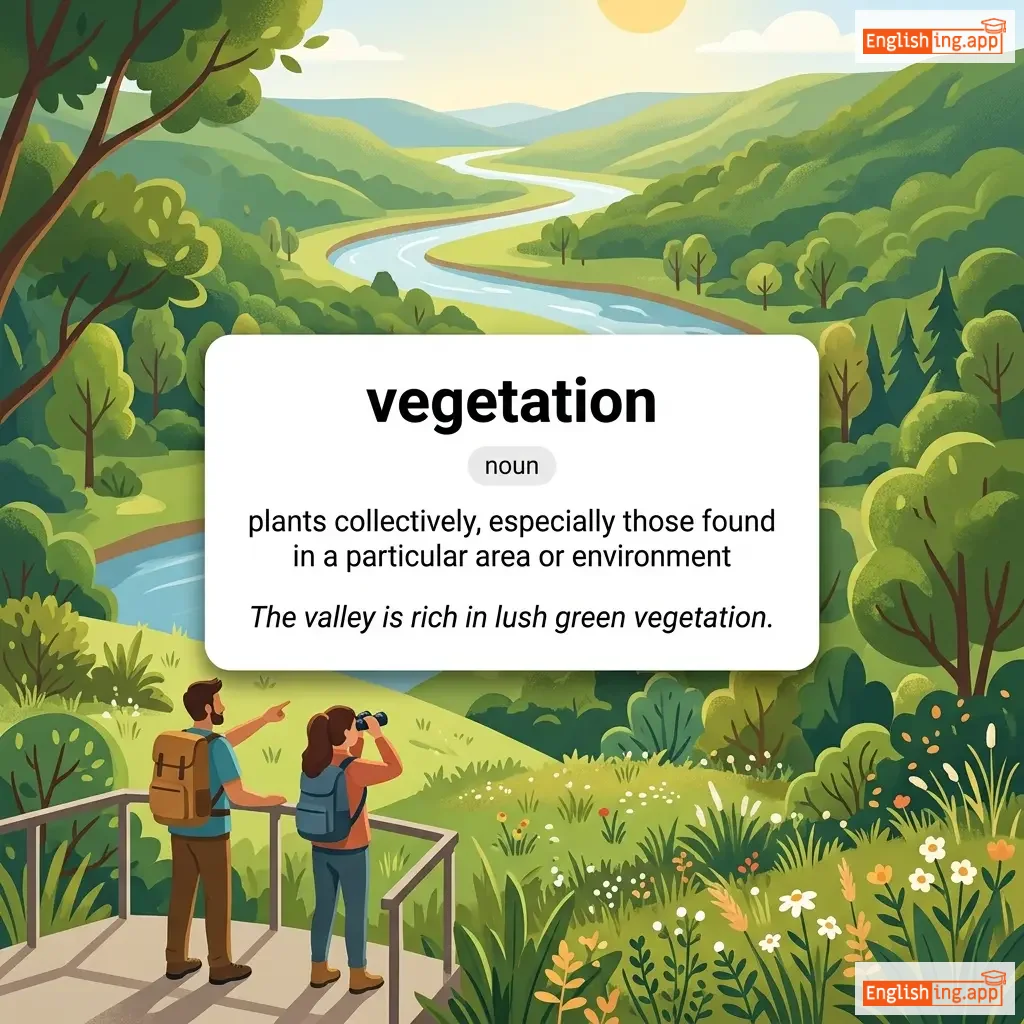
vegetation definition card — visual illustration of the meaning
noun
/ˌvɛdʒɪˈteɪʃən/
растительность (rastitel'nost')

plants collectively, especially those found in a particular area or environment

"The valley is rich in lush green vegetation."

"Долина богата зелёной растительностью." (Dolina bogata zelyonoy rastitel'nost'yu.)
adjective
/ˈvɛdʒɪtətɪv/
относящийся к росту или основным процессам жизни (otnosyashchiesya k rostu ili osnovnym protsessam zhizni)

relating to growth or the basic processes of life, often without conscious thought or activity

"The patient remained in a vegetative state after the accident."

"Пациент остался в вегетативном состоянии после аварии." (Patsiyent ostalsya v vegetativnom sostoyanii posle avarii.)
noun
/ˈviːəməns/
ярость (yarost)

Great forcefulness or intensity of expression, emotion, or conviction.

"She spoke with vehemence during the debate."

"Она говорила с яростью во время дебатов." (Ona govoryla s yarost'yu vo vremya debata.)
adjective
/ˈviːəmənt/
яростный (yarostnyy)

showing strong feeling; forceful, passionate, or intense

"She made a vehement argument against the proposal."

"Она привела решительный аргумент против предложения." (Ona privedla reshitel'nyy argument protiv predlozheniya.)
noun
/ˈviːɪkəl/
транспортное средство (transportnoe sredstvo)

a machine used for transporting people or goods

"He drives a vehicle to work every day."

"Он ездит на транспортном средстве на работу каждый день." (On yezdit na transportnom sredstve na rabotu kazhdyi den'.)
noun
/ˈviː.ɪ.kəlz/
транспортные средства (transportnye sredstva)

machines used for transporting people or goods from one place to another

"There are many different types of vehicles on the road today."

"Сегодня на дорогах много разных типов транспортных средств." (Segodnya na dorogakh mnogo raznykh tipov transportnykh sredstv)
noun
/veɪl/
вуаль (vual)

a piece of fine material worn by women to protect or conceal the face

"The bride wore a beautiful white veil during her wedding ceremony."

"Невеста носила красивую белую вуаль во время своей свадебной церемонии." (Nevesta nosila krasivuyu beluyu vuall vo vremya svoey svadebnoy tseremonii)
noun
/veɪn/
вена (vena)

a tube in the body that carries blood to the heart

"The nurse checked the patient's veins for an IV insertion."

"Медсестра проверила вены пациента для установки внутривенной инъекции." (Medsestra proverila veni patsiyenta dlya ustanovki vnutrivennoy in'ektsii.)
noun
/vəˈliːɪti/
слабое желание (slaboye zhelaniye)

A wish or inclination not strong enough to lead to action.

"His interest in painting never grew beyond a mere velleity."

"Его интерес к живописи так и не перерос в настоящее желание." (Ego interes k zhivopisi tak i ne pereros v nastoyashcheye zhelaniye.)
noun
/ˈvɛləm/
пергамент (pergament)

a fine parchment made originally from the skin of a calf, used for writing or printing

"The ancient manuscript was written on vellum."
"Древний манускрипт был написан на пергаменте." (Drevniy manuskript byl napisan na pergamente.)
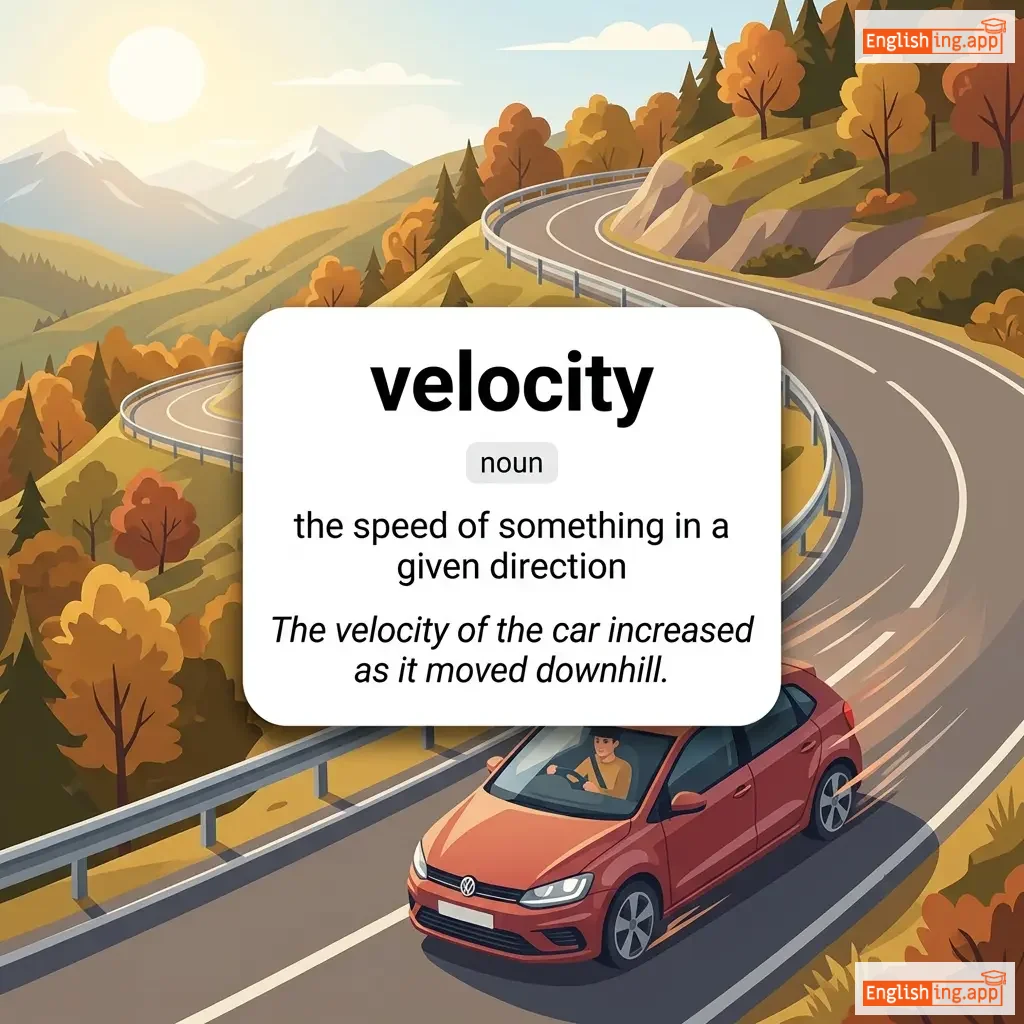
velocity definition card — visual illustration of the meaning
noun
/vəˈlɒsəti/
скорость (skorost)

the speed of something in a given direction

"The velocity of the car increased as it moved downhill."

"Скорость машины увеличилась, когда она спустилась с холма." (Skorost mashiny uvelichilas, kogda ona spustilas s kholma.)
noun
/ˈvel.vɪt/
бархат (barkhat)

a soft, luxurious fabric with a thick, short pile on one side

"The royal curtains were made of rich red velvet."

"Королевские шторы были сделаны из богатого красного бархата." (Korolevskie shtory byli sdelany iz bogatogo krasnogo barkhata.)
adjective
/ˈvɛlvəti/
счастье (schast'ye)

having a smooth, soft texture like velvet

"She spoke in a low, velvety voice."

"Она не могла скрыть свое счастье, когда получила награду." (Ona ne mogla skryt' svoyo schast'ye, kogda poluchila nagradu.)
venal definition card — visual illustration of the meaning
adjective
/ˈviːnəl/
подкупной (podkupnoy)

willing to do dishonest things in return for money; corrupt

"The politician was accused of being venal and corrupt."

"Политика обвинили в том, что он был подкупным и коррумпированным." (Politiku obvinili v tom, chto on byl podkupnym i kurrumpirovannym.)
noun
/viːˈnæləti/
взяточничество (vzyatochnichestvo)

the quality of being open to bribery or corruption

"The scandal revealed the venality of several senior officials."
"Этот скандал раскрыл взяточничество нескольких высокопоставленных чиновников." (Eto skandal raskryl vzyatochnichestvo neskol'kikh vysokopostavlennykh chinovnikov.)
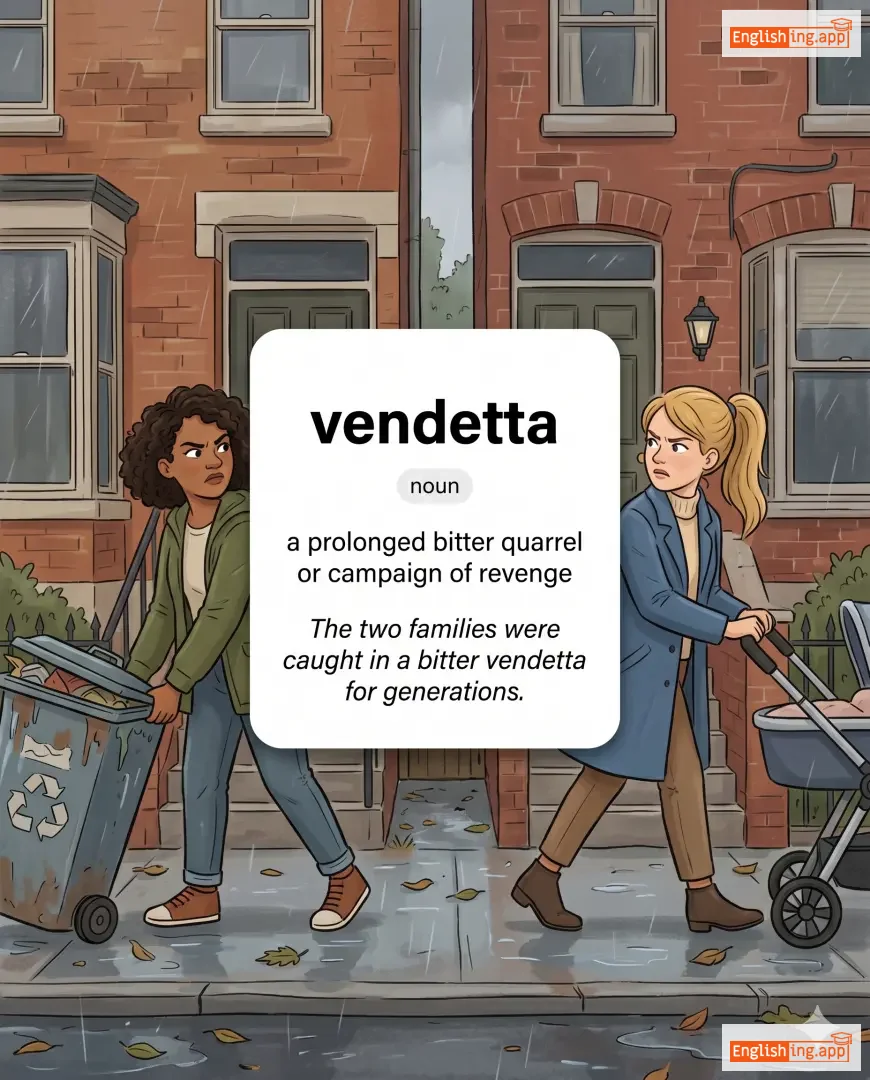
vendetta definition card — visual illustration of the meaning
noun
/vɛnˈdɛtə/
месть (mest')

a prolonged bitter quarrel or campaign of revenge

"The two families were caught in a bitter vendetta for generations."

"Два рода были вовлечены в горькую месть на протяжении поколений." (Dva roda byli vovlechenny v gorkuyu mest' na protyazhenii pokoleniy.)
adjective
/ˈvɛndɪbəl/
продаваемый (prodayemyy)

Capable of being sold; marketable.

"Only vendible products were displayed at the trade fair."

"Только продаваемые товары были представлены на торговой ярмарке." (Tol'ko prodavaemye tovaru byli predstavleny na torgovoy yarmarke.)
noun
/vɛnˈdɪʃən/
продажа (prodazha)

The act of selling; sale.

"The auction was a formal vendition of the estate's assets."

"Аукцион был формальной продажей активов недвижимости." (Auktsion byl formal'noy prodazhey aktivov nedvizhimosti.)
noun
/ˈvɛndɔːr/
продавец (prodavets)

A person or company that sells goods or services.

"The street vendor sold fresh fruits every morning."

"Уличный торговец продавал свежие фрукты каждое утро." (Ulichnyy torgovets prodaval svezhiye frukty kazhdoe utro.)
noun
/vəˈnɪər/
счастье (schast'ye)

A thin decorative covering of fine wood applied to a coarser wood or other material; a superficially attractive appearance.

"The table was covered with a thin veneer of mahogany."

"Она не могла скрыть свое счастье, когда получила награду." (Ona ne mogla skryt' svoe schast'ye, kogda poluchila nagradu.)
adjective
/ˈvɛnərəbl/
почтенный (pochtjennyj)

Accorded a great deal of respect, especially because of age, wisdom, or character.

"The venerable professor was admired by generations of students."
"Почтенный профессор был восхищен поколениями студентов." (Pochtjennyj professor byl voskhishchen pokoleniyami studentov.)
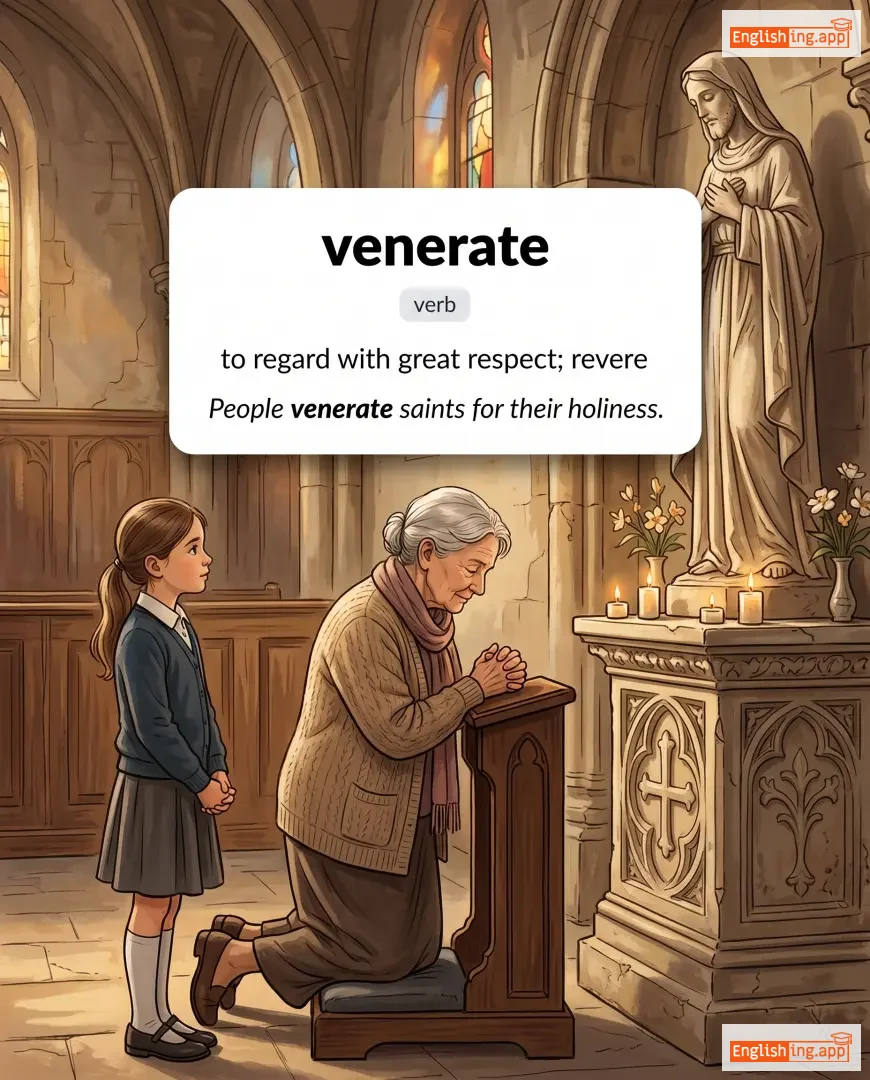
venerate definition card — visual illustration of the meaning
verb
/ˈvɛnəˌreɪt/
почитать (pochitat)

to regard with great respect; revere

"People venerate saints for their holiness."

"Люди почитают святых за их святость." (Lyudi pochitayut svyatykh za ikh svyatosť.)
adjective
/ˈvɛnəˌreɪtɪd/
почитаемый (pochitayemy)

respected and admired deeply

"The venerated professor was honored with an award."

"Почитаемый профессор был удостоен награды." (Pochitayemy professor byl udostoen nagrady.)