Словари

Словарь английского языка | Значения слов, определения и примеры

adverb
/ˈjuːʒuəli/
обычно (obychno)

Under normal conditions; most of the time.

"She usually walks to school."

"Она обычно ходит в школу пешком." (Ona obychno khodit v shkolu peshkom.)
noun
/ˈjuːzjuːfrʌkt/
пользование (pol'zovanie)

The legal right to use and enjoy the benefits of someone else’s property without owning it.

"The tenant had the usufruct of the land but not its ownership."

"Арендатор имел право на использование земли, но не на ее владение." (Arendator imel pravo na ispol'zovanie zemli, no ne na yeye vladeniye.)
adjective
/juːˈʒʊəriəs/
лихварский (likhvarskiy)

Charging excessively high interest rates on loans.

"The bank was accused of offering loans at usurious rates."

"Банк был обвинён в предоставлении кредитов по лихварским ставкам." (Bank byl obvinyon v predostavlenii kreditov po likhvarskim stavkam.)
usurp definition card — visual illustration of the meaning
verb
/juːˈzɜːrp/
узурпировать (uzurpirovat')

To take someone else's position or power illegally or by force.

"He tried to usurp the throne from the rightful king."

"Он пытался узурпировать трон у законного короля." (On pytalsya uzurpírovat' tron u zakonnogo korolya.)
noun
/ˌjuːzɜːrˈpeɪʃən/
узурпация (uzurpatsiya)

The act of taking someone's power or property illegally or by force.

"The general's usurpation of the presidency led to political unrest."

"Узурпация президентства генералом привела к политической нестабильности." (Uzurpatsiya prezidentstva generalom privela k politicheskoy nestabil'nosti.)
usury definition card — visual illustration of the meaning
noun
/ˈjuːʒəri/
ростовщичество (rostovshchichestvo)

The practice of lending money at unreasonably high interest rates.

"The law strictly prohibits usury."

"Закон строго запрещает ростовщичество." (Zakon strogo zapreshchayet rostovshchichestvo.)
noun
/juːˈten.səlz/
посуды (posudy)

tools or implements used for cooking, eating, or serving food

"Please wash all the cooking utensils after preparing dinner."

"Пожалуйста, помойте все кухонные принадлежности после приготовления ужина." (Pozhaluysta, pomoyte vse kukhonnye prinadlezhnosti posle prigotovleniya uzhina.)
adjective
/ˌjuːtɪlɪˈtɛəriən/
утилитарный (yutilitarian)

Designed to be useful or practical rather than attractive; relating to the doctrine that actions are right if they are useful or for the benefit of a majority.

"The building had a simple utilitarian design."

"Здание имело простой утилитарный дизайн." (Zdanie imelo prostoy utilitarnyy dizayn)
noun
/juːˌtɪlɪˈtɛəriənɪzəm/
утилизм (utilizm)

The ethical theory that actions are right if they are useful or for the benefit of the majority.

"Utilitarianism suggests that we should act to maximize overall happiness."

"Утилитаризм предполагает, что мы должны действовать, чтобы максимизировать общее счастье." (Utilitarizm predpolagayet, chto my dolzhny deystvovat', chtoby maksimalizirovat' obshchee schast'ye.)
noun
/juːˈtɪləti/
полезность (poleznost)

The state of being useful, profitable, or beneficial.

"The utility of smartphones in daily life is undeniable."

"Полезность смартфонов в повседневной жизни неоспорима." (Poleznost smartphonev v povsednevnoj zhizni neosporima.)
utilization definition card — visual illustration of the meaning
noun
ˌjuːtɪlaɪˈzeɪʃən
использование (ispol'zovanie)

The action of making practical and effective use of something.

"The efficient utilization of resources is key to success."

"Эффективное использование ресурсов - ключ к успеху." (Effektivnoe ispol'zovanie resursov - klyuch k uspekhu.)
verb
/ˈjuːtɪlaɪz/
использовать (ispol'zovat')

to make practical or effective use of something

"The company aims to utilize solar energy for production."

"Компания ставит целью использовать солнечную энергию для производства." (Kompanija stavit tsel'yu ispol'zovat' solnechnuyu energiyu dlya proizvodstva.)
adjective
/ˈʌtmoʊst/
счастье (schast'ye)

Greatest or highest in degree, importance, or extent.

"She showed the utmost respect to her teachers."

"Она не могла скрыть свое счастье, когда получила награду." (Ona ne mogla skryt' svoe schast'ye, kogda poluchila nagradu.)
noun
/juːˈtoʊpiə/
утопия (utopiya)

An imagined perfect society or place where everything is ideal.

"Many philosophers dreamed of creating a utopia for humanity."
"Многие философы мечтали создать утопию для человечества." (Mnogie filosofy mechtali sozdать utopiyu dlya chelovechestva.)
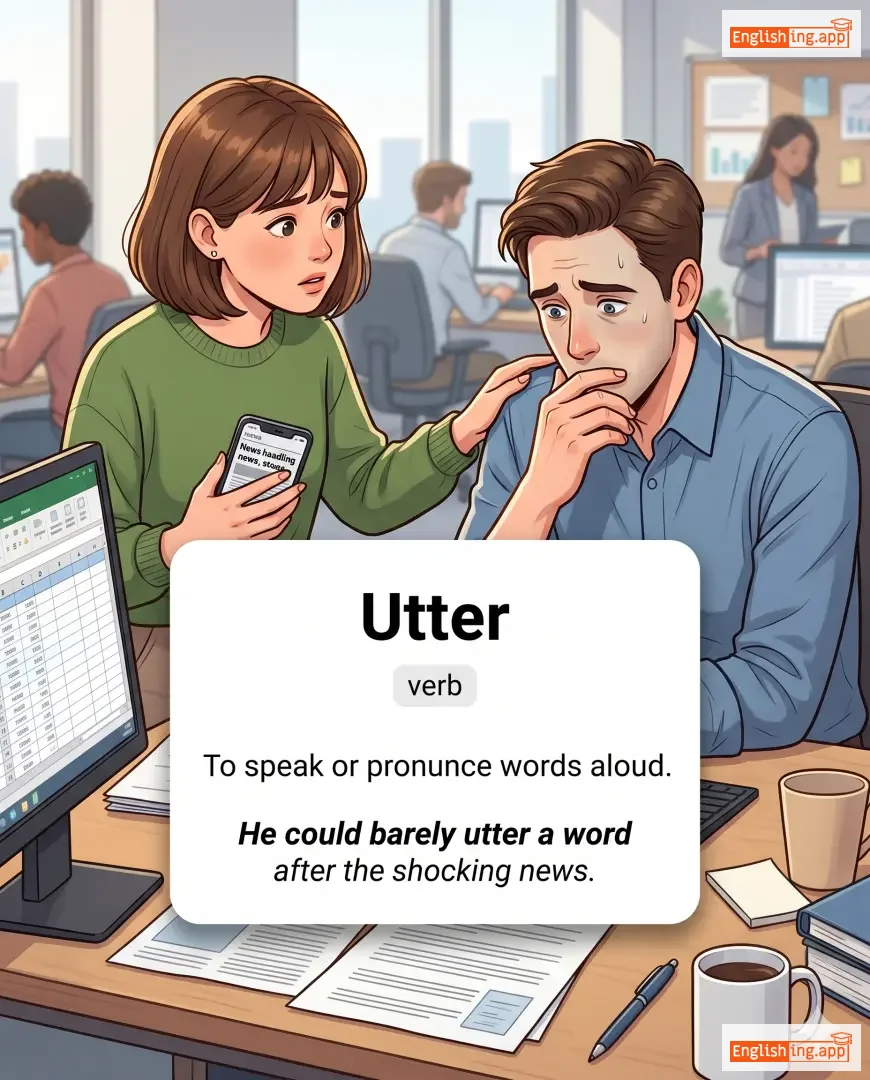
Utter definition card — visual illustration of the meaning
verb
/ˈʌtər/
произносить (proiznosit)

To speak or pronounce words aloud.

"He could barely utter a word after the shocking news."

"После шокирующих новостей он едва смог произнести слово." (Posle shokiruyushchikh novostey on yedva smog proiznesi slovo.)
adverb
/ˈʌtərli/
совершенно (sovershenno)

completely or absolutely

"She was utterly surprised by the news."

"Она была совершенно поражена новостями." (Ona byla sovershenno porazheno novostyami.)
adjective
/ʌkˈsɔːriəs/
чрезмерно преданный своей жене (chrezmerno predannyy svoey zhene)

excessively fond of or submissive to one's wife

"He was so uxorious that he agreed with everything his wife said."

"Он был так uxorious, что согласился со всем, что его жена сказала." (On byl tak uxorious, chto soglasilsya so vsem, chto ego zhena skazala.)