Словари

Словарь английского языка | Значения слов, определения и примеры

noun
/ˈʌndərwɛr/
нижнее белье (nizhnee belye)

clothing worn under other clothes, next to the skin

"She bought new underwear from the department store."

"Она купила новое нижнее белье в универмаге." (Ona kupila novoe nizhnee belye v univermage.)
verb
/ˌʌn.dəˈtʃɑːrdʒ/
взимать меньше (vzimat' men'she)

To charge less than the correct or fair amount.

"The shopkeeper accidentally undercharged me for the groceries."

"Продавец случайно взял с меня меньше за продукты." (Prodavets sluchayno vzyal s menya men'she za produkty.)
noun
/ˈʌndərkləʊðz/
нижнее бельё (nizhnee belyo)

Clothing worn beneath outer clothes, such as underwear or lingerie

"He folded his underclothes neatly before packing them."

"Он аккуратно сложил своё нижнее бельё перед упаковкой." (On akkurno slozhil svoyo nizhnee belyo pered upakovkoy)
✂️

undercut

verb
/ˈʌndərkʌt/

to sell at a lower price than a competitor; to weaken or undermine something

"The company tried to undercut its rivals by offering lower prices."

noun
/ˈʌndərdɒɡ/
аутсайдер (autsajder)

a competitor thought to have little chance of winning; a weaker party in a contest

"The underdog team surprised everyone by winning the championship."

"Команда-аутсайдер удивила всех, выиграв чемпионат." (Komanda-autsajder udivila vsekh, vyigrav chempionat.)
verb
/ˌʌndərˈɛstɪmeɪt/
недооценивать (nedootsenivat)

To judge something as less important or smaller than it really is.

"Never underestimate the power of teamwork."

"Никогда не недооцените силу командной работы." (Nikogda ne nedootsenite silu komandnoy raboty.)
adjective
/ˌʌndərɪkˈspoʊzd/
недоэкспонированный, незамеченный (nedoeksponirovanniy, nezamechennyy)

insufficiently exposed to light (in photography) or not given enough attention

"The photo was underexposed and looked too dark."

"Фото было недоэкспонированным и выглядело слишком темным." (Foto bylo nedoeksponirovannym i vyhlyadelo slishkom temnym.)
noun
/ˈʌndərˌɡɑːrmənt/
нижнее белье (nizhnee bele)

a piece of clothing worn under outer clothes, usually next to the skin

"He bought new undergarments for the wedding."

"Он купил новое нижнее белье для свадьбы." (On kupil novoe nizhnee bele dlya svad'by.)
verb
/ˌʌndərˈɡɜːrd/
поддерживать, укреплять (podderzhivat', ukreplyat')

to provide support or foundation for; to strengthen

"Strong values undergird a healthy society."

"Сильные ценности поддерживают здоровое общество." (Sil'nye tsennosti podderzhivayut zdorovoe obshchestvo.)
verb
/ˌʌndərˈɡoʊ/
претерпеть (preterpet')

to go through something, especially something unpleasant or difficult

"She had to undergo surgery to recover."

"Ей пришлось перенести операцию для восстановления." (Ey prishlos' perenesti operatsiyu dlya vosstanovleniya.)
noun
/ˌʌndəˈɡrædʒuət/
студент бакалавриата (student bakalavriata)

a student who has not yet earned a bachelor's degree

"She is an undergraduate studying computer science."

"Она студентка бакалавриата, изучающая компьютерные науки." (Ona studentka bakalavriata, izuchayushchaya komp'yuternye nauki)
adjective
/ˈʌndərhænd/
коварный (kovarnyy)

done secretly and dishonestly; deceitful

"The politician was accused of using underhand tactics to win the election."

"Политик был обвинен в использовании коварных тактик для победы на выборах." (Politik byl obvinen v ispol'zovanii kovarnykh taktiki dlya pobedy na vyborakh.)
adjective
/ˌʌndərˈhændɪd/
коварный (kovarnyj)

acting or done in a dishonest or secret way

"They exposed the company's underhanded dealings with its suppliers."

"Они раскрыли скрытные сделки компании с поставщиками." (Oni raskryli skrytnye sdelki kompanii s postavshchikami.)
verb
/ˌʌndərˈlaɪ/
лежать в основе (lezhat v osnove)

to be the hidden cause or basis of something

"Strong cultural traditions underlie the community's practices."

"Сильные культурные традиции лежат в основе практик сообщества." (Sil'nye kul'turnye traditsii lezhat v osnove praktiki soobshchestva.)
noun
/ˈʌndərlɪŋ/
подчинённый (podchinyonny)

a person of low rank or importance; a subordinate

"The manager ordered his underlings to finish the task quickly."

"Менеджер приказал своим подчинённым быстро выполнить задачу." (Menedzher prikazal svoim podchinyonnym bystro vypolnit' zadachu.)
adjective
/ˌʌndərˈlaɪɪŋ/
основной (osnovnoy)

basic or hidden but important; forming the foundation of something

"The underlying reason for the conflict was never addressed."

"Основная причина конфликта никогда не была рассмотрена." (Osnovnaya prichina konflikta nikogda ne byla rassmotrena.)
verb
/ˈʌndərˌmæn/
нехватка персонала (nekhatka personala)

to supply with fewer workers or personnel than needed

"The hospital was undermanned during the flu outbreak."

"Больница была недоукомплектована во время вспышки гриппа." (Bol'nitsa byla nedoukomplektovana vo vremya vspyshki grippa.)
verb
/ˌʌndərˈmaɪn/
подрывать (podryvat)

to gradually weaken or damage something or someone

"Constant criticism can undermine a child's confidence."

"Постоянная критика может подорвать уверенность ребёнка." (Postoyannaya kritika mozhet podorvat uverennost rebenka)
preposition, adverb, adjective
/ˌʌndərˈniːθ/
под, снизу (pod, snizu)

Located directly below or beneath something

"The keys were hidden underneath the pile of papers."

"Ключи были спрятаны под стопкой бумаг." (Klyuchi byli spryatany pod stopkoy bumag)
underprivileged groups definition card — visual illustration of the meaning
noun
ˌʌndərˈprɪvəlɪdʒd ɡruːps
обездоленные группы (obezdolenniye grupy)

Groups of people who lack basic necessities or advantages that are available to other members of society.

"Underprivileged groups benefit from social initiatives."

"Обездоленные группы получают выгоду от социальных инициатив." (Obezdolenniye gruppy poluchayut vygodu ot sotsial'nykh initsiativ.)
verb
/ˌʌndəˈreɪt/
недооценивать (nedootsenivat)

to fail to recognize the full value or importance of something or someone

"Many people underrate the benefits of regular exercise."

"Многие люди недооценяют преимущества регулярных физических упражнений." (Mnogie lyudi nedootsenivayut preimushchestva regulyarnykh fizicheskikh uprazhneniy.)
verb
/ˌʌndərˈskɔːr/
подчеркнуть (podcherknut)

to emphasize or highlight something

"The incident underscored the need for better safety measures."

"Этот инцидент подчеркнул необходимость улучшения мер безопасности." (Etot initsident podcherknul neobkhodimost' uluchsheniya mer bezopasnosti.)
verb
/ˌʌndərˈsɛl/

to sell something at a lower price than competitors or to downplay the value of something

"The shop undersold its rivals by offering huge discounts."

adjective
/ˌʌndərˈsaɪzd/
недостаточного размера (nedostatochnogo razmera)

Smaller than the usual or expected size.

"The undersized puppy struggled to keep up with its siblings."

"Щенок меньшего размера испытывал трудности, пытаясь угнаться за своими братьями и сестрами." (Shchenok menshego razmera ispytyval trudnosti, pytayas' ugnat'sya za svoimi brat'yami i sestrami.)
understand definition card — visual illustration of the meaning
verb
/ˌʌndərˈstænd/
понимать (ponimat')

to grasp the meaning, significance, or nature of something

"I finally understand the problem."

"Я наконец понял проблему." (Ya nakonec ponyal problemu.)
adjective
/ˌʌndərˈstændəbl/
понятный (ponyatnyy)

Able to be understood; reasonable or justifiable.

"Her reaction was understandable given the situation."

"Её реакция была понятной, учитывая ситуацию." (Yeyo reakciya byla ponyatnoy, uchityvaya situatsiyu.)
noun
/ˌʌndərˈstændɪŋ/
понимание (ponimaniye)

the ability to grasp the meaning, significance, or nature of something

"Her understanding of the issue was impressive."

"Её понимание проблемы было впечатляющим." (Yeyo ponimaniye problemy bylo vpechatlyayushchim.)
verb
/ˌʌndərˈsteɪt/
преуменьшать (preumenshat)

To describe something as being less important or serious than it really is.

"He tends to understate his achievements."

"Он склонен преуменьшать свои достижения." (On sklonyen preumenshat' svoi dostizheniya.)
adjective
/ˌʌndərˈsteɪtɪd/
скромный (skromnyy)

Presented in a subtle and restrained way.

"She wore an elegant but understated dress."
"Она носила элегантное, но скромное платье." (Ona nosila elegantoe, no skromnoe platie.)
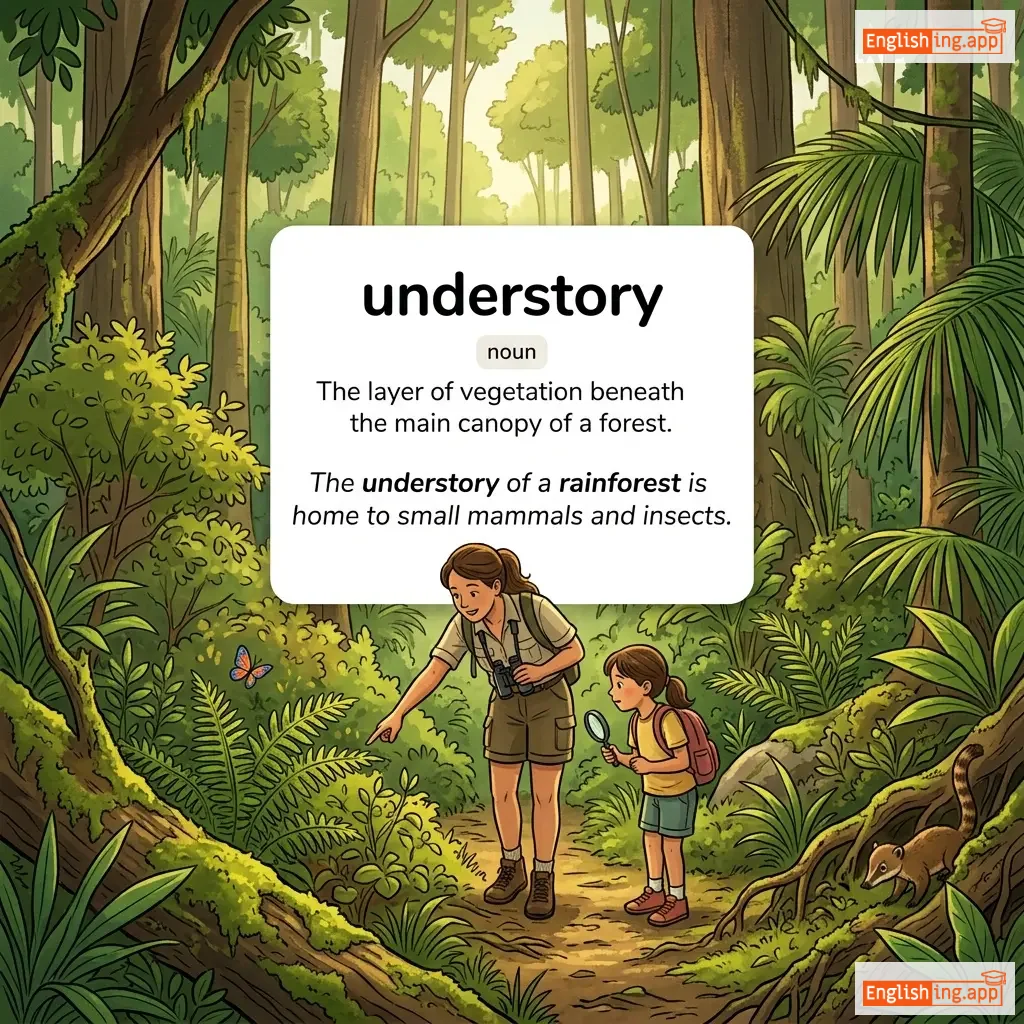
understory definition card — visual illustration of the meaning
noun
/ˈʌn.dɚˌstɔː.ri/
подлесок (podlesok)

The layer of vegetation beneath the main canopy of a forest.

"The understory of a rainforest is home to small mammals and insects."

"Подлесок тропического леса является домом для мелких млекопитающих и насекомых." (Podlesok tropicheskogo lesa yavlyaetsya domom dlya melkih mlekopitayushchih i nasekomyh.)
noun
/ˈʌndərˌstʌdi/
замещающий актер (zameščayushchij akter)

An actor who learns another's role to act as a replacement if needed.

"The understudy performed when the lead actor fell ill."

"Замещающий актер выступил, когда главный актер заболел." (Zameščayushchij akter vystupil, kogda glavnyj akter zabolel.)
undertake definition card — visual illustration of the meaning
verb
/ˌʌndərˈteɪk/
взять на себя (vzyat' na sebya)

To agree to do or begin to do something important or difficult.

"She undertook the responsibility of organizing the event."

"Она взяла на себя ответственность за организацию мероприятия." (Ona vzyala na sebya otvetstvennost' za organizatsiyu meropriyatiya.)
noun
/ˈʌndərˌteɪkər/
гробовщик (grobovshchik)

A person whose job is to prepare the dead for burial and arrange funerals.

"The undertaker prepared the body for the funeral service."

"Гробовщик подготовил тело к похоронной службе." (Grobovshchik podgotovil telo k pokhoronnoy sluzhbe.)
noun
/ˈʌndərˌteɪkɪŋ/
предприятие (predpriyatie)

A task, project, or responsibility that someone agrees to do.

"Starting a new company is a difficult undertaking."

"Начать новый бизнес - это сложное предприятие." (Nachat' novyy biznes - eto slozhnoe predpriyatie.)
verb
/ˌʌndərˈvæljuː/
недооценивать (nedootsenivat')

To assign too low a value or importance to something or someone.

"She felt that her boss consistently undervalued her contributions."

"Она чувствовала, что её начальник постоянно недооценивал её вклад." (Ona chuvstvovala, chto yeyu nachal'nik postoyanno nedootsenival yeye vklad.)
noun
/ˈʌndərweər/
нижнее белье (nizhnee bele)

Clothing worn beneath outer clothes, typically next to the skin.

"He bought new underwear for the trip."

"Он купил новое нижнее белье для поездки." (On kupil novoe nizhnee bele dlya poyezdki.)
noun
/ˈʌndərˌwɜːrld/
подземный мир (podzemnyy mir)

The criminal world of organized crime or the mythical world of the dead.

"The detective spent years studying the secrets of the underworld."

"Детектив провел годы, изучая тайны подземного мира." (Detektiv provel gody, izuchaya tayny podzemnogo mira.)
verb
/ˈʌndərˌraɪt/
гарантировать финансовую поддержку (garantirovat' finansovuyu podderzhku)

To guarantee financial support, especially by agreeing to cover losses or risks; in insurance, to assess and accept risks.

"The bank agreed to underwrite the company's new bond issue."

"Банк согласился андеррайтить новую эмиссию облигаций компании." (Bank soglasiłsya underwrite-novuyu emissyiyu obligatsiy kompaniy.)
adjective
/ˌʌndɪˈzaɪərəbl/
нежелательный; вредный; неприятный (nezelatel'nyy; vrednyy; nepriyatnyy)

not wanted or wished for; harmful or unpleasant

"The new policy had several undesirable consequences."

"Новая политика имела несколько нежелательных последствий." (Novaya politika imela neskol'ko nezelatel'nykh posledstviy.)
adjective
/ˌʌndɪˈveləpt/
неразвиты́й; незрелый; примитивный (nerazvityy; nezrelyy; primitivnyy)

not yet developed; immature or primitive

"The undeveloped land was later turned into a park."

"Неразвиты́е земли позднее были превращены в парк." (Nerazvitye zemli pozdnee byli prevrashchены v park.)
adjective
/ˌʌndɪˈstɜːrbd/
непрерывный (nepreryvny)

not interrupted or interfered with; calm and peaceful

"She slept undisturbed for eight hours."

"Она спала восемь часов без перерыва." (Ona spala vosem' chasov bez pereryva.)
adjective
/ʌnˈdɪvaɪdɪd/
Неделимый; полный; не разделенный или разделенный (Nedelimiy; polniy; ne razdelenniy ili razdelenniy)

whole; complete; not separated or split

"The team showed undivided attention to the coach's instructions."

"Команда показала неделимое внимание к указаниям тренера." (Komanda pokazala nedelimoye vnimaniye k ukazaniyam trenera.)
adverb
/ʌnˈdaʊtɪdli/
несомненно (nesomnenno)

without a doubt, certainly

"He is undoubtedly the best player on the team."

"Он несомненно лучший игрок в команде." (On nesomnenno luchshiy igrok v komande.)
adjective
/ʌnˈdjuː/
чрезмерный (chrezmernyy)

More than is reasonable, excessive, or inappropriate.

"He placed undue pressure on his employees to meet the deadline."

"Он оказал чрезмерное давление на своих сотрудников, чтобы они успели к сроку." (On okazal chrezmernoe davlenie na svoikh sotrudnikov, chtoby oni uspel k sroku.)
verb
/ˈʌndjʊleɪt/
волнообразно двигаться (volnoobrazno dvigatsya)

To move with a smooth, wave-like motion.

"The snake undulated across the sand."
"Змея двигалась волнообразно по песку." (Zmeyadvigalas' volnoobrazno po pesku.)
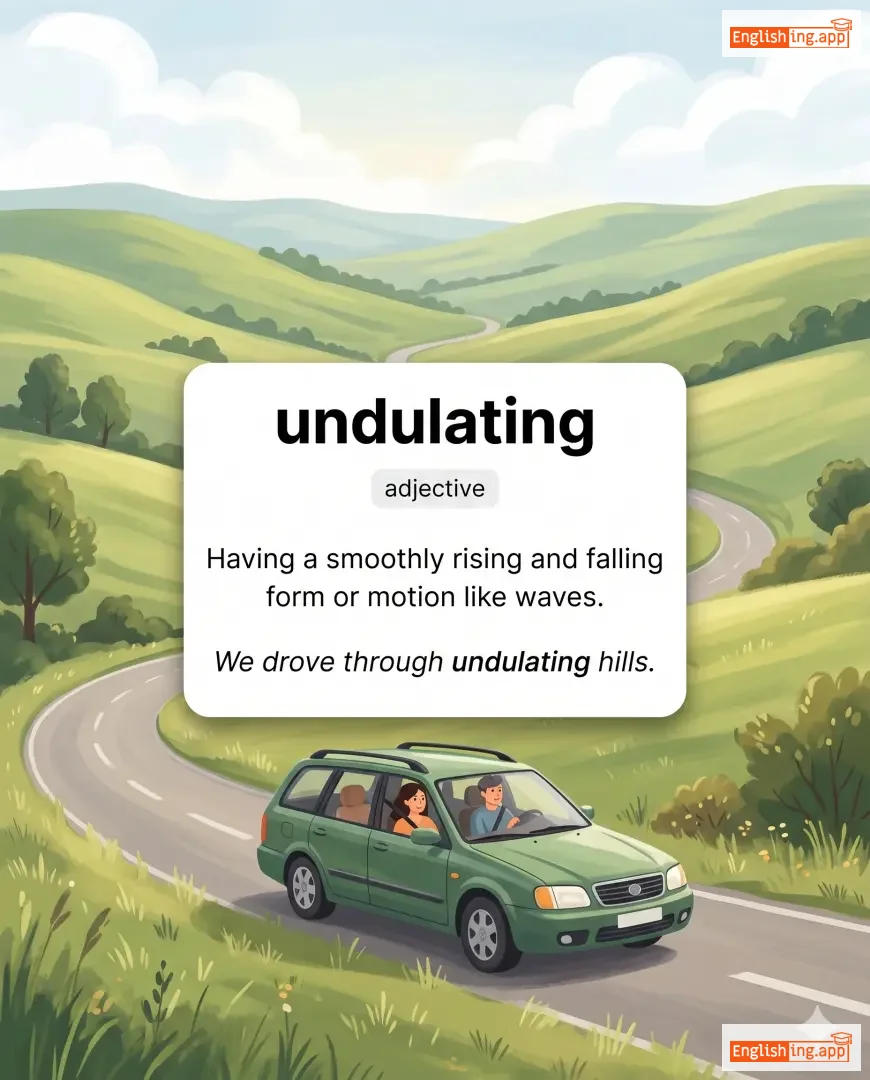
undulating definition card — visual illustration of the meaning
adjective
/ˈʌndjʊleɪtɪŋ/
волнообразный (volnoobrazny)

Having a smoothly rising and falling form or motion like waves.

"We drove through undulating hills."

"Мы ехали через волнистые холмы." (My yehaly cherez volnistye kholmy.)
adjective
/ˈʌndjʊləs/
волнистый (volnisty)

Having a wavy surface or form.

"The artist painted the undulous sea at sunset."

"Художник нарисовал волнистое море на закате." (Khodozhnik narisoval volnistyye more na zakate.)
verb
/ʌnˈɜːθ/
раскопать (raskopat)

To dig up from the ground or to discover something hidden.

"Archaeologists unearthed ancient artifacts at the site."

"Археологи раскопали древние артефакты на этом месте." (Arkheologi raskopali drevnie artefakty na etom meste.)
adjective
/ʌnˈɜːrθli/
небесный (nebesnyy)

Strange or unnatural in a way that seems not of this world

"The forest was filled with an unearthly glow."

"Лес был наполнен сверхъестественным светом." (Les byl napolnen sverkhyestestvennym svetom.)
adjective
/ʌnˈiːzi/
беспокойный; тревожный; неловкий (bespokoynyy; trevozhnyy; nelovkiy)

worried; anxious; uncomfortable; restless

"She felt uneasy about walking alone at night."

"Она чувствовала себя беспокойно, когда шла одна ночью." (Ona chuvstvovala sebya bespokoyno, kogda shla odna noch'yu.)