Словари

Словарь английского языка | Значения слов, определения и примеры

noun
/ˈtwaɪ.laɪt/
сумерки (sumerki)

the soft glowing light from the sky when the sun is below the horizon; a period of decline

"We walked along the beach at twilight."

"Мы шли по пляжу в сумерках." (My shli po plyazhu v sumerkakh.)
👯‍♂️

twin (твɪн)

noun
/twɪn/
близнец (bliznets)

either of two children born at the same time to the same mother

"They have twin girls."

"У них есть близнецы-девочки." (U nikh yest' bliznetsy-devochki.)
noun
/twɪndʒ/
резкая боль (rezkaya bol)

a sudden, sharp pain or an emotional pang

"He felt a twinge of guilt after lying to his friend."

"Он почувствовал резкую боль вины после того, как солгал своему другу." (On pochuvstvoval rezkuyu bol' viny posle togo, kak solgal svoemu drugu.)
verb
/twɪst/
крутить, вертеть (krutit', vertet')

to bend or turn something into a coil or spiral shape; to distort.

"He twisted the rope tightly around the pole."

"Он скрутил веревку вокруг столба." (On skrutil verevku vokrug stolba.)
noun
/ˈtwɪstər/
торнадо (tornado)

A tornado or something that twists; also refers to a challenging tongue twister.

"The twister destroyed several houses in the village."

"Торнадо уничтожило несколько домов в деревне." (Tornado unichtozhilo neskol'ko domov v derevne.)
noun
/twɪt/
глупец; насмехаться (glupets; nasmekhat'sya)

a silly or foolish person; to tease or make fun of someone

"Don't be such a twit and listen carefully."

"Не будь таким глупцом и слушай внимательно." (Ne bud' takim glupcom i slushay vnimatel'no.)
2️⃣

two (ту)

noun
/tuː/
два (dva)

the number following one

"She has two children."

"У неё двое детей." (U nee dvoje detey.)
noun
/tuː θɜːrdz/
две трети (dve treti)

a fraction equal to two parts of three; 2/3.

"Two-thirds of the students passed the exam."

"Две трети студентов сдали экзамен." (Dve treti studentov sdali ekzamen.)
noun
/ˈtuːsəm/
пара (para)

A pair of people considered together, often in a romantic or competitive context.

"They entered the dance competition as a twosome."

"Они вошли в танцевальное соревнование как пара." (Oni voshli v tantseval'noe sorevnovanie kak para.)
noun
/taɪˈkuːn/
магнат (magnat)

a wealthy, powerful businessperson

"The real estate tycoon invested in several skyscrapers."
"Риэлторский магнат инвестировал в несколько небоскрёбов." (Riel'torskiy magnat investiroval v neskol'ko neboskryobov.)
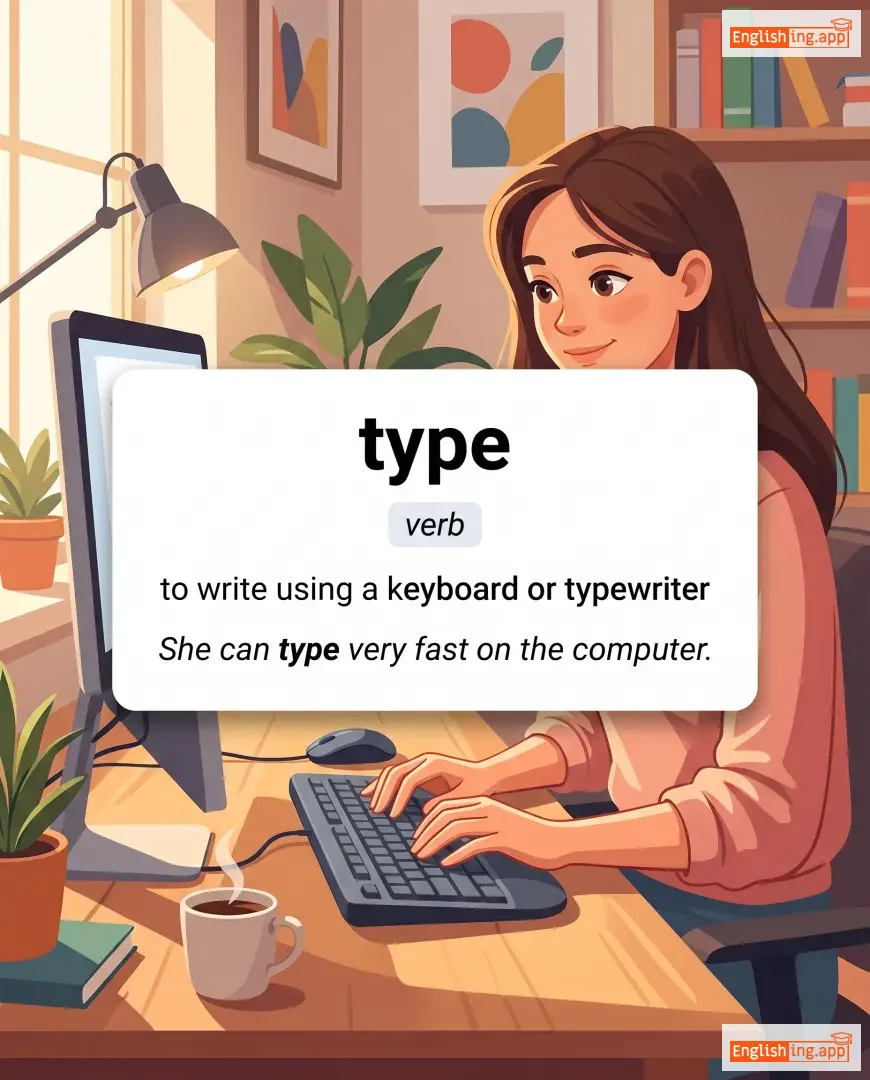
type definition card — visual illustration of the meaning
noun
/taɪp/
тип (tip)

a category of people or things having common characteristics

"What type of music do you like?"

"Какой тип музыки вам нравится?" (Kakoy tip muzyki vam nravitsya?)
noun
/taɪˈfuːn/
тайфун (tayfun)

a tropical storm in the region of the Indian or western Pacific oceans

"The typhoon caused severe flooding in the coastal areas."

"Тайфун вызвал сильные наводнения в прибрежных районах." (Tayfun vyzval sil'nye navodneniya v pribrizhnye rayony.)
adjective
/ˈtɪpɪkəl/
связанный с обычными характеристиками определенного типа человека или вещи (svyazannyy s obychnymi kharakteristikami opredelennogo tipa cheloveka ili veshchi)

having the usual qualities of a particular type of person or thing

"It was a typical summer day, hot and humid."

"Это был типичный летний день, жаркий и влажный." (Eto byl tipichnyy letniy den', zharkiy i vlazhnyy.)
adverb
/ˈtɪpɪkli/
обычно (obychno)

in a way that is typical of a particular person, thing, or group

"She typically arrives at work at 9 AM."

"Она обычно приходит на работу в 9 утра." (Ona obychno prikhodit na rabotu v 9 utra.)
verb
/ˈtɪpɪfaɪ/
представлять (predstavlyat)

to represent or be a typical example of something

"His leadership style typifies the new corporate culture."

"Его стиль лидерства олицетворяет новую корпоративную культуру." (Ego stil' liderstva olicetvorjaet novuju korporativnuju kul'turu.)
noun
/ˈtaɪpoʊ/
опечатка (opichatka)

a mistake made in typing

"The report was full of typos."

"Отчет был полон опечаток." (Otchet byl polon opichatok.)
adjective
/ˌtaɪpəˈɡræfɪkəl/
типографический (tipograficheskiy)

relating to the style, arrangement, or appearance of printed text

"There was a typographical error in the book."

"В книге была типографическая ошибка." (V knige byla tipograficheskaya oshibka.)
noun
/taɪˈpɒɡrəfi/
типография (tipografiya)

the art and technique of arranging type to make written language legible and visually appealing

"Good typography improves the readability of a website."

"Хорошая типография улучшает читаемость веб-сайта." (Khoroshaya tipografiya uluchshayut chitaemost' veb-sayta.)
adjective
/tɪˈrænɪkəl/
тиранический (tiranicheskiy)

exercising power in a cruel or arbitrary way

"The tyrannical ruler silenced all opposition."

"Тиранический правитель заставил молчать всю оппозицию." (Tiranicheskiy pravitel' zastavil molchat' vsyu oppozitsiyu.)
noun
/ˈtɪrəni/
тирания (tiraniya)

Cruel and oppressive government or rule by a tyrant.

"The people revolted against the tyranny of their ruler."

"Люди восстали против тирании их правителя." (Lyudi vosstali protiv tiranii ikh pravitelya.)
noun
/ˈtaɪ.rənt/
тиран (tiran)

a cruel and oppressive ruler; a person who exercises power in a harsh manner

"The people rebelled against the cruel tyrant."

"Люди восстали против жестокого тирана." (Lyudi vosstali protiv zhestokogo tirana)
noun
/ˈtaɪroʊ/
новичок (novichok)

A beginner or novice in a field or activity.

"As a tyro in programming, she needed constant guidance."

"Как новичок в программировании, ей нужна была постоянная поддержка." (Kak novichok v programmirovanii, yey nuzhna byla postoyannaya podderzhka.)