Словари

Словарь английского языка | Значения слов, определения и примеры

noun
/tsuːˈnɑː.mi/
цунами (tsunami)

a large sea wave caused by an underwater earthquake or volcanic eruption

"The tsunami devastated the coastal town, leaving thousands homeless."

"Цунами разрушило прибрежный город, оставив тысячи людей без крова." (Tsunami razrushilo pribrezhnyy gorod, ostaviv tysyachi lyudey bez krova.)
noun
/tjuːb/
трубка (trubka)

a hollow cylinder used to convey something, typically fluid

"He used a tube to measure the liquid."

"Он использовал трубку, чтобы измерить жидкость." (On ispol'zoval trubku, chtoby izmerit' zhidkost'.)
noun
/ˈtuːb.roʊz/
тубероза (tuberoza)

a night-blooming flower with an intensely sweet fragrance, native to Mexico

"The tuberose flowers filled the evening air with their heavenly scent."

"Цветы туберозы наполнили вечерний воздух своим небесным ароматом." (Tsvety tuberozy napolnili vecherniy vozdukh svoim nebesnym aromatom.)
🛏️

tuck (tak)

verb
/tʌk/
заворачивать (zavorachivat)

to push or fold something neatly into a particular place

"She tucked the blanket around the baby to keep him warm."

"Она завернула одеяло вокруг ребенка, чтобы держать его в тепле." (Ona zavorachivala odeyalo vokrug rebenka, chtoby derzhat' ego v teple.)
noun
/ˈtjuːzdeɪ/
вторник (vtornik)

The second day of the week, following Monday and preceding Wednesday.

"We have a meeting scheduled for Tuesday."

"У нас запланирована встреча во вторник." (U nas zaplanirovana vstrecha vo vtornik.)
adjective
/ˈtʌf.tɪd/
с пучками; украшено пучками (s puchkami; ukrasheno puchkami)

having a tuft or tufts; furnished with a tuft or clump of threads, hairs, or other material

"The tufted sofa looked elegant in the living room."

"Диван с пучками выглядел элегантно в гостиной." (Divan s puchkami vyglyadel elegantno v gostinoy.)
noun
/ˈtʌɡboʊt/
буксир (buksir)

a small, powerful boat used for towing or pushing ships

"The tugboat guided the massive ship safely into the harbor."

"Буксир проводил гигантский корабль безопасно в порт." (Buksir provodil gigant'skiy korabl' bezopasno v port.)
noun
/tʃuˈɪʃ.ən/
плата за обучение (plata za obuchenie)

the fee for instruction or teaching, typically at a school or university

"The tuition for the college has increased this year."

"Студенческая плата за обучение в этом году увеличилась." (Studencheskaya plata za obuchenie v etom godu uvelichilas.)
noun
/ˈtuː.lɪp/
тюльпан (tyulpan)

a colorful spring flower with cup-shaped petals

"The red tulip bloomed beautifully in the garden."

"Красный тюльпан прекрасно расцвел в саду." (krasniy tyulpan prekrasno rastsvyol v sadu)
noun
/ˈtʌmbrəl/

A two-wheeled cart, especially one used during the French Revolution to carry prisoners to the guillotine.

"The prisoners were carried to the square in a wooden tumbrel."

tumid definition card — visual illustration of the meaning
adjective
/ˈtjuːmɪd/
опухший, надутый или помпезный по стилю (opukhshiy, nadutyy ili pompeznyy po stilyu)

Swollen, enlarged, or pompous in style.

"His tumid prose was difficult to read."

"Его опухшая проза была трудна для чтения." (Ego opukhshaya proza byla trudna dlya chteniya.)
noun
/ˈtjuːmər/
опухоль (opukhol)

an abnormal mass of tissue caused by excessive cell growth

"The doctor found a benign tumor during the medical check-up."

"Врач обнаружил доброкачественную опухоль во время медицинского обследования." (Vrach obnaruzhil dobrokachestvennuyu opukholl vo vremya meditsinskogo obsledovaniya.)
noun
/ˈtjuːmʌlt/
смятение (smyatenie)

A loud, confused noise, especially caused by a crowd; commotion or disorder.

"The protest created a tumult in the city square."

"Протест вызвал смятение на городской площади." (Protest vyzval smyatenie na gorodskoy ploshchadi.)
adjective
/tjuːˈmʌltʃuəs/
бурный (burnyy)

Characterized by disorder, noisy excitement, or emotional agitation.

"They had a tumultuous relationship full of ups and downs."

"У них были бурные отношения, полные взлетов и падений." (U nikh byli burnye otnosheniya, polnye vzletov i padeniy.)
noun
/ˈtʌndrə/
тундра (tundra)

A vast, flat, treeless Arctic region where the subsoil is permanently frozen.

"Polar bears roam across the icy tundra."

"Белые медведи бродят по ледяной тундре." (Belye medvedi brodyat po ledyanoy tundre.)
noun
/tjuːn/
мелодия (melodiya)

a sequence of musical notes that are pleasant to listen to; a melody

"She hummed a cheerful tune while cooking dinner."

"Она напевала веселую мелодию, готовя ужин." (Ona napyevala veselyu melodiya, gotovya uzhin.)
noun
/ˈtʌnəl/
туннель (tunnel)

an underground passage or shaft

"They dug a tunnel under the river."

"Они вырыли туннель под рекой." (Oni vyrili tunnel pod rekoy.)
noun
/ˈtɜːrbən/
тюрбан (tyurban)

a head covering made by wrapping a long piece of cloth around the head

"The Sikh man wore a colorful turban."
"Сикх носил яркий тюрбан." (Sikh nosil yarkiy tyurban.)
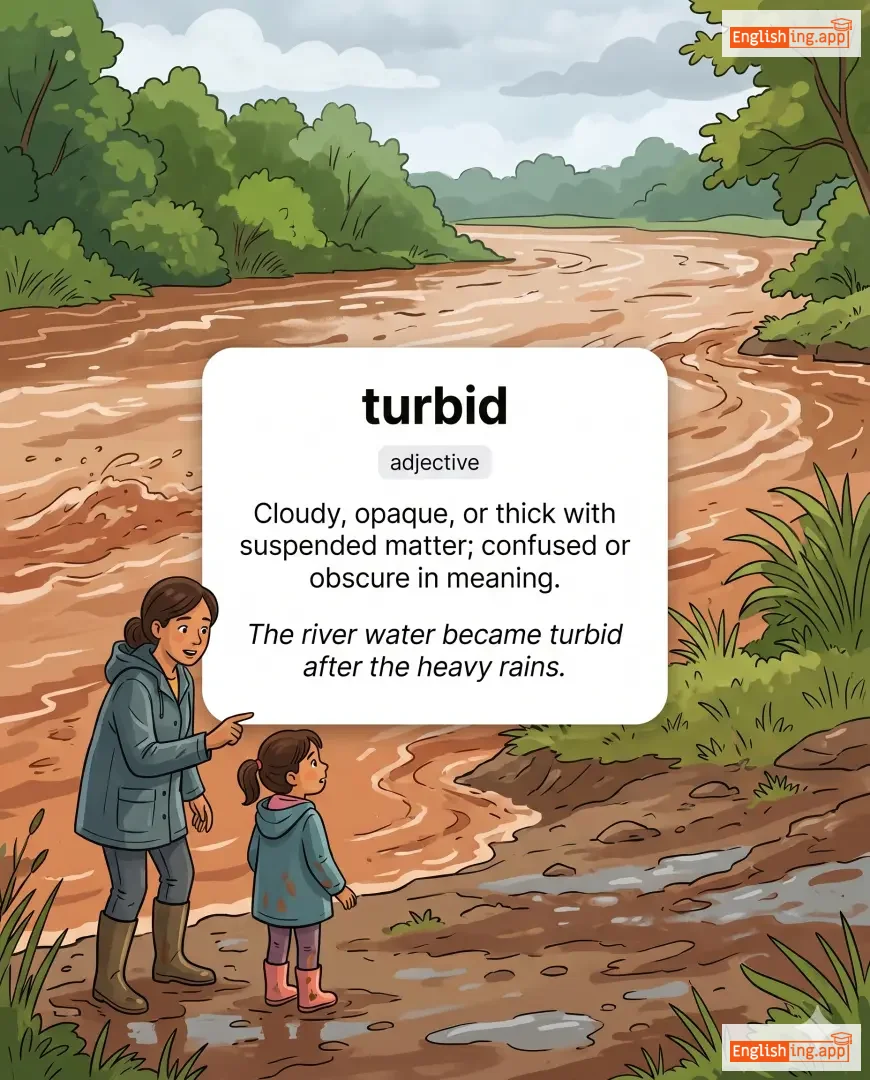
turbid definition card — visual illustration of the meaning
adjective
/ˈtɜːrbɪd/
мутный (mutnyy)

Cloudy, opaque, or thick with suspended matter; confused or obscure in meaning.

"The river water became turbid after the heavy rains."

"Речная вода стала мутной после сильных дождей." (Rechnaya voda stala mutnoy posle sil'nykh dozhdey.)
noun
/ˈtɜːrbjələns/

Violent or unsteady movement of air, water, or some other fluid; disorder or conflict.

"The plane experienced severe turbulence during the flight."

adjective
/ˈtɜːrbjələnt/
бурный (burnyj)

Characterized by conflict, disorder, or confusion; not stable or calm.

"The country went through a turbulent period of political change."

"Страна пережила бурный период политических изменений." (Strana perezhila burnyj period politicheskikh izmenenij.)
noun
/tʊˈriːn/
супница (supnitsa)

A large deep dish with a cover, used for serving soups or stews.

"She brought the hot soup to the table in a silver tureen."
"Она принесла горячий суп на стол в серебряной супнице." (Ona prinesla goryachiy sup na stol v serebryanoy supnitse.)
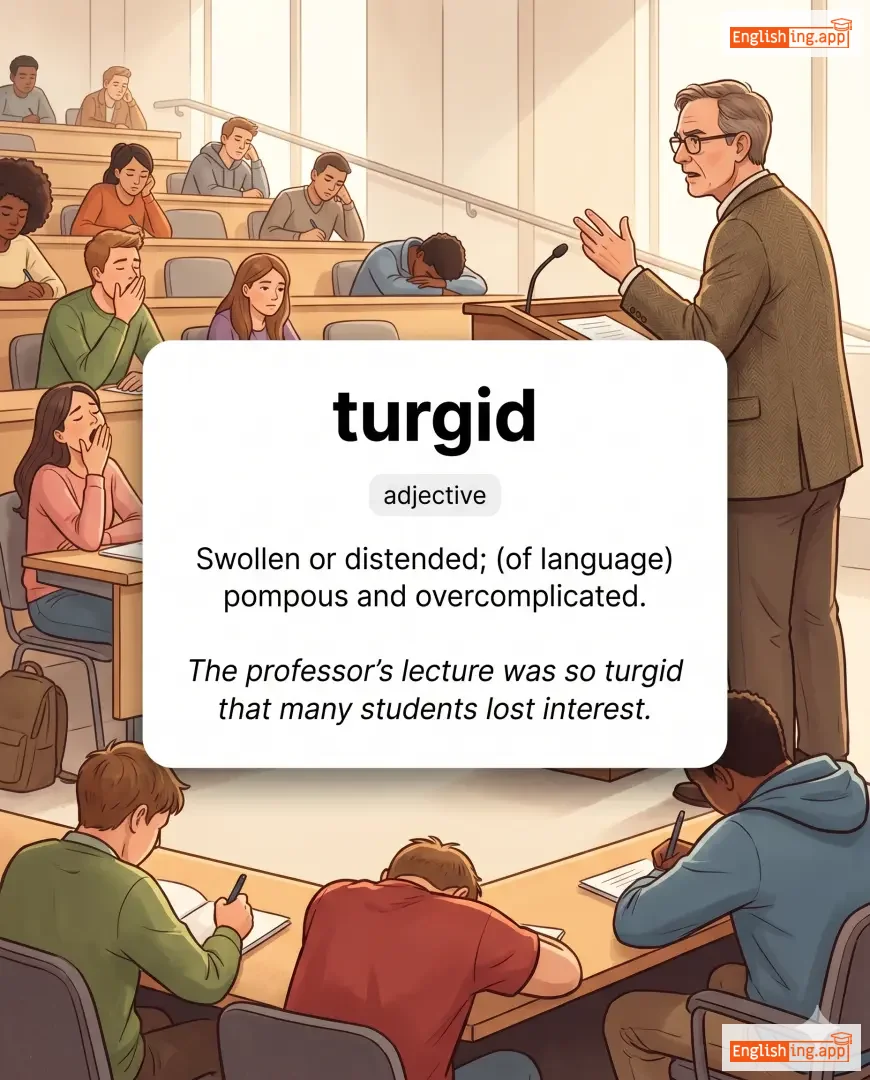
turgid definition card — visual illustration of the meaning
adjective
/ˈtɜːrdʒɪd/
опухший, напыщенный (opukhshiy, napyshchennyy)

Swollen or distended; (of language) pompous and overcomplicated.

"The professor’s lecture was so turgid that many students lost interest."

"Лекция профессора была настолько напыщенной, что многие студенты потеряли интерес." (Lektsiya professora byla nastol'ko napyshchennoy, chto mnogie studenty poteryali interes.)
noun
/ˈtɜːrki/
индюк (большая птица) (indyuk)

a large bird native to North America, often eaten at special occasions like Thanksgiving; also the meat of this bird.

"We roasted a turkey for Thanksgiving dinner."

"Мы запекли индейку на ужин в День Благодарения." (My zapekli indiyku na uzhin v Den' Blagodareniya.)
noun
/ˈtɜr.mər.ɪk/
куркума (kurkuma)

A bright yellow spice powder made from the root of a tropical plant, used in cooking and medicine

"Add turmeric to the curry for color and flavor."

"Добавьте куркуму в карри для цвета и вкуса." (Dobav'te kurkumu v karri dlya tsveta i vkusa)
noun
/ˈtɜːr.mər.ɪk ˈpaʊ.dər/
порошок куркумы (poroshok kurkumy)

ground turmeric root used as a spice and for its medicinal properties

"Add a pinch of turmeric powder to the curry for color and flavor."
"Добавьте щепотку порошка куркумы в карри для цвета и аромата." (Dobav'te shchepotku poroshka kurkumy v karri dlya tsveta i aromata.)
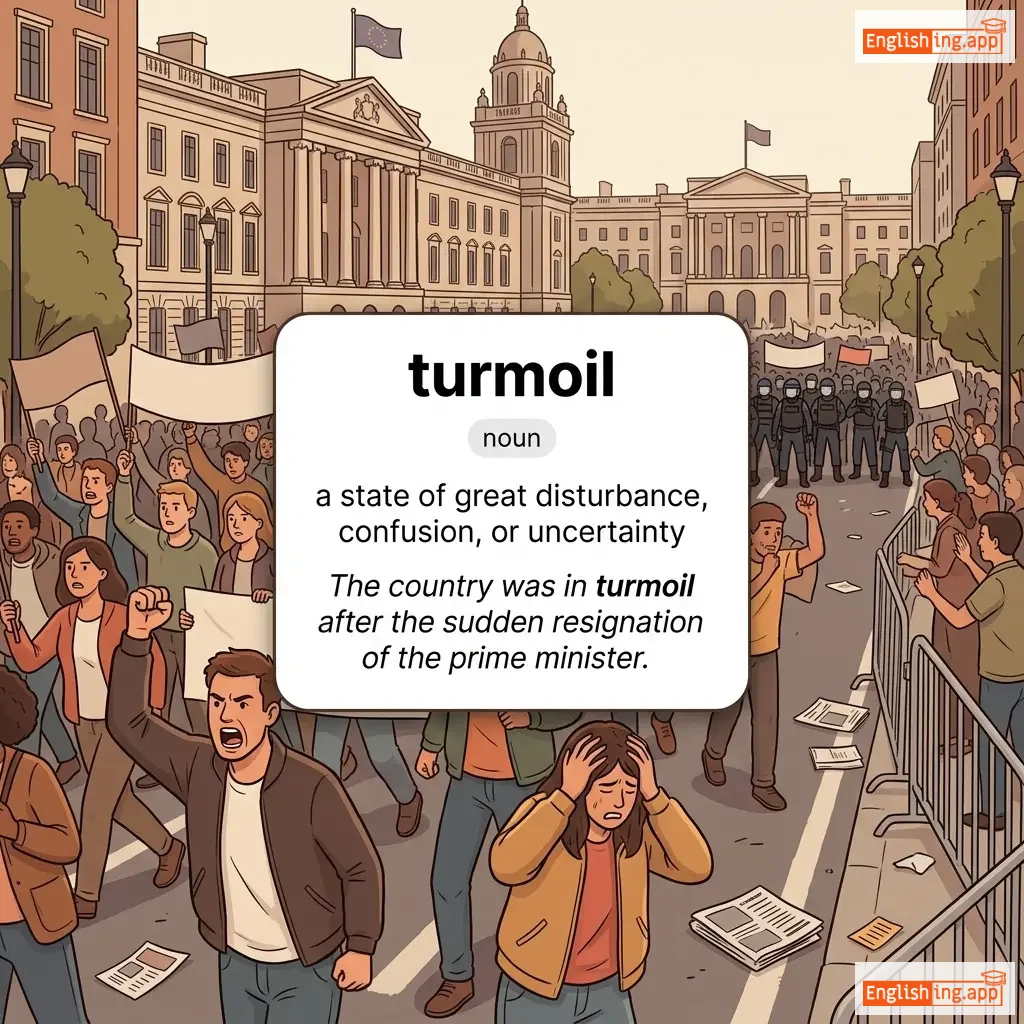
turmoil definition card — visual illustration of the meaning
noun
/ˈtɜːrmɔɪl/
беспорядок (besporyadok)

a state of great disturbance, confusion, or uncertainty

"The country was in turmoil after the sudden resignation of the prime minister."
"Страна была в беспорядке после неожиданной отставки премьер-министра." (Strana byla v besporyadke posle neozhidannoy otstavki prem'er-ministra.)
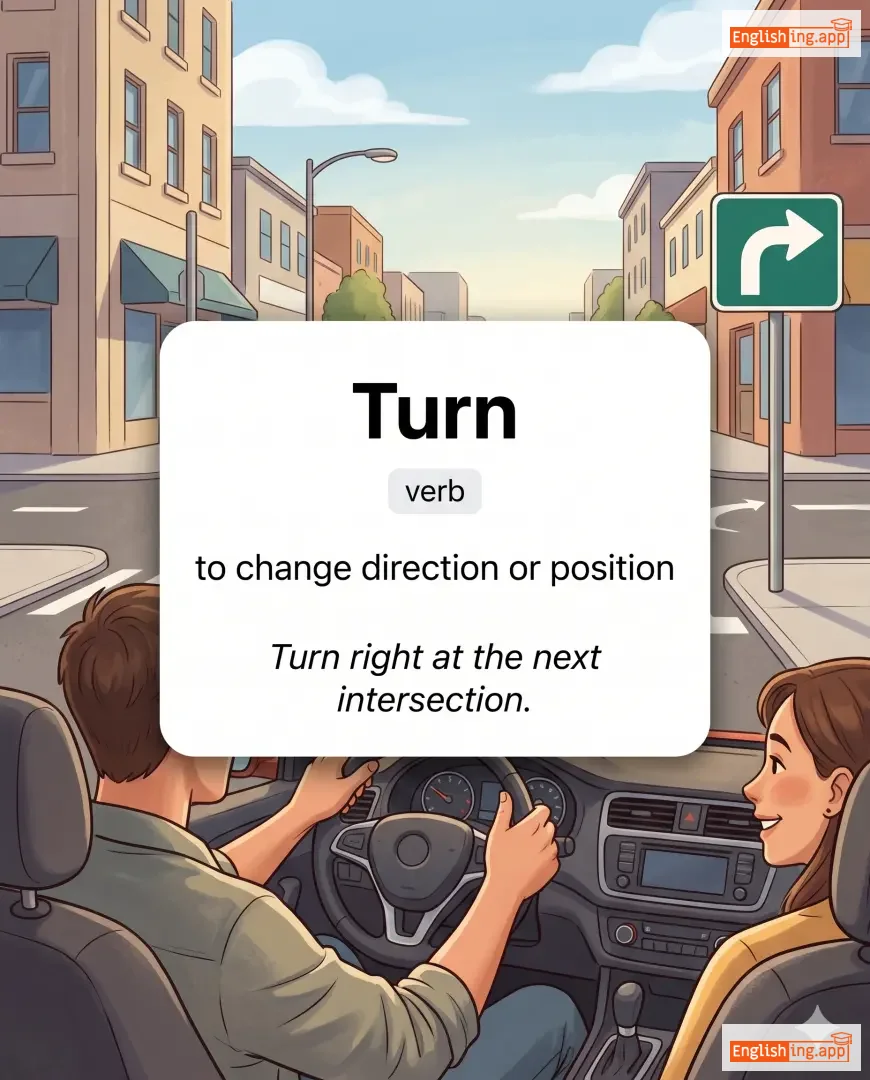
Turn definition card — visual illustration of the meaning
verb
/tɜːrn/
повернуть (povernut)

to change direction or position

"Turn right at the next intersection."

"Поверните направо на следующем перекрёстке." (Povernite napravo na sleduyushchem perekryostke.)
noun
/ˈtɜːrnkoʊt/
предатель (predatel)

a person who switches allegiance, often betraying a cause or group

"He was branded a turncoat after joining the rival political party."

"Его окрестили предателем после того, как он присоединился к соперничающей политической партии." (Ego okrestili predatelem posle togo, kak on prisoedinilsya k sopernichayushchei politicheskoi partii.)
noun
/ˈtɜːr.nɪŋ/
поворот; боковая дорога (povorot; bokovaya doroga)

a place where a road branches off from another; a side road

"Take the first turning on the left."

"Поверните на первом повороте налево." (povernite na pervom povorote nalevo.)
noun
/ˈtɜːr.nɪp/
репа (repa)

a round root vegetable with white or purple skin and white flesh

"We grew turnips in our vegetable garden."

"Мы вырастили репу в нашем огороде." (My vyrastili repu v nashem ogorode.)
adjective
/ˈtɜːrnkiː/
под ключ (pod klyuch)

ready for immediate use; a complete product or solution

"The company provides turnkey solutions for small businesses."

"Компания предоставляет готовые решения для малого бизнеса." (Kompaniya predostavlyaet gotovye resheniya dlya malogo biznesa.)
noun
/ˈtɜːr.naʊt/
явка (yavka)

the number of people who attend or participate in an event or activity

"The turnout at the rally was impressive, with thousands showing up."

"Явка на митинге была впечатляющей, с тысячами людей, пришедших." (Yavka na mitinge byla vpechatlyayushchey, s tysyachami lyudey, prishedshikh.)
noun
/ˈtɜːnˌəʊvə/
оборот (oborot)

the amount of business conducted during a particular period, or the rate at which employees leave a company

"The company reported a high turnover in its sales department."

"Компания сообщила о высоком обороте в своем отделе продаж." (Kompaniya soobshchila o vysokom oborote v svoem otdеле prodazh.)
noun
/ˈtɜːrpɪtuːd/
развращенность (razvrashchennost)

depraved or wicked behavior or character

"The judge condemned the criminal’s act of moral turpitude."

"Судья осудил акт морального разложения преступника." (Sud'ya osudil akt moral'nogo razlozheniya prestupnika.)
noun
/ˈtɜːrkwɔɪz/
бирюзовый (biryuzovy)

a greenish-blue color or gemstone

"She wore a necklace with a beautiful turquoise stone."

"Она носила ожерелье с красивым бирюзовым камнем." (Ona nosila ozherelye s krasivym biryuzovym kamnem.)
noun
/ˈtʌrɪt/
небольшая башня на вершине более крупной башни или здания (nebol'shaya bashnya na vershine bolee krupnoy bashni ili zdaniya)

A small tower on top of a larger tower or building, often used in castles or fortifications.

"The castle was guarded by soldiers stationed in the turret."

"Замок охранялся солдатами, размещенными в башне." (Zamok okhranyalsya soldatami, razmeshchennymi v bashne.)
noun
/ˈtɜːrtl/
черепаха (cherepakha)

A slow-moving reptile with a hard shell that lives in water or on land

"The turtle slowly crossed the sandy beach."

"Черепаха медленно пересекла песчаный пляж." (Cherepakha medlenno peresekla peschanyy plyazh)
noun
/ˈtjuːtɪlɪdʒ/
опека (opeka)

The act of guarding, protecting, or guiding; instruction or teaching.

"She studied painting under the tutelage of a famous artist."

"Она изучала живопись под руководством знаменитого художника." (Ona izuchala zhivopis' pod rukovodstvom znamenitogo khudozhnika.)
adjective
/ˈtjuːtɪlɑːr/
опекунский (opekunskiy)

Serving as a guardian or protector.

"The tutelar spirit of the forest was believed to protect travelers."
"Дух-страж леса считался защищающим путешественников." (Dukh-strazha lesa schitalsya zashchishchayushchim puteshestvennikov.)
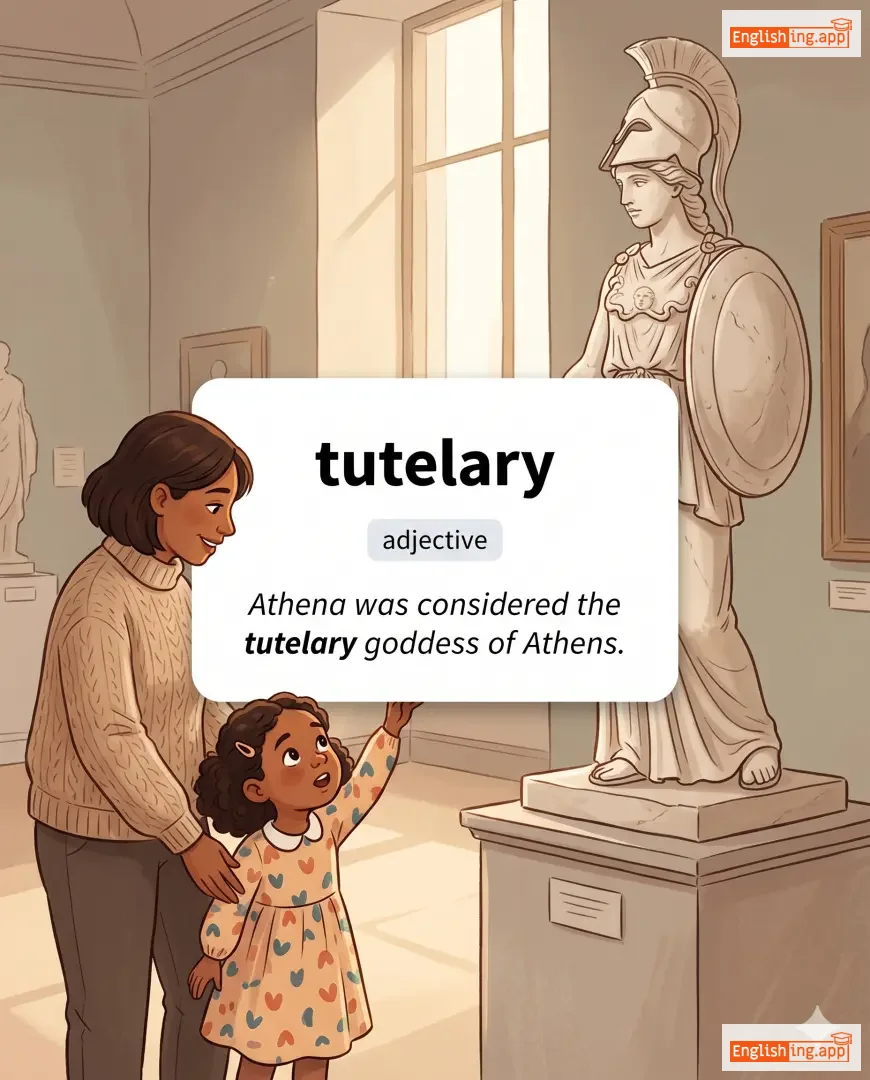
tutelary definition card — visual illustration of the meaning
adjective
/ˈtjuːtɪləri/
опекающий (opekayushchiy)

Relating to or serving as a guardian or protector, often used for deities or spirits.

"Athena was considered the tutelary goddess of Athens."

"Афина считалась покровительницей Афин." (Afina schitalas' pokrovitelnitsei Afina.)
noun
/ˈtjuːtərʃɪp/
наставничество (nastavnichestvo)

The office or position of a tutor; guidance or instruction given by a tutor.

"He thrived under the tutorship of his mentor."

"Он преуспел под наставничеством своего ментора." (On preuspel pod nastavnichestvom svoego mentora.)
noun
/ˈtiːˈviː/
телевидение (televizhenie)

a device used to receive television broadcasts

"I watch my favorite shows on TV every evening."

"Я смотрю свои любимые шоу по телевизору каждую ночь." (Ya smotryu svoi lyubimye shou po televizoru kazhduyu noch'.)
tweak definition card — visual illustration of the meaning
verb
/twiːk/
настроить (nastroit)

to make small adjustments; to fine-tune something

"We need to tweak the design slightly."

"Нам нужно немного подкорректировать дизайн." (Nam nuzhno nemnogo podkorrektirovat' dizajn)
noun
/twiːt/
щебетать (shchebetat)

a short high-pitched sound made by a small bird; a post on Twitter

"I heard the sweet tweet of a sparrow this morning."

"Я слышал сладкое тви́тание воробья сегодня утром." (Ya slyshal sladkoe tvitaniye vorob'ya segodnya utrom.)
adjective
/twɛlv/
двенадцать (dvenadtsat')

the number equivalent to 12

"There are twelve months in a year."

"В году двенадцать месяцев." (V godu dvenadtsat' mesyatsev.)
adjective
/ˈtwɛntiəθ/
двадцатый (dvadtsaty)

coming after the nineteenth in order; being one of twenty equal parts.

"She was born on the twentieth of April."

"Она родилась двадцатого апреля." (Ona rodilas' dvadtsatogo aprelya.)
adjective
/ˈtwɛnti/
двадцать (dvadtsat)

the number equivalent to 20

"He is twenty years old."

"Ему двадцать лет." (Emu dvadtsat let.)
adverb
/twaɪs/
дважды (dvajdy)

two times

"I have seen that movie twice."

"Я видел этот фильм дважды." (Ya videl etot film dvazhdy.)
noun
/twɪɡ/
веточка (vetochka)

a small thin branch of a tree or bush

"She broke a twig off the tree to use as a stick."

"Она сломала веточку с дерева, чтобы использовать ее как палку." (Ona slomala vetochku s derevya, chtoby ispol'zovat' yeyo kak palku.)