Словари

Словарь английского языка | Значения слов, определения и примеры

adverb
/ˈtrɛbli/
трёхкратно (trebli)

in a triple manner or to a threefold degree

"The sound was trebly distorted through the old speakers."

"Звук был трёхкратно искажён через старые колонки." (Zvuk byl tryokhkratno iskazhyon cherez starye kolonki)
noun
/triː/
дерево (derevo)

a large plant with a trunk, branches, and leaves

"The tree in our backyard is over a hundred years old."

"Дерево в нашем саду более ста лет." (Derevo v nashem sadu bolee sta let.)
verb
/trɛk/
долгий поход (dolgiy pokhod)

to go on a long, difficult journey, especially on foot

"They trekked across the mountains for three days."

"Они шли через горы три дня." (Oni shli cherez gory tri dnya.)
verb
/ˈtrɛmbəl/
дрожать (drozhat)

To shake slightly, often because of fear, cold, or nervousness.

"She began to tremble with fear before speaking."

"Она начала дрожать от страха перед тем, как заговорить." (Ona nachala drozhat ot straha pered tem, kak zagovorit.)
adjective
/trəˈmɛndəs/
огромный (ogromny)

very great in amount, scale, or intensity

"She made a tremendous effort to finish the project on time."

"Она приложила огромные усилия, чтобы закончить проект вовремя." (Ona prilozhila ogromnye usiliya, chtoby zakonchit' proyekt vovremya.)
noun
/ˈtrɛmər/
тряска (tryaska)

a slight shaking movement in a person’s body or in the ground

"A small tremor was felt before the earthquake."
"Маленькая тряска была ощущена перед землетрясением." (Malen'kaya tryaska byla oshchushchena pered zemletryaseniem.)
tremulous definition card — visual illustration of the meaning
adjective
/ˈtrɛmjələs/
дрожащий (drozhashchiy)

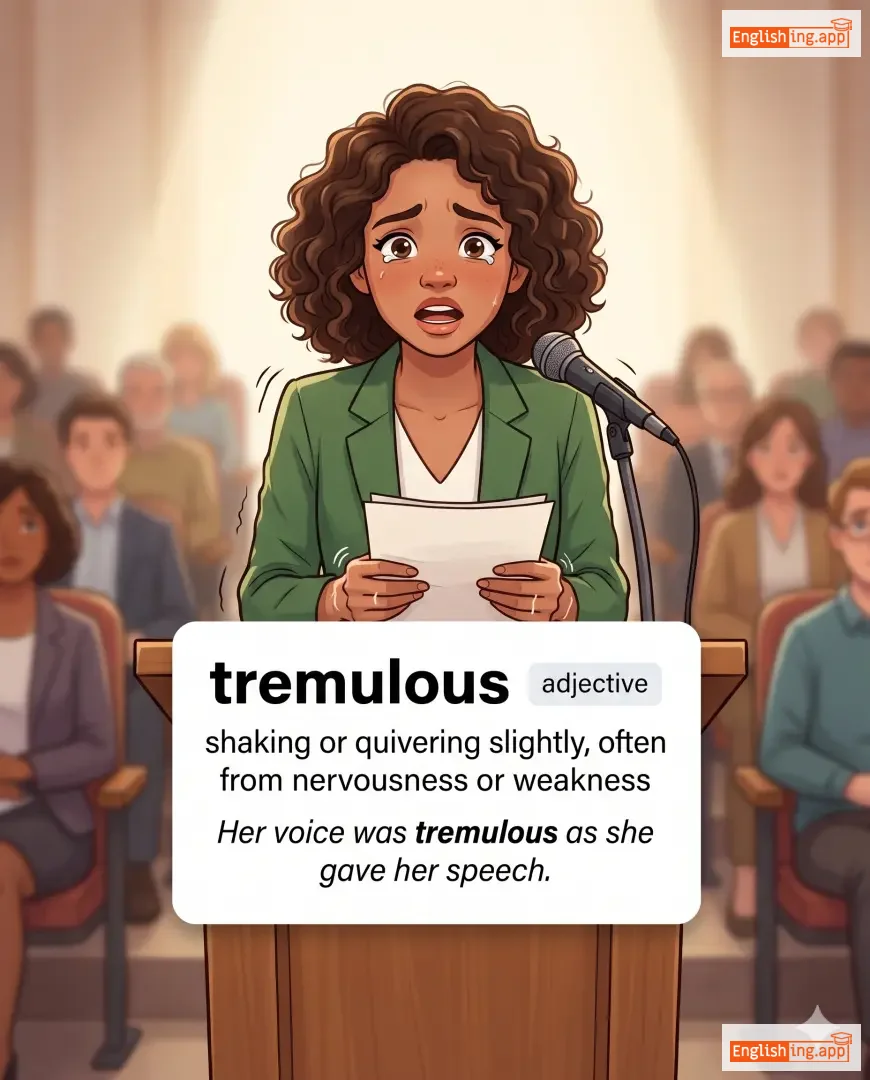
shaking or quivering slightly, often from nervousness or weakness

"Her voice was tremulous as she gave her speech."

"Ее голос был дрожащим, когда она произнесла свою речь." (Eyo golos byl drozhashchim, kogda ona proiznesla svoyu rech.)
noun
/trentʃ/
траншея (transheya)

a long narrow ditch dug in the ground for defense in warfare

"Soldiers hid in the trench during the enemy attack."

"Солдаты прятались в траншее во время вражеской атаки." (Soldaty priyatalis v transheye vo vremya vrazheskoy ataki.)
adjective
/ˈtrɛntʃənt/
резкий (rezkiy)

expressed strongly, effectively, and clearly; sharp or cutting in style or expression

"Her trenchant criticism of the policy left no room for misunderstanding."

"Ее резкая критика политики не оставила места для недоразумений." (Eyo rezkaya kritika politiki ne ostavila mesta dlya nedorazumeni.)
noun
/ˈtrɛntʃərmən/
обжора (obzhora)

a person who eats in a hearty or robust manner; a big eater

"The trencherman devoured the feast with great enthusiasm."

"Обжора поглотил угощение с большим энтузиазмом." (Obzhora poglotil ugoscheniye s bol'shim entuziazmom.)
trend definition card — visual illustration of the meaning
noun
/trɛnd/
тенденция (tendentsiya)

a general direction in which something is developing or changing

"The trend of online shopping continues to rise every year."

"Тренд онлайн-шопинга продолжает расти с каждым годом." (Trend onlayn-shoppinga prodolzhaet rasti s kazhdym godom.)
trepidation definition card — visual illustration of the meaning
noun
/ˌtrɛpɪˈdeɪʃən/
тревога (trevoga)

a feeling of fear or anxiety about something that may happen

"She opened the letter with some trepidation."

"Она открыла письмо с некоторым волнением." (Ona otkryla pis'mo s nekotorym volneniem.)
verb
/ˈtrɛspəs/

to enter someone's land or property without permission

"He was fined for trespassing on private land."

noun
/ˈtres.pæs.ər/
нарушитель (narushitel)

a person who enters someone's property without permission

"The security guard caught the trespasser climbing over the fence."

"Охранник поймал нарушителя, который лез через забор." (Okhrannik poymal narushitelya, kotoryy lez cherez zabor.)
noun
/ˈtrɛsəl/
подпорка (podporka)

a frame or support consisting of a horizontal beam held up by two pairs of sloping legs, used especially for supporting a bridge or table

"The workers built a wooden trestle to support the temporary bridge."

"Рабочие построили деревянную подпорку, чтобы поддержать временный мост." (Rabochie postroili derevyannuyu podporku, chtoby podderzhat' vremennyy most.)
noun
/ˈtraɪæd/
триада (triada)

a group of three closely related people or things

"The project was managed by a triad of experts."

"Проект был управляем триадой экспертов." (Proyekt byl upravlyayem triadoy eksperty.)
noun
/ˈtraɪəl/
судебное разбирательство (sudebnoe razbiratel'stvo)

a formal examination of evidence in a court of law

"The trial will start next week."

"Судебное разбирательство начнется на следующей неделе." (Sudebnoe razbiratel'stvo nachnyotsya na sleduyushchey nedele.)
adjective
/ˈtraɪbəl/
племенной (plemennoy)

relating to a tribe or tribes, especially indigenous people

"The tribal community has preserved its culture for centuries."

"Племенное сообщество сохранило свою культуру на протяжении веков." (Plemennoye soobshchestvo sokhranylo svoyu kul'turu na protyazhenii vekov.)
noun
/traɪb/
племя (plemya)

a social group consisting of people with common customs, language, and culture

"The tribe lived in harmony with nature."
"Племя жило в гармонии с природой." (Plemya zhilo v garmonii s prirodoy.)
tribulation definition card — visual illustration of the meaning
noun
/ˌtrɪbjʊˈleɪʃən/

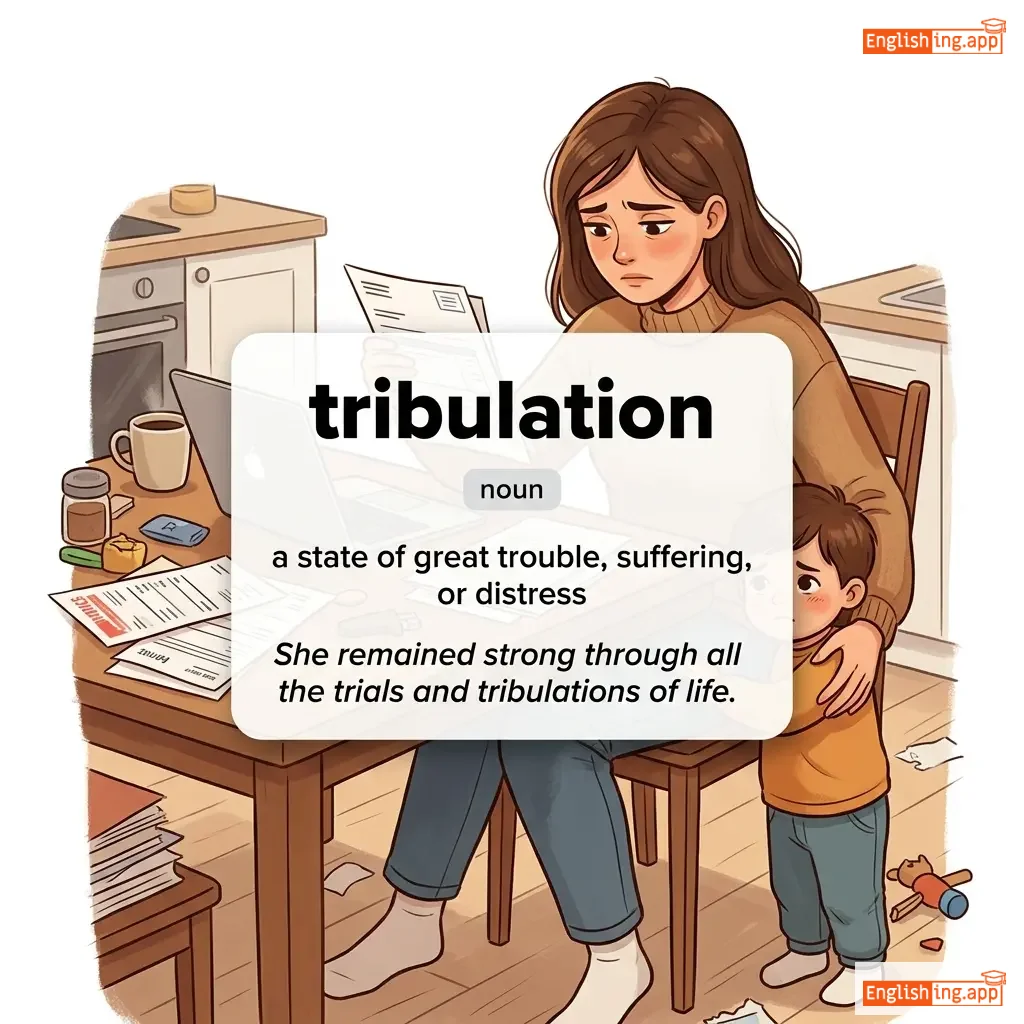
a state of great trouble, suffering, or distress

"She remained strong through all the trials and tribulations of life."

noun
/traɪˈbjuːnəl/
трибунал (tribunal)

a court of justice or body established to settle disputes

"The case was heard in an international tribunal."
"Дело рассматривалось в международном трибунале." (Delo rassmatrivalos' v mezhdunarodnom tribunale.)
tribunal of justice definition card — visual illustration of the meaning
noun
ˌtraɪ.bjuˈnæl əv ˈdʒʌs.tɪs
трибунал правосудия (tribunal pravosudiya)

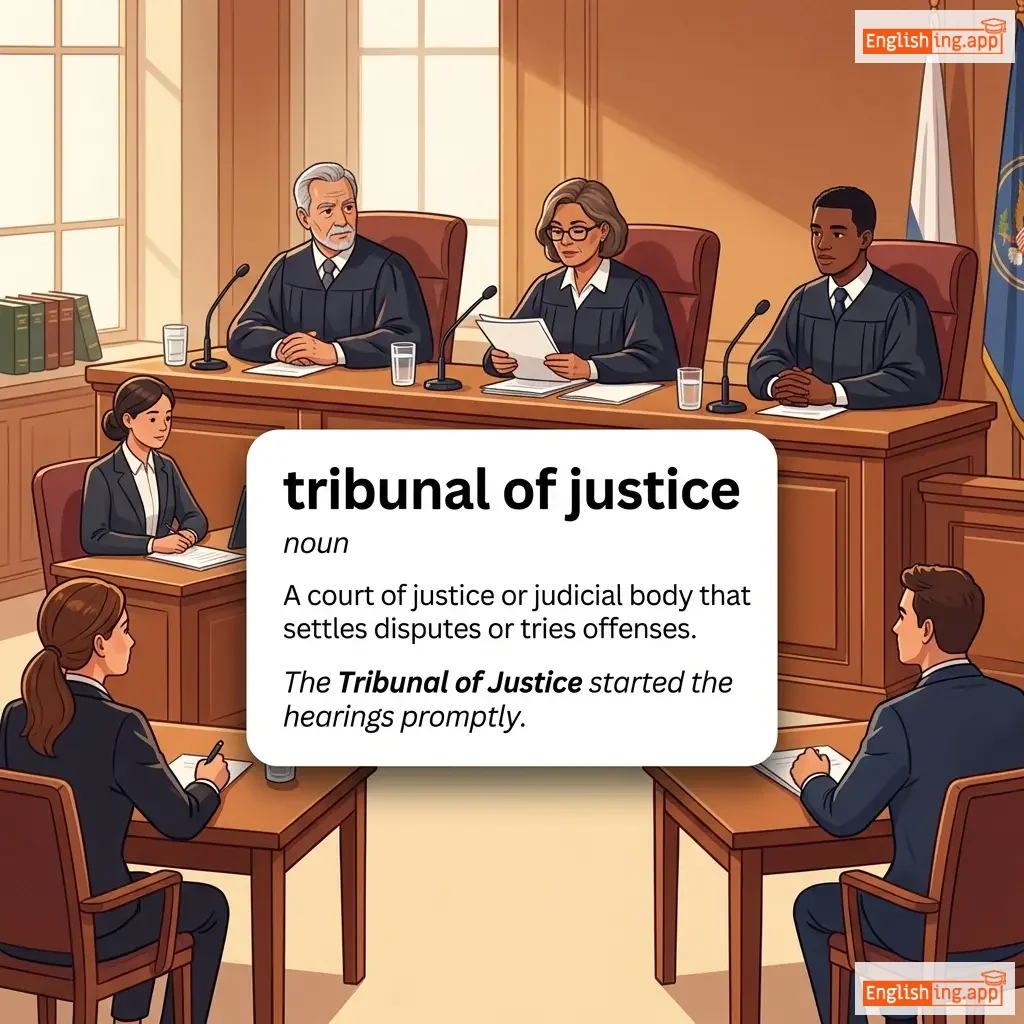
A court of justice or judicial body that settles disputes or tries offenses.

"The Tribunal of Justice started the hearings promptly."

"Трибунал правосудия немедленно начал слушания." (Tribunal pravosudiya nemedlenno nachal slushaniya.)
noun
/ˈtrɪbjuːn/
трибун (tribun)

a person or platform representing the people; historically, a Roman official elected to protect citizens' rights

"He was seen as a tribune of the common people."

"Его считали трибуном народа." (Ego schitali tribunom naroda.)
noun
/ˈtrɪb.jə.ter.i/
приток (pritok)

a river or stream flowing into a larger river or lake

"The tributary joins the main river near the city."
"Приток соединяется с главной рекой рядом с городом." (pritok soedinyaetsya s glavnoy rekoy ryadom s gorodom)
tribute definition card — visual illustration of the meaning
noun
/ˈtrɪbjuːt/
дань (dan')

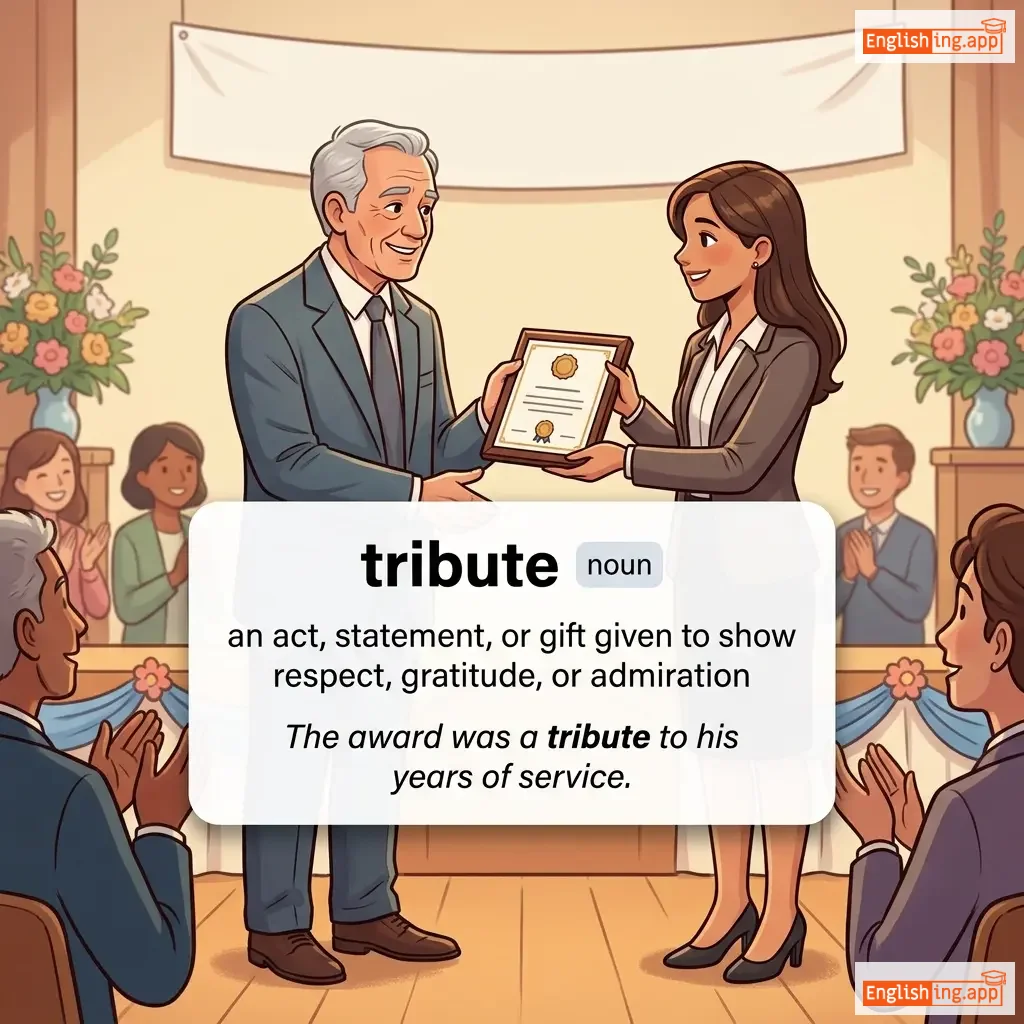
an act, statement, or gift given to show respect, gratitude, or admiration

"The award was a tribute to his years of service."

"Награда была данью его годам службы." (Nagrada byla danyu ego godam sluzhby.)
noun
/trɪk/
трюк (tryuk)

a cunning or deceitful action or plan intended to mislead or deceive someone

"She pulled a trick to win the game."

"Она сделала трюк, чтобы выиграть игру" (Ona sdelala tryuk, chtoby vyigrat' igru)
noun
/ˈtrɪkəri/

The use of dishonest methods to deceive or cheat someone.

"The politician was accused of winning the election through trickery."

verb
/ˈtrɪkl̩/
струиться (struytsya)

To flow or fall in a small, slow stream or drops.

"Water began to trickle down the wall after the heavy rain."

"После сильного дождя вода начала медленно стекать по стене." (Posle sil'nogo dozhdya voda nachala medlenno stekat' po stene.)
noun
/ˈtrɪkstər/
обманщик (obmanshchik)

A person who cheats or deceives people.

"The old man turned out to be a clever trickster who fooled everyone."

"Старик оказался ловким обманщиком, который обманул всех." (Starik okazalsya lovkim obmanshchikom, kotoryi obmanul vsekh.)
adjective
/ˈtrɪki/
сложный; хитрый; обманчивый (slozhnyy; khitryy; obmanchivyy)

requiring skill or careful handling; difficult to deal with

"This math problem is quite tricky to solve."

"Эта математическая задача довольно трудная для решения." (Eta matematicheskaya zadacha dovedno trudnaya dlya resheniya.)
noun/adjective
/ˈtraɪkʌlər/
триколор (trikolor)

A flag with three colors; consisting of three colors.

"The French tricolor is one of the most famous national flags in the world."

"Французский триколор — один из самых известных национальных флагов в мире." (Frantsuzskiy trikolor — odin iz samykh izvestnykh natsional'nykh flagov v mire.)
noun
/ˈtraɪsɪkl̩/
трицикл (tritsikl)

A small vehicle with three wheels, usually for children.

"The child rode happily on his red tricycle around the park."

"Ребёнок с радостью катался на своём красном трицикле по парку." (Rebyonok s radostyu katalsya na svoyem krasnom tritsikle po parku.)
noun
/ˈtraɪdənt/
трезубец (trezubets)

A three-pronged spear, often associated with Neptune or Poseidon.

"The statue of Poseidon holds a mighty trident."

"Статуя Посейдона держит могущественный трезубец." (Statuya Poseidona derzhit mogushchestvennyy trezubets.)
adjective
/traɪˈɛniəl/
триенальный (trienalny)

Occurring once every three years.

"The art festival is a triennial event in the city."

"Художественный фестиваль — это триенальное событие в городе." (Kudozhestvennyy festival' — eto trienal'noye sobytiye v gorode.)
noun
/ˈtraɪfəl/
мелочь (meloch)

A thing of little value or importance; also a layered dessert.

"He dismissed the issue as a mere trifle."

"Он отклонил этот вопрос как пустую мелочь." (On otklonil etot vopros kak pustuyu meloch'.)
adjective
/ˈtraɪflɪŋ/
незначительный (neznachitel'nyy)

Of little importance or value; trivial.

"The mistake was trifling and easily corrected."

"Ошибка была незначительной и легко исправимой." (Oshibka byla neznaachitel'noy i legko ispravimoy.)
verb
/ˈtrɪɡər/
вызывать (vyzyvat)

To cause something to happen or start, often suddenly.

"The loud noise triggered the alarm system."

"Громкий шум активировал систему сигнализации." (Gromkiy shum aktiviroval sistemy signalizatsii.)
triggers definition card — visual illustration of the meaning
verb
ˈtrɪɡərz
вызывать (vyzyvat)

To cause or initiate something to happen

"Air pollution triggers chronic diseases."

"Загрязнение воздуха вызывает хронические болезни." (Zagryaznenie vozdukha vyzyvayet khronicheskie bolezni.)
noun
/ˈtrɪl.jən/
триллион (trillion)

a number equal to 1,000 billion, or 10^12

"The company's worth has risen to over a trillion dollars."

"Стоимость компании выросла до более чем триллиона долларов." (Stoimost' kompanii virosla do bolee chem trilliona dollarov.)
noun
/ˈtrɪlədʒi/
трилогия (trilogiya)

a set of three related works, usually books or films, that form a connected story

"The director finally released the third film to complete the sci-fi trilogy."

"Режиссер наконец выпустил третий фильм, чтобы завершить научно-фантастическую трилогию." (Rezhissyor nakonec vypustil tretiy film, chtoby zavershit' nauchno-fantasticheskuyu trilogiyu.)
verb
/trɪm/
обрезать (obrezat')

to cut away small parts to make something neat, tidy, or the right size

"I need to trim the video to remove the awkward pause at the end."

"Мне нужно обрезать видео, чтобы удалить неловкую паузу в конце." (Mne nuzhno obrezat' video, chtoby udalit' nelovkuyu pauzu v kontse.)
noun
/ˈtrɪmnəs/
порядок (poryadok)

the quality of being neat, orderly, or slender and well-proportioned

"Her room’s trimness reflected a habit of putting everything back in its place."

"Порядок в её комнате отражал привычку всё класть на место." (Poryadok v yeye komnate otrazhal prigizhu klyast' na mesto.)
noun
/ˈtrɪnɪti/
троица (troitsa)

a group of three closely related things; in Christianity, the Father, the Son, and the Holy Spirit

"The museum’s exhibit focused on a trinity of themes: memory, identity, and power."

"Выставка в музее была сосредоточена на троице тем: память, идентичность и власть." (Vystavka v muzeye byla sosredotochena na troitse tem: pamyat', identichnost' i vlast'.)
noun
/ˈtrɪŋkɪt/
маленькое украшение (malenkoye ukrasheniye)

a small ornament or piece of jewelry that is not expensive

"She bought a little trinket from the beach market as a souvenir."

"Она купила маленькое украшение на пляжном рынке как сувенир." (Ona kupila malenkoye ukrasheniye na plyazhnom rynke kak suvenir.)
noun
/ˈtriː.oʊ/
трио из трех человек (trio iz trekh chelovek)

A group of three people or things, especially in music or performance.

"The jazz trio played beautifully at the concert."

"Джазовое трио сыграло великолепно на концерте." (Dzhazovoye trio sygralo velichestvenno na kontserte.)
noun
/trɪp/
поездка (poezdka)

a journey or excursion, especially for pleasure

"They took a trip to the mountains last summer."

"Они отправились в поездку в горы прошлым летом." (Oni otpravilis' v poyezdku v gory proshlym letom.)
verb
/ˈtrɪp.əl/

To increase or become three times as much.

"The company tripled its profits in just one year."

noun
/ˈtrɪp.lət/
тройня (troynya)

One of three children or animals born at the same time to the same mother.

"The family was surprised to have triplets instead of twins."

"Семья была удивлена, когда у них родились тройняшки вместо близнецов." (Sem'ya byla udivlena, kogda u nikh rodilis' troynjashki vmesto bliznetcov.)
noun
/ˈtrɪp.lɪ.kət/
три экземпляра (tri ekzemplarya)

A set of three identical copies of something.

"The documents were prepared in triplicate for official use."

"Документы были подготовлены в трех экземплярах для официального использования." (Dokumenty byli podgotovleny v trekh ekzemplaryakh dlya ofitsial'nogo ispol'zovaniya.)
noun
/trɪˈplɪs.ə.ti/
триплицитет (triplitset)

The state of being triple or consisting of three parts.

"The design shows a triplicity of forms combined harmoniously."

"Дизайн показывает триплицитет форм, гармонично комбинированных." (Dizayn pokazivayet triplitset form, garmonichno kombiniruyemykh.)