Словари

Словарь английского языка | Значения слов, определения и примеры

noun
/skɑːrf/
шарф (sharf)

a length of fabric worn around the neck or head for warmth, protection, or fashion

"She wrapped a warm scarf around her neck in the cold weather."

"Она обмотала шею теплым шарфом в холодную погоду." (Ona obmotal shenyu teplym sharfom v kholodnuyu pogodu.)
verb
/ˈskærɪfaɪ/
вспахивать землю (vspakhivat' zemlyu)

to make shallow cuts or scratches; to loosen the surface of soil

"The farmer scarified the soil before planting seeds."

"Фермер эскарфиксировал почву перед посадкой семян." (Fermer eskartiroval pochvu pered posadkoy semyan.)
adjective
/ˈskɑː.lət/
алый (aly)

a bright red color with a slightly orange tinge

"The scarlet roses in the garden looked magnificent in the morning light."

"Алые розы в саду выглядели великолепно на утреннем свету." (Alye rozy v sadu vygljadeli velikolepno na utrehnem svetu.)
adjective
/ˈskeəri/
страшный (strashny)

causing fear or making you feel frightened

"That horror movie was really scary."

"Этот фильм ужасов был действительно страшным." (etot film uzhasov byl deystvitel'no strashnym.)
adjective
/ˈskeɪðɪŋ/
язвительная критика (yazvitelnaya kritika)

severely critical; harshly scornful

"The critic wrote a scathing review of the movie."

"Критик написал язвительную критику о фильме." (Kritik napisal yazvitel'nuyu kritiku o filme.)
verb
/ˈskætər/
счастье (schastye)

to throw or spread things over a wide area in different directions

"The farmer scattered seeds across the field."

"Она не могла скрыть своего счастья, когда получила награду." (Ona ne mogla skryt' svoego schast'ya, kogda poluchila nagradu.)
adjective
/ˈskætərd/
раскиданный (raskidannyy)

Spread irregularly or widely in different directions.

"The toys were scattered all over the floor."

"Игрушки были разбросаны по всему полу." (Igrushki byli razbrosany po vsemu polu.)
verb
/ˈskævɪndʒ/
искать в мусоре (iskat' v musore)

to search through waste or discarded material to find useful items

"The children scavenged for food in the garbage dump."

"Дети искали еду на свалке." (Deti iskali yedu na svale.)
noun
/ˈskævɪndʒər/
падальщик / сборщик мусора (padal'shchik / sborshchik musora)

an animal or person that feeds on dead or discarded material

"Vultures are natural scavengers that clean up the environment."

"Скопы являются природными скэвенджерами, которые очищают окружающую среду." (Skopy yavyayutsya prirodnymi skavyendzherami, kotorye ochishchayut okruzhayushchuyu sredu.)
noun
/səˈnɛərioʊ/
возможная ситуация (vozmoznaya situatsiya)

a possible situation or sequence of events

"The company prepared for the worst-case scenario."

"Компания подготовилась к худшему сценарию." (Kompaniya podgotovilas' k khudshemu stsenariyu.)
noun
/siːn/
сцена (stsena)

a place or setting of an event or activity, or the part of a play or film

"The final scene of the movie was very emotional."

"Последняя сцена фильма была очень эмоциональной." (Poslednyaya stsena fil'ma byla ochen' emotsional'noy.)
noun
/ˈsiː.nər.i/
пейзаж (peizazh)

the natural features of a landscape; the painted background used on a theater stage

"The mountain scenery was breathtakingly beautiful."

"Горный пейзаж был захватывающе красив." (Gornyy peyzazh byl zakhvatyvayushche krasiv.)
noun
/sɛnt/
аромат (aromat)

a distinctive smell, especially a pleasant one

"The scent of roses filled the garden."

"Аромат роз наполнил сад." (Aromat roz napolnil sad.)
adjective
/ˈskeptɪkəl/
скептический; недоверчивый; сомневающийся в правде чего-либо (skepticheskiy; nedoverchivyy; somnevayushchiesya v pravde chego-libo)

having doubts; not easily convinced; questioning the truth of something

"Many scientists remain sceptical about the new theory."

"Многие ученые остаются скептически настроенными по поводу новой теории." (Mnogiye uchenyye ostayutsya skepticheski nastroennymi po povodu novoy teyorii)
noun
/ˈʃɑːdənfrɔɪdə/
удовлетворение от чужого несчастья (udovletvorenie ot chuzhogo neschastya)

pleasure derived from another person's misfortune

"He felt a sense of schadenfreude when his rival failed."

"Он почувствовал шаденфройде, когда его соперник потерпел неудачу." (On pochuvstvoval schadenfreude, kogda ego soopernik poterpel neudachu.)
noun
/ˈskɛdʒʊl/
расписание (raspisanie)

a plan for carrying out a process or task, showing the time and sequence of actions

"I have a busy schedule for today."
"У меня плотное расписание на сегодня." (U menya plotnoe raspisanie na segodnya.)
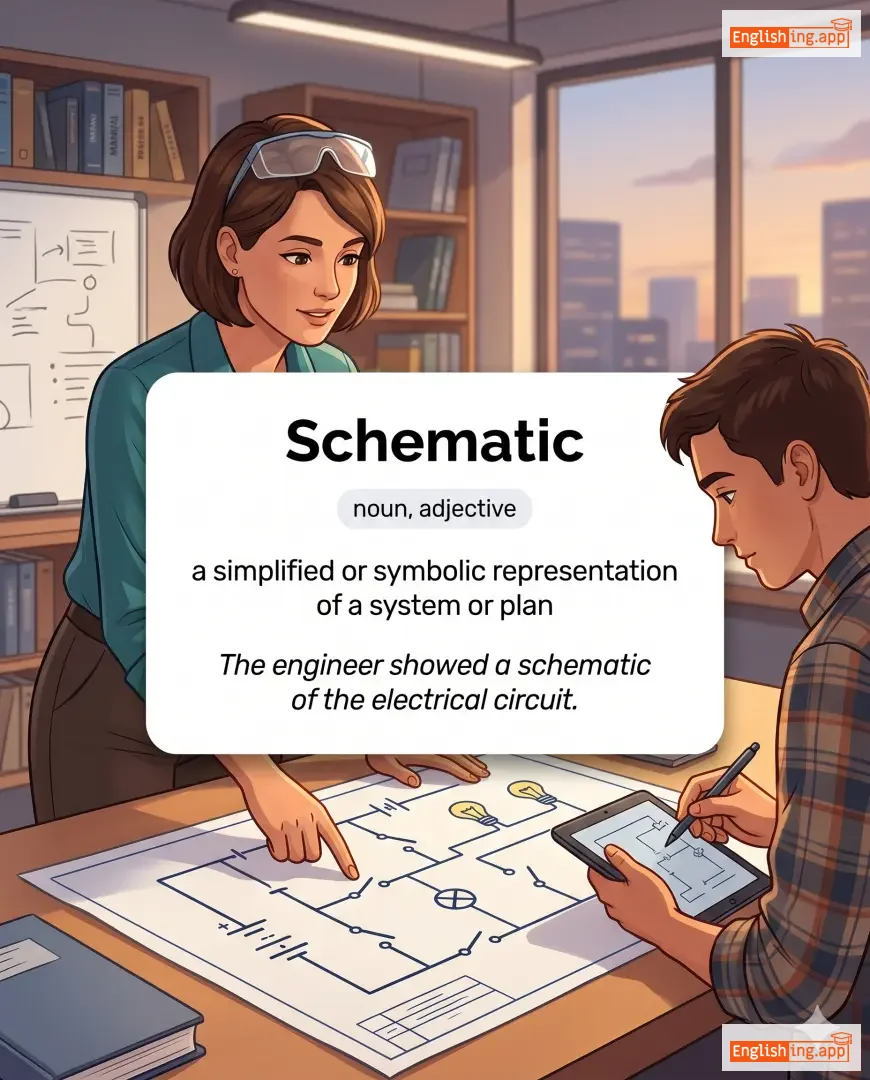
Schematic definition card — visual illustration of the meaning
noun, adjective
/skiːˈmætɪk/
схематический (schematicheskiy)

a simplified or symbolic representation of a system or plan

"The engineer showed a schematic of the electrical circuit."

"Инженер показал схему электрической цепи." (Inzhener pokazal skhemu elektricheskoy tsepi.)
noun, verb
/skiːm/
план / заговор (plan / zagovor)

a plan or arrangement, especially one that is secret or dishonest

"They devised a scheme to cheat investors."

"Они разработали схему, чтобы обмануть инвесторов." (Oni razrabotali skhemu, chtoby obmanut' investorov.)
noun
/ˈskɪz.əm/ or /ˈsɪz.əm/
счастье (schast'ye)

A division or split between strongly opposed parties, often in religion or organizations.

"The schism in the church led to the formation of two separate groups."

"Она не могла скрыть своего счастья, когда получила награду." (Ona ne mogla skryt' svoego schast'ya, kogda poluchila nagradu.)
noun
/ˈskɒlər/
учёный (uchyony)

a person who studies a particular subject or academic field

"The scholar presented a research paper on ancient civilizations."

"Учёный представил исследовательскую работу по древним цивилизациям." (Uchyonny predstavlil issledovatelskuyu rabotu po drevnim tsivilizatsiyam.)
scholarly definition card — visual illustration of the meaning
adjective
/ˈskɒl.ə.li/
научный (nauchnyy)

Having or showing knowledge, learning, or devotion to academic study.

"She wrote a scholarly article on medieval literature."

"Она написала научную статью о средневековой литературе." (Ona napisal nauchnuyu stat'yu o srednevekovoy literature.)
noun
/ˈskɒlərʃɪp/
стипендия (stipendiya)

an award or grant to support a student's education

"She received a scholarship to study abroad."

"Она получила стипендию для учебы за границей." (Ona poluchila stipendiyu dlya ucheby za granitsej.)
adjective
/skəˈlæstɪk/
учебный (uchebnyy)

Relating to schools, education, or academic learning.

"The school organizes scholastic competitions every year."

"Школа организует школьные конкурсы каждый год." (Shkola organizuyet shkol'nyye konkursy kazhdyy god.)
noun
/skuːl/
школа (shkola)

An institution for educating children; also a group of people sharing the same ideas or discipline.

"The children walked to school together."

"Дети пошли в школу вместе." (Deti poshli v shkolu vmeste.)
science definition card — visual illustration of the meaning
noun
/ˈsaɪəns/
наука (nauka)

the systematic study of the structure and behavior of the physical and natural world

"Science has made incredible advancements in medicine."
"Наука добилась невероятных успехов в медицине." (Nauka dobylas neveroyatnykh uspekhov v meditsine.)
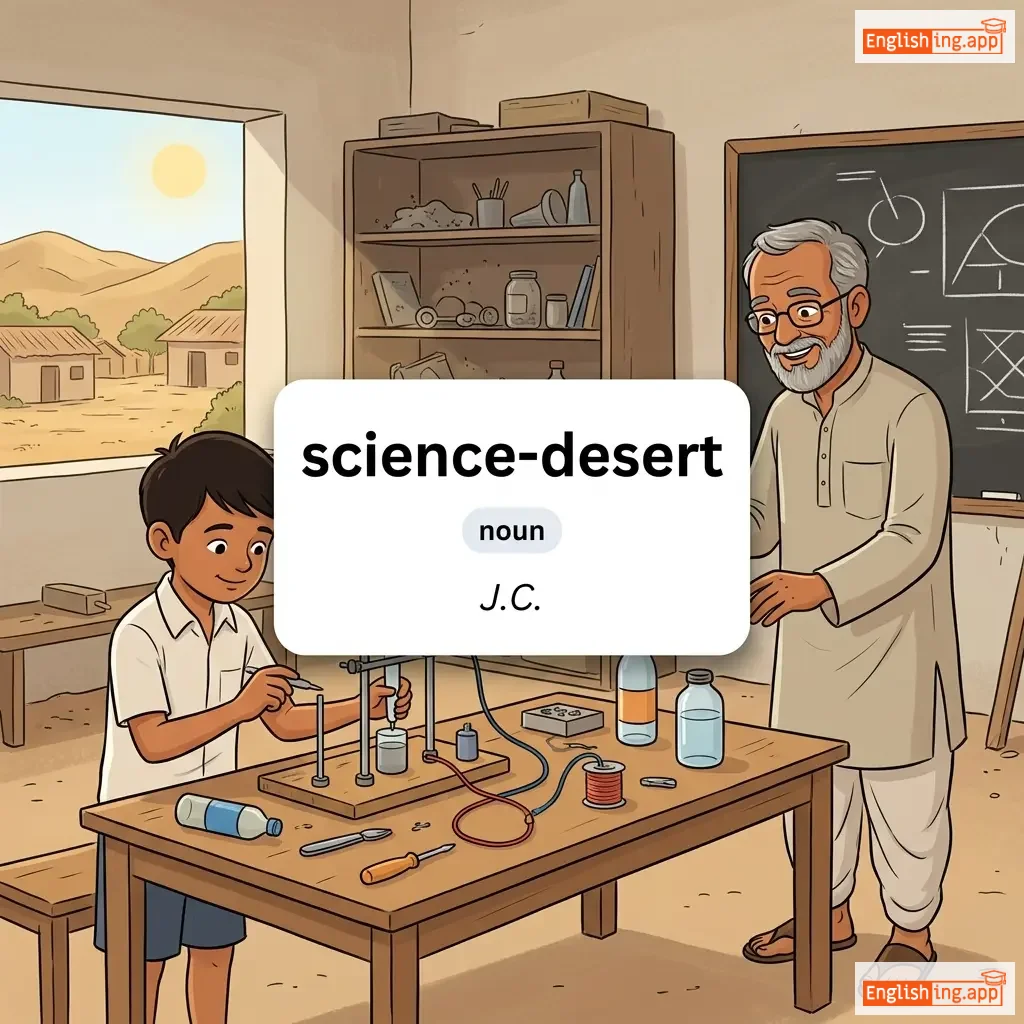
science-desert definition card — visual illustration of the meaning
noun
ˈsaɪəns ˈdezət
научная пустыня (nauchnaya pustynya)

A region or area lacking in scientific development, research facilities, or educational institutions.

"J.C. Bose thrived in a science-desert."

"Джей Си Бос процветал в научной пустыне." (Dzhay Si Bos protsvetal v nauchnoy pustyne.)
scientific definition card — visual illustration of the meaning
adjective
/ˌsaɪənˈtɪfɪk/
научный (nauchnyy)

relating to or based on science

"The scientific community is working to find a cure for cancer."
"Научное сообщество работает над поиском лекарства от рака." (Nauchnoye soobshchestvo rabotayet nad poiscom lekartsva ot raka.)
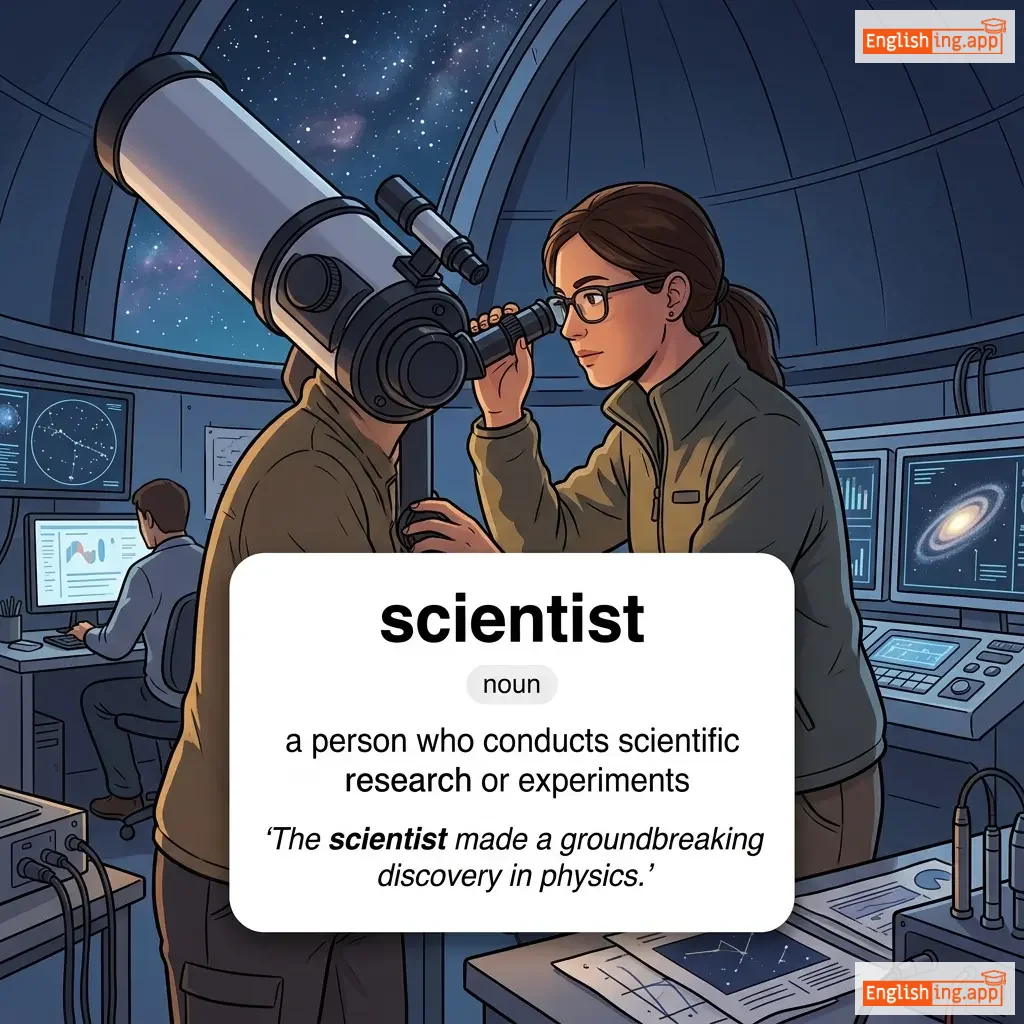
scientist definition card — visual illustration of the meaning
noun
/ˈsaɪəntɪst/
учёный (uchyonyi)

a person who conducts scientific research or experiments

"The scientist made a groundbreaking discovery in physics."

"Учёный сделал революционное открытие в физике." (Uchyonyi sdelal revolyutsionnoe otkrytiye v fizike.)
noun
/sɪnˈtɪl.ə/
маленькая искорка (malenkaya iskorka)

A tiny trace or spark of a specified quality or feeling.

"There wasn’t a scintilla of doubt in her mind."

"В её голове не было ни малейшего сомнения." (V yeye golove ne bylo ni maleyshego somneniya.)
verb
/ˈsɪn.tɪ.leɪt/
мерцать (mertsat')

to sparkle or shine brightly; to emit flashes of light

"The diamond ring scintillated under the bright lights."

"Алмазное кольцо мерцало под ярким светом." (Almaznoe kol'tso mertsalo pod yarkim svetom.)
adjective
/ˈsɪn.tɪ.leɪ.tɪŋ/
искрящийся (iskryashchiesya)

brilliantly clever, exciting, or sparkling

"Her scintillating conversation kept everyone entertained."

"Её искрящийся разговор развлекал всех." (Yeyo iskryashchiesya razgovor razvlekal vsekh.)
noun
/ˈsaɪ.ə.lɪz.əm/
претензия на поверхностные знания (pretenziya na poverkhnostnye znaniya)

pretentious show of superficial knowledge

"His speech was full of sciolism, impressing no one."

"Его речь была полна сайолизма, не впечатлив никого." (Ego rech' byla polna sayolizma, ne vpechatliv nikogo.)
noun
/ˈsaɪ.ən/
потомок (potomok)

a descendant of a wealthy, aristocratic, or influential family

"He is the scion of a wealthy industrialist family."

"Он потомок богатой индустриальной семьи." (On potomok bogatoy industrial'noy sem'i.)
noun
/ˈsɪʒ.ən/
расщепление (rasshcheplenie)

the act of cutting or dividing something

"The political party suffered a scission over ideological disputes."

"Политическая партия пережила расщепление из-за идеологических разногласий." (Politicheskaya partiya perezhila rasshcheplenie iz-za ideologicheskikh raznoglasiĭ.)
verb
/ˈsɪzər/
резать ножницами (rezat' nozhitsami)

to cut with or as if with scissors

"The tailor scissored the fabric neatly."

"Портной аккуратно нарезал ткань." (Portnoy akuratno narezál tkan'.)
noun
/ˈsɪz.ərz/
ножницы (nozhnitsy)

a cutting instrument with two blades that can be closed together

"I need scissors to cut this paper."

"Мне нужны ножницы, чтобы порезать эту бумагу." (Mne nuzhny noznitsy, chtoby porezat' etu bumagu.)
verb
/skɒf/
насмехаться (nasmekhat'sya)

to speak about something in a mocking or dismissive way

"He scoffed at the idea of moving abroad."
"Он насмехался над идеей переезда за границу." (On nasmekhalsya nad ideyey pereyezda za granitsu.)
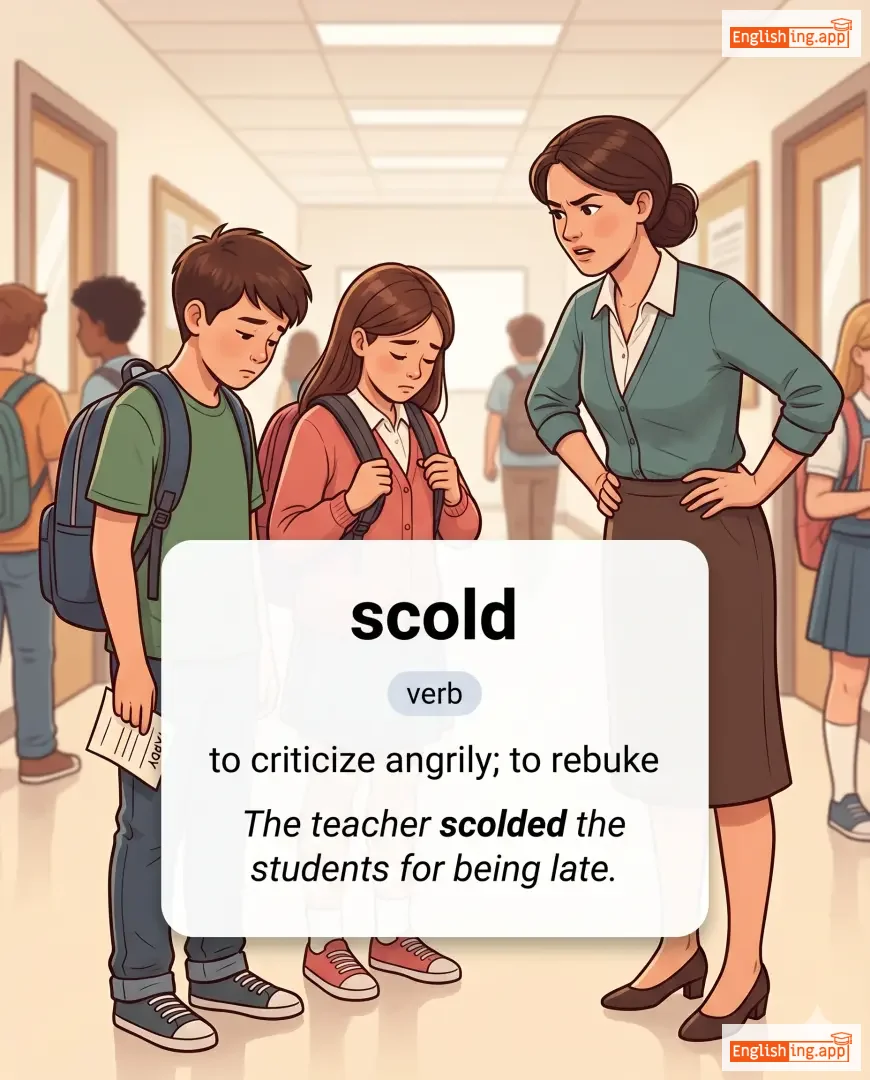
scold definition card — visual illustration of the meaning
verb
/skoʊld/
ругать (rugat')

to criticize angrily; to rebuke

"The teacher scolded the students for being late."

"Учитель отругал студентов за опоздание." (Uchitel' otrugal studentov za opozdanie.)
noun
/ˈskuːtər/
скутер (skuter)

a small two-wheeled vehicle powered by an engine or electricity

"She rides a scooter to work every day."

"Она ездит на скутере на работу каждый день." (Ona ezdit na skutere na rabotu kazhdyi den'.)
noun
/skoʊp/
объем (ob'yem)

the range of one's perception, understanding, or activity

"The project is beyond the scope of our resources."

"Проект выходит за пределы наших ресурсов." (Proyekt vykhodit za predely nashikh resursov.)
verb
/skɔːrtʃ/
обжигать (obzhigat)

to burn the surface of something slightly

"The fire scorched the walls of the building."

"Огонь обжёг стены здания." (Ogon' obzhëg steny zdaniya.)
noun/verb
/skɔːr/
оценка (otsenka)

a number of points achieved in a game or test; to gain points or achieve a goal

"He scored the winning goal in the final match."

"Он забил победный гол в последнем матче." (On zabyl pobednyy gol v poslednem matche.)
noun/verb
/skɔːrn/
презрение (prezrenie)

the feeling or expression of contempt or disdain; to treat with contempt

"She looked at him with open scorn."

"Она посмотрела на него с презрением." (Ona posmotrela na nego s prezreniem.)
adjective
/ˈskɔːrnfəl/
презрительный (prezritelnij)

showing contempt or disdain; expressing scorn

"She gave him a scornful look when he made the rude comment."

"Она посмотрела на него с презрением, когда он сделал грубый комментарий." (Ona posmotrela na nego s prezreniem, kogda on sdelal grubyj kommentarij.)
noun
/ˈskɔːr.pi.ən/
скорпион (skorpion)

a small creature with eight legs, two claws, and a curved tail with a poisonous sting

"The scorpion hid under the rock during the day."

"Скорпион спрятался под камнем в течение дня." (Skorpion spryatal'sya pod kamnyem v techeniye dnya.)
noun
/ˈskɔːrpiən fɪʃ/
рыба-скорпион (ryba skorpion)

a type of fish with venomous spines that belongs to the family Scorpaenidae

"The scorpion fish has dangerous spines that can inject venom."

"Рыба-скорпион имеет опасные шипы, которые могут вводить яд." (ryba skorpion imeyet opasnye shipy kotorye mogut vvodyt yad)
verb/noun
/skɒtʃ/
положить конец / шотландский виски (polozhit' konets / shotlandskiy viski)

to put an end to something; also a type of whisky

"The report scotched the rumors of a merger."

"Отчет положил конец слухам о слиянии." (Otechot polozhil konets slukham o sliyaniji.)
noun
/ˈskaʊndrəl/
негодяй (negodyay)

a dishonest or unscrupulous person; a villain

"That scoundrel cheated the old man out of his savings."

"Этот негодяй обманул старика и украл его сбережения." (Etot negodyay obmanul starika i ukral ego sberezheniya.)
verb
/ˈskaʊər/
тереть / искать тщательно (teret / iskat' tщatel'no)

to clean or brighten the surface of something by scrubbing; to search thoroughly

"She scoured the kitchen until it shone."

"Она вычистила кухню до блеска." (Ona vychistila kukhnyu do bleska.)
noun/verb
/skɜːrdʒ/
бич / наказание (bich / nakazanie)

A source of great pain or punishment; to whip or inflict suffering on someone.

"Disease and poverty remain a scourge in many regions."

"Болезнь и бедность остаются бичом во многих регионах." (Bolezn' i bednost' ostayutsya bichom vo mnogikh regionakh.)