Словари

Словарь английского языка | Значения слов, определения и примеры

noun
/səˈvaɪvl/
выживание (vyzhivanie)

the state of continuing to live or exist, typically in difficult conditions

"Survival in the wild can be a challenging experience."
"Выживание в дикой природе может быть сложным испытанием." (Vyzhivanie v dikoy prirode mozhet byt' slozhnym ispytaniem.)
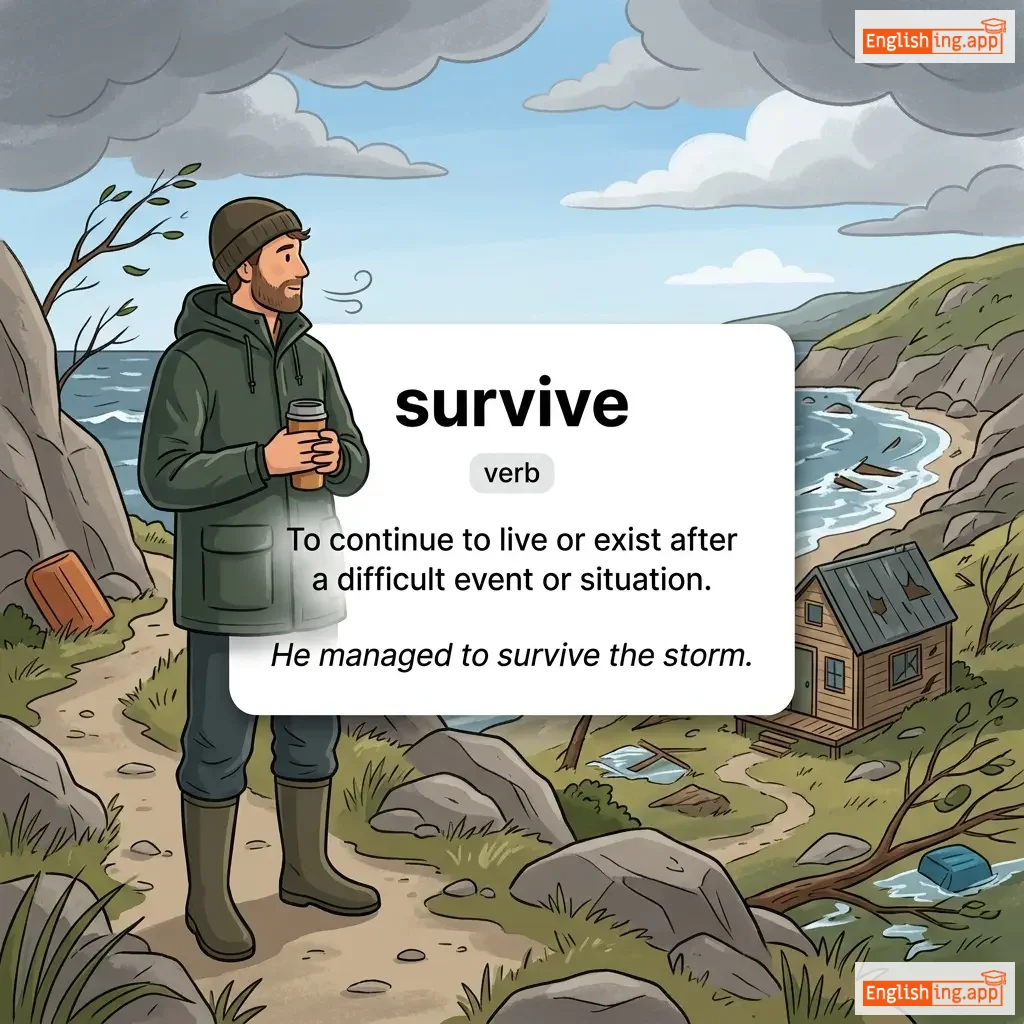
survive definition card — visual illustration of the meaning
verb
/sərˈvaɪv/
выжить (vyzhit)

To continue to live or exist after a difficult event or situation.

"He managed to survive the storm."

"Он смог выжить во время шторма." (On smog vyzhit' vo vremya shtorma.)
noun
/sərˈvaɪvə/
выживший (vyzhivshiy)

a person who survives, especially in difficult conditions

"The survivors of the shipwreck were rescued after several days."
"Выжившие после кораблекрушения были спасены через несколько дней." (Vyzhivshie posle korablekrusheniya byli spaseny cherez neskol'ko dney.)
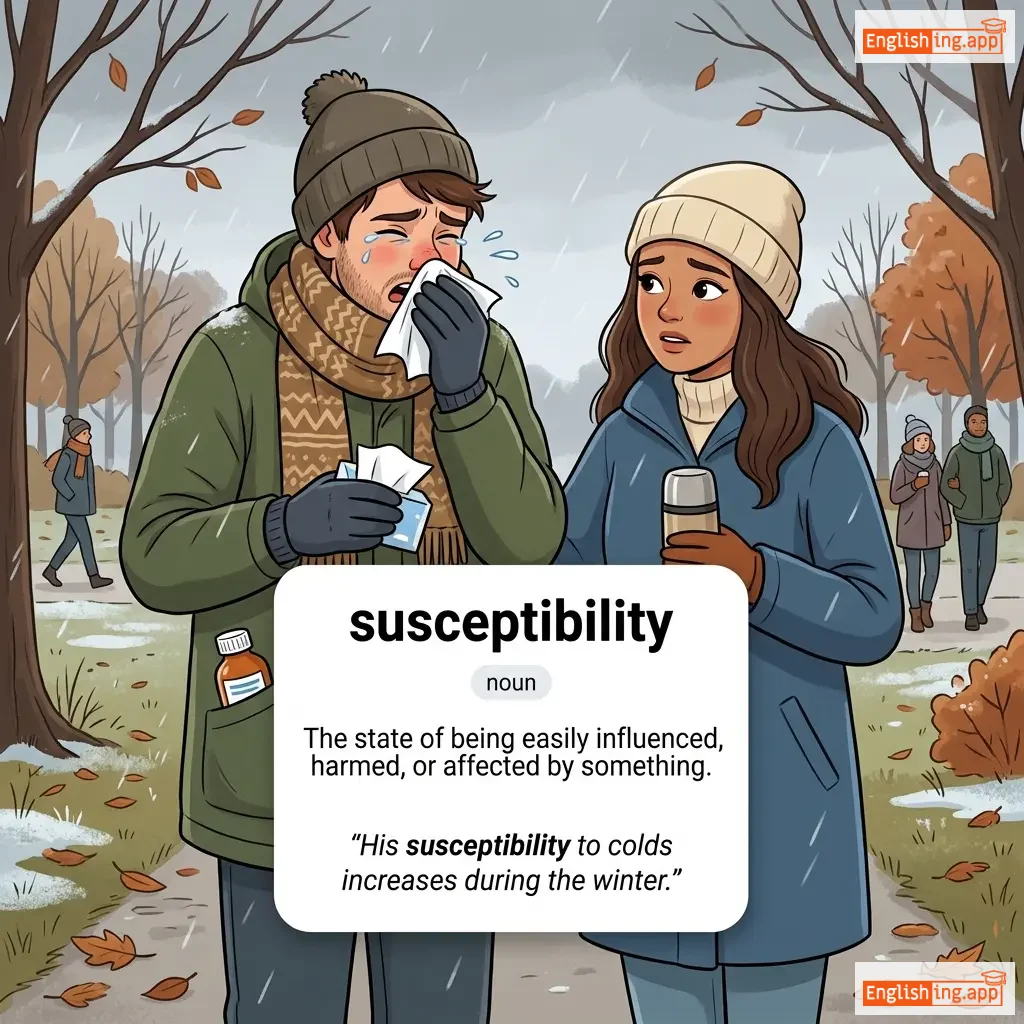
susceptibility definition card — visual illustration of the meaning
noun
/səˌsɛptəˈbɪləti/
восприимчивость (vospriimchivost)

The state of being easily influenced, harmed, or affected by something.

"His susceptibility to colds increases during the winter."
"Его восприимчивость к простудам увеличивается зимой." (Ego vospriimchivost k prostudam uvelichivaetsya zimoy.)
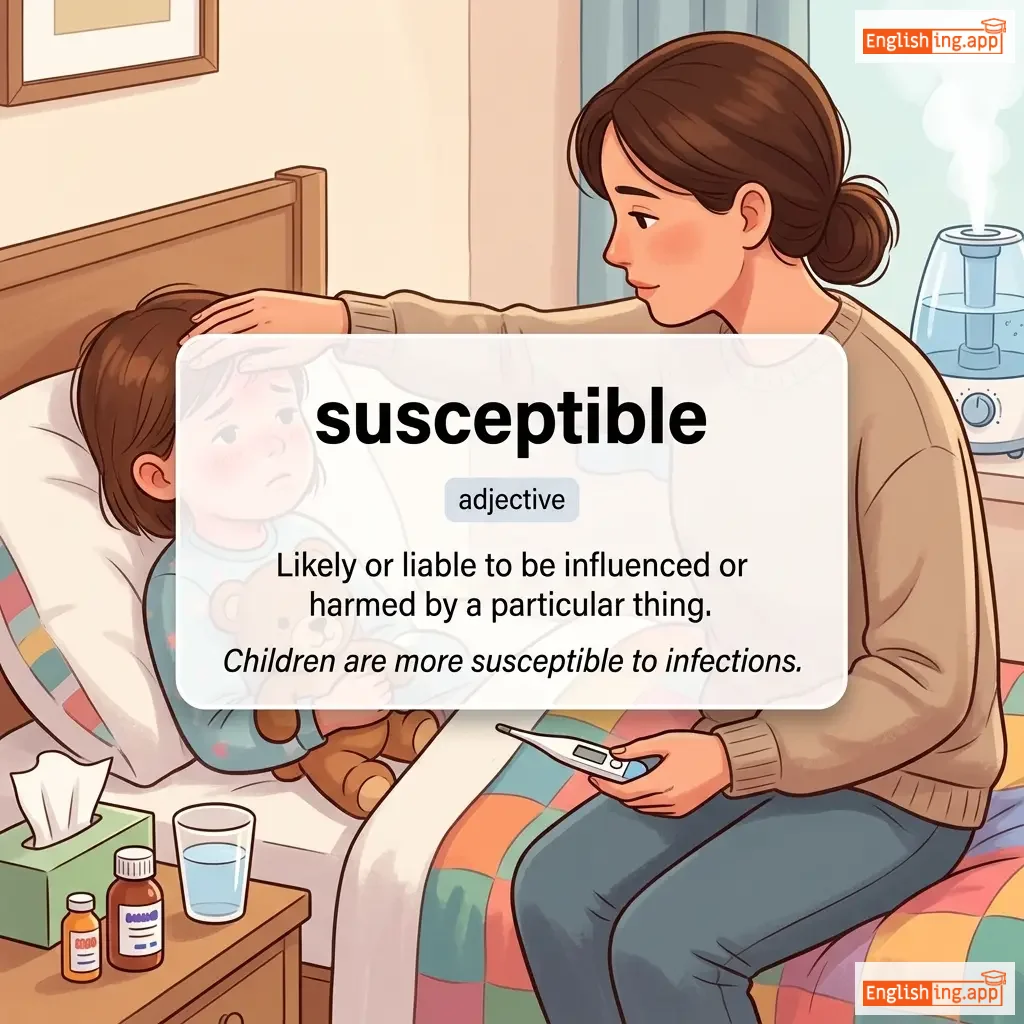
susceptible definition card — visual illustration of the meaning
adjective
/səˈsɛptəbl/
восприимчивый (vospriimchivyi)

Likely or liable to be influenced or harmed by a particular thing.

"Children are more susceptible to infections."

"Дети более восприимчивы к инфекциям." (Deti bolee vospriimchivy k infektsiyam.)
suspect definition card — visual illustration of the meaning
verb, noun, adjective
/səˈspɛkt/ (noun, adj) | /səˈspɛkt/ (verb)
подозревать (podozrevat)

To believe something to be true, likely, or guilty without certain proof.

"The police suspect him of stealing the car."

"Полиция подозревает его в краже машины." (Politsiya podozrevaet ego v krazhe mashiny.)
verb
/səˈspɛnd/
приостановить (priestanovit)

To temporarily stop something from being active or valid.

"The company decided to suspend his membership."

"Компания решила приостановить его членство." (Kompaniya reshila priostanovit' ego chlenstvo.)
adjective, verb (past)
/səˈspɛndɪd/
приостановлено (priestanovleno)

Temporarily not allowed, stopped, or hanging.

"He was suspended from school for a week."

"Он был приостановлен в школе на неделю." (On byl priestanovlen v shkole na nedelyu.)
noun
/səˈspɛns/
напряжение (napryazhenie)

A state of mental uncertainty, anxiety, or excitement about what may happen next.

"The movie kept the audience in suspense until the very end."

"Фильм держал аудиторию в напряжении до самого конца." (Film derzhal auditoriyu v napryazhenii do samogo kontsa.)
noun
/səˈspɛnʃən/
приостановка (pristojanovka)

The act of temporarily stopping something; also refers to a system in vehicles that absorbs shock.

"The player received a three-game suspension for misconduct."

"Игрок получил трехматчевую приостановку за плохое поведение." (Igrok poluchil tryokhmatchevuyu priyostanovku za plokhoye povedeniye.)
noun
/səˈspɪʃən/
подозрение (podozreniye)

a feeling or belief that someone has done something wrong or illegal

"He was arrested on suspicion of theft."

"Он был арестован по подозрению в краже." (On byl arestovan po podozreniyu v krazhe.)
adjective
/səˈspɪʃəs/
подозрительный (podozritel'nyy)

Feeling doubt or distrust about someone or something.

"She gave me a suspicious look when I entered late."

"Она бросила на меня подозрительный взгляд, когда я вошел поздно." (Ona brosila na menya podozritel'nyy vzglyad, kogda ya voshel pozdno.)
verb
/səˈsteɪn/
поддерживать (podderzhivat)

To support, maintain, or keep something going over time.

"The team worked hard to sustain their success."

"Команда усердно работала, чтобы поддерживать их успех." (Komanda usyerodno rabotala, chtoby podderzhivat ykh usyekh.)
sustainability definition card — visual illustration of the meaning
noun
/səˌsteɪ.nəˈbɪl.ə.ti/
устойчивость (ustoychivost)

The ability to be maintained at a certain rate or level.

"Sustainability in agriculture ensures long-term food security."

"Устойчивость в сельском хозяйстве обеспечивает долгосрочную продовольственную безопасность." (Ustoychivost' v selskom khozyaystve obespechivayet dolgosrochnuyu prodovol'stvovuyu bezopasnost'.)
sustainable definition card — visual illustration of the meaning
adjective
/səˈsteɪnəbəl/
устойчивый (ustoychivyy)

able to continue over a long period without causing harm to the environment or using up resources

"We must adopt sustainable energy practices."
"Мы должны принять устойчивые энергетические практики." (My dolzhny prinyat' ustoychivye energeticheskie praktiki.)
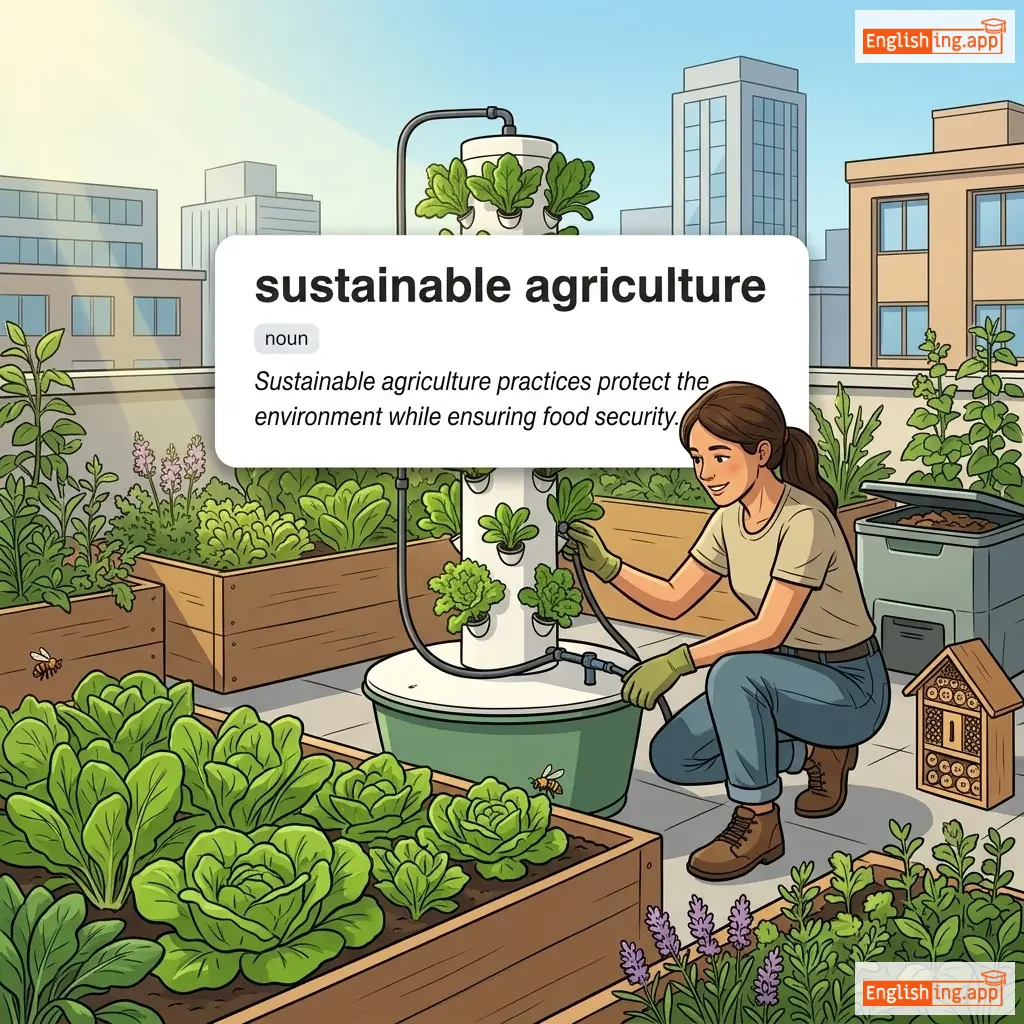
sustainable agriculture definition card — visual illustration of the meaning
noun
/səˈsteɪnəbl ˈæɡrɪkʌltʃər/
устойчивая сельскохозяйственная практика (ustoychivaya selskokhozyaystvennaya praktika)

Farming practices that meet current food needs while preserving environmental resources and maintaining the ability to produce food for future generations through ecologically sound methods.

"Sustainable agriculture practices protect the environment while ensuring food security."

"Устойчивые сельскохозяйственные практики защищают окружающую среду, обеспечивая продовольственную безопасность." (Ustoychivye selskokhozyaystvennye praktiki zashchishchayut okruzhayushchuyu sredu, obespechivaya prodovol'stviennuyu bezopasnost'.)
sustainable and collaborative approach definition card — visual illustration of the meaning
noun
səˈsteɪnəbəl ænd kəˈlæbərətɪv əˈproʊtʃ
устойчивый и совместный подход (ustoichivyy i sovmestnyy podkhod)

A method of working together that can be maintained over time without depleting resources or causing harm.

"A sustainable and collaborative approach is crucial for solving environmental problems."
"Устойчивый и совместный подход имеет решающее значение для решения экологических проблем." (Ustoichivyy i sovmestnyy podkhod imeyet reshayushchee znacheniye dlya resheniya ekologicheskikh problem.)
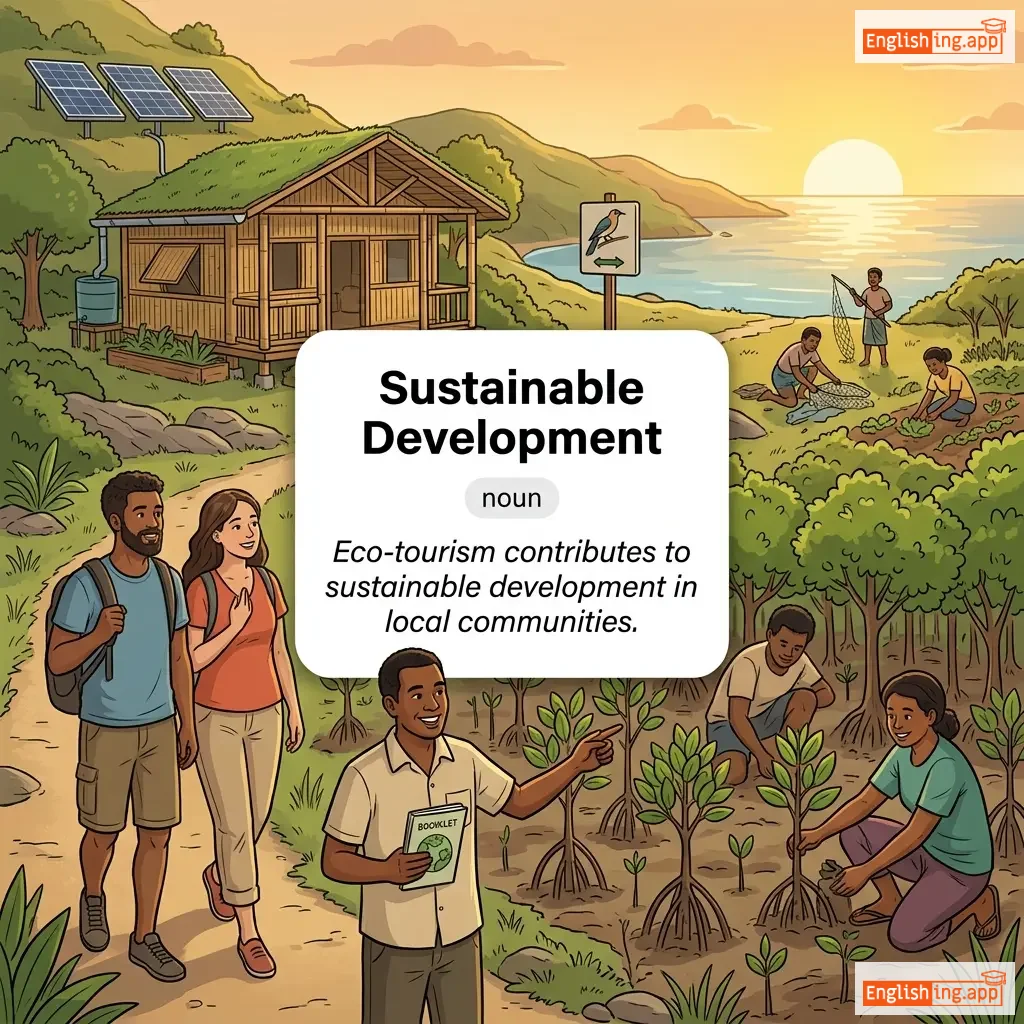
Sustainable Development definition card — visual illustration of the meaning
noun
səˈsteɪnəbl dɪˈvɛləpmənt
устойчивое развитие (ustoychivoye razvitie)

Development that meets present needs without compromising the ability of future generations to meet their own needs.

"Eco-tourism contributes to sustainable development in local communities."
"Экотуризм способствует устойчивому развитию в местных сообществах." (Ekoturizm sposobstvuet ustoychivomu razvitiyu v mestnykh soobshchestvakh.)
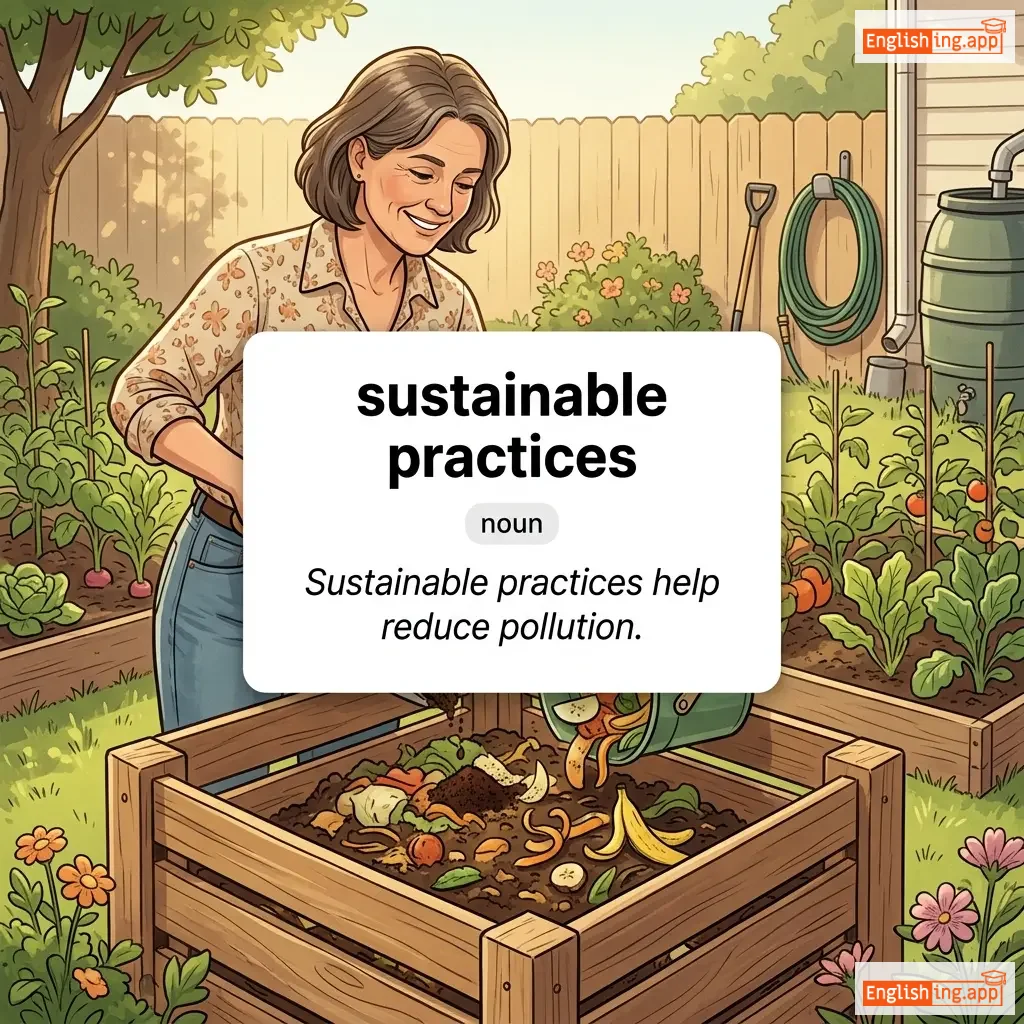
sustainable practices definition card — visual illustration of the meaning
noun
səˈsteɪnəbl ˈpræktɪsɪz
устойчивые практики (susteinuhbul praktiziz)

Methods or actions that can be maintained long-term without depleting resources or causing environmental harm

"Sustainable practices help reduce pollution."

"Устойчивые практики помогают снизить загрязнение." (Ustoychivye praktiki pomogayut snizit zagryaznenie.)
sustainable technology definition card — visual illustration of the meaning
noun
səˈsteɪ.nə.bəl tekˈnɒl.ə.dʒi
устойчивая технология (ustoychivaya tekhnologiya)

Technology designed to meet present needs without compromising future generations' ability to meet their needs.

"Sustainable technology ensures a cleaner future."
"Устойчивая технология обеспечивает более чистое будущее." (Ustoychivaya tekhnologiya obespechivayet boleye chistoye budushcheye.)
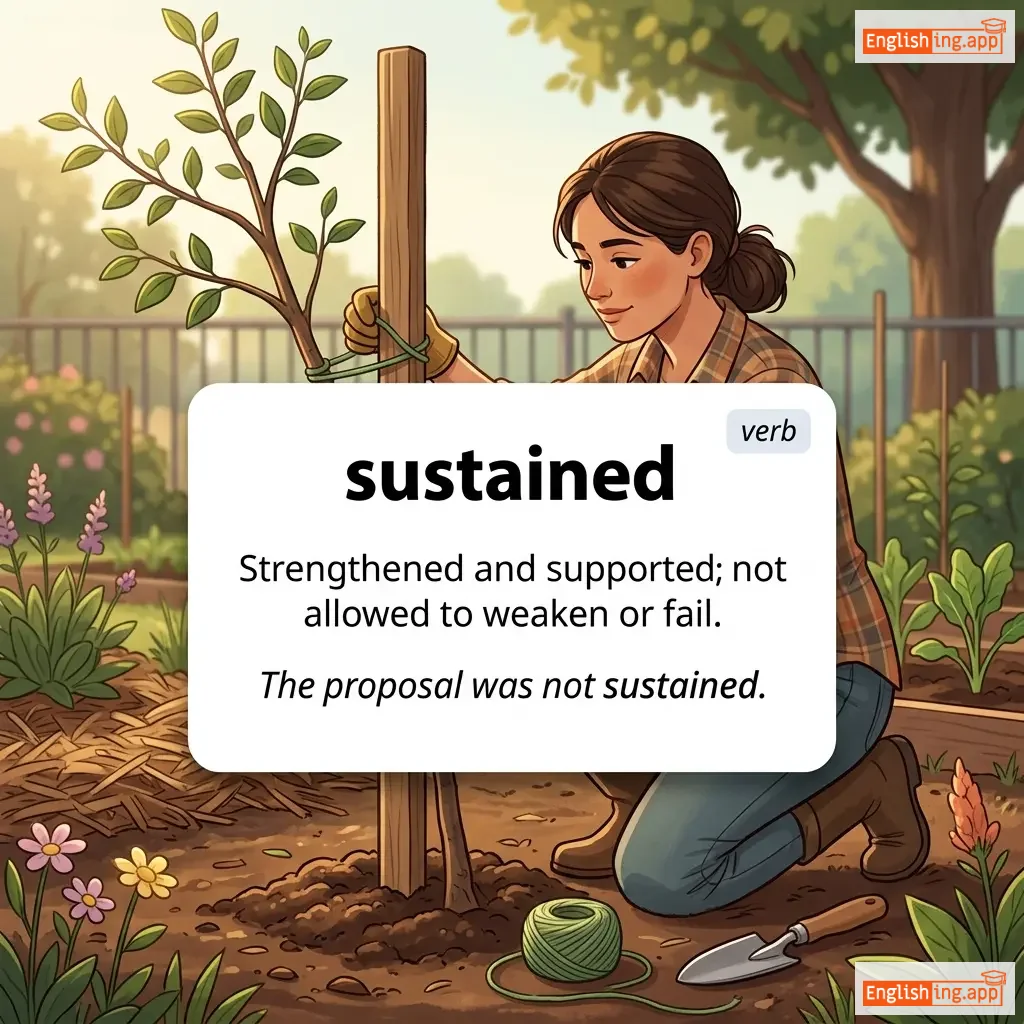
sustained definition card — visual illustration of the meaning
verb
səˈsteɪnd
поддерживаемый (podderzhivayemyy)

Strengthened and supported; not allowed to weaken or fail.

"The proposal was not sustained."
"Предложение не было поддержано." (Predlozhenie ne bylo podderzhano.)
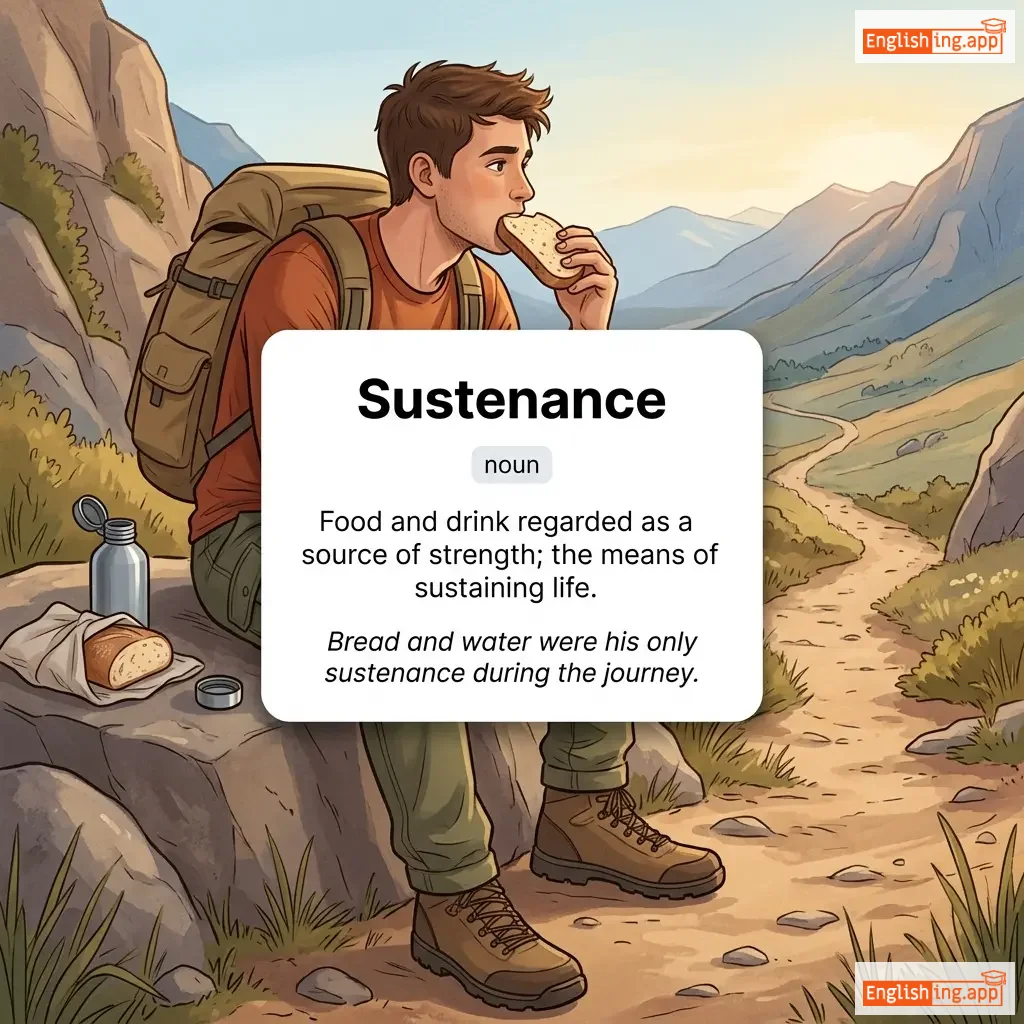
Sustenance definition card — visual illustration of the meaning
noun
/ˈsʌstənəns/
средства к существованию (sredstva k suschestvovaniyu)

Food and drink regarded as a source of strength; the means of sustaining life.

"Bread and water were his only sustenance during the journey."

"Хлеб и вода были его единственным средством существования во время путешествия." (Khleb i voda byli yego yedinstvennym sredstvom suschestvovaniya vo vremya puteshestviya.)
noun/verb
/ˈsuː.tʃər/
шов (shov)

A stitch or row of stitches holding together the edges of a wound or surgical incision.

"The doctor used a suture to close the wound."

"Врач использовал шов, чтобы закрыть рану." (Vrach ispol'zoval shov, chtoby zakryt' ranu.)
adjective
/svelt/
стройный (stroynyy)

Attractively thin, graceful, and elegant in appearance or movement.

"She looked svelte in the elegant black dress."

"Она выглядела стройной в элегантном черном платье." (Ona viglyadela stroynoy v elegantnom chernom plat'ye.)
verb/noun
/ˈswæɡ.ər/
самодовольство (samodovol'stvo)

To walk or behave in a very confident and arrogant way.

"He swaggered into the room as if he owned the place."

"Он зашел в комнату, как будто был владельцем этого места." (On zashel v komnatu, kak budto byl vladel'tsem etogo mesta.)
verb
/ˈswɒloʊ/
глотать (glotat)

to make food or drink go down your throat into your stomach

"He swallowed the pill with a glass of water."

"Он проглотил таблетку с бокалом воды." (On proglotil tabletku s bokalom vody.)
noun/verb
/swɑːmp/
болото (boloto)

An area of low-lying, uncultivated ground where water collects; a bog or marsh.

"The village was built near a swamp."

"Деревня была построена рядом с болотом." (Derevnya byla postroena ryadom s bolotom.)
noun
/swɒn/
лебедь (lebed)

a large waterbird with a long curved neck and usually white plumage

"The elegant swan glided silently across the water."

"Элегантный лебедь скользил бесшумно по воде." (Elegantnyy lebed' skol'zil besshumnno po vode.)
noun/verb
/swɔːrm/
рои (roi)

A large group of insects or people moving together.

"A swarm of bees surrounded the tree."

"Рой пчел окружил дерево." (Roy pchel okruzil derevo.)
adjective
/ˈswɔːrði/
смуглый (smugly)

Having a dark complexion or skin tone.

"The sailor had a swarthy face from years under the sun."

"Моряк имел смуглое лицо после многих лет под солнцем." (Moryak imel smugloye litso posle mnogikh let pod solntsem.)
verb
/sweɪð/
обертывать (obertyvat)

To wrap or cover closely or completely.

"She swathed the baby in a soft blanket."

"Она завернула ребенка в мягкое одеяло." (Ona zaverнула rebenka v myagkoe odeyalo.)
verb
/sweɪ/
качать (kachat)

To move or cause to move slowly or rhythmically back and forth; to influence someone's opinion or decision.

"The trees swayed gently in the breeze."

"Деревья качались мягко на ветру." (Derev'ya kachalis' myagko na vetru.)
swear definition card — visual illustration of the meaning
verb
/swɛər/
клясться (klyatsya)

To make a solemn statement or promise; to use offensive language.

"He swore to tell the truth in court."

"Он поклялся говорить правду в суде." (On poklyalsya govorit' pravdu v sude.)
noun
/ˈswɛər wɜːrd/
ругань (rugan')

An offensive or rude word used to express anger or frustration.

"He shouted a swear-word when he hit his toe."

"Он закричал ругательство, когда ушиб палец на ноге." (On zakrichal rugatel'stvo, kogda ushib palets na noge.)
verb
/swɛt/
потеть (potet')

to produce liquid from your skin when you are hot or nervous

"He was sweating after running for an hour."

"Он потел после часа бега." (On potel posle chasa bega.)
noun
/ˈswɛtər/

a warm knitted piece of clothing worn on the upper body

"She wore a red sweater to keep warm in the cold weather."

noun
/ˈswɛtʃɜːrt/
свитшот (svitshot)

A casual, long-sleeved pullover garment, typically made of cotton or fleece, worn for warmth or comfort.

"He wore a grey sweatshirt while jogging in the park."

"Он носил серый свэтшёрт во время пробежки в парке." (On nosil seryy svetshyort vo vremya probezhki v parke.)
sweep definition card — visual illustration of the meaning
verb
/swiːp/
подметать (podmetat')

to clean or clear (an area) by brushing away dirt or debris

"She swept the floor before going to bed."

"Она подмела пол перед тем, как лечь спать." (Ona podmetala pol pered tem, kak lech' spat'.)
noun
/ˈswiː.pər/
метельщик (metel'shchik)

a person whose job is to clean floors and streets by sweeping

"The sweeper cleaned the school corridor every morning."
"Метла чистила коридор школы каждое утро." (Metla chistila koridor shkoly kazhdoe utro.)
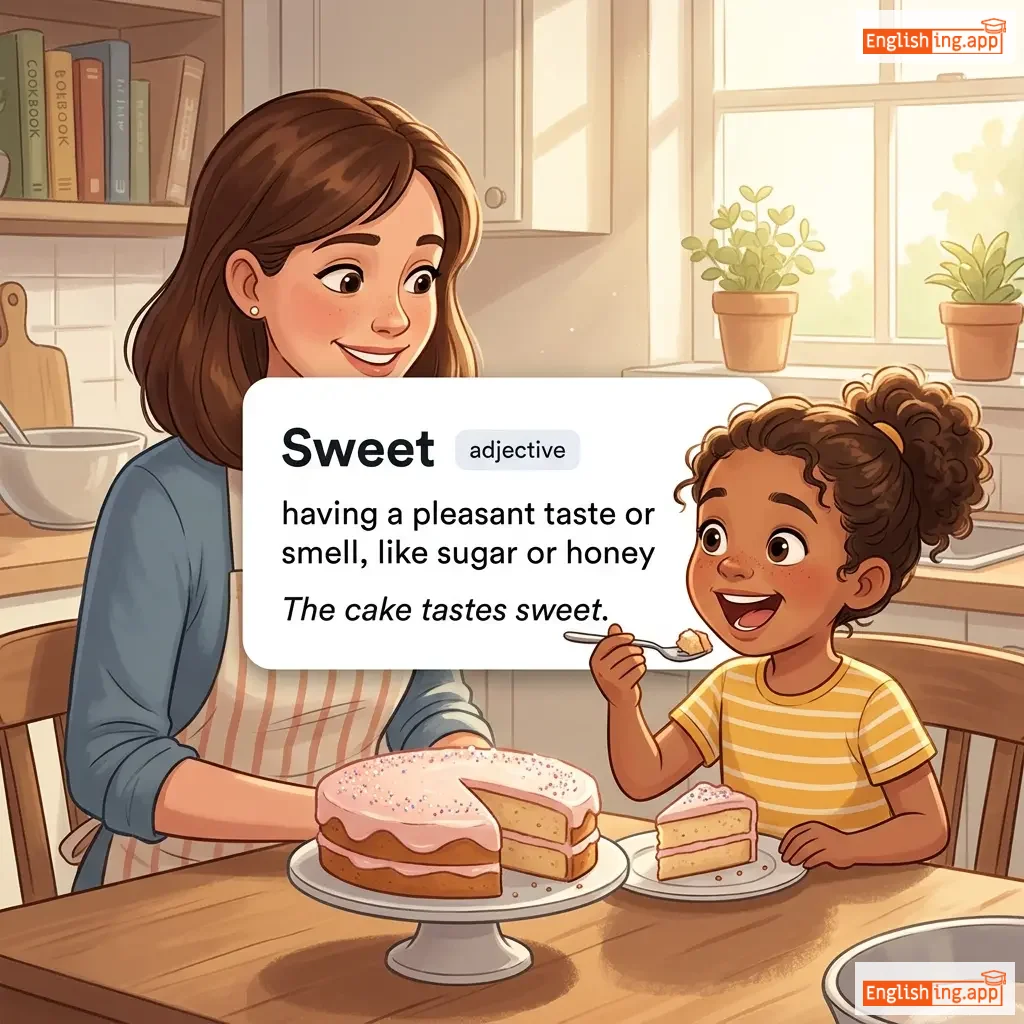
Sweet definition card — visual illustration of the meaning
adjective
/swiːt/
сладкий (sladkiy)

having a pleasant taste or smell, like sugar or honey

"The cake tastes sweet."

"Торт на вкус сладкий." (Tort na vkus sladkiy.)
noun
/swiːt pəˈteɪtoʊ/
сладкий картофель (sladkiy kartofel)

A root vegetable with sweet flesh, typically orange or purple in color

"Roasted sweet potato makes a healthy and delicious side dish."

"Жареный сладкий картофель - это полезное и вкусное блюдо." (Zharenyy sladkiy kartofel - eto poleznoe i vkusnoe blyudo.)
noun
/swiːt.laɪm/
сладкий лайм (sladkiy laym)

a citrus fruit that is sweeter and less acidic than regular lime

"The sweetlime juice was refreshing on a hot day."

"Сок сладкого лайма был освежающим в жаркий день." (Sok sladkogo layma byl osvezhayushchim v zharkiy den.)
noun
/ˈswiːt.miːt/
сладости (sladosti)

a small piece of confectionery or candy; a sweet delicacy

"The children enjoyed the traditional sweetmeats during the festival."

"Дети наслаждались традиционными сладостями во время фестиваля." (Deti naslazhdalis' traditsionnymi sladostyami vo vremya festivala.)
verb
/swɛl/
опухать (opukhat)

to increase in size or volume, often due to internal pressure or emotional intensity

"Her ankle began to swell after the injury."

"Её лодыжка начала опухать после травмы." (Yeyo lodyzhka nachala opukhatsya posle travmy.)
verb
/ˈswɛltər/
страдать от сильной жары (stradaty ot sil'noy zhary)

to suffer from intense heat

"We began to swelter in the midday sun."

"Мы начали мучиться от жары в полуденное солнце." (My nachali muchitsya ot zhary v poludennoe solntse.)
adjective
/ˈswɛltərɪŋ/
пекло (peklo)

uncomfortably hot

"The sweltering heat made it hard to work."

"Пекельная жара затрудняла работу." (Pekelnaya zhara zatrudnyala rabotu.)
verb
/swɜːrv/
резко изменить направление (rezko izmenit' napravlenie)

to change direction suddenly, especially to avoid hitting something

"The car swerved to avoid the dog."

"Машина резко изменила направление, чтобы избежать собаки." (Mashina rezko izmenila napravlenie, chtoby izbezhat' sobaki.)
adjective
/swɪft/
быстрый (svift)

moving very quickly; happening promptly

"The river current was swift after the heavy rain."

"Течение реки было быстрым после сильного дождя." (Techenie reki bylo bystrym posle silnogo dozhdya.)
verb
/swɪl/
пить жадно (pit' zhadhno)

to drink something greedily or in large amounts

"He swilled down the beer in seconds."
"Он выпил пиво за секунды." (On vypil pivo za sekundy.)
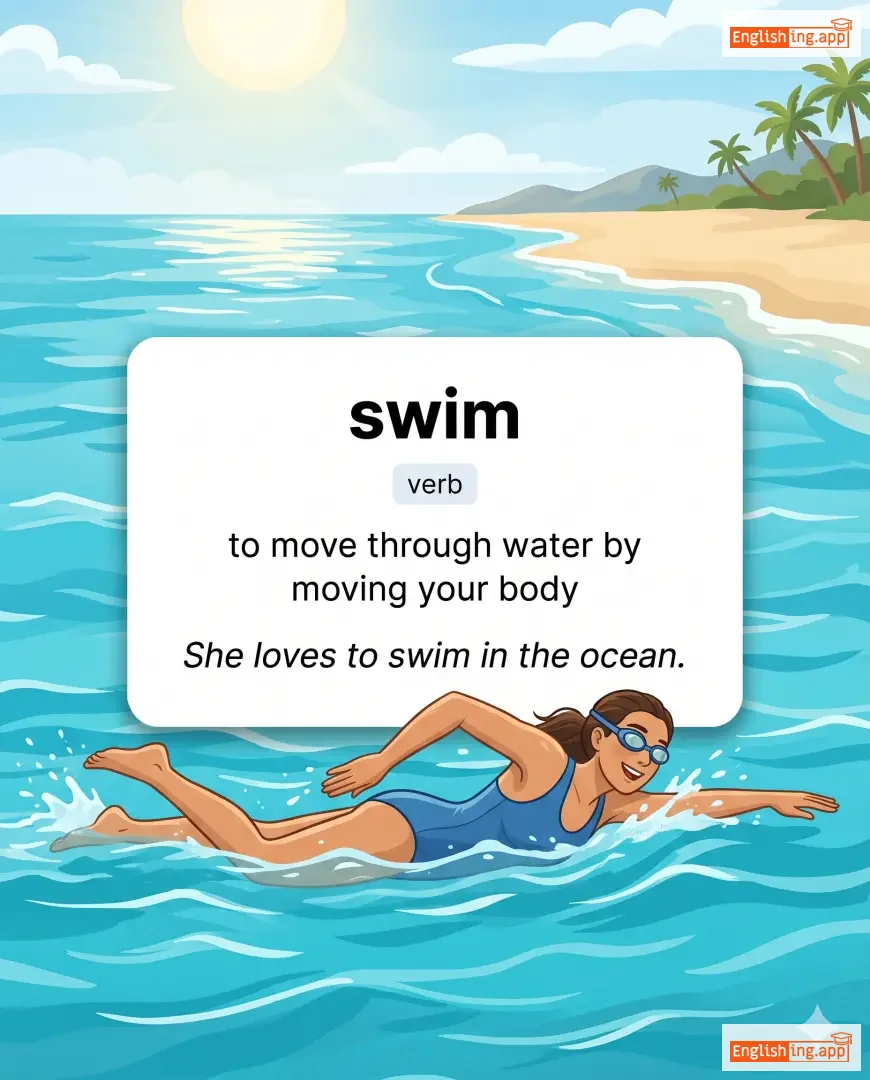
swim definition card — visual illustration of the meaning
verb
/swɪm/
плавать (plavat)

to move through water by moving your body

"She loves to swim in the ocean."

"Она любит плавать в океане." (Ona lyubit plavat v okeane.)