Словари

Словарь английского языка | Значения слов, определения и примеры

noun
/səˈplaɪə(r)/
поставщик (postavshchik)

a person or company that provides goods or services

"The supplier delivered the products on time."

"Поставщик доставил продукцию вовремя." (Postavshchik dostavil produktsiyu vovremya.)
supply definition card — visual illustration of the meaning
noun
/səˈplaɪ/

the amount of something that is available to be used or consumed

"The store has a limited supply of electronics."

support definition card — visual illustration of the meaning
verb
/səˈpɔːrt/
поддержка (podderzhka)

to give assistance or help to someone or something

"They always support each other during difficult times."

"Они всегда поддерживают друг друга в трудные времена." (Oni vsegda podderzhivayut drug druga v trudnye vremya.)
noun
/səˈpɔːtər/
сторонник (storonnik)

a person who supports someone or something

"She is a strong supporter of the local animal shelter."
"Она является сильным сторонником местного приюта для животных." (Ona yavyayetsya sil'nym storonnikom mestnogo priyuta dlya zhivotnykh.)
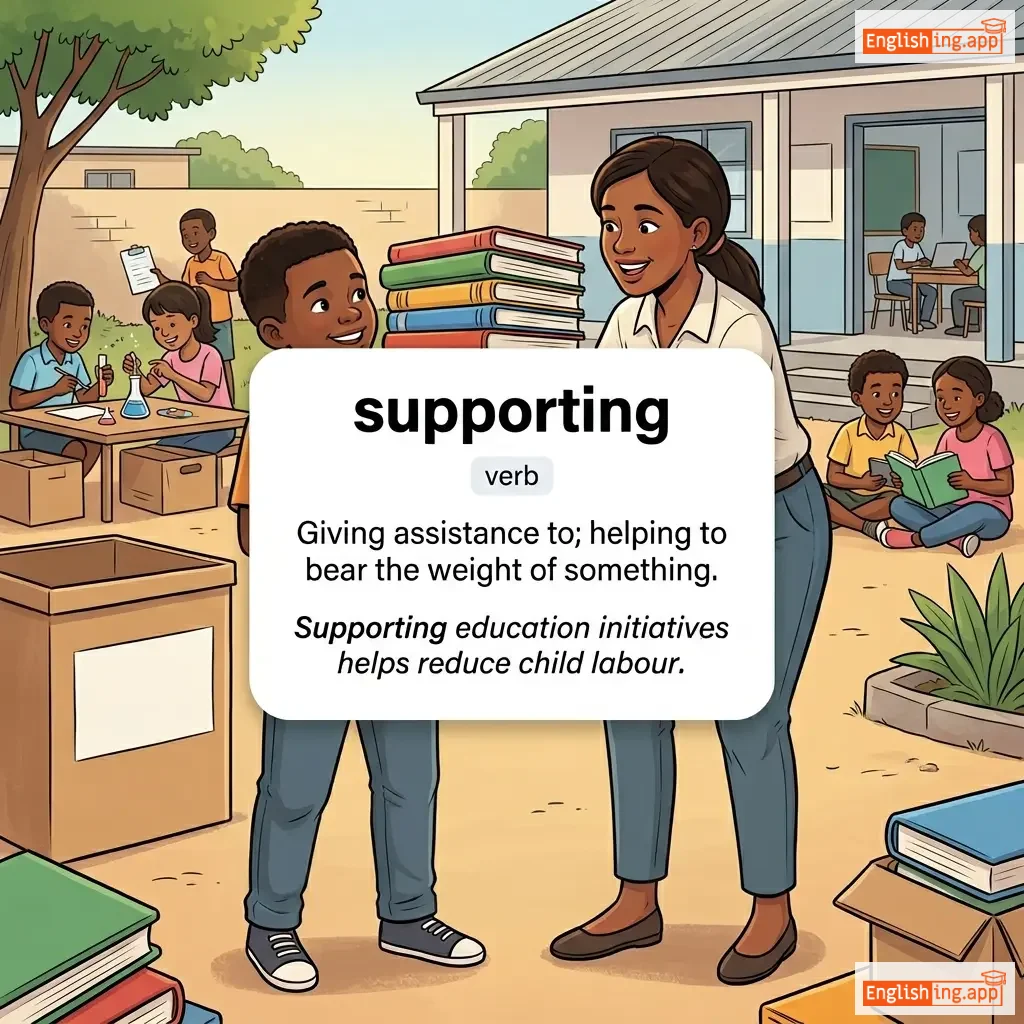
supporting definition card — visual illustration of the meaning
verb
səˈpɔːrtɪŋ
поддерживать (podderzhivat')

Giving assistance to; helping to bear the weight of something.

"Supporting education initiatives helps reduce child labour."

"Поддержка образовательных инициатив помогает сократить детский труд." (Podderzhka obrazovatel'nykh initsiativ pomogaet sokratit' detskiy trud.)
adjective
/səˈpɔːtɪv/
поддерживающий (podderzhivayushchiy)

providing encouragement or emotional help to someone

"She was very supportive during my difficult times."

"Она была очень поддерживающей в мои трудные времена." (Ona byla ochen' podderzhivayushchей v moi trudnye vremena.)
verb
/səˈpəʊz/
предполагать (predpolagat')

to assume or believe something is true without proof

"I suppose she will be here soon."

"Я предполагаю, что она скоро будет здесь." (Ya predpolagayoo, chto ona skoro budet zdes'.)
adjective
/səˈpəʊzd/
предположительный (predpolozhitel'nyy)

generally believed or assumed, but not necessarily true

"This is the supposed solution to the problem."

"Это предполагаемое решение проблемы." (Eto predpolozhitel'noe reshenie problemy.)
adverb
/səˈpəʊzɪdli/
якобы (yakoby)

used to show that something is believed or claimed to be true, though it may not be

"He is supposedly the best player on the team."
"Якобы он лучший игрок в команде." (Yakoby on luchshiy igrok v komande.)
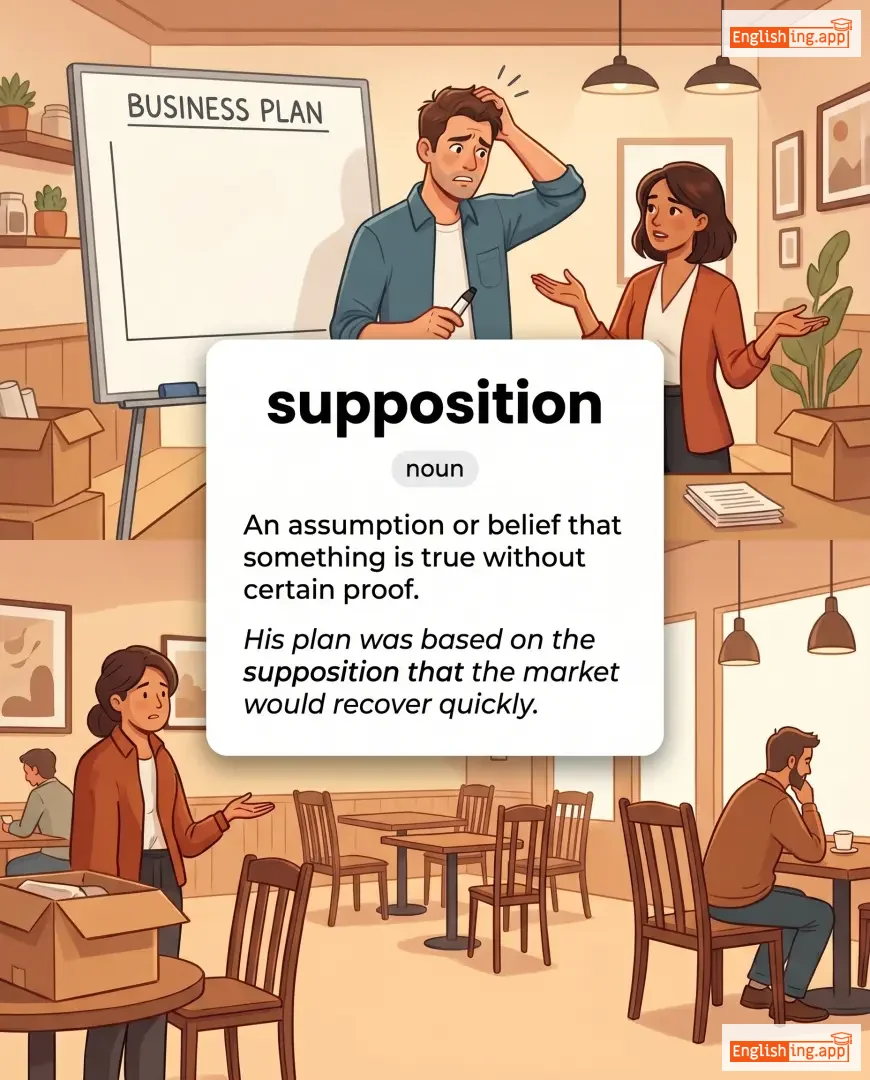
supposition definition card — visual illustration of the meaning
noun
/ˌsʌpəˈzɪʃən/
предположение (predpolozhenie)

An assumption or belief that something is true without certain proof.

"His plan was based on the supposition that the market would recover quickly."

"Его план был основан на предположении, что рынок быстро восстановится." (Ego plan byl osnovan na predpolozhenii, chto rynok bystro vosstanovitsya.)
adjective
/ˌsʌpəzɪˈtɪʃəs/
предположительный (predpolozhitel'nyy)

Based on assumption rather than fact; not genuine or authentic.

"The story turned out to be supposititious, with no evidence to support it."
"История оказалась предположительной, без доказательств, которые бы её поддерживали." (Istoriya okazalas' predpolozhitel'noy, bez dokazatel'stv, kotorye by yeyo podderzhivali.)
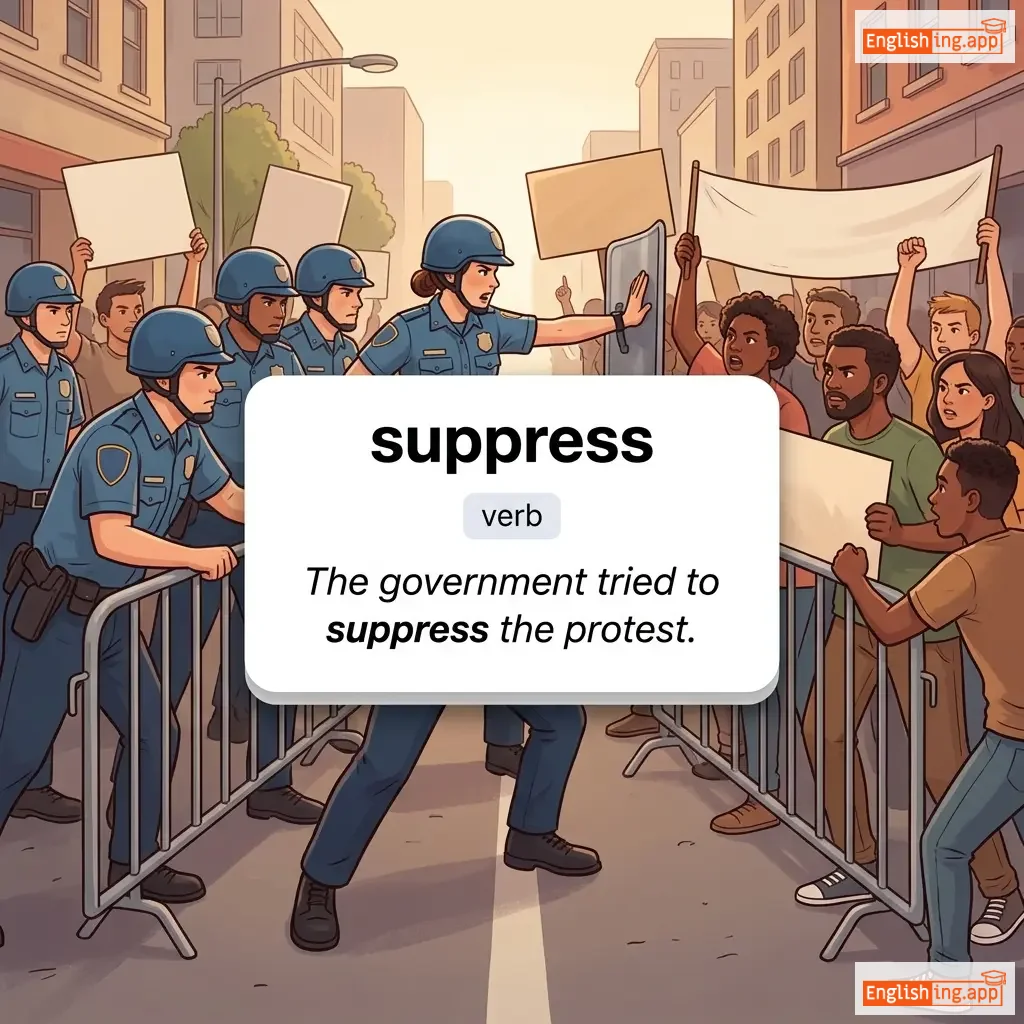
suppress definition card — visual illustration of the meaning
verb
/səˈprɛs/
подавить (podavit')

to forcibly put an end to something; to restrain or hold back an action, feeling, or development

"The government tried to suppress the protest."

"Правительство пыталось подавить протест." (Pravitel'stvo pytalos' podavit' protest.)
adjective
/səˈprɛsəbl̩/
подавляемый (podyemlyayemyj)

capable of being restrained, controlled, or prevented

"The symptoms of the disease are suppressible with medication."

"Симптомы болезни могут быть подавлены с помощью медикаментов." (Simptomy bolezni mogut byt' podavleny s pomoshch'yu medikamentov.)
noun
/səˈprɛʃən/
подавление (podavlenie)

the act of forcibly stopping something or holding back feelings or actions

"The suppression of free speech led to protests."

"Подавление свободы слова привело к протестам." (Podavlenie svobody slova privelo k protestam.)
verb
/ˈsʌpjʊˌreɪt/
гноиться (gnoitsya)

to form or discharge pus, usually as a result of infection

"The wound began to suppurate after a few days."

"Рана начала гноиться через несколько дней." (Rana nachala gnoitsya cherez neskol'ko dney.)
adjective
/ˌsuːprəˈmʌndeɪn/
супрамунданный (supramundanniy)

beyond the physical or ordinary world; transcendent

"The monk spoke of supramundane peace beyond material life."

"Монах говорил о супрамунданном мире, который за пределами материальной жизни." (Monakh govorit o supramundannom mire, kotoryy za predelami material'noy zhizni.)
noun
/suˈpriː.mə.si/
превосходство; высший авторитет или власть (prevoskhodstvo)

the state of being supreme; highest authority or power

"The country established naval supremacy in the region."

"Страна установила морское превосходство в регионе." (Strana ustanovila morskoe prevoskhodstvo v regione.)
adjective
/suˈpriːm/
высший (vysshiy)

highest in rank or authority

"He is the supreme leader of the country."

"Он высший лидер страны." (On vysshiy lider strany.)
noun
/sɜːrˈsiːs/
прекращение (prekrashchenie)

a temporary or final ending or stopping of something

"The noise finally came to a surcease after midnight."

"Шум наконец прекратился после полуночи." (Shum nakonec prekratilsya posle polunochi.)
noun
/ˈsɜːrtʃɑːrdʒ/
дополнительная плата (dopolnitel'naya plata)

an additional charge or payment added to the usual cost

"The airline ticket had a fuel surcharge added to it."

"Билет на самолет имел дополнительный топливный сбор." (Bilet na samolyot imel dopolnitel'nyy toplivnyy sbor.)
adjective
/ʃʊər/ or /ʃɔːr/
уверенный (uverenniy)

Confident about something; without doubt.

"I am sure that he will succeed."

"Я уверен, что он добьется успеха." (Ya uveren, chto on dobyotsya uspekha.)
adverb
/ˈʃʊəli/
наверное (navernoe)

used to emphasize that something is definitely true or certain

"Surely, he must know about the meeting."

"Наверное, он должен знать о встрече." (Navernoe, on dolzhen znat' o vstreche.)
noun
/ˈʃʊərəti/
поручительство (poruchitel'stvo)

a person who takes responsibility for another's performance of an undertaking, such as appearing in court or paying a debt

"The landlord required a surety before renting the apartment."

"Арендодатель потребовал поручительство перед сдачей квартиры." (Arendodatel' potreboval poruchitel'stvo pered sdachey kvartiry.)
noun
/ˈsɜːfɪs/
поверхность (poverkhnost)

the outermost layer or boundary of something

"The surface of the water was calm."

"Поверхность воды была спокойной." (Poverkhnost' vody byla spokoynoy.)
noun
/ˈsɜːrfɪt/
избыток (izbytok)

an excessive amount of something

"There was a surfeit of food at the festival."

"На фестивале было изобилие еды." (Na festivale bylo izobiliye yedy.)
verb
/sɜːrdʒ/
порыв (poryv)

to move suddenly and powerfully forward or upward

"The crowd surged forward when the gates opened."

"Толпа устремилась вперед, когда ворота открылись." (Tolpa ustremilas' vpered, kogda vorota otkrylis'.)
noun
/ˈsɜːdʒən/
хирург (khirurg)

a doctor who performs medical operations

"The surgeon performed a complex heart operation."

"Хирург выполнил сложную операцию на сердце." (Khirurg vypolnil slozhnuyu operaciyu na serdtse.)
noun
/ˈsɜːdʒəri/

a medical procedure involving the cutting of the body to treat a condition

"She underwent surgery to remove the tumor."

adjective
/ˈsɜːdʒɪkəl/
связанный с хирургией (svyazannyy s khirurgiyey)

relating to or involving surgery

"She underwent surgical treatment to repair the damage."

"Она прошла хирургическое лечение для восстановления повреждений." (Ona proshla khirurgicheskoye lecheniye dlya vosstanovleniya povrezhdeniy.)
adjective
/ˈsɜːrli/
недружелюбный (nedruzhelyubny)

bad-tempered and unfriendly

"The waiter gave us a surly look when we asked for more water."

"Официант посмотрел на нас недружелюбным взглядом, когда мы попросили больше воды." (Ofitsiant posmotrel na nas nedruzhelyubnym vzglyadom, kogda my poprosili bol'she vody.)
noun
/ˈsʊrmə fɪʃ/
рыба Сурма (ryba surma)

a freshwater fish species found in the Surma river system of Bangladesh and northeastern India

"Surma fish is native to the rivers of Sylhet region."

"Рыба Сурма обитает в реках региона Силхет." (ryba surma obitaet v rekakh regiona silkhet)
verb
/sərˈmaɪz/
предположить (predpolozhit)

to suppose something is true without having evidence

"She surmised that he was not coming to the meeting."

"Она предположила, что он не придет на встречу." (Ona predpolozhila, chto on ne pridet na vstrechu.)
verb
/sərˈmaʊnt/
преодолеть (preodolety)

to overcome a difficulty or obstacle

"He surmounted all the challenges to achieve his dream."

"Он преодолел все трудности, чтобы осуществить свою мечту." (On preodolel vse trudnosti, chtoby osushchestvit' svoiu mechtu.)
noun
/ˈsɜr.neɪm/
фамилия (famiya)

a hereditary name common to all members of a family; family name

"Please write your first name and surname on the form."

"Пожалуйста, напишите ваше имя и фамилию в форме." (Pozhaluysta, napishite vashe imya i familiyu v forme.)
verb
/sərˈpæs/
превзойти (prezoyti)

to exceed or go beyond

"Her performance surpassed all expectations."

"Ее выступление превзошло все ожидания." (Eyo vystuplenie prevzoshlo vse ozhidaniya.)
adjective
/sər'pæs.ɪŋ/
выдающийся; превосходный; исключительный (vydajushchijsja, prevoskhodnyj, iskljuchitel'nyj)

exceeding; going beyond; outstanding

"Her surpassing beauty made everyone stop and stare."

"Ее выдающаяся красота заставила всех остановиться и смотреть." (Eё vydajushchajasyja krasota zastavila vsekh ostanovitsja i smotret'.)
noun
/ˈsɜːr.plʌs/
излишек (izlishek)

An amount that is more than what is needed.

"The country has a surplus of food this year."

"В этом году в стране излишек продуктов питания." (V etom godu v strane izlishek produktov pitaniya.)
noun
/səˈpraɪz/
сюрприз (syurpriz)

a sudden and unexpected event or situation

"His arrival was a pleasant surprise."

"Его приезд был приятным сюрпризом." (Yego priezd byl priyatnym syurprizom.)
adjective
/səˈpraɪzd/
удивленный (udivlennyy)

feeling or showing astonishment or shock

"She was surprised by the news."

"Она была удивлена новостью." (Ona byla udivlena novost'yu.)
adjective
/səˈpraɪzɪŋ/
удивительный (udivitel'nyj)

causing surprise or astonishment

"The sudden storm was surprising."

"Неожиданный шторм был удивительным." (Neozhidannyj shtorm byl udivitel'nym.)
adverb
/səˈpraɪzɪŋli/
удивительным образом (udivitel'nym obrazom)

in a way that causes surprise or amazement

"Surprisingly, she finished the entire project in just one day."

"Удивительно, она закончила весь проект всего за один день." (Udivitel'no, ona zakonchila ves' proyekt vsego za odin den'.)
verb
/səˈrɛndər/
сдаваться (sdavatsya)

to give up or yield to an opponent or authority

"The army finally surrendered after weeks of fighting."
"Армия в конце концов сдалась после недель боевых действий." (Armiya v kontse kontsov sdalas posle nedeley boevykh deystviy.)
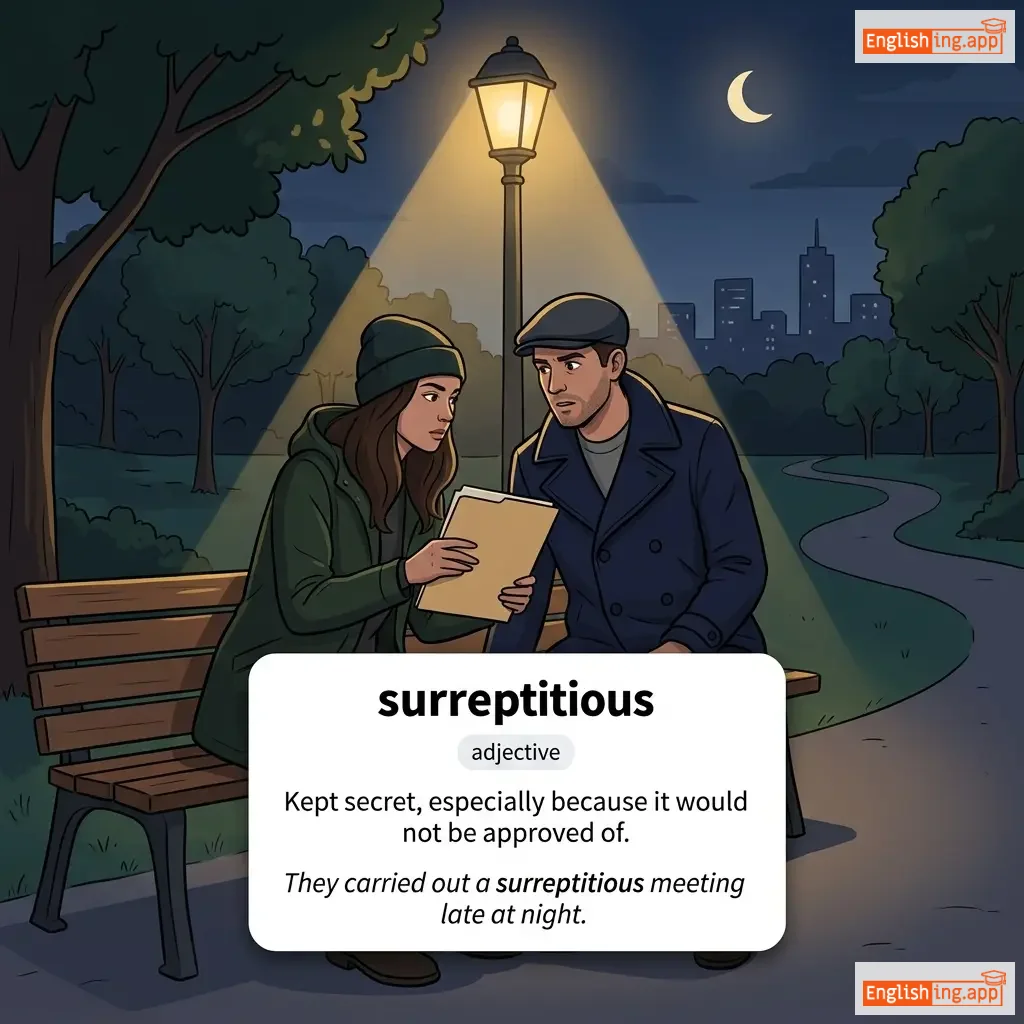
surreptitious definition card — visual illustration of the meaning
adjective
/ˌsʌrəpˈtɪʃəs/
секретный (sekretnyy)

Kept secret, especially because it would not be approved of.

"They carried out a surreptitious meeting late at night."
"Они провели секретную встречу поздно ночью." (Oni proveli sekretnoe vstrechu pozdno noch'yu.)
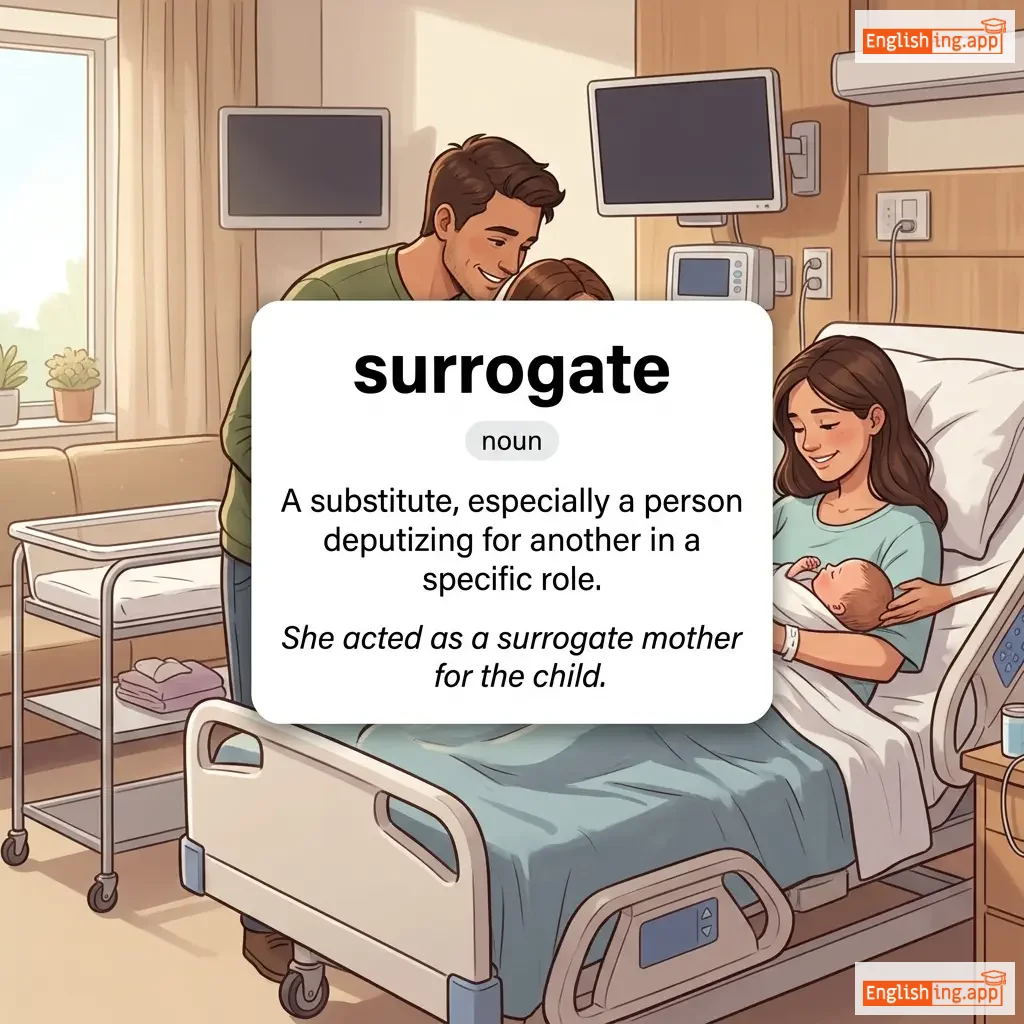
surrogate definition card — visual illustration of the meaning
noun
/ˈsʌrəɡət/
заместитель (zamestitel)

A substitute, especially a person deputizing for another in a specific role.

"She acted as a surrogate mother for the child."

"Она сыграла роль суррогатной матери для ребенка." (Ona sygrala rol' surrogatnoy materi dlya rebenka.)
verb
/səˈraʊnd/
окружать (okruzhat')

To be all around someone or something.

"Mountains surround the small village."

"Горы окружают маленькую деревню." (Gory okruzhayut malen'kuyu derevnyu.)
adjective
/səˈraʊndɪŋ/
окружающий (okruzhayushchiy)

located all around a particular place or thing; nearby

"The surrounding hills were covered in mist."

"Окружающие холмы были покрыты туманом." (Okruzhayushchie kholmy byli pokryty tumanom.)
noun
/səˈraʊn.dɪŋz/
окружение (okruzhenie)

The area around a person, place, or thing.

"She quickly adapted to her new surroundings."

"Она быстро адаптировалась к своей новой окружающей среде." (Ona bystro adaptirovalas' k svoey novoy okruzhayushchey srede.)
surveillance definition card — visual illustration of the meaning
noun
/sɜːrˈveɪləns/
наблюдение (nablyudenie)

Close observation of a person, place, or activity, often for security purposes.

"The area is under constant surveillance by security cameras."

"Эта зона находится под постоянным наблюдением с помощью камер безопасности." (Etta zona nakhoditsya pod postoyannym nablyudeniyem s pomoshch'yu kamer bezopasnosti.)
noun/verb
/ˈsɜːveɪ/
опрос, анкетирование (opros, ankietirovanie)

noun: an examination or inspection; verb: to examine or measure (an area or subject)

"They conducted a survey to understand customer preferences."

"Они провели опрос, чтобы понять предпочтения клиентов." (Oni proveli opros, chtoby ponyat' predpochteniya klientov.)
noun
/sərˈveɪər/
геодезист (geodezist)

A person who measures and maps land, buildings, or other features.

"The surveyor measured the land for construction."

"Геодезист измерил землю для строительства." (Geodezist izmeril zemlyu dlya stroitel'stva.)