Словари

Словарь английского языка | Значения слов, определения и примеры

adjective/noun
/ˈsʌkjələnt/
сочный (sochnyy)

Juicy or full of juice; also refers to a plant with thick, fleshy leaves adapted to storing water.

"The steak was so succulent that everyone enjoyed it."

"Стейк был настолько сочным, что всем он понравился." (Steyk byl nastol'ko sochnym, chto vsem on ponravilsya.)
⚰️

succumb

verb
/səˈkʌm/

To give in to pressure, temptation, or illness; to yield or fail to resist.

"He finally succumbed to his illness after a long struggle."

determiner
/sʌtʃ/
такой (takoy)

of the type previously mentioned or specified

"I have never seen such a beautiful painting."

"Я никогда не видел такую красивую картину." (Ya nikogda ne videl takuyu krasivuyu kartinu.)
verb
/sʌk/
сосать (sosat)

to draw something into the mouth by using the lips and tongue

"The baby began to suck her thumb."

"Ребенок начал сосать свой палец." (Rebyonok nachal sosat' svoy palets.)
verb
/ˈsʌkɪŋ/
сосать (sosat)

Drawing in a liquid, air, or other substance through the mouth or a tube by creating a vacuum; also used figuratively for something unpleasant or ineffective

"The baby is sucking on a pacifier."

"Младенец сосет пустышку." (Mladenets soset pustyshku.)
verb
/ˈsʌk.əl/
кормить грудью (kormit' grudyu)

to feed a baby or young animal with milk from the breast or udder

"The mother cat suckled her kittens in the basket."

"Мать кошка выкармливала своих котят в корзине." (Mat' koshka vykarmlivala svoikh kotyat v korzine.)
adjective
/ˈsʌdən/
внезапный (vnezapny)

occurring or done quickly and unexpectedly

"The sudden change in the weather surprised everyone."

"Внезапное изменение погоды удивило всех." (Vnezapnoe izmenenie pogody udivilo vsekh.)
adverb
/ˈsʌdənli/
внезапно (vnezapno)

in a way that happens quickly and unexpectedly

"The lights suddenly went out during the meeting."

"Огни внезапно погасли во время встречи." (Ogni vnezapno pogasli vo vremya vstrechi.)
adjective
/ˌsuːdəˈrɪfɪk/
потовызывающий (potovyzyvayushchiy)

causing or increasing sweating

"The doctor prescribed a sudorific drug to help reduce the fever."

"Врач прописал потовызывающий препарат для снижения температуры." (Vrach propisal potovyzyvayushchiy preparat dlya snizheniya temperatury.)
verb
/suː/
подать в суд (podat' v sud)

to bring a lawsuit against someone in a court of law

"She decided to sue the company for damages."

"Она решила подать в суд на компанию за ущерб." (Ona reshil podat' v sud na kompaniyu za uscherb.)
verb
/ˈsʌfər/
страдать (stradat')

to experience pain, distress, or hardship

"She suffered from a severe headache all day."

"Она страдала от сильной головной боли весь день." (Ona stradala ot sil'noy golovnoy boli ves' den'.)
noun
/ˈsʌfərəns/
терпимость (terpimost)

patient endurance of pain, hardship, or delay; passive consent or tolerance

"He lived in poverty with quiet sufferance."

"Он жил в бедности с тихим терпением." (On zhivil v bednosti s tikhim terpeniem.)
noun
/ˈsʌfərɪŋ/
страдание (stradanie)

the state of undergoing pain, distress, or hardship

"They tried to relieve his suffering with medicine."
"Они пытались облегчить его страдание с помощью лекарства." (Oni pytalis' oblegchit' ego stradanie s pomoshch'yu lekarstva.)
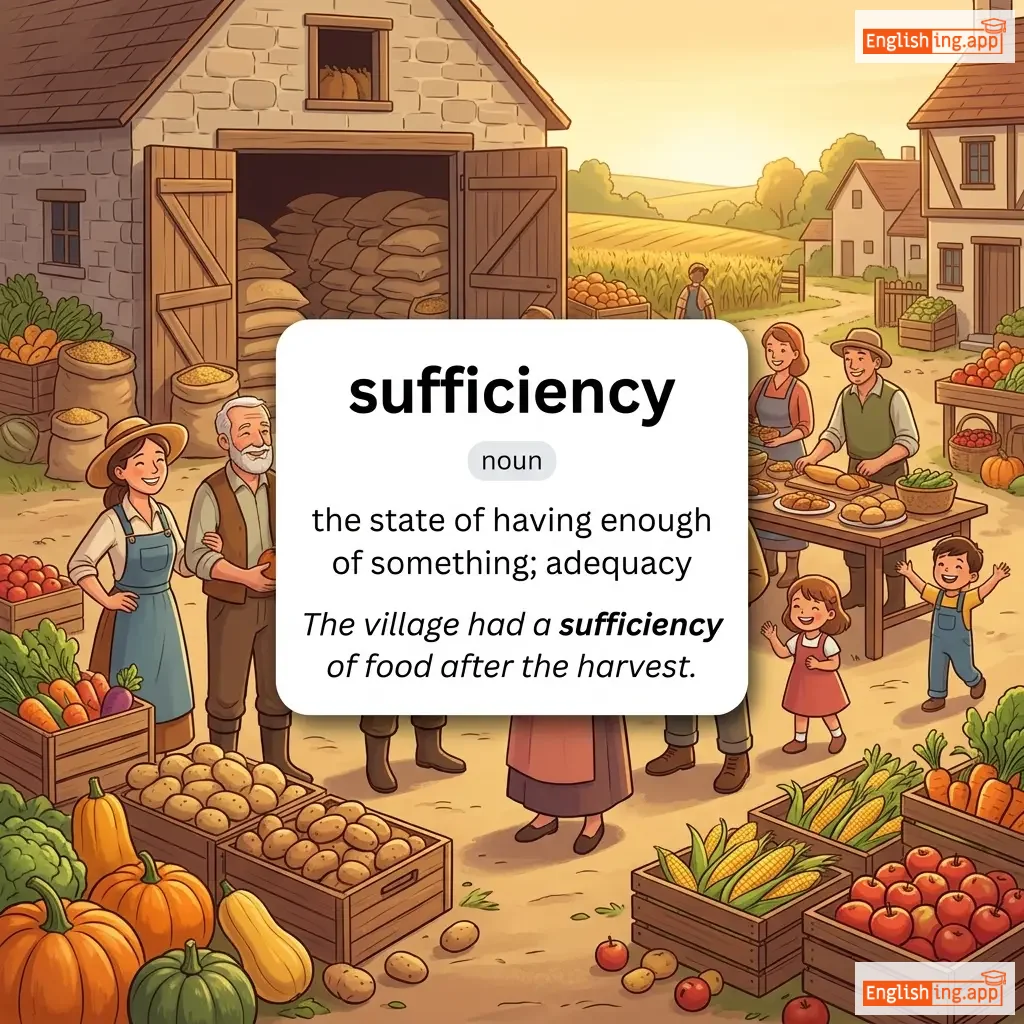
sufficiency definition card — visual illustration of the meaning
noun
/səˈfɪʃənsi/
достаточность (dostatochnost)

the state of having enough of something; adequacy

"The village had a sufficiency of food after the harvest."

"В деревне было достаточно пищи после урожая." (V derevne bylo dostatochno pishchi posle urozhaya.)
adjective
/səˈfɪʃənt/
достаточно (dostatochno)

enough; adequate for a purpose

"She had sufficient money to buy the dress."

"У нее было достаточно денег, чтобы купить платье." (U nee bylo dostatochno deneg, chtoby kupit' plat'ye.)
adverb
/səˈfɪʃəntli/
достаточно (dostatochno)

to an adequate degree or extent

"She studied sufficiently to pass the exam."

"Она училась достаточно, чтобы сдать экзамен." (Ona uchilas' dostatochno, chtoby sdat' ekzamen.)
verb
/ˈsʌfəkeɪt/
задохнуться (zadokhnut'sya)

to cause someone to die or have difficulty breathing by depriving them of air

"The child nearly suffocated when trapped in the locked room."
"Rebyonok pochti zadokhalsya, nakhodyas' v zaporozhennom komnate." (Rebyonok pochti zadokhalsya, nakhodyas' v zaporozhennom komnate.)
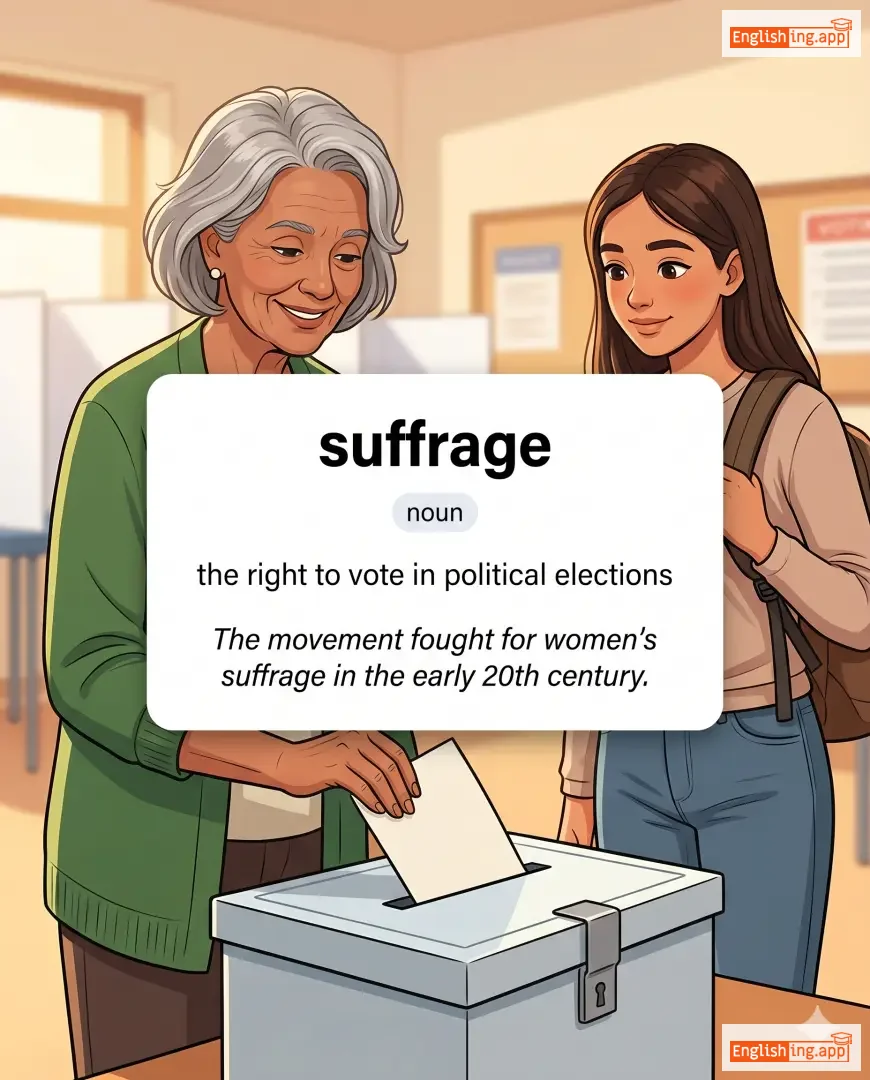
suffrage definition card — visual illustration of the meaning
noun
/ˈsʌfrɪdʒ/
избирательное право (izbiratelnoe pravo)

the right to vote in political elections

"The movement fought for women’s suffrage in the early 20th century."

"Движение боролось за избирательное право женщин в начале 20 века." (Dvijenie borolos za izbiratelnoe pravo zhenshchin v nachale dvadtsatogo veka.)
noun
/ˈsʌfrədʒɪst/
суфражистка (sufrazhistka)

a person advocating the extension of suffrage, especially to women

"The suffragists organized rallies to demand voting rights for women."

"Суфражистки организовали митинги, чтобы требовать избирательных прав для женщин." (Sufrazhistki organizovali mitingi, chtoby trebovat' izbiratel'nykh prav dlya zhenshchin.)
verb
/səˈfjuːz/
наполнять (napolnyat)

to gradually spread through or over something

"A warm glow suffused her face as she smiled."

"Тёплый свет наполнил её лицо, когда она улыбалась." (Tyoplyy svet napolnil yeye litso, kogda ona ulybalas.)
noun
/ˈʃʊɡər/
сахар (sakhar)

a sweet substance made from plants or produced synthetically

"She added two spoons of sugar to her tea."

"Она добавила две ложки сахара в чай." (Ona dobavila dve lozhki sakhara v chay.)
noun
/ˈʃʊɡ.ər ˈkæn.di/
сахарные конфеты (sakharnye konfety)

crystallized sugar formed into small pieces; rock candy made from sugar syrup

"The children enjoyed eating colorful sugar candy at the festival."

"Дети наслаждались едой разноцветных сахарных конфет на фестивале." (Deti naslazhdalis edoy raznotsvetnykh sakharnykh konfety na festivale)
verb
/səˈdʒɛst/
предлагать (predlagat')

to put forward an idea, plan, or recommendation for consideration

"He suggested going to the new restaurant for dinner."

"Он предложил пойти в новый ресторан на ужин." (On predlozhil poyti v novyy restoran na uzhin.)
adjective
/səˈdʒɛstəbəl/
влияемый (vliyayemy)

easily influenced by the suggestions of others

"Children are highly suggestible and may believe what they are told."

"Дети очень легко поддаются влиянию и могут поверить тому, что им говорят." (Deti ochen legko poddayutsya vliyaniyu i mogut poverit' tomu, chto im govoryat.)
noun
/səˈdʒɛstʃən/
предложение (predlozhenie)

an idea or plan put forward for consideration or action

"She gave a suggestion for improving the project."

"Она дала предложение по улучшению проекта." (Ona dala predlozhenie po uluchsheniyu proyektu.)
adjective
/səˈdʒɛstɪv/
намекающий (namekayushchiy)

tending to suggest ideas or images; sometimes implies something sexual or provocative

"The painting was highly suggestive and sparked much debate."

"Картина была очень намекающей и вызвала много споров." (Kartina byla ochen' namekayushchey i vyzvala mnogo sporov.)
adjective
/ˌsuːɪˈsaɪdəl/
суицидальный (suitsidal'nyy)

relating to or having thoughts of killing oneself; extremely dangerous or harmful

"The reckless driving was suicidal behavior."

"Безрассудное вождение было суицидальным поведением." (Bezrassudnoe vozhdenie bylo suitsidal'nym povedeniem.)
noun
/ˈsuːɪˌsaɪd/
суицид (suicid)

the act of intentionally taking one's own life

"The article discusses the rising rates of suicide in young people."

"Статья обсуждает растущие показатели суицида среди молодежи." (Stat'ya obsuzhdaet rastushchiye pokazateli suicida sredi molodyozhi.)
noun
/suːt/
костюм (kostyum)

a set of clothes made of the same fabric, usually consisting of trousers and a jacket

"He wore a black suit to the wedding."

"Он надел черный костюм на свадьбу." (On nadel chernyy kostyum na svad'bu.)
adjective
/ˈsuːtəbl/
подходящий (podkhodyashchiy)

appropriate or right for a particular person, purpose, or situation

"This dress is suitable for the wedding."

"Это платье подходит для свадьбы." (Eto plat'ye podkhodit dlya svad'by.)
noun
/ˈsuːt.keɪs/
чемодан (chemodan)

A portable rectangular container for carrying clothes and personal items when traveling

"She packed her clothes into a suitcase for the trip."

"Она упаковала свою одежду в чемодан для поездки." (Ona upakovala svoiu odezhdu v chemodan dlya poezdki.)
noun
/swiːt/
люкс (lyuks)

a set of rooms designated for one person's or family's use or for a particular purpose

"They stayed in the presidential suite at the hotel."

"Они остановились в президентском люксе отеля." (Oni ostanovilis' v prezidentskom lyuksie otelya.)
noun
/ˈsuːtər/
ухажёр (ukhazhor)

a man who pursues a relationship with a woman, often with the intent to marry

"She had many suitors vying for her attention."

"У неё было много ухажёров, борющихся за её внимание." (u neyo bylo mnogo ukhazorov boryushchikhsya za yeye vnimanie)
sulk definition card — visual illustration of the meaning
verb
/sʌlk/
подухать (poduhat)

to be silently resentful or moody

"He went to his room to sulk after the argument."

"Он пошел в свою комнату, чтобы подухать после ссоры." (On poshel v svoju komnatu, chtoby podukhat posle ssory.)
adjective
/ˈsʌl.ki/
вопящий и угрюмый; капризный (vopyashchiy i ugryumyy; kapriznyy)

bad-tempered and sullen; moody

"The child became sulky when he couldn't get his favorite toy."

"Ребёнок стал вопящим, когда не мог получить свою любимую игрушку." (Rebyonok stal vopyashchim, kogda ne mog poluchit' svoju lyubimuyu igrooshku.)
adjective
/ˈsʌlən/
угрюмый (ugryumyy)

bad-tempered and gloomy; silently resentful

"She gave him a sullen look and walked away."

"Она бросила на него угрюмый взгляд и ушла." (Ona brosila na nego ugryumyy vzglyad i ushla.)
verb
/ˈsʌli/
порочить (porochit)

to damage the purity, integrity, or reputation of something

"The scandal sullied the politician’s reputation."

"Скандал порочил репутацию политика." (Skandal porochil reputatsiyu politika.)
adjective
/ˈsʌltri/
жаркий и влажный, привлекательный (zharkiy i vlazhnyy, privlekatel'nyy)

Uncomfortably hot and humid; also describes someone attractive in a passionate or sensual way.

"The sultry weather made it hard to focus on work."

"Жаркая и влажная погода затрудняла сосредоточение на работе." (Zharkaya i vlazhnaya pogoda zatrudnyala sosredotochenie na rabote.)
noun
/sʌm/
сумма (summa)

the total amount resulting from the addition of two or more numbers or items

"The sum of 8 and 12 is 20."

"Сумма 8 и 12 равна 20." (Summa 8 i 12 ravna 20.)
verb
/ˈsʌməraɪz/
подводить итог (podvodit itog)

To give a brief statement of the main points of something

"She summarized the report in just a few minutes."

"Она суммировала отчет всего за несколько минут." (Ona summirovala otchet vsego za neskolko minut)
noun
/ˈsʌməri/
резюме (rezume)

A brief statement of the main points of something.

"She wrote a summary of the book for her class."

"Она написала резюме книги для своего класса." (Ona napisała rezyume knigi dlya svoego klassa.)
noun
/sʌˈmeɪʃən/
сумма, резюме (summa, rezyume)

The process of adding things together; a summary of points.

"The lawyer gave a powerful summation of the case."
"Адвокат дал мощное резюме дела." (Advokat dal moshchnoe rezyume dela.)
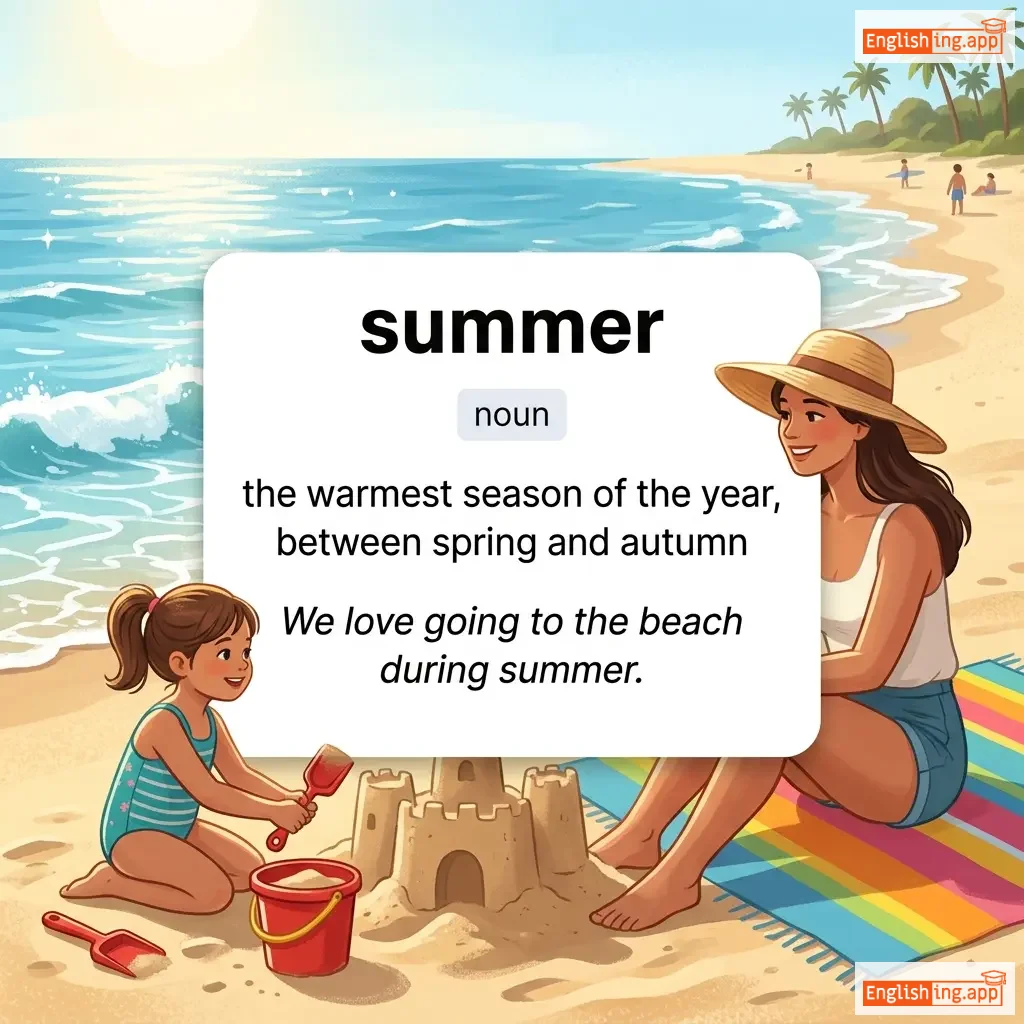
summer definition card — visual illustration of the meaning
noun
/ˈsʌmər/
лето (leto)

the warmest season of the year, between spring and autumn

"We love going to the beach during summer."

"Нам нравится ходить на пляж летом." (Nam nravitsya khodit' na plyazh letom.)
summit definition card — visual illustration of the meaning
noun
/ˈsʌmɪt/
пик, вершина (pik, vershina)

The highest point of a hill or mountain; a meeting between heads of state or leaders.

"The leaders met at the summit to discuss global issues."

"Лидеры встретились на вершине, чтобы обсудить мировые проблемы." (Lidery vstretilis' na vershine, chtoby obsudit' mirovye problemy.)
Summit of the Future definition card — visual illustration of the meaning
noun
/ˈsʌm.ɪt əv ðə ˈfjuː.tʃər/
Саммит будущего (Sammit budushchego)

A high-level conference focused on addressing future challenges and opportunities.

"The Summit of the Future addressed global challenges."

"Саммит будущего рассмотрел глобальные проблемы." (Sammit budushchego rassmotrel global'nye problemy.)
verb
/ˈsʌmən/
призывать, вызывать (prizyvat, vykhodyt)

To order someone to come or to gather courage or strength.

"The king summoned his advisors to the court."

"Король призвал своих советников в суд." (Korol prizval svoikh sovetnikov v sud.)
adjective
/ˈsʌmp.tʃuˌɛr.i/
относящийся к законам или регламентам, ограничивающим личные расходы на предметы роскоши (otnosyashchiesya k zakonam ili reglamentam, ogranichivayushchim lichnye raskhody na predmety roskoshi)

Relating to laws or regulations intended to limit personal spending on luxury goods.

"In medieval Europe, sumptuary laws restricted the wearing of expensive fabrics to the nobility."

"В средневековой Европе законы по ограничению расходов ограничивали ношение дорогих тканей только аристократией." (V srednevekovoy Yevrope zakony po ogranicheniyu raskhodov ogranichivali nosheniye dorogikh tkanej tol'ko aristokratiey.)
adjective
/ˈsʌmp.tʃu.əs/
роскошный (roskoshnyy)

Splendid and expensive-looking; luxurious.

"The guests were treated to a sumptuous banquet."
"Гостям подали роскошный банкет." (Gostyam podali roskoshnyy banket.)
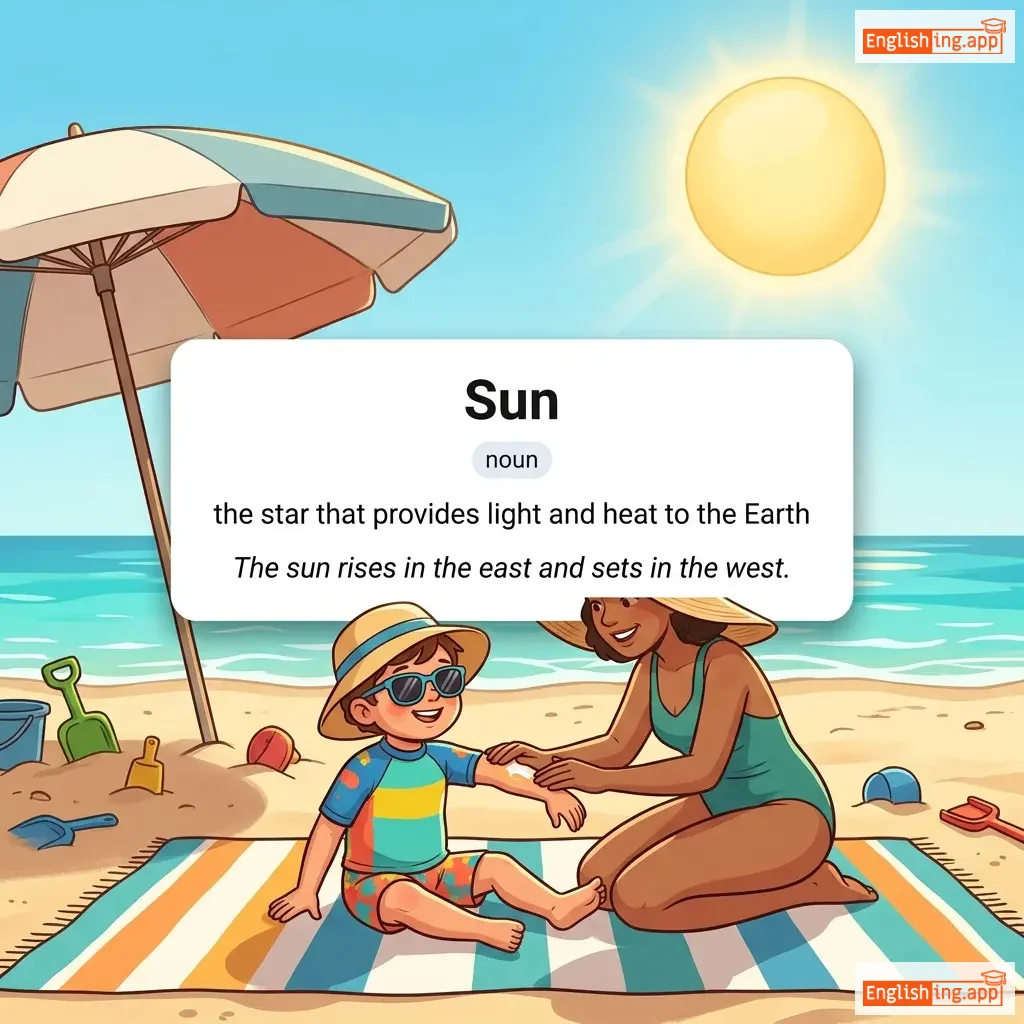
Sun definition card — visual illustration of the meaning
noun
/sʌn/
солнце (solntse)

the star that provides light and heat to the Earth

"The sun rises in the east and sets in the west."

"Солнце восходит на востоке и садится на западе." (Solntse voskhodit na vostoke i saditsya na zapade.)
noun
/ˈsʌn.flaʊər/
подсолнух (podsolnukh)

a large yellow flower that turns to face the sun

"The sunflower field looked amazing in the bright sunlight."

"Поле подсолнечников выглядело потрясающе на ярком солнце." (pole podsolnechnikov vyglyadelo potryasayushche na yarkom solntse)