Словари

Словарь английского языка | Значения слов, определения и примеры

noun
/steɪk/
стейк (steyk)

a thick slice of meat, typically beef, cooked by grilling or frying

"He ordered a grilled steak with vegetables."

"Он заказал стейк на гриле с овощами." (On zakazal steyk na grile s ovoshchami.)
steal definition card — visual illustration of the meaning
🕵️‍♂️

steal (stil)

verb
/stiːl/
красть (krast)

to take something without permission or right

"He tried to steal my wallet while I wasn't looking."

"Он пытался украсть мой кошелек, когда я не смотрел." (On pytalsya ukrast' moy koshelek, kogda ya ne smotrel.)
noun
/stɛlθ/
скрытность, тихое движение (skrytnoct', tikhoye dviženiye)

The act of moving, doing, or achieving something quietly and secretly.

"The cat moved with stealth towards its prey."

"Кошка двигалась скрытно к своей добыче." (Koška dvižilas' skrytno k svoej dobyče.)
noun, verb
/stiːm/
пар (par)

the vapor into which water is converted when heated; to emit or treat with steam

"The kettle was steaming on the stove."

"Чайник парил на плите." (Chaynik paril na plite.)
noun
/ˈstiː.mər/
пароход (parokhod)

a ship or boat powered by steam engines

"The old steamer crossed the river slowly."

"Старый пароход медленно пересек реку." (Staryy parokhod medlenno peresek reku.)
noun
/stiːl/
сталь (stal)

a strong, hard metal made of iron and carbon

"The building was made from steel to ensure its durability."

"Здание было построено из стали, чтобы обеспечить его долговечность." (Zdanie bylo postroeno iz stali, chtoby obespechit' yego dolgovечnost'.)
adjective
/stiːp/
крутой, чрезмерный (krutoy, chrezmernıy)

Having a sharp inclination or high slope; also can mean excessive (as in price).

"The hikers climbed a steep mountain trail."

"Туристы поднялись по крутой горной тропе." (Turisty podnyalis' po krutoy gornoy trope.)
adjective
/stiːpt/
пропитанный (propitanny)

Completely surrounded by or filled with a particular quality, influence, or experience.

"The town is steeped in history and tradition."

"Город пропитан историей и традициями." (Gorod propitan istoriey i traditsiyami.)
verb
/stɪə(r)/
управлять (upravlyat)

to guide or control the movement of a vehicle, vessel, or person

"He steered the car carefully through the narrow street."

"Он аккуратно вел машину по узкой улице." (On akkuratno vel mashinu po uzkoy ulitse.)
noun
/staɪn/
пивной кружка (pivnoy kruzhka)

A large beer mug, typically made of glass or stoneware.

"He raised his stein to toast his friends."

"Он поднял свой стейна, чтобы предложить тост своим друзьям." (On podnyal svoy steyna, chtoby predlozhit' tost svoim druz'yam.)
adjective
/ˈstɛlər/
выдающийся (vydajushchijsya)

Relating to stars; outstanding or excellent.

"She gave a stellar performance in the play."

"Она дала выдающееся представление в пьесе." (Ona dala vydajushchijsya predstavlenie v p'ese.)
noun, verb
/stɛm/
стебель / остановить (stebel / ostanovit)

Noun: The main stalk of a plant. Verb: To stop or restrict the flow or development of something.

"The gardener cut the stem of the rose; New policies aim to stem the flow of pollution."

"Садовник срезал стебель розы; Новые политики направлены на то, чтобы остановить поток загрязнения." (Sadovnik srezal stebel' rozy; Novye politiki napravleny na to, chtoby ostanovit' potok zagrjazneniya.)
noun
/stɛntʃ/
вонь (von')

A very strong and unpleasant smell.

"The stench of garbage filled the alley."

"Запах мусора заполнил переулок." (Zapakh musora zapolnil pereulok.)
noun
/ˈstɛnsəl/
трафарет (trafaret)

A thin sheet of material with a design cut out, used to produce the design on the surface below by applying paint or ink through the cut-out holes.

"The artist used a stencil to paint identical stars on the wall."
"Художник использовал трафарет, чтобы нарисовать одинаковые звезды на стене." (Khudozhnik ispol'zoval trafaret, chtoby narisovat' odinakovyye zvezdy na stene.)
stentorian definition card — visual illustration of the meaning
adjective
/stɛnˈtɔːriən/
оглушающий (oglushayushchiy)

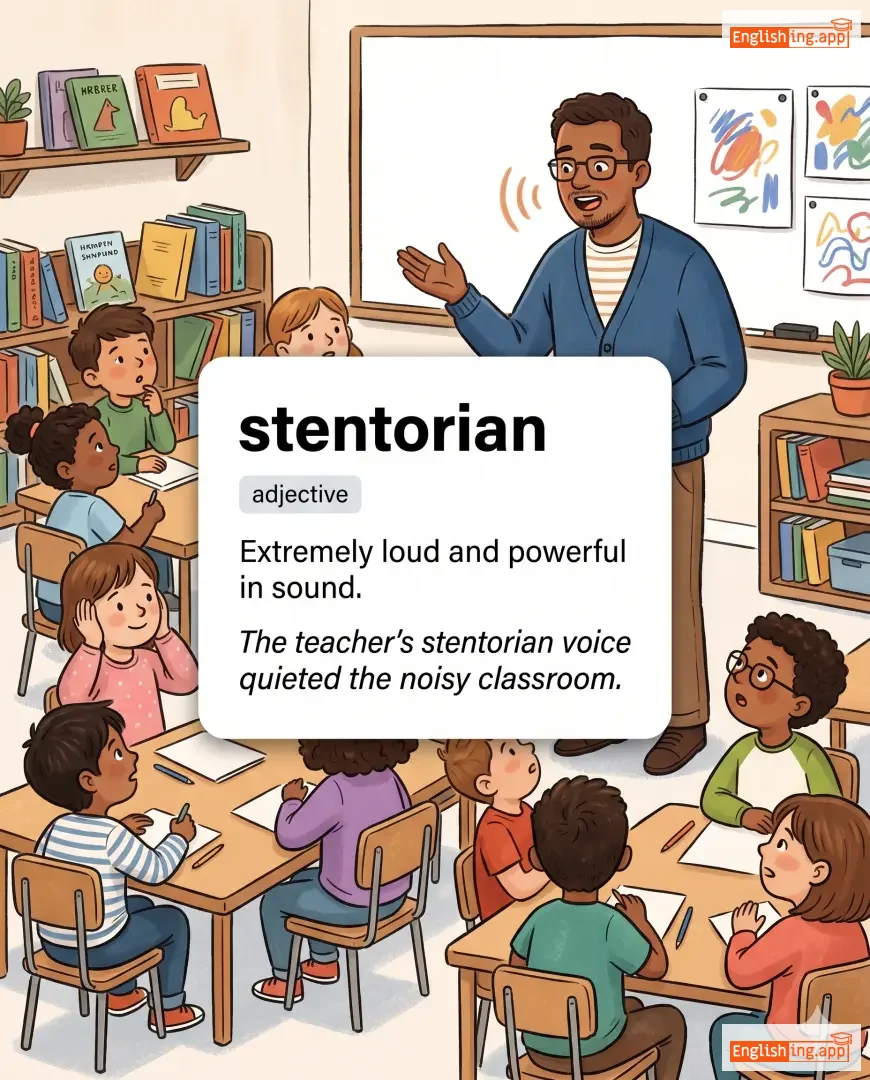
Extremely loud and powerful in sound.

"The teacher’s stentorian voice quieted the noisy classroom."
"Стенториозный голос учителя заглушил шумный класс." (Stentorizhnyy golos uchitelya zaglushil shumnyy klass.)
stents definition card — visual illustration of the meaning
noun
/stents/
стенты (stenty)

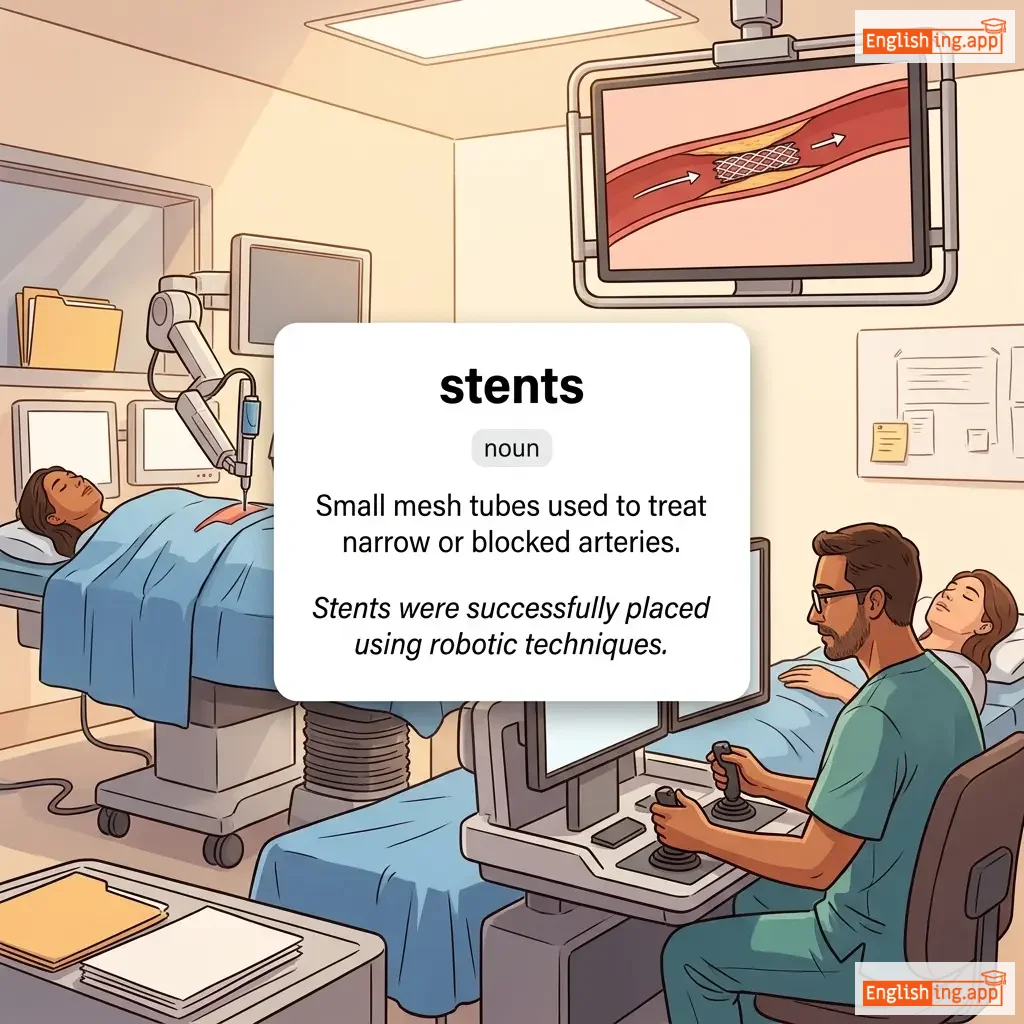
Small mesh tubes used to treat narrow or blocked arteries.

"Stents were successfully placed using robotic techniques."

"Стенты были успешно установлены с использованием роботизированных технологий." (Stenty byli uspeshno ustanovleny s ispol'zovaniem robotizirovannykh tekhnologiy.)
👣

step

noun
/stɛp/

a movement made by lifting one foot and putting it down in a new position

"She took a step towards the door."

noun
/stɛp/
степь (step')

A large flat area of unforested grassland, especially in southeastern Europe or Siberia.

"The nomads traveled across the vast steppe with their herds."

"Кочевники путешествовали по обширной степи со своими стадами." (Kochevniki puteshestvovali po obshirnoy stepi so svoimi stadami.)
steps definition card — visual illustration of the meaning
noun
/stɛps/
шаги (shagi)

A measure or action, especially one of a series taken in order to deal with or achieve a particular thing.

"Taking small steps reduces overwhelm."

"Маленькие шаги снижают перегрузку." (Malen'kiye shagi snizhayut peregruzku.)
noun
/ˈstɛriəˌtaɪp/
стереотип (stereotip)

A widely held but oversimplified and fixed idea of a particular type of person or thing.

"It is a stereotype that all gamers are antisocial."

"Это стереотип, что все геймеры асоциальны." (Eto stereotip, chto vse geimery asotsial'ny.)
adjective
/ˈstɛriəˌtaɪpt/
стереотипный (stereotipnyi)

Conforming to a fixed or oversimplified idea of what someone or something is like.

"His stereotyped jokes failed to impress the audience."
"Его стереотипные шутки не впечатлили публику." (Ego stereotipnye shutki ne vpechatlili publiku.)
stereotyping definition card — visual illustration of the meaning
noun
/ˈstɛə.rɪ.əʊˌtaɪ.pɪŋ/
стереотипирование (stereotipirovanie)

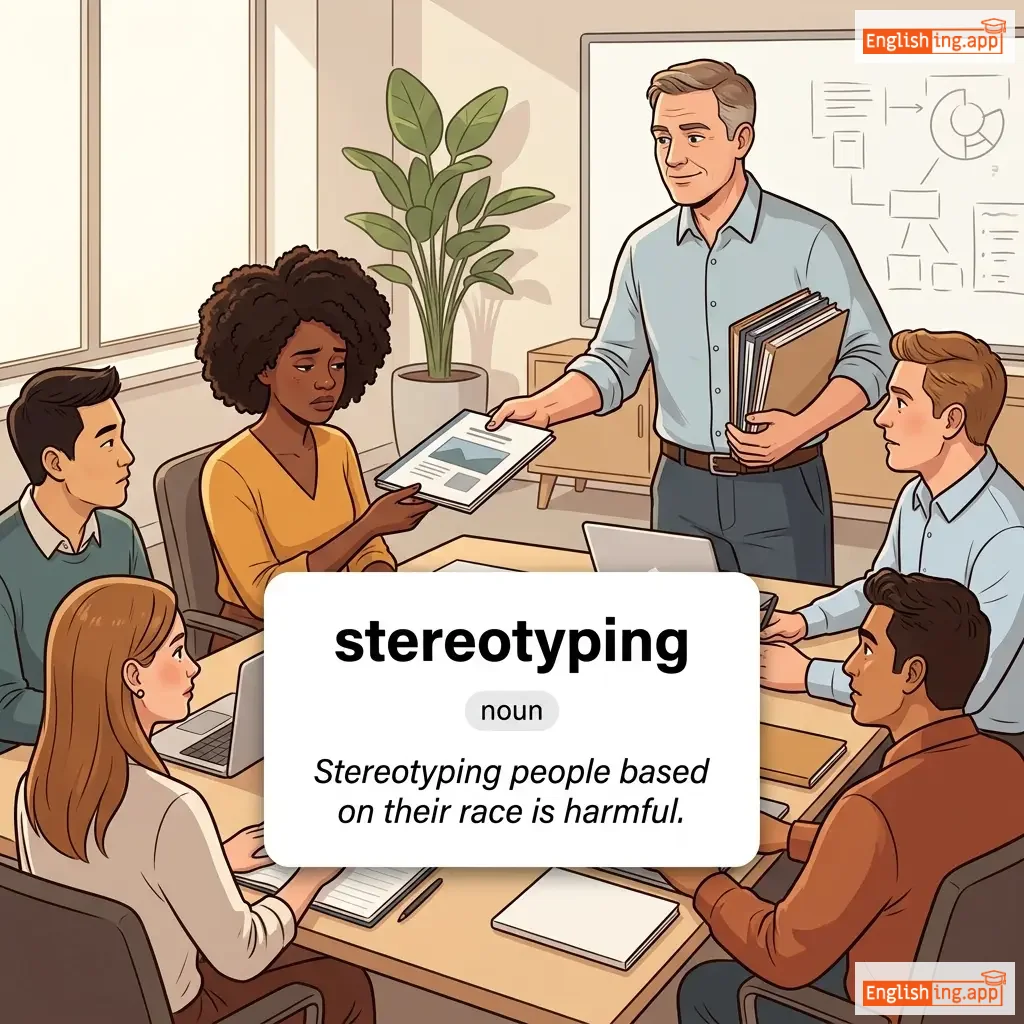
A widely held but fixed and oversimplified image or idea of a particular type of person or thing.

"Stereotyping people based on their race is harmful."

"Стереотипирование людей на основе их расы вредно." (Stereotipirovanie lyudey na osnove ikh rasy vreden.)
adjective
/ˈstɛr.aɪl/
стерильный (steril'nyy)

Free from bacteria or other living microorganisms; incapable of producing offspring.

"The surgeon worked in a sterile environment to avoid infection."

"Хирург работал в стерильной обстановке, чтобы избежать инфекции." (Khirurg rabotal v steril'noy obstanovke, chtoby izbezhat' infektsii.)
noun/adjective
/ˈstɜː.lɪŋ/
британская валюта / отличного качества (britanskaya valyuta / otlichnogo kachestva)

British money, especially pounds; of excellent quality.

"She was praised for her sterling work on the project."

"Ее похвалили за отличную работу над проектом." (Eyo pokhvalili za otlichnuyu rabotu nad proyektom.)
adjective/noun
/stɜːrn/
строгий / задняя часть корабля (stroghiy / zadnyaya chast' korablya)

Serious and strict in manner or attitude; the back part of a ship.

"The teacher gave the students a stern warning before the exam."

"Учитель дал ученикам строгое предупреждение перед экзаменом." (Uchitel' dal uchenikam strogoe preduprezhdenie pered ekzamenom.)
adjective
/ˈstɜːr.tər.əs/
громкое храпанье (gromkoe khrapanye)

Characterized by heavy snoring or breathing.

"The patient’s stertorous breathing alarmed the nurses."

"Стерторозное дыхание пациента напугало медсестер." (Stertoroznoe dykhanie patsiyenta napugalo medsestr.)
noun
/ˈstiː.vəˌdɔːr/
докер (doker)

A person employed to load and unload cargo from ships.

"The stevedores worked tirelessly to unload the cargo before dawn."

"Докеры работали без усталости, чтобы разгрузить груз до рассвета." (Dokery rabotali bez ustalosti, chtoby razgruzit' gruz do rassveta.)
abbreviation (noun/pronoun)
/ˈsʌmθɪŋ/
что-то (chto-to)

abbreviation for 'something'

"Can you give me sth. to write with?"

"Можешь ли ты дать мне что-то для письма?" (Mozhesh' li ty dat' mne chto-to dlya pis'ma?)
verb
/stɪk/
приклеивать (prikleivat)

to adhere or attach something to a surface

"The glue will stick to the paper."

"Клей приклеится к бумаге." (Kley prikleyitsya k bumage.)
noun
/ˈstɪklər/
строгий человек по отношению к правилам (strogiy chelovek po otnosheniyu k pravilam)

a person who insists on a certain quality or standard of behavior

"He is a stickler for punctuality and never tolerates delays."

"Он очень строг к пунктуальности и не терпит задержек." (On ochen' strog k punktual'nosti i ne terpit zaderzhek.)
adjective
/ˈstɪki/
липкий (lipkiy)

having the quality of adhering or clinging; difficult to remove or deal with

"The candy is too sticky to eat with your hands."

"Конфета слишком липкая, чтобы есть руками." (Konfeta slishkom lipkaya, chtoby yest' rukami.)
adjective
/stɪf/
жесткий (zhestkiy)

rigid, difficult to bend or move

"After the long run, his legs felt very stiff."

"После долгого забега его ноги ощущались очень жесткими." (Posle dolgogo zabeha ego nogi oshchushchalis' ochen' zhestkimi.)
verb
/ˈstaɪfl/
подавить (podavit)

to prevent or restrain an action, idea, or emotion; to suffocate

"She tried to stifle a laugh during the serious meeting."

"Она попыталась подавить смех во время серьезной встречи." (Ona popytalas podavit smekh vo vremya seryoznoj vstrechi.)
verb
/ˈstaɪfəld/
подавлять (podavlyat)

to suppress, hold back, or prevent something from happening

"He stifled a laugh during the serious meeting."

"Он подавил смех во время серьезной встречи." (On podavil smekh vo vremya seryoznoj vstrechi.)
stigma definition card — visual illustration of the meaning
noun
/ˈstɪɡmə/
стигма (stigma)

a mark of shame or disgrace associated with a particular circumstance or quality

"There is still a stigma around mental health issues in many societies."

"В некоторых обществах до сих пор существует стигма, связанная с проблемами психического здоровья." (V nekotorykh obshchestvakh do sikh por sushchestvuet stigma, svyazannaya s problemami psikhicheskogo zdorov'ya.)
verb
/ˈstɪɡmətaɪz/
стигматизировать (stigmatizirovat)

to describe or regard someone as worthy of disgrace or disapproval

"People with certain illnesses are often unfairly stigmatized."

"Люди с определенными заболеваниями часто несправедливо стигматизируются." (Lyudi s opredelennymi zabolevaniyami chasto nespravedlivo stigmatiziruyutsya.)
noun
/stɪˈlɛtoʊ/
обувь на высоком тонком каблуке / кинжал (obuv' na vysokom tonkom kabluke / kinzhal)

A small, thin, high-heeled shoe or a dagger with a slender blade.

"She wore elegant stiletto heels to the party."

"Она носила элегантные туфли на каблуке-стилето на вечеринку." (Ona nosila elegantnye tufli na kabluke-stileto na vecherinku.)
adjective
/stɪl/
тихий (tikhiy)

not moving or making a sound

"The water was still, reflecting the sky."

"Вода была тихой, отражая небо." (Voda byla tikhoi, otrazhaya nebo.)
adjective
/ˈstɪltɪd/
искусственный, натянутый (iskusstvennyy, natyazhennyy)

Speech or writing that is stiff, unnatural, or overly formal.

"His speech sounded stilted and rehearsed."

"Его речь звучала натянуто и заученно." (Ego rech' zvuchala natyazhennо i zauchennо.)
noun
/ˈstɪmjʊlənt/
стимулянт (stimulant)

A substance that raises levels of physiological or nervous activity in the body.

"Coffee is a common stimulant that helps people stay awake."
"Кофе - это обычный стимулянт, который помогает людям оставаться бодрыми" (Kofe - eto obychny stimul', kotoryi pomogayet liudyam ostavatsya bodrymi)
stimulate definition card — visual illustration of the meaning
verb
/ˈstɪmjʊˌleɪt/
стимулировать, побуждать (stimulirovat', pobuzhdat')

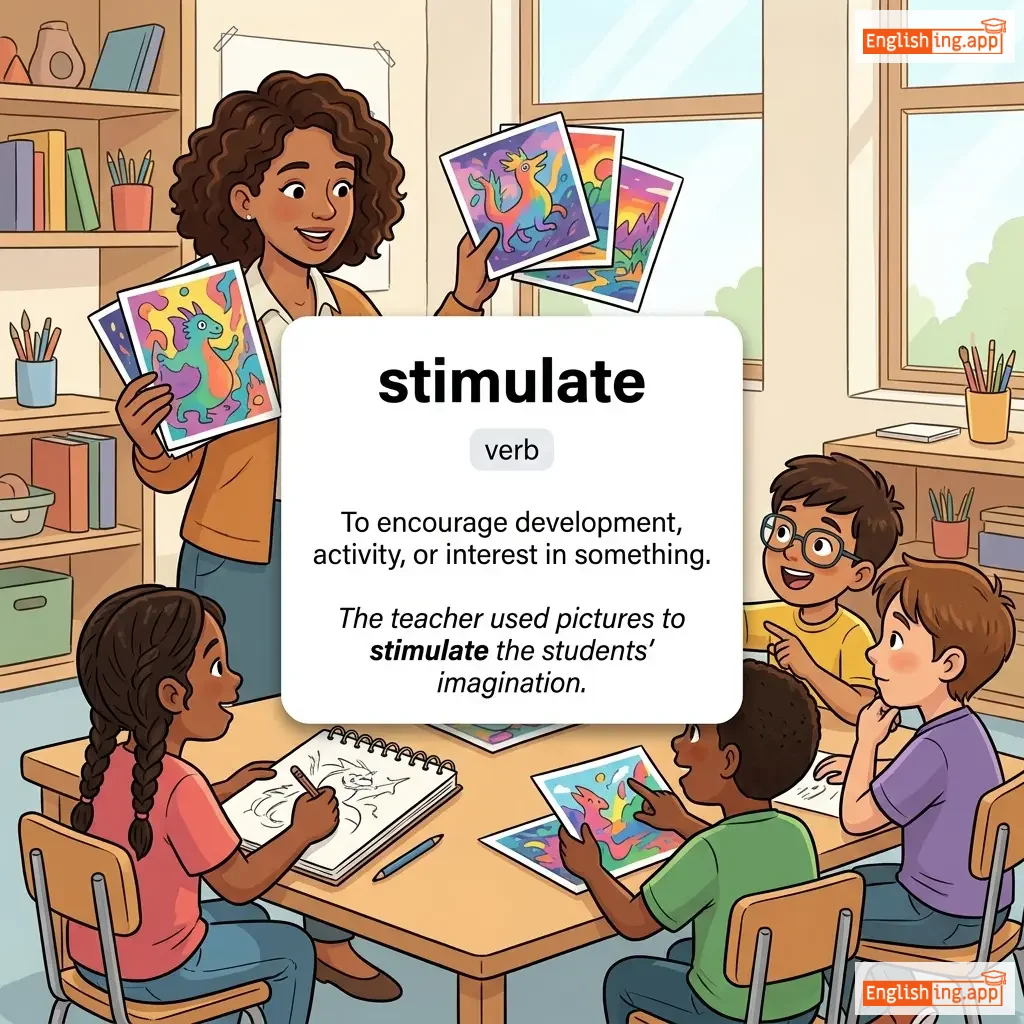
To encourage development, activity, or interest in something.

"The teacher used pictures to stimulate the students' imagination."
"Учитель использовал картинки, чтобы стимулировать воображение студентов." (Uchitel' ispol'zoval kartinki, chtoby stimulirovat' voobrazhenie studentov.)
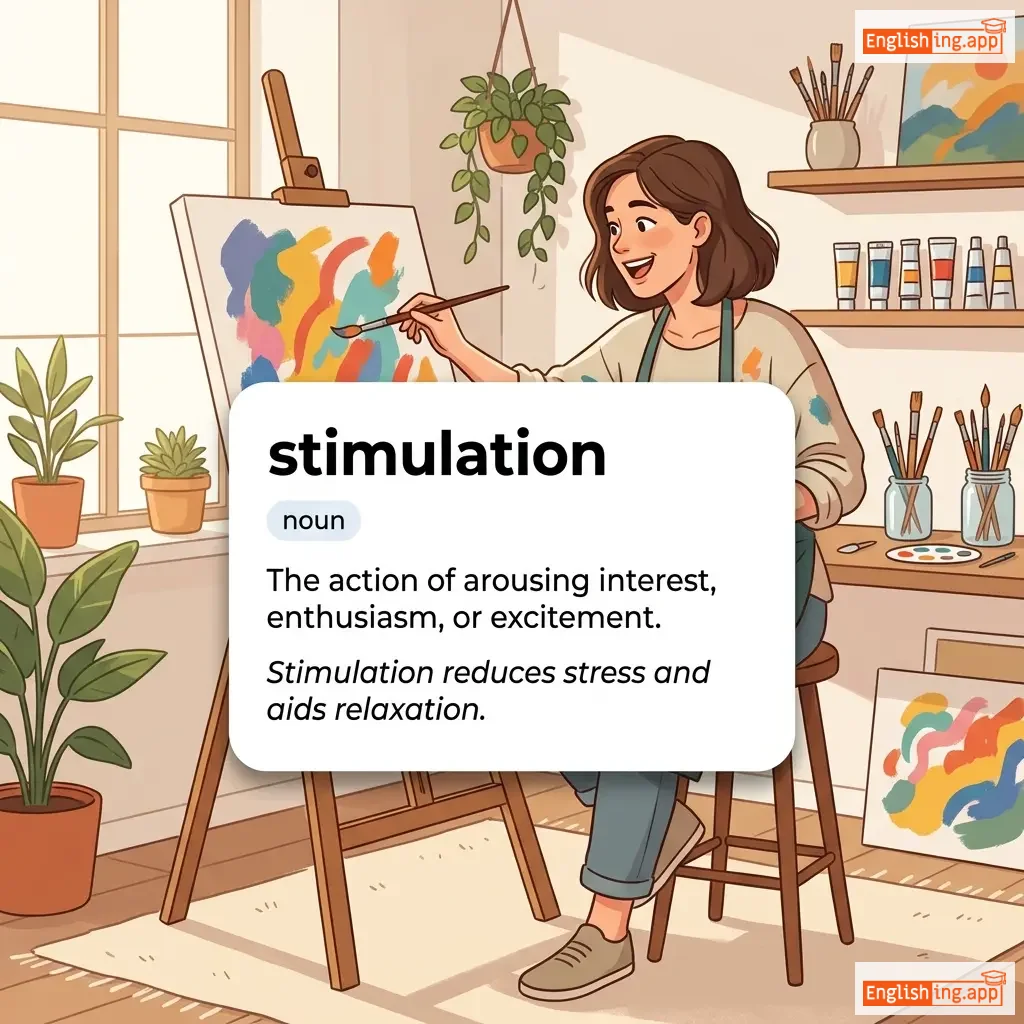
stimulation definition card — visual illustration of the meaning
noun
/ˌstɪm.jəˈleɪ.ʃən/
стимуляция (stimulatsiya)

The action of arousing interest, enthusiasm, or excitement.

"Stimulation reduces stress and aids relaxation."
"Стимуляция снижает стресс и способствует расслаблению." (Stimulatsiya snizhayet stress i sposobstvuet rasslablyeniyu.)
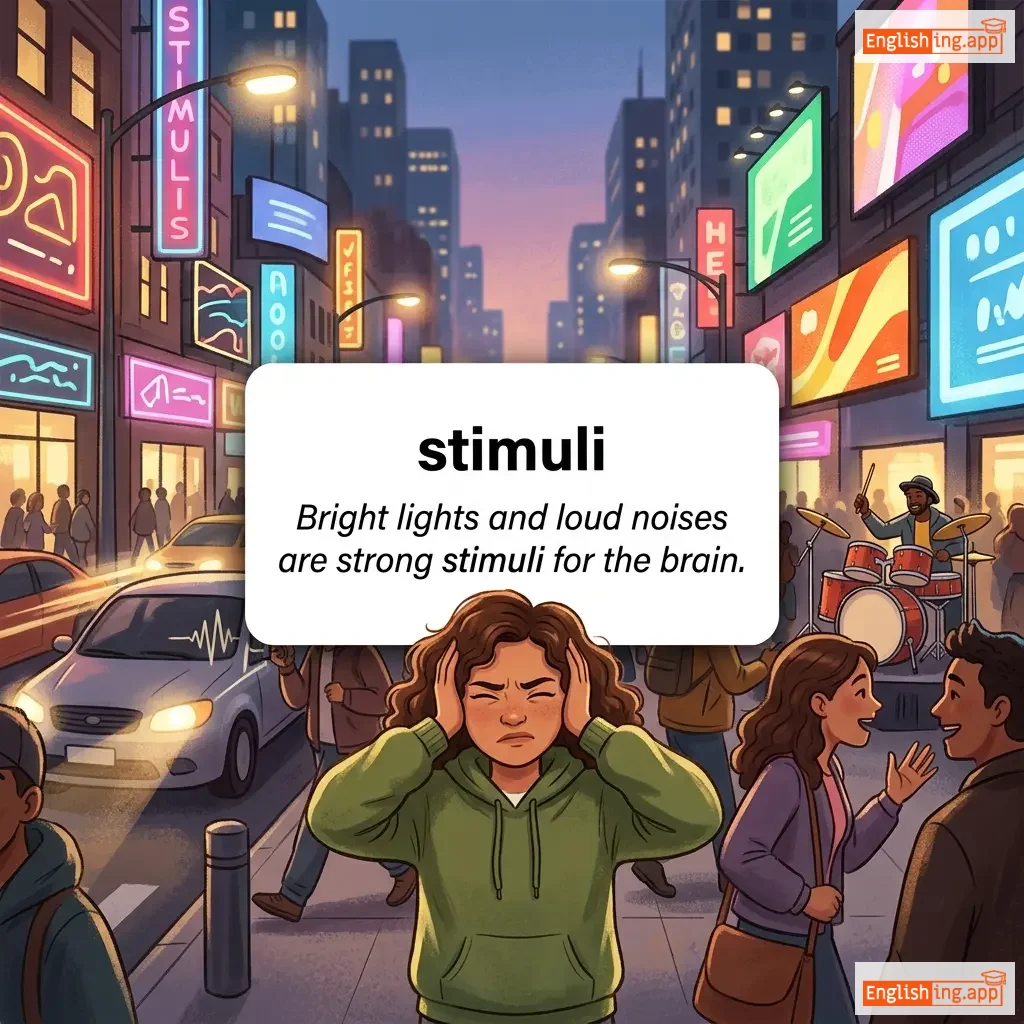
stimuli definition card — visual illustration of the meaning
noun (plural of stimulus)
/ˈstɪm.jʊ.laɪ/
стимул (stimul)

Things or events that evoke a specific functional reaction in an organ or tissue.

"Bright lights and loud noises are strong stimuli for the brain."
"Яркий свет и громкие звуки — сильные стимулы для мозга." (Yarkiy svet i gromkie zvuki — sil'nye stimuly dlya mozga.)
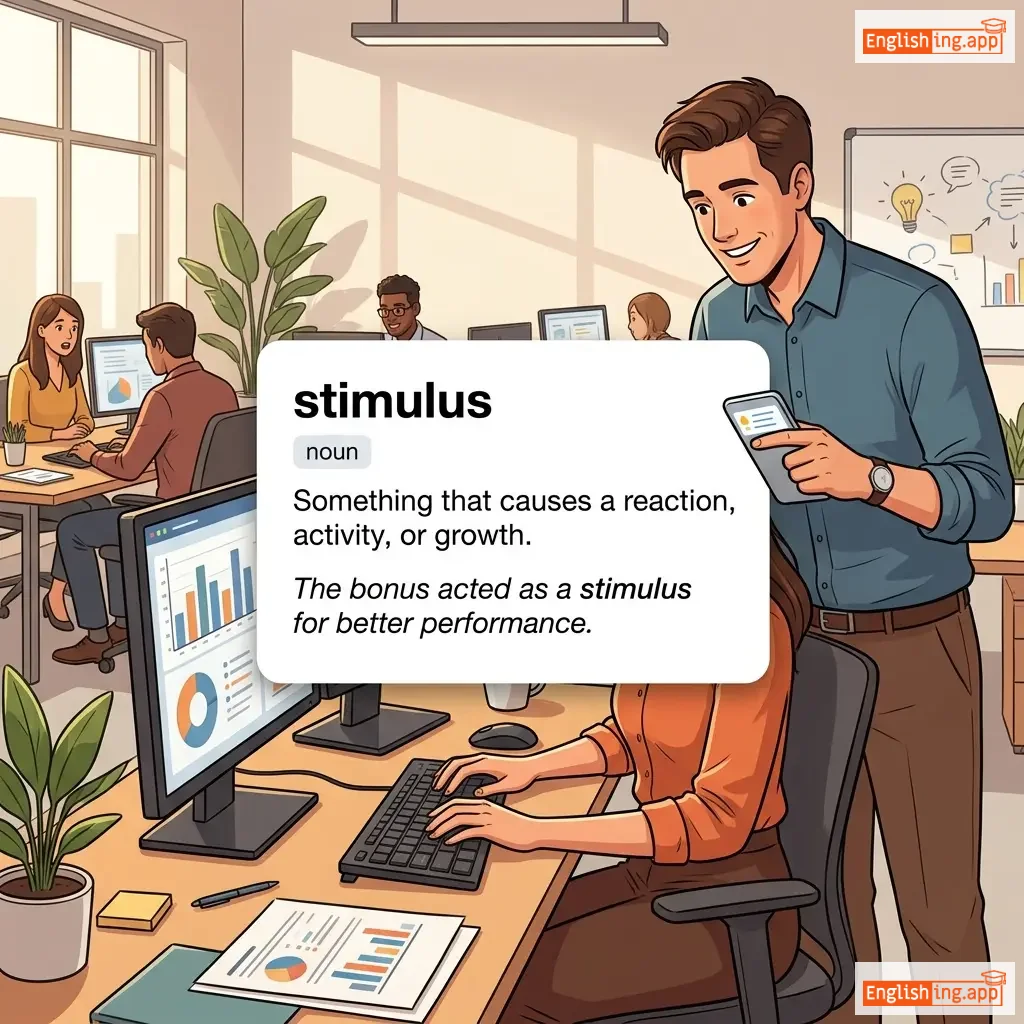
stimulus definition card — visual illustration of the meaning
noun
/ˈstɪmjʊləs/
что-то, вызывающее реакцию, стимул (chto-to, vyzyvayushchee reaktsiyu, stimul)

Something that causes a reaction, activity, or growth.

"The bonus acted as a stimulus for better performance."
"Бонус стал стимулом для лучшей производительности." (Bonus stal stimulom dlya luchshey proizvoditel'nosti.)
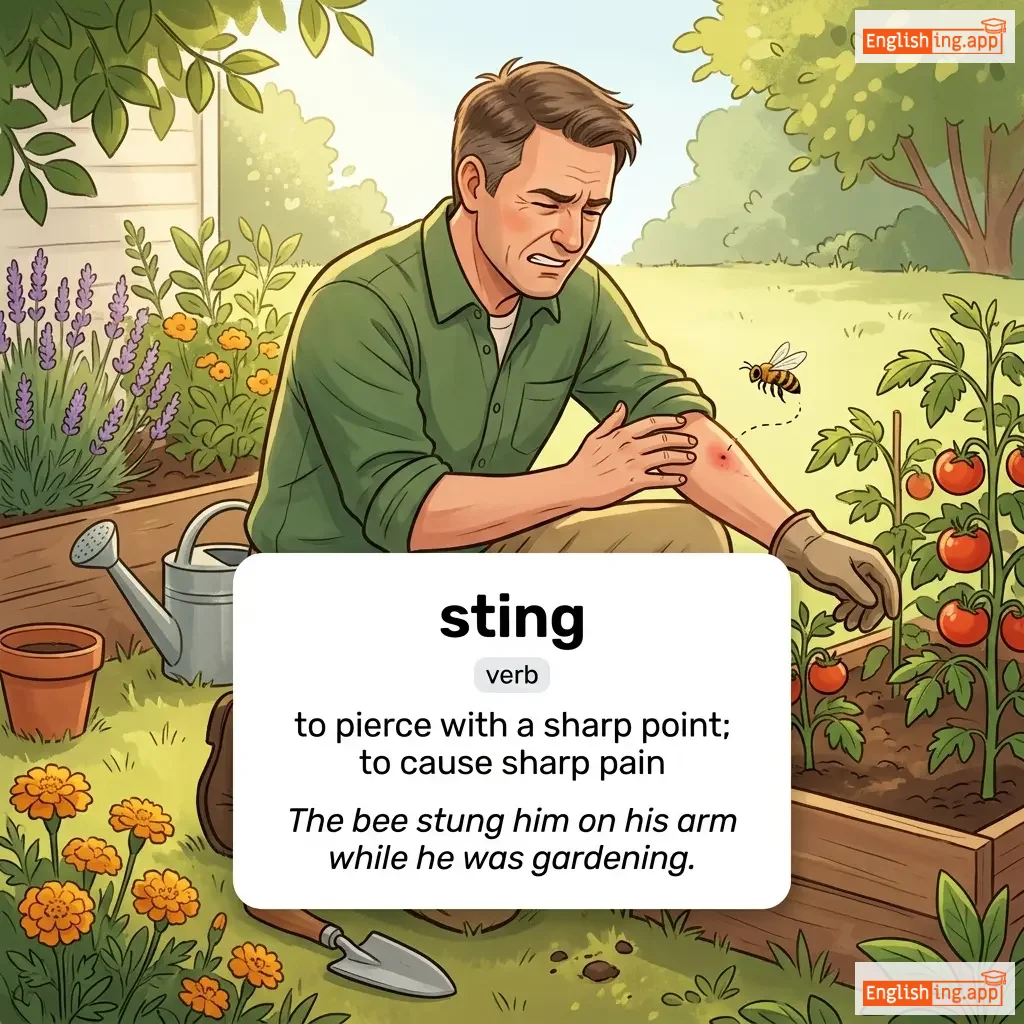
sting definition card — visual illustration of the meaning
verb
/stɪŋ/
ужалить (uzhalit)

to pierce with a sharp point; to cause sharp pain

"The bee stung him on his arm while he was gardening."

"Пчела ужалила его в руку, пока он занимался садоводством." (Pchela uzhalila ego v ruku, poka on zanimalsya sadovodstvom)
adjective
/ˈstɪndʒi/
жадный (zhadnyy)

unwilling to spend or give; miserly

"He is too stingy to buy a gift for his friend."

"Он слишком жадный, чтобы купить подарок для своего друга." (On slishkom zhadnyy, chtoby kupit' podarok dlya svoego druga.)
verb
/stɪŋk/
вонять (vonyat)

to smell very unpleasant

"The garbage bin stinks in the hot sun."
"Мусорное ведро воняет на жарком солнце." (Musornoe vedro vonyaet na zharkom solntse.)
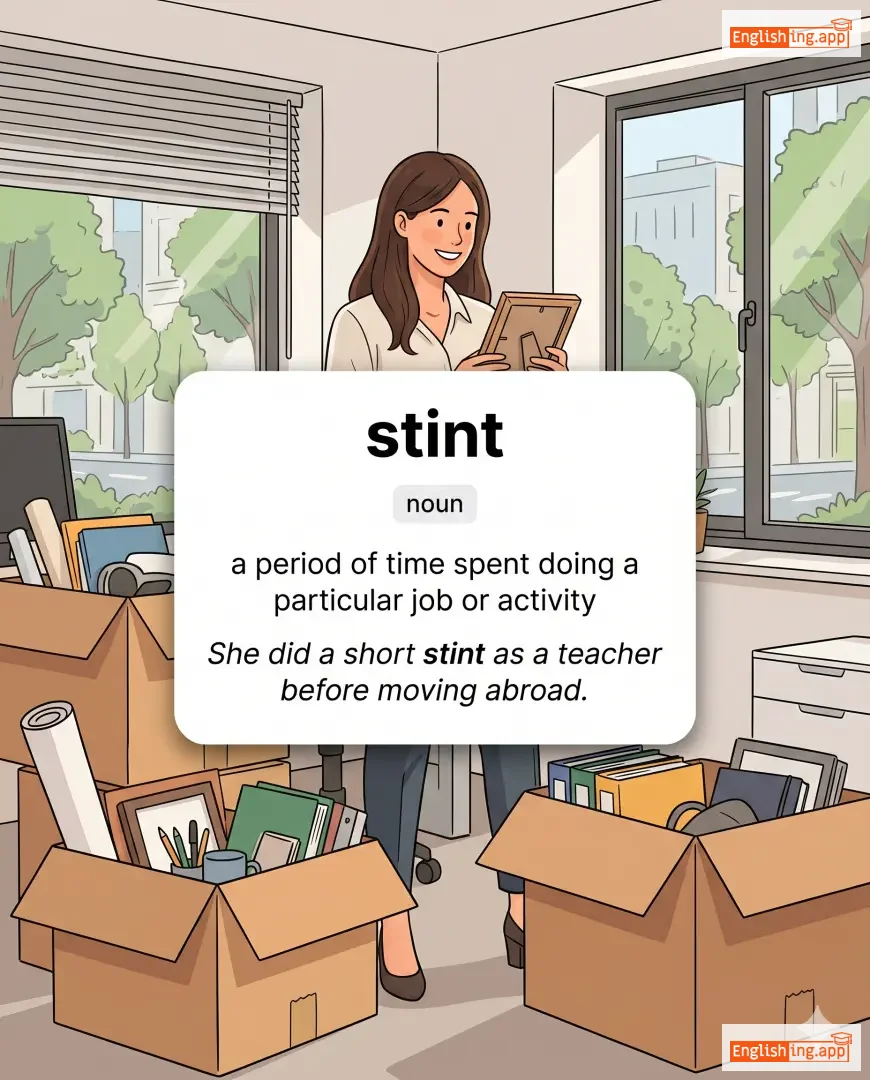
stint definition card — visual illustration of the meaning
noun
/stɪnt/
временная работа (vremennaya rabota)

a period of time spent doing a particular job or activity

"She did a short stint as a teacher before moving abroad."

"Она работала учителем в течение короткого времени, прежде чем уехать за границу." (Ona rabotala uchitelem v techeniye korotkogo vremeni, prezhde chem uezzhat' za granitsu.)
verb
/ˈstɪntɪŋ/
давать скупо (davat' skupо)

to supply sparingly or with restrictions

"He never stinting his efforts to help the poor."

"Он никогда не скупится в своих усилиях помочь бедным." (On nikogda ne skupitsya v svoikh usiliyakh pomoch' bednym.)
noun
/ˈstaɪpɛnd/
стипендия (stipendiya)

a fixed regular payment, usually for services or to cover living expenses

"The university provides a monthly stipend to its research students."

"Университет предоставляет своим исследовательским студентам ежемесячную стипендию." (Universitet predostavlyaet svoim issledovatelskimi studentami ezhemesyachnuyu stipendiyu.)