Словари

Словарь английского языка | Значения слов, определения и примеры

noun
/stæns/
позиция (pozitsiya)

a person's attitude, opinion, or position on an issue

"The company took a strong stance on environmental protection."

"Компания заняла твердую позицию по защите окружающей среды." (Kompaniya zanyala tverdoyu pozitsiyu po zashchite okruzhayushchey sredy.)
verb
/stɑːntʃ/
остановить кровотечение (ostanovit' krovootechenie)

to stop the flow of blood or liquid from a wound or source

"The nurse quickly stanched the bleeding from the cut."

"медсестра быстро остановила кровотечение из пореза." (medsestra bystro ostanovila krovootechenie iz poreza.)
noun
/ˈstænʃən/
опорный столб (oporny stolb)

a strong upright bar or post used as support or to control movement

"The red rope was attached to the stanchions to guide the crowd."
"Красная веревка была прикреплена к стойкам, чтобы направлять толпу." (Krasnaya ver'evka byla prikreplena k stoykam, chtoby napavlyat' tolpu.)
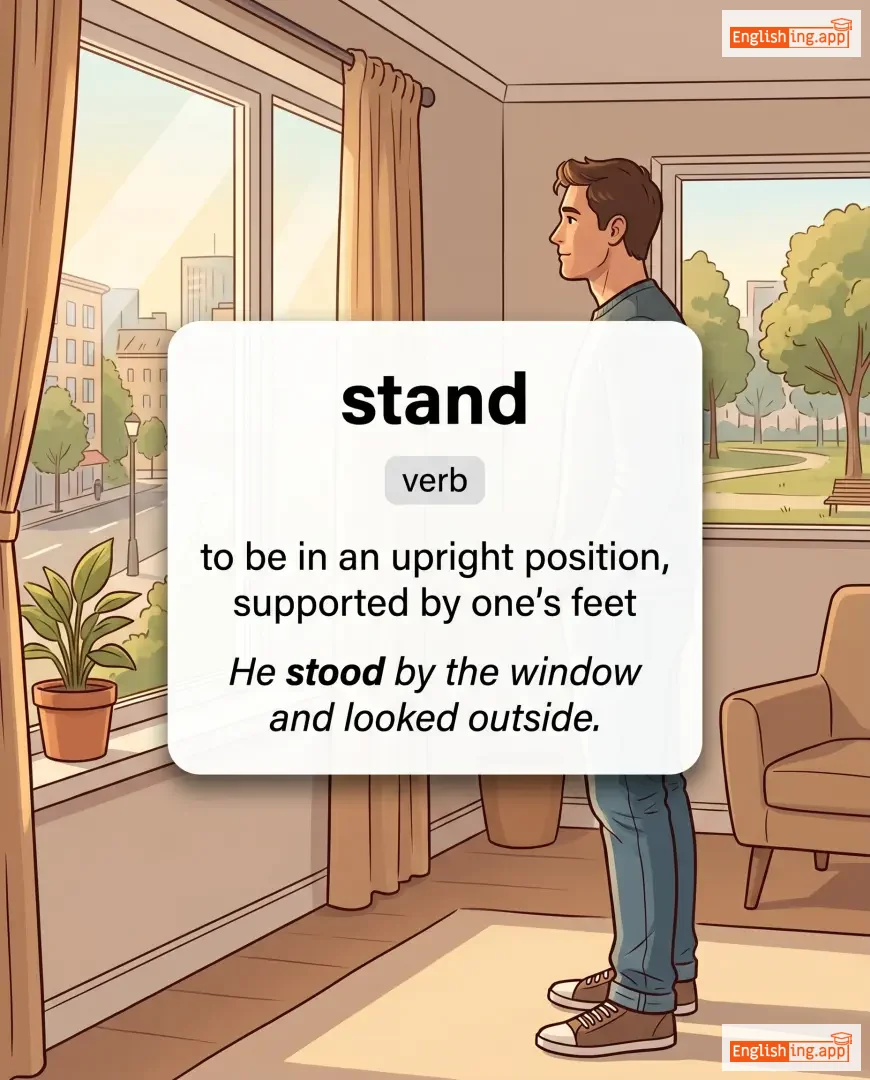
stand definition card — visual illustration of the meaning
verb
/stænd/
стоять (stoyat)

to be in an upright position, supported by one's feet

"He stood by the window and looked outside."

"Он стоял у окна и смотрел наружу." (On stoyal u okna i smotrel naruzhu.)
noun
/ˈstændərd/
стандарт (standart)

a level of quality or achievement, or a measure of comparison

"This car meets all the safety standards."
"Этот автомобиль соответствует всем стандартам безопасности." (Etot avtomobil sootvetstvuet vsem standartam bezopasnosti.)
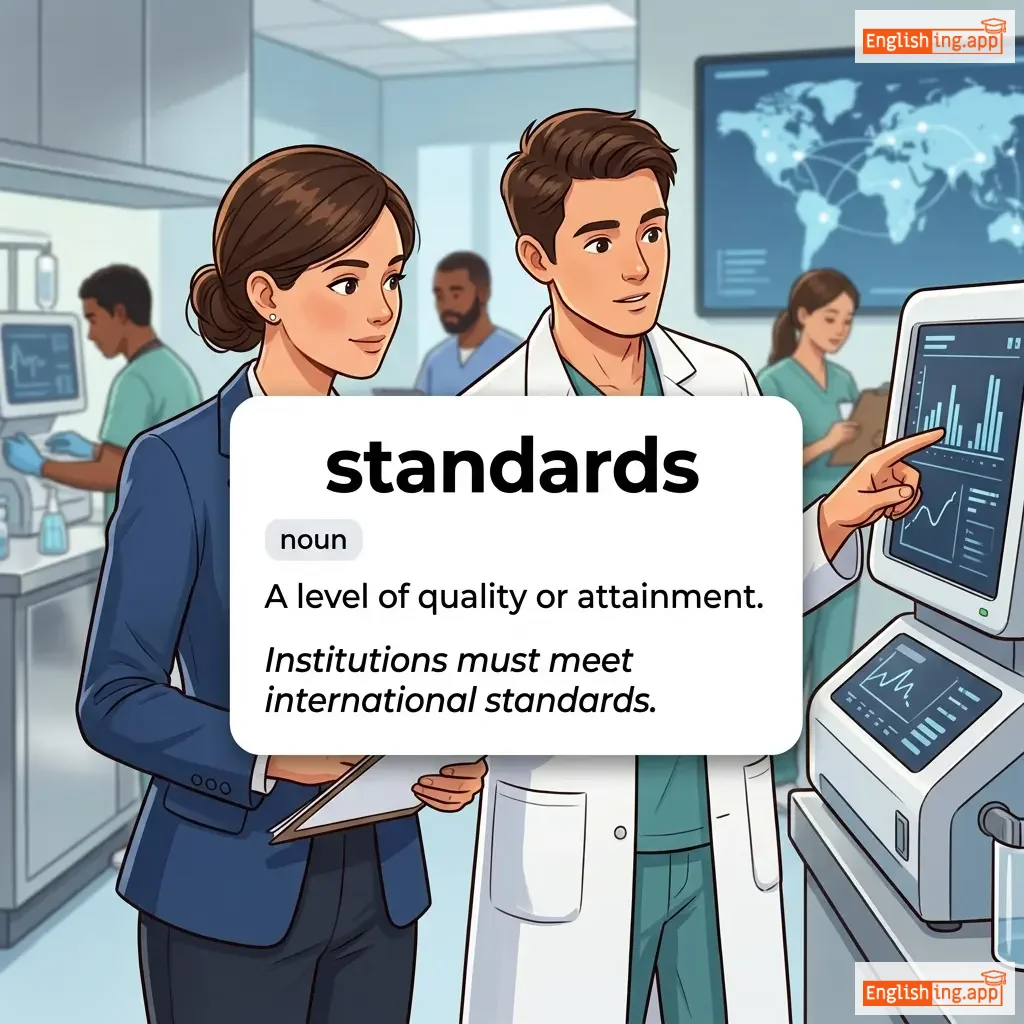
standards definition card — visual illustration of the meaning
noun
ˈstæn.dədz
стандарты (standarty)

A level of quality or attainment.

"Institutions must meet international standards."

"Учреждения должны соответствовать международным стандартам." (Uchezhdeniya dolzhny sootvetstvovat' mezhdunarodnym standartam.)
noun/adjective
/ˈstændɪŋ/
положение / репутация (polozhenie / reputatsiya)

status, reputation, or position; also the act of being upright on the feet

"He has high standing in the community for his charity work."

"У него высокий статус в обществе за его благотворительную работу." (U nego vysokiy status v obshchestve za ego blagotvoritel'nuyu rabotu.)
noun
/ˈstændˌstɪl/
застой (zastoy)

a situation in which all movement or activity stops

"The traffic came to a standstill after the accident."

"Движение остановилось после аварии." (Dvizheniye ostanovilos' posle avarii.)
noun
/ˈstænzə/
строфа (strofa)

a group of lines forming a unit in a poem or song

"The poem begins with a stanza describing nature."

"Стихотворение начинается с строфы, описывающей природу." (Stikhotvoreniye nachinayetsya s strophy, opisivayushchey prirodu.)
noun
/stɑːr/
звезда (zvezda)

a luminous point in the night sky, a famous person

"The movie star smiled for the cameras."

"Кинозвезда улыбнулась для камер." (Kinozvezda ulybnulas' dlya kamer.)
noun
/stɑːr ˈæn.ɪs/
звездчатый анис (zvezdchatyy anis)

star-shaped spice pod with a licorice-like flavor used in cooking

"She added star anise to the soup for aromatic flavor."

"Она добавила звездчатый анис в суп для аромата." (Ona dobavila zvezdchatyy anis v sup dlya aromata.)
noun
/stɑːr fɪʃ/
морская звезда (morskaya zvezda)

a marine echinoderm with five or more radiating arms, typically found on the sea floor

"The starfish slowly moved across the ocean floor searching for food."

"Морская звезда медленно двигалась по дну океана в поисках пищи." (morskaya zvezda medlenno dvigalas po dnu okeana v poiskakh pishchi)
noun
/stɑːr fruːts/
звездные фрукты (zvezdnyye frukty)

yellow tropical fruits that form a star shape when sliced crosswise; tangy and crisp taste

"When you slice star fruits, they look like beautiful yellow stars on your plate."

"Когда вы нарезаете звездные фрукты, они выглядят как красивые желтые звезды на вашей тарелке." (Kogda vy narezayete zvezdnyye frukty, oni vyglyadyat kak krasivyye zheltyye zvezdy na vashiy tarelke.)
verb
/stɛə/
пристально смотреть (pristal'no smotret')

to look at something with a fixed gaze

"She stared at the painting for hours."

"Она пристально смотрела на картину часами." (Ona pristral'no smotrela na kartinu chasami.)
adjective
/stɑːrk/
сильный, резкий (sil'nyy, rezkiy)

Severe, sharp, or clearly defined; plain and without any decoration.

"The stark contrast between poverty and wealth was evident in the city."

"Явное различие между бедностью и богатством было очевидно в городе." (Yavnoe razlichie mezhdu bednost'yu i bogatstvom bylo ochevidno v gorode.)
adjective
/ˈstɑː.ri/
звездный; яркий; (zvezdny)

full of stars; shining like stars; relating to stars

"We enjoyed the starry night sky while camping in the mountains."

"Мы наслаждались звездным ночным небом, когда мы лагерировали в горах." (my naslazhdalis zvezdnym nochnym nebom, kogda my lagerirovali v gorakh.)
start definition card — visual illustration of the meaning
verb
/stɑːrt/
начать (nachat)

To begin doing something; to commence.

"They will start the meeting at 10 a.m."

"Они начнут собрание в 10 утра." (Oni nachnut sobranie v 10 utra.)
noun
/ˈstɑːrtər/
человек или вещь, которая что-то начинает; первое блюдо на обеде (chelovek ili vesht', kotoraya chto-to nachinayet; pervoe blyudo na obede)

a person or thing that starts something; the first course of a meal

"The starter of the meal was a fresh salad."

"Первое блюдо на обеде было свежее салат." (Pervoye blyudo na obede bylo svezheye salat.)
verb
/ˈstɑːtɪŋ/
начинать (nachinat)

beginning to do or experience something

"She is starting a new job next week."

"Она начинает новую работу на следующей неделе." (Ona nachinaet novuyu rabotu na sleduyushchey nedele.)
verb
/ˈstɑːrtl/
испугать (ispugat)

To surprise or frighten someone suddenly.

"The loud noise startled the children."

"Громкий звук напугал детей." (Gromkiy zvuk napugal detey.)
adjective
/ˈstɑːrtəld/
испуганный (ispugannyy)

suddenly shocked or surprised by something unexpected

"She was startled by the loud noise outside."

"Она испугалась от громкого шума снаружи." (Ona ispugalas' ot gromkogo shuma s naruzhi.)
startup definition card — visual illustration of the meaning
noun
ˈstɑːtʌp
новая компания, предпринимательская инициатива (novaya kompaniya, predprinimatelskaya initsiativa)

New company, business venture.

"The startup grew into a global brand."

"Стартап стал глобальным брендом." (Startap stal global'nym brendom.)
noun
/stɑːˈveɪ.ʃən/
голод (golod)

suffering or death caused by lack of food; extreme hunger

"Many people died of starvation during the famine."

"Многие люди погибли от голода во время голодомора." (Mnogiye lyudi pogibli ot goloda vo vremya golodomora.)
verb
/stɑːv/
умереть от голода (umeret' ot goloda)

to suffer or die from lack of food

"He was left to starve in the desert."

"Его оставили умирать от голода в пустыне." (Ego ostavili umirat' ot goloda v pustyne.)
noun
/ˈsteɪsɪs/ or /ˈstæsɪs/
стазис (stazis)

A state of inactivity or equilibrium; a situation where nothing changes.

"The negotiations reached a state of stasis with no progress made."
"Переговоры достигли состояния стазиса, без прогресса." (Peregovory dostigli sostoyaniya stazisa, bez progressa.)
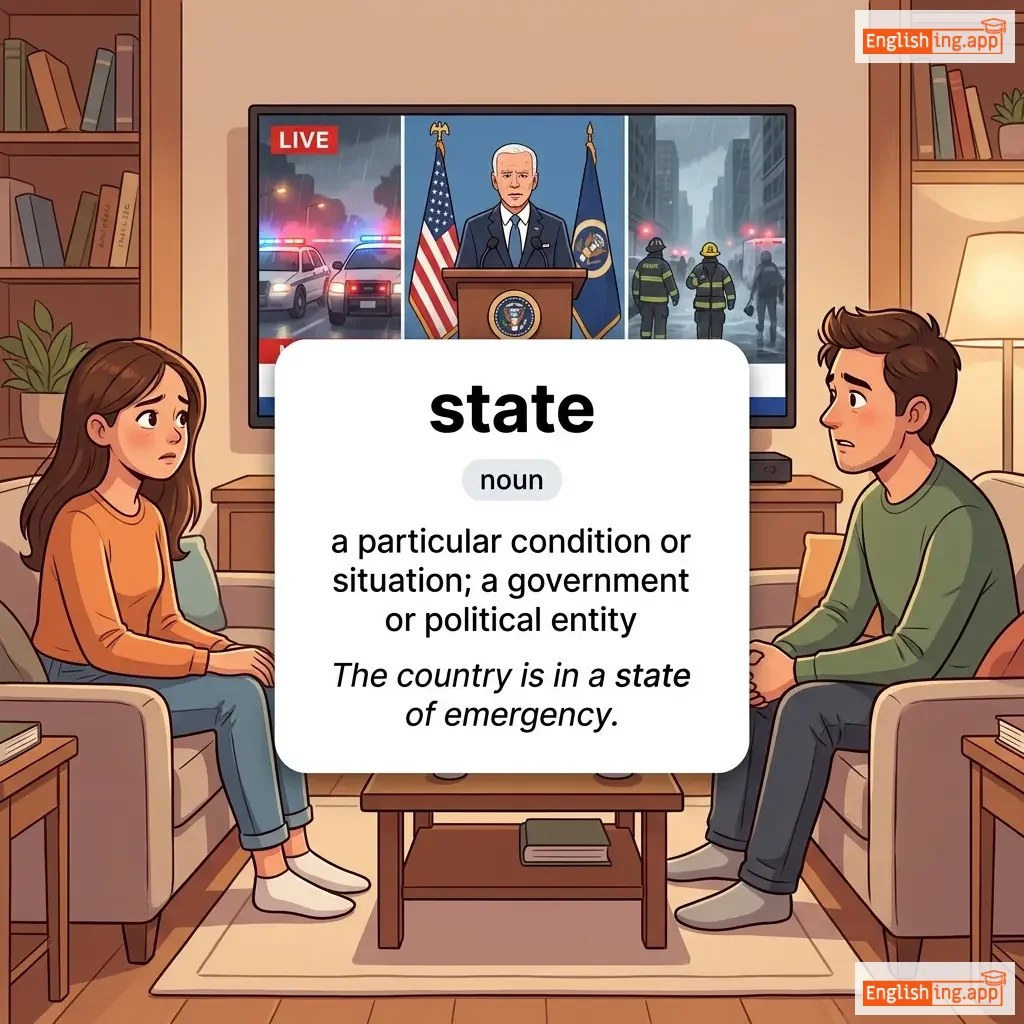
state definition card — visual illustration of the meaning
noun
/steɪt/
состояние (sostoyanie)

a particular condition or situation; a government or political entity

"The country is in a state of emergency."

"Страна находится в состоянии чрезвычайного положения." (Strana nakhoditsya v sostoyanii chrezvychaynogo polozheniya.)
noun
/ˈsteɪtkraft/
государственное управление (gosudarstvennoe upravlenie)

The art of governing and managing state affairs effectively.

"The leader was praised for his exceptional statecraft in handling international relations."

"Лидер был похвален за свое исключительное государственное управление в ведении международных отношений." (Lider byl pokhvalen za svoe iskluchitel'noe gosudarstvennoe upravlenie v vvedenii mezhdunarodnykh otnosheniy.)
adjective
/ˈsteɪtli/
величественный и достойный (velichestvennyy i dostoynyy)

Having a dignified, majestic, and impressive appearance or manner.

"The stately mansion stood at the end of the long driveway."

"Величественный особняк стоял в конце длинной подъездной дороги." (Velichestvennyy osobodnyak stoyal v kontse dlinnoi pod'yezdnoi dorogi.)
noun
/ˈsteɪtmənt/
заявление (zayavlenie)

a clear expression of something in speech or writing

"She made a statement about the company's new policies."
"Она сделала заявление о новых политике компании." (Ona sdelala zayavlenie o novykh politike kompanii.)
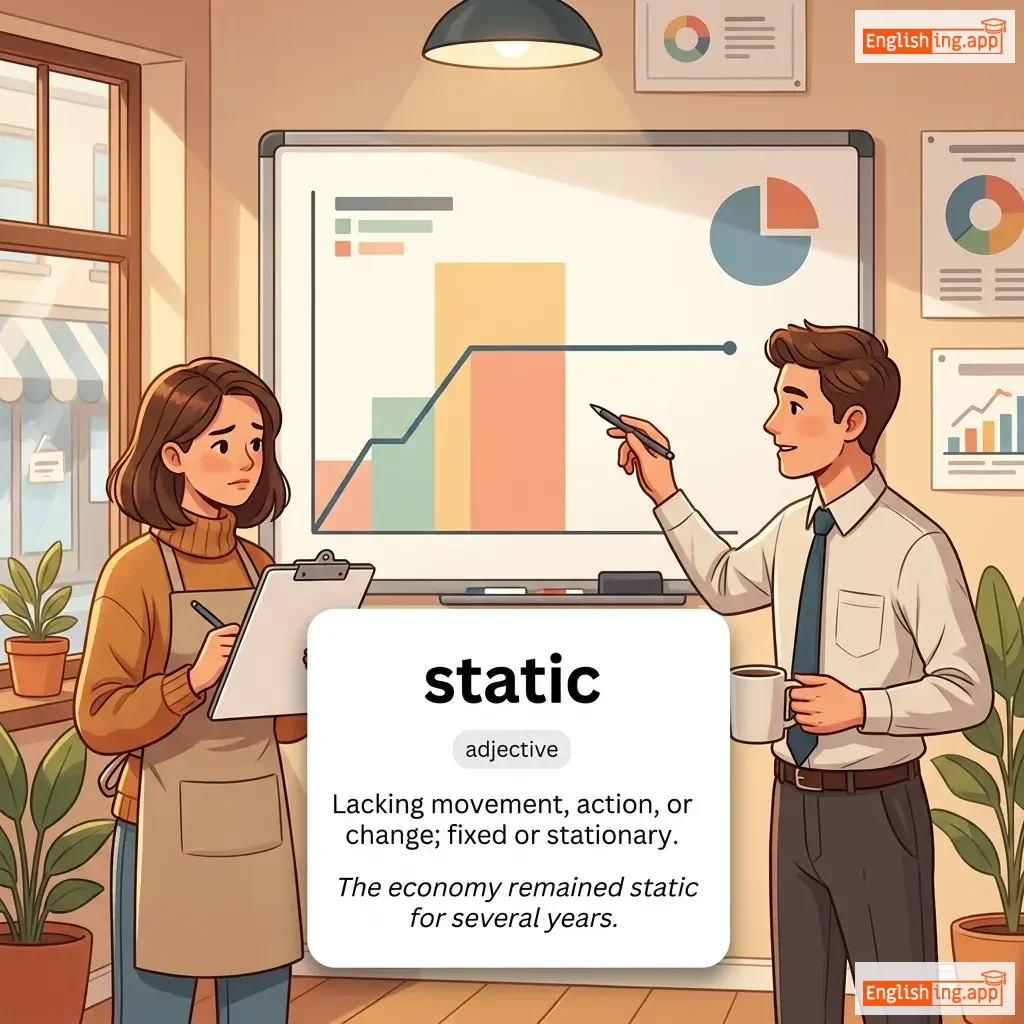
static definition card — visual illustration of the meaning
adjective
/ˈstætɪk/
статичный (statichny)

Lacking movement, action, or change; fixed or stationary.

"The economy remained static for several years."

"Экономика оставалась статичной на протяжении нескольких лет." (Ekonomika ostavalas statichnoy na protyazhenii neskol'kikh let.)
noun
/ˈstætɪks/
статика (statika)

The branch of mechanics dealing with bodies at rest and forces in equilibrium.

"She is studying statics as part of her engineering course."

"Она изучает статику в рамках своего инженерного курса." (Ona izuchayet statiku v ramkakh svoego inzhenernogo kursa.)
noun
/ˈsteɪʃən/
станция (steyshun)

a place where a particular service is provided, especially for transportation

"We arrived at the station just in time for the train."

"Мы прибыли на станцию как раз к поезду." (My pribyli na stantsiyu kak raz k poezdu.)
adjective
/ˈsteɪʃəˌneri/
неподвижный (nepodvizhnyy)

Not moving or not intended to be moved.

"The car remained stationary at the red light."

"Машина осталась неподвижной на красном свете." (Mashina ostalas' nepodvizhnoy na krasnom svete.)
noun
/ˈsteɪ.ʃən.ər/
канцтовары (kantsovary)

a person who sells paper, pens, pencils, and other office supplies

"The stationer recommended the best pens for writing exams."

"Канцеляр рекомендовал лучшие ручки для экзаменов." (Kantselyar rekomendoval luchshiye ruchki dlya ekzamenov.)
adjective
/stəˈtɪstɪkəl/
статистический (statisticheskiy)

relating to the use or analysis of numerical data

"The report provides statistical data about population growth."

"Отчет предоставляет статистические данные о росте населения." (Otchet predostavlyaet statisticheskie dannye o roste naseleniya.)
noun
/ˌstætɪˈstɪʃən/
статистик (statistik)

A person who specializes in collecting, analyzing, and interpreting numerical data.

"The statistician presented the survey results with great clarity."

"Статистик представил результаты опроса с большой ясностью." (Statistik predstavил rezul'taty opros s bol'shoy yasnost'yu.)
noun
/stəˈtɪstɪks/
статистика (statistika)

the practice or science of collecting and analyzing numerical data

"The statistics showed an increase in the number of users last year."

"Статистика показала увеличение числа пользователей в прошлом году." (Statistika pokazala uvelichenie chisla pol'zovateley v proshlom godu.)
noun
/ˈstætʃuː/
статуя (statya)

a carved or cast figure of a person or animal, especially one that is life-size or larger

"They built a statue of the national hero in the city square."

"Они построили статую национального героя на городской площади." (Oni postroili statuyu natsional'nogo geroya na gorodskoj ploshchadi.)
adjective
/ˌstætʃuˈɛsk/
статуиобразный (statuioobrazny)

Having the grace, beauty, or dignity of a statue; tall and attractively proportioned.

"She had a statuesque figure that turned heads wherever she went."

"У нее была статуиобразная фигура, которая привлекала взгляды, куда бы она ни шла." (U nee byla statuiobraznaya figura, kotoraya privlekala vzglyady, kuda by ona ni shla.)
noun
/ˌstætʃuˈɛt/
маленькая статуэтка (malenkaya statuëtka)

A small statue, usually decorative or artistic.

"The artist won a gold statuette for his work."

"Художник выиграл золотую маленькую статуэтку за свою работу." (Khudozhnik viigral zolotuyu malen'kuyu statuëtku za svoyu rabotu.)
noun
/ˈstætʃər/
рост, статус (rost, status)

A person's natural height or their reputation and importance.

"Her intellectual stature made her a respected figure in academia."

"Ее интеллектуальный статус сделал ее уважаемой фигурой в академических кругах." (Eyo intellektualnyi status sdelal yeye uvazhaemoi figuroi v akademicheskikh krugakh.)
noun
/ˈsteɪtəs/
статус (status)

the social or professional position or condition of someone or something

"His social status improved after the promotion."

"Его социальный статус улучшился после повышения." (Yego sotsial'nyy status uluchshilsya posle povysheniya.)
noun
/ˈsteɪtəs kwoʊ/
статус кво (status kvo)

The existing state of affairs, especially regarding social or political issues.

"The government decided to maintain the status quo until further review."

"Правительство решило сохранить статус кво до дальнейшего рассмотрения." (Pravitel'stvo reshilo sokhranit' status kvo do dal'neyshego rassmotreniya.)
noun
/ˈstætʃuːt/
закон (zakon)

A written law passed by a legislative body.

"The new statute protects workers' rights."

"Новый закон защищает права рабочих." (Novyy zakon zashchishchayet prava rabochikh.)
adjective
/ˈstætʃətɔːri/
обязательный по закону (obyazatel'nyy po zakonu)

Required, permitted, or enacted by law.

"The company must comply with all statutory regulations."

"Компания должна соблюдать все обязательные по закону правила." (Kompaniya dolzhna soblyudat' vse obyazatel'nye po zakonu pravila.)
adjective
/stɔːntʃ/
стойкий, верный (stoykiy, vernyy)

Loyal, committed, and firm in support.

"She is a staunch supporter of environmental protection."

"Она стойкий сторонник защиты окружающей среды." (Ona stoykiy storonnik zashchity okruzhayushchey sredy.)
stay definition card — visual illustration of the meaning
verb
/steɪ/
остаться (ostatsya)

to remain in a particular place or state

"We decided to stay at home during the storm."

"Мы решили остаться дома во время шторма." (My reshili ostatsya doma vo vremya shtorma.)
adjective
/ˈstɛdfæst/
непоколебимый, верный (nepokolebimyj, vernyj)

Firm, loyal, and unwavering in purpose or support.

"He remained steadfast in his determination to succeed."

"Он оставался непоколебимым в своем стремлении к успеху." (On ostavalsya nepokolebimyj v svoem stremlenii k uspekhu.)
adverb
/ˈstɛdɪli/
постоянно (postoyanno)

in a regular and continuous way; without stopping or changing

"The company's profits have been increasing steadily."

"Прибыль компании постоянно растет." (Pribyl' kompanii postoyanno rastet.)
adjective
/ˈstɛdi/
стабильный (stabil'nyj)

firm, stable, and not likely to change suddenly

"He kept his hand steady while painting the picture."

"Он держал свою руку стабильно, рисуя картину." (On derzhal svoyu ruku stabil'no, risuya kartinu.)