Словари

Словарь английского языка | Значения слов, определения и примеры

adjective
/spraɪ/
проворный (provorniy)

active and lively, especially in old age

"The spry grandmother surprised everyone with her quick dance steps."

"Проворная бабушка удивила всех своими быстрыми танцевальными шагами." (Provornaia babushka udivila vsekh svoimi bystrymi tantseval'nymi shagami.)
noun
/spjuːm/
пена (pena)

Froth or foam, especially found on waves or liquids.

"The waves crashed against the rocks, leaving spume in the air."

"Волны разбивались о скалы, оставляя пену в воздухе." (Volny razbivalis' o skaly, ostavlyaya penu v vozdukhe.)
verb
/spɜːr/
побуждать / мотивировать (pobuzhdat / motivirovat)

To encourage or motivate someone to take action.

"The teacher's praise spurred him to study harder."

"Похвала учителя побудила его учиться усерднее." (Pokhvala uchitelya pobudila ego uchit'sya usyerdneye.)
adjective
/ˈspjʊəriəs/
ложный / фальшивый (lozhny / fal'shivy)

Not genuine, authentic, or true; false or fake.

"The report was based on spurious claims."

"Отчет был основан на ложных утверждениях." (Otchet byl osnovan na lozhnykh utverzhdeniyakh.)
verb
/spɜːrn/
отвергать с презрением (otvergat' s prezreniem)

To reject something or someone with disdain or contempt.

"She spurned his offer of help."

"Она отвергла его предложение о помощи с презрением." (Ona otvergla ego predlozhenie o pomoshchi s prezreniem.)
🕵️‍♂️

spy (spay)

verb
/spaɪ/
шпионить (shpionit)

to secretly collect information about a person, group, or country

"He was caught spying on his neighbor through the window."

"Его поймали, когда он шпионит за своим соседом через окно." (Ego poymali, kogda on shpionit za svoim sosedom cherez okno.)
verb
/ˈskwɒbəl/
ссориться по пустякам (ssoritsya po pustyakam)

To argue noisily over something small or unimportant.

"The children squabbled over the last piece of cake."

"Дети спорили из-за последнего кусочка торта." (Deti sporyli iz-za poslednego kusochka torta.)
noun
/skwɒd/
команда (komanda)

a small group of people organized for a specific purpose or task, often in the military or sports

"The football squad trained hard before the championship match."

"Футбольная команда тренировалась усердно перед матчем чемпионата." (Futbol'naya komanda trenirovalas' usyerdno pered matchem chempionata.)
adjective
/ˈskwɒlɪd/
крайне грязный (kraine gryaznyy)

extremely dirty and unpleasant, often due to poverty or neglect

"He lived in a squalid room with broken furniture."

"Он жил в грязной комнате с поломанной мебелью." (On zhil v gryaznoy komnate s polomannoy mebel'yu.)
noun
/skwɔːl/
штормовой порыв (shtormovoy poryv)

a sudden violent gust of wind, often accompanied by rain, snow, or sleet

"A sudden squall caught the sailors off guard."
"Внезапный штормовой порыв застал моряков врасплох." (Vnezapnyy shtormovoy poryv zastal moryakov vrasploh.)
squalor definition card — visual illustration of the meaning
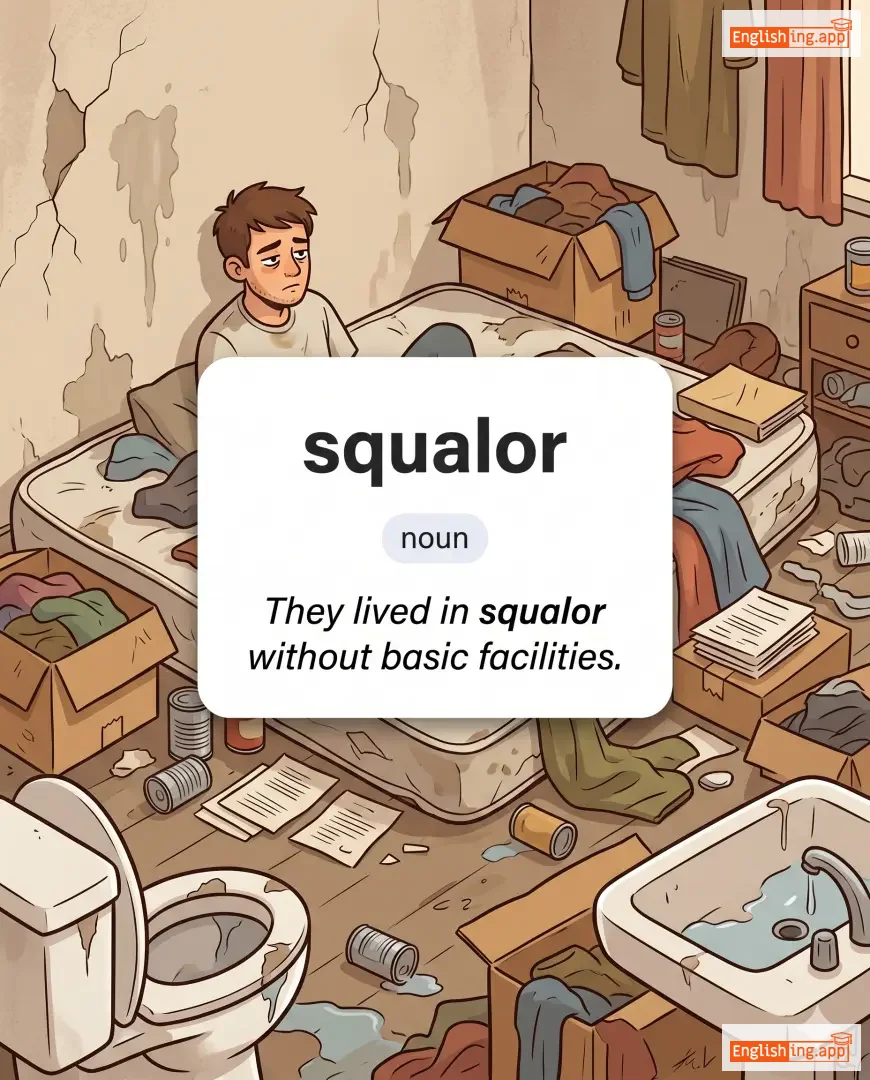
noun
/ˈskwɒlər/
нищета (nishcheta)

the state of being extremely dirty and unpleasant, especially due to poverty or neglect

"They lived in squalor without basic facilities."
"Они жили в нищете без базовых удобств." (Oni zhili v nishchete bez bazovykh udobstv.)
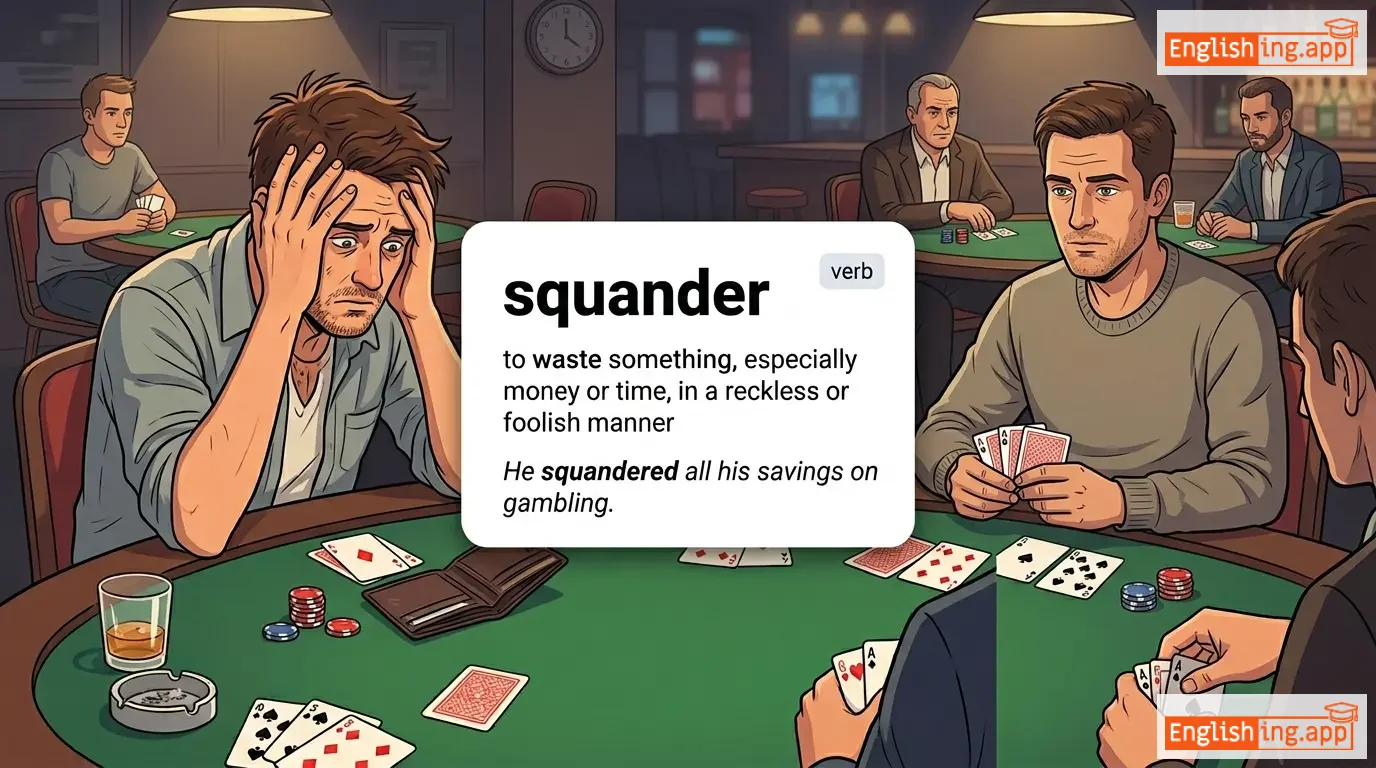
squander definition card — visual illustration of the meaning
verb
/ˈskwɒndər/
расточать (rastochat')

to waste something, especially money or time, in a reckless or foolish manner

"He squandered all his savings on gambling."

"Он растратил все свои сбережения на азартные игры." (On rastatil vse svoi sberegeniya na azartnye igry.)
noun
/skwɛə(r)/
квадрат (kvadrat)

a shape with four equal straight sides and four right angles

"The table has a square shape."

"Стол имеет квадратную форму." (Stol imeyet kvadratnuyu formu.)
verb
/skwɒʃ/
раздавить (razdavít)

to crush or squeeze something with force so that it becomes flat or broken

"She accidentally squashed the bug with her shoe."

"Она случайно раздавила насекомое своим ботинком." (Ona sluchayno razdavila nasekomoye svoim botinkom.)
/skwɒt/
приседать (prisedat)

to crouch or sit with knees bent and body close to the ground

"He squatted down to tie his shoes."

"Он присел, чтобы завязать шнурки." (On prisel, chtoby zavyazat' shnurchiki.)
noun
/ˈskwɒtər/
незаконный поселенец (nezakonnyy poselenets)

a person who unlawfully occupies an uninhabited building or unused land

"The police removed the squatters from the abandoned house."
"Полиция вывела незаконных поселенцев из заброшенного дома." (Politsiya vyyvela nezakonnykh poselentsev iz zabroshennogo doma.)
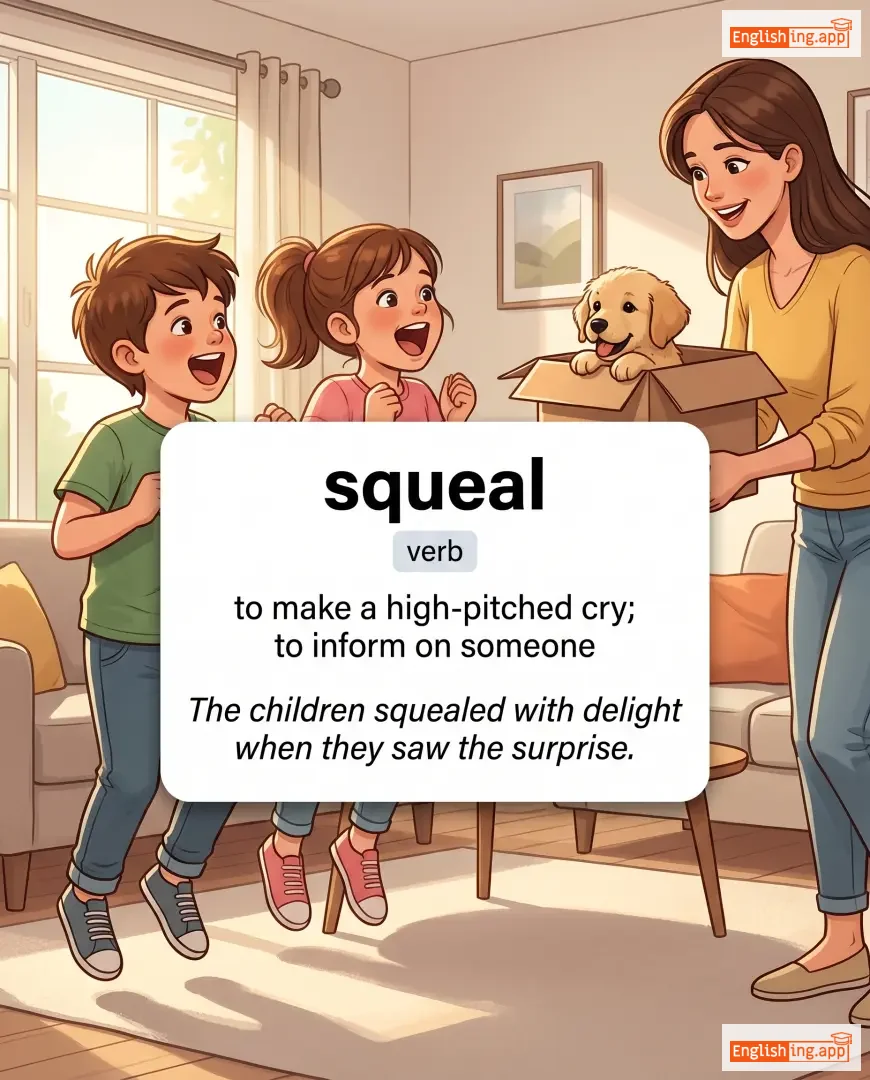
squeal definition card — visual illustration of the meaning
verb
/skwiːl/
вскрикнуть (vskriknut)

to make a high-pitched cry; to inform on someone

"The children squealed with delight when they saw the surprise."

"Дети вскрикнули от радости, когда они увидели сюрприз." (Deti vskriknuli ot radosti, kogda oni uvideli syurpriz.)
adjective
/ˈskwiːmɪʃ/
легко вызывающий тошноту, головокружение или отвращение (legko vyzyvayushchiy toshnotu, golovokruzhenie ili otvrashchenie)

easily made to feel sick, faint, or disgusted

"She felt squeamish at the sight of blood."

"Ей стало плохо при виде крови." (Eyi stalo plokho pri vide krovi.)
verb
/skwiːz/
сжимать (szhimat)

to press something firmly, especially from all sides in order to extract or compress it

"She squeezed the toothpaste to get the last bit."

"Она сжала тюбик с зубной пастой, чтобы извлечь последнюю часть." (Ona szhala tyubik s zubnoy pastoy, chtoby izvlech' poslednyuyu chast'.)
verb
/skwɛltʃ/
подавлять; заглушать; хлюпать (squelch)

to make a soft sucking sound, such as when walking on mud; to suppress or silence

"His boots squelched in the wet ground."

"Его сапоги хлюпали по мокрой почве." (Ego sapogi khlyupali po mokroy pochve.)
verb
/skwɪnt/
прищуриться (prishchurit'sya)

to look with partly closed eyes

"She squinted at the bright sunlight."

"Она прищурилась от яркого солнечного света." (Ona prishchurilas' ot yarkogo solnechnogo sveta.)
noun
/ˈskwɪr.əl/
белка (belka)

a small agile tree-dwelling rodent with a long bushy tail

"The squirrel gathered nuts for winter."

"Белка собирала орехи для зимы." (Belka sobirala orekhi dlya zimy.)
verb, noun
/stæb/
порезать ножом (porezat' nozhom)

to pierce or wound with a pointed weapon or object

"He was stabbed in the back during the altercation."

"Его подкололи в спину во время ссоры." (Ego podkololi v spinu vo vremya ssory.)
noun
/stəˈbɪləti/
стабильность (stability)

the quality of being steady and unchanging over time

"The stability of the economy is crucial for growth."
"Стабильность экономики имеет решающее значение для роста." (Stabilnost ekonomiki imeet reshuyushchee znachenie dlya rosta)
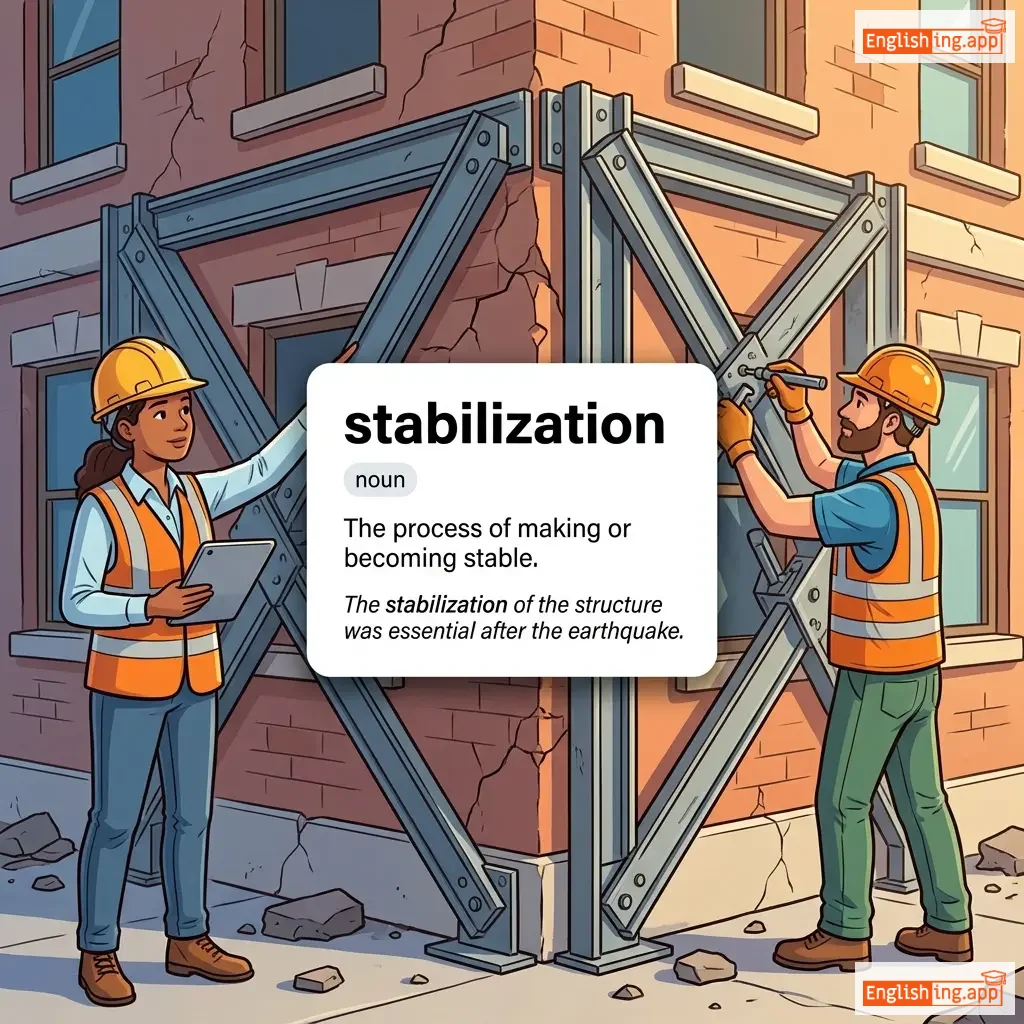
stabilization definition card — visual illustration of the meaning
noun
ˌsteɪbəlaɪˈzeɪʃən
стабилизация (stabilizatsiya)

The process of making or becoming stable.

"The stabilization of the structure was essential after the earthquake."

"Стабилизация структуры была необходима после землетрясения." (Stabilizatsiya struktury byla neobkhodima posle zemletryaseniya.)
verb
/ˈsteɪ.bə.laɪz/
стабилизировать (stabilizirovat')

to make something steady, secure, or unlikely to change suddenly

"The government took measures to stabilize the economy."
"Правительство приняло меры для стабилизации экономики." (Pravitel'stvo prinyalo mery dlya stabilizatsii ekonomiki.)
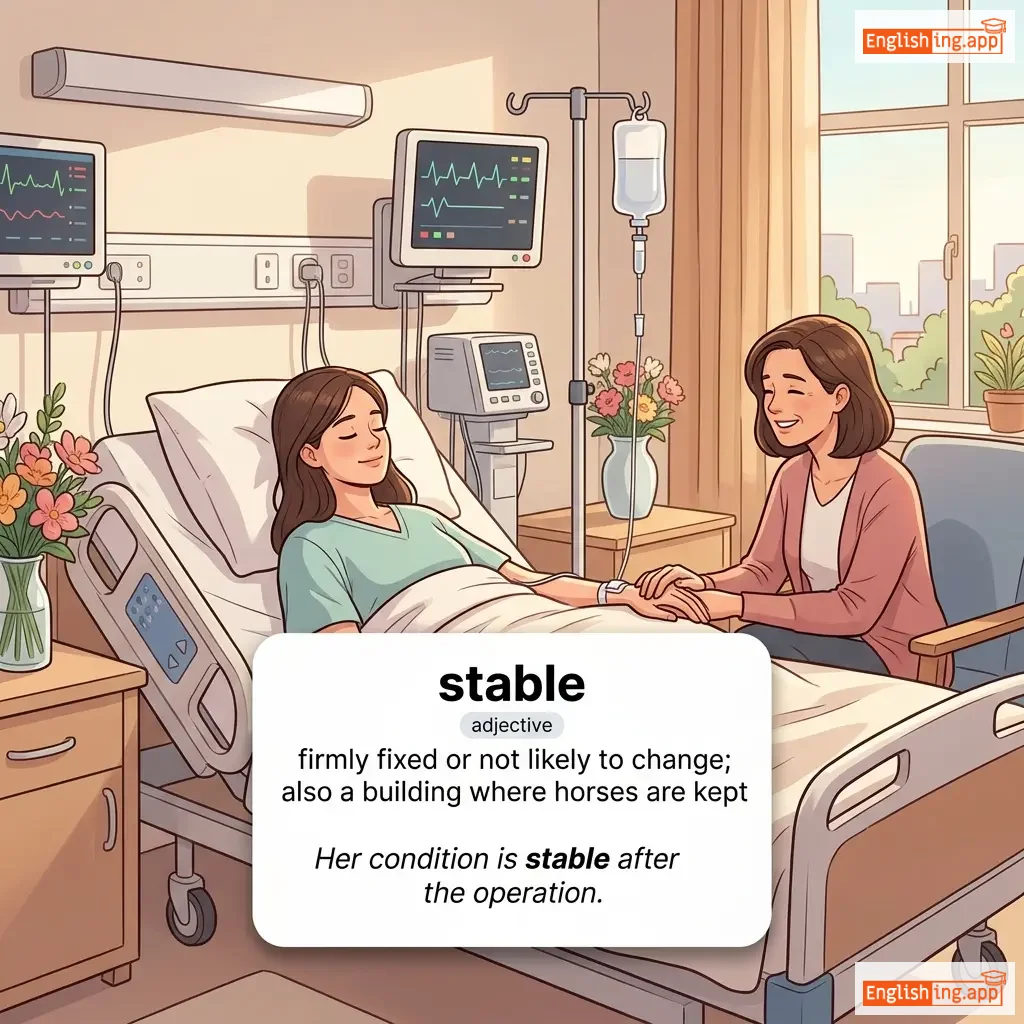
stable definition card — visual illustration of the meaning
adjective
/ˈsteɪ.bəl/
стабильный / конюшня (stabil'nyy / konyushnya)

firmly fixed or not likely to change; also a building where horses are kept

"Her condition is stable after the operation."
"Ее состояние стабильно после операции." (Eyo sostoyanie stabil'no posle operatsii.)
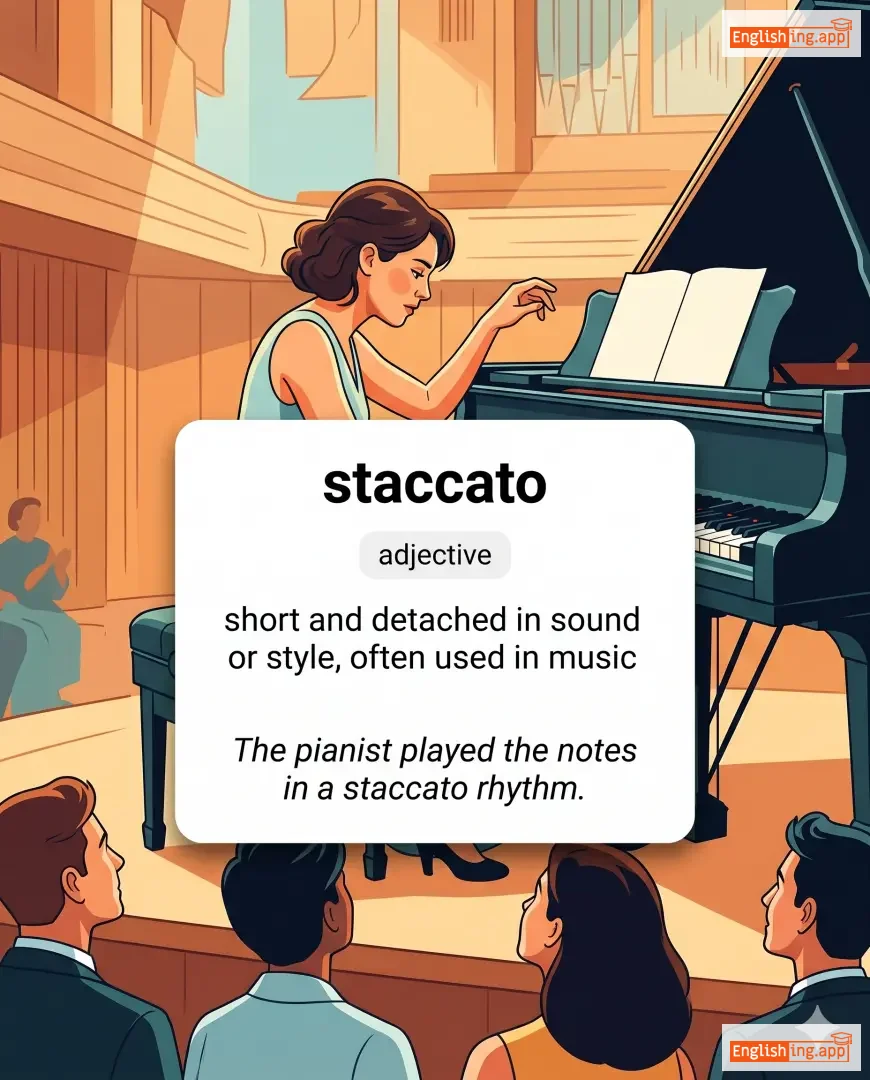
staccato definition card — visual illustration of the meaning
adjective
/stəˈkɑː.təʊ/
отрезанный (otrezannyy)

short and detached in sound or style, often used in music

"The pianist played the notes in a staccato rhythm."

"Пианист играл ноты в ритме стаккато." (Pianist igral noty v ritme stakkato.)
verb
/stæk/
складывать или накапливать (skladyvat' ili nakaplivat')

to arrange things in a neat pile or one on top of another

"He stacked the books neatly on the shelf."

"Он аккуратно сложил книги на полке." (On akuratno slozhil knigi na polke.)
🏟️

stadium

noun
/ˈsteɪdiəm/

a large structure with seating for sports, concerts, or other events

"Thousands of fans filled the stadium to watch the final match."

noun
/stæf/
персонал (personal)

a group of employees working together in an organization

"The staff at the hospital are very helpful."

"Персонал в больнице очень полезен." (Personal v bol'nitse ochen' polezen.)
noun
/steɪdʒ/
сцена (stsena)

a raised platform or area for performances or presentations

"The actor stepped onto the stage to deliver his speech."

"Актер поднялся на сцену, чтобы произнести свою речь." (Aktor podnyalsya na stsenu, chtoby proyiznesti svoyu rech'.)
adjective
/ˈstæɡ.nənt/
стоячий (stoyachiy)

not moving, changing, or developing; inactive

"The company’s growth remained stagnant for several years."

"Рост компании оставался стагнирующим в течение нескольких лет." (Rost kompanii ostavalsya stagniruyushchim v techeniye neskol'kikh let.)
verb
/ˈstæɡ.neɪt/
стагнировать (stagnirovat)

to stop developing, progressing, or moving

"Without innovation, the business will stagnate."
"Без инноваций бизнес будет стагнировать." (Bez innovatsiy biznes budet stagnirovat'.)
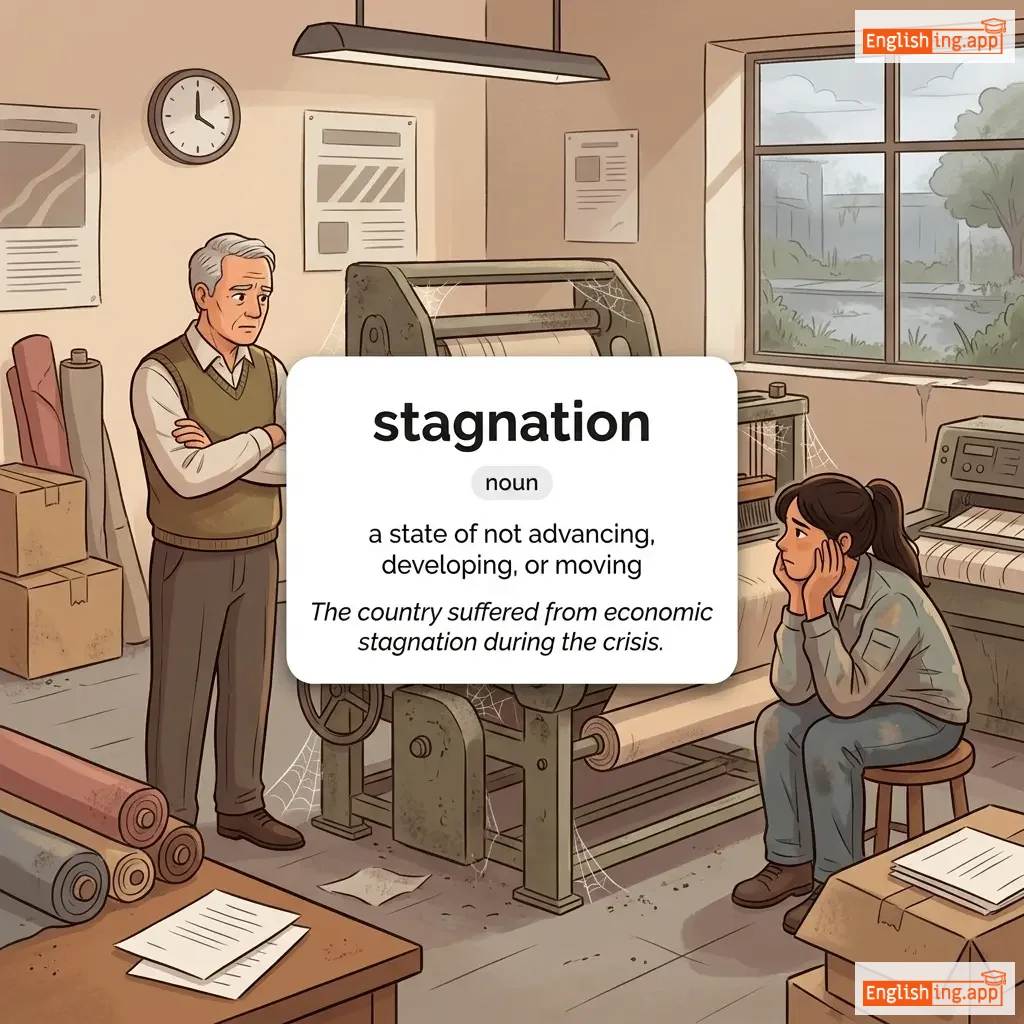
stagnation definition card — visual illustration of the meaning
noun
/stæɡˈneɪ.ʃən/
стагнация (stagnatsiya)

a state of not advancing, developing, or moving

"The country suffered from economic stagnation during the crisis."

"Страна страдала от экономической стагнации во время кризиса." (Strana stradala ot ekonomicheskoy stagnatsii vo vremya krizisa.)
adjective
/ˈsteɪ.dʒi/
чрезмерно театральный (chrezmerno teatral'nyy)

Overly theatrical, artificial, or exaggerated in manner or style.

"Her performance felt stagy and unnatural."

"Её выступление казалось чрезмерно театральным и неестественным." (Eyo vystupleniye kazalos' chrezmerno teatral'nym i neestestvennym.)
adjective
/steɪd/
серьезный, уважаемый (seryozny, uvazhayemyy)

Serious, respectable, and unadventurous.

"He came from a staid family background."

"Он пришел из серьезной семьи." (On prishel iz seryoznoy sem'i.)
🩸

Stain

verb
/steɪn/

to mark or discolor something permanently; a spot or mark left behind

"The coffee spilled and stained the tablecloth."

noun
/stɛə/
лестница (lestnitsa)

a step or set of steps leading from one level to another

"He tripped on the stair and fell down."

"Он споткнулся на лестнице и упал." (On spotknulsya na lestnitse i upal.)
noun, verb
/steɪk/
доля, риск (dolya, risk)

A share or interest in a business or venture; to risk or support something of value.

"He has a major stake in the new company."
"У него есть большая доля в новой компании." (U nego yest' bol'shaya dolya v novoy kompanii.)
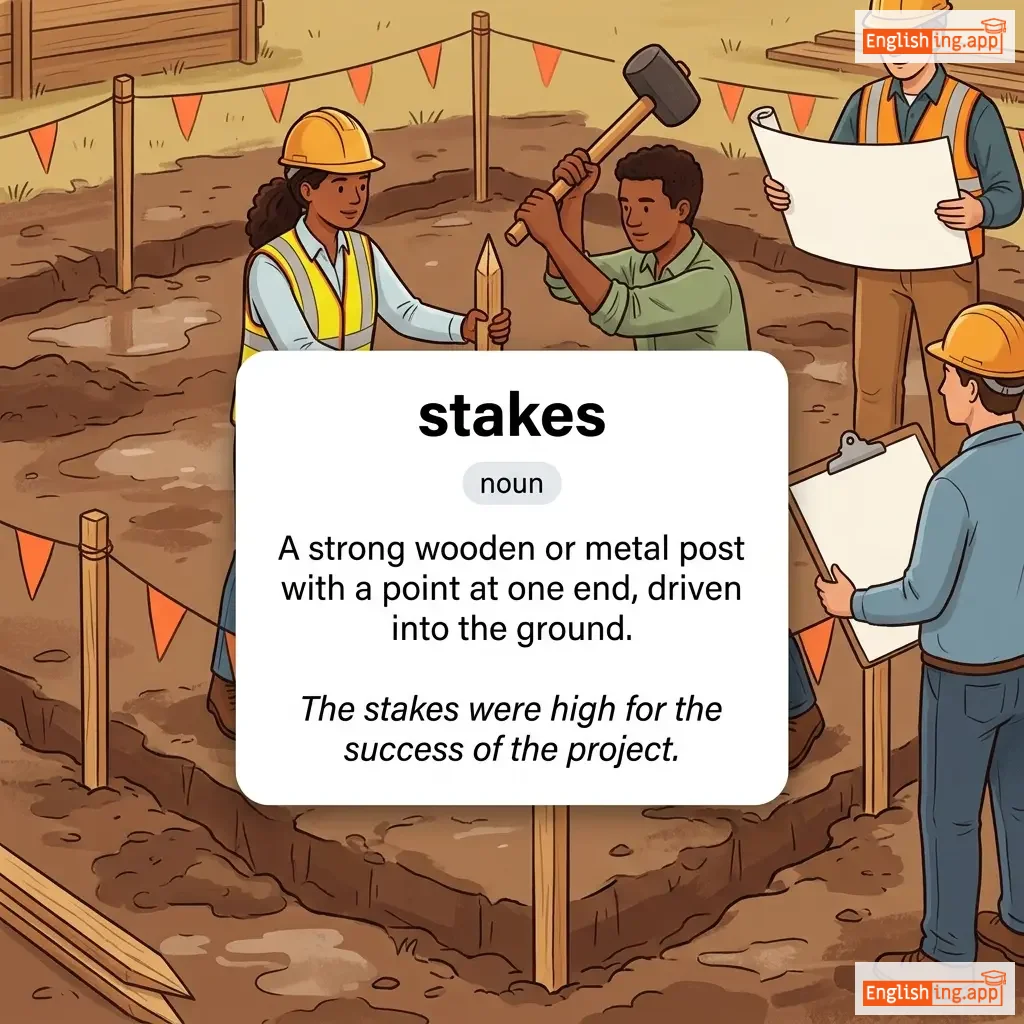
stakes definition card — visual illustration of the meaning
noun
steɪks
ставка (stavka)

A strong wooden or metal post with a point at one end, driven into the ground.

"The stakes were high for the success of the project."

"Ставки были высоки для успеха проекта." (Stavki byli vysokie dlya uspekha proekta.)
adjective
/steɪl/
черствый; старый; не свежий (steyl)

no longer fresh; lacking originality or novelty

"The bread became stale after sitting out for three days."

"Хлеб стал черствым после того, как пролежал три дня." (Khleb stal chertsvym posle togo, kak prolezhalsya tri dnya.)
noun
/ˈsteɪl.meɪt/
тупик (tupik)

A situation in which no progress can be made or no party can win.

"Negotiations ended in a stalemate."

"Переговоры закончились тупиком." (Peregovory zakonchilis' tupikom.)
verb, noun
/stɔːl/
остановить, киоск (ostanovit', kioskh)

to stop or cause to stop temporarily; a small shop or stand

"The car stalled on the way to the office."

"Машина остановилась по пути в офис." (Mashina ostanovilas' po puti v ofis.)
noun
/ˈstæl.i.ən/
жеребец для разведения (zherebets dlya razvedeniya)

An adult male horse that is not castrated, often used for breeding.

"The farm owns a powerful stallion for breeding purposes."

"Ферма владеет мощным жеребцом для разведения." (Ferma vladeet moshchnym zherebtsom dlya razvedeniya.)
adjective
/ˈstɔːlwərt/
непоколебимый, верный (nepokolebimy, verny)

Loyal, reliable, and hardworking; strongly built or sturdy.

"She has always been a stalwart supporter of the community."

"Она всегда была непоколебимым сторонником сообщества." (Ona vsegda byla nepokolebimym storonnikom soobshchestva.)
noun
/ˈstæmɪnə/
выносливость (vynoslivost)

The physical or mental strength to sustain prolonged effort or activity.

"Marathon runners need great stamina to finish the race."

"Марафонцы нуждаются в большой выносливости, чтобы завершить гонку." (Marafontsy nuzhdayutsya v bol'shoy vynoslivosti, chtoby zavershit' gonku.)
verb
/ˈstæmər/
заикаться (zaikatsya)

To speak with sudden involuntary pauses and a tendency to repeat the initial letters of words.

"The nervous student began to stammer during his speech."

"Нервный студент начал заикаться во время своей речи." (Nervnyy student nachal zaikatsya vo vremya svoey rechi.)
📮

stamp

verb
/stæmp/

To bring down (one's foot) heavily on the ground; to imprint a mark or seal.

"She stamped her foot in frustration."

noun/verb
/stæmˈpiːd/
паника (panika)

A sudden, uncontrolled rush of people or animals; to cause a mass movement.

"The loud noise caused a stampede of the crowd."

"Громкий звук вызвал панику в толпе." (Gromkiy zvuk vyzval paniku v tolpe.)