Словари

Словарь английского языка | Значения слов, определения и примеры

noun
/səˈprɑːnoʊ/
самый высокий женский или детский голос (samyy vysokiy zhenskiy ili detskiy golos)

the highest female or boy’s singing voice

"She sang beautifully in the soprano range during the concert."

"Она пела прекрасно в сопрановом регистре во время концерта." (Ona pela prekrasno v soprano registre vo vremya kontserta.)
noun
/ˈsɔːrsəri/
колдовство (koldovstvo)

the use of magical powers, especially through spells and enchantments

"The villagers believed the illness was caused by sorcery."

"Жители деревни верили, что болезнь вызвана колдовством." (Zhiteli derevni verili, chto bolezn' vyzvana koldovstvom.)
sordid definition card — visual illustration of the meaning
adjective
/ˈsɔːrdɪd/
гнусный (gnusnyy)

involving immoral or dishonorable actions; dirty or unpleasant

"The newspaper exposed the politician's sordid past."

"Газета раскрыла позорное прошлое политика." (Gazeta raskryla pozornoye proshloye politika.)
adjective
/sɔːr/
болезненный (boleznennyy)

painful or aching, usually in a specific part of the body

"After the long run, my legs were sore."

"После длинного бега мои ноги были болючими." (Posle dlinogo bega moi nogi byli bolyuchimi)
noun
/ˈsɑːroʊ/
горе (gore)

a feeling of deep sadness or grief

"She was filled with sorrow after the loss of her friend."

"Она была полна горя после потери своей подруги." (Ona byla polna gory posle poteri svoey podrugi.)
adjective
/ˈsɔːri/
извини (izvini)

feeling regret or sympathy

"She felt sorry for what had happened."

"Ей было жаль, что случилось." (Ey bylo zhal', chto sluchilos'.)
verb
/sɔːrt/
сортировать (sortirovat)

to arrange or categorize something

"Please sort the files by date."

"Пожалуйста, отсортируйте файлы по дате." (Pozhaluysta, otsortiruyte fayly po date.)
noun
/soʊl/
душа (dusha)

the spiritual or immaterial part of a person, often thought of as eternal

"She believed her soul would live on after death."

"Она верила, что её душа будет жить после смерти." (Ona verila, chto yeye dusha budet zhit' posle smerti.)
noun, verb, adjective
/saʊnd/
звук (zvuk)

a sensation perceived by the ear; to make or cause to make a noise; in good condition

"The bell sounded across the valley."

"Колокол прозвучал через долину." (Kolokol prozvuchal cherez dolinu.)
adjective
/ˈsaʊnd.pruːf/
звуконепроницаемый; предотвращает проникновение или выход звука (zvukonepronikayemyy)

impervious to sound; preventing sound from entering or leaving

"The recording studio has sound-proof walls."

"В студии звукозаписи есть звуконепроницаемые стены." (V studii zvukozapisi yest' zvukonepronikayemyye steny.)
noun
/suːp/
суп (sup)

a liquid dish, typically made with meat, vegetables, or legumes, and often served hot

"She made a delicious tomato soup for dinner."

"Она приготовила вкусный томатный суп на ужин." (Ona prigotovila vkusnyy tomatnyy sup na uzhin.)
noun
/ˈsuːpsɒ̃/
маленькое количество (malen'koye kolichestvo)

a very small quantity of something; a trace

"She added just a soupcon of spice to the dish."

"Она добавила всего лишь немного специй в блюдо." (Ona dobavila vsego lish' nemnogo spetsiy v blyudo.)
adjective
/ˈsaʊər/
кислый (kisly)

having an acidic taste; unpleasant or bad-tempered

"The milk has gone sour."

"Молоко стало кислым." (Moloko stalo kislym.)
noun
/ˈsaʊər wʊd ˈæp.əl/
слоновое яблоко (slonovoe yabloko)

a tropical fruit with hard shell and tangy flesh; elephant apple

"The sour wood apple has a unique taste that many people enjoy."

"Слоновое яблоко имеет уникальный вкус, который многим нравится." (Slonovoe yabloko imeet unikal'nyy vkus, kotoryy mnogim nravitsya)
noun
/sɔːrs/
источник (istochnik)

a place, person, or thing from which something originates or is obtained

"The internet is a vast source of information."

"Интернет — это огромный источник информации." (Internet — eto ogromnyy istochnik informatsii.)
noun/adjective
/saʊθ/
юг (yug)

the direction towards the bottom of a map, opposite to north

"The sun rises in the east and sets in the south."

"Солнце восходит на востоке и садится на юге." (Solntse voskhodit na vostoke i saditsya na yuge.)
proper noun
/ˌsaʊθ əˈmɛrɪkə/
Южная Америка (Yuzhnaya Amerika)

a continent located in the Western Hemisphere, mostly in the Southern Hemisphere

"Brazil is the largest country in South America."

"Бразилия — крупнейшая страна в Южной Америке." (Braziliya — krupneyshaya strana v Yuzhnoy Amerike.)
noun
/ˌsaʊθˈiːst/
юго-восток (yugo-vostok)

the direction that is between south and east; a region in that direction

"The city is located in the southeast of the country."

"Город находится на юго-востоке страны." (Gorod nakhoditsya na yugo-vostoke strany.)
adjective
/ˈsʌðərn/
южный (yuzhny)

located in or facing the south; southern regions

"She moved to a southern city for work."

"Она переехала в южный город для работы." (Ona pereyekhala v yuzhnyy gorod dlya raboty.)
noun
/ˌsaʊθˈwɛst/
юго-запад (yugo-zapad)

the direction that is between south and west; a region in that direction

"They traveled to the southwest of the country for their vacation."

"Они поехали на юго-запад страны на отдых." (Oni poyekhali na yugo-zapad strany na otdykh.)
noun
/ˌsuːvəˈnɪər/
сувенир (suvenir)

an object kept as a reminder of a place, person, or event

"She bought a small souvenir from Paris."
"Она купила маленький сувенир из Парижа." (Ona kupila malen'kij suvenir iz Parizha.)
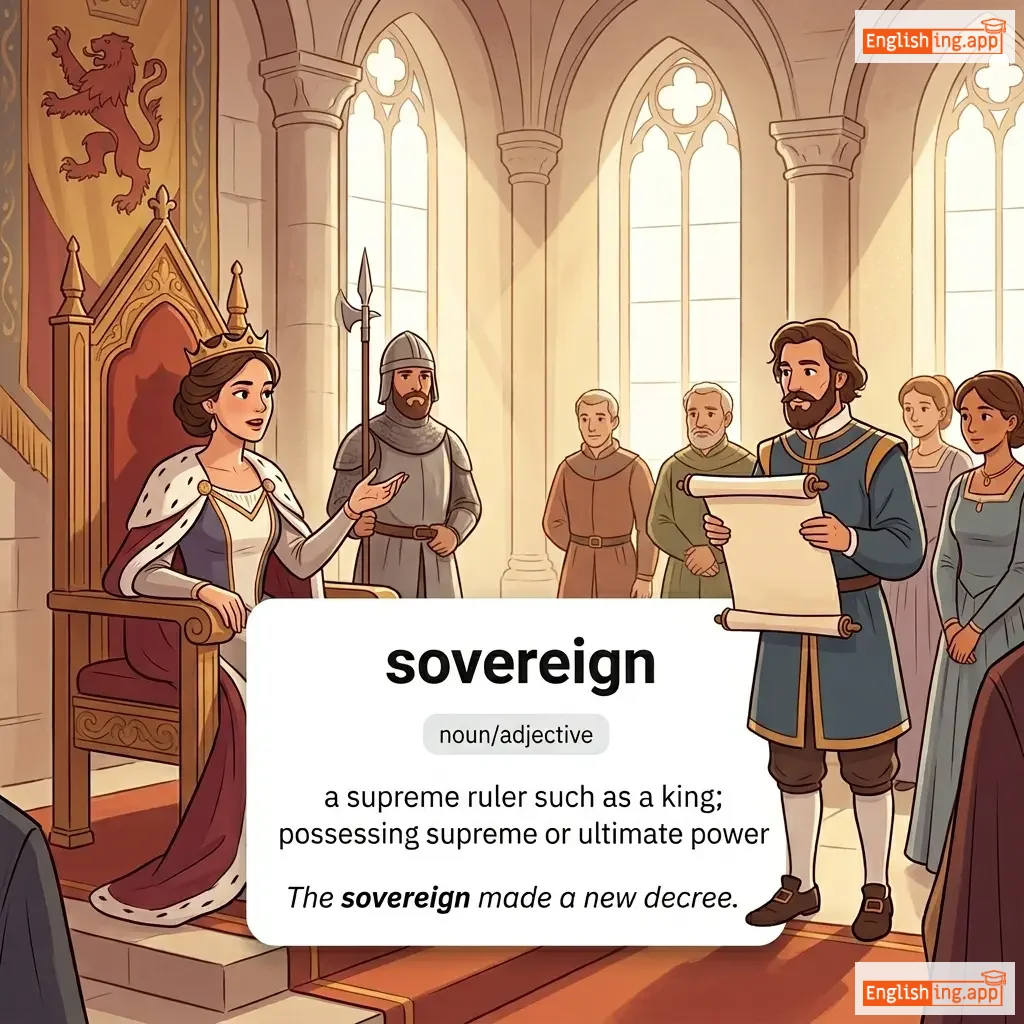
sovereign definition card — visual illustration of the meaning
noun/adjective
/ˈsɒvərɪn/
суверенный (suverennyy)

a supreme ruler such as a king; possessing supreme or ultimate power

"The sovereign made a new decree."
"Суверен издал новый указ." (Suveren izdal novyy ukaz.)
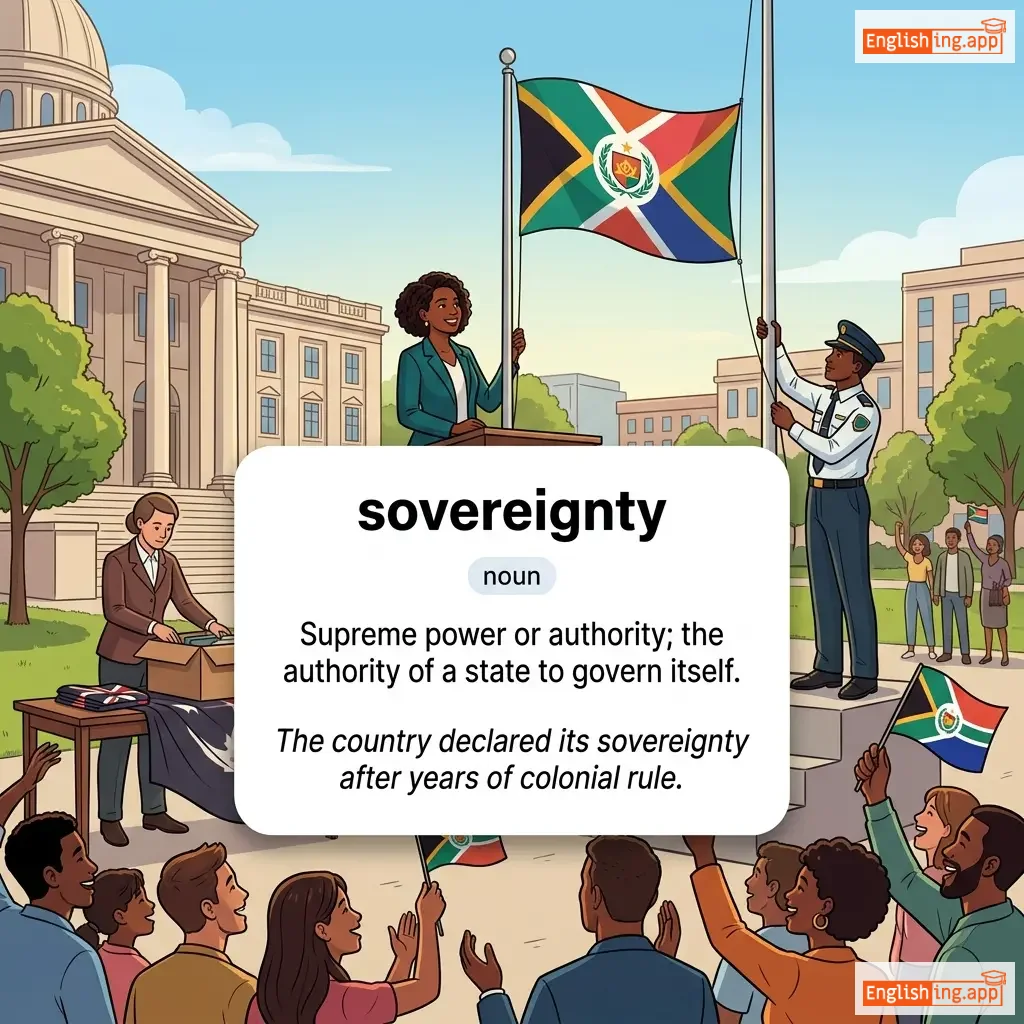
sovereignty definition card — visual illustration of the meaning
noun
/ˈsɒvrənti/
суверенитет (suverenitet)

Supreme power or authority; the authority of a state to govern itself.

"The country declared its sovereignty after years of colonial rule."

"Страна объявила о своем суверенитете после многих лет колониального правления." (Strana ob'yavila o svoem suverenitete posle mnogikh let kolonial'nogo pravleniya.)
adjective
/ˈsoʊ.vi.ət/
советский (sovetskiy)

relating to the Soviet Union or its government

"The Soviet era saw significant changes in Eastern Europe."
"Советская эра принесла значительные изменения в Восточной Европе." (Sovetskaya era prinesla znachitel'nye izmeneniya v Vostochnoy Evrope.)
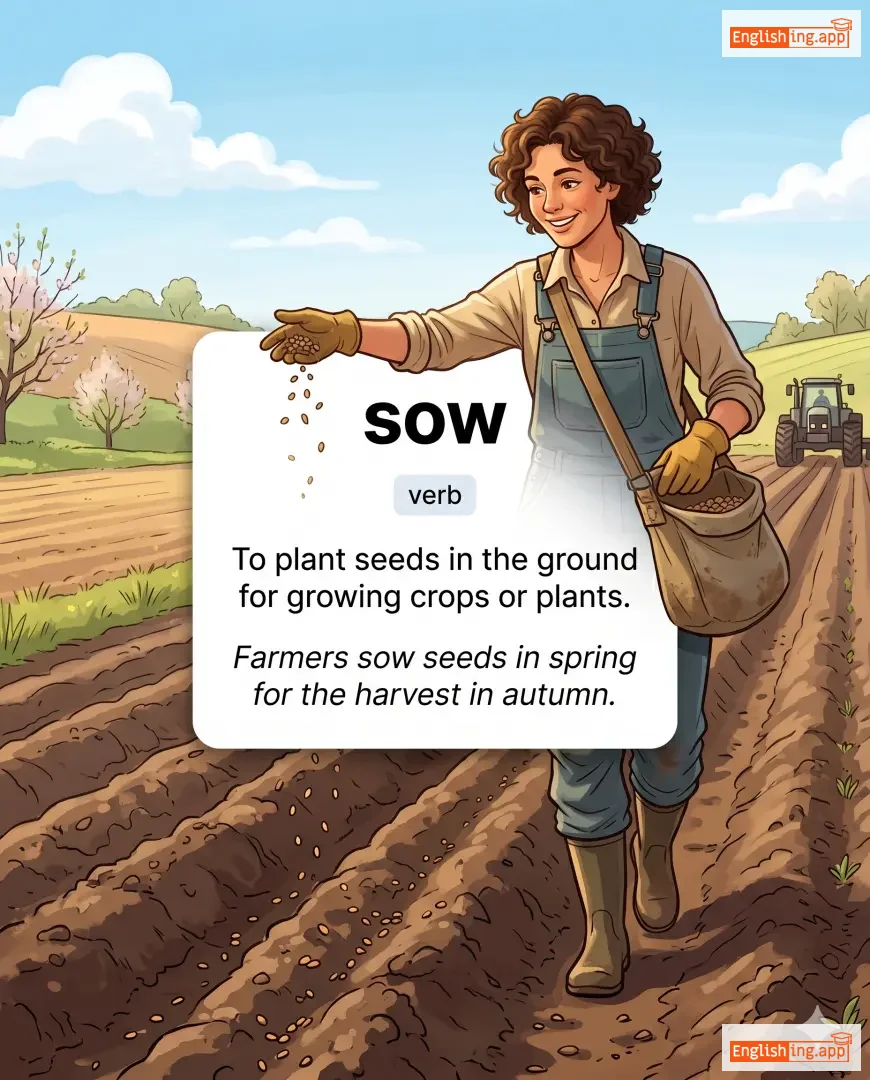
sow definition card — visual illustration of the meaning
verb
/səʊ/
сеять (sejat)

To plant seeds in the ground for growing crops or plants.

"Farmers sow seeds in spring for the harvest in autumn."
"Фермеры сеют семена весной для урожая осенью." (Fermery seyut semena vesnoy dlya urozhaya osenyu.)
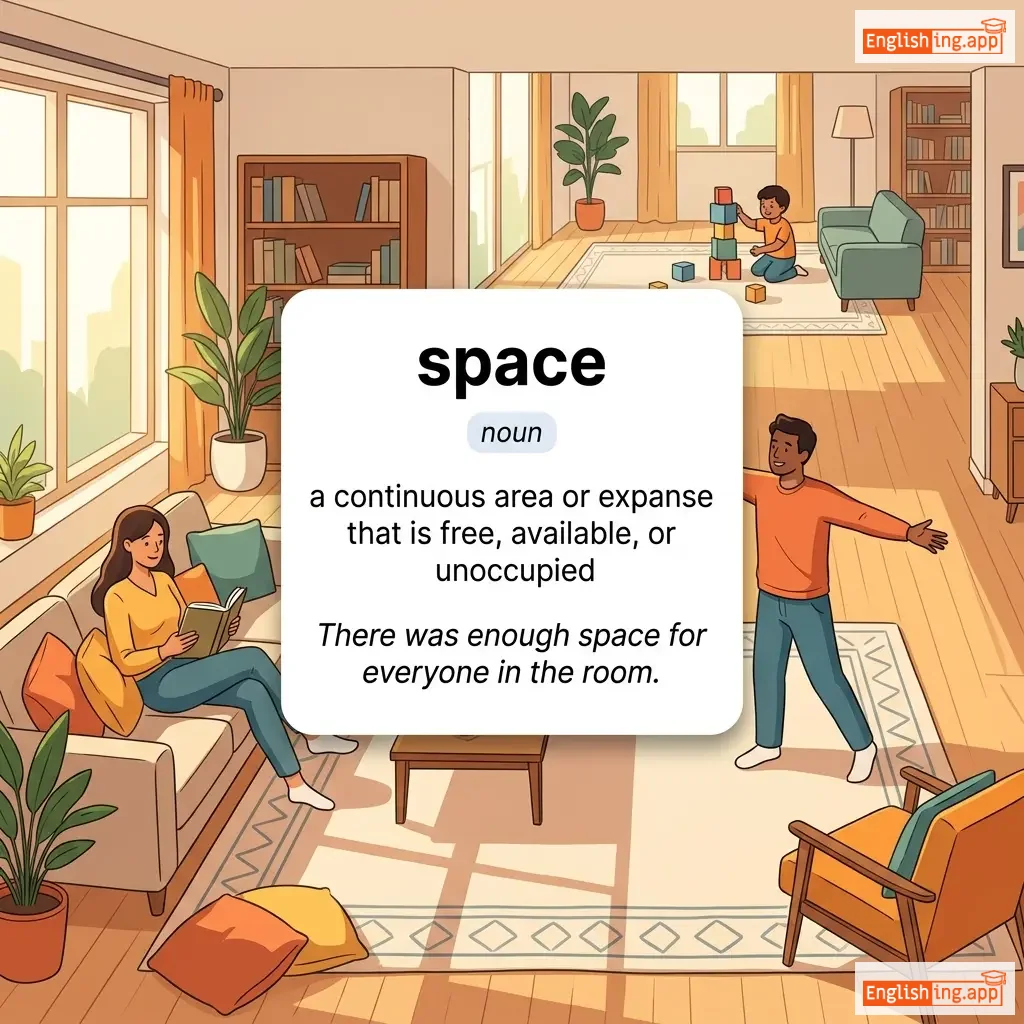
space definition card — visual illustration of the meaning
noun
/speɪs/
пространство (prostranstvo)

a continuous area or expanse that is free, available, or unoccupied

"There was enough space for everyone in the room."

"В комнате было достаточно места для всех." (V komnate bylo dostatochno mesta dlya vsekh.)
space exploration definition card — visual illustration of the meaning
noun
speɪs ɪksplɔːˈreɪʃən
исследование космоса (issledovaniye kosmosa)

The investigation of outer space by means of manned and unmanned spacecraft.

"Space exploration has expanded our knowledge of the universe."
"Исследование космоса расширило наши знания о вселенной." (Issledovaniye kosmosa rasshirilo nashi znaniya o vselennoy.)
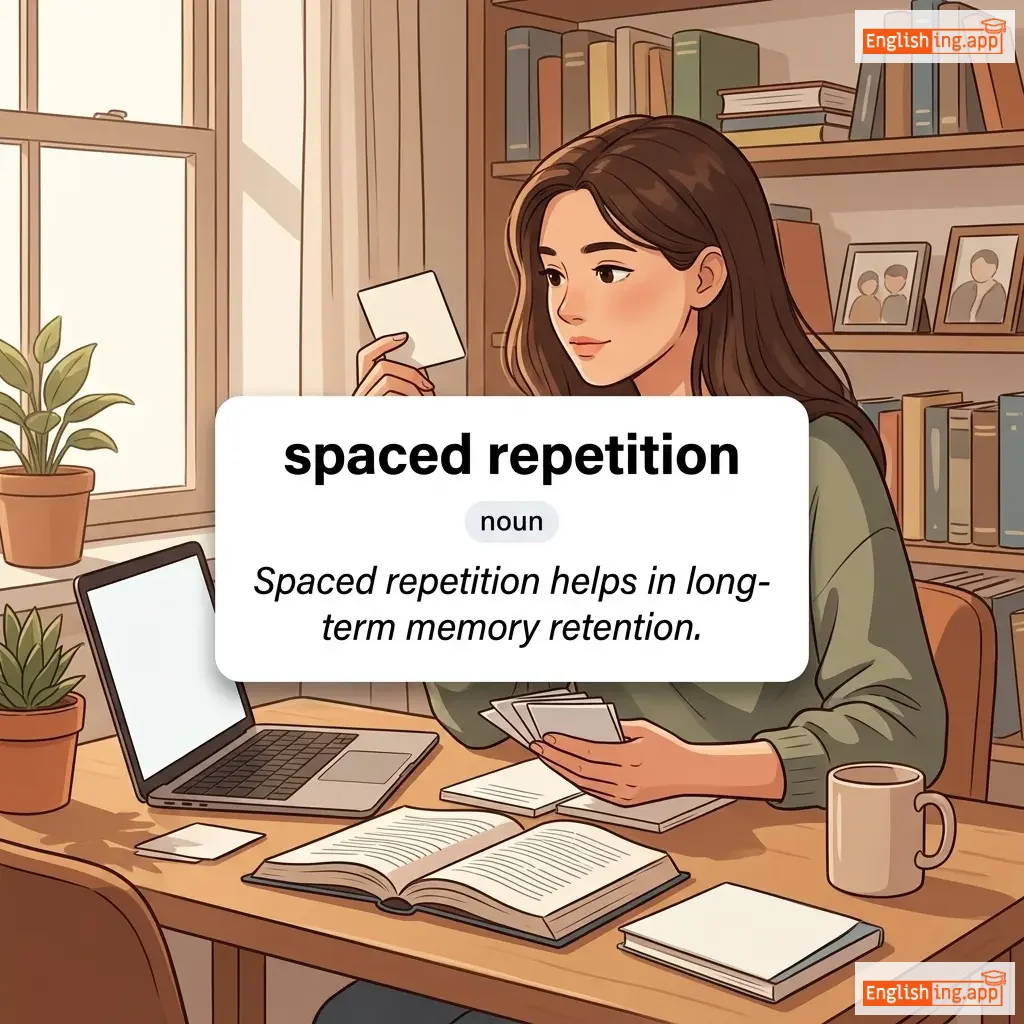
spaced repetition definition card — visual illustration of the meaning
noun
speɪst ˌrep.ɪˈtɪʃ.ən
распространённая репетиция (rasprostranyonnaya repeticiya)

A learning technique that involves reviewing information at increasing intervals to improve long-term retention.

"Spaced repetition helps in long-term memory retention."

"Спейст репетишн помогает сохранить долгосрочную память." (Speyst repetishn pomogaet sokhranit' dolgorochnuyu pamyat'.)
adjective
/ˈspeɪ.ʃəs/
просторный; вместительный (prostorny; vmestitelny)

having a lot of space; roomy and comfortable

"The house has a spacious living room with high ceilings."

"В доме есть просторная гостиная с высокими потолками." (V dome yest' prostornaya gostinaya s vysokimi potolkami.)
noun
/speɪd/
лопата (lopata)

a tool with a flat blade for digging; a playing card suit

"The gardener used a spade to dig holes for planting flowers."

"Садовник использовал лопату, чтобы выкопать ямы для посадки цветов." (Sadovnik ispol'zoval lopatu, chtoby vykopat' yamy dlya posadki tsvetov.)
noun
/spæm/
спам (spam)

unsolicited or unwanted electronic communication, typically in the form of email

"My inbox is full of spam emails that I need to delete."

"Мой почтовый ящик полон спам-писем, которые мне нужно удалить." (Moi pochtovyi yashchik polon spam-pisem, kotorye mne nuzhno udalit'.)
noun
/spæn/
размах (razmakh)

the full extent or length of something from one end to another

"The bridge has a span of over 500 meters."

"Мост имеет размах более 500 метров." (Most imeyet razmakh bolee 500 metrov.)
noun
/ˈspæŋɡəl/
блестящие украшения (blestyashchie ukrasheniya)

A small shiny piece of metal or plastic used for decoration on clothes.

"Her dress was covered with silver spangles that glittered in the light."

"Её платье было покрыто серебристыми блестящими украшениями, которые сверкали на свету." (Yeyo plat'ye bylo pokryto serebristymi blestyashchimi ukrasheniyami, kotorye sverkali na svetu.)
adjective
/ˈspænɪʃ/
испанский (ispanskiy)

relating to Spain or the Spanish language

"She is fluent in Spanish and French."

"Она свободно говорит на испанском и французском." (Ona svobodno govorit na ispanskom i frantsuzskom.)
verb
/spɛər/
дать что-то лишнее / спасать (dat' chto-to lishnee / spasat')

To give something that one has extra of; to refrain from harming or killing.

"Could you spare me a few minutes of your time?"

"Можете ли вы уделить мне несколько минут вашего времени?" (Mozhete li vy udelit' mne neskol'ko minut vashego vremeni?)
adjective
/ˈspɛərɪŋ/
экономный / умеренный (ekonomny / umerenny)

Using or giving only a little of something; economical.

"She is sparing in her use of words."

"Она экономно использует слова." (Ona ekonomno ispol'zuyet slova.)
verb
/spɑːrk/
искрить (iskrit)

to cause the start of something, especially an emotion or activity

"The news sparked a heated debate across the country."

"Новости вызвали жаркие дебаты по всей стране." (Novosti vyzvali zharkie debaty po vsey strane.)
noun
/ˈspæroʊ/
воробей (vorobey)

small brown and grey bird commonly found in cities and towns

"The sparrow chirped cheerfully from the tree branch."

"Воробей весело чирикал с ветки дерева." (Vorobey veselo chirikal s vetki dereva.)
adjective
/spɑːrs/
редкий (redkiy)

thinly scattered or distributed; not dense or abundant

"Vegetation was sparse in the desert."

"Растительность была редкой в пустыне." (Rastitel'nost' byla redkoy v pustyne.)
adjective
/ˈspɑːrtn/
спартанский (spartanskii)

showing simplicity and lack of luxury; austere

"He lived in a spartan room with just a bed and a chair."

"Он жил в спартанской комнате с одной кроватью и стулом." (On zhil v spartanskoi komnate s odnoi krovat'iu i stulom.)
adjective
/spæzˈmɒdɪk/
спазматический (spazmaticheskiy)

occurring irregularly or in sudden bursts

"The patient experienced spasmodic coughing during the night."

"Пациент испытал спазматический кашель ночью." (Patsiyent ispyltal spazmaticheskiy kashel noch'yu.)
noun
/spæt/
мелкая ссора (melkaya ssora)

a short, petty quarrel or argument

"They had a brief spat about who should do the dishes."

"Они поссорились из-за того, кто должен мыть посуду." (Oni posorilis' iz-za togo, kto dolzhen myt' posudu.)
noun
/speɪt/
всплеск (vsplesk)

a large number of things occurring in quick succession

"There has been a spate of robberies in the city."

"В городе был всплеск краж." (V gorode byl vsplesk krazh.)
adjective
/ˈspeɪʃəl/
пространственный (prostranstvennyy)

relating to space or the position, area, and size of things

"The scientist studied the spatial arrangement of stars."

"Учёный изучал пространственное расположение звёзд." (Uchyonyy izuchal prostranstvennoye raspolozheniye zvyyozd.)
noun
/ˈspætʃələ/
шпатель (shpatel)

a flat, broad tool used for mixing, spreading, or lifting food

"She used a spatula to flip the pancakes."

"Она использовала шпатель, чтобы перевернуть блины." (Ona ispol'zovala shpatel, chtoby perevernut' bliny.)
verb
/spɔːn/
порождать (porozhdat)

to produce or generate, often in large numbers

"The video game has spawned many sequels."

"Видеоигра породила много продолжений." (Videoigra porodila mnogo prodolzheniy.)
verb
/spiːk/
говорить (govorit)

to say something in order to convey information or express feelings

"She speaks five languages fluently."

"Она говорит на пяти языках бегло." (Ona govorit na pyati yazykakh beglo.)
noun
/ˈspiːkər/
оратор (orator)

a person who speaks or talks, especially as an occupation

"The speaker delivered an inspiring speech at the conference."

"Оратор произнес вдохновляющую речь на конференции." (Orator proiznes vdokhnovlyayushchuyu rech' na konferentsii.)
verb
/ˈspɪərˌhɛd/
возглавить (vozglavit)

to lead or initiate an action, project, or movement

"She spearheaded the campaign for environmental awareness."

"Она возглавила кампанию за экологическое сознание." (Ona vozglavila kampaniyu za ekologicheckoe soznanie.)
adjective
/ˈspɛʃəl/
особенный (osobennyj)

different from what is usual; better or greater than normal

"This gift is very special to me."

"Этот подарок очень особенный для меня." (Etot podarok ochen' osobennyj dlya menya.)